Top Android Smartwatch Picks for 2024
⚠️ AFFILIATE DISCLOSURE: This website contains affiliate links. As an Amazon Associate, we earn from qualifying purchases. If you make a purchase through these links, we may receive a small commission at no additional cost to you. Read our full affiliate policy.
![Smart Watch for Men Women, 1.85'' AMOLED HD Fitness Watch with 120+ Sports Modes, Bluetooth Call/Heart Rate/Sleep Monitor/Pedometer, Smartwatch for Android iOS, IP68 Waterproof, Black]](https://m.media-amazon.com/images/I/71d1NjBkBML._SL500_.jpg)
Smart Watch for Men Women, 1.85'' AMOLED HD Fitness Watch with 120+ Sports Modes, Bluetooth Call/Heart Rate/Sleep Monitor/Pedometer, Smartwatch for Android iOS, IP68 Waterproof, Black]

GPS Smart Watch for Men, Fitness Tracker with 178+ Sports Modes, Fitness Watch with 2.06" AMOLED Touchscreen, Heart Rate/Sleep Monitor, IP68 Waterproof, Notifications for Android iOS
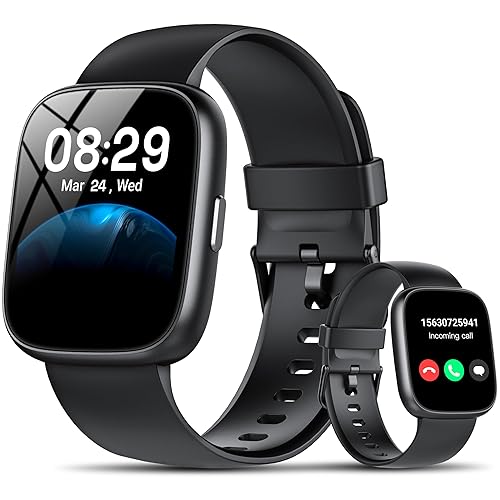
Smart Watch with Alexa Built-in, 1.83" HD Touchscreen Fitness Tracker with Bluetooth Calling, Fitness Watch with Heart Rate/Sleep Monitor, 120+ Sports Modes, IP68 Waterproof Smartwatch for Android iOS
![SAMSUNG Galaxy Watch 7 40mm Bluetooth AI Smartwatch w/Energy Score, Wellness Tips, Heart Rate Tracking, Sleep Monitor, Fitness Tracker, 2024, Cream [US Version, 1Yr Manufacturer Warranty]](https://m.media-amazon.com/images/I/71SZNup1qrL._SL500_.jpg)
SAMSUNG Galaxy Watch 7 40mm Bluetooth AI Smartwatch w/Energy Score, Wellness Tips, Heart Rate Tracking, Sleep Monitor, Fitness Tracker, 2024, Cream [US Version, 1Yr Manufacturer Warranty]
![SAMSUNG Galaxy FIT 3 [2024] 1.6" AMOLED Display | 14 Days Battery Life | 100+ Watchfaces | 100+ Exercise Modes | International Model - (Black)](https://m.media-amazon.com/images/I/517dEn58PHL._SL500_.jpg)
SAMSUNG Galaxy FIT 3 [2024] 1.6" AMOLED Display | 14 Days Battery Life | 100+ Watchfaces | 100+ Exercise Modes | International Model - (Black)
![SAMSUNG Galaxy Watch 7 44mm Bluetooth AI Smartwatch w/Energy Score, Wellness Tips, Heart Rate Tracking, Sleep Monitor, Fitness Tracker, 2024, Silver [US Version, 1Yr Manufacturer Warranty]](https://m.media-amazon.com/images/I/71E8iEWXY9L._SL500_.jpg)
SAMSUNG Galaxy Watch 7 44mm Bluetooth AI Smartwatch w/Energy Score, Wellness Tips, Heart Rate Tracking, Sleep Monitor, Fitness Tracker, 2024, Silver [US Version, 1Yr Manufacturer Warranty]
Remember when smartwatches were just tiny screens strapped to your wrist? We've come a long way. Today's Android smartwatches are legitimate companions - they track your health with medical-grade precision, handle notifications so you can stay present, and honestly, some look better than traditional watches.
But here's the thing nobody tells you: the "best" smartwatch doesn't exist. What works perfectly for a marathon runner might frustrate a business professional. The right choice depends entirely on how you live, not just what features sound cool on paper.
I've seen people buy flagship watches only to return them a week later. Not because they're bad devices, but because they solved problems those people didn't have. Let's make sure that doesn't happen to you.
What Really Matters When Choosing
Design & Comfort
- Case size matters more than you think - 44mm+ looks great on larger wrists but overwhelms smaller ones
- Weight distribution - Heavy watches slide around during exercise
- Strap material - Silicone for sports, leather for office, metal for versatility
- Screen protection - Sapphire glass costs more but survives daily bumps
Battery & Charging
- Real-world vs advertised - Always subtract 30% from claimed battery life
- Charging speed - 0-80% in under an hour beats overnight charging
- Battery degradation - Expect 20% capacity loss after 2 years
- Travel friendly - Wireless charging pads are easier than proprietary cables
Smart Features
- Notification management - Can you reply, not just read?
- Voice assistant - Google Assistant vs Bixby vs manufacturer-specific
- App ecosystem - Wear OS has more apps but drains battery faster
- Phone independence - LTE models cost more monthly but offer freedom
Here's something most review sites miss: the software experience matters more than specs. A watch with slightly slower processor but smoother software will feel better daily than a spec monster with clunky interface. Think about it - you interact with the software hundreds of times a day.
And about those health sensors - they're getting scarily accurate. Modern heart rate monitors can detect atrial fibrillation. Sleep tracking actually helps improve sleep hygiene when you pay attention to the patterns. But they're wellness tools, not medical devices. Know the difference.
Which Watch Actually Fits Your Life?
The Fitness Fanatic
You live in workout clothes. Saturday means long runs, Sunday is for recovery yoga. Your watch needs to keep up.
Prioritize: GPS accuracy, heart rate zones, workout detection, sweat resistance, long battery during exercise
Compromise on: Fancy design, extensive smart features
Look at: Garmin, Coros, or specialized fitness-focused Android watches
The Business Professional
Meetings, emails, travel. You need notifications managed discreetly and a watch that looks appropriate with a suit.
Prioritize: Premium materials, notification filtering, calendar integration, quick replies
Compromise on: Bulky sport features, week-long battery
Look at: Fossil smartwatches, Samsung Galaxy Watch Classic, Wear OS with leather bands
The Tech Enthusiast
You want every feature, every app, the latest tech. Battery life is less important than capability.
Prioritize: Latest processor, most sensors, app compatibility, software updates
Compromise on: Battery life, sometimes design elegance
Look at: Google Pixel Watch, latest Samsung Galaxy Watch, flagship Wear OS devices
Notice how each scenario has different priorities? That's the key. The marathon runner doesn't care if their watch can show PowerPoint slides. The executive doesn't need ultra-precise running dynamics.
Here's a reality check: most people overestimate how many features they'll actually use. That cool ECG feature? Used once out of curiosity. The blood oxygen sensor? Checked a few times during COVID. Focus on the features you'll use daily.
Wear OS vs Everything Else
The Software That Makes or Breaks Your Experience
This is where things get interesting. Your watch's operating system determines what it can do, how smoothly it works, and how long it stays updated.
Wear OS (Google's Platform) is like Android for your wrist. It has the most apps, best Google integration, and regular updates. But it's also the most battery-hungry. Recent versions have improved dramatically - the difference between Wear OS 2 and 3 is like night and day.
Manufacturer Skins like Samsung's One UI Watch offer deeper integration with their phones and longer battery life. The trade-off? Fewer third-party apps. Samsung's watches work surprisingly well with non-Samsung Android phones now, but you still get the best experience with a Galaxy phone.
Specialized Platforms from Garmin, Fitbit, and others focus on doing a few things exceptionally well. Garmin's week-long battery life comes from not trying to be a tiny smartphone on your wrist.
The dirty secret? Most people settle into using 5-6 apps regularly regardless of platform. So unless you need specific apps, the smoother experience often beats the one with more apps.
| Platform | Best For | Update Support | App Selection | Battery Impact |
|---|---|---|---|---|
| Wear OS 4 | Google ecosystem users, app lovers | 3-4 years | Extensive | High |
| Samsung One UI | Samsung phone owners, battery conscious | 4-5 years | Good (Samsung focused) | Medium |
| Garmin OS | Athletes, outdoor enthusiasts | 2-3 years | Limited (fitness focused) | Very Low |
| Fitbit OS | Health tracking, simplicity | 2 years | Basic | Low |
Your Step-by-Step Selection Process
Step 1: Define Your Non-Negotiables
Start with deal-breakers. Must have LTE? Need 5+ day battery? Requires specific fitness tracking? Write down the 3 things you absolutely need. Everything else is negotiable.
Step 2: Set Your Real Budget
Include accessories. That $300 watch needs a $50 screen protector, maybe extra bands. LTE models add $10-20/month to your phone bill. Budget watches often lack software updates after a year.
Step 3: Consider Your Phone Ecosystem
If you have a Samsung phone, a Galaxy Watch makes sense. Pixel phone? Pixel Watch integrates perfectly. For other Android phones, check compatibility carefully - some features might be limited.
Step 4: Try Them On (Seriously)
Photos lie. That 46mm watch might look perfect online but feel like a dinner plate on your wrist. Visit a store. Wear it for 10 minutes. Do the buttons press easily? Does it slide around?
Step 5: Check Update History
Search "[watch model] software update support." Some brands abandon watches after 6 months. Others provide 4+ years of updates. This affects security and features.
Here's what experienced buyers do differently: they wait for sales. Smartwatch prices drop significantly during holiday seasons, Amazon Prime Day, and when new models launch. That $400 watch from March might be $280 in November.
Also, consider buying previous generation models. The differences between last year's flagship and this year's are often minor - slightly better processor, maybe one new sensor. But the price difference can be 40%.
Will This Watch Still Be Useful in 2026?
Technology moves fast. That cutting-edge watch today becomes outdated in two years. Here's how to buy something that ages well:
Software updates are everything. A watch that stops getting updates becomes a security risk and misses new features. Samsung and Google currently lead in update promises.
Over-spec on storage. 8GB might seem enough today, but watch apps are getting larger. 16GB gives you breathing room.
Standard bands matter. Proprietary bands mean you're stuck with expensive replacements. 20mm or 22mm quick-release bands give you endless options.
Wireless charging compatibility means you can use public charging pads and don't need specific cables when traveling.
Think about it this way: if you're spending $300+ on a watch, you want it to last 3+ years. Spending an extra $50 for double the storage and better update support is cheap insurance.
The Upgrade Cycle Reality
Most people replace smartwatches every 2-3 years. Not because they break, but because new features tempt them. Here's what actually changes significantly between generations:
- Battery technology improves 5-10% yearly
- New health sensors appear (ECG, temperature, etc.)
- Processors get more efficient, not necessarily faster
- Display technology improves brightness and efficiency
The core experience - notifications, fitness tracking, telling time - remains largely the same. Don't feel pressured to upgrade annually.
Making Your Decision
By now, you should have a much clearer picture of what matters to you. Let's bring it all together.
If you're still torn between two models, here's a simple test: imagine your typical Tuesday. From morning alarm to evening wind-down. Which watch features would you actually use that day? Be brutally honest.
The runner who checks their watch 20 times during a workout needs different things than the office worker who glances at notifications between meetings. The best smartwatch for someone else might be wrong for you.
One more consideration: think about your phone upgrade cycle. If you're planning to switch phone brands soon, consider a watch that works well across different Android phones. Some top-rated smart watches play nicer with multiple manufacturers than others.
For families, remember that kids have different needs too. If you're looking for younger users, check out our guide to smart watches for kids - the considerations are completely different.
Ready to Choose?
Take a breath. You don't need to make the perfect choice - you need to make a good choice that works for your life right now.
The Android smartwatch market has matured enough that there are several excellent options at every price point. Whether you prioritize battery life, health features, or seamless integration with your phone, there's a watch that fits.
Remember: the best smartwatch is the one you'll actually wear every day. Not the one with the most features, or the shiniest design, or the best specs on paper. The one that becomes part of your routine without you thinking about it.
That's the goal. Not a piece of technology on your wrist, but a useful companion that makes your day slightly better, slightly easier, slightly healthier.
Common Android Smartwatch Questions
Can I use an Android smartwatch with an iPhone?
Most Android smartwatches are designed primarily for Android phones, but some offer limited iOS compatibility. Samsung Galaxy Watches work with iPhones but with restricted features. Wear OS watches (like Pixel Watch) have very limited iOS support. For full functionality, pair your smartwatch with an Android device.
How long does Android smartwatch battery typically last?
Battery life varies dramatically: Basic fitness trackers last 5-7 days, mainstream smartwatches 1-2 days, and specialized models (like Garmin) can go 2+ weeks. Real-world usage with always-on display, GPS tracking, and notifications reduces battery life by 30-50% compared to manufacturer claims.
What's the difference between Wear OS and manufacturer-specific OS?
Wear OS (by Google) offers extensive app support, Google Assistant, and seamless integration with Google services. Manufacturer OS (like Samsung's One UI Watch) provides deeper integration with their ecosystem and longer software support but may have fewer third-party apps. Your choice depends on which ecosystem you're invested in.
Do I need to pay for a cellular plan on my smartwatch?
Only if you want standalone connectivity. Most people use Bluetooth models that connect to their phone. Cellular models add $10-20/month to your plan but let you make calls, stream music, and use data without your phone nearby. Essential for runners, swimmers, or those who frequently leave their phone behind.
How accurate are smartwatch health sensors?
For general wellness tracking, they're quite good. Heart rate monitors are typically within 5% of medical devices. Sleep tracking provides useful patterns rather than medical-grade data. ECG and blood oxygen sensors are FDA-cleared on some models but shouldn't replace medical devices. Accuracy decreases during high-intensity exercise or with loose fit.
Can I swim with my Android smartwatch?
Most modern Android smartwatches have 5ATM water resistance (good for swimming) or IP68 (splash proof). Check the specific water resistance rating - 5ATM handles pool swimming, while IP68 is only for rain and hand washing. Avoid pressing buttons underwater and rinse with fresh water after saltwater exposure.
How often do smartwatches get software updates?
Premium brands (Samsung, Google) provide 3-4 years of major updates. Mid-range brands typically offer 1-2 years. This matters for security and new features. Check the manufacturer's update policy before buying - some budget watches get abandoned after 6 months.