 Link copied successfully!
Introduction
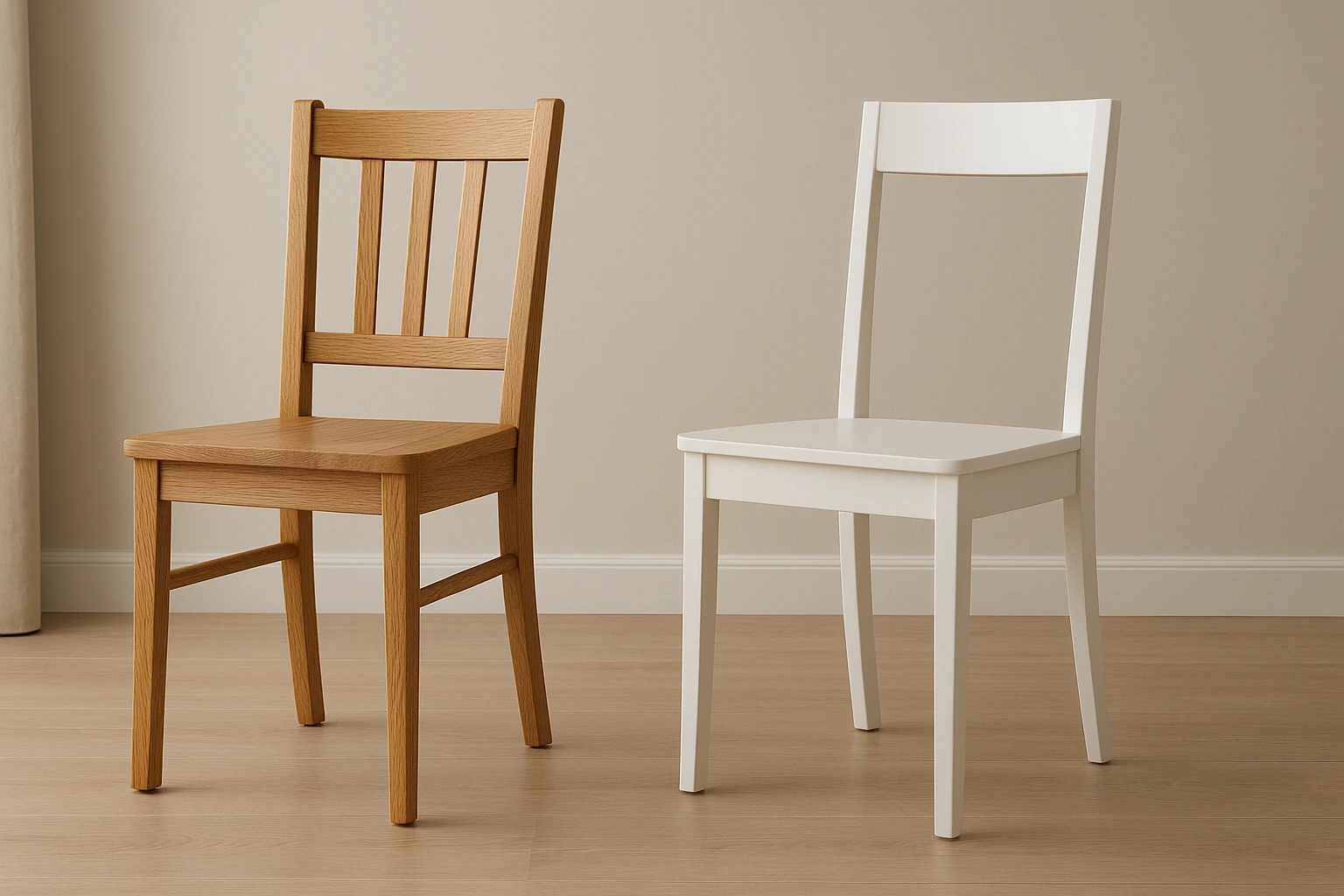
Choosing the right dining chairs is crucial for both aesthetics and functionality in your dining space. The material of your chairs significantly impacts their durability, maintenance requirements, and overall appearance. In this comprehensive guide, we'll explore the key differences between solid wood and engineered wood dining chairs to help you make an informed decision.
Quick Overview:
Solid wood offers natural beauty and longevity but comes at a higher price point. Engineered wood provides affordability and consistency but may not last as long. Your choice depends on your budget, lifestyle, and design preferences.
Solid Wood Dining Chairs: Natural Beauty and Durability
Solid wood dining chairs are crafted from single pieces of natural wood, offering authentic grain patterns and exceptional durability. These chairs are known for their longevity and ability to develop a beautiful patina over time.
Popular Solid Wood Types
Teak Wood

Teak is highly durable and naturally resistant to moisture, making it ideal for dining chairs that need to withstand daily use.
- Extremely durable and long-lasting
- Natural water and insect resistance
- Beautiful golden-brown color that ages gracefully
- Higher price point but excellent value
Mahogany

Mahogany offers a rich, reddish-brown color and fine grain, making it perfect for formal dining settings.
- Luxurious appearance with deep color
- Excellent workability for intricate designs
- Resistant to swelling and shrinking
- Becomes more beautiful with age
Oak Wood

Oak is known for its strength and prominent grain pattern, offering a rustic yet sophisticated look.
- Extremely strong and durable
- Distinctive grain pattern
- Resistant to wear and tear
- Available in red and white varieties
Engineered Wood Dining Chairs: Affordable and Versatile
Engineered wood, also known as composite wood, is made by binding wood fibers, particles, or veneers together with adhesives. This manufacturing process creates a more affordable and consistent material compared to solid wood.
Common Engineered Wood Types
MDF (Medium Density Fiberboard)

MDF is made from broken-down wood fibers mixed with wax and resin, then pressed into panels under high temperature.
- Smooth, uniform surface ideal for painting
- Cost-effective manufacturing
- No natural wood grain
- Vulnerable to moisture damage
Plywood

Plywood consists of thin wood veneers glued together with adjacent layers having their wood grains rotated up to 90 degrees.
- Strong and stable construction
- Resistant to cracking and warping
- Can have wood veneer finishes
- More affordable than solid wood
Particle Board

Particle board is made from wood chips, sawmill shavings, and sawdust pressed with synthetic resin.
- Most affordable option
- Lightweight but less durable
- Susceptible to moisture damage
- Often used in budget furniture
Direct Comparison: Solid Wood vs Engineered Wood
Comparison Table
| Feature | Solid Wood | Engineered Wood |
|---|---|---|
| Durability | Excellent - can last decades | Good - 5-15 years with care |
| Cost | Higher investment | More affordable |
| Maintenance | Can be refinished multiple times | Limited repair options |
| Moisture Resistance | Good (depends on wood type) | Poor - swells when wet |
| Weight | Heavier and more stable | Lighter weight |
| Eco-Friendliness | Renewable resource | Uses wood waste but contains adhesives |
Which One Is Best for Your Home?
✓ Choose Solid Wood If:
- You want furniture that lasts generations
- Budget is not your primary concern
- You appreciate natural wood grain and character
- You need chairs for heavy daily use
- You plan to refinish or repair over time
✓ Choose Engineered Wood If:
- You're working with a limited budget
- You need furniture for temporary living situations
- You want consistent color and pattern
- You prefer lightweight furniture
- You're decorating a low-moisture environment
Important Consideration:
Not all engineered wood is created equal. High-quality plywood with thick veneers can be nearly as durable as solid wood, while cheap particle board may need replacement within a few years. Always check the construction quality before purchasing.
Maintenance and Care Tips
Solid Wood Care
- Dust regularly with a soft, dry cloth
- Use wood-specific cleaners for deep cleaning
- Avoid placing in direct sunlight to prevent fading
- Maintain consistent humidity levels to prevent cracking
- Refinish every 5-10 years to restore beauty
Engineered Wood Care
- Wipe spills immediately to prevent swelling
- Use damp cloth for cleaning - avoid excess moisture
- Don't use abrasive cleaners that can damage finishes
- Protect from heavy impacts that can cause chipping
- Avoid extreme temperature changes
Cost Analysis: Long-Term Value
While solid wood dining chairs have a higher initial cost, they often provide better long-term value. A well-maintained solid wood chair can last 50+ years, while engineered wood typically needs replacement every 5-15 years. Consider this when making your investment decision.
Conclusion
Both solid wood and engineered wood dining chairs have their place in modern homes. Solid wood offers unparalleled durability, natural beauty, and long-term value, making it ideal for family homes and those seeking investment pieces. Engineered wood provides affordability, consistency, and lightweight convenience, perfect for budget-conscious shoppers or temporary living situations.
Your final choice should align with your budget, lifestyle needs, and design preferences. For heavy daily use and long-term investment, solid wood is superior. For budget-friendly options and temporary solutions, quality engineered wood can be an excellent choice.
Ready to Choose Your Perfect Dining Chairs?
Explore our extensive collection of both solid wood and engineered wood dining chairs. Find the perfect match for your dining space with our quality-guaranteed products.
Browse Dining Chairs CollectionShare Via
 Facebook
 Twitter/X
 WhatsApp
 Telegram
 LinkedIn
 LINE
LINE
 Pinterest
 Reddit
 Email
Email
 Tumblr
 Copy Link
More Dining Chair Guides You Might Like

Explore modern, classic, minimalist, and industrial dining chair styles to match your home decor.

Complete guide to wood, metal, plastic, rattan, and upholstered dining chair materials.

Learn proper dining chair dimensions for comfort and ergonomic seating.

Expert tips for selecting dining chairs that fit your family size and room dimensions.

Learn the signs of quality craftsmanship and avoid cheaply made dining chairs.

Discover our curated selection of high-quality dining chairs for every style and budget.
Join the Discussion
Share your thoughts or ask questions about this article
No comments yet. Be the first to start the discussion!