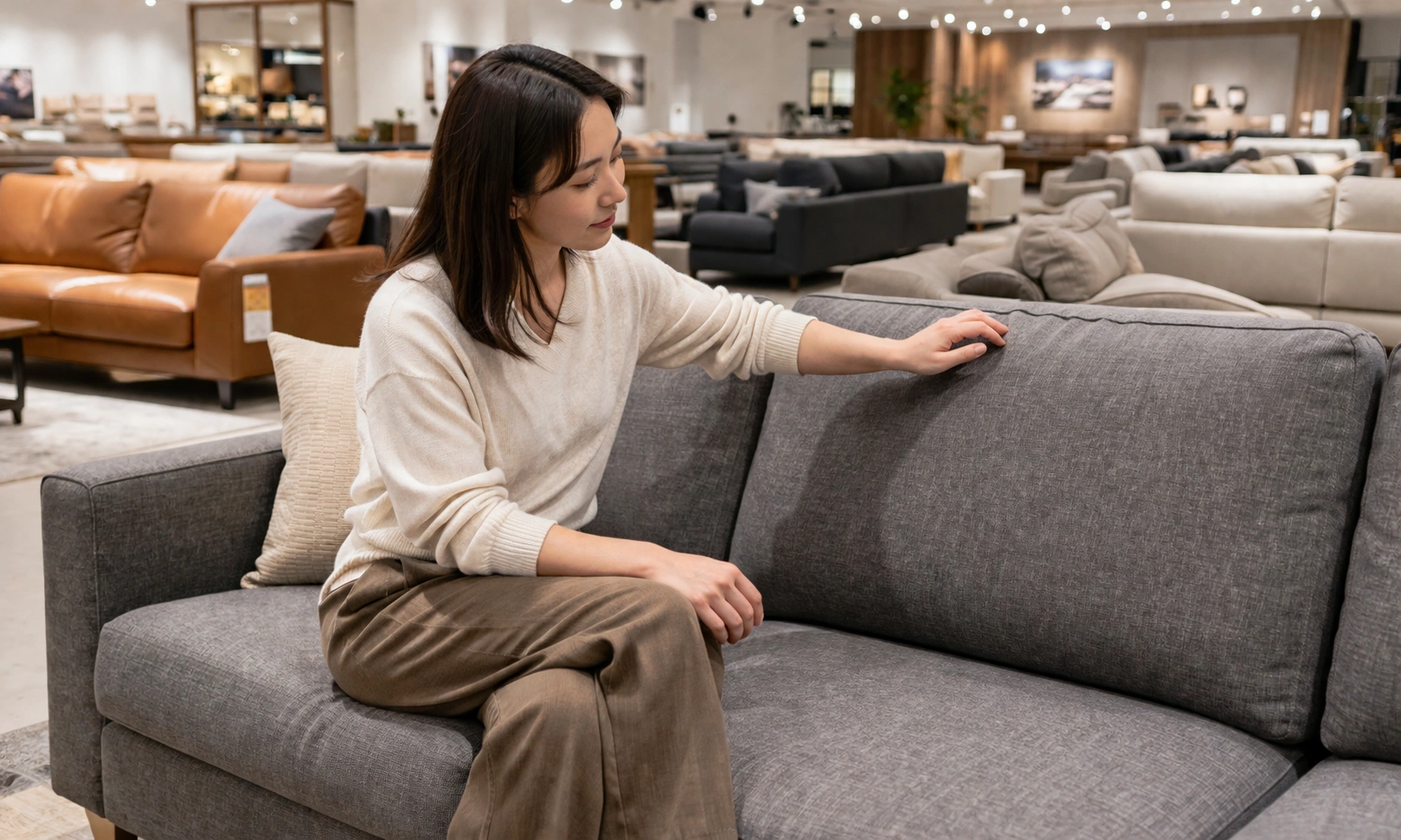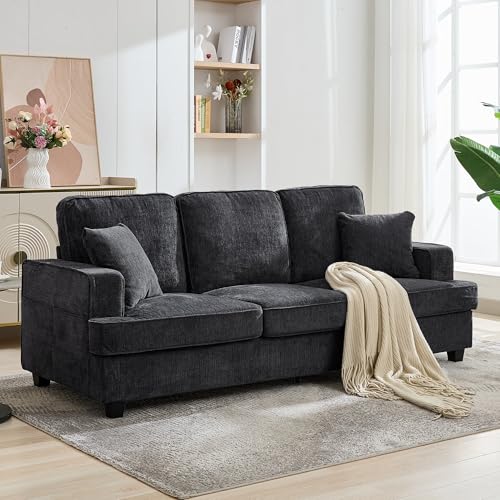
The Complete Guide to Finding a Truly Comfortable Sofa
Comfort is subjective — but the science behind it isn't. Learn exactly what makes a sofa comfortable, from cushion fill to seat depth, so you can buy with confidence.
Explore the FactorsWhy comfort matters more than looks: A sofa is the most-used piece of furniture in your home. The average person spends over 4 hours a day on their couch — watching TV, reading, napping, socializing. Yet most buyers focus on appearance and price while overlooking the factors that determine whether a sofa actually feels good to sit on. This guide breaks down every element of sofa comfort so you can make an informed decision and avoid the expensive mistake of buying a beautiful sofa that feels terrible.
📋 What You'll Learn in This Guide
- The 6 Key Factors That Determine Sofa Comfort
- Cushion Fill Types: Which Feels Best?
- Seat Depth: The Most Overlooked Comfort Factor
- Back Support & Lumbar Comfort
- Spring Systems & Suspension: The Hidden Comfort Layer
- Most Comfortable Sofa Types Compared
- How Upholstery Fabric Affects Comfort
- How to Test Sofa Comfort Before Buying
- Common Comfort Mistakes Buyers Make
- How to Maintain Sofa Comfort Over Time
- Frequently Asked Questions
The 6 Key Factors That Determine Sofa Comfort
Sofa comfort is not a single quality — it's the result of multiple components working together. Understanding each factor helps you evaluate any sofa, whether you're shopping in a store or reading reviews online. Here are the six elements that matter most:
🛋️ Cushion Fill
The material inside your cushions determines how soft or firm the sofa feels. Foam, down, feathers, polyester wrap, and hybrid combinations each create a distinct sitting experience.
📏 Seat Depth
Seat depth controls whether you sit upright or can curl your legs up. Too shallow feels cramped; too deep causes back strain. The right depth depends on your height and how you use the sofa.
🔙 Back Height & Angle
The backrest should support your lumbar region and upper back without forcing an awkward posture. Higher backs suit taller people; angled backs provide casual reclining comfort.
⚙️ Spring System
Springs sit beneath the cushions and provide the foundational support. Eight-way hand-tied springs offer premium comfort; sinuous wire springs are more affordable but can feel less even.
🧵 Upholstery Fabric
Fabric affects how the sofa feels against your skin, how warm or cool it runs, and whether it grips or slides. Linen breathes, velvet feels plush, leather is cool to the touch and smooth.
🦴 Frame & Arm Style
A solid frame prevents flexing and squeaking. Arm height and style affect whether you can lean comfortably. Track arms allow closer sitting; rolled arms add a traditional rest point.
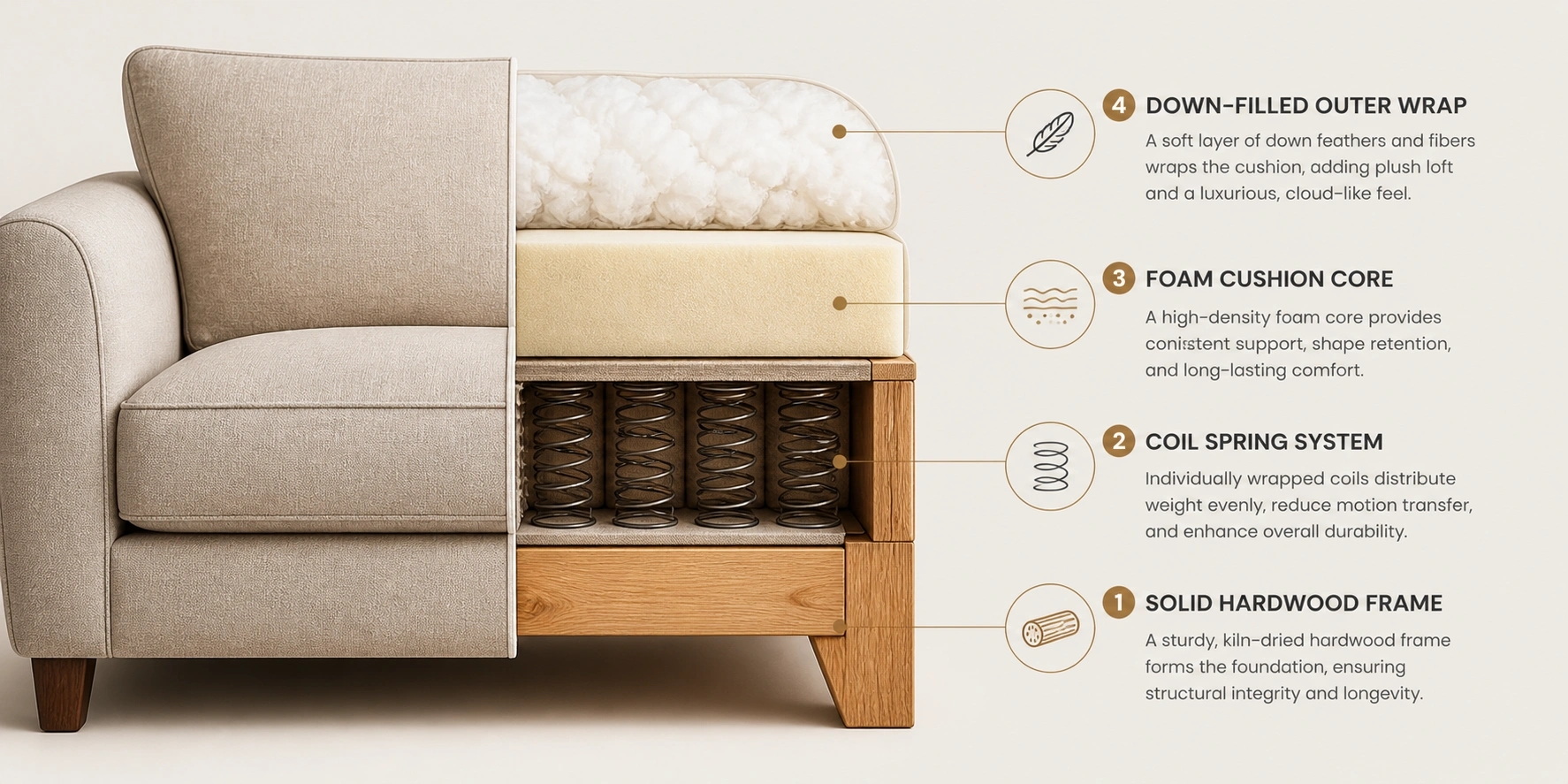
Each of these factors interacts with the others. A sofa with excellent cushions but weak springs will still feel unsupportive. A deep seat with a low backrest can cause neck strain. The most comfortable sofas balance all six elements. If you want to understand the broader context of how comfort relates to long-term use, read our guide on comfort vs durability in sofas.
Cushion Fill Types: Which Feels Best?
Cushion fill is the single biggest factor in how a sofa feels when you sit down. There is no universally "best" fill — the right choice depends on whether you prefer a firm, supportive sit or a plush, sink-in experience. Our complete cushion fill types guide covers every option in detail; here is a practical comparison of the most common fills.
| Cushion Fill Type | Comfort Feel | Support Level | Durability | Maintenance | Best For |
|---|---|---|---|---|---|
| High-Resilience Foam | Firm to medium | High | Excellent | Low | People who prefer structured support |
| Memory Foam | Soft, contouring | High | Good | Low | Back pain sufferers, pressure relief |
| Down / Feather | Very soft, luxurious | Low | Moderate | High (fluffing) | Luxury feel, occasional use |
| Foam Wrapped in Down | Plush with support | High | Very Good | Medium | Best all-around comfort |
| Polyester Fiber Wrap | Soft, pillowy | Medium | Fair | Medium (reshaping) | Budget buyers, casual use |
| Down-Alternative (Synthetic) | Soft, hypoallergenic | Medium | Good | Medium | Allergy sufferers wanting softness |
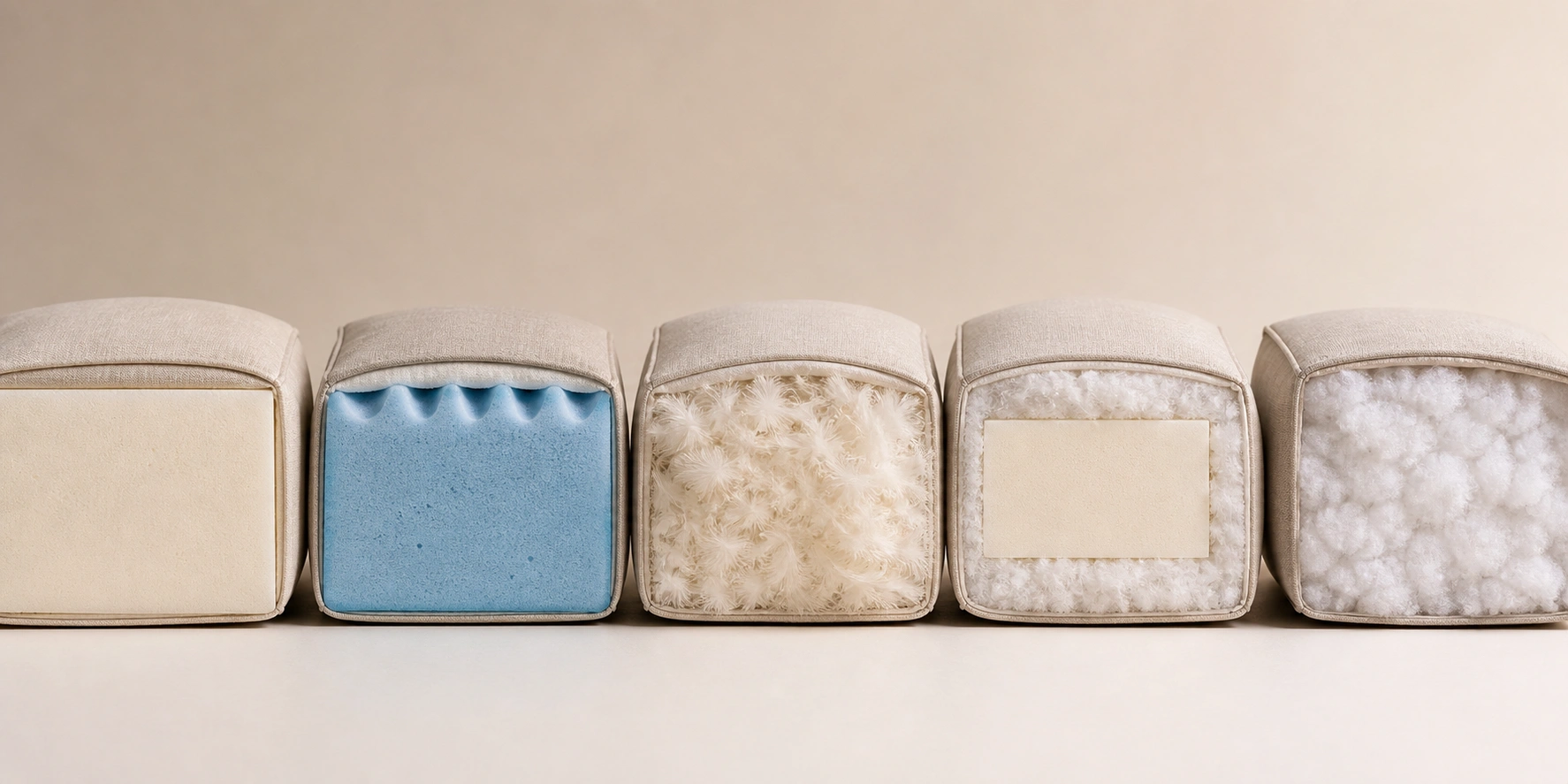
The most comfortable cushions for daily use use a high-resilience foam core (1.8–2.5 density) wrapped in a down or down-alternative layer. This gives you the structural support of foam with the soft, inviting surface of down. You sit "into" the cushion slightly without bottoming out. This is what most high-end furniture brands use in their flagship comfort models. Learn more about foam quality in our foam density guide.
If you struggle to choose between firm and plush, our firm vs plush sofa comparison breaks down the trade-offs in detail. Keep in mind that foam density matters enormously — low-density foam (under 1.5 lb/ft³) will lose its comfort within a year, regardless of how good it feels on day one.
Seat Depth: The Most Overlooked Comfort Factor
Seat depth is the horizontal distance from the front edge of the seat to where it meets the backrest. This single measurement has a massive impact on comfort, yet most buyers never check it. A sofa with the perfect cushions can still feel wrong if the seat depth doesn't match your body. Our seat depth guide explains the math; here's what you need to know.

Seat Depth Guidelines by Body Height
| Your Height | Recommended Seat Depth | What Happens If Too Deep | What Happens If Too Shallow |
|---|---|---|---|
| Under 5'4" | 18–20 inches | Feet dangle, back doesn't reach rest | Thighs unsupported, feels cramped |
| 5'4" – 5'9" | 20–22 inches | Slouching to reach backrest | Can't curl up or recline |
| 5'10" – 6'2" | 22–24 inches | Hard to stand up, feels like a pit | Knees extend past edge, no thigh support |
| Over 6'2" | 24–26 inches | Difficult to exit, trapped feeling | Extremely cramped, unusable for lounging |
For lounging and curling up, a deep-seat sofa (23+ inches) is ideal. For formal sitting or smaller rooms, a standard depth (20–22 inches) works better. If you want to compare standard and deep options side by side, see our standard vs deep seat comparison.
Many product listings show "overall depth" (front of seat to back of the frame), not actual "seat depth" (front of seat to where it meets the back cushion). Always look for the specific "seat depth" measurement. Overall depth is typically 8–12 inches more than seat depth. If the listing doesn't specify seat depth, ask the seller directly or check reviews where buyers often mention it.
Back Support & Lumbar Comfort
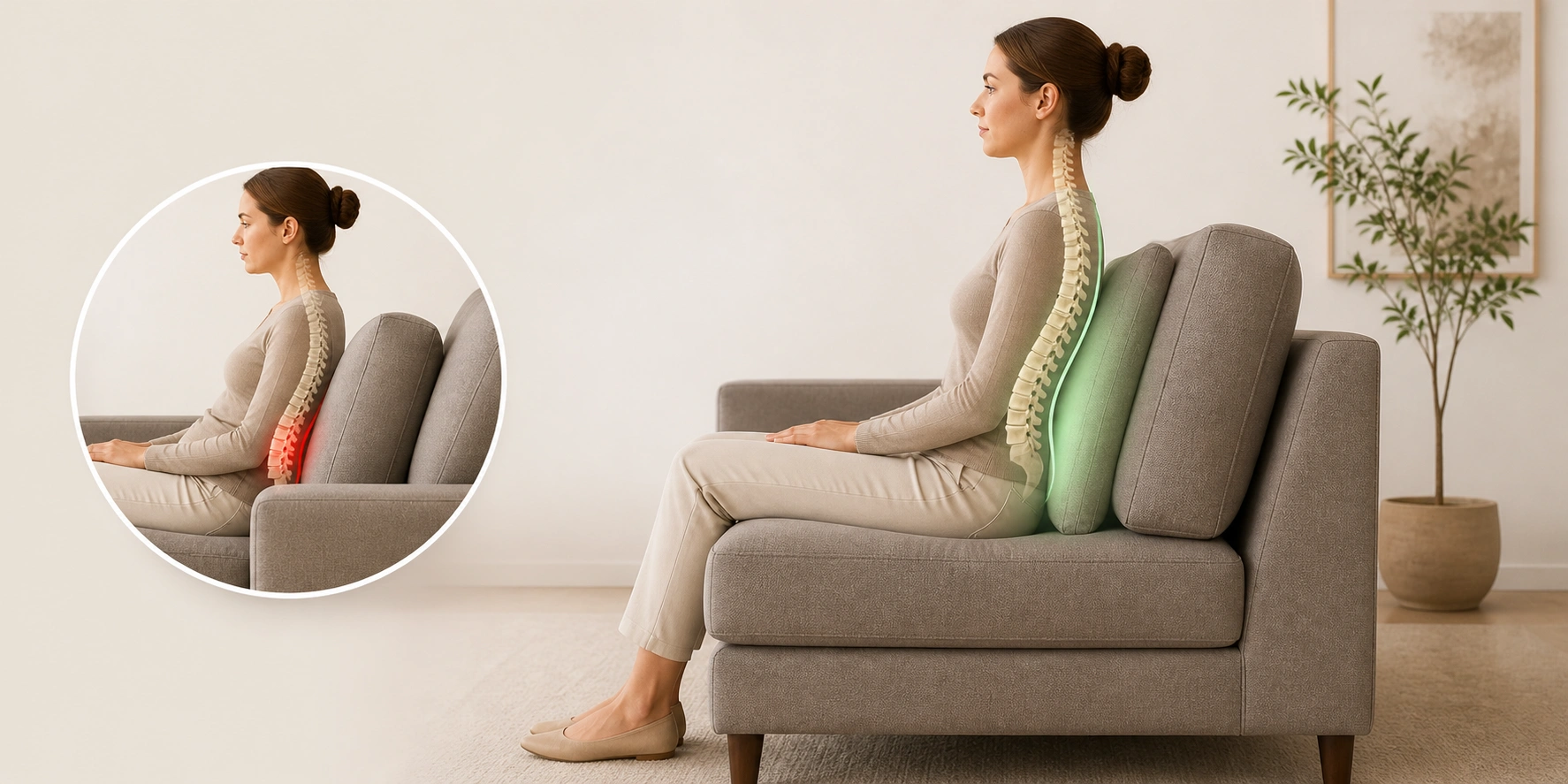
A comfortable sofa must support your spine, not just cushion your bottom. Poor back support leads to slouching, lower back pain, and fatigue during extended sitting. The two critical measurements are back height (how tall the backrest is) and back angle (how far it reclines from vertical).
- Low-back sofas (under 30 inches): Sleek and modern, but provide minimal upper back and neck support. Best for casual, short-duration sitting. Not ideal for people with back issues.
- Mid-back sofas (30–36 inches): The most versatile option. Supports the lumbar region and mid-back while maintaining an open feel. Works for most body types and sitting positions.
- High-back sofas (36+ inches): Excellent full back and neck support. Ideal for tall individuals, avid readers, and anyone who spends extended time on the sofa. A high-back sofa is particularly beneficial if you have back pain. For a detailed comparison, see our high-back vs low-back guide.
If you experience back discomfort while sitting, a sofa designed specifically for spinal health can make a significant difference. Our sofa for back pain guide covers ergonomics in depth, including lumbar cushion design and seat height recommendations.
When you sit on a sofa, run your hand behind your lower back. If there's a gap between your back and the cushion, the sofa lacks proper lumbar support. A well-designed sofa back cushion should fill this gap naturally. You can add a lumbar pillow as a workaround, but ideally the sofa should provide this support on its own.
Spring Systems & Suspension: The Hidden Comfort Layer
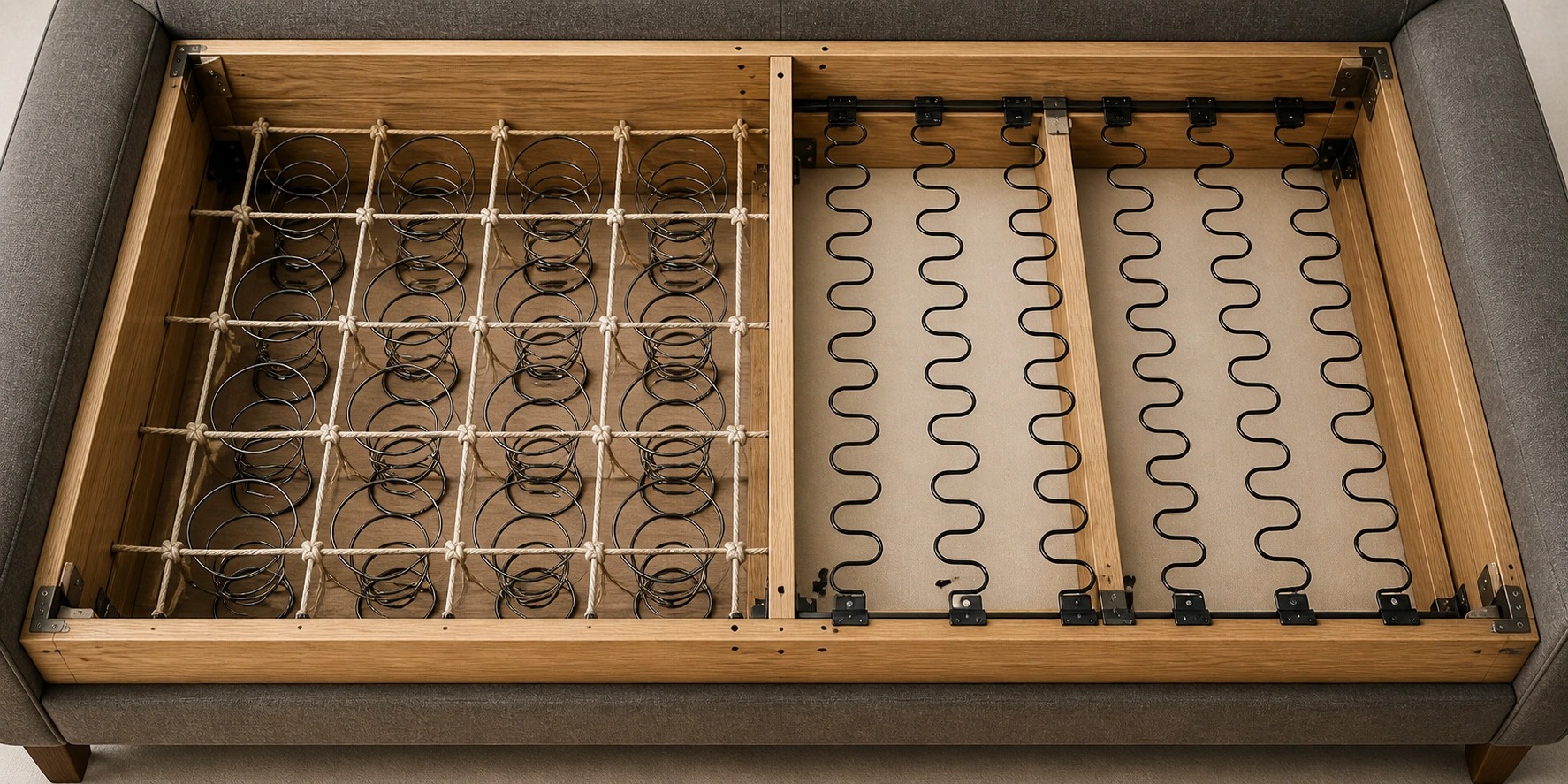
Most buyers never think about what's under the cushions, but the spring system is the foundation of sofa comfort. It determines how the sofa responds to weight, whether it sags over time, and how even the support feels across the entire seating surface. Our spring systems guide and suspension types guide cover this in full detail.
Spring Types Ranked by Comfort
| Spring Type | Comfort Quality | Even Support | Longevity | Price Tier |
|---|---|---|---|---|
| Eight-Way Hand-Tied | Exceptional | Perfect | 20+ years | Premium ($2,500+) |
| Drop-In Coil Unit | Very Good | Very Good | 15+ years | Upper-Mid ($1,500+) |
| Sinuous Wire (No-Sag) | Good | Good | 8–12 years | Mid-Range ($500+) |
| Webbing (Elastic/Rubber) | Fair | Uneven | 3–5 years | Budget (under $500) |
Eight-way hand-tied springs are the gold standard because each coil is individually tied to neighboring coils with twine, creating a network that distributes weight evenly. This prevents the "middle seat sag" problem common on cheaper sofas. If your budget allows, this is the one feature most likely to deliver a noticeable comfort upgrade. For an overview of everything that goes into a quality build, check our frame materials guide.
Most Comfortable Sofa Types Compared
Certain sofa designs are inherently more comfortable than others. The shape, size, and configuration of a sofa type affects how your body interacts with it. Here's how popular styles rank for comfort, along with who they suit best.
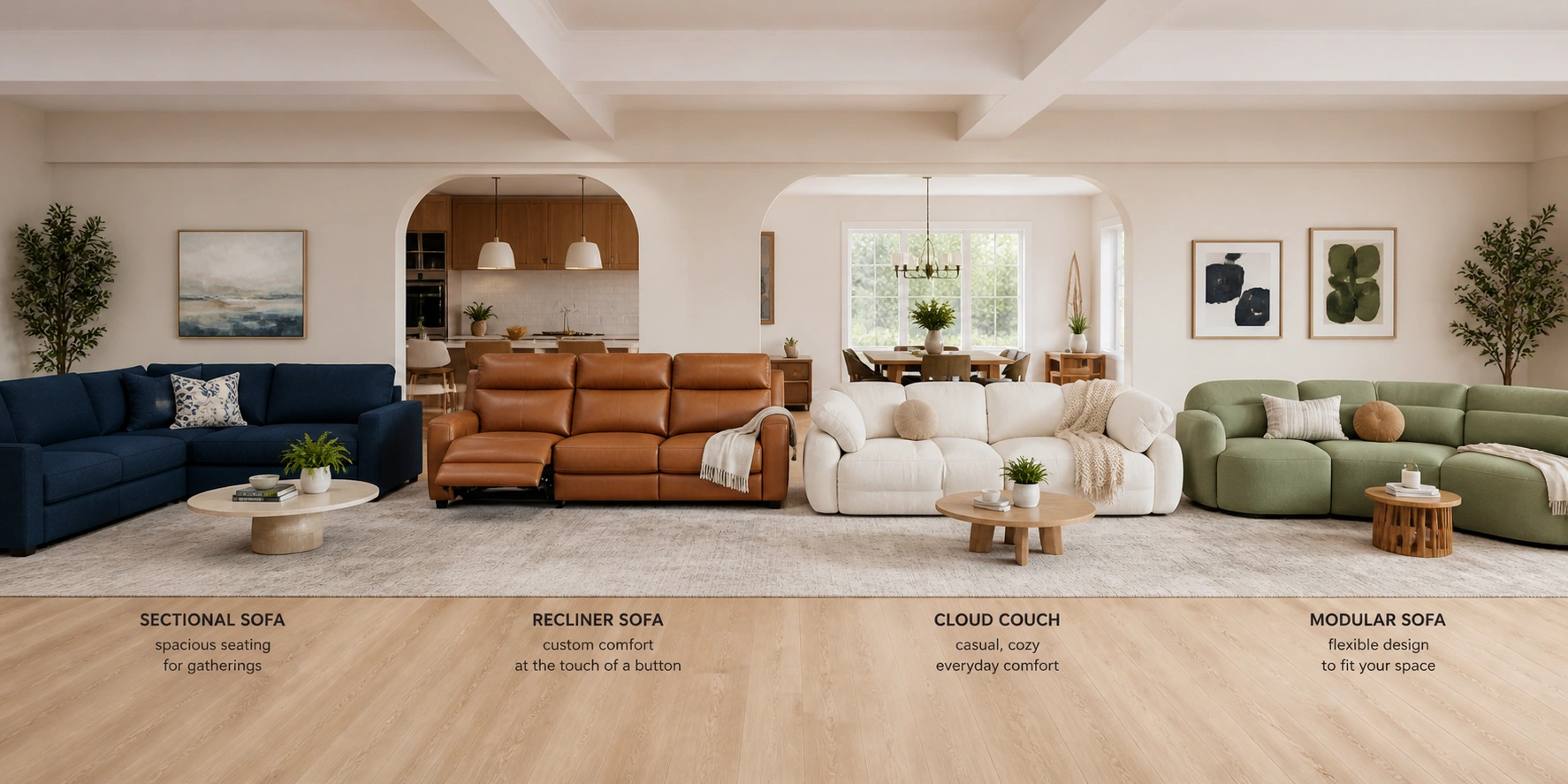
1. Deep-Seat Sectional Sofa — Best for Lounging
A sectional sofa with a deep seat (23+ inches) and plush cushions is arguably the most comfortable sofa type for casual living. The L-shape or U-shape configuration lets you stretch out fully, and the chaise lounge section provides leg support without needing an ottoman. Sectionals work especially well in family rooms and large living rooms. The downside is that they require significant floor space and are harder to reposition.
2. Recliner Sofa — Best for Targeted Support
A recliner sofa combines an adjustable backrest with an extendable footrest, giving you precise control over your sitting angle. This makes it the best choice for people who want lumbar support and leg elevation. Recliners are particularly beneficial for seniors, as noted in our best sofas for seniors guide. Modern recliners have shed their bulky reputation — many now look sleek and contemporary. They're ideal for daily napping and movie marathons.
3. Cloud Couch — Best for Sink-In Softness
The cloud couch style features oversized, overstuffed cushions with a low, modular profile. It delivers a distinctive sink-in, enveloping comfort that feels like sitting on a giant pillow. Cloud couches use generous amounts of down or down-alternative wrap over foam, creating a luxurious but less structured sit. They're perfect for people who prioritize coziness over upright posture. Keep in mind that the very softness that makes them comfortable also means they require more frequent fluffing and cushion maintenance.

4. Modular Sofa — Best for Customizable Comfort
A modular sofa lets you rearrange individual pieces to create the configuration that works best for your space and body. Need a longer chaise? Add another module. Want a corner piece for reading? Swap it in. This flexibility means you can optimize comfort for different activities — a tighter arrangement for conversation, a spread-out layout for lounging. Modular designs pair well with small spaces because you can adapt the shape to fit.
5. Sofa with Chaise Lounge — Best for Leg Support
A sofa with a chaise lounge combines the social seating of a regular sofa with an extended section for full leg support. It's more space-efficient than a full sectional but offers similar lounging comfort. The chaise section is perfect for reading, napping, or watching TV with your legs elevated — without the mechanical complexity of a recliner.
6. Three-Seater Sofa — Best for Balanced Comfort
A well-made 3-seater sofa with medium-firm cushions and a standard 21-inch seat depth is the most versatile comfort option. It supports upright sitting for socializing while still being comfortable enough for relaxed evenings. The key is choosing one with quality cushions and a good spring system — a cheap 3-seater can be deeply uncomfortable. For help choosing the right size, see our sofa size guide.
How Upholstery Fabric Affects Comfort
The fabric covering your sofa isn't just about looks — it directly affects how the sofa feels against your skin, how warm or cool it runs, and whether clothing sticks or slides. This is often overlooked but becomes very noticeable during extended sitting sessions.
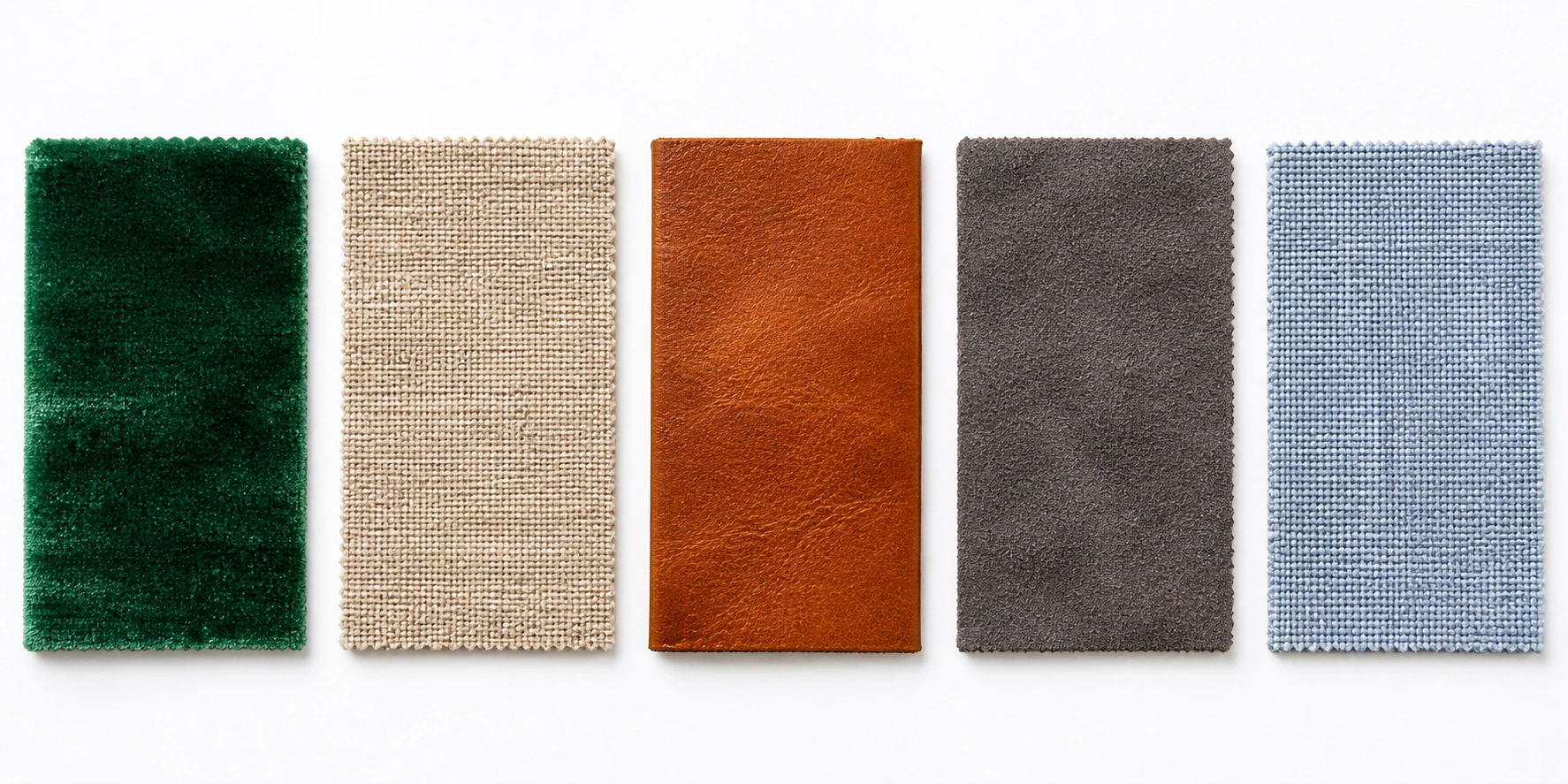
- Velvet: Warm, soft, and slightly grippy — you won't slide around. Feels luxurious against skin but can be warm in summer. A velvet sofa excels in cooler climates and air-conditioned rooms.
- Linen: Cool, breathable, and slightly textured. Ideal for warm environments and people who tend to get warm while sitting. See our linen sofa guide for details.
- Leather: Cool to the touch initially, then warms to body temperature. Smooth surface makes it easy to shift positions. A leather sofa is comfortable year-round but can feel sticky in high humidity.
- Microfiber: Soft, warm, and slightly stretchy. Very comfortable against skin and has a forgiving, casual feel. A microfiber couch is a great budget comfort choice.
- Performance Fabric: Engineered to be durable and stain-resistant while maintaining a soft hand-feel. A performance fabric sofa is ideal for families who want comfort without worry.
- Cotton Blend: Breathable and moderately soft. A balanced option that works in most climates. Fabric durability varies significantly by weave and treatment.
If you're choosing between materials more broadly, our leather vs fabric comparison covers comfort, durability, maintenance, and cost differences in detail.
How to Test Sofa Comfort Before Buying
Reading about comfort factors is useful, but nothing replaces physically testing a sofa. However, most people spend only 30 seconds sitting on a sofa in a showroom — far too little time to evaluate comfort accurately. Here's a systematic testing method based on our complete guide to testing sofa comfort.
Sit for 10+ Minutes in Your Normal Posture
Don't just perch on the edge. Sit the way you actually sit at home — lean back, slouch a little, put your arms on the rests. It takes 5–10 minutes for initial impressions to fade and real comfort (or discomfort) to emerge.
Check Your Feet Position
Your feet should rest flat on the floor with your knees at roughly a 90-degree angle. If your feet dangle or you have to slide forward to reach the floor, the seat depth or height is wrong for your body.
Test the Lumbar Gap
Lean back and run your hand behind your lower back. Is there a gap? Does the cushion fill it naturally? If not, this sofa will cause lower back fatigue during extended sitting.
Press Down to Feel for the Frame
Press firmly into the seat cushion with both hands. You should feel cushion resistance, not hard wood or metal. If you hit the frame easily, the cushions are too thin for lasting comfort.
Try Multiple Positions
Sit upright, recline at an angle, curl your legs up, lie down if the sofa allows. A truly comfortable sofa should feel good in multiple positions, not just one.
Test the Middle Seat
On a 3-seater, sit in the center. This is where quality differences show — cheap sofas sag in the middle because they lack proper spring support. If the middle seat feels significantly softer or lower, the sofa won't age well.
Bring a Friend or Family Member
Comfort is subjective — what feels perfect to you may feel wrong to your partner. Testing together prevents disagreements and ensures the sofa works for everyone in the household.

Common Comfort Mistakes Buyers Make
Even informed buyers make comfort errors. These are the most common pitfalls we see, and avoiding them will dramatically improve your chances of loving your sofa for years.
❌ Choosing Looks Over Comfort
A beautiful sofa that feels uncomfortable becomes a source of daily frustration. You'll look at it every day and feel regret. Always prioritize comfort first — you can always add throw pillows to improve aesthetics.
❌ Assuming Expensive = Comfortable
High price often reflects design brand, materials, or construction — not necessarily comfort. Many luxury sofas use firm foam for durability that feels uninviting. Always test, regardless of price.
❌ Ignoring Seat Depth for Your Height
A 6-foot person buying a 19-inch seat depth will feel cramped. A 5'2" person buying a 25-inch depth will feel lost. Match seat depth to your height using the guidelines above.
❌ Not Testing the Middle Seat
The center seat is the weakest point on most sofas. If it sags or feels different from the outer seats, the sofa will develop an uncomfortable dip within months.
❌ Buying Online Without Return Policy
When you can't test in person, a generous return window is essential. Some online sofas look great in photos but feel completely different in reality. Always check the return policy before purchasing.
❌ Forgetting About Your Use Case
A sofa for formal entertaining needs different comfort than one for movie marathons or daily napping. Define how you'll use it first, then choose comfort features accordingly.
Understanding the relationship between comfort and long-term quality is crucial. Our comfort vs durability guide explains why the softest sofa isn't always the best investment, and our price vs quality guide helps you find the comfort sweet spot within your budget. For a comprehensive overview of what to look for, read how to check sofa quality before buying.
How to Maintain Sofa Comfort Over Time
Even the most comfortable sofa will lose its feel if you don't maintain it properly. Cushions compress, springs stretch, and fabric wears. Here's how to keep your sofa feeling like new for as long as possible.
- Rotate and flip cushions weekly: This ensures even wear and prevents one side from developing a permanent indent. If your cushions are attached (fixed upholstery), rotate removable seat pads if available.
- Fluff down and fiber cushions daily: Down and polyester-wrapped cushions lose their loft when compressed. A quick fluff restores the plush feel. Think of it like fluffing a pillow — it takes 10 seconds.
- Don't sit in the same spot every time: Varying your seating position distributes wear across the entire sofa. This is especially important for the middle seat, which bears the most weight in a 3-seater.
- Address sagging early: If you notice cushions starting to flatten, act before the foam permanently deforms. Our guide to fixing sagging cushions covers simple DIY solutions. For persistent issues, see what to do when cushions flatten.
- Keep the sofa clean: Dirt and body oils break down fabric fibers and make surfaces feel rough. Regular cleaning with appropriate methods preserves both appearance and feel. See our guides for cleaning fabric sofas and cleaning leather sofas.
- Use proper support: Never stand or jump on a sofa. Don't allow children to use the armrests as steps. These actions damage springs and frames, leading to uneven support and squeaking.
- Add quality accessories: A well-chosen throw or pillow can enhance comfort without damaging the sofa. Browse our throws and pillows guide for recommendations that complement rather than mask comfort.

If your sofa has already lost its comfort, replacement parts can help. Our replacement cushions guide explains how to restore firmness without buying a new sofa. For spring-related issues, our spring replacement guide covers the repair process. For a complete overview of common issues, visit common sofa problems and fixes.
Ready to Find Your Perfect Comfortable Sofa?
Now that you know what makes a sofa comfortable, browse our curated selection of top-rated comfortable sofas below — each one evaluated for cushion quality, seat depth, back support, and overall feel.
View Recommended Sofas