How to Measure a Sofa Correctly
The only guide you need to measure your sofa and your room with confidence — avoid costly returns and find the perfect fit.
Buying a sofa without measuring first is one of the most common — and expensive — mistakes homeowners make. According to furniture retailers, incorrect sizing accounts for roughly 20-30% of all sofa returns. A sofa that looked perfect online can overwhelm a small apartment, block a doorway, or leave your living room feeling cramped and awkward.
This guide walks you through every measurement that matters: the sofa itself, the room it will live in, and the path it must travel to get there. Whether you are shopping for a compact apartment sofa, a spacious sectional sofa, or a versatile sleeper sofa, these steps will ensure it fits perfectly.
Why This Matters: Measuring takes about 15-30 minutes. Returning a sofa costs $150-$500 in shipping fees, takes weeks, and creates unnecessary stress. A few careful measurements now save you significant time and money later.
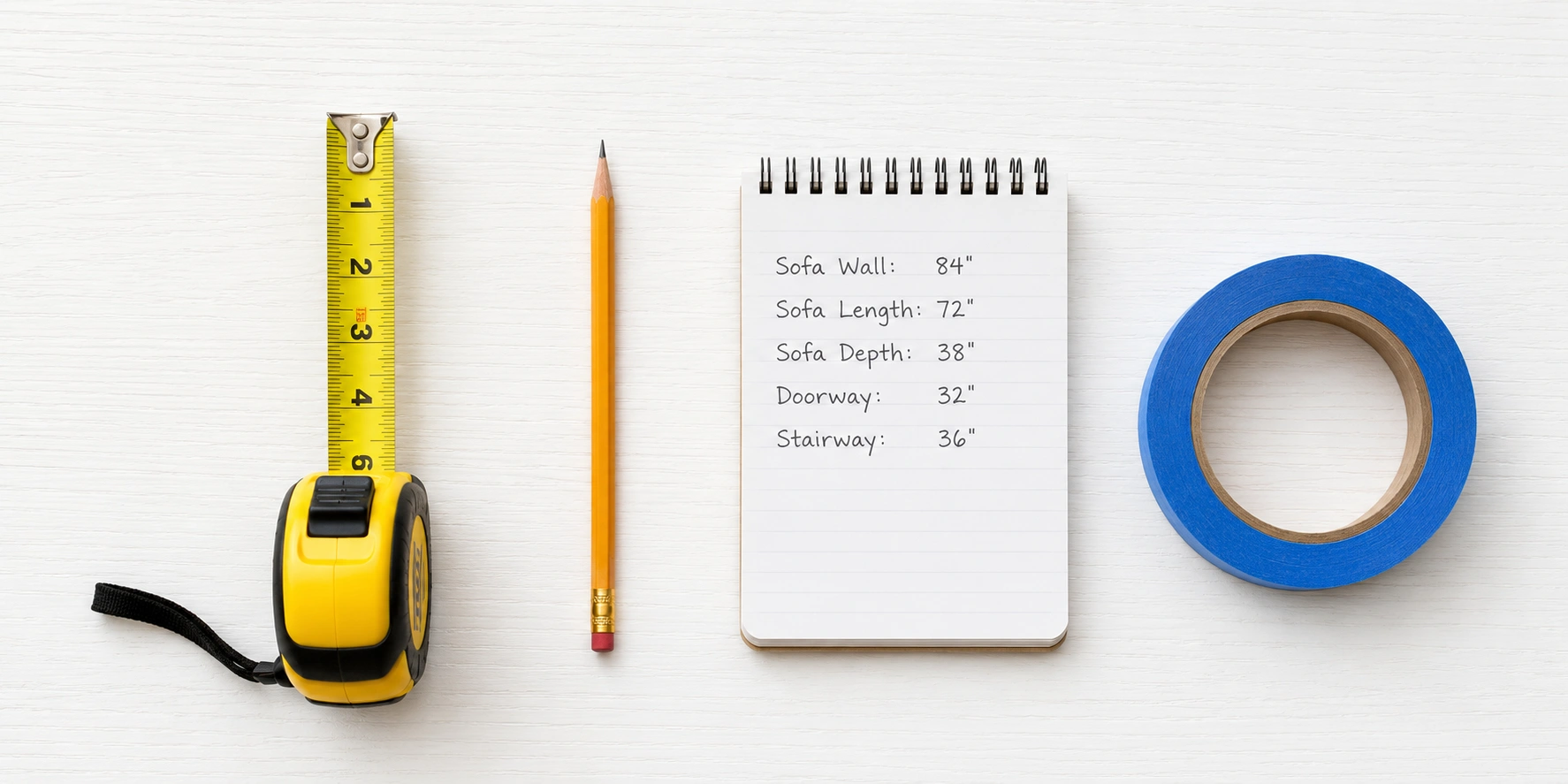
Tools You Need
Before you start, gather these basic tools. You probably have most of them at home already.
Step-by-Step: How to Measure a Sofa
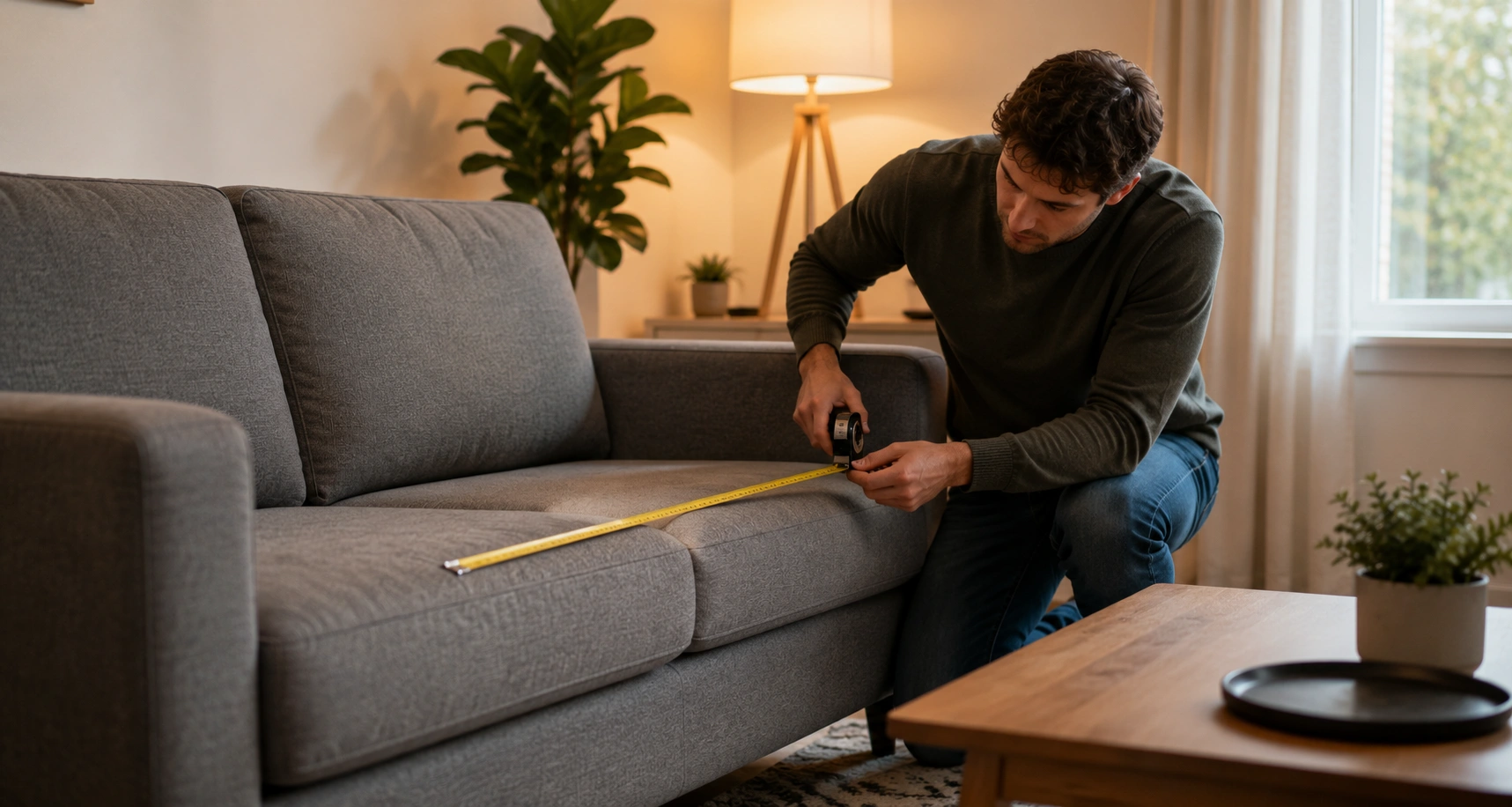
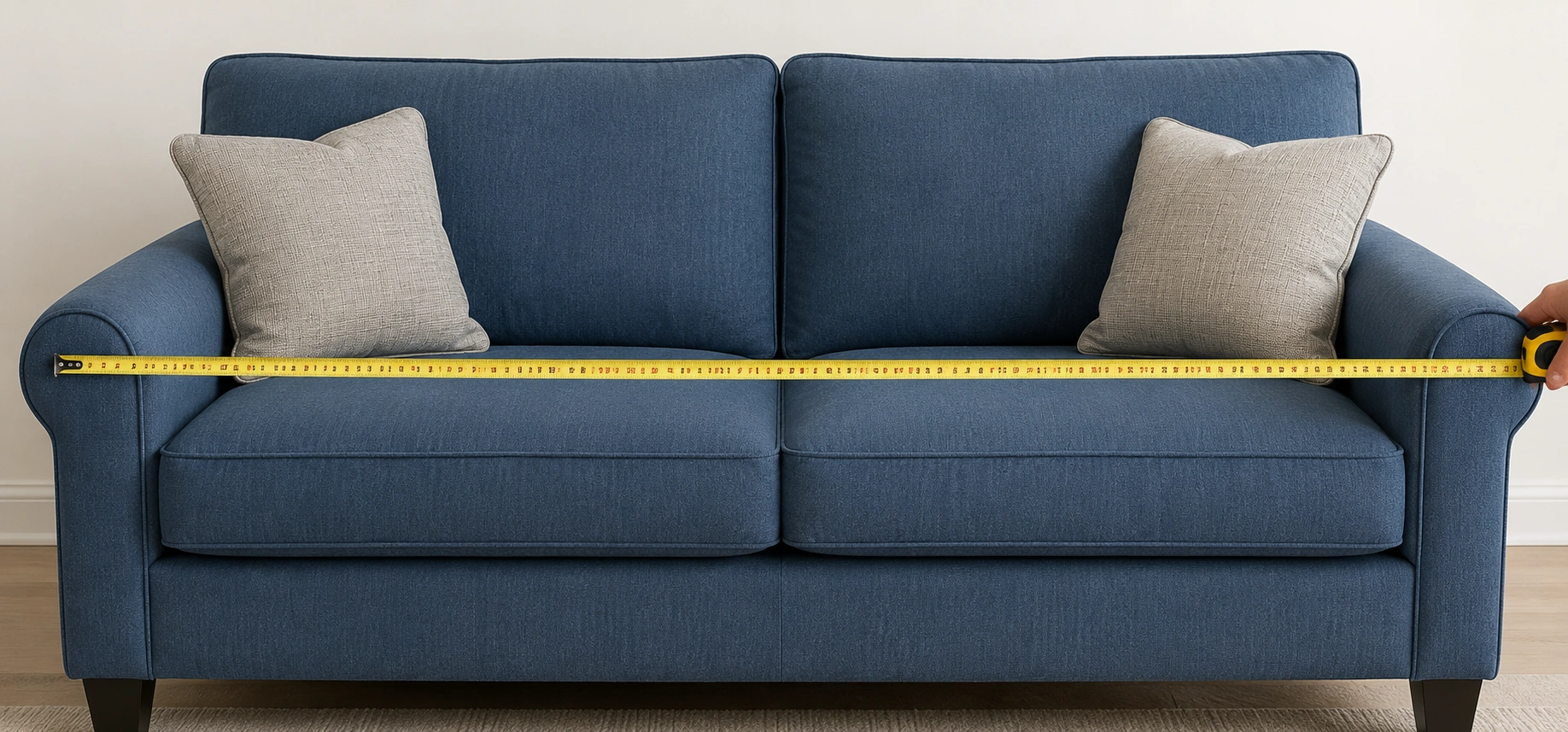
Measure the Sofa Width
The width is the most important dimension because it determines how much wall space your sofa will occupy. This measurement directly impacts whether your living room sofa balances with the rest of the furniture.
- Place the tape measure at the outermost left edge of the sofa (including the armrest)
- Extend it straight across to the outermost right edge (including the other armrest)
- Keep the tape parallel to the floor — do not follow any curves
- Write down the measurement in inches
For a sectional sofa, measure each piece separately and then measure the total combined width. This helps you plan different configurations in your room.
Measure the Sofa Depth
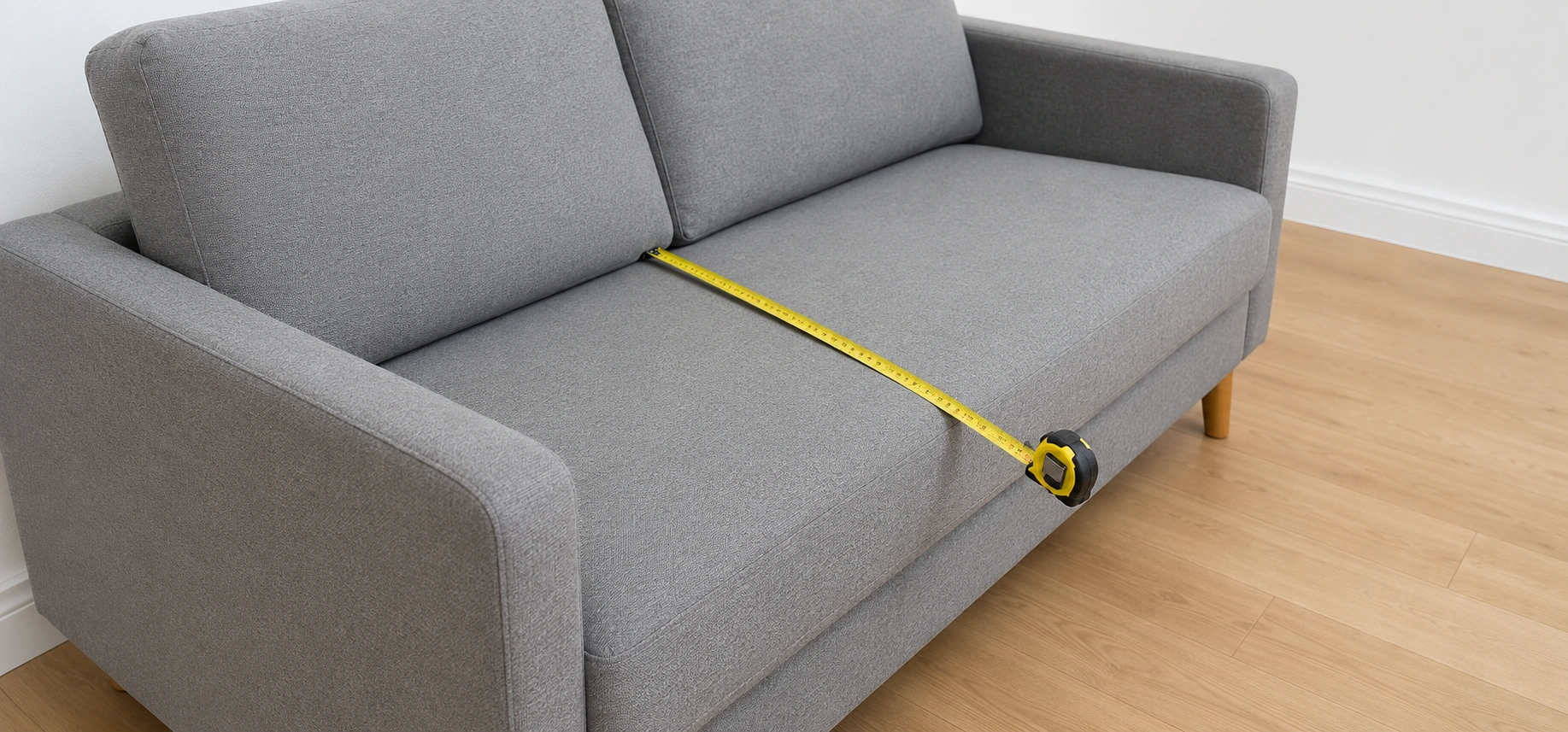
The depth determines how far the sofa projects into your room. A sofa that is too deep can make a room feel narrow and block traffic flow. The seat depth is especially important for comfort — too shallow and your legs hang off, too deep and you cannot reach the floor.
- Measure from the backrest (the part that touches the wall) to the front edge of the seat cushion
- If the sofa has loose back cushions that extend beyond the frame, include them in the measurement
- For a recliner sofa, also measure the depth when fully reclined — this is critical for placement
- Record both the seated depth and the fully extended depth if applicable
Many people only measure the seat cushion depth and forget the backrest thickness. Always measure from the absolute back to the absolute front for the true overall depth.
Measure the Sofa Height
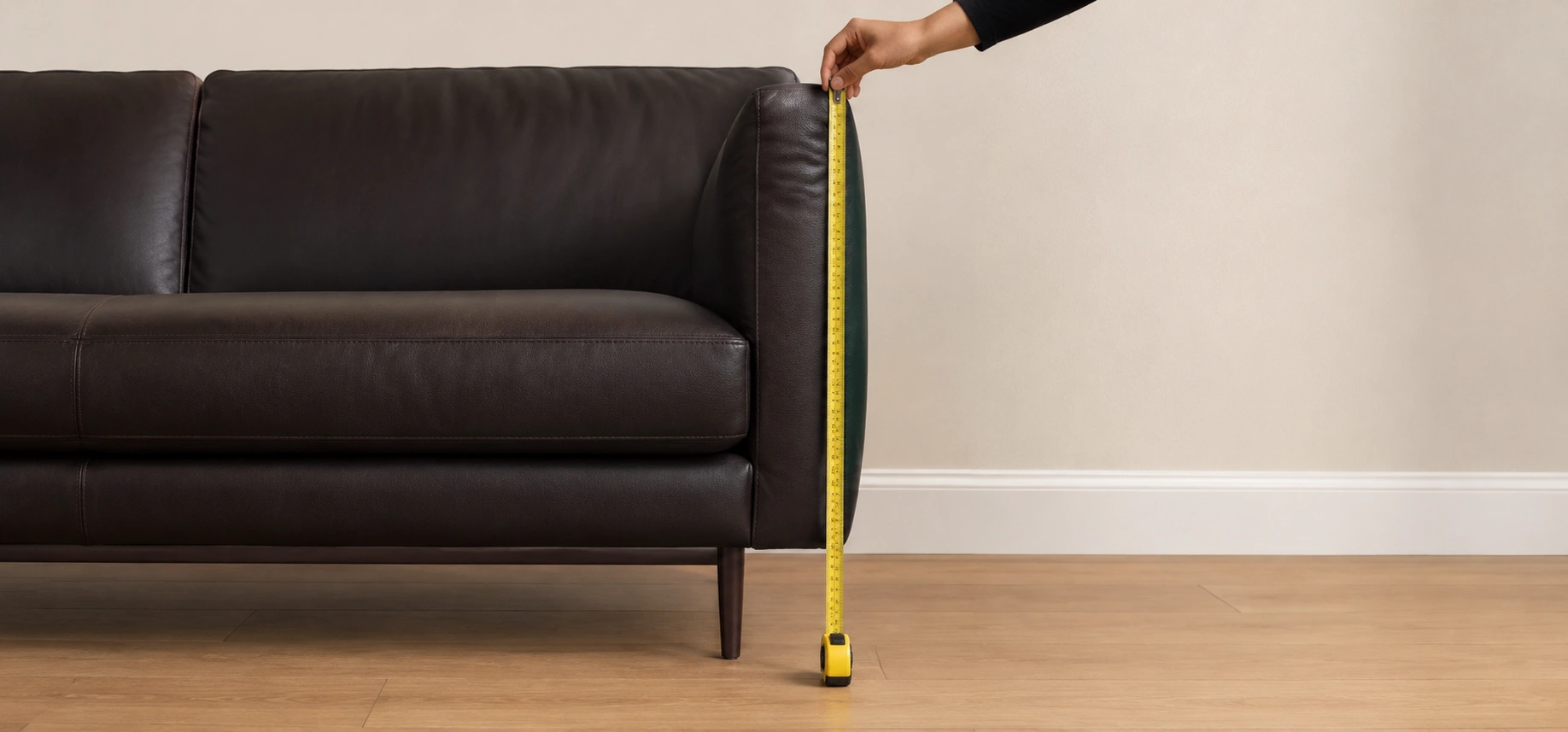
The height affects visual proportion in your room and determines whether the sofa will fit under windows, shelves, or artwork. It also matters for delivery — low-clearance entryways can be a problem for tall sofas.
- Measure from the floor to the highest point of the sofa backrest
- If the sofa has detachable legs, measure both with and without legs
- For a high-back sofa, pay special attention to ceiling height and any overhead fixtures like ceiling fans or light fixtures
- Also measure from the floor to the bottom of the armrest if you plan to place a side table nearby
Measure the Seat Height
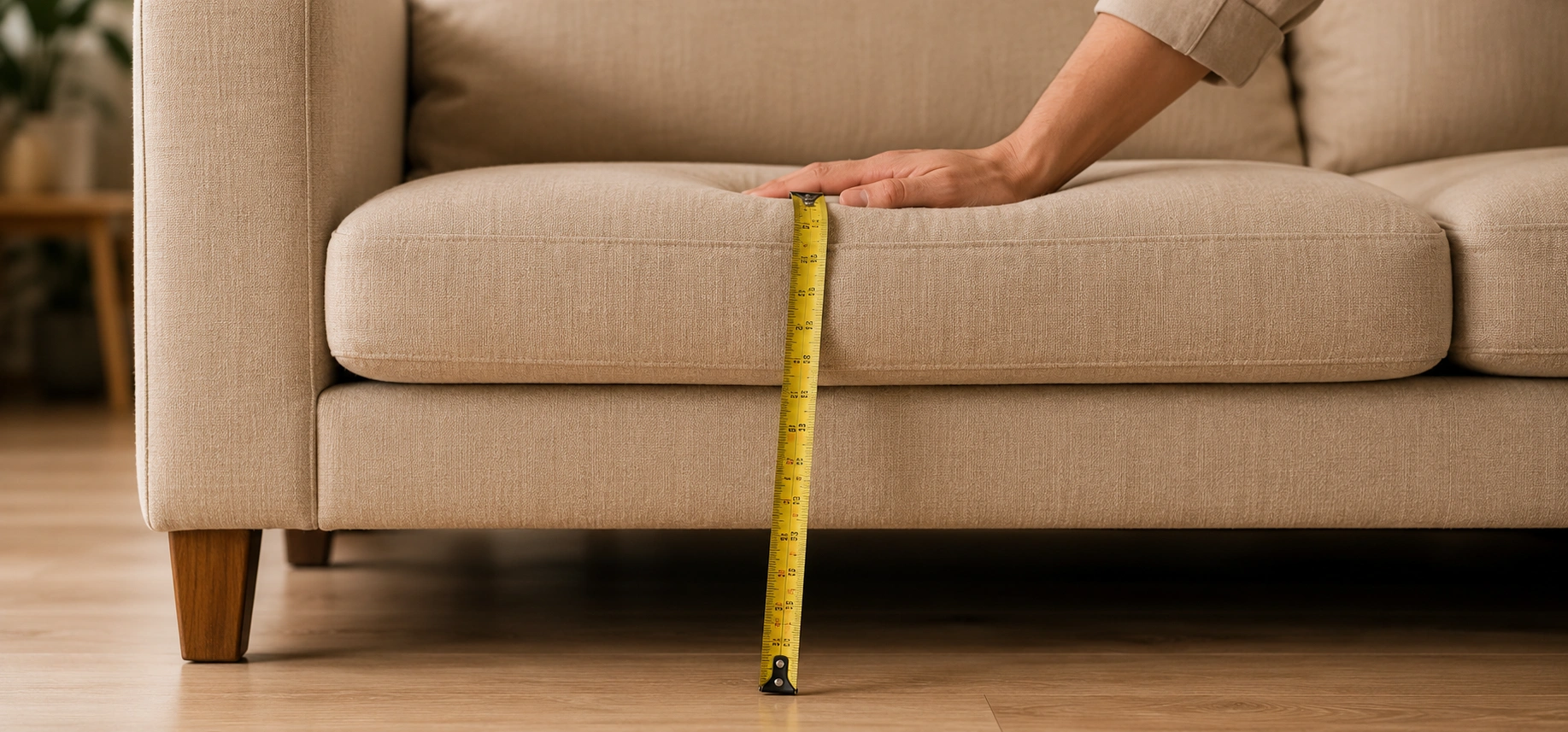
Seat height is a comfort measurement that determines how easy it is to sit down and stand up. This is particularly important for seniors or anyone with mobility concerns. The standard comfortable seat height is 17-19 inches from the floor.
- Measure from the floor to the top of the compressed seat cushion (sit on it first if possible, or press down firmly)
- Compare with your current sofa: if you find it easy to get up from, use that height as your benchmark
- If you are choosing between a firm vs plush sofa, remember that plush cushions compress more, effectively lowering the seat height
If your knees are above your hips when seated, the sofa is too low. If your feet dangle, it is too high. Your thighs should be parallel to the floor for optimal comfort and posture support.
Measure Doorway and Hallway Clearance
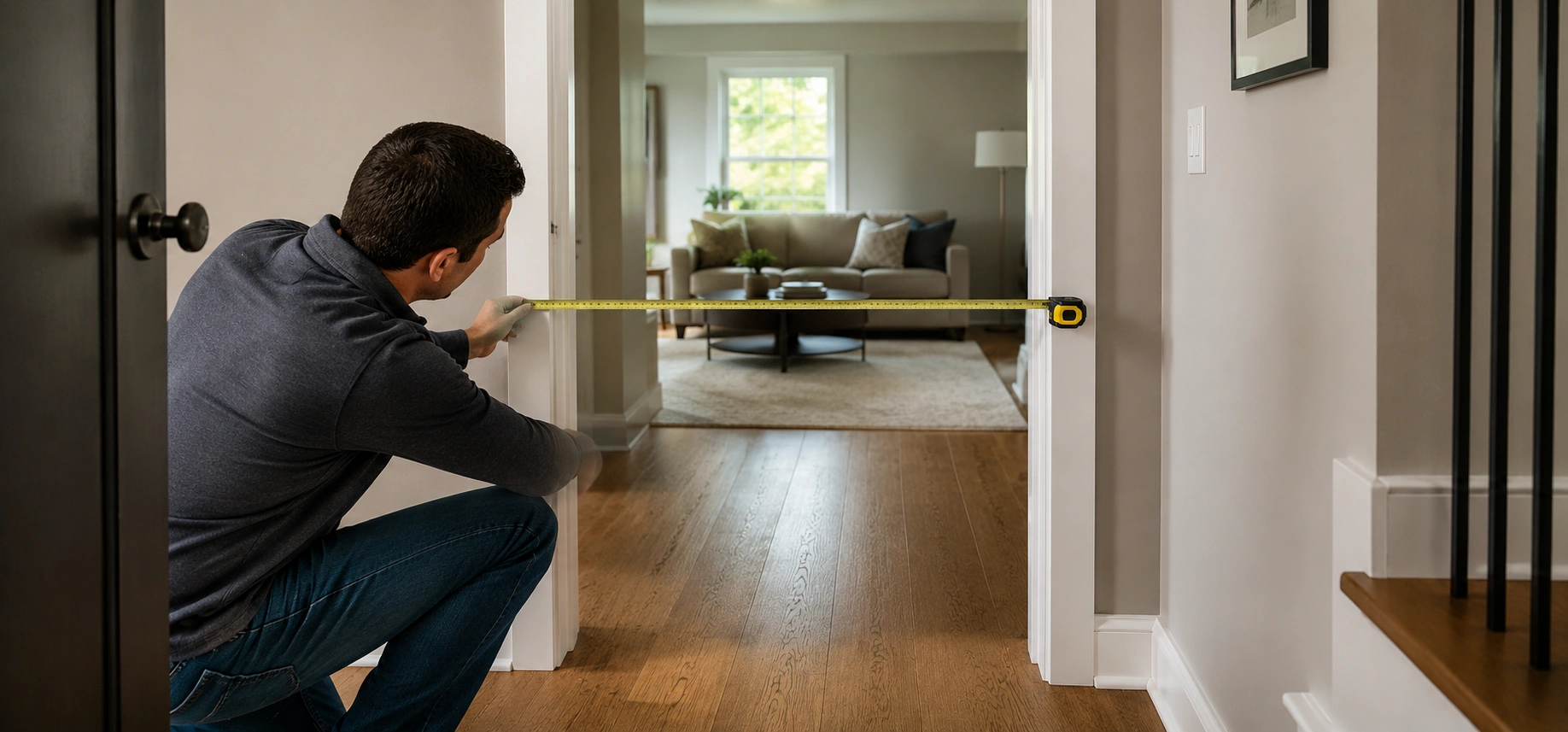
This is the step most people skip — and it causes the most delivery disasters. Your sofa might fit the room perfectly but never make it inside. Every doorway, hallway turn, staircase, and elevator on the delivery path must be measured.
- Measure the width and height of every doorway the sofa must pass through
- Measure hallway width at the narrowest point, including any radiators, molding, or furniture in the path
- For staircases, measure the width of the stairs, the ceiling height above the stairs, and any turns or landings
- If using an elevator, measure the interior width and depth of the elevator cab
- Compare the sofa's depth (its narrowest dimension) with the smallest doorway width
If the sofa depth is larger than the doorway width, measure the sofa's diagonal height (from the floor to the opposite top corner of the backrest). If this diagonal is smaller than the doorway's diagonal opening, the sofa can be tilted to fit through.
Map Out the Room Layout
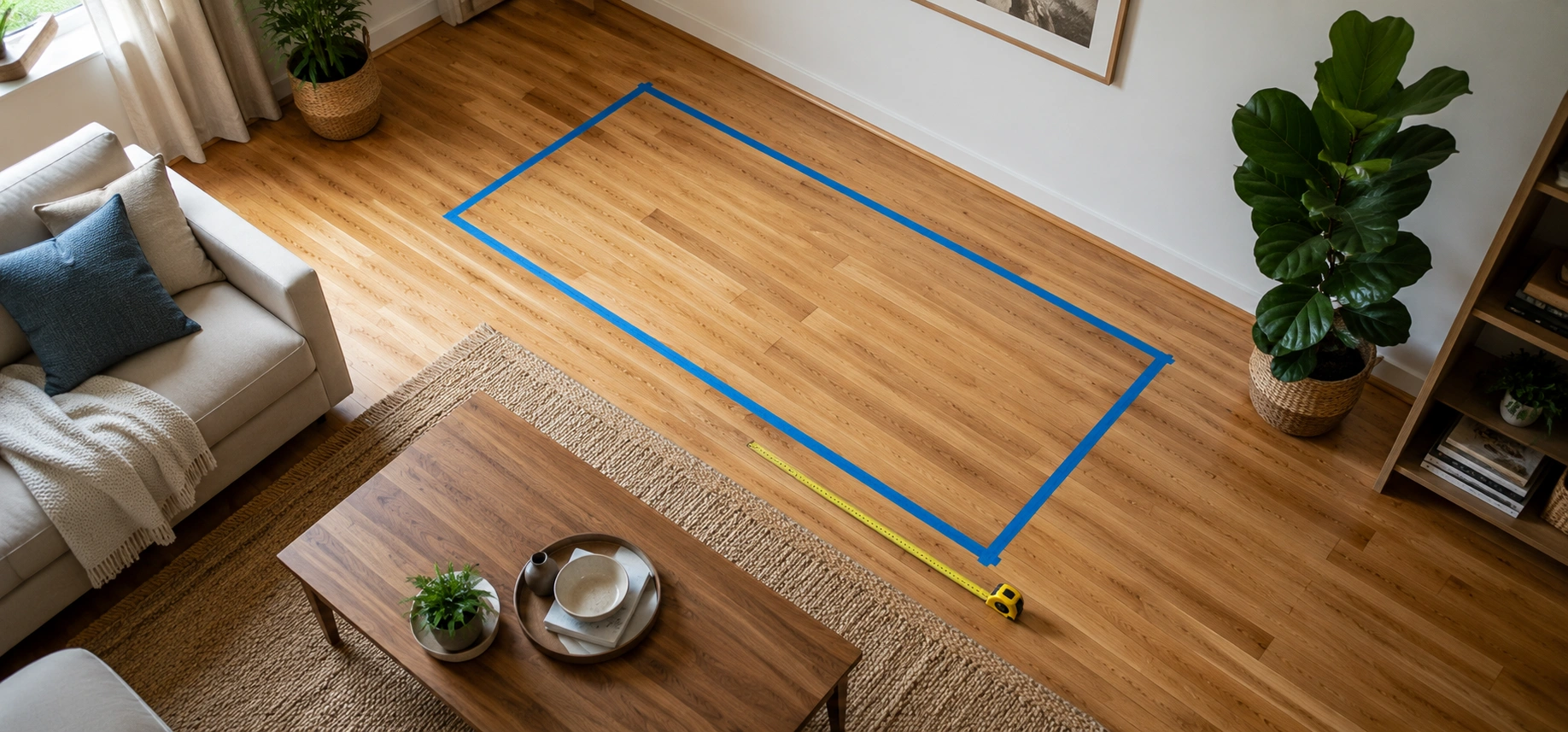
Numbers on paper are helpful, but seeing the actual footprint in your room is transformative. This step reveals whether the sofa truly fits with your existing furniture and traffic patterns. Our living room layout guide covers this in greater detail.
- Use painter's tape to outline the sofa's width and depth directly on the floor
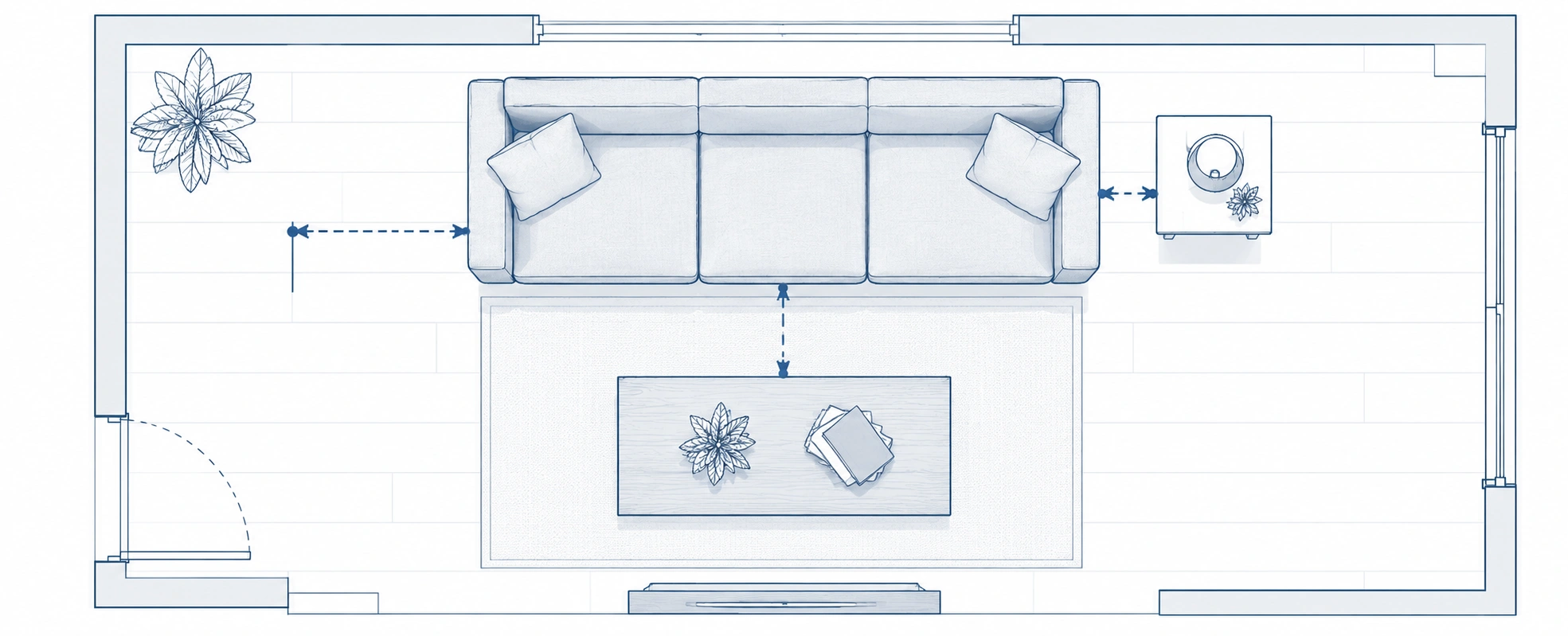
- Leave 18-36 inches of walking space for main traffic paths
- Allow 12-18 inches between the sofa front and your coffee table
- Keep 3-10 inches between the sofa and a side table or wall
- Walk around the taped outline — does the room still feel open and functional?
- Check sightlines: can you see the TV or focal point clearly from the seated position?
Cut cardboard to the exact sofa dimensions and place it on the floor. This is more realistic than tape because it shows the solid area the sofa will occupy. You can even place pillows on it to simulate the back height.
Standard Sofa Dimensions Reference
Use this table as a quick reference when comparing sofa options. Keep in mind that dimensions vary by manufacturer and design style. For a deeper comparison, see our sofa size and room guide.
| Sofa Type | Width | Depth | Height | Seat Height |
|---|---|---|---|---|
| 2-Seater (Loveseat) | 50–72" | 28–35" | 30–36" | 17–19" |
| 3-Seater Sofa | 70–87" | 30–40" | 30–36" | 17–19" |
| 4-Seater Sofa | 88–100" | 32–42" | 31–37" | 17–20" |
| Sectional Sofa | 95–150+" | 35–50" | 30–37" | 17–20" |
| Sleeper Sofa | 70–90" | 35–45" | 32–38" | 17–20" |
| Recliner Sofa | 75–95" | 35–42" (closed) | 35–42" | 18–20" |
| Loveseat (Compact) | 48–60" | 28–32" | 28–34" | 16–18" |
| Modular (Per Module) | 30–45" | 30–40" | 28–35" | 16–19" |
Sofa Size by Room Size
Choosing a sofa that is proportionate to your room is just as important as the measurements themselves. A sofa that is too small looks lost in a large room, while an oversized sofa dominates a small space.
| Room Size | Recommended Sofa Width | Best Sofa Types |
|---|---|---|
| Small (under 10' × 10') | 48–72" | Loveseat, 2-Seater, 1-Seater |
| Medium (10' × 12') | 70–87" | 3-Seater, Small Sectional |
| Large (12' × 16' or more) | 85–120"+ | 4-Seater, L-Shape Sectional, 5-Seater |
Common Measuring Mistakes to Avoid
Even experienced buyers make these errors. Learning from them now saves you from a costly mistake later.
Only Measuring the Wall Space
Measuring the wall where the sofa will go but ignoring the depth means the sofa might block a walkway, door, or window. Always measure width, depth, and height — plus clearance space.
Forgetting Doorway Clearance
A sofa that fits the room is useless if it cannot get through the front door, hallway, or staircase. Always measure the entire delivery path before purchasing.
Not Accounting for Reclined Depth
A recliner sofa or sleeper sofa has a different depth when fully extended. If you do not measure the open position, it may block a pathway when in use.
Measuring with Cushions Removed
Some people remove cushions to get a smaller measurement. Always measure the sofa in its fully assembled, everyday condition for accuracy.
Ignoring Existing Furniture
Measuring the room but forgetting that a coffee table, bookshelf, or sofa table already occupies space. Map the complete room layout, not just the sofa's spot.
Trusting Online Dimensions Blindly
Manufacturer dimensions can vary by 1-2 inches from the actual product. If the sofa is near your limit, add a 2-inch buffer to be safe. Check our guide on how to check sofa quality for more tips.
✅ Complete Sofa Measuring Checklist
Print this checklist or save it on your phone. Check off each item before placing your order.
- Measure sofa width (outermost left to outermost right edge)
- Measure sofa depth (backrest to front of seat cushion)
- Measure sofa height (floor to highest point of backrest)
- Measure seat height (floor to top of compressed seat cushion)
- Measure reclined/extended depth (if applicable)
- Measure front door width and height
- Measure hallway width at narrowest point
- Measure staircase width and ceiling clearance
- Measure elevator interior dimensions (if applicable)
- Measure wall space where sofa will be placed
- Measure room depth to verify sofa will not block pathways
- Tape out sofa footprint on the floor and walk around it
- Verify clearance between sofa and coffee table (12-18 inches)
- Verify clearance between sofa and side tables (3-10 inches)
- Check sightlines to TV or room focal point from seated position
- Add 2-inch buffer to all critical measurements
Special Measuring Situations
Measuring for a Sectional Sofa
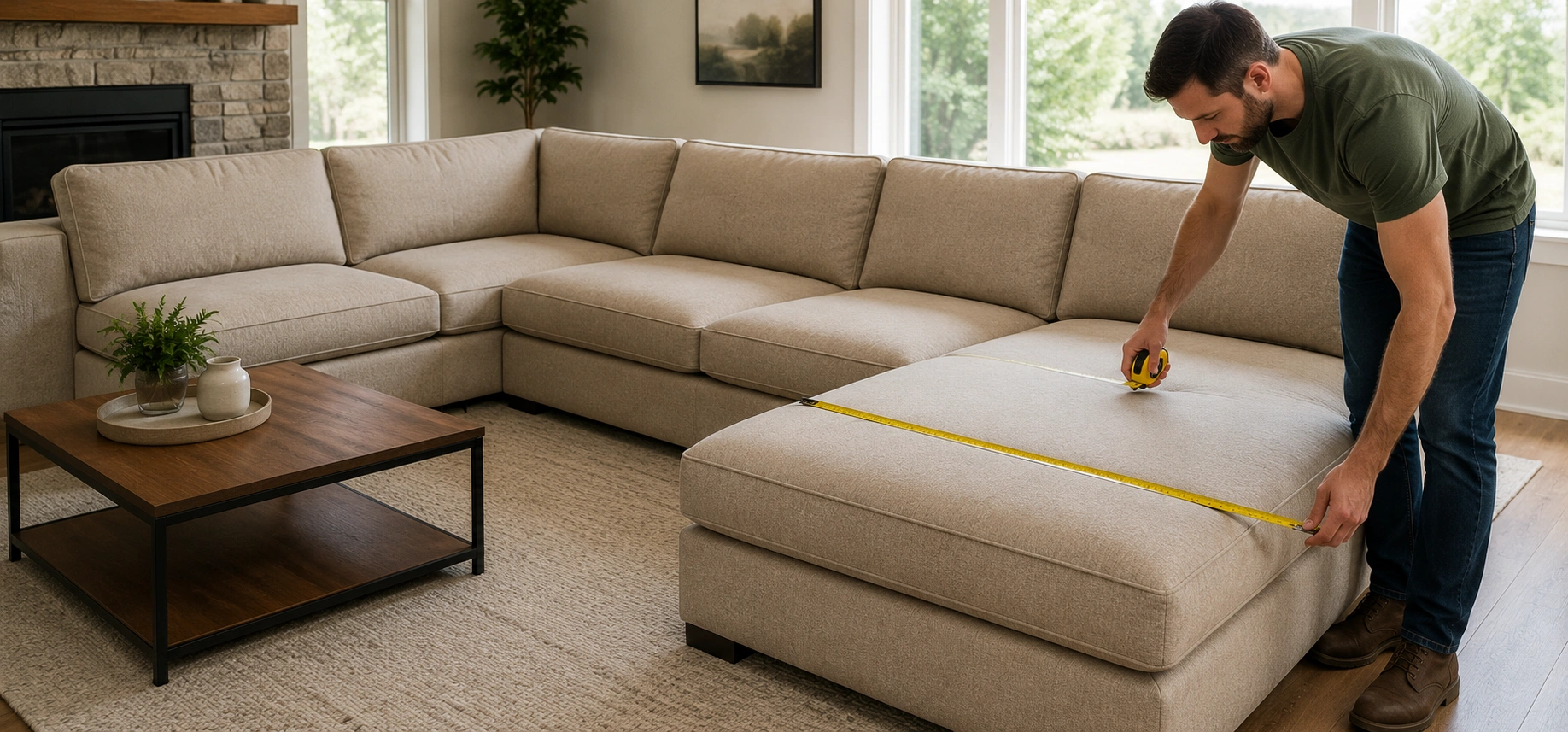
A sectional sofa requires extra attention because it has multiple pieces and can be configured in different ways. A poor measurement can mean the chaise extension blocks a doorway or the L-shape does not fit the room's geometry.
- Measure each section independently: the main couch, the chaise or extension piece, and the corner wedge
- Measure the total combined width for each configuration you are considering (L-shape vs U-shape)
- Measure the total combined depth from the wall to the furthest point of the chaise
- Check that the chaise extension does not block walkways, doors, or other furniture
- Consider whether the sectional pieces can be disconnected for delivery — this often solves tight doorway problems
Measuring for a Sleeper Sofa
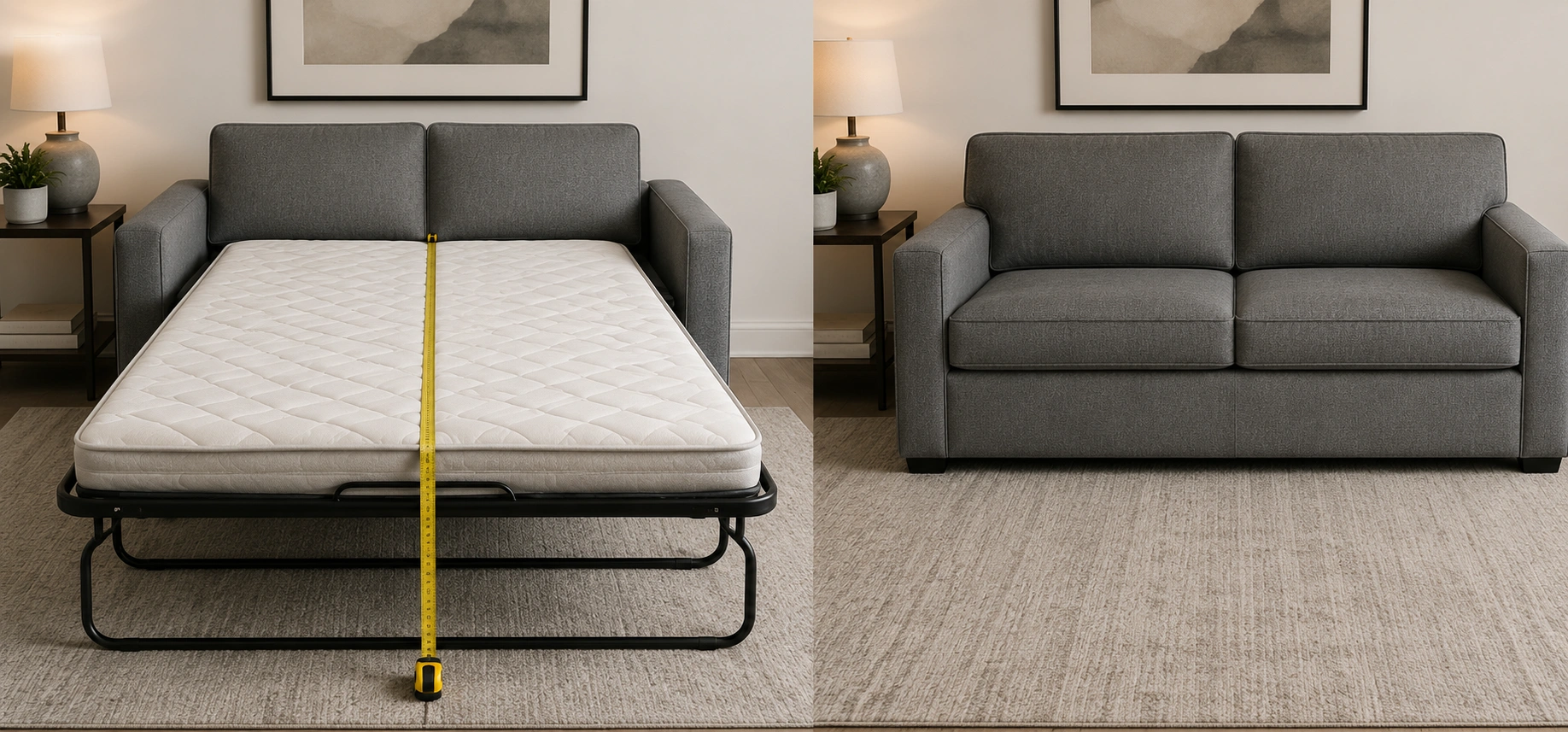
A sleeper sofa has two sets of dimensions: the closed sofa position and the open bed position. Both must fit your room. Many buyers only consider the closed dimensions and discover the bed extends into a walkway or blocks a door when opened.
- Measure the sofa in its closed position (same as a regular sofa: width, depth, height)
- Measure the open bed dimensions: length from head to foot, and width from side to side
- Verify that the open bed does not extend into doorways, block vents, or overlap with other furniture
- Allow extra clearance around the open bed for making it up with sheets and blankets
Measuring for a Recliner Sofa
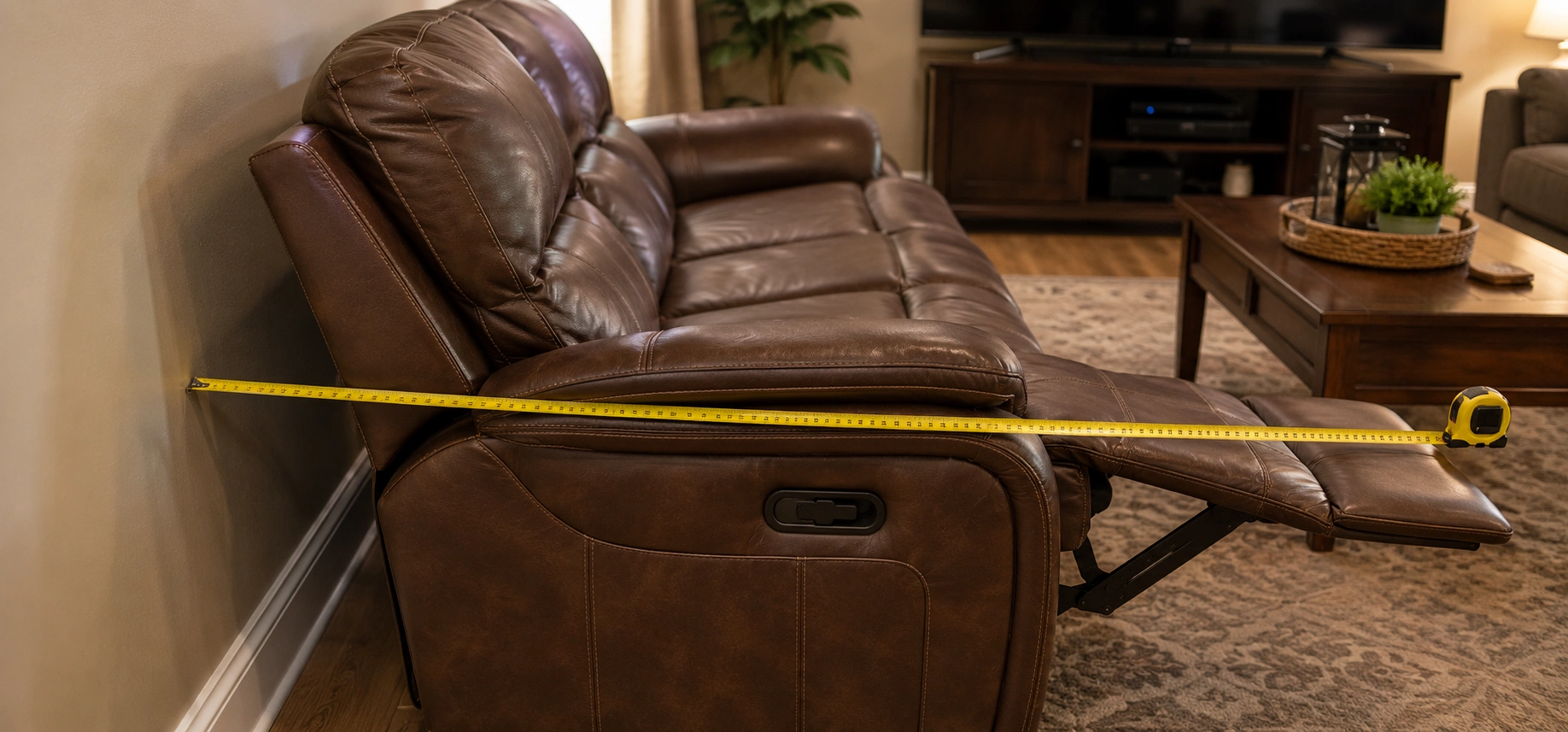
A recliner sofa needs clearance behind it for the reclining mechanism and in front for the footrest. Unlike a regular sofa that sits flush against a wall, a recliner typically needs 3-6 inches of wall clearance behind it.
- Measure the sofa in the upright position (standard width, depth, height)
- Measure the fully reclined depth — the footrest extends forward significantly
- Measure the wall clearance needed — most recliners need 3-6 inches behind the backrest
- Check that the footrest does not block walkways when extended
- If choosing a sofa with USB ports or other powered features, ensure a nearby outlet is accessible
Ready to Find Your Perfect Sofa?
Now that you know exactly how to measure, explore our comprehensive guides to make your final decision with confidence.
How to Choose the Right Sofa →