Best Sofas for Guest Rooms
A complete guide to choosing seating that doubles as sleeping space — so your guests feel welcome and your room stays stylish.
VIEW TOP PICKSA guest room sofa is one of the most practical furniture investments you can make. Unlike a dedicated bed that sits empty most of the year, a well-chosen sofa serves as comfortable daytime seating and transforms into sleeping accommodation when visitors arrive. This dual-purpose approach saves space, reduces clutter, and makes every square foot of your home work harder.
The challenge is finding the right balance between comfort and durability. Guest room sofas experience a unique pattern of use — long periods of inactivity punctuated by sudden, intensive use. This means the materials and construction need to resist moisture buildup, maintain shape during storage, and feel immediately comfortable without a break-in period. Whether you are hosting overnight family, accommodating a work-from-home colleague, or creating a flexible spare room, this guide covers everything you need to know.
Key takeaway: The best guest room sofa is not simply the most comfortable one — it is the one that fits your room dimensions, matches how often you host, and requires minimal effort to convert between seating and sleeping modes.
Why a Sofa Beats a Dedicated Guest Bed
Many homeowners default to placing a standard bed in the guest room without considering alternatives. While a traditional bed has its advantages, a sofa-based solution offers several compelling benefits that align with how modern homes actually function.

- Space efficiency: A sofa typically occupies 30-40% less floor space than a bed with a frame, leaving room for a desk, reading nook, or storage. This is especially valuable if your guest room is on the smaller side.
- Daily utility: An empty guest bed collects dust and serves no purpose between visits. A sofa gives you a quiet reading spot, a work-from-home station, or an additional lounge area year-round.
- Flexibility: If your needs change — the room becomes a home office, a nursery, or a hobby room — a sofa adapts more easily than a fixed bed frame. Traditional sofas can be moved, repositioned, or even relocated to another room.
- Cost savings: A quality sleeper sofa or daybed often costs less than buying a separate bed frame, mattress, box spring, and bedding set. For budget-conscious buyers exploring affordable sofa options, the savings can be significant.
- Easier maintenance: Keeping a sofa fresh between guests is simpler than maintaining a bed. Removable covers, spot cleaning, and occasional vacuuming are usually sufficient — no need to launder sheets and flip mattresses for an empty room.
Best Sofa Types for Guest Rooms
Not every sofa design works well in a guest room context. The ideal choice depends on your room size, hosting frequency, and whether the room serves additional purposes. Here are the five most effective types, each with distinct advantages.

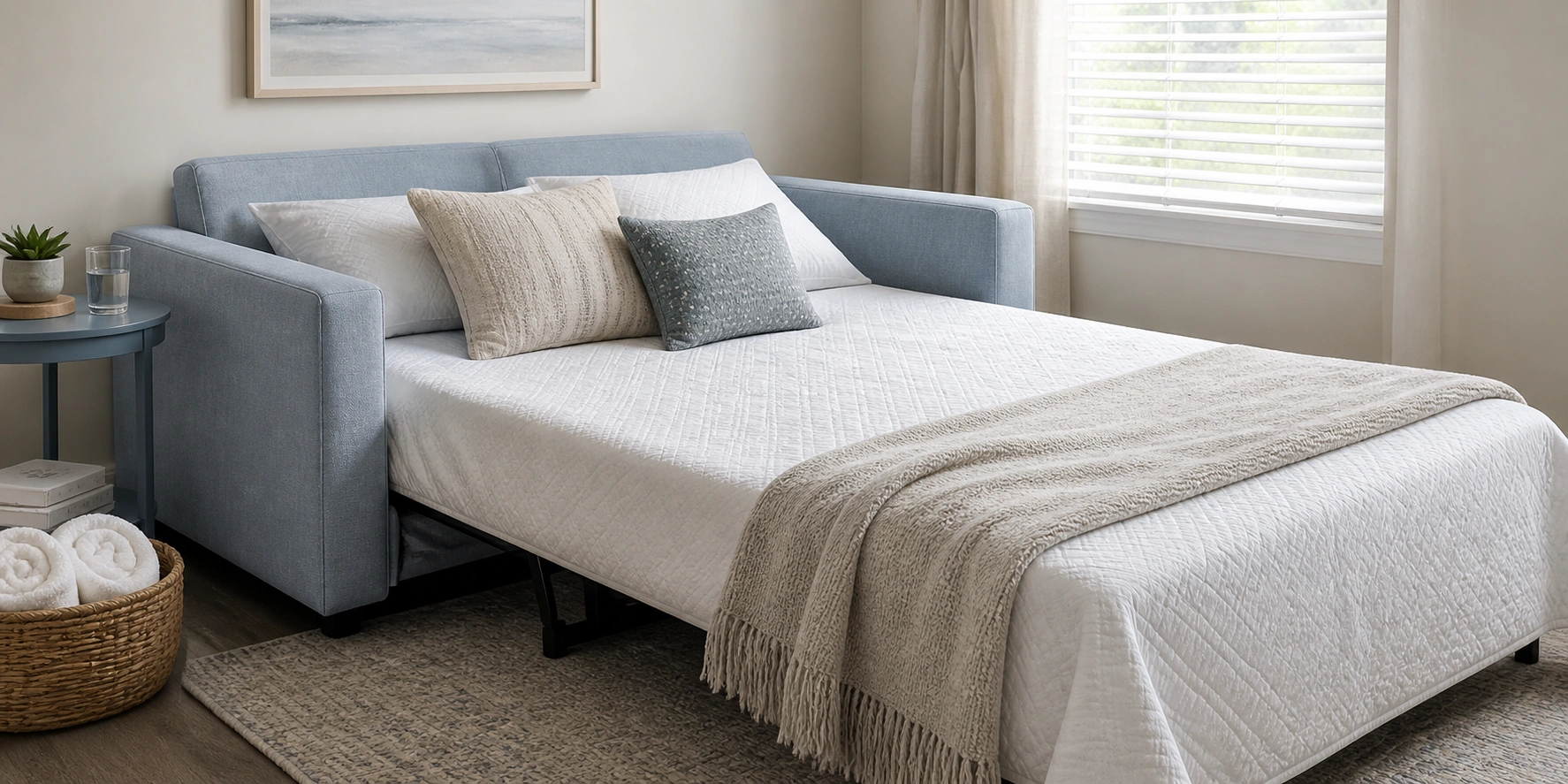
Sleeper Sofa
The most popular choice. Features a full or queen mattress folded inside the frame. Offers genuine bed-level comfort with minimal conversion effort. Best for frequent hosts who want a real sleeping experience for guests.
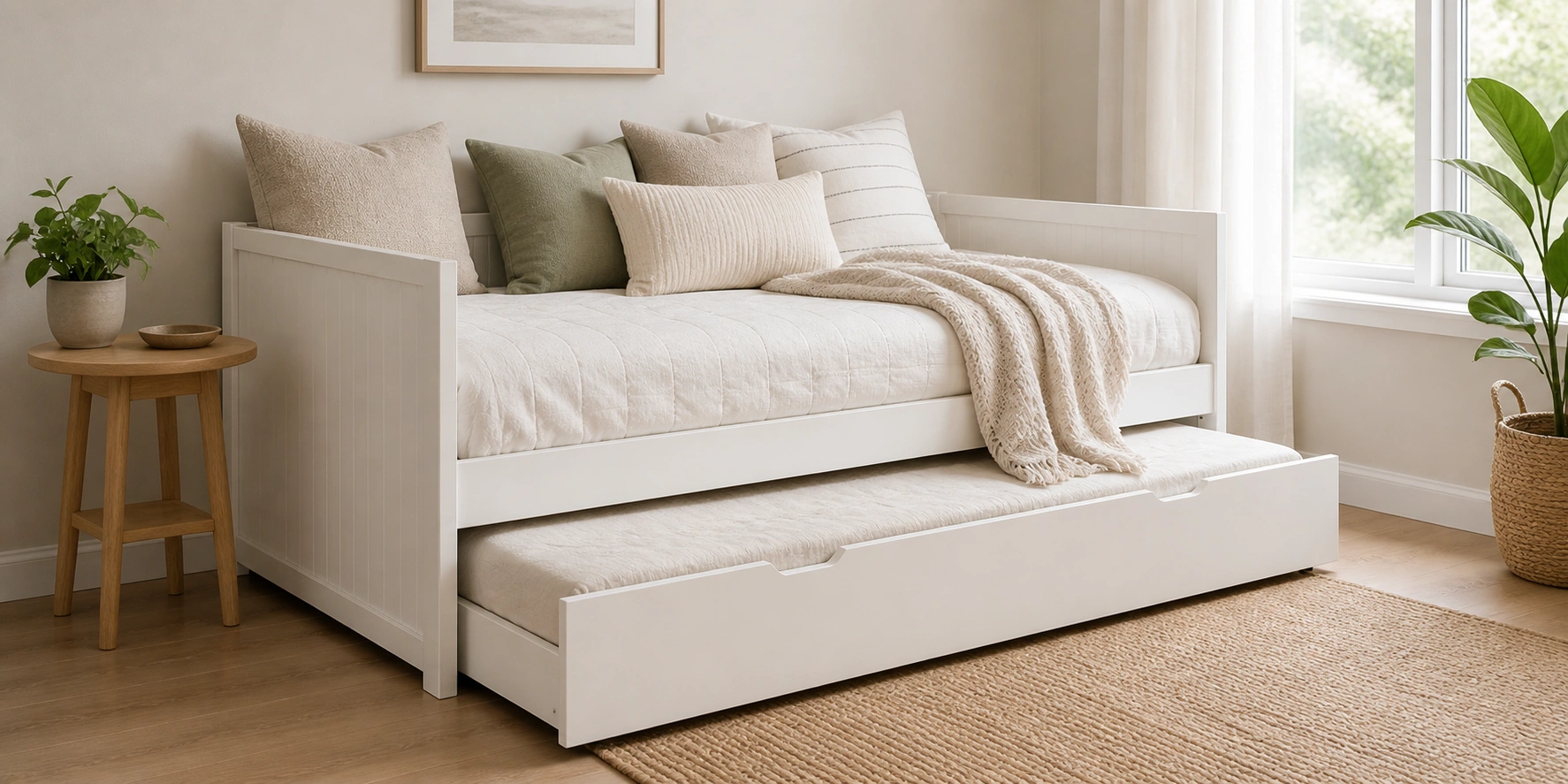
Daybed
A hybrid between a sofa and a single bed. Always ready to sleep — no unfolding required. The trundle version adds a second sleeping surface. Ideal for small rooms and occasional overnight guests.

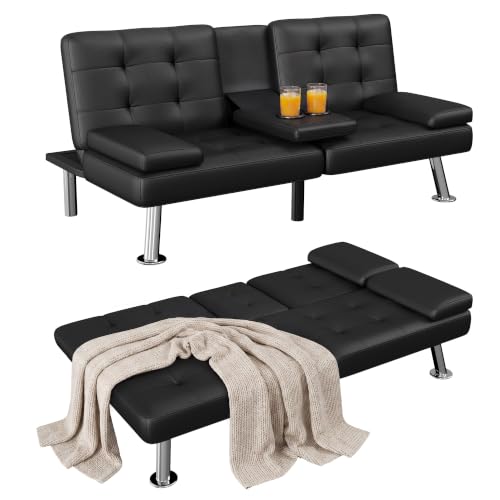
Futon Sofa
The most budget-friendly option. Converts from sofa to flat bed by folding the backrest down. Lightweight and easy to move. Best for casual hosting situations, college apartments, and tight budgets.
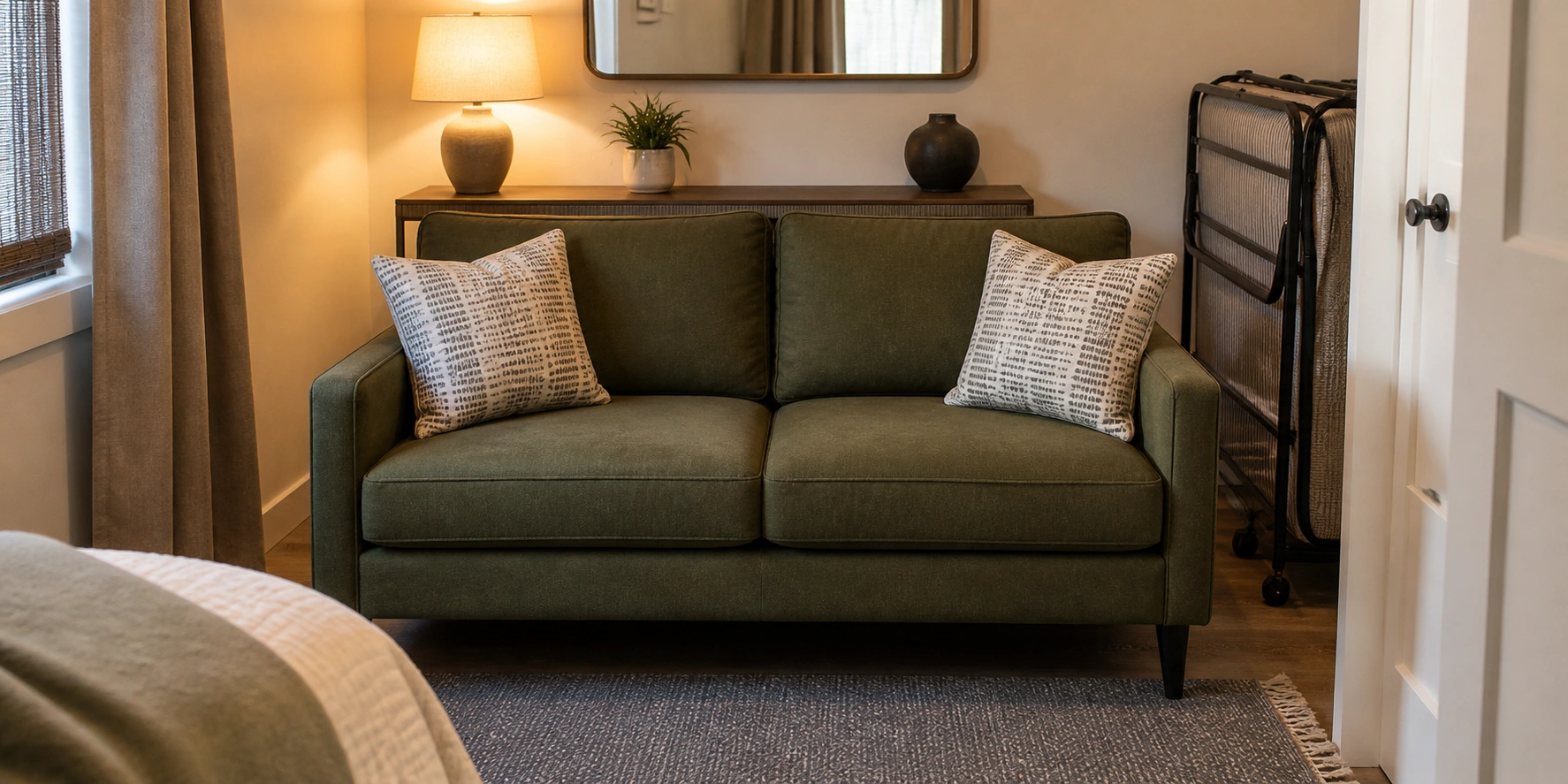
Loveseat
A compact two-seater that maximizes floor space. While most loveseats do not convert to a bed, they pair excellently with a folding cot or air mattress for flexible sleeping arrangements. Perfect for tiny guest rooms.
For a deeper look at convertible options, our detailed sleeper sofa guide covers mechanism types, mattress quality, and durability ratings. If you are working with a particularly tight space, daybed sofas offer the cleverest space-saving design, while futon sofas provide the lowest entry price point.
Side-by-Side Comparison
This comparison helps you quickly identify which type aligns with your specific situation. Consider your room dimensions, hosting frequency, and budget together rather than focusing on a single factor.
| Feature | Sleeper Sofa | Daybed | Futon | Loveseat + Cot |
|---|---|---|---|---|
| Sleeping Capacity | 1-2 adults (full/queen) | 1 adult (twin); 2 with trundle | 1-2 adults (full) | 1 adult (twin cot) |
| Conversion Effort | Moderate (pull-out) | None (always ready) | Easy (fold down) | Low (unfold cot) |
| Comfort Level | High (real mattress) | Moderate-High | Moderate | Varies (depends on cot) |
| Floor Space (Closed) | Large | Medium | Medium | Small |
| Best For | Frequent overnight guests | Small rooms, kids' guests | Budget buyers, casual use | Tiny rooms, rare hosting |
| Price Range | $$ - $$$ | $$ | $ | $ - $$ |
Important: If your guest room also functions as a home office or craft room, avoid bulky sleeper sofas that dominate the space. A loveseat with a nearby folding bed, or a daybed that doubles as daytime seating, preserves the room's flexibility without compromise.
Guest Room Size Guide: Matching Sofa to Space
Choosing a sofa without measuring your room first is the single most common mistake buyers make. A sofa that looks perfect in a showroom can overwhelm a small guest room, while an undersized piece in a large room feels awkward and underwhelming. Here is a practical size-matching framework.
Small Room (Under 100 sq ft)
Daybed, loveseat, or futon. Leave 24-30 inches of walking clearance. Sofa width should stay under 60 inches.
Medium Room (100-150 sq ft)
Full-size sleeper sofa or standard futon. Width up to 80 inches. Allows space for a nightstand and dresser.
Large Room (150+ sq ft)
Queen sleeper sofa, sectional with pull-out, or daybed with trundle. Room for additional furniture and open floor space.
For precise measurements, follow our step-by-step sofa measurement guide. Pay special attention to the opened dimensions of sleeper sofas — a piece that fits neatly against the wall may block the door when fully extended. Our room-to-sofa sizing chart provides detailed recommendations based on exact room dimensions.

If your guest room doubles as an office, consider a 2-seater sofa or 1-seater sofa chair paired with a separate folding bed. This combination gives you proper desk space during the day without sacrificing guest comfort at night. For homes that regularly host multiple guests, a sofa wallbed system offers the most space-efficient solution — the bed folds away into the wall, and the sofa remains permanently in place.
Best Materials for Guest Room Sofas
Guest room sofas face a unique set of material challenges. They sit unused for weeks, then experience concentrated use over a few days. The fabric or leather must resist dust accumulation, withstand infrequent but thorough cleaning, and look presentable at a moment's notice. Understanding sofa materials in depth helps you make a choice that lasts.
Performance Fabric (Recommended)
✓ Stain-resistant, easy to clean, durable (high Martindale rating), wide color selection
✗ Slightly higher cost than basic polyester
Microfiber
✓ Soft texture, very affordable, resists water-based stains, low maintenance
✗ Can attract pet hair, may pill over time
Leather (Faux or Genuine)
✓ Wipes clean in seconds, doesn't absorb odors, looks polished, very durable
✗ Can feel cold to the touch, genuine leather is expensive, may crack in dry conditions
Washable Slipcover
✓ Machine washable between guests, completely fresh feeling every time, cost-effective long-term
✗ Fit may loosen over time, limited style options
For most guest rooms, washable sofas with removable slipcovers offer the best practical solution. Being able to strip the covers and run them through the washing machine between guest stays eliminates the worry about body oils, spills, or musty odors from prolonged sitting. If you prefer the look and feel of leather, our leather versus fabric comparison breaks down the long-term ownership differences in detail.
For homes with pets that may use the guest room when visitors are not around, pet-friendly sofa options with scratch-resistant fabrics are worth the investment. The Martindale abrasion test is a useful benchmark — look for fabrics rated above 20,000 cycles for guest room use, which indicates excellent resistance to wear.
Sleeper Sofa Mattress: What to Look For
The biggest complaint about guest room sleeper sofas is an uncomfortable mattress. A thin, flimsy mattress can ruin an otherwise excellent hosting experience, leaving your guests with back pain and poor sleep. Since the mattress is the element your guests actually interact with most, it deserves careful attention.

Aim for a minimum of 4 inches of mattress thickness. Anything below 3 inches will cause your guests to feel the metal crossbar underneath — a universal complaint about low-quality sleeper sofas. The sweet spot for most guests is 4-5 inches of memory foam or a spring-padded combination. Ultra-thick mattresses (6+ inches) add significant weight and make the sofa harder to open and close.
- Memory foam: Conforms to body shape, provides excellent pressure relief, and does not transfer motion. Ideal for guests with back concerns. Look for foam density above 1.5 lbs/cu ft — our foam density guide explains why this matters.
- Innerspring: More traditional feel with bounce and airflow. Better for guests who sleep hot, as springs allow ventilation. However, lower-quality innerspring mattresses develop sagging over time.
- Gel-infused foam: Combines memory foam support with cooling properties. The best option for summer hosting or warm-climate homes.
- Air-over-foam: An inflatable core topped with foam. Lightweight and adjustable firmness, but may develop leaks over years of storage.
Traditional pull-out mechanisms have a metal support bar that runs across the mattress. If the mattress is too thin, guests feel this bar through the cushioning. Solutions include choosing a thicker mattress, adding a mattress topper, or selecting newer designs with no-bar mechanisms. When testing sleeper sofa comfort, always lie on the opened bed for at least 5 minutes — brief sitting does not reveal bar pressure issues.
Choosing Based on How Often You Host
Your hosting frequency should directly influence how much you invest in a guest room sofa. Spending $2,000 on a premium sleeper sofa makes sense if you host monthly, but it is hard to justify for twice-a-year holiday visits. Align your budget with your actual usage patterns using our sofa budget planning guide.
- Rare hosting (1-3 times per year): A futon or loveseat with a quality folding cot is the smartest investment. Total cost under $500, minimal space commitment, and the simplicity means less can go wrong between uses. Pair with a good quality air mattress if you occasionally need to sleep two guests.
- Occasional hosting (4-8 times per year): A mid-range sleeper sofa with a 4-inch memory foam mattress hits the sweet spot. Expect to spend $600-$1,200. This tier offers genuine comfort without the premium price tag. Look for budget-friendly sleeper sofas from reputable brands.
- Frequent hosting (monthly or more): Invest in a high-quality queen sleeper sofa with a premium mattress. Budget $1,200-$2,500. Features to prioritize: no-bar mechanism, 5+ inch gel-infused foam mattress, reinforced frame, and easy-lift mechanism. If you regularly host families, a sofa wallbed or daybed with trundle provides the most reliable sleeping arrangement.
- Extended stays (weeks or months): For long-term guests such as visiting relatives or temporary roommates, comfort becomes non-negotiable. Consider a dedicated bed or a wall-bed system rather than a conventional sleeper sofa. Extended use of fold-out mechanisms can cause wear that shorter stays do not.
For households that fall into the frequent hosting category, also consider durability factors like frame material quality (kiln-dried hardwood outperforms particle board significantly over time) and spring system construction for the seating cushion, not just the sleeper mattress.
Layout and Placement Tips for Guest Rooms
Where you place the sofa in your guest room affects everything from guest comfort to how the room functions when unoccupied. A poorly positioned sleeper sofa can block pathways, prevent the bed from fully opening, or make the room feel cramped. Thoughtful layout transforms the same furniture into a completely different experience.
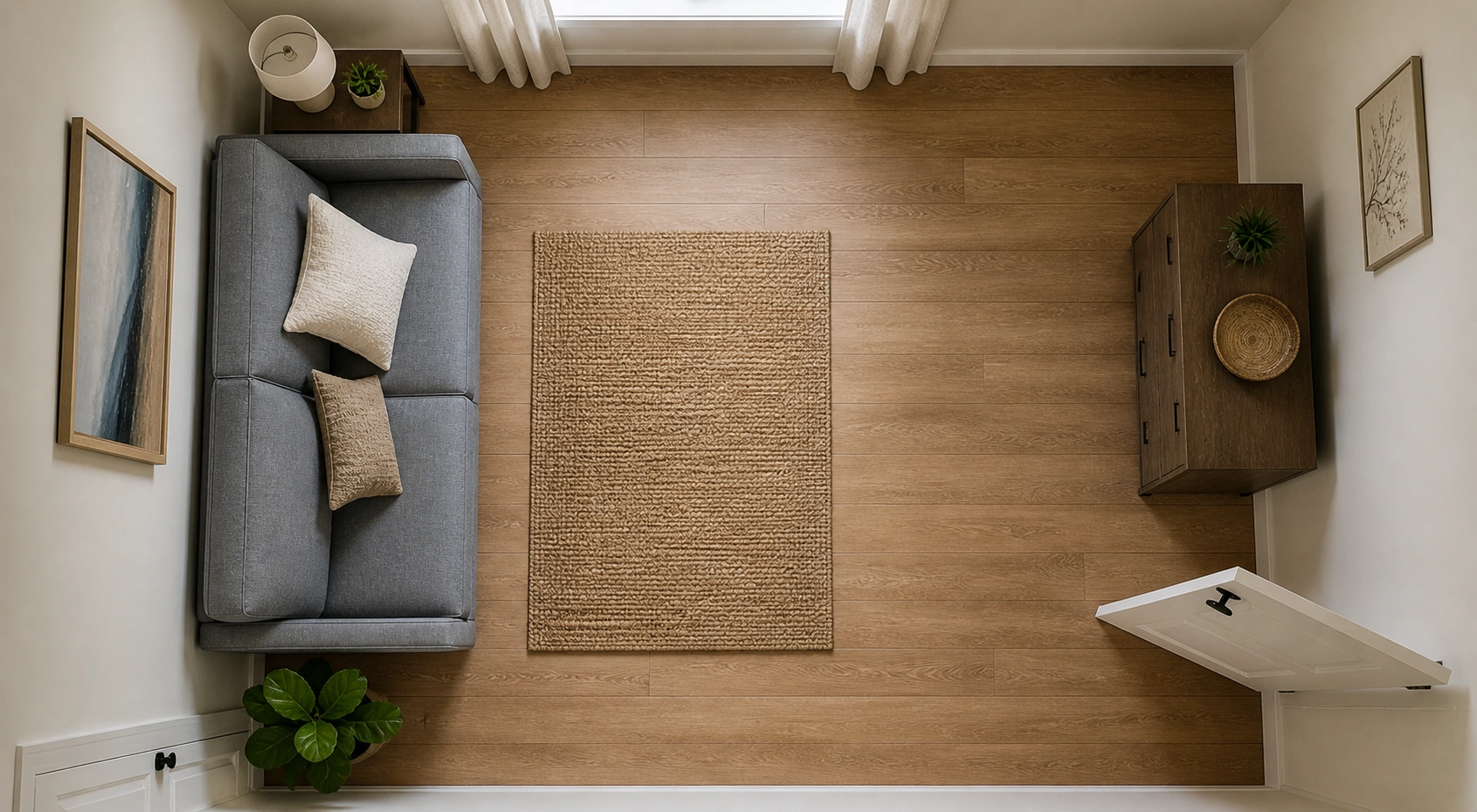
- Measure the opened footprint first: Before buying, tape out the full dimensions of the sofa in its sleeping position on your floor. Include an additional 12 inches on the open side for guest access. This simple step prevents the most common sizing mistake.
- Leave clearance for the pull-out mechanism: Sleeper sofas need clearance in front to unfold. Typically, you need 24-36 inches of unobstructed space in the direction the bed pulls out. Do not place a rug, luggage rack, or chair in this zone.
- Position near a power outlet: Guests need to charge phones, use laptops, and plug in alarm clocks. Ensure at least one outlet is accessible from the sleeping position. Sofas with built-in USB ports are an excellent guest-friendly feature.
- Avoid placing under a window: Drafts, early morning light, and temperature fluctuations near windows can disturb sleep. If the window is the only option, install blackout curtains and ensure the window seals properly.
- Create a sense of privacy: Even in a small room, positioning the sofa so guests do not face the door directly creates a more comfortable psychological environment. A small sofa table or room divider can help.
For comprehensive layout strategies, our room layout guide covers traffic flow, focal points, and furniture spacing principles that apply equally to guest rooms. When thinking about the broader room design, neutral-toned sofas provide the most versatility — they blend with any bedding, wall color, or decor changes you might make in the future.
Accessories That Complete the Guest Room
The right accessories elevate a basic guest room sofa into a true hospitality experience. Small touches signal thoughtfulness and make visitors feel genuinely cared for, rather than simply accommodated.
- Quality bedding: Keep a dedicated set of sheets, pillows, and a lightweight duvet specifically for the sleeper sofa. Store them in a visible closet or basket so guests do not have to ask. Use fitted sheets sized for the specific mattress dimensions.
- Mattress topper: A 2-3 inch memory foam topper dramatically improves any sleeper sofa mattress. This low-cost upgrade ($30-$80) is often more effective than buying a more expensive sofa.
- Throw pillows and blankets: Decorative throws and pillows make the sofa feel inviting during the day and provide extra warmth at night. Choose machine-washable options for easy turnover between guests.
- Sofa covers: A protective sofa cover shields the upholstery during stays and can be washed immediately after. For homes with pets, pet-proof covers serve double duty between guest visits.
- Side table or tray: A small surface next to the sofa for a water glass, phone, or reading glasses is essential. Sofa tables or C-shaped end tables work well in tight spaces.
- Task lighting: A bedside lamp or wall-mounted reading light lets guests read without overhead lighting. Choose warm-toned bulbs (2700K-3000K) for a relaxing atmosphere.
- Storage baskets: Provide visible baskets for towels, extra blankets, or guest toiletries. This reduces the awkwardness of guests rummaging through your closets.
Common Mistakes to Avoid
After helping thousands of readers choose guest room furniture, these are the mistakes we see most often — and they are all avoidable with a bit of advance planning.
Buying Without Measuring the Opened Size
The sofa fits perfectly against the wall, but when you pull out the bed, it blocks the door or covers the only window. Always measure the sleeping footprint, not just the seating footprint.
Choosing Style Over Function
A beautiful sofa that is painful to convert or has a paper-thin mattress creates a poor guest experience. Function should lead the decision for guest rooms; style follows.
Ignoring the Conversion Mechanism
Some pull-out mechanisms are heavy and difficult to operate. If your elderly parents or less physically able guests will use the room, test the mechanism yourself or choose a wallbed or daybed instead.
Skimping on the Mattress
Saving $200 on the sofa but buying a $30 mattress results in guests who never want to return. The mattress is the one element that directly determines sleep quality — invest here first.
Not Testing Before Guests Arrive
Open the sleeper, test the mattress, check for odors, and verify the bedding fits — all at least a week before your first guests arrive. Discovering problems at midnight is not an option.
Forgetting About Maintenance Between Uses
Sofas left unused for months can develop musty smells, dust mites, or fabric degradation. Use fabric protection spray, keep covers on, and air out the room periodically. Understanding basic sofa cleaning prevents unpleasant surprises.
If you are currently dealing with any of these issues on an existing sofa — such as sagging cushions, persistent odors, or frame problems — many can be resolved with targeted repairs rather than a full replacement. However, if the sleeper mechanism itself is failing, replacement is usually the more cost-effective path.
Quick Decision Checklist
Use this checklist before making your purchase. If you can check off every item, you have found the right guest room sofa for your situation.
- I have measured both the closed and opened dimensions in my guest room
- The sleeping mechanism is easy enough for my least able guest to operate
- The mattress is at least 4 inches thick with adequate support
- The fabric is stain-resistant or has a removable, washable cover
- There is a power outlet reachable from the sleeping position
- The sofa style matches or complements the room's existing decor
- I have tested the comfort by lying on it for at least 5 minutes
- The total cost aligns with my actual hosting frequency
- I have a storage plan for dedicated guest bedding nearby
- The frame is made from durable material (kiln-dried hardwood preferred)
Still unsure? Our comprehensive sofa selection guide walks you through every decision point with detailed explanations. For specific questions about frame quality, our quality checklist tells you exactly what to inspect before buying. If you are comparing prices across retailers, the best time to buy guide can help you save 15-30% on your purchase.