
How to Check Sofa Quality Before Buying
The complete 8-point inspection guide that furniture salespeople don't want you to know. Stop wasting money on sofas that fall apart in two years.
Buying a sofa is one of the most significant furniture investments you'll make for your home. Yet most shoppers focus entirely on appearance and price, ignoring the internal construction that determines whether their sofa will last five years or fifteen. The difference between a $500 sofa and a $1,500 sofa isn't always visible from the outside — it's hidden inside the frame, cushions, and suspension system.
This guide walks you through every quality checkpoint you should inspect before committing to a purchase. Whether you're shopping at a showroom, browsing online, or evaluating a secondhand sofa, these inspection techniques will help you separate genuinely well-built furniture from expensive-looking disappointments.
By the end, you'll know exactly what to look for, what questions to ask, and which red flags should send you walking away. For a broader starting point, our complete sofa selection guide covers everything from measuring your room to matching styles.
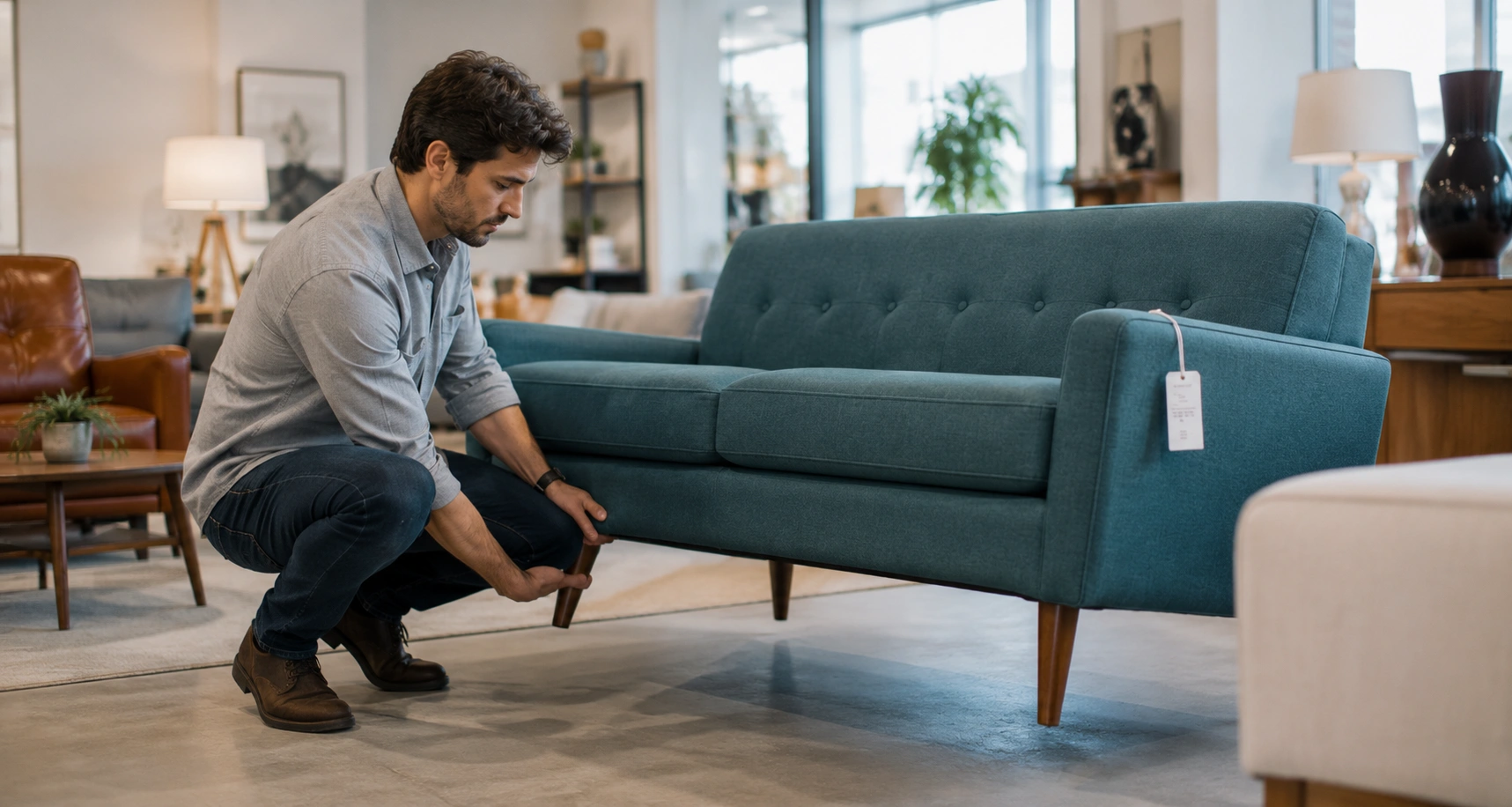
📋 Quality Benchmarks at a Glance
1. Inspect the Frame Construction
The frame is the skeleton of your sofa. A weak frame means sagging seats, creaking noises, and eventual structural failure — no matter how expensive the upholstery looks. Our detailed frame materials guide covers every option in depth, but here are the essential checks.
The Lift Test
Lift one front corner of the sofa about six inches off the ground. A well-built sofa with a kiln-dried hardwood frame (oak, maple, ash, or beech) will feel substantial — typically 150 pounds or more for a standard 3-seater. If it feels light and flimsy, the frame is likely made from softer, cheaper woods or even particleboard.
Joint Construction
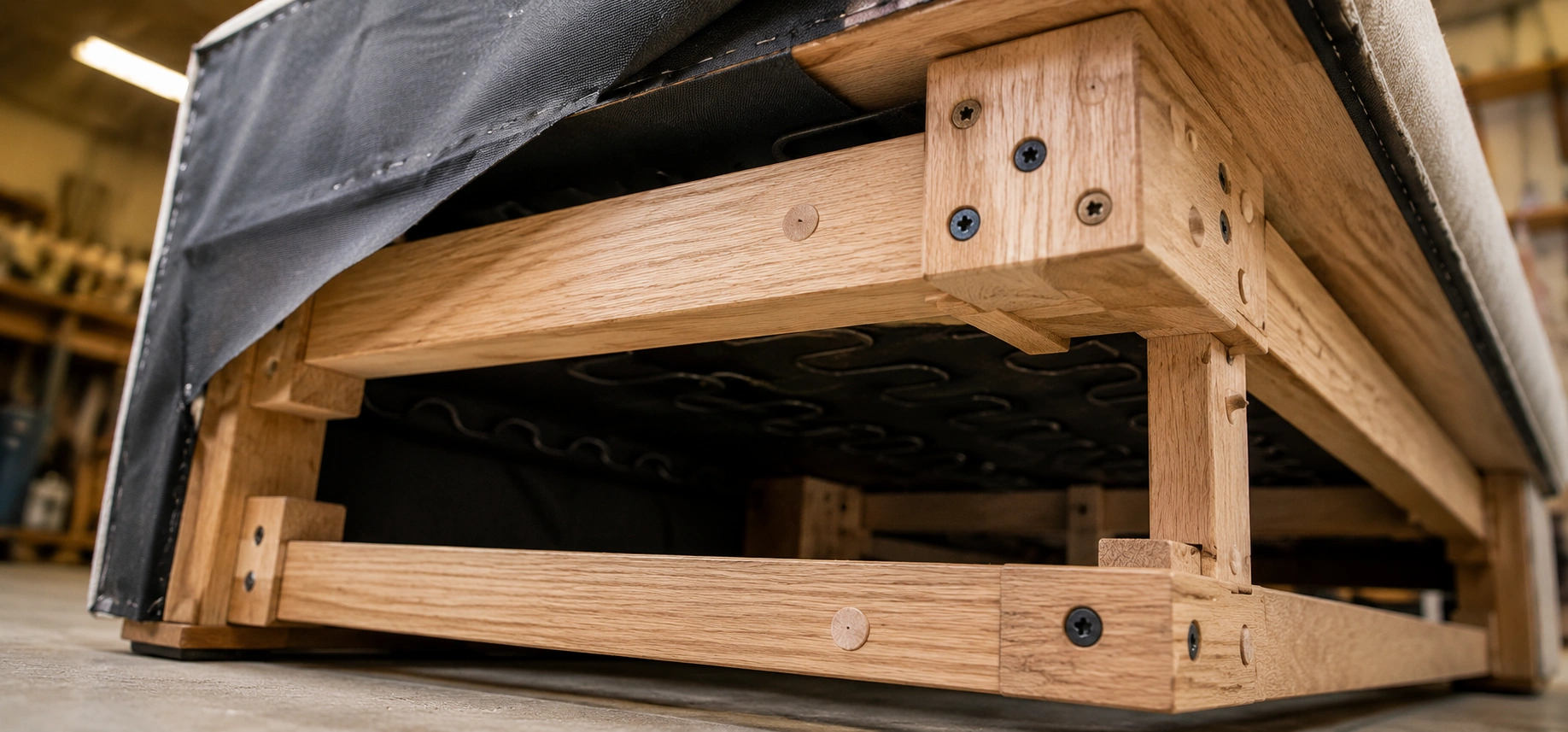
Quality frames use dowelled, glued, and corner-blocked joints at every stress point. Remove cushions and look underneath — you should see solid wooden blocks glued and screwed into the corners where the frame members meet. Staples alone are a major red flag. Nails indicate budget-level construction that will loosen over time.
💡 Pro Tip: Ask the salesperson if you can see under the dust cover (the fabric panel underneath the sofa). Reputable stores will allow this. The dust cover itself isn't structural, but what's behind it tells the whole story.
Frame Materials to Avoid
Stay away from frames made of pine, plywood, particleboard, or MDF. These materials warp, crack, and weaken much faster than hardwood. Some mid-range sofas use a hardwood frame with plywood or MDF only for non-structural panels — this is acceptable, but the main load-bearing members should always be solid hardwood.
| Frame Material | Durability | Typical Lifespan | Verdict |
|---|---|---|---|
| Kiln-Dried Hardwood | Excellent | 12–15+ years | Best Choice |
| Plywood (High-Grade) | Good | 8–12 years | Acceptable |
| Softwood (Pine) | Fair | 4–7 years | Caution |
| Particleboard / MDF | Poor | 2–4 years | Avoid |
2. Test the Suspension System
The suspension (or foundation) is what supports your weight and gives the sofa its bounce and resilience. A failed suspension is one of the most common reasons sofas become uncomfortable long before the frame wears out. Learn more about the different types in our sofa suspension guide.
The Press Test
Press down firmly on the seat cushion with both hands, then release quickly. A quality suspension should spring back immediately and evenly. If the seat feels hollow, bottomed out, or recovers slowly, the suspension is either low-quality or already failing. You should not hear any squeaking, creaking, or metal-on-metal sounds.
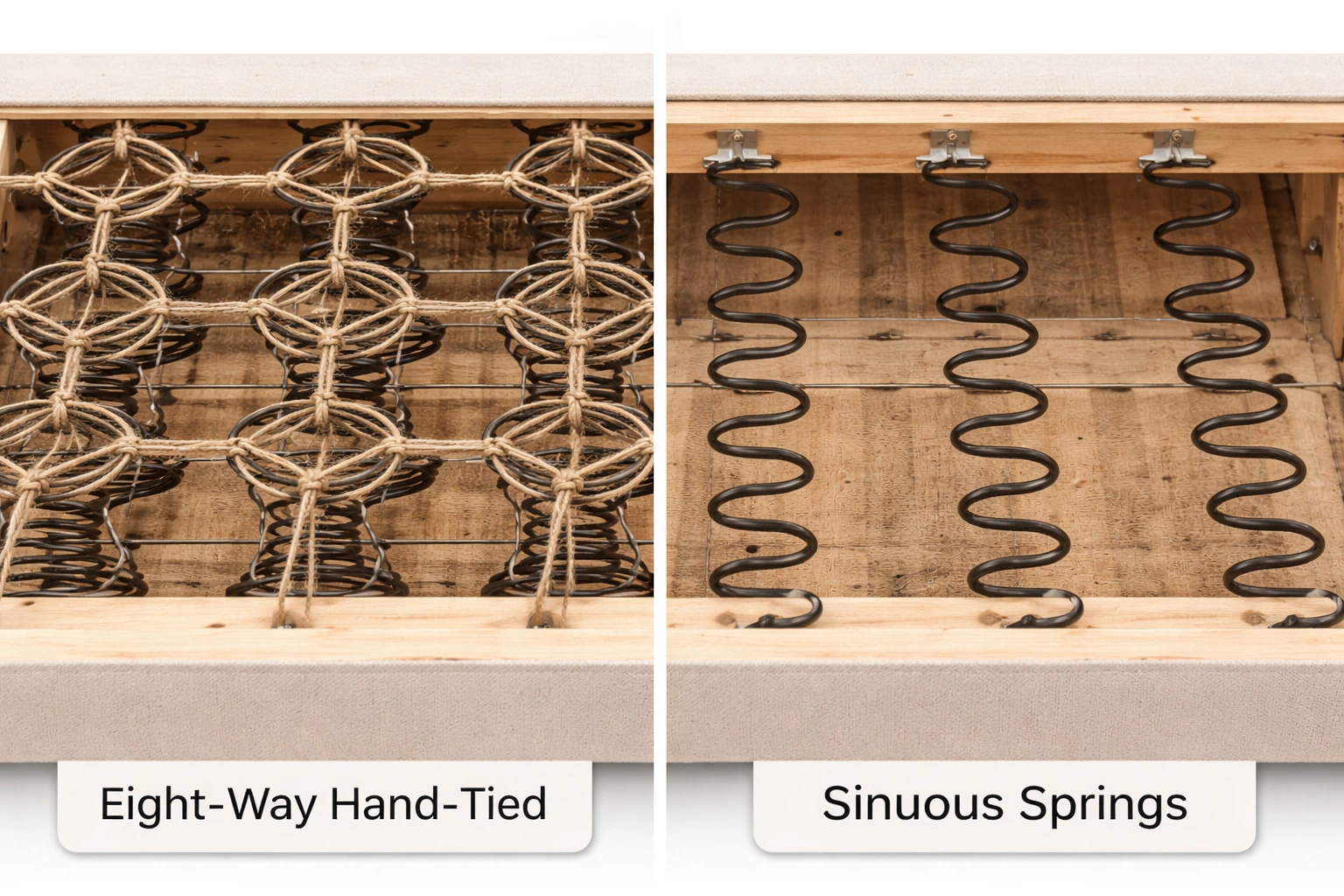
Eight-Way Hand-Tied Springs
This is the gold standard in sofa construction. Each coil spring is hand-tied to neighboring springs with twine in eight directions, creating a uniformly supportive network. You'll find this in high-end sofas from brands like Hancock & Moore, Stickley, and similar manufacturers. It provides the most even support and lasts the longest.
Sinuous (S-Shaped) Springs
These are S-shaped wires stretched across the frame. While not as prestigious as eight-way tied, quality sinuous springs perform excellently for most households. They're more affordable, lighter, and work well in modular sofas and low-profile designs. Look for heavy-gauge wire (at least 8.5 gauge) and closely spaced springs.
What to Avoid
Walk away from sofas that use mesh or webbing alone as the sole support system. While webbing is sometimes used as a base layer beneath springs, a sofa that relies only on rubber or fabric webbing will sag within months under regular use. Also avoid sofas where you can feel individual springs pressing against the cushions — this indicates poor padding over the springs.
⚠️ Warning Sign: If a salesperson avoids discussing the suspension system or uses vague terms like "premium support system" without specifics, that's a red flag. Reputable manufacturers are proud to detail their construction.
Drop Test for Squeaks
Sit down on the sofa with moderate force, then shift your weight side to side. Listen carefully for any squeaking, grinding, or popping sounds. These noises indicate poorly secured springs or friction between metal parts — problems that will only get worse over time. A quality sofa should be completely silent when you sit and move on it.
3. Evaluate Cushion Fill Quality
Cushion fill directly affects both comfort and longevity. The wrong fill will leave you with cushions that flatten, develop body impressions, or feel uncomfortably firm. Understanding cushion fill types and foam density ratings is essential for making a smart choice.
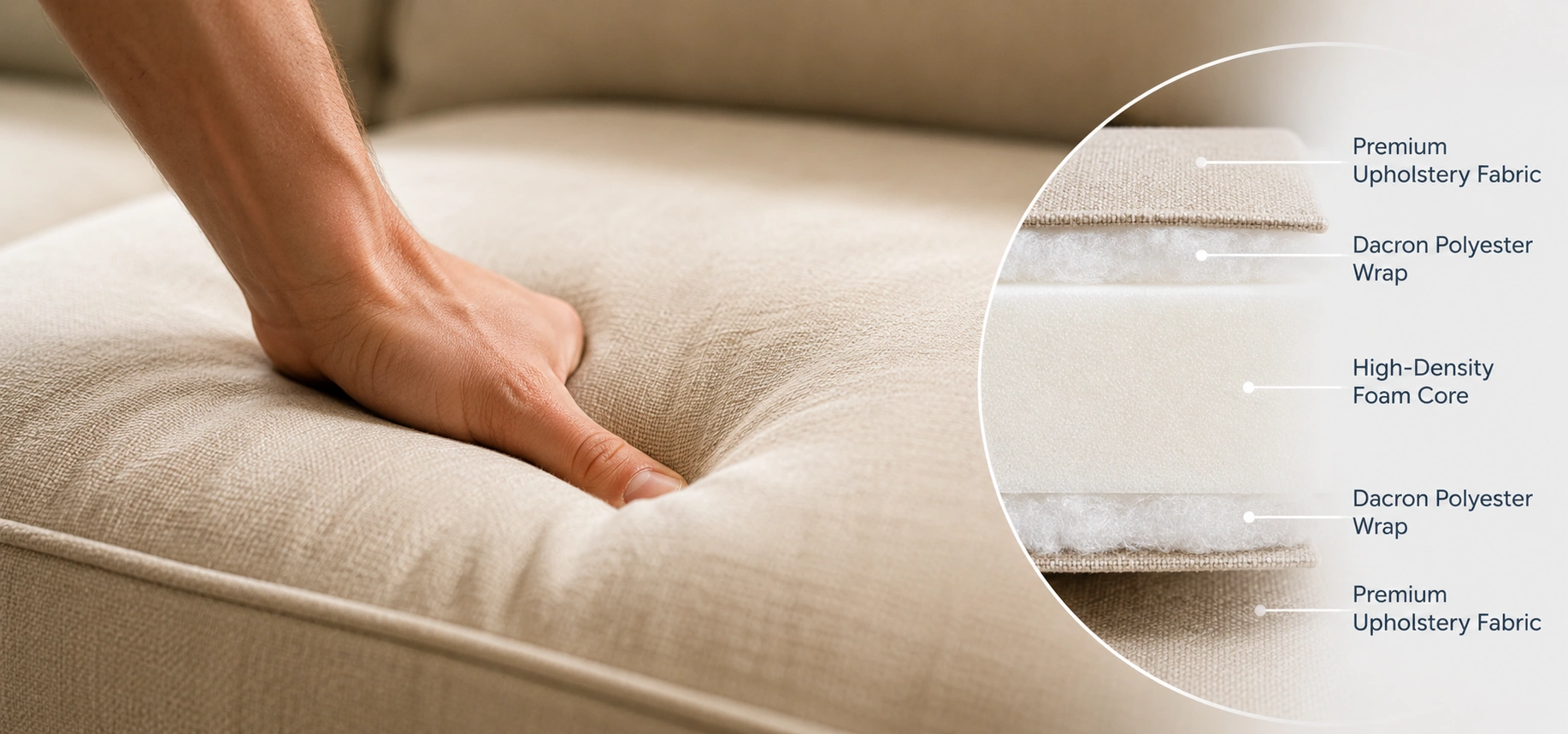
The Press-and-Recover Test
Press your thumb firmly into the seat cushion and hold for 10 seconds, then release. High-quality foam recovers its shape within 2–3 seconds. If the indentation remains visible for more than 5 seconds, the foam density is too low and will develop permanent body impressions quickly. This is especially important for the firm vs plush sofa decision — both firm and plush cushions should still recover their shape.
Foam Density Numbers
Ask about the foam density, measured in pounds per cubic foot (PCF). Here's what to look for:
- 1.8–2.5 PCF: High quality, ideal for seat cushions, excellent longevity
- 1.5–1.8 PCF: Medium quality, acceptable for back cushions or light use
- Below 1.5 PCF: Low quality, will flatten within 6–12 months — avoid for seats
The Best Cushion Construction
Premium sofas use a wrapped cushion design: a high-density foam core wrapped in a layer of dacron polyester, down feathers, or a down-blend. This gives you the supportive structure of foam with the soft, inviting feel of down. It's the best of both worlds and is found in most high-quality luxury sofas.
| Cushion Type | Comfort | Durability | Maintenance | Best For |
|---|---|---|---|---|
| High-Density Foam + Down Wrap | Excellent | Excellent | Medium (fluffing) | Primary living room |
| High-Density Foam + Dacron | Very Good | Excellent | Low | Family rooms |
| Down-Only Fill | Exceptional | Fair | High (daily fluffing) | Formal spaces |
| Memory Foam | Good (warm) | Good | Low | Back pain relief |
| Polyester Fiber-Only | Soft initially | Poor | High | Avoid for main use |
4. Examine the Upholstery Fabric
The fabric is your sofa's first line of defense against daily wear, spills, pet claws, and UV fading. A beautiful fabric that pills or stains easily will make even the best-constructed sofa look worn within months. Whether you're comparing leather vs fabric or evaluating specific materials, here's what to check.
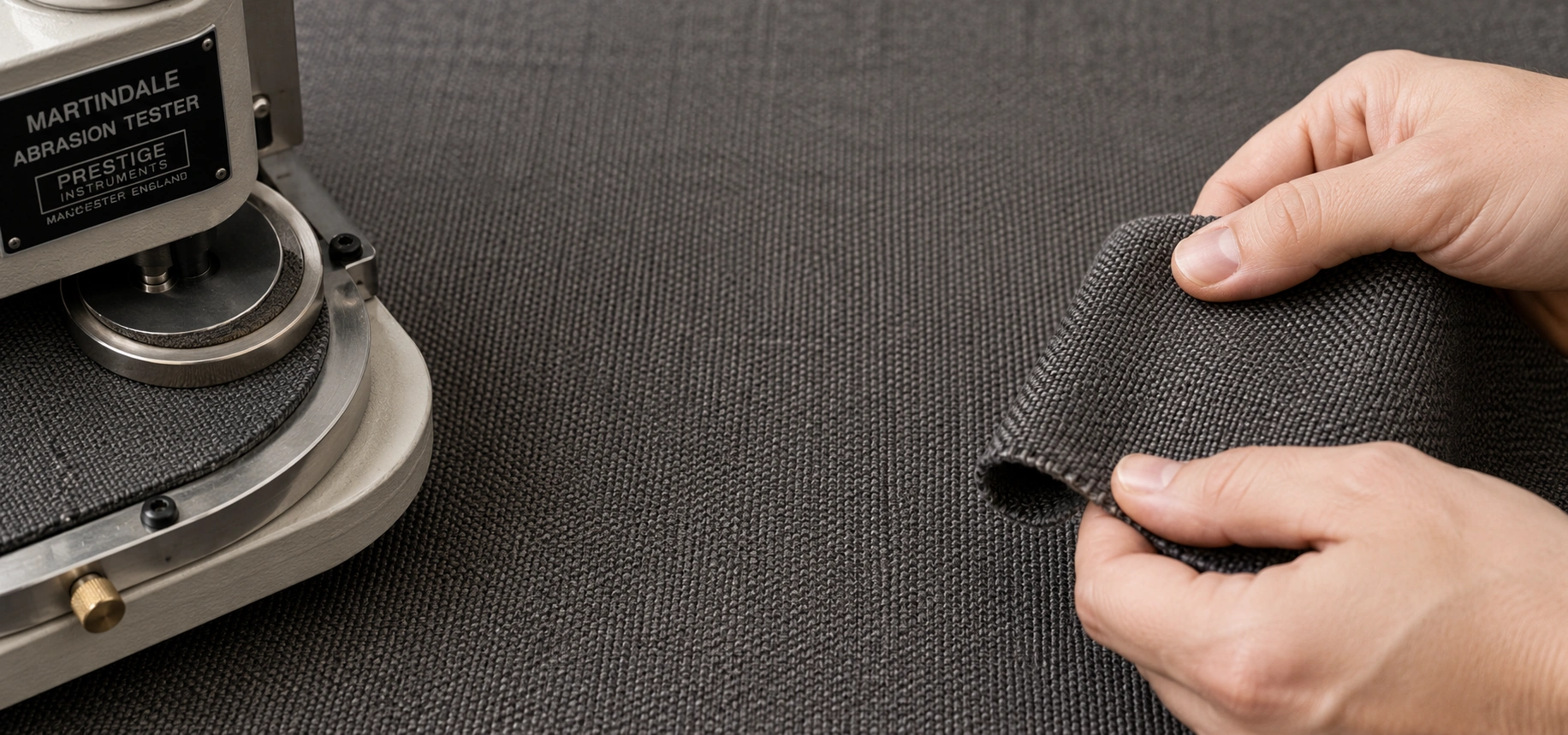
The Martindale Rub Test
This is the most important fabric quality metric. The Martindale test measures how many rubs a fabric can withstand before showing wear. Always ask for this number:
- 15,000–20,000 cycles: Suitable for occasional use, guest rooms
- 20,000–30,000 cycles: General residential use, average household
- 30,000–50,000 cycles: Heavy residential use, families with kids and pets
- 50,000+ cycles: Commercial grade, exceptional durability
The Rub Test (In-Store)
If you can't find the Martindale rating, do a quick physical test: rub the fabric vigorously with your thumbnail for 10–15 seconds in a small, hidden area. If the fabric shows visible wear, pilling, or thread displacement from this simple test, it won't survive years of daily use. For more on the most durable options, see our guide to the most durable sofa fabrics.
Pattern Alignment
On patterned fabrics, check that the pattern aligns seamlessly across seams, cushions, and arms. Misaligned patterns aren't just ugly — they indicate rushed manufacturing and lower quality control standards. This is especially visible on striped, plaid, or large floral patterns.
Fabric Type Considerations
Performance fabrics like Crypton, Sunbrella, or Revolution offer stain resistance, water resistance, and easy cleaning — ideal for families with kids and pet owners. For leather sofas, check the leather grade — full-grain and top-grain leather will develop a beautiful patina, while bonded leather will peel and crack within a couple of years.
💡 Pro Tip: Ask for a fabric swatch before buying. Take it home and test it with coffee, wine, or whatever your household typically exposes furniture to. Many retailers provide free swatches — this simple step can save you from a costly mistake.
5. Check Stitching and Tailoring
Stitching quality is one of the easiest indicators of overall manufacturing standards to evaluate visually. It requires no special tools — just your eyes and hands.
Stitch Count and Consistency
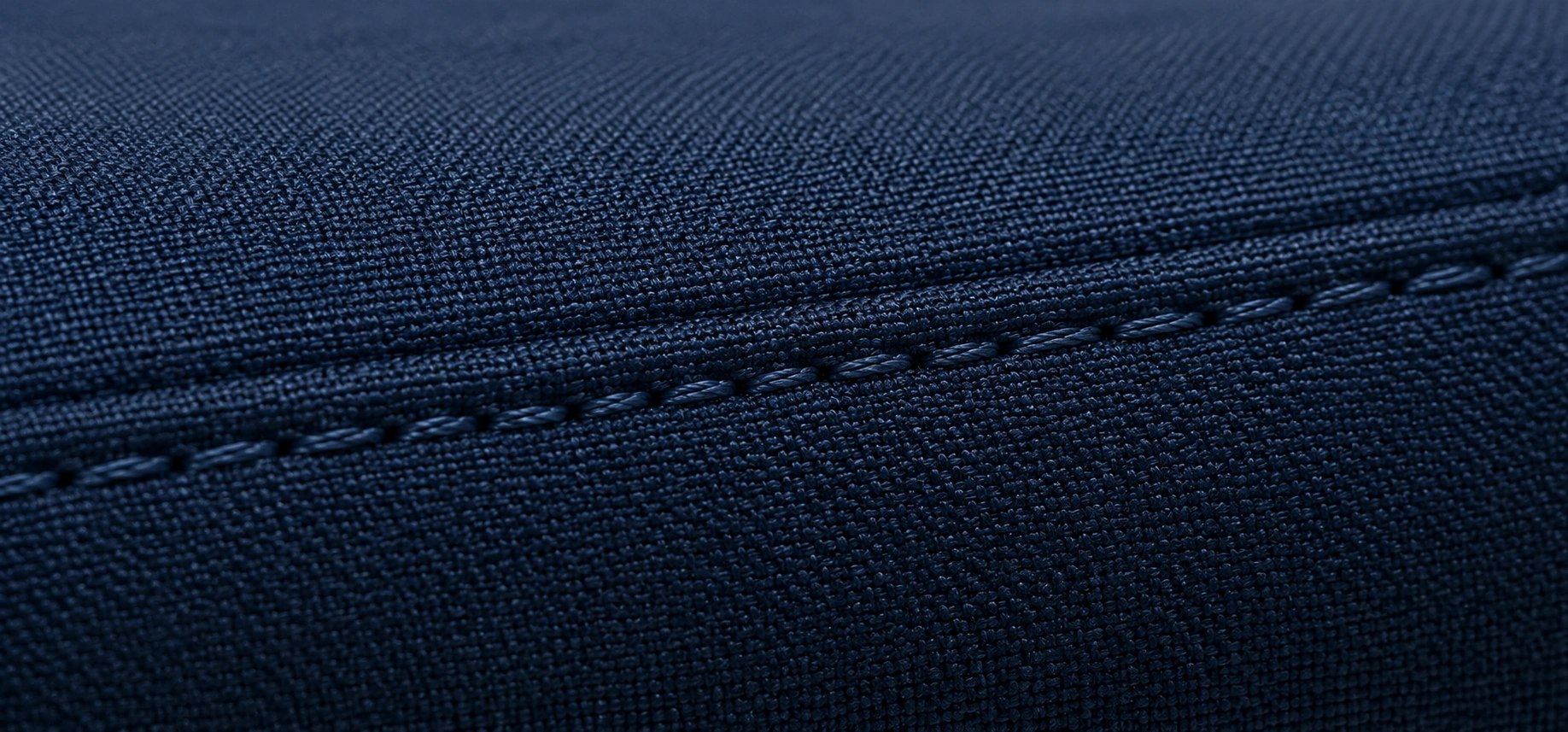
Look at the seams on the cushions, arms, and back. Quality upholstery has 8–10 stitches per inch, evenly spaced with no skipped stitches. The thread should be tight against the fabric without puckering or gathering. Run your finger along the seam — it should feel smooth and flat, not bumpy or loose.
What Poor Stitching Looks Like
Watch for these warning signs: loose threads hanging anywhere, uneven stitch spacing, visible backstitching at the start or end of seams, fabric puckering along stitch lines, and thread color that doesn't match the fabric. These indicate mass-production shortcuts that also likely extend to the parts you can't see.
Pull Test on Seams
Gently pull two fabric panels apart at a seam. The seam should hold firmly without any gap opening between the stitch line and the fabric edge. If you can see the stitches straining or the fabric pulling away from the thread, the seam will fail under normal use. This is particularly important for sectional sofas where the connecting seams bear extra stress.
6. Assess Legs and Base Stability
Sofa legs might seem minor, but they affect both stability and floor protection. Loose, wobbly, or poorly designed legs can make even a well-built frame feel unstable. If you ever need to replace them, our sofa leg replacement guide covers the options.
The Rock Test
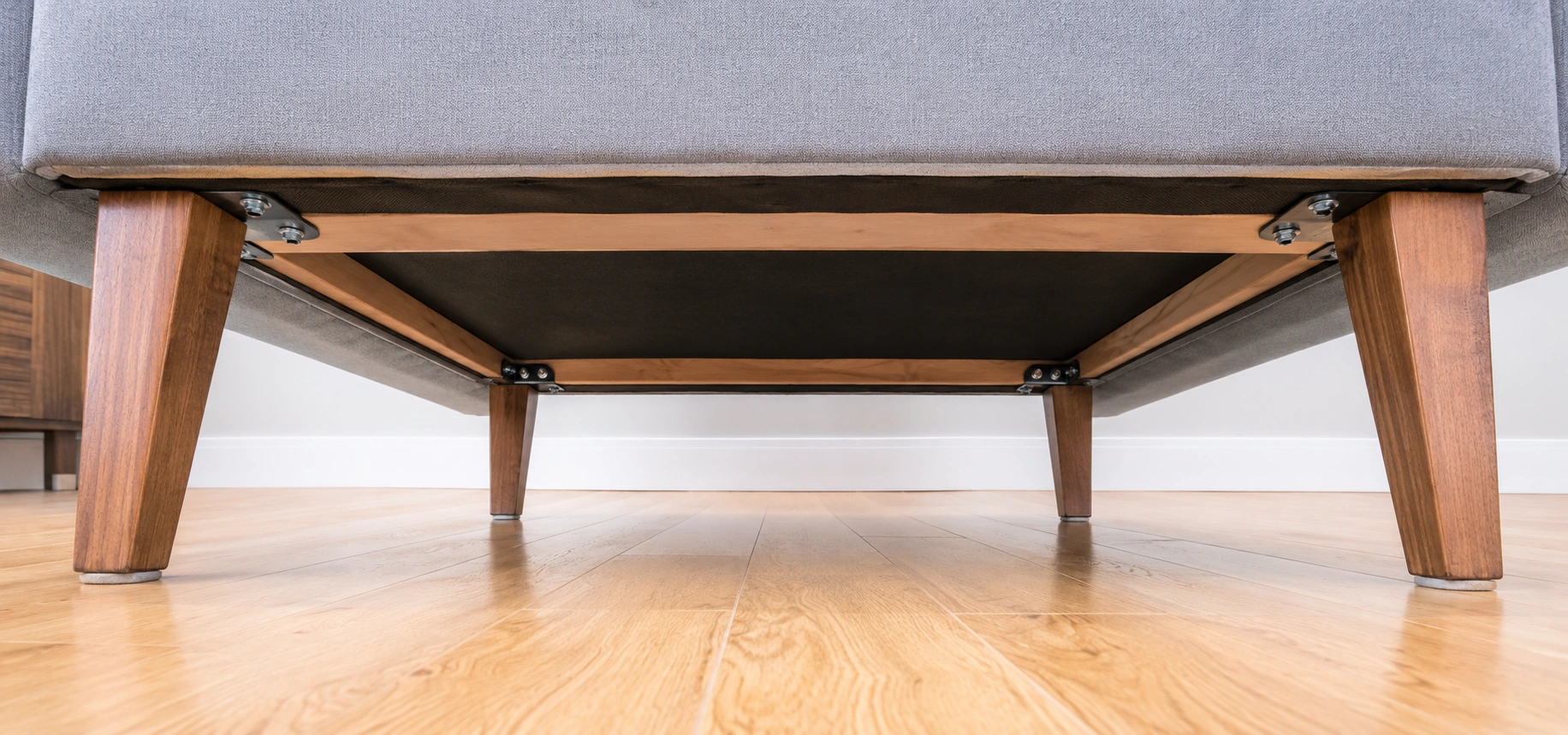
Sit on the sofa and gently shift your weight to each corner, then try rocking side to side. A quality sofa should feel completely solid and stable — no rocking, wobbling, or creaking. All four legs should make full, even contact with the floor. If the sofa rocks on a flat surface, the legs are uneven or the frame is warped.
Leg Attachment Method
The best legs are bolted or screwed directly into the frame, not just glued into brackets. Metal brackets with screws are acceptable if they're substantial. Legs that simply push into a socket or attach with adhesive will loosen over time. For taller high-back sofas, stable leg attachment is even more critical due to the higher center of gravity.
Floor Protection
Check whether the legs have protective pads or felt tips at the bottom. Bare wood or metal legs will scratch hardwood floors and can damage tile grout. Quality sofas include this small but important detail. If the sofa you're considering doesn't have them, you can add them yourself, but it's a sign the manufacturer cut corners.
Leg Material
Solid wood legs are the most durable option. Metal legs can be excellent if they're thick-gauge steel or solid brass — avoid thin, hollow metal legs that bend easily. Plastic legs are acceptable only on budget sofas but should be avoided if longevity is your priority. For industrial-style sofas, exposed metal legs should feel heavy and substantial, not flimsy.
7. Test Comfort and Ergonomics
A sofa can be perfectly constructed but completely wrong for your body. Comfort is subjective, but there are objective measurements that determine whether a sofa will support you properly over hours of use. Our comfort testing guide goes deeper into this topic.

The 10-Minute Sit Test
Don't just plop down and stand up. Sit for at least 10 minutes in your normal position — feet on the floor, back against the backrest. Then try other positions: leaning to one side, tucking your legs up, reading a phone (simulated). Pay attention to pressure points, especially behind your knees and lower back. Discomfort that seems minor in 30 seconds will become unbearable after an hour-long movie.
Seat Depth Matters
The ideal seat depth depends on your height. For most adults (5'4"–5'10"), a seat depth of 20–22 inches works well. Taller people may prefer 22–24 inches, while shorter individuals do better with 18–20 inches. If your knees stick past the seat edge when your back is against the backrest, the seat is too deep. The seat depth guide explains how to find your perfect measurement.
Back Support Angle
The backrest should support your entire back from lumbar to shoulders without forcing you to slouch or lean forward. A 100–110 degree angle between seat and back is ideal for relaxation. For high-back vs low-back sofas, higher backs generally provide better neck and head support for taller users.
💡 Pro Tip: Wear the clothes you typically wear at home when sofa shopping. Thick jeans feel very different from thin sweatpants on upholstery, and this affects your comfort assessment.
8. Review Warranty and Brand Reputation
A manufacturer's warranty is the most honest indicator of how long they expect their product to last. Companies that build quality furniture stand behind it with generous warranties. Those who cut corners offer minimal coverage. This connects directly to the price vs quality relationship — a slightly more expensive sofa with a strong warranty is often the better value.
Warranty Red Flags
Be cautious of warranties that:
- Cover the frame for less than 5 years — indicates low confidence in construction
- Exclude cushions entirely or cover them for only 90 days to 1 year
- Require you to pay shipping both ways for warranty claims
- Use vague language like "normal wear" without defining what constitutes a defect
- Are offered only through a third-party protection plan you must purchase separately
What a Good Warranty Looks Like
A quality sofa should include at minimum: 5–10 years on the frame, 2–5 years on cushions (covering excessive softening, not just structural failure), and 1–2 years on fabric and upholstery. The best manufacturers offer lifetime frame warranties — this is a strong signal of genuine quality.
Read Real Customer Reviews
Skip the carefully curated testimonials on the brand's website. Search for reviews on independent platforms — Reddit's furniture communities, consumer review sites, and forum threads. Look specifically for reviews from people who've owned the sofa for at least 1–2 years, as most quality issues don't appear in the first few months.
Ask About Construction Details
A reputable seller should be able to answer these questions without hesitation:
- What type of wood is used in the frame?
- How is the frame joined — staples, screws, or dowels?
- What is the foam density in PCF?
- What type of suspension system is used?
- What is the Martindale rub count of the fabric?
⚠️ Warning Sign: If the answer to any of these is "I'm not sure" or "It's a proprietary blend," that's a polite way of saying they'd rather not tell you. Move on to a brand that's transparent about their construction.
Red Flags That Should Make You Walk Away
Some quality issues are deal-breakers no matter how good the price looks. If you spot any of these warning signs during your inspection, it's almost always better to keep looking. Understanding the true cost breakdown of a sofa helps explain why suspiciously cheap options cut these corners.
❌ Extreme Lightness
A standard 3-seater should weigh 150+ lbs. If it feels like you could carry it alone, the frame is likely particleboard or thin plywood.
❌ Stapled-Only Joints
Staples holding the frame together with no glue, dowels, or corner blocks. These will loosen within the first year of use.
❌ Bottoming-Out Seats
You can feel the frame or springs through the cushions when sitting. This means insufficient cushion padding and cheap foam.
❌ Squeaking or Creaking
Any noise when sitting or shifting weight indicates poorly secured springs or loose frame joints — problems that only worsen.
❌ Uneven Patterns
Fabric patterns that don't align across seams and cushions show rushed manufacturing and poor quality control throughout.
❌ Vague Warranty Terms
Frame warranty under 5 years or "normal wear" exclusions so broad they cover virtually any failure. The manufacturer doesn't trust their own product.
❌ No Martindale Rating
The retailer can't or won't provide a rub test number. This often means the fabric is low-quality and wouldn't pass standard testing.
❌ Bonded Leather
Labeled as "leather" but actually bonded leather (leather scraps glued to a backing). It peels and cracks within 1–3 years without exception.
Quality vs. Price: What to Actually Expect
Price alone isn't a reliable quality indicator — but extremely low prices always signal compromises. Here's a realistic framework for what you get at different price points. For a deeper analysis, read our sofa budget guide and learn how much a good sofa actually costs.
| Price Range | Expected Frame | Expected Cushions | Expected Lifespan |
|---|---|---|---|
| Under $500 | Plywood or particleboard, stapled joints | Low-density foam (1.2 PCF), no wrap | 2–4 years |
| $500–$1,000 | Mixed hardwood/plywood, some corner blocks | Medium foam (1.5 PCF), basic wrap | 5–7 years |
| $1,000–$2,500 | Kiln-dried hardwood, dowelled & blocked | High-density foam (1.8+ PCF), dacron wrap | 10–15 years |
| $2,500+ | Premium hardwood, eight-way tied springs | High-density foam + down blend wrap | 15–25+ years |
💡 Value Insight: The $1,000–$2,500 range typically offers the best value per year of use. A $1,500 sofa lasting 12 years costs about $125 per year, while a $500 sofa lasting 3 years costs $167 per year — and gives you an inferior experience the entire time. See our picks for the best budget sofas that still meet quality standards.
How to Check Quality When Shopping Online
Many shoppers now buy sofas online through retailers like Amazon, Wayfair, or direct-to-consumer brands. You can't physically inspect these before purchasing, but you can still evaluate quality from the information provided. For guidance on where to buy sofas safely, check our detailed breakdown.
Product Description Checklist
A quality online listing should include:
- Frame material specified — not just "solid wood" (which could mean anything), but the actual wood type
- Foam density listed — look for a specific PCF number, not just "high-density"
- Fabric specifications — Martindale rub count, content percentages, and cleaning codes
- Suspension type described — "eight-way hand-tied" or "heavy-gauge sinuous" are specific answers
- Weight listed — a quality 3-seater should weigh 150+ lbs; if weight isn't listed, ask customer service
Review Analysis Strategy
When reading online reviews, filter for the most useful information:
- Search reviews for words like "sagging," "flat," "broken," "wobble," or "peeling" — these reveal construction problems
- Sort by "most recent" and look for updates from long-term owners
- Check the review date distribution — a cluster of negative reviews months after purchase indicates premature wear
- Look for review photos showing the sofa after extended use, not just the setup photo
- Check the return policy carefully — some online retailers charge restocking fees of 15–25% or require you to pay return shipping on heavy items
⚠️ Online Buying Risk: If a listing uses phrases like "premium construction," "luxury materials," or "superior comfort" without providing any specific technical details, treat it the same as a salesperson who won't answer your questions — walk away.
Frequently Asked Questions
The lift test is your best tool — lift one corner and feel the weight. A kiln-dried hardwood frame will feel heavy (150+ lbs for a 3-seater). Also try rocking the sofa side to side; quality frames don't flex or wobble. If possible, remove the cushions and look underneath — you should see solid wood, not particleboard, and corner blocks at the joints. For a thorough understanding of options, read our frame materials guide.
For a family room with kids and pets, look for a minimum of 25,000–30,000 Martindale rub cycles. This level handles daily heavy use, spills, and the extra wear that active households create. For a formal living room used occasionally, 15,000–20,000 cycles is sufficient. The Martindale test explanation covers how these numbers are determined and what they mean in practice.
Seat cushions should use foam with a density of 1.8 to 2.5 lbs per cubic foot (PCF). Below 1.5 PCF is too soft and will flatten quickly. The foam should also have a high resiliency rating (meaning it bounces back, not just holds its shape). The best cushions combine this high-density foam core with a wrapped layer of dacron or down blend for comfort. Our foam density guide explains these numbers in detail.
Press down firmly on the seat with both hands and release — quality suspension springs back immediately and evenly. Then sit down with moderate force and shift your weight in all directions, listening for squeaks or creaks. Finally, try the "edge test" — sit near the arm and see if the seat support remains consistent or collapses at the edges. The spring systems comparison explains which types perform best.
A well-constructed sofa with a hardwood frame, quality suspension, and high-density cushions should last 10 to 15 years with normal daily use. Premium sofas with eight-way hand-tied springs and down-wrapped cushions can last 15–25 years. Budget sofas typically last 3–5 years before significant wear appears. The frame warranty is the best predictor — a 10+ year frame warranty indicates serious construction quality. If your sofa starts showing its age, check our guide on fixing sagging cushions before considering replacement.
In almost all cases, no. Bonded leather is made from leather scraps ground up, mixed with polyurethane, and pressed onto a fabric backing. It looks like leather initially but will inevitably peel, crack, and flake within 1–3 years, starting at stress points like seat creases and arm edges. It cannot be repaired once peeling begins. Instead, choose top-grain leather (which develops a beautiful patina) or a quality performance fabric sofa that will last far longer. Learn the differences in our leather grades guide.
Photos alone are limited, but you can spot some clues. Look for close-up shots of stitching — even spacing and clean seams suggest good QC. Check if the sofa sits flat without visible gaps between the base and the floor. Look at customer review photos showing the sofa after months of use — these reveal sagging, fading, and wear that product photos hide. Most importantly, read the written specifications. If a listing doesn't mention frame material, foam density, or fabric specs, that information gap itself is a quality warning. See our guide on evaluating secondhand vs new sofas for more inspection tips that apply to any purchase.
Your Pre-Purchase Inspection Checklist
Armed with this checklist, you're now equipped to evaluate any sofa with confidence. Take your time during the inspection process — a quality sofa is an investment that pays off in comfort and durability for over a decade. If you need further assistance, don't hesitate to contact our team or explore more guides in our help section.