The Complete Guide to Choosing a Sofa Table
Discover the right type, size, and material for your space — and learn how to style a sofa table that ties your entire living room together.
A sofa table is one of those furniture pieces that seems optional — until you add one and realize how much it transforms a room. Placed behind or beside your living room sofa, it creates a visual anchor, defines zones in open floor plans, and provides practical surface space for lamps, drinks, books, and decor.
But choosing the wrong sofa table can make your room feel cramped, visually unbalanced, or awkwardly proportioned. The height might block your view, the depth might eat into your walkway, or the style might clash with your existing furniture. This guide walks you through every decision point — from understanding the different types available to nailing the exact dimensions that work for your specific sofa and room layout.
Whether your space calls for a slim console behind a sectional sofa, a multi-functional storage table for a small apartment, or a statement piece that doubles as a room divider, you'll find the answer here.
Types of Sofa Tables Explained
Not all sofa tables serve the same purpose. Understanding the key differences between each type helps you match functionality with your room's needs. Here are the most common styles and what they do best.
Console Sofa Table
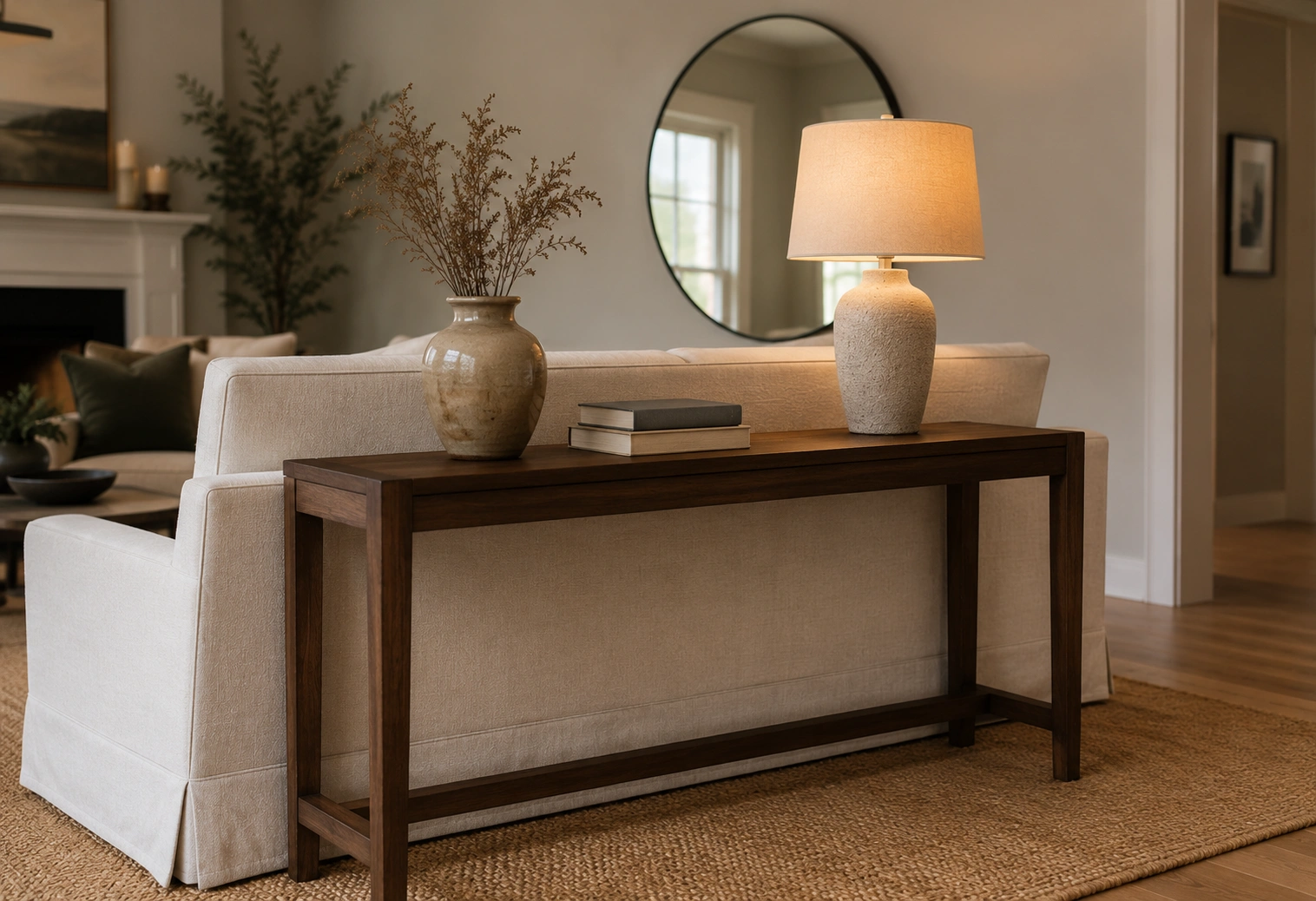
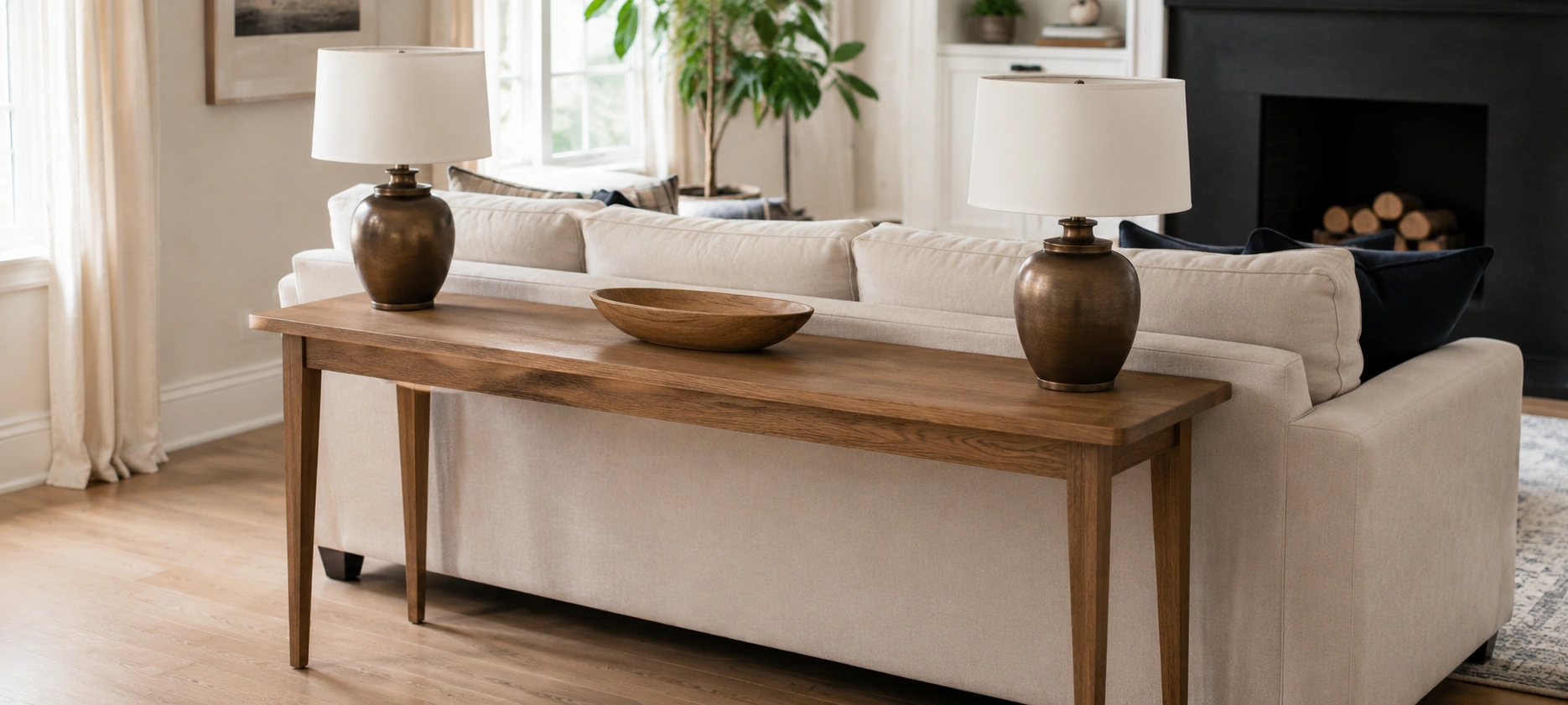
The most traditional and versatile option. Long, narrow, and designed to sit directly behind your sofa. Typically 4–6 inches lower than the sofa back. Perfect for lamps, artwork, and decorative objects. Works well with 3-seater sofas and larger sectionals.
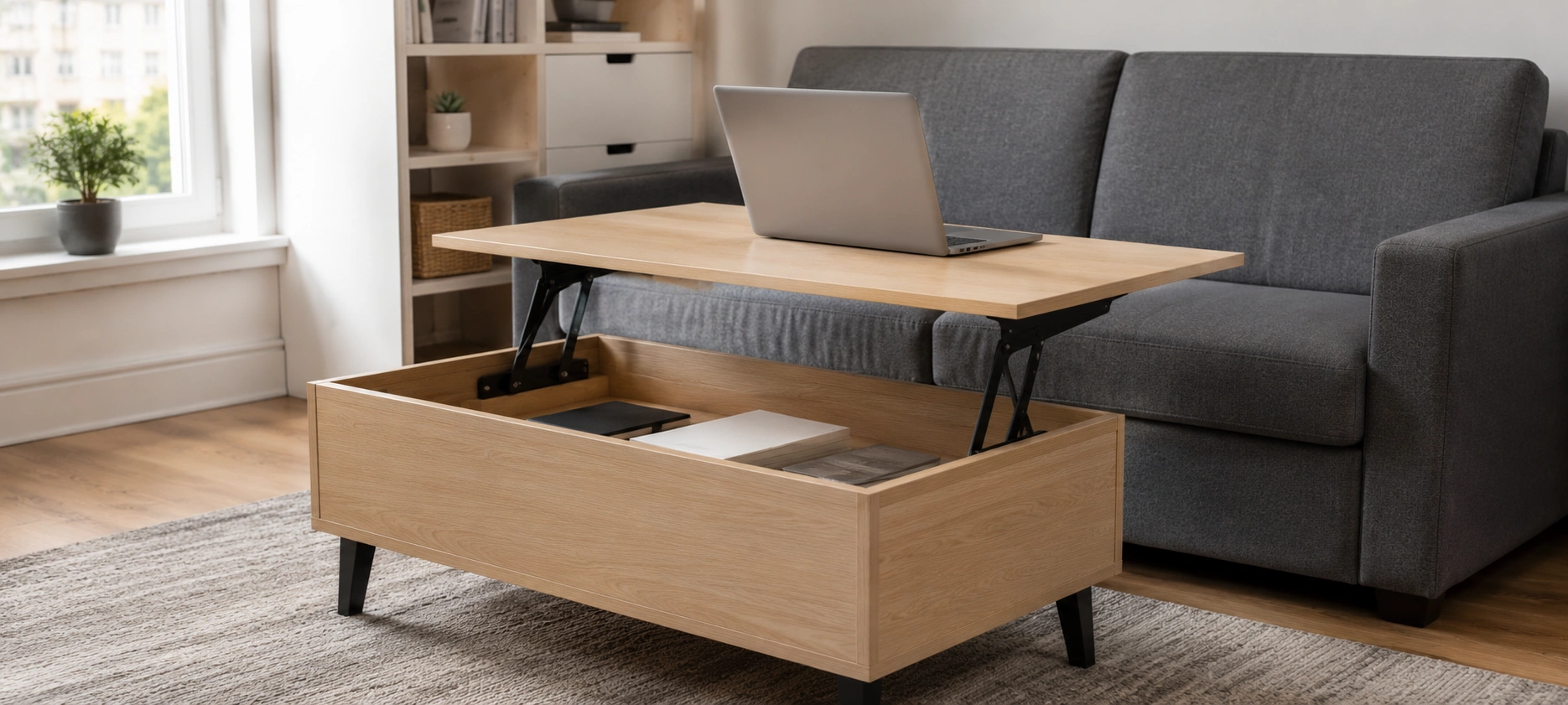
Lift-Top Sofa Table
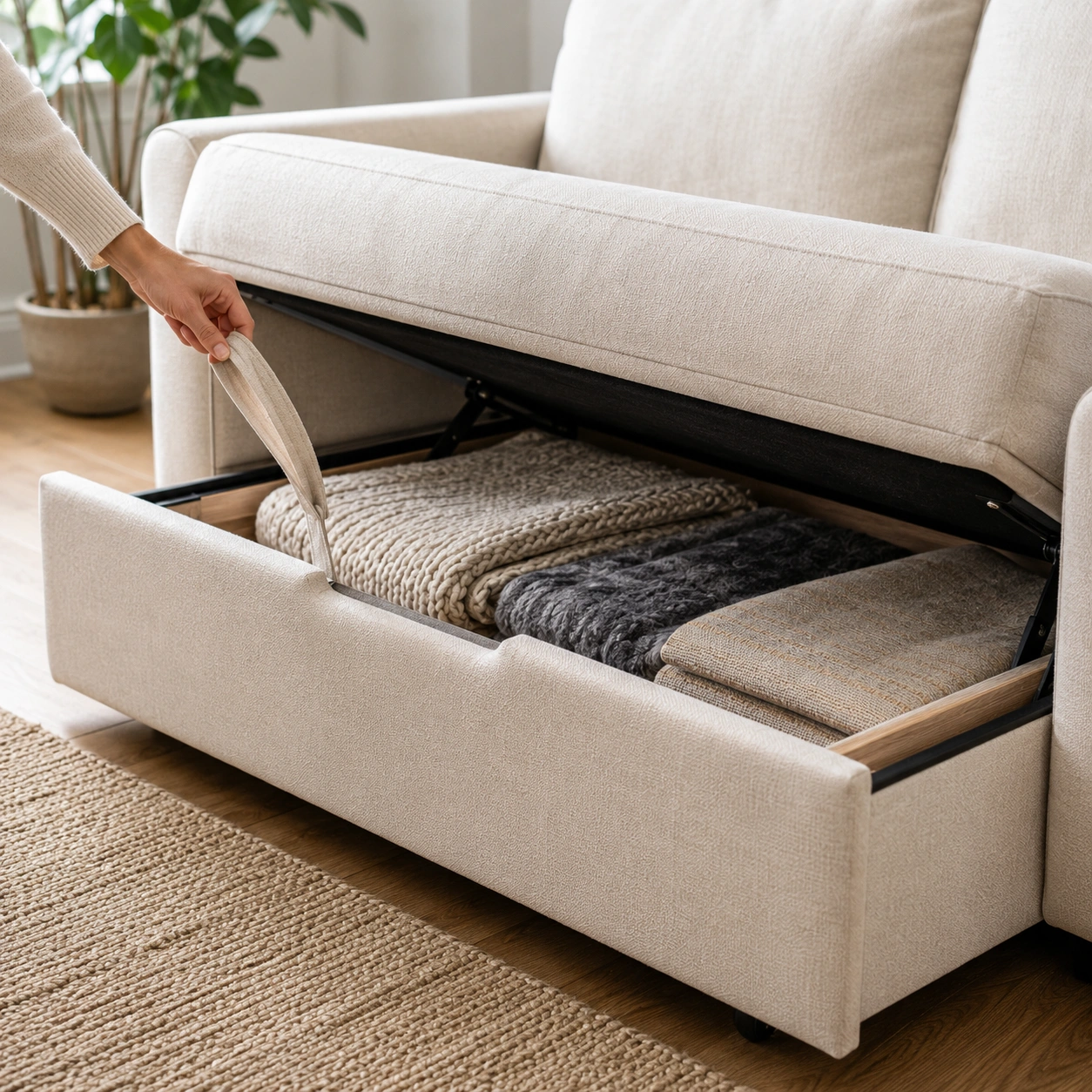
Features a hidden mechanism that raises the tabletop to a comfortable working or dining height. Ideal for small spaces where a dedicated desk or dining table isn't feasible. Many include hidden storage compartments underneath — excellent for small apartments or studio layouts.
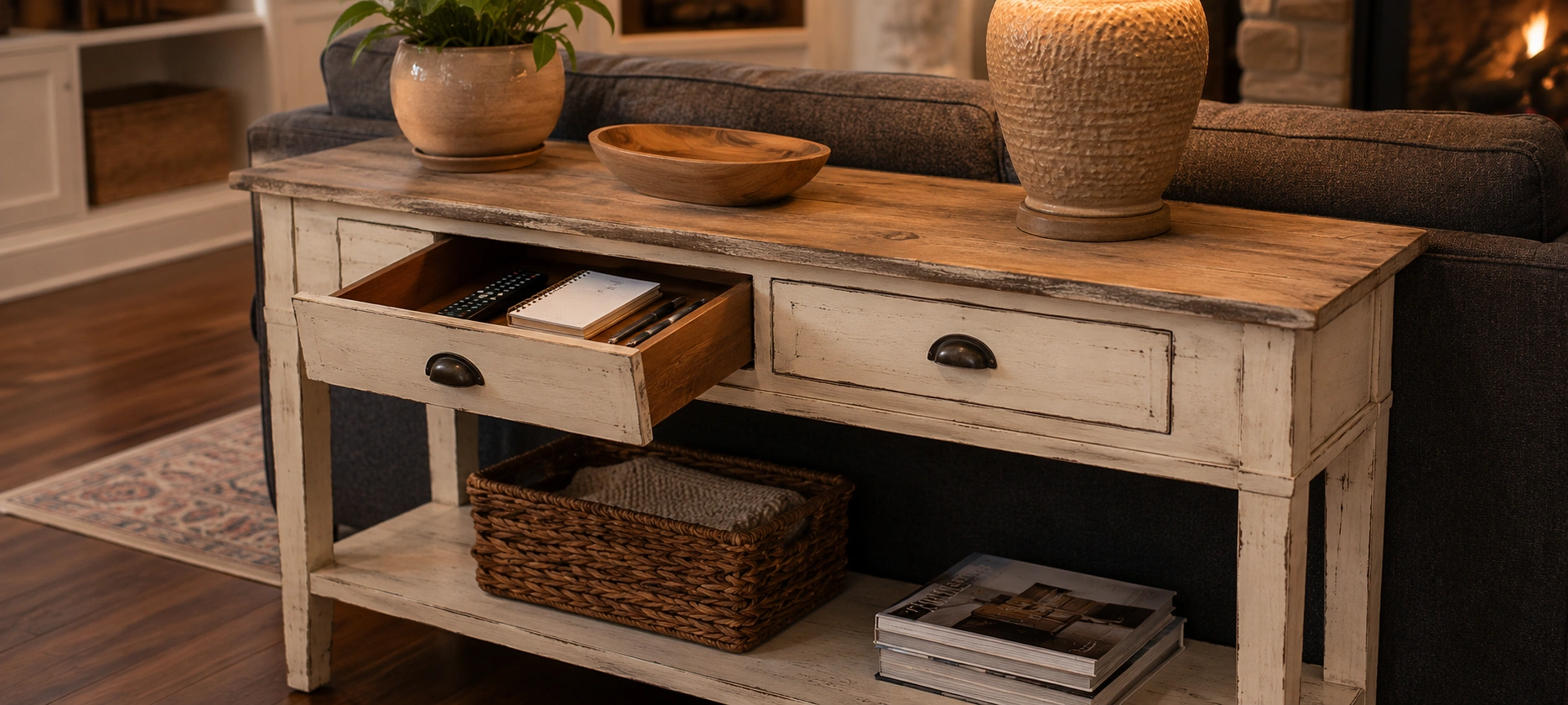
Drawer & Shelf Storage Table
Combines surface space with built-in drawers and/or open shelves. Great for hiding remotes, chargers, coasters, and clutter while keeping essentials accessible. A practical choice for family rooms where organization matters.

Nested / Stacking Tables
A set of 2–3 tables that fit together when not in use and can be pulled apart when you need extra surface area. Extremely space-efficient and flexible. Ideal for compact rooms or as side tables next to a loveseat.
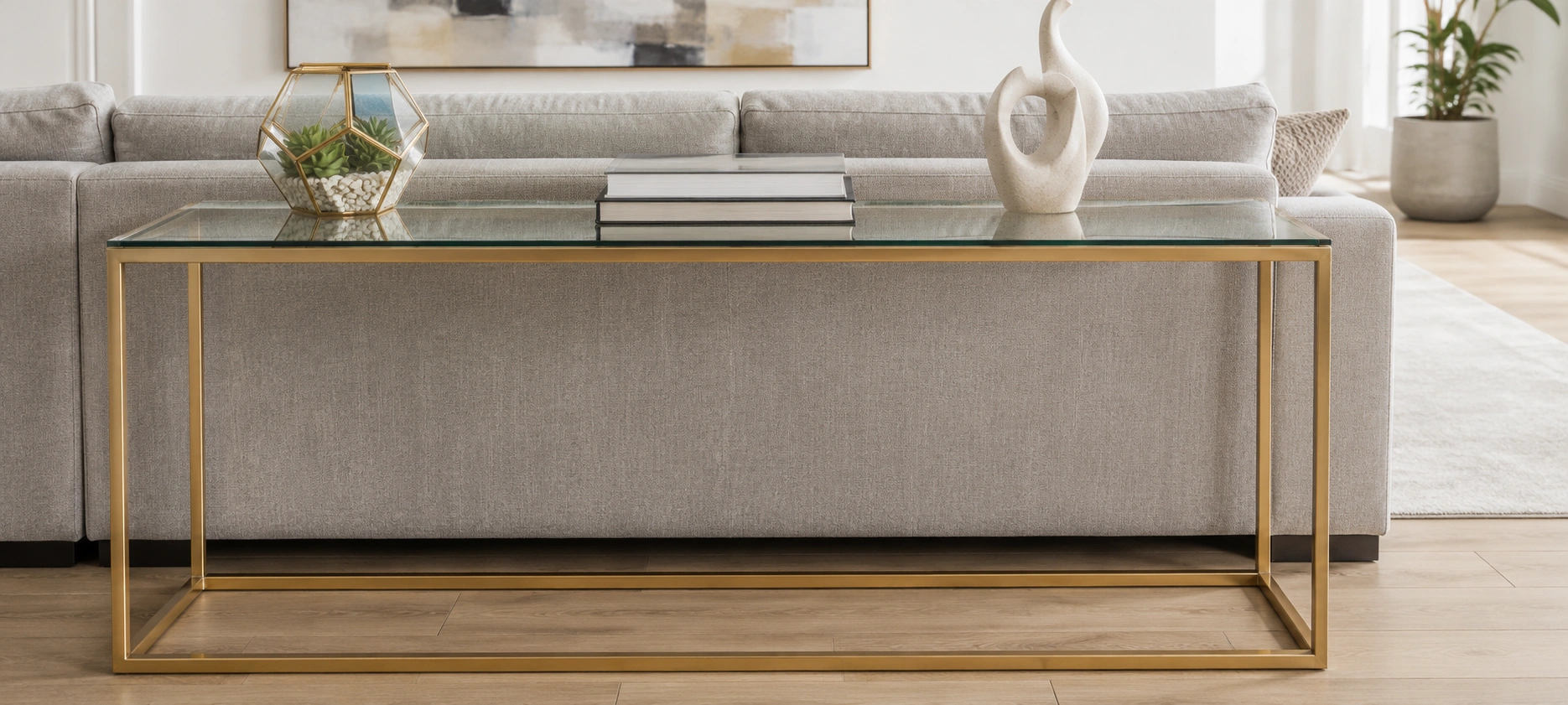
Glass-Top Sofa Table
Features a glass surface (clear, frosted, or tinted) on a metal or wood frame. Creates an airy, open feel that doesn't visually weigh down the room. Pairs well with modern sofas and contemporary designs. Easier to clean but shows fingerprints and dust more readily.
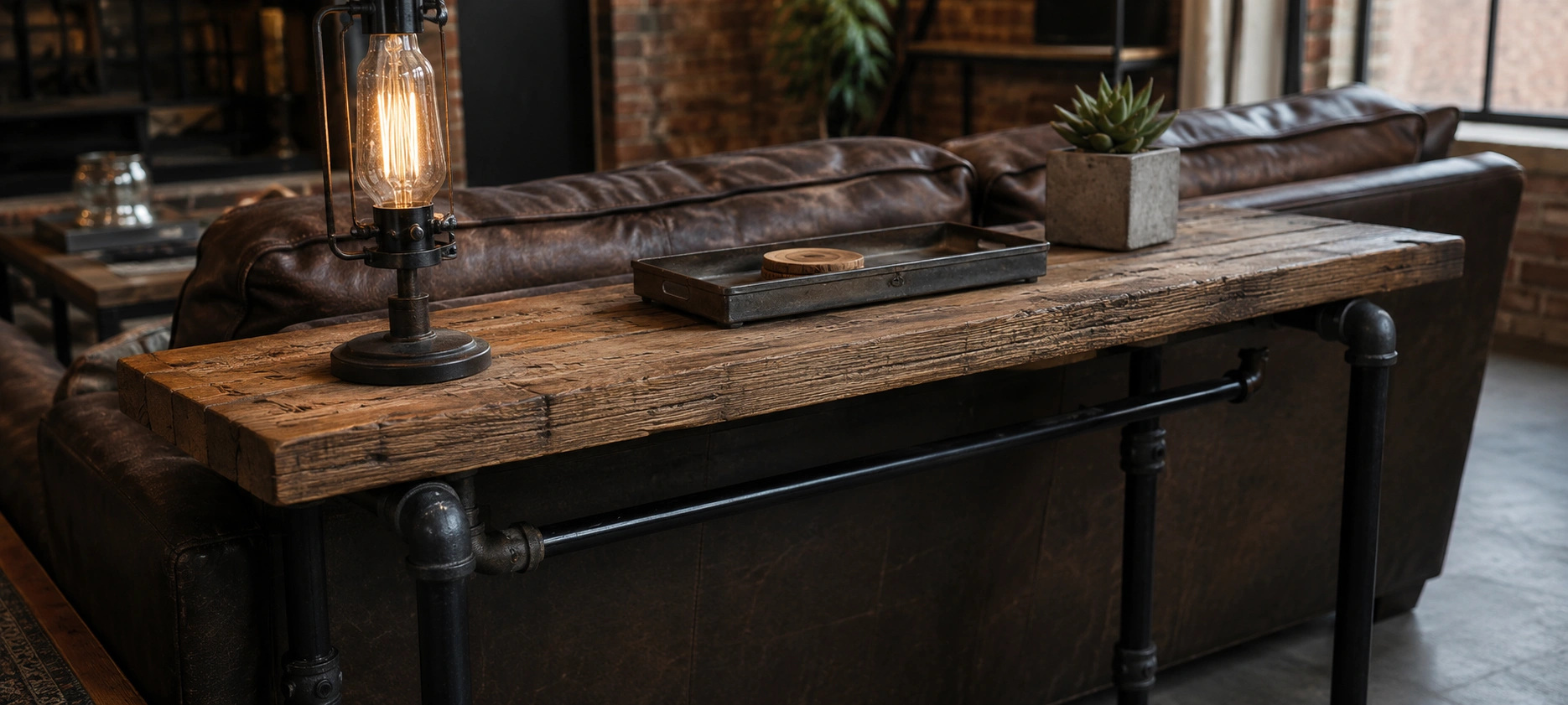
Industrial Style Table
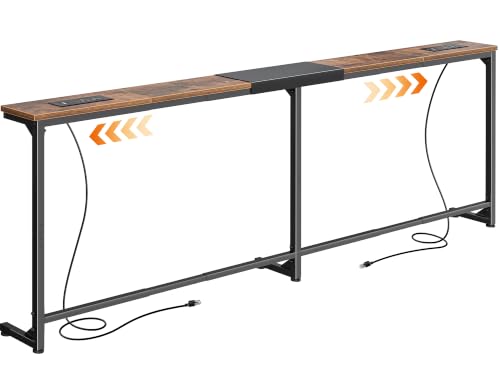
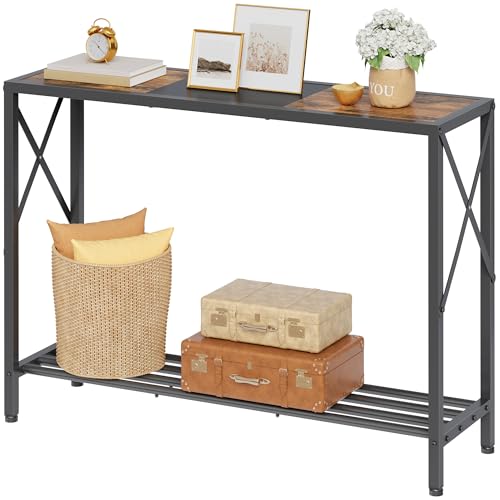
Combines raw wood tops with metal pipe or hairpin leg frames. Delivers a bold, character-filled look that works beautifully with industrial sofa designs and loft-style spaces. Highly durable and tends to be more affordable than solid hardwood alternatives.
Sofa Table Size & Height: Getting the Proportions Right
A sofa table that's too tall, too short, too wide, or too deep can throw off the entire balance of your room. These proportional rules are based on interior design standards and will work regardless of your sofa style.
- Height: 1–4 inches below sofa back The table should sit slightly lower than the top of your sofa's back cushions. This keeps the sightline clear and ensures lamps and decor are visible above the sofa. If the table is level with or above the sofa back, it creates a visual barrier.
- Length: 60–75% of sofa width A table that's too short looks disconnected; one that's too long overpowers the sofa. For a standard 3-seater sofa (80 inches), aim for a table between 48 and 60 inches long.
- Depth: 12–18 inches maximum Since sofa tables sit in your walkway, keep the depth slim. Deeper tables (20+ inches) are acceptable only if you have a very spacious room — otherwise they'll make the space feel cramped.
- Clearance: 6–12 inches from sofa Leave a small gap between the sofa back and the table front. This prevents the table from feeling squeezed against the sofa and allows for vacuuming and cleaning.
- Walkway: 30–36 inches minimum After placing the table, you should still have at least 30 inches of clear walkway behind it. If this leaves less than 30 inches, choose a narrower table or skip a behind-sofa placement entirely.
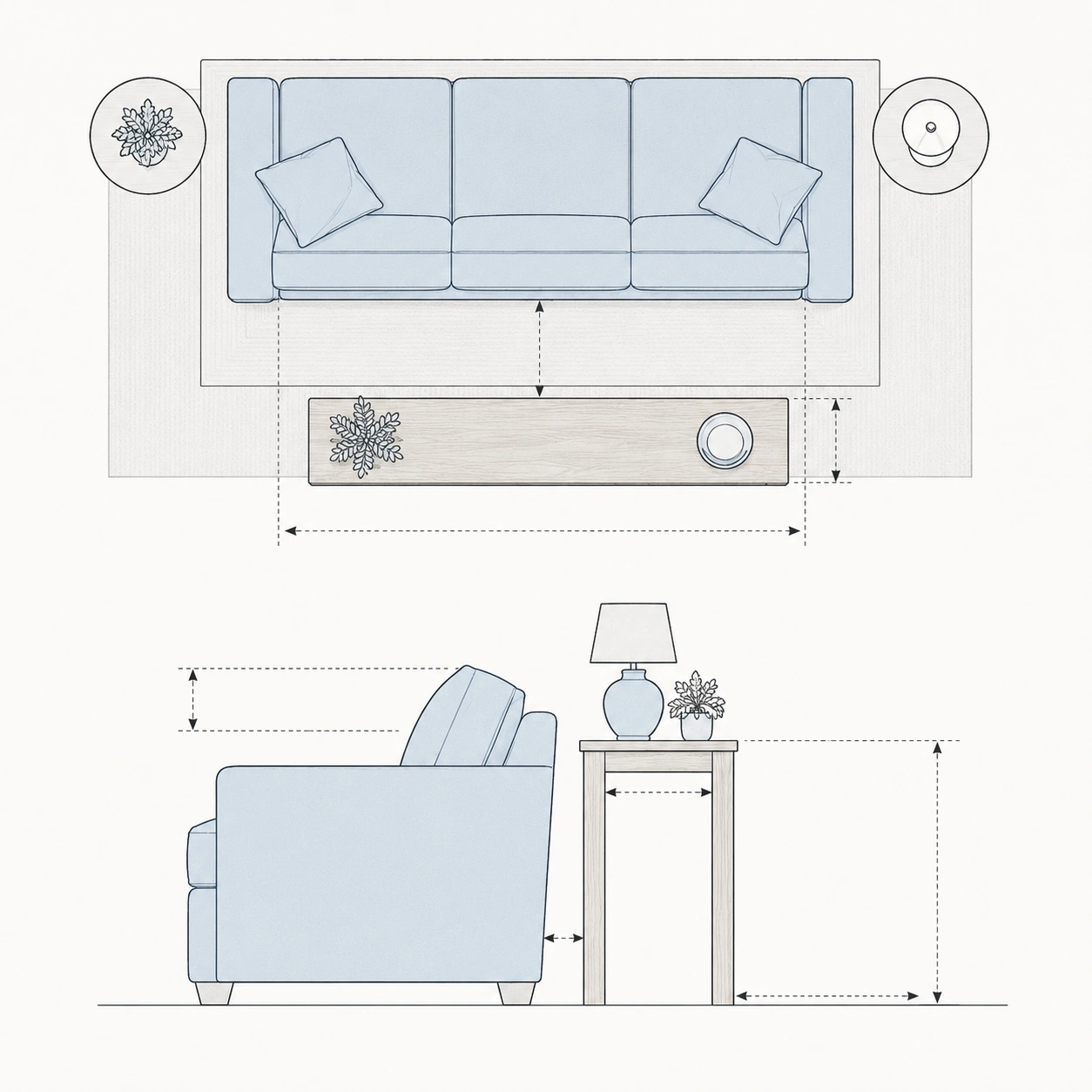
For a detailed walkthrough on measuring your entire living room layout — including how a sofa table fits into the circulation flow — our living room layout guide provides room-by-room measurements and planning strategies.
Where to Place Your Sofa Table
While "behind the sofa" is the most common placement, it's far from the only option. Your room layout, traffic patterns, and functional needs should determine the best spot.
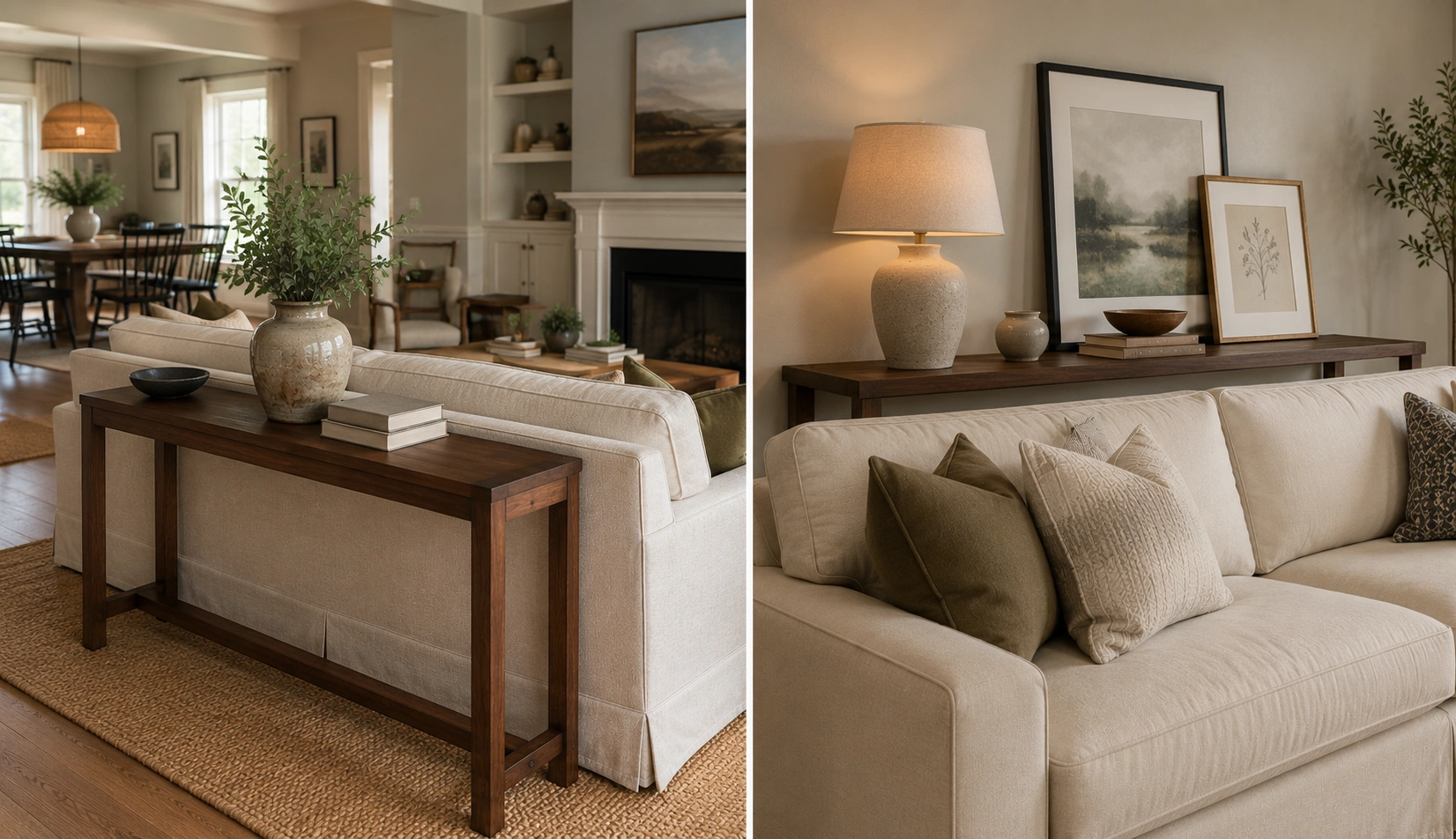
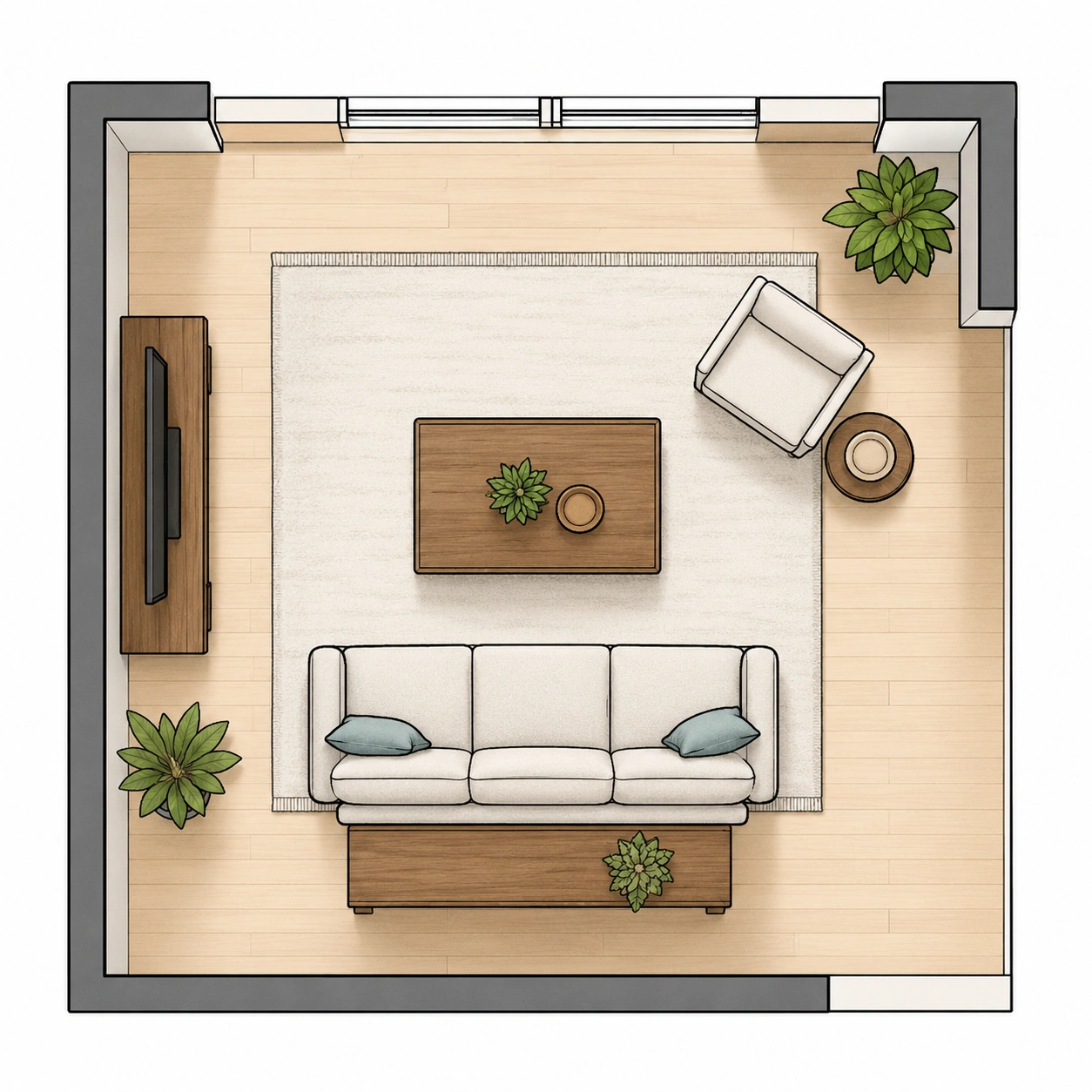
The behind-sofa placement works best when your sofa floats in the middle of the room — not pushed against a wall. This positions the table as a subtle room divider that separates your seating area from a walkway, entry, or dining space. It's particularly effective in open-plan layouts and large living rooms where you need to define zones without building walls.
If your sofa is against a wall, a sofa table still works but serves a different purpose — it becomes a decorative ledge for artwork, mirrors, and lighting rather than a functional surface. In this scenario, you might be better served by a side table placed at one end of the sofa instead.
Behind a Floating Sofa
Best for open floor plans and large rooms. Creates a defined zone and provides a functional back surface. Ensure at least 30 inches of walkway behind the table.
Against a Wall Behind Sofa
Works when the sofa is wall-mounted. The table becomes a display ledge. Keep it narrow (10–14 inches deep) to avoid protruding too far into the room.
As a Room Divider
Place between the living area and an entryway or dining space. Open-shelf or low-profile designs work best so they don't completely block the view or light.
Beside the Sofa (Side Table Role)
A shorter, narrower console can serve as an oversized side table. Ideal next to a 2-seater sofa or at the end of a sectional where a standard end table feels too small.
Sofa Table Materials: Which Should You Choose?
The material you choose affects durability, weight, maintenance, and how well the table pairs with your existing sofa. Here's a direct comparison of the most popular options.
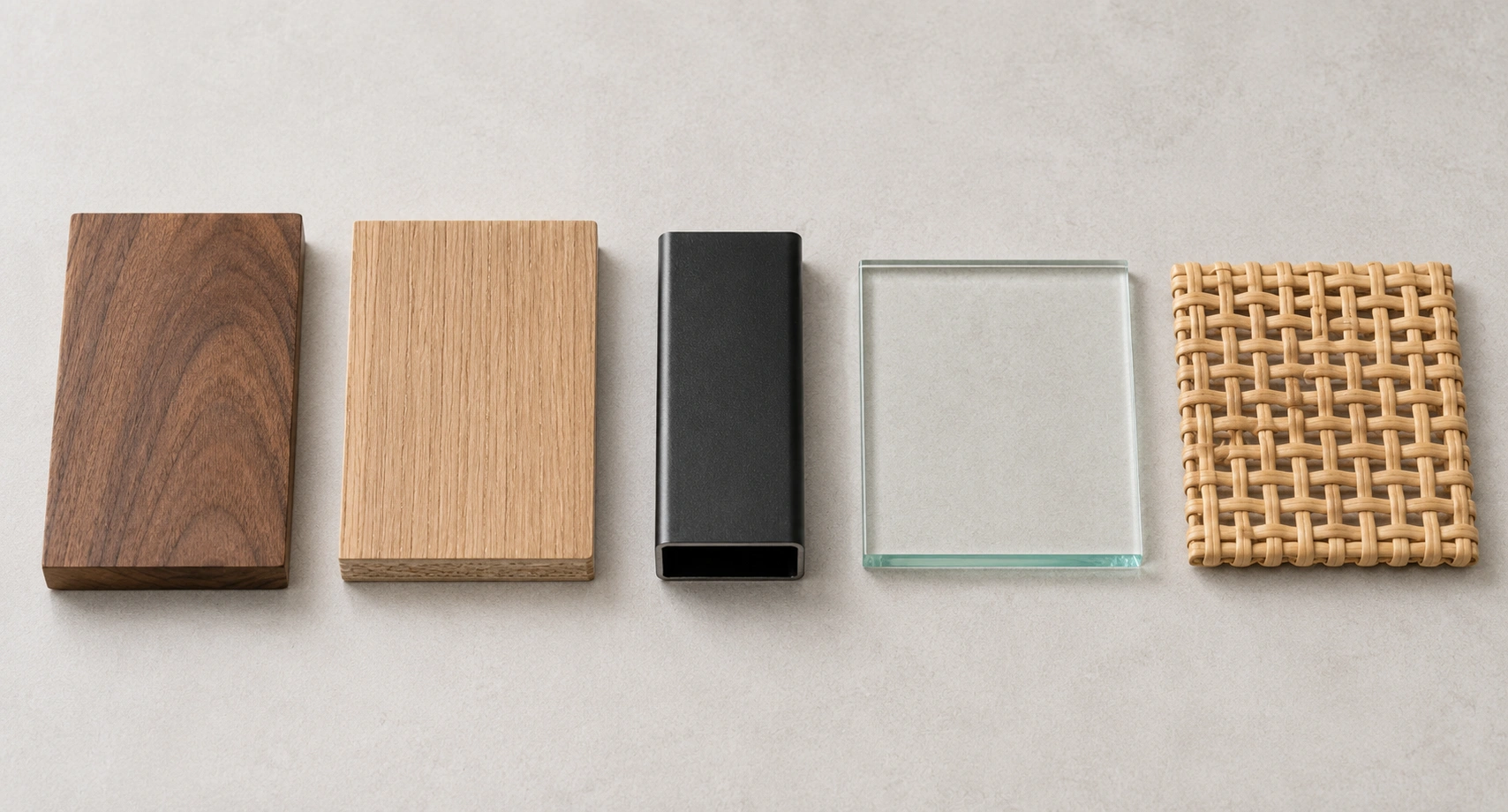
| Material | Durability | Weight | Maintenance | Best Style Pairing | Price Range |
|---|---|---|---|---|---|
| Solid Hardwood (Oak, Walnut, Maple) |
Excellent — lasts 15+ years | Heavy (60–100 lbs) | Wipe with damp cloth; oil periodically | Wooden sofas, traditional, mid-century | $150–$600+ |
| Engineered Wood (MDF, Plywood with veneer) |
Good — 5–10 years | Medium (40–70 lbs) | Wipe clean; avoid moisture exposure | Modern, budget contemporary | $50–$200 |
| Metal Frame (Steel, Iron, Aluminum) |
Excellent — very resistant to wear | Medium to heavy | Wipe with damp cloth; check for rust | Industrial, modern, minimalist | $80–$350 |
| Glass Top (Tempered glass + frame) |
Good — glass is strong but chips on impact | Medium | Clean with glass cleaner; shows fingerprints | Contemporary, glamorous, coastal | $100–$400 |
| Metal + Wood Combo (Industrial style) |
Excellent — best of both materials | Heavy (70–110 lbs) | Wood: oil occasionally; Metal: wipe clean | Industrial, rustic, farmhouse | $100–$400 |
| Rattan / Wicker | Moderate — 3–7 years indoors | Light (20–40 lbs) | Dust regularly; wipe with damp cloth | Coastal, bohemian, rattan sofas | $60–$250 |
| Acrylic / Lucite | Moderate — scratches easily | Light | Clean with microfiber; avoid abrasive cleaners | Glamorous, ultra-modern, small spaces | $150–$500+ |
To understand how sofa table material decisions fit into your overall furniture budget, see our sofa budget guide and sofa price breakdown for a complete cost-planning framework.
How to Style a Sofa Table Like a Designer
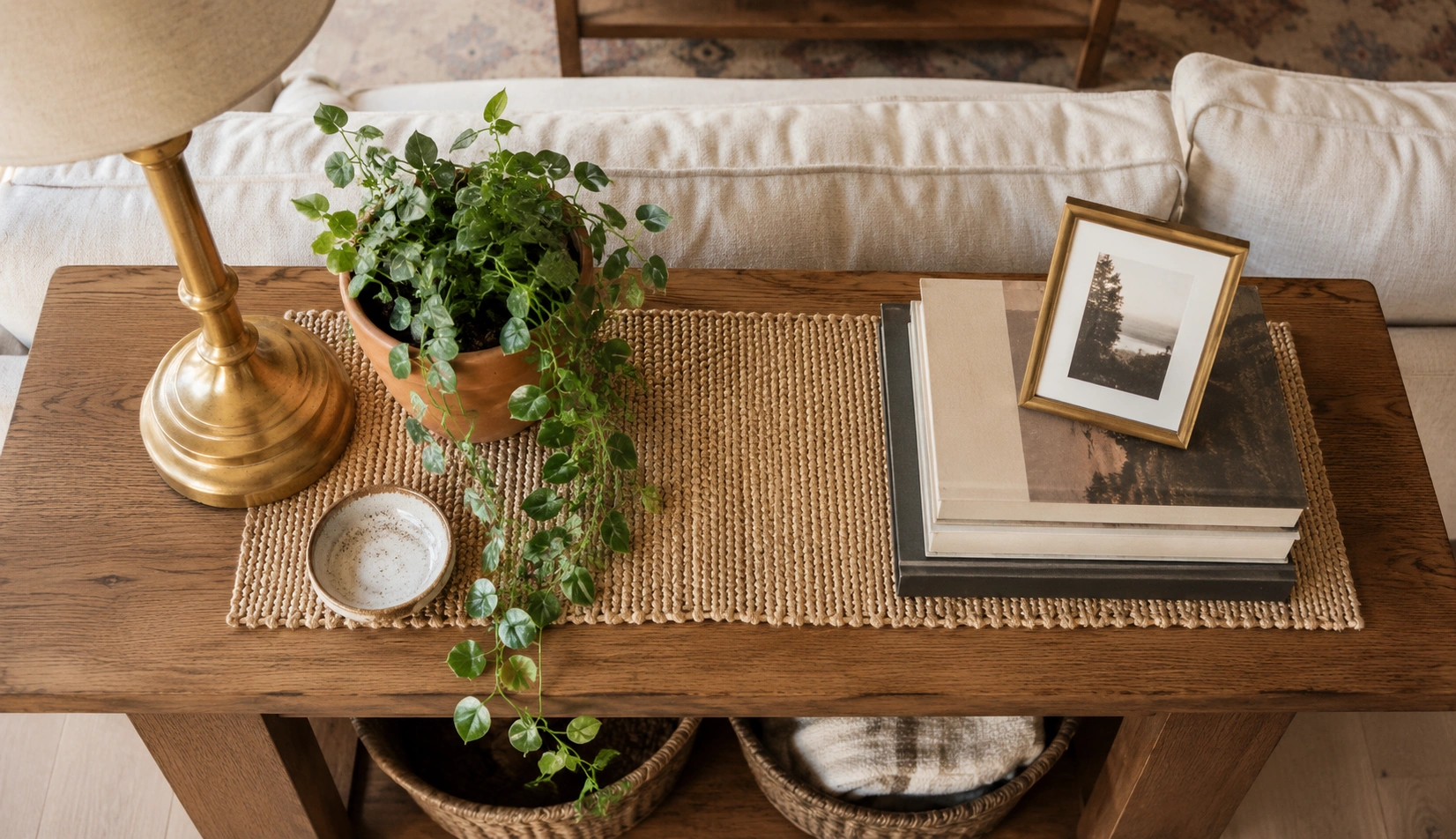
A well-styled sofa table elevates the entire room. The trick is layering objects of varying heights, textures, and purposes — without overcrowding the surface. Here are proven styling approaches for different aesthetics.
The Symmetrical Approach
Place matching table lamps on each end with a centered focal piece (a vase, sculpture, or stacked books) in the middle. This creates a formal, polished look ideal for traditional rooms and neutral-toned sofa setups. Works best on tables 54 inches or longer.
The Asymmetric Layered Look
Stack objects of different heights on one side (tall lamp + medium plant + small tray) and keep the other side minimal with one statement piece. This creates dynamic visual flow and feels more relaxed. Pairs well with modern and casual sofa designs.
The Functional Display
Combine styling with purpose: a lamp for lighting, a tray for remotes and coasters, a small stack of coffee table books, and a bowl for keys or candy. Every item earns its place. Ideal for family rooms where the table needs to work hard.
The Gallery Ledge
Lean framed artwork or mirrors against the wall behind the table, layered from largest to smallest. Add one or two small objects on the table surface itself. This turns the table into a curated display area. Stunning behind a vintage or eclectic sofa.
Common Sofa Table Mistakes to Avoid
After reviewing hundreds of living room setups, these are the mistakes we see most often — and they're all easy to prevent with a little planning before you buy.
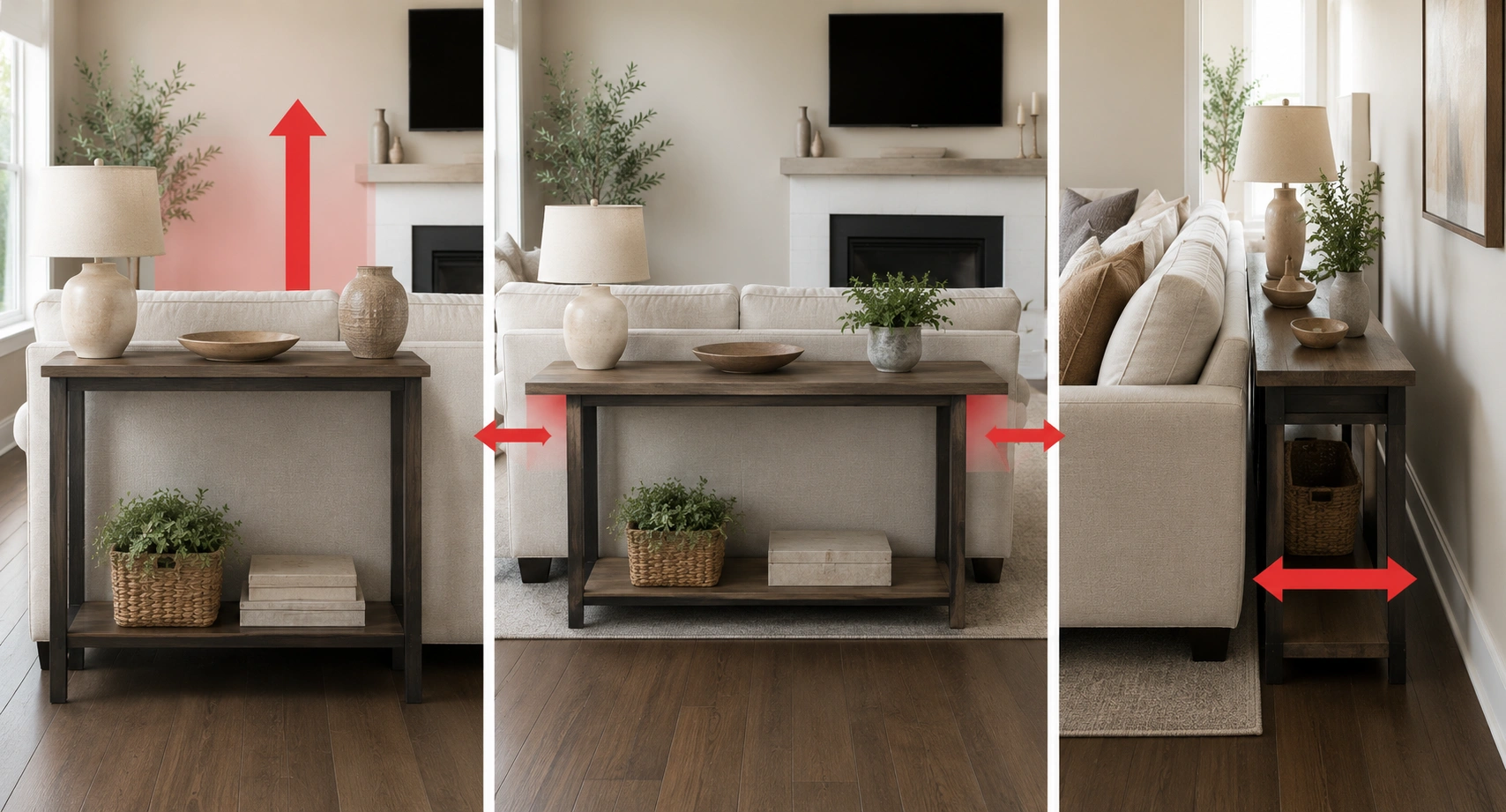
- Choosing a table taller than the sofa back. This blocks the view, makes lamps awkwardly positioned, and creates a heavy, top-heavy feeling. Always measure your sofa's back height before shopping and subtract at least 1 inch.
- Going too deep in narrow rooms. A 20-inch deep table behind a sofa in a 12-foot wide room leaves inadequate walkway. Measure your available depth — not just your sofa width — before committing to a purchase.
- Matching widths exactly. A table that's the same width as your sofa looks rigid and formulaic. Aim for 60–75% of the sofa width, letting the sofa extend past the table on both sides for a relaxed, designed look.
- Ignoring the walkway behind. In the excitement of choosing a beautiful table, buyers forget to check whether there's still room to walk behind it. Measure the full depth: sofa depth + gap + table depth. The remaining space needs to be at least 30 inches.
- Overloading the surface. Cramming too many decor items makes the table look cluttered and defeats its purpose as a functional surface. Follow the 3-2-1 rule mentioned above and leave at least 30% of the surface visible.
- Style mismatch with the sofa. An ornate carved wooden table behind a sleek modern sofa (or vice versa) creates visual discord. You don't need to match — but you do need to be in the same design conversation.
Best Sofa Tables for Specific Situations
Different rooms and lifestyles demand different sofa table solutions. Here are targeted recommendations based on common scenarios buyers face.
Small Apartments
A lift-top table with hidden storage gives you a work surface, dining spot, and organization in one piece. Alternatively, a set of apartment-friendly nested tables provides flexible surface area that tucks away when not needed. Choose a narrow depth (10–12 inches) and consider acrylic or glass materials that don't visually shrink the room.
Behind a Sectional Sofa
Sectionals have irregular shapes, so measure carefully. A straight console works if the sofa back is flat. For L-shaped sectionals, consider two smaller tables or a custom-length piece. The table should follow the sofa's contour, not fight it. Industrial and wooden designs pair especially well with the scale of sectionals.
Open-Plan Room Divider
Choose a table with open shelves or a low profile (under 30 inches total height) so it separates zones without blocking light or sightlines. A two-sided styling approach — decorative on the living side, functional on the other — makes the table work double duty. Layout planning is essential here.
Families with Kids
Opt for rounded edges, durable surfaces (solid wood or metal — avoid glass), and drawer storage to keep items out of reach. Avoid tables with sharp corners or delicate finishes. The height should be low enough that kids can't pull the table down by climbing on it. A sturdy, heavy table (50+ lbs) is safer than a lightweight one that could tip.