
The Complete Guide to Choosing the Best Kids Sofa
Safety-certified options, age-appropriate sizing, durable materials, and expert picks to help you find the perfect seating for your child's space.
Why a kids sofa matters: Children spend significant time sitting — reading, watching shows, playing games, and relaxing. A properly sized kids sofa supports healthy posture, encourages independence, and creates a dedicated, comfortable space that grows with your child. Unlike adult sofas that can be oversized and unsafe, kids sofas are engineered with smaller proportions, softer edges, and kid-friendly materials designed for real daily use.
A kids sofa is not simply a miniature version of adult furniture. It is a purpose-built piece designed around the physical dimensions, safety requirements, and behavioral patterns of children. From toddlers who need low-to-the-ground foam seating to older kids who want a "real couch" feel in their bedroom or playroom, the right kids sofa serves as a personal space that fosters comfort, creativity, and a sense of ownership.
This guide covers every essential factor — from understanding different types and age-based sizing to evaluating safety certifications, material durability, and long-term value. Whether you are furnishing a nursery, a toddler's play area, or a teenager's hangout zone, this resource will help you make a confident, informed decision before you buy.
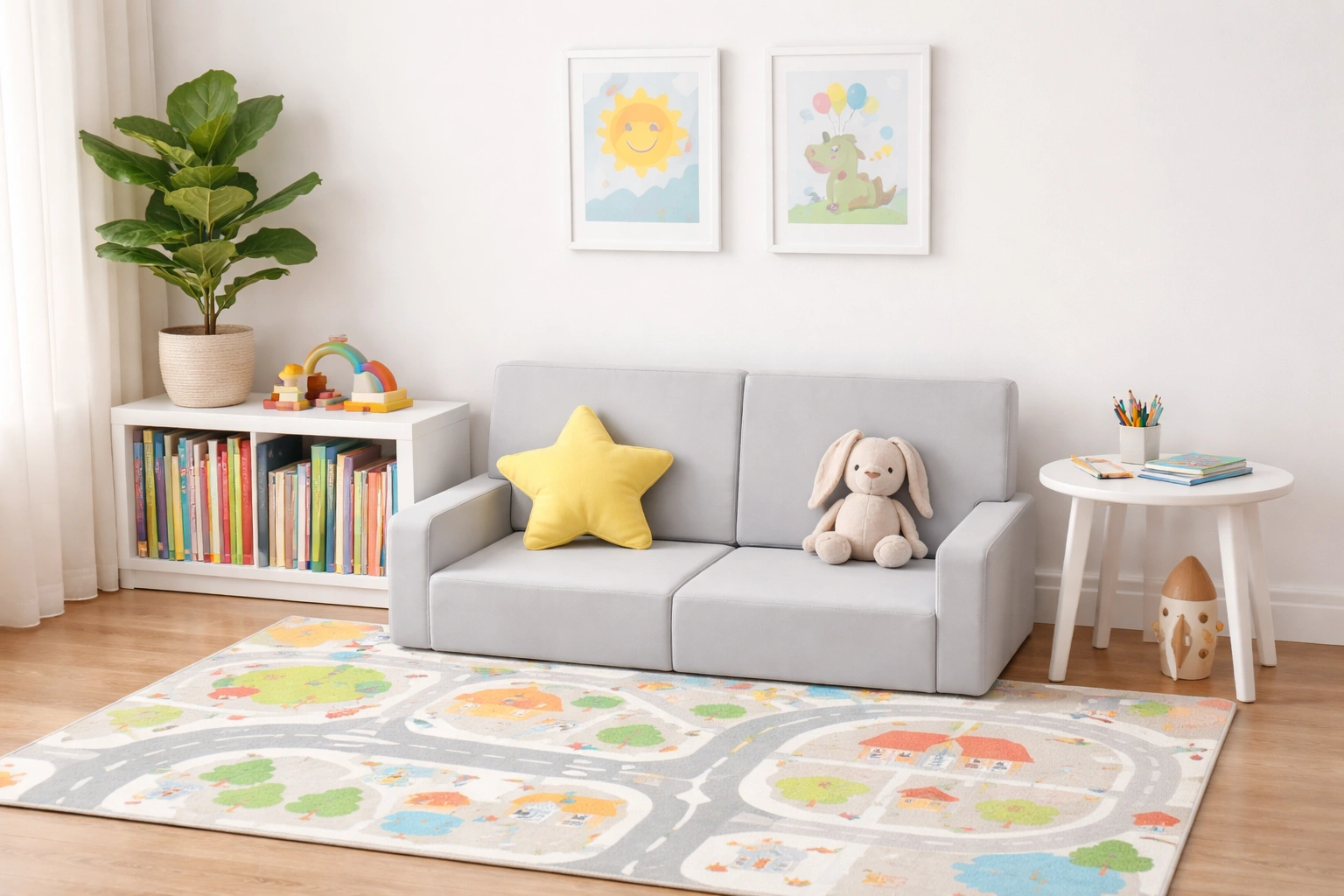
Types of Kids Sofas Explained
Kids sofas come in several distinct categories, each designed for specific age ranges, room configurations, and usage patterns. Understanding these types helps you narrow down options quickly and avoid purchasing something that won't work for your child's situation.
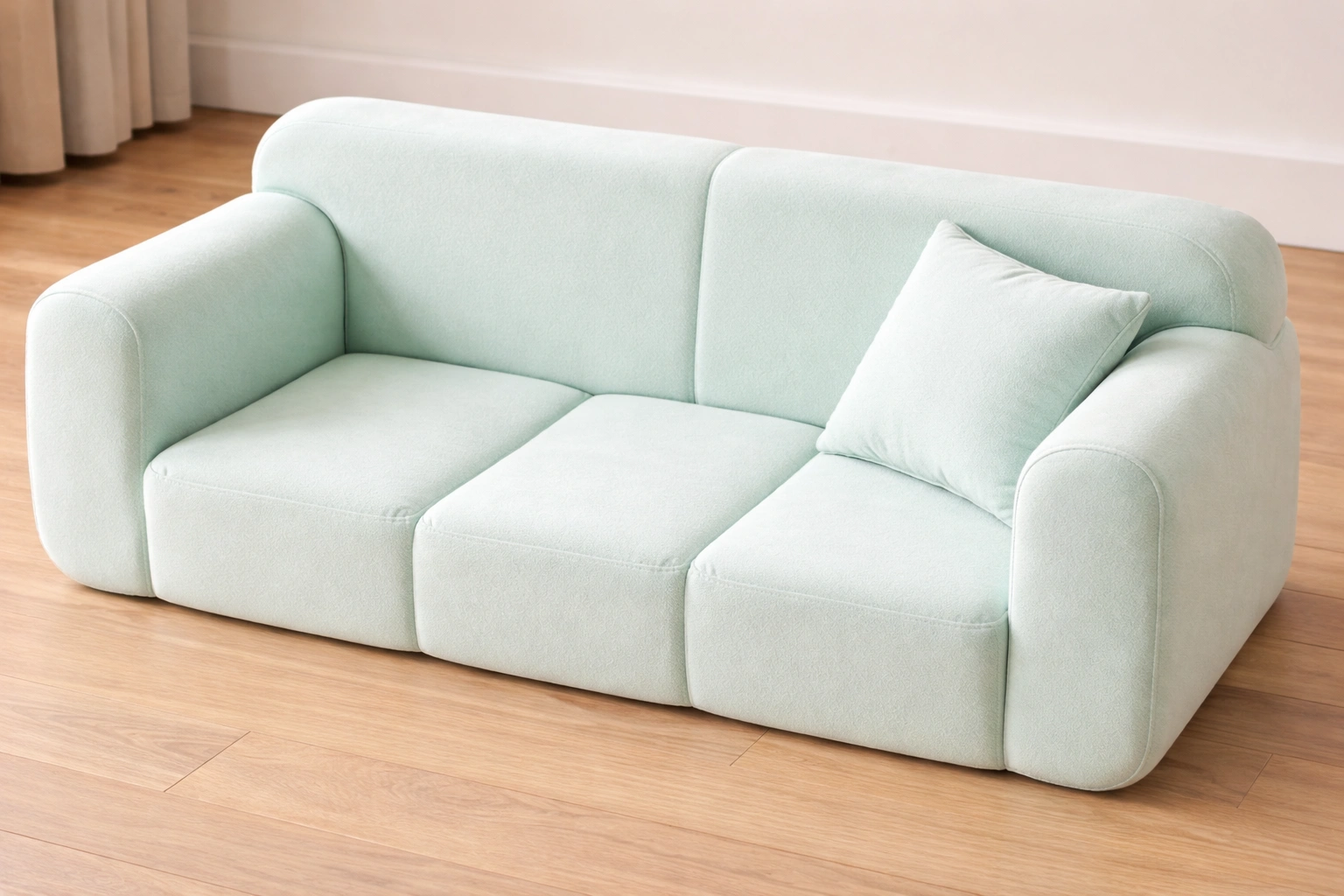
Foam Sofa / Flip-Open Sofa
Lightweight, ultra-soft foam construction that folds flat into a lounger or opens into a mini couch. Ideal for toddlers because it has no hard frame, no sharp edges, and is easy to move. Often features machine-washable covers — essential for spills and accidents.
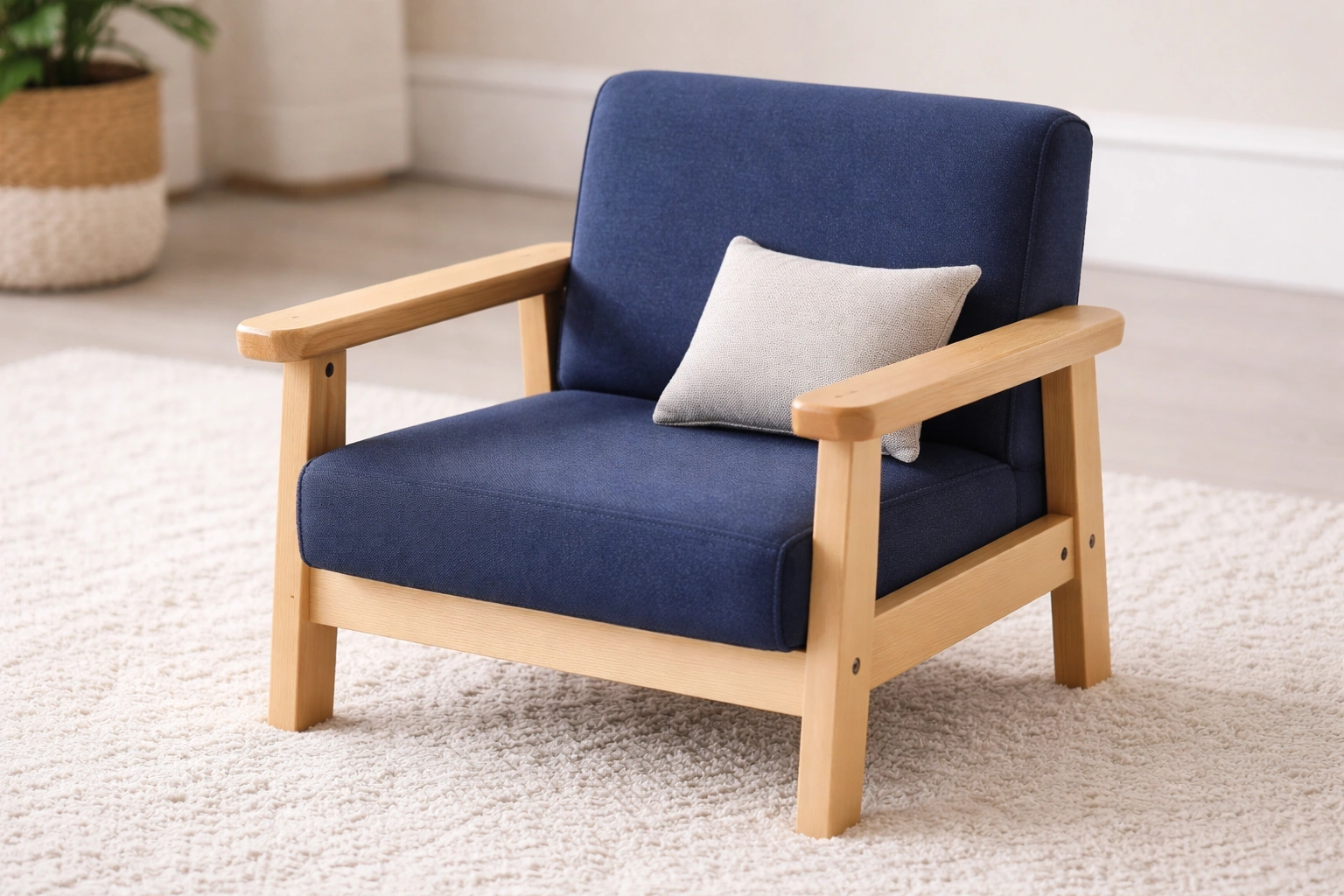
Mini Armchair / Upholstered Chair
Features a real wooden or sturdy frame with foam-padded seat and back. Resembles adult furniture in miniature form, giving young kids a sense of "grown-up" ownership. More structured than foam sofas, with better back support for reading and screen time.
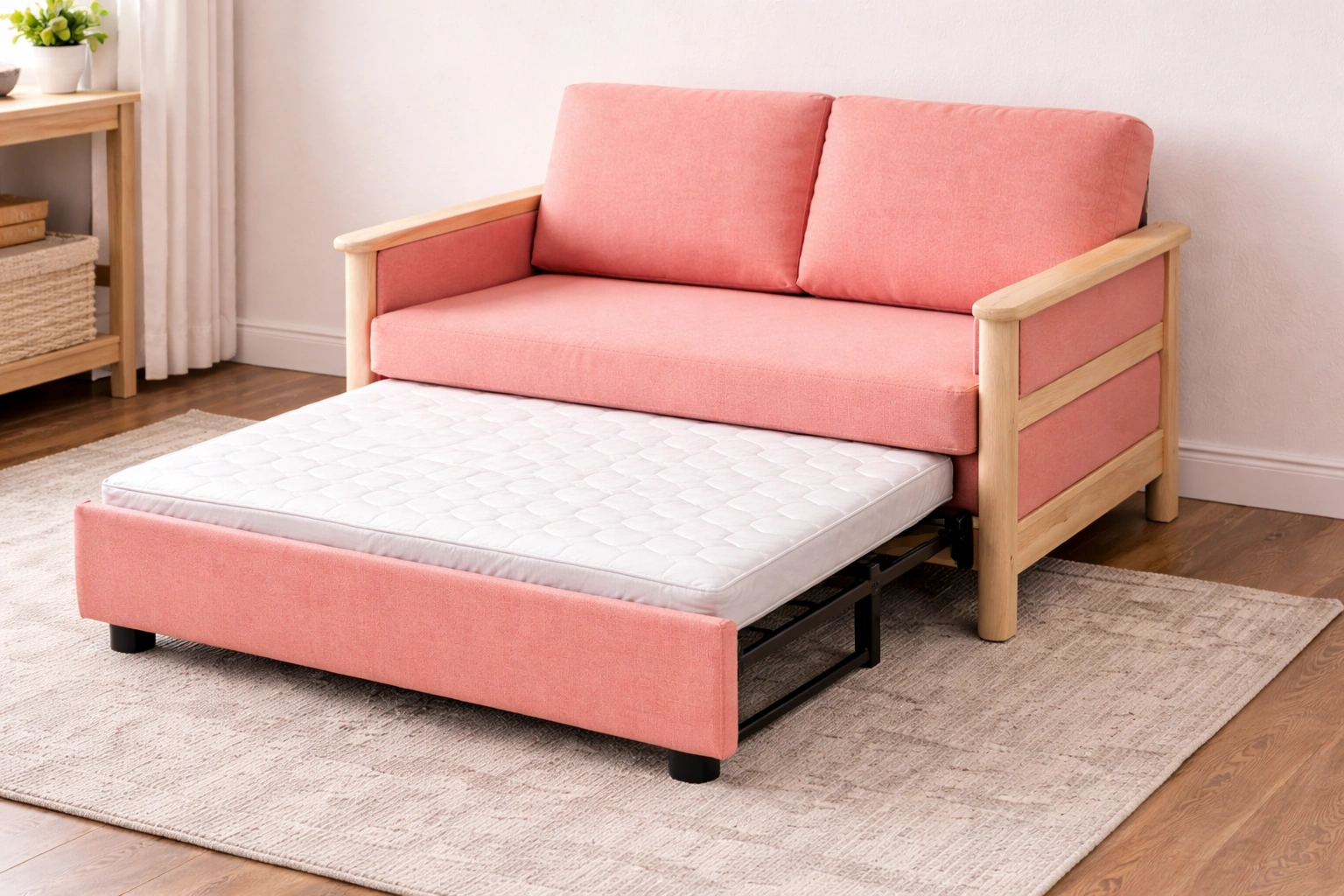
Kids Sleeper Sofa
Dual-function design that converts from a daytime couch to a sleeping surface for sleepovers or naps. Similar concept to adult sleeper sofas but scaled down. Look for easy conversion mechanisms and a comfortable thin mattress pad.
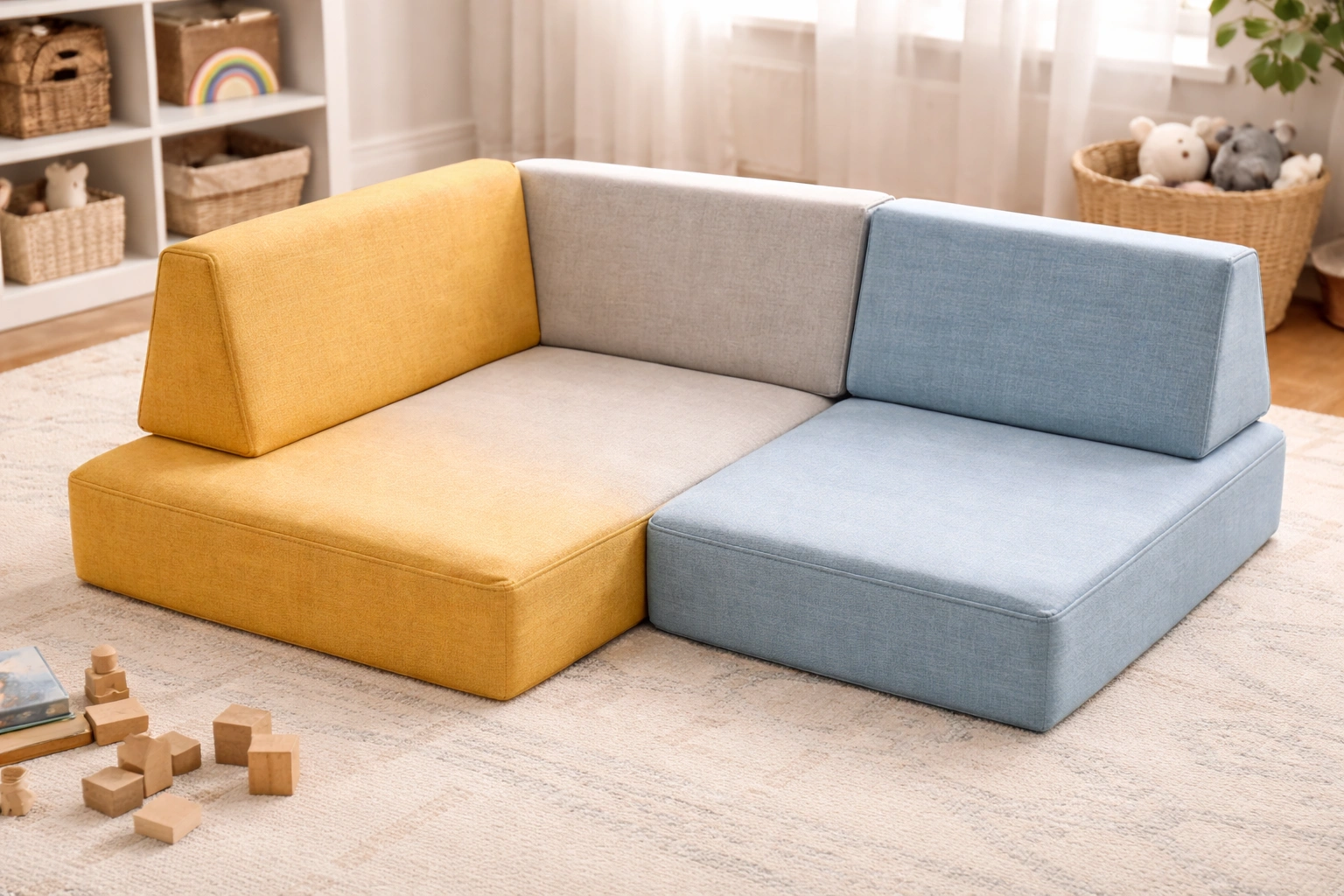
Modular / Configurable Sofa
Individual seat, back, and corner pieces that kids can rearrange themselves — fostering creativity and adaptability. Inspired by adult modular sofas, these are perfect for playrooms where layout needs change frequently. Lightweight enough for kids to reconfigure.
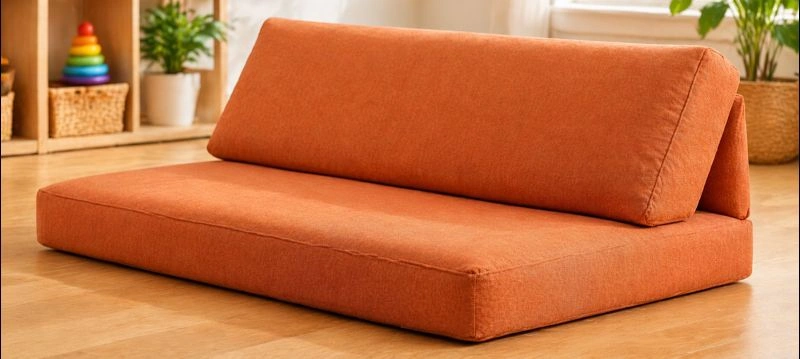
Floor Sofa / Lounge Cushion
Sits directly on the floor with thick, supportive cushioning. No legs, no frame — maximum stability and zero tipping risk. Excellent for floor-level seating in family rooms, reading corners, or Montessori-inspired spaces.
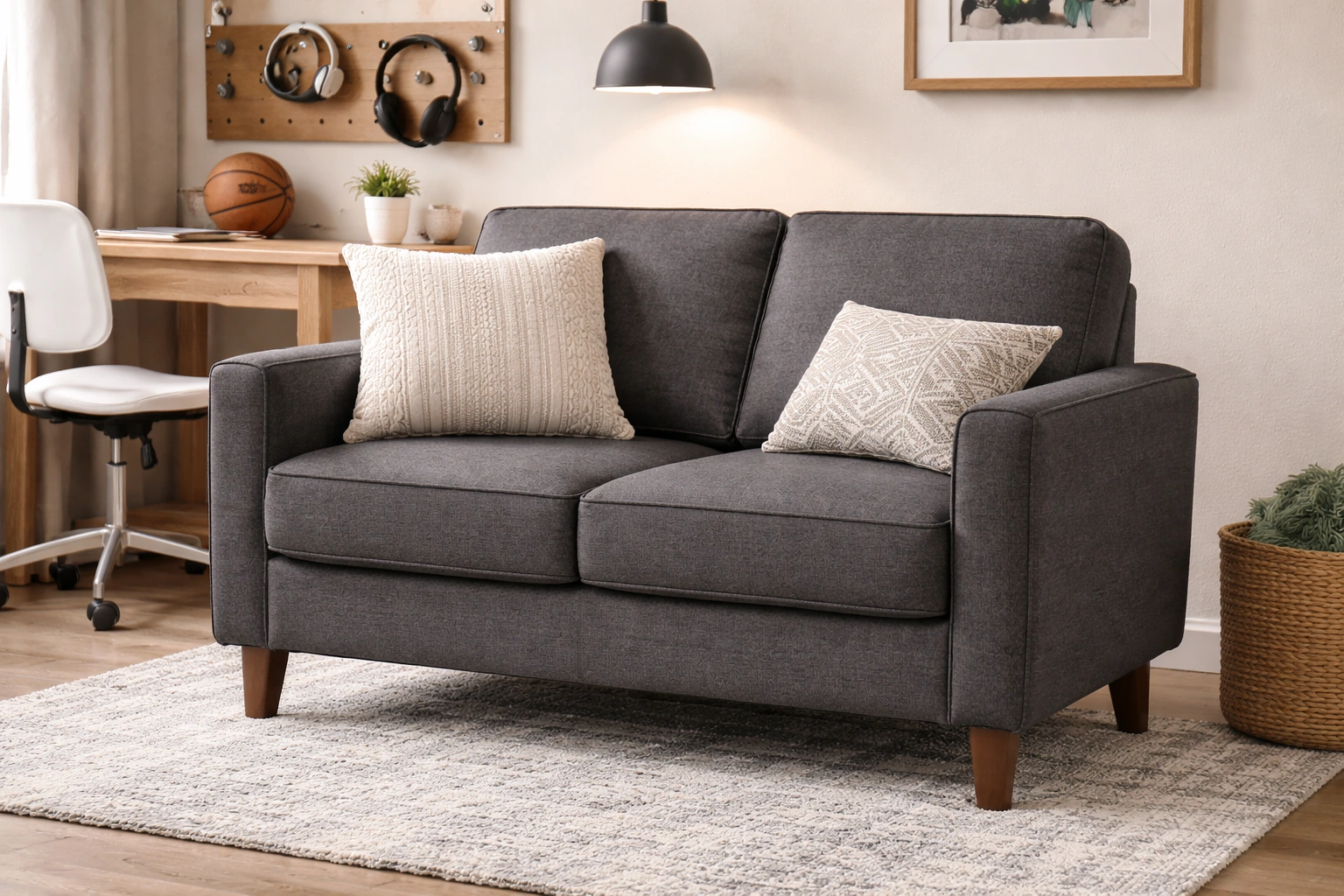
Tween / Teen Loveseat
A scaled-down loveseat or compact 2-seater sofa designed for older kids and young teens. Features real construction with proper spring systems, durable upholstery, and adult-like aesthetics. Bridges the gap between kids furniture and full-size seating.
Non-Negotiable Safety Standards
When it comes to children's furniture, safety is the single most important factor — more than style, color, or price. A kids sofa must meet specific safety requirements that go beyond standard adult furniture certifications. Here is what you must verify before purchasing.
⚠ Critical Safety Checklist
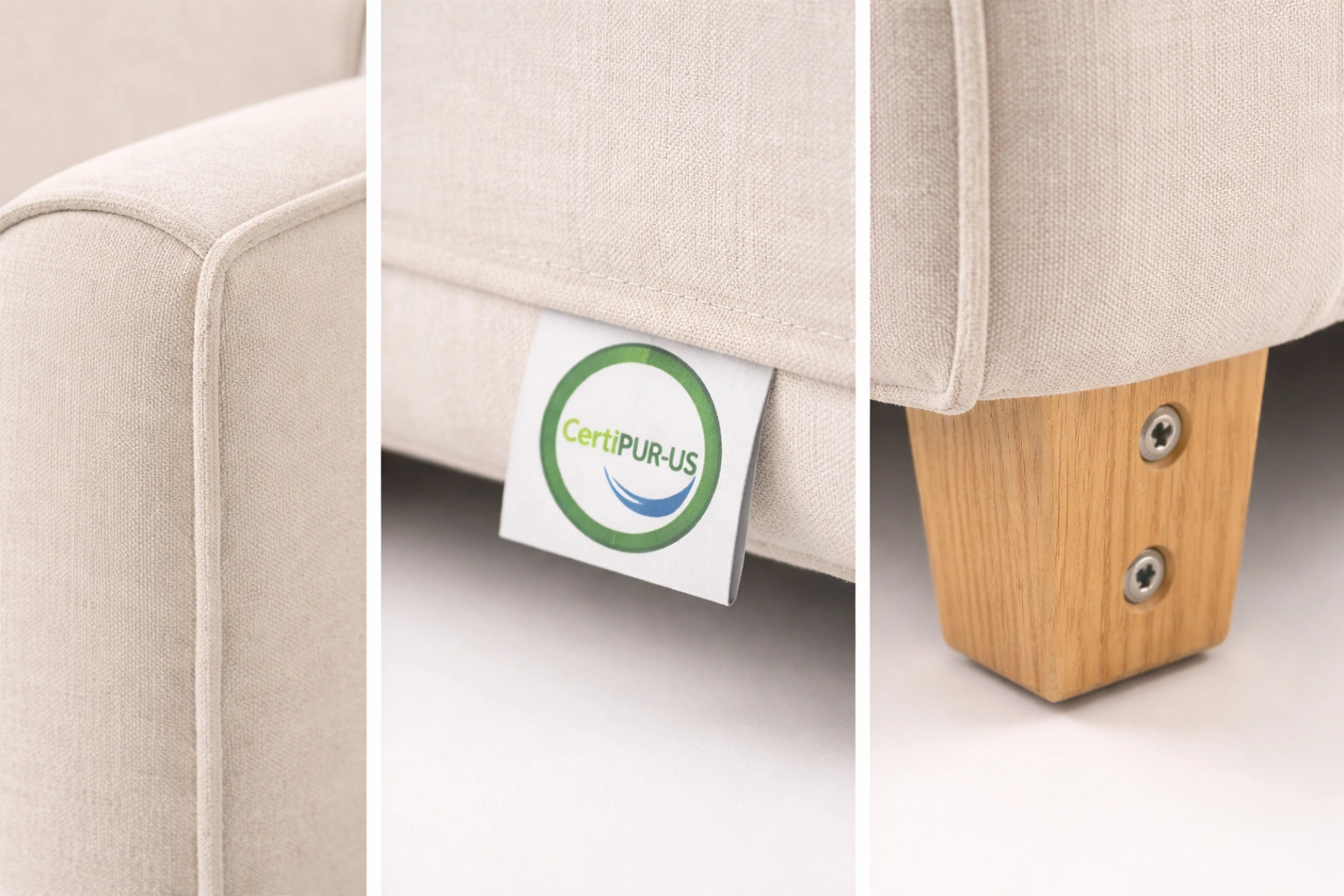
- Certified foam: All foam components must be CertiPUR-US certified, meaning they are made without ozone depleters, PBDEs, TDCPP, TCEP flame retardants, mercury, lead, and other heavy metals. Low VOC emissions for indoor air quality.
- No tipping hazard: The sofa should have a wide, stable base. If it has legs, they must be short and sturdy. Test by pressing down on the back — it should not tip forward. Anti-tip anchoring is recommended for taller models.
- Rounded edges throughout: Every corner and edge must be rounded or padded. No exposed wood, metal, or hard plastic edges that could cause injury during play or falls.
- Non-toxic finishes: Paints, stains, and fabric treatments must be lead-free and phthalate-free. Look for GREENGUARD Gold or OEKO-TEX Standard 100 certifications on upholstery fabrics.
- Secure fasteners: All screws, bolts, and fasteners must be recessed or covered. No protruding hardware that could snag skin or clothing. Check that legs are firmly attached and cannot be easily removed by curious hands.
- Breathable upholstery: Avoid vinyl or non-breathable synthetic covers for younger children, as these pose suffocation risks if a child burrows under cushions. Opt for cotton, polyester blends, or performance fabrics.
- Weight capacity clearly stated: The manufacturer must specify a maximum weight limit. Choose a sofa rated for at least 150 lbs to accommodate both the child and an adult sitting together.
- Meets ASTM F2057: This is the specific ASTM standard for clothing storage unit tip-over prevention, but many kids sofa manufacturers also reference ASTM F963 (toy safety) for general children's product compliance.
Key Factors to Evaluate Before Buying
Beyond safety, several practical factors determine whether a kids sofa will actually work well in your home. Skipping this evaluation is the most common reason parents end up with furniture that gets abandoned within months. If you want to understand the broader framework for evaluating any sofa, our complete sofa selection guide covers the fundamentals — but here are the factors specific to kids sofas.
📏 Correct Seat Height
The seat should allow the child's feet to rest flat on the floor with knees at approximately 90 degrees. For toddlers (ages 1–3), seat height should be 6–8 inches. For preschoolers (ages 3–5), aim for 8–10 inches. For school-age kids (ages 6–10), 10–14 inches is appropriate. Use our size and room guide principles scaled to child proportions.
🧵 Washable or Removable Covers
This is non-negotiable for kids under 8. Spills, stains, and messes are guaranteed. Look for washable sofa designs with zip-off covers that can go in the washing machine. For older kids, removable (even if spot-clean-only) covers are still strongly recommended. Check our fabric sofa cleaning guide for maintenance tips.
🏗️ Frame Durability
For framed kids sofas, solid hardwood (birch, pine, or poplar) is superior to particleboard or MDF. Kids will jump, lean, and climb on furniture — the frame must withstand this. Learn about sofa frame materials to identify quality construction. For foam-only models, check foam density — higher density (1.8+ lbs/cu ft) resists permanent deformation.
⚖️ Weight and Portability
Kids will want to move their sofa around — from the bedroom to the living room, from the reading nook to in front of the TV. Foam sofas (3–8 lbs) are ideal for toddlers. Framed armchairs (15–30 lbs) work for older kids who want stability. Anything over 35 lbs becomes impractical for children to reposition independently.
🎨 Design That Grows
Avoid characters, babyish patterns, or overly themed designs that your child will outgrow in a year. Neutral colors and simple designs transition seamlessly from toddler room to tween space. Explore neutral sofa tones for longevity. This single decision can add 2–4 years of usable life to the sofa.
💰 Value Per Year of Use
Calculate cost divided by expected years of use. A $50 foam sofa that lasts 1 year costs $50/year. A $150 upholstered chair that lasts 5 years costs $30/year. Our price vs quality analysis explains this framework in detail — the cheapest option is rarely the best value for kids furniture.
Age-Based Size Guide for Kids Sofas
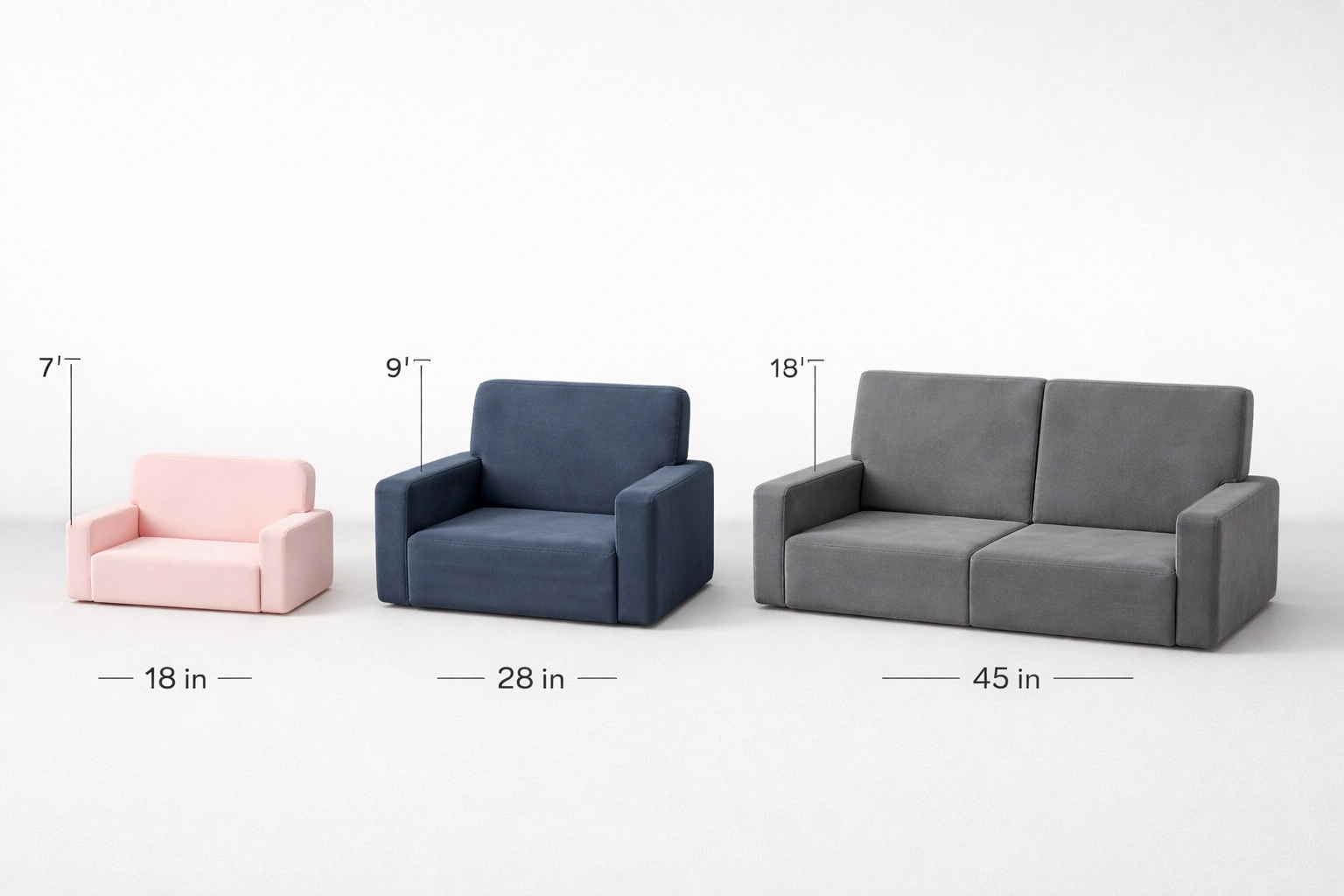
Choosing the wrong size is the most frequent mistake parents make. A sofa that's too large overwhelms a small child and may pose safety risks, while one that's too small will be outgrown quickly. Use this reference table based on average child dimensions. When in doubt, always measure your child's seated height (floor to knee) and compare against the seat height recommendation.
| Age Range | Avg. Child Height | Seat Height | Seat Depth | Overall Width | Recommended Type |
|---|---|---|---|---|---|
| 1–2 years | 28–34 in | 5–7 in | 8–10 in | 18–24 in | Foam flip sofa |
| 2–3 years | 33–38 in | 6–8 in | 10–12 in | 20–28 in | Foam sofa / floor cushion |
| 3–5 years | 37–44 in | 8–10 in | 11–14 in | 24–36 in | Mini armchair / small foam sofa |
| 5–8 years | 42–50 in | 10–12 in | 13–16 in | 30–45 in | Upholstered chair / modular |
| 8–12 years | 49–59 in | 12–15 in | 15–18 in | 36–54 in | Compact loveseat / small sofa |
| 12+ years | 58+ in | 14–17 in | 17–20 in | 45–60 in | Tween loveseat / small 2-seater |
These measurements are starting points. If your child is above the 90th percentile for height, size up one bracket. If you are between sizes, always choose the larger option — a slightly oversized sofa is far better than one that's too small. For help measuring your room and planning placement, see our sofa measuring guide.
Best Upholstery Materials for Kids Sofas
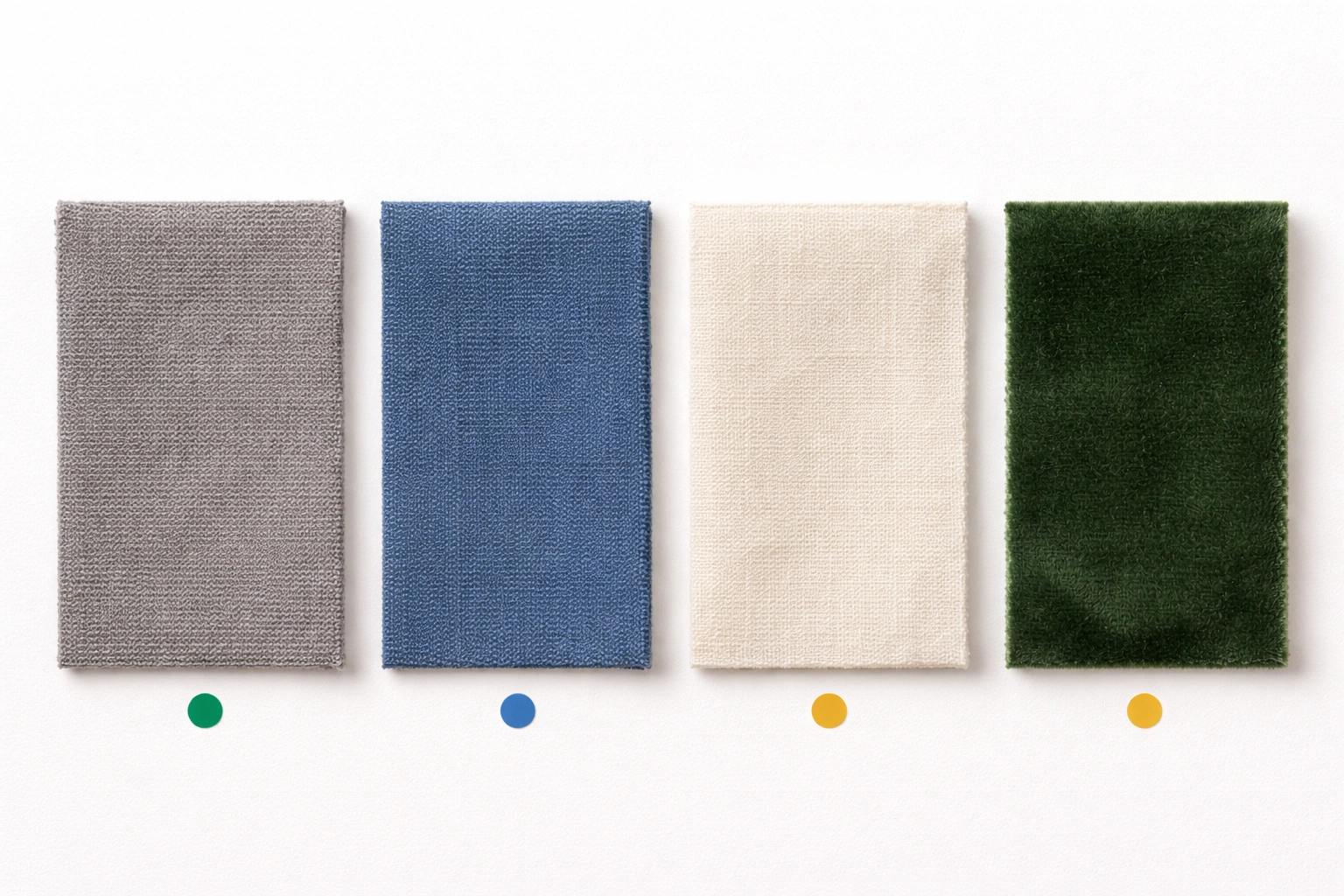
Material choice for a kids sofa is fundamentally different from choosing upholstery for adult furniture. The priority shifts from luxury aesthetics to stain resistance, washability, durability against abrasion, and chemical safety. Here is how the most common materials perform specifically in a kids sofa context.
Polyester / Microfiber
Excellent stain resistance, easy to spot clean, affordable, and available in countless colors. Microfiber specifically resists liquid absorption. Machine-washable covers are widely available. The top choice for kids under 8.
Performance Fabric
Engineered to resist stains, fading, and wear — often with liquid-repellent finishes built into the fiber. Passes rigorous rub tests (50,000+ Martindale cycles). Higher upfront cost but unmatched longevity. See our Martindale test explanation for details.
Cotton / Cotton Blend
Soft, breathable, and natural-feeling. Good for older kids who are past the spill-heavy phase. Less stain-resistant than synthetics but more comfortable against skin. Check natural fabric options for comparisons.
Velvet / Plush
Luxurious feel that kids love, but shows wear patterns and stains more easily. Best for older children (8+) in low-traffic settings. If considering this route, explore velvet sofa care requirements before committing.
Best Room Placements for a Kids Sofa
Where you place a kids sofa affects how often it gets used and whether it becomes a valued part of your child's daily routine. Consider these placement strategies based on common home layouts. For broader layout principles, our room layout guide offers detailed frameworks.
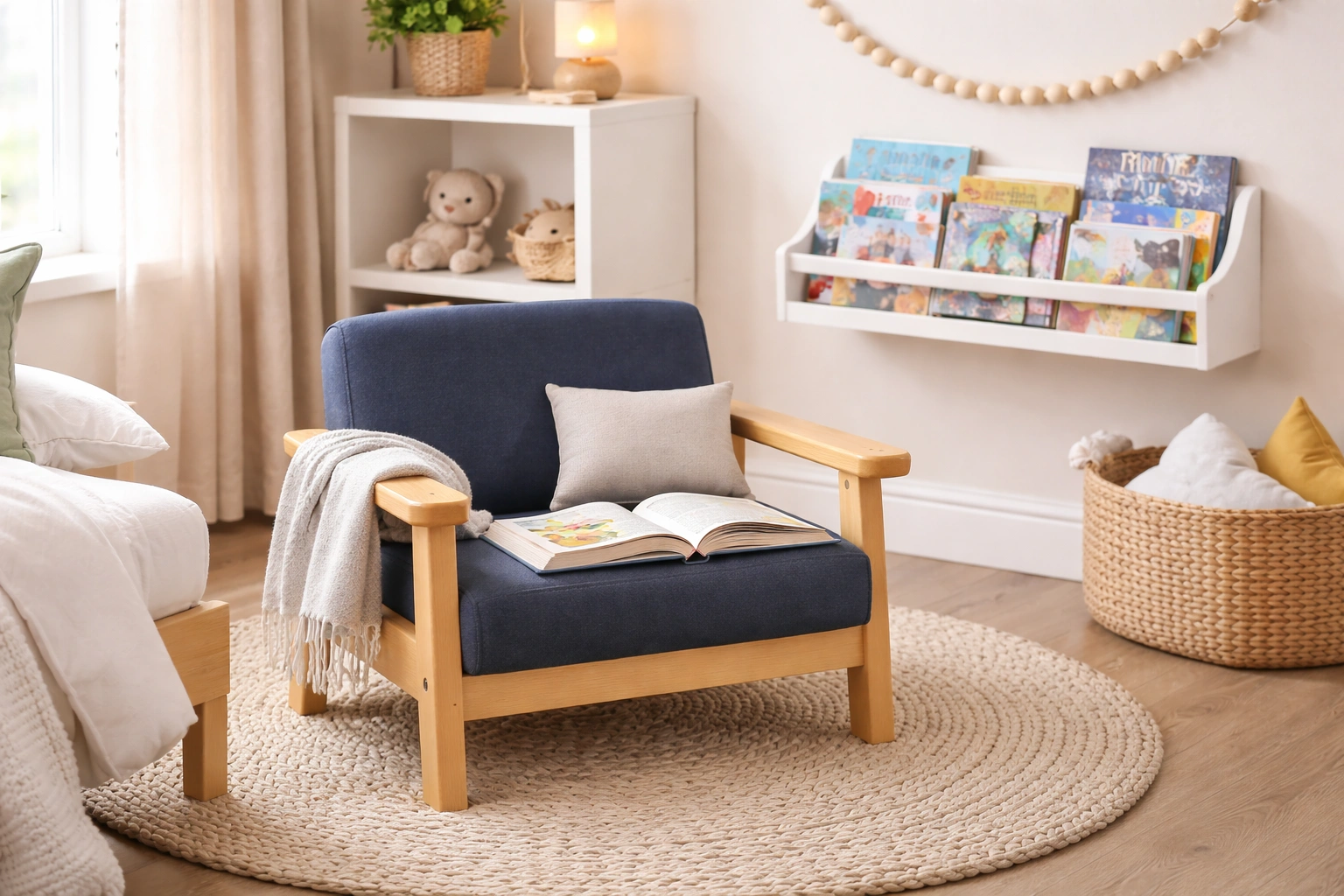
Playroom or dedicated kids area: This is the most natural placement. A kids sofa in the playroom creates a defined "chill zone" separate from the active play area. Pair it with a low bookshelf and soft rug to create a complete reading nook. Modular sofas work especially well here because the layout can change as play activities evolve.
Child's bedroom: A small armchair or loveseat in the bedroom gives kids a place to read before bed, sit while putting on shoes, or relax with a tablet. For small bedrooms, a small space sofa approach with a floor cushion or foam flip sofa maximizes floor space while still providing dedicated seating.
Family room or living room: Placing a kids sofa alongside your main seating creates an inclusive family arrangement where children have their own "spot" without being on the adult furniture. This works particularly well with family room sofa setups. Choose a design and color that complements your existing decor to maintain visual cohesion.
Reading corner or homework station: A compact kids sofa paired with a small side table creates an effective homework or reading area. Good lighting and proximity to bookshelves or storage make this a functional learning space. This placement works best with structured armchair-style kids sofas that provide proper back support for extended sitting.
Common Mistakes Parents Make (And How to Avoid Them)
After analyzing hundreds of customer reviews and return reasons for kids sofas, these are the most frequent and costly errors. Avoiding just one of these could save you money and frustration.
- Buying purely on character branding. That sofa with your child's favorite cartoon character will be rejected within 12–18 months when their interests change. Neutral designs last 3–5 years longer on average. If you must get a themed piece, choose removable cushion covers rather than permanently printed upholstery.
- Ignoring seat height. A sofa that's too tall forces a child to sit with legs dangling (poor circulation, discomfort) or climb up (fall risk). A sofa that's too low causes the child to slouch. Always measure your child's knee-to-floor distance before purchasing.
- Choosing style over washability. That beautiful linen or velvet kids sofa will look terrible within weeks if your child is still in the spill-prone phase. Be honest about your child's behavior stage, not their age. Some 8-year-olds are messier than some 4-year-olds.
- Skipping weight capacity verification. A kids sofa rated for 80 lbs will fail when a parent sits down to read with their child, or when two kids pile on together. Always verify the rated capacity and add a 30% buffer for real-world use.
- Not checking for chemical certifications. Cheap, uncertified kids sofas may contain formaldehyde in the frame, flame retardants in the foam, or lead in the paint. The savings are not worth the health risk. CertiPUR-US and GREENGUARD certifications should be minimum requirements.
- Forgetting about floor protection. Framed kids sofas with hard feet can scratch hardwood floors when kids drag them around. Add felt pads or choose models with rounded, non-marking base designs. This is especially relevant if the sofa will be in a living room with finished flooring.
Maintenance Tips to Extend Your Kids Sofa Life
Proper maintenance can add years to a kids sofa's usable life — which matters when you consider that children's furniture takes significantly more abuse than adult furniture. These tips are specifically adapted for the high-wear environment of kids seating.
Weekly Vacuum Routine
Use a brush attachment weekly to remove crumbs, pet hair, and dust that grind into fabric fibers. This alone prevents 60% of premature fabric wear. Focus on seat crevices and under cushions where debris accumulates.
Immediate Stain Response
Blot (never rub) spills immediately with a clean cloth. For stubborn stains, follow our stain removal guide using kid-safe methods. Keep a fabric-safe spot cleaner near the sofa for fast response.
Monthly Cover Rotation
If you bought a model with reversible cushion covers, flip and rotate them monthly. This evens out wear patterns and fading from sunlight exposure. For non-reversible covers, rotate the cushions themselves.
Quarterly Deep Clean
Machine-washable covers should get a full wash quarterly. For spot-clean-only fabrics, use a handheld upholstery cleaner or steam cleaner. Our general sofa cleaning guide has detailed product recommendations.
Apply Fabric Protector
A quality fabric protectant spray creates an invisible barrier against spills and stains. Reapply every 3–6 months depending on use. See our fabric protection guide for recommended products safe for kids environments.
Annual Hardware Check
For framed models, tighten all screws and bolts annually. Check legs for looseness and re-glue if necessary. Our loose leg repair guide covers this in detail. Preventive maintenance prevents costly damage.
Balancing Comfort and Durability for Kids
The tension between comfort and durability is more pronounced in kids sofas than in any other furniture category. Kids want soft, squishy seating — but parents need something that won't flatten, sag, or fall apart within months. Understanding how cushion construction affects this balance helps you find the sweet spot.
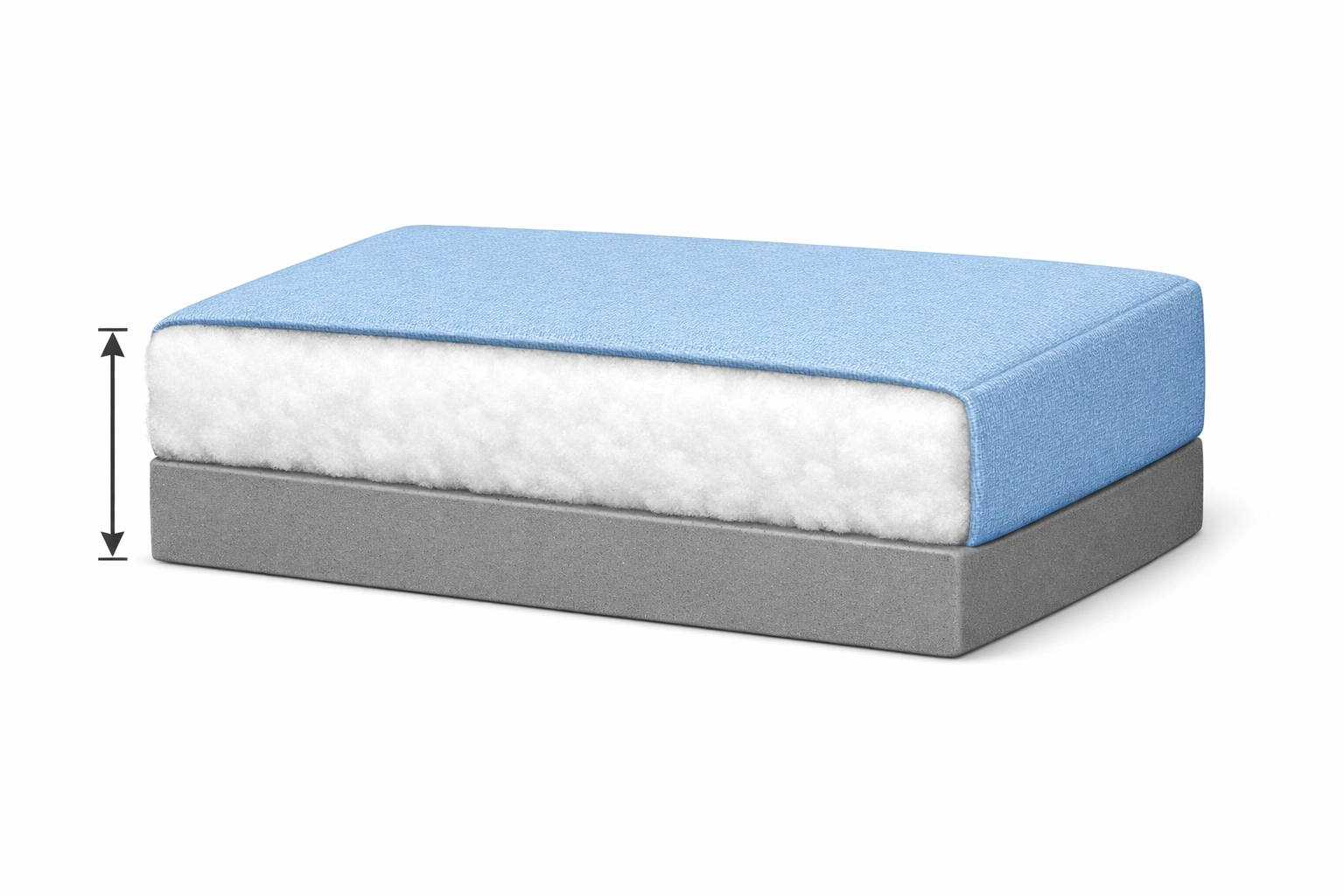
For foam sofas (toddlers), look for high-density polyurethane foam (1.8–2.5 lbs/cu ft). Low-density foam (under 1.5 lbs/cu ft) feels soft initially but develops permanent indentations within weeks of regular use. Our foam density guide explains the technical details in plain language.
For framed kids sofas (ages 4+), a combination of wrapped foam core with a polyester fiber wrap provides the best balance — firm enough for support, soft enough for comfort, and resilient enough to bounce back after compression. This is the same principle used in quality adult sofas, explored in our cushion fill types comparison.
For the firmness debate specifically, most children actually prefer medium-firm seating over ultra-plush options — despite what marketing suggests. A sofa that's too soft provides inadequate postural support for reading and homework tasks. Our firm vs plush analysis applies directly to kids seating decisions.
Budget Guide: How Much Should You Spend?
Kids sofas range dramatically in price — from $25 inflatable options to $400+ upholstered pieces. Understanding what you get at each price point prevents both overspending and the false economy of buying too cheap. For a comprehensive budgeting framework, our sofa budget guide provides detailed calculations.
Budget tier ($25–$60): Foam flip sofas and basic floor cushions. Expect 1–2 years of use. Best for toddlers who will outgrow the size quickly. Foam density is typically lower, and covers may thin after repeated washing. Acceptable if you view it as a short-term item. See budget sofa options for similar value-tier thinking.
Mid-tier ($60–$150): Better quality foam sofas with CertiPUR-US certification, higher-density foam, and machine-washable covers with better stitching. Some small framed armchairs fall in this range. Expect 2–4 years of use. This is the sweet spot for most families seeking the best balance of price and quality.
Premium tier ($150–$400+): Solid hardwood frames, performance fabric upholstery, proper construction techniques (dowels, corner blocks, webbed suspension), and designs that grow with the child. Expect 4–8+ years of use. Best for ages 5+ where the sofa will transition to tween and teen years. Verify quality with our sofa quality checklist.
✅ Final Pre-Purchase Checklist
- Seat height matches child's knee-to-floor measurement
- CertiPUR-US foam certification confirmed
- No sharp edges or protruding hardware
- Covers are removable and washable (or spot-clean with kid-safe products)
- Fabric is non-toxic (OEKO-TEX or GREENGUARD certified)
- Weight capacity rated for at least 150 lbs
- Design is age-neutral enough to last 2+ years
- Frame is solid hardwood (for framed models)
- Foam density is 1.8+ lbs/cu ft (for foam models)
- Anti-tip or wide-base stability verified
- Dimensions fit the intended room with walk-around space
- Return policy allows at least 30 days for testing
- Brand has positive reviews specifically for durability
- No chemical odors upon unboxing (indicates low VOC)
- Cost-per-year-of-use calculated and justified
Taking the time to evaluate each item on this checklist before purchasing dramatically increases your satisfaction with the final choice. A kids sofa is an investment in your child's comfort, independence, and daily routine — and like any investment, the returns are best when the decision is informed and deliberate.


