Chesterfield Sofa: The Complete Buying Guide
Everything you need to know about the world's most iconic sofa — from its noble origins to modern variations, materials, sizing, and how to pick the perfect one for your home.
View Top Picks ↓📑 Table of Contents
- What Is a Chesterfield Sofa?
- History & Origin
- Defining Characteristics
- Types of Chesterfield Sofas
- Leather vs. Fabric Chesterfield
- Size Guide & Dimensions
- Pros & Cons
- Who Should Buy a Chesterfield?
- Room Placement Ideas
- How to Choose the Right One
- Maintenance & Care
- Common Mistakes to Avoid
- Recommended Chesterfield Sofas
- Frequently Asked Questions
What Is a Chesterfield Sofa?
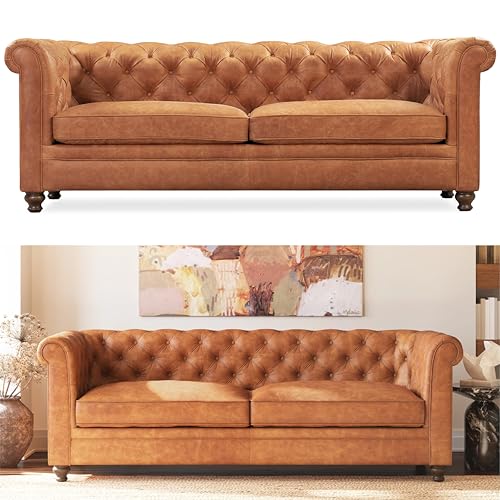
A Chesterfield sofa is a distinguished style of upholstered couch defined by its deep button tufting, rolled arms that are equal in height to the back, and a tailored, luxurious appearance. Unlike most sofa designs where the back is taller than the arms, the Chesterfield features a continuous curve of tufting that flows seamlessly from the backrest over the arms — creating its signature silhouette.
Originally associated with British aristocracy, the Chesterfield has evolved from a symbol of wealth into one of the most versatile and sought-after sofa styles in the world. Whether placed in a formal living room, a modern loft, or a cozy apartment, a Chesterfield instantly elevates the aesthetic of any space.
Today, the Chesterfield is no longer limited to traditional dark leather. You can find it in velvet, linen, performance fabric, and even bold colors — making it adaptable to virtually any interior design style from vintage to contemporary.

💡 Quick Fact: The Chesterfield is one of the few sofa styles recognized by name worldwide. Its design has remained largely unchanged for over 300 years — a testament to its timeless appeal.
History & Origin
The exact origin of the Chesterfield sofa is debated among historians, but the most widely accepted story traces it back to Lord Philip Stanhope, the 4th Earl of Chesterfield (1694–1773). According to legend, Lord Chesterfield commissioned a craftsman to build a sofa that would allow a gentleman to sit upright without wrinkling his suit — resulting in the structured, tufted design with high, rolled arms.

By the 19th century, the Chesterfield had become a staple of Victorian-era gentleman's clubs, libraries, and aristocratic homes across Britain. Its structured form conveyed authority and sophistication. The design eventually made its way to North America, where it became equally popular in executive offices, luxury hotels, and upscale residences.
In the 20th century, the Chesterfield experienced a renaissance during the industrial design movement and mid-century modern era, where it was reinterpreted in new materials and colors. Today, it stands as one of the most recognizable furniture designs in history — bridging centuries of style.
Defining Characteristics
What separates a true Chesterfield from other tufted sofas? While imitations exist, an authentic Chesterfield must possess these core design elements:
Deep Button Tufting
Tightly pulled fabric or leather with buttons creating a diamond pattern across the back, arms, and sometimes seat.
Rolled Arms
The arms roll outward and are the same height as the backrest, creating the signature continuous curved profile.
Low, Flat Base
Sits on short legs (often hidden) with a clean, low-to-the-ground base that emphasizes the tufted body.
No Visible Cushions
The seat and back are tightly upholstered rather than using loose cushions, giving a streamlined look.
Symmetrical Shape
Perfectly balanced proportions from every angle — the hallmark of its British craftsmanship heritage.
Nailhead Trim (Optional)
Decorative nail heads along the base and arms add a traditional finishing touch found on many classic models.
Types of Chesterfield Sofas
While the classic design remains the foundation, modern manufacturers have created several variations to suit different spaces and preferences. Here are the most popular types:

Traditional Leather Chesterfield
The original. Full-grain or top-grain leather upholstery in dark brown, black, or burgundy. Best for formal living rooms, libraries, and offices seeking a classic British aesthetic.

Modern Velvet Chesterfield
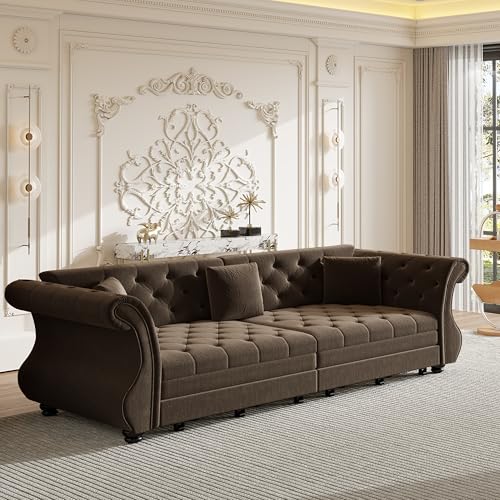
Upholstered in velvet fabric in bold or pastel colors. A contemporary twist that works beautifully in glam, eclectic, and modern interiors. Softer feel than leather versions.

Chesterfield Sectional
Combines the iconic tufted look with the practicality of an L-shaped sectional. Ideal for larger rooms and families who need ample seating without sacrificing style.

Chesterfield Loveseat
A compact two-seat version perfect for loveseat scenarios — small apartments, reading nooks, or as a pairing piece alongside a larger sofa.

Chesterfield Sleeper Sofa
Merges timeless design with overnight functionality. A sleeper mechanism hides beneath the tufted seat — great for guest rooms and studio apartments.
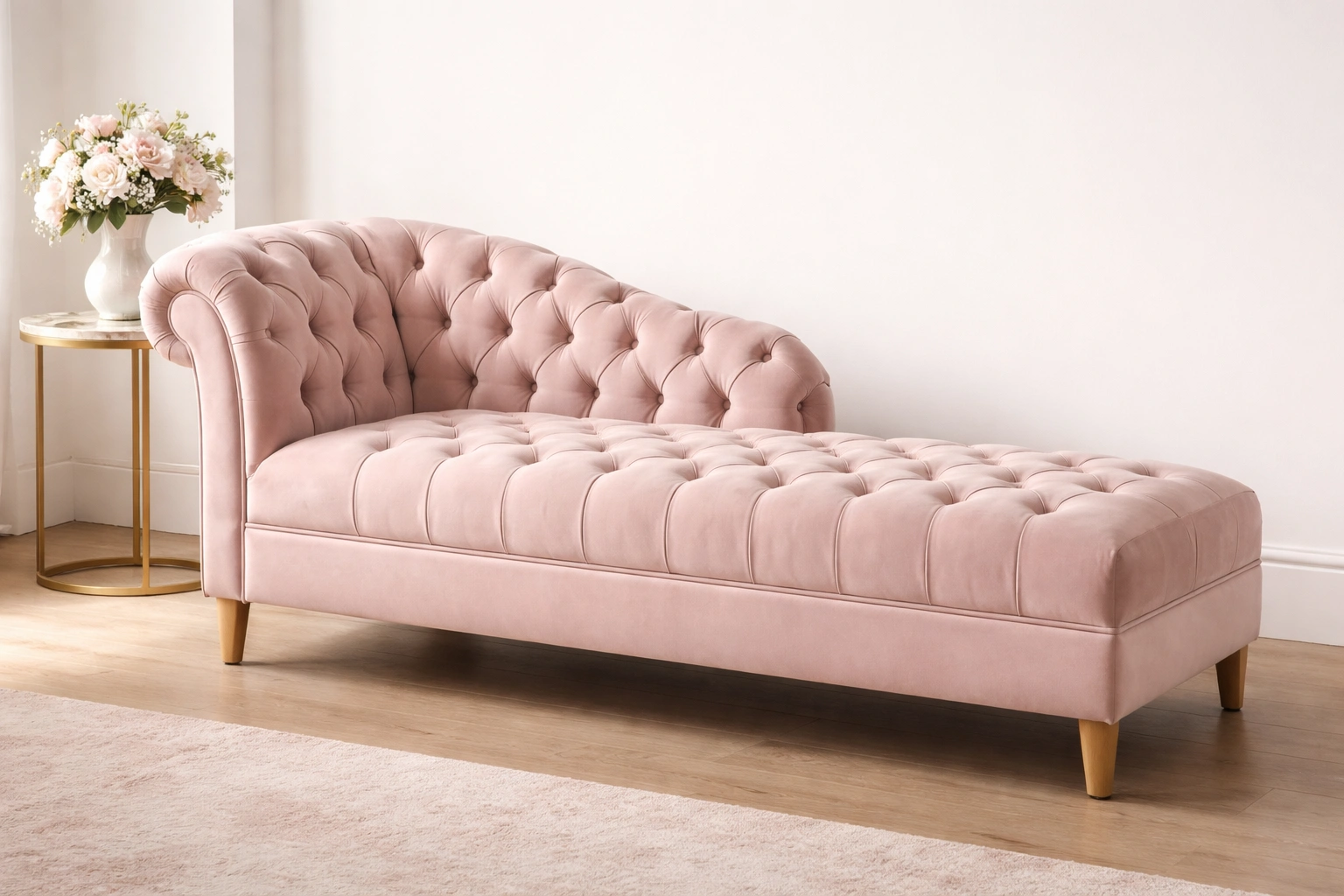
Chesterfield Chaise Lounge
An asymmetric, elongated version for reclining. Perfect as a statement piece or paired with a matching sofa with chaise lounge for a cohesive look.
Leather vs. Fabric Chesterfield
The material you choose dramatically affects the look, feel, durability, and maintenance of your Chesterfield. This is one of the most important decisions you'll make — and it's worth understanding the trade-offs. For a deeper dive, read our full leather vs. fabric comparison.
| Feature | Leather Chesterfield | Fabric Chesterfield |
|---|---|---|
| Appearance | Rich, luxurious, traditional; develops a beautiful patina over time | More versatile — available in countless colors, patterns, and textures |
| Durability | Excellent — quality full-grain leather lasts 15–25 years | Varies by fabric; Martindale-tested performance fabrics can match leather |
| Comfort | Initially firm, softens over time; can feel cool or sticky in extreme temperatures | Generally softer and warmer; available in plush and firm options depending on cushion fill |
| Maintenance | Easy to wipe clean; requires periodic conditioning | Requires regular vacuuming; fabric cleaning for stains |
| Pet-Friendly | Resists pet hair but prone to scratches from claws | Some fabrics resist staining; consider pet-proof covers |
| Price Range | $1,500–$5,000+ for genuine leather | $800–$3,000+ depending on fabric quality |
| Best For | Formal rooms, offices, traditional and industrial spaces | Family rooms, apartments, modern and eclectic interiors |
💡 Pro Tip: If you want the leather look without the price tag or maintenance, consider a bonded or faux leather Chesterfield. It won't develop patina like genuine leather, but it's more affordable and easier to care for — a smart option if you have pets or young children.
Size Guide & Dimensions
Choosing the right size Chesterfield is critical. Because of its bulky, structured frame, a Chesterfield can make a small room feel cramped if not sized correctly. Always measure your space first — our sofa size & room guide covers this in detail. Here are the standard Chesterfield dimensions:
| Type | Width | Depth | Height | Best Room Size |
|---|---|---|---|---|
| 2-Seater Loveseat | 60–72 in (152–183 cm) | 32–36 in (81–91 cm) | 30–33 in (76–84 cm) | Small rooms, nooks |
| 3-Seater (Standard) | 84–90 in (213–229 cm) | 36–40 in (91–102 cm) | 32–35 in (81–89 cm) | Medium living rooms |
| 4-Seater | 96–110 in (244–279 cm) | 38–42 in (97–107 cm) | 33–36 in (84–91 cm) | Large rooms, open plans |
| L-Shape Sectional | 100–130 in (254–330 cm) | 80–100 in (203–254 cm) | 32–35 in (81–89 cm) | Great rooms, family rooms |
Important: Add at least 6–12 inches of clearance around the sofa for walkways and cleaning. Don't forget to account for doorways and hallways during delivery — learn how to measure properly before purchasing. For tight spaces, consider a 2-seater or a modular alternative.
Pros & Cons
Every sofa style has trade-offs. Understanding the balance between comfort and durability is key. Here's an honest assessment of the Chesterfield:
✅ Advantages
- Timeless design — never goes out of style; works across decades and design movements
- Instant visual impact — becomes the focal point of any room without additional decor
- Extremely durable frame — traditionally built with hardwood and quality frame materials
- Excellent resale value — holds value better than most sofa styles, especially leather versions
- Wide material options — available in leather, velvet, linen, performance fabrics, and more
- Encourages upright posture — structured back support, beneficial for back pain sufferers
- Low-profile legs — creates a grounded, substantial presence in the room
❌ Disadvantages
- Firmer seating — the tight tufting means less plushness compared to cloud-style sofas
- Heavy and difficult to move — solid construction makes rearranging a challenge
- Higher price point — genuine leather and quality craftsmanship come at a premium; check our budget guide
- Limited reclining options — not compatible with recliner mechanisms in most designs
- Tufting maintenance — buttons can loosen over time; requires occasional tightening
- Can overpower small rooms — the bulky silhouette needs adequate space to breathe
- Delivery complexity — may require professional delivery for larger sizes
Who Should Buy a Chesterfield?
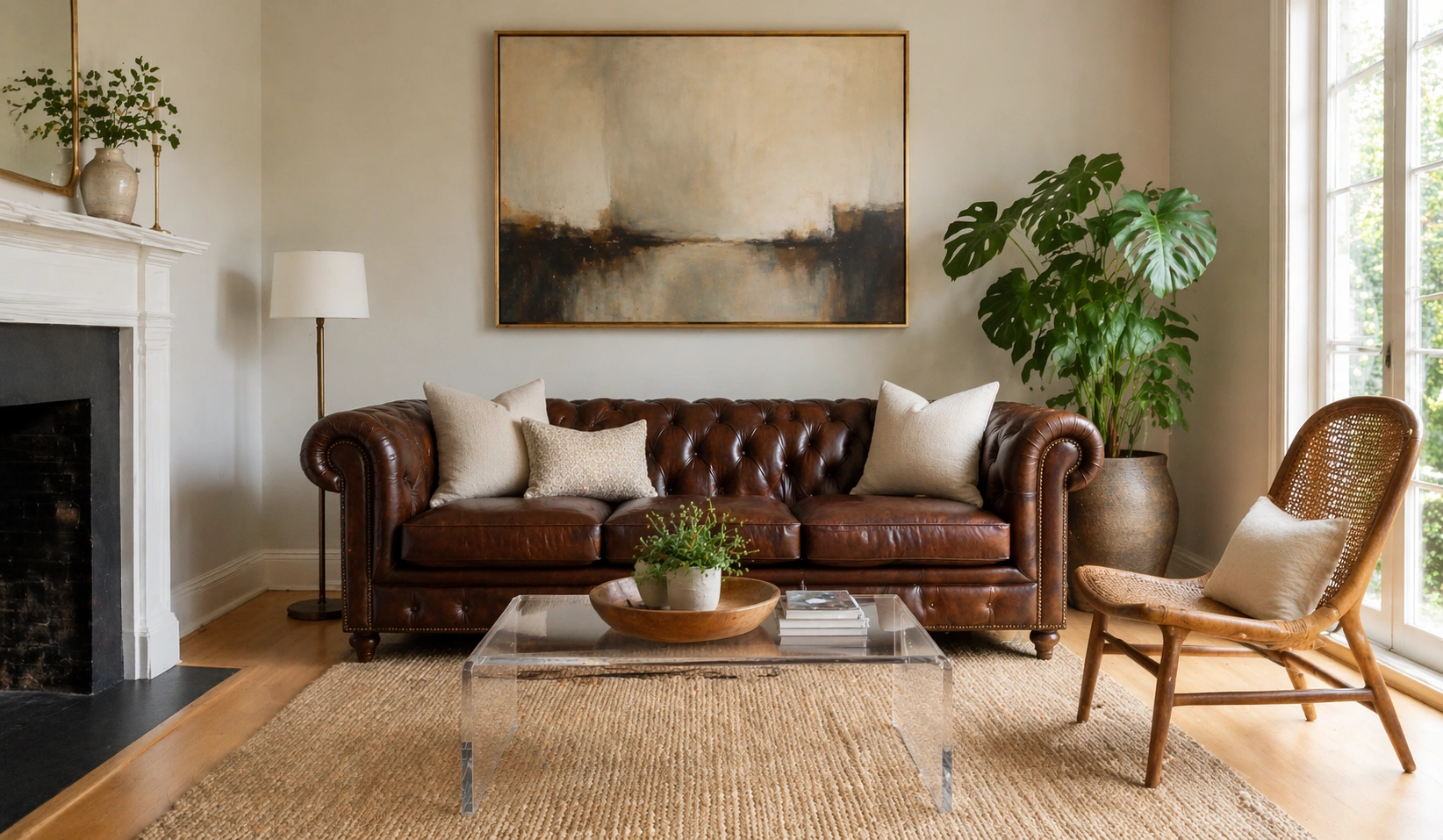
A Chesterfield isn't for everyone — and that's okay. Here's who will benefit most from this iconic design:
- Design enthusiasts who want a statement piece that anchors the entire room's aesthetic — whether your style is modern, vintage, industrial, or bohemian
- Home office owners looking for a sophisticated seating option that impresses clients and provides structured back support during long working sessions
- Homeowners investing in long-term furniture — a well-made Chesterfield can last 15–25+ years, making it a smart price vs. quality investment
- People who value posture support — the firm, upright seating is ideal for those who prefer structure over sink-in comfort, especially those with back concerns
- Entertainers and hosts — nothing says "welcoming" like a Chesterfield in a space designed for hosting
- Buyers seeking versatility — a Chesterfield bridges the gap between formal and casual, working equally well in a living room, guest room, or lobby area
⚠️ Who Should Think Twice: If you prioritize sink-in comfort for movie marathons, have very young children who might damage tufting, live in a studio apartment under 400 sq ft, or need a reclining feature — other styles like a cloud couch or sectional may serve you better.
Room Placement Ideas
Where you place your Chesterfield significantly impacts both its visual effect and your room's flow. A proper living room layout can make or break the experience. Here are proven placement strategies:

Centered in a Formal Living Room
Place it facing the fireplace or a focal wall with matching accent chairs on either side for symmetrical elegance.

Home Office or Study
A leather Chesterfield opposite or beside your desk creates an executive atmosphere perfect for office settings.

Bedroom Sitting Area
A loveseat or 2-seater at the foot of the bed adds luxury to a master suite without overwhelming the space.

Open-Plan Room Divider
Use the sofa's back as a natural divider between living and dining zones in large open spaces.
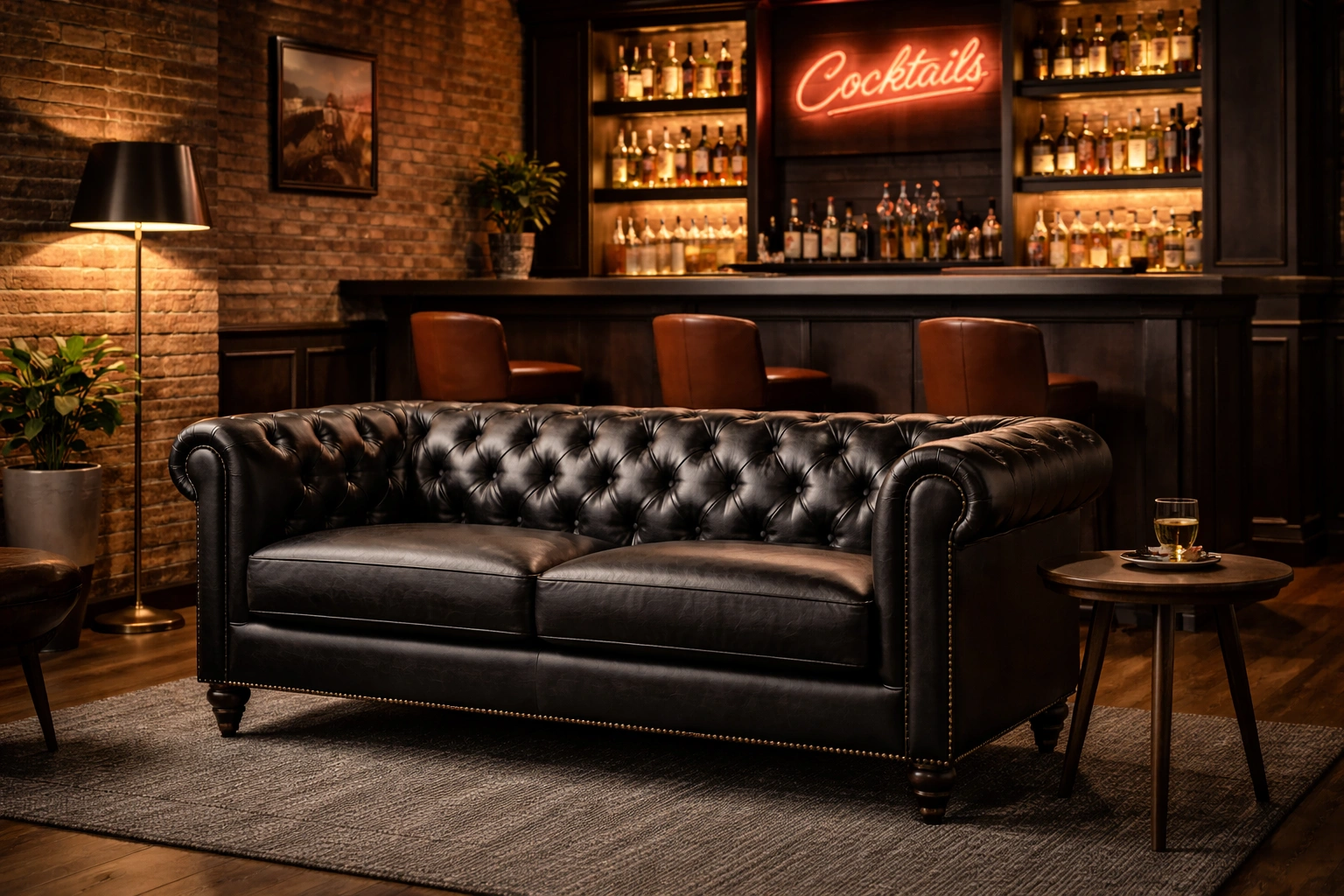
Basement Bar or Lounge
A dark leather Chesterfield in a basement lounge or bar area creates a speakeasy-inspired vibe.
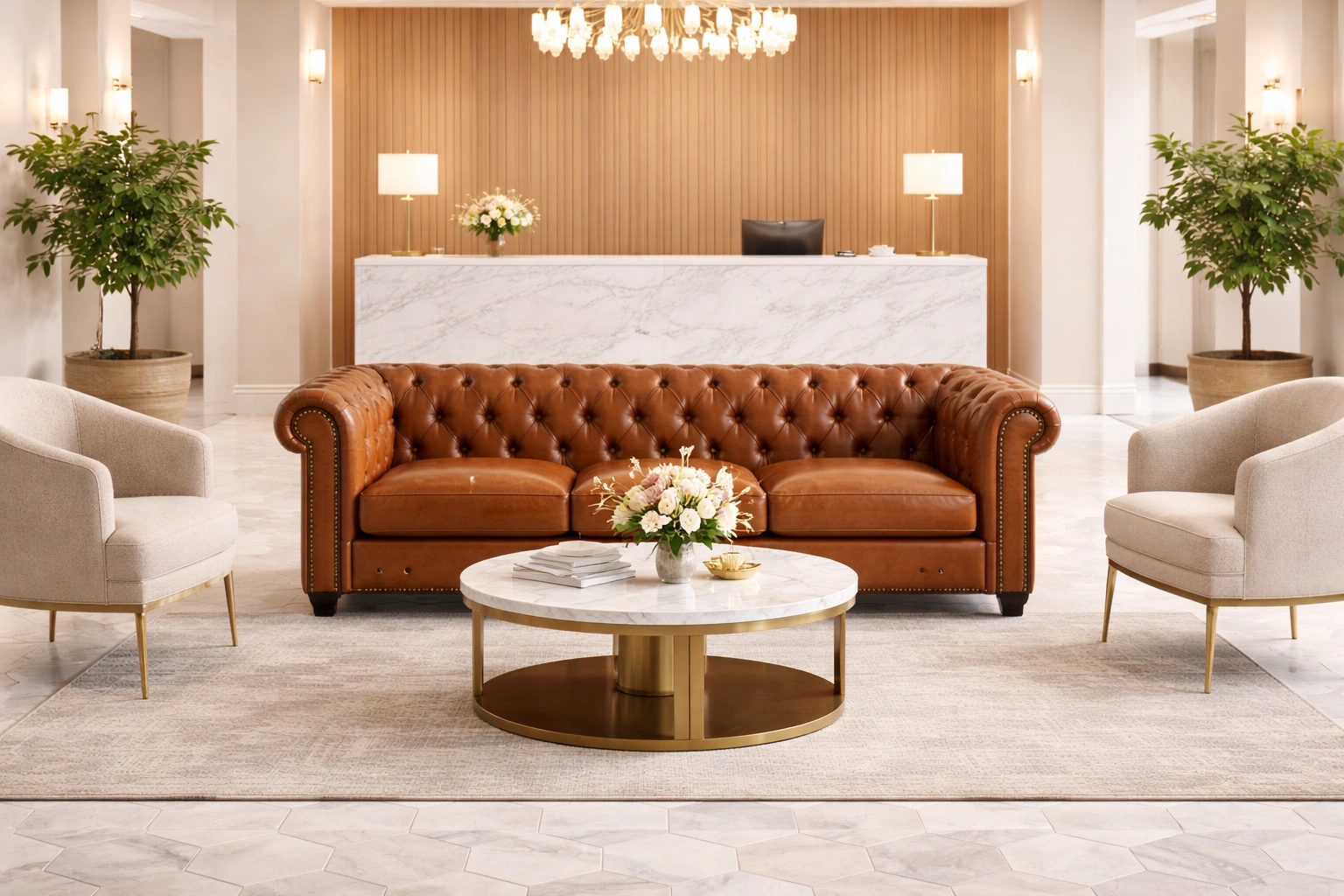
Commercial Lobby or Waiting Area
The Chesterfield's prestige makes it a natural fit for lobby and reception areas in boutiques and offices.
How to Choose the Right Chesterfield
With so many options on the market, selecting the perfect Chesterfield requires a systematic approach. Our comprehensive sofa buying guide covers the full process, but here are the specific factors for Chesterfield shoppers:
1. Decide on Material First
This single decision dictates your budget range, maintenance routine, and aesthetic direction. Leather for traditional/formal spaces, velvet for modern/luxury, and performance fabric for family-friendly environments. Review the leather grades guide if going with leather.
2. Check the Frame Construction
A quality Chesterfield demands a solid frame. Look for kiln-dried hardwood (oak, ash, or beech) with eight-way hand-tied springs or sinuous no-sag springs. Avoid softwoods and plywood frames — they won't support the heavy tufting long-term. Learn more about frame materials.
3. Examine the Tufting Quality
Deep button tufting should be evenly spaced with consistent tension. Buttons should feel secure — not loose or pulling. The tufting depth affects both aesthetics and comfort; deeper tufting creates more pronounced diamond patterns but a firmer seat.
4. Evaluate the Foam Density
The foam density determines how the sofa feels and how long it holds up. Look for high-resilience foam with a density of 1.8–2.5 lb/ft³. For the firm vs. plush debate: Chesterfields lean firm by nature, but higher-density foam with a wrapped layer can add a touch of softness.
5. Consider the Seat Depth
Traditional Chesterfields have a seat depth of 20–22 inches — relatively shallow compared to modern sofas. If you prefer a deeper seat, look for modern adaptations that offer 24+ inches. Taller individuals (over 6 ft) may find standard depths too short for comfortable lounging.
6. Match Your Room's Style
A brown leather Chesterfield suits traditional, industrial, and vintage rooms. A green velvet or blue fabric version works in modern, glam, and eclectic spaces. Consider neutral tones for maximum versatility or bold colors for a statement piece.
7. Set a Realistic Budget
Quality Chesterfields start around $1,000 for fabric and $1,500 for genuine leather. Budget options under $800 often use faux leather or lower-density foam that won't last. Review our price breakdown and budget guide to understand where your money goes. Also check for hidden costs like delivery fees and fabric protection.
Maintenance & Care
Proper maintenance extends your Chesterfield's life significantly. The care routine differs based on material, so follow the appropriate guide:
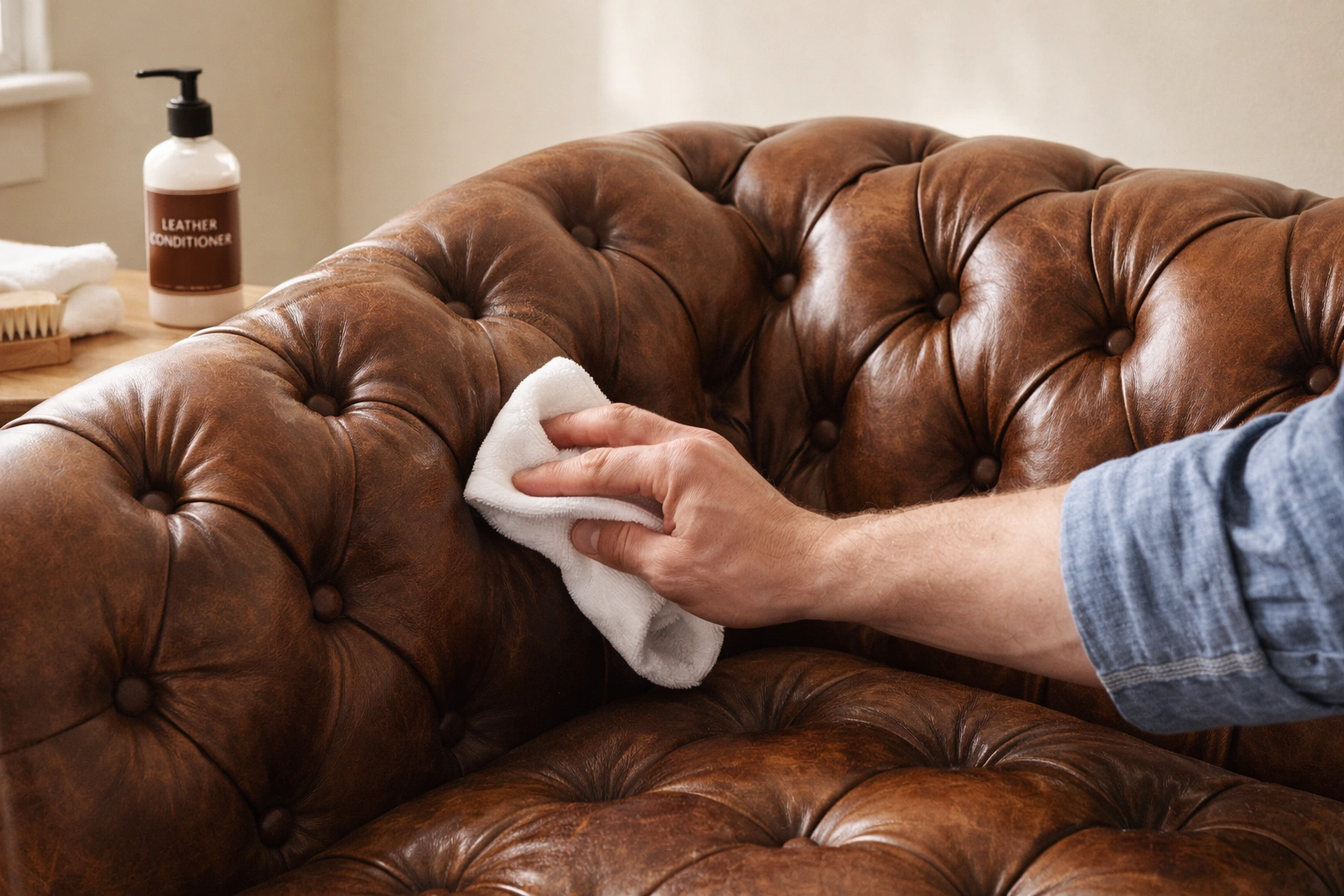
For Leather Chesterfields
- Dust weekly with a soft, dry cloth or vacuum with a soft brush attachment — follow our leather cleaning guide
- Apply a quality leather conditioner every 3–6 months to prevent cracking and maintain suppleness — see conditioning tips
- Wipe spills immediately with a damp cloth — never let liquids sit on leather
- Keep away from direct sunlight and heat sources to prevent fading and drying; consider UV protection
- For scratches and tears, use a leather repair kit or consult a professional
For Fabric Chesterfields
- Vacuum weekly using an upholstery attachment to remove dust from tufted crevices — follow the fabric cleaning guide
- Address stains promptly — blot (don't rub) with a clean cloth; check our stain removal guide
- For velvet, use a velvet-specific brush to maintain nap direction — see velvet care instructions
- Apply fabric protector at purchase and reapply annually — learn about fabric protection
- Consider sofa covers for high-traffic households with children or pets
General Care for All Chesterfields
- Rotate seating positions periodically to ensure even wear across the cushion fill
- Tighten any loose buttons promptly to prevent tufting from unraveling — this is a Chesterfield-specific maintenance task
- If cushions begin sagging, refer to our guide on fixing sagging cushions
- Check and tighten sofa legs annually to prevent wobbling
- Enhance comfort and protect the upholstery with throws and pillows
Common Mistakes to Avoid
After analyzing hundreds of buyer experiences and common sofa problems, here are the mistakes most Chesterfield buyers make — and how to avoid them:
- Buying too large for the room. The structured frame makes a Chesterfield appear even bulkier than its measurements suggest. Always leave at least 12 inches of clearance on all sides. Use our room size guide before purchasing.
- Choosing style over comfort. A stunning leather Chesterfield that feels uncomfortable will become an expensive decoration piece. Always test comfort before buying — sit for at least 10 minutes in the showroom.
- Ignoring frame quality for a lower price. A beautiful exterior on a cheap plywood frame will sag within 2–3 years. Always verify the frame material and suspension system.
- Skipping fabric protection. Tufted crevices are magnets for dirt and crumbs — especially problematic with light-colored fabrics. Apply protector immediately after purchase.
- Not measuring doorways and staircases. Chesterfields have rigid frames that can't be angled or disassembled easily. Measure every delivery path. See our measurement guide.
- Mismatching the Chesterfield with room style. A formal dark leather Chesterfield can look out of place in a breezy coastal or minimalist room. Choose the material and color to match your aesthetic.
- Forgetting about delivery costs. Chesterfields are heavy — often 150–250 lbs. White-glove delivery can cost $200–500 extra. Factor this into your budget and check the hidden costs guide.