
Modular Sofa: The Complete Guide to Configurable Seating
Discover how modular sofas adapt to your space, lifestyle, and budget — with expert tips on configurations, materials, and choosing the right setup for your home.
What You'll Learn: This guide covers everything you need to know about modular sofas — what they are, how they differ from traditional sectionals, popular configurations, material choices, sizing guidelines, maintenance tips, and common mistakes to avoid. By the end, you'll know exactly which modular setup fits your home and lifestyle.
What Is a Modular Sofa?

A modular sofa is a seating system made up of independent, freestanding pieces — often called modules — that can be connected, separated, or rearranged to create different layouts. Unlike a traditional sofa that comes as a single fixed unit, or a sectional sofa that is typically sold as one connected piece, a modular sofa gives you the freedom to customize your arrangement over time.
Each module serves a specific purpose: there are armless chairs, corner pieces, chaise lounges, ottomans, and armrest modules. You purchase only the pieces you need and can add more later. This flexibility is what sets modular sofas apart from every other sofa type on the market.
Think of it like building blocks for your living room. Whether you move to a new apartment, expand your family, or simply want a fresh look, a modular sofa evolves with you — no need to buy an entirely new couch.
Modular Sofa vs. Sectional Sofa: Key Differences
People often confuse modular sofas with sectionals, but they are fundamentally different products. Understanding this distinction is critical before making a purchase.
✅ Modular Sofa
- Individual pieces can be separated and used independently
- Can add or remove pieces anytime
- Reconfigure layout without buying new furniture
- Easier to move and transport piece by piece
- Ideal for people who move frequently
- Pieces may shift slightly if not connected
- Typically higher upfront cost per piece
⬛ Sectional Sofa
- Sold as one connected unit — no assembly
- Pieces stay firmly in place
- Often more affordable upfront
- Fixed layout — cannot be rearranged
- Difficult to move through doorways
- Cannot expand or shrink
- Replacing a section usually requires custom order
If you want a deeper analysis of how these two compare across durability, comfort, and pricing, check our detailed sectional vs. traditional sofa comparison.
Popular Modular Sofa Configurations
The beauty of a modular system is that you're not locked into one shape. Here are the most common arrangements people choose based on their room and lifestyle:

L-Shape
The most popular layout. Uses a corner piece + 2-3 armless modules. Fits perfectly against two walls in most rooms.

U-Shape
Surrounds a coffee table or ottoman on three sides. Great for large rooms, families, and frequent hosting.

Straight Line
All modules aligned in a row. Works well in narrow rooms, against a long wall, or as a room divider.

With Chaise
Adds an extended seat for lounging. Combines a standard module with a chaise piece for maximum relaxation.
How to Choose the Right Configuration
Your ideal layout depends on three factors: room shape, traffic flow, and how you use the space. A narrow rectangular room benefits from a straight-line or small L-shape. A square open-plan room can handle a U-shape. If you frequently host movie nights, consider adding an extended chaise lounge or ottoman module.
For detailed room planning, our sofa size and room guide provides measurement formulas and layout templates that work specifically with modular pieces.
Benefits of a Modular Sofa
✅ Advantages
- Ultimate flexibility — rearrange your layout whenever you want without buying new furniture
- Scalable — start with 2-3 pieces and add more as your family or space grows
- Easy to move — individual modules are lighter and fit through standard doorways
- Cost-effective over time — no need to replace the entire sofa when your needs change
- Replace individual pieces — if one section gets damaged, swap only that module
- Fits awkward spaces — works around columns, bay windows, and irregular room shapes
- Great for renters — reconfigure for each new apartment layout
⚠️ Drawbacks
- Higher initial cost — buying individual modules adds up quickly compared to a standard sofa
- Pieces may shift — without proper connectors, modules can drift apart over time
- Gaps between modules — some designs show visible seams or spacing
- Connector hardware — clipping and unclipping can be cumbersome when rearranging
- Discontinued models — if the manufacturer stops making your model, you can't add matching pieces later
- Overwhelming choices — too many configuration options can cause decision paralysis
💡 Pro Tip: Before purchasing, check if the manufacturer guarantees long-term availability of individual modules. Brands like IKEA, Article, and Burrow typically keep modular lines in production for several years. If a model is being discontinued, you may find steep discounts — but you won't be able to expand later. Our best time to buy a sofa guide explains how to time your purchase for maximum savings.
Best Materials for Modular Sofas

The material you choose has a major impact on how your modular sofa performs over the years. Because modular pieces are frequently moved and rearranged, durability matters even more than with a fixed sofa. Here's a breakdown of the top options:
| Material | Durability | Maintenance | Best For | Price Range (USD) |
|---|---|---|---|---|
| Performance Fabric | Excellent | Easy — stain resistant | Families with kids, pet owners | $800 – $2,500 |
| Genuine Leather | Very Good | Moderate — needs conditioning | Offices, formal spaces | $1,500 – $5,000+ |
| Faux Leather | Good (2-5 years) | Easy wipe clean | Budget buyers | $300 – $900 |
| Linen | Moderate | Difficult — wrinkles, stains | Low-traffic, formal rooms | $700 – $2,000 |
| Cotton Blend | Good | Moderate — washable options | Everyday use | $400 – $1,200 |
| Velvet | Moderate | Difficult — shows marks | Statement pieces, low use | $600 – $1,800 |
| Corduroy | Good | Moderate — traps dust | Casual, cozy spaces | $350 – $1,000 |
| Microfiber | Very Good | Easy — stain resistant | Pet owners, budget buyers | $250 – $800 |
For households with pets or children, pet-friendly fabrics like performance blends and microfiber are your best bet. If you're torn between fabric and leather, our leather vs. fabric comparison breaks down every factor to consider.
One often-overlooked consideration for modular sofas: how the material handles repeated connecting and disconnecting. Rigid leather may crack at clip points over time, while flexible fabrics handle the stress better. This is especially relevant if you plan to rearrange your setup frequently.
To understand durability ratings, read about the Martindale abrasion test — it's the industry standard for measuring how well a fabric withstands wear.
Modular Sofa Sizing Guide
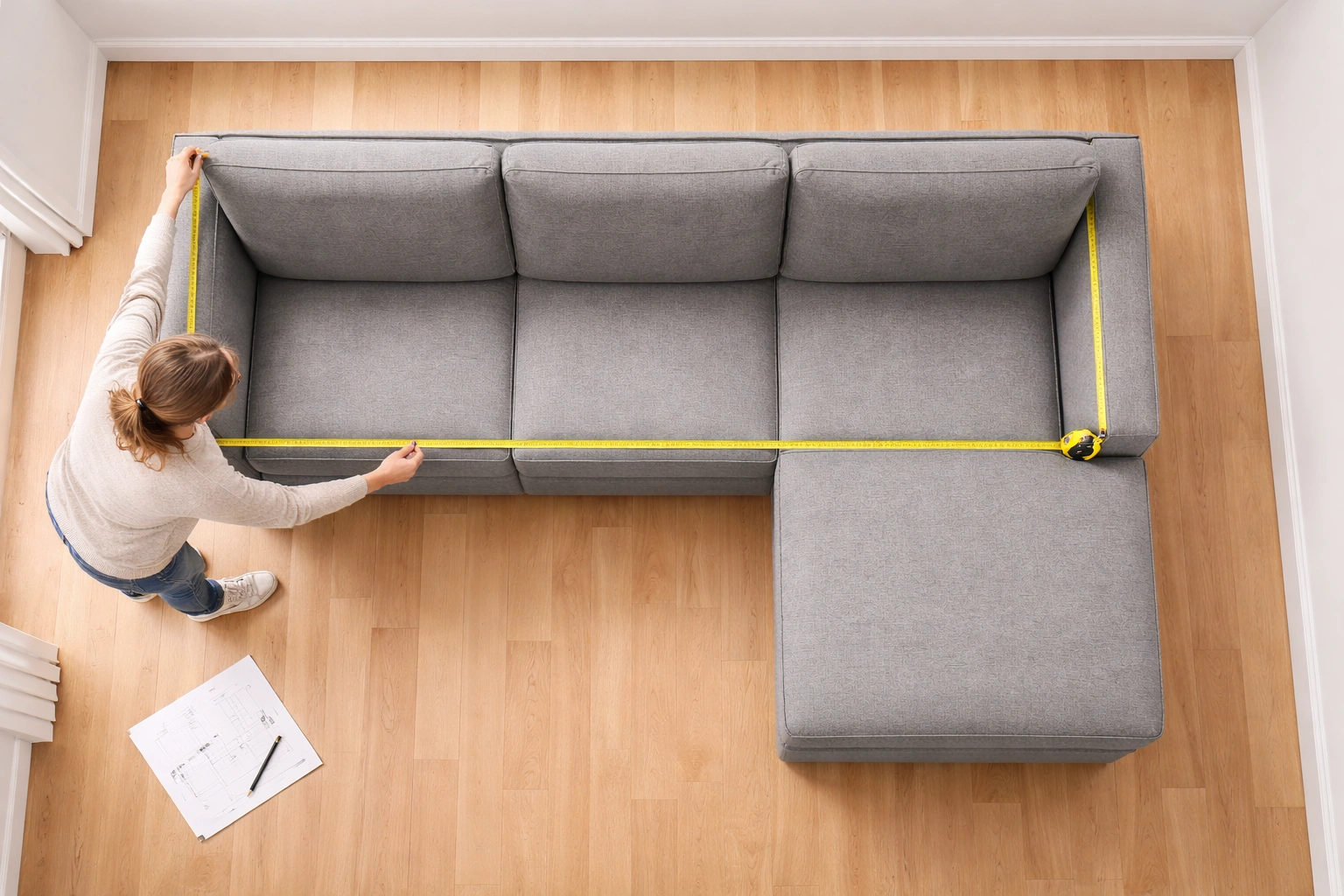
Sizing a modular sofa is different from a regular sofa because you're composing the total dimensions yourself. Each module has its own footprint, and the final size depends on how many pieces you connect. Here's how to get it right:
Standard Module Dimensions
| Module Type | Typical Width | Typical Depth | Typical Height |
|---|---|---|---|
| Armless Chair | 30 – 38 inches | 34 – 40 inches | 30 – 35 inches |
| Corner Piece | 38 – 42 inches (each side) | 38 – 42 inches (each side) | 30 – 35 inches |
| Chaise Module | 35 – 45 inches | 55 – 65 inches | 30 – 35 inches |
| Ottoman | 30 – 38 inches | 30 – 38 inches | 15 – 18 inches |
| Armrest Module | 8 – 12 inches | 34 – 40 inches | 30 – 35 inches |
Room Size Recommendations
| Room Size | Recommended Modules | Total Approx. Width | Best Configuration |
|---|---|---|---|
| Small (under 150 sq ft) | 2 armless + 1 corner | 70 – 80 inches | Small L-shape or straight |
| Medium (150 – 250 sq ft) | 3 armless + 1 corner | 100 – 115 inches | Standard L-shape |
| Large (250 – 400 sq ft) | 4 armless + 1 corner + chaise | 140 – 160 inches | L-shape with chaise or U-shape |
| Extra Large (400+ sq ft) | 5+ armless + corner + ottoman | 170+ inches | Full U-shape with ottoman |
⚠️ Critical Sizing Mistake: The most common error is measuring only wall space and forgetting about walking paths. Leave at least 36 inches of clearance around your modular sofa for comfortable traffic flow. In tight spaces, a minimum of 24 inches is acceptable. For precise measuring techniques, see our how to measure a sofa guide.
For small spaces, consider a compact 2-piece modular setup rather than forcing a large L-shape. A single armless module paired with a chaise can provide the same seating capacity as a traditional 3-seater sofa while taking up less visual space.
How Modular Sofa Connectors Work
The connecting system is the engineering backbone of any modular sofa. It determines how stable your setup feels and how easy it is to reconfigure. There are three main types:
- Clamp / Clip Connectors — Metal or heavy-duty plastic clips that lock modules together from underneath. These provide the most secure connection but require bending down and manually clipping each time you rearrange. Found in most mid-range and premium modular sofas.
- Hook-and-Loop (Velcro) Strips — Fabric strips on the base of each module that grip adjacent pieces. Easy to connect and disconnect, but modules can shift over time with heavy use. Common in budget-friendly and budget sofa options.
- Interlocking Brackets — Rigid metal brackets built into the frame that slide and lock into place. The most stable option, often found in high-end models. Difficult to disconnect, which is fine if you rarely rearrange.
💡 Recommendation: If you plan to rearrange your modular sofa more than once a year, choose clamp connectors over brackets. They offer 90% of the stability with a fraction of the hassle. Hook-and-loop works for light use but avoid it if you have kids who jump on the sofa — the pieces will separate.
Comfort Features to Look For

Since modular sofas are often used as the primary seating in a living room or family room, comfort should be a top priority. Here's what separates a comfortable modular sofa from one you'll regret buying:
- Cushion Fill: High-resilience foam (HR foam) with a density of 1.8 – 2.5 lbs/ft³ offers the best balance of support and longevity. Look for wrapped foam cushions with a down or fiber wrap for that plush, sink-in feel. Learn more about cushion fill types.
- Seat Depth: Standard depth is 20 – 22 inches, but modular sofas often offer deep seat options of 24 – 28 inches. Deep seats are great for lounging but may be uncomfortable for shorter individuals. See our seat depth guide for help choosing.
- Back Support: Consider whether you prefer firm or plush back cushions. If you suffer from back pain, look for modular sofas with lumbar support or adjustable backrests. Our sofa for back pain guide covers this in detail.
- Removable Cushion Covers: Essential for maintenance. Washable sofa covers make it easy to keep your modular sofa looking new for years. This is especially important if you have a fabric sofa.
- Additional Features: Some modular sofas offer built-in USB ports, cup holders, storage compartments, or even reclining modules that combine modular flexibility with recliner sofa functionality.
Frame Construction: What Holds It Together
The frame quality determines how long your modular sofa will last — and this is especially important because modular pieces experience more stress at connection points than a fixed sofa. Here's what to look for:
- Kiln-Dried Hardwood (oak, maple, ash) — The gold standard. Resists warping, supports heavy use, and lasts 15+ years. Found in premium modular sofas.
- Plywood / Engineered Wood — Acceptable quality if it's multi-layer plywood (not particle board). Common in mid-range options. Expect 7-10 year lifespan.
- Metal Frame — Increasingly popular in modern modular designs. Extremely durable and resistant to flexing at connection points. Often used in modern sofa styles.
- Particle Board / MDF — Avoid. These materials weaken at connector points and are common in budget models. They may last only 2-3 years with regular use.
For a complete breakdown of frame materials and what to inspect before buying, read our sofa frame materials guide. Also, understanding spring systems and suspension types will help you evaluate overall build quality.
How to Choose the Right Modular Sofa: Step by Step
With so many options on the market, the selection process can feel overwhelming. Follow this structured approach to make a confident decision:
- Measure Your Room Thoroughly — Don't just measure the wall where the sofa will go. Map out the entire room including doorways, windows, radiators, and walking paths. Use painter's tape on the floor to outline your planned configuration before buying. Our what sofa size for my room guide has printable templates.
- Determine Your Primary Use — Is this for daily TV watching, hosting guests, a home theater setup, or a professional office? Your use case dictates the number of seats, depth, and firmness level you need.
- Choose a Starting Configuration — Buy a core setup first (typically 3-4 pieces). You can always add modules later. Start with a configuration that works in your current space, not a dream setup for a future home.
- Select Your Material — Base this on who uses the sofa. Households with pets or children should prioritize durability and cleanability. Formal spaces can lean toward leather or velvet.
- Check the Connector System — If you plan to rearrange frequently, ensure the connectors are easy to operate. Read customer reviews specifically about how stable the pieces feel when connected.
- Test Comfort In Person — If possible, visit a showroom. Sit in different module positions — corner seats feel different from middle seats. Our how to test sofa comfort guide has a 10-point checklist.
- Verify Long-Term Availability — Confirm with the manufacturer that individual modules will remain available for at least 2-3 years. This ensures you can expand or replace pieces later.
- Set a Realistic Budget — Modular sofas range from $500 for basic 2-piece sets to $5,000+ for premium configurations. Factor in the cost of future modules you might want. Our sofa budget guide helps you plan.
Best Modular Setups for Different Spaces
For Small Apartments
In an apartment, every inch counts. A 2-piece setup (one armless chair + one corner module) creates a compact L-shape that seats 2-3 people while leaving room for a small dining area or desk. Opt for a neutral color to make the space feel larger. Avoid deep-seat modules in small spaces — they eat up floor area without adding seating capacity.
For Family Rooms
A family room demands durability and capacity. Start with a 4-piece L-shape and add an ottoman module that doubles as a footrest and extra seating. Choose performance fabric or microfiber for stain resistance. Consider adding a storage ottoman module to hide blankets and remotes. This setup rivals a traditional 5-seater sofa in capacity while being more adaptable.
For Home Theaters
A home theater benefits from a U-shape configuration with a central ottoman. Look for modular sofas with reclining modules or adjustable headrests. Built-in cup holders and USB ports are practical additions. Dark colors like a black couch or brown couch reduce glare from the screen.
For Open-Plan Living
In open-plan spaces, your modular sofa can serve as a room divider. A straight-line configuration placed between the living and dining areas creates visual separation without walls. A curved modular sofa arrangement can soften the transition between zones while maintaining an open feel.
Maintaining Your Modular Sofa

Modular sofas require slightly different maintenance than fixed sofas because the connection points and individual modules need special attention:
- Clean connectors regularly — Dust, crumbs, and pet hair accumulate in the clips and brackets. Vacuum the base of each module monthly and wipe connectors with a damp cloth.
- Rotate modules — Swap the positions of your modules every 3-6 months. This ensures even wear across all cushions and prevents one section from sagging prematurely. This is one of the unique advantages of modular design — you can't do this with a fixed sofa.
- Check connector tightness — Every few months, verify that clips or brackets are secure. Loose connectors cause modules to shift, which can damage the underlying frame over time.
- Treat each module's fabric — Apply fabric protector to each module individually, paying special attention to the sides where modules connect (these areas experience more friction).
- Fluff and rotate cushions — Even with module rotation, individual cushions need attention. If cushions start to feel flat, see our guide on fixing sagging sofa cushions.
For fabric-specific cleaning instructions, refer to our detailed guides: cleaning fabric sofas, cleaning leather sofas, cleaning velvet sofas, and cleaning microfiber sofas. For overall protection strategies, our sofa protection guide covers everything from sprays to covers.
If you have pets, consider pet-proof sofa covers that fit over individual modules. This way, if one cover gets damaged, you only replace that module's cover — not the entire sofa's protection.
Common Mistakes When Buying a Modular Sofa
⚠️ Avoid These Costly Errors: Thousands of buyers regret their modular sofa purchase because of mistakes that are easy to prevent. Here are the most common ones and how to avoid them.
- Buying too many pieces at once — Start small. It's tempting to buy a full U-shape on day one, but you may find that a simpler L-shape works better for your actual daily routine. Buy 3-4 core pieces, live with them for a month, then add more if needed.
- Ignoring doorways and hallways — Even though individual modules are smaller than a full sectional, you still need to verify each piece can fit through your doorways, around corners, and up stairs. Measure the narrowest point in your delivery path. Each module's dimensions must clear this bottleneck.
- Choosing style over comfort — Modular sofas with slim profiles and low backs look great in photos but may be uncomfortable for daily use. Always prioritize comfort for your primary seating, then consider aesthetics. A comfortable sofa that looks good is better than a stunning sofa you never sit on.
- Not checking weight limits — Each module has its own weight capacity, and connector systems have combined limits. If you have a large family or expect multiple people to sit on one section, verify the rated weight capacity. This is especially important for chaise and corner modules.
- Forgetting about outlet access — Modular sofas are large and can block wall outlets. Plan your layout with power access in mind, or choose models with built-in USB ports. This is critical for movie marathon setups where you need to charge devices.
- Assuming all modules are always available — Brands discontinue colors and models. If you buy a modular sofa planning to add pieces next year, confirm the line won't be discontinued. Get it in writing if possible.
- Not reading reviews about connectors — The most common complaint about modular sofas isn't comfort or appearance — it's connectors that fail, loosen, or are impossible to operate. Search reviews specifically for "connector," "clip," "shift," and "gap."
Modular Sofa Price Considerations
Understanding modular sofa pricing helps you evaluate whether a deal is genuine and plan your budget effectively:
| Price Tier | Per Module Cost | 3-Piece Set Cost | What to Expect |
|---|---|---|---|
| Budget | $150 – $300 | $450 – $900 | Hook-and-loop connectors, basic foam, engineered wood frame, limited colors |
| Mid-Range | $300 – $600 | $900 – $1,800 | Clamp connectors, HR foam, hardwood or plywood frame, good fabric selection |
| Premium | $600 – $1,200 | $1,800 – $3,600 | Interlocking brackets, premium foam + down wrap, kiln-dried hardwood, luxury fabrics |
| Luxury | $1,200+ | $3,600+ | Custom options, top-grain leather, handcrafted frames, designer collaborations |
Be aware of hidden costs like delivery fees (modular sofas ship in multiple boxes), assembly services, fabric protection treatments, and replacement cushion costs. Factor these into your total budget. For a comprehensive breakdown of where your money goes, see our sofa price breakdown.
The debate between price vs. quality is especially relevant for modular sofas. A cheap modular system with failing connectors will cost more in the long run than a mid-range option that lasts 10+ years. Also consider custom vs. ready-made — some modular brands offer custom upholstery for a premium, while others keep costs down with standard configurations.
Frequently Asked Questions
Can modular sofa pieces be used separately?
Yes — that's one of the key advantages. Most armless chair modules can function as standalone seating. You could use individual pieces as extra seating in a guest room, home office, or even a basement rec room. Not all modules work independently though — corner pieces, for example, are designed to connect two pieces and look awkward alone.
Do modular sofas look cheaper than regular sofas?
Not necessarily. Premium modular sofas with tight connectors and well-designed seams look nearly identical to built-in sectionals. The visible gap issue is mostly a problem with budget models that use hook-and-loop connectors. Mid-range and premium options have precision-aligned edges that minimize or eliminate visible seams. Many modern sofa designs actually embrace the modular aesthetic as a design feature.
How long do modular sofas last?
A quality modular sofa with a hardwood or metal frame should last 10-15 years with proper maintenance. Budget models with engineered wood frames typically last 5-7 years. The connector system is usually the first component to fail — if connectors break, the modules won't stay aligned, which can cause uneven wear on the frame. For repair options, see our guide on repairing sofa frame issues.
Can I add modules from a different brand?
Generally no — modules from different brands won't connect properly due to incompatible connector systems, different heights, and misaligned fabrics. Even within the same brand, you usually can't mix modules from different product lines. Always buy all modules from the same collection.
Are modular sofas good for pets?
They can be, with the right material choice. The modular design is actually advantageous for pet owners — if one module gets damaged, you only need to replace or reupholster that piece. Choose tightly woven performance fabric or microfiber, and add pet-proof covers to each module individually. For more guidance, see our best sofa for pets FAQ.
Can a modular sofa work in a small living room?
Absolutely. In fact, modular sofas can be better for small rooms than traditional sofas because you can configure them to fit your specific space. A 2-piece L-shape can fit into a corner that a standard 2-seater sofa can't utilize efficiently. The key is choosing compact modules (30-34 inches wide per piece) and avoiding deep-seat configurations. See our small space sofa guide for layout ideas.