Why Is My Sofa Squeaking? (And How to Fix It)
A squeaking sofa is one of the most common — and irritating — furniture problems. This guide walks you through every possible cause and gives you clear, actionable fixes, from simple tightening to deeper frame repairs.
Table of Contents
- What Causes a Sofa to Squeak?
- How to Identify the Exact Source of the Squeak
- Tools and Materials You Will Need
- Fix 1: Squeaking Springs
- Fix 2: Loose or Separated Frame Joints
- Fix 3: Loose or Noisy Legs
- Fix 4: Recliner Mechanism Noise
- Fix 5: Sleeper Sofa Mechanism Noise
- Fix 6: Floor-to-Leg Friction
- Quick Comparison: Causes, Difficulty & Cost
- How to Prevent Future Squeaking
- When to Repair vs. When to Replace
- Frequently Asked Questions
What Causes a Sofa to Squeak?
Every squeak has a source. Understanding what is making the noise is the first step toward eliminating it. A sofa is an assembly of multiple parts — frame, springs, cushions, legs, and in some cases mechanisms — and squeaking occurs when two surfaces rub together under pressure. The friction produces an audible vibration that we perceive as a squeak, creak, or groan.
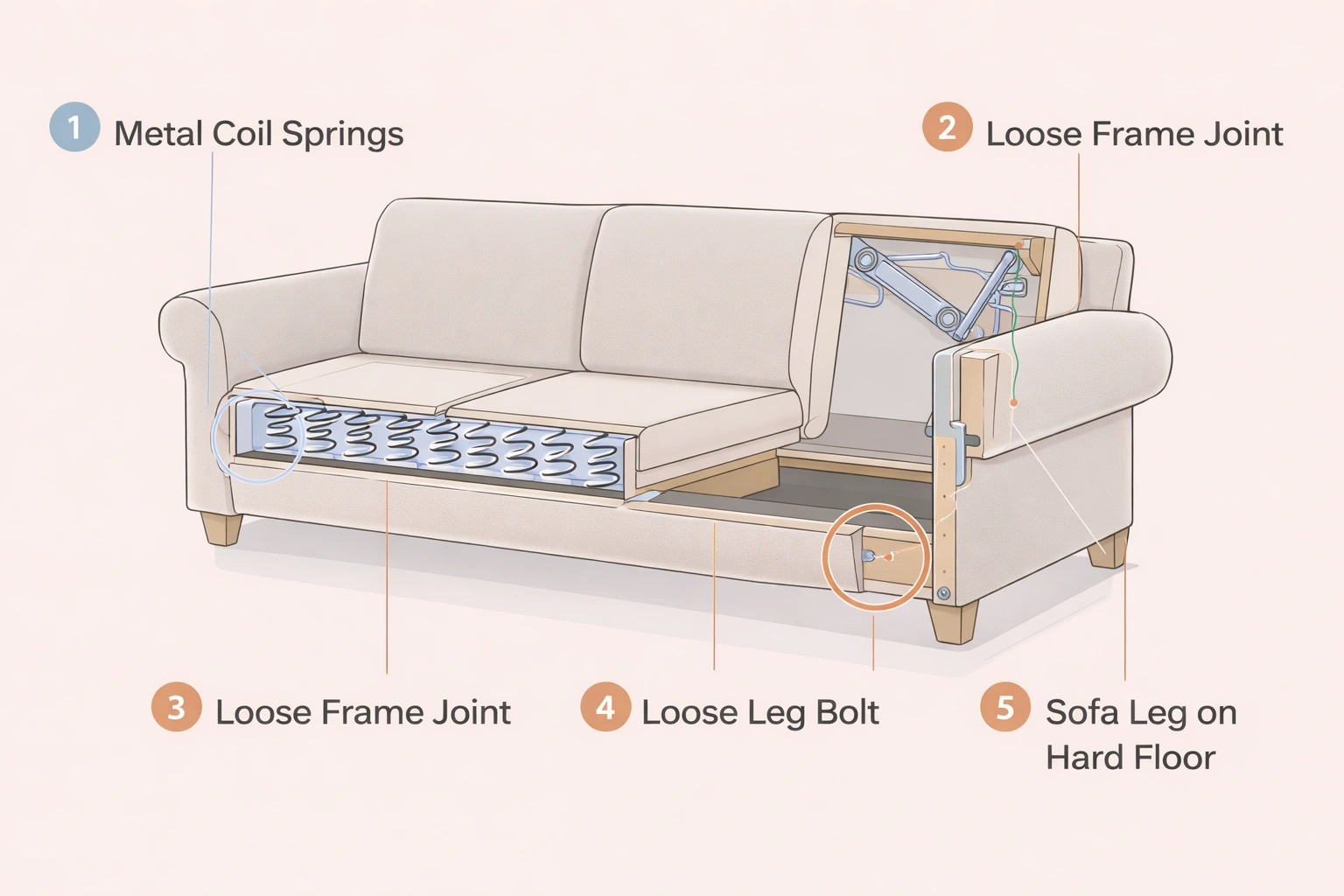
Here are the primary culprits, ranked by how frequently they appear in real-world cases:
1 Loose or Worn Springs
Metal springs are the most common source of squeaking. Over time, the helical coils or sinuous (zigzag) springs can shift, lose tension, or develop friction points where metal rubs against metal or against the wooden frame. This is especially common in older sofas and in sofas that receive heavy daily use. Understanding sofa spring systems helps you identify which type your sofa uses.
2 Loose Frame Joints
The wooden frame is the skeleton of your sofa. Joints held together by screws, dowels, or glue can gradually loosen as the wood expands and contracts with humidity changes and as the sofa endures years of weight and movement. When two frame pieces shift against each other, the resulting friction creates a persistent creak. You can learn more about sofa frame materials and why some joints fail sooner than others.
3 Loose Legs or Bolts
Sofa legs are typically attached with bolts or screws that pass through the frame. If these fasteners work loose — which happens naturally with regular use — the leg will shift slightly every time weight is applied, producing a squeak or click. This is one of the easiest problems to diagnose and fix. If your sofa also rocks or feels unstable, check our guide on sofa wobbles and uneven legs.
4 Recliner Mechanism Wear
Recliner sofas contain complex metal mechanisms with hinges, pivots, springs, and release cables. Every additional moving part is a potential squeak source. The metal-to-metal contact points dry out over time, and hinges develop play as tolerances increase with wear. Recliner squeaking tends to get progressively worse if left unaddressed.
5 Floor-to-Leg Friction
Sometimes the squeak is not coming from inside the sofa at all. Hard floor surfaces — hardwood, tile, laminate — can create friction against metal or hard-plastic leg tips. As the sofa shifts under weight, the leg scrapes against the floor, producing a high-pitched squeak. This is easy to confuse with an internal issue if you don't investigate carefully.
Sleeper sofa pull-out mechanisms, loose cushion zippers rubbing against fabric, worn webbing (in suspension systems without springs), and even expanding foam cushions rubbing against the frame can produce squeak-like noises in rare cases. If you have a sleeper sofa, the fold-out metal frame is an additional suspect.
How to Identify the Exact Source of the Squeak
Before you start tightening or lubricating anything, you need to pinpoint exactly where the noise originates. A systematic approach saves time and prevents unnecessary disassembly. Follow this diagnostic process:
-
The Sit-and-Shift Test
Sit on different zones of the sofa one at a time: left cushion, right cushion, center, armrests, and the front edge. Lean back, rock side to side, and bounce gently. Pay attention to which specific position triggers the noise. If the squeak only happens when you lean back, the issue is likely in the back springs or upper frame.
-
The Pressure Test
Apply downward pressure with your hands on the seat cushion while listening closely. Then press on the back, the arms, and along the base rail. If pressing on the seat produces the sound but pressing the back does not, you have narrowed the area significantly.
-
The Lift-and-Rock Test
With help, carefully lift one end of the sofa a few inches off the ground and set it back down. If the squeak occurs during this motion, the legs or floor contact are the likely cause. Repeat on the other end.
-
The Underneath Inspection
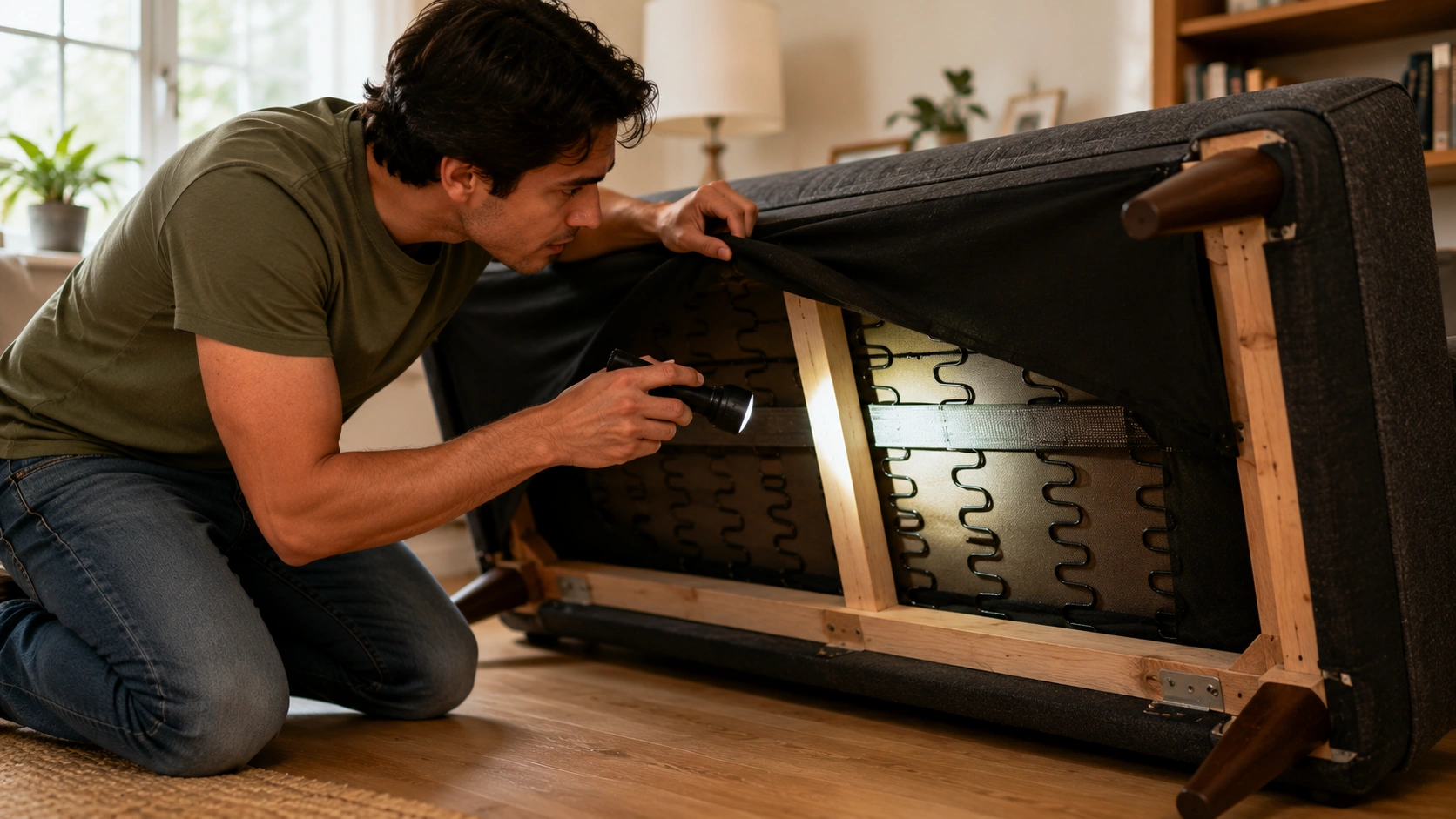
Flip the sofa onto its back or side (use a blanket to protect the upholstery). Use a flashlight to visually inspect the underside. Look for: loose screws or bolts, gaps between frame joints, springs that have shifted from their clips, rust spots on metal components, and visible wear on hinge mechanisms.
-
The Stethoscope Trick (Optional)
If you have a mechanic's stethoscope or even a simple cardboard tube, place one end against different parts of the sofa frame while a second person sits and triggers the squeak. The tube amplifies the sound and helps you isolate the exact contact point.
Use your phone to record a video with audio while someone sits on the squeaking area. Play it back with headphones — this can help you hear the precise character of the sound (metallic vs. wooden creak) which narrows down the cause before you even flip the sofa.
Tools and Materials You Will Need
Most sofa squeaking fixes require only basic household tools. Gather everything before you start so you don't have to stop mid-repair. Here is what you will typically need:
Screwdriver Set
Both Phillips and flathead in multiple sizes to fit various frame bolts and mechanism screws.
Allen Wrench Set
Many sofa legs and recliner mechanisms use hex bolts. Metric and SAE sets cover all possibilities.
Silicone Lubricant Spray
Safe for metal, rubber, and nearby fabric. Prefer silicone or PTFE over WD-40 for upholstery proximity.
Wood Glue
For reinforcing separated wooden frame joints. PVA wood glue provides a strong, durable bond.
Bar Clamps or C-Clamps
To hold frame joints tightly while wood glue cures. At least two clamps recommended.
Furniture Felt Pads
Self-adhesive pads to place under legs. Eliminates floor friction and prevents scratching.
Flashlight or Headlamp
Essential for inspecting the dark underside of the sofa. A headlamp keeps both hands free.
Rubber Mallet
For gently tapping frame joints back into alignment without damaging the wood surface.
Avoid petroleum-based lubricants (standard WD-40, machine oil, grease) near fabric or foam — they can cause permanent stains and accelerate foam degradation. Also avoid superglue for frame repairs; it creates brittle bonds that can crack under weight. Use proper wood glue for wooden joints and silicone-based products for metal lubrication.
Fix 1: Squeaking Springs
Springs are the single most common cause of sofa squeaking. Whether your sofa uses eight-way hand-tied coils, sinuous (zigzag) springs, or drop-in coil units, the fix approach is similar: reduce friction at the contact points.

Step-by-Step Spring Fix
-
Remove the dust cover (black fabric under the sofa)
Use a utility knife or scissors to carefully cut the staples holding the dust cover along the back edge. Pull it back just enough to access the springs. Do not remove it entirely — you will re-staple it later.
-
Locate the squeaking spring
Have someone sit on the sofa while you watch and listen underneath. Look for springs that visibly shift, rub against the frame, or contact neighboring springs. Mark the problem area with tape if needed.
-
Check spring clips and attachments
Sinuous springs are held by clips nailed or screwed into the frame. If any clips are loose, re-secure them with new screws or nails. A loose clip allows the spring to move and rub against the wood.
-
Apply lubricant to contact points
Spray a small amount of silicone lubricant where the spring wire touches the wooden frame rail, and at any points where two springs cross or nearly touch. Use the straw nozzle for precise application. A little goes a long way — do not soak the area.
-
Insert padding between spring and frame (if needed)
If a spring has shifted and is pressing directly into the wood, cut a small piece of felt or fabric and wedge it between the spring and frame. This creates a cushion barrier that eliminates direct metal-to-wood contact.
-
Test and reattach the dust cover
Have someone test the sofa while it is still flipped. If the squeak is gone, re-staple the dust cover using a staple gun. If any noise remains, repeat steps 3–5 on the suspected area.
If you find a spring that is actually broken (not just squeaking), lubrication will not help. Broken springs need to be replaced. For detailed guidance on replacing sofa springs, including where to buy replacement springs and how to safely tension them, see our dedicated repair guide. A single broken spring can cause neighboring springs to carry extra load, accelerating further failure.
Fix 2: Loose or Separated Frame Joints
Frame joints are the second most common squeak source. The quality of frame materials and construction methods directly affects how long joints stay tight. Kiln-dried hardwood frames with dowel-and-glue joints hold up best, while softer woods and screw-only joints are more prone to loosening over time.
Step-by-Step Frame Joint Repair
-
Identify the loose joint
With the sofa flipped, apply pressure to different frame members while listening for creaking. Look for visible gaps between joined pieces, cracked glue lines, or screws that spin freely in their holes.
-
Disassemble the joint partially
Remove any screws or bolts connecting the loose joint. If the joint was glued, you may need to gently tap the pieces apart with a rubber mallet. Do not use excessive force — you do not want to crack the wood.
-
Clean the joint surfaces
Scrape off all old, dried glue from both mating surfaces using a chisel or putty knife. The new glue needs clean, bare wood to bond properly. Wipe away dust with a damp cloth and let it dry completely.
-
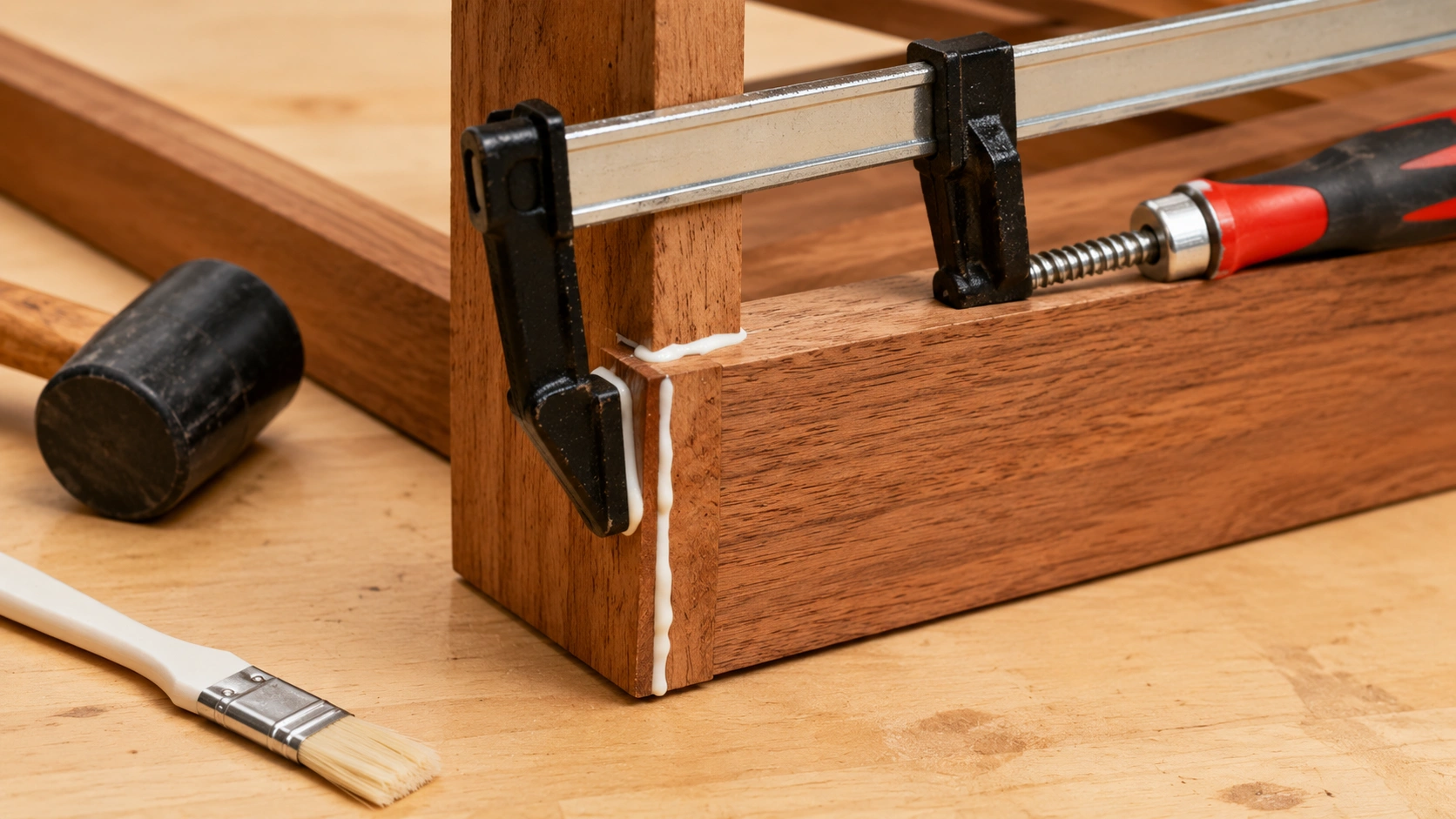
Apply wood glue generously
Spread a thin, even layer of PVA wood glue on both surfaces. Reassemble the joint, aligning the pieces exactly as they were originally positioned.
-
Clamp and reinforce
Apply bar clamps or C-clamps to hold the joint tightly together. Wipe away any glue squeeze-out with a damp cloth. If the original joint used screws, drill new pilot holes slightly offset from the originals (the old holes will be stripped) and drive new screws for added reinforcement.
-
Allow full cure time
Let the glue cure for at least 24 hours before removing clamps and using the sofa. Most PVA wood glues reach full strength in 24 hours. Do not rush this step — premature use will weaken the bond.
If you discover cracked, split, or broken frame rails — not just loose joints — the repair becomes more complex. A cracked rail can sometimes be repaired with a metal mending plate and screws, but in many cases, a severely damaged frame indicates it is time to consider replacement. See our guide on sofa frame repair for detailed assessment criteria.
Fix 3: Loose or Noisy Legs
Loose legs are the easiest squeak to fix but are frequently overlooked because people assume the noise is coming from inside the sofa. Fixing loose sofa legs typically takes under ten minutes and requires only a screwdriver or Allen wrench.
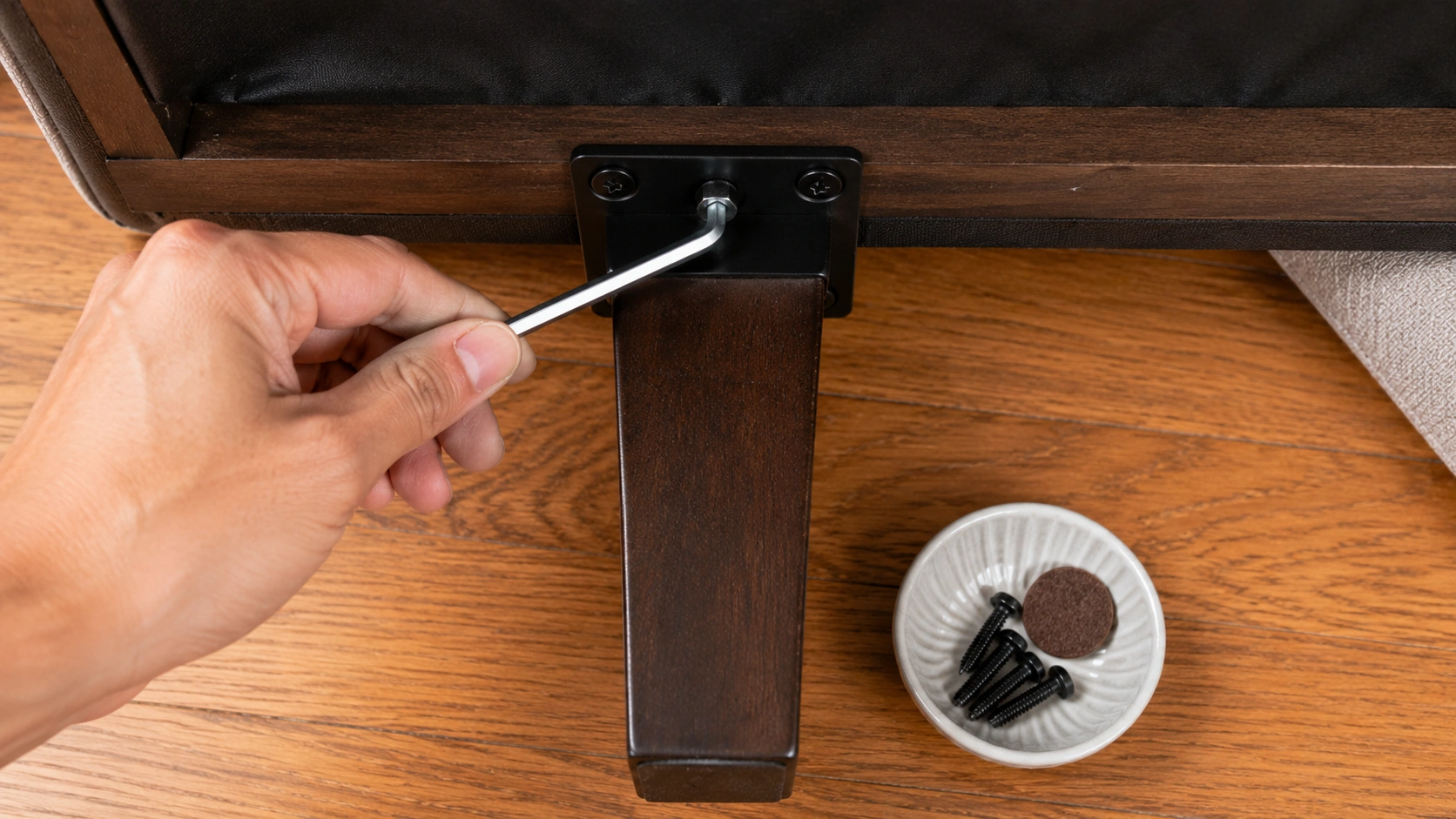
Quick Leg Fix Process
-
Check all four legs
Wiggle each leg individually. If any leg has play or rotation, it needs tightening. Sometimes only one leg is loose, but check all four since the others may be close to loosening as well.
-
Tighten the fasteners
Use the appropriate tool (usually an Allen wrench or Phillips screwdriver) to tighten the bolt or screw that secures the leg to the frame. Tighten firmly but do not overtighten — you can strip the threads in the wood, which creates a much bigger problem.
-
Fix stripped holes (if applicable)
If a bolt spins freely because the wood hole is stripped, coat a wooden toothpick in wood glue, insert it into the stripped hole, break it off flush, let it dry, and then re-drive the bolt. The toothpick fills the gap and gives the bolt fresh material to grip.
-
Add felt pads
Peel-and-stick felt pads on the bottom of each leg serve double duty: they eliminate floor friction squeaks and protect your flooring from scratches. This is especially important on hardwood, tile, or laminate floors.
For legs that keep working loose repeatedly, apply a small drop of medium-strength thread-locking compound (blue Loctite) to the bolt threads before tightening. This prevents vibration from loosening the bolt over time without making it impossible to remove later. Do not use red Loctite — that is permanent.
Fix 4: Recliner Mechanism Noise
Recliner sofas are the most prone to squeaking because of their many moving parts. A typical recliner mechanism includes a footrest hinge, a back-release mechanism, scissor-style extension arms, and multiple pivot points — each one a potential noise source.
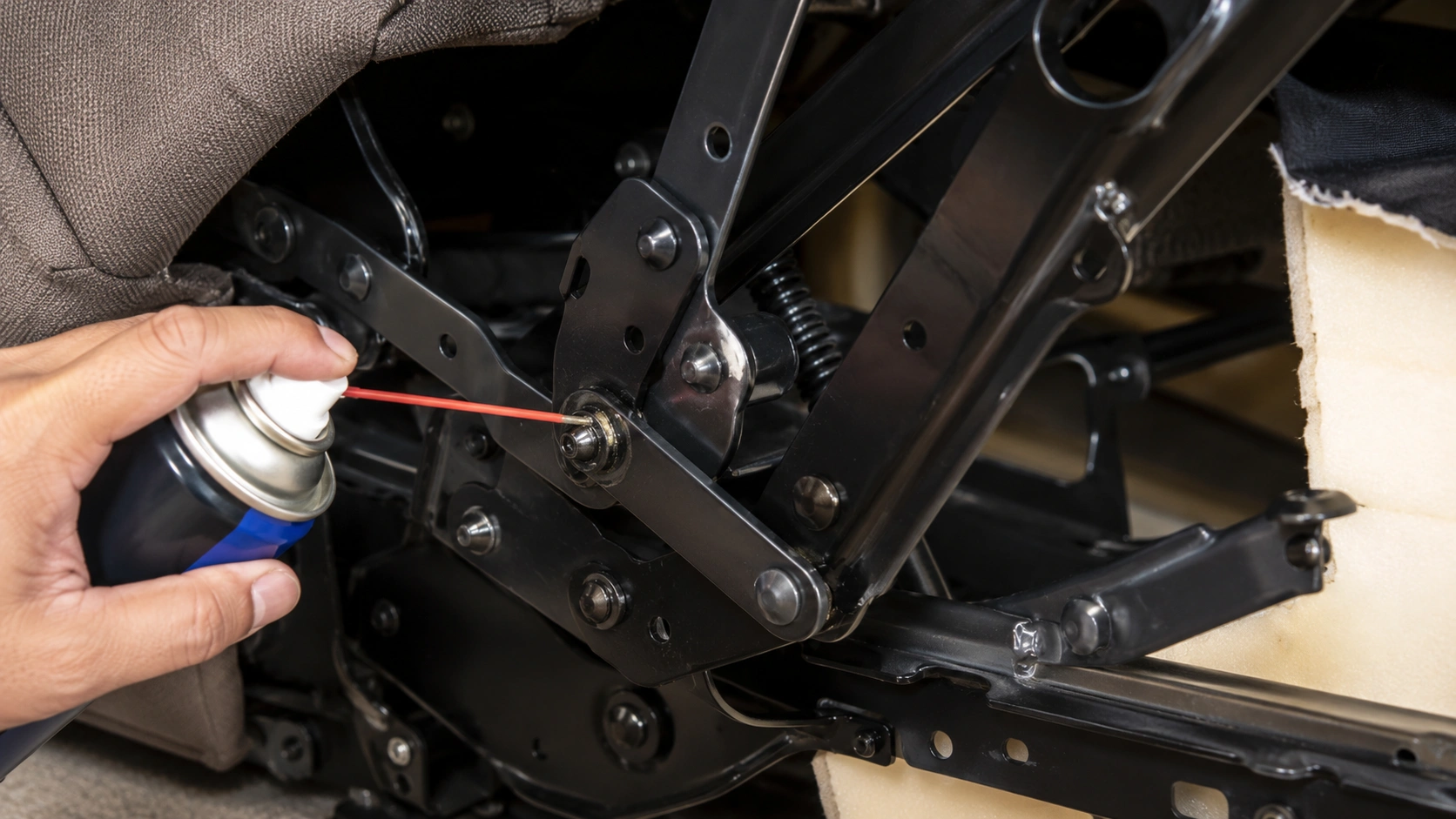
Recliner Mechanism Fix Steps
-
Operate the recliner and listen
Open and close the footrest several times. Lean back and return upright. Identify whether the noise occurs during footrest extension, back recline, or both. This tells you which specific part of the mechanism to focus on.
-
Access the mechanism
Most recliner mechanisms are accessible from the back of the sofa. Remove the back panel (usually held by clips or a few screws at the bottom). For some models, you may need to unzip an access panel on the side or bottom.
-
Tighten all mechanism bolts
Recliner mechanisms are bolted to the sofa frame. Over time, these bolts loosen from the constant motion. Go through every visible bolt and nut and tighten them. Pay special attention to the bolts that mount the mechanism to the seat frame.
-
Lubricate every pivot and hinge point
Using the straw nozzle on your silicone spray, apply lubricant to every pin, hinge, pivot, and scissor joint you can see. Work the mechanism back and forth after each application to spread the lubricant evenly. Focus on points where you heard the noise.
-
Check the release cable
Some recliner squeaks come from the cable that runs from the handle or button to the release mechanism. If the cable is rubbing against a metal guide, apply a small dab of silicone grease to the contact point. If the cable housing is damaged, it may need replacement.
-
Reassemble and test
Replace the back panel or close the access panel. Operate the recliner through its full range of motion several times. If any squeak persists, repeat the lubrication on the specific area that is still noisy.
If you own a recliner sofa, proactive maintenance is far easier than reactive repair. Lubricate all mechanism points every 6 to 12 months, tighten bolts during your annual deep cleaning, and address any new noises immediately — small squeaks become big problems when ignored. This is especially important for recliners used daily.
Fix 5: Sleeper Sofa Mechanism Noise
Sleeper sofas have a fold-out metal bed frame hidden inside the seat. This mechanism contains hinges, folding crossbars, and support legs — all of which can squeak, both when the bed is in use and sometimes even when the sofa is in its closed position if the mechanism has shifted.
Sleeper Mechanism Fix Steps
-
Open the sleeper mechanism fully
Pull out the bed to its fully extended position. This gives you complete access to all the metal components. Inspect every hinge, folding bar joint, and leg attachment point.
-
Tighten all hardware
Check every bolt, nut, and screw on the mechanism. The constant folding and unfolding action gradually loosens fasteners. Replace any missing bolts with identical replacements from a hardware store.
-
Lubricate hinges and fold points
Apply silicone lubricant to all hinge pins and the points where the crossbars fold. These are the highest-friction points and the most likely squeak sources. Open and close the mechanism a few times to work the lubricant in.
-
Check for misalignment
If the mechanism does not fold smoothly back into the sofa cavity, it may be misaligned. Look for bent bars or hinges that are not sitting flat. Minor bends can sometimes be straightened with gentle pressure; severe deformation requires part replacement.
-
Test in both positions
Close the sleeper and sit on the sofa in various spots. Then open it again and press down on different areas of the mattress support. Squeaks that only appear when closed may indicate the mechanism is rubbing against the sofa frame in its stored position.
Fix 6: Floor-to-Leg Friction
This is the simplest cause to fix but the easiest to misdiagnose. If your sofa sits on hardwood, tile, laminate, or polished concrete, the leg bottoms can create a high-pitched squeak as the sofa shifts under weight. The noise sounds identical to an internal frame squeak, which is why many people tear apart their sofa before checking this first.
Quick Diagnosis
Slide a piece of thick cardboard or a thin rug under each leg, one at a time. Sit on the sofa after each leg is insulated. If the squeak disappears when a particular leg is cushioned, you have confirmed floor friction as the cause.
Solutions
-
Apply self-adhesive felt pads
Cut felt pads to size and stick them to the bottom of each leg. Use thick pads (at least 3mm) for better cushioning. Replace them every 6–12 months as they compress with use.
-
Use rubber leg caps
For metal legs, rubber leg caps provide a non-slip, non-squeak barrier. They also prevent floor scratches. Measure your leg diameter carefully to get the right fit — loose caps will themselves cause noise.
-
Place a rug under the sofa
An area rug under the sofa completely eliminates floor friction and also improves the room's acoustics. This is the simplest solution if you already have a suitable rug or are open to adding one.
-
Apply floor wax or polish
If the squeak is caused by the sofa sticking to a rough spot on the floor (common with certain floor finishes), cleaning and polishing that area can resolve it. Use a product appropriate for your floor type.
Quick Comparison: Causes, Difficulty & Cost
Use this table to quickly assess which fix is right for your situation based on difficulty level and estimated cost:
| Cause | Difficulty | Time Needed | Est. Cost | Tools Required |
|---|---|---|---|---|
| Floor-to-leg friction | Easy | 5 minutes | $2 – $10 | Felt pads or rubber caps |
| Loose legs or bolts | Easy | 10 – 15 minutes | $0 – $5 | Screwdriver or Allen wrench |
| Squeaking springs | Medium | 30 – 45 minutes | $5 – $15 | Lubricant, staple gun, scissors |
| Recliner mechanism | Medium | 30 – 60 minutes | $5 – $15 | Lubricant, screwdriver set |
| Sleeper mechanism | Medium | 30 – 45 minutes | $5 – $20 | Lubricant, wrench set |
| Loose frame joints | Hard | 1 – 2 hours (+ cure time) | $10 – $30 | Wood glue, clamps, mallet, screws |
| Broken springs | Hard | 1 – 3 hours | $15 – $50 | Replacement springs, pliers, clips |
How to Prevent Future Squeaking
Fixing a squeak is satisfying, but preventing it from returning is even better. These proactive measures apply to all sofa types and can extend the quiet lifespan of your furniture by years:

Establish a Maintenance Routine
-
Tighten hardware every 6 months
Set a calendar reminder to check and tighten all visible bolts, screws, and leg fasteners twice a year. This single habit prevents the majority of squeak-causing looseness before it starts.
-
Lubricate mechanisms annually
If you have a recliner or sleeper sofa, apply silicone lubricant to all pivot points and hinges once a year. This keeps metal parts moving smoothly and prevents the dry friction that leads to squeaking.
-
Use felt pads from day one
Do not wait for a squeak to appear before adding felt pads to legs. Install them when the sofa is new to prevent both floor friction noise and floor damage simultaneously.
-
Avoid jumping on the sofa
Impact forces from jumping place enormous stress on springs, frame joints, and suspension systems — far beyond what normal sitting produces. This is the number one behavior that accelerates squeak development, especially in households with children.
-
Control indoor humidity
Wooden frames expand in high humidity and contract in dry conditions, which gradually loosens joints. Maintaining indoor humidity between 40% and 50% with a humidifier or dehumidifier reduces this cycle of expansion and contraction.
-
Rotate seat positions
If your sofa has removable cushions, rotate and flip them regularly to distribute wear evenly across all spring zones. This prevents one area from taking disproportionate load, which leads to localized spring fatigue and squeaking. This also helps prevent flattened cushions.
-
Address new noises immediately
A faint squeak that is ignored for months can develop into a loose joint, a worn hinge, or a shifted spring — all of which are harder and more expensive to fix than the original minor issue. When you hear a new noise, investigate and fix it within days, not months.
The best way to avoid squeaking problems is to buy a well-built sofa in the first place. When shopping, pay attention to how to check sofa quality before buying — look for kiln-dried hardwood frames, dovetailed or dowelled joints, and properly tensioned spring systems. Sofas built with these features are far less likely to develop squeaks even after years of use. Our complete guide to choosing a sofa covers these quality indicators in detail.
When to Repair vs. When to Replace
Not every squeaking sofa should be repaired. While most squeaks are minor and inexpensive to fix, some indicate more serious structural problems that make repair uneconomical. Here is a clear framework to help you decide:
Repair Is the Right Choice When:
- ✓ The squeak is isolated to one identifiable cause (loose bolt, dry spring, floor friction)
- ✓ The frame is solid with no visible cracks, splits, or warping
- ✓ The upholstery and cushions are still in good condition
- ✓ The sofa is less than 8–10 years old and was a mid-range or higher quality purchase
- ✓ Estimated repair cost is less than 30% of the sofa's original purchase price
Replacement Is the Better Choice When:
- ✗ Multiple frame joints are cracked or the frame is visibly warped
- ✗ Multiple springs are broken or the spring system has collapsed
- ✗ The sofa also has sagging cushions, worn fabric, and other age-related issues
- ✗ The sofa was a budget purchase and is more than 5–7 years old
- ✗ You have already repaired the same issue multiple times and it keeps returning
If you decide replacement is the right move, a well-researched purchase prevents future squeaking problems. Browse our top 10 sofa recommendations for models known for solid construction, or explore options by type: sectionals, 3-seaters, or loveseats. Understanding sofa suspension types before buying helps you choose a design less prone to noise issues.
Frequently Asked Questions
This indicates the squeak is caused by a component under tension — most likely a spring that is just barely contacting the frame or a joint that has a tiny gap. Light weight does not generate enough force to close the gap, but heavier weight compresses the gap and creates friction. The fix is the same: lubricate the spring contact points or tighten the joint. The good news is that this type of squeak usually responds well to simple fixes because the underlying damage is minimal.
Standard WD-40 can be used on metal spring coils if you are extremely careful to avoid contact with upholstery fabric, foam cushioning, and rubber components. However, silicone-based lubricant or PTFE spray is a safer and more appropriate choice for sofa repair because it is fabric-safe, non-staining, and will not degrade foam or rubber parts nearby. Silicone spray is inexpensive and widely available at hardware stores, so there is little reason to risk using WD-40 inside a sofa.
A new sofa that squeaks may have a simple manufacturing issue like a loose bolt that was not properly tightened at the factory, or it could be the floor-to-leg friction issue that was not present in the showroom (which likely had carpet). Try the simplest fixes first — tighten all bolts and add felt pads to the legs. If the squeak persists after these steps, it could indicate a deeper quality issue with the frame or springs, and you should contact the retailer about a warranty claim. Check your return policy — most retailers allow returns within 30 days for defective items.
This clearly points to the recliner mechanism itself, not the frame or springs. When the sofa is upright, the mechanism is locked in its resting position and there is no metal-to-metal movement. When you recline, hinges pivot, scissor arms extend, and the footrest swings out — all creating movement at points that may be dry or worn. Focus your repair efforts exclusively on lubricating the mechanism's hinge pins and pivot points, and tightening any mechanism mounting bolts.
Not if you work carefully. Most squeak fixes are done from the underside of the sofa, where you only need to remove (and later reattach) the black dust cover fabric. When applying lubricant, always use the straw nozzle for precise targeting and shield surrounding fabric with a rag or paper towel. If you need to access the frame from inside (rare), consider consulting a professional upholsterer rather than risk damaging the fabric. For general sofa maintenance and cleaning tips that protect your upholstery, see our care guide.
In most cases, no — a squeak is simply an annoyance caused by friction. However, if the squeak is accompanied by wobbling, visible frame movement, or a sense that the sofa is structurally unstable, it could indicate a compromised frame that poses a collapse risk. This is especially concerning for recliner sofas, where a failing mechanism could trap someone in a reclined position. If you notice any instability along with the squeak, stop using the sofa until you can inspect and repair the structural issue, or consult a professional.
Squeaking is just one of several common issues that develop over time. If your sofa also has flattened cushions, fabric pilling, an uneven stance, or an unpleasant odor, our comprehensive common sofa problems and fixes guide covers all of these issues with the same detailed, step-by-step approach. For specific concerns, see our guides on flattened cushions, fabric pilling, wobbling and unevenness, and bad smells and odors.