
Comfort vs Durability: The Biggest Trade-Off in Sofa Buying
Most buyers sacrifice one for the other. This guide shows you exactly how to get both — without overpaying or regretting your decision.
If you have ever sat on a showroom sofa that felt like a cloud, only to read reviews saying it "sagged after six months," you have already encountered the comfort vs durability dilemma. It is the single most common conflict sofa buyers face — and the one that leads to the most regret. This guide breaks down exactly what makes a sofa comfortable, what makes it durable, where those two goals align, and where they clash. By the end, you will know precisely which combination of materials, construction, and design choices delivers the right balance for your home, lifestyle, and budget.
What Actually Matters: The Core Conflict Explained
Comfort and durability are not opposites — but in practice, many of the design choices that maximize one tend to compromise the other. A soft, plush cushion may feel incredible on day one, but the same materials that create that sink-in sensation often break down faster. Conversely, a sofa built with indestructible materials may feel stiff and uninviting for years. Understanding why this happens is the key to making a smart choice.

A sofa's comfort and durability are determined by multiple layers — each one affects the other.
The conflict typically plays out across five key components: frame, suspension system, cushion core, cushion wrap, and upholstery fabric. Some of these — like the frame — are almost purely durability factors. Others — like the cushion wrap — are almost purely comfort factors. And a few — like the cushion core and fabric — sit right at the intersection, where your choices have the biggest impact on both outcomes.
Key Insight: The most critical decisions you will make are about cushion construction and upholstery fabric. These two components affect comfort AND durability simultaneously, so getting them right matters more than any other single factor.
Comfort Breakdown: What Makes a Sofa Feel Great
Sofa comfort is not one-dimensional. It is the combined result of how the seat supports your body, how the back cradles your spine, how deep the seat allows your legs to rest, and how the surface material feels against your skin. Here are the factors that directly control how a sofa feels:
1. Cushion Fill — The Biggest Comfort Variable
The cushion fill is the single largest determinant of how a sofa feels. There are several common types, and each delivers a distinctly different sitting experience:
Down & Down-Blend
The most luxurious feel — a soft, enveloping sink-in sensation. Pure down requires constant fluffing and offers minimal support. Down-blend (mixed with foam or fiber) is more practical while retaining much of the softness.
Comfort rating: 10/10
High-Resilience Foam
Firm, supportive, and responsive. Bounces back quickly when you stand. Available in multiple firmness levels. The foundation of most quality sofas — especially when wrapped in softer layers.
Comfort rating: 7/10 (varies by firmness)
Polyester Fiber Wrap
A soft, affordable batting material often wrapped around foam cores. Creates a gentler surface feel without sacrificing the structural support of the foam underneath.
Comfort rating: 8/10 (as a wrap layer)
Spring-Down Cushions
Miniature coils surrounded by foam and wrapped in down. Combines the bounce of springs with the softness of down. Found in premium sofas and offers an exceptional sit.
Comfort rating: 9.5/10
2. Seat Depth — How Your Legs Rest
Seat depth directly affects whether a sofa feels supportive or lounge-worthy. Standard seat depth is 20–22 inches, which works well for upright sitting. Deep-seat sofas (23–26+ inches) allow you to tuck your legs under — great for daily napping or movie marathons, but can cause back strain for shorter individuals if the back cushions are not tall enough. A deep-seat sofa prioritizes lounging comfort over formal seating posture.
3. Back Cushion Design
Loose back cushions filled with down or fiber create a soft, accommodating feel that adapts to your posture. Tight-back (attached cushion) designs offer more consistent lumbar support but less "give." For people with back pain concerns, a firm, structured back cushion with defined lumbar support is generally more comfortable over long periods, even though it may feel less plush initially.
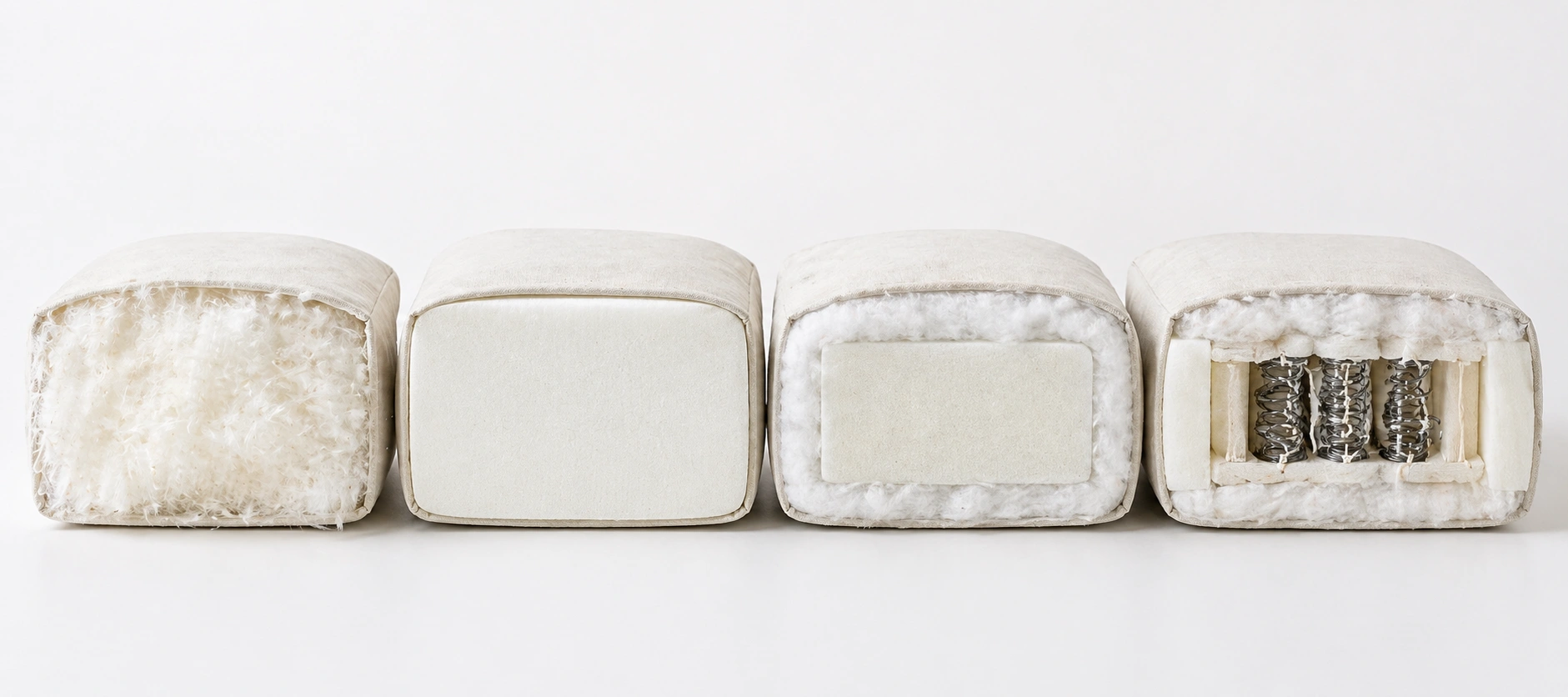
Different cushion fills create dramatically different sitting experiences — from cloud-like softness to firm support.
4. Upholstery Surface Feel
The fabric or leather you choose affects tactile comfort. Leather feels cool to the touch initially and warms with body heat. Fabric options like velvet, chenille, and linen feel softer and warmer from the first moment. Performance fabrics (like Crypton or Revolution) can feel slightly stiffer than natural fibers but have improved dramatically in recent years. The microfiber couch option remains popular for its soft hand feel at lower price points.
Durability Breakdown: What Makes a Sofa Last
While comfort is about how a sofa feels today, durability is about how it performs over years. A durable sofa maintains its structural integrity, retains its shape, resists wear and staining, and looks good long after the purchase date. Here are the factors that determine how long your sofa will actually last:
1. Frame Material — The Foundation of Longevity
The frame is the skeleton of your sofa, and it is almost entirely a durability factor — it has minimal impact on comfort. Kiln-dried hardwood (oak, maple, ash, or birch) is the gold standard, offering 15+ years of structural integrity. Plywood frames with interlocking joints can also be durable but vary significantly in quality. Particle board or MDF frames, common in budget sofas, are the weakest link — they warp, crack, and wobble within 2–5 years. A simple quality check is to lift one corner of the sofa; if the opposite corner stays on the ground, the frame is sufficiently rigid.
2. Suspension System — Hidden But Critical
The suspension system sits between the frame and the cushions and affects both comfort (bounce and support) and durability (resistance to sagging). Eight-way hand-tied springs are the premium option — each spring is tied to adjacent springs with cord, creating a supportive, even surface that resists sagging for 15+ years. Drop-in coil units are a more affordable alternative that still performs well (10–12 year lifespan). Sinuous wire (S-springs or zigzag springs) are the most basic and can develop sagging or noise issues within 5–8 years in daily-use situations. The suspension type is one of the hardest things to evaluate visually, but it dramatically impacts long-term durability.
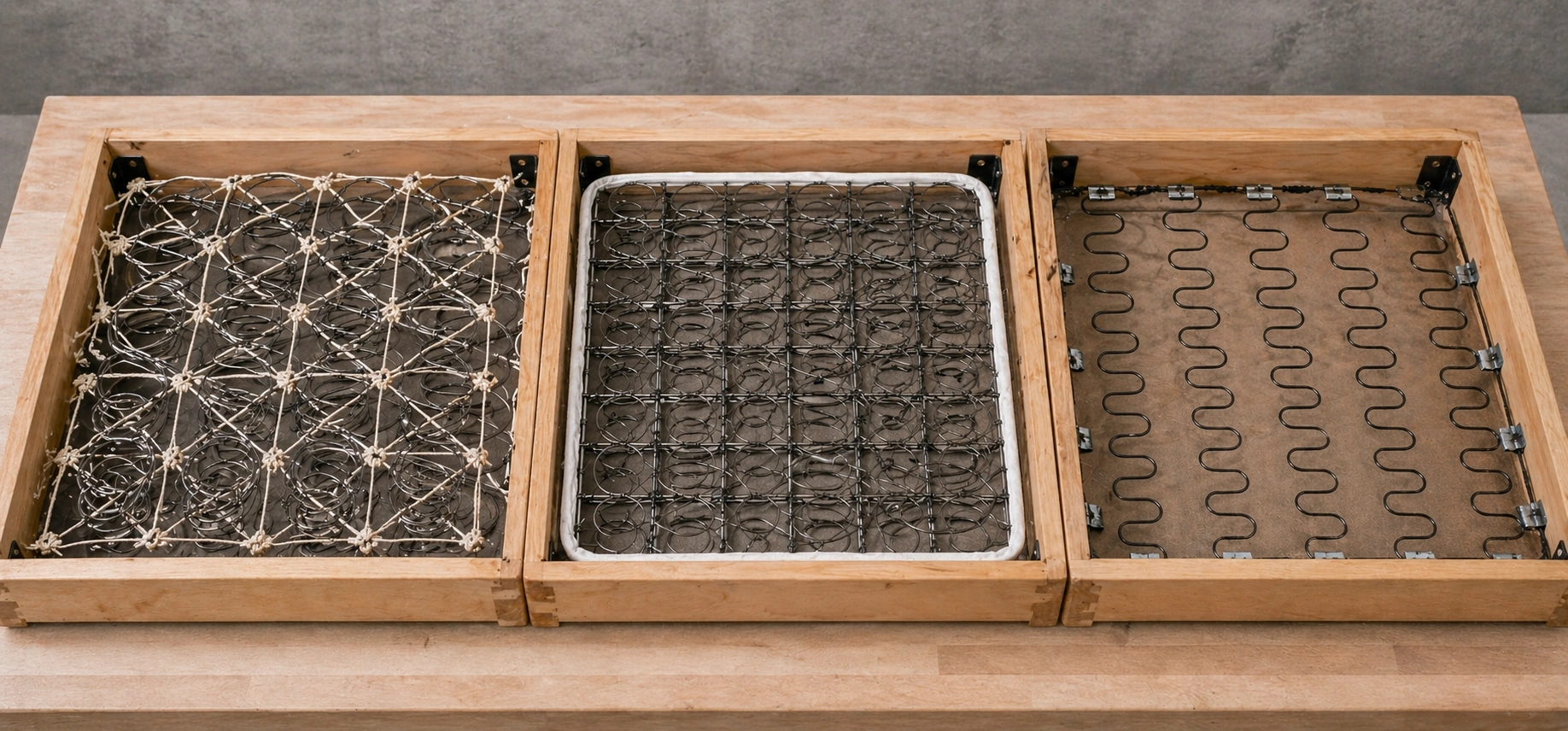
The suspension system is hidden from view but determines whether your sofa sags after 2 years or stays firm for 15.
3. Foam Density — Where Comfort Meets Durability
Foam density is measured in pounds per cubic foot (PCF) and is the most important spec that bridges comfort and durability. Low-density foam (1.2–1.5 PCF) feels soft initially but breaks down within 1–3 years, losing support and developing permanent indentations. Medium-density foam (1.8–2.2 PCF) offers a good balance — comfortable enough for daily use while maintaining shape for 7–10 years. High-density foam (2.5+ PCF) is very durable (12–15+ years) but can feel firm unless wrapped in softer layers.
⚠ Buyer Beware: Many product descriptions do not list foam density. If a sofa under $800 feels incredibly soft in the store, it likely uses low-density foam. That softness will be the first thing to disappear. Always ask about foam density when possible, or look for the phrase "high-resilience foam" as a minimum indicator of quality.
4. Fabric Durability — Measured in Cycles
The Martindale rub test measures fabric abrasion resistance in cycles. For light domestic use, 15,000–20,000 cycles is acceptable. For general family use, look for 25,000–40,000 cycles. For heavy-use situations — families with children, pet owners, or commercial settings — you want 40,000+ cycles. The most durable sofa fabrics include performance microfiber, solution-dyed acrylic (like Sunbrella), Crypton, and tightly woven olefin blends. Natural linen and cotton, while beautiful, typically score 15,000–25,000 cycles and show wear faster in active households.

The Martindale test rubs fabric thousands of times to simulate years of use — higher cycle counts mean longer-lasting upholstery.
5. Joint Construction
How the frame pieces are connected directly affects longevity. Doweled, mortise-and-tenon, and corner-blocked joints with glue and screws are the strongest. Stapled-only joints are the weakest and are a red flag in any sofa above the entry-level price range. If you are evaluating a secondhand sofa, joint construction is one of the first things to inspect.
Comfort vs Durability: Side-by-Side Comparison
The table below shows how common sofa components rate on comfort and durability, making it easy to see where trade-offs exist — and where you can get both without compromise.
| Component | Comfort Score | Durability Score | Notes |
|---|---|---|---|
| Pure down cushions | ★★★★★ | ★★☆☆☆ | Luxurious feel but requires constant fluffing; compresses significantly over time |
| Down-wrapped foam core | ★★★★★ | ★★★★☆ | Best balance option — soft surface with structural support underneath |
| High-resilience foam (2.0+ PCF) | ★★★☆☆ | ★★★★★ | Very durable; can feel firm. Add a wrap layer to improve comfort |
| Spring-down cushions | ★★★★★ | ★★★★☆ | Premium option with excellent bounce; found in high-end sofas |
| Polyester fiber fill | ★★★★☆ | ★★☆☆☆ | Soft but flattens quickly; best as a wrap, not a core |
| Low-density foam (<1.5 PCF) | ★★★★☆ | ★☆☆☆☆ | Feels soft day one but develops permanent sag within 1–3 years |
| Kiln-dried hardwood frame | — | ★★★★★ | No comfort impact; pure durability. 15+ year lifespan |
| Eight-way hand-tied springs | ★★★★☆ | ★★★★★ | Supportive bounce that resists sagging — benefits both comfort and longevity |
| Top-grain leather | ★★★★☆ | ★★★★★ | Develops patina; excellent comfort-to-durability ratio if maintained |
| Performance microfiber | ★★★★☆ | ★★★★☆ | Soft hand feel with high abrasion resistance; great all-rounder |
| Natural linen | ★★★★★ | ★★☆☆☆ | Beautiful texture and feel but prone to pilling and wear in busy homes |
| Sinuous wire springs | ★★★☆☆ | ★★☆☆☆ | Adequate for light use; may sag or squeak under heavy daily use |
The Takeaway: The "sweet spot" components — down-wrapped foam cores, spring-down cushions, high-resilience foam with fiber wrap, eight-way hand-tied springs, top-grain leather, and performance microfiber — are the ones that score high on BOTH axes. These should be your priority targets when shopping.
What Should YOU Prioritize? Match Your Scenario
The right balance depends entirely on how you live. A formal living room sofa used occasionally for guests has completely different requirements than a family room sofa that gets daily abuse from kids and pets. Here is a scenario-based guide:
Families with Kids
Daily heavy use, spills, jumping. Comfort matters but durability is non-negotiable.
Prioritize: DurabilityHigh-density foam (2.0+ PCF), performance fabric (40,000+ cycles), hardwood frame, eight-way or drop-in coils. Consider a slipcovered sofa for easy washing.
Pet Owners
Claws, fur, accidents. Fabric choice is the #1 factor — comfort is secondary to damage resistance.
Prioritize: DurabilityTight-weave performance fabric or top-grain leather, pet-proof covers, high-density foam. Avoid velvet and loose weaves.
Movie Marathoners
Hours of sitting, lounging, maybe napping. Deep comfort is essential — durability still matters but takes second seat.
Prioritize: ComfortDeep-seat design, down-wrapped or spring-down cushions, plush back pillows. Use a durable core foam (1.8+ PCF) to prevent sagging.
Home Office / Guest
Occasional use, needs to look professional and hold up without daily wear pressure.
Prioritize: BalanceMedium-density foam, hardwood or quality plywood frame, neutral fabric with 25,000+ cycles. An office sofa should look polished without overspending.
Primary Living Room
Daily use by adults, entertaining guests. Needs to look good, feel great, and last 10+ years.
Prioritize: BalanceDown-wrapped HR foam, eight-way springs, top-grain leather or performance fabric, kiln-dried frame. The "investment" zone at $1,500–$3,500.
Budget-Conscious Buyer
Under $1,000 budget. Must make every dollar count — avoid the trap of cheap-and-soft.
Prioritize: DurabilityChoose a firm sofa with 1.8+ PCF foam over a soft one with low-density foam. Add a plush throw blanket for comfort. See best budget sofas.
How to Find the Sweet Spot: A Step-by-Step Approach
Getting both comfort and durability is not about finding a magical product — it is about making informed decisions at each layer of construction. Follow this checklist when evaluating any sofa:
- Start with the frame. Verify it is kiln-dried hardwood or high-quality plywood with corner blocks and doweled joints. This is non-negotiable for any sofa expected to last 10+ years. A weak frame undermines everything else — learn to evaluate frames here.
- Check the suspension. Ask whether the sofa uses eight-way hand-tied springs, drop-in coil units, or sinuous wire. If the answer is sinuous wire, confirm the gauge and spacing — or look elsewhere for a daily-use sofa. Compare spring systems in detail.
- Verify foam density. Look for 1.8 PCF minimum for daily-use sofas, ideally 2.0+ PCF. Terms like "high-resilience foam" or "HR foam" are good indicators. If density is not listed, treat it as a potential red flag. Understand foam density ratings.
- Choose a cushion construction that wraps for comfort. The ideal setup for balancing both qualities is a high-density foam core wrapped in down, fiber, or a down-alternative batting. This gives you the structural integrity of dense foam with the soft surface feel of down. Spring-down cushions are even better if your budget allows.
- Select fabric by use-case, not just looks. For heavy use, choose performance fabric rated 40,000+ Martindale cycles. For moderate use, 25,000+ is fine. Learn to read Martindale ratings. If you love a delicate fabric, consider using it on accent pillows instead of the main upholstery.
- Consider maintenance requirements. Even the most durable sofa needs care to maintain both comfort and appearance. Fabric sofas need regular vacuuming and occasional professional cleaning. Leather sofas need conditioning every 6–12 months. Apply fabric protection at purchase for an extra durability layer.
- Plan for the long term. Even the best sofa will eventually need attention. Knowing how to fix sagging cushions, replace worn springs, or add replacement cushions can extend a quality sofa's life well beyond 15 years — making your initial investment even more worthwhile.
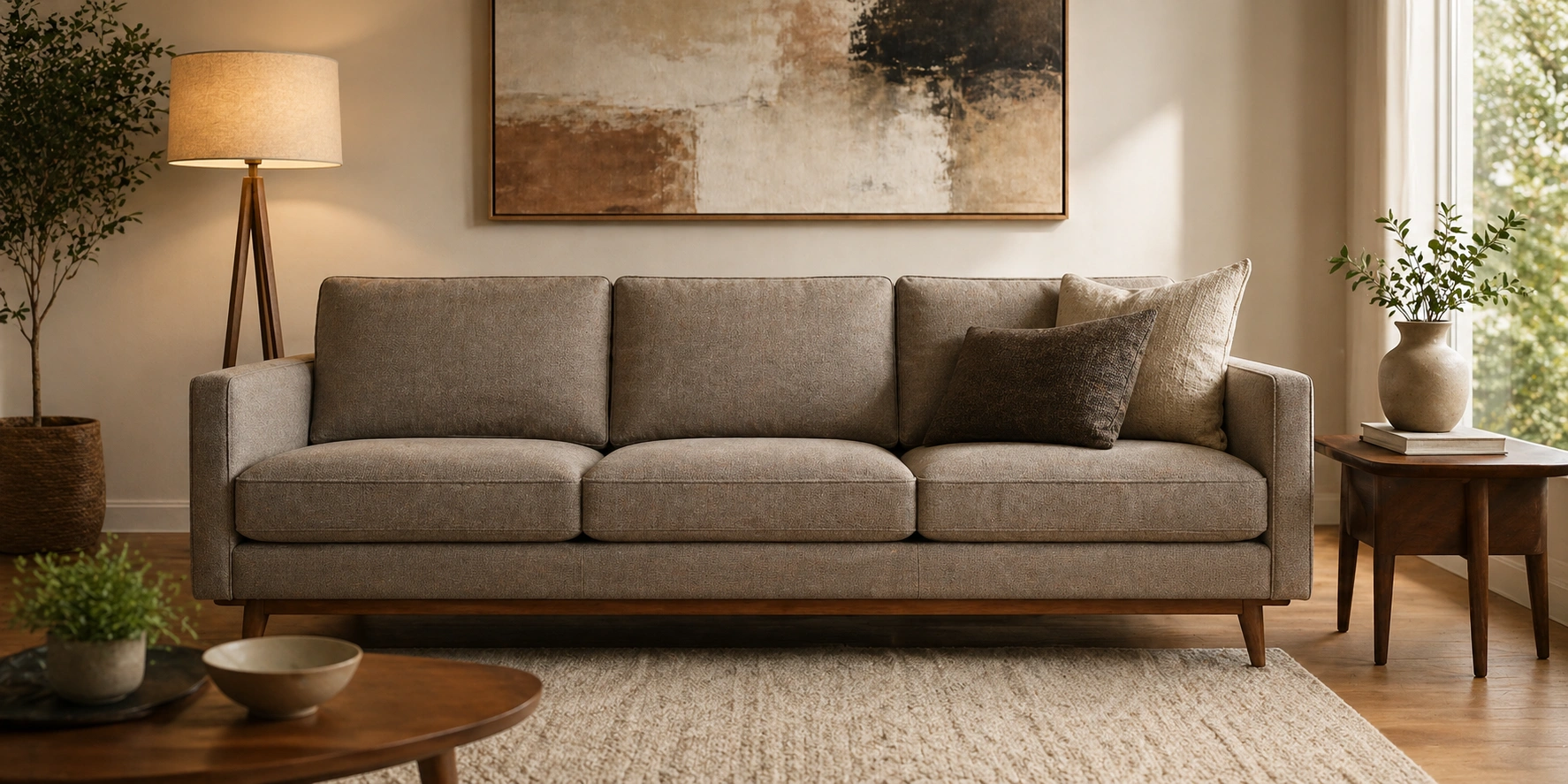
A well-chosen sofa delivers comfort that lasts — not comfort that disappears after the first year.
What to Avoid: Common Mistakes
✅ Smart Moves
- Choosing firm foam with a soft wrap layer
- Investing in a quality frame even if the fabric is basic
- Using performance fabric in high-traffic homes
- Rotating and flipping cushions regularly
- Applying fabric protection at purchase
- Testing comfort in person before buying online
✗ Costly Mistakes
- Buying based on showroom softness alone
- Choosing delicate fabric for a family room
- Saving on the frame to spend more on appearance
- Ignoring foam density specifications
- Skipping fabric protection to save $50–$100
- Assuming expensive always means durable
Budget Reality Check: Expect to spend $1,200–$2,500 for a sofa that genuinely balances comfort and durability. Under $800, you will almost always be sacrificing durability for initial comfort (or both). Over $3,500, you are paying for design, brand, and premium materials — the comfort-durability balance may not improve proportionally. See our sofa budget guide and price breakdown for detailed spending benchmarks.
Frequently Asked Questions
Final Takeaway: Comfort Fades, Durability Doesn't — Unless You Plan Right
The most common sofa-buying mistake is choosing based on how a piece feels in the first five minutes of sitting on it. That initial softness is often the first thing to disappear. The smartest approach is to anchor your decision in durability (frame, springs, foam density, fabric rating) and then layer comfort on top (down wraps, fiber batting, cushion design, fabric softness). This way, the comfort you enjoy on day one is the comfort you still experience on day 3,000.
Whether you are shopping for a top-rated sofa, evaluating a custom vs ready-made option, or trying to decide between a Chesterfield and a modern design, the comfort-vs-durability framework applies to every choice. Use the comparison table above as your quick reference, match your scenario, and you will end up with a sofa that feels as good in year five as it did on delivery day.
Ready to put this knowledge into action? Explore our curated recommendations below — each selected for delivering an outstanding balance of comfort and durability at its price point.


