UV Protection for Sofas
How to prevent sun fading, discoloration, and material degradation — keep your sofa looking new even in sun-drenched rooms
LEARN HOW UV DAMAGE HAPPENSPhanMarket Philosophy: Sunlight is the silent destroyer of upholstery. Most sofa owners don't notice UV damage until it's already permanent — and by then, the only fix is expensive reupholstery or replacement. This guide gives you every proven method to shield your sofa from UV rays, from inexpensive DIY solutions to professional-grade protection, so you can place your sofa anywhere in the room without worry.
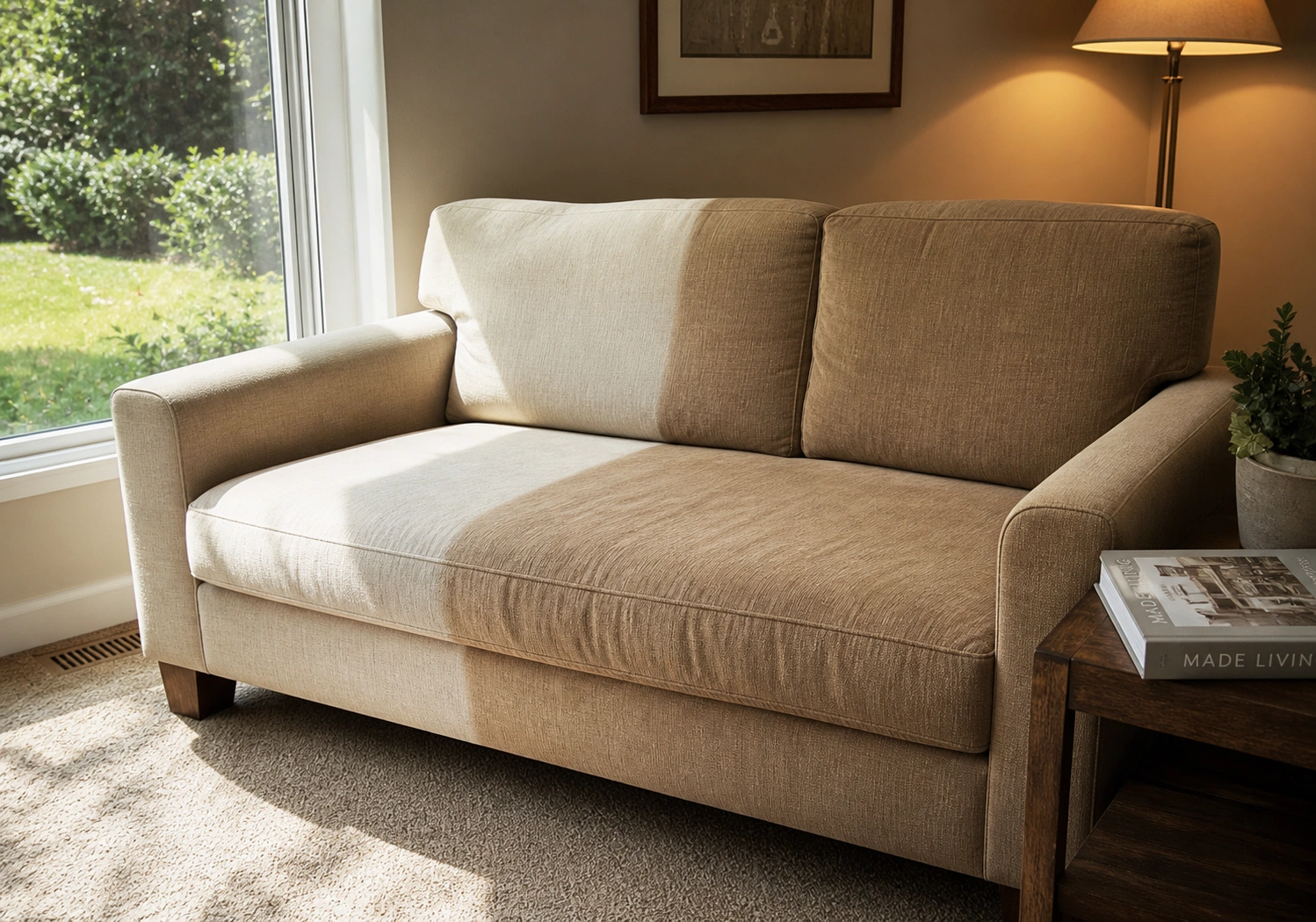
If your sofa sits near a window, it is under constant attack — even on cloudy days. Ultraviolet (UV) rays penetrate standard glass windows and silently break down the chemical bonds in fabric dyes, leather finishes, and synthetic fibers. The damage is gradual and invisible at first, which is why most people don't act until one side of their sofa has faded to a noticeably different shade than the other.
The frustrating reality is that UV fading is almost always permanent. Once the pigment molecules in your upholstery have been degraded by UV radiation, no cleaning method or conditioner can restore the original color. This makes prevention absolutely critical — and far more affordable than restoration. Whether you have a leather sofa darkening and cracking near a window, a velvet sofa losing its richness, or a white couch yellowing over time, the strategies in this guide will help you stop further damage immediately.
UV protection isn't just about aesthetics — it also preserves the structural integrity of your upholstery materials. UV rays weaken fibers, making fabric more prone to tearing and leather more susceptible to cracking. Protecting your sofa from UV extends both its appearance and its functional lifespan.
How UV Rays Damage Your Sofa
Understanding the science behind UV damage helps you make smarter protection decisions. Not all sunlight is equally harmful, and not all materials respond the same way. Here's exactly what happens when UV rays reach your upholstery.
The Science of UV Degradation
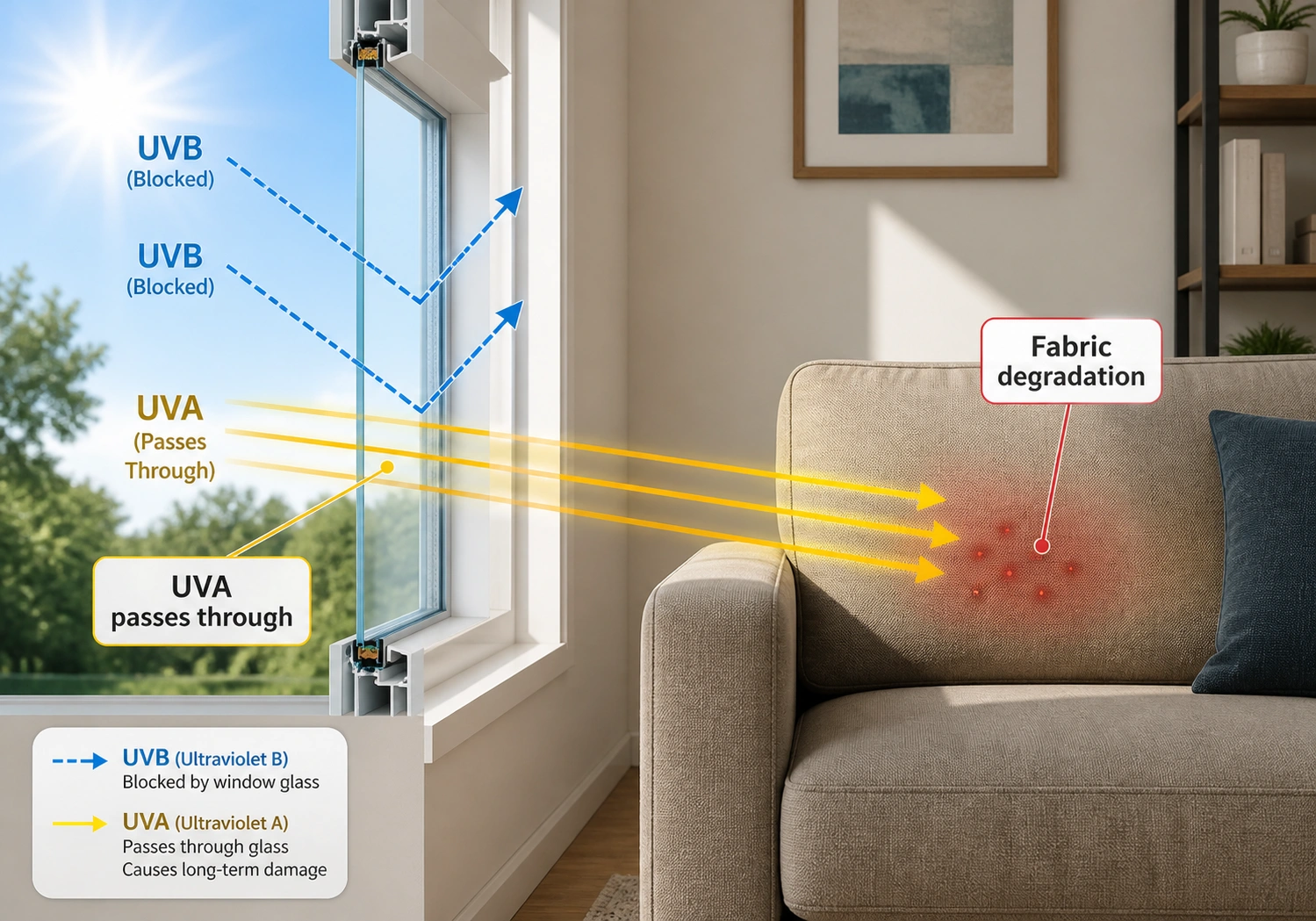
Sunlight contains three types of ultraviolet radiation: UVA, UVB, and UVC. UVC is absorbed by the atmosphere and never reaches us. UVB is mostly blocked by standard window glass. But UVA rays pass through ordinary glass almost entirely — estimates suggest 50-60% of UVA radiation transmits through a standard single-pane window, and even double-glazed windows allow significant UVA penetration.
When UVA rays strike upholstery, they deliver enough energy to break the chemical bonds in dye molecules (photodegradation). This process doesn't require heat — it happens at the molecular level through a photochemical reaction. The result is fading, discoloration, and weakening of the material's structural fibers.
Heat and infrared radiation from sunlight compound the problem by accelerating the chemical reactions and causing additional thermal damage, particularly to leather finishes which can dry out, stiffen, and crack under combined UV and heat exposure.
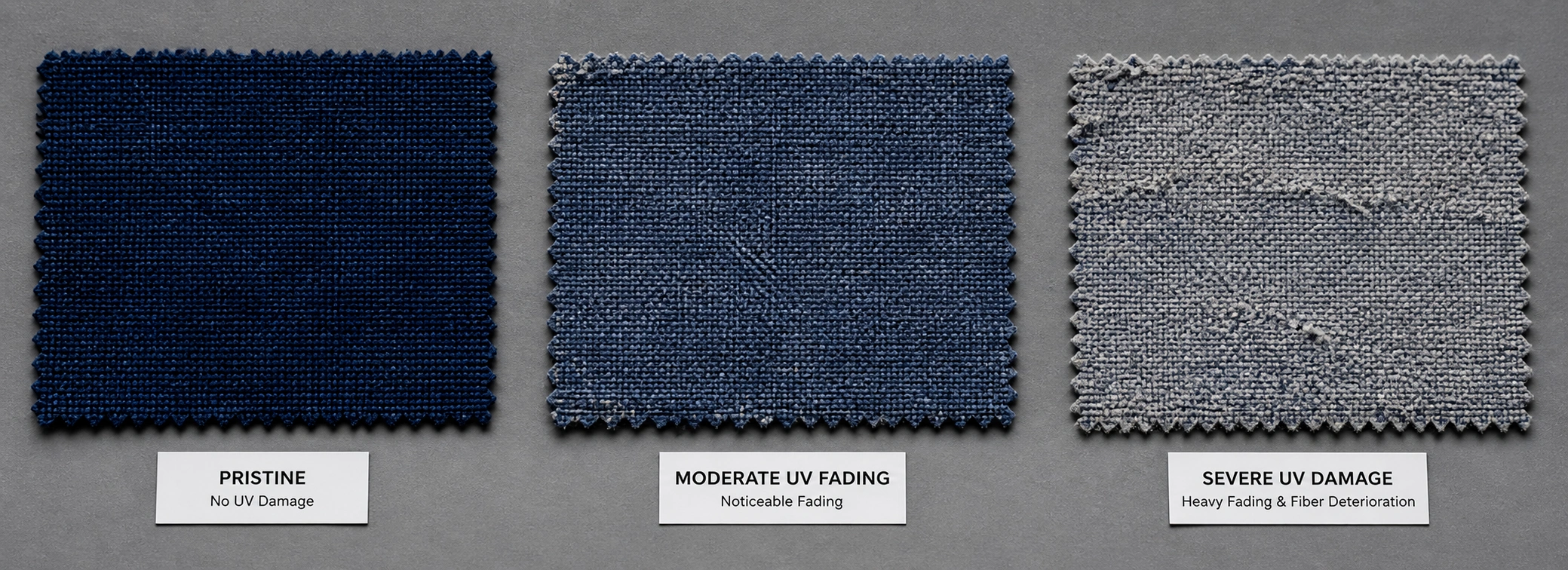
Signs Your Sofa Is Suffering UV Damage
Early detection allows you to intervene before damage becomes severe. Look for these telltale indicators, especially on the side of the sofa facing the nearest window.
🎨 Uneven Color Fading
The most obvious sign — one side or arm of the sofa is noticeably lighter than the rest. This is especially visible on bold-colored sofas like navy, red, or green, where even slight fading creates a dramatic contrast between sun-exposed and shaded areas.
🔌 Yellowing of White or Light Fabrics
A white couch or light grey couch gradually turns yellowish or dingy. This is caused by UV breaking down optical brighteners in the fabric and oxidizing the fiber material itself, particularly in synthetic fabrics like polyester and nylon.
🪨 Leather Cracking or Darkening
Leather exposed to UV dries out as the rays break down the finish and natural oils. The surface develops fine cracks (craquelure), feels stiff to the touch, and may darken unevenly. Aniline and semi-aniline leathers are especially vulnerable. Regular leather conditioning can slow this but not stop UV-driven damage.
🔄 Fabric Feeling Brittle or Stiff
UV rays degrade the polymer chains in synthetic fibers and break down cellulose in natural fibers. The fabric loses its suppleness, feels rough or papery, and becomes more prone to pilling, tearing, and seam failure. If your sofa fabric feels noticeably different on the window-facing side, UV damage is likely the cause.
🌱 Loss of Velvet Sheen and Pile Flattening
Velvet sofas lose their characteristic lustrous sheen on sun-exposed areas. The pile fibers become brittle and may crush or mat down, creating a permanently flat, dull patch that no amount of brushing can restore.
📈 Accelerated Wear Patterns
UV-weakened fibers show wear much faster than protected areas. You may notice thinning fabric, torn seams, or flattened cushions disproportionately on the side facing the window — even if that side isn't sat on more frequently.
Every hour of sun exposure adds to the total damage. There is no "healing" period — faded dye molecules cannot reform themselves. Once you notice visible fading, the underlying fiber damage has already been progressing for months. This is why prevention must begin from day one, not after damage appears. If your sofa already shows signs of fading, implement protection immediately to prevent it from getting worse.
UV Protection Methods: From Best to Budget
The most effective approach combines multiple layers of defense. No single method provides 100% protection, but layering strategies gets you very close. Here are all proven methods, ranked by effectiveness, with material-specific guidance for each.
1. UV Window Films (Most Effective)
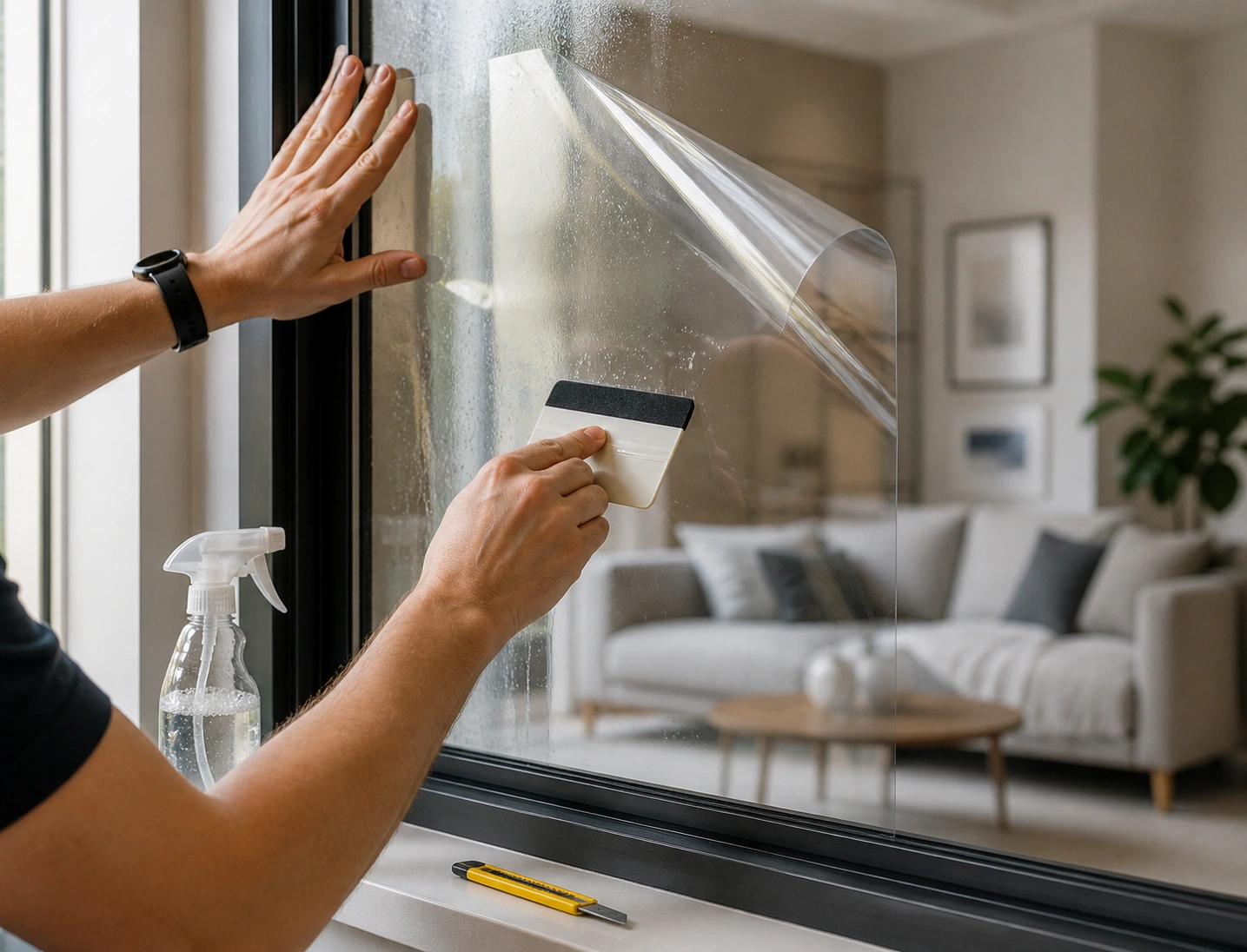
Window films are transparent polyester or vinyl sheets applied directly to your window glass. They block 95-99% of UV rays while allowing 70-90% of visible light through, meaning your room stays bright without the yellowish tint of older film technology. This is the single most effective UV protection method for indoor furniture.
- UV rejection: 95-99% depending on product grade
- Visible light transmission: 70-90% (room stays bright)
- Heat reduction bonus: Reduces infrared heat gain by 40-70%
- Lifespan: 10-15 years with proper installation
- Cost: $8-$15 per square foot for DIY; $12-$25 per square foot professional
- Installation: DIY kits available for patient homeowners; professional installation recommended for large windows
Window films work with all sofa materials — fabric, leather, velvet, microfiber — because they block UV at the source before it reaches the furniture. They are also invisible once applied, so they don't change your room's appearance. This makes them the ideal first line of defense for any living room sofa positioned near windows.
Avoid cheap dyed or mirrored films — they darken the room and can create a reflective exterior that some neighborhoods restrict. Instead, choose "spectrally selective" or "clear UV" films that block UV and infrared but transmit maximum visible light. Look for products with the "Low-E" label for added insulation benefits.
2. Window Treatments: Curtains, Blinds & Shades
Window treatments are the most accessible and versatile UV defense. They work by physically blocking or filtering sunlight before it reaches the sofa. The key is choosing the right type and using them consistently — curtains only protect when they're closed.
- Blackout curtains: Block nearly 100% of UV when fully closed; best for rooms where you can sacrifice natural light during peak sun hours (10 AM - 4 PM)
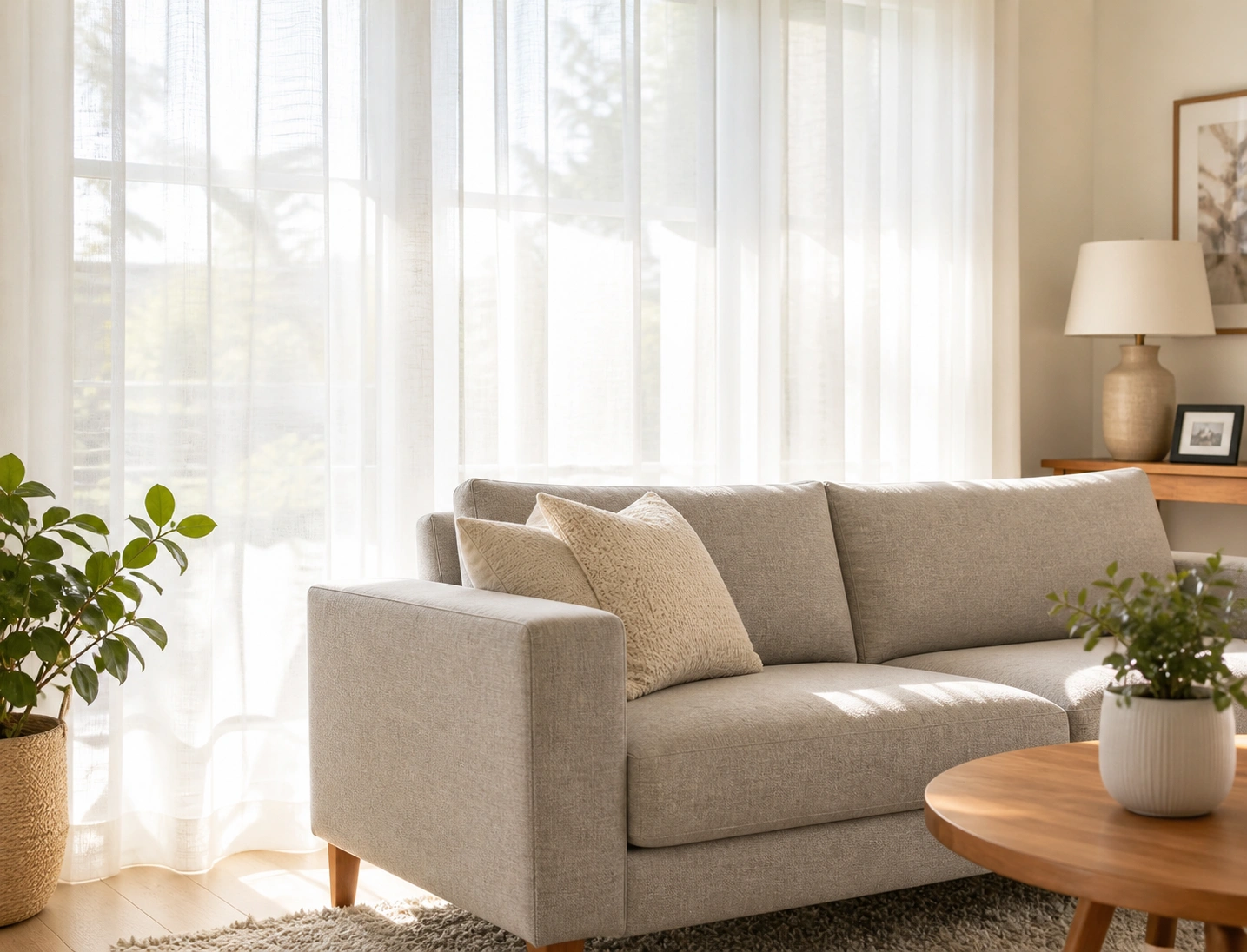
- Sheer curtains: Filter 40-60% of UV while softening light; ideal for maintaining an airy feel with moderate protection
- Light-filtering shades (cellular/honeycomb): Block 70-95% of UV depending on opacity; excellent balance of light and protection
- Wooden or faux-wood blinds: Block 85-95% of UV when fully closed; adjustable slats let you control light direction away from the sofa
- Solar shades: Specifically designed for UV protection; block 90-99% of UV while maintaining a view through the window
For the best combination, layer sheer curtains behind heavier drapes. Close the heavy drapes during peak sun hours and use the sheers the rest of the time. This gives you flexibility without leaving your sofa unprotected during the most damaging hours. Our living room layout guide includes tips for positioning your sofa relative to window treatments.
3. Strategic Sofa Positioning
The simplest prevention method costs nothing — move the sofa. How you position your furniture relative to windows has an enormous impact on UV exposure. Even shifting a sofa a few feet can dramatically change its sun exposure profile.
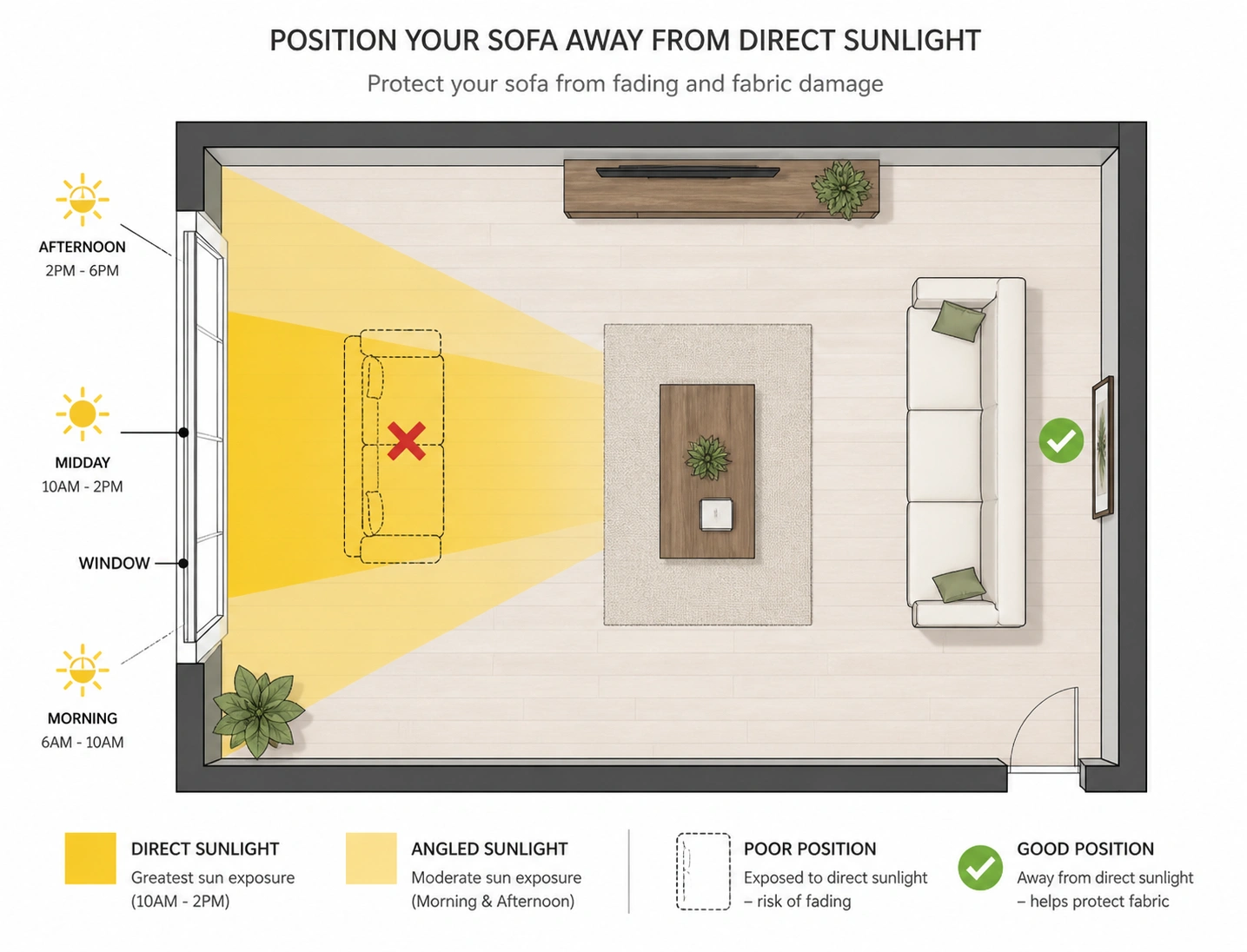
- Avoid direct window alignment: Don't place the sofa directly facing or perpendicular to a window where sunlight streams directly onto it
- Use walls as shields: Position the sofa against a wall that isn't adjacent to a window — the wall itself blocks indirect UV bouncing into the room
- Consider sun path: Track which windows get direct sun at which times. South-facing windows receive the most consistent year-round UV exposure; west-facing windows get intense afternoon sun
- Create distance: UV intensity drops significantly with distance from the window. Moving a sofa just 3-4 feet further from a window can reduce exposure by 30-50%
- Rotate periodically: If repositioning isn't possible, rotate your sofa 180 degrees every 3-6 months so both sides get equal exposure, preventing one-sided fading
When planning your living room layout, always map the sun path first. This is especially important for large rooms with multiple windows, where the sun angle changes dramatically throughout the day.
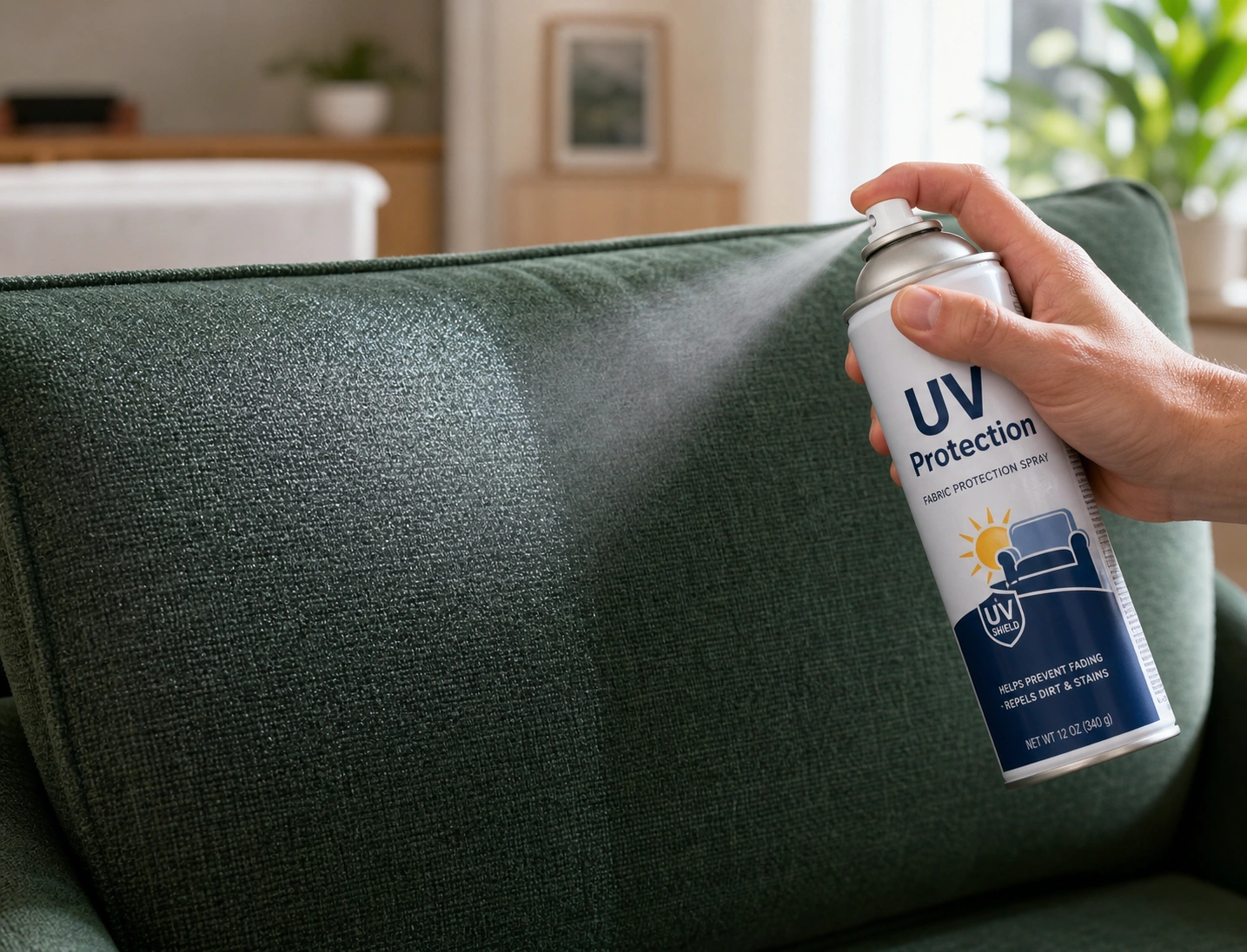
4. UV-Resistant Fabric Protection Sprays
UV protection sprays create an invisible chemical barrier on fabric fibers that absorbs or reflects UV radiation before it can degrade the dye molecules. They are a supplementary defense — not as effective as window films, but useful as an additional layer, especially for sofas that must remain in sun-exposed positions.
- UV reduction: 50-80% depending on product quality and application thoroughness
- Compatible materials: Fabric, microfiber, and most synthetic upholstery — not recommended for leather
- Application: Spray evenly on clean, dry fabric from 6-8 inches away; apply 2-3 light coats rather than one heavy coat
- Duration: Effective for 3-6 months; must be reapplied after cleaning or if the sofa gets wet
- Cost: $15-$30 per can; covers one standard sofa
UV protection sprays formulated for fabric can clog leather pores, interfere with the finish, and create a sticky or cloudy residue. For leather sofas, UV protection should come from window films, positioning, and using a leather conditioner that contains UV inhibitors specifically formulated for leather use.
For comprehensive fabric care that includes UV protection alongside stain resistance, combine a UV spray with a general fabric protection treatment. Apply UV spray first, allow it to fully dry, then apply fabric protector on top.
5. Physical Covers, Throws & Slipcovers
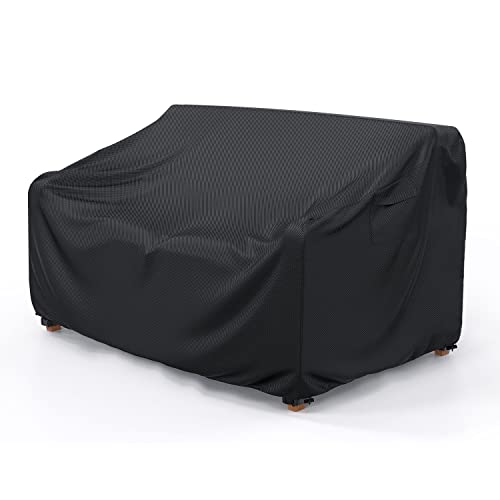
A physical barrier between sunlight and your upholstery provides near-complete UV protection for the covered area. While it changes the appearance of your sofa, it's the most affordable and immediate solution, and modern options look stylish rather than utilitarian.
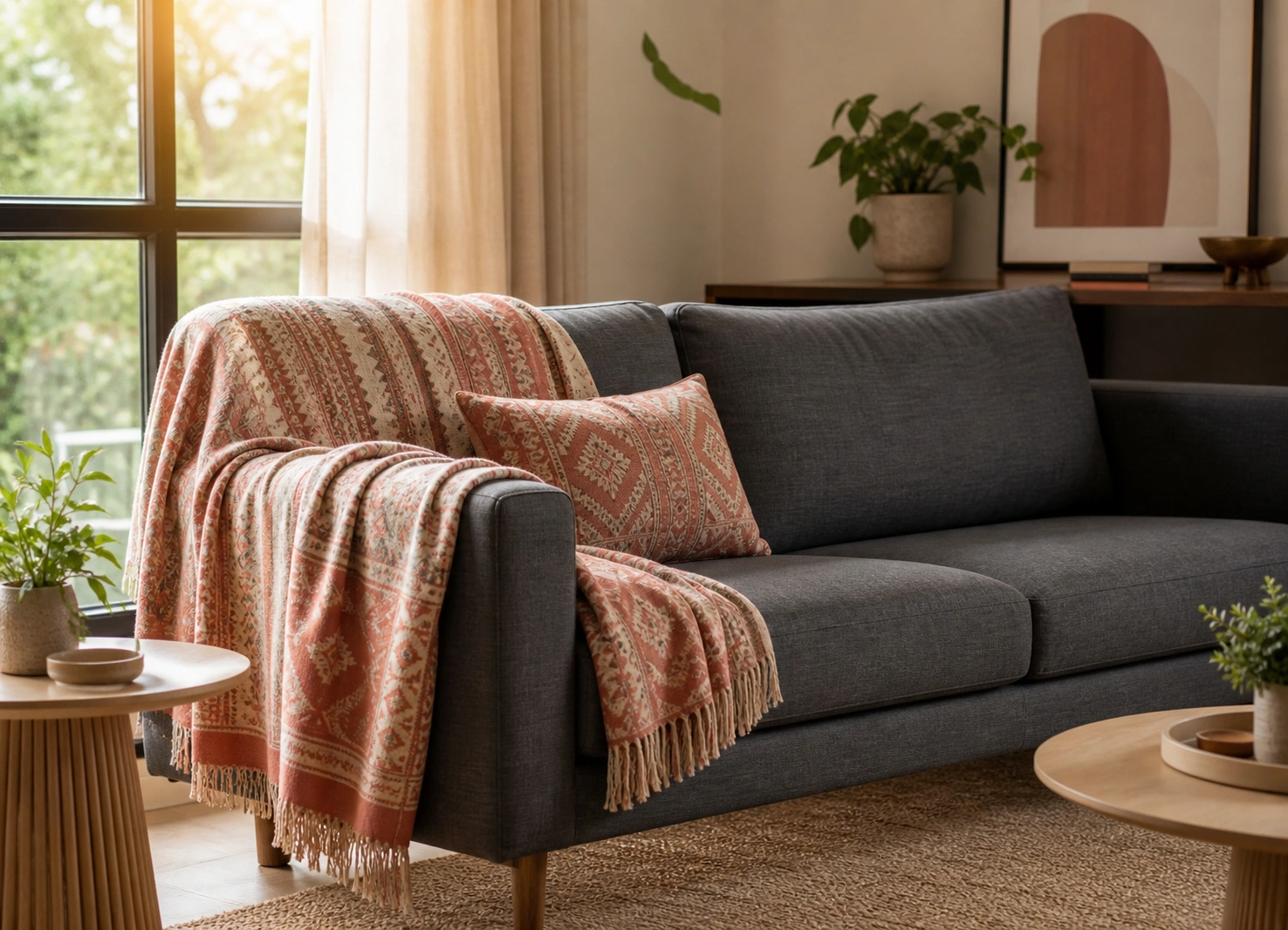
- Decorative throws: Drape over the sun-facing side of the sofa; easy to remove when guests arrive. Choose throws made from tightly woven fabrics for better UV blocking
- Full sofa covers: Provide complete protection; available in fitted styles that look intentional. Ideal for households with pets where dual protection is needed
- Slipcovers: The ultimate solution — when the slipcover fades, you replace just the cover, not the entire sofa. Many budget sofas come with slipcover options for this exact reason
- Half-covers: Designed to protect just the back and armrest facing the window; less visually intrusive than full covers
When choosing throws or slipcovers for UV protection, look for solution-dyed fabrics (like Sunbrella or similar). In solution-dyed materials, the color pigment is added during the liquid polymer stage before fibers are extruded — meaning the color goes all the way through the fiber, not just on the surface. These fabrics resist UV fading far better than conventionally dyed fabrics and can last years in direct sunlight.
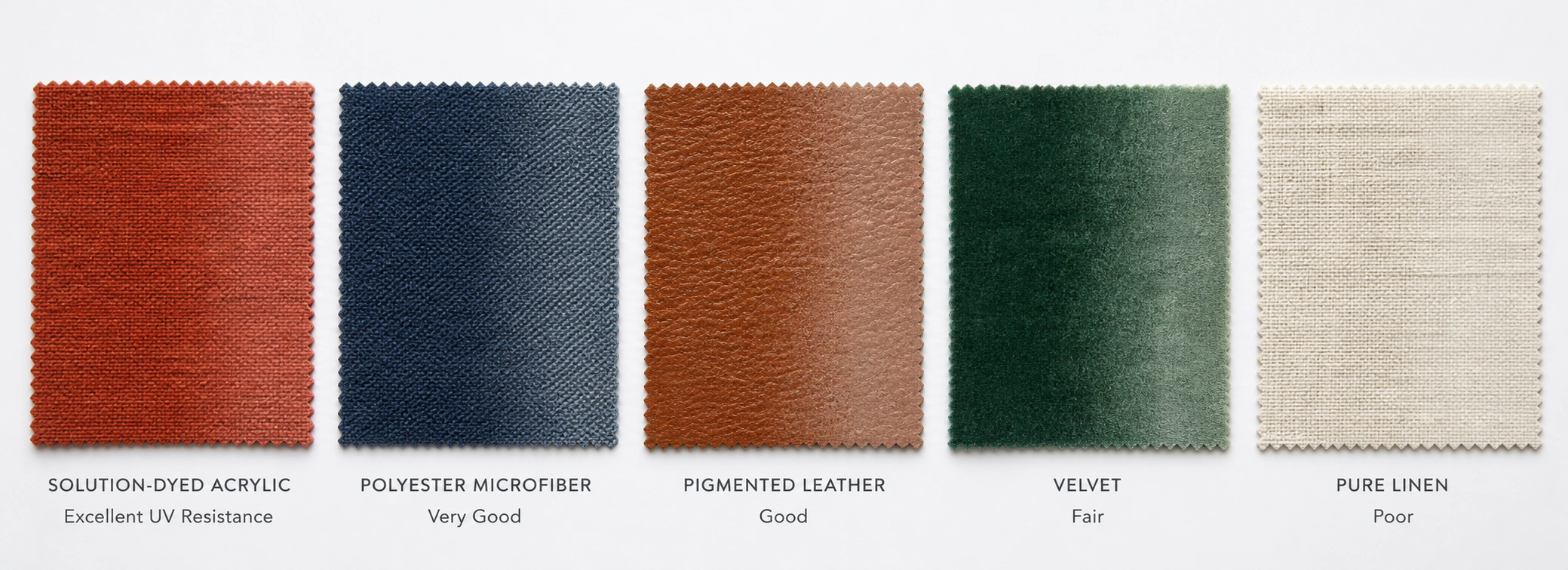
UV Resistance by Sofa Material
If you're still in the buying phase, choosing a UV-resistant material from the start is the smartest long-term strategy. Different materials have vastly different inherent resistance to UV damage. The table below helps you choose wisely based on how much sun exposure your sofa will receive.
| Material | UV Resistance | How UV Affects It | Best Protection Strategy |
|---|---|---|---|
| Solution-Dyed Acrylic (Sunbrella, etc.) |
Minimal fading even after years of direct sun exposure; designed for outdoor use | Minimal extra protection needed; window film recommended for very intense sun | |
| Microfiber (Polyester) |
Slow fading; polyester fibers have good inherent UV resistance | Window film + periodic rotation; UV spray adds extra safety margin | |
| Pigmented Leather | Thick pigment layer provides moderate UV resistance; may darken and crack over time | Window film essential; regular conditioning with UV-inhibiting products; avoid direct sun | |
| Performance Fabric (Crypton, Revolution) |
Better than standard fabric due to tighter weave and treatment; still fades over time | Window film + UV spray; avoid direct placement in strong sun paths | |
| Semi-Aniline Leather | Thinner pigment than pigmented leather; more vulnerable to fading and cracking | Window film mandatory; frequent conditioning; keep away from direct sunlight | |
| Cotton & Linen Blends | Natural fibers degrade faster; noticeable fading within 6-12 months of direct exposure | Window film + curtains + UV spray; consider slipcover for full protection | |
| Velvet | Pile fibers become brittle; sheen loss is often the first visible sign of UV damage | Window film essential; avoid direct sun entirely; throws on exposed side recommended | |
| Aniline Leather | Minimal surface protection; fades, darkens, and cracks rapidly under UV exposure | Window film + keep far from windows; not recommended for sun-exposed rooms | |
| Pure Linen | Very rapid fading and fiber degradation; one of the least UV-resistant upholstery materials | Full protection required: window film + curtains + slipcover; avoid sun exposure entirely |
The biggest factor in UV resistance isn't the fiber type — it's how the color was applied. Conventional dyeing applies color to the surface of finished fibers, making it vulnerable to UV stripping. Solution dyeing adds pigment to the liquid polymer before fibers are formed, so the color is embedded throughout the entire fiber cross-section. Solution-dyed acrylic (like Sunbrella) can withstand 1,500+ hours of direct UV exposure with minimal fading, while conventionally dyed cotton may show damage after just 200-400 hours. When buying a sofa for a bright room, always ask whether the fabric is solution-dyed. Check our materials explained guide for more on fabric construction methods.
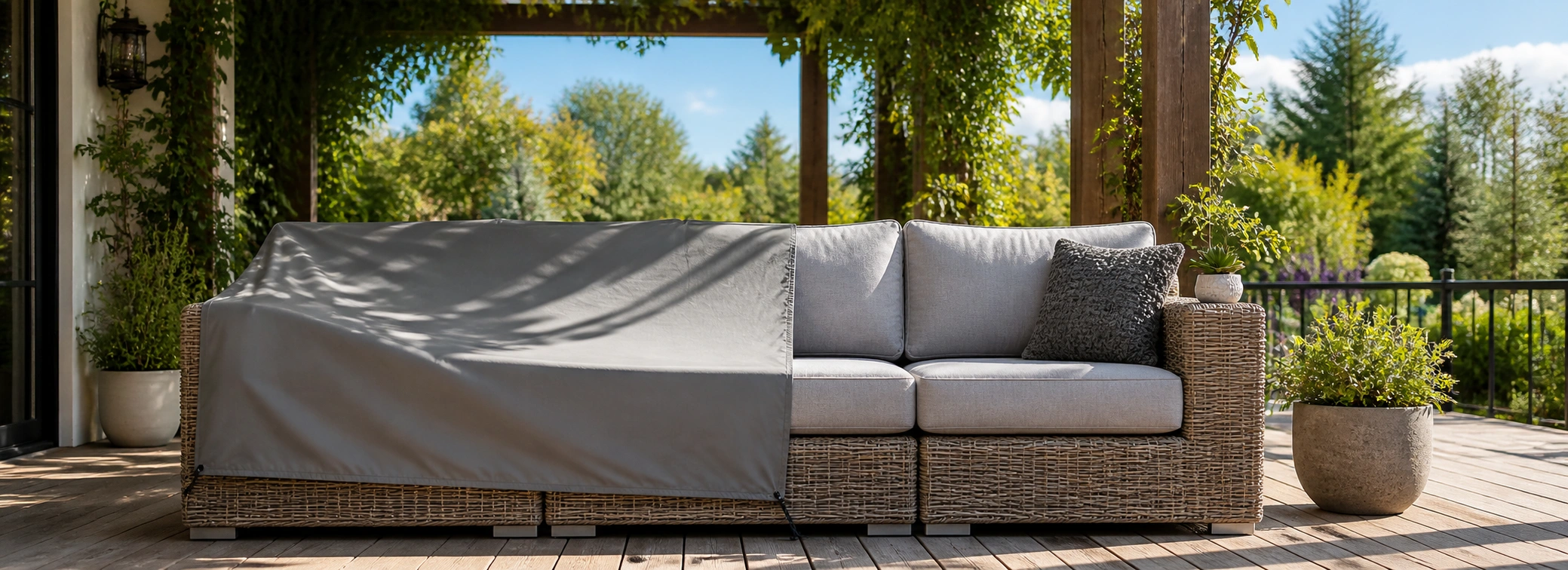
Special Consideration: Outdoor Sofas
Outdoor sofas face the most extreme UV exposure — direct, unfiltered sunlight for hours daily, combined with rain, temperature fluctuations, and humidity. While outdoor furniture is designed to withstand these conditions, it still requires active UV management to maintain its appearance over multiple seasons.
Even solution-dyed outdoor fabrics benefit from additional protection. Apply a dedicated outdoor fabric UV protectant spray at the start of each warm season. Use furniture covers when the sofa isn't in use — high-quality covers block 100% of UV and also protect against rain, pollen, and bird droppings. For outdoor leather alternatives (like polyurethane or synthetic leather), UV spray is essential as these materials degrade faster than outdoor woven fabrics.
Positioning matters even outdoors. If possible, place the sofa under a pergola, canopy, or large umbrella to reduce direct sun exposure. Even partial shading dramatically extends the lifespan of outdoor upholstery. Rotate cushions weekly so all sides receive equal exposure, preventing uneven fading patterns.
Your UV Protection Action Plan
Don't feel overwhelmed — you don't need to implement everything at once. Follow this prioritized action plan based on your situation, budget, and the severity of sun exposure your sofa receives.
- Assess your sun exposure. Spend one full day observing which windows cast direct sunlight onto your sofa and during which hours. Note the intensity and duration. This tells you how aggressive your protection strategy needs to be.
- Reposition if possible. Before spending money, try moving the sofa even a few feet away from the window or rotating it so the most visible side isn't facing the sun. This costs nothing and can reduce exposure significantly.
- Install window film. This is your highest-impact investment. A quality UV-blocking window film provides continuous, invisible protection without changing your room's appearance or requiring daily effort. It protects every piece of furniture in the room, not just the sofa.
- Add window treatments. Layer curtains or blinds over the window film for additional control. Close them during peak sun hours (typically 10 AM to 4 PM) and open them during low-UV morning and evening hours.
- Apply UV protection spray. If your sofa is fabric or microfiber, add a UV protection spray as a supplementary layer. Apply on a clean, dry sofa and reapply every 3-6 months or after deep fabric cleaning.
- Add throws or covers on the sun-facing side. This is especially important if your sofa is made from a UV-sensitive material like velvet, linen, or aniline leather. A well-chosen throw looks intentional and provides near-complete protection for the most vulnerable surface area.
- Establish a rotation schedule. Rotate your sofa 180 degrees every 3-6 months. Flip and rotate cushions weekly. This prevents one-sided fading and ensures even wear distribution.
- For leather: maintain conditioning schedule. If you have a leather sofa near a window, condition it every 2-3 months with a product containing UV inhibitors. This won't stop fading entirely but significantly slows the drying and cracking process.
You don't need perfect protection — you need adequate protection. Installing window film alone eliminates roughly 95% of the UV threat. Adding curtains for peak hours brings you to 99%+. The remaining methods (sprays, throws, rotation) are for the final percentage points and for extra peace of mind. Don't let the pursuit of perfection prevent you from taking the first, most impactful step.
Cost Comparison: Protection vs. Replacement
UV protection is an investment that pays for itself many times over. Here's a realistic cost comparison to put the numbers in perspective.
| Protection Method | Typical Cost | Protection Duration | Cost Per Year |
|---|---|---|---|
| UV window film (DIY, standard living room window) | $50 - $120 | 10-15 years | $4 - $12 |
| UV window film (professional install, 3 windows) | $300 - $600 | 10-15 years | $20 - $60 |
| Blackout curtains (one window) | $30 - $80 | 5-8 years | $4 - $16 |
| Solar shades (one window) | $50 - $150 | 7-10 years | $5 - $21 |
| UV fabric protection spray (one sofa) | $15 - $30 | 3-6 months per application | $30 - $120 |
| Quality sofa throw (sun-facing side) | $25 - $80 | 2-4 years | $7 - $40 |
| Full slipcover (standard sofa) | $80 - $200 | 2-3 years before replacement needed | $27 - $100 |
| Complete protection bundle (film + curtains + spray + throw) | $120 - $430 | Ongoing | $45 - $200 |
| Sofa reupholstery (faded sofa restoration) | $800 - $3,000+ | One-time fix | N/A (damage already done) |
| New sofa replacement | $500 - $5,000+ | N/A | N/A (damage already done) |
The math is clear: a complete UV protection bundle costs a fraction of what you'd spend on restoration or replacement. Even the most expensive professional window film installation ($600 for multiple windows) costs less than the cheapest reupholstery job ($800). When you consider that proper protection also extends the life of your flooring, curtains, artwork, and other furnishings in the room, the return on investment becomes even more compelling.
Ready to Protect Your Sofa from Sun Damage?
Browse our recommended UV protection products below — from window films and UV sprays to protective covers — all selected to keep your sofa looking vibrant for years.
VIEW RECOMMENDED PRODUCTS