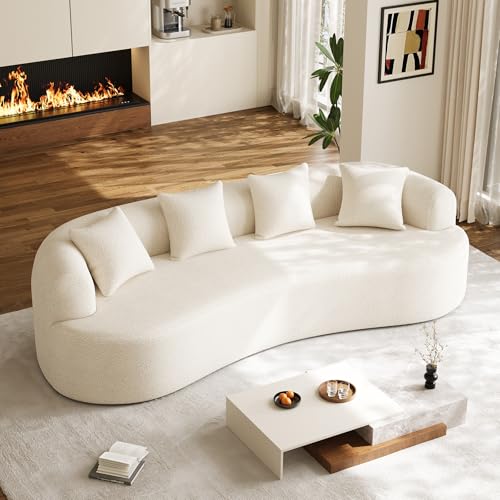
Modern Sofa: The Complete Buying & Style Guide
Discover what makes a sofa truly modern, explore the most popular styles and materials, and learn exactly how to choose one that fits your space, lifestyle, and budget.
What Exactly Is a Modern Sofa?
A modern sofa is a seating piece rooted in the design philosophy that emerged during the early-to-mid 20th century. It is characterized by clean lines, geometric forms, minimal ornamentation, and a strong emphasis on function. Unlike traditional sofas that rely on carved wood, rolled arms, and patterned fabrics, modern designs strip away excess to reveal the beauty of simplicity.
The modern aesthetic draws influence from movements like the Bauhaus, Scandinavian design, and mid-century modernism. These sofas typically feature exposed legs (often tapered wood or polished metal), low profiles, and upholstery in solid colors rather than busy patterns. Whether placed in a loft, an apartment, or a suburban living room, a modern sofa instantly communicates a sense of order, sophistication, and intentional living.
Understanding the principles behind modern design helps you evaluate options more confidently. If you want a broader overview of all sofa categories before diving deeper, our complete sofa types guide is a great starting point. For those focused specifically on how modern relates to other aesthetics, the distinction between contemporary and modern sofas is one of the most misunderstood topics in furniture shopping.
Defining Characteristics of Modern Sofas
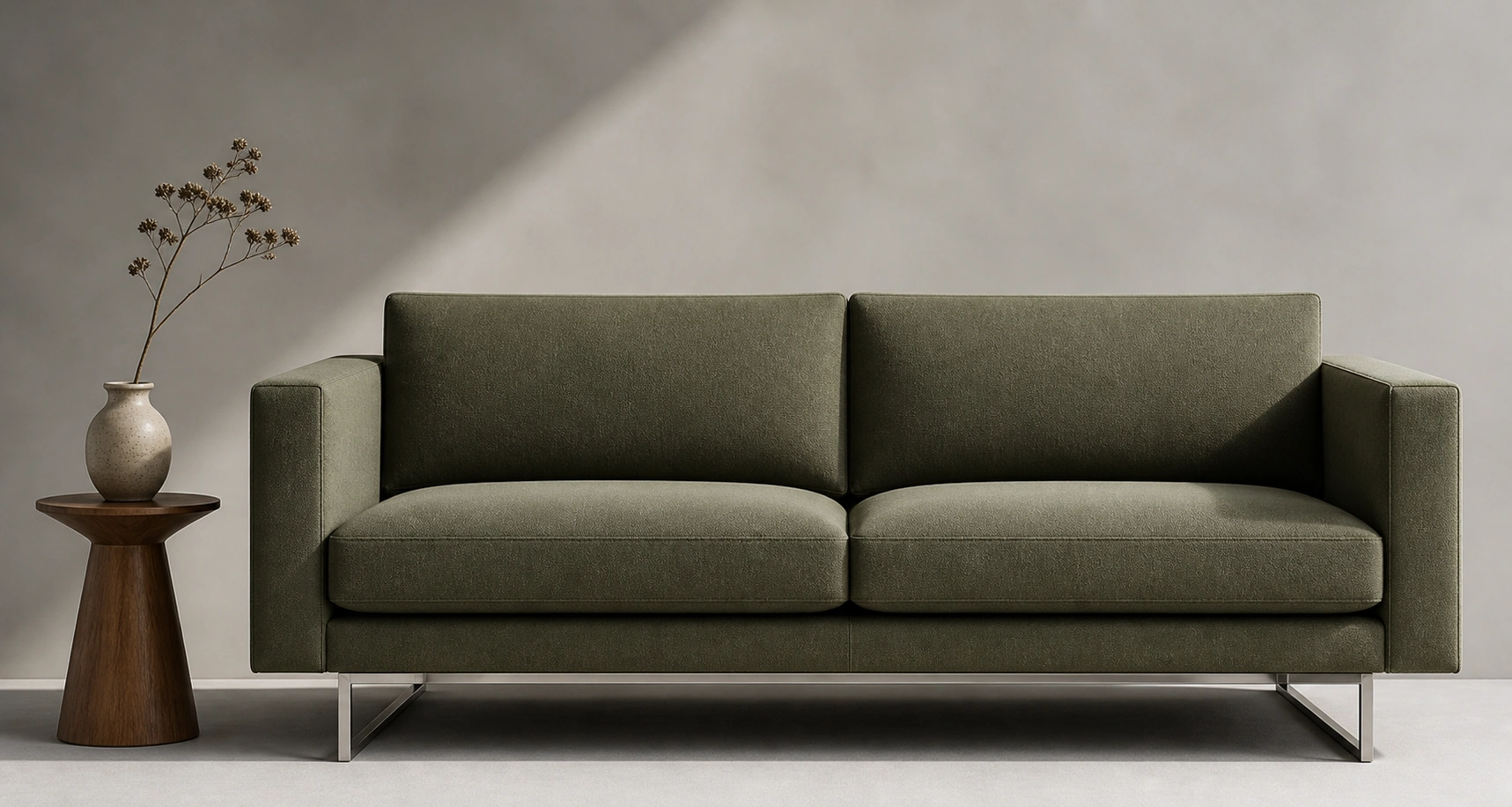
Not every sleek couch qualifies as modern. True modern sofas share a set of core design principles that set them apart from traditional, transitional, or purely contemporary pieces. Here are the six characteristics to look for:
Clean, Straight Lines
Modern sofas avoid curves and ornamentation. Arms are typically square or track-style, backs are rectangular, and the overall silhouette is geometric and deliberate.
Exposed Legs
Skirted bases are a hallmark of traditional design. Modern sofas show their legs — tapered wood, hairpin metal, or block feet — creating visual lightness and an airy feel.
Solid Colors, Not Patterns
Modern design favors bold or neutral solid upholstery. You will see charcoal, ivory, navy, olive, or terracotta — not florals, stripes, or damask. This keeps the focus on form.
Low Profile
Modern sofas sit lower to the ground than traditional ones. This creates a sense of spaciousness and works especially well in rooms with standard or low ceilings.
Mixed Materials
Upholstered seats paired with metal or wood frames are common. You will often see leather combined with chrome, or fabric over a walnut base — the contrast is intentional.
Function-First Approach
Every element serves a purpose. No decorative tufting (unless structural), no unnecessary trim. The beauty comes from smart engineering and honest materials.
Modern vs. Contemporary Sofas: Clearing the Confusion
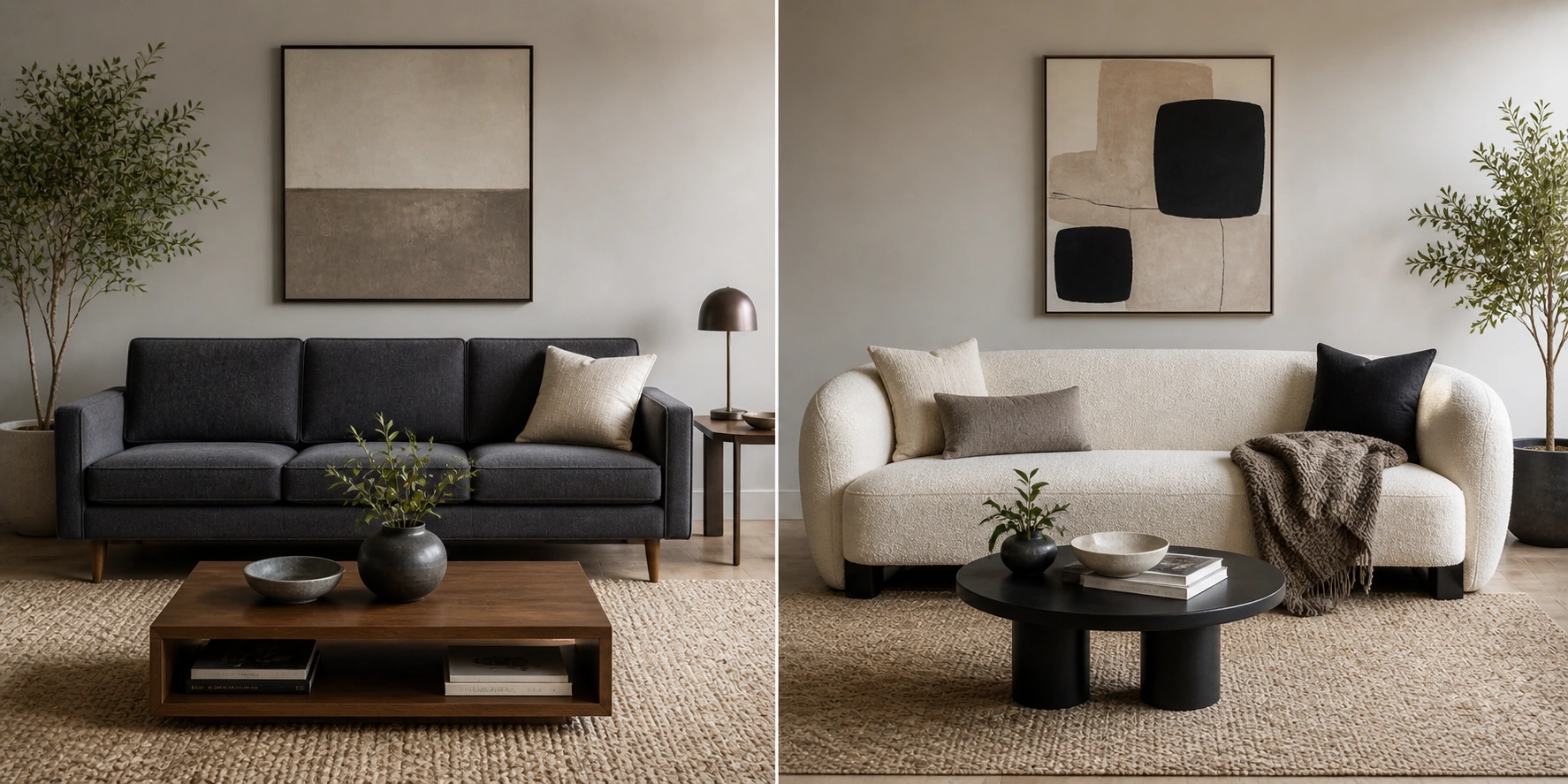
These two terms are used interchangeably in everyday conversation, but in the furniture world they mean different things. Modern refers to a specific historical design movement with fixed rules. Contemporary describes what is currently trending, and it changes over time. A contemporary sofa today might incorporate modern elements, but it could also blend industrial, Scandinavian, or even retro touches.
| Feature | Modern Sofa | Contemporary Sofa |
|---|---|---|
| Time Period | Fixed era (1920s–1970s roots) | Ever-changing, reflects current trends |
| Design Rules | Strict: clean lines, no ornament | Flexible: can mix styles and textures |
| Materials | Leather, metal, molded plywood | Anything trending: performance fabrics, reclaimed wood, mixed metals |
| Colors | Neutral solids or bold primary accents | Varies — earth tones, pastels, monochrome, or bold contrasts |
| Feel | Structured, intentional, iconic | Fluid, eclectic, of-the-moment |
| Example | Mid-century modern sectional | A curved sofa with bouclé fabric and matte black legs |
Popular Modern Sofa Styles to Know
Within the modern umbrella, several distinct sub-styles have emerged. Each has its own personality while staying true to the core modern principles. Understanding these will help you narrow down your search quickly.
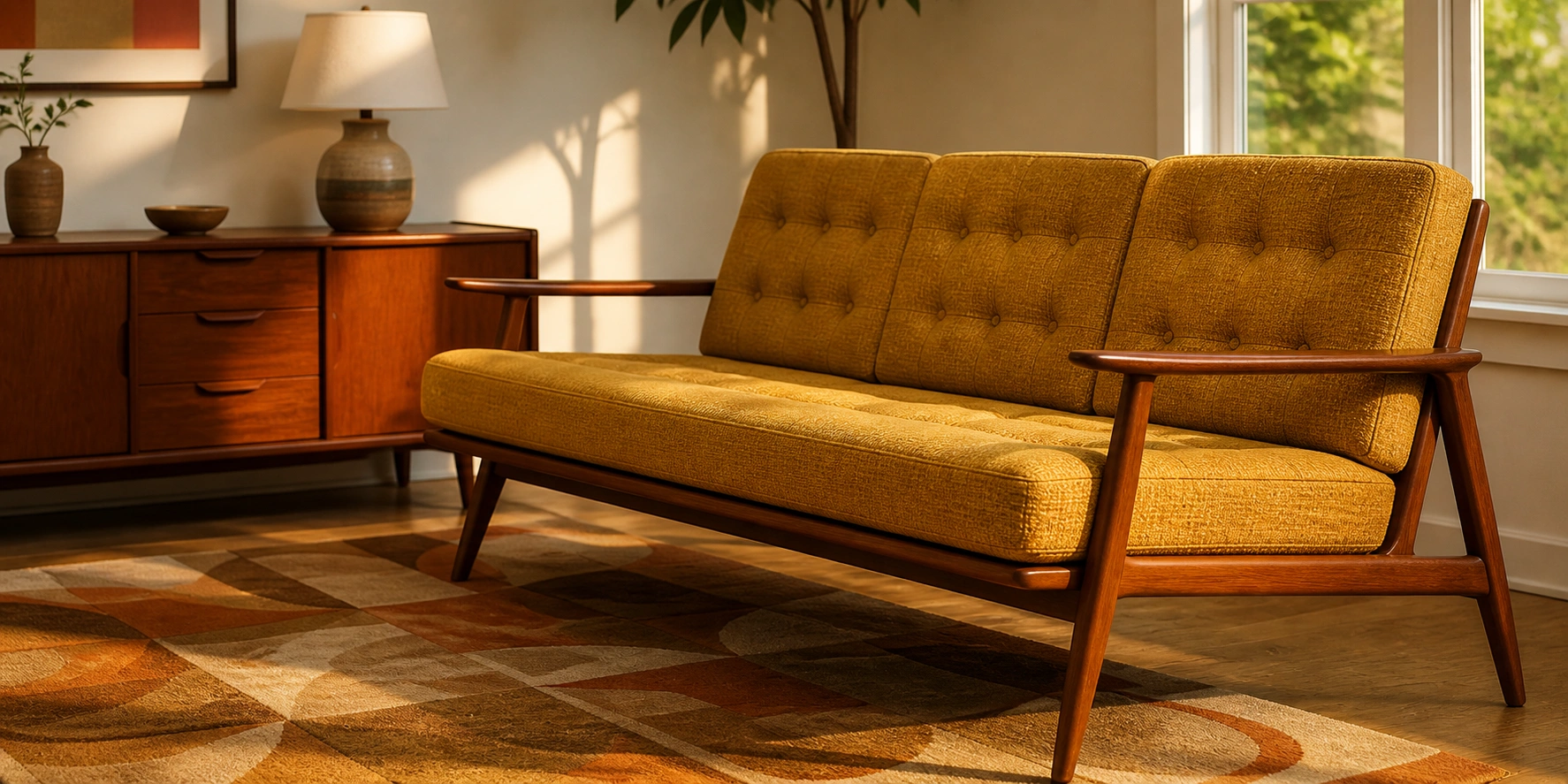
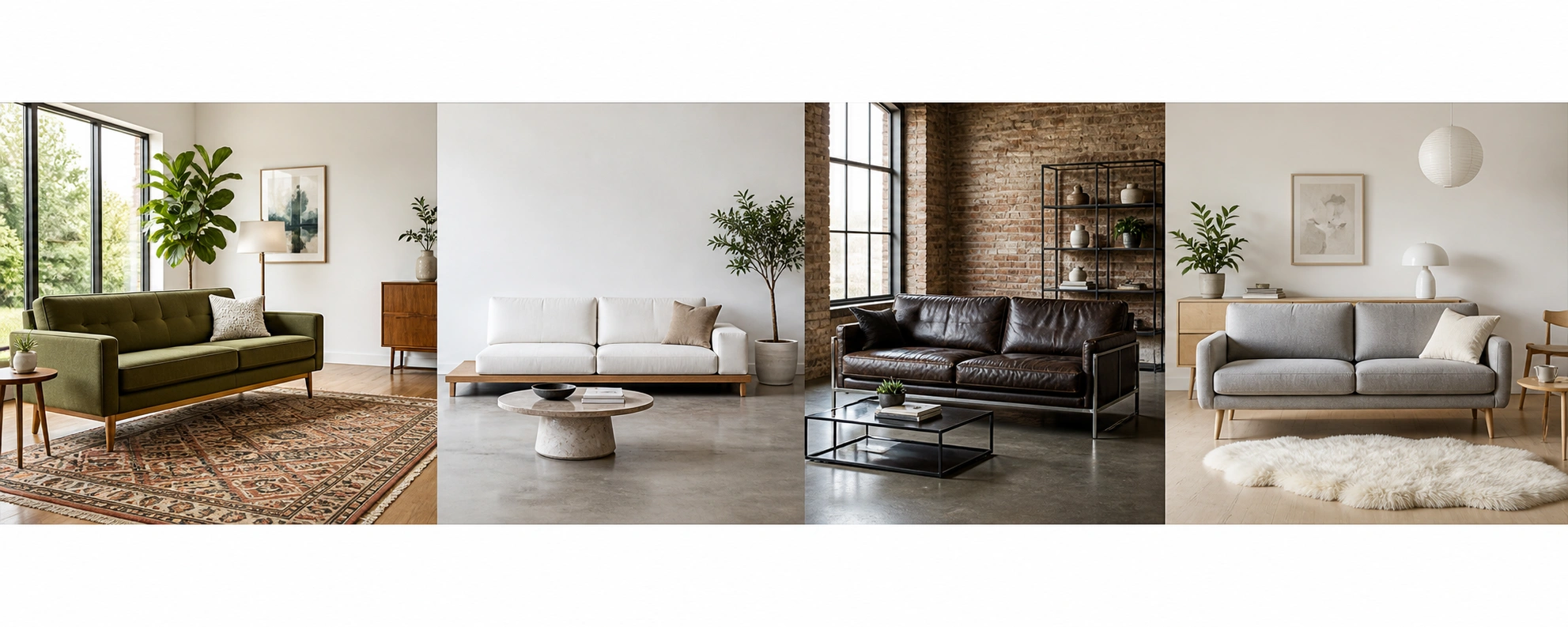
Mid-Century Modern
The most recognizable modern style. Features tapered wooden legs, slightly angled backs, and organic curves mixed with geometric lines. Popular in walnut or teak frames with olive, mustard, or burnt orange upholstery. This style bridges the gap between retro charm and modern minimalism.
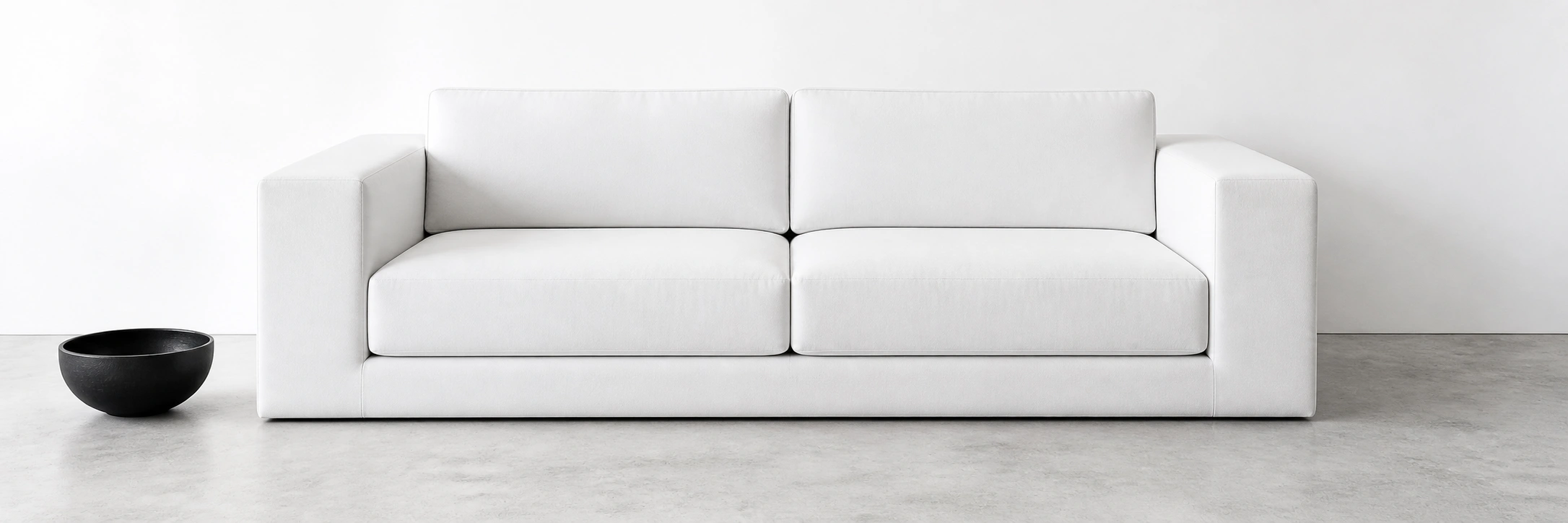
Minimalist Modern
Taken to its purest form — no visible legs (platform base), boxy cushions, monochrome upholstery, and zero decorative details. Think Japanese-inspired restraint. Ideal for urban apartments and spaces where less truly means more. Pair with neutral-toned furniture for a cohesive look.
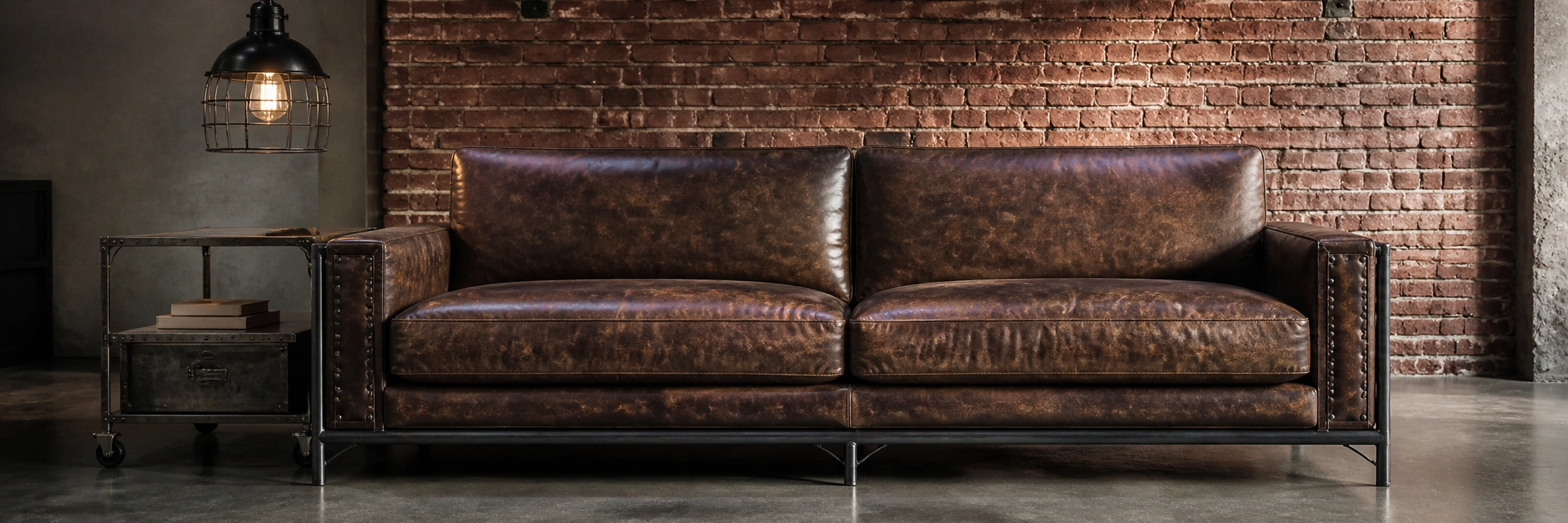
Industrial Modern
Combines modern clean lines with raw, unfinished elements. Exposed metal frames, distressed leather, and utilitarian details like rivets or visible welding. Works beautifully in lofts, studios, and spaces with exposed brick or concrete. Explore more in our industrial sofas guide.
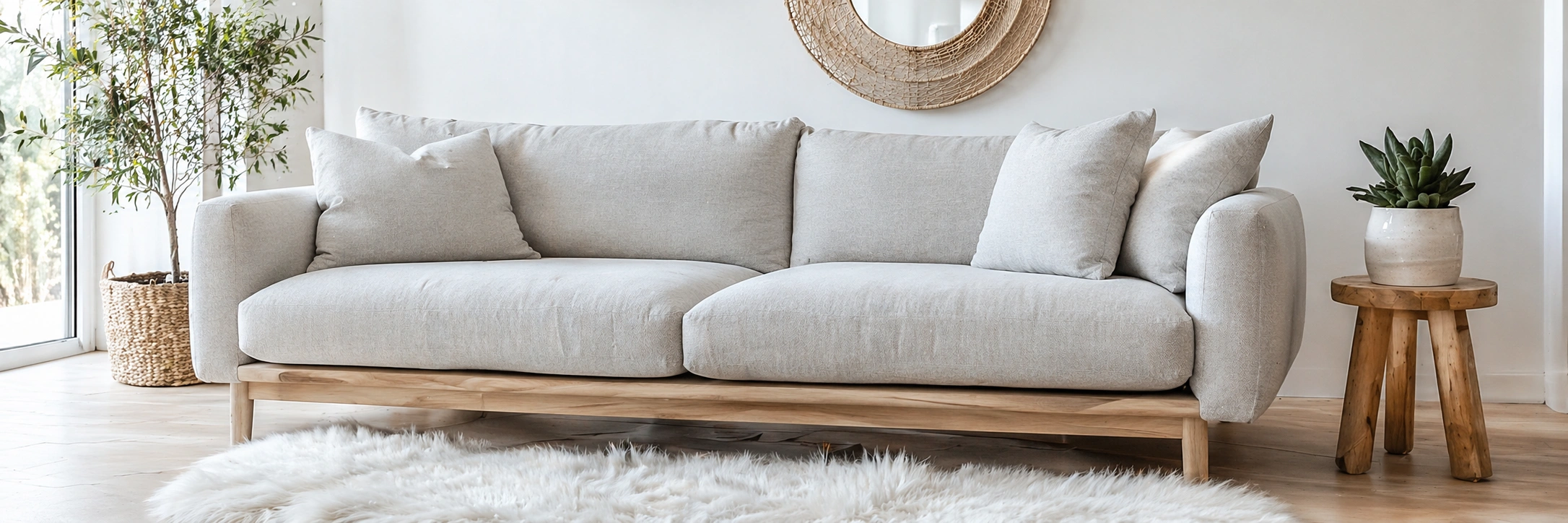
Scandinavian Modern
Soft, inviting, and light. Features pale woods (birch, pine, ash), light-colored fabrics (linen, cotton), and gently rounded edges. Less rigid than other modern styles, it prioritizes comfort and warmth. Linen upholstery is a natural fit for this aesthetic.
Best Materials for Modern Sofas
The material you choose determines not just the look, but also the durability, maintenance level, and comfort of your sofa. Modern design works with a specific palette of materials — here is how each one performs:
Top-Grain Leather
The gold standard for modern sofas. Develops a rich patina over time, incredibly durable (15+ years), and easy to wipe clean. Best for homes without destructive pets. Learn more about leather grades explained to understand quality differences.
Performance Fabric
Engineered to resist stains, fading, and wear. Brands like Crypton, Sunbrella, and Revolution are popular. Ideal for families with kids or pets. Check the Martindale rub test score — anything above 25,000 cycles indicates excellent durability.
Linen
Natural, breathable, and has a beautiful textured look that fits Scandinavian and minimalist modern styles perfectly. Wrinkles easily (part of its charm), but less stain-resistant than synthetic options. See our linen sofas guide for care tips.
Velvet
Adds a layer of luxury to modern design. Deep jewel tones like emerald, sapphire, or burgundy in velvet create stunning statement pieces. Requires more careful maintenance — read our velvet cleaning guide before committing.
Microfiber
Soft, stain-resistant, and budget-friendly. A practical choice that still looks sleek in solid colors. Less premium in appearance than leather or velvet, but outperforms many fabrics in everyday durability. Compare with other options in our leather vs fabric breakdown.
Frame Materials
Modern sofa frames are typically kiln-dried hardwood (oak, walnut, ash), engineered plywood, or metal. Hardwood is the most durable; metal offers an industrial edge. Understanding frame material differences directly impacts longevity.
How to Choose the Right Modern Sofa
Buying a modern sofa is not just about picking a design you like — it requires matching the piece to your room, your daily habits, and your long-term expectations. Follow these steps to make a confident decision:
Measure Your Space Accurately
Before anything else, measure your room's length, width, and the area where the sofa will sit. Account for walkways (minimum 18 inches), other furniture, and doorways. Our sofa measuring guide covers the exact process with diagrams.
Match Sofa Size to Room Size
A common mistake is buying a sofa that is too large or too small for the room. As a rule, your sofa should occupy about two-thirds of the wall it sits against. For detailed proportions, see our size and room guide.
Decide on Firmness Level
Modern sofas range from firm (dense foam, tight seat) to plush (down-wrapped cushions, deep seat). Consider your posture preferences and how long you typically sit. Our firm vs plush comparison helps you decide based on real usage patterns.
Choose Material Based on Lifestyle
Homes with pets or young children benefit from performance fabric or leather. Adult-only homes can explore linen or velvet. Factor in maintenance willingness — some materials need regular conditioning or professional cleaning.
Set a Realistic Budget
Quality modern sofas start around $500 for budget options and go up to $3,000+ for premium pieces. Understand what you get at each price point. Our sofa budget guide and cost breakdown reveal where your money actually goes.
Test Comfort Before Buying
If possible, sit on the sofa in person. Check seat height (18–20 inches is standard), seat depth (20–22 inches for average height), and back support. If buying online, read reviews that mention comfort for extended sitting. Our comfort testing guide has a printable checklist.
Modern Sofas for Different Room Sizes
One of modern design's biggest strengths is its adaptability. The same design language works in a 200-square-foot studio and a 600-square-foot great room — you just need to pick the right configuration.

Small Rooms & Apartments
In compact spaces, the goal is to maximize seating without overwhelming the room visually.
- Choose a loveseat or a 2-seater (60–72 inches wide)
- Look for exposed legs to create a sense of openness
- Light-colored upholstery makes the room feel larger
- Consider an armless sofa to save lateral space
- See our dedicated small space sofa guide
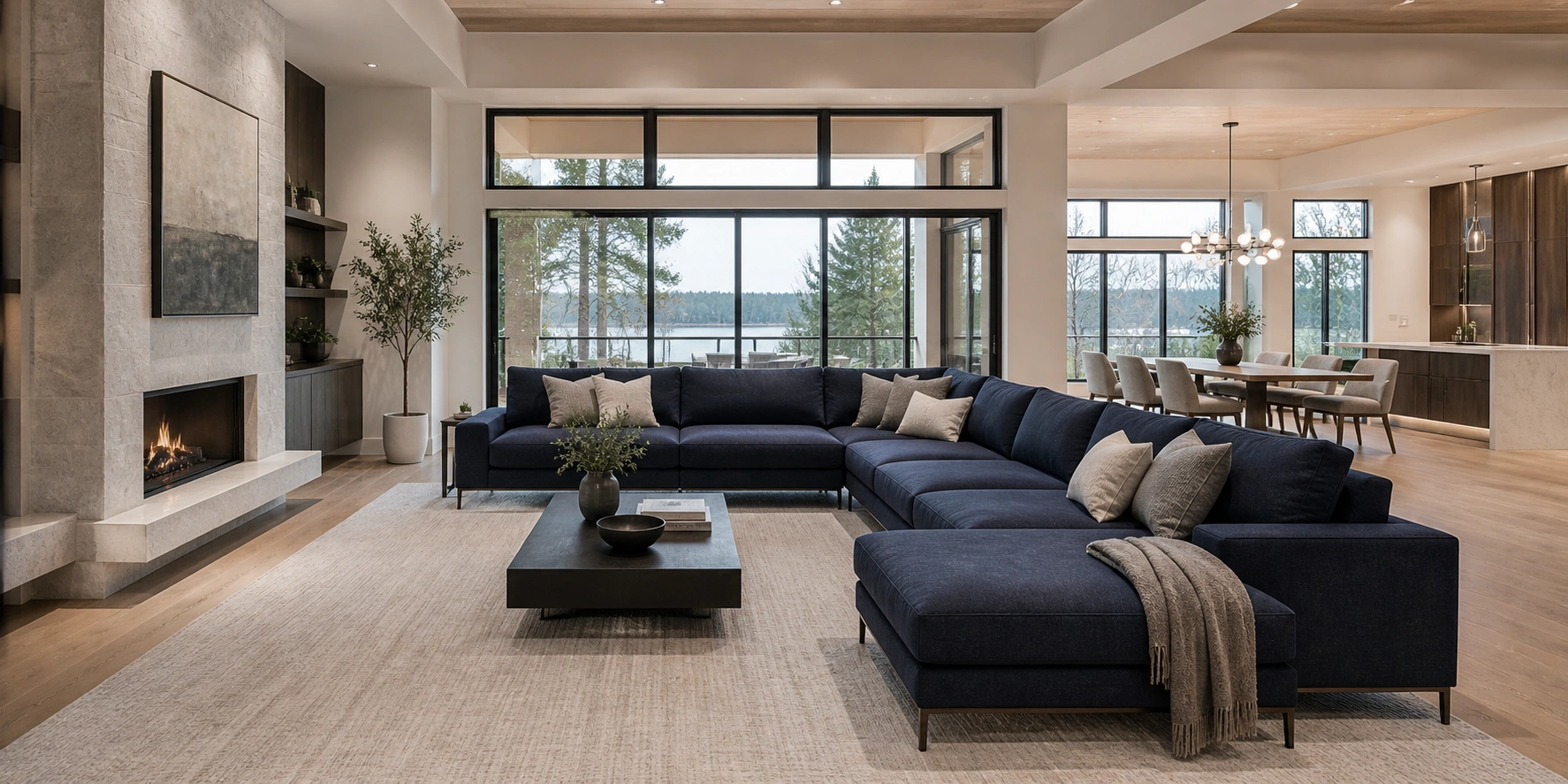
Large Rooms & Open Floor Plans
Generous spaces allow you to go bold with scale and configuration without risk of crowding.
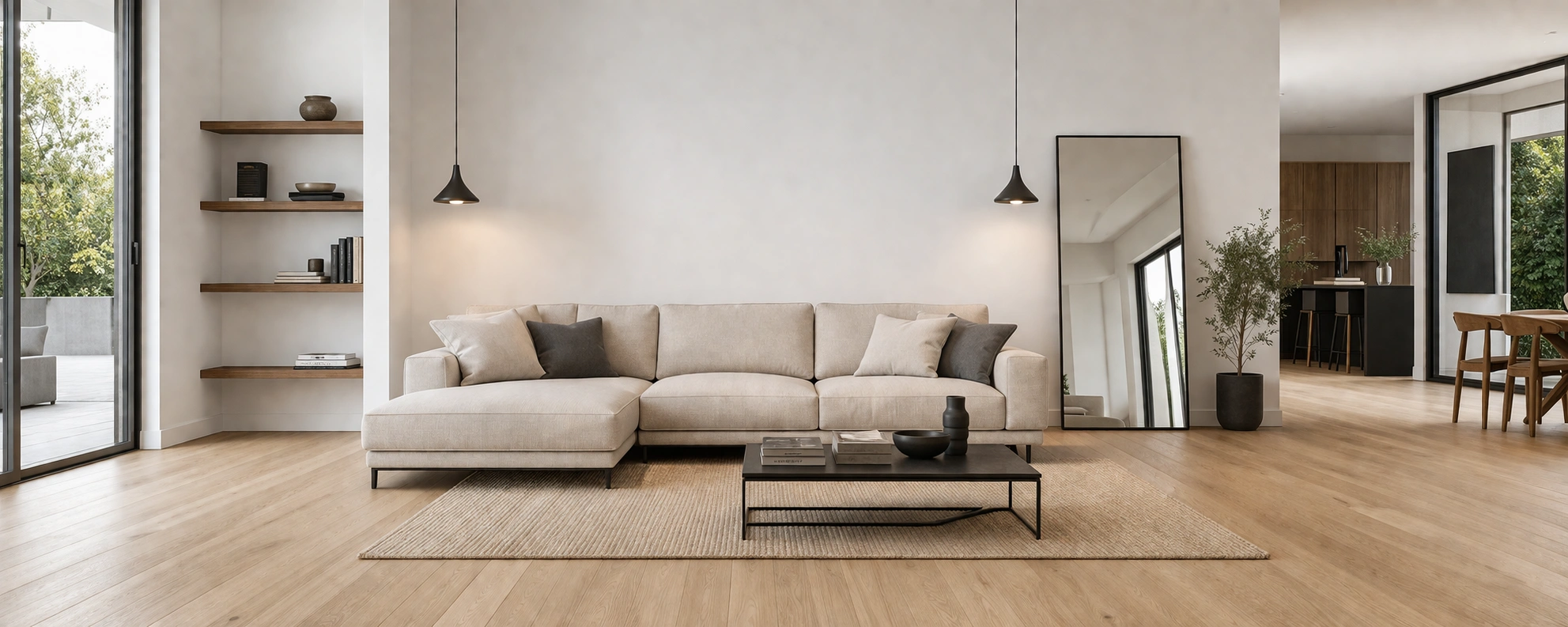
- A modern sectional sofa anchors the space effectively
- L-shaped or U-shaped configurations define zones in open plans
- Darker colors and larger proportions balance the room visually
- Add a modular sofa for flexible rearrangement
- Explore our large room sofa guide
Color Guide for Modern Sofas
Color is one of the most impactful decisions you will make. Modern design leans heavily into intentional color choices — there is no "default" option. Every hue should complement your overall room palette and lifestyle.
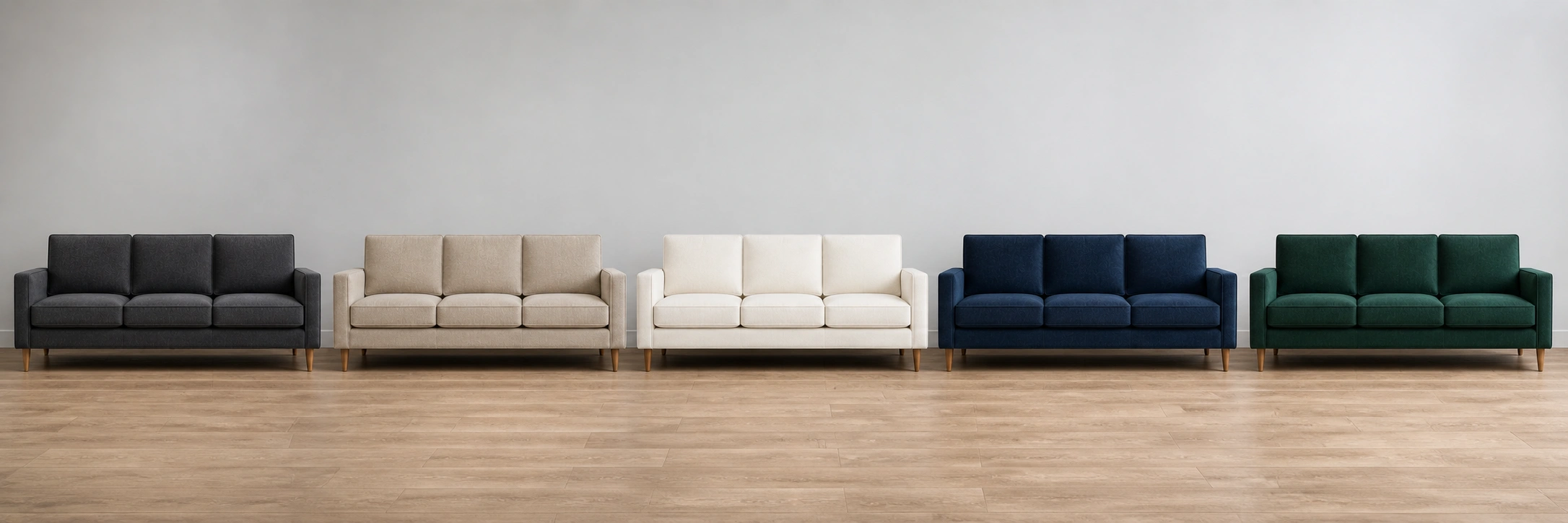
Neutral Tones (Safe & Versatile)
Gray, beige, ivory, taupe, and charcoal work with virtually any decor. They let your artwork, rugs, and accessories take center stage. Easiest to resell or reposition in a different room. Perfect starting point for first-time modern sofa buyers — see our neutral sofas guide.
Bold Colors (Statement Makers)
Navy blue, emerald green, mustard yellow, terracotta, and rust add personality and energy. Work best when the rest of the room is kept relatively neutral. If you love color but worry about commitment, a bold sofa is actually easier to update around than repainting walls. More ideas in our bold color sofas guide.
Key Takeaways Before You Buy
- Modern sofas follow a fixed design philosophy (clean lines, exposed legs, solid colors) — not just "anything that looks current."
- Modern and contemporary are not the same thing — know the difference to avoid buying the wrong style.
- Material choice matters more than brand name. Match upholstery to your household: leather or performance fabric for active homes, linen or velvet for adult-only spaces.
- Always measure first, shop second. A sofa that looks perfect online can overwhelm (or disappear in) your room.
- Comfort is subjective — test seat depth, cushion firmness, and back angle before committing, especially when buying online.
- Neutral colors are the safest investment; bold colors make a stronger statement but limit future flexibility.