Sectional vs Traditional Sofa: Which Is Right for Your Living Room?
A comprehensive side-by-side comparison covering space efficiency, seating capacity, comfort, price, layout flexibility, and real-world recommendations for every room size.
VIEW TOP PICKSChoosing between a sectional sofa and a traditional sofa is one of the most consequential decisions you will make when furnishing your living room. It affects how your space flows, how many people you can seat, how flexible your layout remains, and how much you ultimately spend. This guide breaks down every meaningful difference so you can stop second-guessing and start shopping with confidence.
Understanding the Two Sofa Types
Before diving into comparisons, it is important to clearly define what separates these two categories. The distinction is not just about shape — it affects construction, purchasing decisions, delivery logistics, and long-term usability.
What Is a Sectional Sofa?
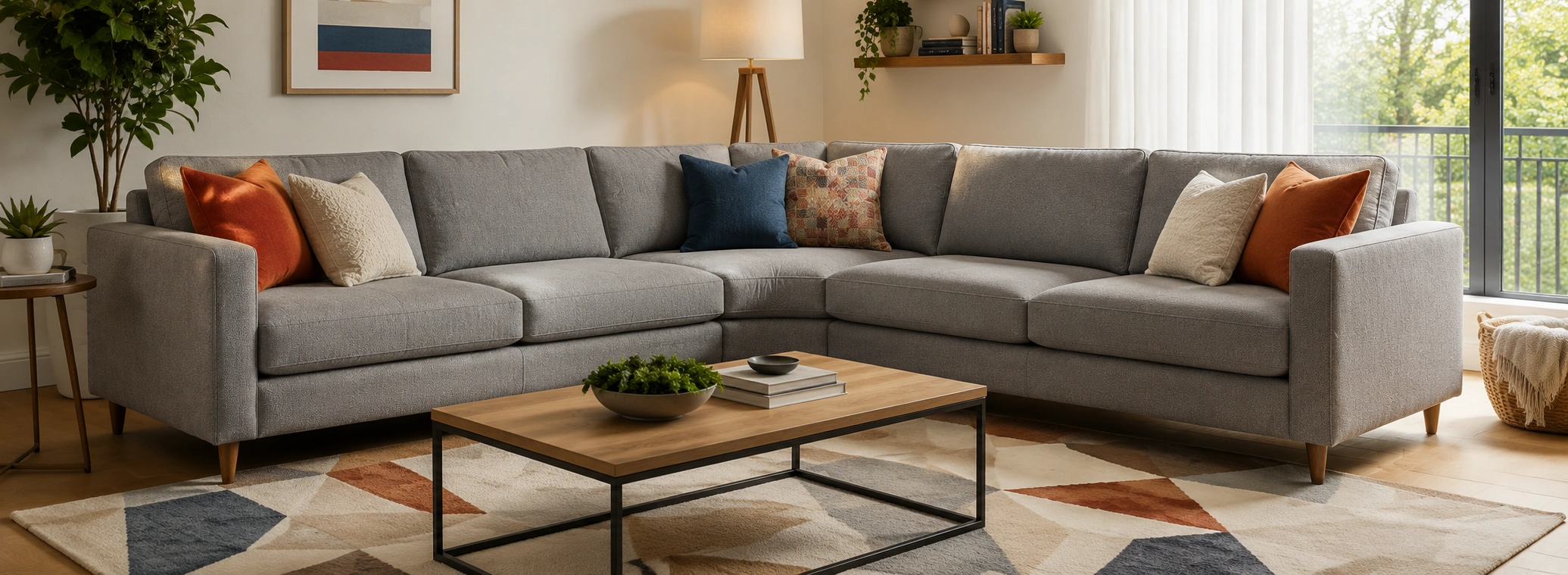
A sectional sofa consists of multiple independent pieces — typically a main sofa section plus one or more chaise lounges, corner modules, or additional seating segments — that connect to form a continuous seating arrangement. The most common configurations are L-shaped and U-shaped, but modular designs allow dozens of possible layouts.
Sectionals are designed to maximize seating within a defined footprint. They are purchased as coordinated sets where each piece is engineered to connect seamlessly. Some models use hidden clips or brackets, while others rely on precise alignment without mechanical fasteners.
What Is a Traditional Sofa?
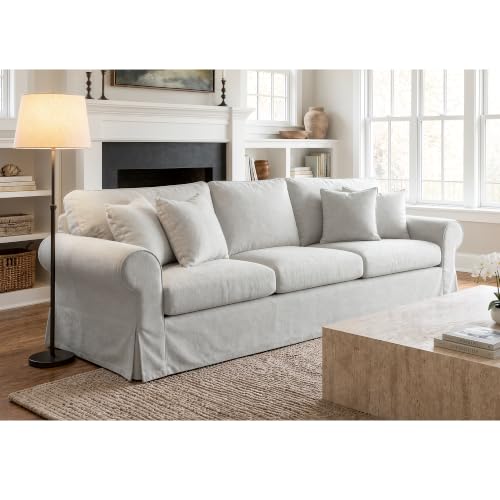
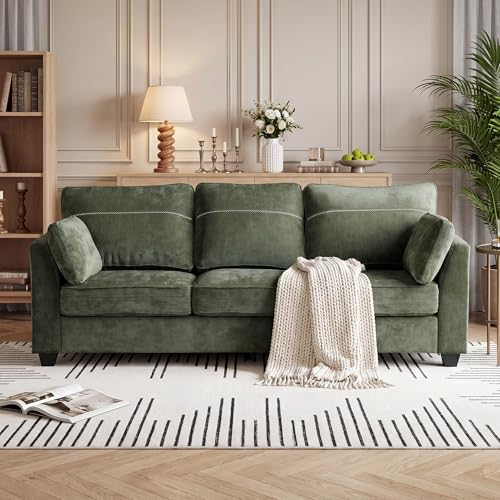
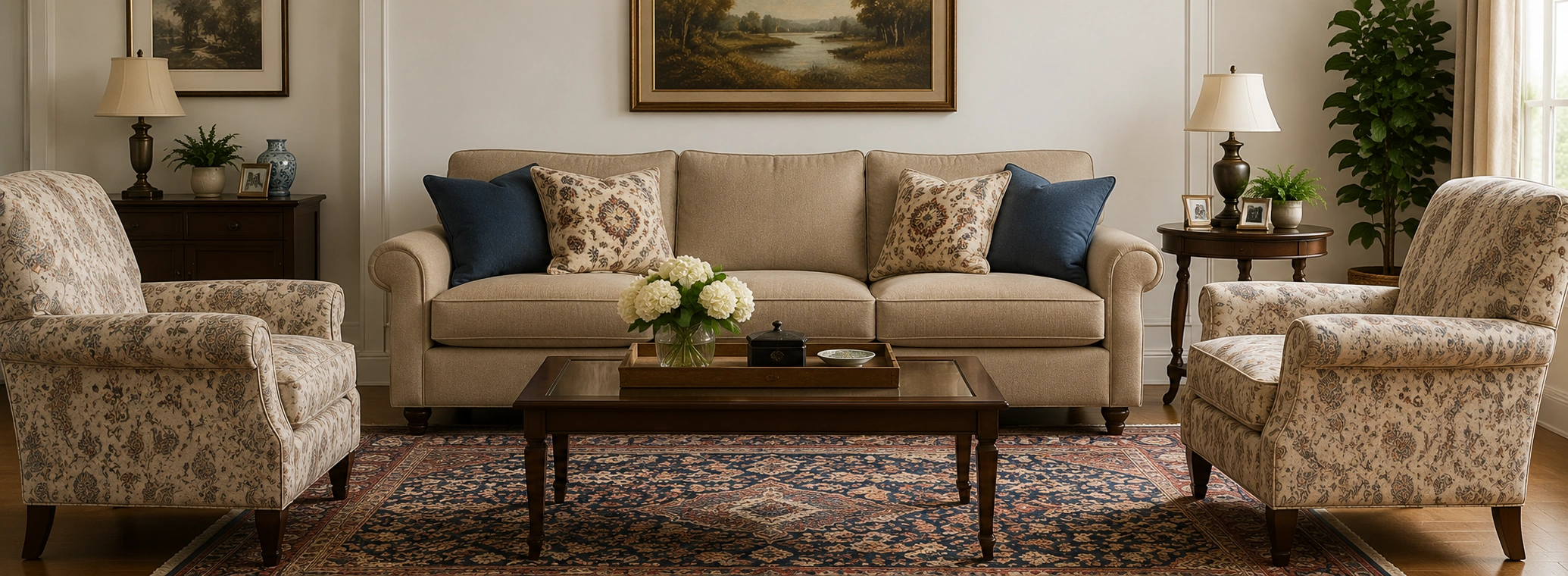
A traditional sofa (also called a standard or regular sofa) is a single, self-contained seating unit with a fixed frame, fixed arms, and a fixed back. It comes in standard sizes — typically 2-seater, 3-seater, and loveseat — and maintains its shape regardless of where you place it.
Traditional sofas offer a straightforward, predictable form factor. What you see is what you get — no assembly, no configuration decisions, and no guesswork about how pieces will fit together in your room.
Head-to-Head Comparison
The table below summarizes the most important differences across the factors that matter most when making a purchase decision. Each row highlights which type has the advantage — or whether the result is a tie.
| Factor | Sectional Sofa | Traditional Sofa |
|---|---|---|
| Seating Capacity | 5–8+ seats typically | 2–4 seats typically |
| Space Efficiency | Uses corners well, but large footprint | Compact, fits any layout |
| Layout Flexibility | Modular designs can be reconfigured | Fixed shape, limited options |
| Room Size Suitability | Best for medium to large rooms | Works in any room size |
| Price (Upfront) | Higher ($1,000–$5,000+) | Lower ($300–$3,000) |
| Price Per Seat | Often lower per person | Higher per person |
| Moving Difficulty | Lighter individual pieces | Single heavy unit |
| Delivery Complexity | Multiple pieces, longer setup | Single piece, simple delivery |
| Style Versatility | Best for casual, modern spaces | Works in all design styles |
| Chaise Lounge Access | Built-in chaise standard | Requires separate purchase |
| Reupholstery Cost | Expensive (multiple pieces) | More affordable |
| Future Flexibility | Can add/remove pieces later | Replace entire unit |
| Formal Appearance | Can look bulky in formal rooms | Elegant and structured |
| Durability | Similar — depends on frame quality | Similar — depends on frame quality |
| Comfort | Equal — depends on cushion type | Equal — depends on cushion type |
Space Requirements and Room Layout
The single biggest factor in choosing between these two types is your room. A sofa that looks perfect in a showroom can feel overwhelmingly large — or disappointingly small — once it is in your actual living space.
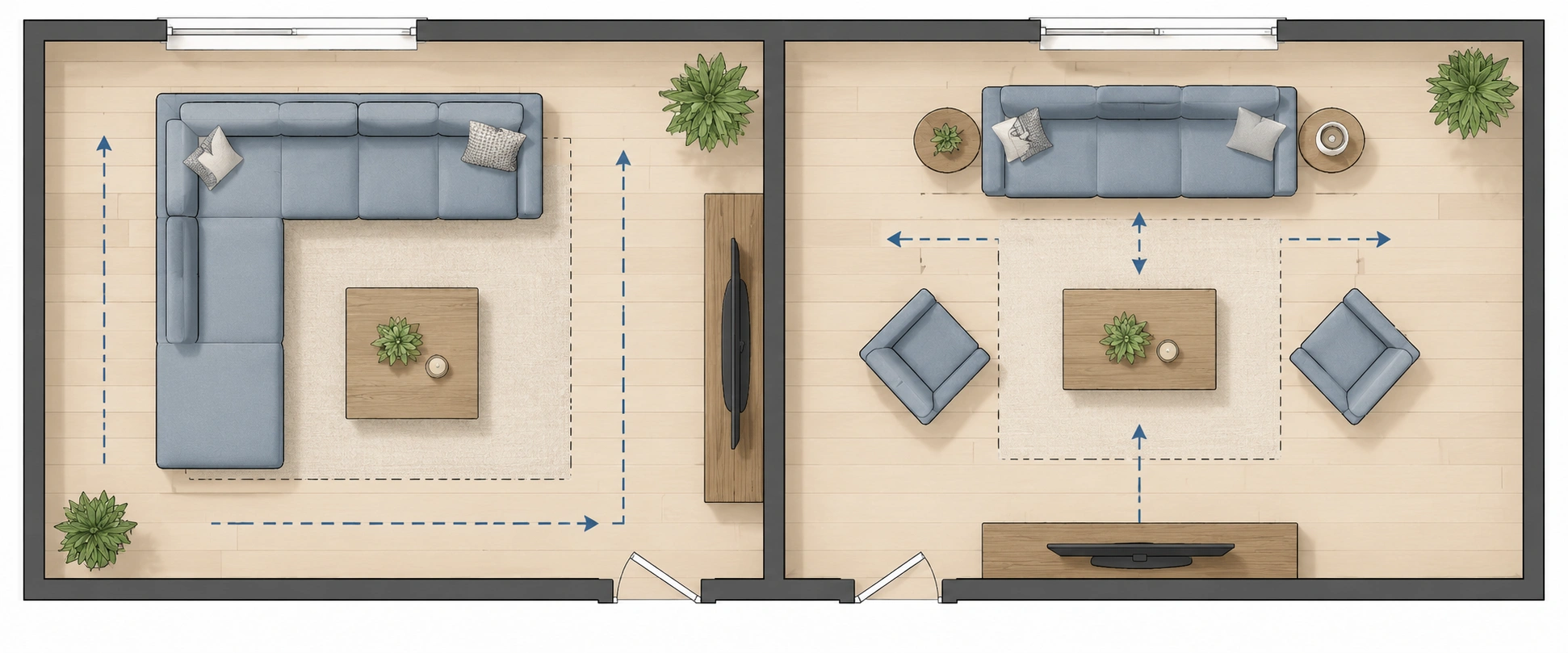
Understanding your room's dimensions and traffic flow is essential before choosing between a sectional and a traditional sofa
When a Sectional Works Best
Sectionals thrive in larger living rooms (generally 14x16 feet and above) where the sofa can anchor a seating area without dominating the entire space. They are particularly effective in open-concept floor plans because they naturally define zones — the L-shape creates a visual boundary between the living area and dining or kitchen spaces without needing walls.
Sectionals also excel in family rooms and basement rec rooms where maximizing seating is more important than maintaining a formal aesthetic. If your household regularly hosts groups of five or more people, a sectional eliminates the need for extra armchairs or occasional seating that clutters the room.
Corner placement is where sectionals truly shine. By tucking the corner piece into an unused corner, you reclaim floor space that would otherwise be wasted while gaining significantly more seating than a traditional sofa placed along the same wall. Our living room layout guide provides detailed diagrams for optimal sectional placement.
When a Traditional Sofa Works Best
Traditional sofas are the safer choice for smaller rooms and apartments (under 12x12 feet) where every inch of floor space matters. Their defined rectangular footprint makes it easy to plan your layout — you know exactly how much wall space the sofa will occupy, and the area behind and around it remains fully usable.
A traditional sofa also preserves traffic flow. In narrow rooms, hallways, or spaces with multiple doorways, a sectional can create bottlenecks by extending into walkways. A 3-seater traditional sofa placed against the longest wall leaves clear paths on both sides — a critical consideration in apartments and compact homes.
For a primary living room that doubles as a formal space, traditional sofas pair more naturally with other furniture. You can add a loveseat, accent chairs, or a sofa with ottoman to create a curated seating arrangement that looks intentional rather than monolithic. This mix-and-match approach gives you more design flexibility over time.
Before choosing either type, use painter's tape to mark the exact footprint on your floor. For sectionals, mark each piece separately so you can visualize the full configuration. Leave 30 inches for main walkways and 18 inches between the sofa and coffee table. This simple exercise prevents the most common sofa-buying mistake. See our how to measure guide for step-by-step instructions.
Best Sofa Type by Room Size

Small Rooms (Under 10x12 ft)
Winner: Traditional Sofa. A 2-seater or compact 3-seater fits cleanly along one wall. Consider a loveseat with an accent chair for flexible seating without crowding.
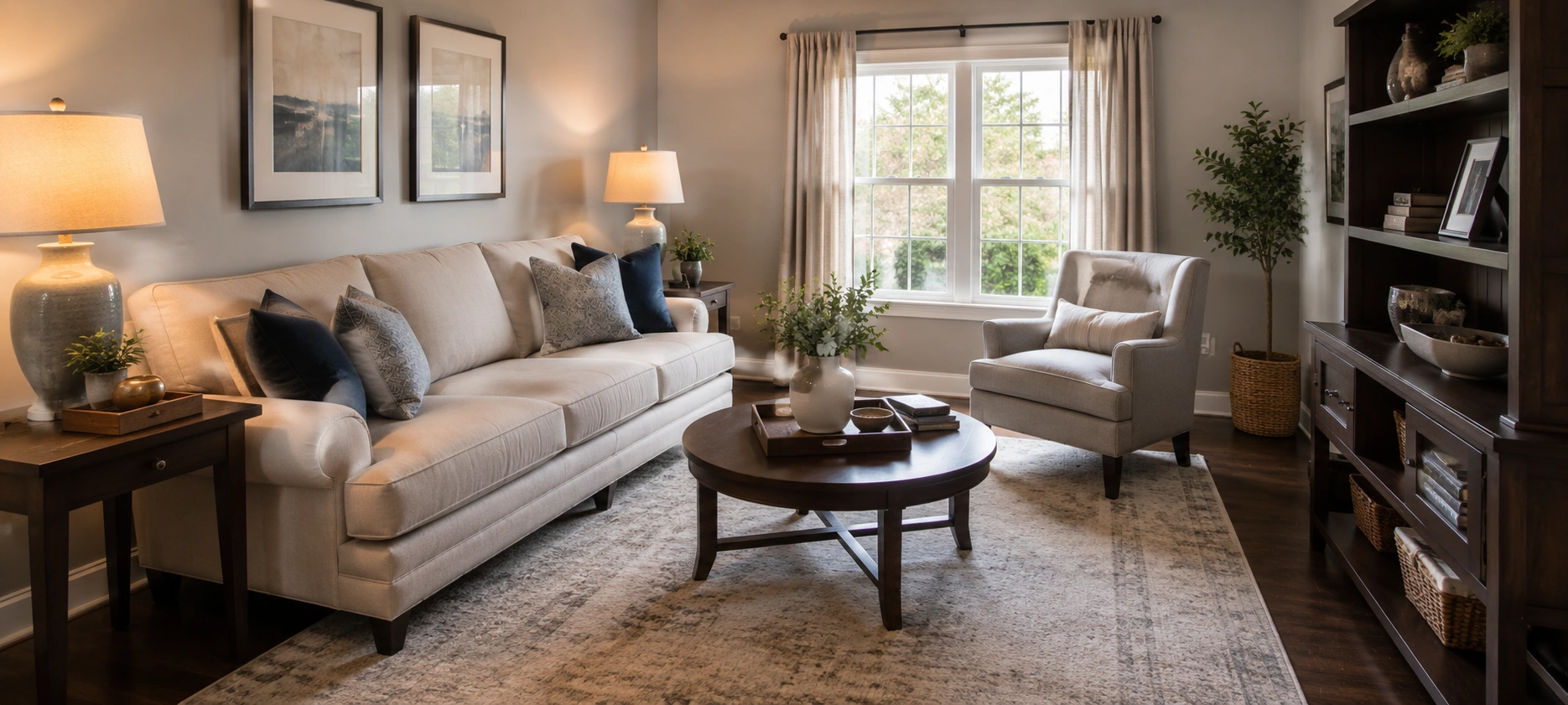
Medium Rooms (12x14 ft)
It Depends. Both types can work. A small 2-piece sectional in a corner is possible, but a traditional 3-seater with a chair often provides better flow. Test both layouts with tape before deciding.
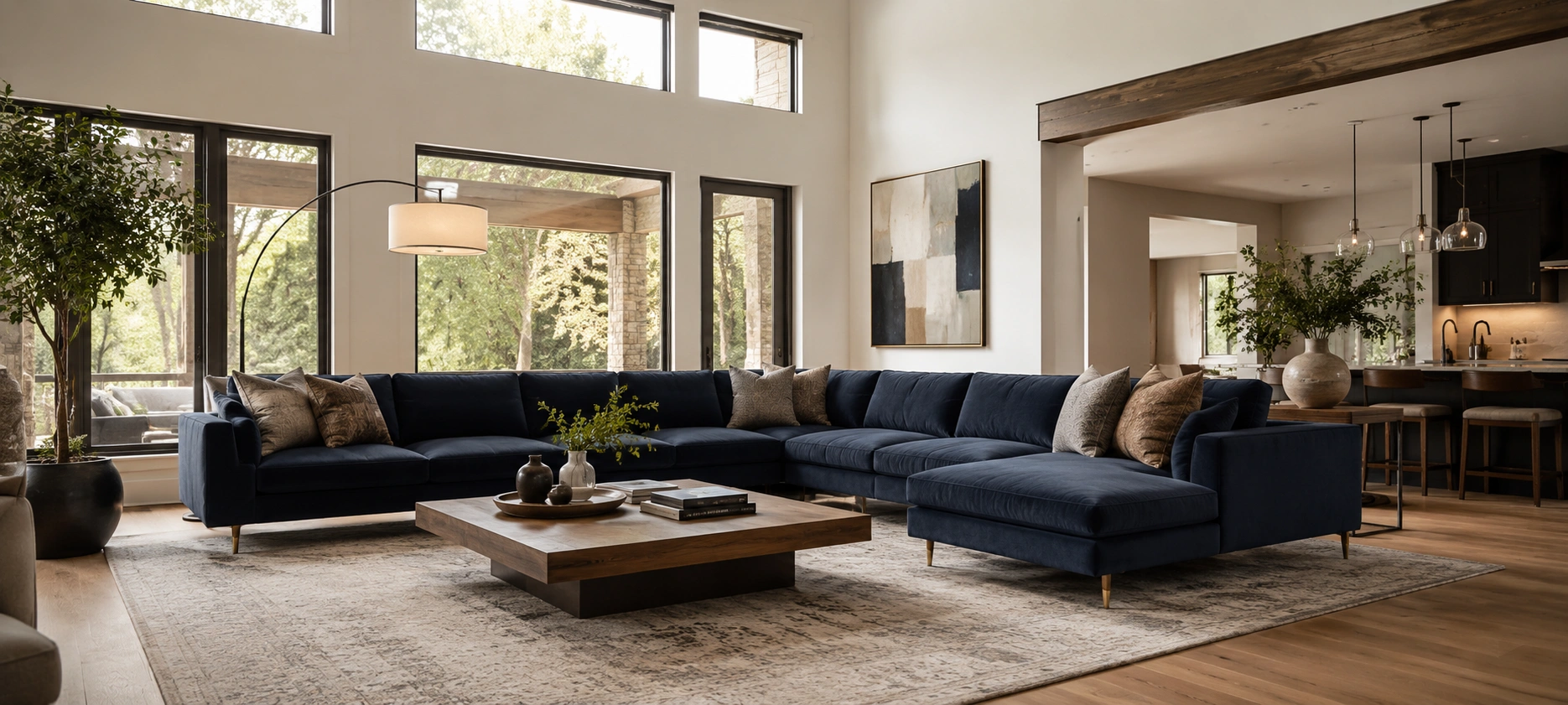
Large Rooms (14x16 ft+)
Winner: Sectional Sofa. A standard L-shaped or U-shaped sectional fills the space proportionally. A traditional sofa would look undersized and leave awkward empty zones. See our large room guide.
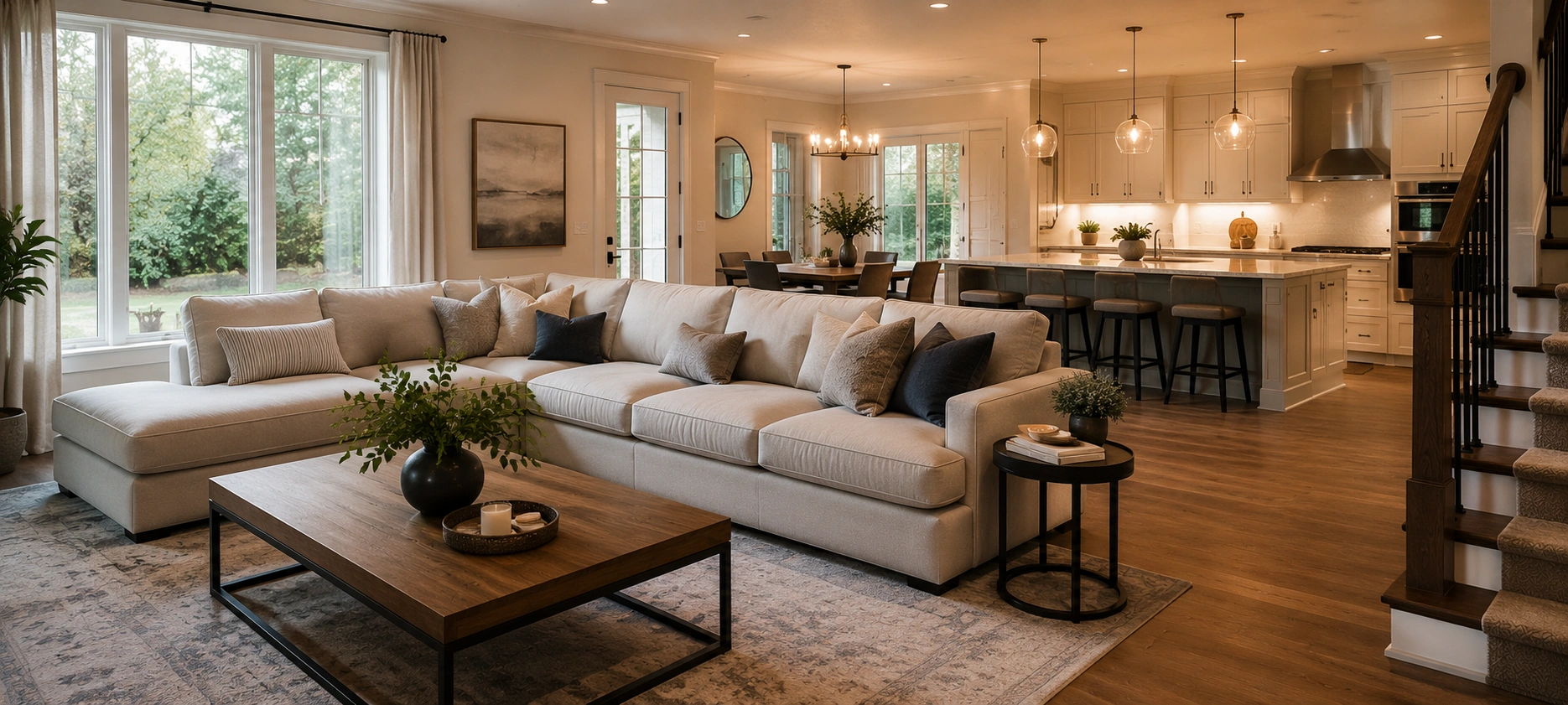
Open-Concept Spaces
Winner: Sectional Sofa. The L-shape naturally divides zones without walls. A modular sectional is ideal because you can adjust the configuration as your layout evolves.
Comfort and Seating Capacity
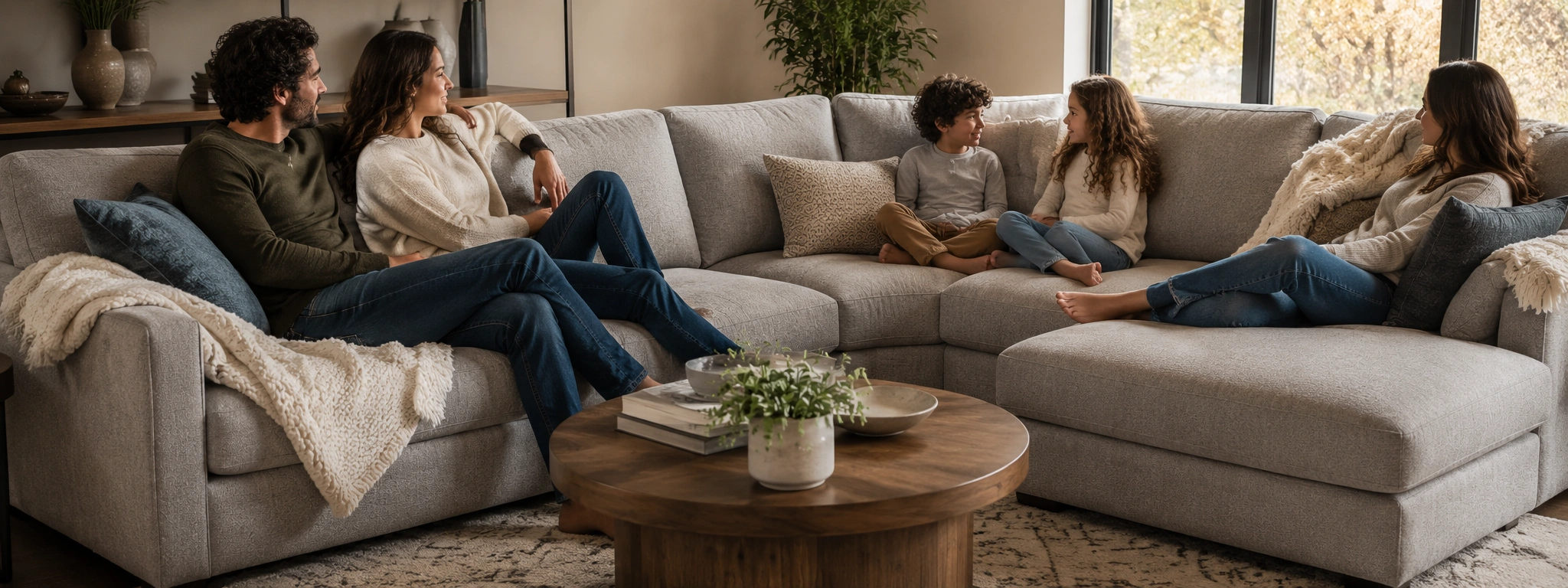
Sectional sofas naturally accommodate more people, making them ideal for families and those who frequently entertain
Comfort between the two types is largely a wash when comparing models at the same price point. Both can feature the same cushion fill types — high-resilience foam, wrapped coils, down blends, or natural latex. Both can have the same spring systems and seat depth. The real difference lies in seating capacity and the lounging experience.
A standard 3-seater traditional sofa seats three adults comfortably, four at a squeeze. Add a loveseat and you are at five — but now you have two separate furniture pieces to coordinate. A comparable L-shaped sectional seats five to six adults in a unified arrangement, with the chaise section offering a full recline position that no traditional sofa seat can match without being a dedicated recliner.
For movie marathons, daily napping, or simply stretching out after a long day, the built-in chaise on most sectionals provides a genuine躺-down experience. With a traditional sofa, achieving the same lounging position requires either a separate chaise purchase or putting your legs up on the armrest — which is not ideal for the sofa's longevity.
However, traditional sofas have a comfort advantage in one specific scenario: per-seat personalization. When each family member has their own seat on a traditional sofa (or across a sofa-plus-chairs arrangement), everyone gets an armrest. On a sectional, the middle seats lack armrests, which some people find less comfortable during extended sitting. The way you test sofa comfort should account for your household's sitting habits.
Versatility and Future-Proofing
Versatility means two things here: how well the sofa adapts to different rooms over time, and how easily it accommodates changing household needs.
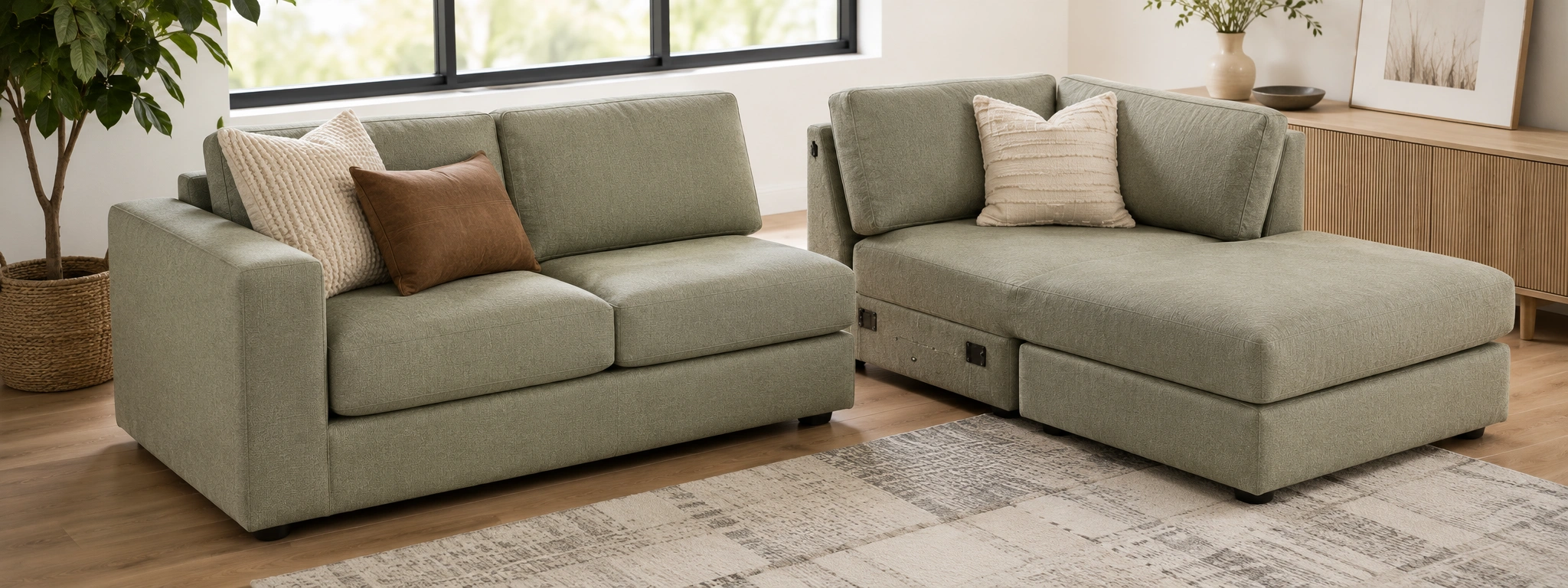
Modular sectionals can be reconfigured as your needs change — separate the pieces for a new layout or move to a different home
Sectionals win on adaptability — but only if they are modular. A fixed L-shaped sectional is just as rigid as a traditional sofa; it cannot be reconfigured. But a true modular sectional with independent pieces can be rearranged from an L-shape to a U-shape, split into a sofa and a separate chaise, or even divided between two rooms. If you move to a new home with a different floor plan, a modular sectional adjusts with you. A traditional sofa either fits or it does not.
Traditional sofas win on portability and placement options. A single traditional sofa can move from the living room to a guest room, home office, or even a basement without looking out of place. Sectionals, due to their scale and multi-piece nature, are harder to repurpose — a single sectional piece without its partners often looks incomplete.
Traditional sofas also offer more flexibility in room layout over time. You can swap which wall the sofa faces, pair it with different accent chairs, add a sofa table behind it, or float it in the middle of a large room. Sectionals are more constrained — they work best in one or two specific positions due to their footprint.
Style and Design Considerations
The aesthetic impact of your sofa choice extends beyond the piece itself — it influences how the entire room reads.
Traditional sofas are style-agnostic. A well-chosen traditional sofa works in virtually any design context: modern, contemporary, vintage, industrial, coastal, or traditional. Their clean rectangular form acts as a neutral foundation that lets other design elements — artwork, rugs, lighting — take the spotlight. Neutral-toned traditional sofas are particularly versatile for long-term use.
Sectionals make a bolder visual statement. Their angular or curved forms create strong geometric presence in a room, which is fantastic for modern and contemporary interiors but can feel overwhelming in more traditional or formal settings. That said, newer sectional designs with slim profiles, tapered legs, and refined upholstery have narrowed this gap considerably.
When considering leather vs fabric for either type, keep in mind that leather sectionals develop a consistent patina across all connected pieces, creating a unified look. Fabric sectionals offer more color and pattern possibilities but require more careful coordination since all pieces are visible simultaneously.
Price Comparison: What to Expect
Understanding the full price picture — not just the sticker price — prevents surprises. Here is how the costs break down realistically.
Traditional sofa pricing: A quality 3-seater traditional sofa typically ranges from $500 to $2,500 depending on materials, construction, and brand. Budget options start around $300, while luxury models with premium upholstery and kiln-dried hardwood frames reach $3,000+. If you need additional seating, factor in the cost of a matching loveseat ($300–$1,200) or accent chair ($200–$800).
Sectional sofa pricing: Entry-level sectionals start around $800 for small 2-piece configurations. Mid-range L-shaped sectionals with quality construction range from $1,500 to $3,500. Large U-shaped sectionals and premium modular systems range from $3,000 to $6,000+. The sofa price breakdown shows that sectionals cost roughly 20–50% more than a comparable traditional sofa — but they also replace the need for additional seating pieces.
The per-seat calculation often favors sectionals. A $2,000 traditional 3-seater costs approximately $667 per seat. A $3,000 L-shaped sectional that seats six costs $500 per seat. If maximizing seating within budget is your priority, the sectional delivers better value. Our price vs quality guide explains how to evaluate whether you are getting fair value at any price point.
Also consider hidden costs: sectionals may incur higher delivery fees (multiple pieces, heavier total weight), more expensive professional cleaning (more surface area), and costlier reupholstery if you choose to refinish them later. These hidden costs of buying a sofa are easy to overlook during the excitement of shopping.
Pros and Cons Summary
For quick reference, here are the definitive advantages and disadvantages of each type based on real-world ownership experience.
Sectional Sofa — Pros
- Maximum seating capacity in a single footprint
- Built-in chaise lounge for stretching out
- Modular options can be reconfigured over time
- Naturally defines zones in open-concept spaces
- Lower cost per seat compared to traditional sofas
- Easier to move individual pieces than one heavy sofa
- Great for families with children and frequent hosts
- Can add pieces later to expand seating
Sectional Sofa — Cons
- Large footprint that overwhelms small rooms
- Higher upfront purchase price
- Limited placement options — usually one or two viable positions
- Middle seats lack armrests
- Difficult to repurpose individual pieces in other rooms
- Higher delivery and cleaning costs
- Can look bulky in formal or minimalist spaces
- Harder to match if you want to add non-coordinated pieces later
Traditional Sofa — Pros
- Compact footprint fits any room size
- Lower upfront cost with more budget options
- Works in every design style from formal to casual
- Every seat has an armrest for personal comfort
- Easy to pair with accent chairs, loveseats, or ottomans
- Simple delivery — single piece, straightforward setup
- Portable between rooms or homes
- Lower long-term costs for cleaning and reupholstery
Traditional Sofa — Cons
- Limited seating capacity without additional furniture
- No built-in lounging position — chaise requires separate purchase
- Fixed shape cannot adapt to changing needs
- May look undersized in large, open rooms
- Adding seating pieces increases total cost and floor space usage
- Single heavy unit can be difficult to maneuver through doorways
- If you move, it either fits the new space or it does not
- Less impactful as a room's focal point
The Verdict: Which Should You Choose?
There is no universally better option — the right choice depends entirely on your specific situation. Here is a clear framework for making your decision based on the factors that matter most.
Decision Framework
Choose a Sectional If...
Your room is 14x16 ft or larger, your household has four or more people, you frequently host guests, you have an open-concept floor plan, or you want a built-in chaise for lounging. A modular sectional adds future-proofing since you can reconfigure or expand it over time.
Choose a Traditional Sofa If...
Your room is under 12x12 ft, you value design flexibility and formal aesthetics, you prefer mixing and matching seating pieces, you move frequently, or your budget is under $1,000. A quality 3-seater traditional sofa paired with an accent chair gives you curated flexibility that a sectional cannot match.
Consider Both If...
Your room is in the 12x14 ft range — the gray zone where either type could work. Use painter's tape to map both footprints, consider your household's seating habits, and think about whether you prefer one unified piece or a curated arrangement of separate pieces. Prioritize traffic flow above all else.
Compromise Option
A small 2-piece modular sectional in a corner can give you sectional benefits (chaise lounge, expandability) in a medium room while maintaining a smaller footprint than a full L-shape. Alternatively, a traditional sofa with a separate chaise lounge can replicate the sectional lounging experience with more layout flexibility.
Ready to Find Your Perfect Sofa?
Whether you have decided on a sectional or a traditional sofa, we have curated the best options from top brands. Browse our recommended picks below to find the right match for your space, style, and budget.
EXPLORE TOP PICKS