
High Back Sofa: The Complete Buying Guide
Discover why tall-back sofas deliver superior posture support, dramatic presence, and lasting comfort — plus how to pick the right one for your space.
See Top RecommendationsA high back sofa is defined by its tall backrest — typically measuring 32 inches or more from the seat cushion to the top edge. Unlike standard sofas that stop around the shoulder blades, a high back design extends above the shoulders, cradling the entire upper back, neck, and in some cases, the head.
This extra height is not just an aesthetic choice. It serves a practical purpose: providing structural support where standard sofas fall short. If you have ever sat on a regular couch and felt the urge to prop a pillow behind your neck, a high back sofa is designed to eliminate that gap entirely. For a deeper understanding of how this compares to shorter designs, our high back vs low back sofa comparison breaks down the differences in detail.
Beyond ergonomics, high back sofas create a sense of enclosure and luxury that transforms a living room. They draw the eye upward, adding vertical drama to the space. Whether you are furnishing a formal sitting area, a home office, or a cozy reading nook, understanding the nuances of this sofa type will help you make a confident, well-informed purchase.
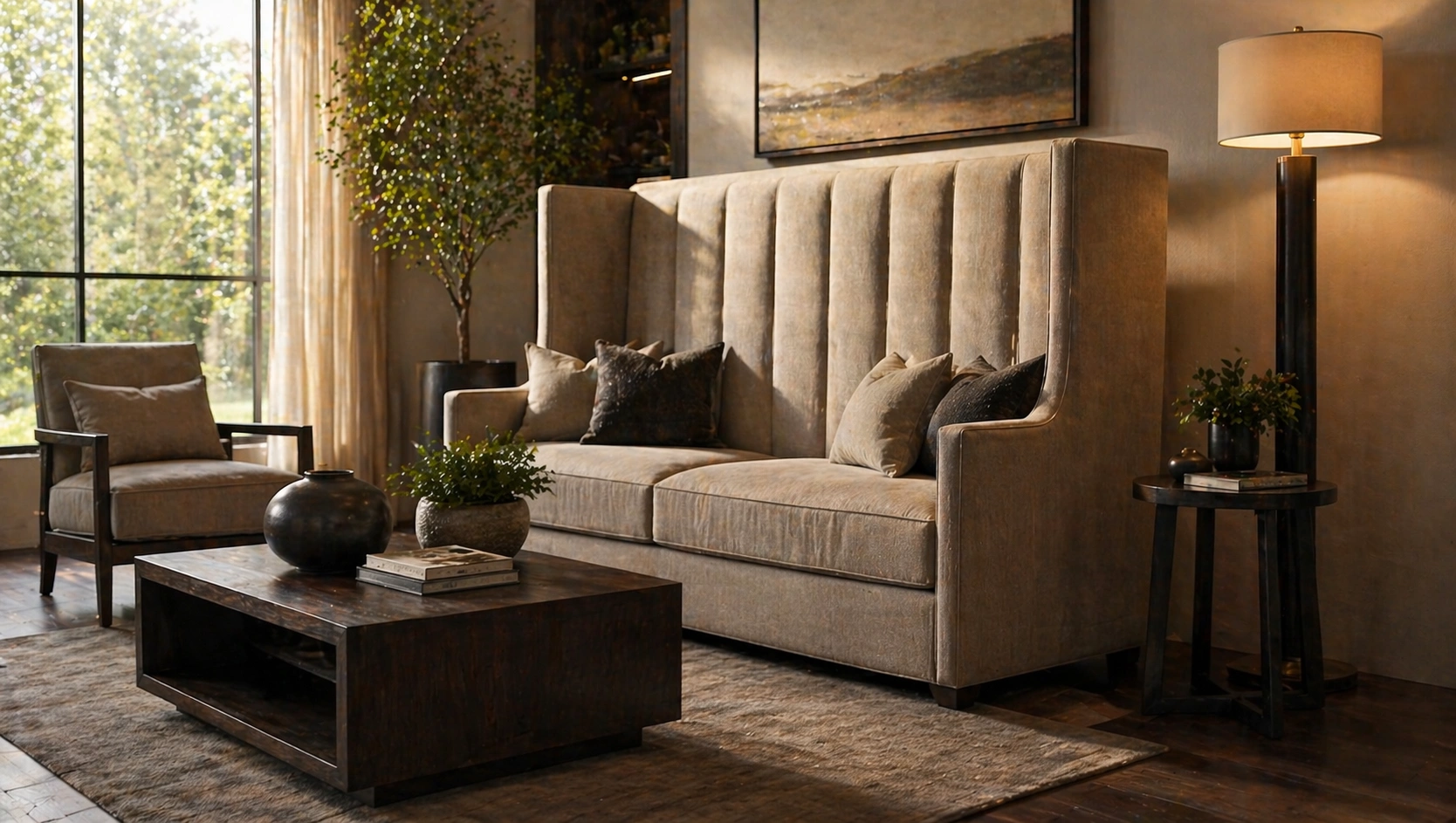
Key Benefits of a High Back Sofa
Choosing a high back sofa over a standard or low-profile model comes with several distinct advantages that directly impact your daily comfort and the feel of your room. Here are the five most significant benefits:
Superior Posture Support
The tall backrest supports your entire spine from lumbar to upper back and neck, reducing strain during extended sitting. This makes it an excellent option for anyone dealing with back pain concerns.
Sense of Enclosure
The elevated back creates a cocoon-like feeling, making the seating area feel intimate and sheltered — ideal for creating a cozy reading corner or a focused conversation zone in an open-plan space.
Visual Drama & Presence
A high back sofa acts as a statement piece. It draws the eye upward, adds architectural interest, and makes the room feel more curated and luxurious compared to low-profile alternatives.
Acoustic Buffering
The tall backrest absorbs and blocks sound from behind, reducing noise distractions. This is particularly valuable in open-concept homes or home theater setups where audio isolation matters.
Wall Protection
Heads and hair are less likely to touch the wall behind the sofa, keeping your paint or wallpaper clean. This is a practical advantage often overlooked until you notice scuff marks from a standard sofa.
Better for Tall Individuals
People over 5'10" often find standard sofa backs too short, forcing them to slouch or lean forward. A high back provides proportional support for taller frames without compromising posture.
💡 Pro Tip: If you spend more than 2 hours sitting on your sofa daily — whether watching TV, reading, or working — the ergonomic benefit of a high back sofa compounds over time. Combined with the right cushion fill type, it can significantly reduce fatigue and discomfort.
High Back vs Low Back Sofa: Detailed Comparison
One of the most common dilemmas buyers face is choosing between a high back and a low back design. Each has strengths, and the right choice depends on your priorities. Our dedicated high vs low back sofa guide explores this in depth, but here is a concise side-by-side breakdown:
| Feature | High Back Sofa | Low Back Sofa |
|---|---|---|
| Back Height | 32 – 42+ inches from seat | 24 – 30 inches from seat |
| Posture Support | Full upper back, neck, and head support | Lumbar and mid-back only |
| Room Feel | Formal, enclosed, dramatic | Casual, open, airy |
| Best For | Living rooms, offices, theaters, reading nooks | Small spaces, minimalist rooms, lofts |
| Visual Weight | Heavy, anchoring | Light, unobtrusive |
| Ideal User Height | Average to tall (5'6" and above) | Petite to average (under 5'8") |
| Price Range | Generally higher (more material, complex frame) | Generally more affordable |
| Style Pairing | Chesterfield, tufted, vintage, recliner | Modern, contemporary, floor sofa |
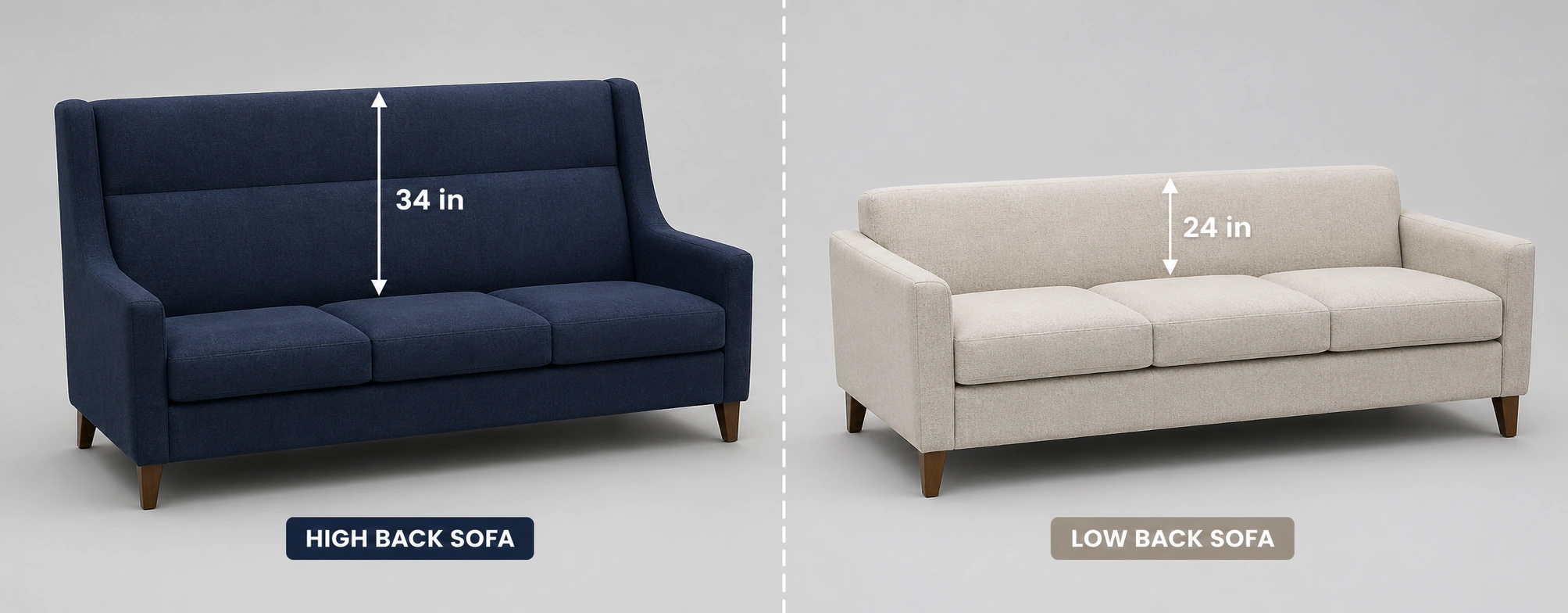
The visual difference between high back and low back sofas is immediately noticeable — high backs create a more commanding and enclosed seating experience.
Who Should Buy a High Back Sofa?
While high back sofas offer impressive benefits, they are not universally the best choice for every person or space. Here is a clear breakdown of who will benefit most — and who might want to reconsider:

Remote Workers & Home Office Users
If you take calls or work from your sofa, a high back provides the support needed for long sitting sessions — similar to an ergonomic chair but with living room comfort.

People with Back or Neck Issues
Those who experience upper back tension or neck stiffness often find relief with the extended support, especially when paired with firm cushion options.
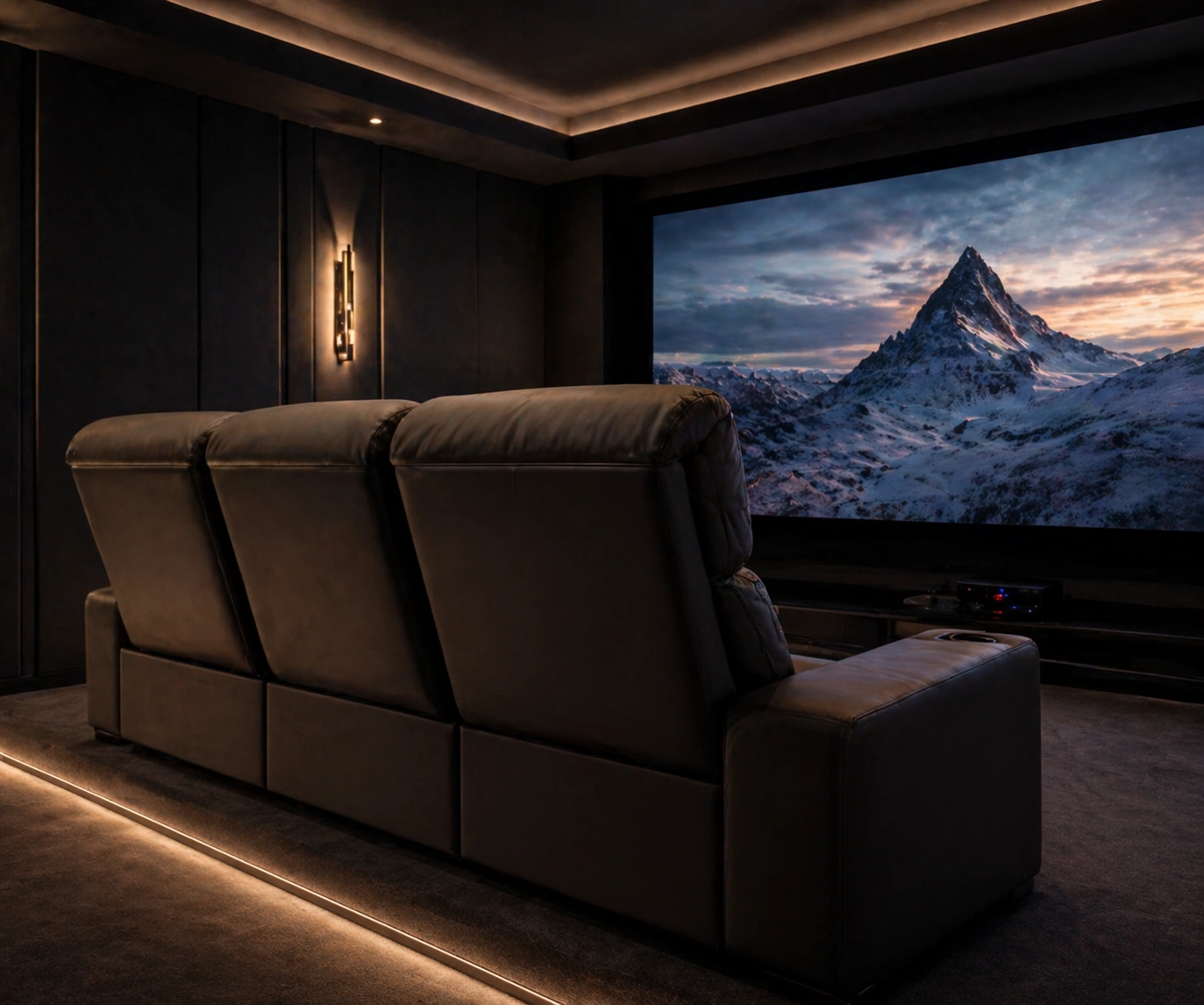
Home Theater Enthusiasts
For home theater setups, high back sofas mimic cinema seating, providing head support and acoustic buffering for an immersive experience.
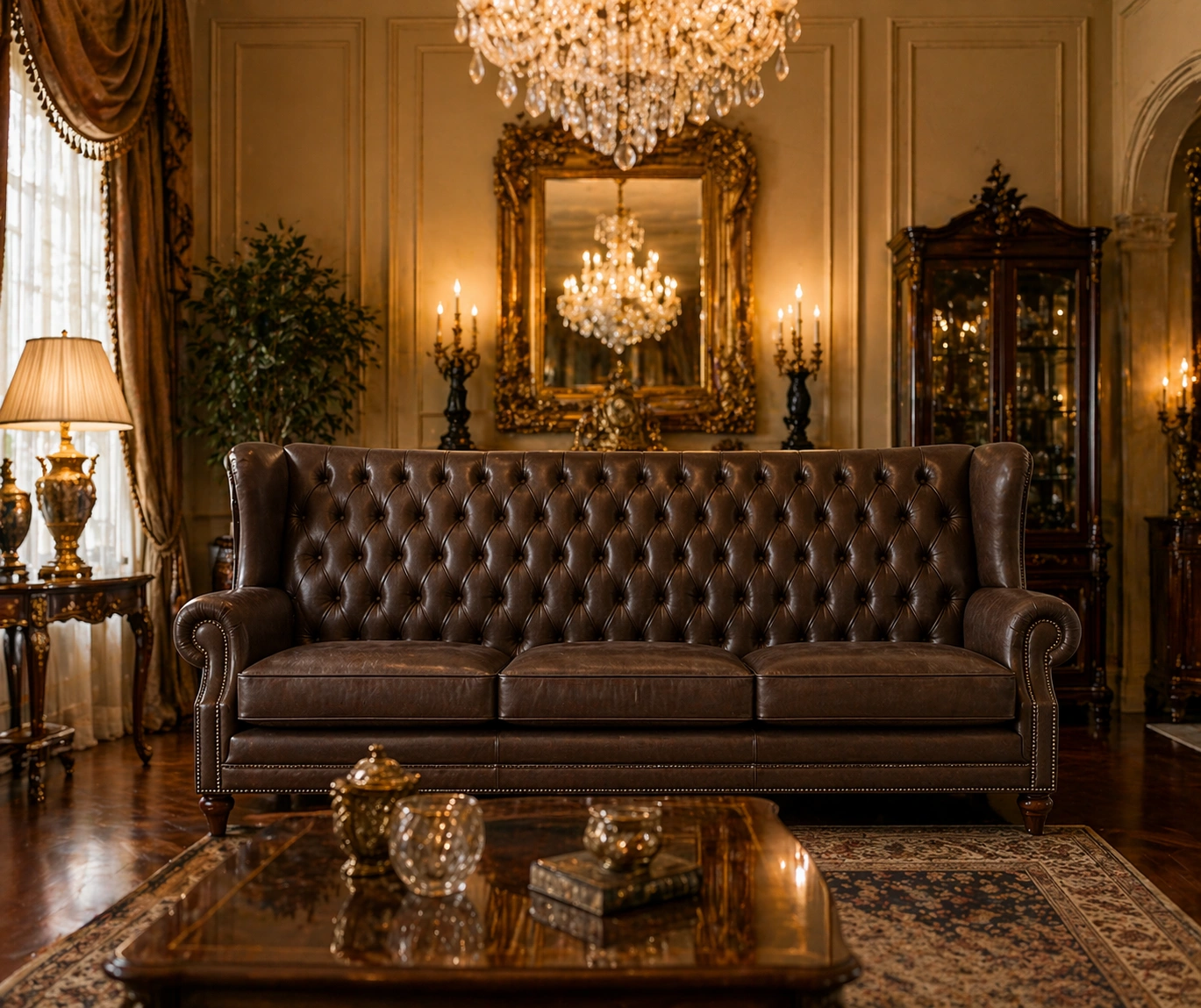
Formal Living Room Owners
High back designs — particularly Chesterfield and tufted styles — bring traditional elegance that elevates a formal seating area.

Tall Individuals (5'10" and Above)
Standard backs often sit below the shoulders of taller users. A high back ensures proportional support without slouching or leaning forward.
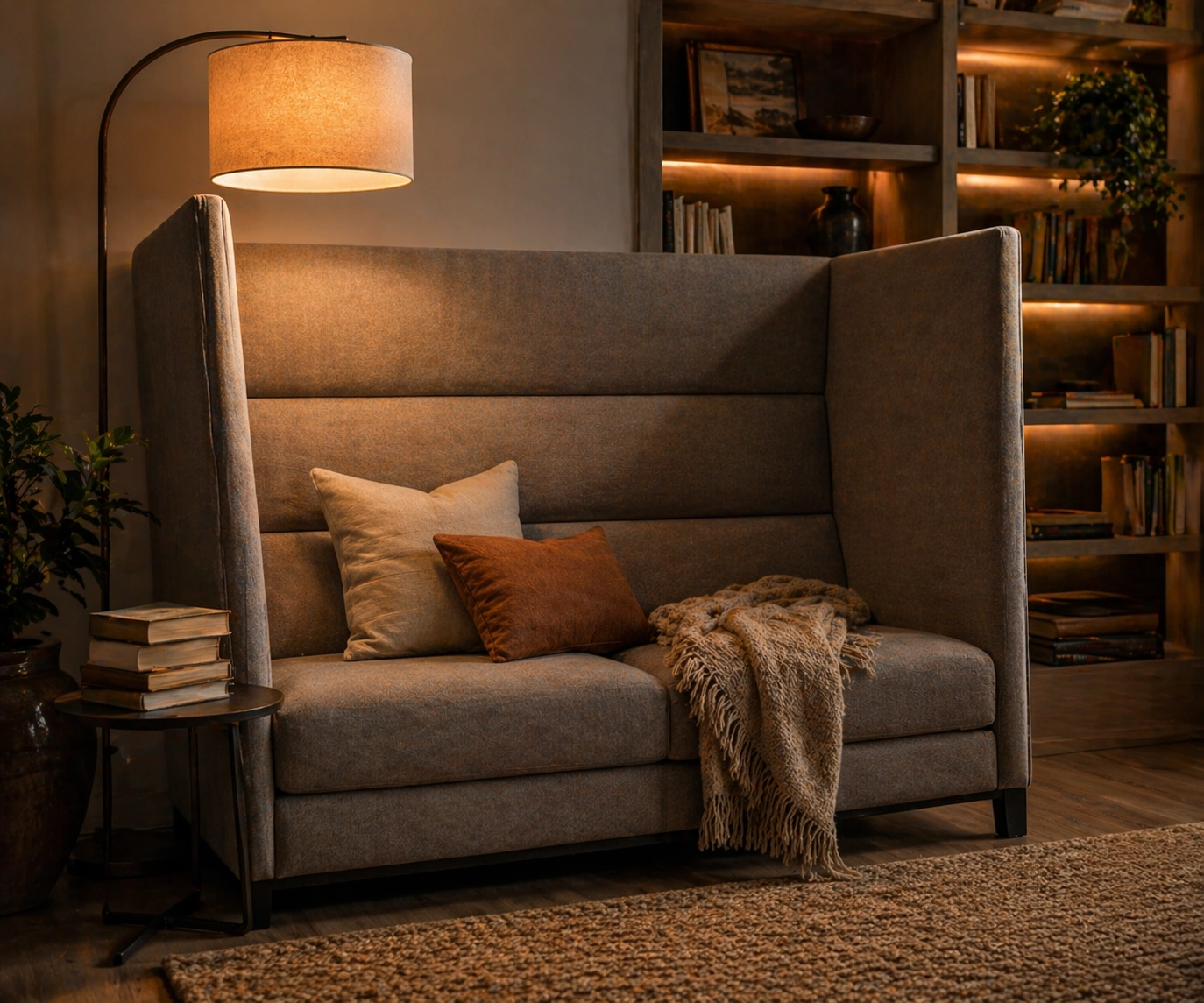
Avid Readers
Nothing beats sinking into a high back sofa with a good book. The tall backrest doubles as a headrest for extended reading sessions.
⚠️ When to Avoid: If you are furnishing a very small room with low ceilings (under 8 feet), a high back sofa can make the space feel cramped. In these cases, a small-space sofa with a standard or low back may serve you better. Also, if you prefer a casual, laid-back aesthetic (like coastal or minimalist), the formality of a tall back might clash with your design vision.
Popular High Back Sofa Styles
High back sofas are available in a wide range of design styles, each bringing a different character to the room. Understanding these styles helps you narrow down your options based on your existing decor and personal taste:

1. Chesterfield High Back
The Chesterfield sofa is perhaps the most iconic high back design. Characterized by deep button tufting, rolled arms, and a continuous curved back that extends upward, it embodies classic British elegance. Chesterfields typically have backs reaching 36–40 inches, making them one of the tallest sofa styles available. They work beautifully in formal living rooms, libraries, and executive offices. Available in leather or fabric, the leather version is particularly popular for its durability and rich patina over time.
2. High Back Recliner Sofa
Combining the support of a tall back with the adjustability of a reclining mechanism, recliner sofas with high backs offer the ultimate in personalized comfort. The backrest stays tall even when reclined, supporting your head and neck in multiple positions. This style is a top pick for home theaters, family rooms, and anyone who values both posture support and the ability to kick back. Look for models with adjustable headrests for even more fine-tuning.
3. Camelback High Back
The camelback sofa features a distinctive humped back profile — higher in the center and sloping down toward the arms. This traditional American design naturally creates a high back silhouette (often 34–38 inches at the peak). It pairs well with vintage, transitional, and farmhouse interiors. The camelback is less common in modern showrooms, making it a great choice for those seeking a distinctive, conversation-starting piece.
4. Channel-Tufted High Back
Instead of individual button tufts, channel tufting creates vertical parallel lines across the back. This technique adds vertical visual emphasis that complements the height of a high back sofa. Channel-tufted designs feel contemporary yet refined, making them versatile enough for modern, contemporary, and even some industrial spaces. The clean lines prevent the tall back from feeling overly heavy.
5. Shield-Back High Back
Inspired by classical furniture, the shield back features a backrest shaped like a shield — wider at the top and tapering toward the seat. This is a more niche style, often found in vintage reproduction and traditional European designs. It makes a bold statement and works best in rooms with high ceilings and complementary architectural details.
6. Modern Clean-Line High Back
Not all high back sofas are traditional. Modern designs feature tall, slim backs with minimal detailing — no tufting, no rolled arms, just clean geometric lines. These work beautifully in modern and minimalist interiors where you want the functional benefit of a tall back without the visual heaviness of traditional styles. Look for models with slim armrests and exposed legs to keep the silhouette airy.
Key Features to Evaluate Before Buying
A high back sofa is a significant investment, and not all models are built the same. Use this checklist to evaluate any high back sofa you are considering:
Back Height Measurement
Always measure from the top of the seat cushion (not the floor) to the top of the backrest. A true high back should be at least 32 inches. For head support, look for 36 inches or more. If you are unsure what works for your body, check our guide on how to measure a sofa properly.
Back Angle & Contour
A tall back is only effective if it is angled correctly. The back should have a slight recline (typically 100–110 degrees from the seat) to support your spine's natural curve. Some high back sofas are nearly vertical, which can feel rigid. Testing sofa comfort in person is the best way to evaluate this — sit for at least 5–10 minutes to notice any pressure points.
Cushion Firmness
The interplay between back height and cushion firmness is critical. A high back with overly soft cushions allows your body to sink in, reducing the backrest's effectiveness. For optimal posture support, consider firm cushion options or medium-firm blends that hold their shape while still feeling comfortable. The foam density rating is a useful specification to check — aim for 1.8 lb/ft³ or higher for seat cushions.
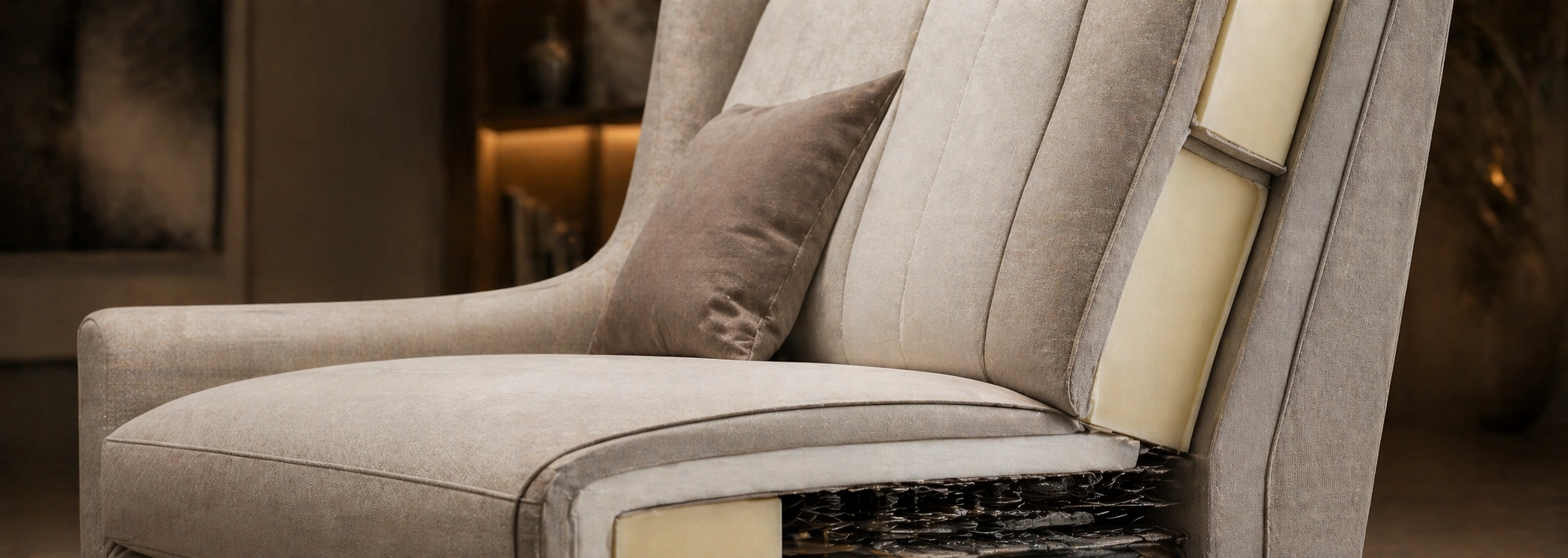
The angle and firmness of the back cushion determine how effectively a high back sofa supports your spine. A slight recline with firm padding offers the best ergonomics.
Frame Construction
A tall backrest creates more leverage and stress on the frame compared to a standard sofa. A high back sofa needs a robust frame to prevent wobbling or warping over time. Look for kiln-dried hardwood frames (oak, maple, or birch) with reinforced corner blocks, dowelled joints, and ideally, a crossbar or stretcher between the back legs for added rigidity. Our guide on how to check sofa quality before buying covers this in more detail.
Adjustable Headrest
Some premium high back sofas feature an adjustable headrest panel — a separate cushion section at the top that can be tilted forward or raised. This is especially valuable because the ideal headrest position differs between sitting upright (watching TV) and reclining (relaxing). If your budget allows, this feature adds significant versatility.
Seat Depth
A common mistake is pairing a high back with a seat depth that is too deep. If the seat is very deep (over 22 inches), you may sit with your back away from the tall backrest, completely negating its benefit. For a high back sofa to work ergonomically, the seat depth should keep your back in contact with the backrest while your feet remain flat on the floor.
💡 Key Insight: The most comfortable high back sofa balances three things — back height that reaches your shoulders or above, a back angle that follows your spine's natural curve, and seat depth that keeps you in contact with the backrest. Missing any one of these reduces the benefit significantly.
Size Guide: Fitting a High Back Sofa in Your Room
Because of their vertical prominence, high back sofas demand more careful spatial planning than standard models. Here are the critical measurements and rules to follow:

Ceiling Height Considerations
In rooms with standard 8-foot ceilings, a high back sofa reaching 38 inches from the floor will leave about 58 inches of space above it — plenty of room. However, if the sofa sits on a raised platform or the room has bulkhead lighting, measure from the highest point of the sofa to the nearest obstruction. You want at least 8–12 inches of clear space above the sofa back to prevent the room from feeling claustrophobic. For large rooms with high ceilings, a taller back (40+ inches) can fill the vertical space beautifully without overwhelming the room.
Placement Tips
A high back sofa creates a strong visual anchor, so its placement matters more than with standard sofas. In an open-plan space, use the sofa's tall back as a natural room divider to define separate zones — for example, separating the living area from a dining space. Avoid pushing a high back sofa flush against a wall with artwork above it, as the sofa may obscure or crowd the art. Instead, leave a few inches of gap, or float the sofa away from the wall entirely to showcase the back design. For layout ideas, our living room layout guide offers detailed configurations.
Best Rooms for a High Back Sofa
While a high back sofa can work in many spaces, certain rooms benefit disproportionately from this design:
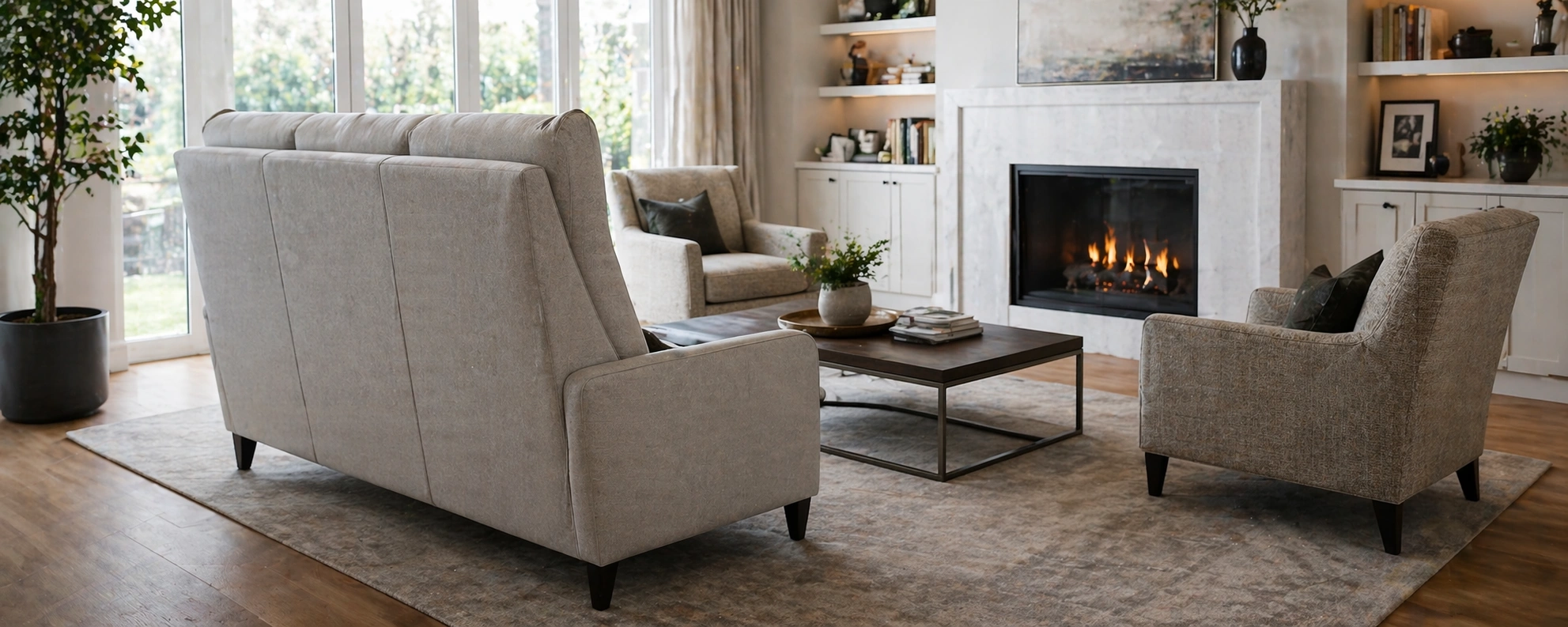
Primary Living Room
As the main seating piece, a high back sofa commands attention and creates a focal point. Pair with a matching ottoman for a complete look.

Home Office
Replaces a traditional guest chair for meetings or provides a comfortable break spot. Professional appearance paired with all-day comfort. See our office sofa guide.

Home Theater
High back recliners mimic cinema seating with head support and sound isolation. Perfect for movie marathon sessions.

Library / Reading Room
The enclosed feeling of a high back creates the perfect cocoon for reading. Chesterfield and tufted styles are especially fitting here.

Lobby / Waiting Area
Projects professionalism and comfort in commercial or residential lobby settings. High backs also provide modesty and privacy for waiting guests.
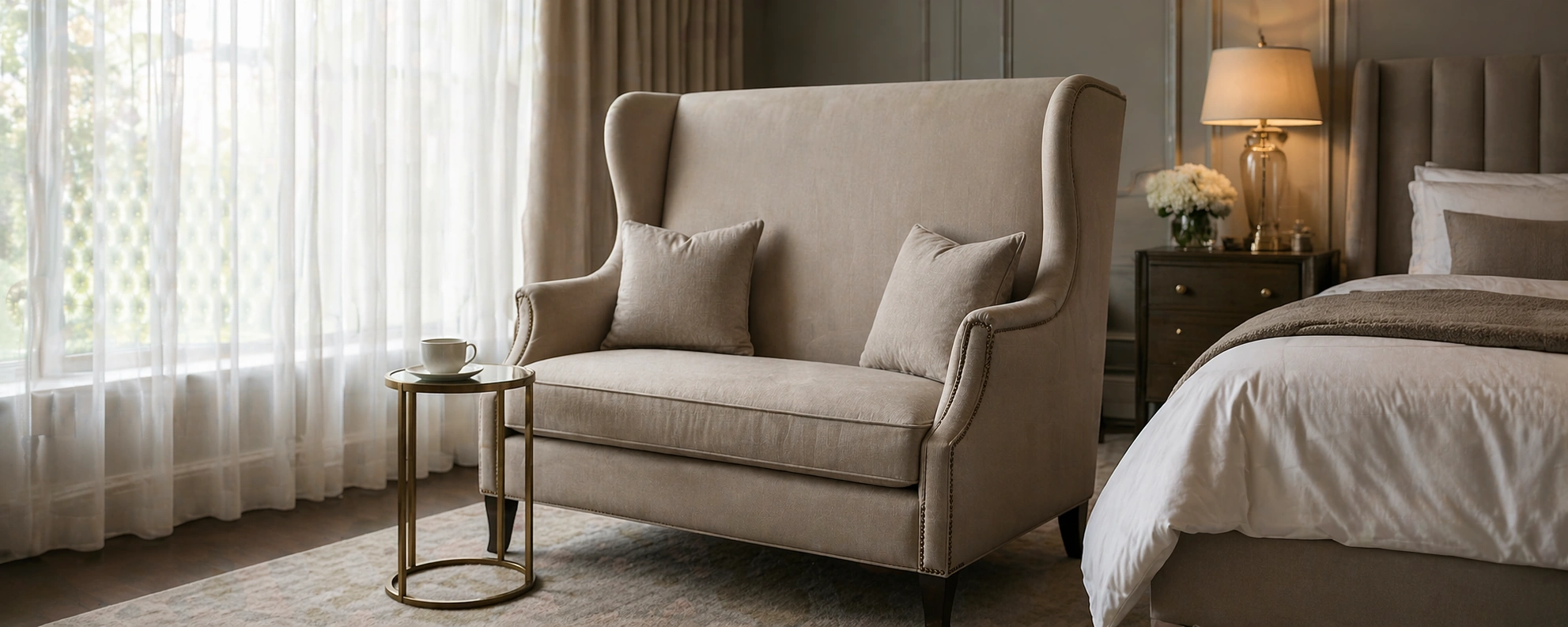
Materials & Durability for High Back Sofas
The material you choose affects not only the look but also how well a high back sofa maintains its shape and support over years of use. A tall backrest puts more stress on upholstery and cushioning, so material quality matters even more here than with standard sofas.
Upholstery Fabrics
For fabric high back sofas, look for materials with high Martindale rub counts — ideally 30,000 or above for heavy domestic use. Performance fabrics like polyester blends, microfiber, and specially treated cotton-poly weaves resist wear and maintain their appearance on the tall back surface where people naturally rest their heads. Microfiber is particularly good because it is soft against the head and neck while being highly durable. For a luxurious feel, velvet works well but requires more careful maintenance.
Leather Options
Leather is a natural fit for high back sofas, especially traditional styles like the Chesterfield. Full-grain and top-grain leather develop a beautiful patina and can last 15–25 years with proper conditioning. Bonded leather is less recommended for high backs because the flexing and head contact can cause peeling faster than on seat cushions. If budget is a concern, consider a leather sofa with a leather-matched finish — real leather on contact surfaces and a matching synthetic on the back and sides.

Frame & Internal Components
As mentioned earlier, the frame must be strong. But equally important is the spring system used in the back. Eight-way hand-tied springs offer the best support and longevity for high back designs, followed closely by sinuous (zigzag) springs with reinforced cross-wires. Avoid no-sag or elastic webbing alone in a high back — they may not provide sufficient support over time, leading to a backrest that leans or sags. The suspension type directly impacts how the tall back maintains its shape year after year.
Care & Maintenance Tips for High Back Sofas
The tall backrest of a high back sofa has unique maintenance needs. The upper portion is where hair products, body oils, and head contact accumulate most. Here is how to keep your high back sofa in top condition:
- Vacuum the backrest weekly — Use a soft brush attachment to remove dust, hair, and debris from the tall back surface, especially along tufted channels where particles collect.
- Treat head oil stains promptly — The area where heads rest is prone to oil transfer. For fabric sofas, use a fabric-safe cleaner or call a professional. For leather, clean with a damp cloth and leather cleaner immediately.
- Rotate and fluff back cushions monthly — Even fixed-back sofas benefit from gentle massage and reshaping of the back padding to prevent permanent compression from repeated head contact.
- Apply fabric protection spray — A quality fabric protector applied after purchase (and reapplied annually) creates a barrier against stains on the tall back surface.
- Condition leather backs quarterly — Leather on the backrest dries out faster than seats because it receives less body heat but more ambient air exposure. Regular conditioning prevents cracking.
- Check frame tightness annually — The leverage from a tall back can loosen joints over time. Inspect and tighten any exposed bolts, and listen for creaking that might indicate developing frame issues.
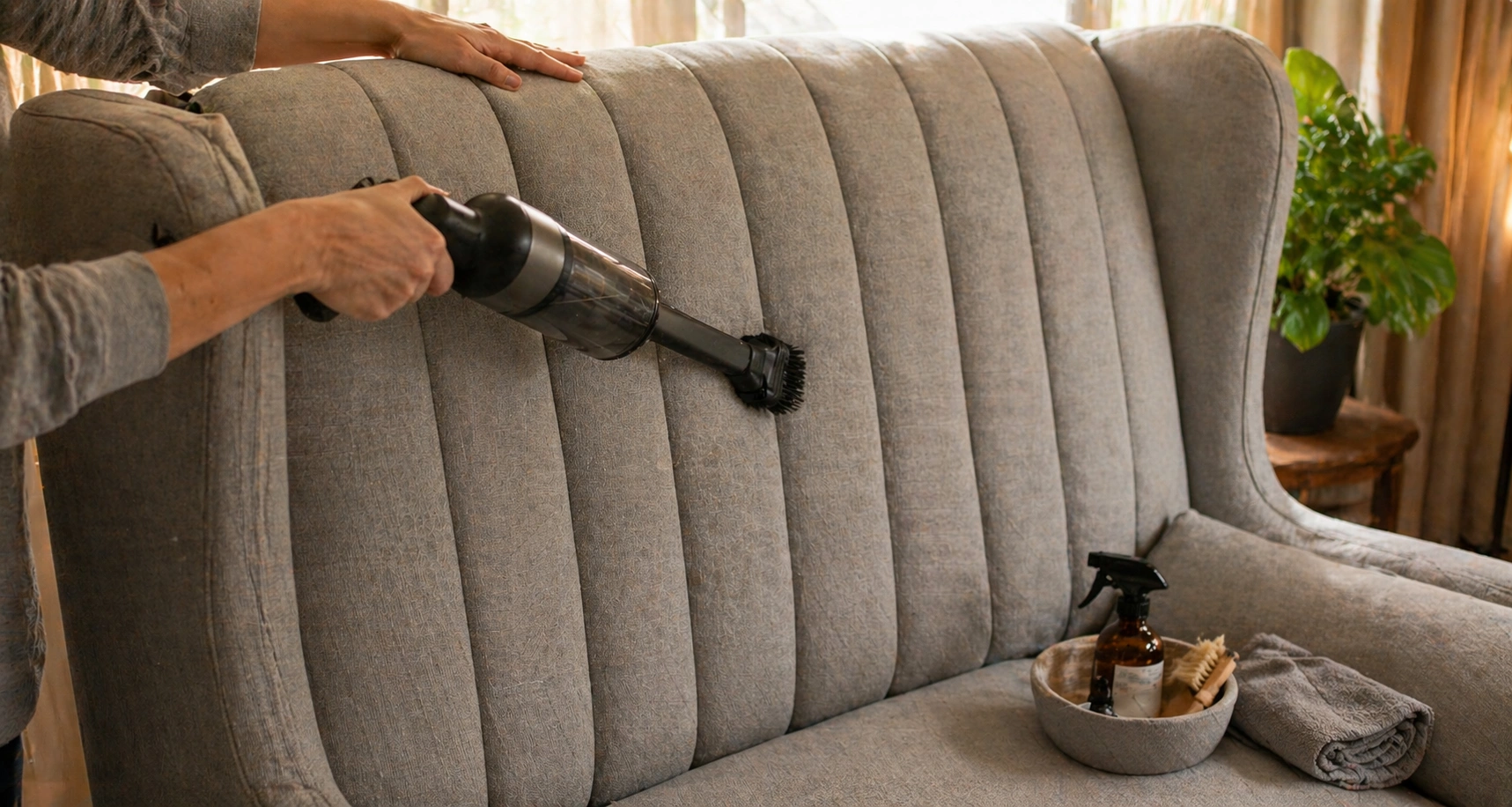
Regular maintenance of the backrest — the most contacted surface — is essential to preserve both comfort and appearance over the years.
Common Mistakes When Buying a High Back Sofa
Learning from others' mistakes can save you hundreds of dollars and years of regret. Here are the most frequent errors buyers make when choosing a high back sofa:
- Not measuring ceiling height — Buying a 42-inch back for a room with 7'6" ceilings creates a cramped, oppressive feel. Always measure from floor to ceiling and leave breathing room.
- Pairing a high back with an overly deep seat — A 24-inch seat depth with a 38-inch back means you sit forward, away from the backrest, defeating the entire purpose. Keep seat depth at 18–22 inches for high back models.
- Choosing style over ergonomics — A beautiful Chesterfield with a nearly vertical 40-inch back may look stunning but feel uncomfortable after 30 minutes. Always prioritize comfort alongside aesthetics.
- Ignoring the back cushion fill — Soft, loosely filled back cushions compress quickly under head weight, reducing effective back height within months. Specify high-density foam or wrapped foam cores.
- Blocking windows or artwork — The tall back can obscure views or art if positioned without planning. Map out sight lines before finalizing placement.
- Skimping on frame quality — A tall back creates significant leverage. A weak frame will warp, wobble, or squeak. Invest in solid hardwood construction — it is non-negotiable for high back designs.
- Forgetting about delivery — High back sofas are often taller and may not fit through standard doorways, staircases, or around corners. Measure your entry paths and consider modular options if access is tight.
Quick Buying Checklist
Use this final checklist before placing your order. Every item on this list addresses a real issue that buyers commonly overlook:
✅ Back Height: Measured at least 32" from seat to top — 36"+ for head support
✅ Back Angle: Slight recline (100–110°) that follows your spine's natural curve
✅ Seat Depth: 18–22" to maintain back contact while feet stay flat
✅ Frame: Kiln-dried hardwood with reinforced joints and back stretcher
✅ Back Springs: Eight-way hand-tied or reinforced sinuous — no webbing-only backs
✅ Cushion Density: 1.8 lb/ft³ minimum for back cushions to resist compression
✅ Ceiling Clearance: 8–12" minimum between sofa top and ceiling
✅ Doorway Clearance: Sofa height fits through all entry points (account for legs if removable)
✅ Upholstery Durability: 30,000+ Martindale rub count for fabric; top-grain for leather
✅ Tested Comfort: Sat for 10+ minutes to check for pressure points at neck and shoulders
Ready to Find Your Perfect High Back Sofa?
We have curated the top-rated high back sofas available online, filtered for quality construction, proper back height, and strong customer reviews. Browse our recommendations below.
View Top High Back Sofas ↓Continue Your Research
A high back sofa is just one piece of the puzzle. To make the most informed decision possible, explore these related guides that complement what you have learned here:
How to Choose a Sofa
A comprehensive step-by-step process covering everything from measuring your space to testing comfort in-store.
Comfort vs Durability
Understanding the trade-offs and how to find the sweet spot that serves both needs in a single sofa.
Sofa Price Breakdown
Learn exactly where your money goes — frame, springs, cushions, upholstery — so you can judge value accurately.
Best Time to Buy a Sofa
Timing your purchase around sales events can save you 20–40% on a quality high back sofa.


