
Most Durable Sofa Fabric: The Complete Guide
Stop replacing your sofa every few years. Learn which fabrics actually withstand daily wear, pet claws, spills, and sunlight — backed by rub-count data and real-world performance.
SEE THE RANKINGSChoosing the wrong sofa fabric can cost you thousands of dollars over time. A sofa that looks perfect in the showroom may start pilling, fading, or tearing within months if the upholstery material isn't suited to your household's demands. The difference between a sofa that lasts 3 years and one that lasts 15+ years often comes down to a single factor: fabric durability.
This guide breaks down the most durable sofa fabrics available today, ranked by objective durability metrics including Martindale rub counts, stain resistance ratings, UV stability, and resistance to pet damage. Whether you're shopping for a family room sofa, a pet-friendly couch, or a high-traffic living room centerpiece, this guide will help you make a choice you won't regret.
📚 Table of Contents
Why Fabric Durability Matters More Than You Think
Most people focus on sofa frame quality when evaluating durability — and while a solid frame is essential, the fabric is what actually takes the daily abuse. Every time you sit down, shift your weight, or let your kids jump on the couch, the upholstery fibers experience friction, stretching, and compression. Over thousands of cycles, weaker fabrics break down.
The real cost of choosing a fragile fabric goes beyond replacement. Consider:
- Aesthetic degradation: Pilling, fading, and thinning make your living space look worn even if the sofa structure is fine
- Hygiene concerns: Worn fabrics absorb spills more easily and develop odor-trapping micro-abrasions
- Comfort loss: Thinned fabric offers less cushioning and can feel rough against skin
- Resale value: A sofa with degraded upholstery is nearly impossible to resell or donate
If you're investing in a quality sofa that balances price and quality, pairing a strong frame with durable upholstery is the only way to get true long-term value.
💡 Key Insight: Industry data shows that fabric failure is the #1 reason people replace sofas prematurely — not frame breakage, spring failure, or cushion collapse. A sofa with a mediocre frame but outstanding fabric often outlasts one with a kiln-dried hardwood frame wrapped in low-durability upholstery.
How Sofa Fabric Durability Is Measured
Before diving into the rankings, understanding how durability is quantified will help you evaluate any fabric you encounter. The upholstery industry uses standardized testing methods to assign objective durability scores.
The Martindale Test (ISO 12947)
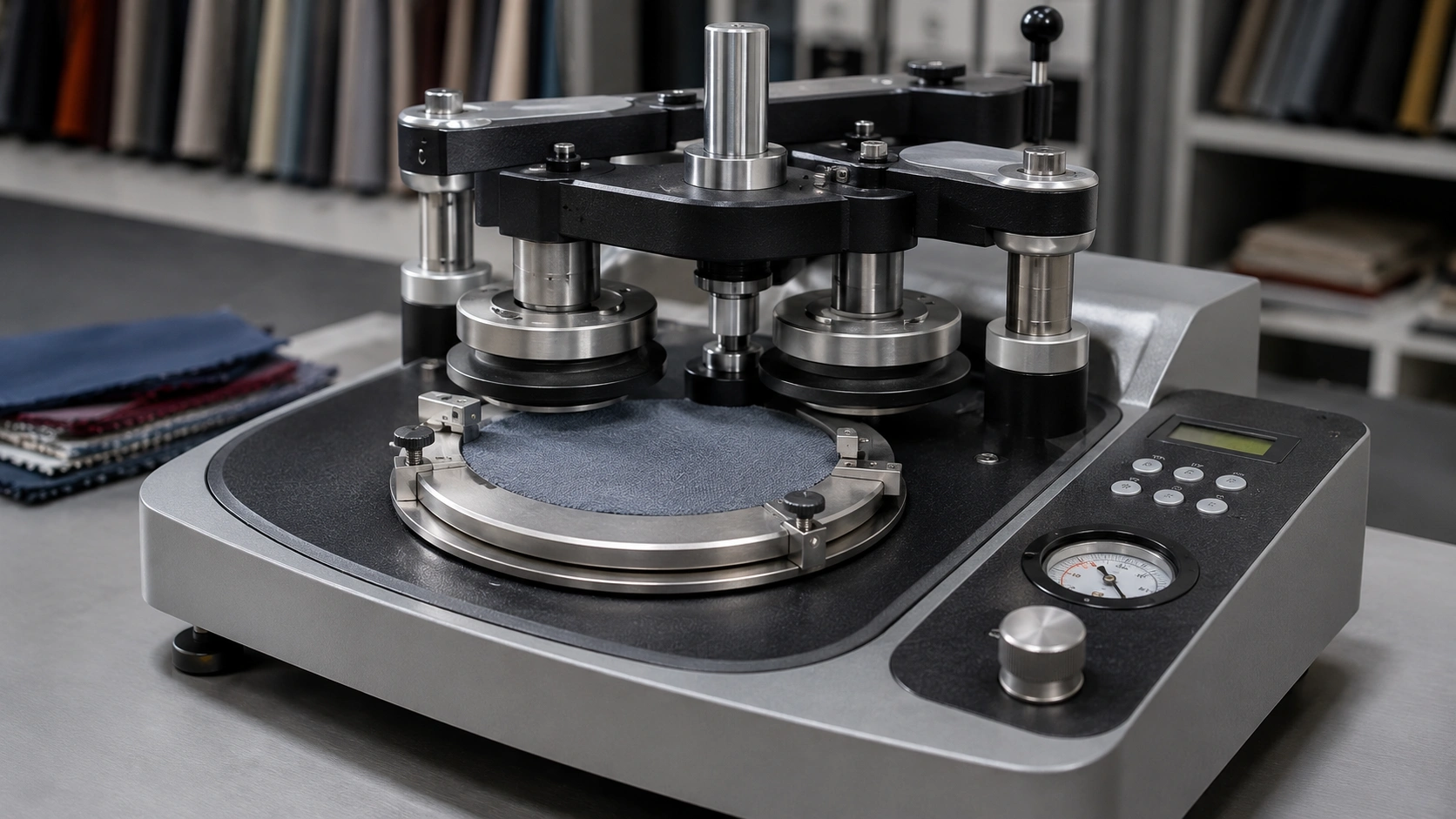
The Martindale abrasion test is the international gold standard. A piece of fabric is mounted flat and rubbed in a figure-eight pattern using woolen cloth or wire mesh. The test counts how many cycles the fabric endures before showing visible wear (thread breakage, hole formation, or significant color change).
The Wyzenbeek Test (ASTM D4157)
More commonly used in North America, the Wyzenbeek test rubs fabric back and forth in a straight line using steel wire or cotton duck. It produces "double rub" counts. While the numbers look much higher than Martindale, the tests are not directly comparable — a Wyzenbeek 50,000 is roughly equivalent to a Martindale 20,000-25,000.
Other Durability Factors Beyond Rub Count
Rub count measures abrasion resistance only. A complete durability assessment should also consider:
- Pilling resistance: Does the fabric form those annoying little fuzz balls? Measured by the Martindale pilling test (grades 1-5, where 5 is best)
- Colorfastness: Resistance to fading from light exposure (graded 1-8 on the ISO 105-B02 scale) and wet/dry rubbing
- Tear strength: How much force is needed to propagate a tear once a snag occurs — critical for homes with pets
- Seam slippage: Whether seams pull apart under stress — a common failure point on sectional sofas where people sit on the joint
- Stain resistance: Whether spills bead up and wipe away or penetrate the fibers permanently
Ranking: The Most Durable Sofa Fabrics
Based on comprehensive analysis of abrasion data, stain resistance testing, real-world user feedback, and expert upholstery assessments, here are the most durable sofa fabrics ranked from strongest to least durable within the "durable" category.
Microfiber (Performance Grade)
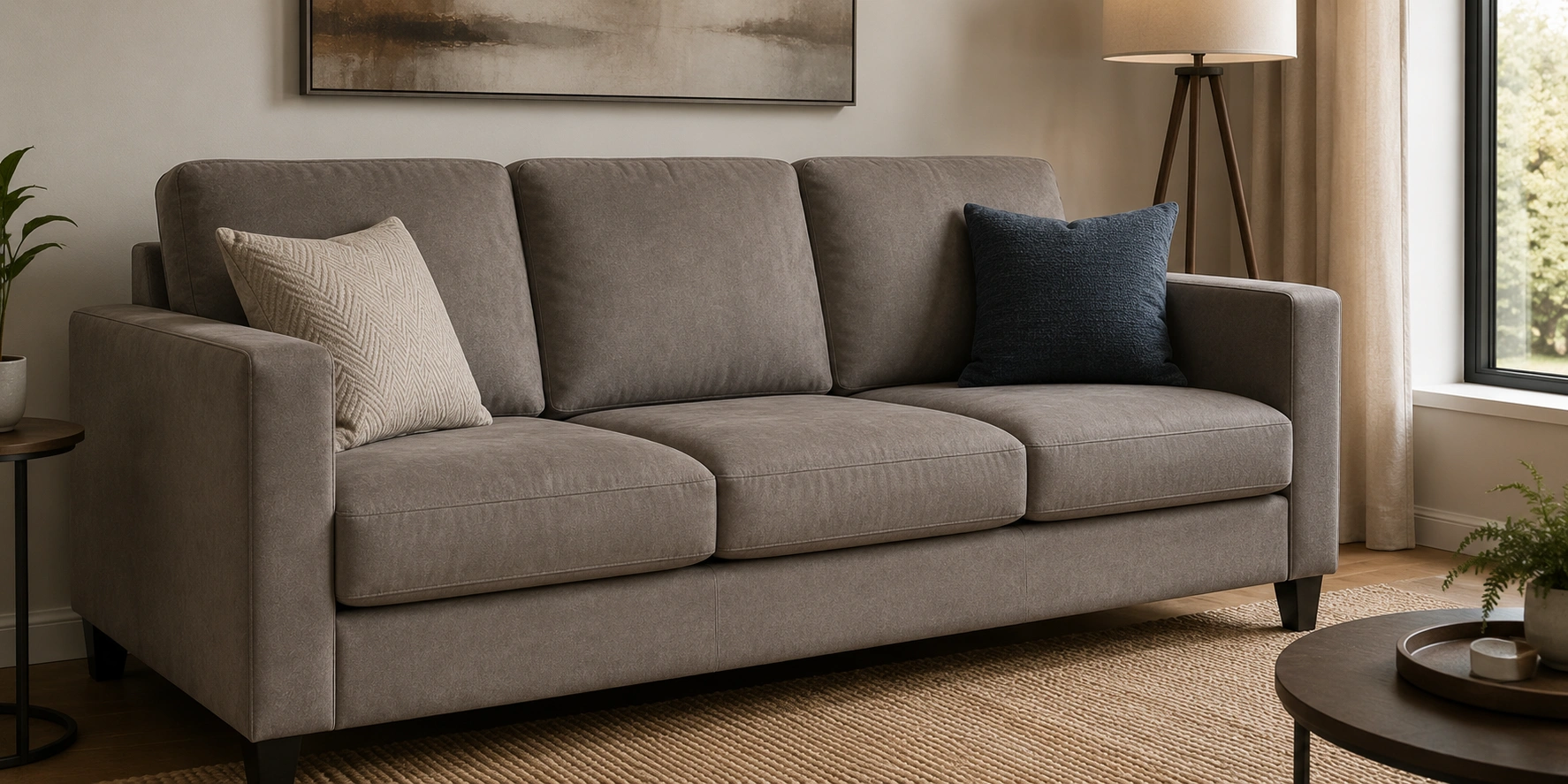
Microfiber consistently ranks as the most durable synthetic upholstery fabric. Made from ultra-fine polyester fibers (typically 0.1 denier or less), performance-grade microfiber achieves Martindale rub counts of 80,000-100,000+, rivaling commercial-grade textiles. Its ultra-tight construction leaves virtually no gaps for dirt, liquids, or pet dander to penetrate.
The key advantage of microfiber over other synthetics is its non-porous surface. Unlike woven fabrics where spills can seep between threads, microfiber's dense fiber mat causes liquids to bead on the surface, giving you critical seconds to blot them away. This is why microfiber couches are particularly popular with families.
✔ Pros
- Highest abrasion resistance of any common upholstery fabric
- Naturally stain-resistant — most spills wipe clean
- Resists pet claw snags better than woven fabrics
- Very affordable compared to leather or performance blends
- Available in wide range of colors and textures
✘ Cons
- Holds onto pet hair — requires frequent lint rolling
- Can feel warm/sticky in hot climates
- Lower-end microfiber may show water marks after cleaning
- Limited premium aesthetic compared to natural fibers
- Difficult to repair if physically torn
Full-Grain Leather
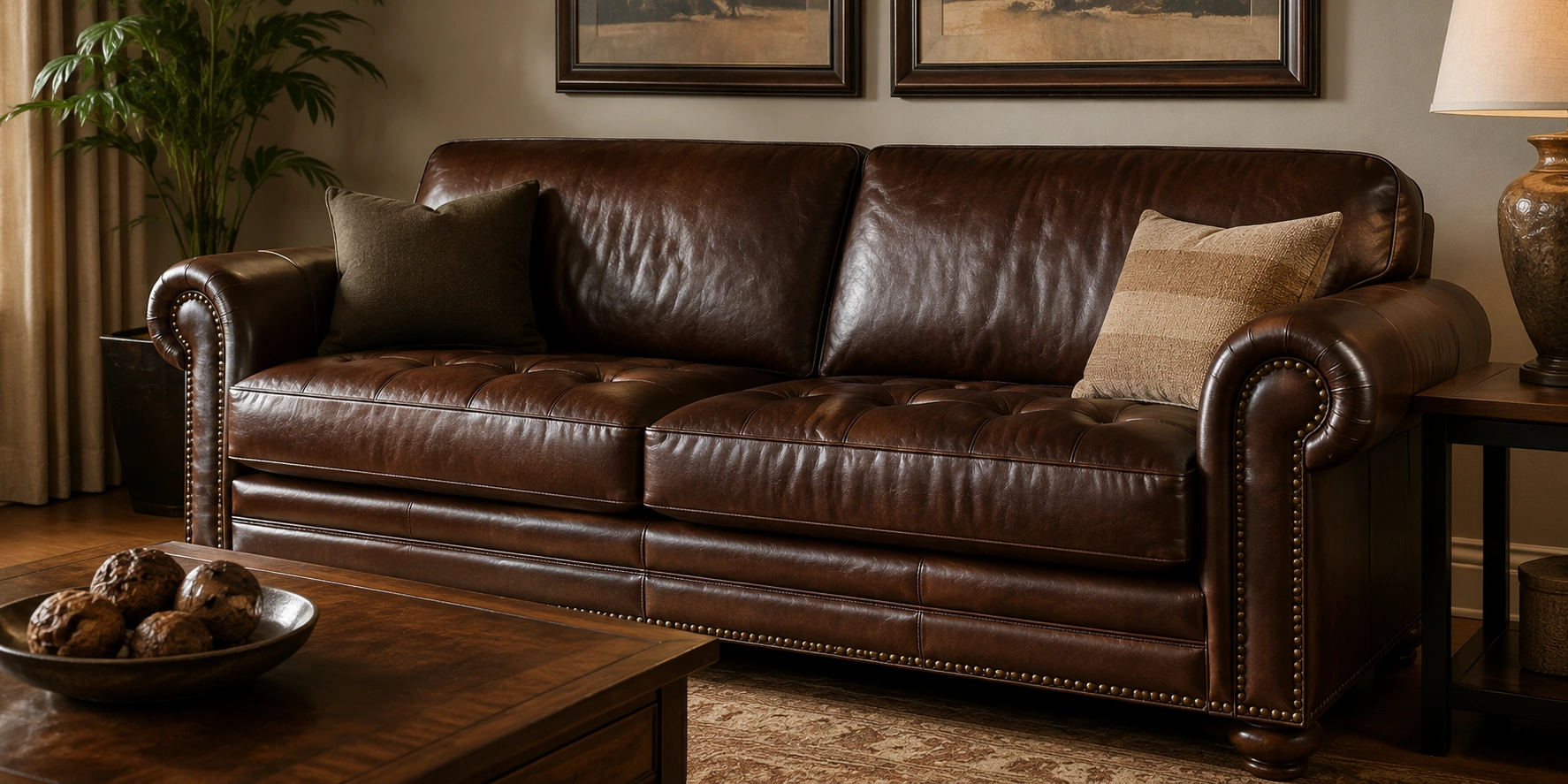
Full-grain leather is the undisputed champion of long-term lifespan. While its Martindale rub count (typically 40,000-60,000) is lower than microfiber, leather doesn't degrade the way fabric does — it doesn't pill, thin, or unravel. Instead, it develops a patina that many consider more attractive than its original appearance. A well-maintained leather sofa routinely lasts 15-25 years.
Understanding leather grades is critical here. Only full-grain (the top layer with natural grain intact) offers maximum durability. Top-grain leather is a close second. Bonded leather and faux leather should not be considered for durability — they typically crack and peel within 2-5 years.
✔ Pros
- Longest potential lifespan of any upholstery (15-25+ years)
- Improves aesthetically with age through patina
- Completely impermeable to liquid spills
- Easy to clean — wipe with damp cloth
- Doesn't harbor dust mites or allergens
✘ Cons
- Expensive — quality full-grain starts at $2,000+
- Can be scratched by cat claws (dogs are usually fine)
- Cold to the touch in winter, sticky in summer
- Requires periodic conditioning to prevent drying
- Heavy — difficult to move or rearrange
Crypton Performance Fabric
Crypton is a proprietary performance fabric engineered specifically for durability and stain resistance. It uses a multi-layer construction: a woven face fabric is bonded to a moisture barrier and an anti-microbial backing. The result is a material that achieves 50,000-75,000 Martindale rubs while being virtually stain-proof and resistant to bacteria, mold, and mildew.
Crypton has become the go-to choice for family sofas because it handles the triple threat of kids, pets, and spills better than almost anything else. It's available in a wide variety of textures and patterns — from smooth weaves to textured chenille-look finishes — so you don't have to sacrifice aesthetics for durability.
✔ Pros
- Near-complete stain and liquid resistance
- Anti-microbial — resists mold, mildew, and odor
- Available in many textures and patterns
- No chemical treatments that wash off over time
- Easily cleaned with soap and water
✘ Cons
- Premium price point — 30-50% more than standard upholstery
- Limited to participating manufacturers
- Can feel slightly stiffer than untreated fabric
- Not widely available for DIY reupholstery
- Some users report a slight chemical smell initially
Canvas (Duck Cotton)
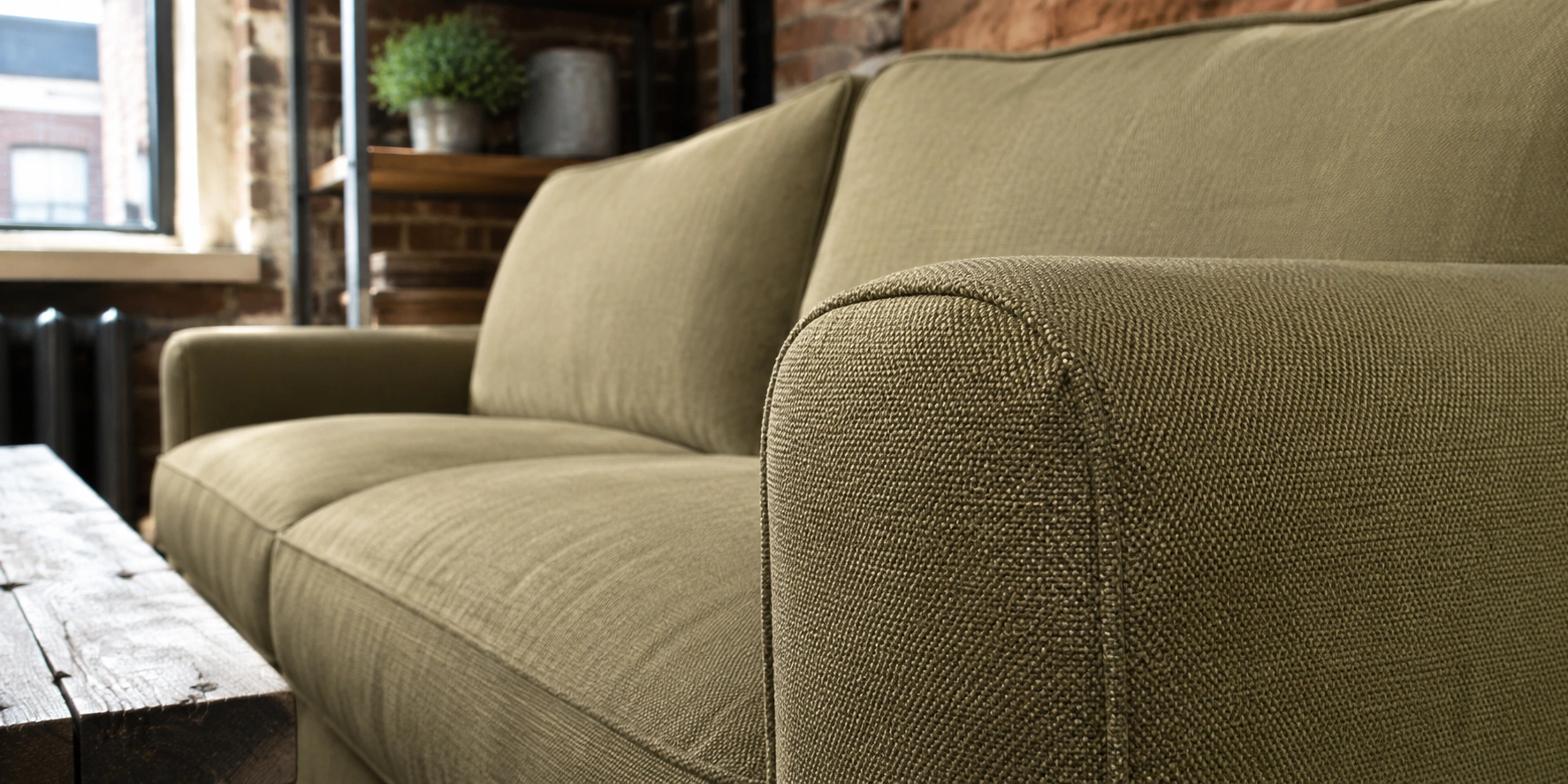
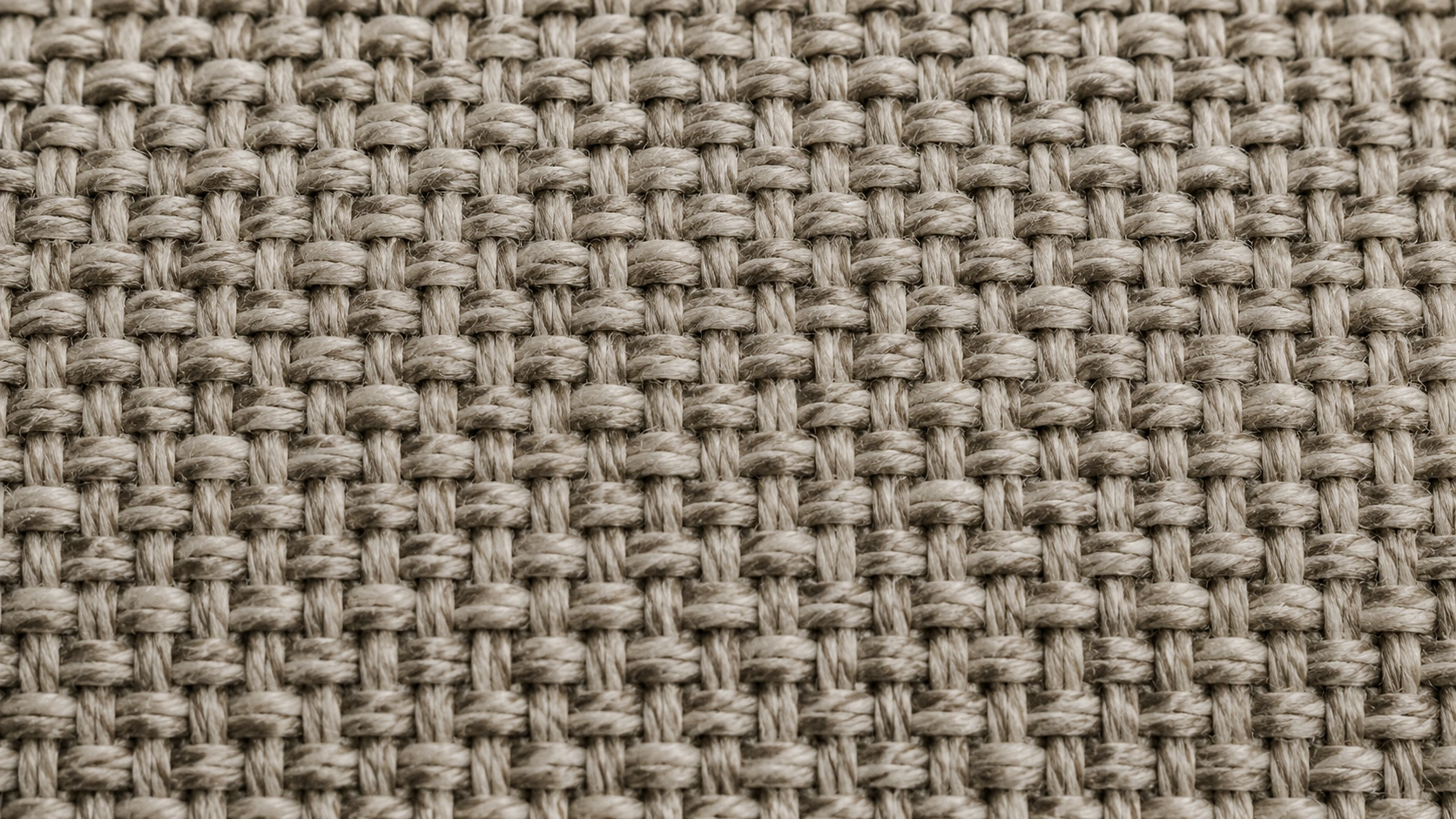
Canvas — specifically duck cotton canvas — is one of the most underrated durable upholstery options. Its tight plain-weave construction (two yarns woven over and under each other in a simple grid) creates a strong, balanced fabric that achieves 40,000-60,000 Martindale rubs in heavier weights (12 oz or higher).
Canvas has been used for centuries in military tents, sails, and workwear precisely because of its toughness. As sofa upholstery, it offers a casual, relaxed aesthetic that works beautifully in industrial, bohemian, and coastal design schemes. Heavier canvas weights (10-12 oz) are significantly more durable than lighter weight options.
✔ Pros
- Natural fiber with excellent breathability
- Very affordable compared to performance fabrics
- Develops attractive worn-in character over time
- Easy to find and available in many colors
- Can be treated with fabric protector for stain resistance
✘ Cons
- Not inherently stain-resistant — requires treatment
- Can shrink if not pre-shrunk before upholstery
- Wears at crease points (seat edges, arm rests)
- More prone to fading than synthetic options
- Attracts dust and pet hair more than smooth synthetics
Sunbrella (Solution-Dyed Acrylic)
Originally developed for marine awnings and outdoor furniture, Sunbrella has crossed over into indoor upholstery — and for good reason. Its solution-dyeing process means the color pigment is added to the liquid acrylic before the fibers are extruded, so the color goes all the way through each fiber rather than sitting on the surface. This makes it virtually fade-proof, with UV resistance that far exceeds any other upholstery fabric.
In terms of durability, Sunbrella achieves 30,000-50,000+ Martindale rubs depending on the specific weave. Its biggest selling point is that it combines decent abrasion resistance with extraordinary fade resistance and inherent stain resistance. It's also mold and mildew resistant, making it ideal for humid climates or basement family rooms.
✔ Pros
- Best UV/fade resistance of any upholstery fabric
- Inherently mold and mildew resistant
- Easy to clean with mild soap and bleach solution
- Color goes through entire fiber — won't fade or wear off
- Soft, comfortable hand feel despite acrylic composition
✘ Cons
- Lower abrasion resistance than microfiber or Crypton
- Can attract pet hair due to slight texture
- Premium pricing for indoor use
- Limited to the Sunbrella color/pattern catalog
- Some weaves feel less "luxurious" than traditional upholstery
Performance Tweed & Bouclé Blends
Performance tweeds and bouclés have surged in popularity, driven by the trend toward textured upholstery. Modern performance versions use engineered yarn blends (typically polyester with olefin or acrylic) that achieve 30,000-50,000 rubs while maintaining the nubby, tactile texture that design-forward buyers want.
Traditional wool tweed and cotton bouclé are not particularly durable — but the "performance" variants use synthetic fibers that mimic the look while dramatically improving wear resistance. If you love the textured aesthetic popular in modern and contemporary sofa designs, look specifically for "performance bouclé" or "performance tweed" labeling to ensure you're getting the durable version.
✔ Pros
- On-trend aesthetic with excellent durability
- Hides minor stains and wear due to textured surface
- Comfortable, soft hand feel
- Available in many colors and weave patterns
- Textured surface is less prone to showing wrinkles
✘ Cons
- Loop textures can snag on jewelry, pet claws, or zippers
- Difficult to clean if debris gets trapped in loops
- Must verify "performance" labeling — standard bouclé is fragile
- Higher price than flat-weave alternatives
- Professional cleaning usually recommended
Vinyl (PVC Upholstery)
Vinyl is a polarizing choice. On paper, it's extremely durable — 50,000-100,000+ rubs, completely waterproof, and easy to clean. It's widely used in commercial settings, medical offices, and restaurants for precisely these reasons. However, it has significant comfort and aesthetic drawbacks for residential use.
If you're furnishing a basement rec room, guest room, or a space where practicality completely trumps comfort, vinyl can be a smart budget choice. But for your primary living space, the lack of breathability and plastic-like feel make it hard to recommend over microfiber or Crypton at similar price points.
✔ Pros
- Extremely high abrasion resistance
- 100% waterproof — no liquid penetrates
- Very low cost compared to leather
- Easiest material to clean — any cleaner works
- Available in leather-like finishes
✘ Cons
- Not breathable — hot and sticky in warm weather
- Can crack and peel over time (especially cheap vinyl)
- Noticeably plastic feel compared to real leather
- Environmental concerns with PVC production
- Cold and uninviting to sit on
Top-Grain Leather
Top-grain leather is the second-highest quality of genuine leather. It's made from the same top layer as full-grain but has been sanded and buffed to remove imperfections, then finished with a protective coating. This process gives it a more uniform appearance but slightly reduces durability compared to full-grain — typically 30,000-50,000 rubs.
The protective finish actually gives top-grain an advantage in stain and scratch resistance over full-grain, making it a more practical choice for some households. However, it won't develop the rich patina that full-grain leather is prized for, and the finish can eventually crack or peel after many years. For a thorough comparison, see our leather vs fabric guide.
✔ Pros
- More uniform appearance than full-grain
- Finish layer adds scratch and stain resistance
- Still very long-lasting (10-20 years)
- Easier to clean than uncoated full-grain
- More affordable than full-grain
✘ Cons
- Won't develop natural patina
- Finish can crack/peel after extensive wear
- Less breathable than full-grain
- Still expensive compared to fabric options
- Can be punctured by determined cat claws
Side-by-Side Comparison Table
The following table consolidates all key durability metrics so you can quickly compare fabrics across the factors that matter most for your situation.
| Fabric | Rub Count | Stain Resist. | Pet Resist. | UV Resist. | Lifespan | Comfort | Price |
|---|---|---|---|---|---|---|---|
| Microfiber | 8-15 yrs | $300–$1,200 | |||||
| Full-Grain Leather | 15-25 yrs | $2,500+ | |||||
| Crypton | 10-15 yrs | $1,200–$2,500 | |||||
| Canvas/Duck Cotton | 7-12 yrs | $150–$600 | |||||
| Sunbrella | 8-15 yrs | $1,000–$2,200 | |||||
| Perf. Tweed/Bouclé | 7-12 yrs | $500–$1,800 | |||||
| Vinyl | 5-10 yrs | $200–$800 | |||||
| Top-Grain Leather | 10-20 yrs | $1,000–$2,000 |
⚠️ Important Note on Rub Counts: Rub counts from different manufacturers are not always directly comparable. Testing conditions, backing materials, and post-fabric finishes all affect results. Always ask for the specific test standard (Martindale vs. Wyzenbeek) and the testing laboratory report when comparing fabrics across brands.
Best Fabric by Lifestyle & Household
Rub counts and lab tests tell one story, but real-world durability depends heavily on how you use your sofa. Here are targeted recommendations based on common household scenarios.
Homes with Dogs
Dogs typically damage sofas through claw scratches, drool, and muddy paws — but rarely through deliberate destruction. Microfiber is the top choice because its non-woven structure has no individual threads for claws to catch on. Full-grain leather is the second-best option for dogs: most claw marks simply buff out, and drool wipes clean instantly. Avoid looped textures (bouclé, tweed) and loosely woven natural fibers.
Homes with Cats
Cats are tougher on upholstery because they actively scratch as a natural behavior. Microfiber remains the best option — cats can't easily snag it. Crypton is a strong second choice. Leather is risky with cats — even full-grain can be deeply gouged by determined scratching. If you have cats and love leather, invest in quality pet-proof sofa covers and provide alternative scratching surfaces.
Families with Young Children
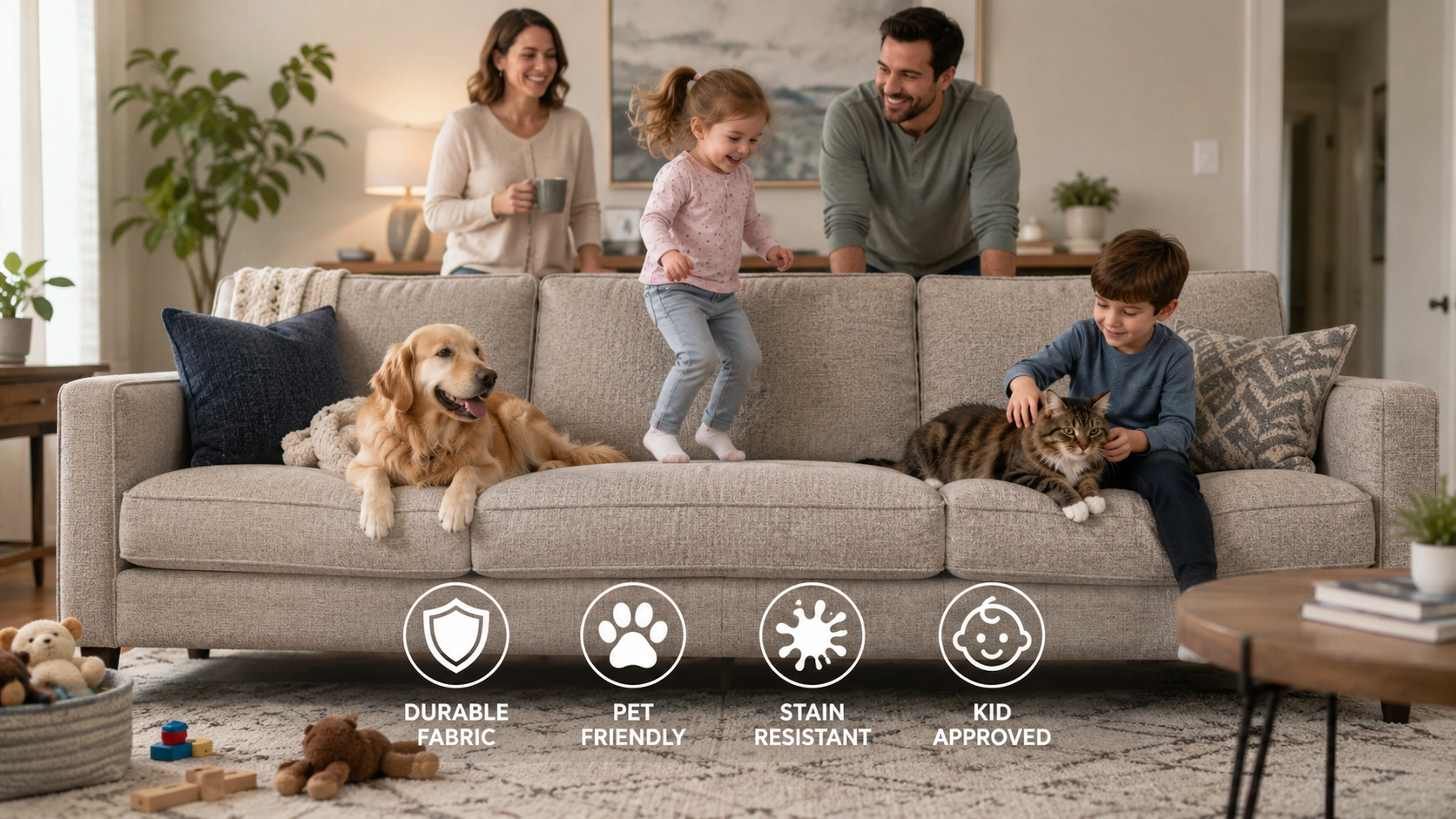
The main enemies here are spills, food stains, and rough play. Crypton is the clear winner — its stain resistance is essentially bulletproof, and it's easy to clean with just soap and water. Microfiber is the budget alternative. For family-oriented sofa recommendations, also consider washable slipcovered options like a slipcovered sofa where you can remove and machine-wash the covers.
High-Sunlight Rooms
If your sofa sits in a bright room with large windows, UV degradation is your primary concern. Sunbrella is unmatched for fade resistance — it's literally engineered for sun exposure. Solution-dyed polyester (where color is baked into the fiber) is a more affordable alternative. Natural fibers like cotton and linen will fade significantly within 1-2 years of direct sun exposure. Consider UV protection strategies as a supplement.
Apartments & Small Spaces
In compact living areas, your sofa often serves multiple purposes — seating, guest bed, and sometimes even a workspace perch. This multi-use scenario demands a fabric that handles varied wear patterns. Microfiber offers the best all-around durability at a reasonable price for apartment sofas. If you want something more stylish, performance tweed in a medium-tone color hides wear while looking elevated.
Fabrics to Avoid for Durability
Just as important as knowing what to choose is knowing what to avoid. These fabrics may look beautiful but have significant durability limitations:
- Silk: Rub count typically under 10,000. Stains permanently with any liquid contact. Sunlight destroys it. Reserve for decorative pillows only.
- Velvet (non-performance): While velvet sofas are gorgeous, traditional velvet shows pressure marks (crushed pile), attracts pet hair magnetically, and has low abrasion resistance (15,000-20,000 rubs). If you must have velvet, look for "performance velvet" made from high-tenacity polyester.
- Linen: Despite its luxurious feel, linen has poor abrasion resistance (10,000-15,000 rubs), wrinkles easily, and shows wear at seam lines. Linen sofas are best for formal, low-traffic spaces only.
- Chenille (non-performance): The fuzzy surface catches on everything — pet claws, jewelry, zippers. It pills heavily and the pile flattens permanently in high-traffic areas.
- Bonded Leather: Not real leather — it's a polyurethane/paper composite with leather scraps. It looks decent initially but inevitably cracks and peels within 2-5 years, often starting at stress points like seat creases and arm edges.
- Jacquard/Brocade: Complex woven patterns look luxurious but the raised threads are extremely susceptible to snagging and unraveling. One caught thread can pull and distort the entire pattern.
🛠️ The Pilling Problem: If you've ever noticed small fuzz balls forming on your sofa, that's pilling — caused by loose fibers tangling together from friction. It's most common in fabrics with short staple fibers or blended natural/synthetic yarns. If pilling is a concern, prioritize fabrics made with long-staple fibers or continuous filament synthetics like microfiber. Our fabric pilling guide covers prevention and removal techniques in detail.
How to Extend Your Fabric Sofa's Lifespan
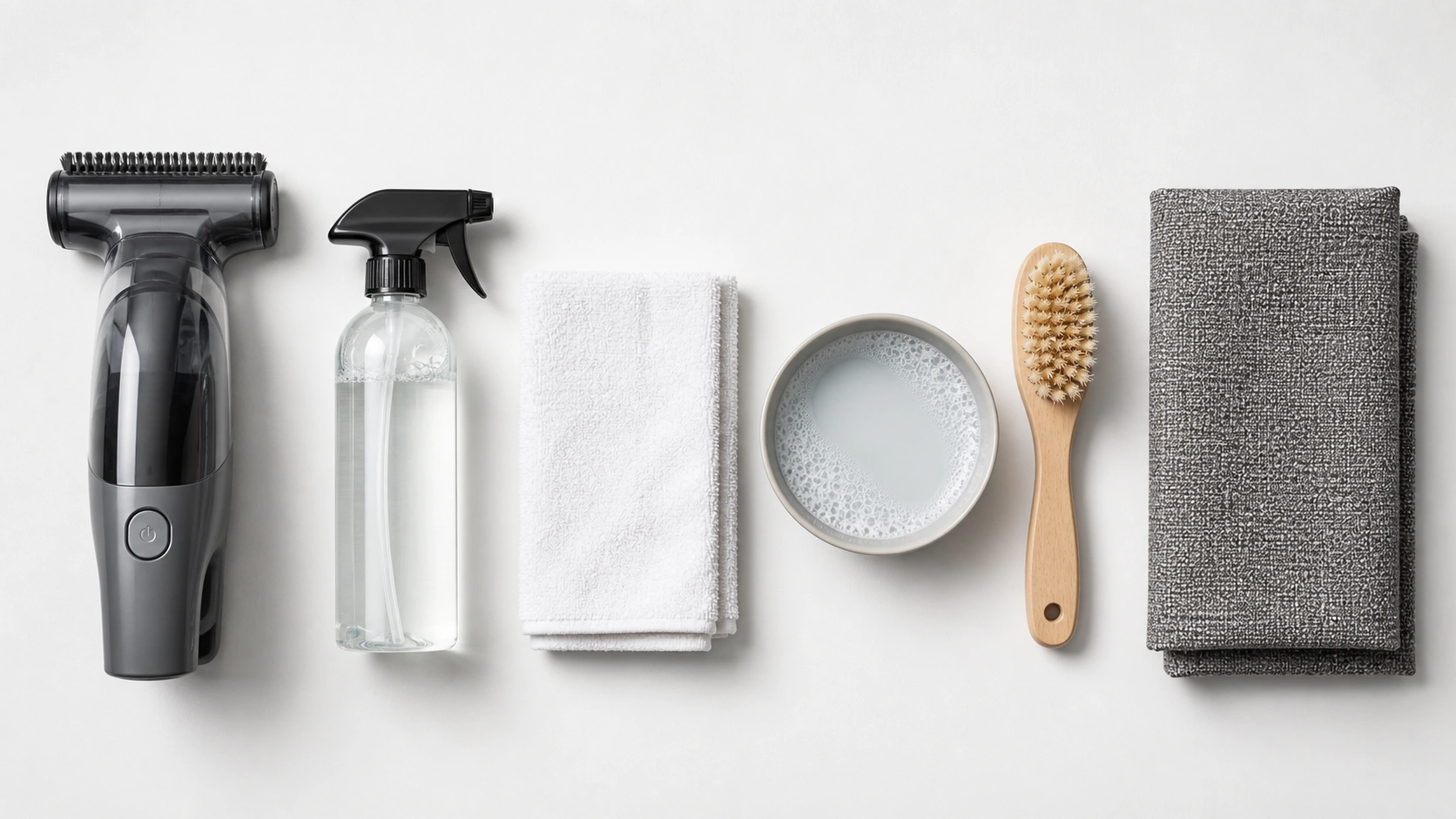
Even the most durable fabric will fail prematurely without proper care. These practices can add years to any sofa's life:
1. Apply Fabric Protection at Purchase
Professional fabric protection treatments (like Scotchgard or Crypton's built-in system) create an invisible barrier that causes spills to bead up rather than soak in. Even on inherently stain-resistant fabrics like microfiber, a protection layer adds a safety net. Apply it immediately after purchase and reapply annually. See our complete fabric protection guide.
2. Rotate and Flip Cushions Regularly
Most people always sit in the same spot. This creates uneven wear that can cause one cushion to degrade years before the others. Rotate seat cushions weekly and flip them monthly (if reversible). This single habit can double the effective lifespan of your fabric.
3. Vacuum Weekly
Dirt particles act like sandpaper on fabric fibers. Every time you sit down, embedded dirt grinds against the fibers, accelerating wear. Regular vacuuming with an upholstery attachment removes this abrasive debris before it causes damage. This is especially important for textured fabrics like bouclé and tweed.
4. Address Spills Immediately
Even on stain-resistant fabrics, the longer a spill sits, the more likely it is to cause permanent discoloration. Blot (don't rub) spills immediately with a clean, dry cloth. For tougher stains, follow our stain removal guide specific to your fabric type.
5. Manage Sun Exposure
UV radiation is the silent killer of upholstery. Even "fade-resistant" fabrics will eventually degrade under constant direct sunlight. Use curtains or blinds during peak sun hours, or apply UV protection window films to block damaging rays without sacrificing natural light.
6. Use Strategic Accessories
Placing throws and pillows on high-wear areas (arm rests, head rests) creates a sacrificial layer that takes the abuse instead of your primary upholstery. For homes with pets, sofa covers provide comprehensive protection that can be removed and washed.
Frequently Asked Questions
Full-grain leather and performance microfiber are widely considered the most durable sofa fabrics. Full-grain leather can last 15-25 years with proper care, while high-quality microfiber achieves rub counts exceeding 100,000, making it exceptionally resistant to abrasion. For households with kids and pets, Crypton performance fabric offers the best combination of durability and stain resistance.
A rub count (measured via the Martindale or Wyzenbeek test) indicates how many cycles of abrasion a fabric can withstand before showing wear. For residential sofas, a minimum of 15,000 Martindale rubs is recommended for light use, 25,000+ for general use, and 30,000+ for heavy-duty use. The Wyzenbeek test produces higher numbers (double rubs) but uses a different methodology — the two scales are not directly interchangeable.
It depends on the criteria. Microfiber typically scores higher in abrasion resistance (rub count) and is more resistant to pet claws. However, full-grain leather outlasts microfiber in overall lifespan because it develops a patina rather than degrading, and it resists liquid stains more effectively. For pure wear resistance, microfiber wins. For total lifespan including aesthetics, full-grain leather wins.
For dogs, microfiber and full-grain leather are both excellent choices — dogs' claws rarely cause significant damage to either. For cats, microfiber is the clear winner because its non-woven structure has no threads to snag. Crypton fabric is a strong runner-up for both. Leather is generally not recommended for cat owners, as determined scratching can cause deep, permanent gouges. See our complete pet-friendly sofa FAQ for more details.
For residential use, look for at least 15,000-20,000 Martindale rubs for occasional-use furniture (guest rooms, formal living rooms), 25,000-30,000 rubs for everyday living room sofas, and 40,000+ rubs for high-traffic areas or homes with children and pets. Commercial-grade fabrics often exceed 100,000 rubs but may sacrifice comfort for durability.
For most households, yes. Performance fabrics like Crypton and Sunbrella typically cost 30-50% more than standard upholstery, but they last 2-3 times longer and save you from costly professional cleaning or early replacement. If your sofa sees daily use from multiple people, pets, or children, the premium pays for itself within 3-5 years through avoided replacement costs.
You can improve stain resistance and slightly extend life through fabric protection sprays and careful maintenance, but you cannot fundamentally change a fabric's abrasion resistance. A silk sofa treated with Scotchgard will resist spills better but will still wear through at the same low rub count. If durability matters, choose a durable fabric from the start rather than trying to reinforce a fragile one. For fragile fabrics you already own, quality sofa covers are your best defense.
The Martindale test rubs fabric in a figure-eight pattern, simulating multi-directional wear. The Wyzenbeek test rubs in a straight back-and-forth line. Because the Wyzenbeek method is less demanding, its numbers are significantly higher for the same fabric. As a rough guide: 25,000 Wyzenbeek double rubs ≈ 15,000-20,000 Martindale rubs. Always check which test standard is being cited before comparing numbers across different brands or products.
🛒️ Ready to Buy? Now that you know which fabrics last, explore our curated selection of durable fabric sofas below. Each recommendation features upholstery materials that meet the durability standards discussed in this guide — so you can buy with confidence knowing your investment will stand the test of time.


