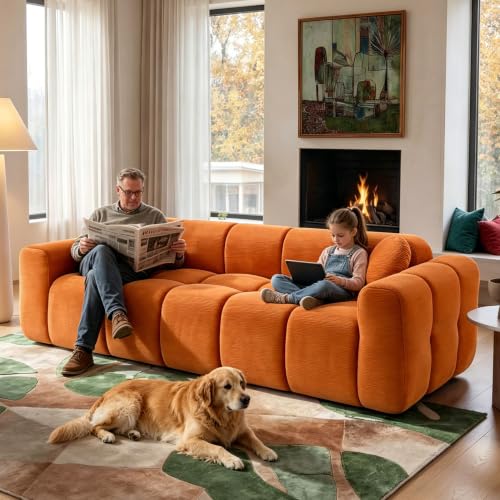
The Complete Guide to Choosing an Orange Sofa
From burnt orange to soft terracotta — discover which shade fits your space, learn foolproof color pairings, and find the perfect orange sofa with confidence.
Why an orange sofa works: Orange is one of the most versatile bold colors in interior design. It radiates warmth, energy, and personality without the aggressive intensity of red. A well-chosen orange sofa can transform a bland room into a curated, inviting space — and contrary to common belief, it pairs beautifully with a wide range of colors, not just neutrals. The key is selecting the right shade for your room's lighting and existing palette.
An orange sofa is a statement piece by nature. Unlike safe neutrals that blend into the background, orange demands attention and rewards it. It creates an immediate focal point, reduces the need for additional decorative accessories, and makes a room feel intentionally designed rather than accidentally furnished. For homeowners exploring bold color sofa options, orange consistently ranks as the most livable and easiest to style among saturated hues.
But the difference between an orange sofa that looks curated and one that looks chaotic comes down to two things: shade selection and color pairing. This guide walks you through every decision point — from choosing between burnt orange, terracotta, and coral, to understanding which wall colors, rug tones, and accessory palettes create harmony rather than visual noise.
Pros and Cons of an Orange Sofa
Before diving into specifics, it is worth understanding the honest advantages and trade-offs of choosing orange over more conventional sofa colors. This sets realistic expectations and helps you decide if the bold move aligns with your lifestyle and tolerance for standing out.
✓ Advantages
- Creates an instant focal point without additional decor
- Adds warmth and energy to rooms that feel cold or sterile
- Makes a small space feel more designed and intentional
- Hides everyday dirt and minor stains better than light neutrals
- Works across multiple design styles — mid-century, bohemian, contemporary, industrial
- Increases perceived coziness, especially in rooms with cool-toned flooring
- Complements both warm and cool accent colors unexpectedly well
− Trade-offs
- Limits future wall color flexibility — you are working around the sofa, not the reverse
- Bright orange shades can visually overwhelm very small rooms
- Fading is more noticeable on orange upholstery under direct sunlight
- Resale value may be lower than neutral-colored sofas in the secondhand market
- Requires more deliberate color coordination for throw pillows, rugs, and curtains
- Not ideal if you frequently redecorate — orange anchors your entire color scheme
Understanding Orange Sofa Shades
Not all orange sofas are created equal. The specific shade you choose has a dramatic impact on how the sofa reads in your room. A bright tangerine piece behaves completely differently from a muted terracotta one — even in the exact same room with the same surroundings. Understanding the spectrum helps you match the shade to your room's lighting conditions, existing colors, and the mood you want to create.
Burnt Orange
Deep, rich, and sophisticated. The most versatile shade — works like a warm neutral. Ideal for contemporary spaces and rooms with brown or wood tones.
Rust Orange
Earthy and grounded with red undertones. Pairs naturally with greens, creams, and natural wood. Perfect for bohemian-style rooms.
Terracotta
Muted, clay-inspired warmth. The easiest orange to live with — reads almost neutral in low light. Stunning against white or cream walls.
Tangerine / Bright Orange
High-energy and playful. Best in rooms with abundant natural light. Works well in modern minimalist settings with stark contrast.
Coral / Peach
Soft, approachable, and feminine. Less saturated than true orange — ideal for bedrooms and guest rooms where a gentle warmth is preferred.
Muted Clay / Dusty Orange
Desaturated and sophisticated — almost a warm greige with orange influence. The safest "bold" choice. Pairs with virtually anything including grey tones.
Best Design Styles for an Orange Sofa
Orange adapts to more design aesthetics than most people realize. The key is matching the right shade to the right style framework. A burnt orange Chesterfield creates a completely different impression than a tangerine modern sofa with clean lines. Here are the style pairings that consistently produce the best results.
Mid-Century Modern
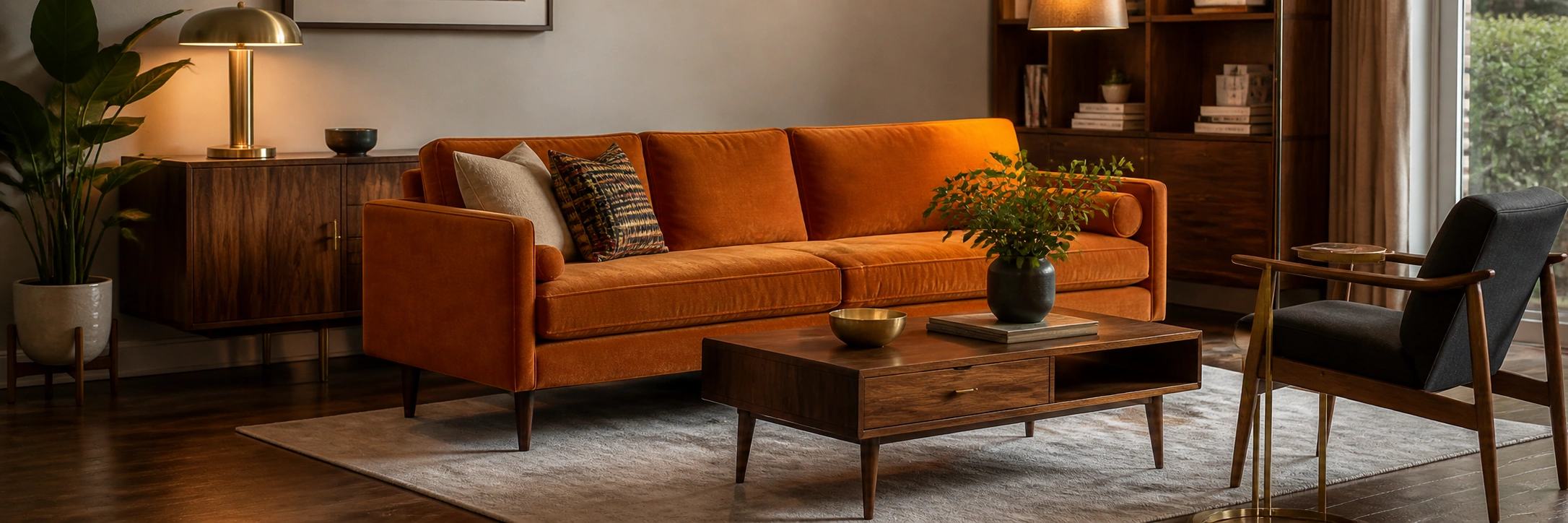
Burnt orange and rust are the signature colors of mid-century design. Pair with walnut wood tones, geometric patterns, and a tufted detail for authentic vintage appeal. This is arguably the most natural style match for orange.
Bohemian / Eclectic
Orange thrives in layered, maximalist spaces. Terracotta and rust shades pair effortlessly with rattan, macrame, and global textiles. Add patterned throws and pillows in complementary earth tones for a collected-over-time aesthetic.
Contemporary Minimalist
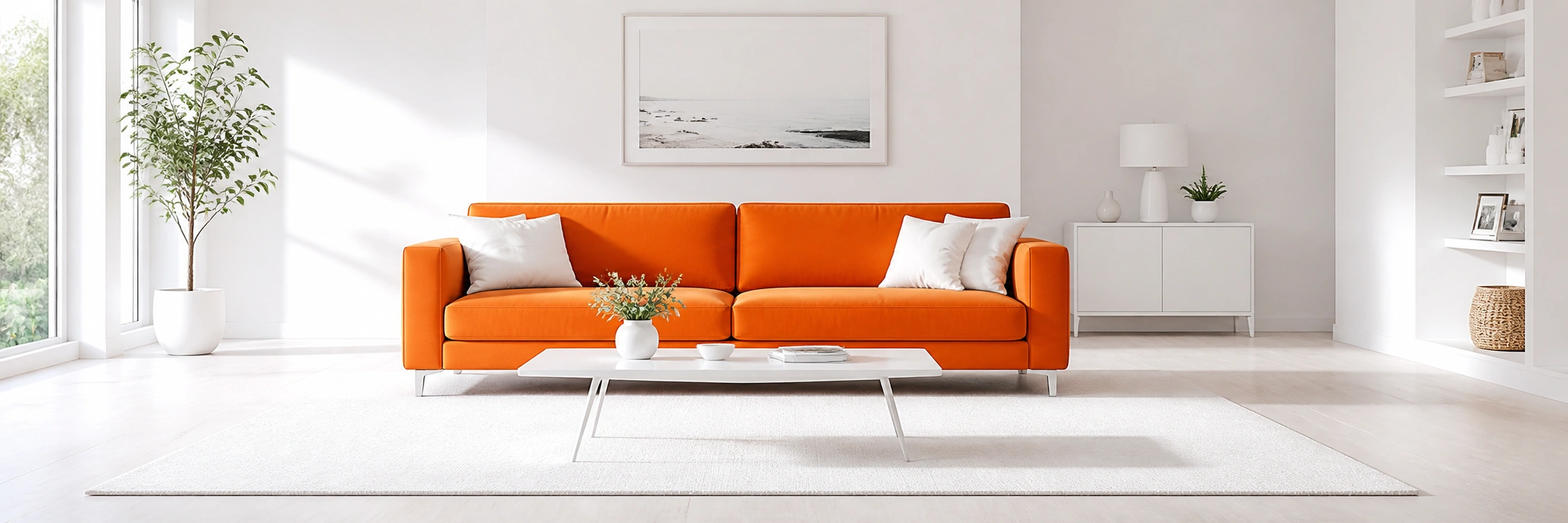
A single orange sofa against a neutral, uncluttered background creates powerful visual impact with zero clutter. White walls, light oak, and minimal accessories let the color do all the work. Works best with compact 2-seater or 3-seater silhouettes with clean lines.
Industrial
Rust and burnt orange soften the hardness of exposed brick, concrete, and metal. The warmth of orange balances the coldness of industrial materials. Pair with wooden frame accents and dark leather for a refined warehouse look.
Coastal / Warm Coastal
While traditional coastal design avoids orange, coral and peach shades work beautifully in warm coastal interpretations. Pair with sandy beige, soft whites, and natural linen textures for a sunset-over-the-beach feel that avoids cliché nautical themes.
Art Deco / Glam
A velvet orange sofa paired with gold or brass accents, mirrored surfaces, and geometric patterns creates luxurious drama. Burnt orange velvet specifically evokes 1970s glamour in the most sophisticated way.
What Colors Go With an Orange Sofa?
This is the section that matters most. Getting the color pairing right is what separates an orange sofa that looks designer-curated from one that looks like an accident. The good news: orange pairs with far more colors than people assume. The secret is understanding whether you want harmony (analogous colors near orange on the color wheel) or contrast (complementary colors opposite orange).
White & Off-White
The safest and most effective pairing. White walls create maximum contrast that lets the orange pop. Off-white and cream soften the contrast slightly for a more relaxed feel. This combination works in any room size.
Charcoal & Dark Grey
Dark greys ground orange and prevent it from feeling too energetic. This combination feels modern and urban. Similar to the sophistication of a black couch but with added warmth and personality.
Forest Green & Sage
Orange and green are complementary colors — they create natural vibrancy. Deep forest green feels rich and traditional. Sage green offers a softer, contemporary take. For more green pairing ideas, see our green sofa guide.
Brown & Chocolate
Analogous pairing that feels warm and cohesive. Burnt orange and brown share red undertones, creating seamless harmony. Works especially well with wood furniture. Compare with our brown couch styling guide for overlapping principles.
Light Grey & Greige
Light grey provides a cool-toned neutral backdrop that lets warm orange stand out without competing. Greige (grey-beige) is the sweet spot — warm enough to harmonize, cool enough to contrast. A refined alternative to pure grey sofa schemes.
Navy Blue & Teal
Blue-orange is the boldest complementary pairing. Navy grounds the combination in sophistication; teal adds a fresh, modern twist. Use blue in large blocks (rug, curtains) and orange as the sofa focal point to maintain balance.
Mustard Yellow & Gold
Analogous warm tones that create a sun-drenched, energetic atmosphere. Keep proportions balanced — one dominant (the sofa in orange), the other as accents (pillows, art). Best in rooms with strong natural light.
Taupe & Warm Beige
For those who want orange without drama, taupe and warm beige create a muted, earthy palette. The orange sofa adds just enough warmth to feel cozy without overwhelming. Similar in spirit to neutral sofa styling but with a personality lift.
Best Room Placements for an Orange Sofa
Where you place an orange sofa matters as much as which shade you choose. The room's size, natural light direction, and existing fixed elements (flooring, built-ins, wall color) all influence how successful the sofa will look. Consider your specific room type and adapt accordingly. For general layout principles, our room layout guide provides a detailed framework.
Primary Living Room
The most impactful placement. An orange living room sofa works best as the sole saturated color in the room. Keep walls, curtains, and rug neutral to let the sofa command attention. An 3-seater or sectional in burnt orange creates the strongest statement.
Family Room
Family rooms benefit from orange's warmth and energy. Terracotta and rust shades hide everyday wear better than bright orange. Consider a family-friendly sofa in performance fabric with stain-resistant treatment — orange color already provides some visual camouflage for minor spills.
Home Office
An office sofa in coral or peach adds creative energy without being distracting. A 2-seater or small loveseat is ideal — it provides client seating or a reading break spot. Pair with white or light grey walls for a professional yet vibrant atmosphere.
Small Apartment / Studio
Counterintuitively, an orange sofa can work well in small spaces because it eliminates the need for extra decorative items. One bold piece does the work of three neutral pieces. For small space sofas, choose terracotta or dusty clay — these read softer in confined areas than bright orange.
How Material Affects Orange Sofa Appearance
The same orange dye produces dramatically different visual results depending on the material it is applied to. Fabric texture, sheen level, and weave pattern all influence how saturated or muted the color appears. This is a frequently overlooked factor that explains why two sofas labeled "burnt orange" can look completely different in person.
Polyester / Microfiber
Produces the most consistent, true-to-swatch orange color. Slightly matte finish prevents the color from looking artificial. Easy to clean and stain-resistant — practical for families. Microfiber specifically holds orange dye exceptionally well with minimal fading.
Velvet
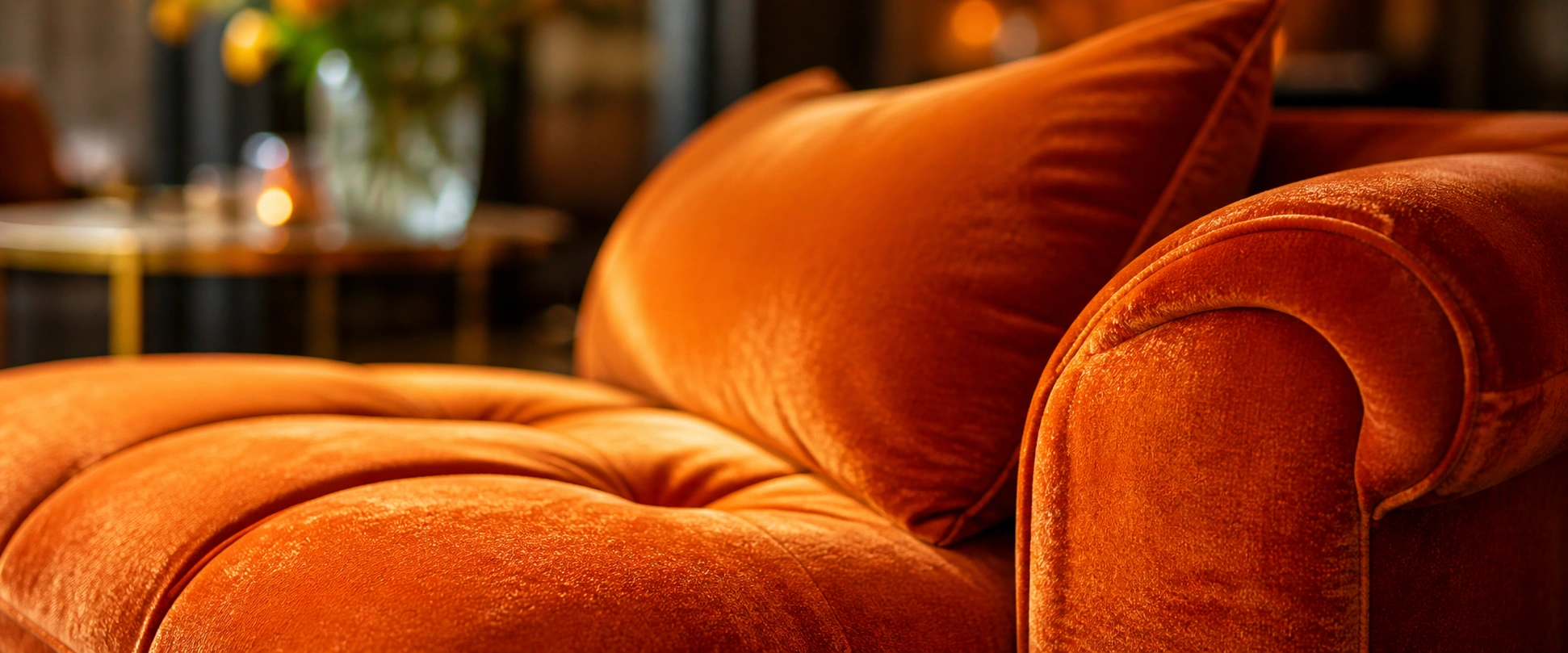
Velvet makes orange look richer and deeper because the pile creates subtle light variations across the surface. Burnt orange velvet is particularly luxurious. However, velvet shows crushing and wear patterns — best for low-traffic rooms. Learn about velvet care requirements before committing.
Performance Fabric
Engineered fabrics like Crypton or Revolution hold orange color permanently through advanced dye processes. They resist fading, stains, and wear — ideal if you want bold color without anxiety. Check durability ratings to ensure the fabric can handle your household's usage level.
Linen / Cotton
Natural fibers soften orange into a more muted, organic tone — which can be beautiful but unpredictable. Linen wrinkles easily, showing crease lines that disrupt the color uniformity. Cotton fades faster than synthetics. If choosing natural fiber, add fabric protection treatment immediately.
Genuine Leather
Orange leather develops a rich patina over time, deepening in character. However, true orange leather is rare and expensive — most "orange leather" sofas are actually brown with strong orange undertones. See leather grade differences to understand quality levels and conditioning needs for color maintenance.
Faux Leather / PU
Faux leather can achieve a true orange that real leather rarely does, but it peels and cracks over time — especially in orange where the color deterioration is very visible. Budget-friendly but high long-term cost. If considering this route, understand the full leather vs fabric trade-offs first.
⚠ Critical: Sunlight Fading Risk for Orange Sofas
Orange upholstery is more susceptible to visible fading than any other sofa color. Because orange sits in the middle of the warm spectrum, UV exposure causes it to shift unpredictably — often toward a flat, washed-out pinkish-brown that looks nothing like the original color. This is not normal wear — it is preventable damage.
If your sofa placement receives direct sunlight for more than 2 hours daily, UV protection is non-negotiable. Apply a UV-blocking window film, use curtains or blinds during peak sun hours, and treat the fabric with a UV-protectant spray. Our UV protection guide for sofas covers specific products and techniques that can extend your orange sofa's color life by years.
Common Mistakes When Buying an Orange Sofa
After reviewing hundreds of customer experiences with colored sofas, these are the errors that most often lead to regret. Each one is avoidable with the information already covered in this guide — but consolidating them here makes for a useful final check before you purchase.
- Choosing the shade from a screen image alone. Monitors, phone screens, and even printed swatches distort orange more than any other color. Always request a physical fabric sample before ordering. The difference between "burnt orange" on your screen and in your living room under your specific lighting can be shocking.
- Picking bright orange for a north-facing room. North-facing rooms receive cool, bluish light. Bright orange in cool light can look dull, muddy, or even slightly greenish. Terracotta and clay shades perform far better in low-light, cool-direction rooms. Always test your shade in the actual room at different times of day.
- Matching everything to the sofa. The instinct to buy orange pillows, an orange rug, and orange art to "tie it all together" actually creates visual monotony. The orange sofa should contrast with its surroundings — not blend into an orange-themed room. Use orange once (the sofa) and echo it sparingly in small accessories.
- Ignoring the undertone of existing elements. If your hardwood floors have red undertones and your walls have pink undertones, adding an orange sofa with red undertones creates a heavy, oversaturated look. Identify whether your room runs warm or cool, then choose an orange shade that either harmonizes or deliberately contrasts.
- Choosing size based on color excitement alone. The excitement of a bold color can lead to overlooking basic sizing principles. An oversized orange sofa overwhelms a room twice as fast as an oversized grey one because the color adds visual weight. Always follow proper sofa sizing guidelines regardless of color.
- Forgetting about pet hair visibility. Orange fabric shows white, grey, and black pet hair more prominently than mid-tone fabrics. If you have pets, consider whether your animal's hair color will clash visibly against orange. A pet-friendly sofa approach with texture and pattern can help camouflage hair.
Maintenance Tips to Keep Orange Looking Vibrant
Maintaining an orange sofa is slightly different from maintaining a neutral one. The goal is not just cleanliness — it is color preservation. Orange that fades, yellows, or shifts tone ruins the entire design effect. These targeted maintenance practices protect your investment.
Rotate Cushions Weekly
Even sun exposure across all cushions prevents uneven fading — which is far more noticeable on orange than on beige. Swap and flip seat and back cushions weekly to ensure uniform aging.
Vacuum with Brush Attachment
Dust and dirt particles act like sandpaper on dyed fabric, accelerating color dullness. Weekly vacuuming with a soft brush removes abrasive particles. Focus on crevices and seams where debris accumulates.
Treat Stains Immediately
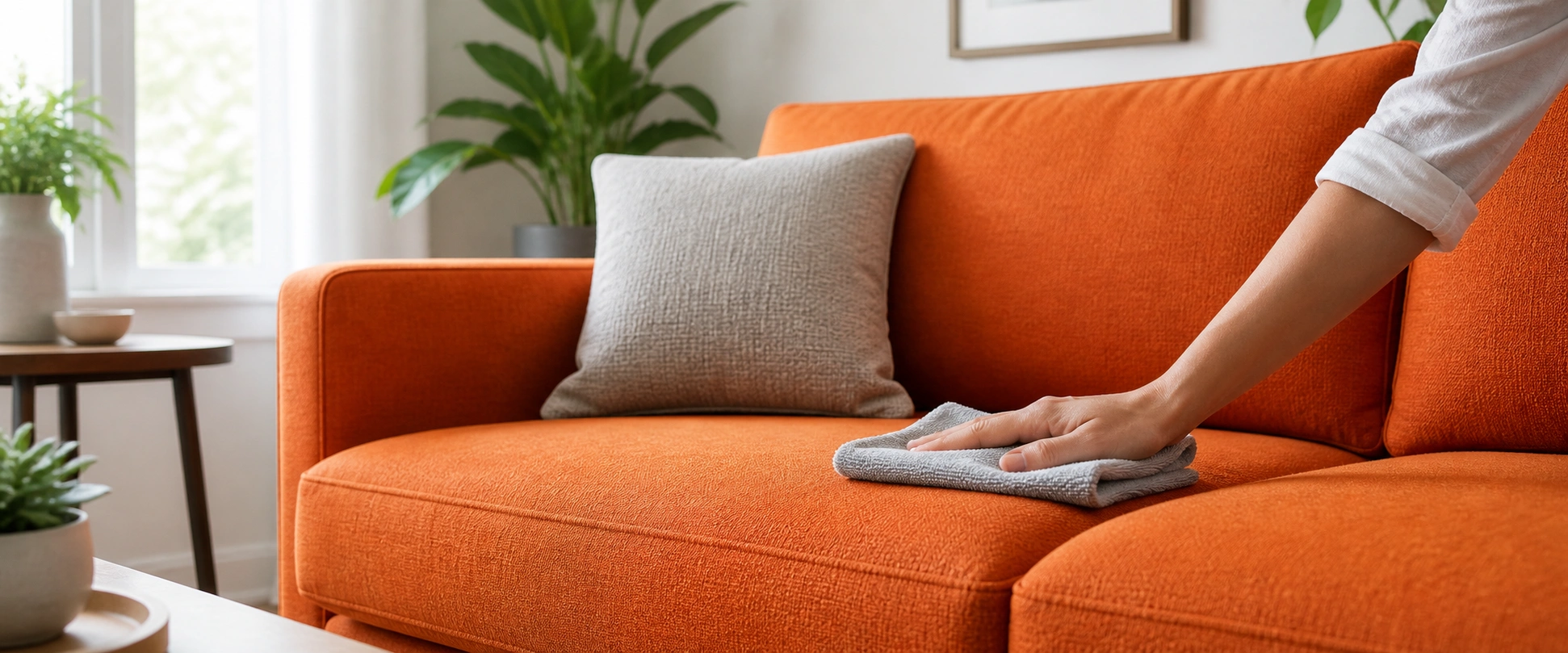
On orange fabric, stains often leave behind a lightened spot even after removal — the cleaning process can lift dye along with the stain. Blot immediately and use the gentlest effective method. Our stain removal guide covers color-safe techniques.
Reapply Fabric Protector Every 6 Months
Fabric protection spray doesn't just repel stains — it adds a UV-resistant layer that slows fading. Reapply every 6 months for sofas in sun-exposed rooms. This single habit can add years to your orange sofa's color vibrancy.
Avoid Bleach and Oxygen Cleaners
Bleach-based products strip orange dye rapidly, leaving irreversible discoloration. Even "color-safe" oxygen cleaners can shift orange toward yellow. Stick to pH-neutral cleaners specifically formulated for dyed upholstery.
Use Sofa Covers for High-Risk Periods
During parties, pet shedding seasons, or renovation dust, a temporary sofa cover prevents the kind of soiling that requires aggressive cleaning — which is exactly what causes orange color loss. Prevention is always cheaper than restoration.
Budget Guide for Orange Sofas
Orange sofas are available at every price point, but the value proposition shifts depending on budget tier. With colored sofas specifically, the cheaper options carry higher risk because dye quality, fabric construction, and colorfastness are often the first things manufacturers cut to reduce cost. Understanding what each tier delivers helps you spend wisely.
| Price Range | What You Get | Expected Lifespan | Best For |
|---|---|---|---|
| $200–$500 | Polyester or basic fabric, standard foam, simpler frame construction. Color may be less consistent batch-to-batch. | 3–5 years | Apartment dwellers, style changers, secondary seating |
| $500–$1,200 | Better dye quality, performance fabric options, solid hardwood frame, higher-density foam. More shade accuracy. | 5–8 years | Most buyers — best balance of price and quality |
| $1,200–$3,000+ | Premium velvet or top-tier performance fabric, kiln-dried hardwood frame, 8-way hand-tied suspension, custom shade options. | 8–15+ years | Forever homes, design enthusiasts, investment pieces |
For a comprehensive budgeting approach that accounts for delivery, protection treatments, and accessories, our sofa budget guide walks through the full cost picture. And before finalizing any purchase, run the sofa through our quality checklist — especially for colored sofas where construction quality directly affects how long the color stays true.
✅ Final Pre-Purchase Checklist for an Orange Sofa
- Physical fabric sample viewed in the room at morning, afternoon, and evening light
- Shade selected based on room's natural light direction (warm for north-facing, any for south-facing)
- Wall color and rug color confirmed to pair well with chosen orange shade
- Sunlight exposure assessed — UV protection plan in place if needed
- Fabric durability rating verified (minimum 30,000 Martindale for living rooms)
- Frame material confirmed (hardwood preferred for longevity)
- Sofa dimensions fit the room with proper clearance on all sides
- Existing furniture and fixed elements (floors, built-ins) evaluated for undertone clash
- Fabric protector and maintenance supplies budgeted into total cost
- Return policy confirmed — minimum 30 days to test in actual room conditions
- Pet hair visibility assessed if you have animals
- Long-term decorating plans considered — orange anchors your palette for years
- Price-per-year-of-use calculated and justified against neutral alternatives
An orange sofa is one of the most rewarding furniture decisions you can make — when done with intention. It transforms rooms, sparks conversations, and creates a lived-in warmth that neutral sofas simply cannot replicate. Take the time to select the right shade, verify the color in your actual space, and invest in proper maintenance. The result will be a sofa that you love coming home to for years to come.