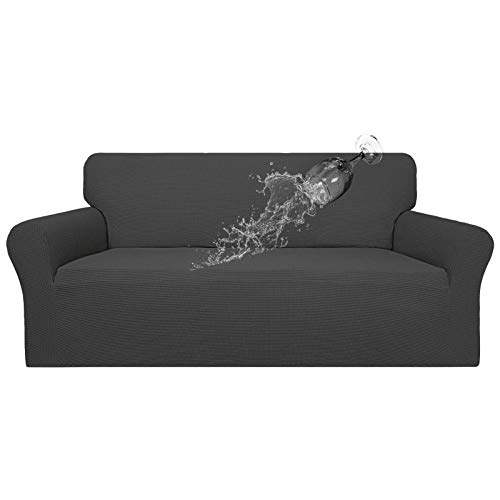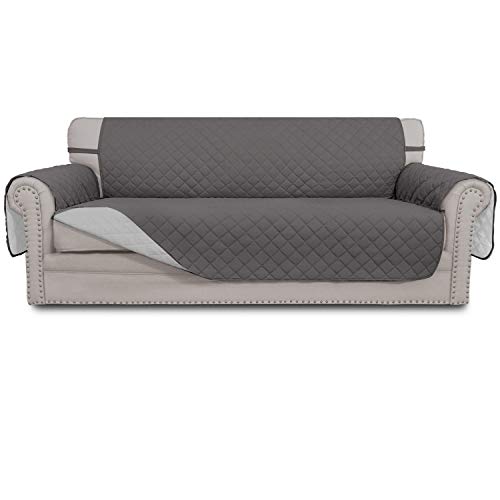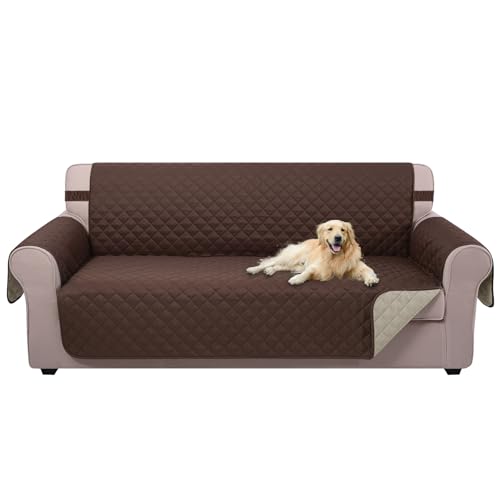
Pet-Proof Sofa Covers
The complete guide to protecting your sofa from claws, fur, drool, and accidents — without sacrificing style or comfort
EXPLORE COVER TYPESIf you share your home with a dog or cat, you already know the toll pets can take on upholstery. Shedding hair, muddy paws, accidental scratches, drool spots, and the occasional surprise accident can turn a beautiful sofa into a worn-looking piece in a matter of months. A quality sofa cover designed specifically for pet households is one of the most cost-effective investments you can make to extend the life of your furniture.
But not all pet covers are created equal. The difference between a cover that actually protects your sofa and one that slides around, looks terrible, or shreds on first contact with a claw comes down to understanding materials, construction, fit, and features. This guide walks you through every factor that matters so you can choose a cover that works — and keeps working.
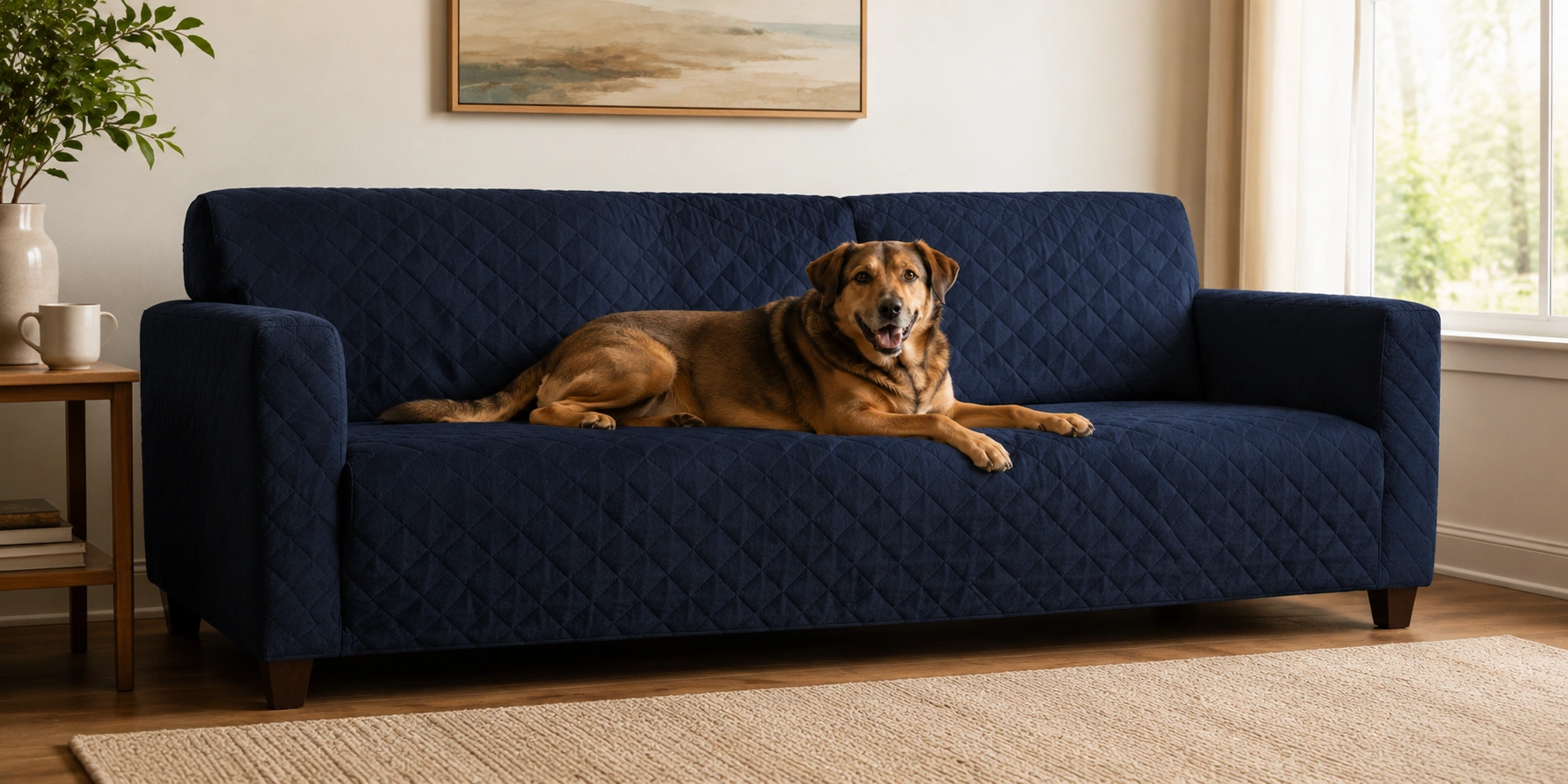
Why Every Pet Owner Needs a Sofa Cover
The cost of reupholstering a standard 3-seater sofa ranges from $500 to $2,000. Professional cleaning for pet-stained upholstery runs $100–$300 per session. A quality pet-proof cover costs between $25 and $80. The math is straightforward — a cover pays for itself after preventing even a single serious incident.
Beyond financial protection, a cover provides something equally valuable: peace of mind. You should be able to relax on your own sofa without constantly policing your pet. A proper cover lets your dog jump up after a rainy walk or your cat stretch out for a nap without that moment of anxiety about what is happening to your upholstery beneath them.
For households with sofas chosen specifically for pet-friendliness, a cover adds an extra layer of defense. Even the most durable pet-friendly fabrics benefit from a protective barrier, especially in high-traffic homes with multiple pets or active breeds.
Types of Pet-Proof Sofa Covers
Understanding the different cover styles available is the first step to choosing the right one. Each type has distinct advantages depending on your sofa configuration, your pet's behavior, and your aesthetic preferences.
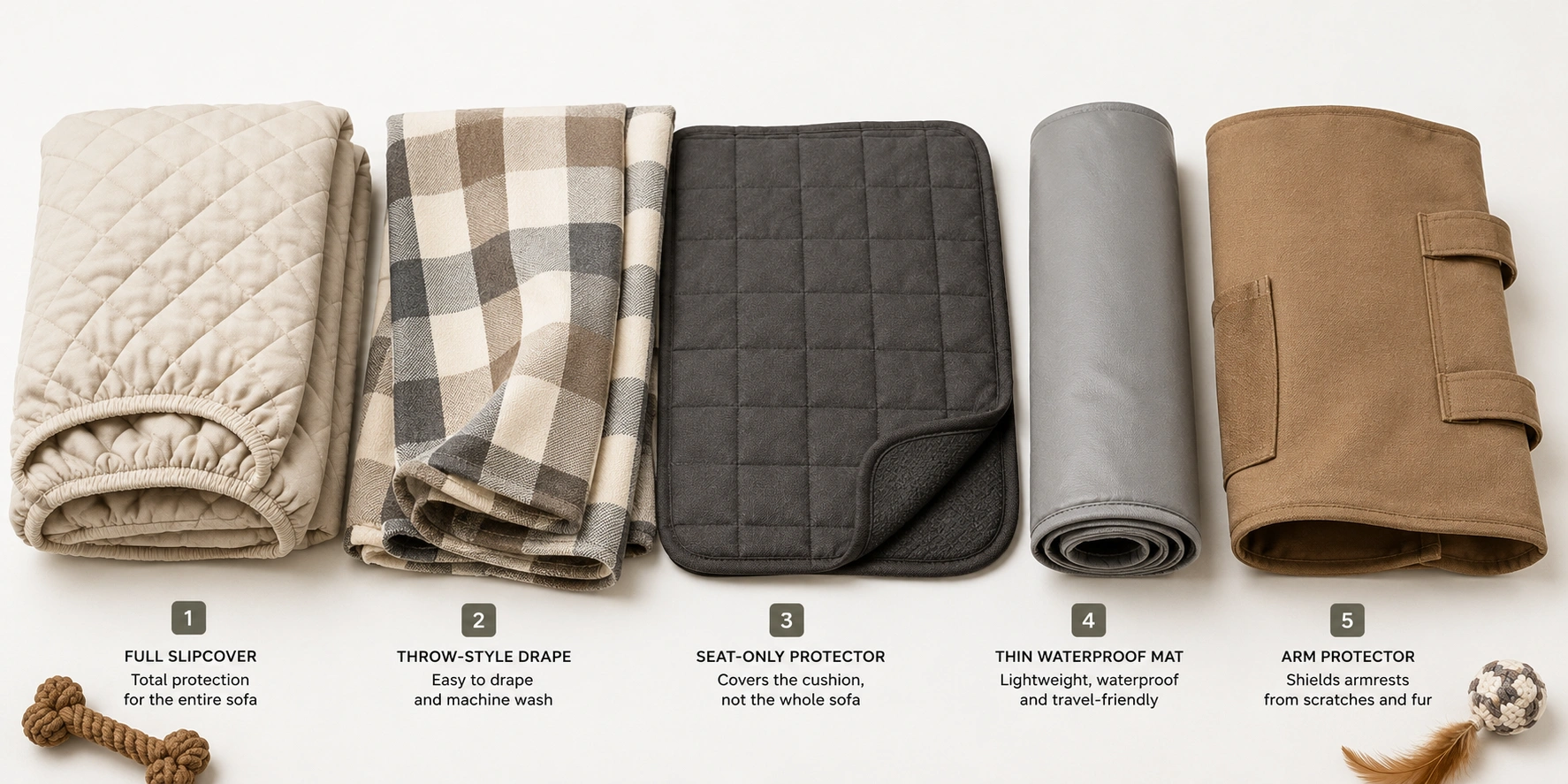
🛋️ Full Slipcovers
Wrap around the entire sofa including back, seat, arms, and sometimes the base. Provide the most complete protection and the most polished look. Best for homes where the sofa is a primary gathering spot. Similar in concept to a slipcovered sofa but designed as an aftermarket accessory.
📏 Throw-Style Covers
Drape over the seat and back like an oversized blanket. Quick to put on and remove, but offer less secure coverage. Best for casual settings, pets that primarily lie on the seat area, or as a supplement to other protection. Comparable to decorative throws and pillows but with protective functionality.
🪑 Seat-Only Protectors
Cover just the seat cushions, leaving the back and arms exposed. Ideal when you want minimal visual impact while protecting the area your pet uses most. Often waterproof and machine washable. Good option for loveseats and smaller sofas.
🛡️ Waterproof Mats
Thin, waterproof barriers placed under or over the seat area. Focused purely on liquid protection — not aesthetics. Perfect for puppies in training, older incontinent pets, or dogs that drool heavily. Usually the most affordable option.
🧵 Corner & Arm Protectors
Targeted covers that wrap around sofa arms and corners — the areas cats most frequently scratch. Usually made from thick vinyl, heavy canvas, or sisal. Used alongside other covers or on exposed areas of partially protected sofas.
🔄 Quilted Reversible Covers
Two-sided covers with different colors or patterns on each side. Double your decorative options and extend use between washes by simply flipping over. Typically feature a quilted construction with a waterproof membrane hidden between the layers.
Material Comparison: Which Fabric Resists Pets Best?
The material your cover is made from determines everything — how well it resists claws, how it handles liquid, how comfortable it feels, and how long it lasts through repeated washing. Here is a detailed comparison of the most common pet-proof cover materials.
| Material | Scratch Resistance | Waterproof | Comfort | Durability |
|---|---|---|---|---|
| Heavy Polyester | Excellent Best | With TPU backing | Good | Excellent |
| Microfiber | Very Good | With coating | Very Good Best | Very Good |
| Quilted Cotton-Poly | Good | With inner membrane | Very Good | Good |
| Canvas / Duck Cloth | Excellent Best | When treated | Moderate | Excellent Best |
| Faux Suede | Moderate | With backing | Excellent | Moderate |
| Vinyl / PVC | Good | Fully waterproof Best | Poor | Good |
| Oxford Cloth | Very Good | With coating | Moderate | Very Good |
Heavy polyester and canvas are the top choices for claw resistance due to their tight weave and high tensile strength. For the best overall experience, look for quilted covers that combine a soft top layer (for comfort) with a tough polyester or canvas base and a waterproof TPU membrane in between — this three-layer construction gives you the benefits of multiple materials in one product.
For pet owners who prioritize upholstery durability beyond just covers, our guide on the most durable sofa fabrics provides a deeper look at materials that inherently resist pet damage even without a cover.
💡 Key insight: The waterproof layer matters more than the surface fabric for accident protection. A cover made of soft microfiber with a quality TPU membrane inside will outperform a tough canvas cover without any waterproof barrier when it comes to liquid damage. Always check for a waterproof membrane, not just water-resistant fabric.
Essential Features to Look For
With hundreds of pet covers on the market, the features below separate covers that actually work from those that frustrate pet owners. Use this as your buying checklist.
💧 Waterproof Membrane
A TPU (thermoplastic polyurethane) layer sandwiched between fabric layers. Superior to PVC — it is flexible, quiet, breathable, and does not crack or peel over time. Look for "waterproof" not just "water-resistant" in the product description.
🧲 Anti-Slip Backing
Silicone dots, rubber grips, or a textured backing that prevents the cover from shifting when your pet jumps on and off. Essential for full slipcovers — without it, you will be re-tucking the cover multiple times per day.
📏 Elastic & Strap System
Elastic hems that grip the sofa edges plus adjustable straps that wrap around the back or bottom frame. The combination keeps the cover secure even with active pets. Foam inserts that tuck into seat crevices add another level of anchoring.
🧺 Machine Washable
Any cover for pet use must be machine washable. Look for cold-water wash, gentle cycle compatibility, and low-heat tumble dry or air dry instructions. Avoid covers that require hand washing or dry cleaning — they are impractical for regular pet households.
🐾 Fur-Release Properties
Tight-weave fabrics that do not trap pet hair in their fibers. Smooth polyester and microfiber surfaces allow hair to be removed with a quick vacuum, lint roller, or damp cloth. Textured or nubby fabrics like chenille-style covers are magnets for embedded fur.
🎨 Color & Pattern Options
Darker solid colors (charcoal, navy, chocolate) hide fur and minor stains best. Patterned covers (plaid, geometric, floral) are even better at camouflaging imperfections. Light colors show everything — avoid them unless your pet is non-shedding.
Choosing the Right Cover for Your Sofa Type
The shape and configuration of your sofa significantly affects which cover will fit properly and look good. A cover designed for a standard sofa will not work well on a sectional sofa, and covers for a recliner sofa need special cutouts for the footrest mechanism.
Standard Sofa
Widest selection available. Most covers are designed for this shape. Measure seat width, back height, and arm width for the best fit.
Sectional Sofa
Requires separate covers for each section (L-couch, corner wedge, chaise). Some brands sell coordinated sectional sets. More complex but fully doable.
Recliner Sofa
Needs covers with split-seat design and openings for footrest mechanisms. Look for "recliner" in the product name — standard covers will not accommodate the moving parts.
Loveseat
Compact size makes covers easier to manage. Most brands offer loveseat-specific sizes. Pay attention to arm style — T-cushion loveseats need wider covers.
Futon Sofa
Convertible design makes cover fit tricky. Look for covers specifically labeled for futons, or use a flexible throw-style cover that adjusts when the sofa converts to a bed.
Sofa Bed / Sleeper
Must be removable quickly when opening the bed mechanism. Avoid covers with deep tucking requirements. Seat-only protectors are often the most practical choice here.
Dog Covers vs Cat Covers: Different Needs
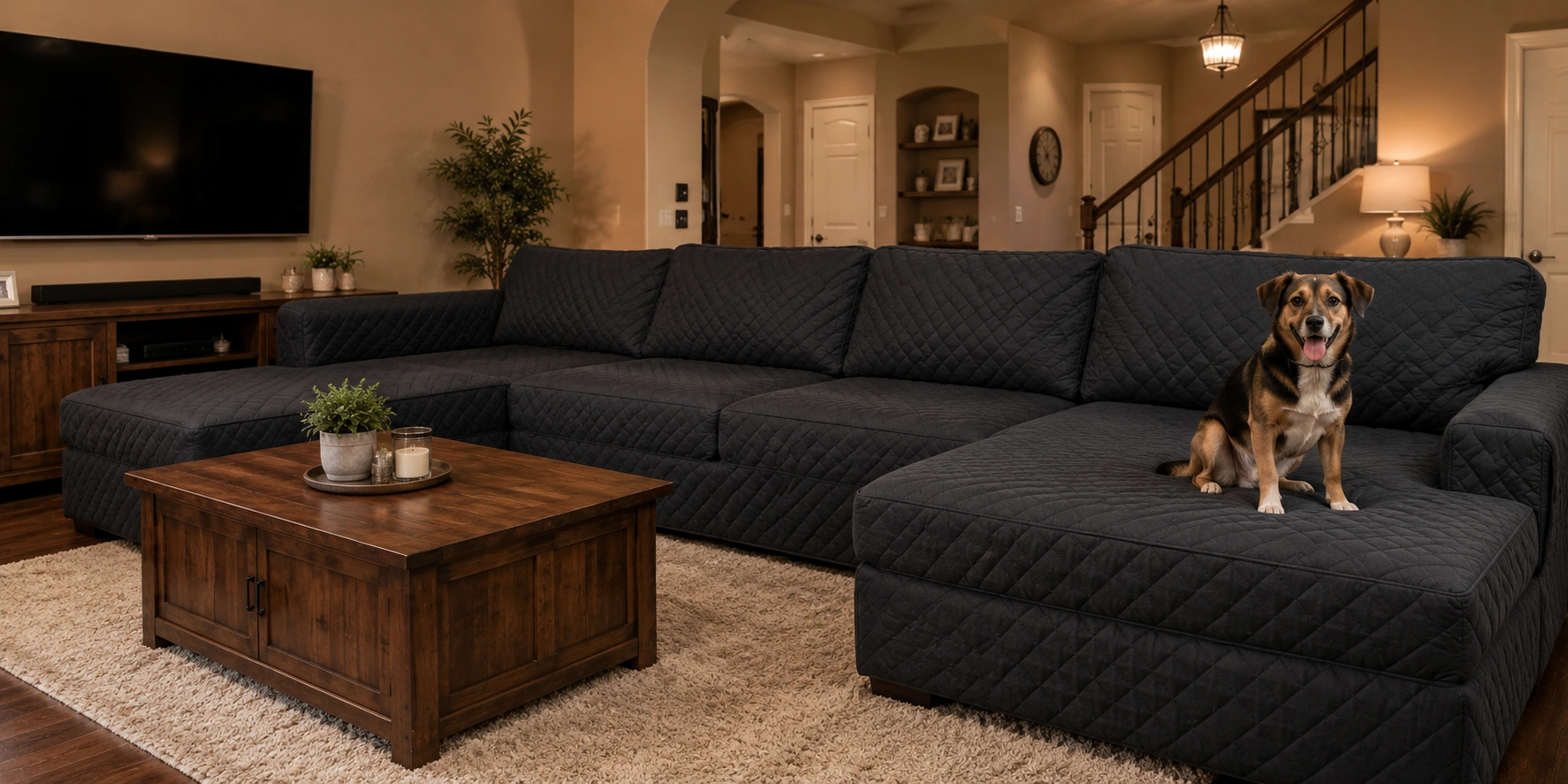
While many covers work for both dogs and cats, the primary threats they protect against are quite different. Understanding this distinction helps you prioritize the right features.
For Dogs: Focus on Liquid and Dirt
Dogs are primarily a moisture and dirt threat. They come inside with wet paws, muddy fur, drool on armrests, and occasionally have accidents — especially puppies, senior dogs, or dogs left alone for long periods. The priority features for dog owners are:
- 100% waterproof protection — not just water-resistant. A TPU membrane is essential for dogs that swim, get bathed, or go outside in rain or snow
- Wipeable surface — smooth fabrics allow you to quickly wipe away mud, drool, and paw prints without washing the entire cover
- Odor resistance — some materials hold onto dog smell more than others. Tight-weave polyester releases odors better after washing than porous cotton
- Heavy-duty construction — large dogs put more stress on covers through weight and movement. Reinforced seams and high GSM (grams per square meter) fabric hold up better
For Cats: Focus on Scratch Resistance
Cats are primarily a scratching and shedding threat. Their claws can shred thin fabrics in seconds, and their fine hair embeds into loose-weave materials. The priority features for cat owners are:
- Tight weave density — the tighter the weave, the harder it is for claws to catch and pull. Canvas and heavy polyester with a thread count above 200 are ideal
- Quilted or multi-layer construction — even if a cat penetrates the top layer, the inner layers remain intact. Single-layer covers can be destroyed in one scratching session
- Fur-release surface — smooth, non-textured fabrics allow cat hair to be removed easily. Avoid any cover with a fleece-like, velour, or brushed surface
- Deterrent texture — some cats dislike scratching certain textures like tightly woven canvas or smooth polyester. While not a guarantee, the wrong texture can discourage scratching
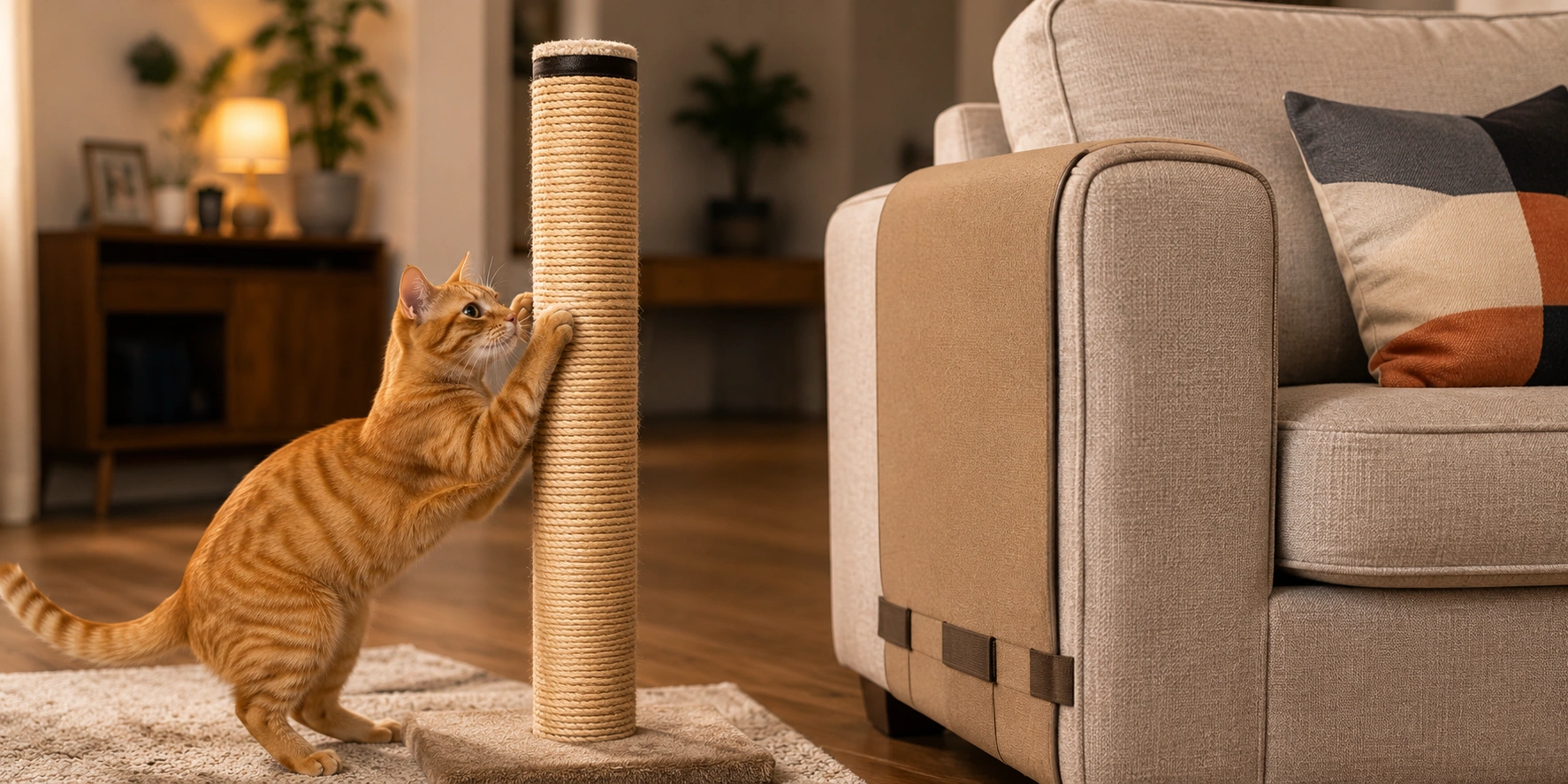
⚠️ Important reality check: No fabric cover is completely claw-proof against a determined cat. Covers are a deterrent and protection layer — not a substitute for proper scratch management including scratching posts, nail trimming, and training. The best approach combines a resistant cover with behavioral solutions.
How to Measure Your Sofa for a Perfect Fit
A cover that is too small will not cover the sofa properly, and one that is too large will sag, bunch, and shift constantly. Accurate measuring is the single most important step before purchasing. Follow this process from our detailed sofa measurement guide, adapted specifically for covers:
📐 Step-by-Step Measuring Process
- Measure seat width: Measure across the widest part of the seat from outer arm to outer arm. This is the most critical measurement — if the cover is too narrow, it will not wrap around the arms.
- Measure seat depth: From the front edge of the seat cushion to where the seat meets the back cushion. This determines how far forward the cover's seat portion will extend.
- Measure back height: From the top of the back cushion (or frame, for firm-back sofas) down to the seat seam. For full slipcovers, measure from the floor up to the top of the back if the cover includes the base.
- Measure arm height and width: From the seat surface to the top of the arm, and the depth of the arm front to back. T-shaped arms (T-cushion) need covers specifically designed for that arm profile.
- Measure overall sofa length: For sectional covers, measure each segment separately — the main sofa section, the chaise extension, and the corner wedge if applicable.
- Check the diagonal depth: Measure from the bottom back corner to the top front of the arm. This matters for delivery and for some cover styles — it determines how the cover drapes across the sofa's profile.
📌 Sizing tip: When your measurements fall between two sizes, always size up. A slightly oversized cover can be tucked in for a snug fit, but an undersized cover simply will not work. Many manufacturers list a recommended sofa size range — verify that your measurements fall within that range, not just close to it.
Installation Tips for a Secure, Wrinkle-Free Fit
Even the best cover will look bad and shift constantly if not installed properly. These techniques make a noticeable difference in both appearance and stability.
- Start with a clean, dry sofa. Remove all cushions and vacuum the frame. Any debris underneath creates lumps and prevents the cover from sitting flat.
- Drape the cover over the back first, then pull it forward over the seat and down over the arms. Starting from the back gives you the most fabric to work with for adjusting.
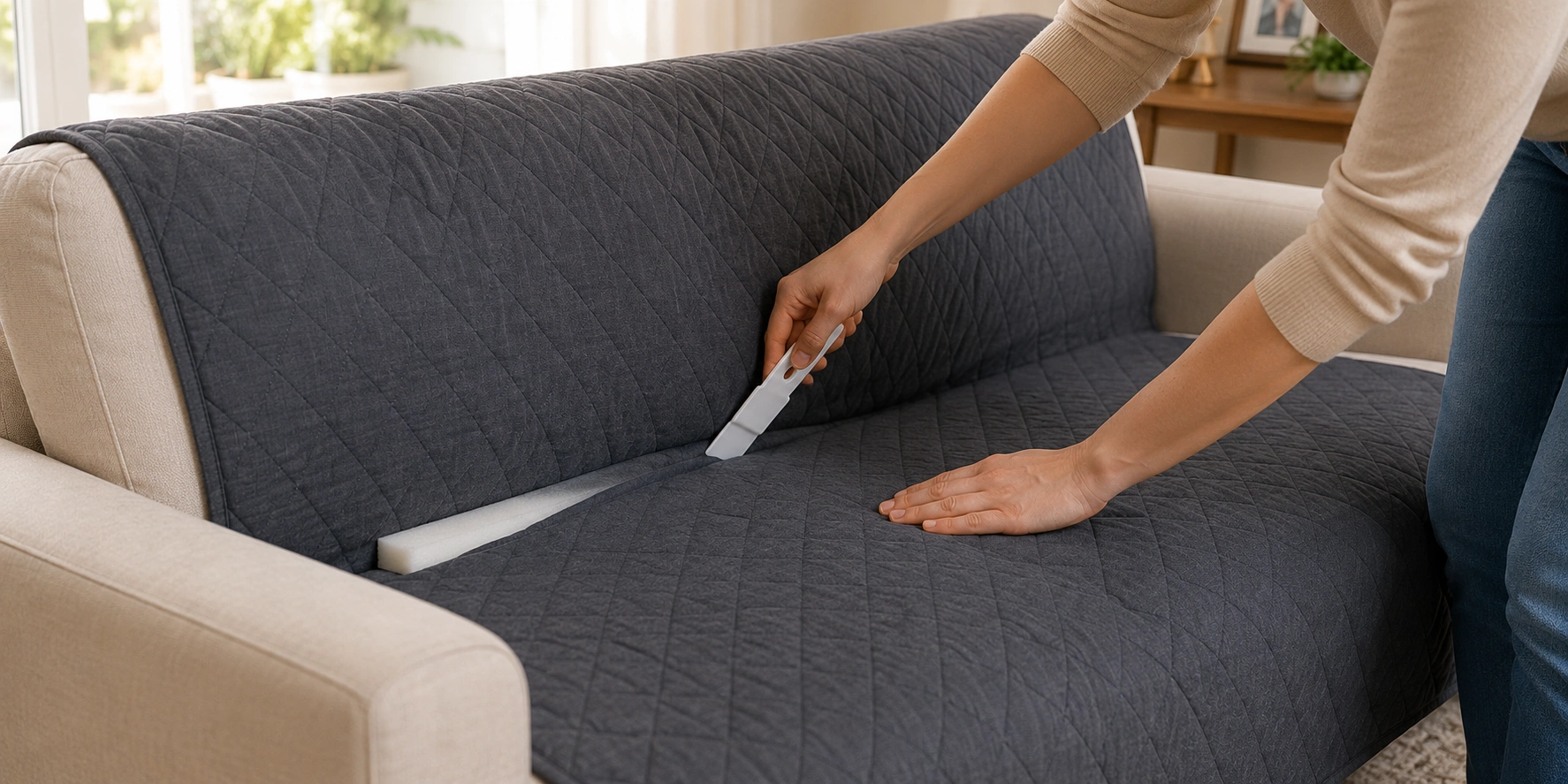
- Tuck deeply into all crevices. Use your hand or a plastic tucking tool (or a spatula in a pinch) to push the fabric as far into the seat-back gap and arm gaps as possible. Shallow tucking is the number one cause of covers pulling out.
- Insert foam anchoring wedges if your cover includes them. These fill the seat crevices and lock the fabric in place. They make a significant difference — do not skip this step.
- Connect all elastic straps. Fasten straps under the sofa base or around the back frame. Pull them tight enough to remove slack but not so tight that the cover distorts.
- Smooth and adjust. Run your hands over the entire surface to even out wrinkles and ensure the fabric lies flat. Pay special attention to the arm areas, which tend to bunch.
- Replace cushions on top (for seat-only covers) or verify that cushion outlines are visible through the cover (for full slipcovers).
For covers that continue to shift despite proper installation, try adding non-slip furniture gripper pads between the cover and the sofa surface. These thin rubberized mats create friction that dramatically reduces movement.
Maintenance: Washing, Drying, and Longevity
A pet cover is only as good as its condition. A dirty, degraded cover offers less protection and can actually harm your sofa by trapping moisture, odors, and bacteria against the upholstery. Regular maintenance is essential.
Washing Guidelines
- Frequency: Every 1–2 weeks for normal shedding. Weekly for homes with outdoor dogs or accident-prone pets. Immediately for any urine, vomit, or significant soil events.
- Pre-treatment: Spray heavily soiled areas with an enzyme-based pet stain remover before washing. Let it sit for 10–15 minutes to break down proteins in pet messes. This is especially important for urine, which can permanently set into fabric if not properly treated.
- Wash settings: Cold water, gentle cycle. Avoid hot water — it can degrade the waterproof TPU membrane over time. Use a mild detergent without bleach, fabric softener, or strong enzymes, as these can compromise the waterproof layer.
- Zip closures: Always zip any zippers closed before washing to prevent them from snagging the fabric or damaging the washing machine drum.
Drying and Storage
- Tumble dry on low heat or air dry. High heat is the enemy of waterproof membranes — it can cause delamination, cracking, or shrinkage. Remove from the dryer while slightly damp to prevent excessive wrinkling.
- Never iron the cover, especially over the waterproof area. Direct heat will melt or damage the TPU layer.
- Keep a spare cover to use while one is being washed. This is particularly important in multi-pet households where the sofa should never be left unprotected.
- Store clean, dry covers in a breathable bag (not plastic) in a cool, dry place. Moisture trapped in storage can cause mold and mildew.
For detailed cleaning techniques beyond the cover itself, our guide on cleaning fabric sofas covers the underlying upholstery, and our stain removal guide addresses specific types of pet stains that may penetrate to the sofa surface.
💡 Pro tip: To extend the life of your cover's waterproof membrane, add a half-cup of white vinegar to the rinse cycle instead of fabric softener. Vinegar removes detergent residue, softens the fabric naturally, and does not damage waterproof coatings. Your cover will last significantly longer.
Using Pet Covers on Leather Sofas
Leather sofas present a unique challenge for pet covers. While leather is relatively easy to wipe clean, it is vulnerable to scratches, punctures from claws, and cracking when exposed to trapped moisture. A pet cover can help, but requires special considerations.
- Avoid rubber or silicone backing directly on leather. These materials trap heat and moisture against the leather surface, which can cause discoloration, cracking, and peeling over time. This is especially problematic for aniline and semi-aniline leathers that have less protective finish.
- Use a breathable barrier layer. Place a thin cotton sheet between the leather and the pet cover to allow air circulation. This adds a small step to installation but protects your leather investment.
- Remove covers periodically. Even with a barrier, do not leave covers on leather sofas continuously for weeks. Remove them for a few hours every few days to let the leather breathe, and apply leather conditioner regularly to prevent drying.
- Consider seat-only protectors for leather. Since leather arms and backs are less vulnerable to liquid damage than fabric, a seat-only waterproof protector may provide sufficient protection without the risks of a full cover.
⚠️ Leather warning: If your leather sofa already has existing scratches or cracking, consult a leather repair professional before applying any cover. Trapped moisture from a cover can accelerate existing damage. Covers are a preventive tool — they work best on leather that is still in good condition.
Common Mistakes to Avoid
These are the most frequent errors pet owners make when buying and using sofa covers — and how to avoid each one.
❌ Choosing looks over function
A beautiful cover that does not stay in place, is not waterproof, or shreds in a week is worthless. Prioritize protection features first, then find an attractive option within that functional subset.
❌ Buying the wrong size
Guessing your sofa size instead of measuring leads to covers that are too tight, too loose, or the wrong shape. Always measure before ordering. Check the manufacturer's size chart, not just the label.
❌ Skipping the waterproof membrane
"Water-resistant" fabric is not the same as waterproof. Water-resistant fabric slows absorption but eventually lets liquid through. Only a waterproof membrane layer provides true liquid protection against pet accidents.
❌ Using fabric softener when washing
Fabric softener coats the fabric fibers, reducing water repellency and clogging the waterproof membrane. It also attracts pet hair. Use white vinegar in the rinse cycle instead for softening without damage.
❌ Not having a spare cover
When the cover is in the wash, your sofa is exposed. In a multi-pet home, this can happen at the worst time. A $30 spare cover prevents a $500 cleaning bill from a single uncovered accident.
❌ Expecting covers to stop all scratching
Covers reduce damage and deter casual scratching, but determined cats will eventually get through any fabric. Use covers as one part of a broader strategy that includes scratching posts, nail trimming, and training.
Frequently Asked Questions
Final Recommendations
The best pet-proof sofa cover for you depends on your specific situation, but here are clear recommendations based on the most common scenarios:
For dog owners focused on accident protection: Choose a quilted cover with a TPU waterproof membrane, anti-slip backing, and elastic strap system. Prioritize smooth, wipeable top fabric in a dark color. Budget $35–$60 for a quality option that will last through hundreds of wash cycles.
For cat owners focused on scratch resistance: Choose a heavy canvas or tight-weave polyester cover with quilted multi-layer construction. Avoid any cover with a loose, textured, or fleece-like surface. Add dedicated arm and corner protectors for the areas your cat targets most. Budget $30–$70 depending on whether you need a full set or individual protectors.
For multi-pet households: Invest in two covers per sofa — one for use while the other is being washed. Choose the most durable option available (quilted canvas-polyester blend with full waterproof membrane) because the wear rate will be significantly higher. Budget $60–$100 total for the pair.
For leather sofa owners: Use seat-only waterproof protectors with breathable fabric backing. Add a thin cotton barrier between the protector and leather. Avoid full slipcovers unless you are willing to commit to regular removal for leather breathing. Budget $25–$45 for a quality seat protector.
Whatever your situation, the most important thing is to actually use the cover consistently. The best cover in the world does not protect your sofa if it is sitting in a closet because it was annoying to put on. Choose a cover that balances protection with ease of use, and you will actually use it — and your sofa will thank you for years to come.