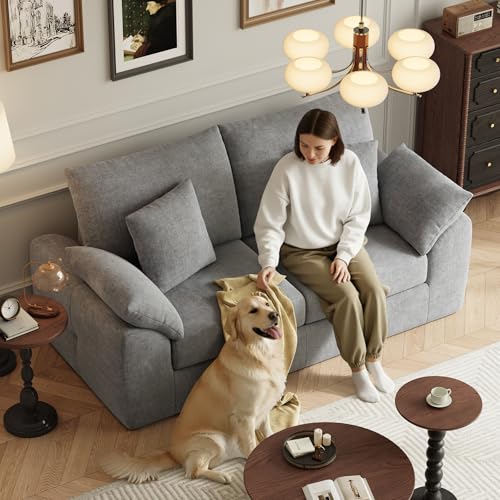
What Size Sofa Do I Need for My Room?
The complete guide to choosing the right sofa dimensions — from measuring your space to understanding clearance rules and finding the perfect proportional fit.
Learn How to MeasureChoosing the wrong sofa size is one of the most common — and expensive — furniture mistakes. A sofa that's too large overwhelms your room, blocks walkways, and makes the space feel cramped. A sofa that's too small looks awkward, leaves dead space, and fails to provide the comfort you paid for. This guide walks you through every factor you need to consider so you can order the right size with confidence.
Why Getting the Right Sofa Size Matters
Sofa size affects far more than aesthetics. It directly impacts how comfortable your living room feels on a daily basis. Here's what happens when you get it right — and wrong:
- Traffic flow: An oversized sofa forces people to squeeze past or walk around awkwardly. Proper sizing keeps pathways open and natural.
- Visual balance: The sofa is typically the largest piece in a living room. If it's disproportionate to the room, the entire space looks off-balance — even if everything else is well-chosen.
- Comfort and usability: A too-small sofa won't seat everyone who needs it. A too-deep sofa can make it hard for shorter people or seniors to stand up comfortably.
- Function of surrounding furniture: Your coffee table, side tables, and rug all relate to the sofa's size. A wrong-sized sofa throws off the proportions of your entire layout.
- Resale and moving costs: Larger sofas are harder to resell, more expensive to move, and more likely to get damaged during delivery if they barely fit through doorways.
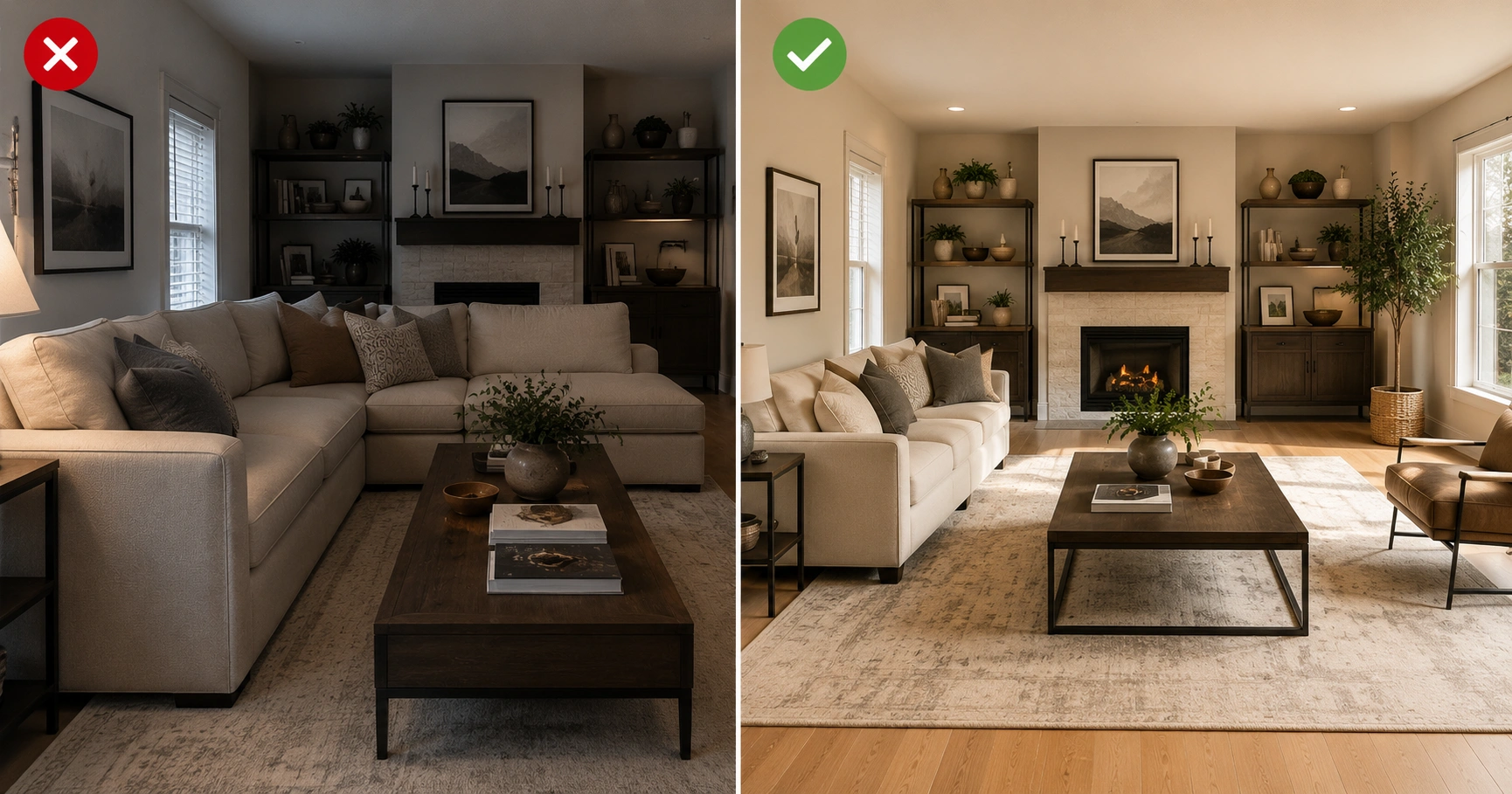
Quick Reference: Sofa Sizes at a Glance
Before diving into measurements, here's a fast overview of standard sofa widths by seating capacity. Use this as a starting point, then refine based on your specific room dimensions.
| Sofa Type | Typical Width | Typical Depth | Typical Height | Best For |
|---|---|---|---|---|
| 1-Seater / Chair | 30–40 in | 30–36 in | 32–38 in | Small nooks, reading corners |
| Loveseat | 52–60 in | 32–38 in | 32–38 in | Small rooms, pairs |
| 2-Seater | 60–68 in | 33–38 in | 33–38 in | Apartments, guest rooms |
| 3-Seater | 72–84 in | 34–40 in | 33–38 in | Standard living rooms |
| 4-Seater | 88–100 in | 36–42 in | 34–40 in | Large living rooms, families |
| 5-Seater | 100–115 in | 36–44 in | 34–40 in | Open-plan spaces, hosting |
| Sectional (L-Shape) | 95–140 in | 80–120 in | 33–38 in | Large rooms, open floor plans |
"Seat count" is not standardized across manufacturers. One brand's 3-seater may be 72 inches while another calls an 84-inch sofa a 3-seater. Always go by the actual measurements in inches or centimeters, not the seat label.
How to Measure Your Room for a Sofa
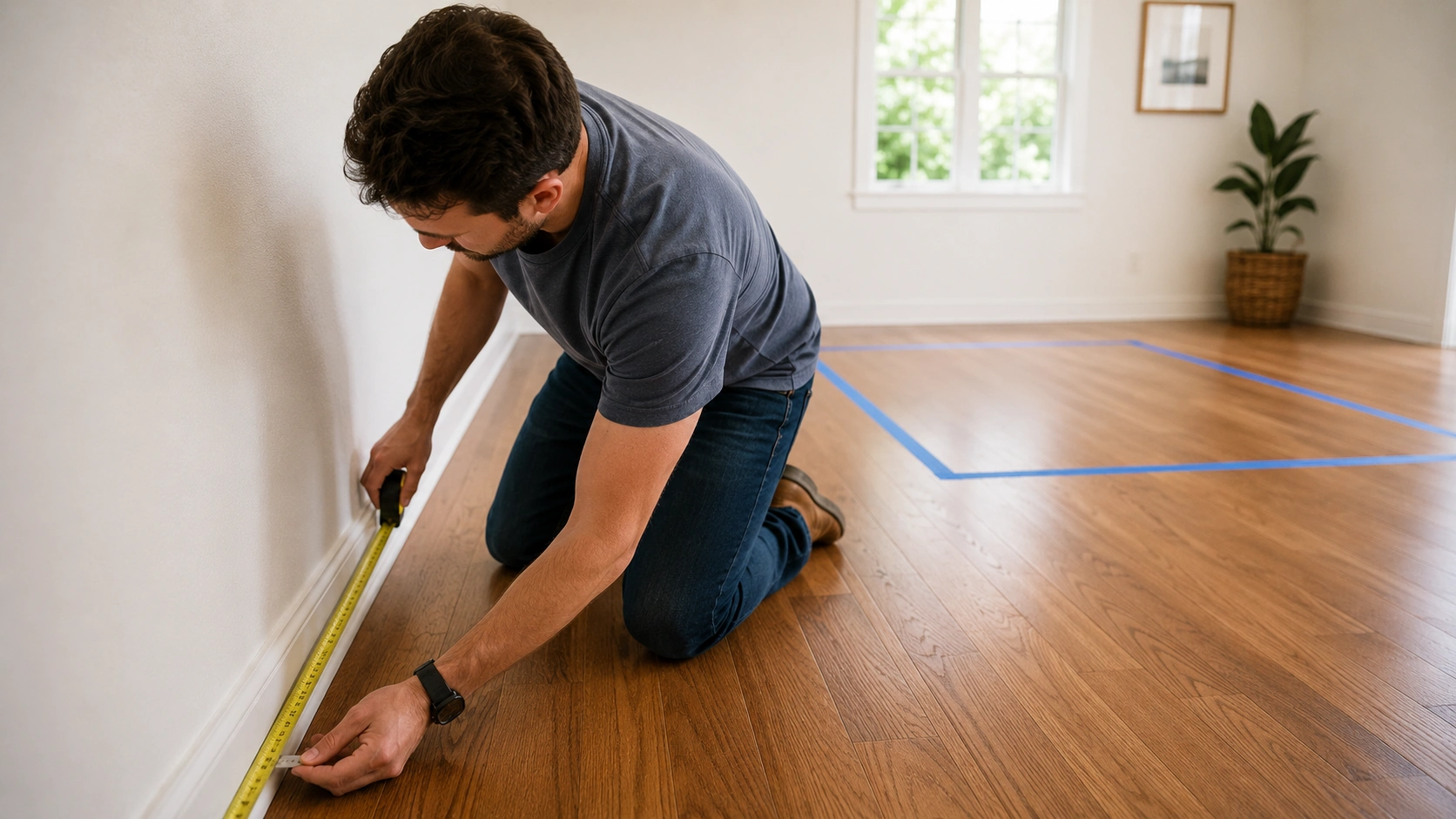
Accurate measurements are the foundation of a good decision. Grab a metal tape measure (not a fabric one — they stretch), a notepad, and follow these steps. For a detailed walkthrough of measuring techniques, see our complete sofa measuring guide.
- Measure the wall where the sofa will go. Run the tape measure along the full length of the wall. Write down the total length. If the sofa won't sit flush against a wall (for example, it floats in the room), measure the available floor space instead.
- Subtract clearance space on both sides. You need at least 4–6 inches between the sofa arm and any adjacent wall, doorway, or piece of furniture. Subtract 8–12 inches total from your wall length. This gives you your maximum sofa width.
- Measure the room's depth (perpendicular to the sofa wall). This tells you how deep your sofa can be without blocking pathways. Subtract at least 36 inches for a main walkway in front of the sofa.
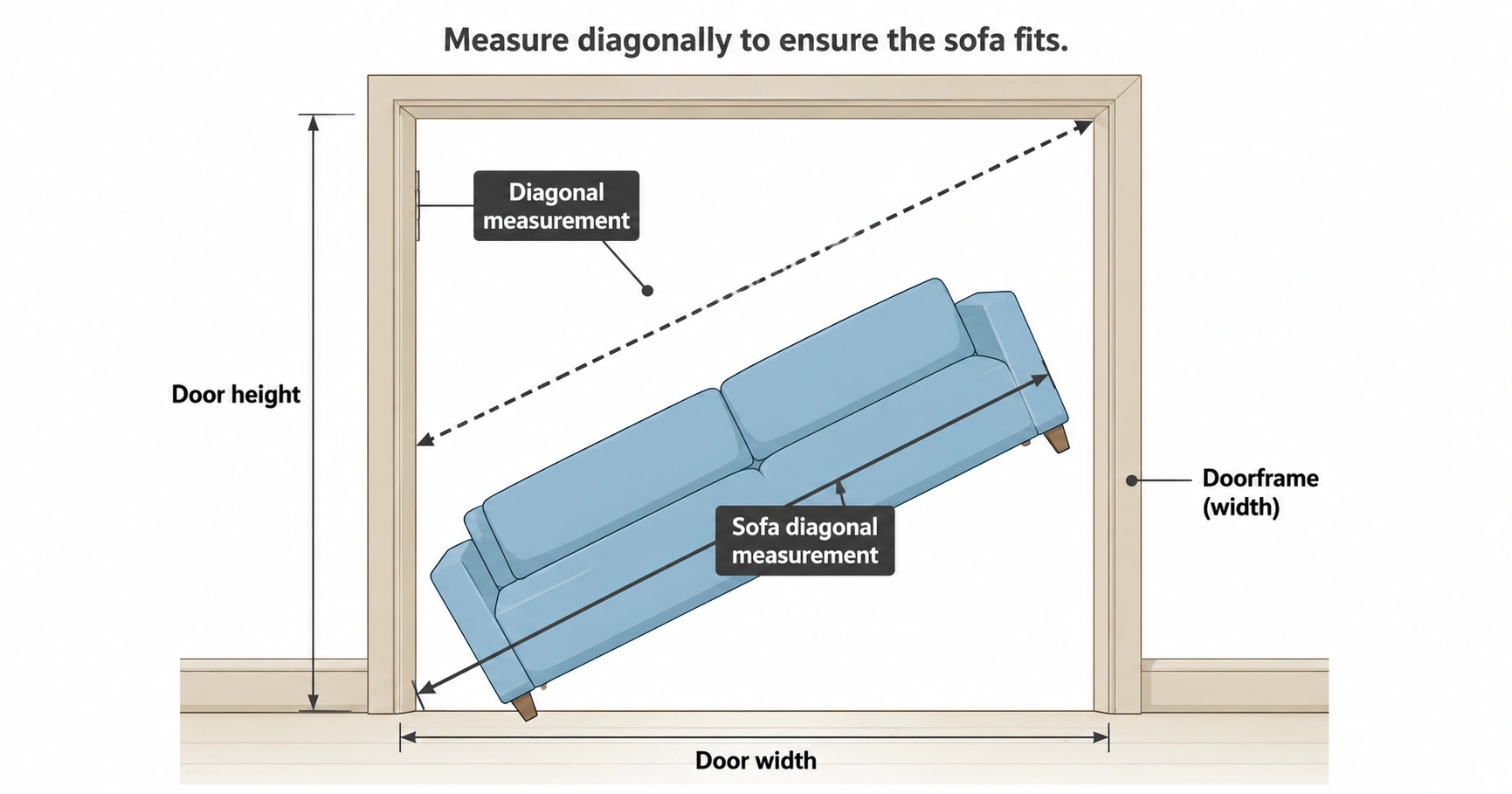
- Check doorway and hallway clearances. Measure the width and height of every door, hallway, and stairway the sofa must pass through. Note the narrowest point. This is your delivery constraint — the sofa must fit through it. For tight turns, measure the diagonal width of the doorway opening.
- Account for other furniture. If you're keeping your coffee table, plan for 14–18 inches between the sofa front edge and the table. Side tables need 2–4 inches of clearance from the sofa arm. Subtract these from your available depth.
- Mark the footprint on the floor. Use painter's tape to outline the sofa's width and depth on the floor. Walk around it. Sit in nearby chairs. This reveals whether the size truly works in practice — not just on paper.
Sofa Clearance Rules You Should Never Ignore
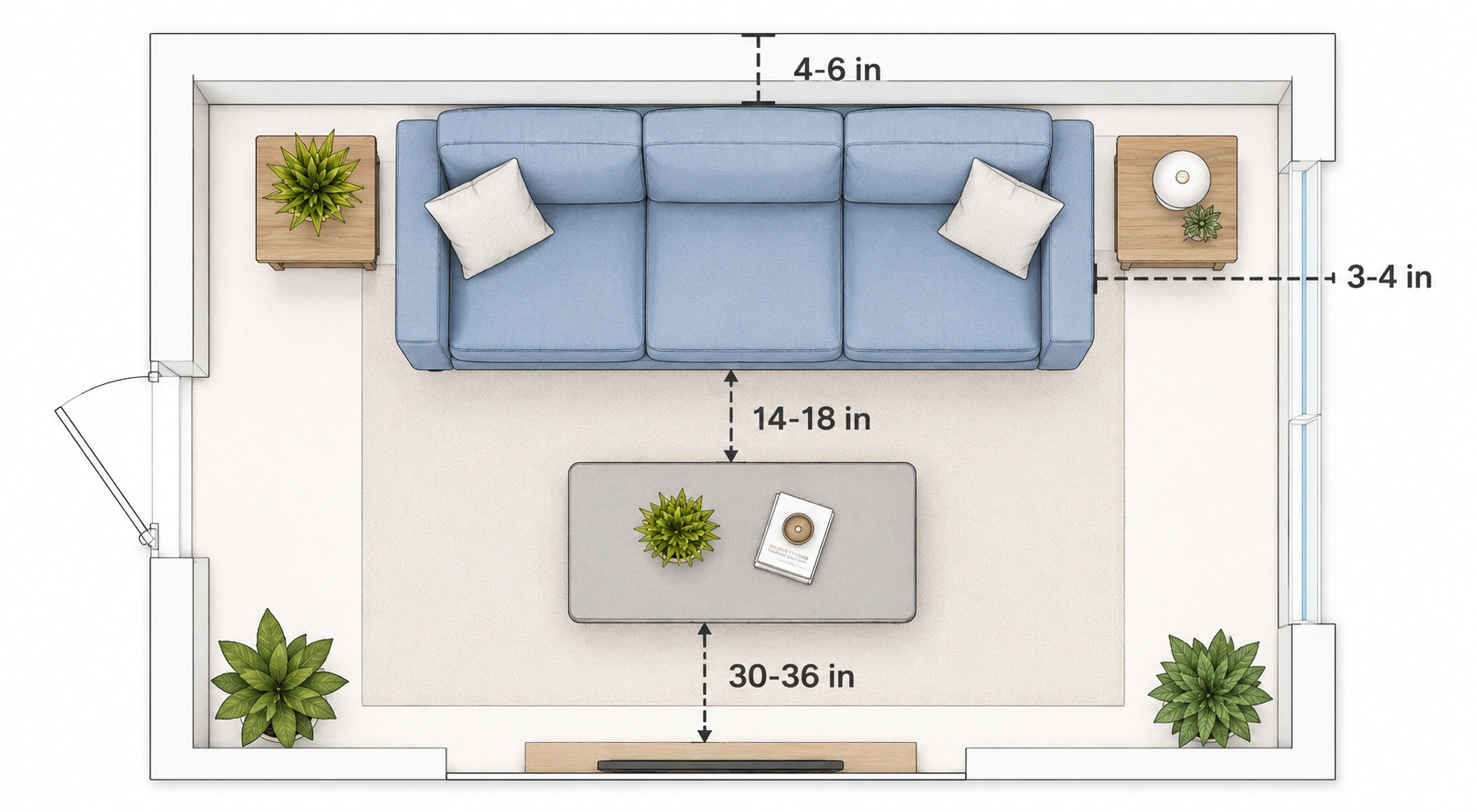
Clearance — the empty space around your sofa — is just as important as the sofa's dimensions themselves. Even the most beautiful sofa becomes a problem if people can't move comfortably around it.
| Clearance Type | Minimum | Recommended | Why It Matters |
|---|---|---|---|
| Sofa to wall (behind) | 3 in | 4–6 in | Room for cleaning, vacuuming, and baseboard access |
| Sofa to coffee table | 14 in | 16–18 in | Legroom for seated people; easy reach for drinks |
| Main walkway (in front) | 24 in | 30–36 in | Comfortable passage for one person |
| High-traffic pathway | 30 in | 36–42 in | Two people can pass simultaneously |
| Sofa arm to side table | 2 in | 3–4 in | Easy access to tabletop without bumping |
| Sofa to TV (viewing distance) | 7 ft | 8–12 ft | Comfortable viewing for a 55–65 inch TV |
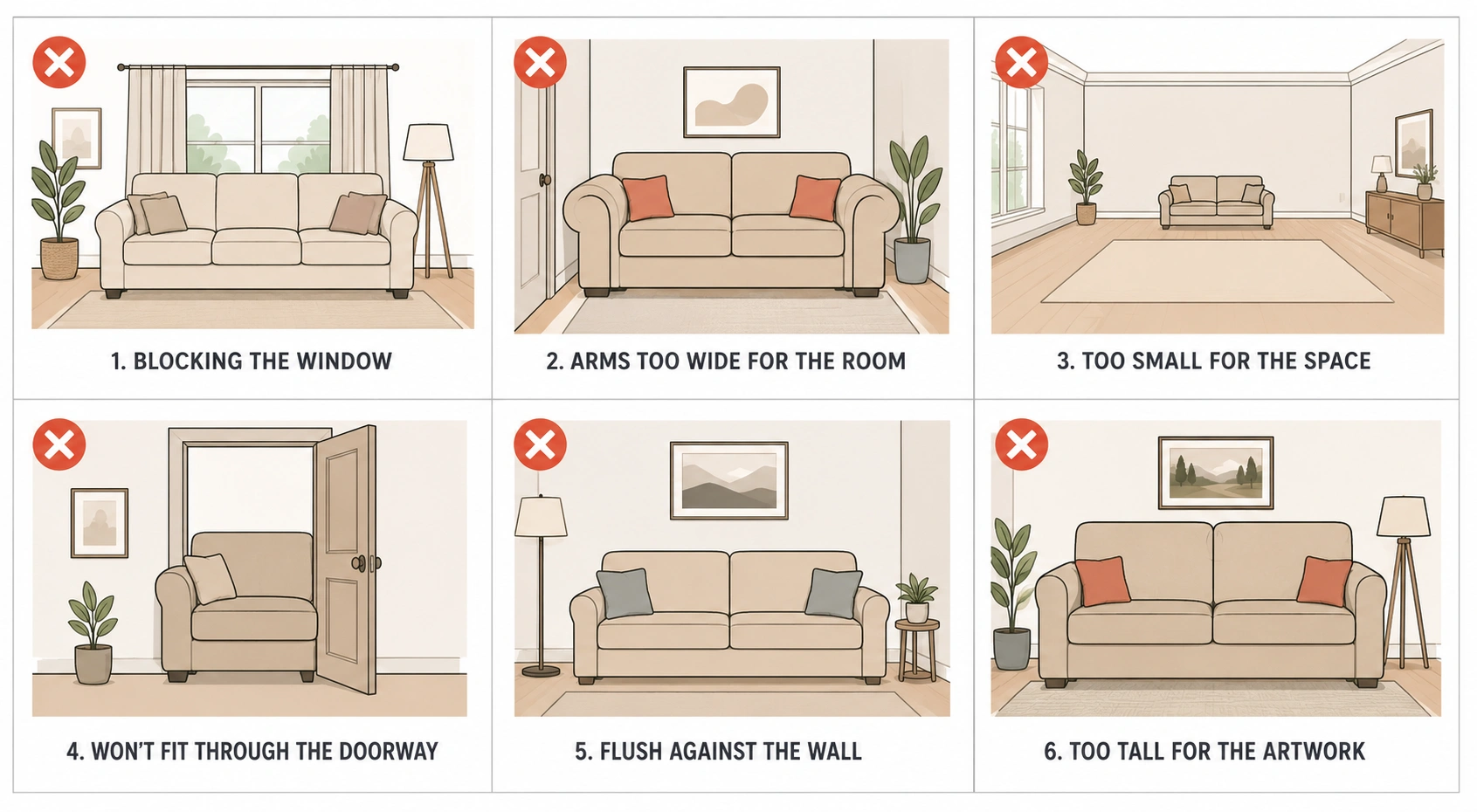
Pushing the sofa flush against the wall might seem like it saves space, but it actually makes the room feel smaller and more cramped. A few inches of breathing room creates a sense of openness and makes the room feel more designed.
The Two-Thirds Rule: Your Golden Ratio
Interior designers rely on a simple proportional guideline: your sofa should occupy roughly two-thirds of the wall it sits against. This rule creates visual balance — the sofa is dominant enough to anchor the space but doesn't overwhelm it.
WALL LENGTH VS. SOFA WIDTH
How to Apply the Two-Thirds Rule
Example: If your wall is 120 inches (10 feet) wide, multiply by 0.66 — your ideal sofa width is about 79 inches. You'd look for a standard 3-seater sofa in the 72–84 inch range.
This rule works for most rectangular living rooms. However, there are exceptions:
- Open-plan layouts: The sofa may anchor a zone rather than a wall. In this case, consider the overall zone dimensions instead of a single wall.
- Rooms with multiple openings: If the wall has doorways or archways, only measure the continuous unbroken wall segment.
- Two sofas facing each other: Each sofa should be about 50–60% of the wall length, so together they create the two-thirds visual weight.
If you want a sectional sofa but your wall is modest, place the sectional perpendicular to the wall (floating in the room). This uses floor space rather than wall length as the sizing constraint.
Sofa Size Recommendations by Room Size
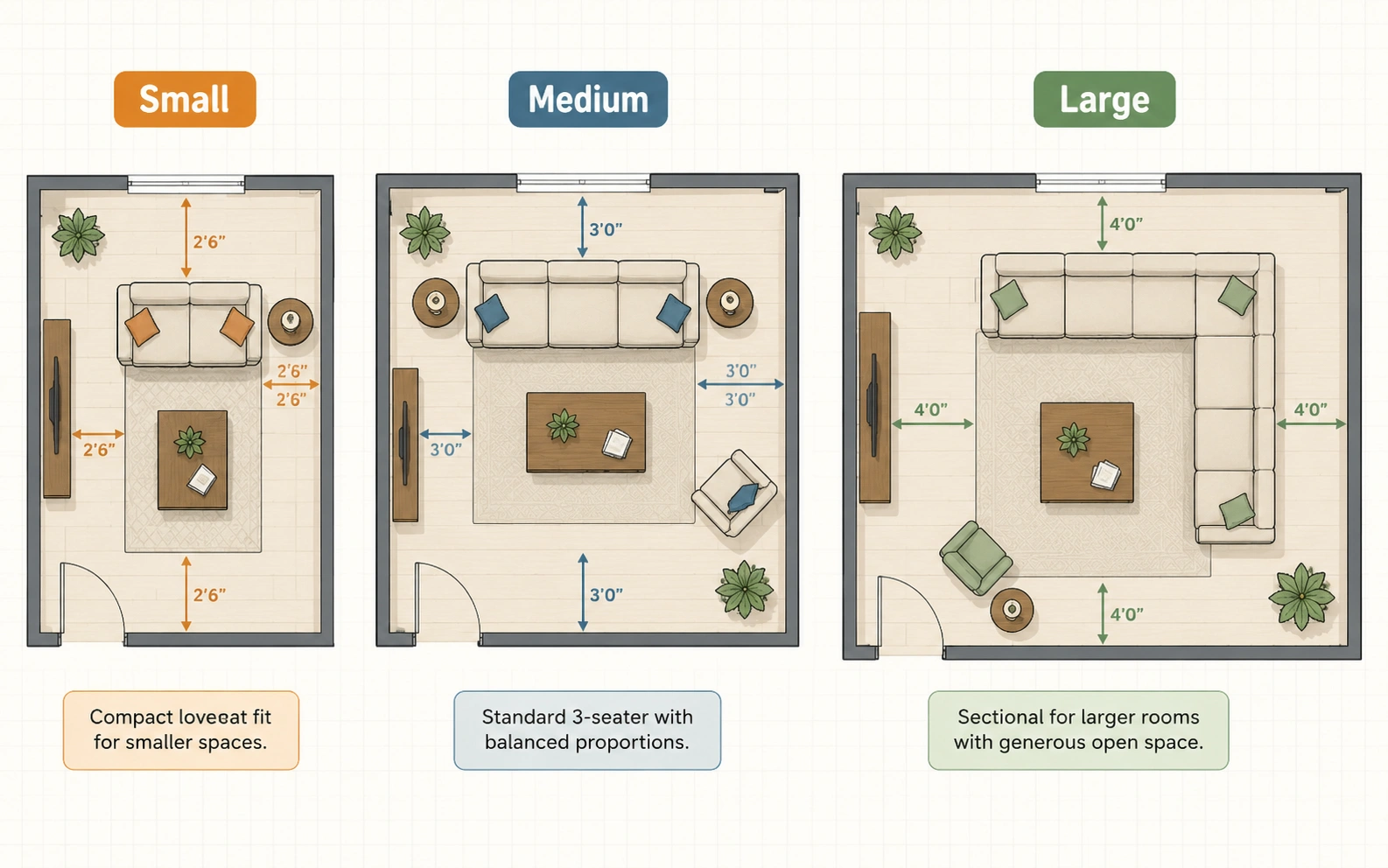
Every room size has a sweet spot for sofa dimensions. The following recommendations assume a standard rectangular living room with one main sofa and basic accompanying furniture. If your room has an unusual shape, consider exploring layout-specific advice as well.
Recommended sofa width: 60–72 inches
Ideal types: Loveseat, 2-seater, or compact apartment sofa
Max depth: 34 inches (deeper seats consume too much floor space)
What to avoid: Sectionals, oversized rolled arms, chaise extensions
Smart choices: Armless sofas, exposed legs (create visual lightness), lighter fabric colors
Recommended sofa width: 72–90 inches
Ideal types: 3-seater sofa or small L-shape sectional
Max depth: 38–40 inches
Layout flexibility: Can float the sofa or place against a wall with side tables
Smart choices: Modular sofas for flexibility, medium-width track arms
Recommended sofa width: 84–100+ inches
Ideal types: 4-seater, 5-seater, full-size sectional
Max depth: 40–44 inches
Layout option: Consider two sofas facing each other or a U-shape sectional
Smart choices: Deep-seat sofas, deep-seat designs, statement pieces with bold proportions
Recommended sofa width: 100–140+ inches
Ideal types: Large sectionals, modular configurations, U-shape layouts
Max depth: 44+ inches (proportional to room scale)
Key consideration: Define the living zone — don't let the sofa drift into dining or kitchen areas
Smart choices: Use the sofa as a room divider, add an area rug to ground the zone
Don't Overlook Sofa Depth
Most people focus exclusively on width, but depth can make or break comfort and fit. A sofa that's the right width but too deep will push into your walkway. A sofa that's too shallow won't feel comfortable for lounging.
Standard Depth Ranges
- Shallow seat (32–35 in): Best for small rooms, formal living rooms, elderly users who need easier stand-up, and dining-area adjacent seating. Learn more about depth in our seat depth guide.
- Standard seat (35–40 in): The most versatile range. Works in most rooms and accommodates most body types for both upright sitting and relaxed lounging.
- Deep seat (40–45 in): Ideal for casual lounging, movie watching, and tall individuals. Requires more floor space. Popular in deep-seat sofa designs and sectional chaises.
- Extra deep (45+ in): Luxury lounge feel. Best for large rooms only. Often found in cloud couch styles. Can be difficult for shorter people to use comfortably.
To test if a depth works for you before buying: sit on your current sofa (or a friend's) and measure from the front edge of the seat cushion to where your lower back meets the cushion. That's your personal ideal seat depth. Compare it to the product specs when shopping.
Height Considerations and Doorway Delivery
Sofa height affects two things: how the sofa looks in your room (relative to windows, artwork, and ceiling height) and whether it can physically be delivered.
Visual Height Guidelines
- Low ceilings (8 ft): Choose a sofa with a back height under 34 inches. Taller sofa backs make ceilings feel even lower. Consider low-back sofas.
- Standard ceilings (8–9 ft): Sofa backs between 33–38 inches work well. This is the most common range.
- High ceilings (10+ ft): You can go taller — 38–42 inch backs help fill the vertical space proportionally. High-back sofas are designed for this.
Doorway and Delivery Check
Before ordering, verify these critical measurements:
- Doorway width: Most interior doors are 28–32 inches wide. The sofa's width at its narrowest point (often the depth if tipped on its side) must be smaller than this.
- Doorway height: Standard doors are 80 inches. If the sofa height exceeds this, check whether it can be carried at an angle.
- Stairway width and turns: Narrow staircases or switchback turns can be dealbreakers for large sofas. Measure the narrowest point of the entire delivery path.
- Elevator dimensions: In apartments, measure the elevator interior — not just the door. The sofa must fit inside with the door closed.
- Diagonal measurement: For the trickiest deliveries, calculate the sofa's diagonal: √(width² + height²). This tells you the minimum diagonal opening needed to pass it through.
Many retailers charge restocking fees or refuse returns on sofas that can't be delivered due to size. Always verify your delivery path measurements before placing an order. Some manufacturers offer knock-down or modular designs specifically to solve this problem — explore modular sofas as a solution.
Seat Height: The Overlooked Dimension
Seat height — the distance from the floor to the top of the seat cushion — directly affects how easy it is to sit down and stand up. This is especially important for seniors, people with back or knee issues, and anyone who values ease of use.
- Low seat (15–17 in): Creates a casual, lounge-like feel. Difficult for elderly or tall people to rise from. Common in floor-level and some modern designs.
- Standard seat (17–19 in): The most ergonomic range for most adults. Easy to sit in and stand up from. Works with standard-height coffee tables.
- High seat (19–21 in): Easiest for seniors and anyone with mobility concerns. Works well with counter-height tables in open-plan spaces.
To find your ideal seat height, measure the distance from the floor to the back of your bent knee when seated. That's your personal optimal seat height.
Common Sofa Sizing Mistakes to Avoid
Only Measuring Width
Ignoring depth and height leads to sofas that block walkways or can't fit through doorways. Always measure all three dimensions plus your delivery path.
Ignoring Windows & Outlets
A sofa that covers a window blocks natural light. One that covers an outlet eliminates a power source. Map these before choosing placement.
Buying Too Small "To Be Safe"
Many people undersize out of fear. A too-small sofa looks awkward and leaves dead space. Trust the two-thirds rule and your floor tape test.
Forgetting the Delivery Path
A sofa that fits your room is useless if it can't get there. Measure every doorway, hallway, staircase, and elevator along the delivery route.
Not Accounting for Arm Width
Wide rolled arms can add 6–10 inches to the total width beyond the seating area. Always use the overall width, not the seat width, in your calculations.
Sofa Taller Than Artwork
If you have artwork or a TV above the sofa, the sofa back should sit 4–8 inches below the bottom edge. Otherwise the arrangement looks top-heavy.
Sofa Sizing for Special Situations
Apartments and Rentals
Apartment sofas are specifically designed with narrower depths (under 35 inches) and lower profiles. Prioritize armless designs or slim-track arms to maximize seating within a smaller footprint. Always check your building's elevator and hallway dimensions — apartment buildings are notorious for tight delivery paths.
Narrow Rooms
In rooms narrower than 10 feet, sofa depth becomes your most critical measurement. Every inch of depth steals from your walkway. Look for sofas under 34 inches deep. Armless sofas can save 6–10 inches compared to models with rolled arms. For more strategies, explore our guide to sofas for small spaces.
Families with Children
Families need enough seating to prevent kids from constantly fighting over spots. A 4-seater or a sectional with chaise provides flexible seating. However, don't oversize the sofa — you still need safe clearance for kids running through the room. See our picks for the best family sofas.
Home Theater and Media Rooms
In a home theater, sofa depth and recline clearance are more important than width. Reclining sofas need 12–18 inches of space behind them for full recline. Measure the room depth carefully and account for recline range before choosing width.
Sofa Size Checklist Before You Buy
Use this final checklist to verify your decision. If you can check every box, you're ready to buy with confidence.
Room Fit
✓ Sofa width is 60–75% of the wall
✓ Depth leaves 30+ in walkway
✓ Painter's tape test passed
Clearance
✓ 14–18 in to coffee table
✓ 4–6 in from back wall
✓ 30+ in main walkway
Delivery
✓ Fits through all doorways
✓ Fits in elevator (if applicable)
✓ Diagonal fits stairway turns
Comfort
✓ Seat height matches your needs
✓ Depth works for your body type
✓ Back height suits ceiling height
Continue Reading
If you found this guide helpful, these related resources will help you complete your sofa buying journey:
- How to Measure a Sofa Correctly — Detailed measuring techniques with diagrams
- Complete Sofa & Room Size Guide — Expanded sizing tables for every room type
- How to Choose the Perfect Sofa — Full buying decision framework
- Sofa Seat Depth Explained — How depth affects comfort for different body types
- Living Room Layout Guide — Arranging furniture for flow and function
- How Much Should a Good Sofa Cost? — Budget planning by sofa size and quality tier
- How to Test Sofa Comfort — What to check when trying sofas in store