Sleeper Sofas: The Complete Buying Guide for 2025
Everything you need to know about sleeper sofas — mattress types, comfort ratings, size charts, and how to choose the perfect sofa bed for guests or daily use.
What You'll Learn: This guide covers every aspect of sleeper sofas — how they work, the different mattress types and their comfort levels, size options for every room, pros and cons versus alternatives, and a step-by-step buying process. Whether you need occasional guest seating or a daily-sleeping solution, you'll find the clarity to make a confident purchase.
What Is a Sleeper Sofa?
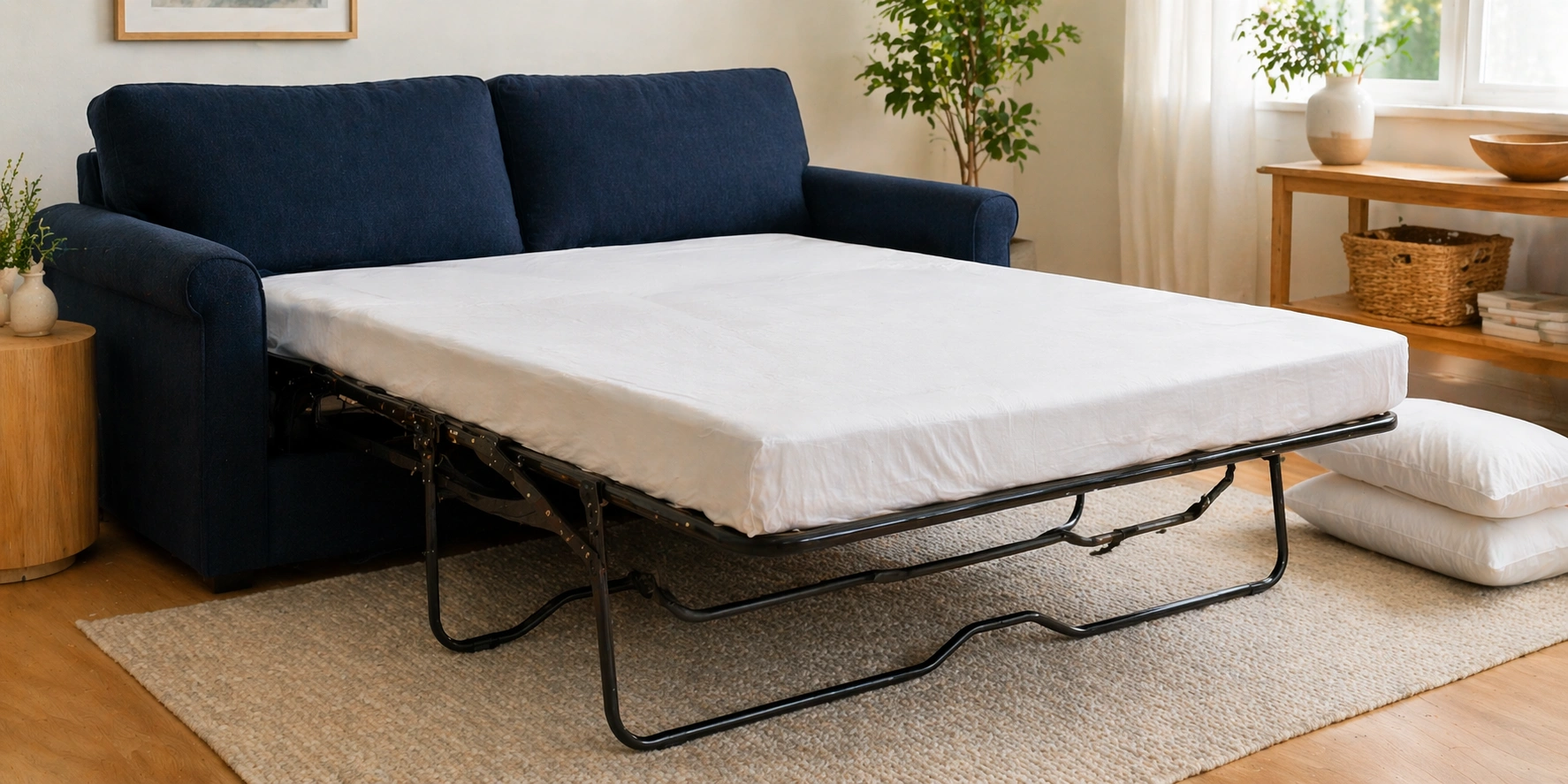
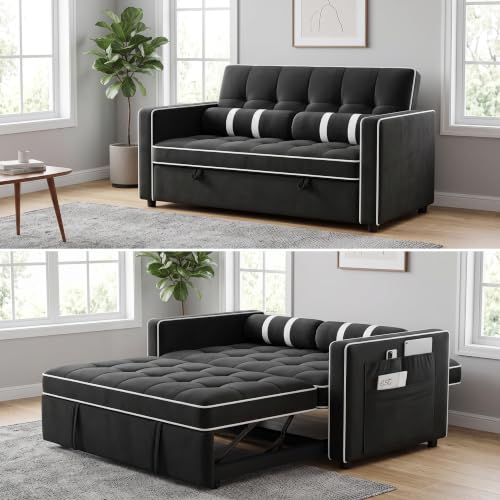
A sleeper sofa — also called a sofa bed, sleeper couch, or pull-out sofa — is a dual-purpose piece of furniture that functions as a standard seating sofa during the day and converts into a sleeping surface at night. Unlike a futon sofa, which requires the entire backrest to fold flat, a true sleeper sofa has a full mattress stored inside its frame that pulls out when needed.
This distinction matters because sleeper sofas offer significantly better sleep quality than futons. The mattress is thick (typically 4 to 6 inches), supported by a metal frame and grid or spring deck, rather than just a padded surface. For anyone who has struggled with thin, uncomfortable fold-out beds in the past, modern sleeper sofas have improved dramatically in both comfort and ease of use.
Sleeper sofas serve a specific niche in the sofa type landscape: they solve the problem of needing both seating and sleeping in the same footprint. This makes them indispensable for studio apartments, guest rooms, home offices, and any home where dedicating a separate room to a bed isn't practical.
Types of Sleeper Sofas
Not all sleeper sofas work the same way. The mechanism that converts the sofa into a bed varies significantly, and each type has distinct advantages depending on your space, budget, and how often the bed will be used.
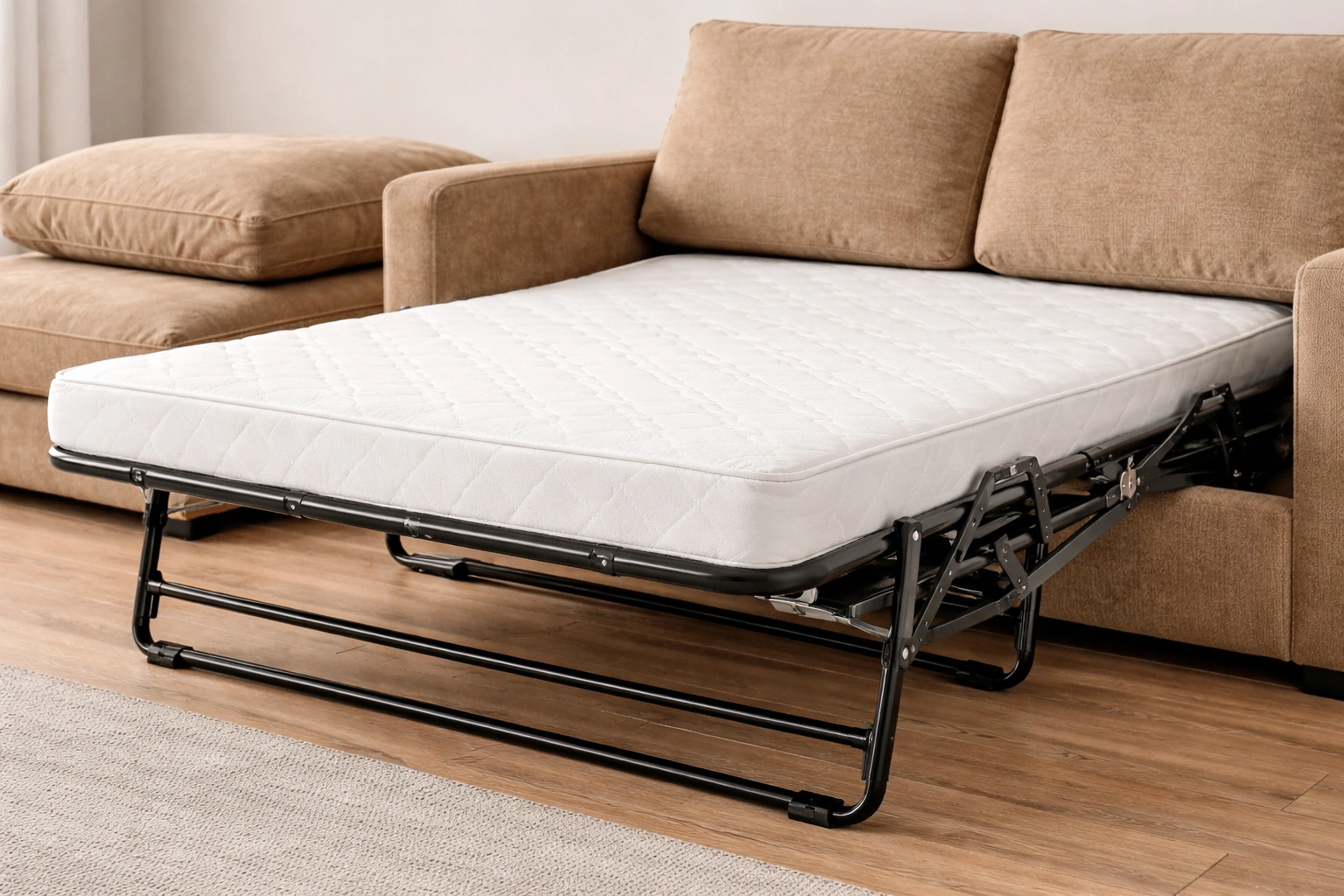
Pull-Out (Traditional)
The most common type. Remove cushions, pull the hidden mattress frame forward, and unfold the legs. Uses a full metal mechanism.

Click-Clack
Push the backrest backward until it clicks into a flat position. Simpler mechanism but thinner mattress. Similar to futons but with a fixed frame.
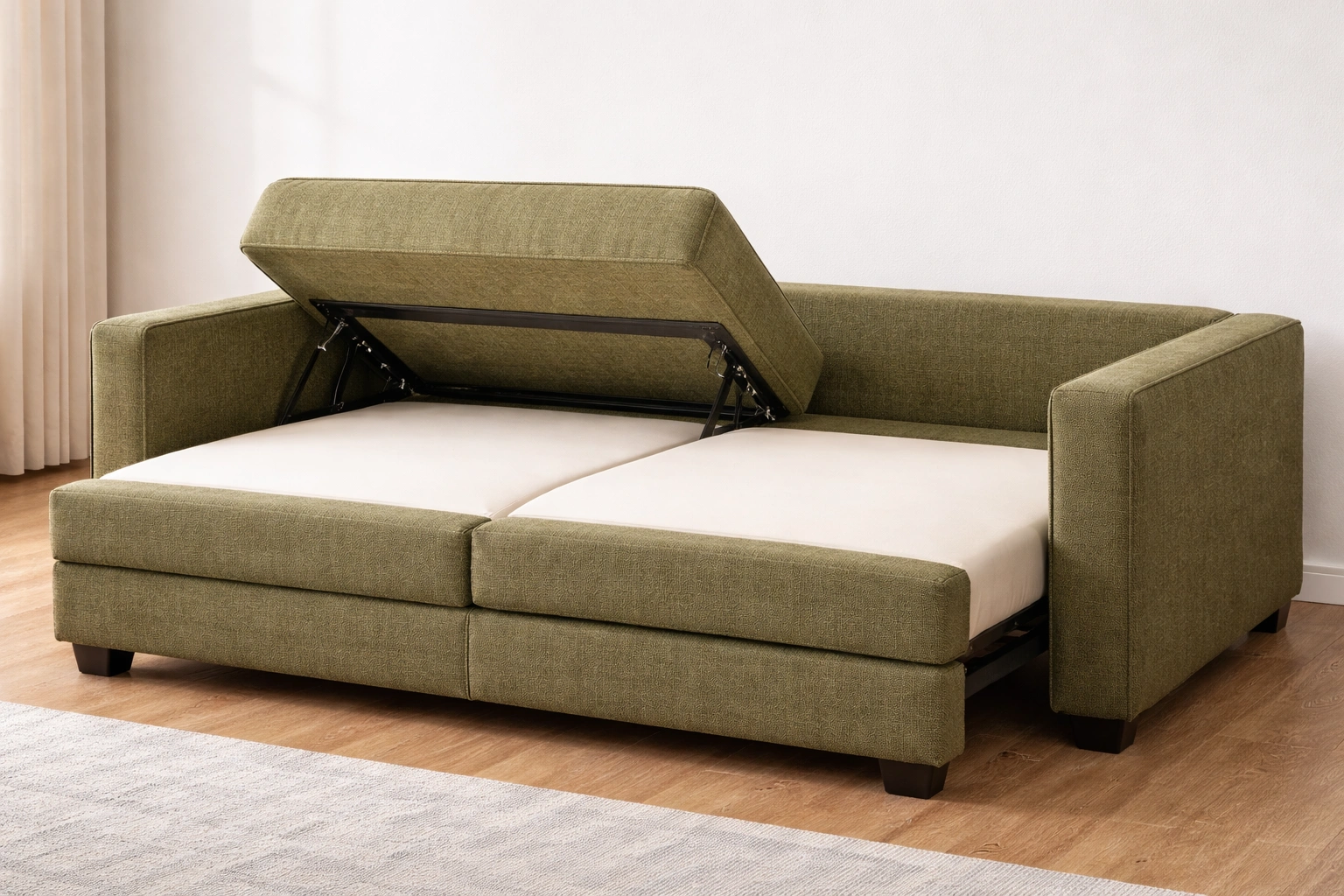
Fold-Down
The backrest folds forward to create the sleeping surface. The seat cushion becomes the head of the bed. Best for tight spaces.
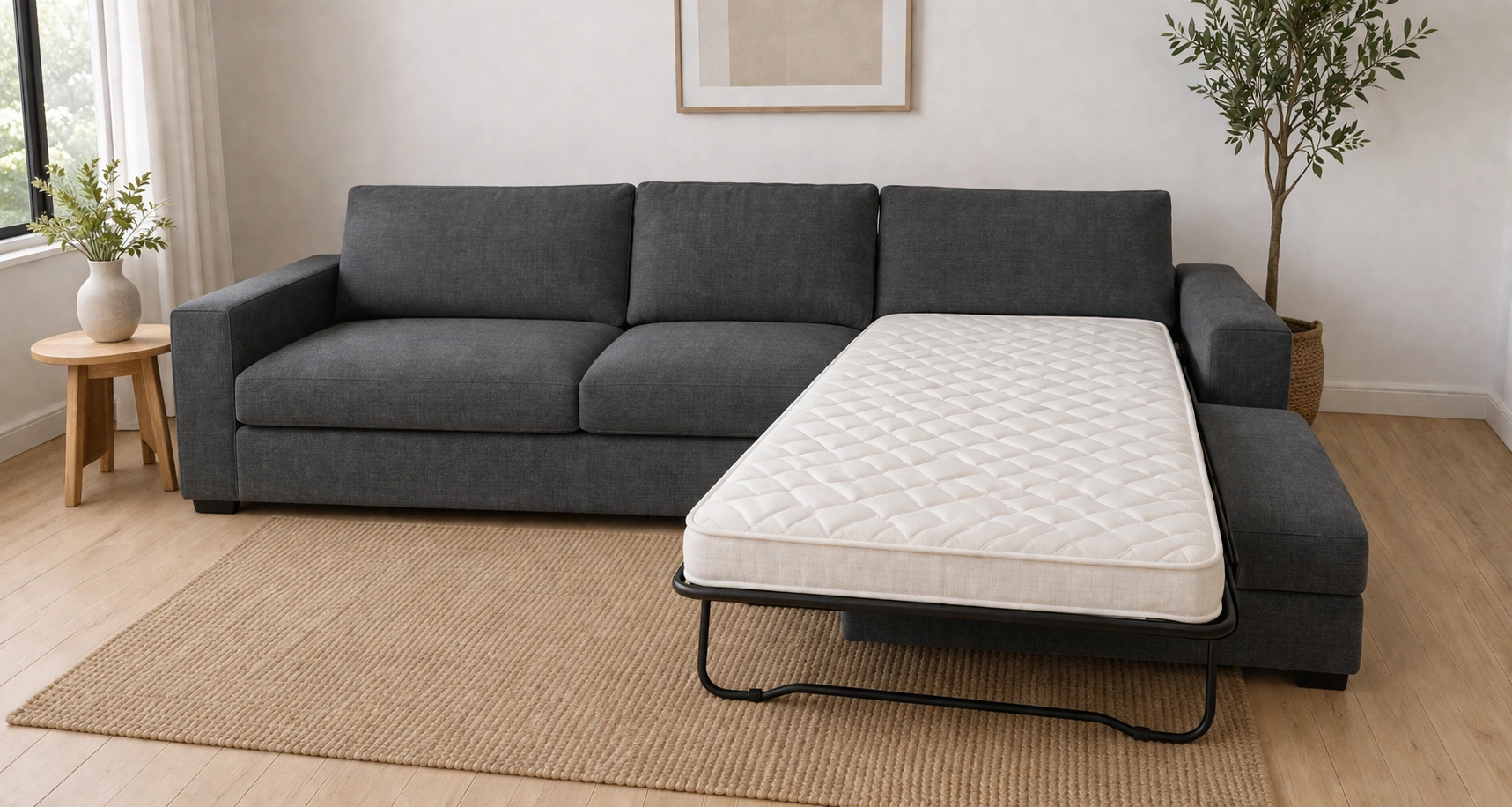
Sectional Sleeper
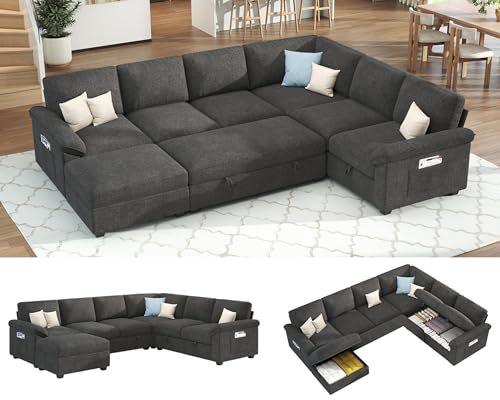
Combines the layout flexibility of a sectional sofa with a sleeper mechanism built into one of the chaise or corner modules.
💡 Quick Tip: If you host guests frequently and want a bed that feels close to a real mattress, choose a pull-out type with a memory foam or innerspring mattress. If you only need a bed occasionally and prioritize ease of conversion, a click-clack or fold-down is faster to set up but less comfortable for sleeping.
Sleeper Sofa Mattress Types: Comfort Compared

The mattress is where sleeper sofas win or lose. A beautiful sofa with a terrible mattress is worthless as a sleeper. Here's a detailed comparison of every mattress type you'll encounter:
| Mattress Type | Thickness | Comfort | Weight | Best For | Price Impact |
|---|---|---|---|---|---|
| Memory Foam | 4 – 6 inches | Heavy (40-60 lbs) | Daily sleeping, back pain sufferers | Higher ($100-300 add) | |
| Innerspring | 4 – 5 inches | Very Heavy (50-70 lbs) | Occasional guests, traditional feel | Moderate ($50-150 add) | |
| Gel-Infused Foam | 4 – 5 inches | Heavy (40-55 lbs) | Hot sleepers, all-season use | Higher ($150-350 add) | |
| Air Mattress (Built-In Pump) | 6 – 8 inches (inflated) | Light (15-25 lbs) | Occasional use, easy to adjust firmness | Low to Moderate | |
| Polyurethane Foam | 3 – 4 inches | Light (25-35 lbs) | Budget options, rare guest use only | Included (base) | |
| Latex Foam | 4 – 5 inches | Heavy (45-65 lbs) | Eco-conscious buyers, durability | Higher ($200-400 add) |
Memory Foam vs. Innerspring: The Two Most Common Choices
🟢 Memory Foam Mattress
- ✔ Conforms to body shape — relieves pressure points
- ✔ No coils to feel through the surface
- ✔ Excellent for back pain sufferers
- ✔ Motion isolation — partner won't feel you move
- ✔ Available in different densities for firmness control
- ✘ Can retain heat (gel-infused versions fix this)
- ✘ Initial off-gassing odor for first 24-48 hours
🔵 Innerspring Mattress
- ✔ Familiar bouncy feel like a traditional bed
- ✔ Better airflow — sleeps cooler
- ✔ More affordable as standard option
- ✘ Coils can be felt through thin padding
- ✘ Creates pressure points at hips and shoulders
- ✘ Motion transfers — partner feels movement
- ✘ Heavier to pull out and fold back
Understanding foam quality is essential when evaluating memory foam options. The foam density guide explains ILD (Indentation Load Deflection) ratings — look for a density of at least 1.8 lbs/ft³ for sleeper sofa mattresses that will hold up over time.
Sleeper Sofa Sizes: Complete Dimension Guide

Sleeper sofa sizing is trickier than regular sofas because you need to account for two dimensions: the sofa's daytime footprint and the bed's nighttime footprint. The bed almost always extends beyond the sofa's seating width when unfolded.
| Bed Size | Mattress Dimensions | Sofa Width (Approx.) | Room Clearance Needed | Sleeps |
|---|---|---|---|---|
| Twin | 38" × 75" | 50 – 60 inches | 7 × 8 ft minimum | 1 adult |
| Full | 54" × 75" | 65 – 75 inches | 8 × 9 ft minimum | 2 adults (tight) |
| Queen | 60" × 80" | 75 – 85 inches | 9 × 10 ft minimum | 2 adults comfortably |
| King | 76" × 80" | 85 – 95 inches | 10 × 10 ft minimum | 2 adults spaciously |
⚠️ Critical Sizing Rule: Always measure the fully opened bed dimensions, not just the sofa. A queen sleeper's mattress extends 60 inches wide and 80 inches long — that's 6.7 feet long. Many buyers discover too late that the open bed blocks a doorway, window, or walkway. Our how to measure a sofa guide includes a printable template specifically for sleeper sofas.
For small spaces, a twin or full sleeper is often the most practical choice. A full-size sleeper provides enough room for two adults while keeping the sofa's daytime width comparable to a standard 3-seater sofa. Queen sleepers are the most popular but require significant room clearance when opened. King sleepers are rare and best suited for large rooms or dedicated guest rooms.
If your room is extremely tight, consider alternatives like a futon sofa (which doesn't extend beyond its frame) or a daybed sofa with a trundle drawer.
Sleeper Sofa Pros and Cons
✅ Advantages
- ✔ Dual function — one piece replaces a sofa and a bed, saving money and space
- ✔ Always guest-ready — no need for air mattresses or cots when visitors arrive
- ✔ Modern comfort — memory foam and gel mattresses make sleep quality competitive with real beds
- ✔ Space efficient — eliminates the need for a separate guest bedroom
- ✔ Good investment — costs less than buying a sofa + a separate bed frame + mattress
- ✔ Versatile — perfect for studio apartments, home offices, and multipurpose rooms
⚠️ Drawbacks
- ✘ Heavy — the metal frame and mattress make sleeper sofas 50-100 lbs heavier than regular sofas
- ✘ Difficult to move — the mechanism adds bulk and weight, making relocation hard
- ✘ Lower seat comfort — the cushion sits above the folded mattress, often feeling firmer than a standard sofa
- ✘ Requires clearance — the open bed extends well beyond the sofa's footprint
- ✘ Mechanism wear — hinges, springs, and folding frames can squeak or jam over time
- ✘ Harder to reupholster — the mechanism makes fabric replacement more complex and expensive
Sleeper Sofa vs. Alternatives: Which Is Right for You?
If you need a sleeping solution but aren't sure a sleeper sofa is the best choice, here's how it stacks up against the most common alternatives:
| Feature | Sleeper Sofa | Futon | Air Mattress | Daybed + Trundle |
|---|---|---|---|---|
| Sleep Comfort | ||||
| Seat Comfort | N/A | |||
| Setup Time | 2-5 minutes | 30 seconds | 3-10 minutes | 1 minute |
| Durability | 7-15 years | 3-7 years | 1-3 years | 10-15 years |
| Space When Open | Extends beyond frame | Same as frame | Varies | Same as frame |
| Cost Range | $500 – $3,000+ | $200 – $800 | $30 – $200 | $400 – $1,500 |
| Best For | Frequent guests, daily sleepers | Budget, tight spaces | Rare, short-term guests | Kids' rooms, occasional guests |
For a deeper look at the sectional option, our sectional vs. traditional sofa comparison covers how sectional sleepers compare. If you're considering a sofa wallbed (murphy bed combo), that's another premium alternative worth exploring for daily sleeping.
What Makes a Sleeper Sofa Comfortable?

A comfortable sleeper sofa must deliver in two entirely different modes: sitting and sleeping. Optimizing for one often compromises the other, so understanding the trade-offs helps you make the right choice.
Sitting Comfort Factors
- Seat Cushion Construction: Because the seat cushion sits on top of the folded mattress, sleeper sofas often feel firmer than standard sofas. Look for high-resilience foam seat cushions with a fiber wrap to add softness. Our cushion fill types guide explains the options in detail.
- Seat Depth: Sleeper sofas tend to have deeper seats (22-25 inches) to accommodate the folded mattress. If you prefer a standard vs. deep seat, check the depth spec before buying — some sleeper sofas feel like you're sitting too far back from the edge.
- Cushion Thickness: Thicker seat cushions (6-8 inches) help mask the firmness of the mattress below. Thin cushions make the bed underneath very noticeable when sitting.
Sleeping Comfort Factors
- Mattress Support Surface: The bed platform matters as much as the mattress. Look for a wire grid or slatted support system rather than a thin fabric sling. A solid support base prevents the mattress from sagging in the middle — a common complaint with budget sleepers.
- Mattress Thickness: A minimum of 4 inches is acceptable for occasional use. For daily sleeping, choose 5-6 inches. Anything thinner than 4 inches will leave you feeling the support bars through the mattress.
- No Bar Problem: Older sleeper sofas had a crossbar that pressed into your back. Modern designs have eliminated this, but budget models may still have it. Always check reviews for mentions of "feeling the bar" or "bar in the back."
- Edge Support: Quality sleeper mattresses have reinforced edges so you don't roll off the side. This is especially important on queen and king sizes where two people share the bed.
💡 Pro Tip: If you plan to use the sleeper sofa as your primary bed (common in studio apartments), add a 2-3 inch memory foam topper on top of the sleeper mattress. This transforms even a basic innerspring sleeper into a genuinely comfortable bed. It's a $50-$100 upgrade that makes an enormous difference. For seating comfort during the day, you can store the topper in a closet.
Frame Construction & Mechanism Quality
The sleeper mechanism is the most failure-prone component. A broken mechanism renders the entire sleeper function useless, even if the sofa itself is in perfect condition. Here's what to look for:
- Steel Frame Mechanism: Insist on a steel folding frame, not aluminum. Steel supports more weight (typically 400-750 lbs), resists warping, and lasts far longer. Check the rated weight capacity before purchasing.
- Kiln-Dried Hardwood Sofa Frame: The sofa's structural frame should be hardwood — oak, maple, or ash. The sleeper mechanism bolts into this frame, so it needs to be strong enough to handle the extra stress. Our frame materials guide explains how to evaluate quality.
- Smooth Operation: Test the mechanism if possible. It should pull out smoothly without excessive force, grinding, or sticking. A stiff mechanism is a sign of poor manufacturing tolerances.
- Leg Design: The bed's fold-out legs should lock securely into position. Wobbly or folding legs are a safety hazard. If legs are loose out of the box, return the sofa immediately.
- Enclosed Mechanism: Better designs enclose the mechanism in a fabric or metal casing that prevents dust accumulation and protects the mattress when stored. Open mechanisms collect debris and can snag fabric.
The spring system and suspension type of the seating area should also be evaluated separately from the sleeper mechanism — they serve different functions.
How to Choose the Right Sleeper Sofa: Step by Step
- Determine Primary Use — Will this be for occasional guests (a few times per year), frequent hosting (monthly), or daily sleeping? Occasional use allows for budget options; daily sleeping demands premium mattress quality and durability.
- Measure Your Space for Both Modes — Map out the sofa's daytime position AND the bed's fully opened dimensions on your floor. Use painter's tape to outline the bed area. Ensure walkways remain clear when the bed is open. Our what sofa size for my room guide has detailed formulas.
- Choose Your Mattress Type — Match the mattress to your use case. Memory foam or gel-infused for daily sleepers, innerspring for occasional guests on a budget, air mattress for rare use where weight is a concern.
- Select the Right Bed Size — Full is the most versatile size. Twin only if one person sleeps. Queen for couples but verify you have 9×10 feet of clearance. King only for large dedicated guest rooms.
- Test the Mechanism — If shopping in person, pull the bed out and fold it back at least twice. It should operate smoothly with moderate effort (one person should be able to do it alone). Listen for squeaking or grinding.
- Evaluate Sitting Comfort Separately — Sit on the sofa with the bed folded away for at least 5 minutes. You'll spend far more time sitting than sleeping on it. If the seat feels uncomfortably firm, no mattress upgrade will fix that — the cushion design is the issue.
- Check the Weight Capacity — Verify both the sofa's seating weight limit and the bed's sleep weight limit. They're often different. A sofa rated for 750 lbs sitting may only support 500 lbs when used as a bed.
- Consider the Fabric — The upholstery needs to withstand the extra friction from the opening/closing mechanism. Performance fabric or microfiber resists wear at stress points. The Martindale test rating should be above 30,000 cycles for sleeper sofas.
- Verify Doorway Clearance — Sleeper sofas are heavier and bulkier than regular sofas. Measure your doorways, hallways, and stairwells. The sofa must fit through the narrowest point while being carried. A common mistake is measuring the room but forgetting the delivery path.
- Factor in Total Cost — Account for the sofa price, any mattress upgrades, delivery fees (sleeper sofas often cost more to deliver due to weight), and accessories like a mattress topper, sheets, and a sofa cover. Our sofa budget guide helps you plan.
Best Sleeper Sofa Setups for Every Situation
For Studio & One-Bedroom Apartments
In an apartment, a sleeper sofa is often the only way to have both a living area and a guest bed. A full-size pull-out with memory foam mattress offers the best balance of comfort and space efficiency. Place it against the longest wall so the bed opens into the center of the room. Choose a neutral color to maintain a spacious feel. Avoid queen sleepers unless your studio is at least 500 sq ft — the open bed will consume too much floor area.
For Dedicated Guest Rooms
A guest room sleeper sofa gives you flexibility — use the room as a sitting area, office, or hobby space when no guests are visiting, then convert it to a bedroom when needed. A queen-size sectional sleeper with a chaise lounge creates a luxurious feel during the day. Invest in a quality mattress here since guest comfort directly reflects on you as a host.
For Home Offices
An office sofa that converts to a bed is perfect for late-night work sessions or when you need to host overnight visitors. A 2-seater or loveseat sleeper with a twin mattress keeps the office feeling professional during the day. Look for models with clean lines and leather or faux leather upholstery for a business-appropriate appearance.
For Families with Kids
For family rooms that double as sleepover central, durability is paramount. Choose a sleeper sofa with stain-resistant performance fabric, a full or queen mattress for multiple kids, and a mechanism rated for high weight capacity. Consider a sectional sleeper that provides ample daytime seating for the whole family. Our best sofas for families guide covers additional family-friendly features.
For Frequent Hosts
If you regularly host overnight guests, prioritize sleep quality above all else. A queen or king sleeper with a gel-infused memory foam mattress, quality support deck, and premium upholstery is worth the investment. Pair it with good bedding — a mattress pad, quality sheets, and extra pillows stored in a nearby storage ottoman or closet make guests feel genuinely welcome.
Maintaining Your Sleeper Sofa

Sleeper sofas require more maintenance than regular sofas because they have moving parts and a concealed mattress. Neglecting maintenance leads to stiff mechanisms, musty mattresses, and shortened lifespan.
- Lubricate the mechanism annually — Use a silicone-based spray (not WD-40, which attracts dust) on all hinges, pivot points, and sliding tracks. This prevents squeaking and makes the bed easier to pull out. If your sofa squeaks, the mechanism is usually the culprit.
- Air out the mattress monthly — Pull the bed out and let the mattress breathe for 2-4 hours. This prevents moisture buildup, musty odors, and mold growth in the enclosed space. If your sofa smells bad, the enclosed mattress is likely the source.
- Rotate the mattress — Flip and rotate the sleeper mattress every 3-6 months, just like a regular bed mattress. This prevents body impressions and uneven wear. If the mattress has a non-slip bottom, only rotate it end-to-end.
- Protect the mattress — Use a waterproof mattress protector under your sheets. This is non-negotiable if guests sleep on it — it prevents stains, odors, and allergen buildup. A protector costs $20-40 and saves a $200+ mattress.
- Clean the mechanism area — Vacuum inside the cavity where the mattress folds. Dust, crumbs, and pet hair accumulate here and can interfere with the folding mechanism. Do this every 2-3 months.
- Inspect for loose bolts — The mechanism is bolted to the sofa frame. Vibrations from opening and closing can loosen these bolts over time. Tighten them annually with a wrench. If the frame feels loose, see our frame repair guide.
For upholstery care, follow the fabric-specific guides: cleaning fabric sofas, cleaning leather sofas, and removing stains. The extra friction from the sleeper mechanism makes the front panel of the upholstery especially vulnerable to wear — consider a sofa cover to protect this high-stress area.
Common Sleeper Sofa Buying Mistakes
⚠️ Avoid These Costly Errors: Sleeper sofas are more complex than regular sofas, which means more ways to make a regretful purchase. Learn from the mistakes of thousands of buyers before you.
- Not measuring the open bed footprint — This is the #1 mistake. People measure where the sofa will sit but don't account for the 60-80 inches the bed extends when opened. Result: a bed that blocks doorways, covers HVAC vents, or can't be fully opened.
- Choosing based on sofa comfort alone — A sleeper sofa that feels great to sit on may have a terrible mattress. Always evaluate both modes. If you can't test the bed in person, read reviews that specifically mention sleep quality — not just seating.
- Buying too cheap — A $300 sleeper sofa will almost certainly have a thin polyurethane foam mattress, a flimsy mechanism, and poor support. You get what you pay for. Even for occasional guest use, spend at least $600-800 to get a tolerable sleep experience.
- Ignoring the weight — Sleeper sofas weigh 150-300 lbs. If you move frequently, this is a serious consideration. A modular sofa with a separate air mattress might be more practical for movers.
- Forgetting about bedding — Sleeper mattresses use specific sheet sizes (often labeled "sleeper sofa sheets" or "RV sheets"). Standard sheets may not fit the shorter or thinner mattress. Factor in $50-100 for proper-fitting sheets.
- Not checking the mechanism clearance — Some sleeper mechanisms require the sofa to be pulled away from the wall before the bed can open. If your sofa is in a tight corner, verify the mechanism doesn't need rear access.
- Assuming all queen sleepers are the same — Queen sleeper mattresses vary from 58-60 inches wide and 72-80 inches long. A "short queen" (60×74) is significantly smaller than a standard queen (60×80). Always check exact mattress dimensions.
Sleeper Sofa Price Guide
| Price Tier | Price Range | Mattress Type | Mechanism | Expected Lifespan |
|---|---|---|---|---|
| Budget | $400 – $700 | Polyurethane foam (3") | Basic steel, no enclosure | 3-5 years |
| Mid-Range | $700 – $1,500 | Innerspring or basic memory foam (4-5") | Steel with fabric enclosure | 5-10 years |
| Premium | $1,500 – $3,000 | Memory foam or gel-infused (5-6") | Heavy-duty steel, enclosed, smooth-glide | 10-15 years |
| Luxury | $3,000+ | Latex or premium gel foam (6") | Patented mechanisms, handcrafted | 15+ years |
Be aware of hidden costs specific to sleeper sofas: higher delivery fees due to weight, mattress protector and specialty sheets, a mattress topper for daily sleepers, and potentially higher repair costs if the mechanism fails outside warranty. The sofa price breakdown article explains where every dollar goes.
The price vs. quality relationship is especially steep with sleeper sofas. Spending $400 instead of $700 saves money upfront but typically means replacing the sofa in half the time with a significantly worse guest experience. For occasional guests, the mid-range sweet spot around $800-1,200 offers the best value.
Frequently Asked Questions
Can you sleep on a sleeper sofa every night?
Yes, but only if you choose the right model. For daily sleeping, you need a sleeper sofa with a high-quality memory foam, gel-infused, or latex mattress (minimum 5 inches thick), a sturdy support deck with no bar, and a durable mechanism. Add a mattress topper for extra comfort. Budget sleeper sofas with thin foam mattresses will cause back problems with nightly use. If you have existing back issues, read our sofa for back pain guide for specific recommendations.
How much weight can a sleeper sofa hold?
Most quality sleeper sofas support 400-750 lbs on the bed. Budget models may be rated for only 250-400 lbs. Always check the manufacturer's weight rating — it's different from the sofa's seated weight capacity. The bed rating accounts for two sleeping adults plus bedding. If you're near the limit, a queen or king size distributes weight better than a full or twin.
Do sleeper sofas need special sheets?
Often yes. Sleeper sofa mattresses are thinner (4-6 inches) than regular mattresses (8-12 inches), so standard fitted sheets may be too deep and bunch up. Look for "sleeper sofa sheets," "RV sheets," or "shallow-pocket sheets" with a pocket depth of 8 inches or less. Some sleeper mattresses are also shorter than standard sizes — measure before buying sheets.
How do you stop a sleeper sofa from squeaking?
Squeaking usually comes from the metal mechanism. First, tighten all visible bolts. Then, spray silicone lubricant on all hinge points, pivot joints, and sliding tracks. Avoid oil-based lubricants like WD-40 — they attract dust and make the problem worse over time. If the squeaking persists, the mechanism may be bent or worn and needs replacement. See our sofa squeaking troubleshooting guide for detailed steps.
Is a sleeper sofa worth it for occasional guests?
It depends on your alternatives. If your only options are an air mattress on the floor or sending guests to a hotel, a sleeper sofa is absolutely worth the investment — even a budget model provides a dramatically better experience. However, if you have a dedicated guest room with a real bed, a sleeper sofa is unnecessary. For once- or twice-a-year guests, a mid-range option around $800-1,000 hits the sweet spot between cost and comfort.
Can you replace just the mattress in a sleeper sofa?
Yes — this is one of the best features of sleeper sofas. You can buy replacement sleeper sofa mattresses from companies like Overstock, Wayfair, and Amazon for $100-300. This lets you upgrade a budget sofa's terrible mattress to a premium memory foam one without replacing the entire sofa. Measure the exact dimensions of your current mattress (length, width, and thickness) before ordering, as sizes vary by manufacturer.