
The Complete Guide to Daybed Sofas
Discover everything about daybed sofas—from types and materials to room placement and styling—so you can choose the perfect dual-purpose piece for your home.
VIEW TOP PICKSWhy a Daybed Sofa? A daybed sofa bridges the gap between a comfortable seating area and a proper sleeping surface. It is one of the most versatile furniture investments you can make—ideal for guest rooms, home offices, studio apartments, and any space where maximizing function without sacrificing style matters.
What Is a Daybed Sofa?

A Furniture Piece That Does Double Duty
A daybed sofa is a hybrid furniture piece that combines the lounging comfort of a sofa with the sleeping capability of a bed. Unlike a standard sleeper sofa—which hides a mattress inside a fold-out mechanism—a daybed uses a visible mattress or thick cushion as its seating surface, framed on three sides by a back and two arms.
This open, bed-like design gives daybeds a distinctly different aesthetic from conventional sofas. They feel more airy, more inviting for lounging, and naturally lend themselves to spaces where relaxation is the priority. Daybeds typically accommodate a twin or full-size mattress, making them genuinely suitable for overnight guests.
The key distinction lies in the frame structure. While a traditional sofa has a continuous seat deck with individual cushions, a daybed has a solid base—often with slats—designed to support a mattress. This means the seating experience is firmer and more bed-like, which many people actually prefer for extended lounging or reading sessions.
Daybed Sofa vs. Similar Furniture Types
Understanding how a daybed compares to other multi-purpose furniture helps you decide whether it truly fits your needs. The table below breaks down the most common alternatives.
| Feature | Daybed Sofa | Sleeper Sofa | Futon | Loveseat |
|---|---|---|---|---|
| Sleeping Surface | Twin or Full mattress (always ready) | Fold-out hidden mattress | Fold-down cushion (thin) | Not designed for sleeping |
| Comfort for Seating | Firm to medium (mattress-based) | Standard sofa comfort | Varies; often firm | Standard sofa comfort |
| Comfort for Sleeping | Excellent (real mattress) | Good (thinner mattress) | Fair (thin cushion) | Poor (not intended) |
| Conversion Effort | None (already a bed) | Moderate (unfold mechanism) | Low (fold down back) | N/A |
| Visual Style | Open, airy, bed-like | Traditional sofa look | Casual, college-style | Compact, traditional |
| Best For | Guest rooms, offices, small spaces | Living rooms with occasional guests | Budget, dorm rooms | Small living rooms, pairs |
| Price Range | $300 – $800 | $500 – $1,500 | $150 – $400 | $250 – $700 |
If you need something that looks like a conventional sofa but occasionally converts into a bed, a sleeper sofa may be more appropriate. If budget is your top concern and you do not mind a more casual aesthetic, a futon gets the job done. But if you want a piece that genuinely serves as both a comfortable daytime lounge and a proper bed—without any conversion hassle—a daybed is the clear winner.
Pros and Cons of Owning a Daybed Sofa
✅ Advantages
- Dual-purpose functionality without any conversion mechanism
- Real mattress provides genuine sleeping comfort for guests
- Open design makes small rooms feel more spacious
- Wide variety of styles—from traditional to modern
- Trundle options add a second sleeping surface
- Easier to assemble and move than sleeper sofas
- Typically more affordable than high-quality sleeper sofas
❌ Disadvantages
- Firmer seat feel may not suit those who prefer plush sofas
- Three-sided frame limits seating direction flexibility
- Standard twin size may feel narrow for two adults
- Does not look like a traditional sofa in formal living rooms
- Back support while seated upright can be less than a standard sofa
- Requires separate mattress purchase with some models
- Trundle models need extra floor clearance
Types of Daybed Sofas
Daybeds come in several distinct styles, each suited to different rooms, aesthetics, and functional needs. Here are the most popular types to consider.
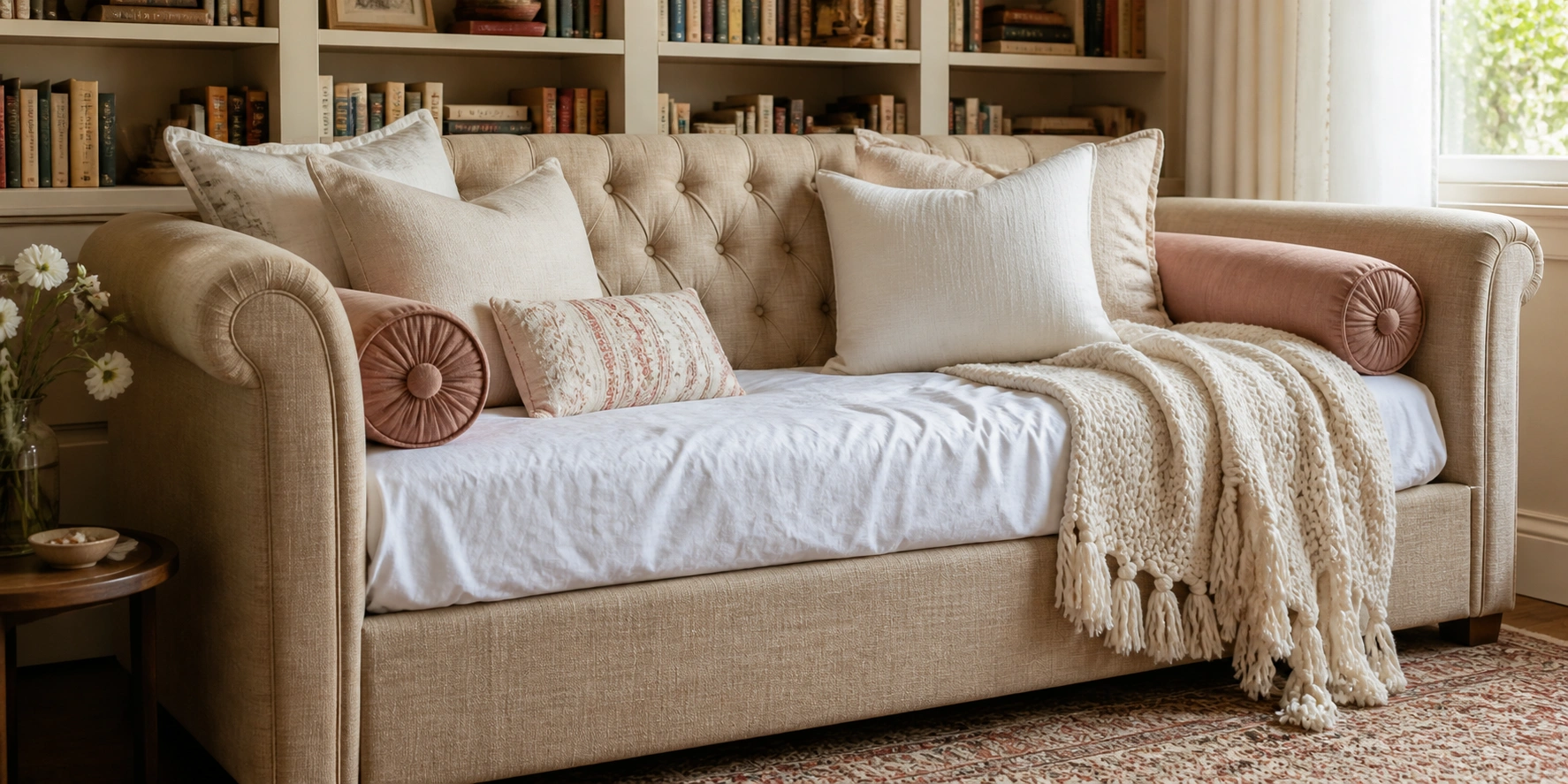
Upholstered Daybed
The most sofa-like option. Features padded arms, a tufted or plain back, and fabric or leather upholstery. Ideal for living rooms and guest rooms where you want a soft, inviting look that blends with existing furniture. Available in styles ranging from tufted traditional to sleek contemporary.

Daybed with Trundle
Includes a secondary bed on casters tucked beneath the main frame. Perfect for homes that frequently host overnight guests or families with children who have sleepovers. Pop-up trundles can be raised to create a king-size sleeping surface when needed.
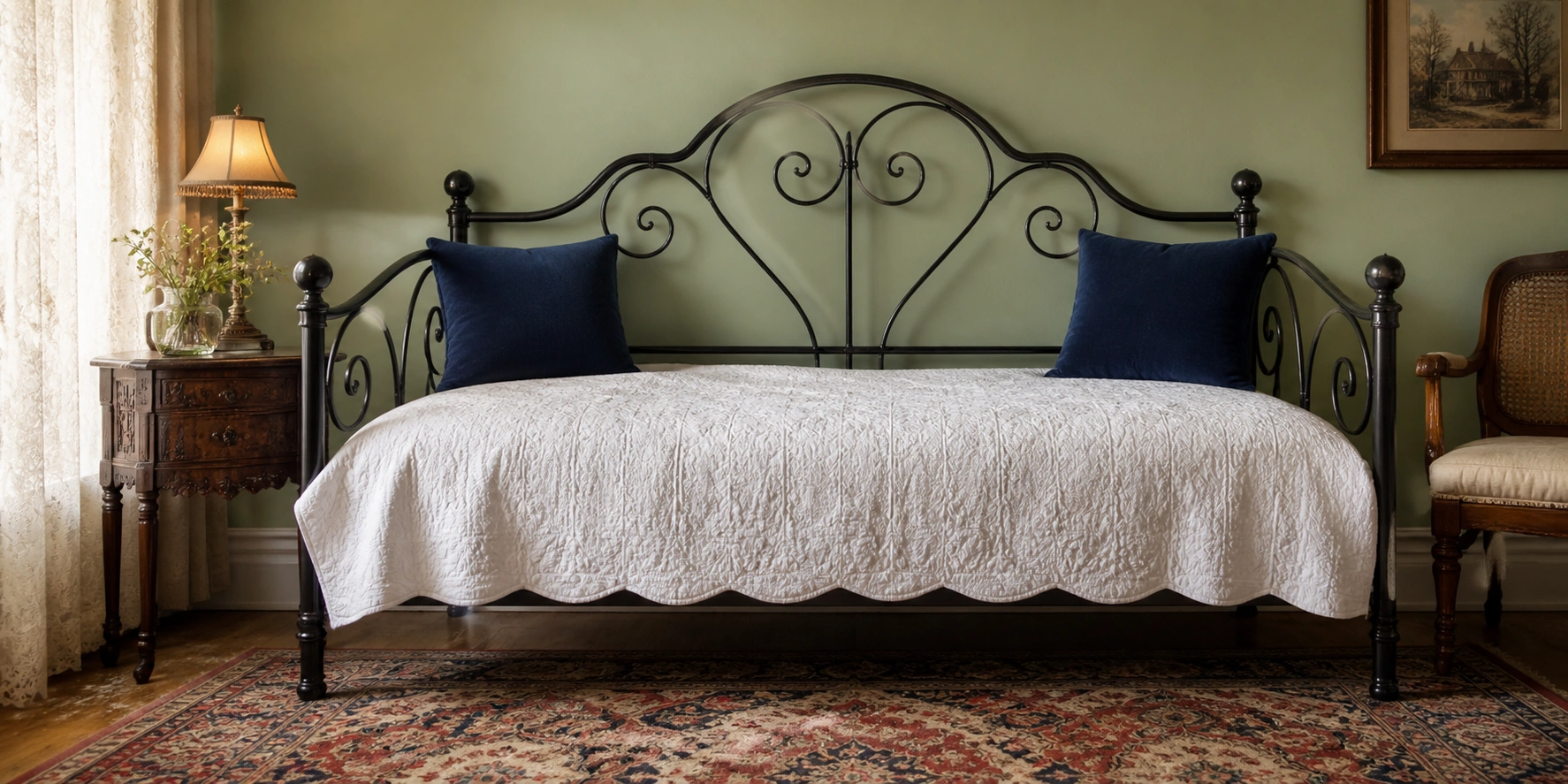
Metal Frame Daybed
Features a wrought iron or steel frame, often with decorative scrollwork. These are lightweight, durable, and pair well with vintage, industrial, or cottage aesthetics. Typically the most affordable option and easy to move between rooms.

Wooden Daybed
Crafted from solid wood or engineered wood with a warm, natural finish. Pairs beautifully with Scandinavian, farmhouse, and bohemian interiors. A wooden frame adds character and tends to feel more substantial than metal alternatives.
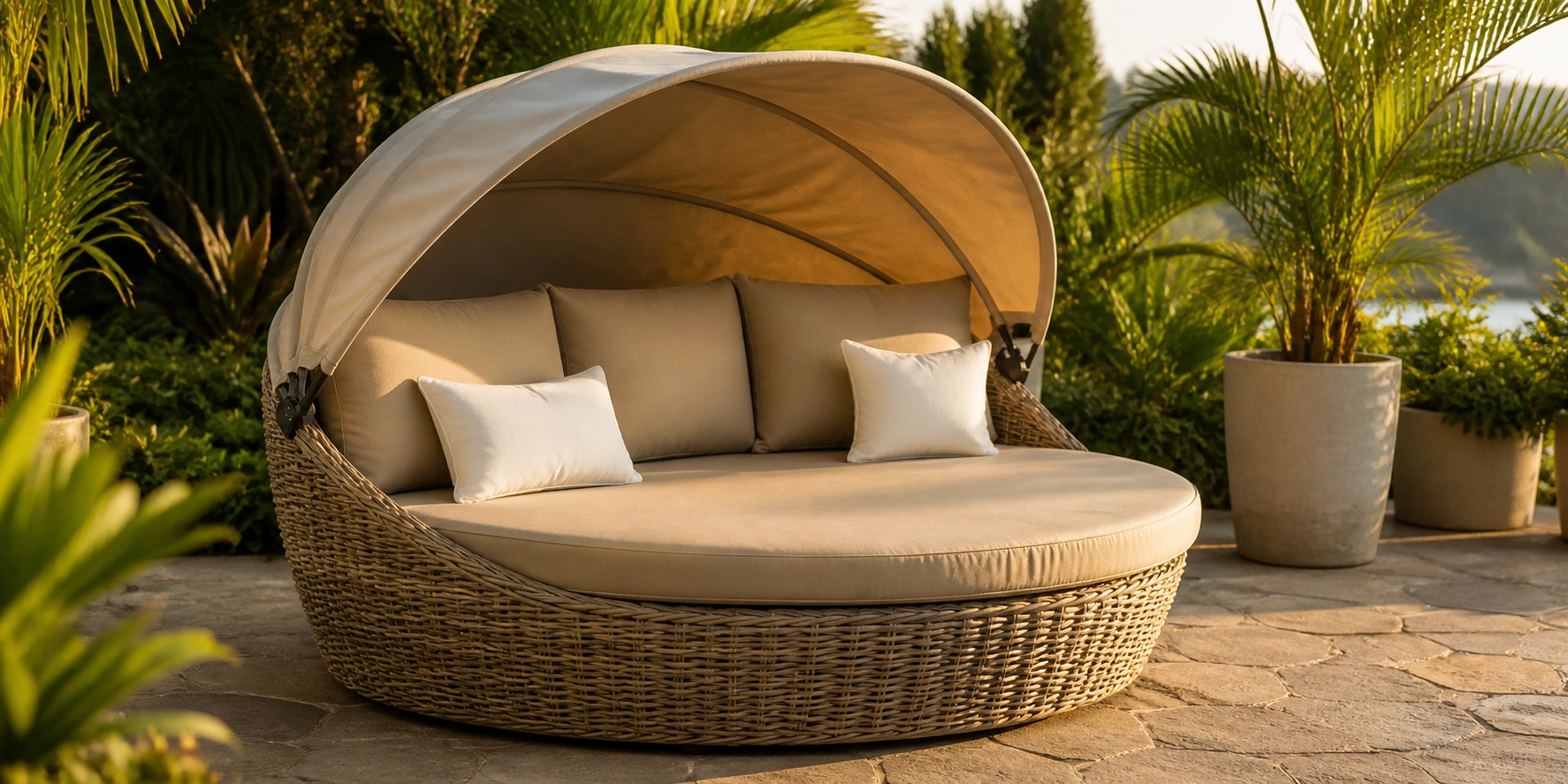
Outdoor Daybed
Designed specifically for patios, decks, and poolside areas using weather-resistant materials like rattan, teak, or powder-coated aluminum. Many include canopies for shade. If you are also considering a dedicated piece for your garden, explore outdoor sofa options for comparison.

Modern / Minimalist Daybed
Characterized by low profiles, clean lines, and understated designs. Often features neutral fabrics and slim frames that suit modern and minimalist interiors. These daybeds double as stylish statement pieces in open-concept living spaces.
Best Rooms for a Daybed Sofa
A daybed's versatility means it can work in almost any room—provided you choose the right style and size. Here are the most popular placements and why they work.
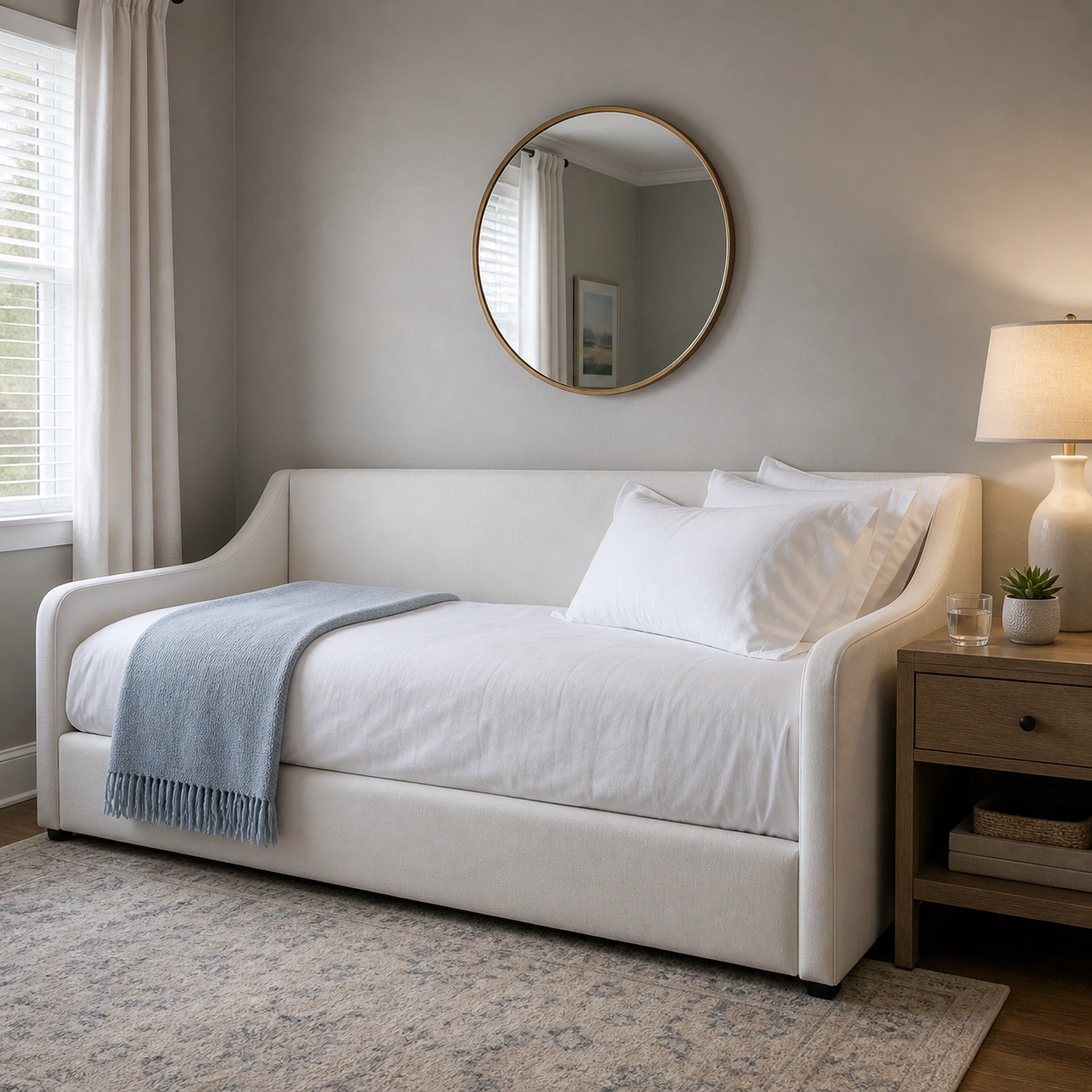
Guest Room
The most natural fit. A daybed serves as a daytime sitting area for reading or relaxing, then transforms into a proper bed at night without any effort. Add a storage drawer underneath for extra linens.

Home Office
Turn your office into a dual-purpose space. A daybed provides a spot to take breaks, review documents comfortably, or host occasional overnight visitors without needing a separate guest room.
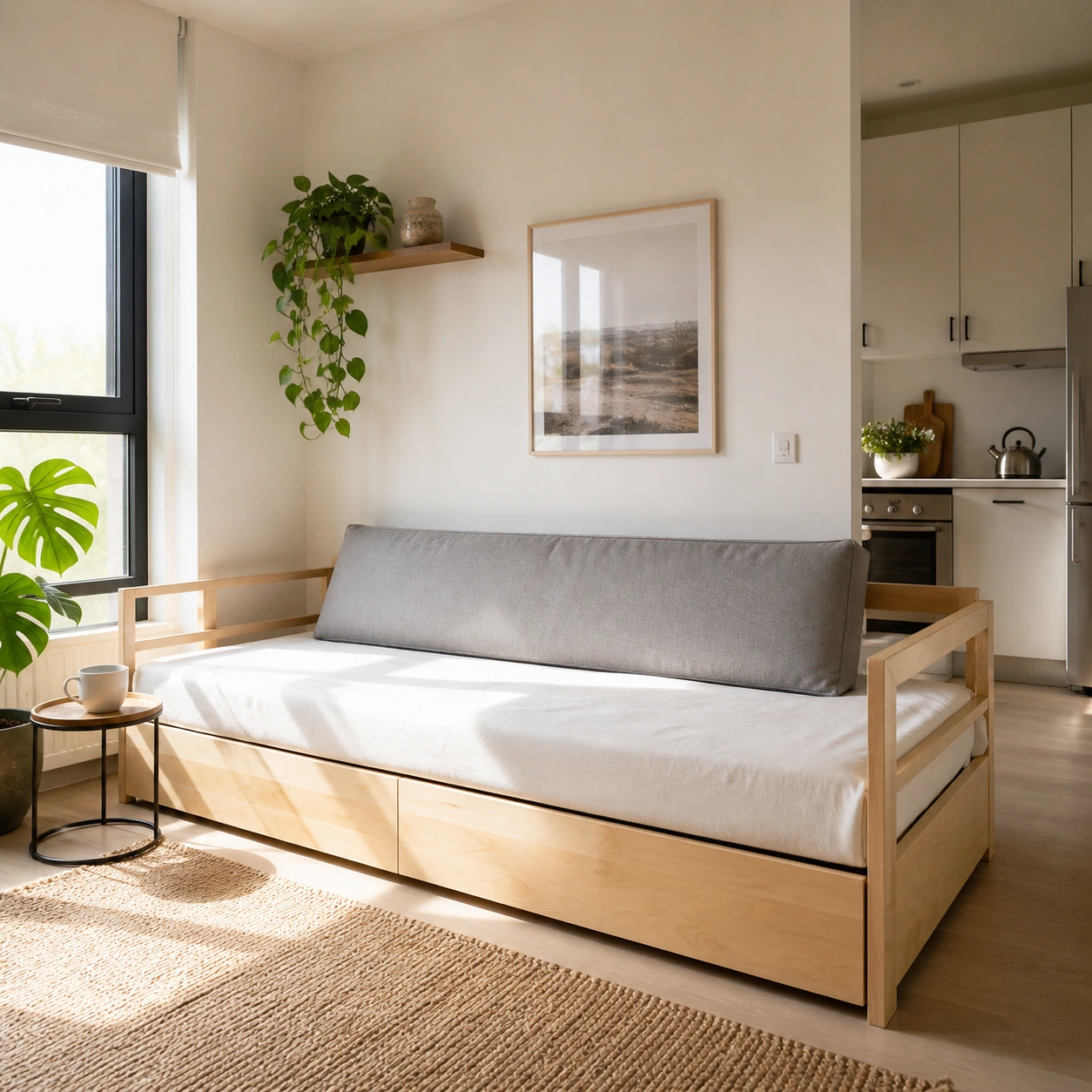
Studio Apartment
In a studio, combining your sofa and bed into one piece frees up significant floor space. A daybed with a trundle is especially effective for small spaces where every square foot counts.

Sunroom or Porch
A sunroom is all about relaxation, and a daybed fits that purpose perfectly. Choose weather-resistant fabrics if the space is not fully enclosed, or go with an outdoor-rated model for open porches.

Kids' Room or Nursery
Daybeds work wonderfully in children's rooms as a transitional bed or a reading nook. A trundle version is ideal for siblings sharing a room or for sleepover guests. Pair with a kid-sized option for younger children.

Living Room (Accent)
While less common as a primary living room sofa, a daybed makes a stunning accent piece in a larger room. Place it near a window or in a reading corner for a designer look that also adds extra seating.
Buying Guide: Key Factors to Consider
Shopping for a daybed requires attention to details that differ from buying a standard sofa. Here are the factors that matter most.
-
Size and Mattress Dimensions
Most daybeds fit a standard twin mattress (38" × 75"), but full-size (54" × 75") options exist for more sleeping space. Before buying, measure your room carefully—account for the frame which adds 4–6 inches to each side. Also check ceiling height if you are considering a daybed with a canopy or tall back.
-
Frame Material and Construction
The frame determines durability and aesthetic. Solid hardwood (oak, maple, pine) offers the longest lifespan but comes at a higher price. Metal frames are lighter and more affordable. For a thorough comparison of frame options, read our frame materials guide. Always check weight capacity ratings.
-
Mattress Quality
This is where many buyers cut corners and regret it. A daybed mattress should be at least 6–8 inches thick for comfortable sleeping. Memory foam and hybrid mattresses offer the best balance of comfort and support. Avoid thin mattress toppers disguised as proper mattresses. Our cushion fill guide covers the science behind comfort layers.
-
Trundle vs. No Trundle
If you regularly host two guests, a trundle is worth the investment. Pop-up trundles that raise to the same height as the main bed are more versatile than simple roll-out versions. Consider floor clearance—you need at least 8–10 inches of space beneath the main frame for the trundle to fit.
-
Back Support for Sitting
Since daybeds are also used for seated lounging, pay attention to the back height and angle. A higher back provides better upright support for reading, while a lower back creates a more relaxed, reclined position. If back support is a priority for you, our guide on sofas for back pain offers useful principles that apply to daybeds as well.
-
Weight Capacity and Slats
Check the manufacturer's stated weight capacity—especially important for trundle models. The slat system matters too: closely spaced slats (no more than 3 inches apart) provide better mattress support and prevent sagging over time. If you are comparing durability across furniture types, our comfort vs. durability guide provides a useful framework.
-
Budget Considerations
Daybeds range from under $200 for basic metal frames to over $1,500 for premium upholstered models with trundles. Set a realistic budget that includes the frame, mattress, and bedding. Our sofa budget guide can help you allocate your spending wisely across quality priorities.
Upholstery Materials for Daybed Sofas
The right upholstery determines how your daybed looks, feels, and ages. Here is a breakdown of the most common options, with pros and cons for each. For a deeper comparison, see our full leather vs. fabric guide.
Cotton and Linen Blend
Soft, breathable, and available in a wide range of colors. Ideal for daybeds in bedrooms and sunrooms where a relaxed, natural look is desired. Linen blends drape beautifully and develop a gentle patina over time.
Performance Fabric
Engineered to resist stains, fading, and wear. The best choice for daybeds in high-traffic areas or homes with pets and children. Performance fabrics like Crypton or Revolution clean easily and maintain their appearance for years.
Velvet
Luxurious and richly colored, velvet adds elegance to any daybed. Perfect for formal guest rooms or accent pieces in living rooms. While beautiful, velvet requires more careful maintenance. Explore velvet sofa options for style inspiration.
Genuine Leather
Sophisticated, durable, and easy to wipe clean. Leather daybeds develop a beautiful patina and work well in offices, libraries, and masculine-styled rooms. For maintenance tips, read our leather cleaning guide.
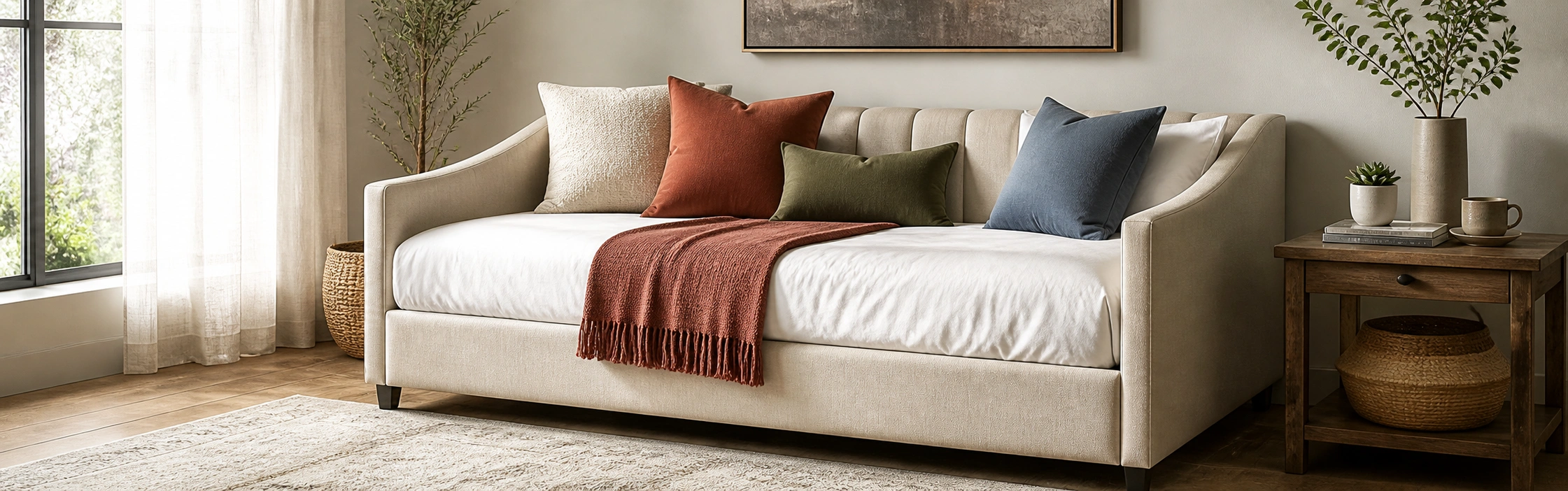
How to Style a Daybed Sofa
A well-styled daybed can elevate an entire room. Here are three distinct approaches to make your daybed look intentional and designer-worthy.
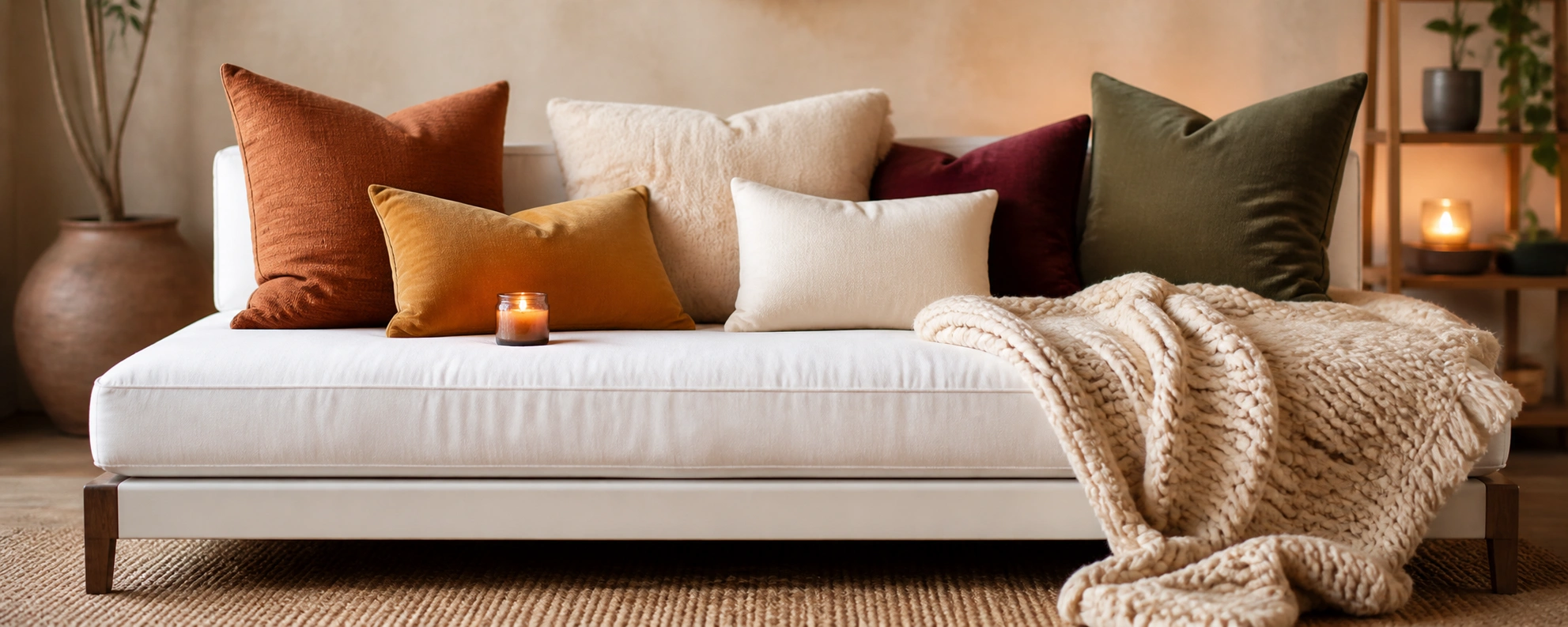
The Cozy Layered Look
Start with standard bedding (fitted sheet + duvet), then add 3–5 throw pillows in varying sizes. Drape a knit or faux fur blanket over one corner. Use throws and pillows in warm, complementary tones to create an inviting nook.
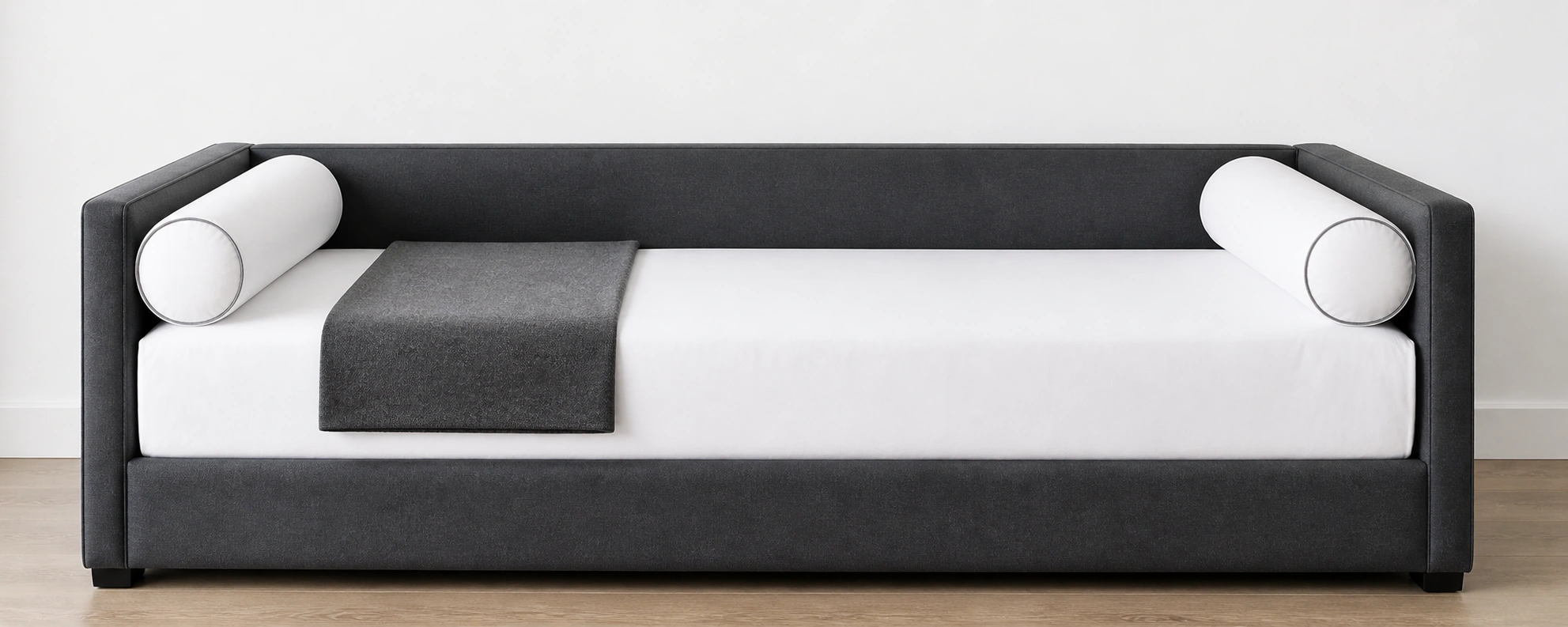
The Tailored Sophisticated Look
Use a crisp white or neutral bedding set with two matching bolster pillows at each end. Keep accessories minimal—a single folded blanket at the foot and perhaps one small decorative pillow. This works beautifully in contemporary and modern spaces.
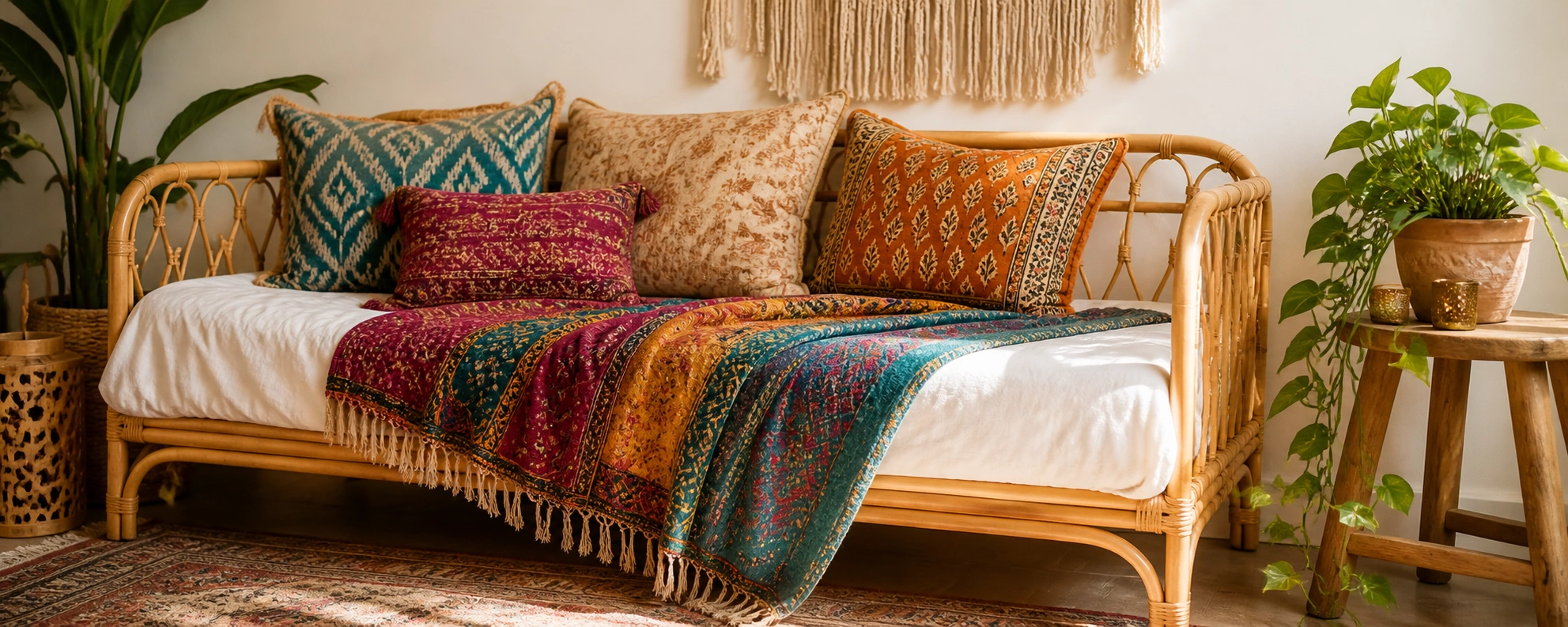
The Bohemian Eclectic Look
Mix patterns, textures, and colors freely. Pair a Moroccan-style throw with patterned cushions in jewel tones. Add a rattan side table and trailing plants. This approach suits bohemian, coastal, and globally-inspired interiors perfectly.
Daybed Sofa Maintenance and Care
Proper maintenance extends the life of your daybed significantly. Since daybeds use a mattress rather than cushions, caring for both the frame and the sleeping surface is essential.
Rotate the Mattress
Flip and rotate your daybed mattress every 3–6 months to ensure even wear and prevent permanent body impressions from forming.
Use a Mattress Protector
A waterproof or quilted protector shields against spills, stains, and dust mites—especially important for daybeds used by guests.
Clean Upholstery Regularly
Vacuum fabric weekly to remove dust. For spot cleaning, follow our fabric sofa cleaning guide which applies to upholstered daybeds as well.
Check Frame Hardware
Tighten bolts and screws every few months. Squeaking or wobbling usually indicates loose joints—address them early. See our guide on fixing loose legs for detailed steps.
Protect from Sunlight
Prolonged UV exposure fades fabric and weakens fibers. Use curtains or apply UV protection spray if the daybed sits near a window.
Maintain Trundle Mechanism
For trundle models, clean and lubricate the casters periodically. Ensure the pull-out path is clear of debris that could jam the wheels.
Use Daybed Covers
A fitted daybed cover protects the mattress during daily use as seating and can be removed when the bed is needed for sleeping.
Air Out Regularly
Strip the bedding and let the mattress breathe for a few hours each month. This prevents moisture buildup and keeps the sleeping surface fresh.


