
The Complete Guide to Coastal Sofas
Bring the relaxed beauty of the seaside into your living room — discover fabrics, colors, and styles that thrive in beach homes
EXPLORE COASTAL STYLESWhy this guide matters: Furnishing a beach house or coastal-inspired home comes with unique challenges that standard sofa buying guides rarely address. Salt air, humidity, sand, and intense sunlight can quickly degrade the wrong furniture. This guide covers everything specific to coastal living — from choosing salt-resistant fabrics to selecting colors that capture the ocean aesthetic while standing up to the environment.
What Defines Coastal Sofa Style?
More Than Just a Color Palette
Coastal style is a design philosophy rooted in the natural elements of seaside living — ocean, sand, driftwood, sky, and vegetation. A true coastal sofa is not simply a white couch placed near a window. It embodies lightness, airiness, and a deliberate sense of relaxation through specific material choices, silhouette proportions, and textural details.
Unlike rigid interior styles, coastal design has an inherent casualness. Sofas in coastal spaces often feature slipcovered upholstery for practical washability, low-profile arms that do not obstruct views, and exposed wood legs that echo driftwood and dock pilings. The overall effect should feel as effortless as a sea breeze.
Coastal style also spans a spectrum — from crisp and polished Hamptons-inspired rooms to weathered and eclectic surf-shack aesthetics. Understanding where your preferences fall on this spectrum will guide every sofa decision you make, from frame material to cushion fill.

Essential Elements of a Coastal Sofa
Every well-designed coastal sofa shares certain characteristics. These elements work together to create that signature breezy, seaside feel while addressing the practical demands of a coastal environment.
Light Fabrics
Breathable, moisture-resistant materials in white, cream, or soft blue tones
Natural Wood Legs
Light oak, maple, or rattan legs that evoke driftwood and coastal landscapes
Low Profile
Streamlined silhouettes with track or roll arms that preserve sight lines to the water
Slipcovers
Removable, washable covers for easy sand and salt cleanup
Textured Details
Linen weaves, subtle tufting, or woven accents that add organic depth
Plush Cushions
Generous, comfortable seating that invites lounging after a beach day
Relaxed Lines
Slightly curved or rounded edges instead of sharp geometric angles
Muted Palette
Colors drawn directly from the coastal environment — sand, seafoam, sky, shell
Best Upholstery Fabrics for Coastal Environments
Why Standard Fabrics Fail at the Beach
In a typical indoor environment, most sofa materials perform adequately. But coastal homes face a triple threat: high humidity that promotes mold and mildew, salt air that corrodes fibers and metal components, and intense UV exposure that causes rapid color fading. Standard cotton, regular polyester, and especially leather degrade noticeably faster within a few miles of the ocean.
The solution lies in choosing performance-grade fabrics engineered specifically for harsh conditions. Solution-dyed acrylic (sold under brands like Sunbrella) is widely considered the gold standard for beachfront properties because the pigment is infused into the fiber during manufacturing, rather than applied as a surface coating. This means the color cannot wash out or fade, even under direct sun exposure.
Critical distinction: There is a significant difference between a "coastal-look" sofa and a "coastal-ready" sofa. A white linen sofa looks beautiful in a beach house photo, but pure linen will degrade quickly in actual salt-air conditions. For real beachfront living, always prioritize performance fabrics over aesthetics alone.

The table below ranks the most common upholstery fabrics by how well they perform in actual coastal conditions, not just how they look.
| Fabric | Salt Resistance | UV Fade Resistance | Mold/Mildew | Washability | Coastal Rating |
|---|---|---|---|---|---|
| Solution-Dyed Acrylic | Excellent | Excellent | Excellent | Moderate | ★★★★★ |
| Performance Linen Blend | Good | Good | Good | Good | ★★★★☆ |
| Slipcovered Cotton | Moderate | Low | Moderate | Excellent | ★★★★☆ |
| Outdoor Polyester | Good | Good | Good | Good | ★★★★☆ |
| Regular Polyester | Moderate | Low | Moderate | Good | ★★★☆☆ |
| Pure Linen | Low | Low | Low | Moderate | ★★☆☆☆ |
| Velvet | Low | Low | Low | Poor | ★☆☆☆☆ |
| Leather | Very Poor | Moderate | Low | Poor | ★☆☆☆☆ |
For a deeper look at fabric durability testing, see our Martindale test explanation. If you are also considering outdoor sofas for a porch or patio, many of the same performance fabrics apply.
The Coastal Color Palette for Sofas
Colors Drawn From the Shoreline
The most effective coastal sofa colors are not arbitrary — they are pulled directly from the natural seaside environment. This creates an instinctive visual harmony that feels authentic rather than themed or contrived.
Neutrals form the foundation. White, cream, and ivory reflect maximum light and create the open, airy feeling that defines coastal spaces. These tones work especially well in smaller beach houses where maximizing perceived space matters. Our neutral sofas guide covers this approach in detail.
Ocean-inspired accents add personality. Soft blues, seafoam greens, and aqua tones reference the water without feeling cartoonish. The key is choosing muted, grayed-out versions of these colors rather than bright, saturated hues. A dusty blue sofa reads as sophisticated; a neon blue sofa reads as novelty.
Earth tones ground the space. Sandy beige, warm taupe, and driftwood grey prevent an all-white room from feeling sterile. These colors bridge the gap between the bright upper portions of a coastal room and natural wood or stone flooring below.
Recommended Coastal Color Swatches
A white couch remains the most popular choice for beach houses, but dusty blue and seafoam are rapidly gaining favor for their ability to hide light sand dusting.
Best Sofa Styles for Coastal Living Rooms
Not every sofa design translates well to a coastal setting. Heavy, dark, or overly formal styles clash with the breezy aesthetic. The following styles are proven to work beautifully in beach homes and coastal-inspired interiors.
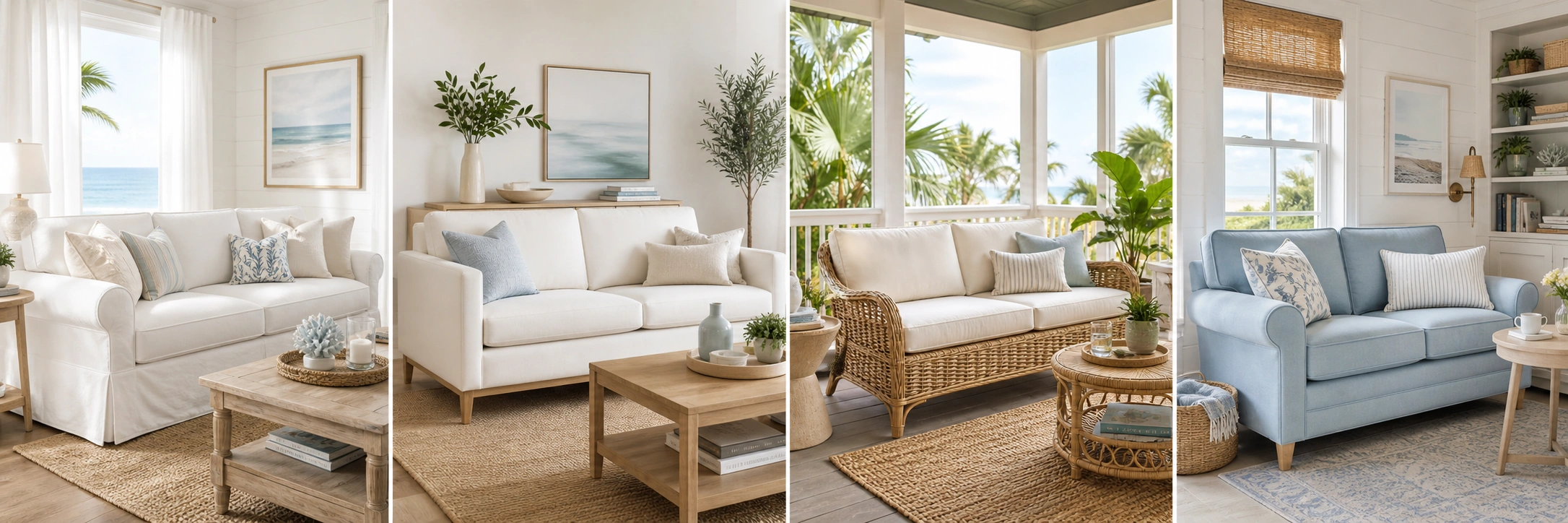
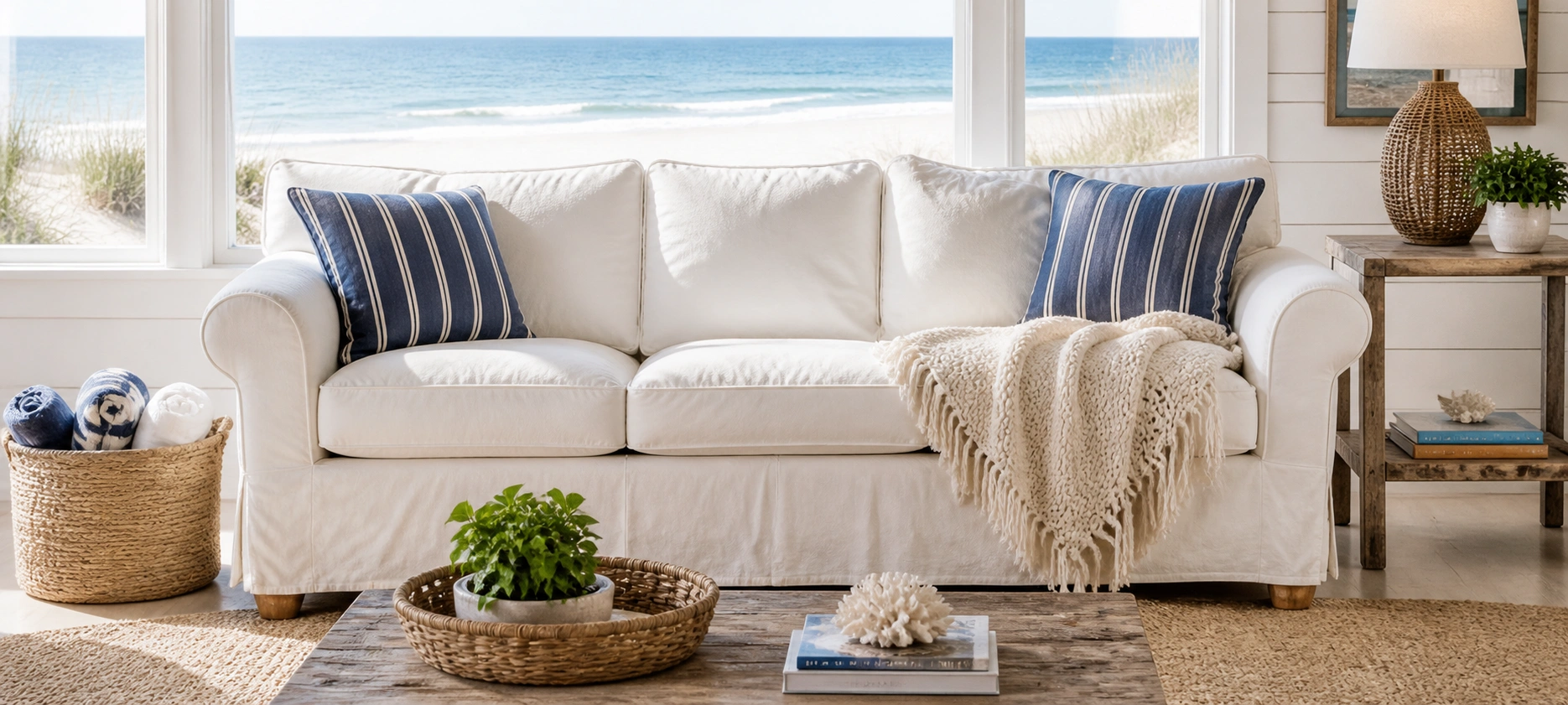
Slipcovered Sofa
The undisputed champion of beach houses. Removable covers can be laundered to remove sand, salt spray, and sunscreen. Look for relaxed-fit slipcovers with a slightly rumpled, lived-in appearance.

Modern Coastal
Clean lines, low profile, and tapered legs in light oak or maple. Upholstered in performance linen or crisp white. Pairs perfectly with minimalist coastal rooms that emphasize open space.
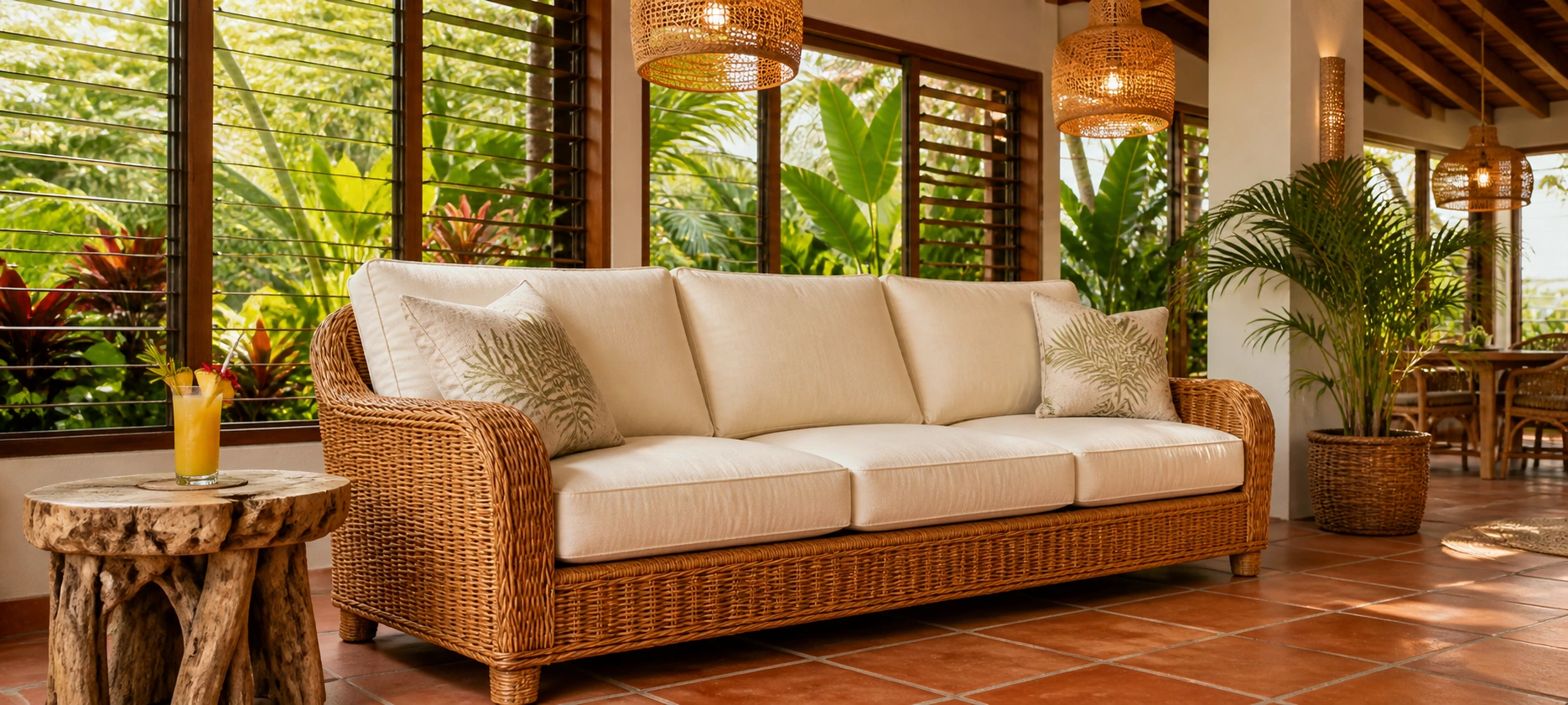
Rattan & Wicker
The most inherently coastal material. Natural rattan frames bring organic texture and a tropical feel. Best for covered porches, sunrooms, or as accent seating in a main living area.
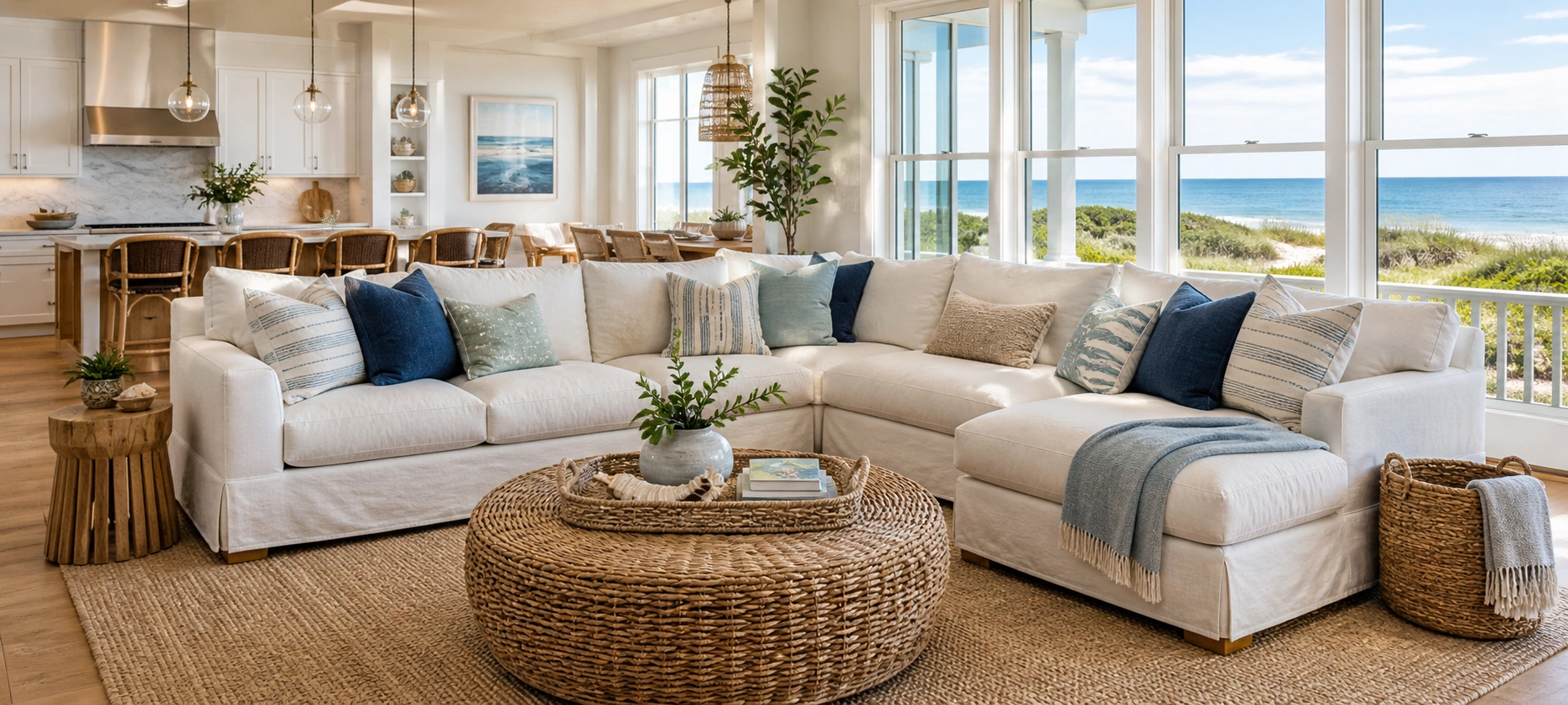
Coastal Sectional
Perfect for large beach houses that host family gatherings. Choose an L-shaped configuration in light fabric with low arms. Sectionals with removable cushion covers offer the best practicality for frequent use.

Boho Coastal
A relaxed, eclectic blend of coastal neutrals with global-inspired accents — macrame, woven throws, and patterned pillows. Works beautifully with linen sofas in natural tones.

Coastal Loveseat
Ideal for small beach cottages, studio apartments, or as secondary seating in a larger coastal room. A compact 2-seater sofa in slipcovered cotton or performance linen maximizes comfort in minimal square footage.
Coastal Living Room Layout Principles
Arranging Furniture for Maximum Coastal Impact
The layout of your coastal living room matters as much as the sofa itself. Unlike conventional rooms where the TV often dictates placement, coastal spaces should prioritize natural light and views as the focal point.
Face the water. If your home has an ocean, bay, or canal view, position the sofa to face that direction — even if it means placing the TV on a perpendicular wall. A sofa that faces the view transforms the entire room into a scenic experience. For rooms without a water view, orient seating toward the largest window to maximize natural light.
Leave breathing room. Coastal rooms feel best when furniture does not crowd the walls. Pull the sofa at least 12 inches away from walls to create airflow and a sense of spaciousness. This is especially important in small beach houses where every square foot counts. Our living room layout guide covers spacing principles in depth.
Use lightweight pieces. Heavy dark furniture anchors a room visually, which works in traditional interiors but fights the coastal aesthetic. Opt for sofas with exposed legs, glass or acrylic accent tables, and pieces that appear to float above the floor. This visual lightness is what makes a room feel beachy rather than simply decorated in beach colors.

Indoor Coastal vs. Outdoor Beach Sofas
Knowing Which Type You Actually Need
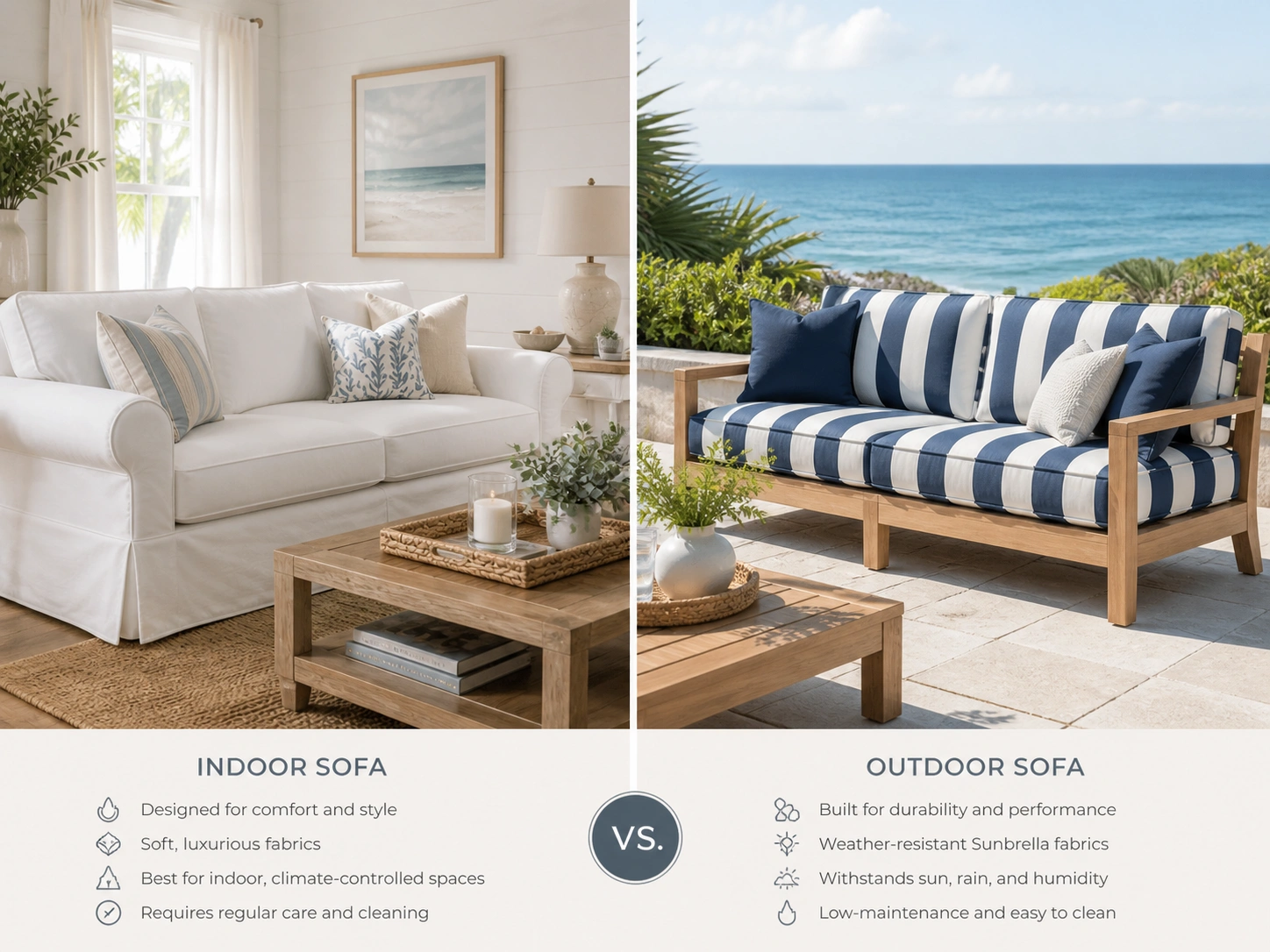
Many beach homeowners confuse indoor coastal sofas with outdoor patio furniture. While both serve beach environments, they are engineered for fundamentally different conditions and choosing the wrong type leads to costly mistakes.
Indoor coastal sofas are designed for covered, climate-controlled spaces. They prioritize comfort, cushion softness, and aesthetic refinement. While they should still use performance fabrics for humidity and UV protection, they feature standard indoor cushion fills like high-resilience foam and down wrapping. These sofas deliver the plush seating experience you expect indoors.
Outdoor beach sofas are built to withstand direct rain, full sun exposure, and temperature extremes. They use quick-dry foam, rust-proof aluminum or teak frames, and marine-grade fabrics. However, they typically feel firmer and less luxurious than indoor pieces. They are ideal for open patios, pool decks, and uncovered porches.
If your beach house has a covered lanai or screened porch, you may be able to use a high-quality indoor coastal sofa if the space is protected from direct rain and harsh sun. For fully exposed areas, always choose purpose-built outdoor sofas. Some homeowners also consider teak sofas for their natural weather resistance in semi-covered spaces.
How to Protect & Maintain a Sofa in a Coastal Home

A coastal environment is the toughest test any sofa can face. These maintenance practices are not optional extras — they are essential routines that determine whether your sofa lasts three years or twelve.
Vacuum Weekly to Remove Fine Sand
Even with closed windows, microscopic sand particles infiltrate coastal homes. These act like sandpaper on fabric fibers. Use a soft brush attachment and vacuum all surfaces, including under cushions, every week.
Wash Slipcovers Monthly
If your sofa has slipcovers, remove and launder them at least once a month during peak beach season. Salt residue is invisible but continuously degrades fibers. Use cold water and mild detergent, and avoid bleach which weakens fabric fibers.
Apply Fabric Protector After Every Wash
Reapply a quality fabric protector spray (like Scotchgard Sun & Water Shield for outdoor fabrics, or regular Scotchgard for indoor performance fabrics) every time slipcovers are washed. This restores the invisible barrier against moisture and stains. Read our full fabric protection guide for product recommendations.
Manage Humidity and Ventilation
Run a dehumidifier during humid months to keep indoor humidity below 60%. Use ceiling fans or keep windows cracked on dry days to promote air circulation around the sofa. Stagnant moist air is the primary cause of mildew growth on coastal furniture.
Block Direct UV Exposure
Install UV-filtering window films or use light-filtering curtains on ocean-facing windows. Even indirect sunlight through standard glass causes cumulative UV damage. For dedicated UV protection strategies, our detailed guide covers window treatments, films, and positioning tips.
Inspect and Clean Metal Components
Salt air corrodes metal sofa legs, springs, and frame hardware. Wipe down exposed metal legs with a damp cloth monthly and apply a thin coat of furniture wax or corrosion inhibitor to any metal parts. If you notice rust forming, address it immediately before it spreads to the frame.
Schedule Professional Cleaning Every 6–12 Months
Professional upholstery cleaning removes deep-set salt crystals, sand, and body oils that home vacuuming cannot reach. In beachfront homes, increase this to every 6 months. If you encounter stubborn issues like tough stains, mildew spots, or sagging cushions, a professional can address them before they become irreversible.
Is a Coastal Sofa Right for Your Home?
✓ Best For
✗ Think Twice If
Coastal Sofa Buying Checklist
☐ Pre-Purchase Verification for Beach Homes
Frequently Asked Questions About Coastal Sofas
The best fabrics for coastal sofas are solution-dyed acrylic (like Sunbrella), performance linen blends, and slipcovered cotton. Solution-dyed acrylic is ideal for beachfront properties because the color is baked into the fiber during manufacturing, making it virtually immune to UV fading. Performance linen blends offer a more refined indoor look while still resisting moisture and mildew better than standard linen. For the best combination of practicality and aesthetics, a slipcovered sofa in a performance cotton-poly blend provides easy washability with a relaxed coastal appearance.
Yes, prolonged salt air exposure is one of the most damaging environmental factors for upholstery. Salt particles are hygroscopic — they attract and hold moisture against fabric fibers, accelerating wear, promoting mold growth, and leaving a crusty residue that stiffens the fabric over time. Salt also corrodes metal sofa components like springs, frame hardware, and leg brackets. The damage is gradual and often invisible until significant deterioration has occurred. This is why slipcovered sofas with washable covers and solution-dyed fabrics are strongly recommended for homes within a few miles of the ocean.
White, cream, and light ivory are the most popular and effective coastal sofa colors because they maximize light reflection and create the open, airy atmosphere that defines beach living. Soft blues in dusty or greyed tones work beautifully as accent colors that reference the ocean without feeling theme-heavy. Sandy beige and warm taupe are excellent secondary choices that add warmth and hide light sand dusting better than pure white. The general rule: choose muted, desaturated versions of any coastal color rather than bright, vivid hues. For more ideas, explore our guides to white couches and neutral sofas.
Slipcovered sofas are widely considered the best practical choice for beach houses, and for good reason. Sand, sunscreen, salt spray, and wet swimsuit residue are daily realities in coastal homes — and they all end up on the sofa. Removable covers allow you to machine-wash away these contaminants regularly, which is impossible with fixed upholstery. Additionally, slipcovers let you swap covers seasonally: crisp white for summer, deeper grey or navy for winter. The slightly rumpled, relaxed fit of slipcovers also naturally complements the casual coastal aesthetic. The only downside is that slipcovers require more maintenance effort — plan to wash them at least monthly during peak beach season.
The most effective protection strategy combines multiple layers: use a sofa with washable slipcovers, apply fabric protector spray after every wash, keep windows closed on windy or high-humidity days, position the sofa away from direct ocean-facing windows, run a dehumidifier to keep indoor humidity below 60%, vacuum weekly to remove fine sand particles, install UV-filtering window film on sun-exposed windows, and schedule professional deep cleaning every 6 to 12 months. Also wipe down any exposed metal legs or hardware monthly with a damp cloth to prevent salt corrosion. For comprehensive protection guidance, see our fabric protection guide and UV protection guide.
Ready to find your perfect coastal sofa?
Browse our curated selection of top-rated coastal sofas below, chosen for beach-ready durability, style, and value.
VIEW RECOMMENDED COASTAL SOFAS


