
Fabric Pilling on Sofas: The Complete Guide
Understand why your sofa fabric develops those frustrating little balls, learn which fabrics are most prone, and discover proven methods to prevent and remove pilling for good
LEARN MOREWhat Exactly Is Fabric Pilling?
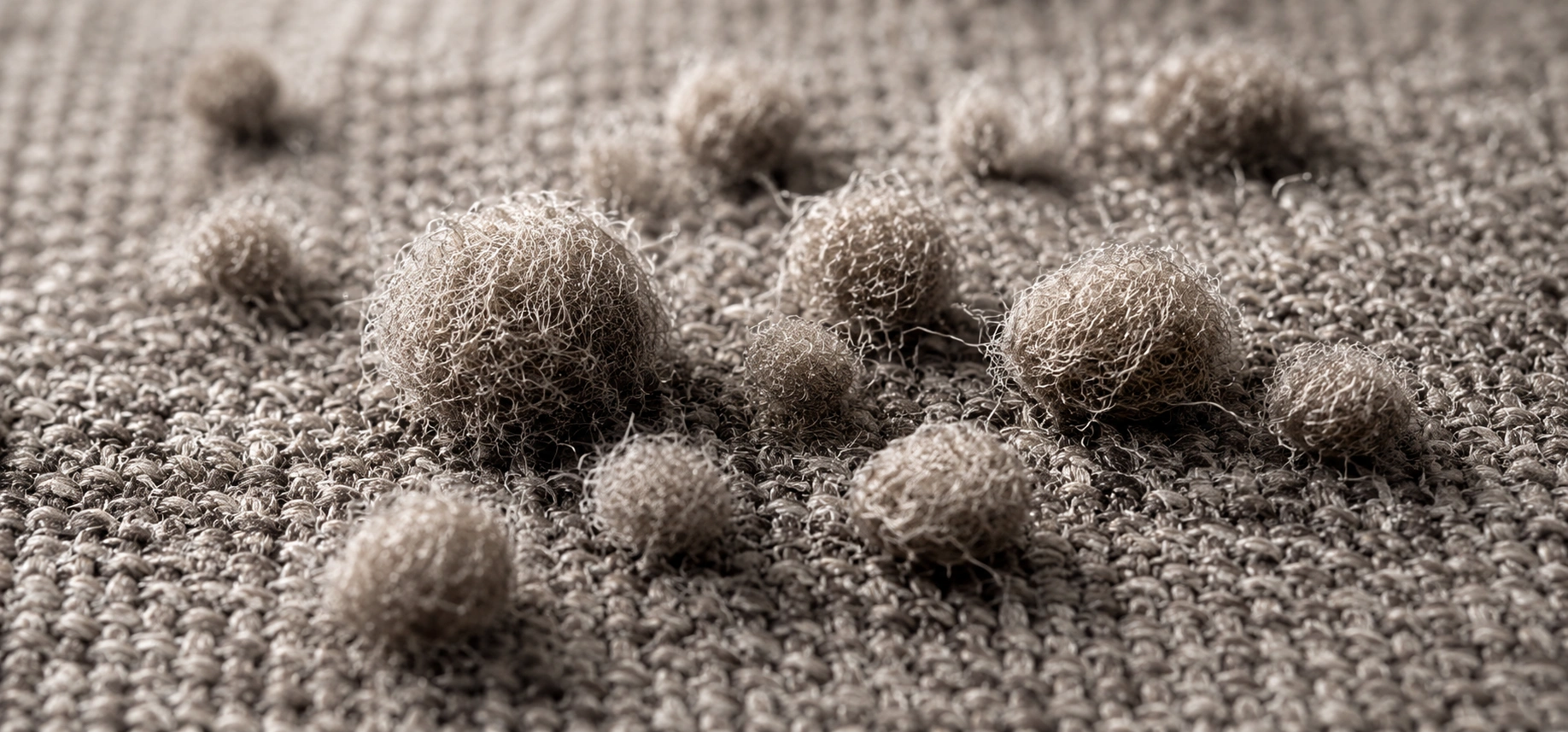
Fabric pilling refers to those small, fuzzy balls that form on the surface of upholstery fabric over time. Medically known as "pills," these clusters are tangled bundles of broken or loose fibers that have been pulled to the surface through friction and abrasion during normal use.
Pilling is one of the most common concerns among sofa owners, but it is rarely a sign of defective fabric. It is a natural mechanical process that occurs when fibers break, tangle together, and form small nodules that cling to the fabric surface instead of falling away. Understanding this process is the first step toward managing it effectively.
If you are currently researching a new sofa purchase, learning about pilling behavior will help you choose the right performance fabric and set realistic expectations for long-term appearance.
How Pilling Forms: The Science Behind It
Pilling is not a single event but a multi-stage process driven by mechanical friction. Understanding each stage helps you identify the right intervention point and choose the most effective prevention strategy.
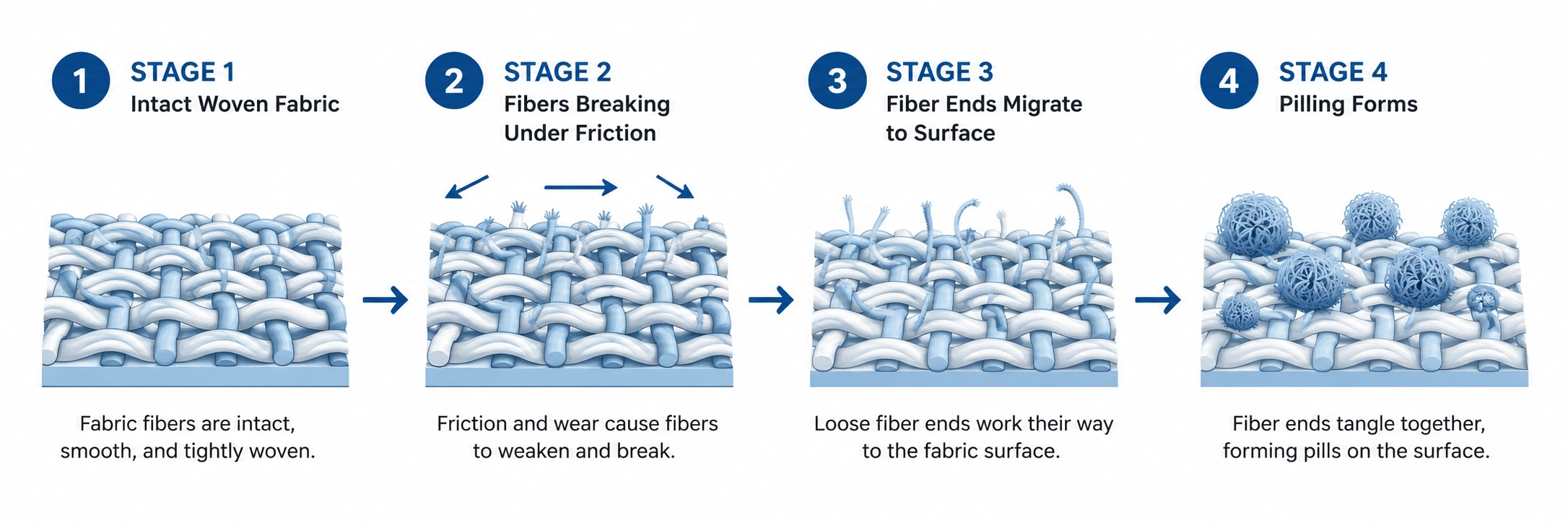
- Fiber Breakage: During daily use, sitting, leaning, and shifting create friction against the fabric surface. This repeated stress causes individual fibers — especially shorter or weaker ones — to break at their midpoint or at the fabric surface.
- Fiber Migration: Once broken, the loose fiber ends are no longer anchored securely. Through continued friction and movement, these free ends gradually work their way toward the fabric surface, protruding outward.
- Fiber Entanglement: As multiple loose fiber ends accumulate on the surface, they begin to tangle together. The constant rubbing action winds them into small, tight knots or balls — the "pills" you see.
- Pill Persistence: Whether a pill stays attached or falls away depends on the fiber type. Strong fibers (like polyester) hold pills tightly to the fabric surface. Weaker fibers (like wool or cotton) allow pills to break off naturally over time.
⚠️ Key Insight
The pilling process is self-limiting on natural fibers — once the loose fibers have all worked their way out and broken off, pilling stops. On synthetic blends, however, the strong synthetic fibers hold onto pills indefinitely, which is why blend fabrics often appear to pill "forever."
Why Do Some Sofas Pill More Than Others?
The severity and persistence of pilling depends on several interconnected factors. It is rarely caused by a single issue — rather, it is the combination of fiber type, fabric construction, usage patterns, and environmental conditions that determines how much pilling you will experience.
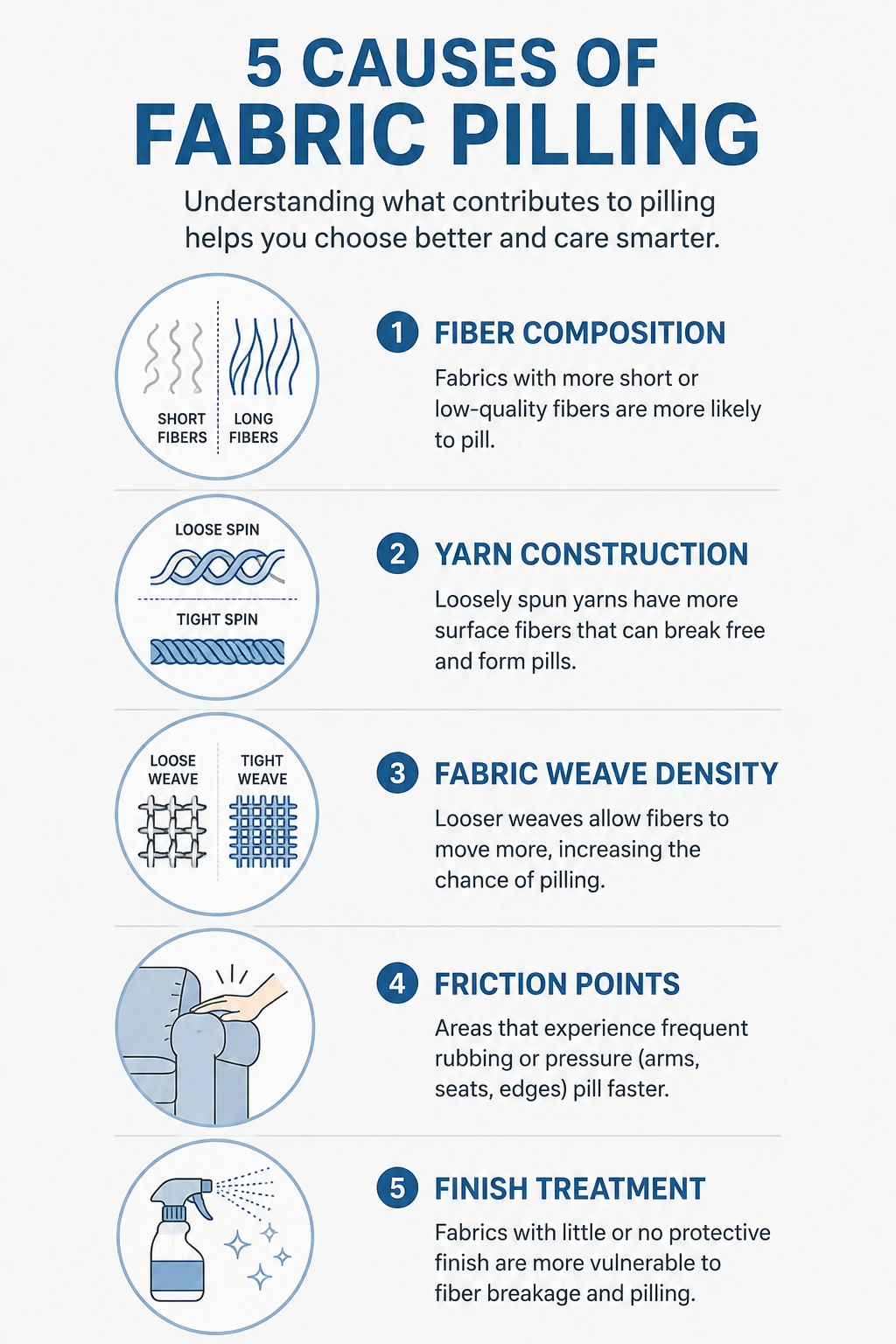
1. Fiber Composition: This is the single biggest factor. Short-staple fibers (cotton, wool) break more easily and produce more loose ends. Long-staple fibers and continuous filament synthetics (high-quality polyester, nylon) resist breaking but can trap pills on the surface. Blends combining natural and synthetic fibers are often the worst offenders because the weak natural fibers break and the strong synthetics hold the resulting pills in place.
2. Yarn Construction: How the fibers are spun into yarn matters significantly. Tight, compact ring-spun yarns with longer fibers resist pilling far better than loosely spun, short-staple yarns. Open-end spun yarns, which are cheaper to produce, are particularly prone to pilling.
3. Fabric Weave or Knit Density: Tightly woven fabrics (like canvas or tight twill) hold fibers securely and resist pilling. Loosely woven or knitted fabrics allow fibers to move freely, making pilling much more likely. This is why some velvet sofas can be vulnerable — the cut pile construction creates many exposed fiber ends.
4. Friction Points: Areas of the sofa that receive the most contact — seat cushions, armrests, and back rests where shoulders rub — will always pill first and most severely. A family room sofa used daily will show pilling much sooner than a guest room sofa used occasionally.
5. Finish Treatments: Some manufacturers apply anti-pilling finishes during production that bond fiber ends to the fabric surface. These treatments can be effective initially but may wear off with cleaning and use. Understanding the Martindale abrasion test rating of a fabric can give you insight into its overall durability, though Martindale scores alone do not predict pilling behavior.
Pilling Risk by Fabric Type
Not all upholstery fabrics behave the same way when it comes to pilling. The table below ranks common sofa fabrics by their pilling risk level, helping you make an informed decision when selecting upholstery. For a deeper comparison of fabric options, see our complete materials guide.
| Fabric Type | Pilling Risk | Why | Pill Behavior |
|---|---|---|---|
| Poly-Cotton Blend | High | Short cotton fibers break; strong polyester holds pills | Pills persist long-term |
| Wool & Wool Blends | High | Short, scaly wool fibers tangle easily | Pills eventually fall off |
| Acrylic | High | Soft, weak fibers break under friction | Pills persist long-term |
| Velvet (Cut Pile) | Moderate | Exposed cut fiber ends from pile construction | Varies by fiber base |
| Linen | Moderate | Short staple fibers but strong structure | Pills shed relatively quickly |
| Cotton (High Quality) | Moderate | Long-staple cotton resists better than short | Pills shed after initial period |
| Microfiber | Low | Extremely fine, tightly woven fibers | Minimal pilling |
| Performance Fabric | Low | Engineered for durability, tight weave | Rare and self-shedding |
| Solution-Dyed Acrylic | Low | Continuous filament fibers, color throughout | Very rare |
| Leather / Faux Leather | None | No fibers — smooth surface material | Does not apply |
💡 Buying Tip
If pilling is a major concern for you, ask the retailer or manufacturer about the fabric's pilling grade. Many upholstery fabrics are tested on a scale of 1 to 5 using the Martindale or ISO pilling test method. A grade of 4 or 5 indicates excellent pilling resistance. You can learn more about fabric testing in our most durable sofa fabric guide.
How to Prevent Fabric Pilling
While you cannot eliminate pilling entirely on fabric upholstery, there are many proactive steps you can take to significantly reduce its severity and delay its onset. Prevention is always easier — and less risky — than removal.
Choose Pill-Resistant Fabrics
Before purchasing, prioritize tightly woven performance fabrics, solution-dyed acrylics, microfiber, or leather. If you love the look of linen or cotton, select long-staple varieties and check the manufacturer's pilling grade. Avoid cheap poly-cotton blends, which are the worst offenders.
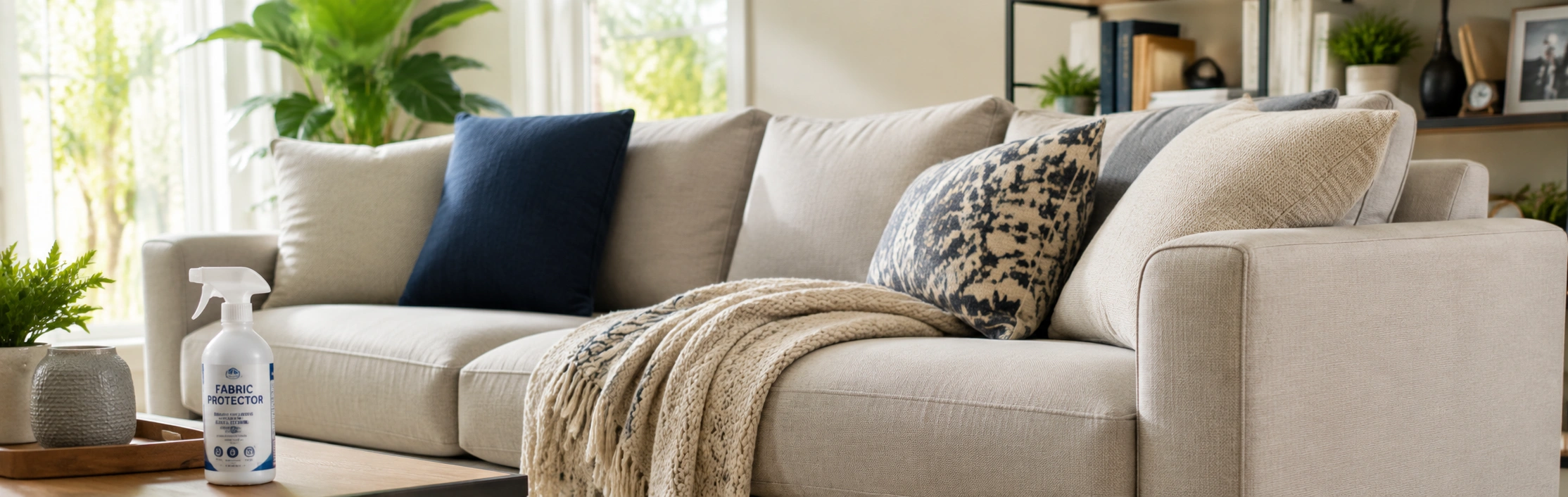
Apply Fabric Protector
A quality fabric protector spray creates an invisible barrier that reduces surface friction and helps anchor fibers. This is especially valuable for high-traffic sofas. Read our complete fabric protection guide for product recommendations and application techniques.
Rotate and Flip Cushions
Distribute wear evenly by rotating seat cushions weekly and flipping them monthly if they are reversible. This ensures no single area receives concentrated friction, dramatically slowing pilling formation on high-contact zones. This is particularly important for family room sofas and sofas for families with kids.
Use Throws and Blankets
Strategically placed throw blankets on seat cushions and armrests absorb the majority of friction from daily use. This simple, low-cost solution is one of the most effective prevention methods. Browse our guide to throws and pillows for styling ideas that also protect your sofa.
Avoid Rough Clothing
Denim jeans, coarse wool sweaters, and clothing with exposed zippers or buttons create aggressive abrasion against sofa fabric. While you cannot control what everyone wears, being mindful of this factor helps explain why pilling appears in certain spots.
Consider Pet-Friendly Options
Pets create enormous friction through claws, nails, and movement. If you have pets, invest in pet-proof sofa covers or choose fabrics specifically designed for pet households. See our recommendations for the best sofas for pet owners.
How to Remove Fabric Pilling Safely
When pilling does appear, removing it properly is essential. Using the wrong method can damage the fabric, create bald spots, or even make pilling worse in the long run. Below are the safest and most effective tools, ranked by their suitability for different fabric types.
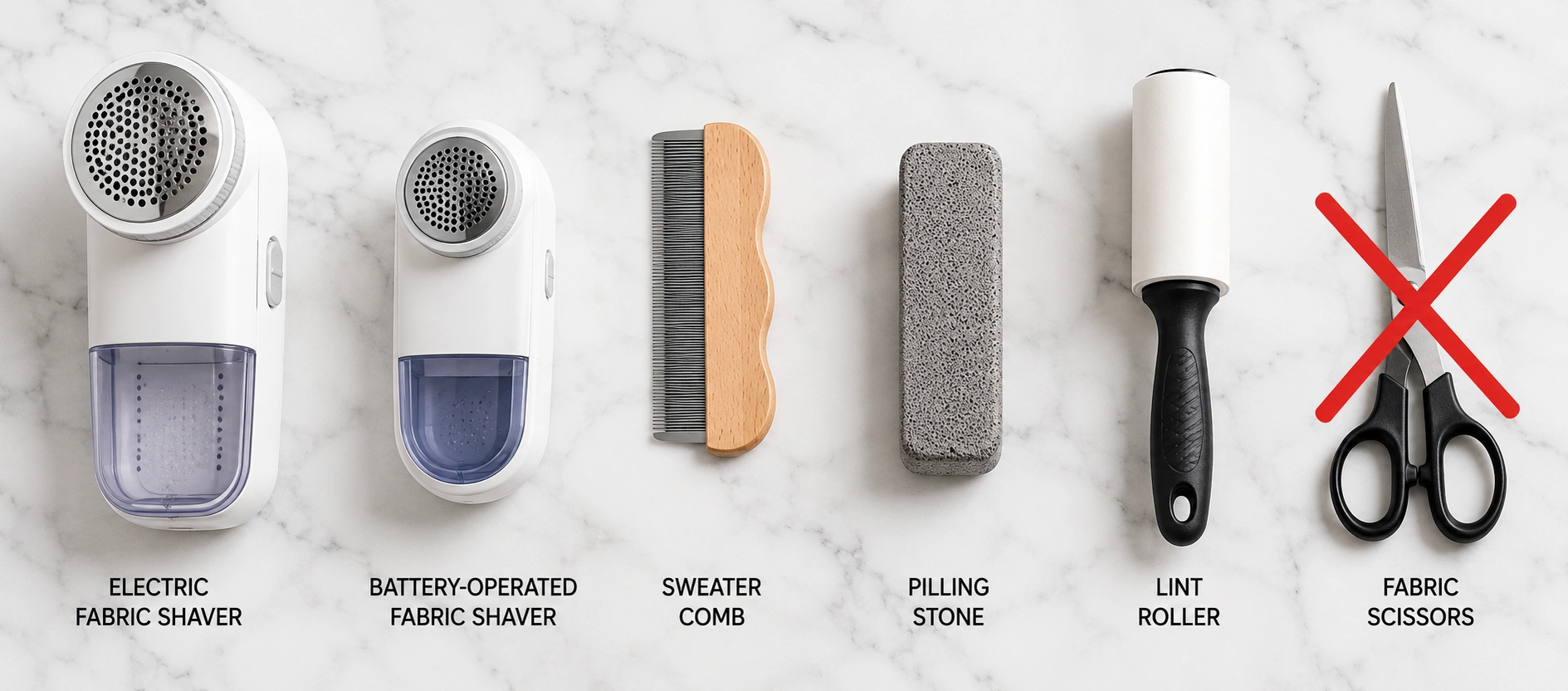
Electric Fabric Shaver
Best for: Medium to heavy pilling on polyester, cotton, and blends. Fast and efficient. Use gently — do not press hard into the fabric.
Battery Fabric Shaver
Best for: Light to moderate pilling. More control than electric versions. Ideal for spot treatments on armrests and cushions.
Sweater Comb
Best for: Delicate fabrics like velvet, cashmere blends, and lightweight upholstery. Manual control prevents over-removal of fibers.
Pilling Stone
Best for: Natural fibers like wool, linen, and cotton. Gentle abrasive action removes pills without cutting. Works slowly but very safely.
Lint Roller / Tape
Best for: Loose pills that are barely attached. Quick and safe for any fabric. Will not remove stubborn pills but great for maintenance between deeper cleanings.
Scissors or Razor
Avoid. Cutting pills with scissors or a razor risks cutting the fabric underneath, creating permanent damage and thin spots. Not recommended for any sofa upholstery.
Step-by-Step Removal Process
- Test first: Always test your chosen tool on an inconspicuous area (like the bottom edge of the sofa) before treating visible areas. Check for color transfer, fabric damage, or excessive fiber removal.
- Prepare the surface: Vacuum the area thoroughly first using an upholstery attachment to remove dust, pet hair, and loose debris that could interfere with the tool or clog it.
- Stretch the fabric taut: For best results with a fabric shaver, gently pull the fabric taut with one hand while running the shaver with the other. This creates a flat, even surface and prevents the blade from catching folds.
- Use light pressure: Let the tool do the work. Pressing hard will remove too many fibers and may cut through the fabric. Move in slow, even strokes in one direction.
- Clean the tool regularly: Empty the shaver's collection chamber frequently. A full chamber reduces effectiveness and can force pills back onto the fabric.
- Finish with a lint roller: After shaving, go over the area with a lint roller or tape to pick up any remaining loose fibers and give the surface a clean finish.
- Apply fabric protector: After removing pills, reapply fabric protector spray to the treated area. This helps reduce future pilling in that spot.
⚠️ Important: Frequency Matters
Do not over-shave your sofa fabric. Each time you use a fabric shaver, you are removing surface fibers — including intact ones. If you shave too frequently, you will gradually thin the fabric, reduce its pile height, and potentially create bald spots. As a general rule, only remove pills when they are visibly noticeable and bothersome, not at the first sign of a few small pills.
Does Pilling Mean Poor Quality?
This is the most common misconception about fabric pilling, and the answer requires nuance. Pilling alone does not indicate poor quality — but the type, severity, and persistence of pilling can provide clues about the fabric's construction.
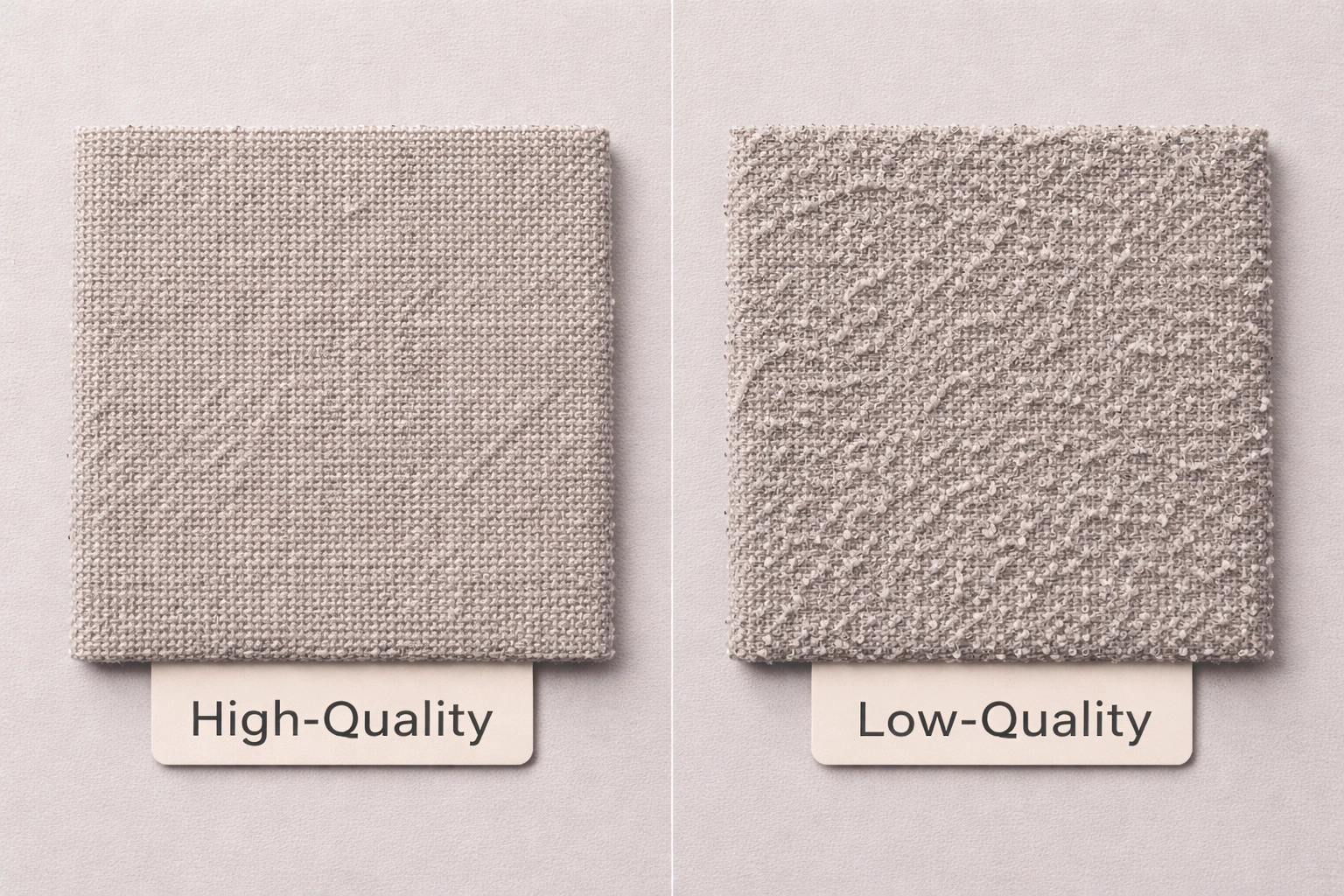
Pilling that stops after initial use is normal. Almost all fabric upholstery will experience some degree of pilling during the first few weeks or months of use as the loosest fibers work their way to the surface. On good quality fabrics — particularly natural fibers — this initial pilling phase resolves itself, and the fabric settles into a stable state with minimal ongoing pilling.
Persistent, worsening pilling suggests quality concerns. If pilling continues to get worse over months of use, or if pills keep returning immediately after removal, this may indicate short-staple fibers, loose yarn construction, or a low-quality fabric blend. This is particularly common on inexpensive poly-cotton blends where the short cotton fibers keep breaking while the polyester holds the pills permanently.
When evaluating sofa quality, pilling should be considered alongside other durability factors like the frame materials, cushion fill types, and spring systems. A sofa with excellent construction but moderate initial pilling is generally a better long-term investment than a sofa with no pilling but a weak frame and poor cushion support. Our guide on comfort vs durability explores this balance in detail.
Common Myths About Fabric Pilling
Misinformation about pilling leads to poor purchasing decisions and ineffective maintenance routines. Let's separate fact from fiction.
✘ MYTH: "Only cheap sofas pill."
False. Expensive, high-end fabrics including wool bouclé, linen blends, and premium velvets can pill significantly. Price does not determine pilling behavior — fiber type and construction do. Some luxury fabrics pill more than budget options.
✔ FACT: "Blended fabrics often pill worse than pure fabrics."
True. Blends that combine a weak fiber (cotton, wool) with a strong fiber (polyester, acrylic) create the worst pilling scenario — the weak fibers break and the strong fibers trap the resulting pills on the surface.
✘ MYTH: "Washing sofa covers will stop pilling."
False. Washing actually agitates fibers and can trigger or worsen pilling initially. While repeated washes may eventually remove most loose fibers, the process can be rough on upholstery. Always follow care label instructions precisely.
✔ FACT: "Pilling tends to decrease over time on natural fibers."
True. Natural fibers like cotton and wool have limited loose fiber content. Once those fibers have migrated to the surface and broken off, pilling naturally diminishes. This self-limiting behavior is a key difference from synthetic blends.
✘ MYTH: "Shaving pills makes them come back worse."
Mostly false. Proper shaving with the right tool removes the tangled pills without damaging surrounding fibers. Pills may return if the underlying cause (short fibers, friction) persists, but shaving itself does not cause worse pilling — over-shaving does.
✔ FACT: "Leather and faux leather never pill."
True. Since these materials have no fiber structure, pilling is physically impossible. If you want to eliminate pilling concerns entirely, leather sofas are the definitive solution.
What to Look for When Buying a Pill-Resistant Sofa
If you are in the research phase of buying a new sofa and pilling is a priority concern, here is a practical checklist to take with you when shopping. These criteria will help you evaluate fabrics beyond what the sales tag tells you.
- Ask for the pilling test grade: Request the ISO 12945 or Martindale pilling grade (scale 1–5). Aim for grade 4 or 5 for best resistance. A reputable retailer should have this information available or be able to get it from the manufacturer.
- Check the fiber content label: Look for long-staple fibers, continuous filament synthetics, or tightly woven constructions. Be cautious of poly-cotton or poly-wool blends unless the pilling grade is verified.
- Examine the weave density: Hold the fabric up to light. Tight weaves show minimal light through the fabric. Loose weaves with visible gaps between threads are more vulnerable to pilling and wear.
- Run your hand across the surface: If fibers shed or pull loose easily with minimal pressure, that is a red flag. Quality upholstery should feel smooth and secure to the touch.
- Look for anti-pilling treatments: Some manufacturers specify anti-pilling finishes in their product descriptions. These chemical treatments bond fiber ends and can extend the pill-free period significantly.
- Consider slipcovered options: Slipcovered sofas allow you to replace covers when pilling becomes excessive, which is far cheaper than reupholstering or replacing the entire sofa.
- Evaluate your usage realistically: A primary living room sofa with daily use by a family of four has very different requirements than a office sofa used occasionally by guests. Match the fabric durability to the actual use case.
💡 Pro Tip for Smart Shoppers
When comparing sofas, ask the retailer if you can see a worn sample or a fabric swatch that has been abrasion-tested. Seeing how a fabric actually behaves after simulated wear is far more revealing than examining a pristine showroom sample. Our sofa comfort testing guide includes additional evaluation techniques for in-store shopping.
Frequently Asked Questions
Related Topics You May Find Helpful
If you found this guide useful, these related resources can help you make a fully informed sofa purchasing decision and keep your furniture looking its best for years to come.
Most Durable Sofa Fabrics
A comprehensive ranking of upholstery fabrics by durability, including abrasion resistance, stain resistance, and long-term wear performance.
How to Clean Fabric Sofas
Step-by-step cleaning methods for different fabric types, including spot treatment, deep cleaning, and routine maintenance schedules.
Common Sofa Problems & Fixes
Ten most frequent sofa issues — from sagging cushions to squeaking frames — with practical DIY solutions for each problem.
How to Choose the Perfect Sofa
A complete decision framework covering size, material, comfort, style, and budget — everything you need to know before buying.
Understanding the Martindale Test
How to read and interpret Martindale abrasion scores, what the numbers actually mean in real-world use, and how to use them when comparing fabrics.
Sofa Fabric Protection Guide
Everything about fabric protectors: how they work, which products are worth the investment, application techniques, and expected longevity.


