Sofa Wobbles or Has Uneven Legs? Complete Diagnosis & Fix Guide
A wobbly sofa is annoying, uncomfortable, and potentially damaging to your floor. This guide walks you through every possible cause and gives you clear, step-by-step solutions — from a 30-second shim fix to a full leg replacement.
Table of Contents
- Common Causes of a Wobbly Sofa
- How to Diagnose the Problem
- Tools You Will Need
- Fix 1: Tighten Loose Leg Bolts
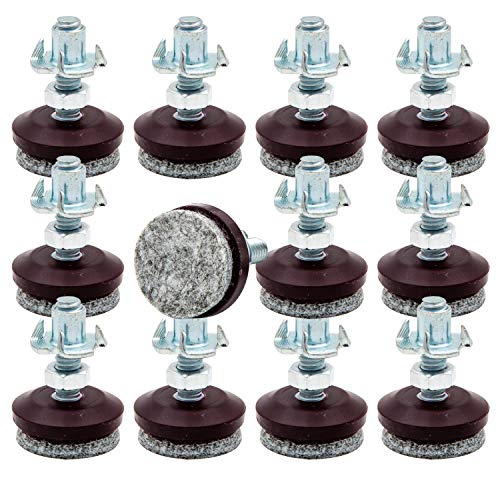
- Fix 2: Adjust Leveling Feet
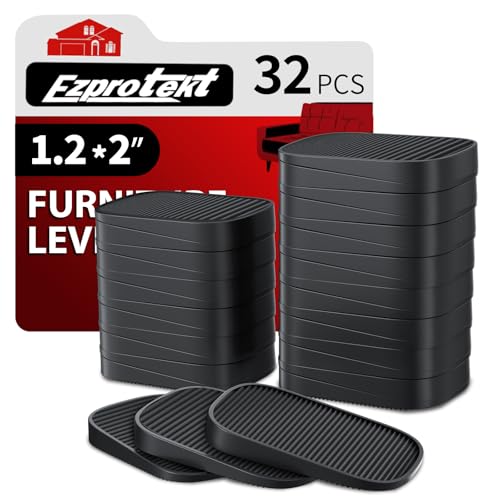
- Fix 3: Use Furniture Shims or Felt Pads
- Fix 4: Replace Damaged Legs
- Fix 5: Address Uneven Floors
- Prevention Tips
- When to Call a Professional
- Frequently Asked Questions
1. Common Causes of a Wobbly Sofa
Understanding why your sofa rocks is the first step toward a lasting fix. The cause usually falls into one of these categories:
🔧 Loose Leg Bolts
The most common cause. Regular use, especially on hard floors, gradually loosens the bolts or screws that connect legs to the frame. This affects all sofa types, from a basic 2-seater sofa to a large sectional sofa.
📐 Uneven Leg Heights
Manufacturing tolerances or worn-down glide pads can leave one leg slightly shorter. Even a 2mm difference is enough to create a noticeable rock on hard flooring.
🪵 Damaged or Cracked Legs
Wooden legs can crack from impact, moisture exposure, or age. Metal legs can bend. A wooden sofa frame is particularly susceptible if the legs bear weight unevenly.
🏚️ Uneven Floor Surface
Older homes often have sloping floors. Tile transitions, carpet-to-hardwood seams, and even warped floorboards can make a perfectly level sofa sit unevenly.
🔩 Stripped Thread Inserts
If the threaded insert inside the frame where the leg screws in has stripped, the leg will never tighten properly. This is common in sofas with metal threaded inserts in a wooden frame.
⚙️ Worn Leveling Feet
Adjustable leveling feet use a threaded mechanism that can wear out, strip, or get clogged with debris, making them unable to hold their set height.
2. How to Diagnose the Problem
Before reaching for any tools, spend two minutes pinpointing exactly where the instability originates. This diagnosis table will save you time and prevent unnecessary fixes:
| Symptom | Likely Cause | Severity | Fix Difficulty |
|---|---|---|---|
| Sofa rocks side to side when you sit down | One leg is shorter or floor is uneven | Low | Easy |
| Leg spins freely when you twist it by hand | Loose bolt or stripped thread insert | Medium | Easy–Moderate |
| Wobble gets worse over time | Bolts gradually loosening from vibration | Low | Easy |
| Visible crack or split in the leg | Damaged leg needing replacement | High | Moderate |
| Sofa is stable in one room but wobbly in another | Floor unevenness | Low | Easy |
| Multiple legs feel loose simultaneously | Frame damage or widespread thread stripping | High | Moderate–Hard |
| Leveling feet won't stay at set height | Worn or stripped leveling mechanism | Medium | Moderate |
Step-by-Step Diagnosis Method
Follow this quick 3-step process before attempting any repair:
The Press Test
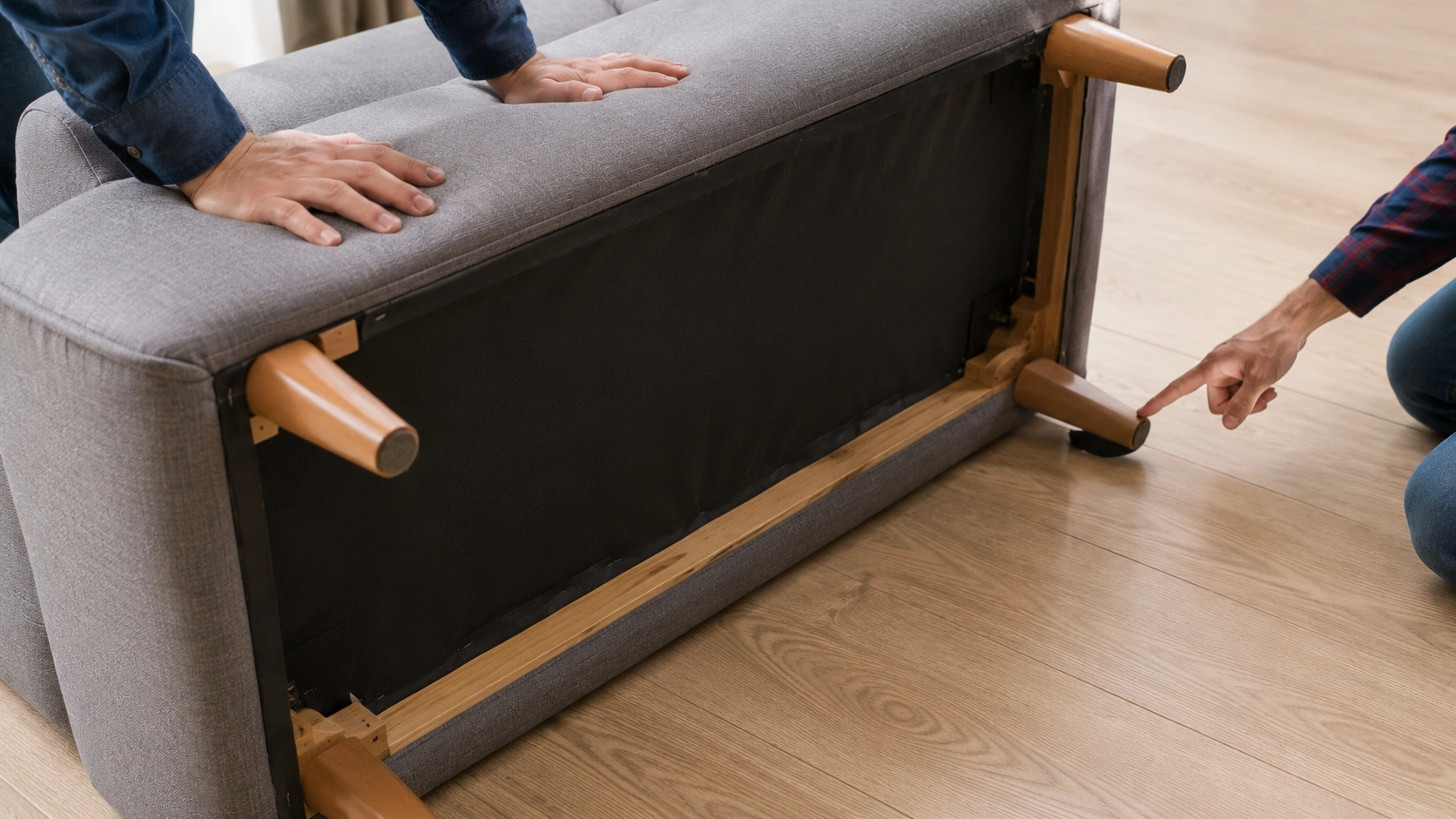
Sit on the sofa and press down firmly on each corner one at a time. Watch the legs — the one that lifts off the floor (even slightly) is your problem leg. If two adjacent legs lift, the issue may be the floor between them.
The Twist Test
Kneel down and try to twist each leg by hand. If a leg spins freely, the bolt or threaded connection is loose. If it feels firm, the leg itself is likely intact and the issue is height-related or floor-related.
The Level Test
Place a spirit level on the sofa seat in both directions (front-to-back and side-to-side). Note which direction the bubble leans — it points toward the higher side, meaning the opposite corner is the low point.
3. Tools You Will Need
Most fixes require only basic household tools. Gather these before starting — you likely already own most of them:
If you don't own a spirit level, download a free bubble level app on your smartphone. It works surprisingly well for furniture-leveling tasks.
4. Fix 1: Tighten Loose Leg Bolts
This is the most common fix and resolves approximately 60% of wobble cases. Bolts connecting sofa legs to the frame loosen over time due to daily use vibrations, especially on hard floors like tile or hardwood.
Access the Leg Connection
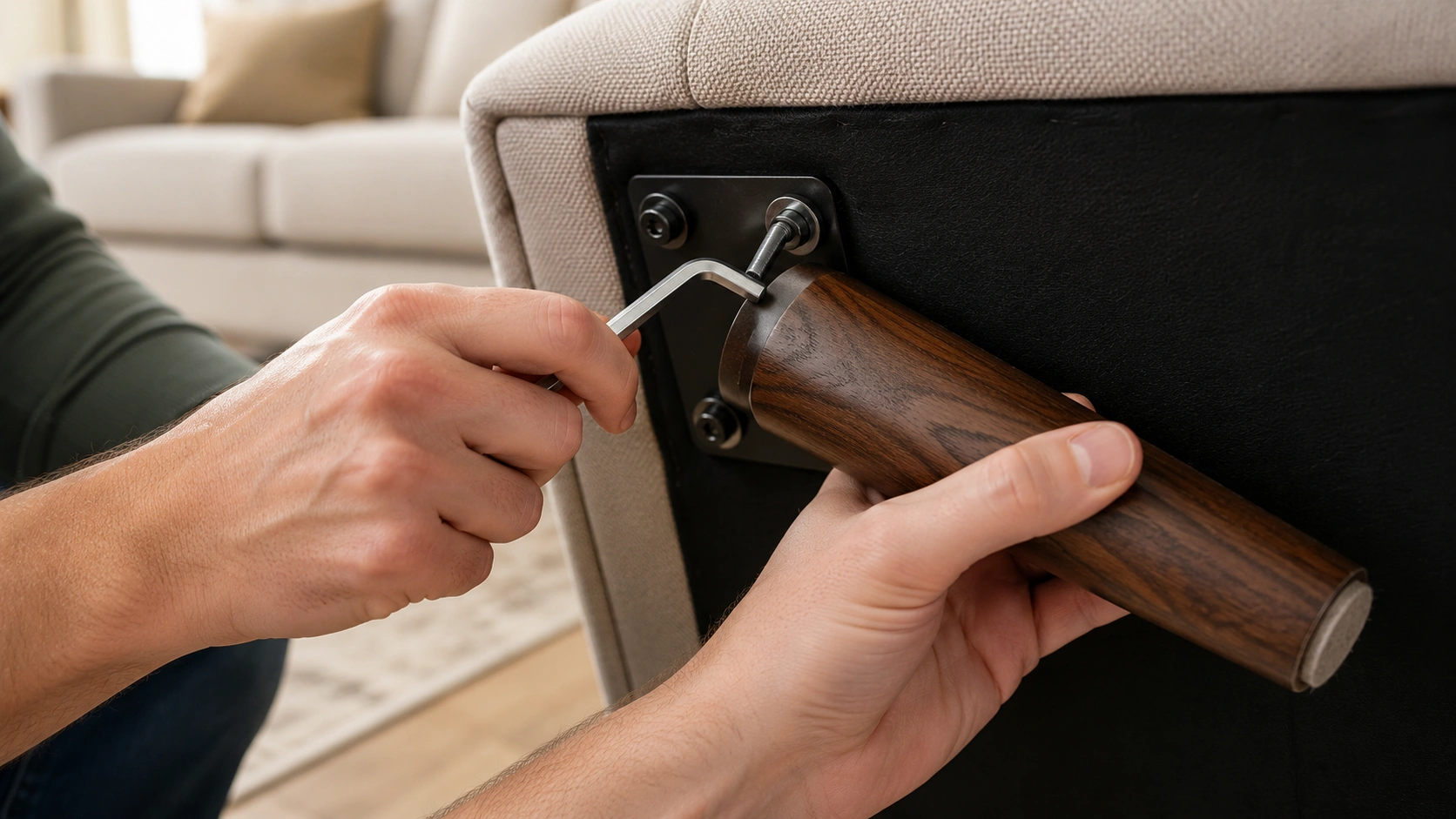
Carefully tilt the sofa onto its side or back to expose the leg attachment points. For a heavy 3-seater sofa or larger, ask someone to help you. Place a blanket underneath to protect the upholstery and floor.
Identify the Fastener Type
Most sofas use one of three attachment methods: hex bolts (requires Allen key), standard bolts (requires wrench), or threaded inserts (leg screws directly into a metal insert in the frame). Identify which type you have before proceeding.
Tighten Firmly — Not Excessively
Tighten each bolt with firm hand pressure. Do not use a power tool or over-tighten, as this can strip the threads in a wooden frame — a problem that is much harder to fix. If a bolt keeps spinning without catching, the thread insert may be stripped.
Apply Thread-Locker (Optional but Recommended)
Apply a small drop of blue thread-locking compound (like Loctite 242) to the bolt threads before reinserting. This prevents future loosening without making the bolt permanently stuck. Use blue formula only — red is too strong for furniture applications.
Test and Verify
Return the sofa to its upright position and perform the press test again. Place the spirit level on the seat. If the wobble is gone, you're done. If it persists, proceed to the next fix.
If a bolt spins endlessly without tightening, the metal threaded insert inside the frame has likely pulled out or stripped. Do not force it — you may damage the frame further. In this case, skip to Fix 4: Replace Damaged Legs or consider professional sofa frame repair.
5. Fix 2: Adjust Leveling Feet
Many sofas, particularly modern and contemporary sofa designs, come with built-in adjustable leveling feet at the bottom of each leg. These are threaded pads that you can rotate to extend or retract the effective leg length.
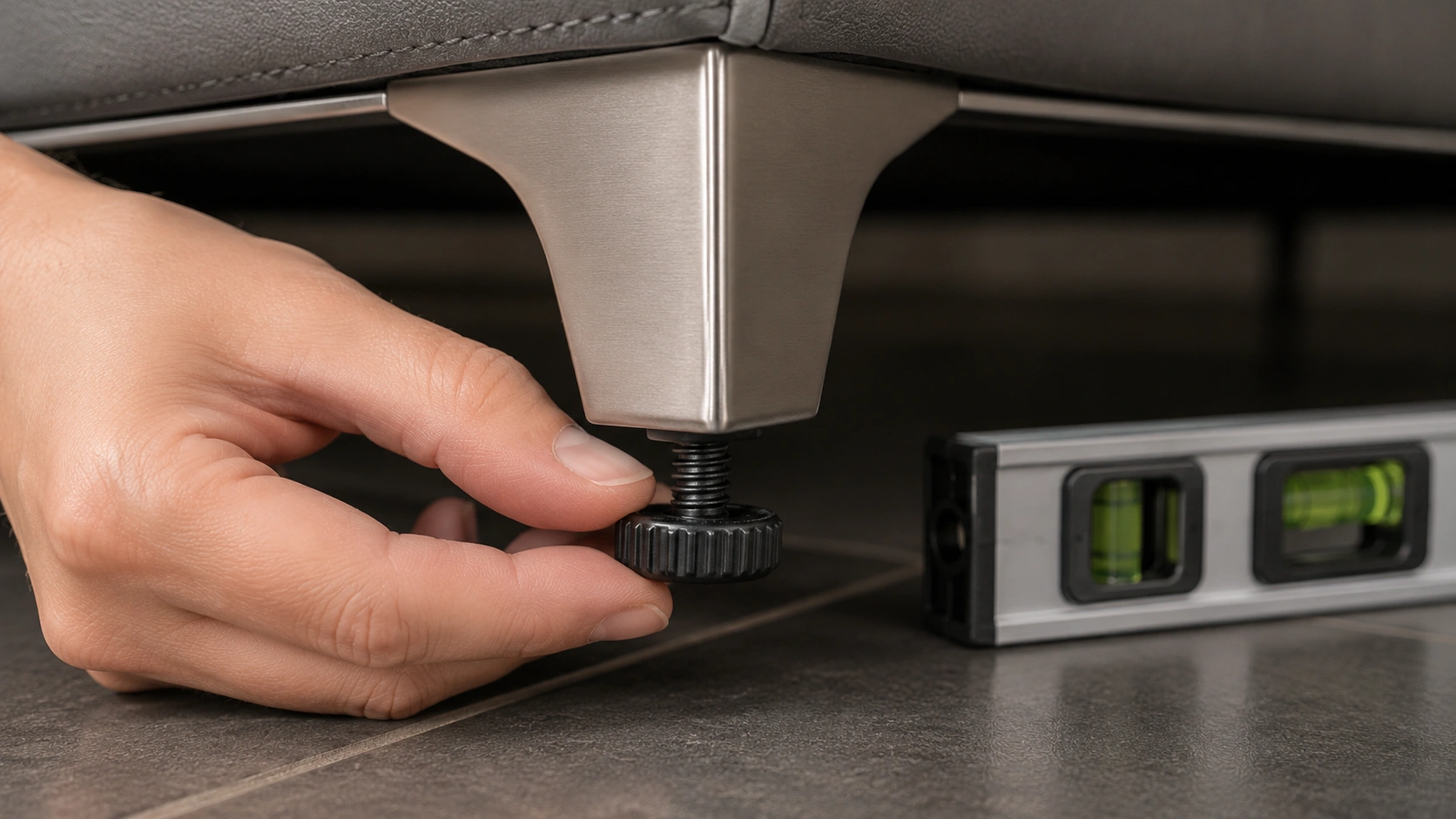
How to adjust: While a second person watches the spirit level on the seat, kneel at the low corner and rotate the leveling foot clockwise to extend it (raise the sofa) or counter-clockwise to retract it (lower the sofa). Make small adjustments — a quarter turn can change the height by 1–2mm, which is often enough.
If the leveling foot won't turn, it may be clogged with dust, pet hair, or carpet fibers. Clean the threads with a brush and compressed air, then try again. If the threads are stripped, the leveling foot assembly needs replacement — check our sofa legs replacement guide for compatible options.
6. Fix 3: Use Furniture Shims or Felt Pads
When the legs themselves are fine but one sits slightly higher than the others (or the floor dips underneath), shims are the fastest, cheapest, and most effective solution. This is particularly useful for apartment sofas placed on older floors with subtle unevenness.
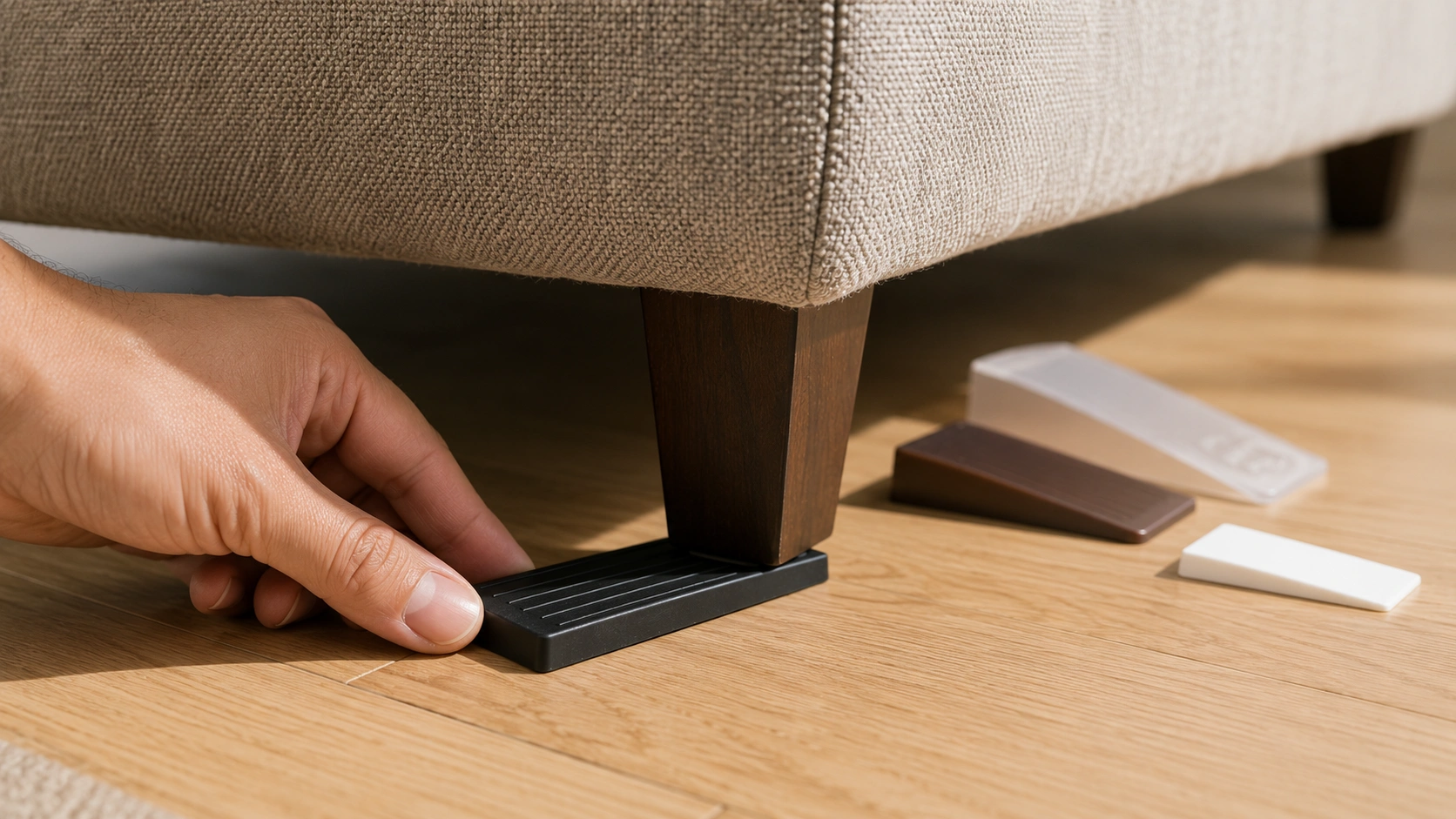
Shim Options Compared
| Shim Type | Best For | Cost | Durability |
|---|---|---|---|
| Plastic wedge shims | Hard floors, permanent fix | $3–8 per pack | Long-lasting |
| Rubber furniture pads | Hard floors, also prevents sliding | $5–12 per pack | Good, may compress over time |
| Adhesive felt pads | Hardwood floors, light wobble | $4–8 per pack | Replace every few months |
| Wooden shims | Carpeted floors, heavy sofas | $2–5 per pack | Very durable |
| Coin or cardboard (DIY) | Emergency temporary fix | Free | Temporary only |
Application method: Have someone sit on the sofa to compress any cushioning. Slide the shim under the short leg from the front or side. Push it in until the wobble stops. For adhesive pads, clean the leg bottom first with rubbing alcohol, then press the pad firmly in place. Stack multiple thin pads rather than using one thick one for better stability.
For a nearly invisible fix on hardwood floors, use clear rubber bumper pads. They blend with the floor surface and also prevent the sofa from sliding when someone sits down — a nice bonus for homes with pets or active children.
7. Fix 4: Replace Damaged Legs
When a leg is cracked, bent, or has a stripped thread that can't be repaired, replacement is the only reliable option. The good news is that sofa legs are standardized enough that finding a match is usually straightforward. Our leg replacement guide covers the full process, but here are the essentials:
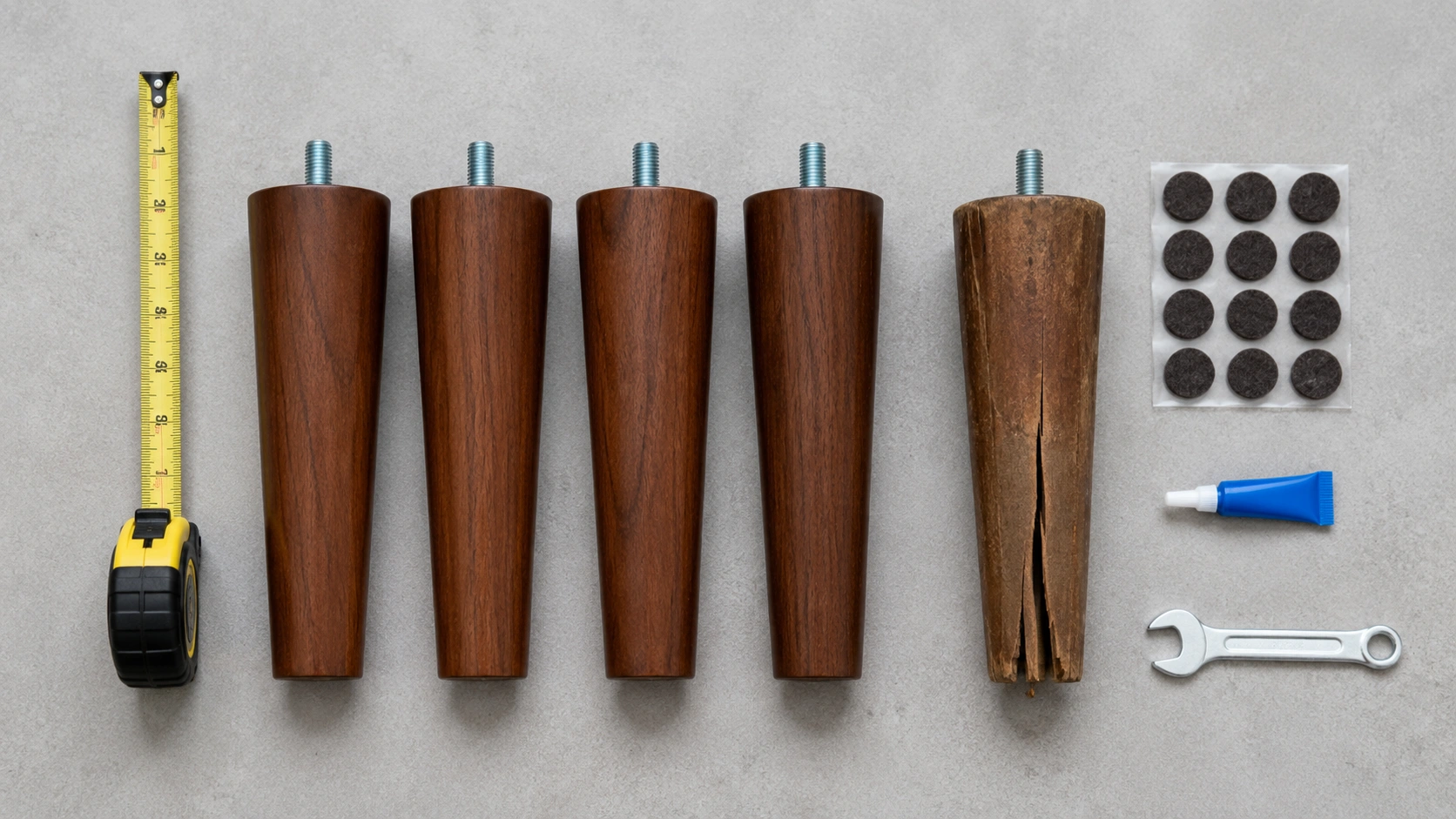
Measure the Existing Leg
Remove the damaged leg and measure three things precisely: total height from base to thread end, thread diameter (usually M8 or M10), and thread length. Also note whether the leg has a mounting plate (screwed from the side) or a direct-thread type (screws straight into the frame).
Match or Upgrade
You can buy an exact match, or use this opportunity to upgrade. For example, switching to taller legs can give a modern sofa a fresh look. Just ensure all four legs are the same height. If you change the leg style, consider replacing all four for visual consistency.
Install and Tighten
Thread the new leg in by hand first to avoid cross-threading, then tighten with a wrench. Apply thread-locker for longevity. For mounting plate legs, align the plate holes with the frame holes and use the original screws or slightly longer replacements if the originals are stripped.
Add Floor Protection
Attach felt pads or rubber bumpers to the bottom of all new legs. This protects your flooring and can also compensate for tiny height differences between legs — a felt pad adds roughly 1–2mm of height.
Replacing only one leg is acceptable if you find an exact match. However, if the new leg is even 3mm different in height, it can shift the wobble to another corner. When in doubt, replace all four legs at once. This is especially important for a recliner sofa where leg alignment affects the reclining mechanism.
8. Fix 5: Address Uneven Floors
Sometimes the sofa is perfectly fine — the floor is the problem. This is especially common in older homes, basement rec room setups, and rooms with mixed flooring types (tile-to-wood transitions, for example).
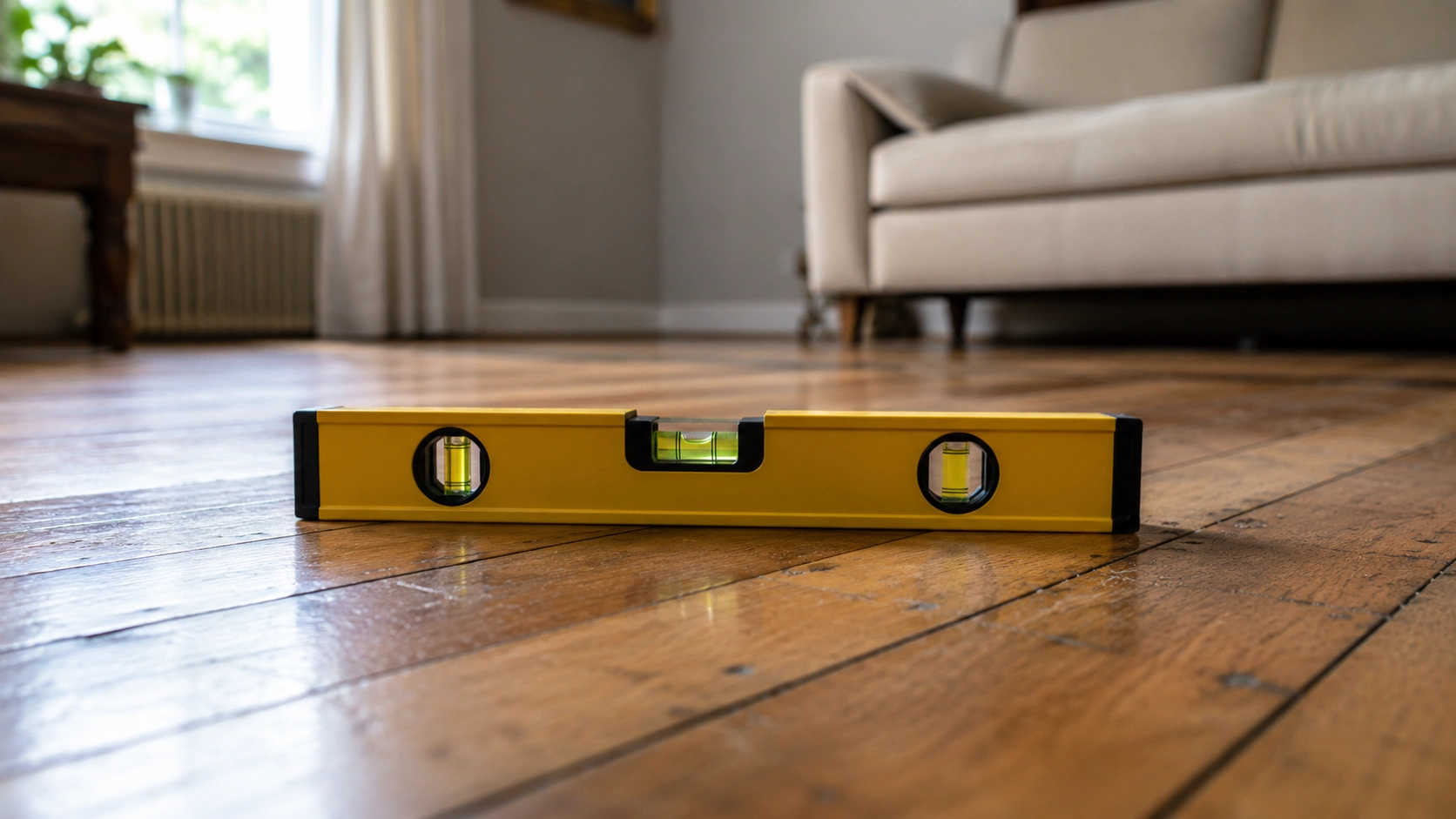
How to Confirm It's a Floor Problem
- Move the sofa to a different spot in the same room — if the wobble changes or disappears, it's the floor
- Place a spirit level directly on the floor at the sofa's original position
- Check for visible floor damage: warped boards, cracked tiles, sunken areas near doorways
- Test whether the wobble appears at multiple locations — widespread floor issues suggest foundation settling
Floor-Leveling Solutions
For minor floor unevenness (under 5mm), furniture shims are the most practical solution — see Fix 3 above. For more significant floor issues, consider these approaches:
Self-leveling compound: A thin pour of self-leveling compound over the affected area creates a perfectly flat surface. This is a weekend DIY project suitable for concrete or wood subfloors. Cost: $20–40 for materials.
Rug or mat underneath: A thick, dense rug can absorb minor floor irregularities and provide a stable base. This is the simplest solution for a living room sofa on slightly uneven hardwood. Choose a rug with a non-slip pad underneath for best results.
Floor repair: For cracked tiles, warped boards, or significant settling, consult a flooring professional. This is more costly but addresses the root cause permanently.
9. Prevention Tips
A few simple habits can prevent your sofa from developing wobble issues in the first place, extending the life of both the legs and your flooring:
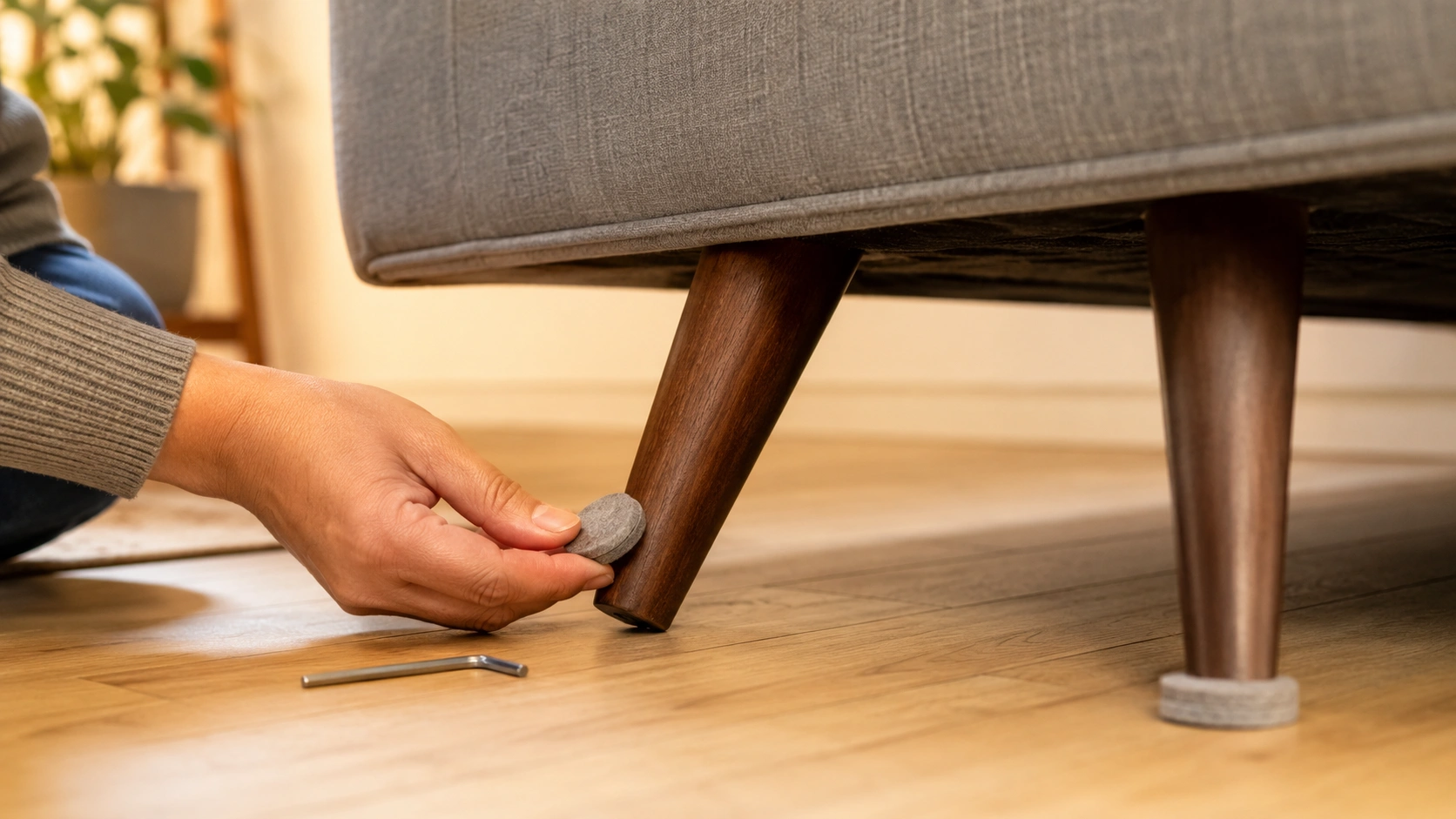
Tighten Leg Bolts Every 3–6 Months
Make it part of your seasonal home maintenance routine. This 5-minute task prevents the gradual loosening that leads to wobble. Pay extra attention if your sofa is on hard flooring, which transmits more vibration to the leg connections than carpet.
Always Use Floor Protection
Felt pads, rubber bumpers, or a rug underneath absorb impact and reduce the vibration that loosens bolts. They also protect your floor from scratches and dents — especially important under a heavy 4-seater sofa or 5-seater sofa.
Avoid Dragging the Sofa
Always lift the sofa when moving it, even slightly. Dragging stresses the leg-to-frame connection and can bend thin metal legs or crack wooden ones. If the sofa is too heavy, use furniture sliders underneath the legs.
Check for Pet Damage
Pets may chew on exposed wooden legs, weakening them over time. If you have dogs or cats, consider a pet-friendly sofa with metal legs or legs that aren't easily accessible. Inspect legs periodically for bite marks or claw damage.
Address Wobble Immediately
A small wobble today becomes a bigger problem tomorrow. The rocking motion puts asymmetric stress on the remaining legs and frame joints, potentially causing frame damage that is far more expensive to repair. Don't ignore it.
When buying a new sofa, check whether it has adjustable leveling feet built in. This feature alone eliminates most wobble issues and is worth looking for, especially if your home has older floors. Many quality mid-range and premium sofas include this feature as standard.
10. When to Call a Professional
Most wobble fixes are straightforward DIY tasks. However, certain situations warrant professional help:
- The frame itself is cracked or split near the leg attachment point — this compromises structural integrity and requires skilled frame repair
- Multiple leg attachment points have stripped thread inserts that can't be repaired with epoxy or re-tapping
- The wobble persists after trying all the fixes above, suggesting an internal frame issue not visible from the outside
- The sofa has a complex mechanism (like a sleeper sofa or recliner sofa) and the wobble affects the mechanism's operation
- The sofa is a high-value piece (such as a luxury sofa or Chesterfield) where improper repair could significantly reduce its value
If you're unsure whether your situation requires a professional, you can contact us with a description and photos of the issue. We can help you determine whether a DIY fix is safe and appropriate for your specific sofa.