
Throws & Pillows for Sofas: The Complete Styling and Buying Guide
Transform any sofa from ordinary to stunning with the right throws and pillows. Learn how to choose, arrange, and care for these essential accessories.
SHOP THROW PILLOWS & BLANKETSWhy throws and pillows matter: These are the most cost-effective way to update your living room without replacing your furniture. A well-chosen throw pillow set can completely change the mood of your space — from casual and cozy to polished and elegant — often for less than $100 total. Unlike a major furniture purchase, you can swap them seasonally, making them one of the smartest decorative investments you can make.
Types of Throw Pillows Explained
Not all throw pillows serve the same purpose. Understanding the different shapes and functions helps you select the right mix for your sofa. The goal is to combine varying shapes and sizes to create visual depth while maintaining a cohesive look.
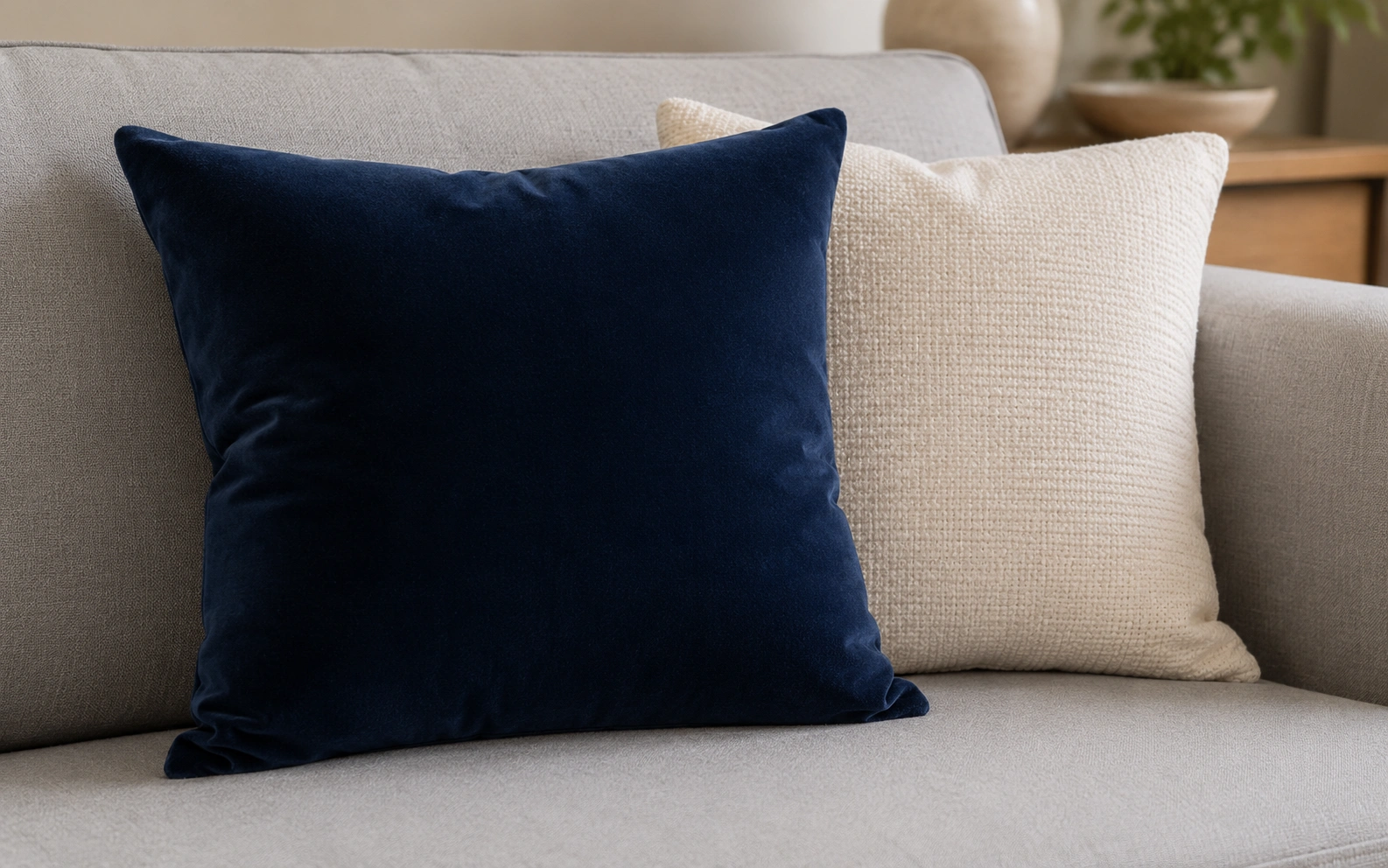
Square Pillows (18"–22")
The most common and versatile shape. Use these as your base layer on both ends of the sofa. Available in every material from cotton to velvet, they anchor the arrangement and provide back support.
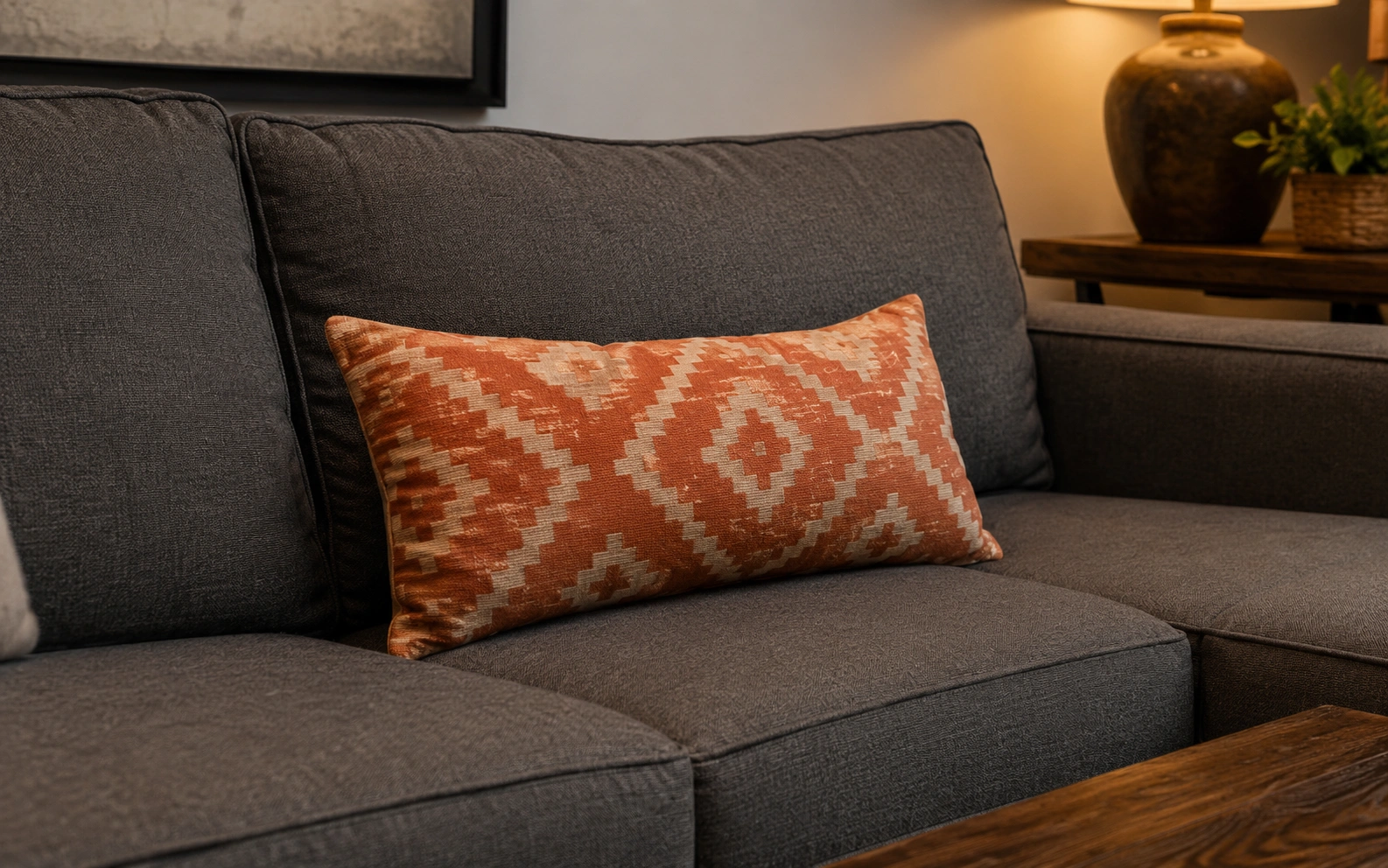
Lumbar Pillows (12"×20")
Rectangular pillows designed for lower back support. They add horizontal contrast to an arrangement of square pillows and are especially useful on deep-seat sofas where standard pillows don't provide enough lumbar support.
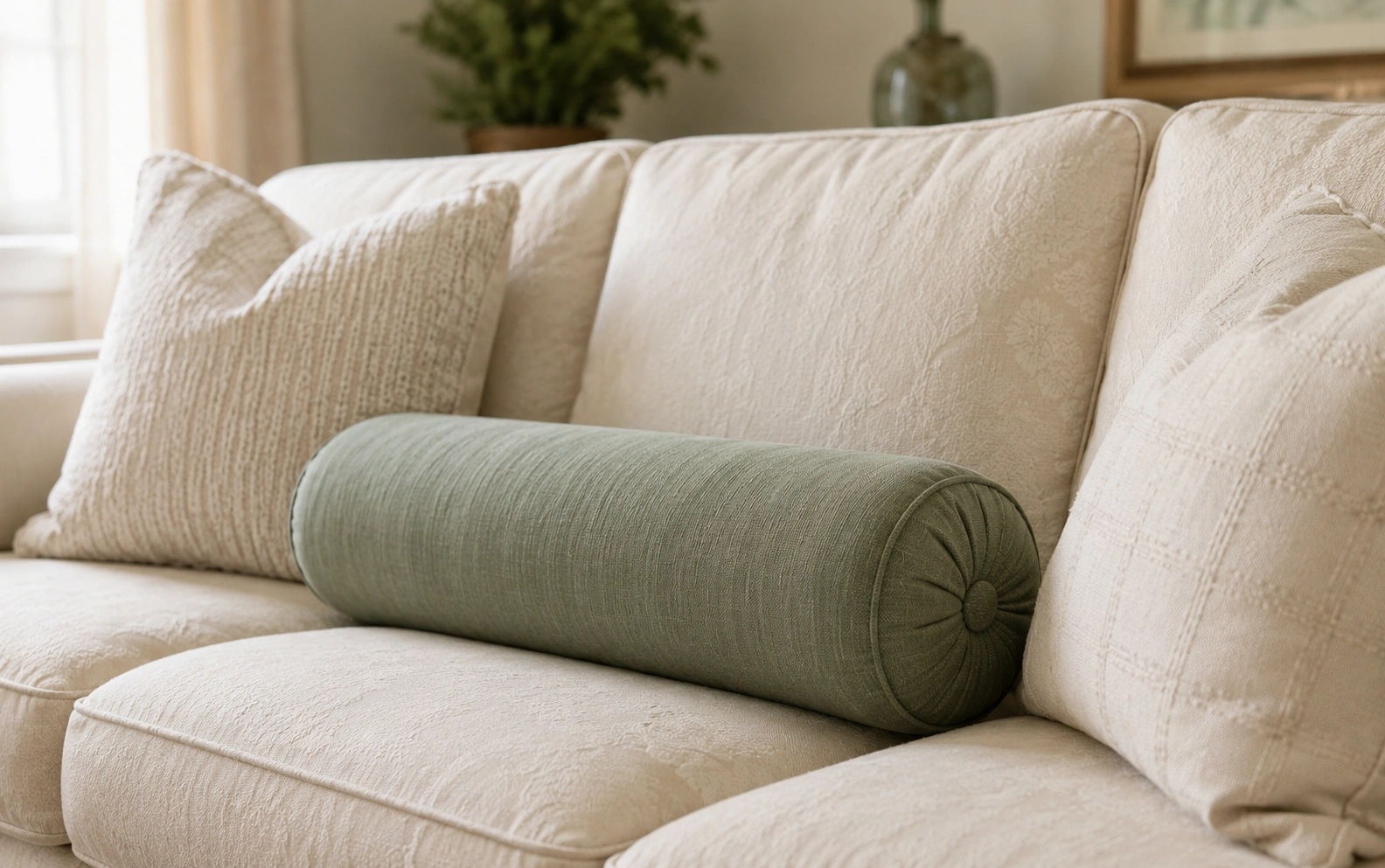
Bolster / Roll Pillows
Cylindrical pillows that add a distinctive sculptural element. They work well as a single statement piece in the center of a Chesterfield sofa or layered in front of square pillows for a bohemian-inspired look.
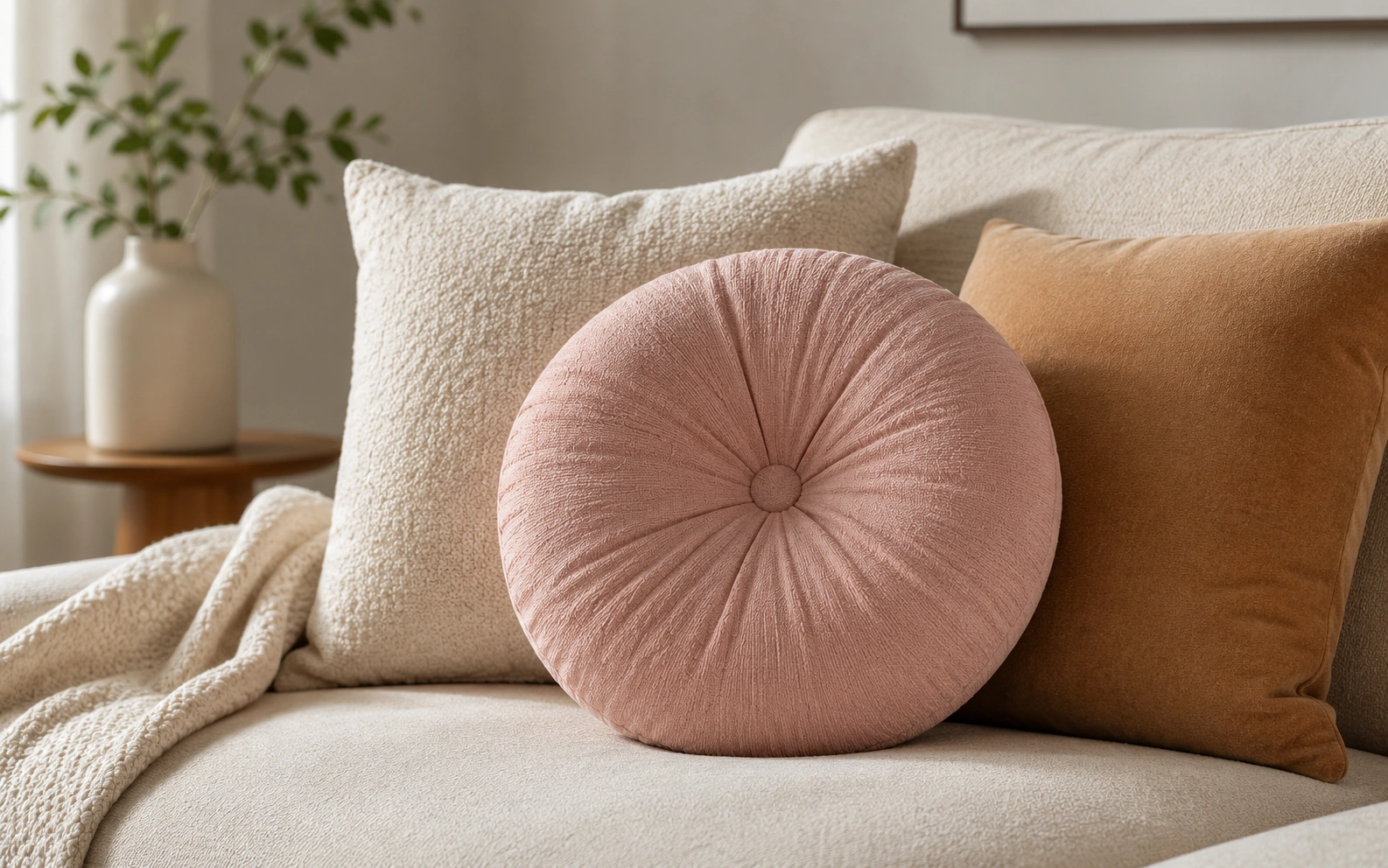
Round / Circular Pillows
A less common but impactful choice that breaks up the grid-like feel of rectangular arrangements. Round pillows add softness and work particularly well on curved sofas or as a single accent piece among squares.
Throw Blankets: Materials, Sizes, and Uses
A throw blanket is more than a decorative accent — it provides warmth, texture contrast, and an effortless casual layer that makes a sofa feel inviting. The right throw draped over an arm or folded on the seat signals comfort and relaxation. Choosing the correct material depends on your climate, lifestyle, and how you plan to use it.
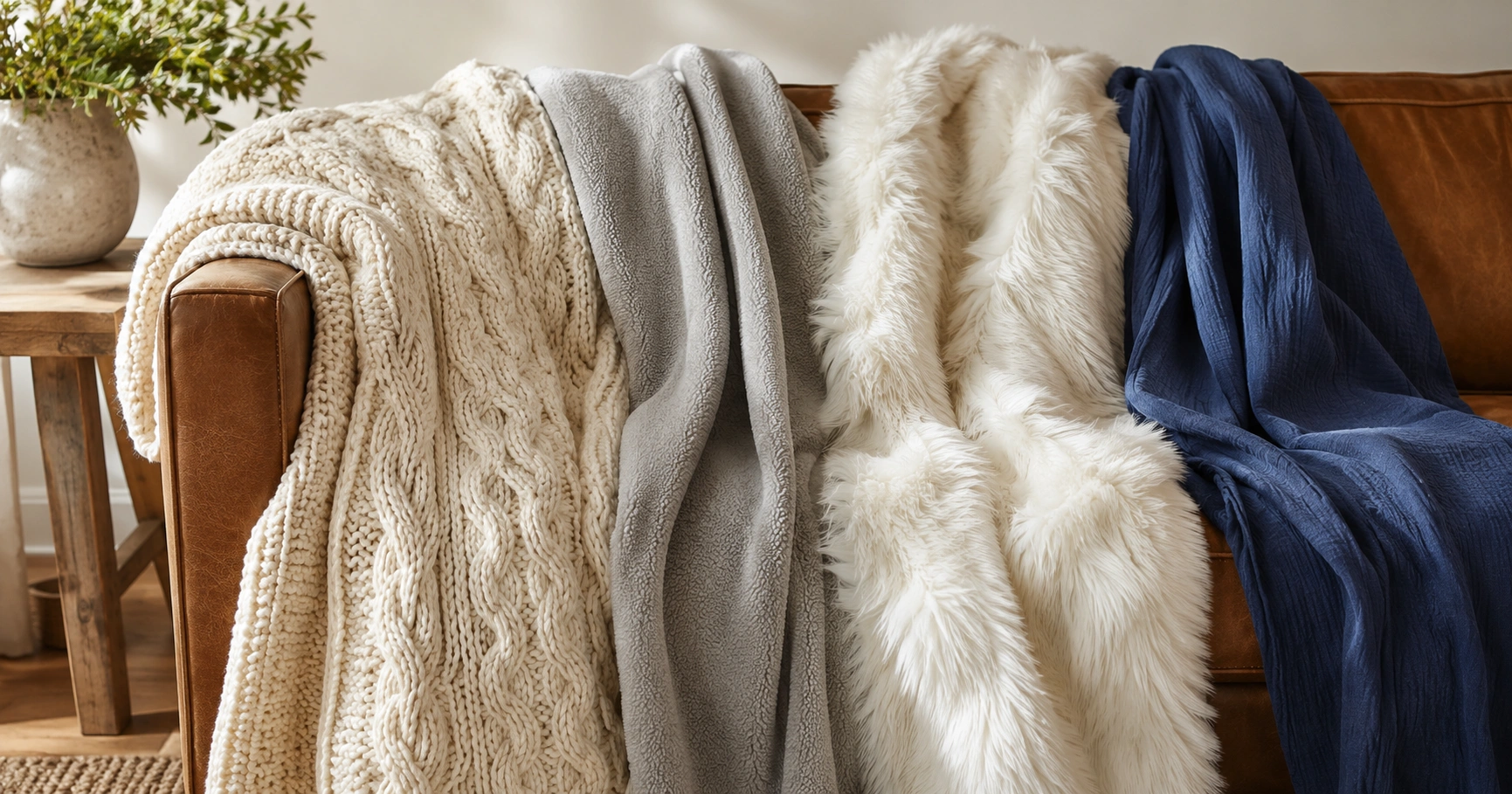
| Material | Warmth | Texture | Best For | Care Level |
|---|---|---|---|---|
| Cotton | Light | Smooth, breathable | Year-round use, warm climates | Easy Machine wash |
| Linen | Light | Textured, relaxed drape | Summer, coastal, minimalist | Easy Machine wash |
| Chunky Knit | Medium-High | Thick, cozy, sculptural | Winter, visual statement | Medium Hand wash or lay flat |
| Fleece / Microfiber | High | Ultra-soft, plush | Cold climates, families with kids | Easy Machine wash |
| Faux Fur | Medium | Luxurious, fluffy | Accent piece, glam style | Medium Hand wash |
| Wool / Cashmere Blend | Very High | Soft, refined | Luxury spaces, cold winters | Medium Dry clean or hand wash |
| Velvet | Light-Medium | Smooth, rich sheen | Elegant spaces, pairing with velvet sofas | Medium Spot clean |
For households with pets, consider machine-washable materials like cotton or fleece. Delicate throws like faux fur and cashmere blends are better suited for adult-only spaces or formal living rooms. If you have a sofa for pet owners, durability and washability should be your top priorities when selecting throws.
Pillow Inserts: Which Fill Is Right for You?
The insert is what gives a throw pillow its shape, firmness, and comfort — yet it's the most overlooked part of the purchase. Many people buy beautiful pillow covers and pair them with cheap, flat inserts, resulting in a deflated, uninspiring look. Understanding fill types helps you achieve that full, designer-quality appearance.
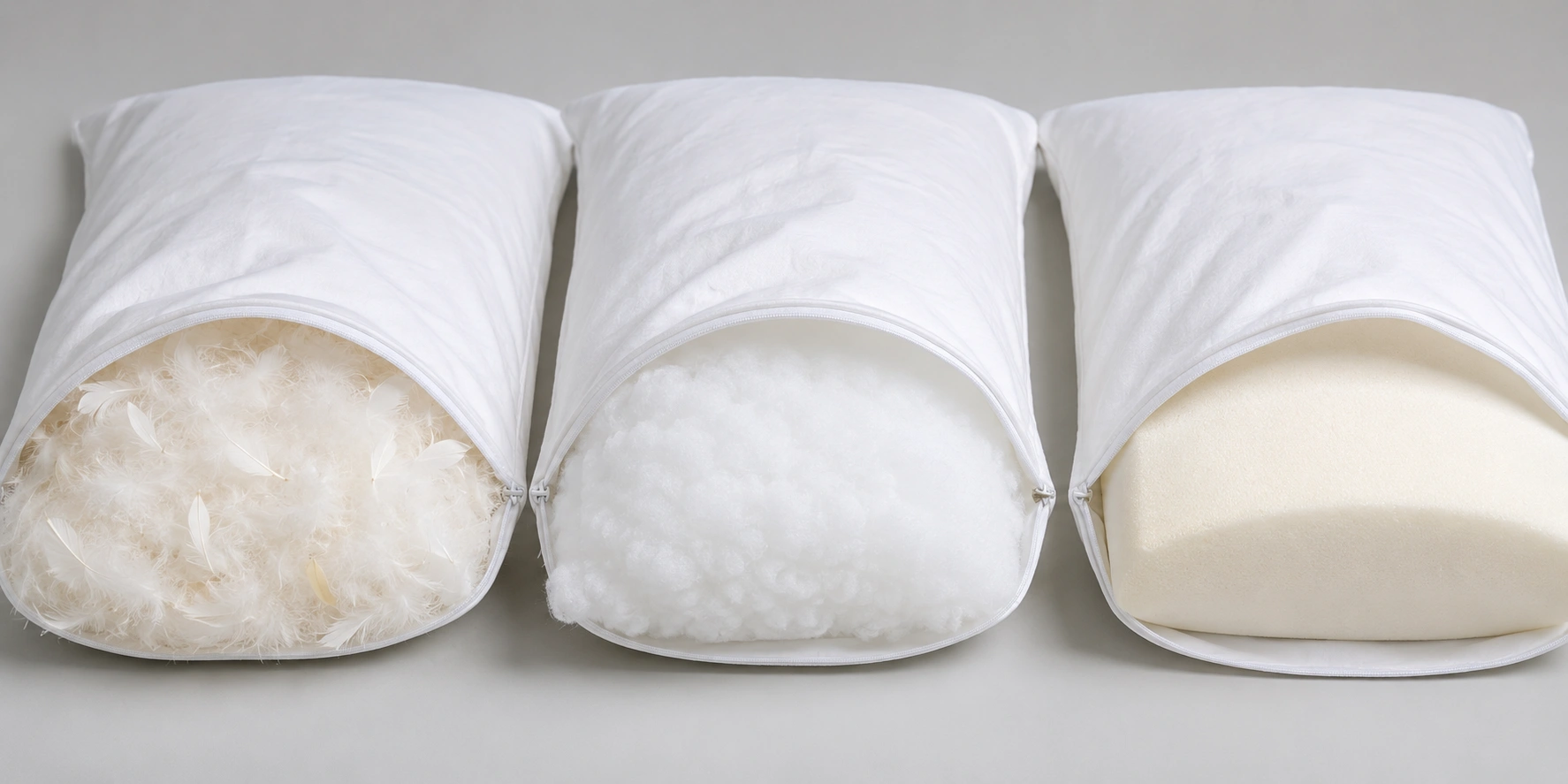
Down and feather blend is the gold standard for decorative pillows. The feather content provides structure and helps the pillow hold its shape, while the down adds softness and that desirable plush feel. A 50/50 or 75/25 down-to-feather ratio strikes the best balance. This fill is ideal for pillows that you want to look luxuriously full but still feel comfortable when you lean against them.
100% down creates the softest, most cloud-like pillow, but it compresses quickly and requires frequent fluffing. It's best reserved for purely decorative pillows that won't be used for back support. Down is also not suitable for allergy sufferers.
High-density polyester fill is the most affordable and hypoallergenic option. Quality polyester fills have improved significantly — premium versions mimic the feel of down reasonably well. They hold their shape better than down but feel slightly firmer. This is a practical choice for families and anyone who prefers a structured, tailored pillow look.
Memory foam inserts provide excellent firm support and are ideal for lumbar pillows where ergonomics matter. However, they don't have the soft, casual appearance that most decorative arrangements call for. Use them selectively for functional support rather than as your primary decorative fill.
Always buy inserts that are 1 to 2 inches larger than your pillow cover. For example, use a 20-inch insert in an 18-inch cover, or a 22-inch insert in a 20-inch cover. This overstuffing is the single biggest secret to making inexpensive pillows look expensive and custom. Understuffed pillows look flat and cheap no matter how beautiful the cover fabric is.
Color and Pattern Coordination for Your Sofa
Choosing the right colors and patterns for your throws and pillows can feel overwhelming with the endless options available. The most reliable approach is to build your palette from your existing room elements rather than starting from scratch.
The 60-30-10 Rule Applied to Pillows
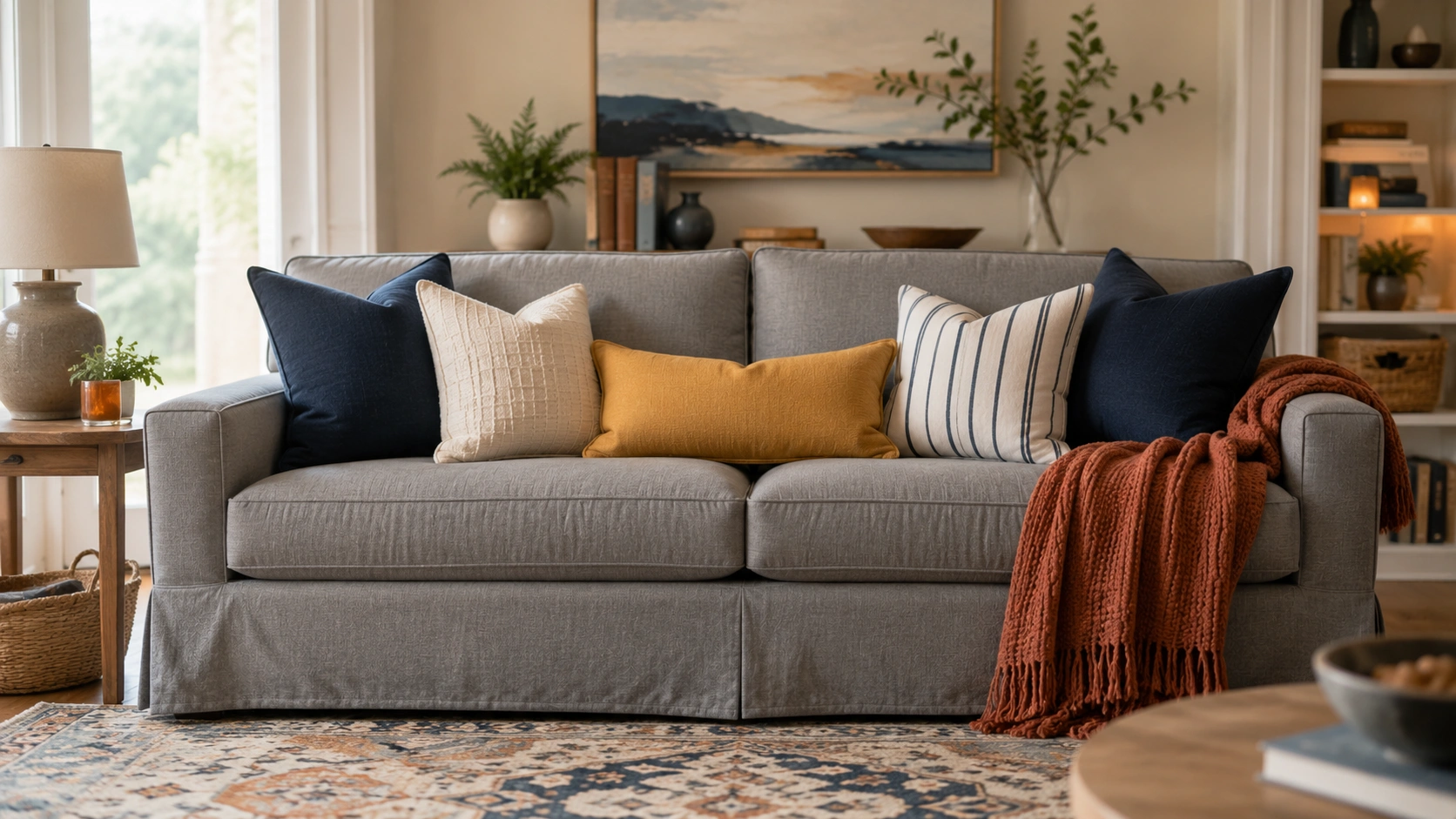
Interior designers use the 60-30-10 color rule: 60% dominant color (usually your sofa and walls), 30% secondary color (curtains, rug, accent chairs), and 10% accent color (throw pillows, throws, small decor). Your pillow palette should primarily draw from the 30% and 10% categories to create harmony without competing with the sofa itself.
For a grey couch, you might use navy and white pillows as your 30% secondary layer, then add a mustard yellow lumbar as your 10% accent. This creates depth without the arrangement feeling random. The same logic applies whether your sofa is brown, white, black, or any other base color.
Mixing Patterns Confidently
The key to mixing patterns is varying the scale (size of the pattern), not just the pattern type. Combine one large-scale pattern (like a wide stripe or oversized floral), one medium-scale pattern (like a geometric or damask), and one solid or subtle texture. When all three patterns are different scales, they work together instead of competing.
- Limit yourself to a maximum of 3 different patterns per sofa arrangement
- Repeat at least one color across multiple pillows to tie the arrangement together
- Include at least one solid-colored pillow to give the eye a resting place
- Match pattern intensity — don't pair a bold tribal print with an equally bold floral
- Consider your room's overall style: geometric patterns suit modern sofas, while florals complement vintage styles
If your room leans toward neutral tones, patterned pillows are your opportunity to introduce personality. Conversely, if your sofa is already a bold color, stick with predominantly neutral pillows and add just one patterned accent to avoid visual overload.
How to Arrange Throw Pillows Like a Designer
The way you place pillows on your sofa matters as much as which pillows you choose. A poor arrangement can make even expensive pillows look cluttered and messy. Follow this systematic approach to achieve a polished, intentional look every time.
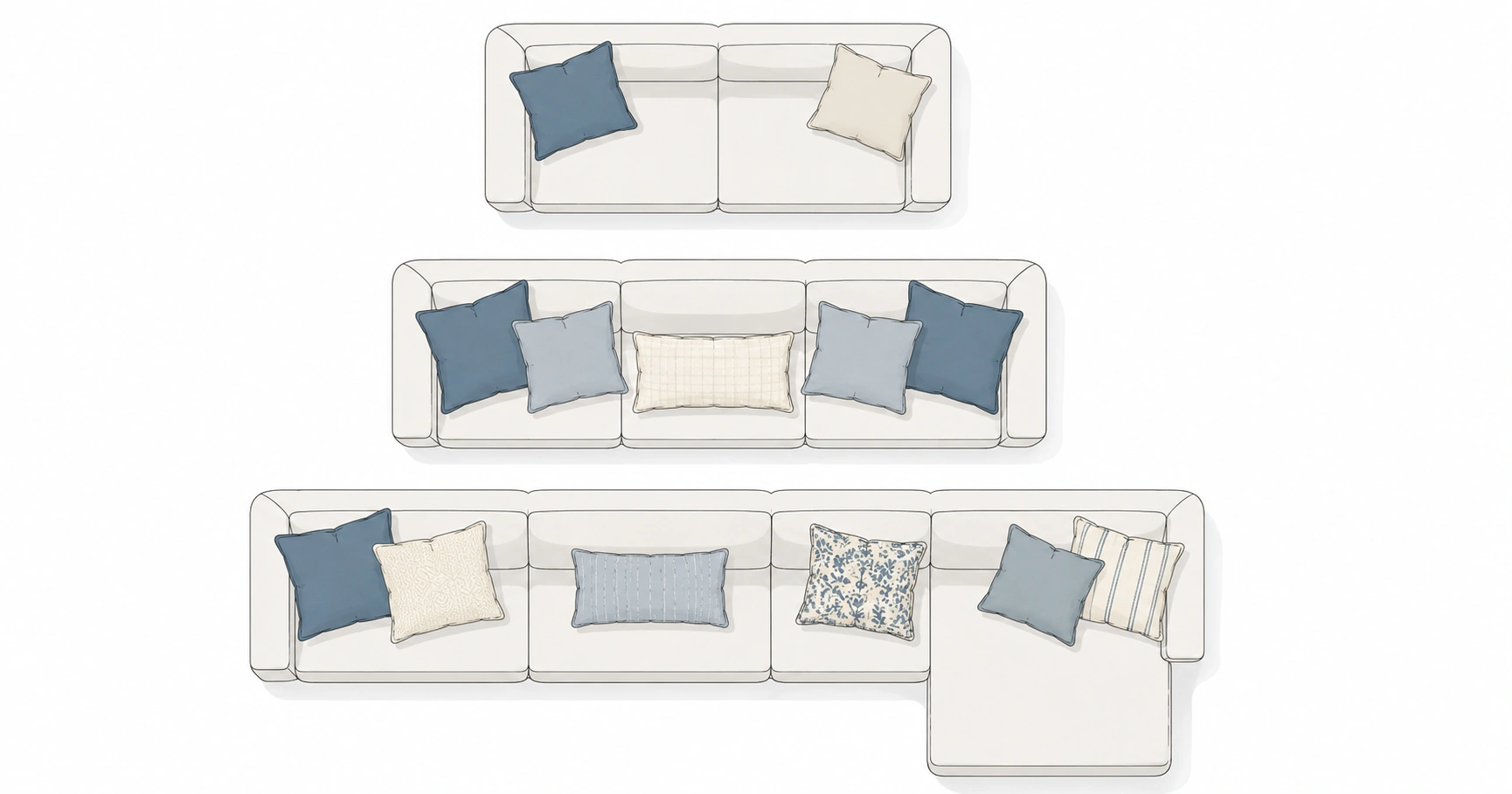
- Start with your largest square pillows on the outside corners. Place one on each far end of the sofa. These anchor the arrangement and frame the seating area. For a 3-seater sofa, use 20-inch or 22-inch squares.
- Layer a smaller pillow in front of each outer pillow. This creates depth. Use a slightly different texture or pattern — if the back pillow is solid velvet, the front could be a woven linen. This contrast is what makes the arrangement feel styled rather than flat.
- Place a lumbar pillow in the center. The rectangular shape breaks up the repetitive squares and draws the eye to the middle of the sofa. Choose a pattern or accent color for this focal piece.
- Drape the throw blanket casually. Fold the throw in thirds lengthwise and drape it over one arm of the sofa, letting it fall naturally. Avoid perfectly neat folds — a relaxed drape looks more inviting. Tuck one end slightly under a pillow for a composed-but-effortless feel.
- Step back and assess balance. The arrangement should feel visually balanced without being perfectly symmetrical. If one side feels heavier, adjust by shifting a pillow slightly or swapping positions. The goal is intentional asymmetry.
Pillow Count by Sofa Size
- Loveseat: 2–3 pillows
- 3-seater sofa: 3–5 pillows
- 4-seater sofa: 4–6 pillows
- Sectional sofa: 5–7 pillows
- 2-seater sofa: 2 pillows maximum
Throw Blanket Placement Options
- Draped over one sofa arm (most common)
- Folded at the center of the seat
- Across the back of the sofa
- Tucked beside a cushion on one end
- On a nearby sofa table or ottoman
Never overcrowd your sofa with pillows to the point where there's no comfortable place to sit. If guests have to move five pillows to sit down, you've gone too far. The purpose of throws and pillows is to enhance comfort and aesthetics — not to create an obstacle course. Leave at least one full seating width completely clear of pillows on a multi-seat sofa.
Matching Throws and Pillows to Your Sofa Style
The ideal pillow and throw selection varies significantly depending on your sofa's design style. What looks stunning on a sleek modern sofa might feel out of place on a traditional Chesterfield. Here's how to tailor your accessory choices to complement — not clash with — your sofa's character.
Modern and contemporary sofas pair best with clean-lined, structured pillows. Opt for square and lumbar shapes in solid colors or minimal geometric patterns. Smooth fabrics like cotton, linen, and tight-weave velvet work well. Avoid ruffles, fringe, or overly ornate textures that conflict with the sofa's streamlined aesthetic. A single carefully placed throw in a matching or contrasting solid color completes the look without busyness.
Traditional and Chesterfield sofas call for richer, more tailored accessories. Tufted or flanged pillow edges, silk or velvet fabrics, and classic patterns like damask, herringbone, or subtle stripes complement the formality. A folded cashmere or wool throw with clean edges maintains the refined atmosphere.
Bohemian and eclectic sofas — including many bohemian-style pieces and floor sofas — thrive with layered, collected-looking accessories. Mix textures freely: macramé, woven cotton, embroidery, tassels, and chunky knits all work together. Don't be afraid to mismatch patterns — the bohemian aesthetic embraces creative contrast. A chunky knit or fringed throw blanket is almost essential here.
Coastal and beach-inspired sofas look best with light, airy accessories in sea-glass tones — soft blues, sandy beiges, crisp whites, and muted greens. Linen and lightweight cotton are the go-to fabrics. A thin cotton throw with a subtle stripe evokes the coastal feel without being literal about it.
If you're working with a leather sofa, throws and pillows serve an additional practical purpose: they make the cool, firm leather surface more comfortable and skin-friendly. Soft fabric pillows in warm tones like terracotta, cream, or olive green create a beautiful contrast against leather's smooth surface. A draped knit throw adds warmth both visually and physically.
How to Care for Throws and Pillows
Proper care extends the life of your throws and pillows significantly, keeping them looking fresh long after purchase. Different materials require different approaches, and treating everything the same way is a common cause of premature wear.
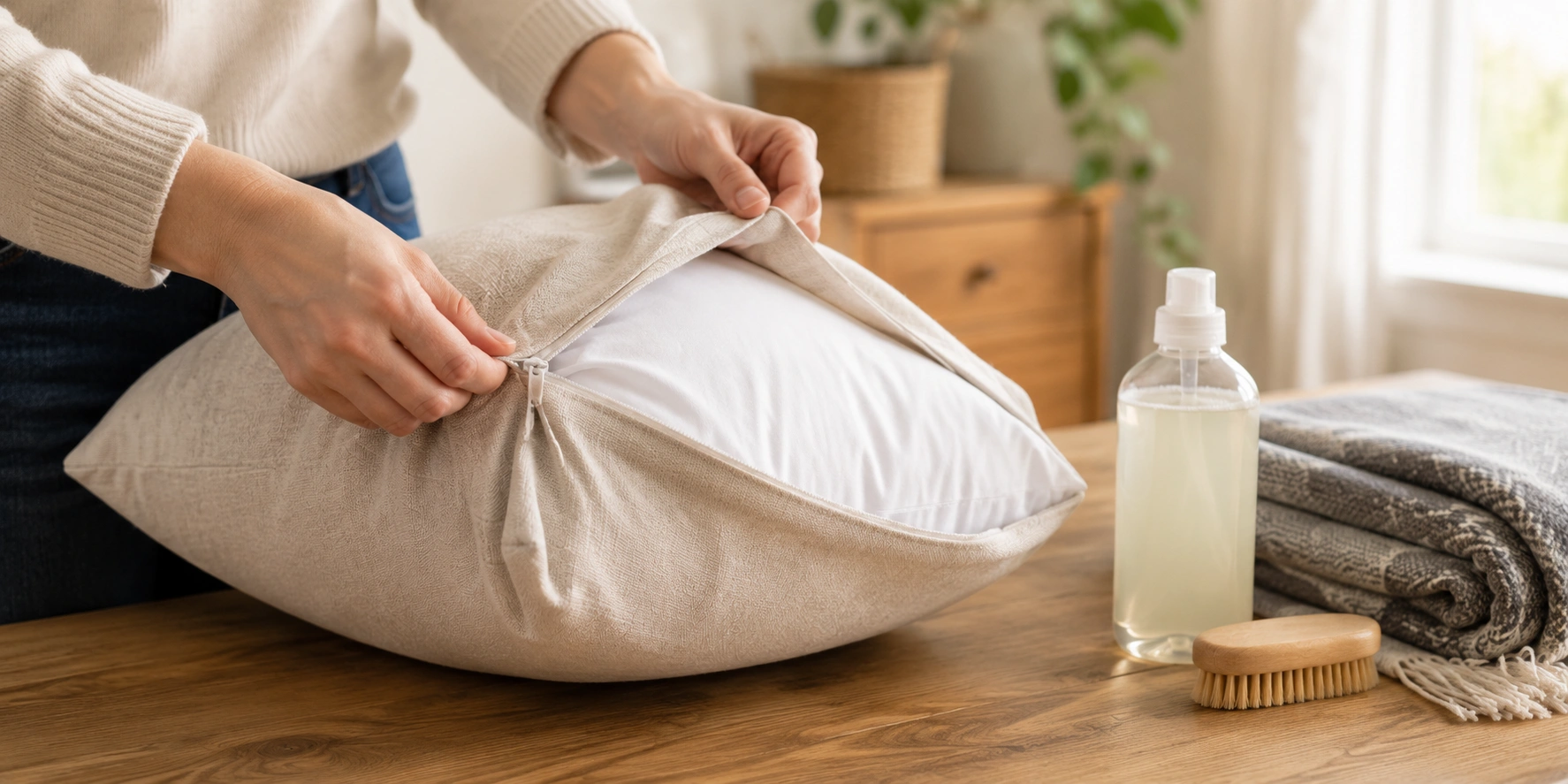
Pillow Cover Care
The easiest way to keep pillow covers clean is to buy covers with washable fabrics and hidden zippers. Remove covers weekly or biweekly and wash according to the fabric type. Cotton and polyester covers can generally be machine-washed on a gentle cycle. Velvet covers typically require spot cleaning or hand washing to preserve the pile. Linen covers can be machine-washed but may shrink — air dry or tumble dry on low.
Throw Blanket Care
Cotton and fleece throws are the most low-maintenance — machine wash on gentle and tumble dry low. Chunky knit throws should be hand-washed or placed in a mesh laundry bag on the delicate cycle, then laid flat to dry to prevent stretching and distortion. Faux fur throws need careful treatment: hand wash in cold water with mild detergent, gently squeeze out water (never wring), and air dry with the fur side up, brushing gently once dry to restore the pile.
Insert Care
Pillow inserts don't need frequent washing — every 3–6 months is sufficient for most households. Down and feather inserts should be machine-washed on a gentle cycle with a small amount of mild detergent, then tumble-dried on low with clean tennis balls to break up clumps. Polyester inserts can be machine-washed and dried normally. Between washes, simply fluff inserts by hand and place them in direct sunlight for a few hours to freshen and kill dust mites naturally.
When rotating seasonal throws and pillows, store them in breathable cotton storage bags — never plastic, which traps moisture and can cause mildew. Add a cedar block or lavender sachet to deter moths. Avoid compressing down inserts during storage; keep them loosely packed so the feathers maintain their loft. For more detailed fabric-specific cleaning guidance, our fabric sofa cleaning guide covers many of the same material principles that apply to pillow covers and throws.
Smart Buying: Quality vs. Price for Throws and Pillows
The throw pillow market ranges from $5 big-box basics to $200+ designer pieces. Understanding where to invest and where to save helps you build a high-end look without overspending.
Where to invest: Pillow inserts and one or two "hero" covers that sit in the most prominent positions on your sofa. A quality down-blend insert ($15–$30) makes even a $10 cover look expensive. Similarly, one well-made velvet or embroidered cover as your focal piece elevates the entire arrangement.
Where to save: Background and filler pillows — the ones that sit behind or beside your hero pieces. Simple cotton or linen covers in solid colors or subtle patterns can cost $8–$20 each and look perfectly fine when properly stuffed with quality inserts. The visual trick is that the eye is drawn to your hero pieces, so the less expensive fillers simply provide context.
For throw blankets, mid-range options ($30–$60) often deliver the best value. Ultra-cheap throws under $15 tend to pill, shed, or lose their shape after a few washes. At the mid-range, you can find quality cotton, fleece, and even lightweight knit throws that perform well and look good for years. Reserve $100+ spending for statement pieces like oversized chunky knits or genuine cashmere blends.
If you're decorating on a tight budget, explore our sofa budget guide for strategies on allocating your decorative spending across all accessories, not just throws and pillows. Pairing budget pillows with affordable sofa covers can give an older sofa a completely new identity for a fraction of the replacement cost.
Frequently Asked Questions
Quick-Reference Summary
Best pillow sizes: 18"×18" and 20"×20" squares + 12"×20" lumbar
Best insert fill: Down-and-feather blend (50/50 ratio)
Golden rule: Buy inserts 1–2 inches larger than your covers
Pillow count: 2–3 for loveseats, 3–5 for 3-seaters, 5–7 for sectionals
Pattern mixing: Vary scale — one large, one medium, one solid per arrangement
Color strategy: Pull from room's existing 30% and 10% colors
Best throw materials: Cotton for everyday, chunky knit for winter, linen for summer
Invest in: Quality inserts and one hero cover; save on filler pillows
Throws and pillows are the finishing touch that can make or break your sofa's appearance. For more guidance on creating a cohesive living room, explore our living room layout guide. Ready to shop? Browse our recommended throws and pillows below to find options that combine quality, style, and value.


