Sofas with Built-In Storage: The Complete Buying Guide
Discover how hidden compartments, lift-up seats, and drawer systems can transform your sofa into a powerful space-saving solution for any room
VIEW TOP STORAGE SOFASPhanMarket Philosophy: A sofa with storage is one of the smartest furniture investments you can make — it serves two purposes in the footprint of one. We break down every mechanism, capacity spec, and design consideration so you can choose a storage sofa that truly fits your space and lifestyle.
Why Storage Sofas Are Worth Considering
In an era where living spaces are shrinking and the average apartment size continues to decrease, every square foot counts. A storage sofa eliminates the need for separate storage furniture — an ottoman, a blanket box, or a set of storage baskets — by integrating hidden compartments directly into a piece you already need. The result is a cleaner, more organized room without sacrificing seating comfort or style.

The practical advantages go beyond simple decluttering. Storage sofas are particularly valuable in specific scenarios: studio apartments where floor space is at a premium, family rooms that accumulate toys and board games, guest rooms that need to double as linen closets, and home theaters where media accessories and blankets need a designated home within arm's reach.
Saves Floor Space
Replaces the need for a separate storage ottoman, blanket box, or side cabinet. One piece does the job of two, freeing up valuable floor area in any room layout.
Reduces Visual Clutter
Blankets, pillows, remotes, and board games disappear from sight. Your living room looks instantly more organized and spacious without constant tidying.
Dual-Purpose Value
A storage sofa typically costs only 10-25% more than the same model without storage, but replaces furniture that would cost several hundred dollars separately.
Everything Within Reach
Store frequently used items — extra blankets for movie nights, charging cables, game controllers — right where you sit instead of walking to another room.
Ideal for Small Spaces
For small apartments and studios, a storage sofa is often the only practical way to add significant storage without buying an additional furniture piece.
Seasonal Flexibility
Rotate contents seasonally — store heavy blankets in summer, swap for lightweight throws in winter. The hidden space adapts to your needs throughout the year.
The key insight is that storage sofas are not a novelty — they are a functional upgrade that addresses a real problem. The challenge is choosing the right type of storage mechanism for your specific needs, which is what we cover next.
5 Types of Sofa Storage Mechanisms Explained
Not all storage sofas work the same way. The mechanism determines how easy the compartment is to access, how much it holds, and whether it suits your daily routine. Understanding each type before you shop prevents the common frustration of buying a storage sofa whose mechanism does not fit your lifestyle.

Under-Seat Compartment (Hinged)
The most common and affordable type. A hinged panel beneath the seat cushion opens to reveal a lined storage cavity. Access requires removing the cushion first, then lifting the panel. Best for items you access weekly rather than daily. Typically offers 5-8 cubic feet per seat.

Lift-Up Seat (Gas Strut)
The premium option. A gas strut or hydraulic piston mechanism allows you to lift the entire seat cushion panel with one hand — no need to remove the cushion first. The mechanism holds the seat open while you access the compartment. Offers the largest storage volume (8-12 cubic feet per seat) and the easiest access.
Pull-Out Drawers
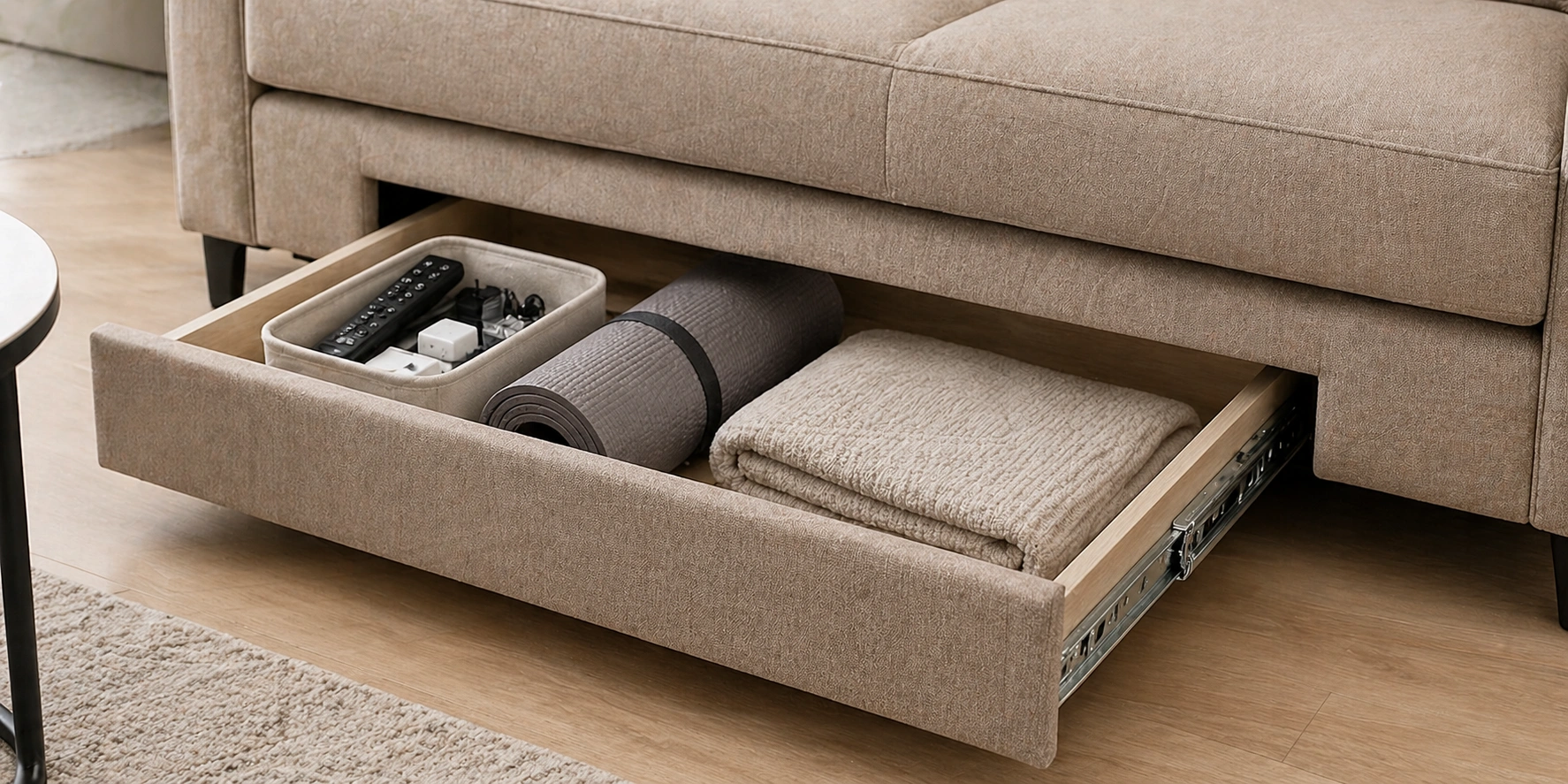
Drawers built into the sofa base slide out on metal rails, similar to kitchen drawers. Extremely easy to access — no lifting required. However, drawer storage typically offers less volume (3-5 cubic feet each) and may slightly reduce seat depth. Ideal for frequently accessed items like remotes, chargers, and magazines.

Armrest Storage
Hidden compartments built into one or both armrests, accessed by lifting a hinged top panel. Storage volume is small (0.5-1 cubic foot per arm) but incredibly convenient for items you use while sitting — TV remotes, phone chargers, reading glasses, and coasters. Often found as a bonus feature on sofas that also have under-seat storage.

Chaise Lounge Storage
The chaise extension of a sofa with chaise lounge contains a large, accessible storage cavity. Since the chaise seat does not need to support as much weight (it is a lounging area, not a primary seating position), the storage panel can be larger and easier to access. Offers 8-15 cubic feet — the largest single compartment available.
⚠️ Important: Avoid storage sofas where accessing the compartment requires removing heavy cushions every time. After the novelty wears off, you will stop using the storage entirely. Gas strut lift-up mechanisms or drawer systems are the only types most people use consistently over the long term.
Storage Capacity Comparison by Sofa Type
Storage capacity varies dramatically depending on the sofa size and the type of storage mechanism. The table below provides realistic volume estimates based on standard furniture dimensions, along with practical examples of what actually fits inside each compartment type.
| Sofa Type | Storage Mechanism | Total Capacity | What Actually Fits |
|---|---|---|---|
| 2-Seater Sofa | Under-seat (hinged) | 10-16 cu ft | 2 folded blankets, 4 throw pillows, 1-2 board games |
| 3-Seater Sofa | Lift-up (gas strut) | 24-36 cu ft | Full queen bedding set, 4-6 blankets, winter clothes, toys |
| L-Sectional | Chaise + under-seat | 30-50 cu ft | Guest bedding for 2, seasonal decor, bulk blankets, games |
| Loveseat | Drawer (2 drawers) | 6-10 cu ft | Remotes, chargers, magazines, small throw blanket |
| Futon Sofa | Under-mattress cavity | 15-20 cu ft | Bedding for the futon itself, pillows, sheets |
| Any sofa with armrest storage | Hinged armrest panel | 1-2 cu ft | Remotes, glasses, small electronics, coasters |
💡 Sizing Tip: To visualize capacity before buying, measure the interior dimensions of the storage compartment (length × width × depth in inches), divide by 1,728 to get cubic feet, then compare against a standard plastic storage bin. A 15-quart bin is approximately 0.5 cubic feet; a 50-quart bin is about 1.7 cubic feet. This gives you a tangible sense of what will actually fit.
Key Features to Evaluate Before Buying
A storage sofa has more moving parts and structural complexity than a standard sofa. Evaluating these additional specifications separates a purchase you will love from one that becomes frustrating. Here are the six features that matter most, beyond the usual considerations of frame materials and upholstery quality.
Mechanism Smoothness
Test the storage mechanism at least 5 times when shopping. Gas struts should lift smoothly with minimal effort and hold the seat open without drifting down. Drawers should glide on metal rails (not plastic) without sticking or wobbling side-to-side. A stiff mechanism on day one will only get worse with use.
Interior Lining Quality
The inside of the storage compartment should be lined with a durable, wipeable fabric — typically a polyester-cotton blend or non-woven material. Avoid unlined compartments (raw wood or particleboard), which can snag fabrics, trap dust, and develop odors over time. Black lining is preferred as it hides stains.
Weight Capacity Rating
Most storage compartments are rated for 30-50 pounds per section. Exceeding this can warp the platform, strain the hinges, or cause the gas struts to fail. Check the manufacturer's weight rating and consider what you actually plan to store — a few blankets weigh much less than a stack of hardcover books or electronic equipment.
Access Opening Size
A compartment might have large volume but a small opening, making it difficult to insert or remove large items like folded blankets or bedding bags. Measure the opening dimensions (not just the interior) and ensure your largest intended items can fit through it comfortably.
Ventilation
Completely sealed compartments can trap moisture, leading to mildew and odors — especially if you store anything slightly damp. Look for small ventilation gaps, breathable lining material, or models with a slight gap when closed. This matters most in humid climates.
Replacement Part Availability
Gas struts, drawer rails, and hinges are wear items that will eventually need replacement. Before buying, verify that the manufacturer sells replacement mechanisms or that standard hardware-store equivalents will work. A storage sofa with a proprietary mechanism that cannot be replaced becomes a non-storage sofa once it fails.

Best Rooms for Storage Sofas
Storage sofas deliver the most value in rooms where space is limited and clutter accumulates fastest. While they work in any room, certain spaces benefit disproportionately from the hidden storage feature.
Studio & Small Apartments
In a small apartment, every furniture piece must earn its floor space. A storage sofa eliminates the need for a separate linen closet, storage ottoman, or blanket box. For studio layouts where the sofa faces the bed, a storage sofa can hold extra bedding, towels, and out-of-season clothing — essentially serving as your closet's overflow.
Family Room
Family rooms generate clutter constantly — board games, console controllers, charging cables, baby blankets, and pet toys. A storage sofa with lift-up seats and armrest compartments gives each item a designated home within arm's reach. Kids learn to put things away when there is an obvious place for them.
Guest Room
A guest room sofa with storage holds extra bedding, pillows, and towels right where guests need them. Some models combine a sleeper sofa with armrest storage, letting you store the bedding set right inside the sofa — guests can make their own bed without asking where supplies are kept.
Home Office
An office sofa with drawer storage hides files, notebooks, or presentation materials. For home offices that double as guest spaces, the storage handles both functions. Armrest storage is particularly useful here for pens, notepads, and phone chargers during work hours.
Home Theater
Home theater rooms accumulate media accessories — extra remotes, headphones, charging cables, game controllers, and blankets for marathon sessions. A sectional with chaise storage plus armrest compartments keeps the theater setup clean and all accessories within reach without leaving your seat.
Basement / Rec Room
Basement rec rooms often lack built-in closets or storage furniture. A storage sofa provides a practical solution for holding board games, craft supplies, seasonal decorations, and extra throw blankets without requiring additional furniture pieces that crowd an already utilitarian space.
Sofa Styles That Offer Storage Options
Storage is not limited to one specific sofa style — it has been integrated into a wide range of designs. However, some styles naturally accommodate storage better than others due to their construction and proportions.
-
Sectional Sofas
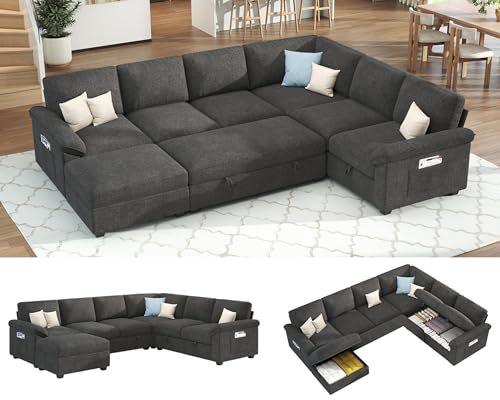
The most storage-friendly style. The chaise extension provides a large, easily accessible compartment, and many sectionals also include under-seat storage in the main seating section. A full L-sectional with storage can hold as much as a small closet. The downside is that sectionals are larger and harder to reposition.
-
Sleeper Sofas
Most sleeper sofas have some form of storage for the bedding that accompanies the pull-out mattress. However, the storage is typically limited to thin compartments designed specifically for sheets and pillowcases — not general-purpose storage. If you need both sleeping and storage, prioritize models that include additional armrest compartments.
-
Futon Sofas
Futon sofas often feature under-mattress storage compartments that are accessible when the futon is in the sofa position. The storage cavity is typically wide and shallow — ideal for flat items like bedding sets, yoga mats, or folded blankets. Not suitable for tall or oddly shaped items.
-
Recliner Sofas
Some recliner sofas include storage consoles between seats — a armrest-style compartment built into the center console. These are compact but perfect for remotes, batteries, and small electronics. The reclining mechanism limits under-seat storage options, so center console storage is usually the only option.
-
Modern & Contemporary Sofas
Modern sofa designs increasingly incorporate hidden storage as a standard feature, particularly in European and Scandinavian designs where small-space living is the norm. Lift-up mechanisms are the most common, seamlessly hidden beneath clean-lined cushions. These models tend to have the most aesthetically integrated storage — you cannot tell the sofa has storage until you lift the seat.
-
Modular Sofas
Modular sofas offer the most flexible storage configuration. You can choose which modules include storage — for example, adding two storage seats and one standard seat to create a custom layout. Some modular systems allow you to reposition storage modules as your needs change, something no other sofa style can offer.

Common Mistakes When Buying a Storage Sofa
Storage sofas add mechanical and structural complexity that standard sofas do not have. Buyers who treat the storage feature as an afterthought often end up with a sofa whose compartments are too small, too difficult to access, or poorly built. Here are the mistakes we see most frequently.
Not Measuring the Opening Size
Many buyers check the cubic footage but never measure the actual opening. A compartment might hold 10 cubic feet but have an opening only 12 inches wide — you cannot fit a standard throw blanket through it without folding it tightly. Always measure both the opening and the interior depth.
Choosing Hinged Access Over Gas Struts to Save Money
The price difference between a hinged under-seat compartment and a gas strut lift-up is typically only $50-100. But the usability difference is enormous. After six months, most people with hinged compartments stop using the storage because removing and replacing heavy cushions is too much friction for daily use.
Ignoring the Sofa's Comfort for Storage's Sake
Some budget storage sofas sacrifice seat comfort to accommodate the storage cavity — thinner cushions, harder seat platforms, or reduced seat depth. A storage sofa is still a sofa first. If it is not comfortable to sit on, the storage feature does not compensate for the daily discomfort.
Overloading the Storage Compartment
Stuffing the compartment beyond its weight rating warps the platform, strains the hinges or struts, and can cause the mechanism to fail prematurely. Heavier items like books and electronics should go in drawer-style storage or on proper shelving — not piled into an under-seat cavity.
Forgetting to Check Replacement Part Availability
Gas struts have a finite lifespan (typically 5-10 years depending on use). If the manufacturer does not sell replacements and the struts use non-standard mounting hardware, your storage sofa becomes a regular sofa with an inaccessible dead compartment. Ask about replacement parts before purchasing.
Understanding the relationship between price and quality is especially important with storage sofas. The mechanism hardware adds cost, so a cheap storage sofa often cuts corners on the frame or upholstery to keep the price down.
Maintaining Your Storage Sofa Mechanism
The storage mechanism is the only part of a storage sofa that a standard sofa does not have — and it is the part most likely to fail without basic maintenance. A few minutes of care every few months can add years to the mechanism's life and keep the storage functioning as smoothly as the day you bought it.
Lubricate Moving Parts
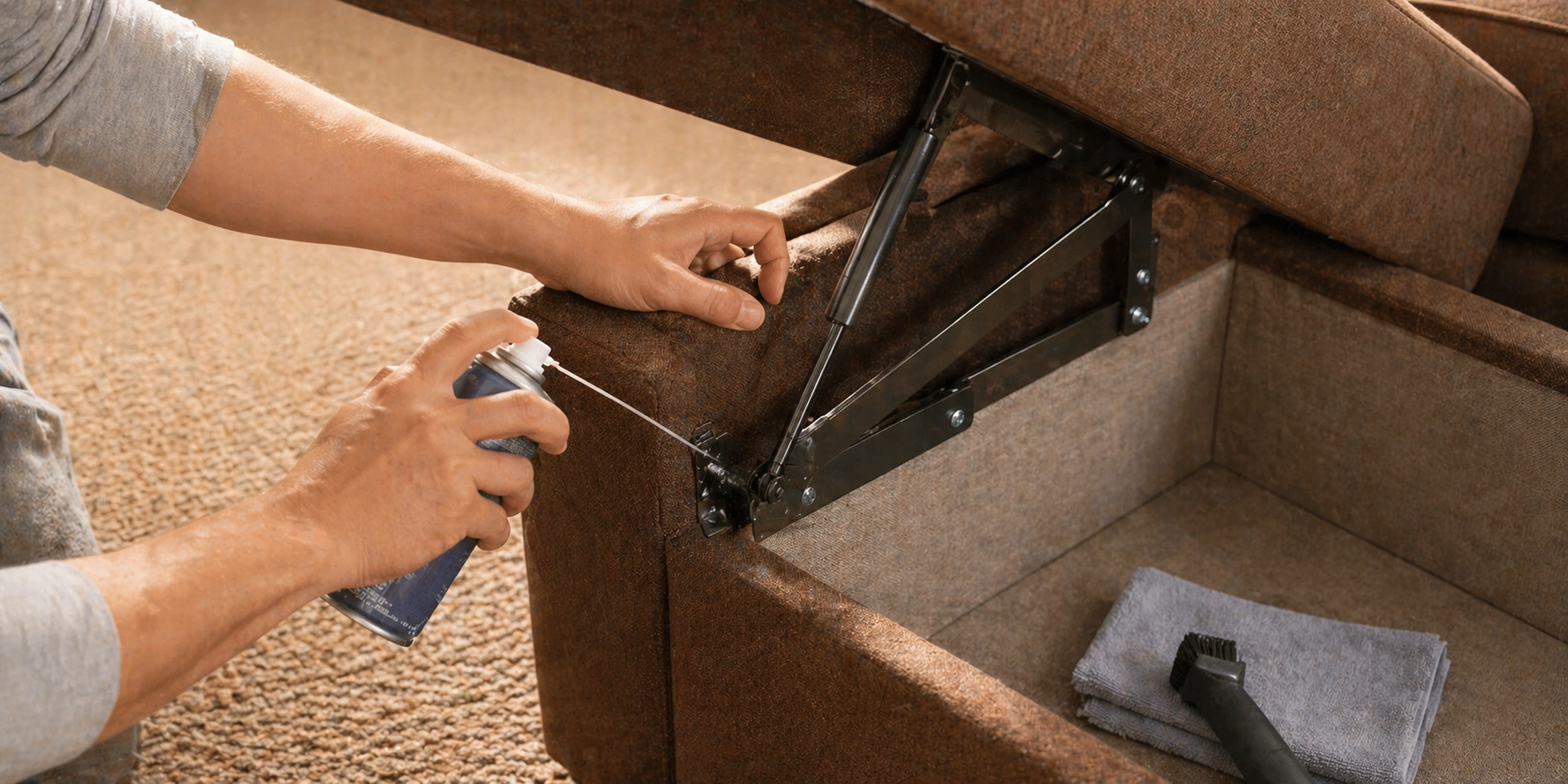
Apply a silicone-based lubricant to hinges, drawer rails, and gas strut pivot points every 6 months. Avoid WD-40 or oil-based products that attract dust and leave residue.
Clean the Compartment Interior
Remove all items and vacuum the interior every 2-3 months. Dust and debris accumulate on the lining and can affect the mechanism. Wipe down the lining with a damp cloth.
Check for Moisture
Feel the lining and interior surfaces for dampness, especially in humid seasons. If moisture is present, leave the compartment open for several hours to air out and consider adding moisture absorber packets.
Inspect Hardware Tightness
Tighten any loose screws on hinges, drawer rails, and mounting brackets. Vibrations from daily use gradually loosen hardware, which causes squeaking and misalignment if left unchecked.
Test Gas Strut Resistance
Periodically test that the gas struts still hold the seat open without drifting. If the seat slowly closes on its own, the struts are losing pressure and should be replaced soon before they fail completely.
Respect Weight Limits
Regularly audit what is stored in each compartment. It is easy to gradually add items over time until the compartment is overloaded. Keep heavier items in drawer storage and lighter items in lift-up compartments.
For general upholstery care — cleaning stains, protecting fabric, and maintaining cushions — follow our comprehensive sofa maintenance guide. The storage mechanism care above is in addition to regular sofa maintenance, not a replacement for it.
Storage Sofa Buying Checklist
Use this checklist when evaluating any storage sofa, whether in a showroom or online. A sofa that checks most of these boxes will deliver reliable storage function alongside comfortable seating for years.