
The Complete Guide to Choosing the Best Apartment Sofa
Maximize every square foot with a sofa that fits your space, your lifestyle, and your budget — without sacrificing comfort or style
See Top PicksWhy apartment sofas are different: Unlike suburban homes where you can furnish freely, apartment living demands intentionality. Every piece must earn its place — and your sofa is no exception. The right apartment sofa balances compact dimensions with real comfort, works within tight floor plans, and often needs to serve double duty. This guide walks you through every consideration so you can shop with confidence.

What Makes a Great Apartment Sofa?
Shopping for a sofa when you live in an apartment is fundamentally different from furnishing a house. You're working with less square footage, narrower doorways, and often stricter building rules about deliveries and assembly. A great apartment sofa needs to satisfy several criteria simultaneously:
- Compact footprint — fits comfortably within the room with adequate walking space around it
- Easy delivery — can navigate hallways, elevators, and tight doorways (typically 32 inches or narrower)
- Visual lightness — exposed legs, slim arms, and low-profile backs prevent the room from feeling cramped
- Multi-functionality — serves as seating, a guest bed, or storage depending on your needs
- Durable materials — withstands frequent use in a single main living space
- Style versatility — complements your existing decor and adapts if you move or redecorate
The key principle: scale matters more than style. A beautiful oversized sectional will make a 300-square-foot living room feel like a furniture showroom. Conversely, a proportionally correct loveseat can make the same space feel curated and intentional. If you're unsure where to start, our how to choose a sofa guide covers the fundamental selection process.
Why Size Is the First Decision
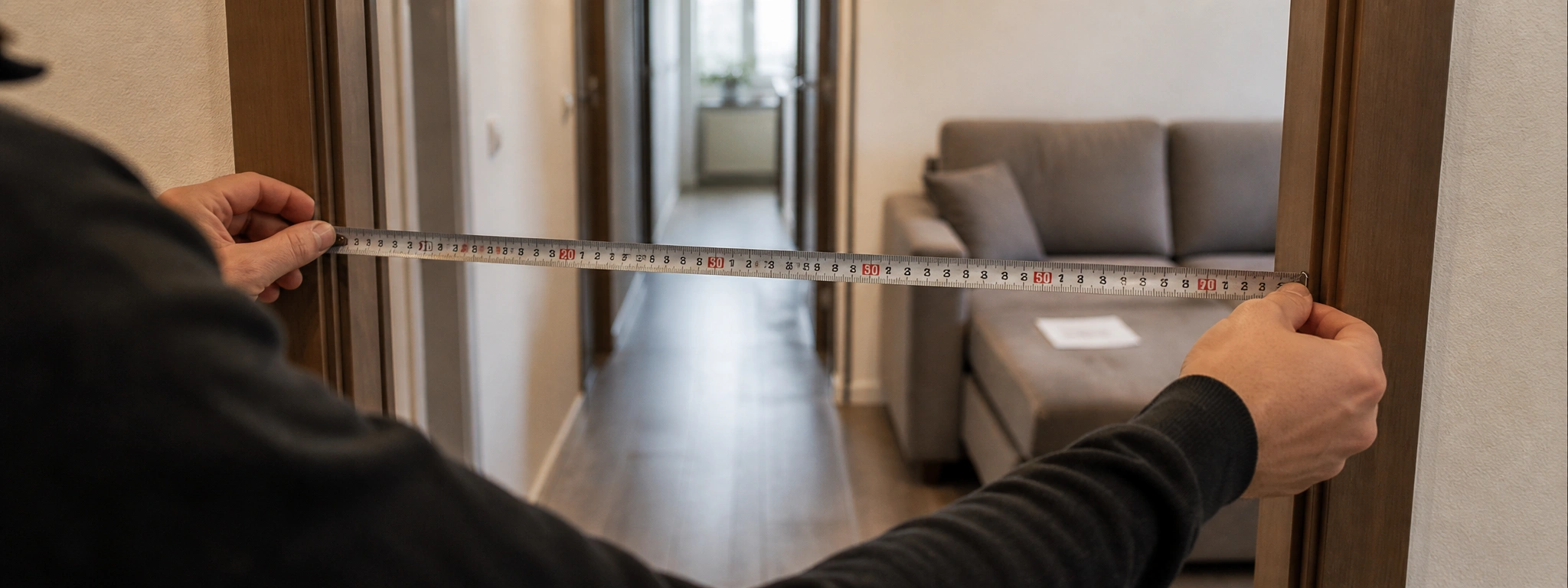
Before you consider color, material, or brand, determine the maximum dimensions your apartment can accommodate. This isn't just about floor space — it's about the entire delivery path and the room's proportions.
Apartment Sofa Size Guide
| Room Size | Recommended Sofa Width | Best Sofa Type | Seating Capacity |
|---|---|---|---|
| Under 100 sq ft (Studio corner) | 45–55 inches | Armless chair, 1-seater sofa | 1 person |
| 100–150 sq ft | 50–65 inches | Loveseat, 2-seater sofa | 2 people |
| 150–250 sq ft | 65–80 inches | Slim 3-seater, small L-shape | 2–3 people |
| 250–350 sq ft | 75–90 inches | Standard 3-seater, compact sectional | 3–4 people |
| 350+ sq ft | 85–100+ inches | Full sectional, 4-seater | 4+ people |
Critical Measurements Before You Buy
Don't just measure your wall — measure the entire path your sofa will travel from the building entrance to your living room:
- Doorway width — Standard apartment doors are 30–32 inches wide. If your door is under 30 inches, you'll need a sofa narrower than that or one that comes disassembled.
- Hallway width and turns — Measure the narrowest point and account for any 90-degree turns the sofa must navigate.
- Elevator dimensions — If you live above the ground floor, check the elevator door width and interior depth. Some older buildings have narrow freight elevators.
- Staircase width — If there's no elevator, measure the stairwell width at its narrowest point and the clearance at each landing.
- Ceiling height at stairwells — A long sofa tilted to fit through a doorway needs vertical clearance too.
For a complete measurement checklist, see our guide on how to measure for a sofa delivery.
Best Sofa Types for Apartment Living
Not every sofa style translates well to apartment life. Here are the top performers that consistently work in smaller spaces:
Loveseats
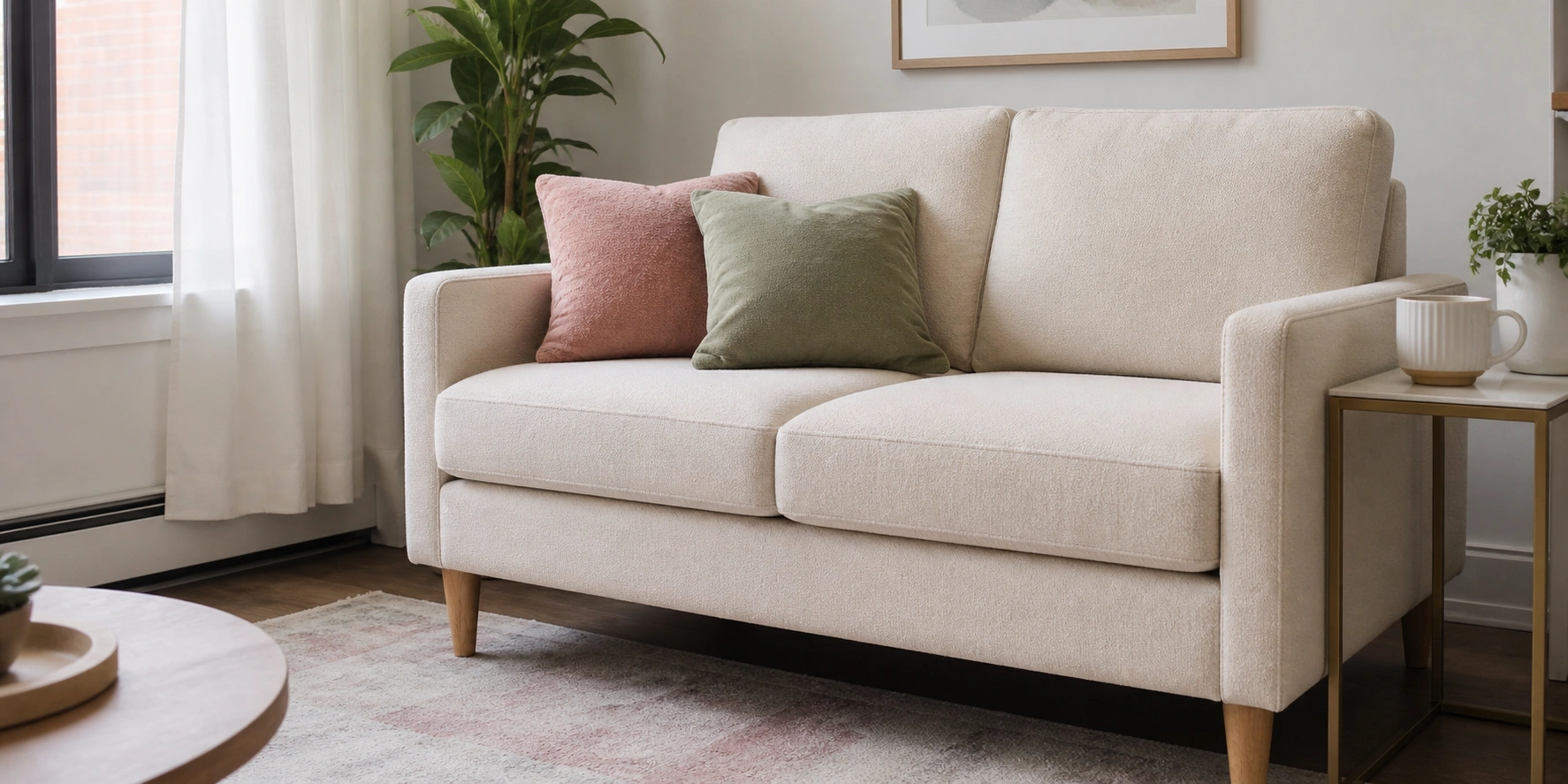
The gold standard for small apartments. At 50–65 inches wide, loveseats provide comfortable two-person seating while leaving ample floor space. Look for models with exposed legs to create a sense of openness beneath the seat.
Sleeper Sofas
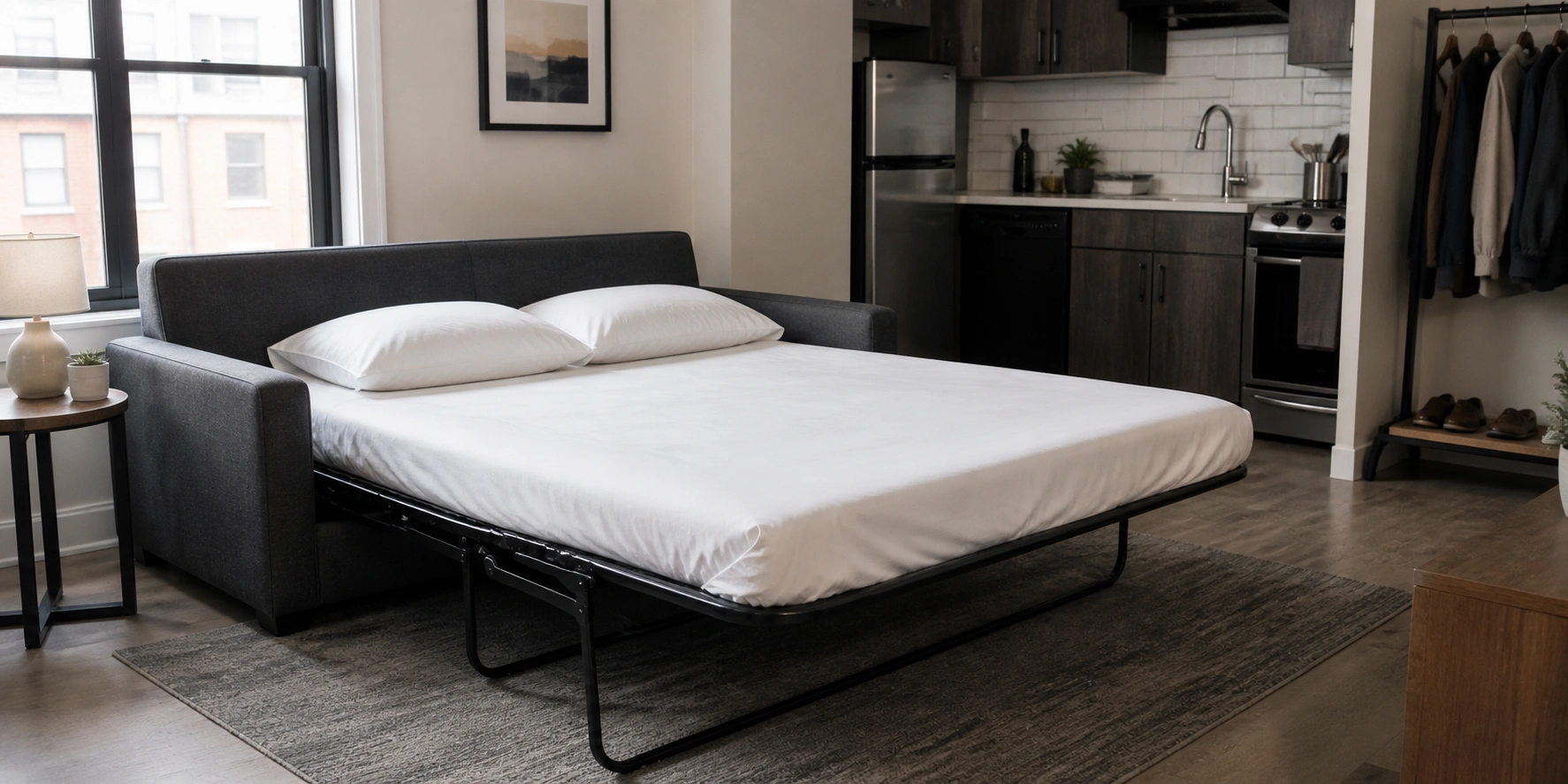
Ideal for studio apartments or one-bedrooms that double as guest spaces. Modern sleepers have thinner, more supportive mattresses than older designs. Some feature独立twin-size pullouts perfect for one guest.
Modular Sofas
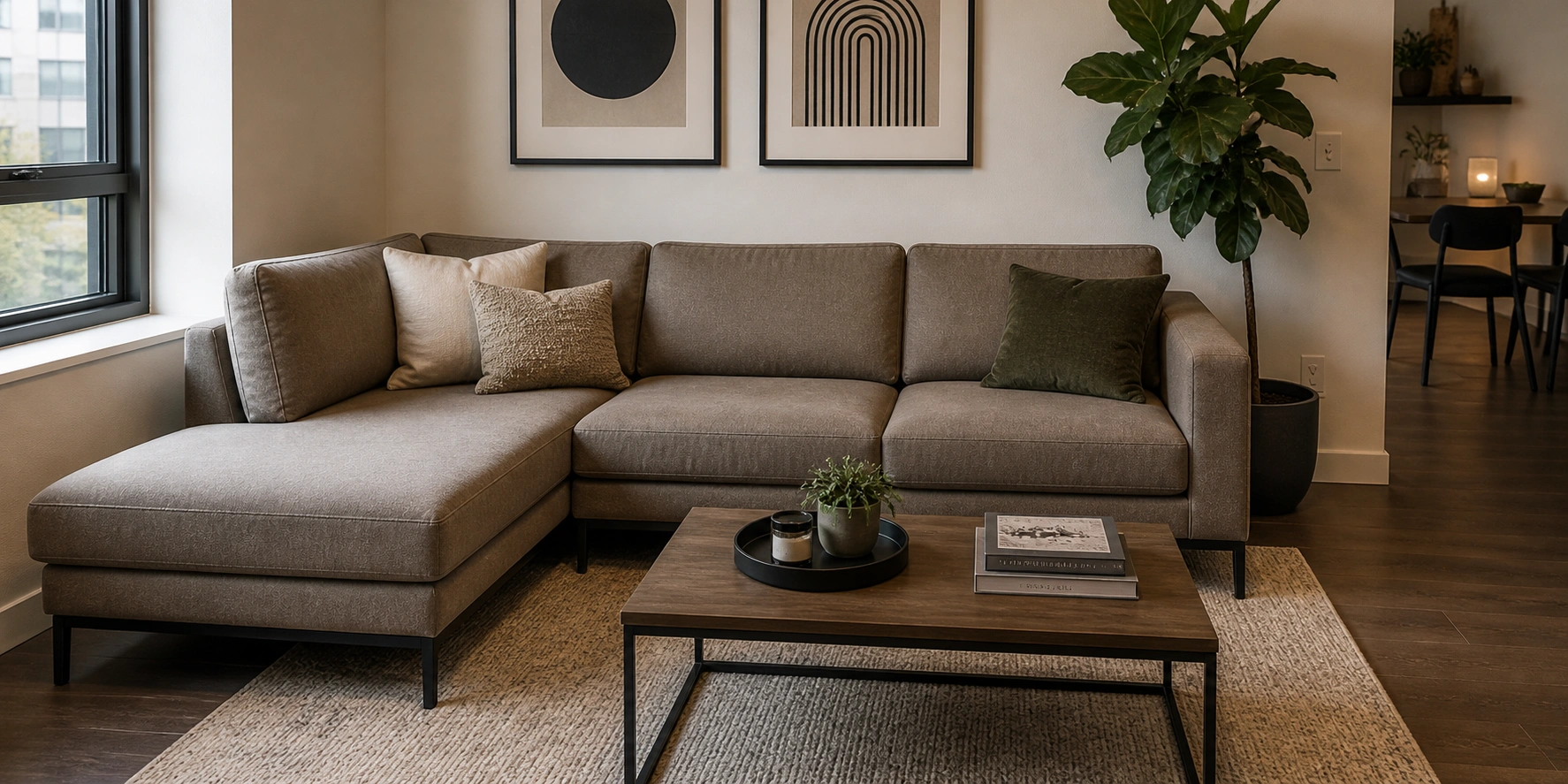
Individual pieces that you arrange to fit your exact floor plan. Start with two seats and add more as needed. The biggest advantage: each piece fits through narrow doorways independently, solving the most common apartment delivery problem.
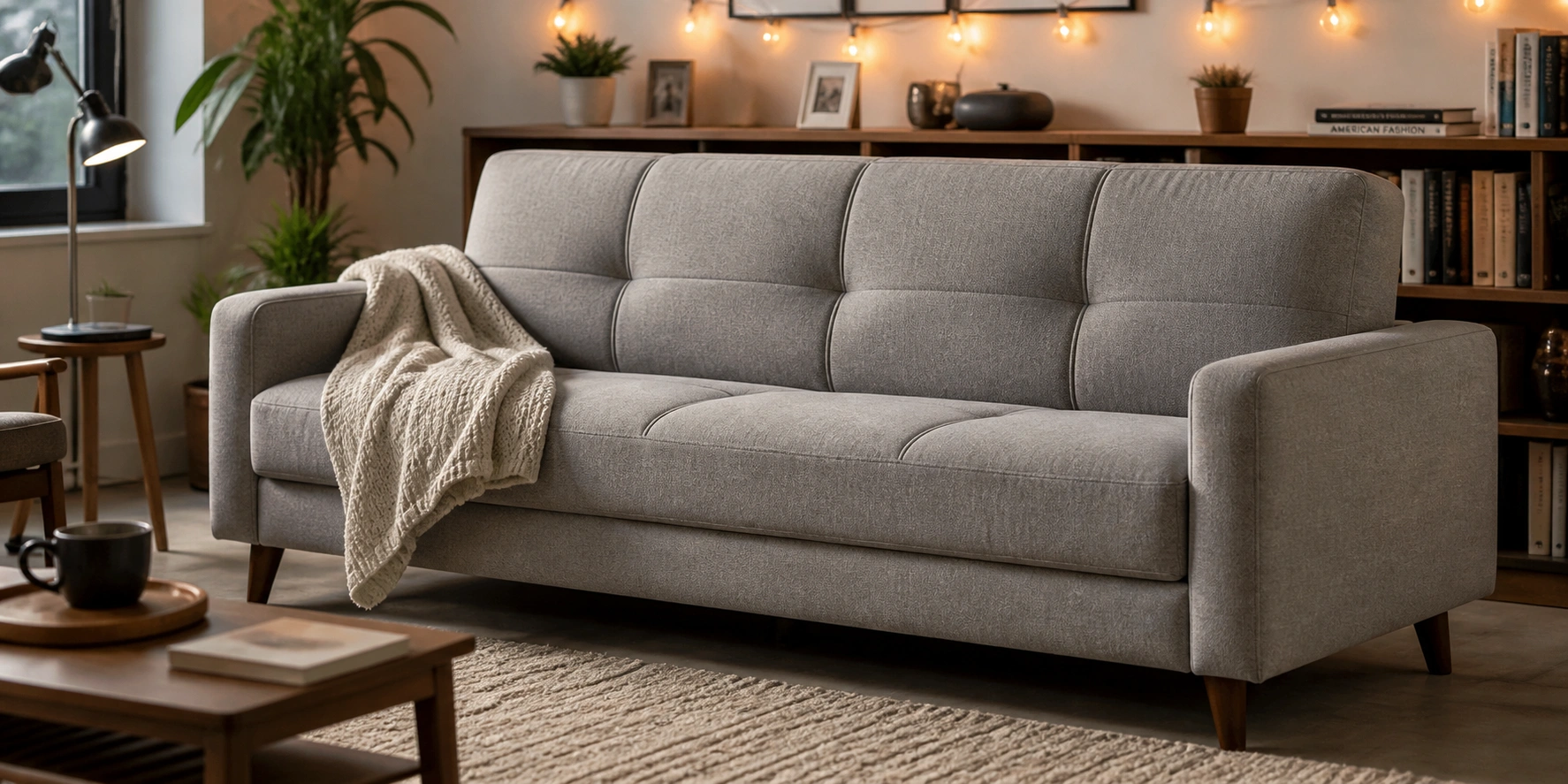
Futon Sofas
The most budget-friendly dual-purpose option. Futons convert from sofa to bed in seconds, making them perfect for studios. Newer designs feature real mattress cushions instead of thin pads, closing the comfort gap with traditional sleepers.

Other Smart Apartment Options
- Armless sofas — Remove the armrests and you gain 6–10 inches of usable seating width without increasing the sofa's footprint. This is one of the simplest ways to maximize seating in a tight space.
- Sofas with hidden storage — Lift-up seats or under-cushion compartments store blankets, pillows, and off-season items — critical when closet space is limited.
- Sofa wallbeds (murphy bed combos) — The ultimate space-saver for studios: a sofa by day, a full bed by night. More expensive but can eliminate the need for a separate bedroom entirely.
- Inflatable couches — A temporary or guest-only solution. Not suitable as a primary sofa but useful when you occasionally need extra seating that can be deflated and stored.
- Floor sofas — Low-profile seating that works in apartments with very low ceilings or as supplementary seating. Creates a casual, lounge-like atmosphere.
Multi-Functional Sofas: Getting More from Less Space
In an apartment, your sofa often can't just be a sofa. It may need to serve as a guest bed, a storage unit, or even a room divider. Understanding the available multi-functional features helps you prioritize what matters most for your situation.

Sleeper vs. Futon vs. Wallbed: Which Dual-Purpose Option?
| Feature | Sleeper Sofa | Futon | Sofa Wallbed |
|---|---|---|---|
| Sleeping comfort | Good to very good | Fair to good | Excellent (real mattress) |
| Sitting comfort | Good | Fair | Good |
| Conversion effort | Moderate (unfold) | Easy (fold down) | Moderate (pull down) |
| Price range | $400–$1,500+ | $150–$600 | $1,500–$4,000+ |
| Best for | Occasional guests | Budget, studios | Daily sleeping, studios |
| Weight | Heavy (150–250 lbs) | Light (50–100 lbs) | Very heavy (200–350 lbs) |
If you frequently host overnight guests, also consider pairing a regular sofa with a dedicated guest room sofa setup if you have a second room, or explore sofas designed for frequent hosting.
Best Materials for Apartment Sofas
Apartment life puts specific demands on upholstery. Your sofa sits in the same room where you eat, work, relax, and entertain — often with pets or children nearby. The material you choose directly impacts longevity, maintenance, and how your sofa looks over time.
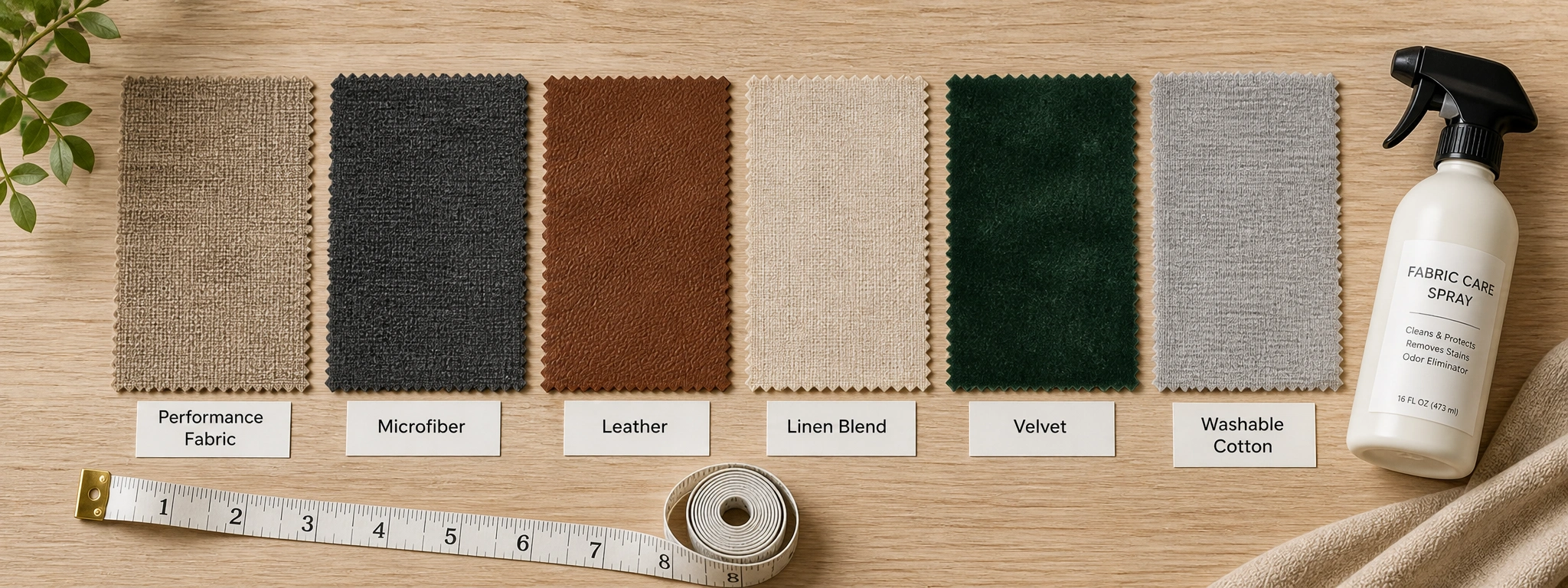
Performance Fabric: The Top Choice
Performance fabric — often made from polyester or olefin blends — is engineered to resist stains, fading, and wear far better than natural fibers. Look for fabrics with a Martindale rub rating of 30,000 or higher, which indicates excellent durability for daily use. Many performance fabrics also feature moisture-wicking and antimicrobial properties, a significant advantage in apartments where airflow may be limited.
Material Comparison for Apartments
| Material | Durability | Stain Resistance | Pet-Friendly | Best For |
|---|---|---|---|---|
| Performance fabric | Excellent | Excellent | Yes | All-around best pick |
| Microfiber | Very good | Good | Yes (short hair) | Budget-friendly durability |
| Leather | Excellent | Good (wipes clean) | Moderate (scratches) | Sleek, low-maintenance look |
| Linen blend | Moderate | Fair | No (shows hair) | Light, airy aesthetic |
| Velvet | Moderate | Poor | No | Statement pieces, low-traffic |
| Washable fabric | Good | Good (removable covers) | Yes | Pets, kids, daily messes |
For a deeper comparison of the two most popular categories, read our leather vs. fabric sofa guide. If you have pets, our best sofas for pet owners roundup focuses specifically on scratch-resistant and hair-repellent options.
Design Strategies to Make Your Apartment Sofa Look Expensive
A compact sofa doesn't have to look cheap. Smart design choices can make even a budget-friendly apartment sofa look like a high-end piece:

Choose the Right Color
Neutral tones — beige, cream, light grey, taupe, or oatmeal — are the safest and most versatile choice for apartments. They reflect light, making the room feel larger, and they pair effortlessly with any accent color you introduce through accessories. If you crave color, add it through throw pillows and blankets that cost a fraction of what you'd pay for a boldly colored sofa.
If you prefer something darker, grey couches offer a sophisticated middle ground — darker than cream but more versatile than black. Dark colors like a black couch can work in modern, moody interiors but require lighter walls and ample lighting to avoid making the space feel heavy.
Visual Tricks That Create Space
- Exposed legs — Sofas with visible legs (especially tapered or metal legs) allow light and floor space to show underneath, creating an airy feeling. Skirted sofas, by contrast, look heavy and boxy in small rooms.
- Low armrests — Track arms or slim rolled arms take up less visual width than bulky square arms. Better yet, armless sofas eliminate this obstacle entirely.
- Low back height — A sofa back that sits at or below window sill height maintains sight lines and doesn't block natural light. Compare high-back vs. low-back sofas to find the right proportion for your ceiling height.
- Glass or acrylic accent tables — Pair your sofa with a sofa table made of transparent materials to maintain the illusion of open floor space.
- Mirror placement — Position a large mirror opposite or adjacent to the sofa to double the sense of space through light reflection.
Apartment Living Room Layout Strategies
How you position your sofa matters as much as which sofa you choose. The same loveseat can make a room feel spacious or cramped depending on its placement.
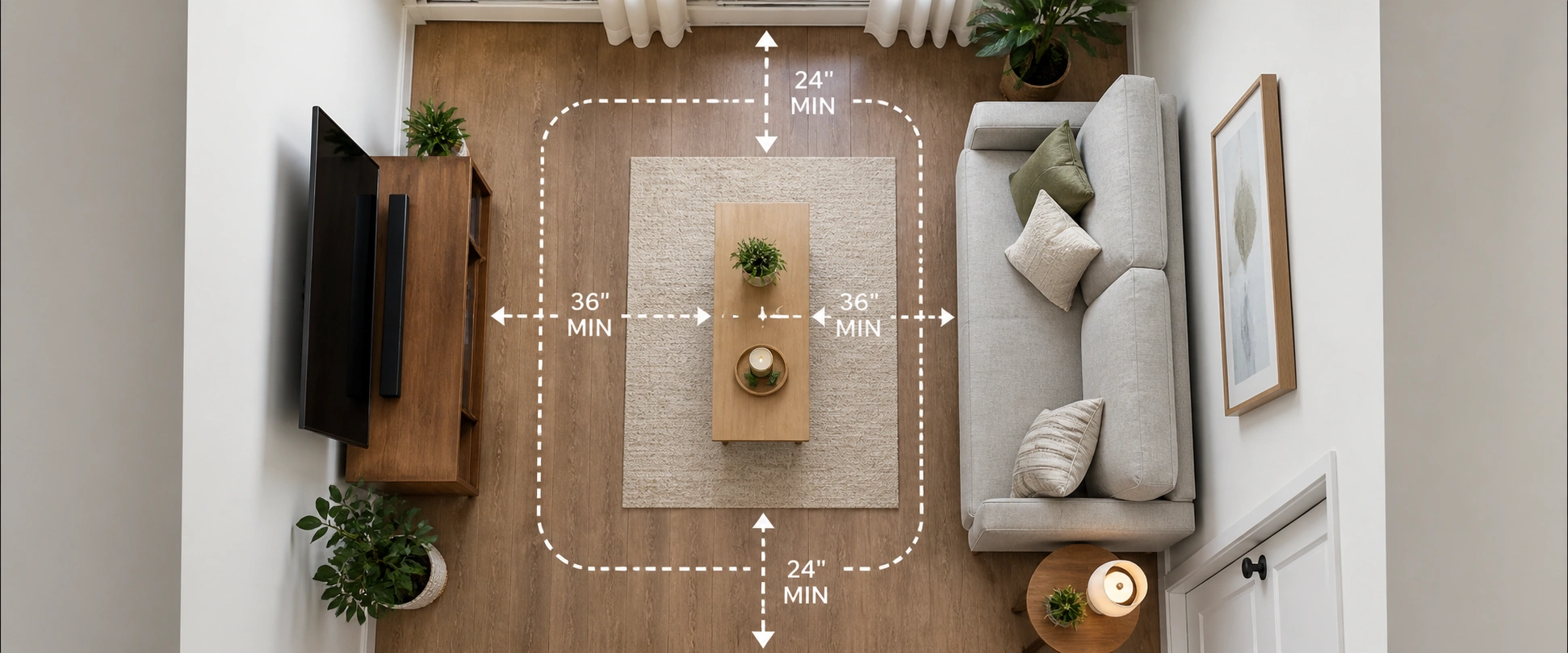
Layout Options by Room Shape
Long and narrow rooms: Place the sofa along the longer wall with a narrow console table behind it. This creates a walkway on the opposite side and avoids blocking the room's length. Avoid placing the sofa perpendicular to the long wall — it will chop the room into awkward zones.
Square rooms: Float the sofa a few inches away from the wall (even 2–3 inches helps) and position it facing a focal point — a window, TV, or artwork. This centered placement feels intentional rather than pushed-against-the-wall afterthought.
Studio apartments: Use the sofa as a room divider. Position it with its back facing the bed area to create a visual boundary between your living and sleeping zones. A small sectional with one side acting as a divider works exceptionally well for this purpose.
Open-plan layouts: Anchor the sofa to define the living area within the larger space. A rug underneath the front two-thirds of the sofa further reinforces the zone. For detailed layout planning, our living room layout guide includes diagrams for common apartment floor plans.
Comfort Without Compromise in a Compact Size
A common misconception is that small sofas can't be comfortable. In reality, comfort depends on cushion construction, seat depth, and support system — not overall sofa length. Here's what to look for:
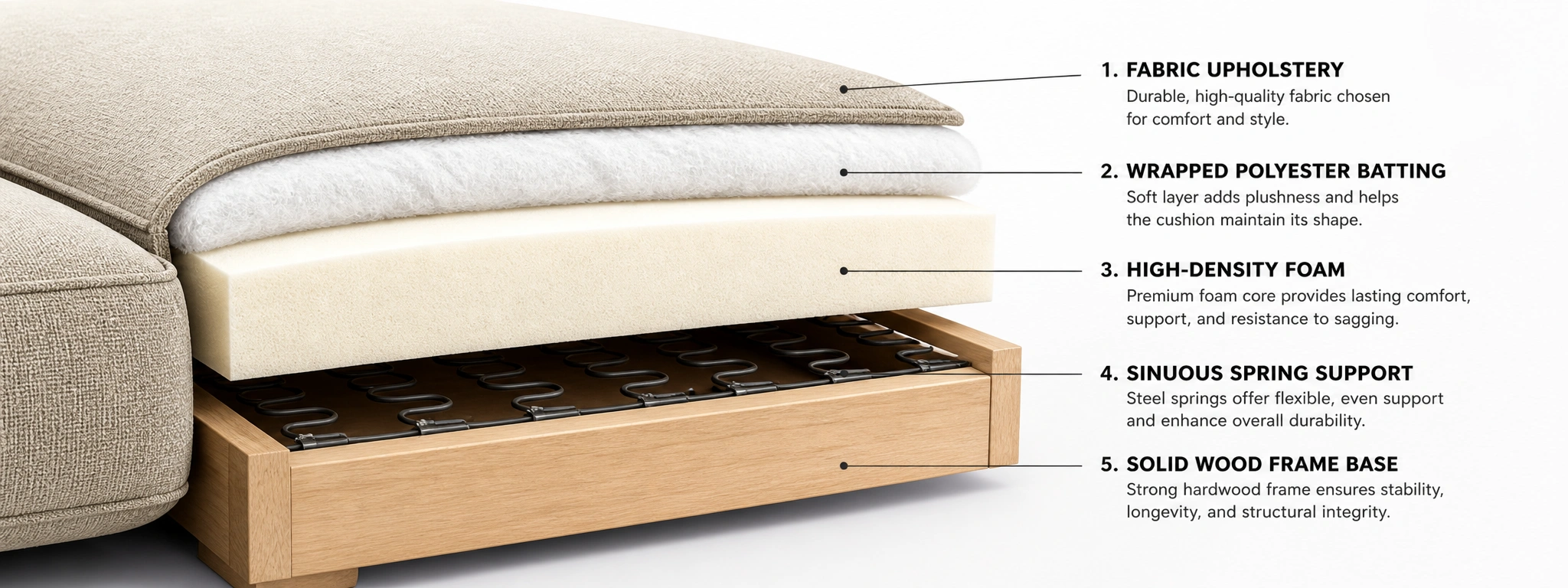
- Seat depth: Most apartment sofas have seat depths of 20–22 inches. If you like to curl up, look for 23+ inches or consider a deep-seat sofa — but verify it won't make the sofa too deep for your room. Our seat depth guide explains how to find your ideal measurement.
- Cushion fill: High-resilience foam (2.0+ density) wrapped in a down or polyester layer offers the best balance of support and softness. Pure down flattens quickly; pure foam feels firm. Learn more in our cushion fill types guide.
- Suspension system: Eight-way hand-tied springs offer premium support, but sinuous no-sag springs are perfectly adequate for most apartment sofas and cost significantly less. Compare options in our spring systems guide.
- Back cushion style: Loose back cushions allow you to adjust firmness and remove them for cleaning. Attached backs provide a cleaner look but can't be fluffed or replaced individually.
Understanding the trade-off between comfort and durability helps you set realistic expectations. Ultra-plush sofas feel heavenly initially but may show wear faster — particularly relevant when your sofa is your primary daily seating.
How Much Should You Spend on an Apartment Sofa?
Budget expectations for apartment sofas differ from house sofas. Since you may move more frequently, some renters hesitate to invest heavily. However, a very cheap sofa will need replacement sooner, potentially costing more in the long run.
| Budget Tier | Price Range | Expected Lifespan | Best For |
|---|---|---|---|
| Budget | $200–$500 | 2–4 years | Short-term rentals, temporary furnishing |
| Mid-range | $500–$1,200 | 5–8 years | Most apartment dwellers — best value |
| Premium | $1,200–$3,000 | 10–15+ years | Long-term residents, design-conscious buyers |
| Luxury | $3,000+ | 15+ years | Investment pieces, large apartments |
For most apartment dwellers, the $500–$1,200 sweet spot offers the best combination of quality, comfort, and value. If you're working with a tighter budget, explore our best budget sofas guide for options that punch above their price point. For a comprehensive breakdown of where your money goes, read the sofa price breakdown and sofa budget guide.
Common Mistakes When Buying an Apartment Sofa
After helping thousands of apartment dwellers navigate sofa selection, these are the errors we see most often:
❌ Avoid These Mistakes
- Buying without measuring the delivery path — not just the room
- Choosing style over scale — a gorgeous sofa that doesn't fit is useless
- Ignoring armrest width — bulky arms can add 10+ inches to the footprint
- Skipping the weight check — heavy sofas may not fit in small elevators
- Choosing dark colors in a north-facing, low-light apartment
- Forgetting to check building rules about large deliveries
- Buying a skirted sofa in a small room (blocks visual floor space)
- Not testing seat depth — too shallow feels cramped, too deep hurts posture
✅ Do This Instead
- Measure every doorway, turn, and elevator before ordering
- Choose the maximum size first, then find styles within that limit
- Prefer slim or track arms for narrow rooms
- Check product weight and compare to elevator capacity
- Opt for light or neutral tones unless your room is very bright
- Confirm delivery details with your building management
- Select exposed-leg designs for visual lightness
- Sit on similar sofas in a store to gauge ideal seat depth
Before finalizing any purchase, run through our sofa quality checklist to verify you're getting a well-constructed piece that will last. Also, timing matters — knowing the best time to buy a sofa can save you 20–40% on the same model.
Ready to Find Your Perfect Apartment Sofa?
We've curated the top-rated apartment-friendly sofas based on size, comfort, delivery ease, and value
View Recommended Sofas ↓


