
5 Seater Sofa: The Ultimate Guide for Spacious Living
Discover exact dimensions, explore the best styles for large families, learn room layout strategies, and find the perfect 5 seater sofa for your home.
A 5 seater sofa is the largest standard linear sofa available — a statement piece designed for households that refuse to compromise on seating capacity. Whether you have a growing family, regularly host gatherings, or simply love the freedom of stretching out on a generous expanse of cushions, a 5 seater delivers unmatched presence and practicality.
Unlike a 4 seater sofa, which works well in medium-to-large rooms, a 5 seater demands serious square footage. It is not a piece you squeeze into a space — it is a piece you build your room around. When placed correctly, it becomes the undeniable anchor of your living room, defining the entire layout and setting the tone for how the space functions.
This guide covers every critical detail: precise dimensions across different styles, how a 5 seater compares to sectionals and smaller sofas, which types work best for specific needs, the essential buying factors unique to extra-large sofas, proven layout strategies, and the mistakes that lead to expensive regrets.

Standard 5 Seater Sofa Dimensions
Dimensions vary more widely for 5 seaters than for any other size class. The difference between a sleek track-arm design and a plush pillow-back model can be 30 inches or more. Here are the standard measurements:
Critical Delivery Tip: A 5 seater sofa is one of the most challenging furniture pieces to deliver. At 110+ inches wide, it will not fit through standard doorways (30–32 inches) in its normal orientation. The key measurement is the diagonal depth — measure from the top of the back to the bottom front edge. If this exceeds your doorway width, you need a modular design that assembles inside the room. For step-by-step instructions, see our guide on how to measure for sofa delivery.
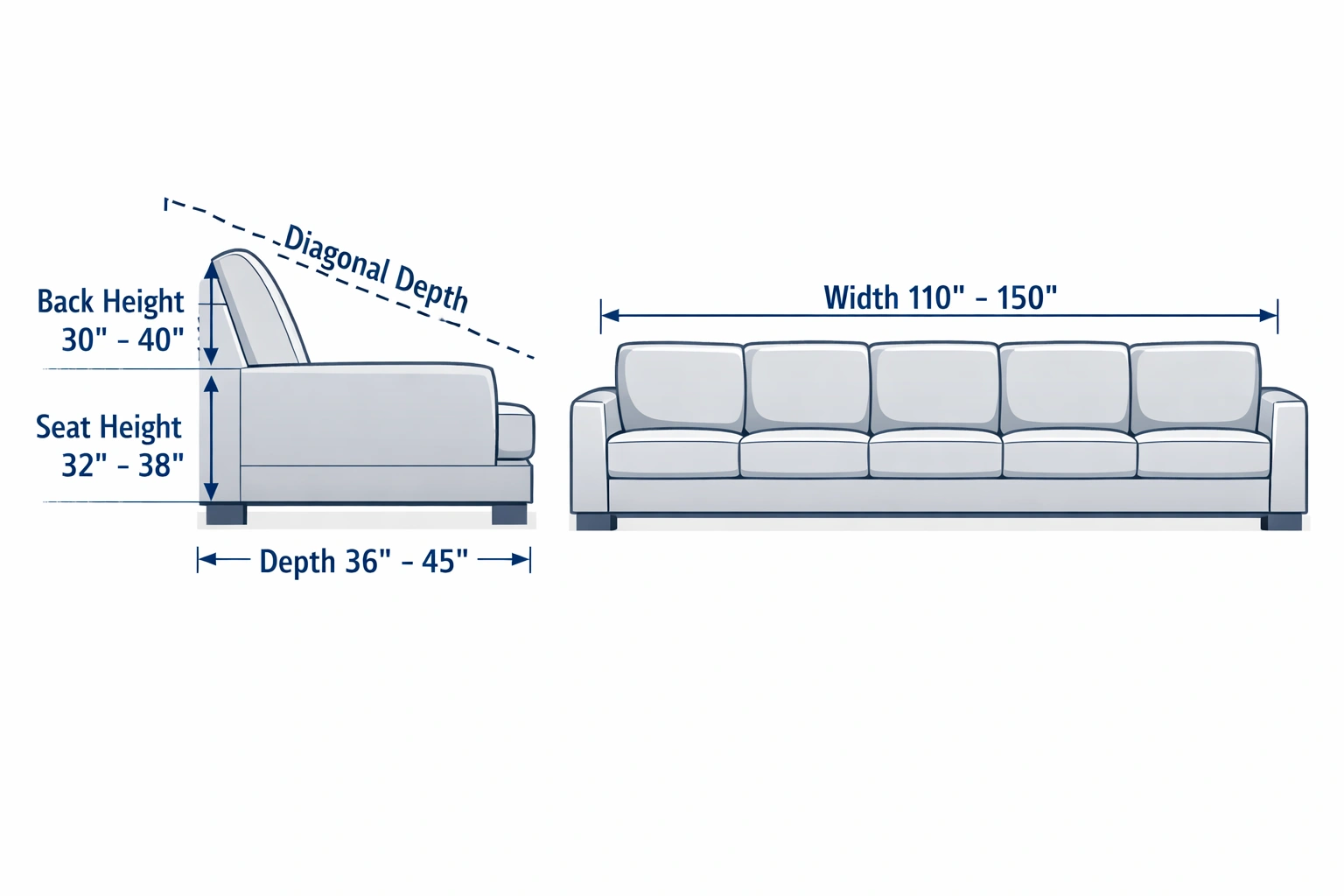
Width ranges dramatically between minimalist track-arm designs (left) and oversized pillow-back styles (right) — always verify exact measurements before purchasing.
The 110–150 inch width range breaks down into three sub-categories:
- Compact 5 seaters (110–120 inches): Slim arms, firm cushions, minimal padding. Best for rooms at the smaller end of the spectrum (14×16 feet).
- Standard 5 seaters (120–135 inches): Moderate arm width, balanced cushion proportion. The most common and versatile range.
- Oversized 5 seaters (135–150 inches): Thick rolled arms, deep pillow backs, generous cushioning. Makes a bold visual statement but requires a truly large room (16×18+ feet).
5 Seater vs. Other Sofa Sizes
Understanding where the 5 seater sits in the size hierarchy helps you determine if it's truly the right choice — or if you'd be better served by a different configuration:
| Feature | 3 Seater | 4 Seater | 5 Seater | Sectional |
|---|---|---|---|---|
| Typical Width | 70–90" | 90–120" | 110–150" | 100–160"+ |
| Seating Capacity | 3 adults | 4 adults | 5 adults | 5–8 adults |
| Minimum Room Size | 10×12 ft | 12×14 ft | 14×16 ft | 14×16 ft |
| Avg. Price Range | $500–$2,000 | $800–$3,500 | $1,200–$4,500 | $1,500–$5,000+ |
| Footprint Shape | Linear | Linear | Linear | L / U / Curve |
| Delivery Difficulty | Easy | Moderate | Challenging | Moderate (pieces) |
| Best For | Medium rooms | Families, hosting | Large families, big rooms | Corners, open plans |
The 5 seater is the only linear sofa that can rival a sectional in seating capacity while maintaining a clean, single-axis profile. If your room is long and narrow, a 5 seater often works better than a sectional because it doesn't project into the room's width. For a thorough comparison of these two approaches, read our sectional vs traditional sofa analysis. If you're unsure which size fits your room, use our sofa size by room guide.
Best Types of 5 Seater Sofas
Not every sofa style translates well to a 5-seat configuration. Some designs feel awkward at this scale, while others absolutely shine. Here are the six best options:
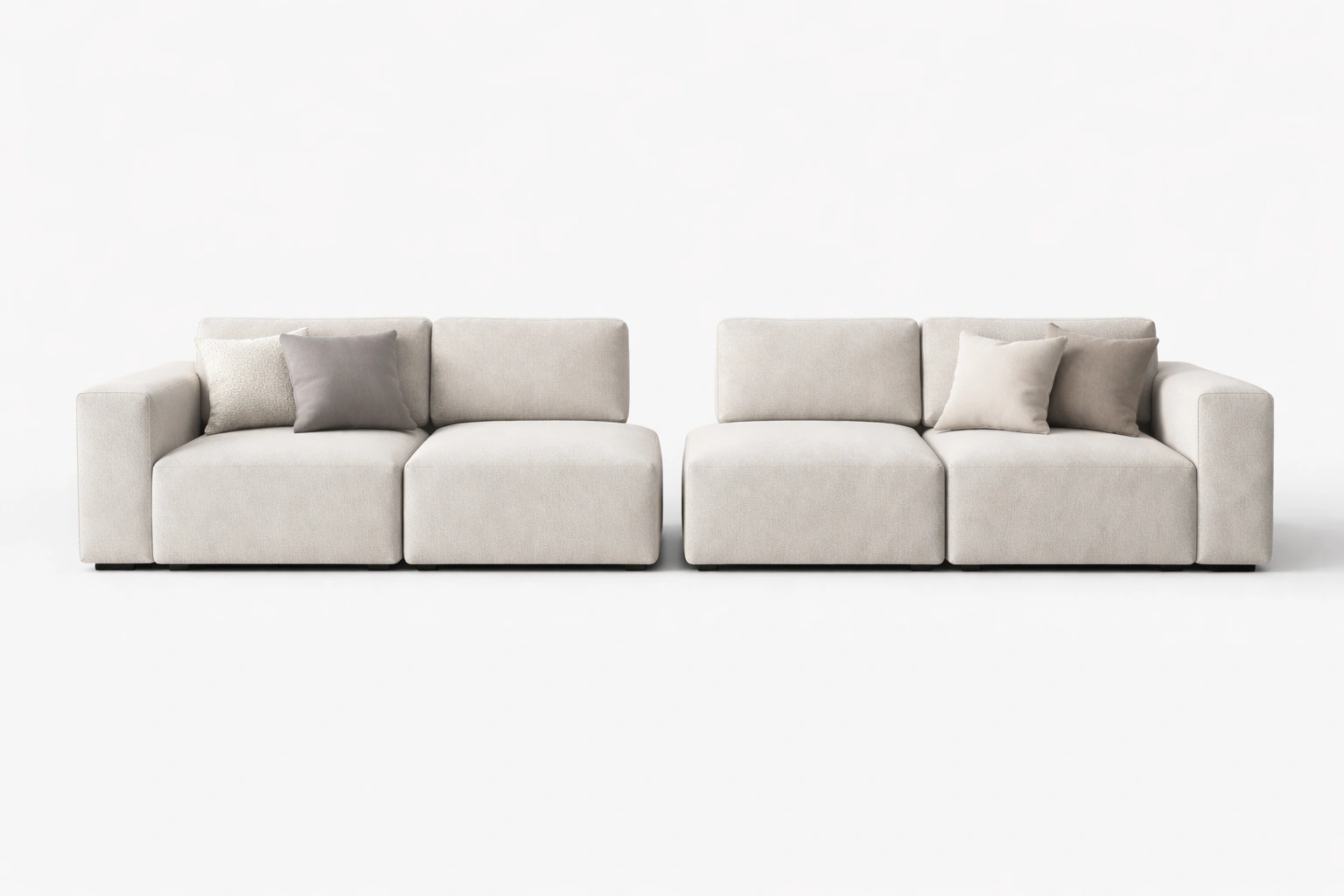
Modular 5 Seater
The most practical 5-seat option. Individual modules connect to form straight, L-shape, or U-shape arrangements. Solves the delivery problem since pieces arrive separately. Reconfigurable as your needs change. See our full modular sofa guide.
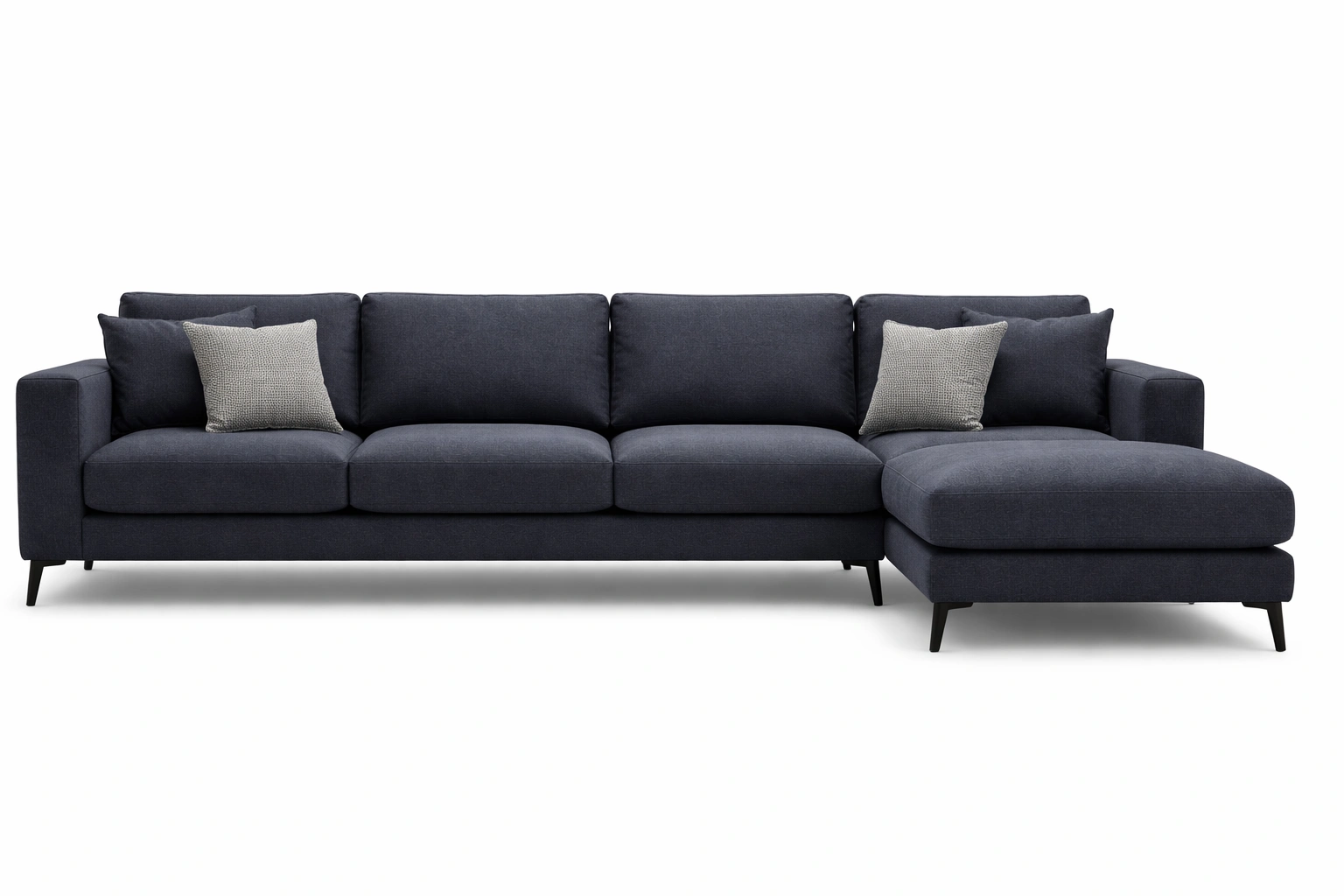
5 Seater Sectional
Combines the capacity of a 5 seater with the corner-filling benefits of a sectional. Typically includes a 3-seat main piece plus a 2-seat chaise or extension. Best for open-plan rooms. Explore sectional sofa options.
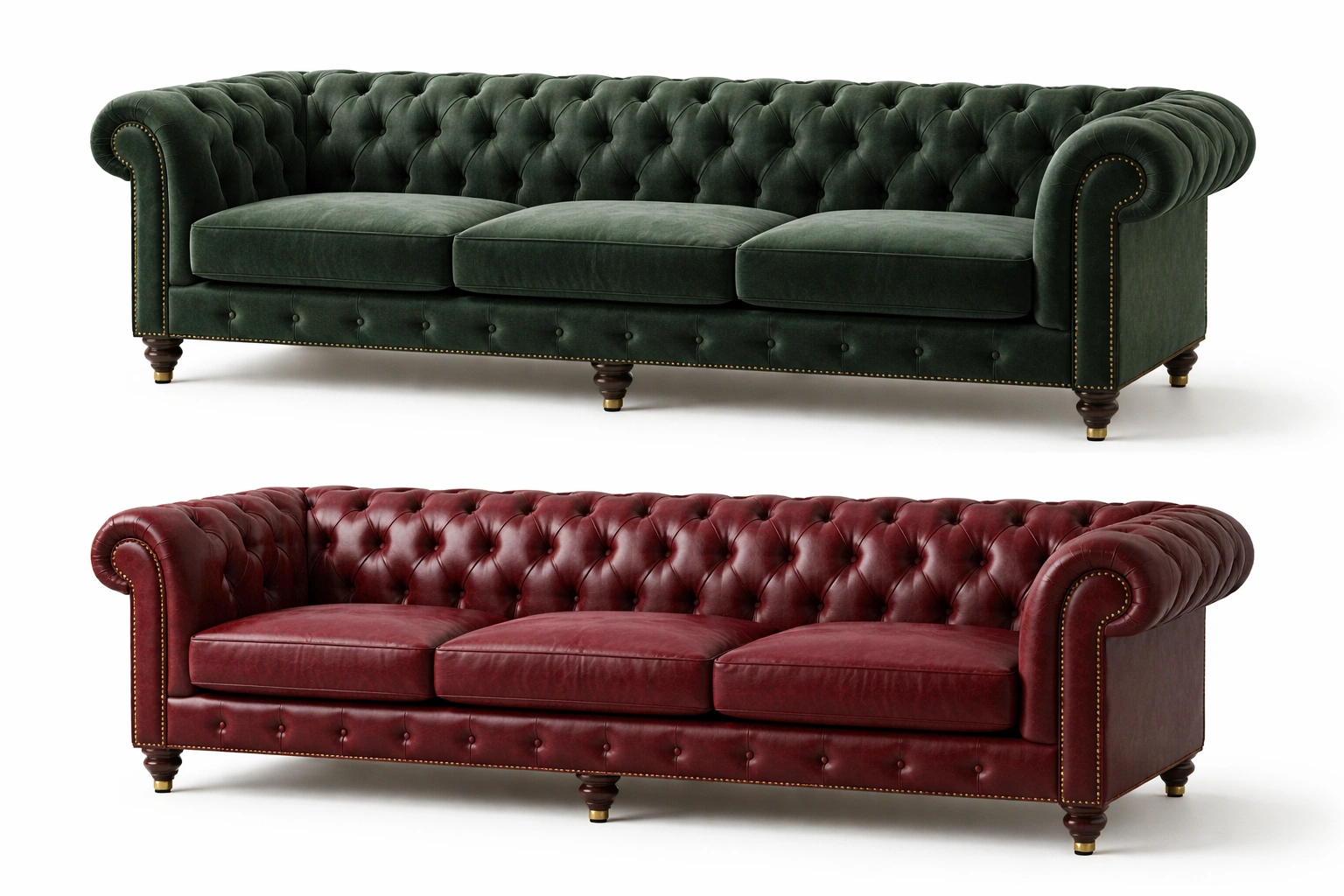
Chesterfield 5 Seater
A grand Chesterfield at 5-seat scale is a showstopper. Deep button tufting across an extended canvas creates a luxurious, commanding presence. Best in formal living rooms and large spaces. Learn more in our Chesterfield guide.
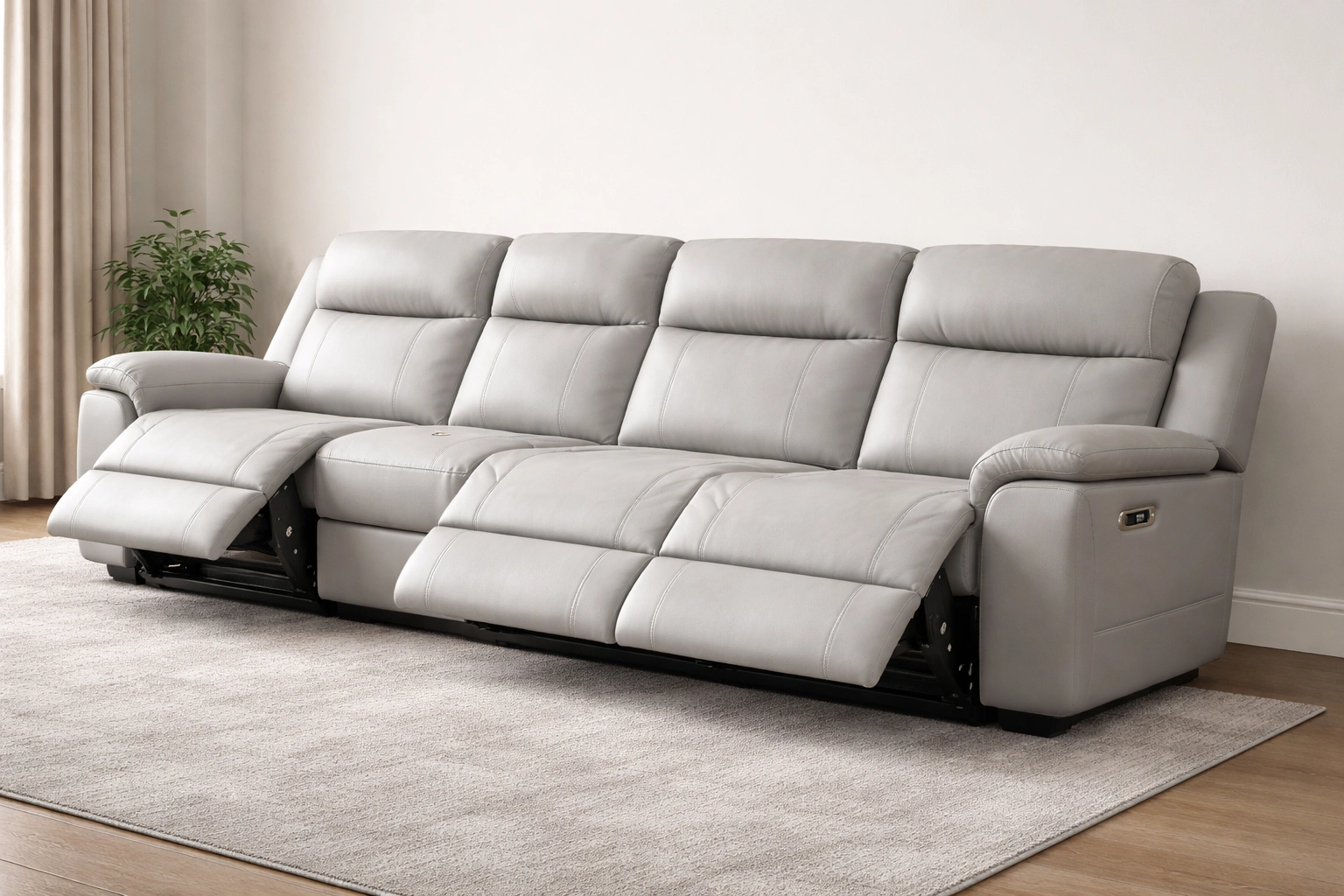
5 Seater Recliner
Multiple reclining seats in one long unit — often 2–3 seats recline while others remain fixed. Requires significant wall clearance behind (12–18 inches per recliner). Ultimate comfort for movie marathons. See recliner sofa details.
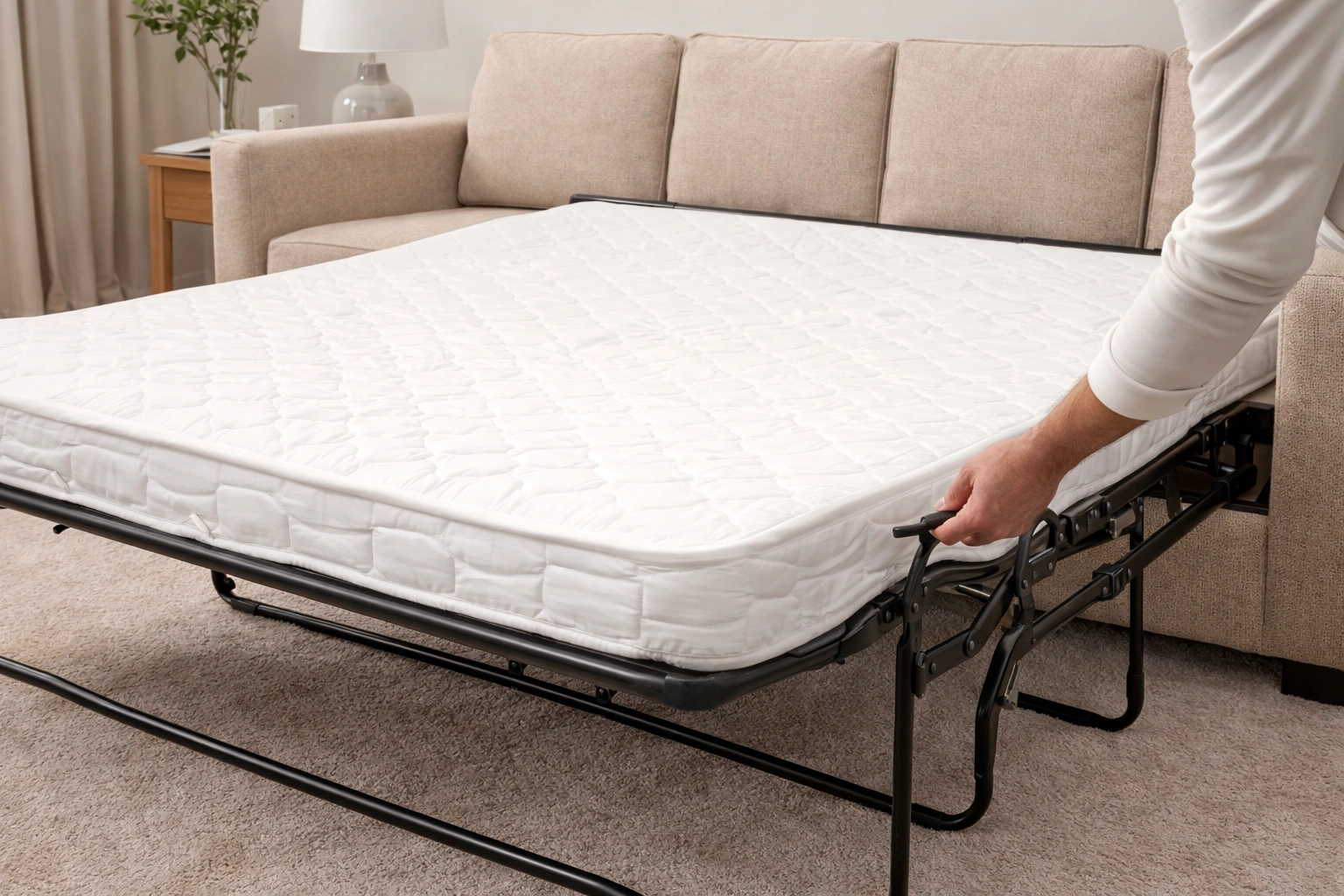
5 Seater Sleeper
Seats five by day, converts to a queen or king bed by night. Heavier than standard sleepers due to the larger frame and mattress mechanism. Excellent for homes that frequently host overnight guests. Check our sleeper sofa guide.
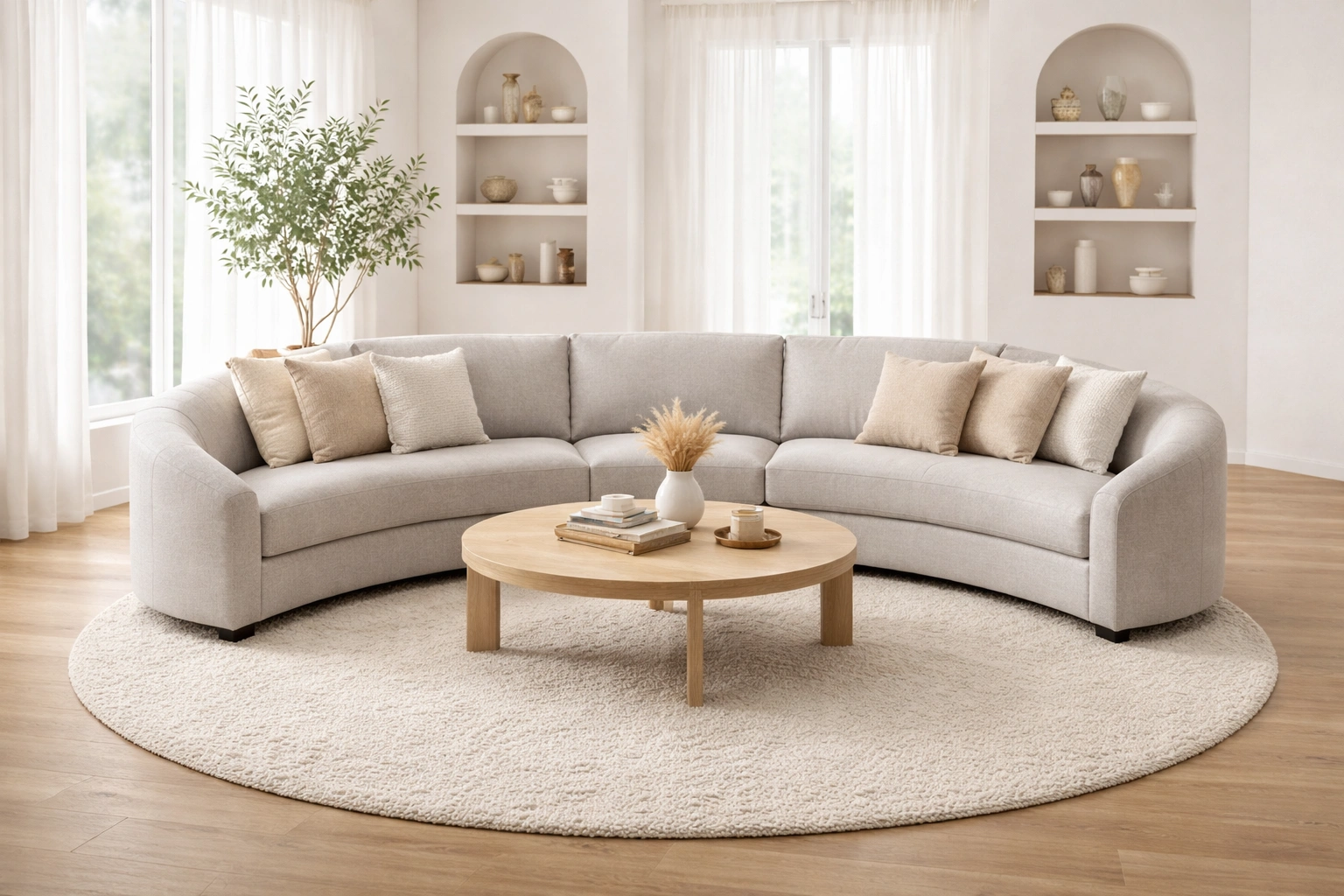
Curved 5 Seater
A crescent-shaped design that creates an intimate conversation circle without needing multiple furniture pieces. Visually striking and space-efficient in circular or open layouts. See curved sofa designs.
Top Recommendation: For most buyers considering a 5 seater, a modular design is the smartest choice. It eliminates delivery challenges, allows you to start with fewer pieces and expand later, and can be reconfigured if you move or remodel. A modular 5 seater gives you the flexibility of a sectional with the clean lines of a linear sofa.
Who Should (and Shouldn't) Buy a 5 Seater Sofa?
A 5 seater is a significant commitment in both space and budget. Here's an honest assessment of who benefits most:
Large Families (5+ Members)
When everyone wants to sit together for movie night or conversations, a 5 seater eliminates the need for supplemental seating. It's the top choice for families with kids who have the room to accommodate it.
Open-Plan Home Owners
In a great room or open-concept living area, smaller sofas look lost. A 5 seater provides the visual weight needed to anchor a large, undivided space. Perfect for large rooms.
People Who Host Regularly
If your home is the gathering spot for friends, family, or watch parties, a 5 seater means you rarely need to drag in extra chairs. Ideal for frequent hosting scenarios.
Home Theater Builders
A 5 seater gives each person a dedicated seat zone with armrest separation — essential for dedicated home theater setups. Pair with a recliner version for the full cinema experience.
Commercial & Office Spaces
Waiting areas, lobbies, and collaborative office lounges benefit from the high-capacity seating of a 5 seater. It makes efficient use of wall space in lobby and waiting areas.
Full-Length Loungers
At 110+ inches, most adults can fully recline with their head on one arm and feet on the other — something impossible on smaller sofas. Perfect for dedicated daily napping.
Who should reconsider: If your living room is under 14 feet in any direction, a 5 seater will likely overwhelm the space. Similarly, if you move frequently, the delivery challenge of a non-modular 5 seater becomes a recurring headache. In these cases, a 4 seater sofa paired with an accent chair or loveseat provides comparable seating with far more flexibility. For compact living, explore our small space sofa solutions.
8 Essential Buying Factors for a 5 Seater Sofa
The longer span of a 5 seater introduces engineering challenges that don't exist in smaller sofas. These eight factors are critical — cutting corners on any of them leads to premature failure:
Frame Strength and Material
A 5 seater spans 9+ feet, meaning the frame must resist significantly more bending force than a 3 seater. Only kiln-dried hardwood (oak, maple, ash, or beech) with double-doweled, glued, and corner-blocked joints is acceptable. Softwoods (pine, spruce) will sag over time. Engineered wood or particleboard frames are completely unsuitable at this size. Lift one end of the sofa — it should feel heavy and rigid, not flexy.
Spring System Quality
The wider the sofa, the more critical the spring system becomes. Eight-way hand-tied springs are the gold standard for 5 seaters because they distribute weight evenly across the entire span. Sinuous (no-sag) springs work but should be placed closely together (every 2 inches). Avoid any 5 seater with mesh or webbing-only suspension — it will develop a noticeable sag within the first year across the center cushions.
Cushion Fill and Density
With five cushions to maintain, consistency is crucial. Choose high-density foam (2.0+ lb/ft³) with a wrapped fiber or down layer. All cushions should use identical fill to prevent uneven wear patterns. Down-only cushions may look luxurious but will require daily fluffing across five seats — a realistic burden for most households. Consider foam density ratings carefully.
Upholstery Durability
A 5 seater has 40–60% more surface area than a 3 seater, which means more fabric to clean, more exposure to wear, and higher replacement cost if it fails. For the leather vs fabric decision: performance fabrics with a Martindale rub count above 30,000 are ideal for families. Full-grain or top-grain leather adds durability but at a premium price. Check our Martindale test guide to understand durability ratings.
Seat Depth and Proportions
At 5 seats, getting the seat depth right matters more because there's no "best seat" — everyone sits in the same configuration. A depth of 22–24 inches suits most adults for both sitting and lounging. Deeper seats (25+ inches) work only if your household members are tall enough to place feet flat on the floor. Compare standard vs deep seat options carefully.
Arm Style Impact on Total Width
Arms can add 10–20 inches to the total width. Track arms add the least (4–6 inches each), rolled arms add moderate width (8–10 inches each), and padded or overstuffed arms can add 10+ inches each. For a 5 seater going into a tight space, choosing track arms over rolled arms can save 8–12 inches — potentially the difference between fitting and not fitting. See our comparison of rolled arms vs track arms.
Firmness Consistency Across Seats
On a 5 seater, inconsistent firmness between cushions is immediately noticeable and uncomfortable. Test every seat position — not just the middle three. Center cushions on cheaper 5 seaters often feel different from end cushions due to frame support differences. A quality sofa maintains uniform support across all five positions. Learn firm vs plush trade-offs before deciding.
Weight and Floor Protection
A fully upholstered 5 seater can weigh 200–350 pounds. This weight, combined with concentrated pressure on narrow legs, can dent hardwood floors or damage carpet over time. Look for wide-base legs or a continuous base rail that distributes weight more evenly. If you need to reposition it regularly, consider felt pads or furniture sliders. For long-term care, see our sofa leg maintenance guide.
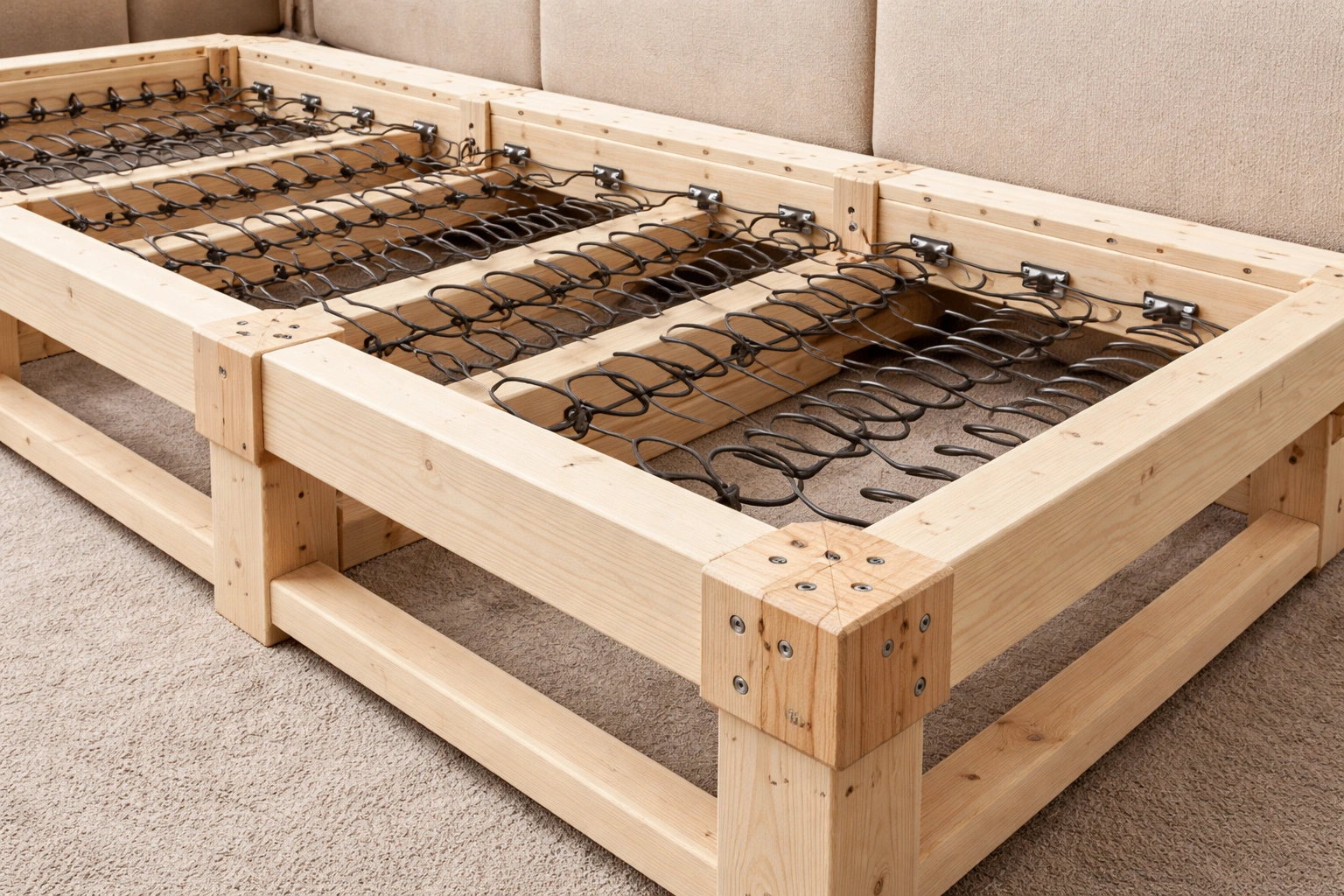
Frame joint construction visible during assembly — look for corner blocks, dowels, and reinforced connections at every stress point on a 5 seater.
How to Position a 5 Seater Sofa in Your Room
A 5 seater's length makes placement more strategic than with smaller sofas. Poor placement creates traffic bottlenecks, visual imbalance, or a cramped feeling. These layout strategies work:
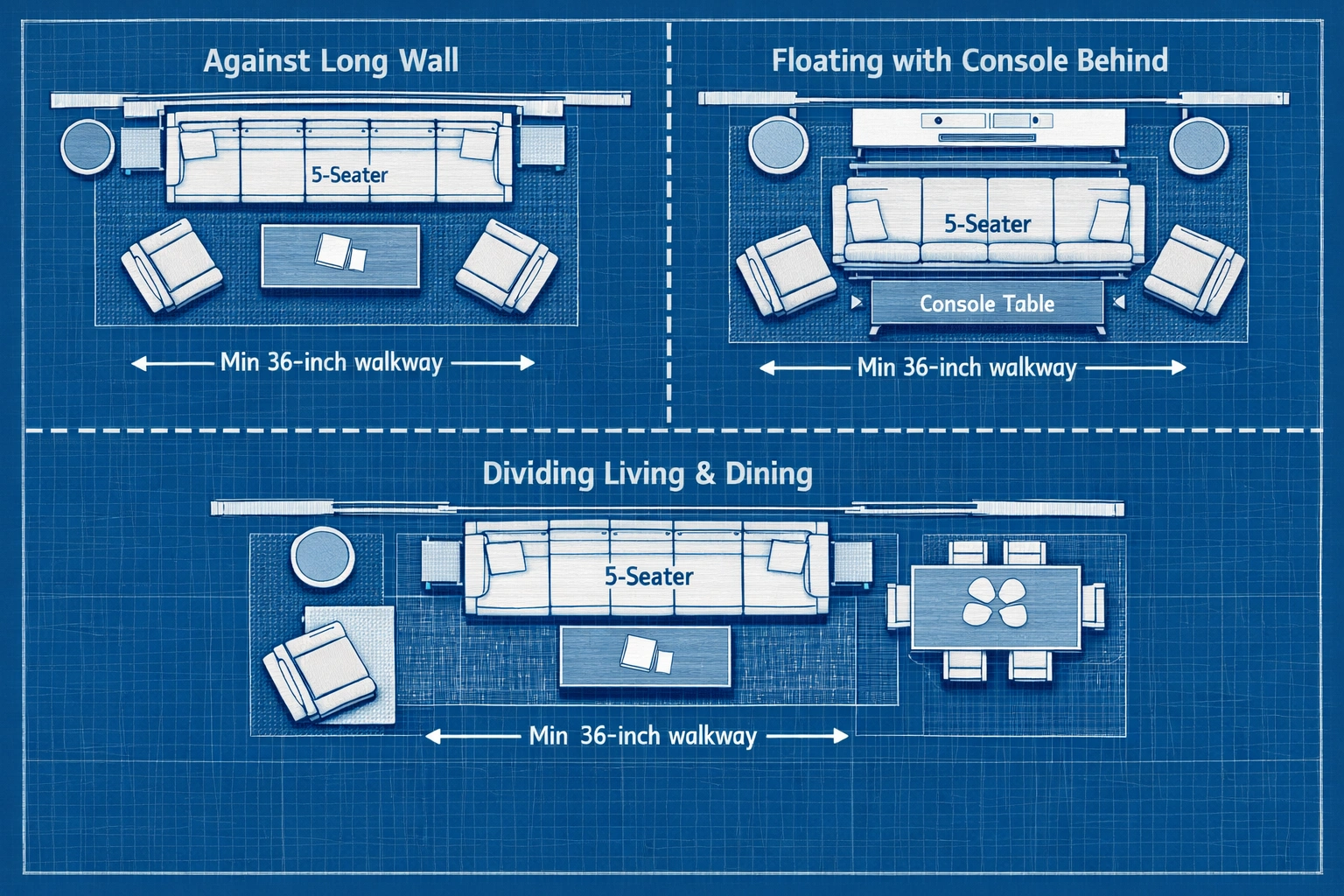
- Wall-mounted on the longest wall: The safest and most common placement. Leaves the center open for traffic flow and a coffee table. Ensure at least 6 inches of breathing room between the sofa back and the wall.
- Floated with a console table behind: Creates a beautiful two-sided layout in open-plan spaces. The console table serves as a room divider and display surface. Requires at least 36 inches behind the sofa for a walkway.
- Perpendicular to a focal point: Position the 5 seater at a right angle to a fireplace, window wall, or TV. Best in square rooms where the sofa's length defines one side of a conversation area.
- Dividing an open-plan space: Use the 5 seater's back as a visual barrier between living and dining areas. This works exceptionally well with a sofa table behind it.
- Minimum 30–36 inches of clearance on open sides for walkways. Less than 24 inches feels claustrophobic alongside a piece this large.
- Use an oversized rug (9×12 or 10×14 feet) that extends at least 12 inches beyond the sofa on all sides to visually ground the arrangement.
For detailed layout diagrams and strategies specific to your room shape, our living room layout guide provides actionable plans for rectangular, square, and open-plan spaces. If you're placing the sofa in a specific room type, our family room and basement guides offer targeted advice.
7 Costly Mistakes When Buying a 5 Seater Sofa
Mistakes with a 5 seater are more expensive than with smaller sofas — both in the purchase price and the cost of replacement. Avoid these:
Not Verifying Delivery Path Before Ordering
This is the number one reason 5 seater sofas get returned. A 130-inch sofa cannot navigate a 90-degree hallway turn if the hallway is 36 inches wide. Measure the entire path: front door, hallways, stairways, doorways into the room, and any turns. If clearance is tight, only buy modular designs. See how to measure for sofa delivery.
Buying a Non-Modular Design for a Home You'll Leave
If you rent or plan to move within 5 years, a fixed-frame 5 seater becomes a liability. Getting it out of one home and into another requires the same careful measurements — and may not be possible at the new location. Modular or modular sofas solve this completely.
Choosing Delicate Fabric for a High-Traffic Sofa
A 5 seater in a family home gets sat on by more people, more often, across more surface area. Light-colored linen, untreated velvet, or silk will show wear within months. Choose durable fabrics rated for heavy domestic use — performance fabric, microfiber, or performance fabric sofas.
Ignoring the Center Sag Problem
Cheaper 5 seaters develop a visible dip in the center cushions because the long frame span isn't adequately supported. This happens when manufacturers use inadequate spring systems or low-density foam. Always check for spring system quality and sit in the middle seat to test for support.
Underestimating Visual Dominance
A 5 seater is a room-defining piece. If you choose a bold color like a red sofa or an unusual shape, it becomes extremely difficult to change the room's aesthetic without replacing the sofa. For versatility, consider neutral tones that adapt as your taste evolves.
Skipping Professional Assembly
Many 5 seaters — especially modular and recliner versions — require professional assembly to ensure all connections are secure and mechanisms work correctly. Improper assembly voids warranties and can create safety issues. Budget $100–$200 for assembly if the manufacturer recommends it.
Not Checking Weight Limits
A 5 seater designed for average-weight adults may not accommodate heavier users comfortably or safely across all seat positions. Ask the manufacturer about per-seat and total weight capacity. Sofas with kiln-dried hardwood frames and eight-way tied springs support the most weight. Learn how to check sofa quality before buying.
5 Seater Sofa vs. Sectional: A Detailed Comparison
This is the most important decision for anyone considering a 5-seat capacity. Both options seat five people, but they serve fundamentally different spatial and functional purposes:
Choose a 5 seater sofa when: your room is long and narrow, you want a clean linear look against a single wall, you prefer the ability to place a console table behind the sofa, or you need to maintain a clear traffic path through the room. A 5 seater occupies space along one axis only, making it more traffic-friendly in narrow rooms. It also allows for symmetrical decorating — matching end tables, lamps, and artwork centered above.
Choose a sectional sofa when: your room is wide and square or open-plan, you want to define distinct zones (living vs dining), you prefer a casual lounge feel where people face each other, or you like the cozy corner-nest feeling that sectionals create. Sectionals fill corners beautifully but project into the room, reducing walkable floor space.
The hybrid option: A modular 5 seater that can be configured as either a straight line or an L-shape gives you the best of both worlds. Start linear, switch to L-shaped if your space allows it, or revert when you move. This flexibility is why modular designs are increasingly popular for 5-seat buyers.
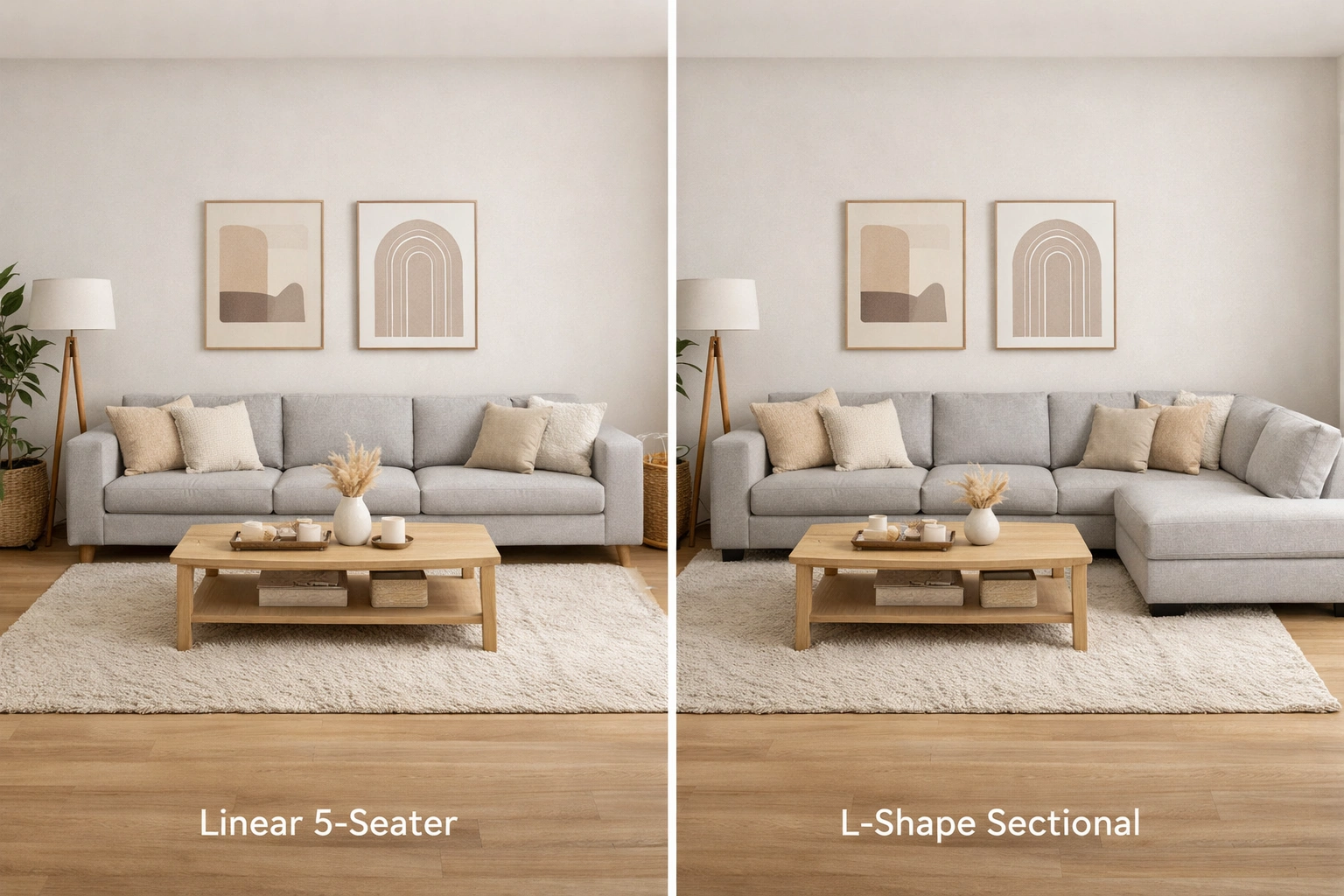
Cost Comparison: A linear 5 seater typically costs 10–20% less than a comparable sectional because sectionals require additional corner pieces, connector hardware, and more complex manufacturing. However, a modular 5 seater that converts to an L-shape often costs the same as a sectional. Compare options in our sofa budget guide and understand the full price breakdown.
Maintaining a 5 Seater Sofa
The larger surface area of a 5 seater means maintenance tasks take longer and cost more. Being proactive prevents minor issues from becoming major expenses:
Daily: Fluff all five seat cushions and any back pillows. Rotate seat cushions weekly (swap positions) to ensure even wear. On a 5 seater, this is especially important because the center seats get the most traffic.
Weekly: Vacuum the entire surface using an upholstery attachment, paying attention to crevices between cushions and along the arms. For fabric sofas, this removes dust and debris before it becomes embedded. For leather sofas, wipe with a damp cloth.
Monthly: Treat fabric with a fabric protector spray (especially important for 5 seaters in family homes). Condition leather seats to prevent cracking. Check all legs for tightness — the weight of a 5 seater can loosen leg bolts over time. See our loose leg repair guide.
Annually: Professional deep cleaning is recommended for fabric 5 seaters due to the large surface area. Budget $200–$400 for professional cleaning, which is significantly more than smaller sofas. For stains between professional visits, follow our stain removal guide.

If cushion sagging develops over time (common in the center of 5 seaters), our cushion repair guide covers both DIY fixes and professional options. For frame issues like squeaking or wobbling — more likely on long-span sofas — see our frame repair guide and squeaking noise troubleshooting.
Frequently Asked Questions
Ready to find your perfect 5 seater? Scroll down to browse our curated selection of top-rated 5 seater sofas, chosen for frame quality, comfort, durability, and value. Each pick includes detailed specifications, material information, and current pricing to help you buy with confidence.


