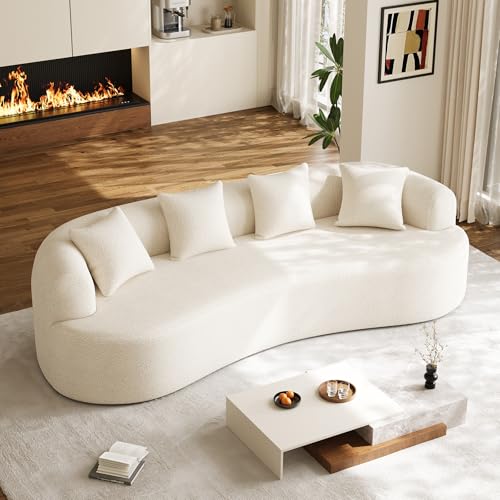
The Complete Guide to Curved Sofas
Discover why curved sofas are transforming living spaces — from choosing the right type and size to placement strategies that maximize both comfort and visual impact.
What Is a Curved Sofa?
A curved sofa features a gently arched or crescent-shaped frame that departs from the straight lines of conventional seating. Instead of resting flat against a wall, the design wraps softly around its occupants, creating a naturally inviting and conversational seating arrangement.
Originally popularized in mid-century modern interiors, curved sofas have experienced a major resurgence in recent years. Their flowing silhouette softens the angular edges of modern architecture and adds a layer of sophistication that straight-lined furniture simply cannot achieve. Whether you are furnishing a spacious open-plan living room or looking for a statement piece for a smaller apartment, a curved sofa can serve as both a functional seating solution and a striking design element.
However, choosing the right curved sofa involves more than picking an attractive shape. Factors like room dimensions, seating capacity, upholstery material, and placement strategy all play critical roles in whether this investment enhances your space or creates frustration. This guide covers every aspect you need to evaluate before making a purchase.
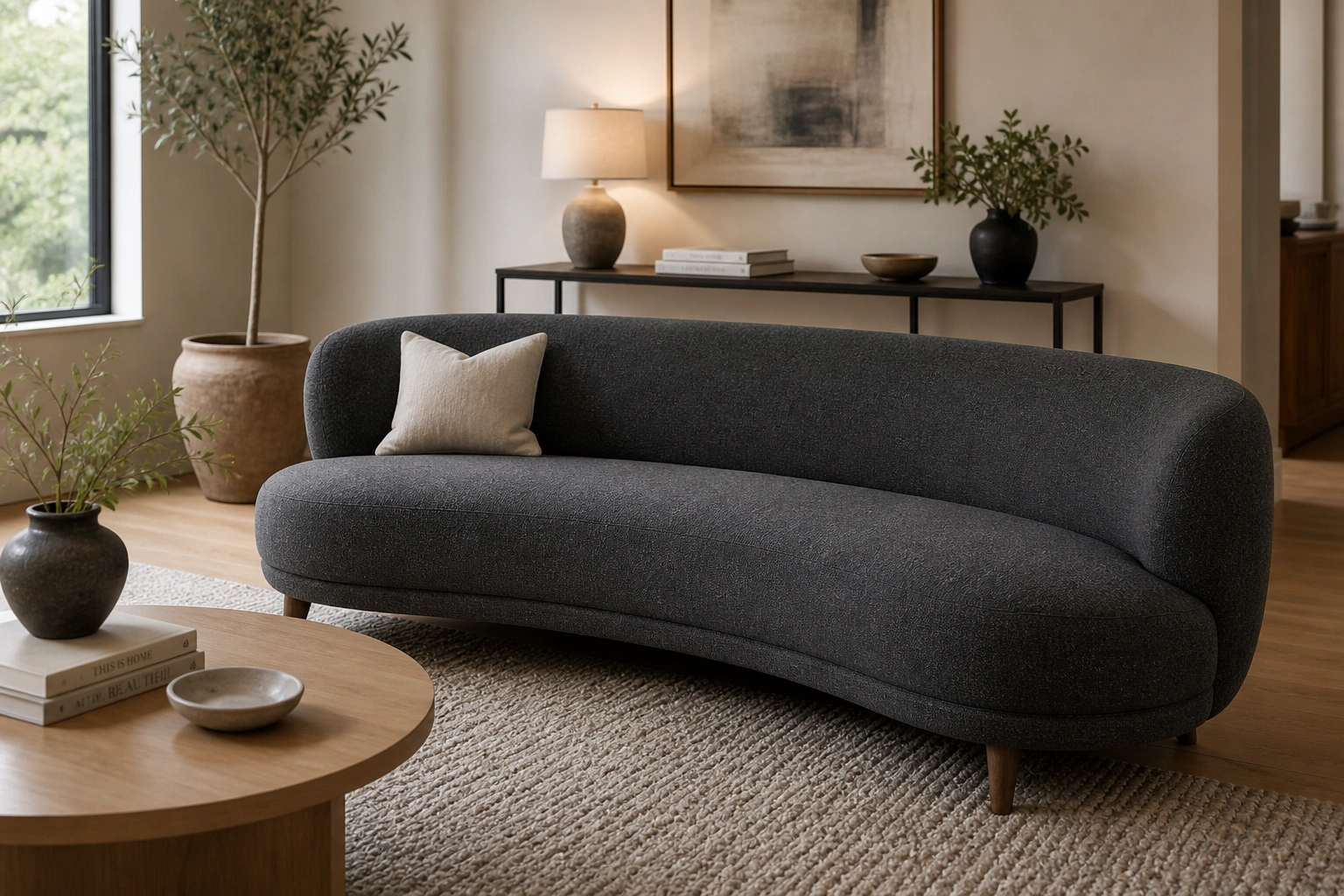
Types of Curved Sofas
Not all curved sofas are created equal. Understanding the distinct categories helps you narrow down which style aligns with your room layout, seating needs, and aesthetic preferences. Below are the five most common types found in today's market.
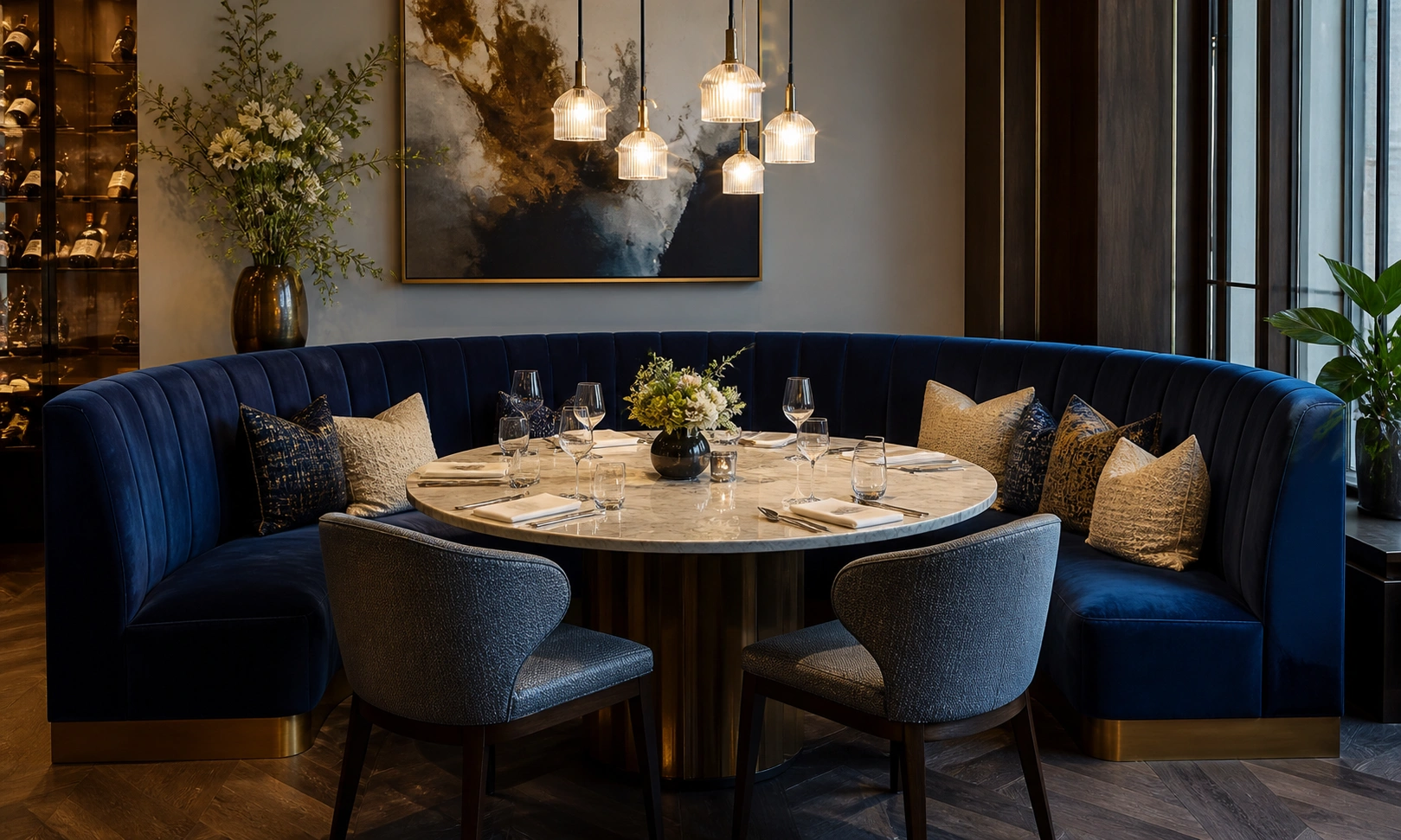
Banquette Curved Sofa
Features a continuous, fixed backrest that follows a smooth arc. Often built-in or semi-permanent, this style is ideal for dining areas, bay windows, or restaurant-inspired layouts. Seating typically accommodates 3 to 5 people along a single curve.
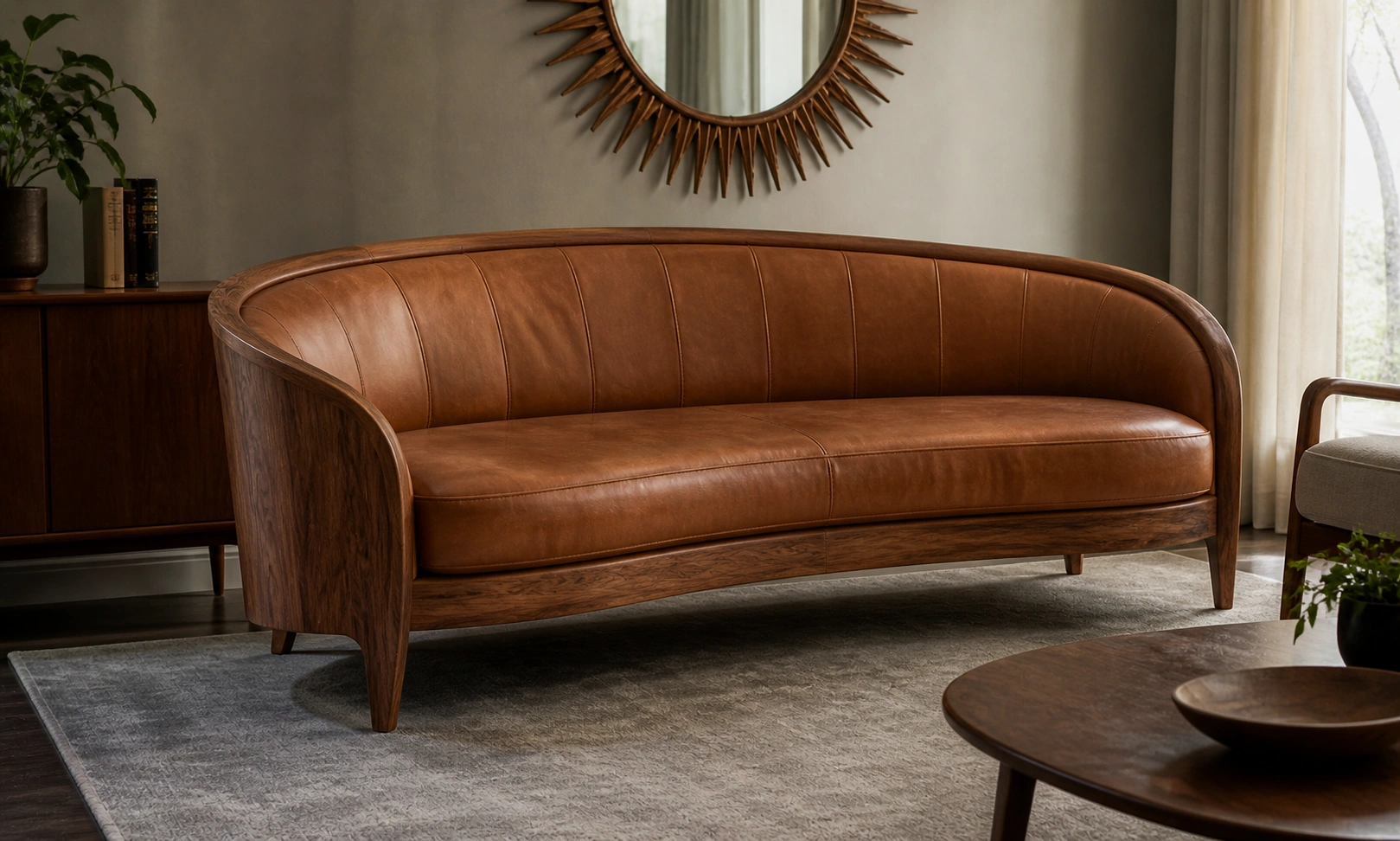
Barrel Sofa
Distinguished by its exposed curved frame that wraps around the back and arms in a single continuous line. The inward-curving arms create an enclosed, cocoon-like feel. Typically seats 2 to 3 people and works well as a standalone accent piece.
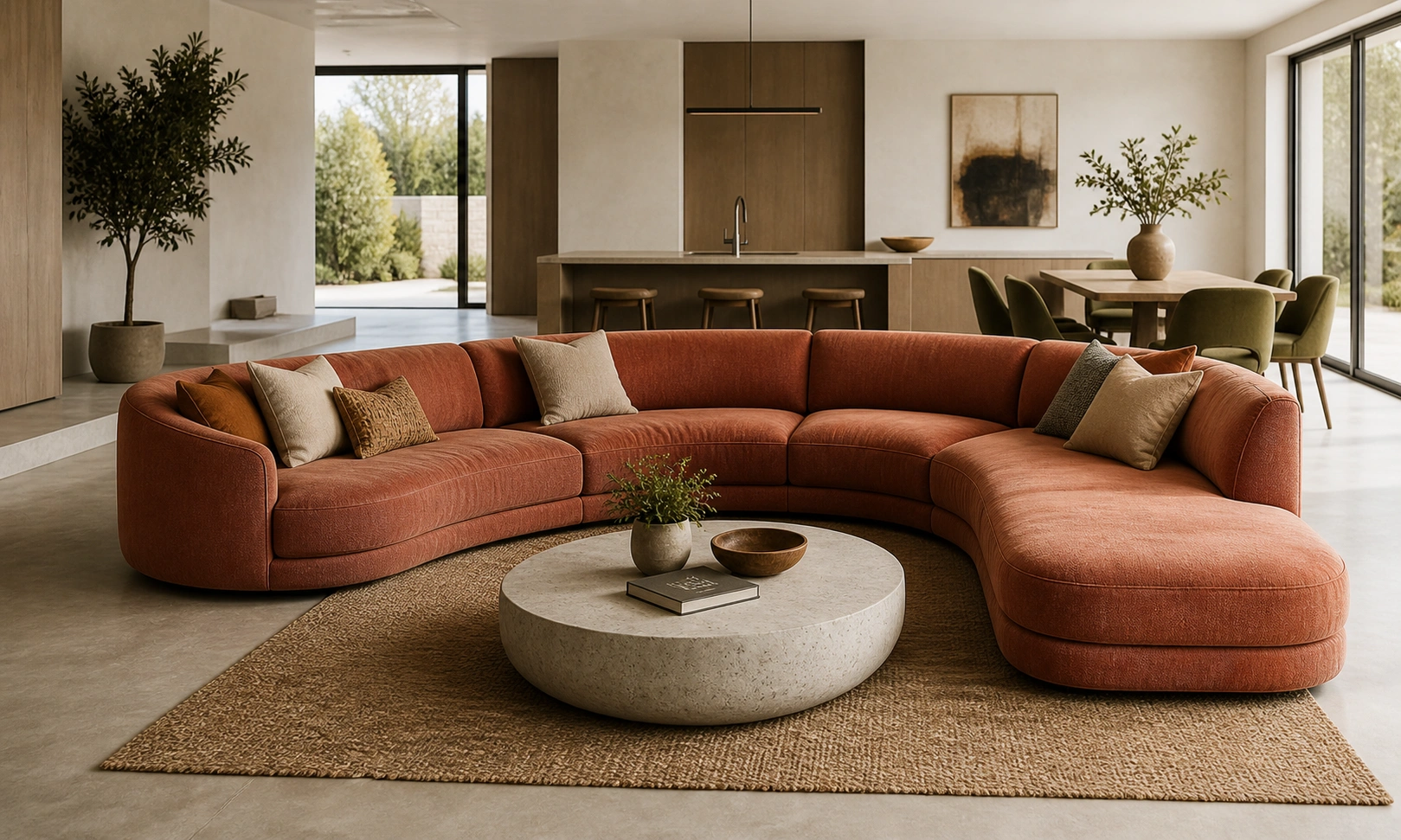
Curved Sectional
Combines the generous seating of a sectional sofa with a curved outer edge. Available in L-shaped, U-shaped, and semicircular configurations. Best suited for larger rooms where the sofa can float in the center as a room divider.
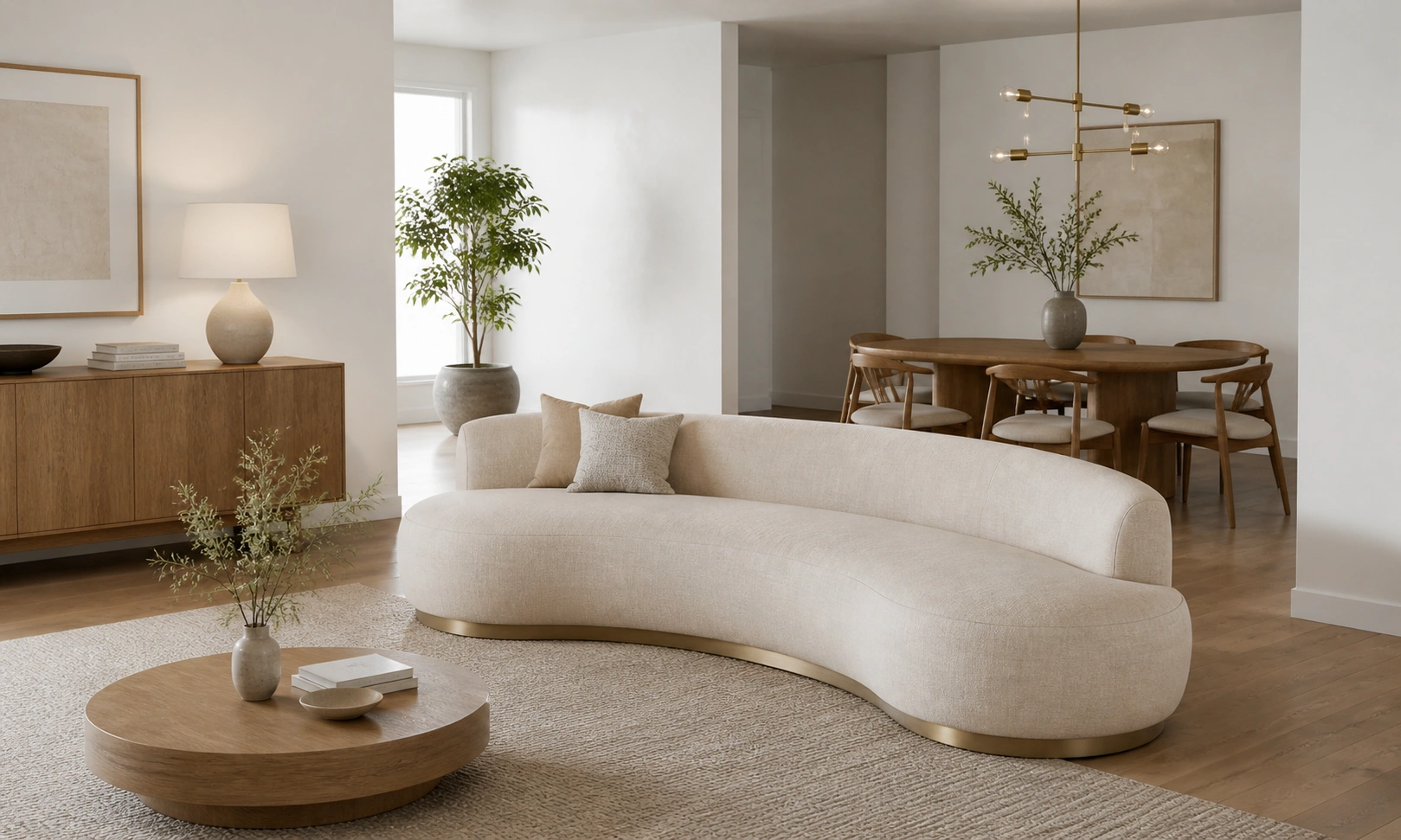
Crescent Sofa
Characterized by a gentle, moon-like arc that is subtler than other curved designs. Often backless or low-backed, crescent sofas function beautifully as floating dividers between living and dining zones in open-plan spaces.
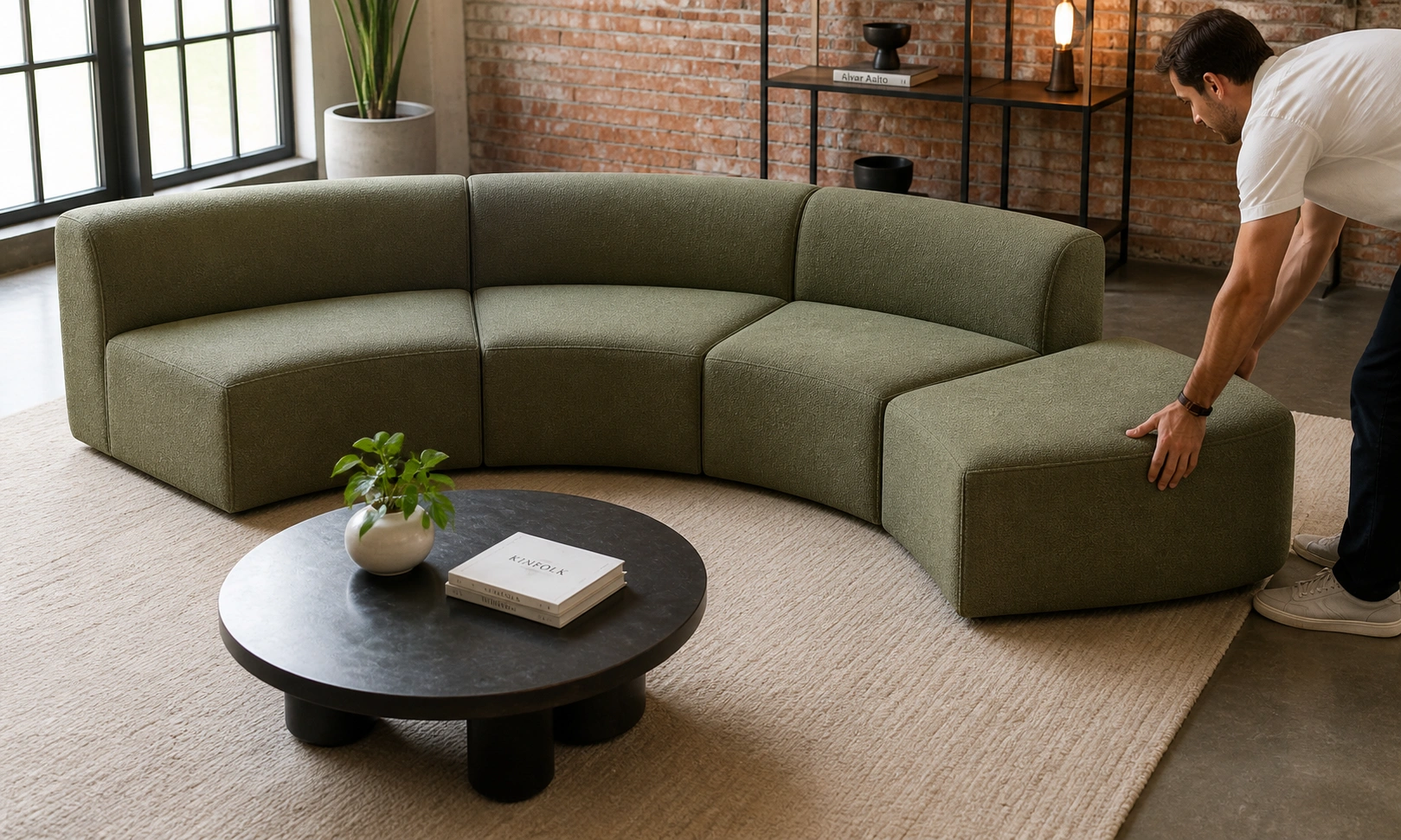
Modular Curved Sofa
Consists of individual curved modules that can be arranged, added to, or reconfigured over time. Offers the flexibility of a modular sofa with the aesthetic appeal of curved design. Perfect for those who may move or remodel frequently.
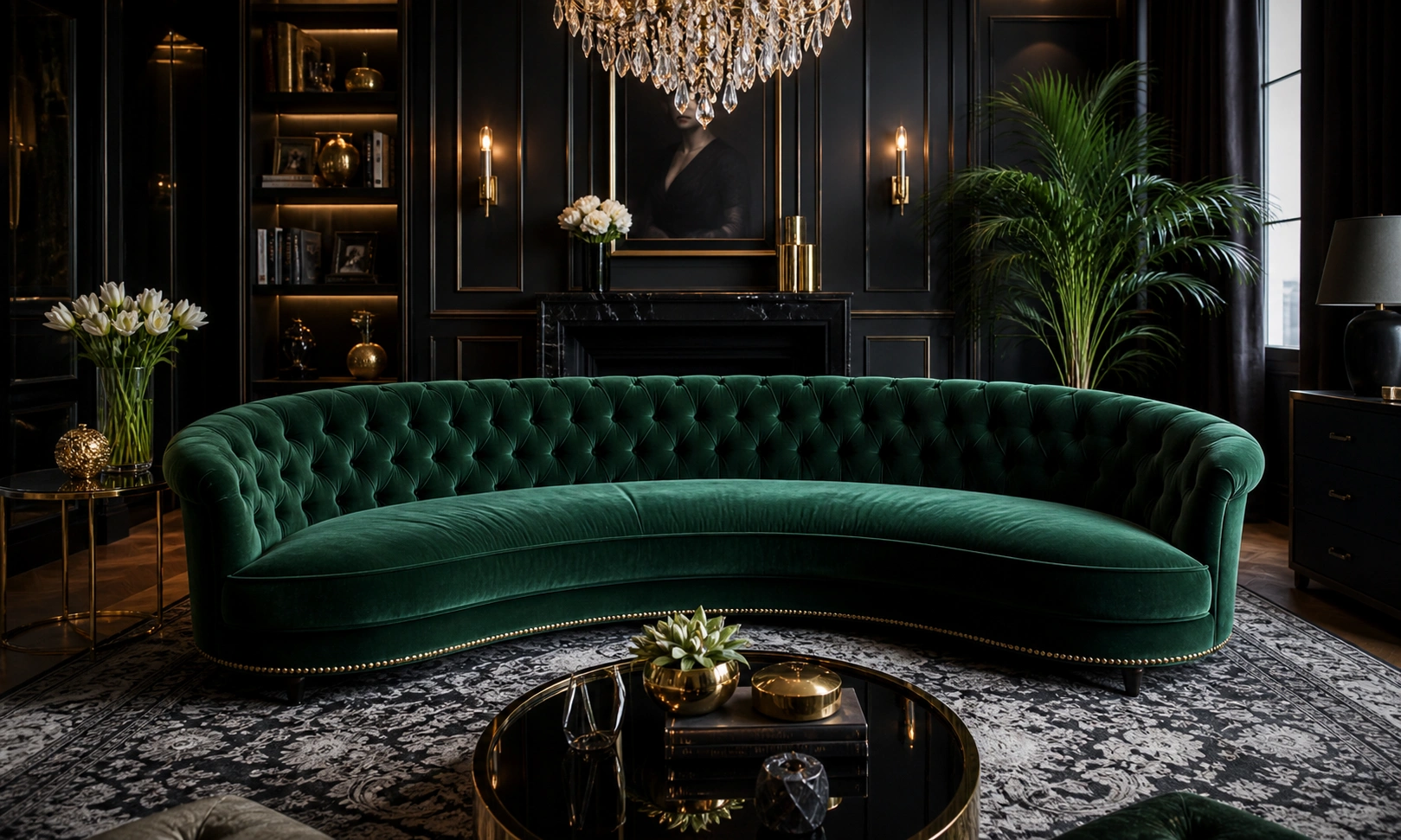
Tufted Curved Sofa
Combines the organic shape of a curved frame with the textured elegance of tufted upholstery. Deep button tufting follows the curve, creating a luxurious, vintage-meets-modern aesthetic. Commonly upholstered in velvet or leather for maximum visual impact.
Key Benefits of a Curved Sofa
Choosing a curved sofa over a traditional straight design is not just about aesthetics — there are practical advantages that directly affect how you experience your living space on a daily basis.
Encourages Conversation
The inward curve naturally directs seated people toward each other, creating an intimate conversational zone. Unlike straight sofas where everyone faces forward, curved designs promote eye contact and engagement — ideal for families and those who frequently host guests.
Softens Room Geometry
Most rooms are boxes filled with rectangular furniture. A curved sofa breaks up this monotony by introducing organic, flowing lines that create visual contrast and make the entire space feel more dynamic and thoughtfully designed.
Defines Zones in Open Plans
In open-concept homes, a curved sofa acts as a natural boundary between the living area and dining space without needing walls or screens. The arc creates a semi-enclosed zone that feels purposeful rather than arbitrary.
Statement Piece Appeal
A well-chosen curved sofa becomes the focal point of any room. It signals intentional design and elevates the perceived value of your entire interior. For those investing in a luxury sofa experience, curved designs deliver maximum visual return.
Better Ergonomic Wrap
The curved backrest follows the natural contour of your spine more closely than a flat back, providing wraparound support. This can reduce lower back strain during extended sitting, making it a solid choice for those seeking a comfortable sofa for daily use.
Makes Small Rooms Feel Larger
Counterintuitively, curved furniture can make compact rooms feel bigger. The absence of harsh corners eliminates visual barriers, and the flowing shape draws the eye around the room rather than stopping at straight edges. This is especially effective in small space sofa selections.
Potential Drawbacks to Consider
Honest evaluation means acknowledging that curved sofas are not universally perfect. Understanding these limitations upfront helps you decide whether the trade-offs are acceptable for your specific situation.
Requires More Floor Space
Because of their protruding shape, curved sofas need more clearance than straight sofas of equivalent seating width. You cannot push them flush against a wall, which means you sacrifice usable floor area on at least one side.
Higher Price Point
The complex frame construction, curved cushion cutting, and often custom manufacturing processes make curved sofas 20% to 50% more expensive than comparable straight designs. Understanding the sofa price breakdown helps you assess whether the premium is justified.
Limited Layout Flexibility
A straight sofa can be repositioned along any wall or rotated. A curved sofa has a defined "front" and "back" orientation that restricts placement options. Moving it to a different room or rearranging your layout may not be feasible.
Harder to Clean Behind
The gap between the sofa's back and the wall collects dust and debris. Without a narrow attachment on your vacuum, reaching this space is difficult. Many owners solve this with a console table placed behind the sofa.
Curved Sofa vs. Straight Sofa vs. Round Sofa
If you are weighing your options, this side-by-side comparison highlights the fundamental differences that affect daily usability, aesthetics, and long-term satisfaction. For a more detailed look at a related style, see our round sofa guide.
| Feature | Curved Sofa | Straight Sofa | Round Sofa |
|---|---|---|---|
| Shape | Gentle arc or crescent | Rectangular, linear | Full or near-full circle |
| Wall Placement | Gap at center; needs filler | Flush against wall | Must float in open space |
| Conversation | Encourages face-to-face | Forward-facing only | Full 360° engagement |
| Room Size | Medium to large ideal | Any size | Large open-plan only |
| Flexibility | Moderate — orientation matters | High — any wall or angle | Low — single placement |
| Price Range | $300 – 1.400 | $100 – 1.400 | $700 – 1.500+ |
| Seating Capacity | 2 to 6 people | 2 to 5 people | 4 to 8+ people |
| Best For | Living rooms, open plans | All rooms, all budgets | Statement areas, lobbies |
Curved Sofa Sizing Guide
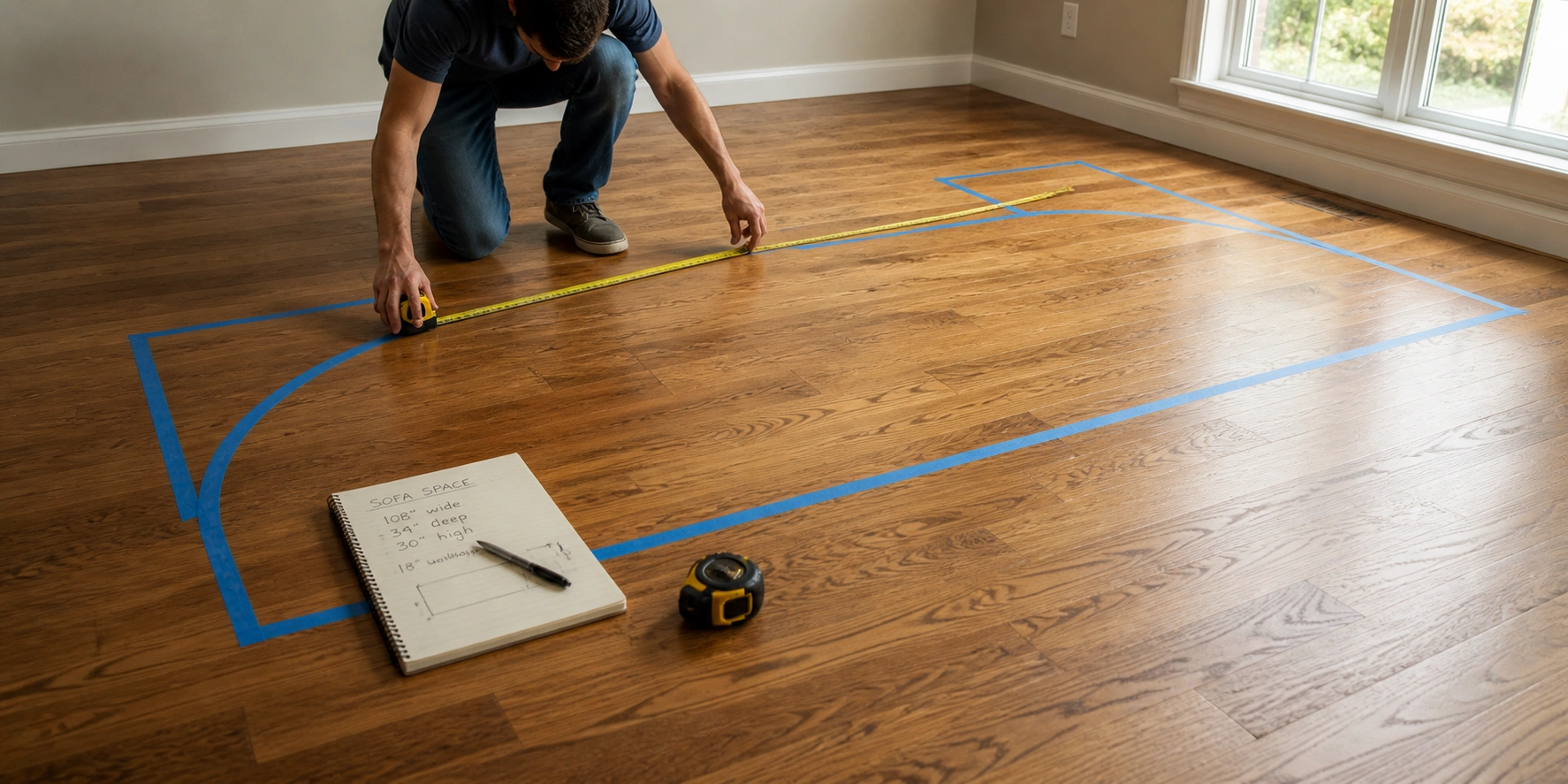
Choosing the wrong size is the most common mistake buyers make with curved sofas. Because the shape extends outward from the wall, a sofa that measures correctly in width may still overwhelm your room in depth. Use the reference table below and always add at least 30 inches of walkway clearance around the perimeter. For a comprehensive approach, review our sofa size and room guide.
| Size Category | Width Range | Depth Range | Min Room Size | Seating |
|---|---|---|---|---|
| Small / Compact | 60" – 80" | 32" – 38" | 10 × 12 ft | 2 people |
| Medium | 80" – 110" | 36" – 42" | 12 × 14 ft | 3 people |
| Large | 110" – 140" | 38" – 45" | 14 × 16 ft | 4 people |
| Extra Large / Sectional | 140" – 200"+ | 40" – 50" | 16 × 18 ft+ | 5 – 6+ people |
Best Placement Strategies
Where you position your curved sofa determines how well it integrates with your room. The following strategies cover the most effective placement options, each suited to different room sizes and layouts. For broader layout advice, explore our living room layout guide.
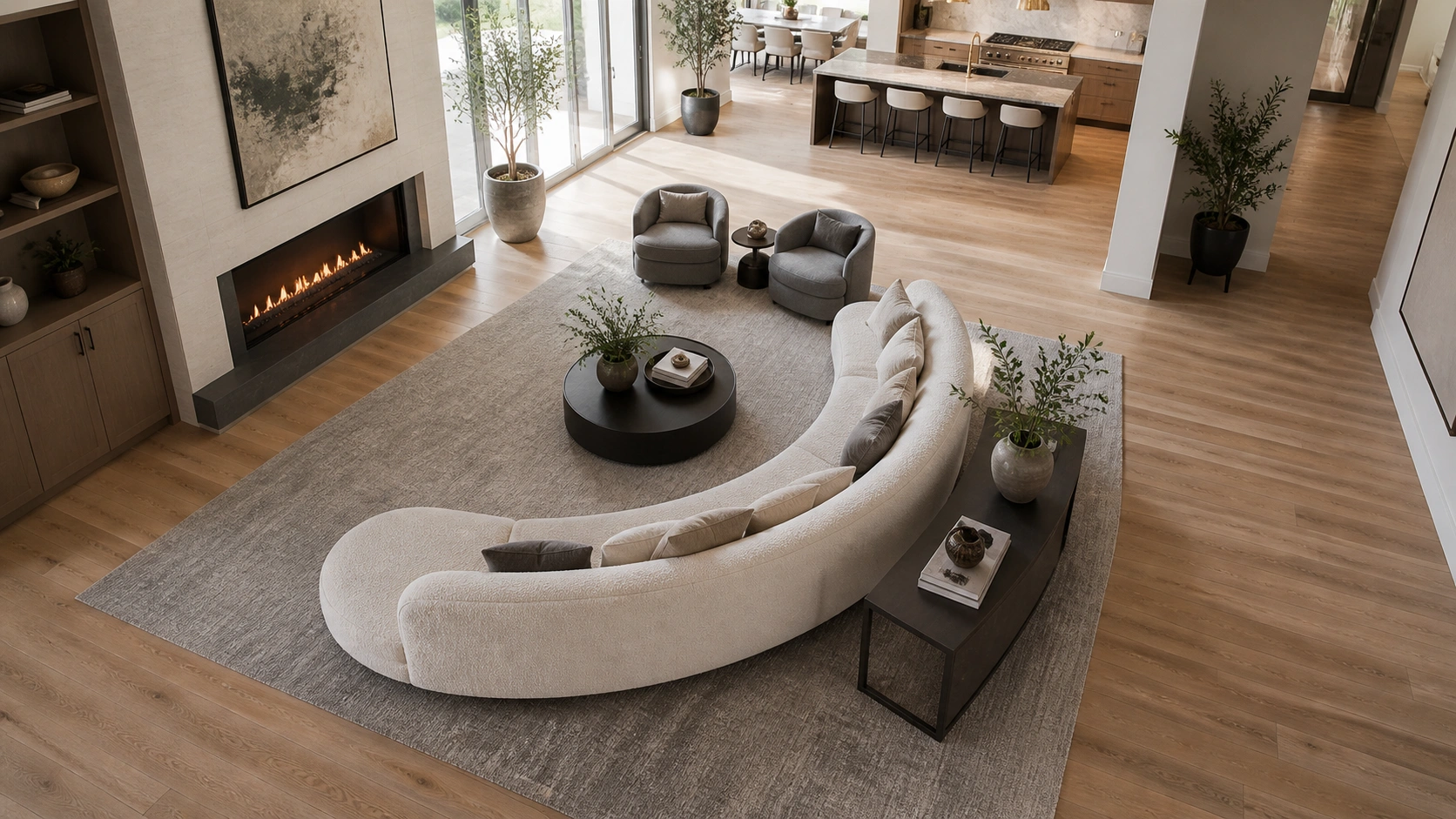
Floating Center Placement
The most impactful option: position the sofa away from all walls with the convex side facing the room's focal point (fireplace, TV, or window). The concave back creates a natural corridor behind it. Works best in rooms over 200 square feet with an open-plan layout. Pair with a console table behind to fill the gap and add function.
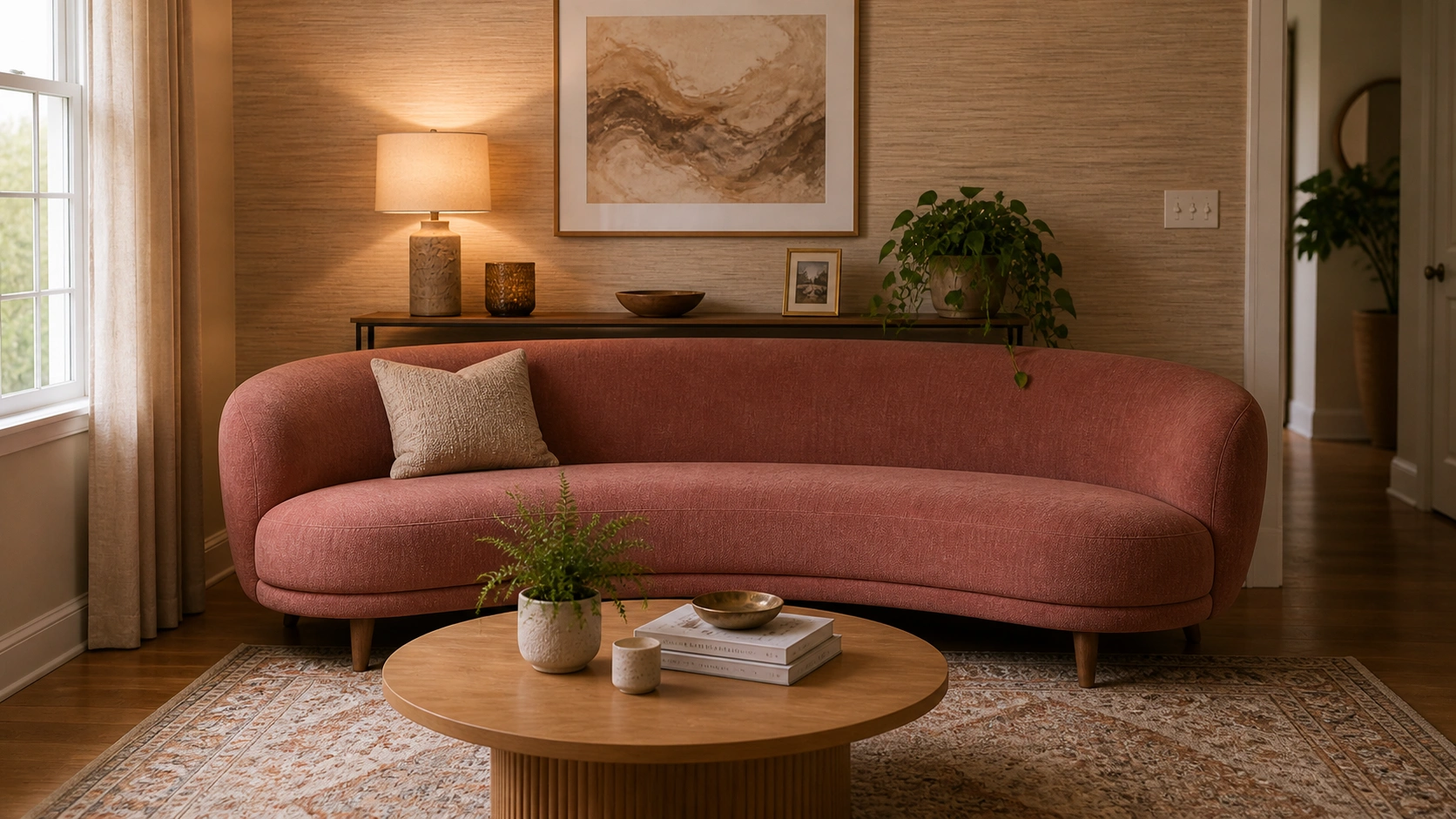
Against a Feature Wall
Place the sofa along a wall with the convex curve facing into the room. The gap behind the sofa creates a natural ledge — ideal for a slim console, artwork, or trailing plants. Less dramatic than floating but more space-efficient. Best for medium rooms where maximizing floor area matters.
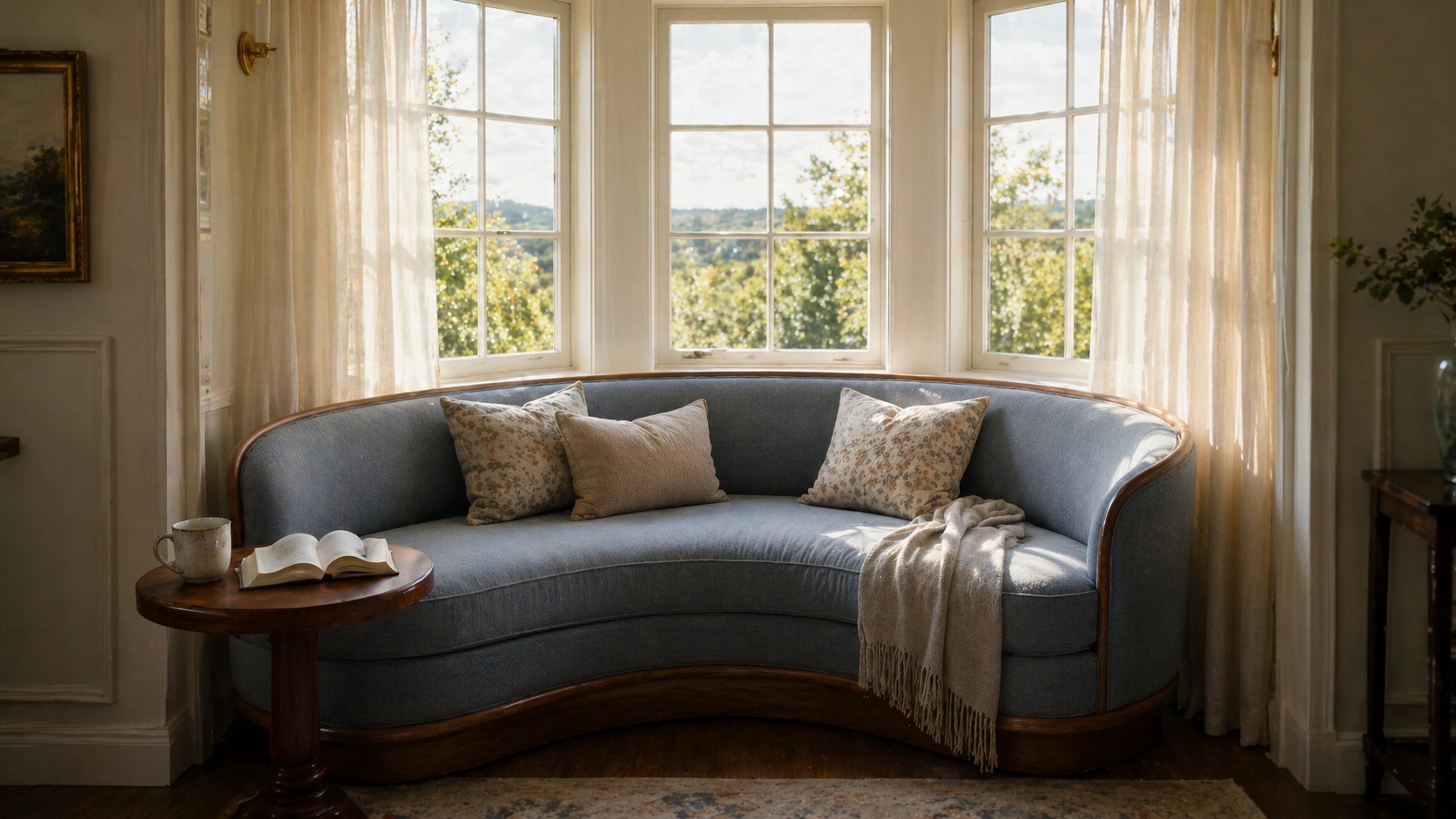
Bay Window Alcove
If your room has a bay window, a curved sofa can follow the window's contour perfectly, creating a cozy reading nook that maximizes natural light. Measure the window alcove carefully — a banquette-style curved sofa or a small crescent design works best here.
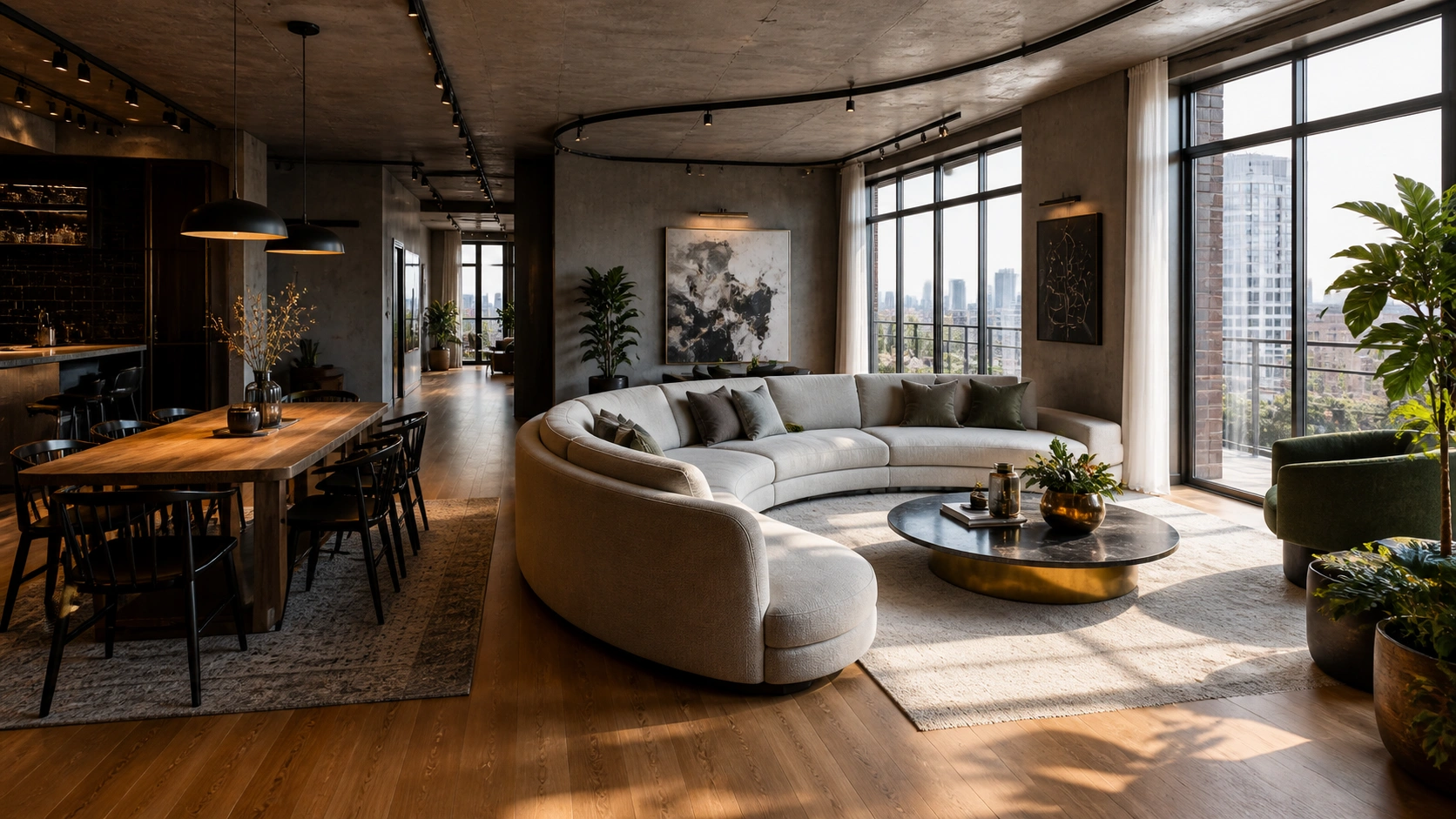
Room Divider
In open-concept spaces, a curved sectional or crescent sofa separates the living area from the dining zone without blocking sightlines. The arc creates a psychological boundary that feels open yet defined. This strategy works exceptionally well in large rooms and loft-style apartments.
Best Upholstery Materials for Curved Sofas
The material you choose affects not only appearance but also durability, maintenance effort, and how well the curved shape holds its form over time. Curved sofas put different stress on upholstery than straight designs — the fabric must stretch and conform to compound curves without wrinkling or sagging. For a deep comparison of the two most popular options, read our leather vs fabric sofa guide.
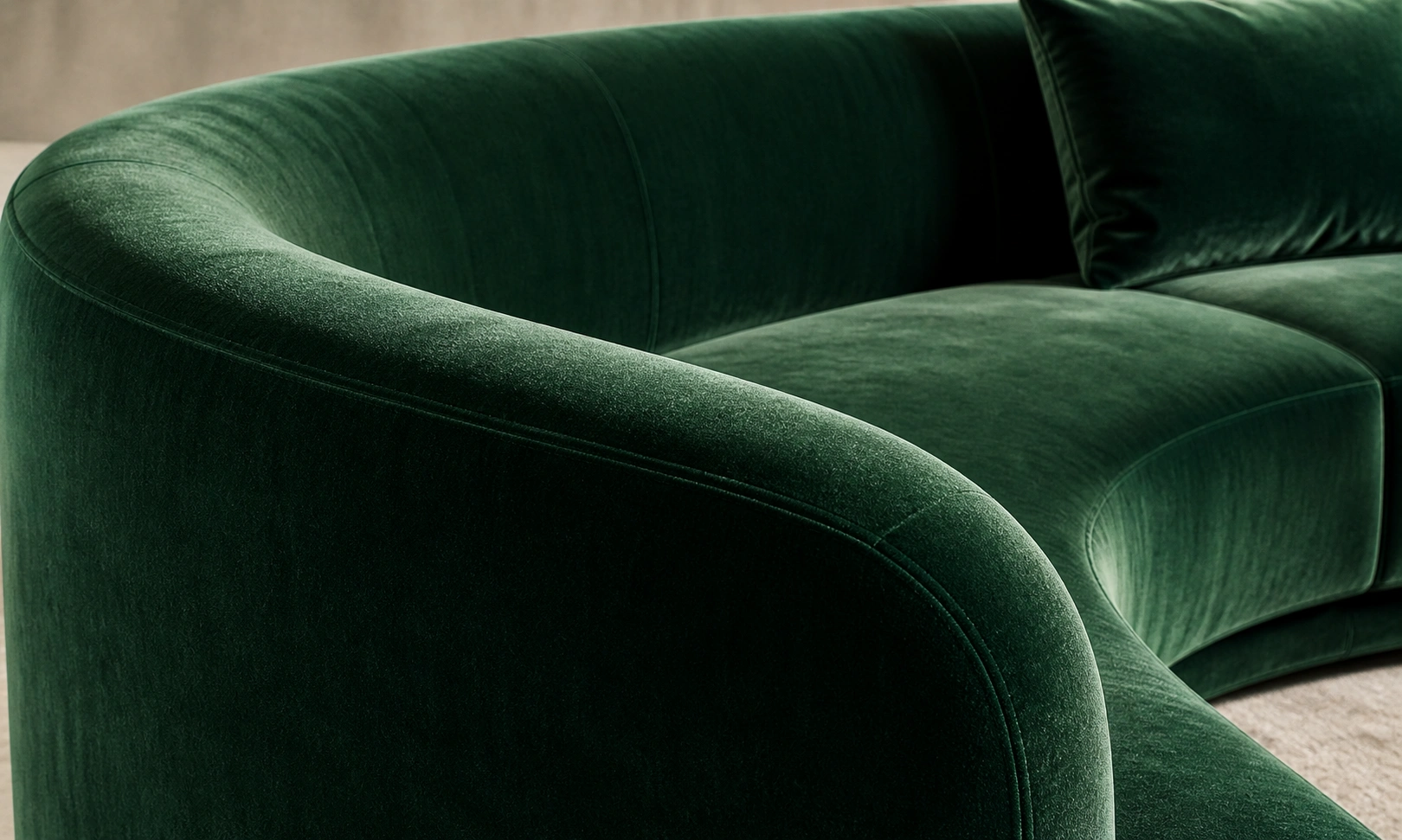
Velvet
The top choice for curved sofas. Velvet's natural pile hides stretching marks and follows curves beautifully. It adds richness and depth that emphasizes the sofa's sculptural shape. Available in bold colors that make the curve pop. Requires regular brushing to maintain direction.
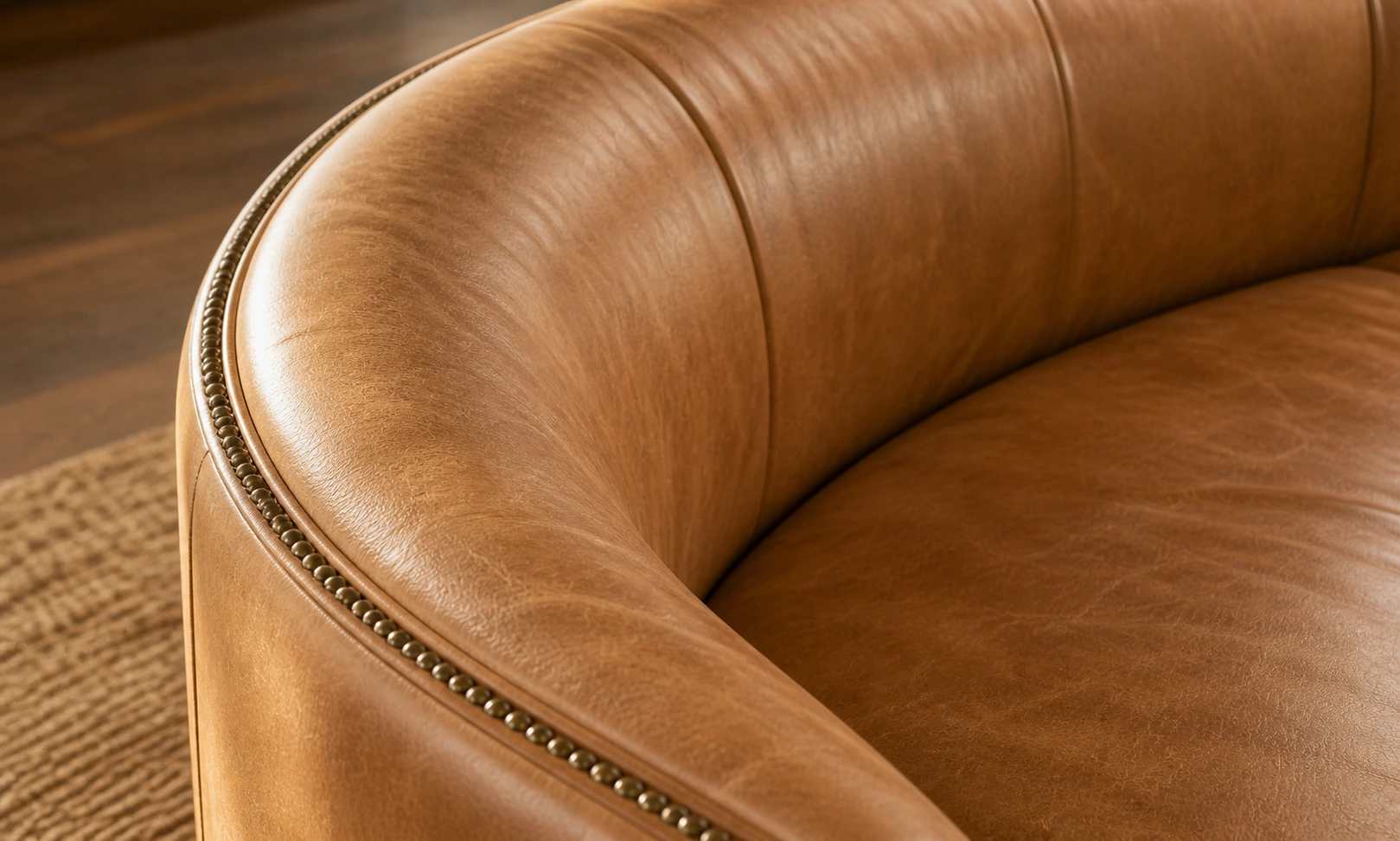
Leather
Full-grain and top-grain leather conform well to curves and develop a beautiful patina. More durable than fabric for high-traffic homes. Understanding leather grades is essential — bonded leather may crack at stress points on curved frames. Best for barrel and tufted curved styles.
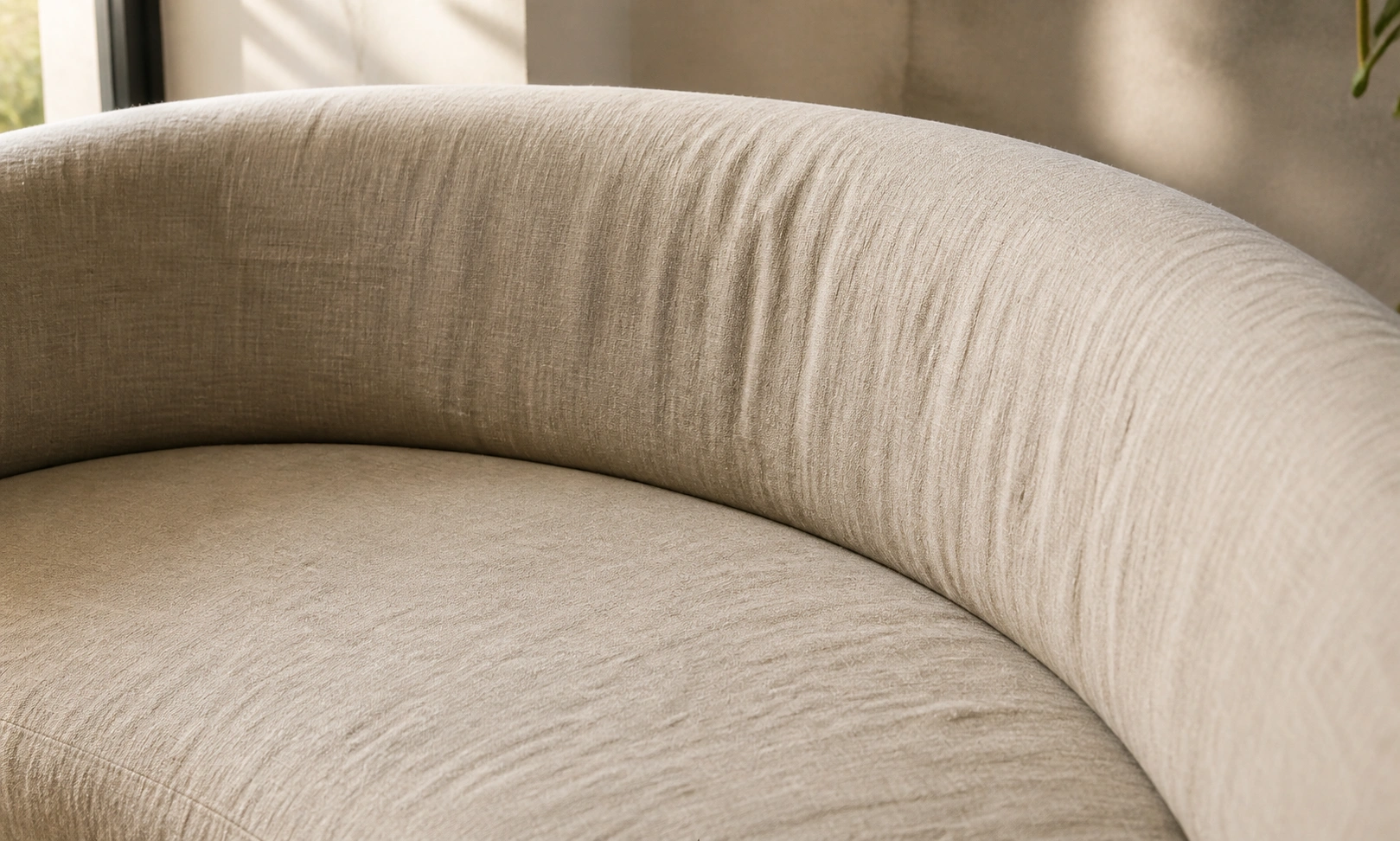
Linen
Offers a relaxed, natural look that suits contemporary and coastal interiors. Linen is breathable but prone to wrinkling, which can be more visible on curved surfaces. Choose a linen-blend (with cotton or polyester) for better shape retention on curved frames.
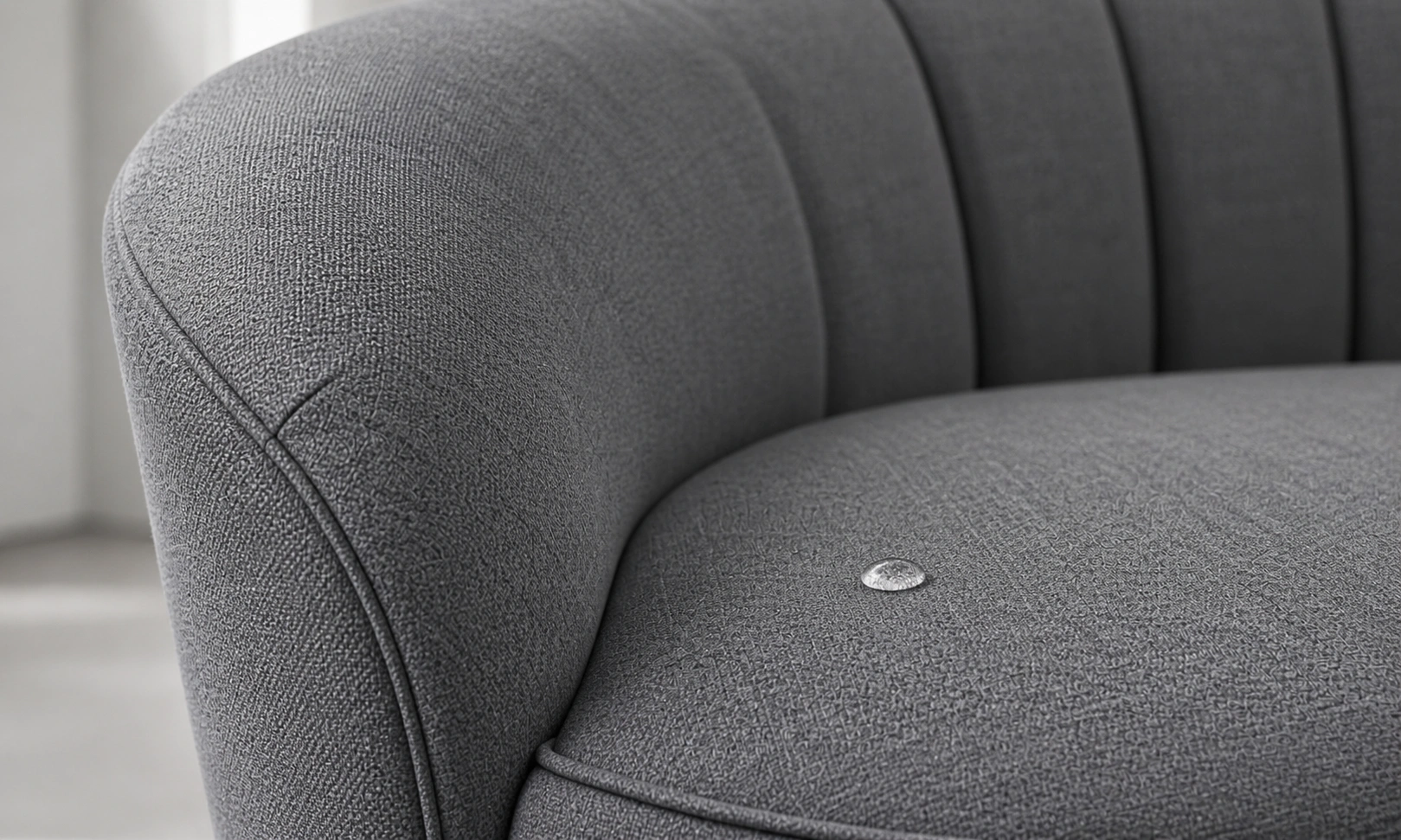
Performance Fabric
Engineered for durability and stain resistance. Ideal for households with children or pets — see our guide to sofas for families. Modern performance fabrics come in textures that mimic velvet and linen while offering far superior wear resistance. Check the Martindale test rating before purchasing.
Curved Sofa Buying Checklist
Before committing to a purchase, work through this checklist to ensure you have covered every critical factor. Skipping any of these steps increases the risk of buyer's remorse — curved sofas are harder to return or resell than standard designs due to their specific footprint requirements.
Pre-Purchase Verification Checklist
- Measure your room and create a full-scale floor template with newspaper or cardboard
- Verify at least 30 inches of clearance on all walkable sides of the sofa
- Confirm the sofa's chord depth (the deepest point from back to front edge) fits your space
- Check doorway widths and hallway turns for delivery — curved sofas may need wider clearance than their width suggests
- Decide on placement strategy: floating center, against wall, bay window, or room divider
- Choose upholstery material based on household needs: velvet for luxury, leather for durability, performance fabric for families
- Verify frame material: kiln-dried hardwood is recommended — see our frame materials guide
- Test seat depth matches your comfort preference — reference our seat depth guide
- Confirm cushion fill type aligns with your firmness preference — review cushion fill types
- Check the return policy and restocking fees specific to oversized or custom furniture
- Compare prices across retailers — curved sofas have significant price variation, so understanding price vs quality is critical
- Read reviews specifically mentioning delivery experience, as curved sofas are more prone to shipping damage
Maintenance Tips for Curved Sofas
Curved sofas require slightly different maintenance attention than straight designs. The compound curves can trap dust in areas that are not immediately visible, and the gap behind the sofa needs regular attention. Following a consistent care routine extends the life of your investment significantly.
Weekly Vacuuming with Curved Attachment
Use a crevice tool or curved-upholstery attachment to reach into the seams and along the curved edges where dust settles. Pay extra attention to the gap between the seat cushions and the arm curves. For fabric sofas, our fabric sofa cleaning guide provides detailed techniques.
Behind-the-Sofa Cleaning
The curved gap behind the sofa collects dust, pet hair, and small debris. Use a slim vacuum nozzle or a flexible dusting wand weekly. Alternatively, place a console table behind the sofa — it fills the gap visually and reduces how much debris reaches the floor beneath.
Cushion Rotation and Fluffing
Rotate and flip removable cushions every 2 to 4 weeks to ensure even wear. Curved sofas often have asymmetric cushion shapes, so mark their positions with small labels. If cushions begin to flatten prematurely, our guide on fixing sagging cushions offers practical solutions.
Spot Treatment for Stains
Address spills immediately — curved upholstery has more surface area per linear inch than flat upholstery, so stains can spread along the grain. Blot (never rub) with a clean cloth. For material-specific stain removal, refer to our stain removal guide.
Leather Conditioning (If Applicable)
Curved leather sofas experience more stretching at the apex of the curve. Condition every 3 to 6 months to prevent cracking at these stress points. Use a product matched to your leather type — see our leather conditioning guide for product recommendations.
Fabric Protection Reapplication
If your sofa came with a fabric protector, reapply it every 12 to 18 months, especially on high-wear areas like the front edge and arm curves. Our fabric protection guide covers which products work best for curved upholstery without leaving streaks on the compound surfaces.
Frequently Asked Questions
Continue Your Research
A well-informed decision requires exploring multiple angles. These related guides address topics that naturally follow your curved sofa research.
Is a Curved Sofa Right for You?
A curved sofa is an investment in both comfort and design impact. It works best when you have adequate floor space, a clear placement strategy, and a willingness to pay a premium for its sculptural appeal. If your priority is maximum seating density, strict wall-to-wall efficiency, or the lowest possible price, a traditional straight sofa may serve you better.
However, if you want a piece that transforms how your room feels — creating intimacy, softening harsh lines, and serving as a genuine conversation starter — a curved sofa delivers on all fronts. Take the time to measure carefully, choose the right type for your layout, and select a material that matches your lifestyle. The result will be a focal point that elevates your entire living space for years to come.
Explore All Sofa Guides