
The Complete Guide to Sofa Cushion Replacement
Sagging, flattened, or uncomfortable cushions don't mean you need a new sofa. Learn how to choose and install replacement cushions that restore comfort for a fraction of the cost.
SHOULD YOU REPLACE YOUR CUSHIONS?Your sofa's cushions are the single most important factor in how comfortable your furniture feels. When they lose their shape — whether through sagging, flattening, or loss of resiliency — the entire seating experience suffers. The frame may be perfectly solid, the upholstery may look great, but if the cushions have lost their support, sitting down feels disappointing.
The good news is that replacing sofa cushions is one of the most cost-effective furniture refresh projects you can undertake. For a typical three-seater sofa, replacement cushion inserts cost between $80 and $300 — compared to $800 to $3,000+ for a new sofa of comparable quality. This guide walks you through every decision: knowing when replacement makes sense, understanding cushion fill types, measuring correctly, choosing foam density, and installing your new cushions like a pro.
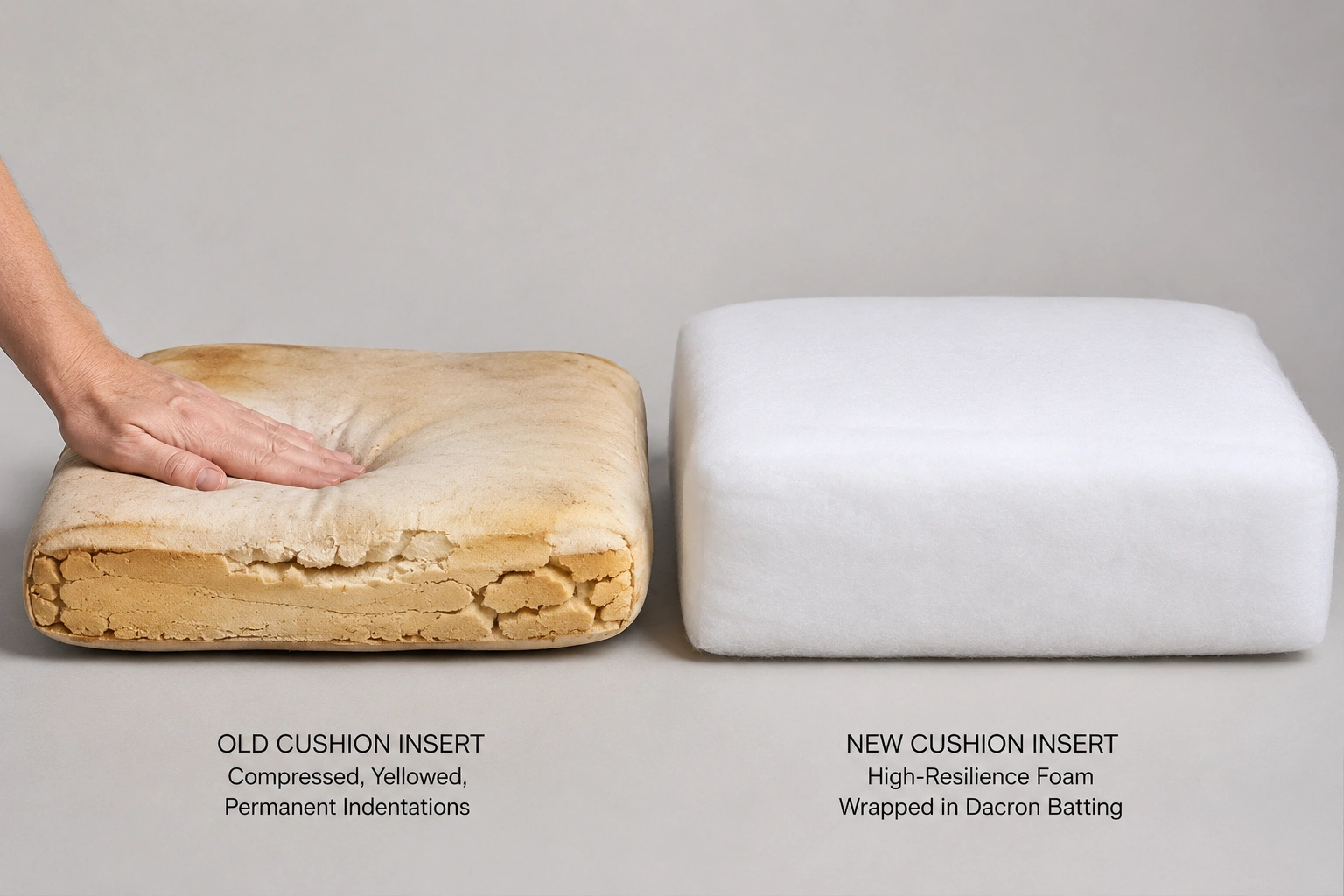
When to Replace Cushions vs. When to Keep Them
Not every uncomfortable cushion needs replacing. Some issues can be fixed with simple techniques. Here's how to determine whether new inserts are the right solution — or whether your existing cushions just need attention.
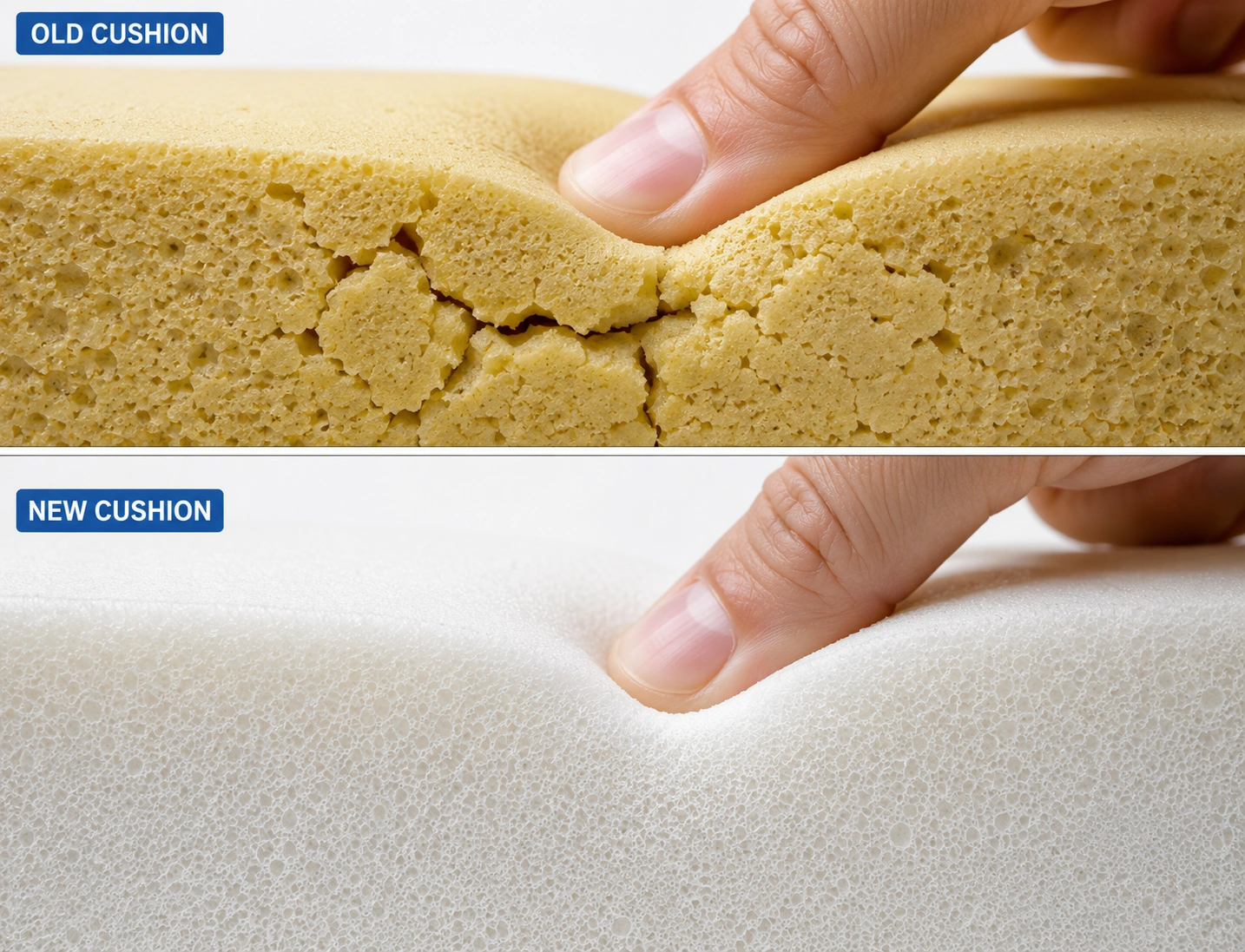
✓ Replace the Inserts When:
- The foam has permanent indentations that don't bounce back after pressing
- Cushions feel noticeably softer than when purchased — you sink to the frame
- The foam crumbles when you squeeze it (signs of decomposition)
- Seat cushions have lost more than 1 inch of their original height
- You've owned the sofa for more than 5 years with daily use
- The foam has a yellowed, brittle appearance when removed from the cover
→ Try These Fixes First When:
- Cushions look flat but still have springiness — try daily fluffing and rotation
- Back pillows have lost loft — add polyester fiberfill stuffing
- Only one spot is sagging — it may be a spring issue, not the cushion
- Cushions are uneven due to sitting in the same spot — rotate weekly for a month
- The sofa is less than 2 years old — contact the manufacturer about warranty
Understanding Cushion Fill Types
The material inside your cushions determines everything — comfort, durability, how quickly it breaks down, and how much it costs to replace. Choosing the right fill is the most important decision in this entire process.
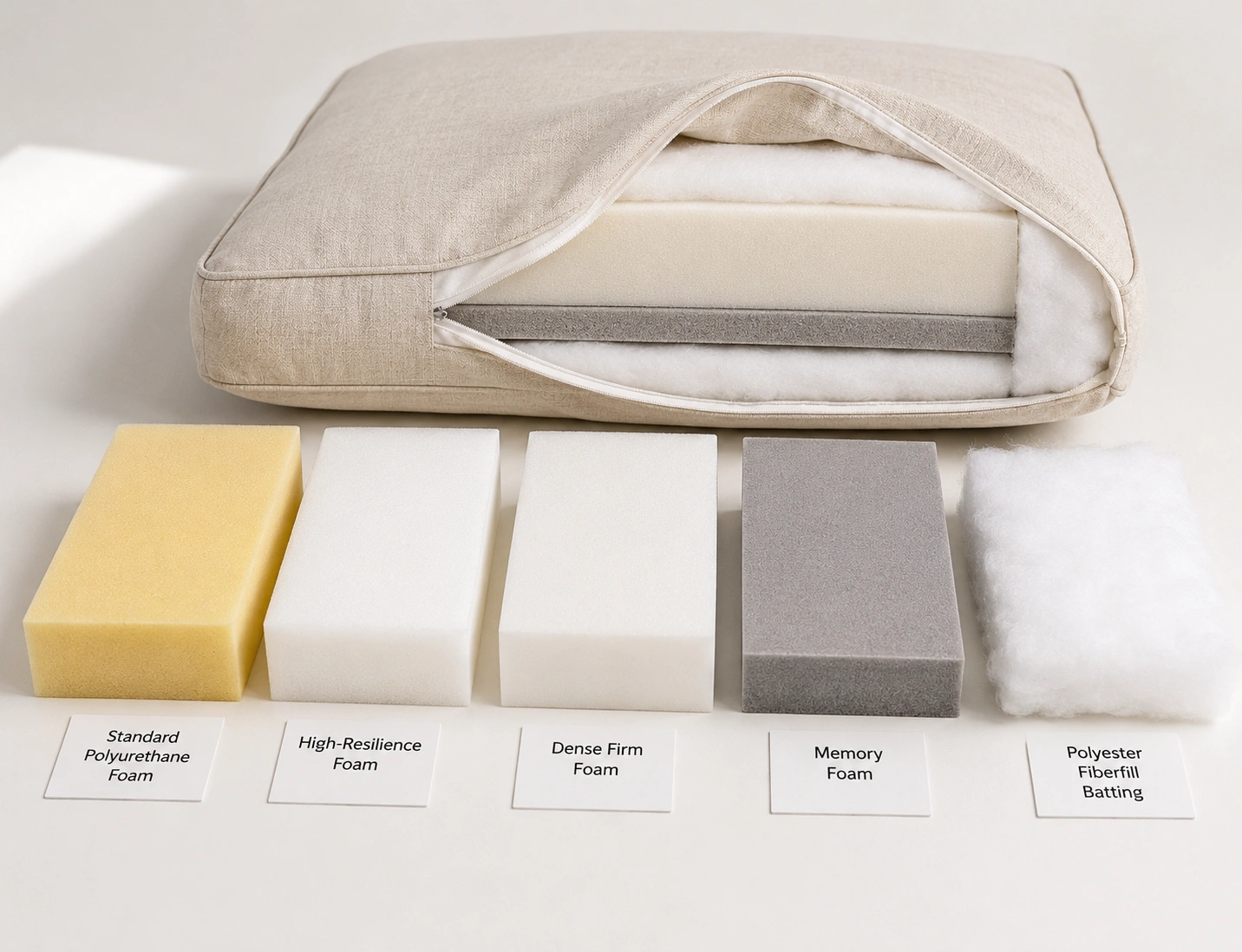
Foam Types Comparison
| Foam Type | Density Range | Comfort | Lifespan | Best For |
|---|---|---|---|---|
| Polyurethane (Standard) | 1.0–1.8 lb/ft³ | Soft to medium | 2–4 years | Budget / guest rooms |
| High Resilience (HR) | 2.0–2.8 lb/ft³ | Medium-firm | 5–8 years | Daily use sofas |
| High Density (HD) | 2.5–3.0 lb/ft³ | Firm | 7–10 years | Heavy use / families |
| Memory Foam | 3.0–5.0 lb/ft³ | Contouring | 5–8 years | Pressure relief / back pain |
| Dry Fast Foam | 1.5–2.0 lb/ft³ | Medium | 4–6 years | Outdoor sofas |
Non-Foam Fill Options
- Polyester fiberfill: Inexpensive, lightweight, and easy to add. Best for back pillows and throw cushions. Loses loft faster than foam — needs periodic refluffing or additional stuffing.
- Down and feathers: Luxuriously soft and moldable. Requires frequent fluffing. Not ideal as the sole support for seat cushions — typically wrapped around a foam core for the best result.
- Wrapped foam (foam core + Dacron wrap): The most popular construction in quality sofas. A firm foam core provides support while a polyester wrap adds softness and a rounded appearance. This is what we most recommend for replacement inserts.
- Spring-down cushions: A Marshall coil unit wrapped in down and fabric. Found primarily in luxury sofas. Expensive to replace but offers exceptional comfort and longevity.
How to Measure Sofa Cushions Accurately
Incorrect measurements are the number one reason replacement cushions don't fit properly. Cushions are not perfectly rectangular — they compress, curve, and taper. Follow this precise method to get it right the first time.
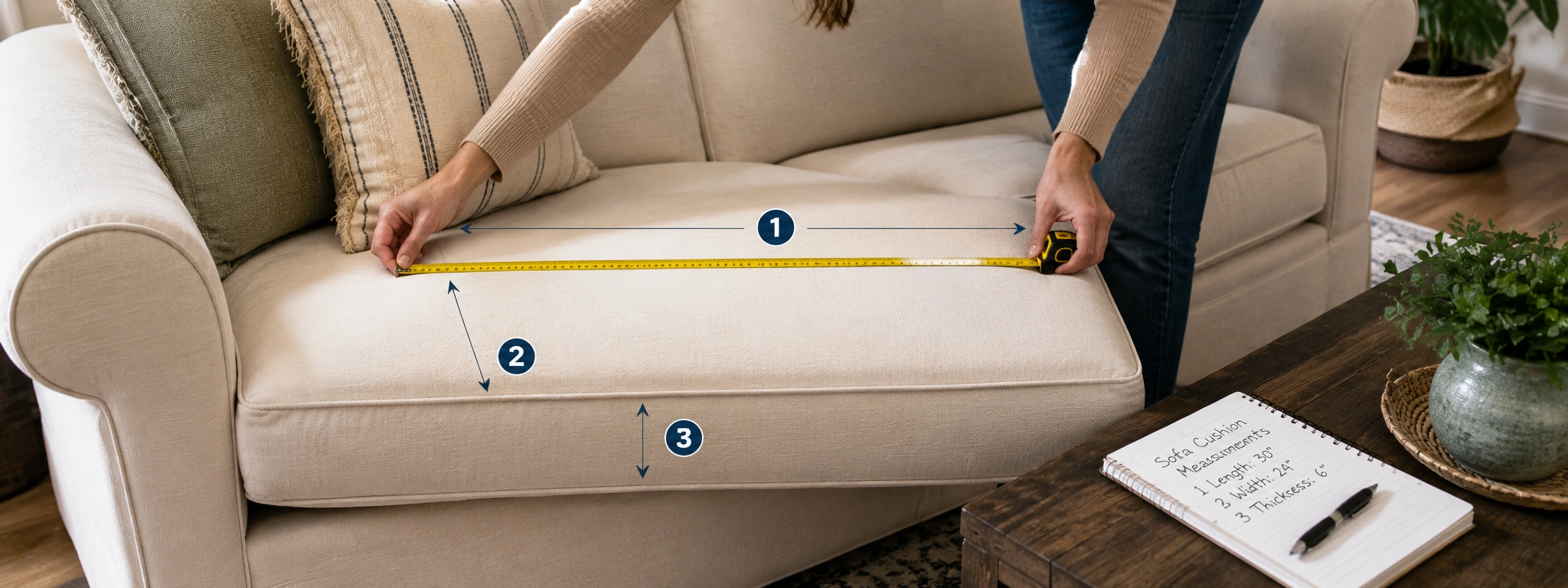
Length (Front to Back)
Measure from the front edge to the back edge along the top surface. Take measurements at the left side, center, and right side — use the largest number.
Width (Side to Side)
Measure across the widest part of the cushion. For T-cushions or curved shapes, measure at the widest point and note the shape.
Thickness (Height)
Measure from the bottom seam to the top seam at the center of the cushion. Do not compress — let the tape rest gently on the surface.
Add 1/2 Inch Over
Add 0.5 inch to your largest measurement in each dimension. This ensures a full, plump fit inside the cover without being too tight to zip.
Custom-Cut vs. Pre-Made Replacement Cushions
You have two paths when buying replacement cushions. Each has distinct advantages depending on your sofa type, budget, and how particular you are about fit and comfort.
Pre-Made Standard Cushions
- Available in standard sizes (e.g., 24"×24"×5", 22"×22"×4", 20"×20"×4")
- Lower cost — typically $25–$60 per cushion insert
- Faster delivery — often in stock and ships immediately
- Best for standard rectangular cushions on common three-seater sofas and loveseats
- Limited firmness options — usually medium density only
Custom-Cut Cushions
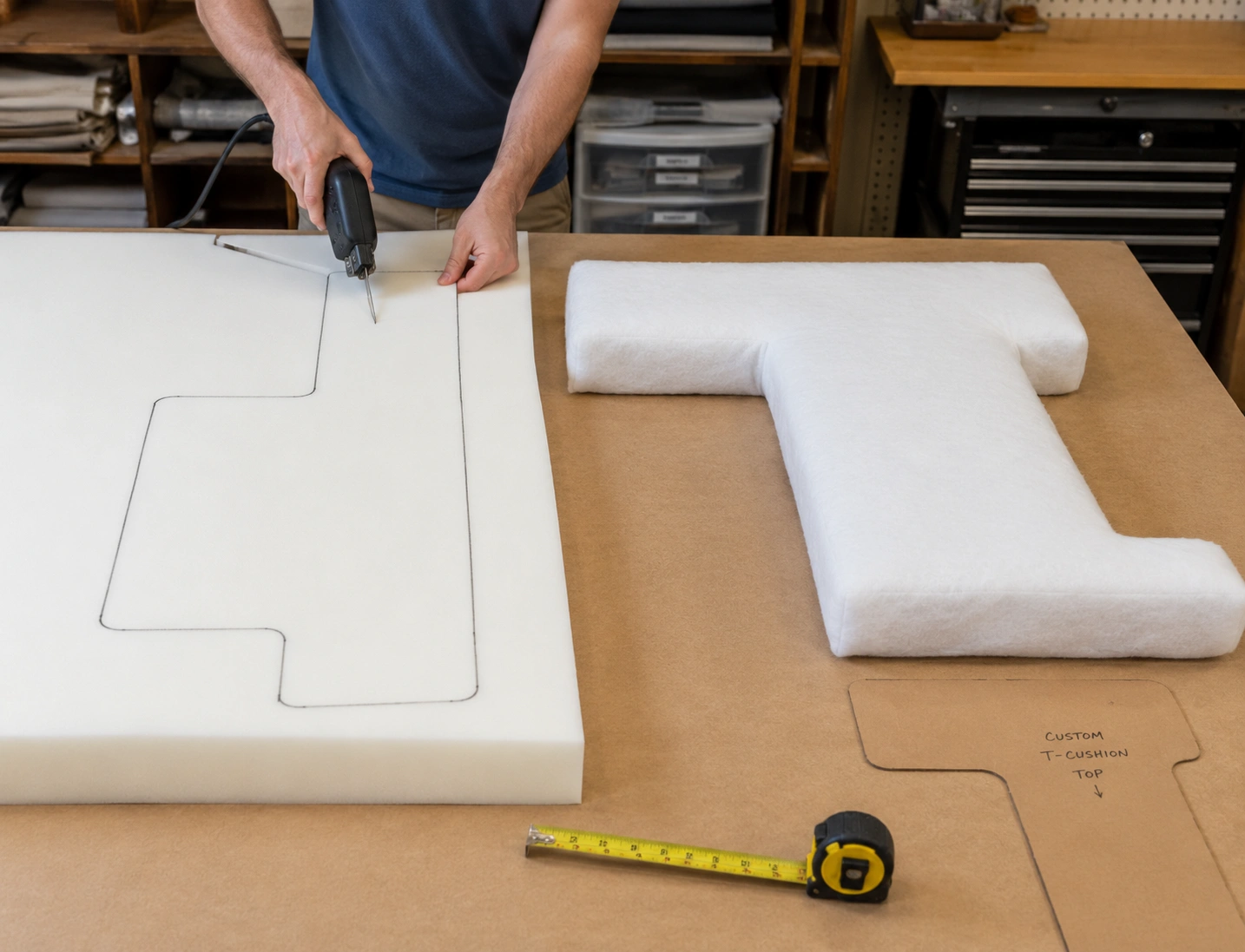
- Cut to your exact measurements — down to 1/8 inch precision
- Choose your density, firmness level, and wrap thickness
- Handles non-standard shapes: T-cushions, L-shaped, rounded, curved, angled
- Essential for sectional sofas, Chesterfield sofas, and modular sofas
- Higher cost — typically $50–$120 per insert depending on size and foam grade
- Production time — usually 3–7 business days before shipping
How to Install Replacement Cushions
Installing new cushion inserts is straightforward, but a few techniques make the process smoother and ensure the best possible result. Here's the complete process from unboxing to final adjustments.
Installation Steps
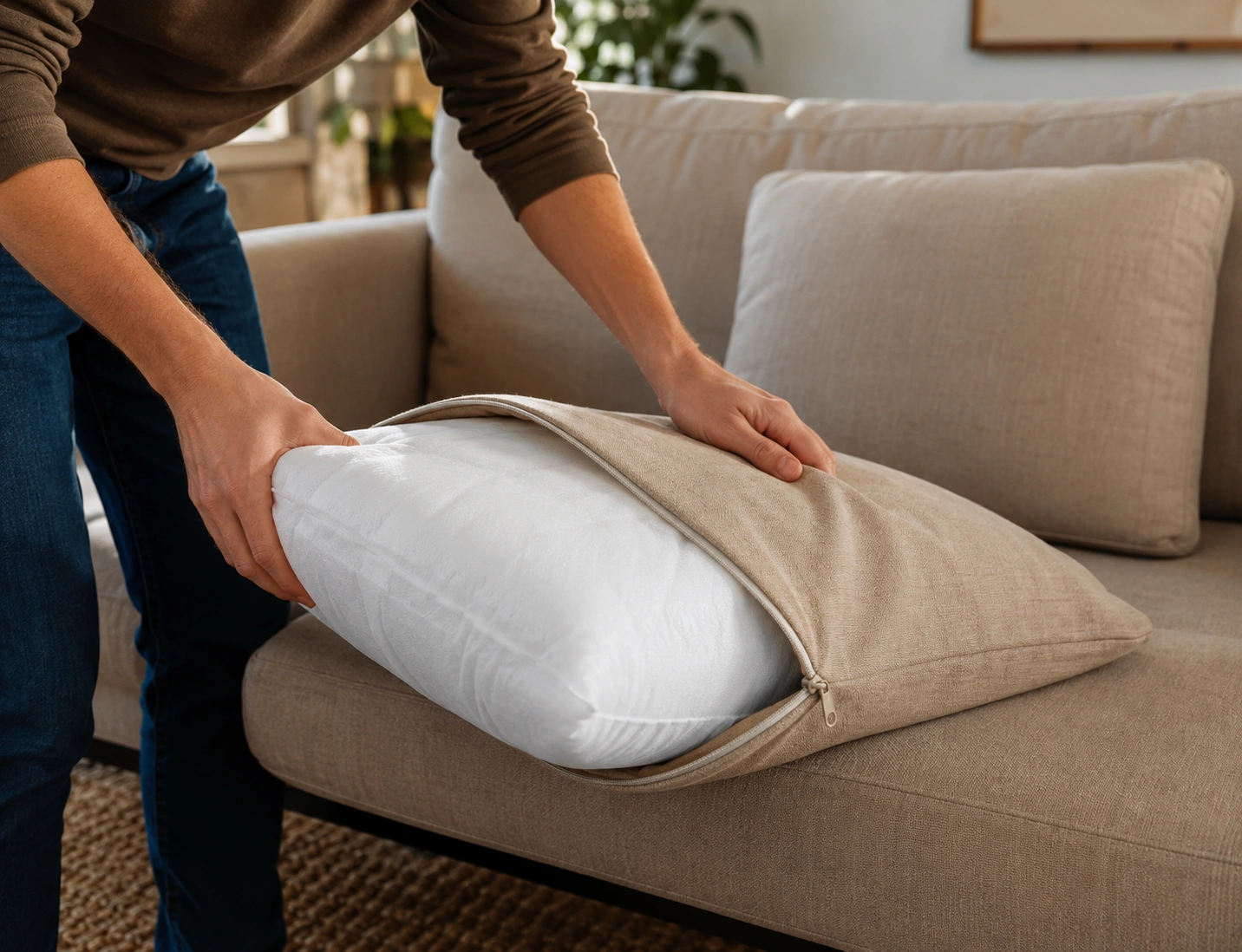
- Remove the old inserts. Unzip each cushion cover and pull out the old foam. If the cover has no zipper, look for a hidden zipper under a flap or seam. As a last resort, carefully open a seam with a seam ripper — you can re-sew it afterward.
- Inspect the covers. Check for tears, worn areas, or broken zippers. If the fabric is in poor condition, new inserts won't solve the appearance problem — consider sofa covers or professional reupholstery. If the covers are in good shape, move on.
- Vacuum the inside of the covers. Use an upholstery attachment to remove foam crumbs, dust, and debris that have accumulated inside. This prevents the new insert from sitting on a lumpy bed of old particles.
- Position the insert. If your new cushion has a Dacron wrap, make sure the seam of the wrap faces the back of the cushion (not the seating surface). For wrapped inserts, you may need to gently bend the foam to get it into the cover.
- Insert and adjust. Work the foam into the cover gradually — don't force it all at once. Push the corners into the cover corners first, then work the edges. Reach inside and smooth the Dacron wrap so there are no folds or lumps visible on the surface.
- Zip the cover. Close the zipper most of the way, then press down on the cushion surface to expel excess air. Finish zipping. If the zipper is very tight, the insert may be slightly oversized — check that the cover isn't straining at the seams.
- Place on the sofa and test. Sit on each cushion firmly. It should feel supportive with a slight give — not rock-hard and not bottoming out. Compare adjacent cushions for even height and firmness.
- Break-in period. New foam takes 1–2 weeks to soften slightly and settle. If cushions feel too firm initially, this is normal. If they still feel too firm after two weeks, you may want to go down one density level.
Seat Cushions vs. Back Cushions — Different Needs
Seat and back cushions serve fundamentally different purposes and should be filled differently. Using the same material for both is a common mistake that leads to either uncomfortable seats or unsupportive backs.
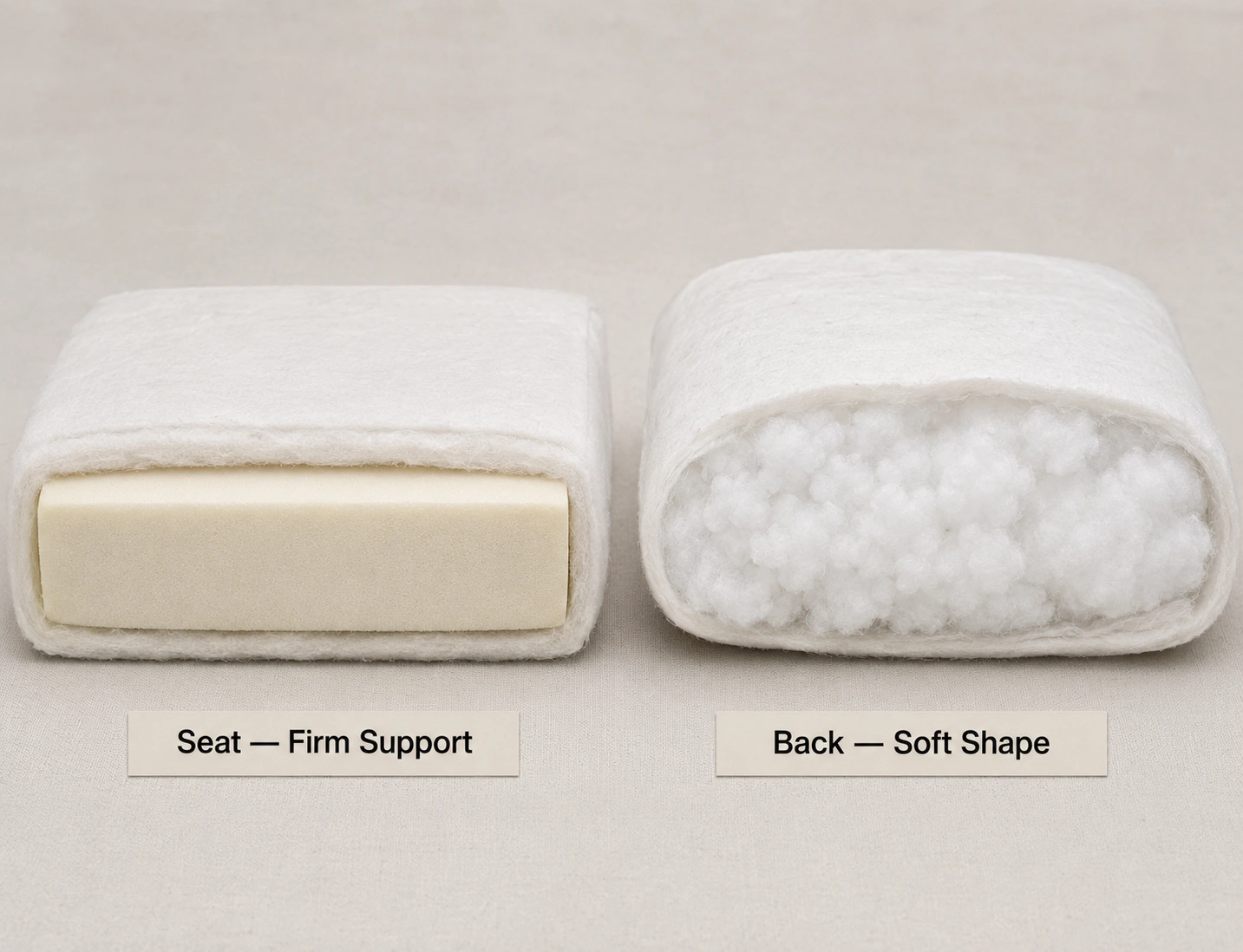
Seat Cushions — Need Firm Support
- Bear your full body weight — must resist bottoming out
- Recommended: HR or HD foam at 2.2–2.8 lb/ft³ density
- Wrapped in Dacron for a softer surface feel without sacrificing support
- Thickness typically 4–6 inches for standard sofas, up to 8 inches for deep-seat sofas
- Consider firm vs plush preferences — if you prefer a softer sit, go with 2.0 lb/ft³ wrapped foam rather than lower density
Back Cushions — Need Softness & Shape
- Provide lumbar support and visual fullness — don't bear significant weight
- Recommended: polyester fiberfill, or a soft foam core (1.5–1.8 lb/ft³) wrapped thickly in Dacron
- Down-wrapped options create the most luxurious, sink-in feel — popular for cloud couch styles
- Often less expensive to refresh than seat cushions — sometimes adding fiberfill is enough
- For attached back cushions (non-removable), the fix is more involved — see our sofa problems guide for alternatives
Special Cushion Replacement Scenarios
Not all cushions are simple rectangles. Some sofa types require specific replacement approaches, and certain use cases demand different fill choices for optimal results.
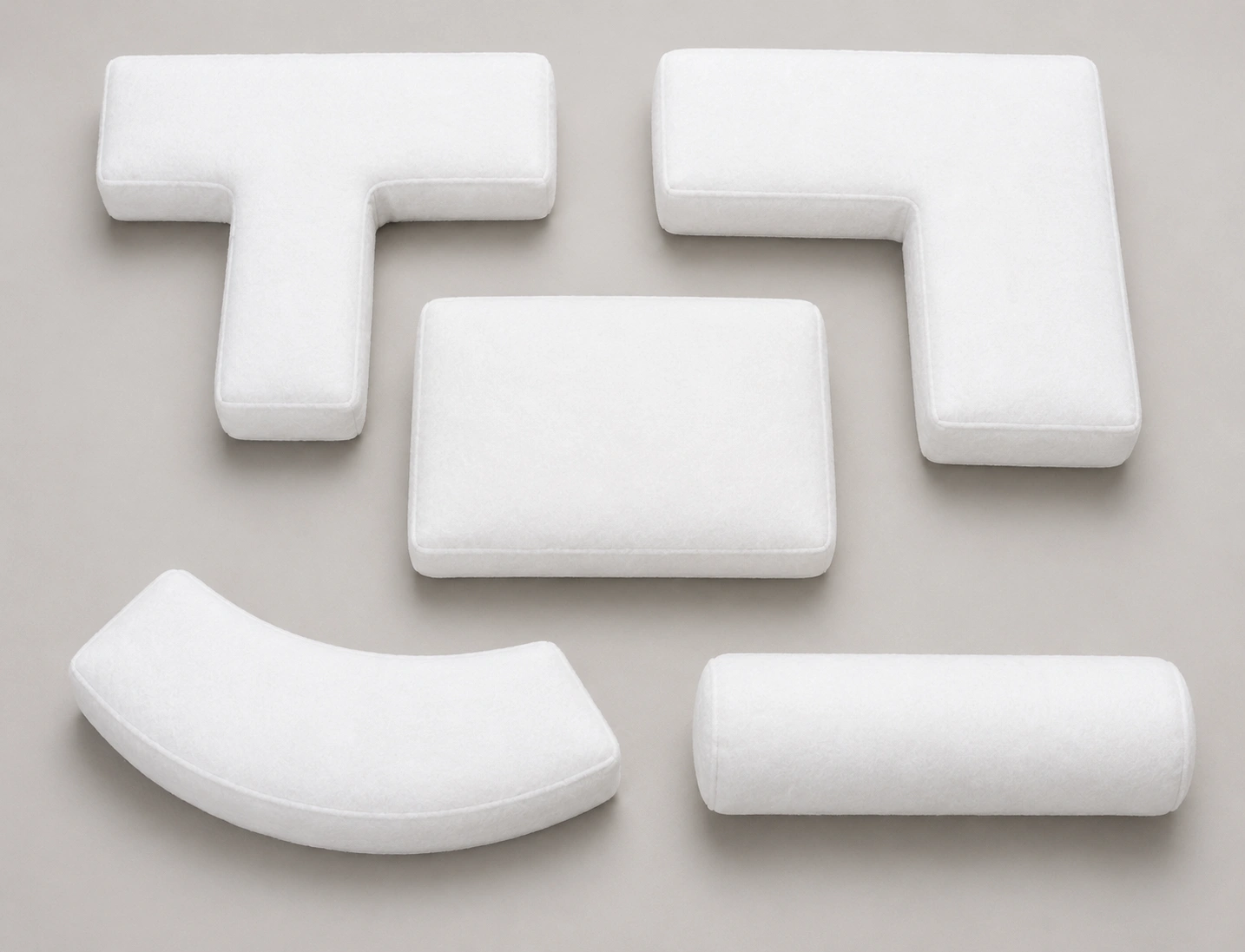
T-Cushions & Curved Shapes
- T-cushions extend beyond the sofa arm — the front edge has wings that wrap around the armrest
- Must be custom-cut — pre-made cushions will not fit this shape
- Create a cardboard template by tracing the cushion shape, then send it to the foam supplier or use it to cut yourself
- Common on traditional and Chesterfield-style sofas
Sofas for Specific Lifestyles
- Pet owners: Choose high-density foam (2.5+ lb/ft³) that resists permanent indentation from pets jumping up. Pair with pet-proof covers for maximum protection.
- Families with children: Go with HR foam wrapped in Dacron — durable, easy to clean covers, and maintains shape under varied use. Consider washable sofa cushion covers.
- Daily napping: A softer foam (2.0 lb/ft³) or memory foam topper on a medium base creates a comfortable surface for extended lounging without sacrificing all support.
- Back pain sufferers: Firmer foam (2.5–3.0 lb/ft³) provides better spinal alignment. Avoid soft, deep cushions that cause you to slouch. Pay attention to seat depth as well — cushions that are too deep force poor posture.
- Outdoor sofas: Must use dry-fast foam that doesn't retain water. Standard foam will become waterlogged, grow mold, and deteriorate quickly.
Replacement Cushion Cost Breakdown
Understanding what you should expect to spend helps you budget appropriately and avoid overpaying. Here are typical costs for different scenarios and quality levels.
Basic Pre-Made Insert
Standard polyurethane foam, common sizes only. Suitable for guest rooms or occasional use. Density typically 1.5–1.8 lb/ft³.
HR Foam Wrapped Insert
High-resilience foam with Dacron wrap, custom-cut to your measurements. The best value for daily-use sofas. Density 2.0–2.5 lb/ft³.
Premium / Specialty Insert
High-density foam, memory foam layers, down wraps, spring-down units. For luxury feel or specific needs like back pain support.
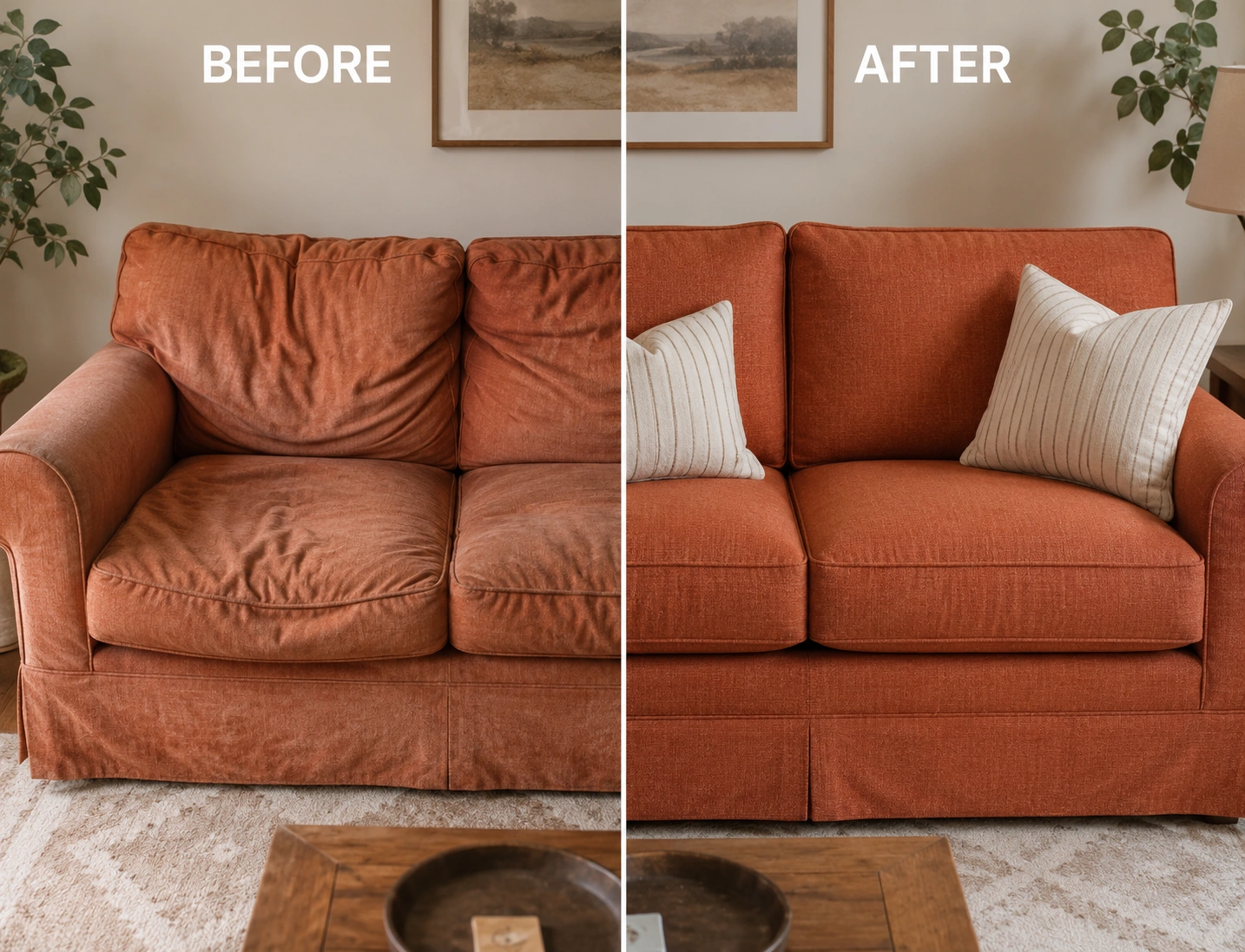
What to Expect After Cushion Replacement
Replacing cushions transforms more than just comfort. Here's what changes — and what doesn't — so you can set realistic expectations for your project.
What Will Improve
- Sitting comfort: The most dramatic and immediate change — proper support returns, you stop bottoming out, and the sofa feels new again
- Cushion appearance: Plump, full cushions make the entire sofa look newer and more expensive
- Posture support: Firm, resilient foam supports proper spinal alignment, reducing back fatigue
- Even seating: Matching new inserts across all seats eliminates the "one saggy spot" problem
- Confidence in your sofa: You'll stop hesitating before sitting down or apologizing to guests
What Will NOT Change
- Upholstery condition: Worn fabric, stains, or fading remain — consider professional cleaning or slipcovers if the fabric looks tired
- Frame problems: Squeaky joints, wobbly legs, or broken springs are separate issues — see our common problems guide
- Sofa dimensions: Cushion replacement doesn't change the size or layout of your sofa — if it doesn't fit your room, that's a different conversation
- Overall style: New cushions maintain the same look. If you want a style change, that requires new upholstery or a new sofa
Frequently Asked Questions
Can I replace cushion inserts without replacing the covers?
Yes, in most cases. As long as the cushion covers are in good structural condition — no torn seams, broken zippers, or severely worn fabric — you can simply remove the old inserts and put new ones in. This is the most common and affordable approach. If the covers are worn, you can often order replacement cushion covers separately from the inserts.
How much firmer will new cushions feel compared to my old ones?
New cushions will feel noticeably firmer — often surprisingly so. This is normal. Foam softens by 15–20% during the first few weeks of use (called "foam fatigue" or break-in). If you choose the correct density for your weight and preference, the cushions will settle into a comfortable medium-firm feel after the break-in period. If you're deciding between two densities, understand the firm vs plush tradeoff — it's easier to soften a slightly-too-firm cushion than to fix one that's too soft.
What foam density should I choose for my weight?
As a general guideline: under 150 lbs — 1.8–2.0 lb/ft³, 150–200 lbs — 2.0–2.5 lb/ft³, over 200 lbs — 2.5–3.0 lb/ft³. However, density is just one factor — the ILD (Indentation Load Deflection) rating also matters. A higher ILD number means firmer feel at the same density. When ordering custom cushions, provide your weight and preference to the supplier so they can recommend the right combination.
Can I cut foam myself to save money?
Yes, with the right tool. An electric carving knife (the kind used for turkey) cuts foam cleanly and smoothly. Never use a regular knife — it tears the foam and leaves ragged edges. Mark your measurements clearly on the foam with a marker, cut just outside the line, and test-fit before trimming further. You can only make it smaller, not bigger. For complex shapes like T-cushions, the cost savings may not justify the effort and risk of mistakes.
Will replacement cushions fix a sofa that sags in the middle?
Maybe — but not always. If the sag is caused by compressed foam, new inserts will fix it. If the sag is caused by a broken spring, stretched webbing, or a cracked frame, new cushions alone won't solve the problem. To diagnose: remove the cushions and press down on the base. If the base itself sags, the issue is structural — see our guides on spring replacement and frame repair.
How long do replacement cushions last?
It depends entirely on the foam quality you choose. Standard polyurethane foam (1.5 lb/ft³) lasts 2–4 years. High-resilience foam (2.2 lb/ft³) lasts 5–8 years. High-density foam (2.8+ lb/ft³) lasts 7–10 years. This is why investing in better foam pays off over time — the cost difference between standard and HR foam is usually only $15–$25 per cushion, but the lifespan doubles. Understanding price vs quality in foam is just as important as in the sofa itself.
Do I need to replace back cushions at the same time as seat cushions?
Not necessarily. Seat cushions bear the brunt of wear and almost always need replacement first. Back cushions often just need refluffing or additional polyester fiberfill stuffing, which costs under $10. However, if the back cushions are visibly flat, misshapen, or the fabric covers look tired, replacing everything at once gives the most dramatic and satisfying result.
Protect Your Investment: New cushions deserve proper care to maximize their lifespan. Apply fabric protection spray to the covers, rotate cushions weekly, and follow our complete sofa maintenance guide for routine care. For leather sofas needing cushion refresh, see our leather cleaning guide for cover care instructions that won't damage the material.


