
3 Seater Sofa: The Complete Buying Guide
The gold standard of living room seating — everything you need to know about dimensions, materials, comfort, and placement for your home.
The 3 seater sofa is the most popular sofa size in the world — the default choice for primary living rooms, family rooms, and apartments. Designed to seat three adults comfortably side by side, it occupies the sweet spot between compact 2-seaters and expansive sectionals. Understanding the nuances of 3-seater sizing, materials, and construction quality helps you avoid the common mistake of buying a sofa that's either too big for your room or too small for your household.
📑 Table of Contents
1. What Is a 3 Seater Sofa?
A 3 seater sofa is an upholstered seating unit designed to accommodate three adults sitting side by side. It features three separate seat cushions (or one long continuous cushion), two armrests, and a full upholstered back. The 3 seater is the benchmark sofa size in most countries — when someone says "I need a sofa for my living room," this is the size they mean.
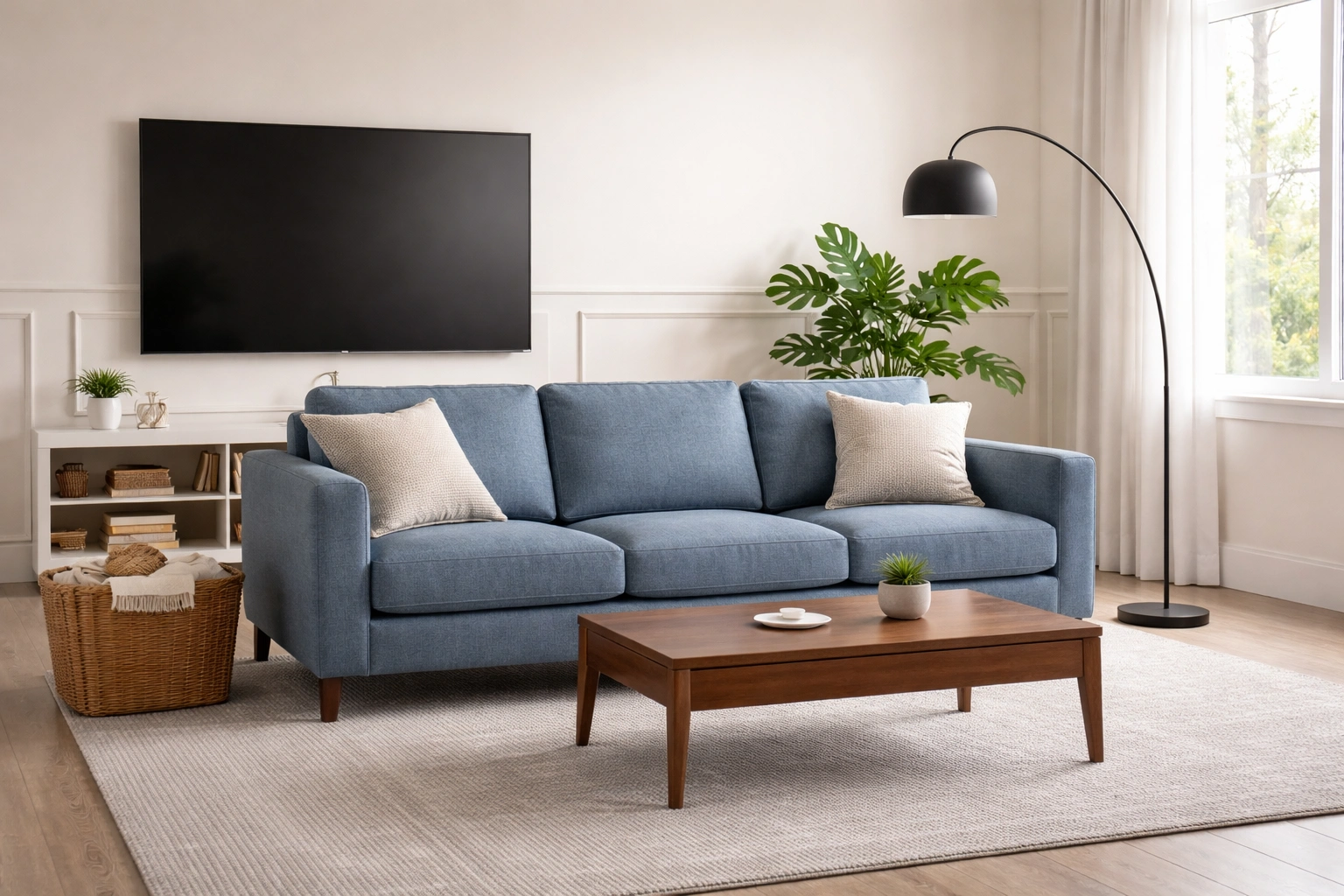
What sets a quality 3 seater apart from cheaper alternatives is the proportional balance between seat width, seat depth, back height, and armrest height. A well-designed 3 seater provides 24–28 inches of seat width per person, which is wide enough for two adults to sit comfortably without feeling cramped. Unlike smaller sofas where you may need to choose between personal space and shared seating, a 3 seater delivers both.
Today, the 3 seater is available in virtually every design style from contemporary to vintage, and from industrial. It can serve as the anchor piece in a living room layout, function as primary seating in a family room, or provide guest-ready functionality as a 3-seater sleeper. The versatility is unmatched by any other single sofa size.
2. 3 Seater vs. Smaller & Larger Sofas
Understanding how a 3 seater compares to other sizes helps confirm it's the right choice for your space. Here is how it stacks up:
vs. 2 Seater
- Width:50–65 inches
- Seats:2
- Best for: Small apartments, couples, supplement seating
3 Seater (Standard)
- Width:72–84 inches
- Seats:3
- Best for: Primary living rooms, most households
4 Seater
- Width:90–100 inches
- Seats:4
- Best for: Large rooms, families, hosting
Size Reality Check: Going from a 2-seater to a 3-seater adds roughly 18–24 inches of width — make sure your room can handle it before buying. If a 3-seater feels too large for your space, consider a armless 3-seater to save 8–12 inches of armrest width without losing a seat.
3. Types of 3 Seater Sofas
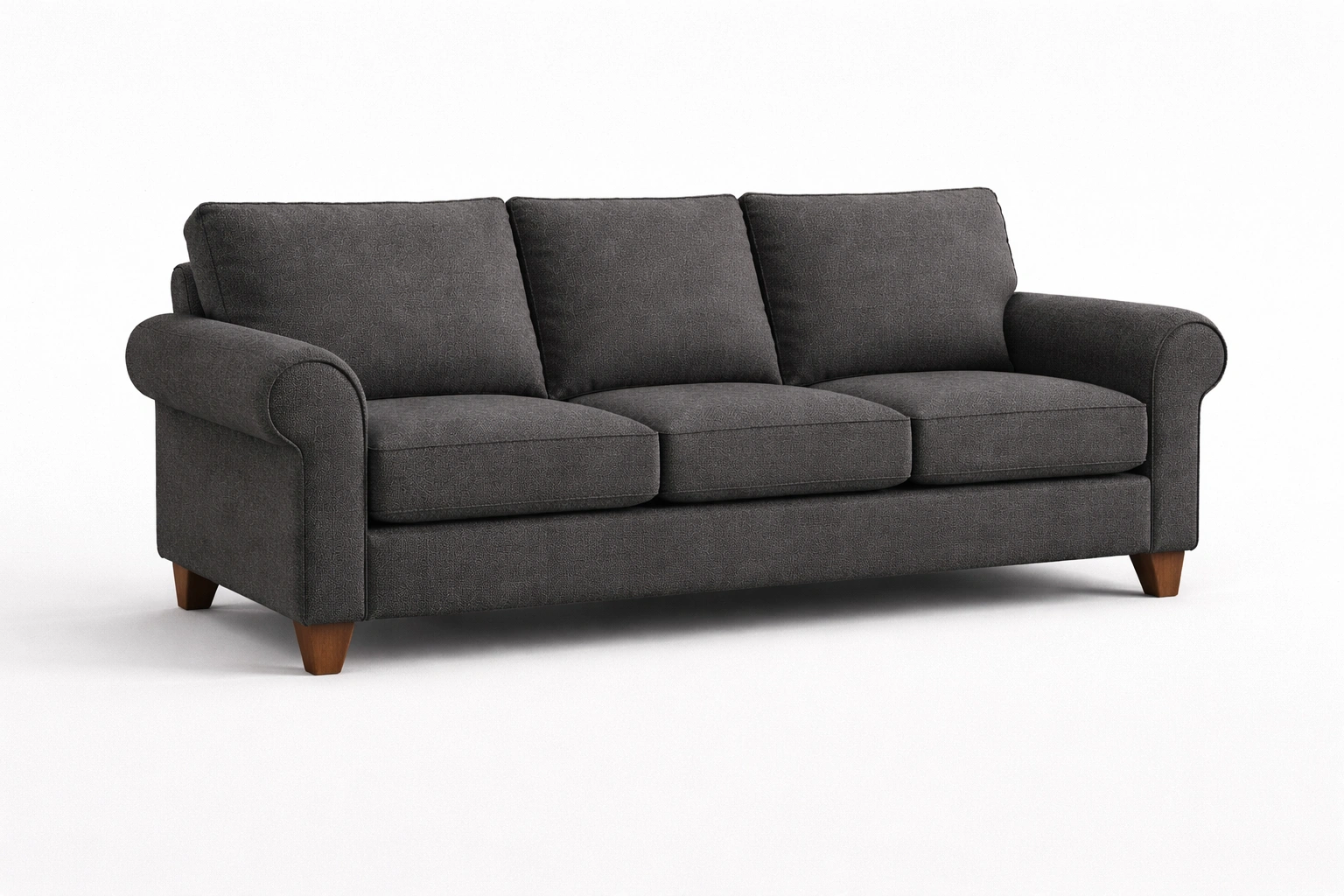
Standard 3 Seater
The classic three-seat design with two armrests and individual cushions. The most common and versatile option, available in every neutral tone and a wide range of materials.
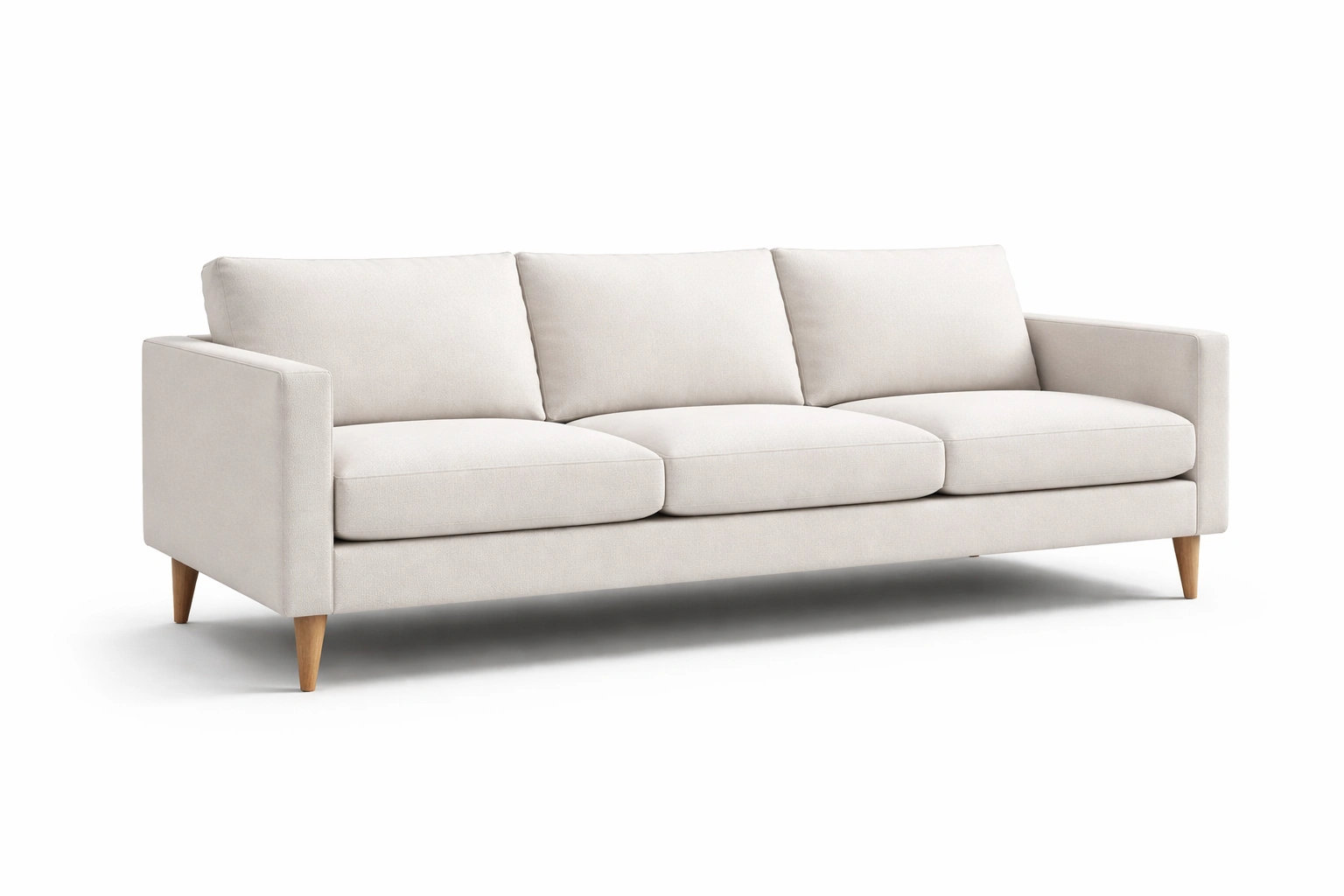
Modern 3 Seater
Clean lines, tapered legs, and low profile. Perfect for modern and contemporary interiors seeking a streamlined look.
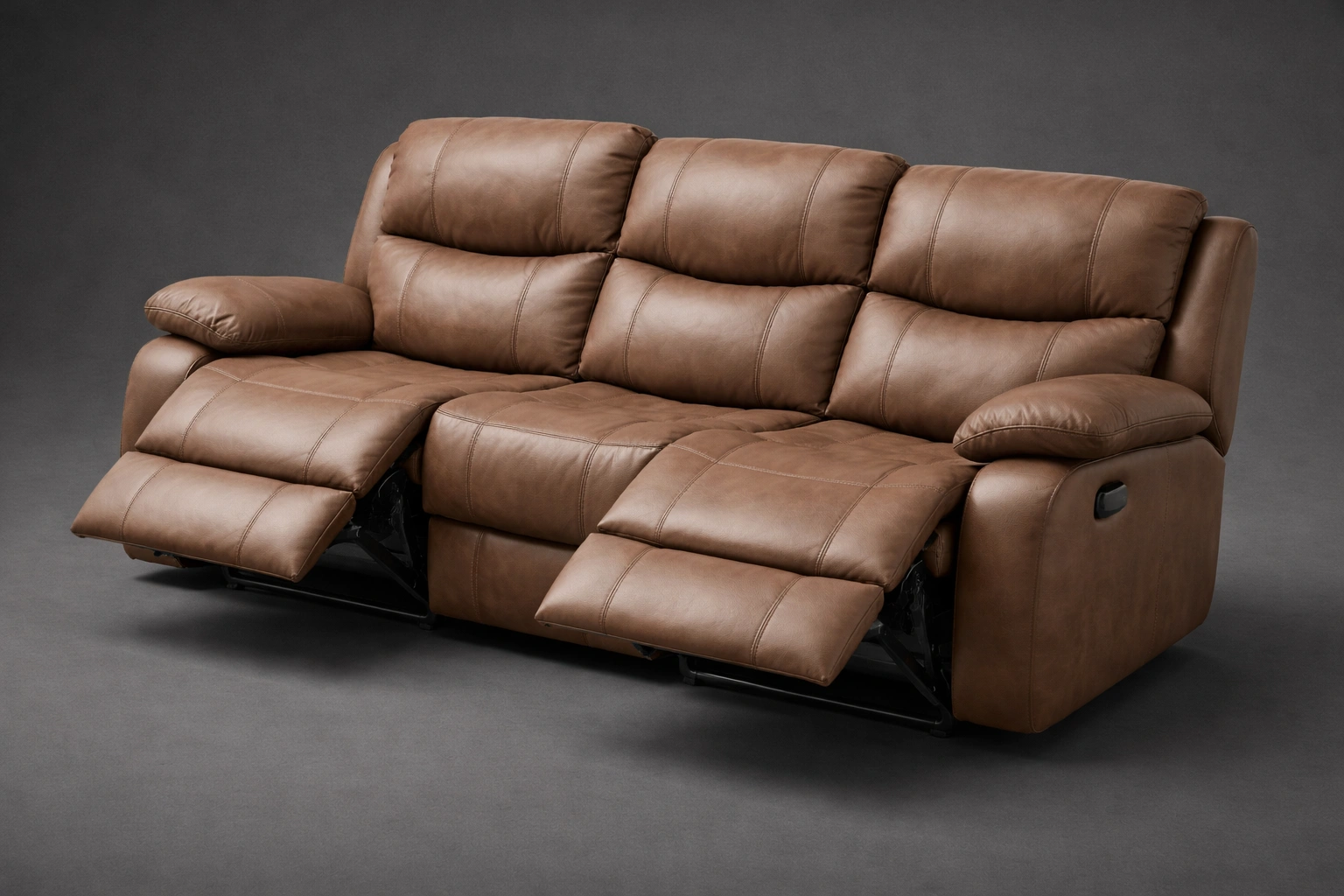
3 Seater Recliner
Combines three-seat capacity with recliner functionality. Available in manual and power options for home theaters and relaxation spaces.
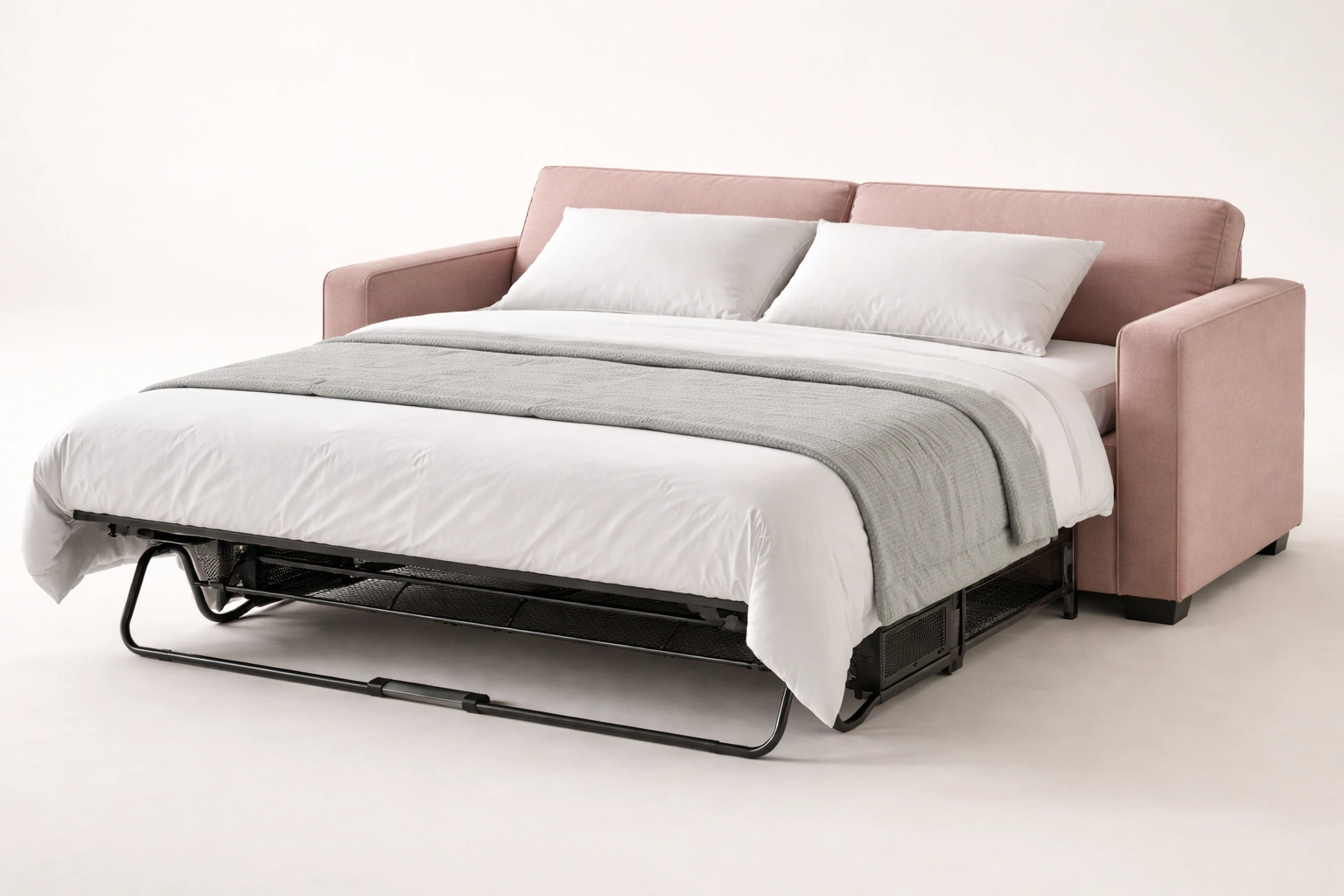
3 Seater Sleeper
A sleeper sofa that opens to a full or queen bed. The ultimate dual-purpose piece for guest rooms and studios.
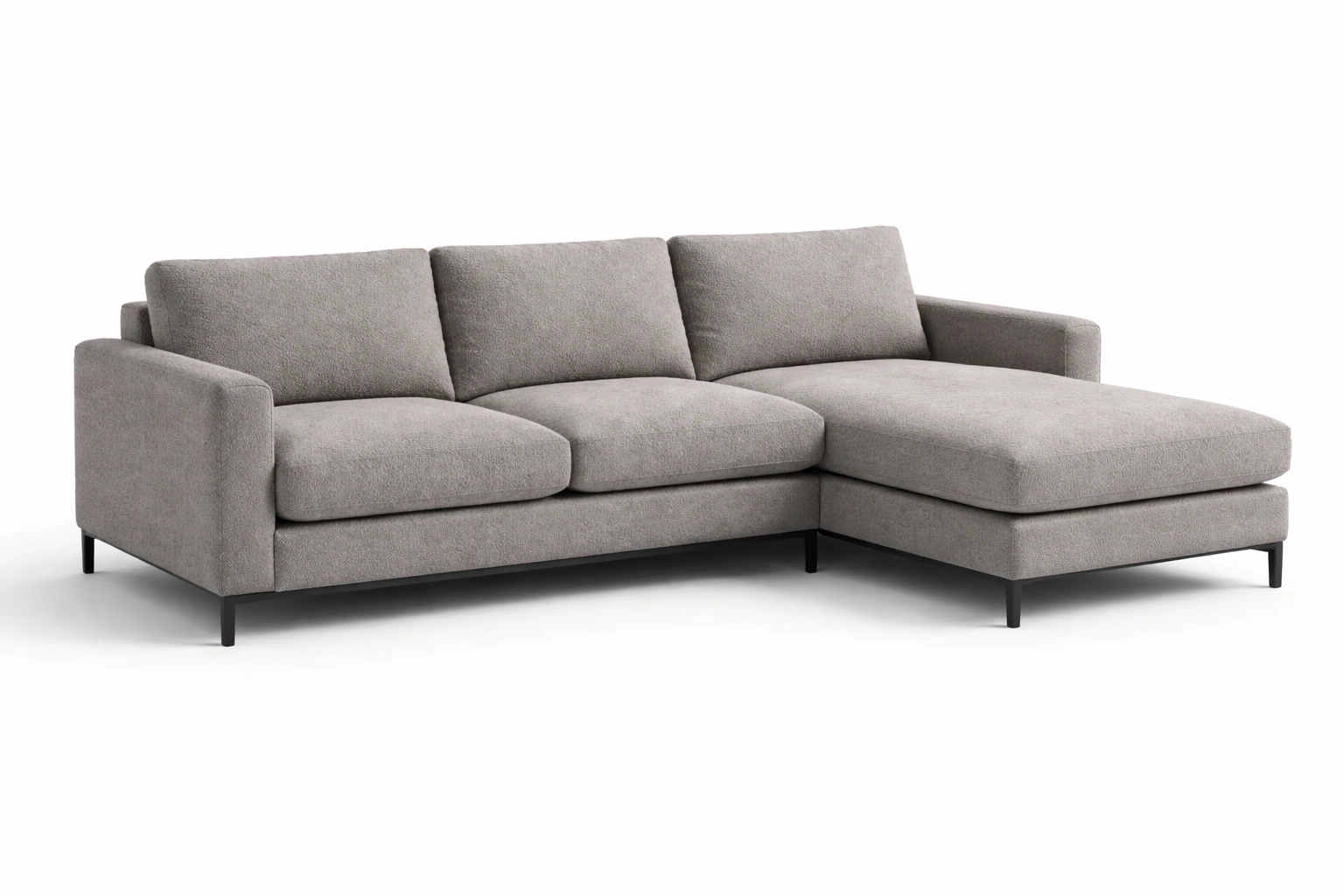
3 Seater Chaise
A 3-seater paired with an extended chaise lounge for one person to lounge while two others sit upright. Great for mixed-use living rooms.
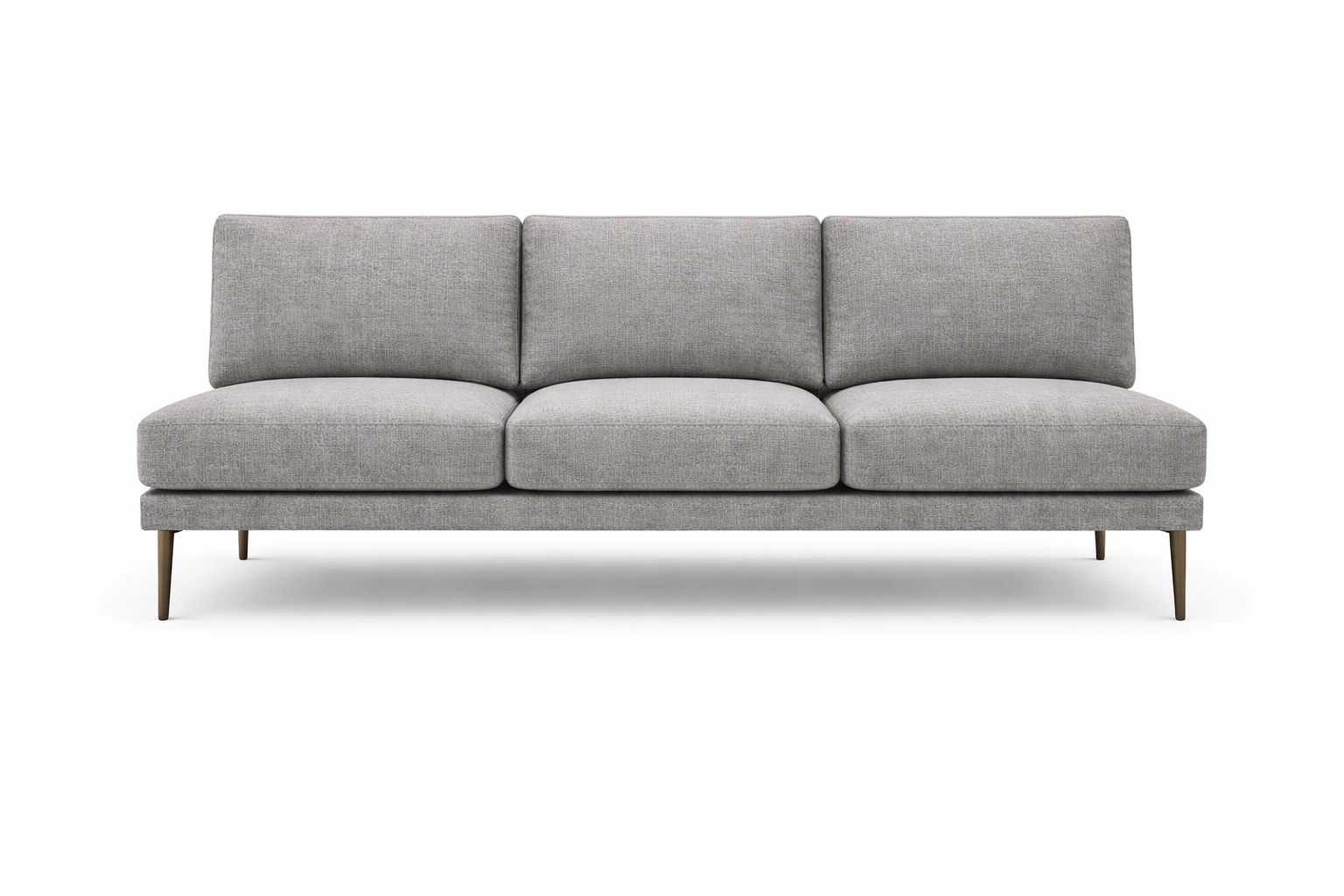
Armless 3 Seater
Removes armrests to save 8–12 inches of width. An armless sofa maximizes seating in tight spaces without sacrificing seat comfort.
4. Who Should Buy a 3 Seater Sofa?
- Most households — The 3 seater is the default choice for primary living rooms because it seats three people without overwhelming standard room proportions. If you're buying your first sofa or upgrading from a smaller piece, a 3-seater is the logical next step.
- Families with kids — Spills, food stains, and general wear are inevitable. A 3-seater with performance fabric or washable covers handles daily life better than any fixed-upholstery. See best sofas for families.
- Pet owners — A 3-seater in pet-friendly fabric gives your pets a comfortable spot without the anxiety of ruining an expensive piece. Add pet-proof covers for extra protection.
- First-time buyers — If you're unsure about size, starting with a 3-seater is the safest bet. It's the most common size, so there's more selection, more reviews, and better resale value than unusual sizes.
- Budget shoppers — A quality 3 seater at $600–$1,200 offers better per-seat value than a cheap 5-seater at the same price. See the sofa budget guide for planning.
- Senior buyers — The 3-seater's moderate seat height makes it easier to sit down and stand up compared to low-profile modern designs. See sofas for seniors.
Pro Tip: Before committing to a 3-seater, test it with painter's tape on the floor in your room for 48 hours. This shows you how the size feels in the actual space before you buy. Our what sofa size for my room calculator helps you determine the ideal dimensions.
5. Pros & Cons
✅ Advantages
- The universal standard — Fits in most living rooms without measuring
- Great value per seat — More seating per dollar than larger sofas
- Easy to find — Available everywhere from budget to luxury retailers
- Simple logistics — Fits through standard doorways without professional movers
- Reupholsterable — Lower cost to reupholster than larger sofas li>Wide design range — Available in every style from modern to Chesterfield
❌ Disadvantages
- Takes significant wall space — Requires 7–8 feet of clear wall space in most layouts
- Limited lounging — Most standard models are too shallow for full-body lounging; for that, you need a deep-seat version
- Fixed configuration — You cannot rearrange the layout like a modular sofa
- Heavier to move — At 100–180 lbs, it's a two-person job to relocate
- Overwhelming in tiny rooms — In studios under 400 sq ft, a standard 3-seater can dominate the entire space
- Not a conversation starter — Three people on one sofa can discourage intimate conversation compared to two separate chairs

The Comfort vs. Size Trade-off: If you prioritize lounging and spaciousness, consider a deep-seat 3-seater (26+ inch depth) or a small sectional. If upright seating for conversation and posture matter more, a standard-depth 3-seater (20–22 inches) is the better choice. See the standard vs deep seat comparison for a detailed analysis.
6. Size Guide & Dimensions
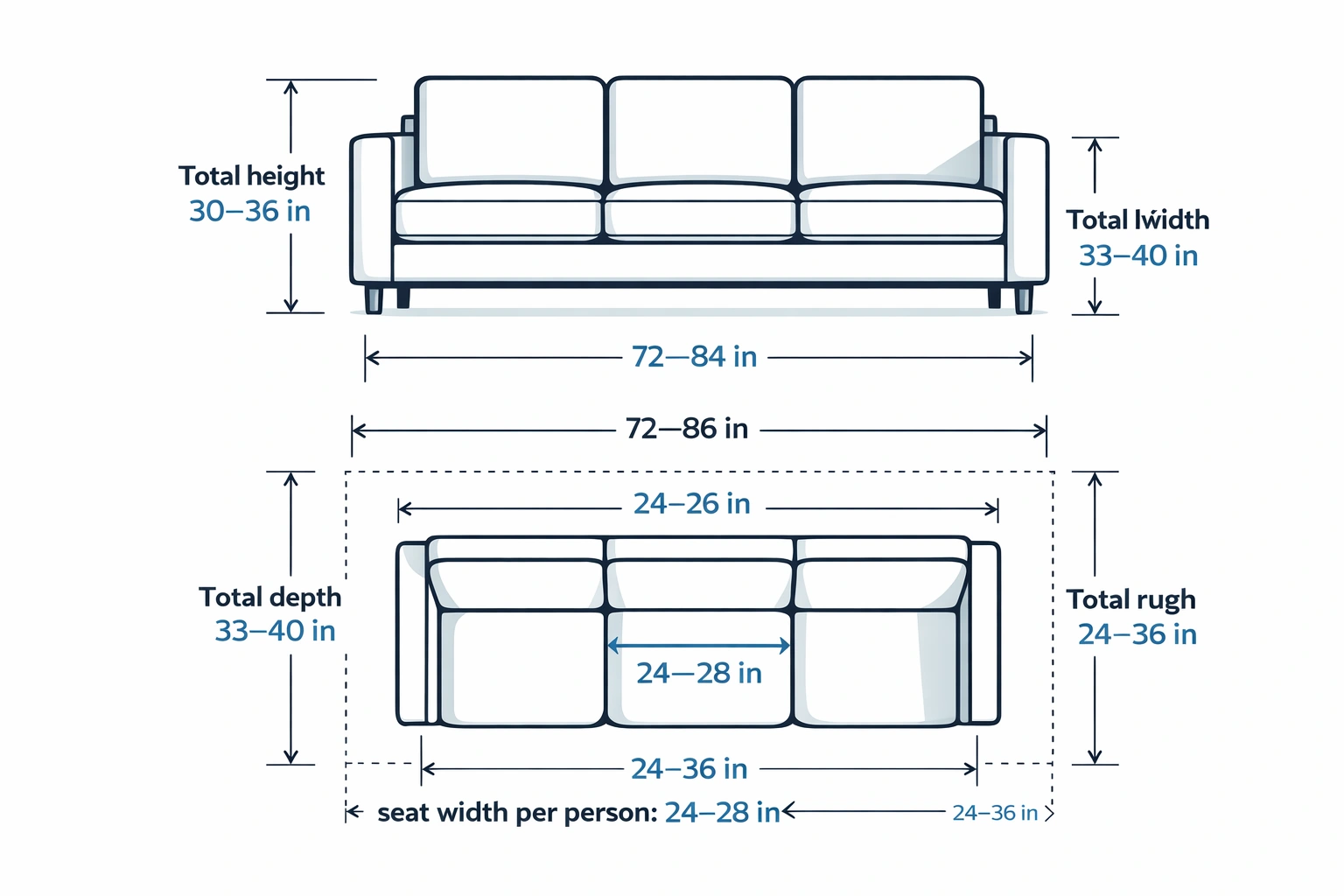
Getting dimensions right is the single most important factor in your purchase decision. A 3 seater that's too large for your room creates cramped walkways; one that's too small looks lost in the space. Always measure the total footprint plus clearance on all sides before buying.
| Category | Total Width | Total Depth | Height | Seat Depth | Best Room |
|---|---|---|---|---|---|
| Compact 3-Seater | 66–72 in | 30–34 in | 30–33 in | 19–21 in | Small rooms, studios |
| Standard 3-Seater | 72–84 in | 33–40 in | 31–36 in | 21–24 in | Most living rooms |
| Wide 3-Seater | 86–96 in | 36–42 in | 32–38 in | 23–28 in | Large rooms, families |
| Deep-Seat 3-Seater | 72–84 in | 40–46 in | 30–34 in | 27–30 in | Lounging priority |
| 3-Seater Recliner | 76–86 in | 36–40 in (closed) | 34–40 in | 20–22 in | Theaters, relaxation |
| 3-Seater Sleeper | 72–84 in | 33–38 in (sofa) / 90+ in (bed) | 30–34 in | 20–23 in | Guest rooms, studios |
⚠️ Critical Sizing Mistake: Don't measure only wall space. Add at least 30 inches of clearance for walkways and 24 inches for other furniture. For tight layouts, a slim armless 3-seater can save 10+ inches of floor space without sacrificing seat comfort.
7. Best Materials for 3 Seater Sofas
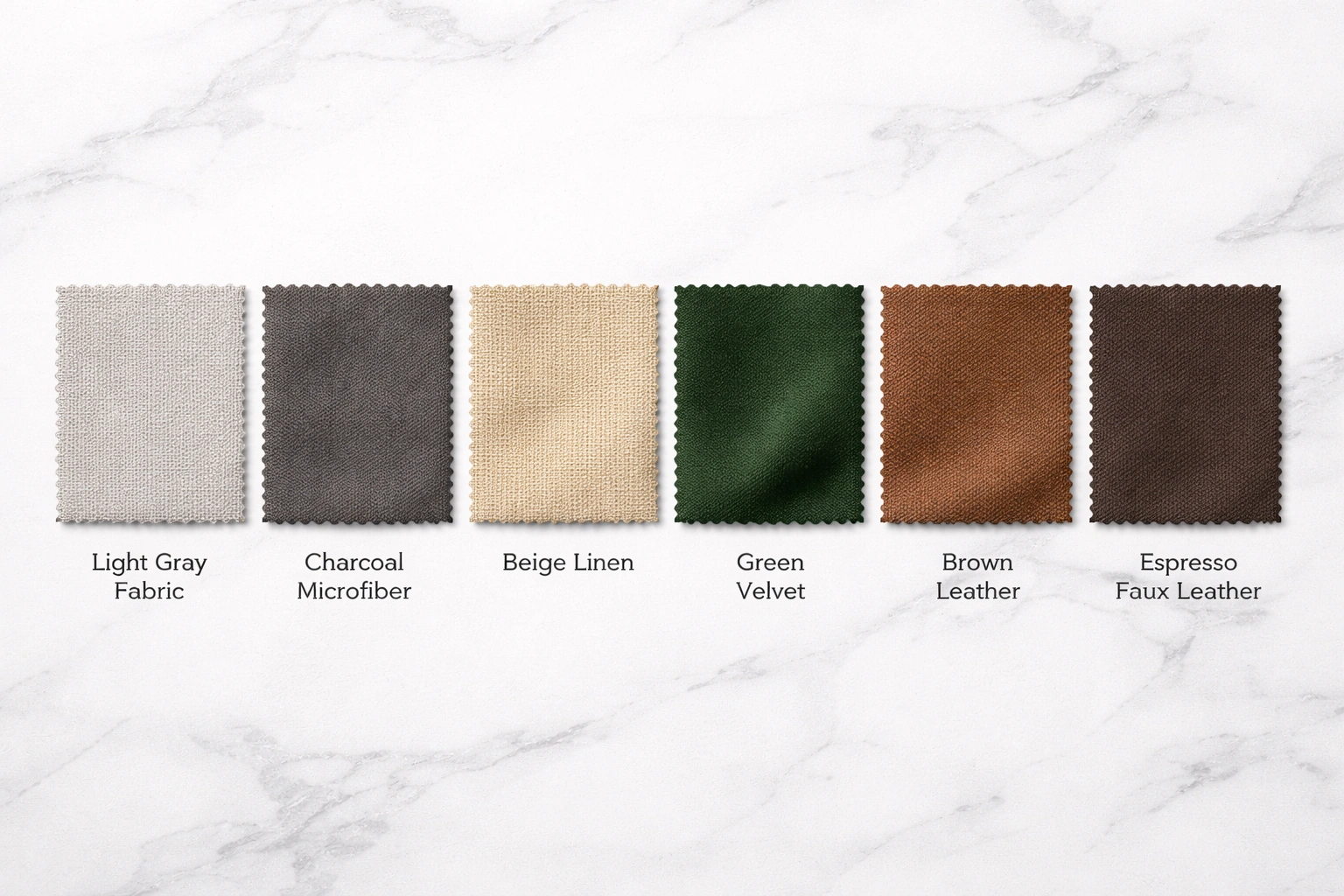
The 3 seater's larger surface area means material quality has an outsized impact on both initial appearance and long-term durability. Because you're covering significantly more fabric than a 2-seater, choosing the right material is even more important. Here's how the options compare for 3-seater use:
| Material | Durability | Maintenance | Best For | Price Range |
|---|---|---|---|---|
| Performance Fabric | Excellent (50,000+ rubs) | Easy — stain resistant | Families, pets, daily use | $600–$1,500 |
| Microfiber | Very Good (40,000+ rubs) | Easy — stain resistant | Budget, pet owners | $250–$700 |
| Linen | Moderate (12,000–20,000) | Difficult — wrinkles, stains | Coastal, relaxed spaces | $400–$1,000 |
| Velvet | Moderate (15,000–25,000) | Moderate — shows marks | Accent, low-traffic rooms | $400–$1,100 |
| Genuine Leather | Excellent (15–25 yrs) | Moderate — needs conditioning | Offices, formal rooms | $800–$2,500 |
| Faux Leather | Good (3–7 yrs life) | Easy wipe clean | Budget, casual use | $200–$600 |
For durability ratings, the Martindale test is the industry standard. For a 3-seater that sees daily family use, aim for a minimum of 30,000 double rubs. For detailed material comparisons, see our materials explained guide and leather vs. fabric guide.
8. Where to Place a 3 Seater Sofa
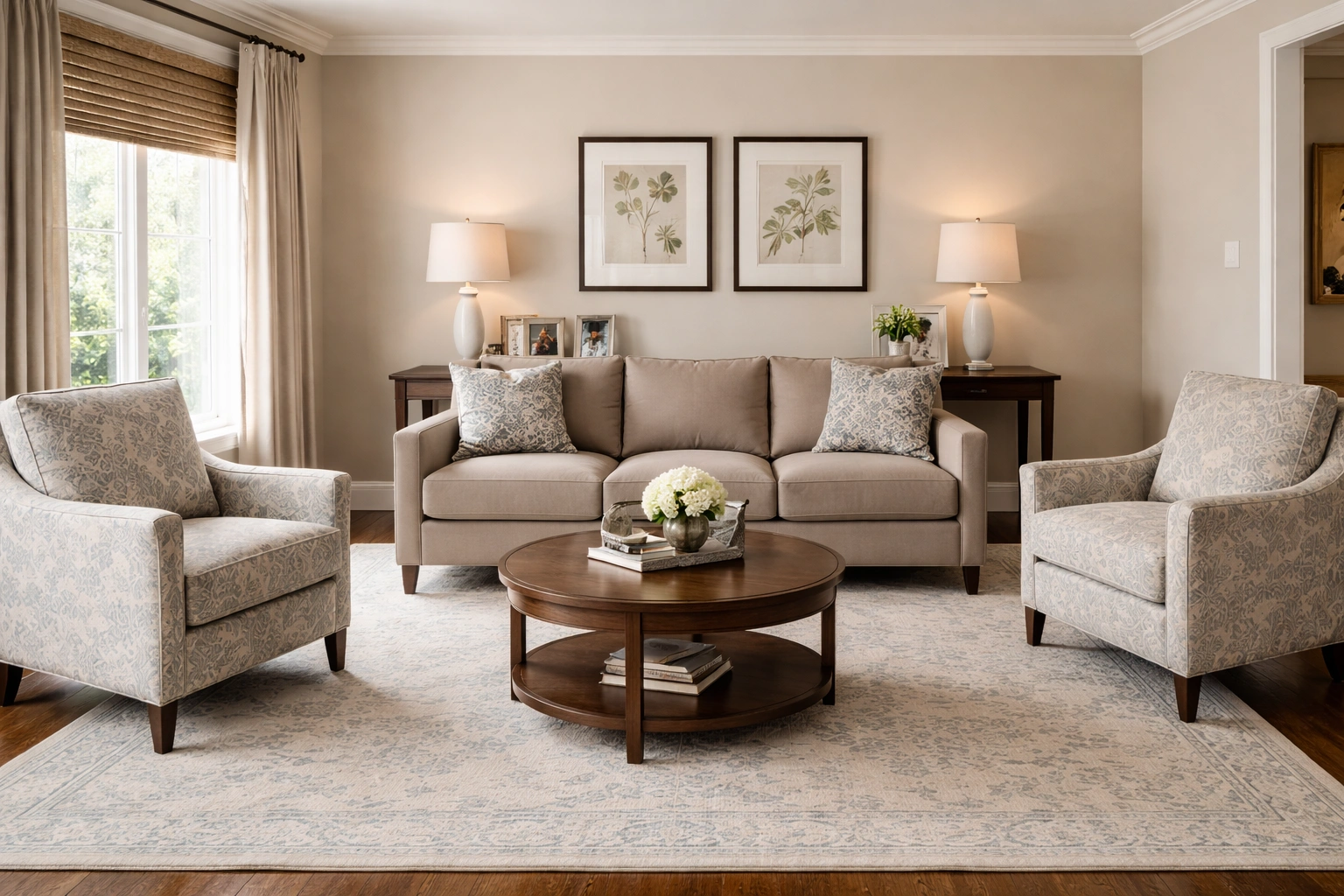
Primary Living Room
Center it on the longest wall with a coffee table and two accent chairs to complete the room.
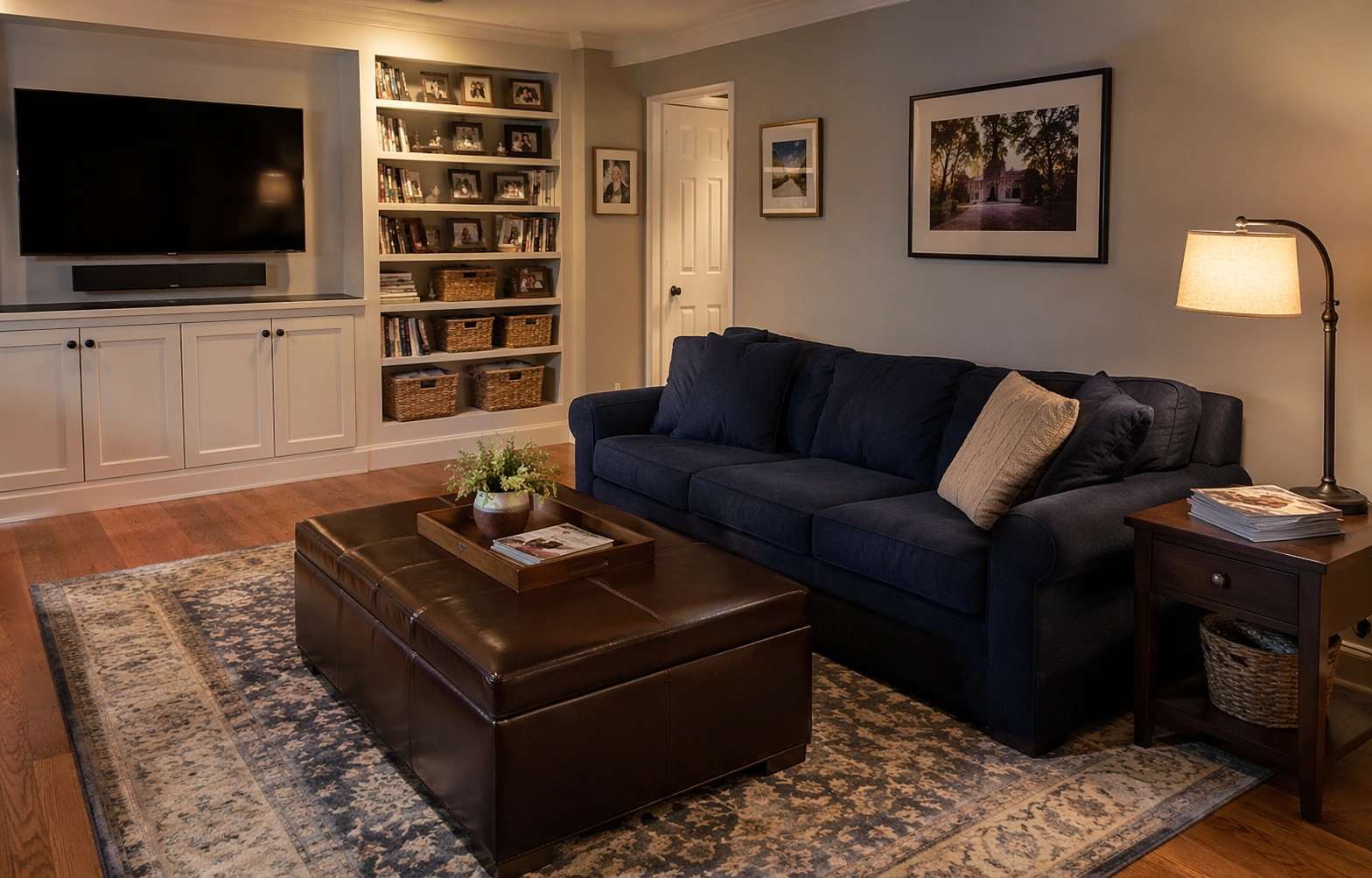
Family Room
Pair with a storage ottoman and side table for maximum function. Sofas with storage keep clutter hidden.
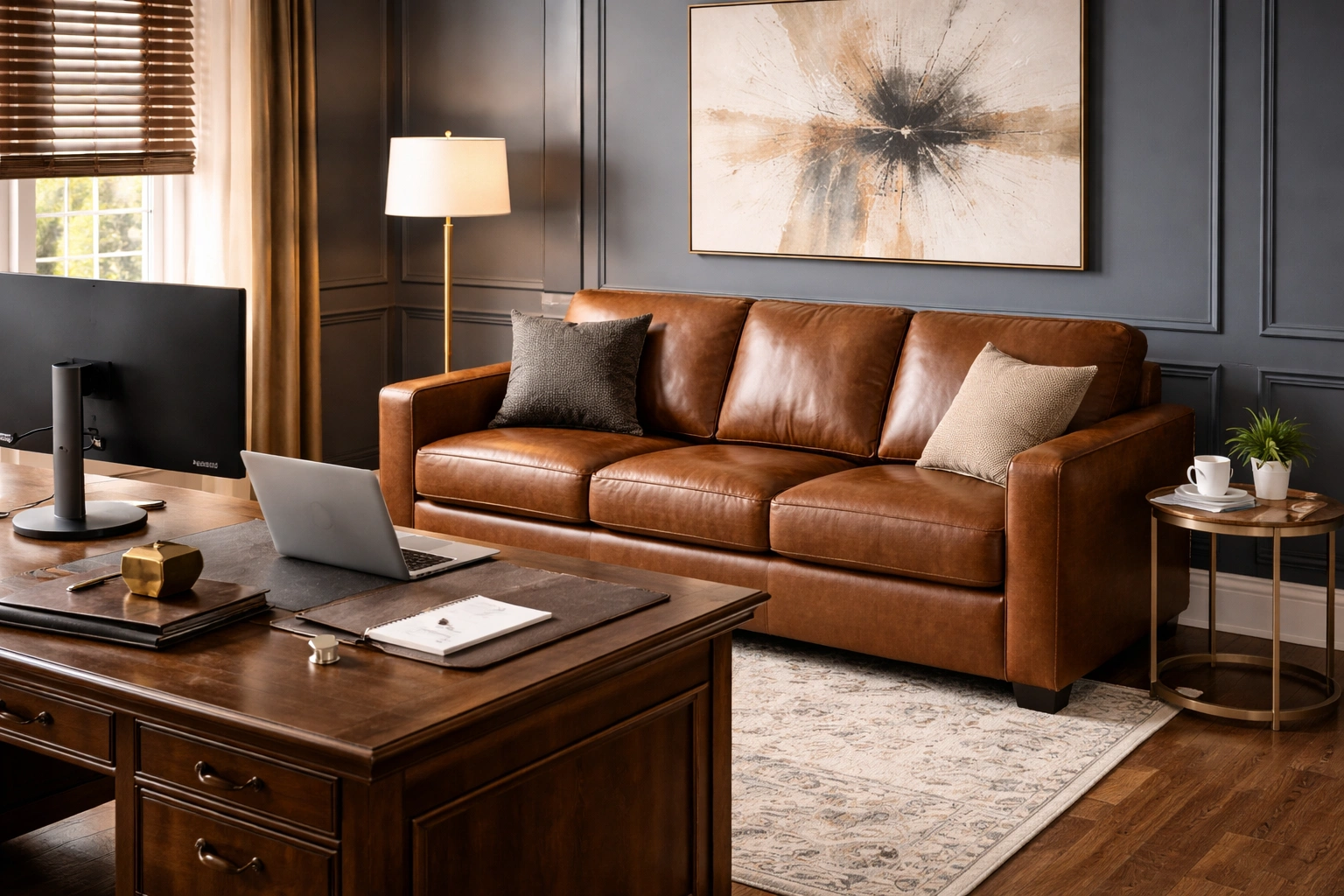
Office Sofa
Professional look with leather or performance fabric. Creates a lobby-worthy impression.
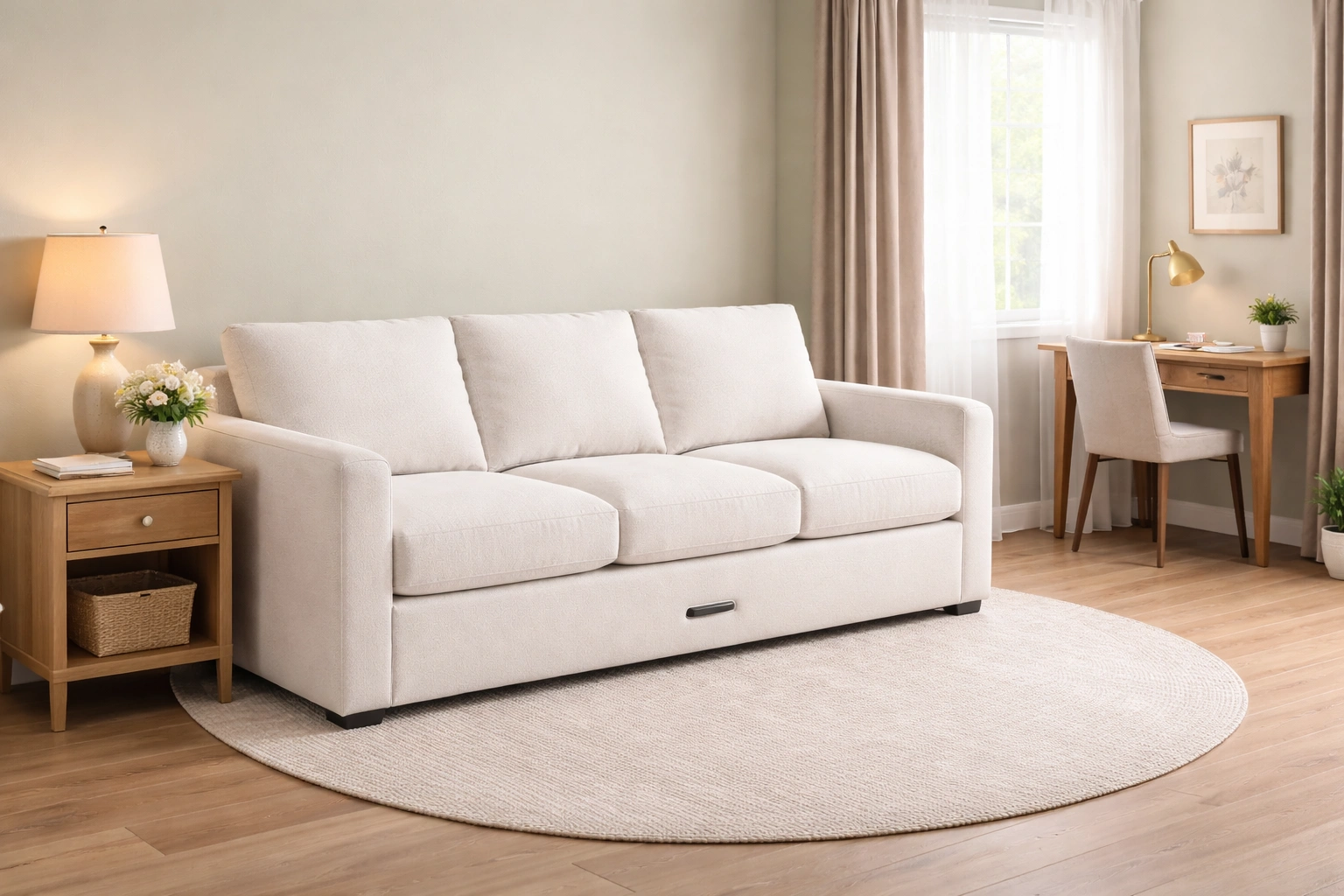
Guest Room
A 3-seater sleeper sofa provides daytime seating and an overnight bed — the most space-efficient furnishing solution.
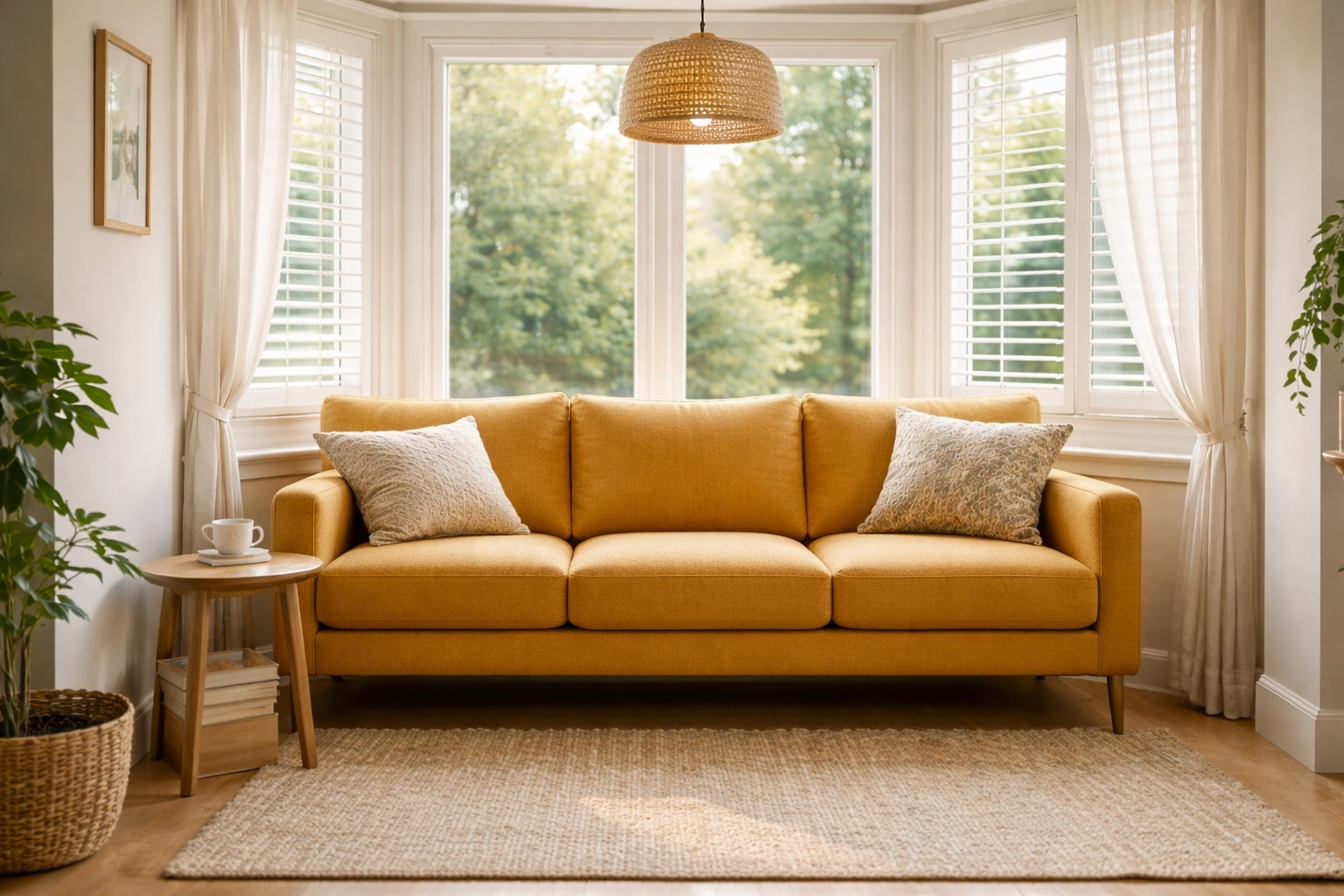
Bay Window / Nook
Fits perfectly into architectural features that standard sofas cannot utilize, turning dead space into usable seating.
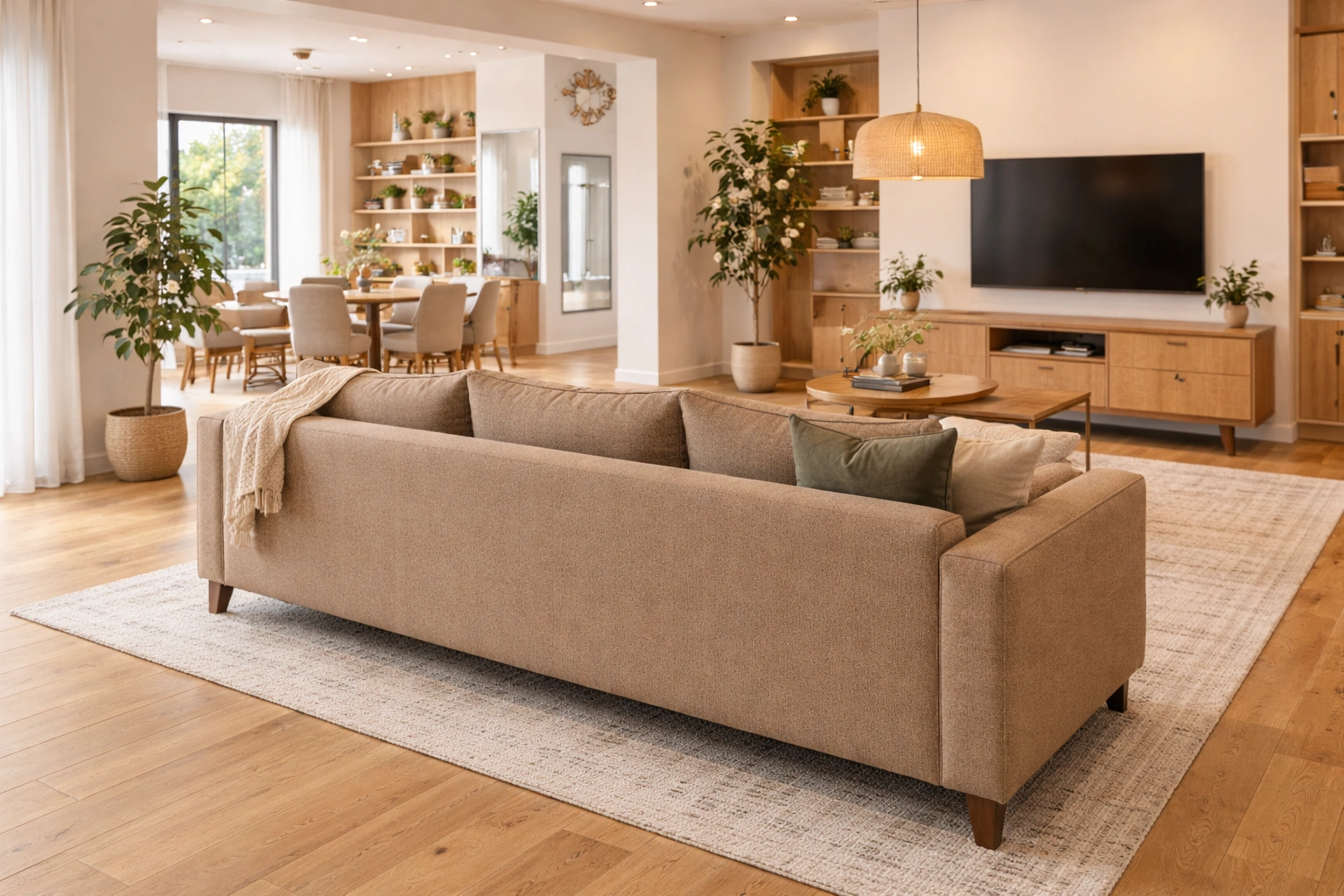
Open-Plan Divider
Place the sofa back-to with a dining area to create visual separation in large open spaces.
9. How to Choose the Right 3 Seater Sofa
3 Seater Sofa Buying Checklist
- Measure your room thoroughly — Wall length, depth, doorway width, walking paths, and clearance. Use painter's tape on the floor to outline the exact footprint before buying. Our measurement guide walks you through the process.
- Check seat width per person — Subtract total armrest width from total width, divide by three. Target 24+ inches per person. Under 22 inches per person feels cramped for daily use.
- Determine seat depth preference — Standard depth (21–24 inches) suits upright sitting and conversation. Deep-seat models (25–28 inches) allow lounging but may be too deep for shorter users. See the seat depth guide.
- Verify the frame material — Kiln-dried hardwood is the minimum for durability. Plywood is acceptable for mid-range. Avoid particle board entirely — it warps and breaks at connection points under the weight of three people. Learn about frame materials.
- Inspect the spring system — Eight-way hand-tied springs offer the best support. Sinuous no-sag springs are acceptable for budget options. Poor spring systems cause uneven sagging over time. Read about suspension types.
- Evaluate cushion fill — High-resilience foam (1.8–2.5 lb/ft³) provides the best balance of support and longevity. For the firm vs. plush decision, sit for 10+ minutes in the showroom. See cushion fill types.
- Check the seat depth — This is the most overlooked spec. A difference of just 2 inches in seat depth dramatically changes how the sofa feels. Taller users should prioritize deeper seats.
- Test before buying — Bring your family to the showroom. Have everyone sit together on the display model. See how to test sofa comfort for a 10-point checklist.
- Read reviews about size accuracy — Some manufacturers list outer dimensions (including arms) while others list seat width only. Verify which measurement is being reported to avoid surprises.
- Set a realistic budget — Quality 3-seaters start around $500–$700. Mid-range ($700–$1,200) offers the best value. Premium ($1,200–$2,500+) gets you top-tier materials. Check the price breakdown and hidden costs.
Value Insight: Because a 3 seater is the most common sofa size globally, you'll find more options, more reviews, and better pricing than any other size. This means you can be more selective about quality. Don't settle for a mediocre 3-seater when better options exist at the same price point. Our how to choose guide covers the full decision framework.
10. Maintenance & Care
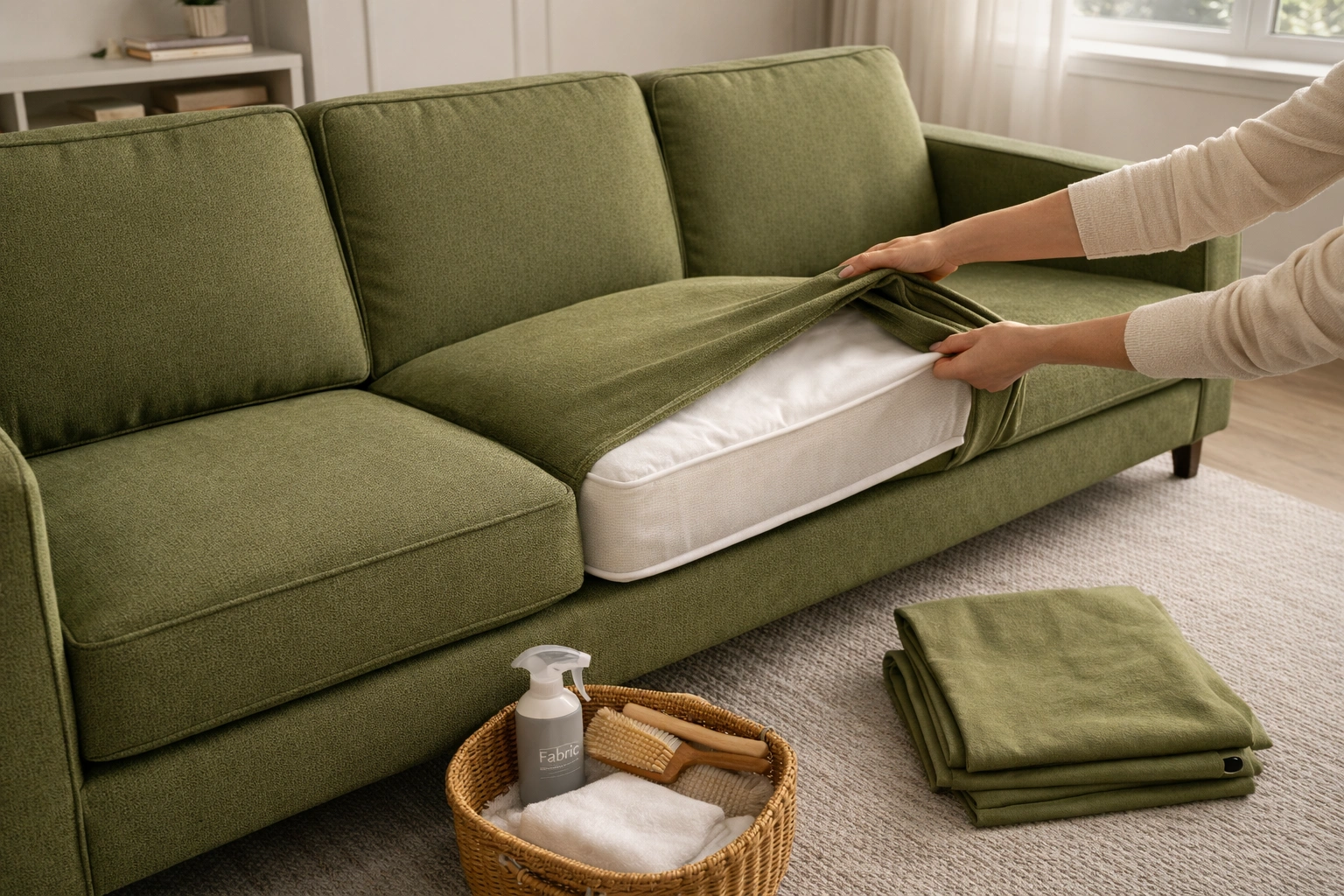
Because a 3 seater has significantly more fabric surface area than smaller sofas, proper maintenance is even more important. A well-maintained 3-seater looks new for years longer than a neglected one, while a poorly maintained one shows wear in 3–5 years. Here's how to keep yours in top condition:
- Vacuum weekly — Use an upholstery attachment on all surfaces including between and under cushions. The crevices between cushions are dust magnets. Follow our fabric cleaning guide for technique.
- Treat stains immediately — Blot (never rub) spills with a clean cloth. Our stain removal guide covers coffee, wine, ink, grease, pet accidents, and more.
- Rotate cushions regularly — Swap left, center, and right cushions every 2–3 weeks. If cushions are reversible, flip them monthly. Uneven wear is the #1 cause of premature replacement. See fix sagging cushions.
- Apply fabric protector — Spray-on protectors like Scotchgard create an invisible barrier. Apply at purchase and reapply every 6–12 months. Learn more from the protection guide.
- Leather care — Condition leather 3-seaters every 3–6 months to prevent cracking. Keep away from direct sunlight. See leather cleaning and conditioning tips.
- Check legs annually — Tighten loose legs to prevent wobbling. Inspect for frame cracks. See loose leg repair.
Reupholstery Cost Advantage: Reupholstering a standard 3-seater costs $800–$2,000 depending on material — roughly half the cost of a 3-seater with fixed upholstery ($1,500–$4,000+). This means you can completely refresh the sofa's appearance every 7–10 years for less than half the cost of buying new. For sofa covers sized for 3-seaters, you can swap colors seasonally for a fraction of reupholstering cost.
11. Frequently Asked Questions
A standard 3 seater sofa is 72–84 inches wide, 33–40 inches deep, and 30–36 inches high. Compact 3-seaters start at 66 inches. The seat depth ranges from 21–24 inches for standard comfort and 25–28 inches for deep-seat models. Always check the seat width per person (total width minus both armrests, divided by three) to ensure adequate space — target 24+ inches per person.
A quality 3 seater with a hardwood frame and high-density foam should last 10–15 years with proper care. Budget models with engineered wood frames typically last 5–8 years. The spring system is usually the first component to show wear — if it fails, cushions sag unevenly. Regular maintenance extends lifespan significantly. See general cleaning for daily upkeep.
Yes, but choose wisely. A compact 3-seater at 66–72 inches wide fits in many apartments under 600 sq ft. However, measure your full footprint including clearance. In studios under 400 sq ft, consider a 2-seater or armless 3-seater to save space. Leave at least 30 inches of clearance on all sides. For precise measuring, use our size calculator.
A standard 3-seater is better for smaller rooms and tighter budgets. A sectional sofa is better for large rooms, families, and frequent hosting. Sectionals cost 30–50% more but provide more seating and layout flexibility. If your room is under 200 sq ft, a 3-seater is almost always the better choice. See our sectional vs. traditional comparison for a full analysis.
Many 3-seater models now offer reclining options. Manual recliners use a lever mechanism built into the frame. Power recliners use electric motors for effortless operation. Not all 3-seaters recline — check the product description carefully. For recliner sofas in a 3-seater size, each seat reclines independently. Consider this if you want movie marathon comfort without a full sectional.
A quality 3 seater sofa costs between $500 and $2,000. Budget options under $500 exist but compromise on frame and foam quality. Mid-range models ($700–$1,200) offer the best balance. Premium designs with leather or performance fabric range from $1,200 to $3,000+. Always check for hidden costs like delivery fees. See the price breakdown and cost expectations.
Occasional professional cleaning is recommended once or twice a year to maintain the fabric's appearance and structural integrity. For regular upkeep, weekly vacuuming and immediate stain treatment are sufficient. Professional deep cleaning every 12–18 months helps with ground-in dirt accumulation, odors, and stubborn stains that home methods can't address. Budget around $100–$300 depending on your area.
For three average adults, target a 78–84 inch total width (including armrests). This provides approximately 24–28 inches of seat width per person, which is comfortable for daily sitting. For three larger adults (over 220 lbs each), consider a wide 3-seater (86+ inches) for more room. If you're unsure, test in-store by having three people sit together on the display model — if anyone feels cramped, go one size wider.
Yes — several brands offer a 3-seater with chaise lounge as an option. The chaise module extends the seat of one section for lounging while the other sections maintain standard seating. This is ideal if one person in the household prefers lounging while others sit upright. A deep-seat 3-seater takes this further by making the entire sofa deeper for everyone.
Most standard 3-seaters (72–84 inches wide) fit through standard 30-inch doorways. For narrower doorways (under 28 inches), consider an armless design to save 8–12 inches. For the most reliable measurement, measure the narrowest point in your delivery path including stairwells. If a standard 3-seater cannot fit, consider a 2-seater or a modular approach. See our how to measure tutorial.


