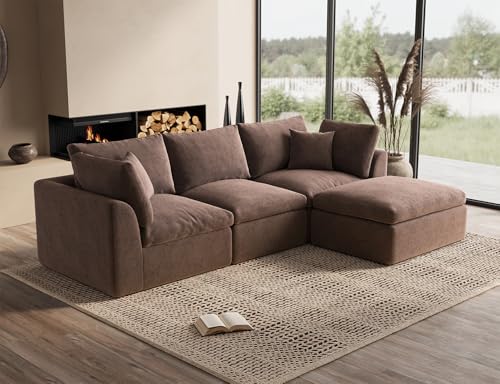
Brown Couch: The Complete Buying & Styling Guide
Discover every shade, material, and design style — plus expert tips on how to decorate around a brown couch and choose the perfect one for your home
A brown couch is more than just a furniture choice — it is a design statement rooted in warmth, versatility, and timelessness. Whether you are drawn to the rich patina of a leather sofa in espresso, the soft comfort of a chocolate fabric couch, or the casual appeal of a tan sectional, brown remains one of the most popular sofa colors for good reason.
Unlike trend-driven colors that feel dated within a few years, brown adapts to virtually every interior style — from modern minimalism to industrial lofts, bohemian warmth to vintage elegance. It functions as a neutral base that anchors a room while allowing you to experiment with colorful accents, textures, and patterns.
This guide covers everything you need to know before buying a brown couch: the different shades available, material options, how to style one in your space, maintenance tips, and answers to the most common questions.
Why Brown? Brown is the most searched couch color after gray and white — and for practical reasons. It hides everyday wear remarkably well, suits almost every wall color, and adds a layer of warmth that cooler tones like gray simply cannot replicate. For households with kids or pets, a brown couch is often the smartest long-term investment.
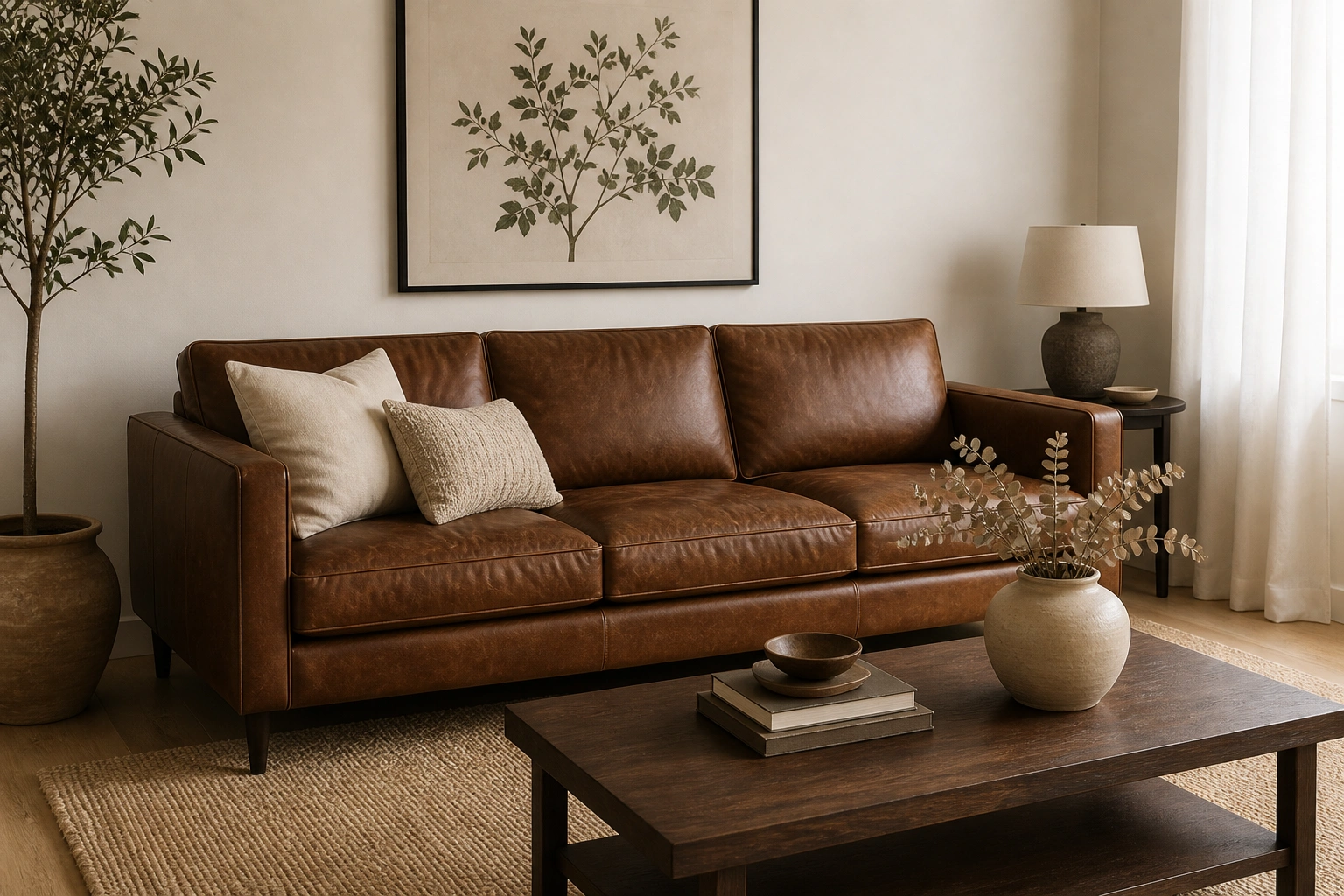
The appeal of a brown couch goes beyond aesthetics. From a practical standpoint, brown upholstery masks dust, crumbs, pet hair, and minor scuffs far better than light-colored alternatives. This means less frequent cleaning and a couch that continues to look presentable even in high-traffic homes.
Brown also has a psychological effect: warm earth tones create a sense of comfort, security, and groundedness in a space. This makes a brown couch especially well-suited for living rooms and family rooms where relaxation is the priority.
If you are deciding between a grey couch and a brown one, consider your room's lighting and existing finishes. Brown complements warm wood floors, brass hardware, and natural textures in ways that grey sometimes cannot.
Shades of Brown: Finding Your Perfect Tone
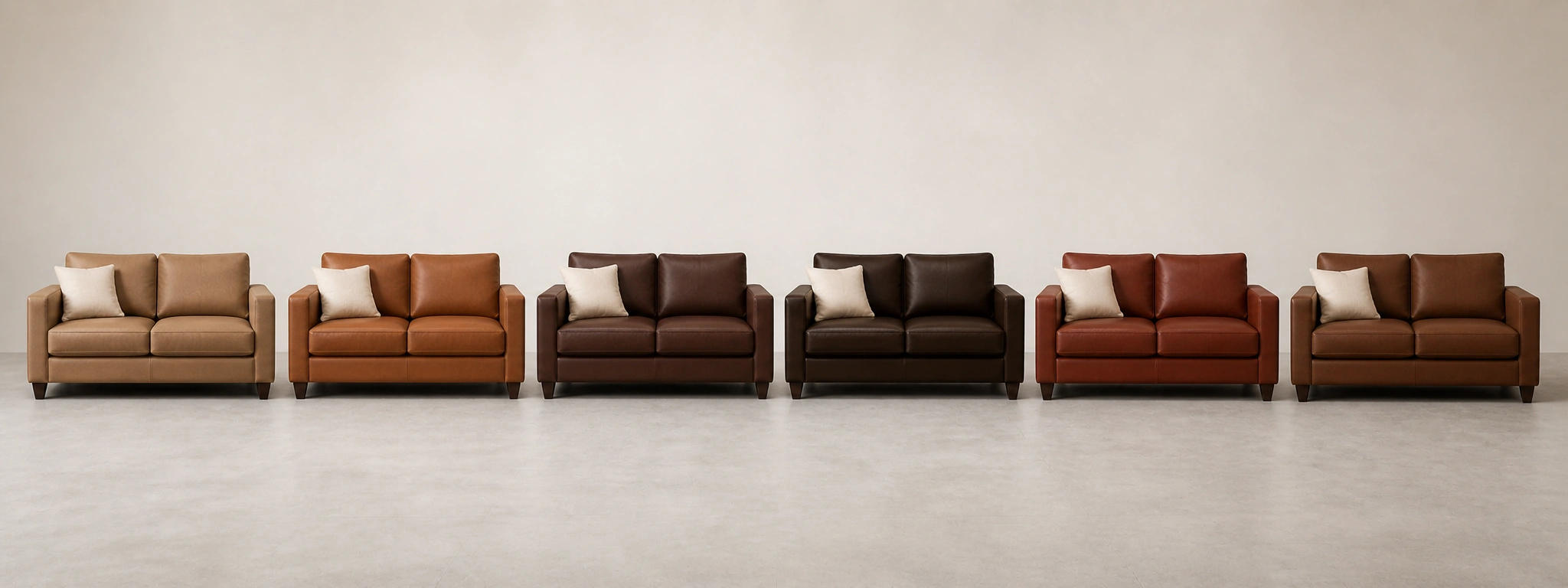
Not all brown couches are created equal. The shade you choose dramatically affects the mood, formality, and versatility of your sofa. Here is a breakdown of the most popular brown tones for couches:
Tan / Oatmeal
Light, airy, and versatile. Works in small spaces and bright rooms.
Caramel / Honey
Warm golden undertone. Pairs well with navy, green, and cream.
Chocolate
Rich and inviting. The most popular brown shade for sofas.
Espresso
Deep, dark, and sophisticated. Almost black but warmer.
Cognac / Sienna
Reddish-brown tone. Classic for leather couches with character.
Walnut
Medium-dark with cool undertones. Elegant and understated.
Choosing the right shade: If your room has limited natural light, opt for tan or caramel to keep things feeling open. In well-lit rooms with light walls, chocolate or espresso creates a bold anchor. Always test fabric or leather swatches in your actual room lighting before committing — brown tones can shift significantly under warm vs. cool light.
Best Materials for a Brown Couch
The material you choose determines not only how your brown couch looks but also how it feels, ages, and performs over time. Here are the top options and what to expect from each:
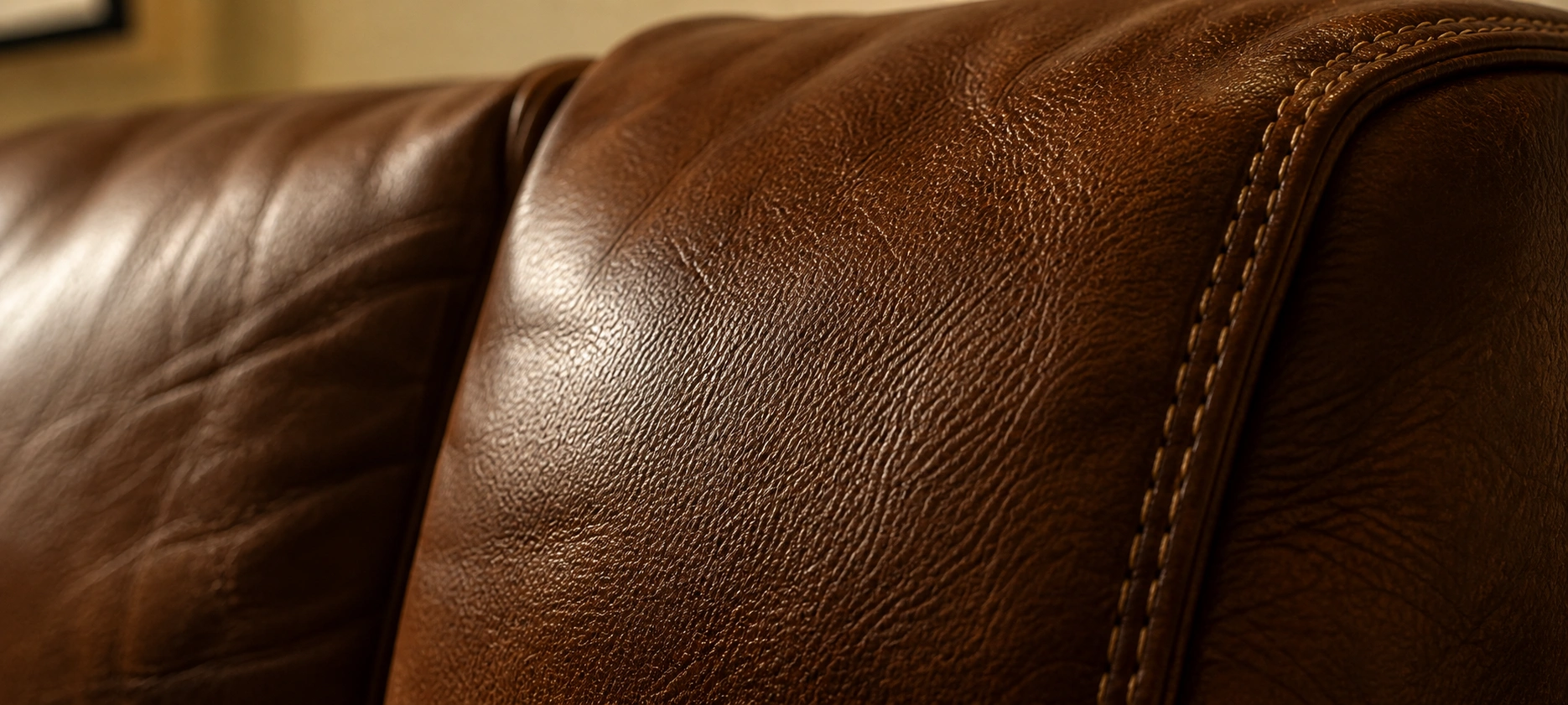
Genuine Leather
Brown leather develops a beautiful patina over time, making it one of the few materials that actually improves with age. It is durable, easy to wipe clean, and resists pet odors. Full-grain and top-grain options offer the best longevity. Learn about leather grades.
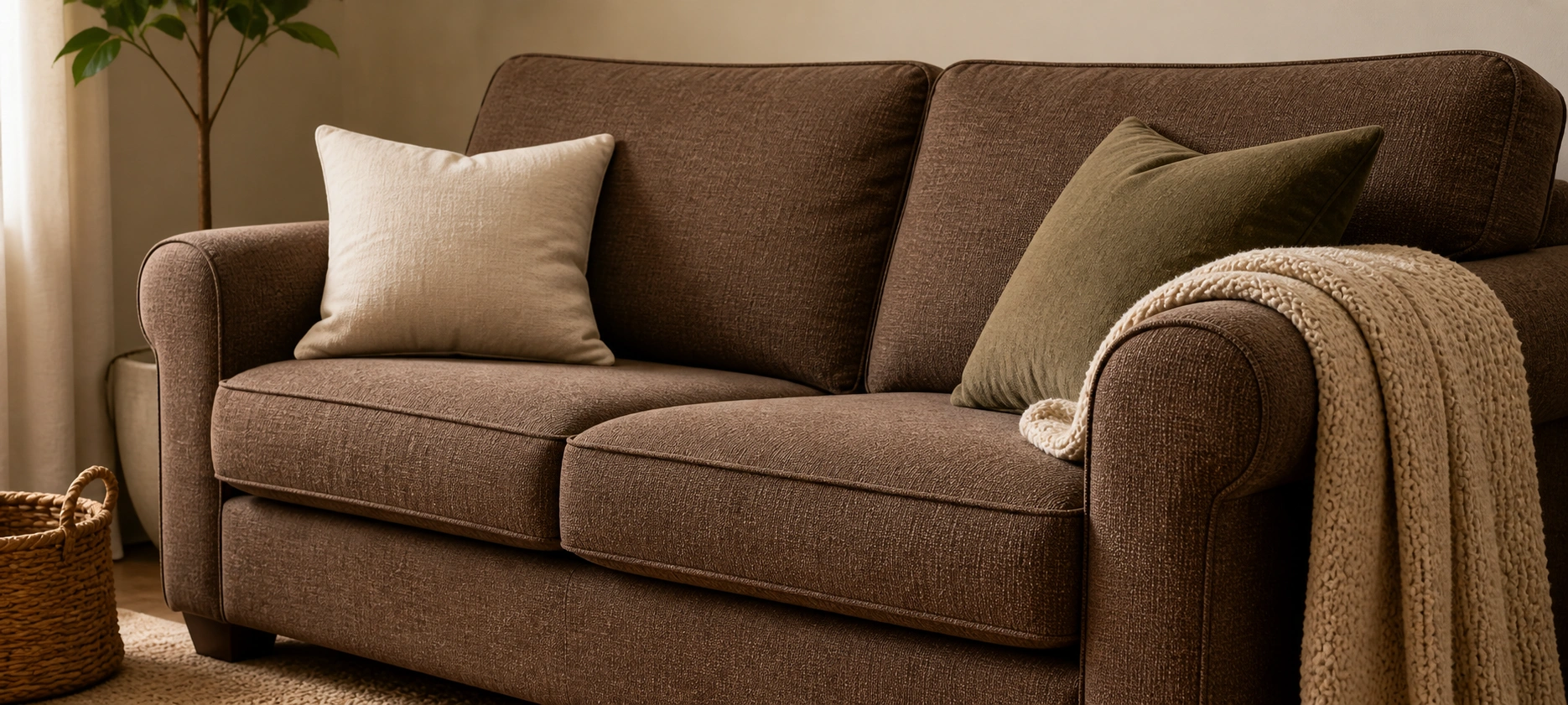
Fabric Upholstery
Brown fabric couches come in cotton, linen, polyester, and microfiber. They offer more color consistency than leather and feel softer to the touch. Microfiber is particularly stain-resistant, making it a smart choice for families with children.
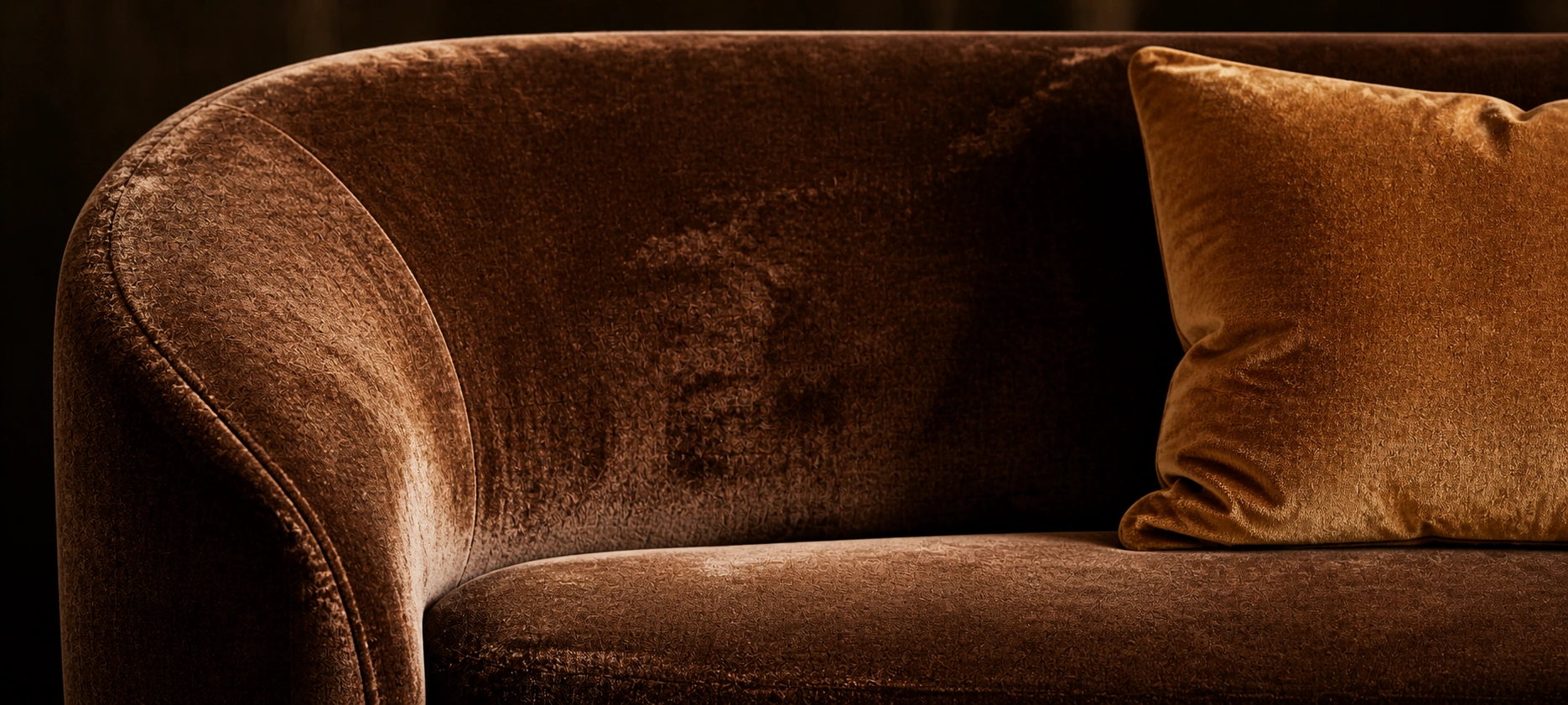
Velvet
A brown velvet couch adds a layer of luxury and depth that other fabrics cannot match. The pile catches light differently, creating a rich, shifting appearance. Chocolate and caramel velvet are particularly striking. Explore velvet sofa options.
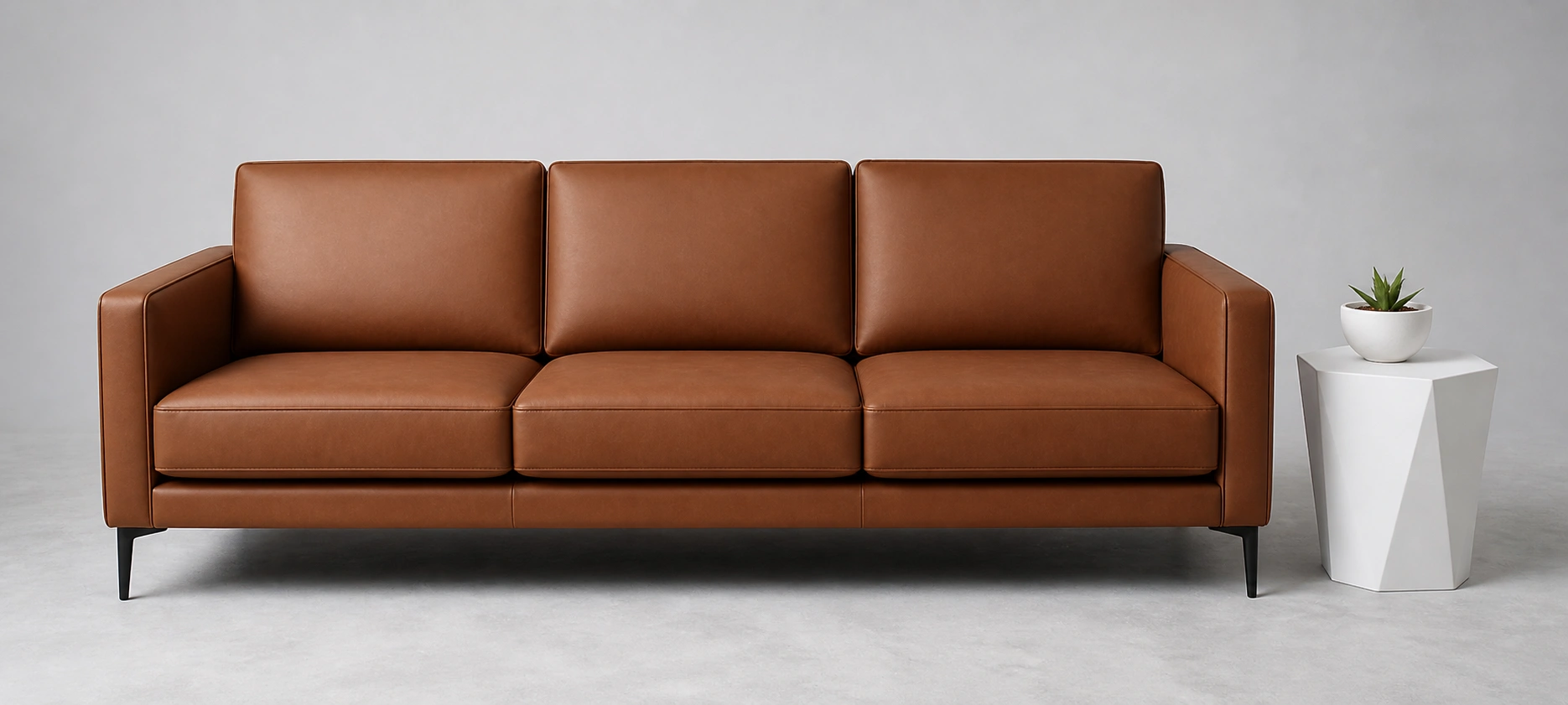
Faux Leather
Brown faux leather offers the look of real leather at a lower price point and without animal products. Modern faux leathers are more breathable and durable than older versions. However, they do not develop patina and may peel over time. Compare leather vs fabric.
Material Tip: If you are choosing between leather and fabric for your brown couch, consider your lifestyle. Leather is unbeatable for wipe-clean convenience and longevity (15-25 years), while fabric offers more warmth, variety, and a softer feel — particularly in cooler climates where leather can feel cold to the touch.
Popular Brown Couch Types
Brown works across virtually every sofa configuration. The type you choose should match your room size, seating needs, and how you use the space daily:
Brown Sectional Sofa
Ideal for large living rooms and open floor plans. A brown sectional sofa in L-shape or U-shape provides ample seating while creating a defined conversation area. Chocolate and espresso are the most popular shades for sectionals.
Brown Chesterfield
The Chesterfield sofa and brown leather are a match made in design heaven. The deep button tufting, rolled arms, and rich brown tone create an unmistakably classic look that elevates any room's formality.
Brown Recliner Sofa
A brown recliner sofa combines comfort and warmth. Leather recliners in cognac or chocolate are especially popular in family rooms and home theaters where relaxation is the priority.
Brown Loveseat
Perfect for apartments, small spaces, or as complementary seating. A brown loveseat in tan or caramel adds warmth without overwhelming a compact room.
Brown Sleeper Sofa
A brown sleeper sofa serves double duty for guest rooms or studio apartments. Darker brown shades help hide the visual transitions of the sleeper mechanism and any fold lines in the mattress.
Brown Modular Sofa
A brown modular sofa lets you reconfigure your seating layout as needs change. This flexibility is valuable for people who move frequently or who like to refresh their room layout periodically.
How to Style a Brown Couch by Design Style
One of brown's greatest strengths is its chameleon-like ability to fit into any design aesthetic. Here is how to make a brown couch work in the most popular interior styles:
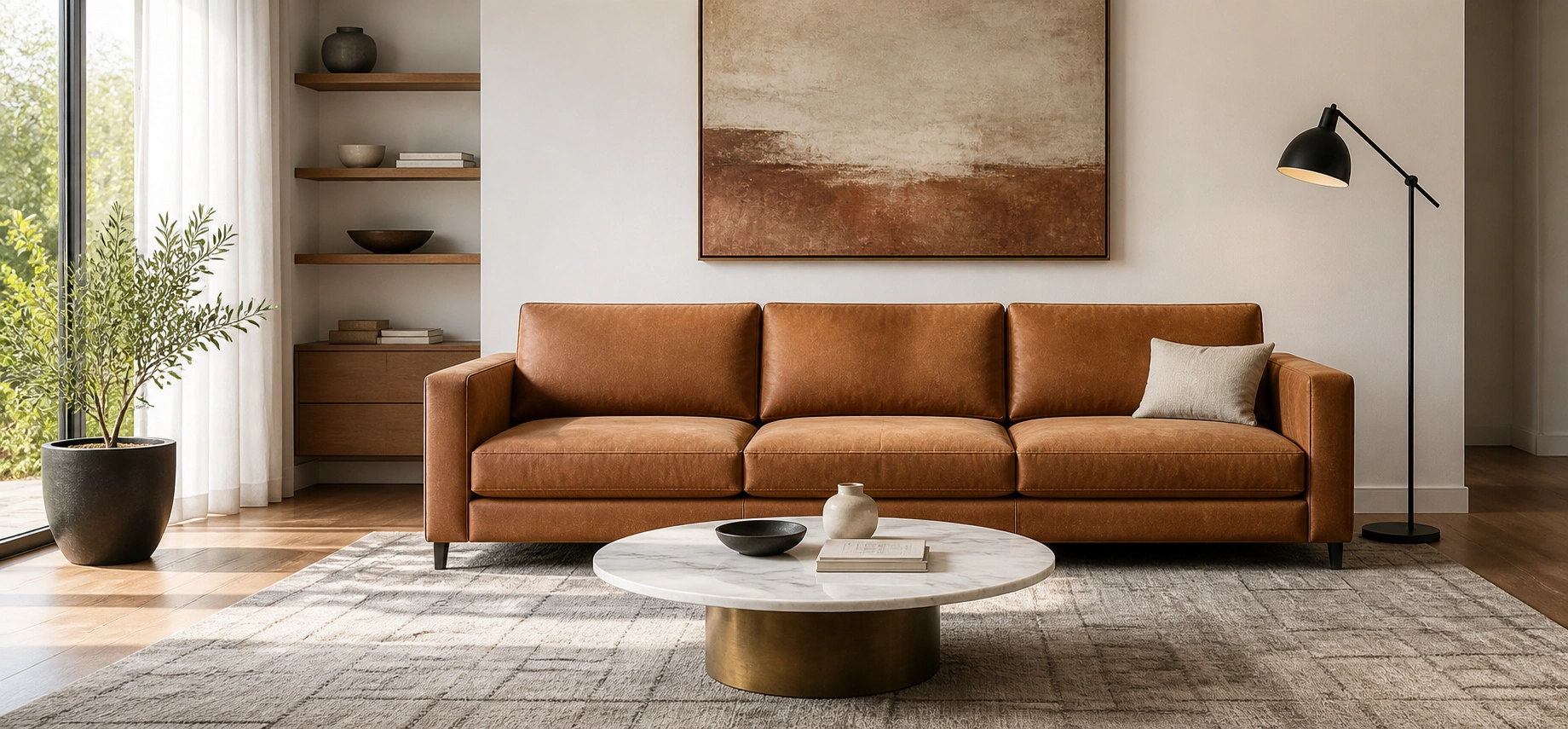
Modern & Contemporary
Choose a brown couch with clean lines, slim arms, and tapered legs. Pair with white or light gray walls, geometric rugs, and metallic accents. Keep accessories minimal — let the sofa's warm tone be the room's statement piece.
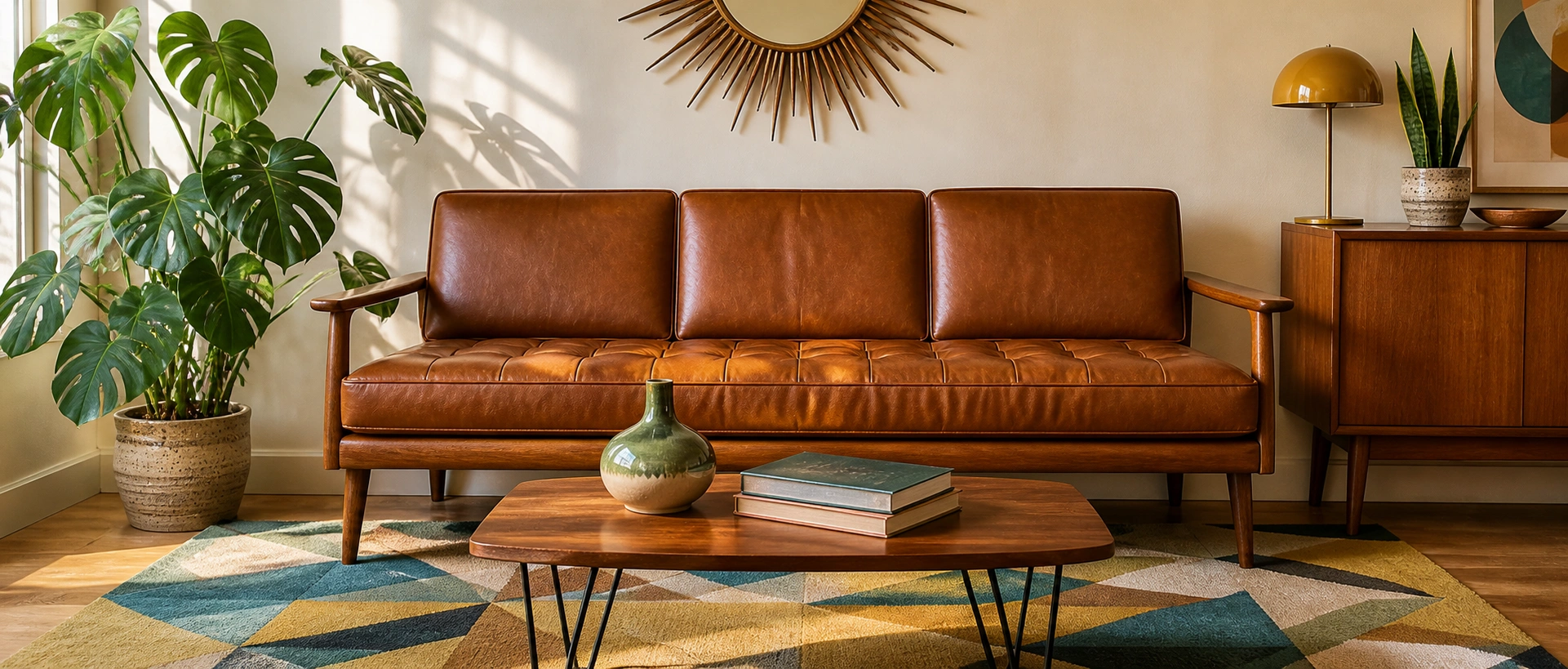
Mid-Century Modern
A cognac or walnut brown leather couch with a wooden frame is quintessential mid-century. Pair with teak side tables, a starburst clock, and a retro-patterned rug in mustard or teal. This combination is arguably the most iconic use of a brown couch.
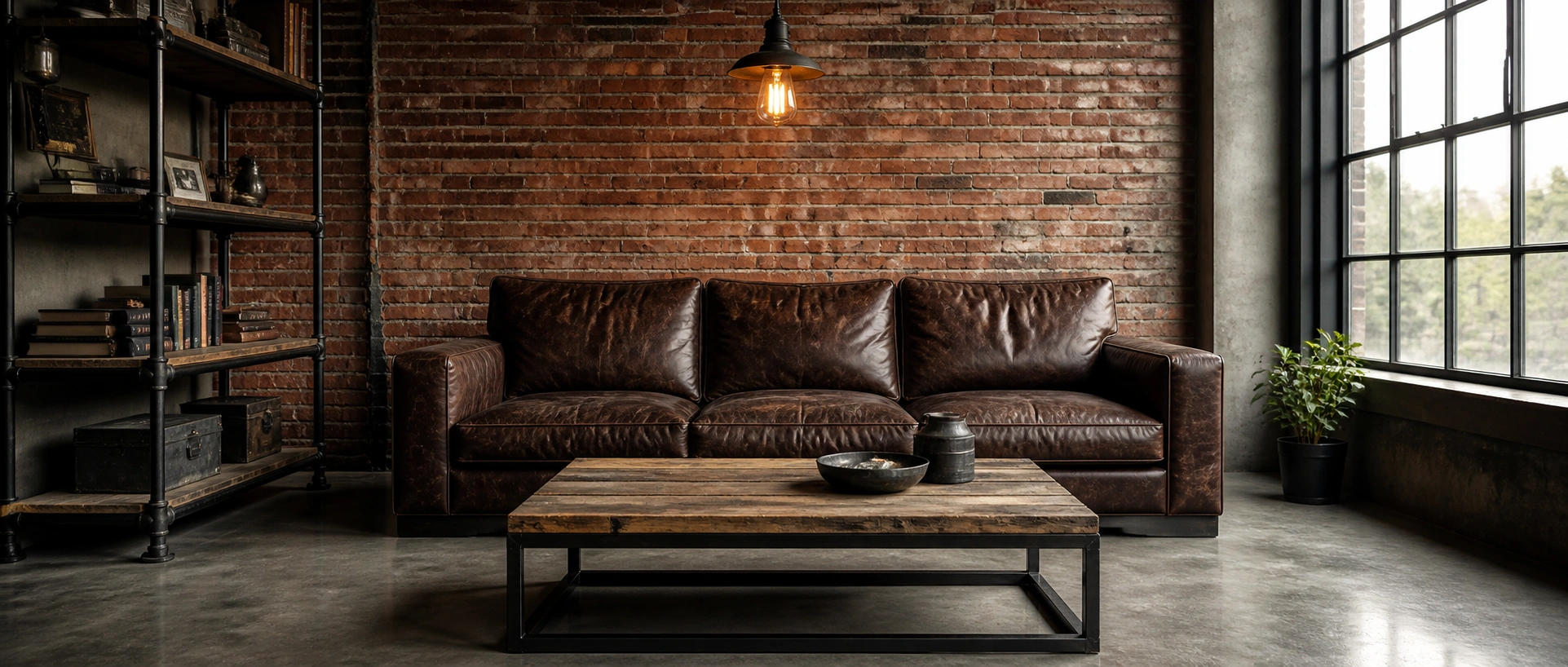
Industrial
Espresso or dark brown leather pairs perfectly with exposed brick, concrete floors, and black metal shelving. Add a distressed leather couch, vintage factory cart coffee table, and Edison bulb lighting for an authentic industrial feel.
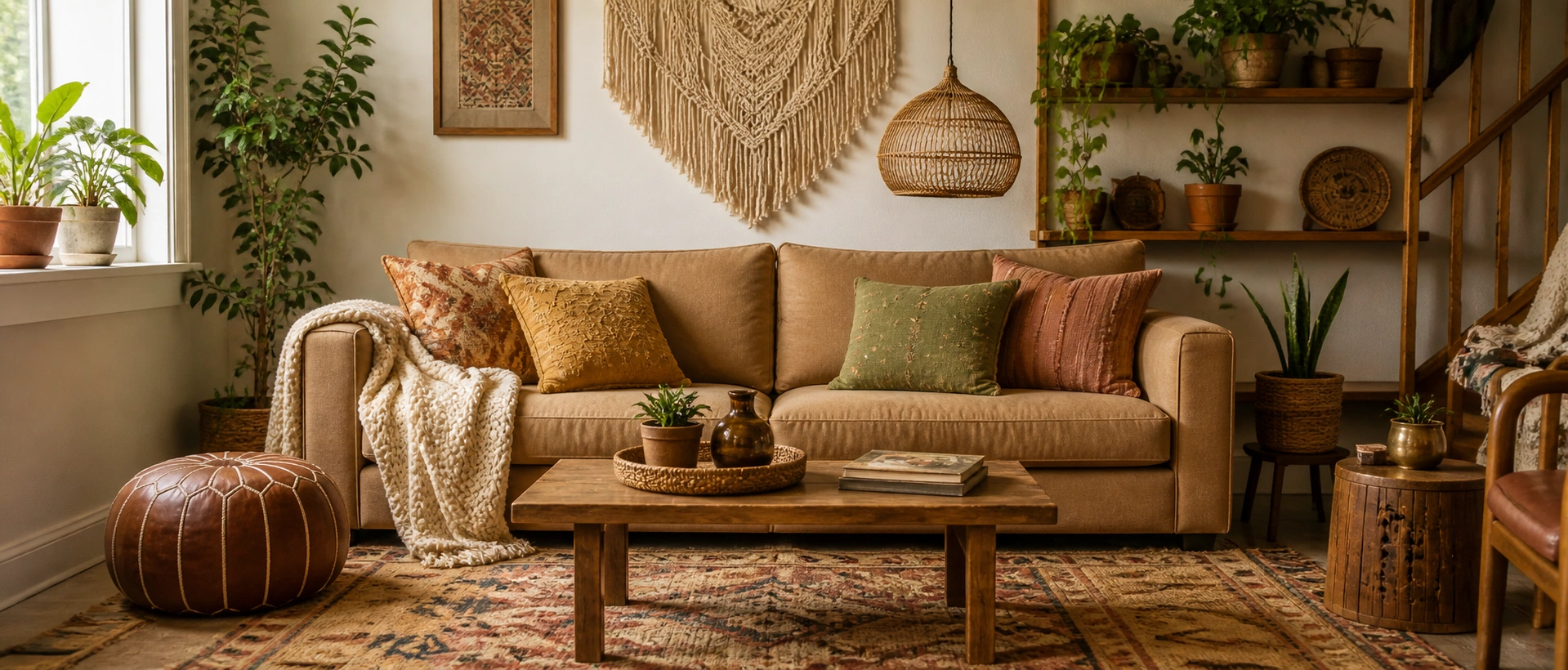
Bohemian
A tan or caramel fabric couch becomes the grounding element in a boho space. Layer with mismatched throw pillows in terracotta, mustard, sage, and dusty rose. Add a jute or moroccan rug, macramé wall hangings, and plenty of plants.
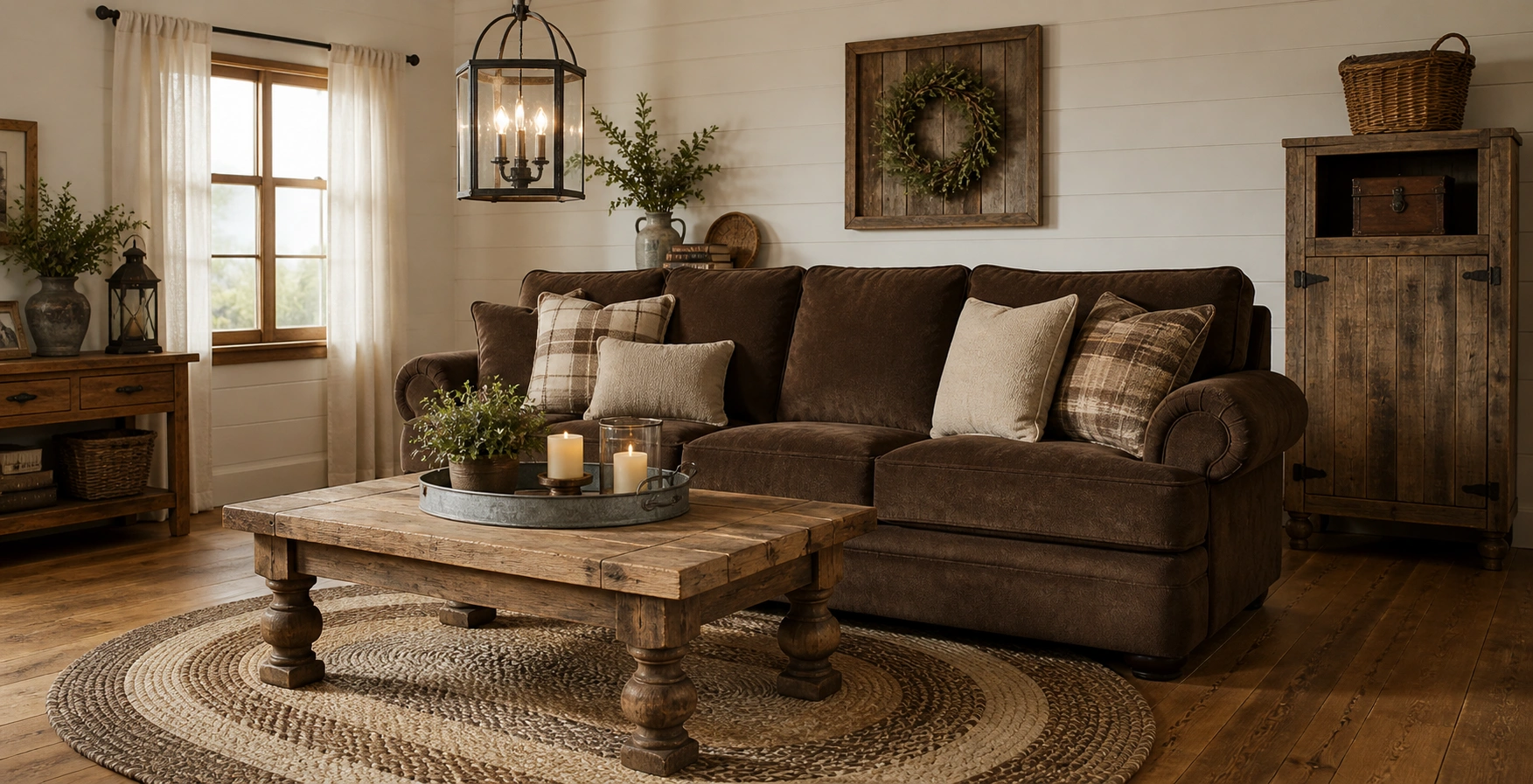
Farmhouse & Rustic
Chocolate or medium brown fabric couches feel right at home with shiplap walls, reclaimed wood accents, and simple farmhouse decor. Pair with cream or beige walls, a plaid or braided rug, and vintage-style lighting for cozy warmth.

Traditional
A brown Chesterfield or rolled-arm sofa in rich leather or velvet creates instant traditional elegance. Pair with crown moulding, oriental rugs, silk curtains, and antique-style accent pieces for a refined, timeless look.
How to Decorate Around a Brown Couch
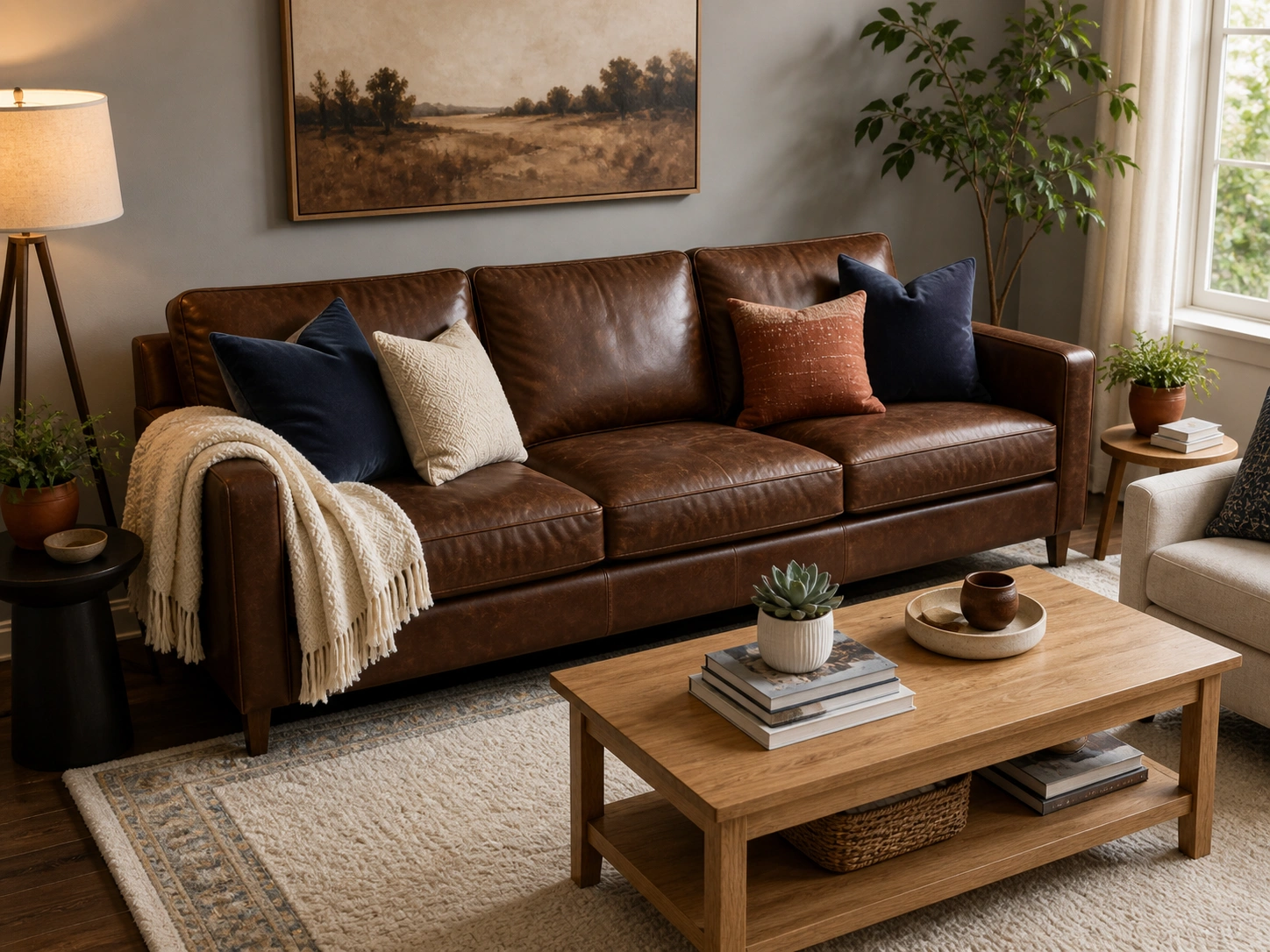
Decorating around a brown couch is surprisingly straightforward once you understand a few key principles. The goal is to complement the warmth of brown without creating a monochromatic, heavy look.
Wall Colors That Work
- Warm white / cream — the safest and most popular pairing; creates clean contrast
- Soft gray — adds a cool-warm balance that feels modern and sophisticated
- Sage green — an earthy combination that feels natural and calming
- Dusty blue — a complementary contrast that keeps the room from feeling too warm
- Beige / taupe — tonal harmony for a subtle, monochromatic look
- Muted terracotta — for bold warmth; works best with lighter brown couches
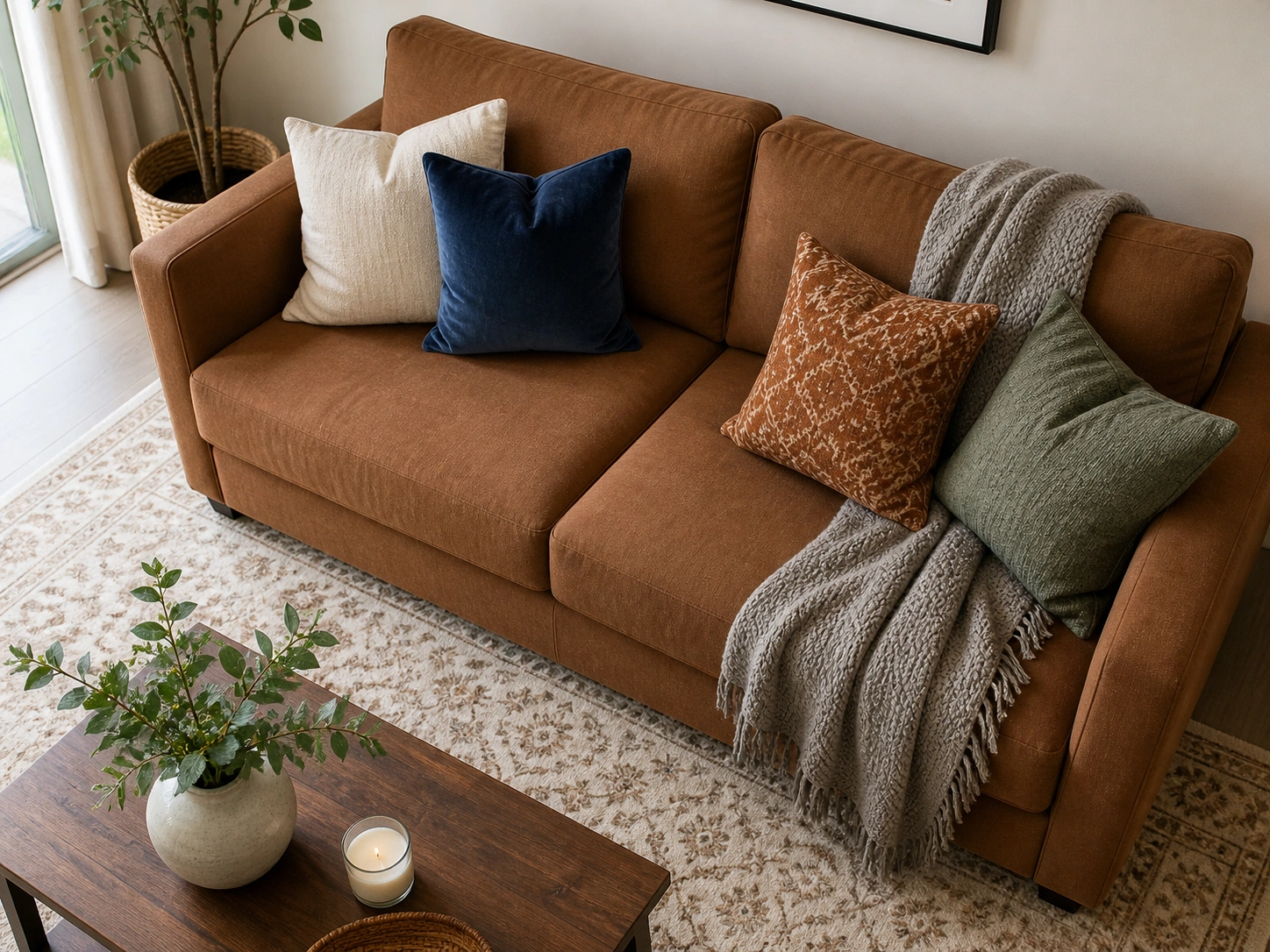
Rugs, Pillows & Accessories
- Rug: Choose a rug that is lighter than the couch for contrast. Cream, ivory, light gray, or patterned rugs with brown undertones all work well. Avoid matching the rug color exactly to the sofa.
- Throw pillows: This is where you add color and personality. Navy, cream, rust, olive green, mustard, and blush pink all complement brown beautifully. Mix textures — linen, velvet, and knit — for visual depth. Guide to throws & pillows
- Throw blanket: A cream or gray knit throw draped over one arm softens the look and adds coziness.
- Coffee table: Wood tones that are lighter or darker than the couch create intentional contrast. Glass or metal tables add a modern edge. Sofa table guide
- Wall art: Large-scale art in tones that echo the room's accent colors draws the eye up and balances the visual weight of the brown sofa.
Pros and Cons of a Brown Couch
Every furniture decision involves trade-offs. Understanding the real advantages and limitations of a brown couch helps you make a confident purchase:
Advantages
- Hides dirt, stains, pet hair, and daily wear far better than light-colored sofas
- Works as a warm neutral that pairs with virtually any wall color and decor style
- Leather brown couches develop a rich patina that improves with age
- Creates a warm, inviting, and grounded atmosphere in any room
- Timeless appeal — brown never goes out of style or looks dated
- Widely available in every price range, material, and configuration
- Excellent durability-to-comfort ratio, especially in leather
Considerations
- Dark brown shades can make a small or poorly lit room feel heavier and smaller
- Brown-on-brown rooms (matching walls, floors, and furniture) can look monotonous without contrasting accents
- Real leather requires periodic conditioning to prevent cracking and drying
- Some brown fabrics may fade in direct sunlight over time, especially near windows
- Chocolate and espresso shades absorb heat, which may feel uncomfortable in hot climates
- Brown may not suit those who prefer a crisp, cool-toned, or ultra-bright aesthetic
The bottom line: For most households, the pros of a brown couch significantly outweigh the cons. The key is choosing the right shade for your room's lighting and balancing the warmth with contrasting elements in your decor.
How to Maintain a Brown Couch
Leather Brown Couch Care
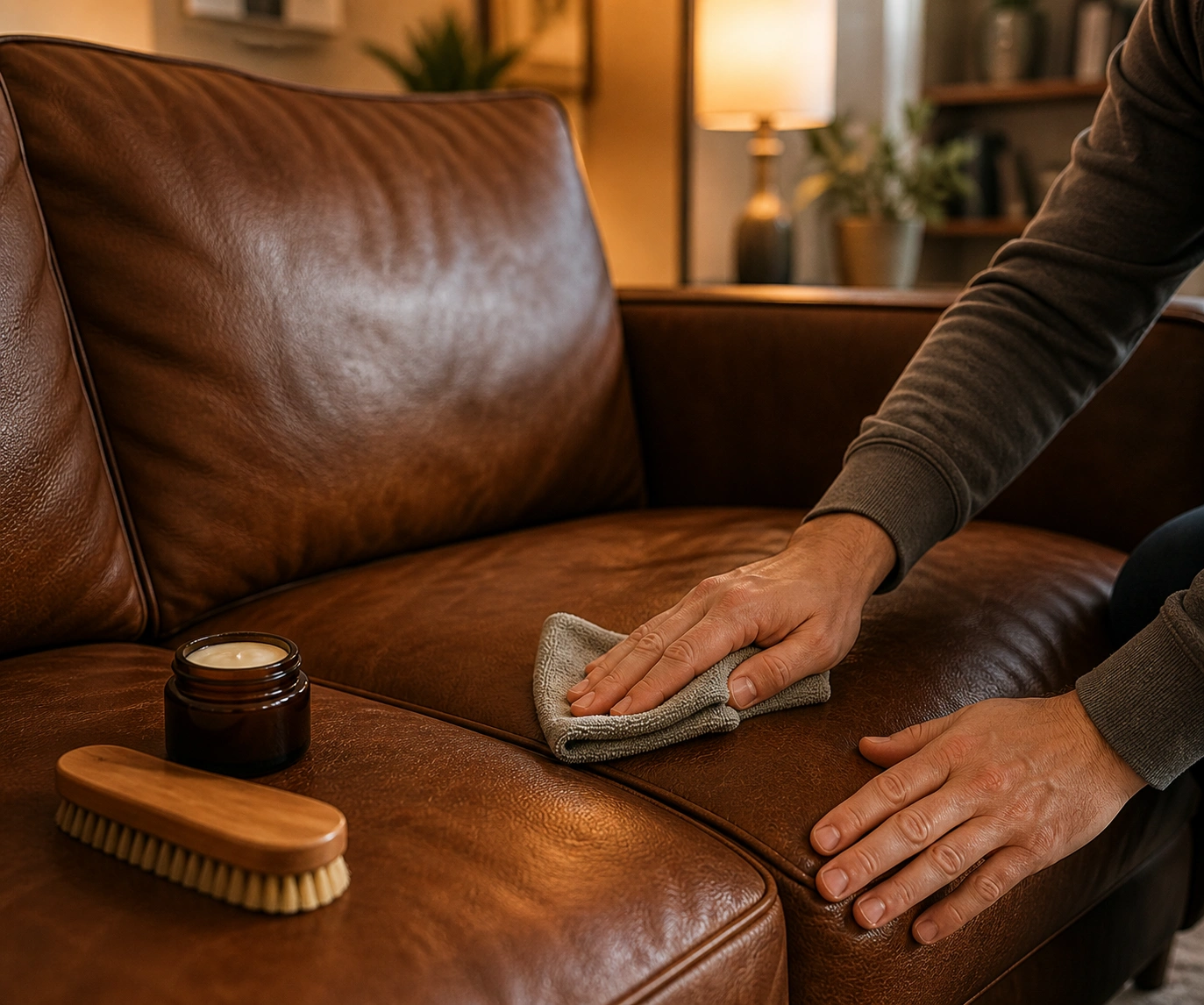
Wipe down with a damp cloth weekly to remove dust and surface dirt. Apply a quality leather conditioner every 3-6 months to prevent drying and cracking. Keep the couch out of direct sunlight to avoid fading. If you notice scratches, they often blend into the natural grain of brown leather over time. Full leather cleaning guide
Fabric Brown Couch Care
Vacuum weekly with an upholstery attachment to remove dust and pet hair. Treat spills immediately — brown fabric can hide minor stains, but letting spills set will still cause permanent discoloration. For deeper cleaning, check the care tag: code W means water-based cleaner, code S means solvent-based. Full fabric cleaning guide
General Protection Tips
Use a fabric protection spray on new fabric couches. Consider sofa covers if you have pets that shed heavily. Rotate and flip cushions monthly for even wear. Place the couch away from heating vents and direct sunlight to extend its lifespan. Pet-proof cover options
Brown Couch Buying Guide: What to Look For
Ready to buy? Here is a step-by-step checklist to ensure you choose a brown couch that fits your space, lifestyle, and budget:
Measure Your Space First
Before falling in love with a couch, measure your room, doorways, and any hallways the couch must pass through. A common mistake is buying a couch that is too large or too deep for the room. Size & room guide
Choose Your Shade Based on Lighting
Rooms with plenty of natural light can handle darker shades like espresso or chocolate. Dimly lit rooms benefit from lighter tones like tan or caramel. Always view swatches in your room at different times of day.
Select the Right Material
Leather for durability and easy cleaning, fabric for softness and variety, velvet for luxury. Consider your household: pets, kids, and usage frequency should all influence this choice. Materials explained
Check Frame and Construction Quality
Look for kiln-dried hardwood frames, reinforced corners, and eight-way hand-tied or sinuous spring systems. A good frame is the foundation of a long-lasting couch. Frame materials guide
Test Comfort in Person If Possible
Sit on the couch for at least 5-10 minutes if shopping in store. Check seat depth, cushion firmness, and back support. If buying online, read reviews that specifically mention comfort for your body type. How to test comfort
Set a Realistic Budget
Quality brown couches range from $500 to $5,000+. Budget options work for occasional use, but investing $1,000-2,500 in a well-made couch typically offers the best price-to-quality ratio for daily use. Cost breakdown
Pro Tip: When shopping online, always check the return policy and shipping costs before purchasing. A couch is a significant investment, and you want the flexibility to return it if the color does not match your space as expected. Where to buy guide | Quality checklist
Frequently Asked Questions About Brown Couches
Yes, brown is one of the most versatile and practical couch colors available. It functions as a warm neutral that pairs well with almost any wall color, flooring type, and decor style. Brown upholstery hides dirt, stains, and pet hair significantly better than lighter colors like white or beige, making it an especially smart choice for families with children and pet owners. It also adds a layer of warmth and coziness that cooler neutrals like gray cannot replicate.
Not necessarily — it depends on the shade and how you balance the room. Lighter brown tones like tan, oatmeal, and caramel feel airy and work well even in smaller spaces. Darker shades like espresso or chocolate can make a room feel heavier, but this is easily counteracted with light-colored walls, a light area rug, and adequate lighting. The key is contrast: pair a dark brown couch with lighter surroundings, and pair a light brown couch with mid-tone or dark accents.
Brown pairs beautifully with a wide range of wall colors. The most popular and foolproof options include warm white, cream, soft gray, sage green, dusty blue, and beige. For dark brown couches, lighter walls create essential contrast and prevent the room from feeling closed in. For light brown couches, you have more flexibility — both light and mid-tone walls work. Avoid matching the wall color too closely to the couch, as this creates a flat, monochromatic look with no visual interest.
The key to styling a brown leather couch is balancing its sleek, structured look with softness and texture. Add throw pillows in cream, navy, rust, or olive green — ideally in fabrics like linen, velvet, or knit to contrast with the leather. Drape a soft throw blanket over one arm. Choose an area rug in a lighter tone (cream, jute, or light gray) to ground the space. Pair with a mix of wood and metal accent furniture. Avoid overloading with too many leather pieces — one leather couch is usually enough for a room.
No — brown leather couches are a timeless classic that has never truly gone out of style. In fact, they have experienced a significant resurgence alongside the popularity of mid-century modern, industrial, and warm minimalist design trends. A high-quality brown leather couch is one of the few furniture pieces that can last 15-25 years and still look relevant as design trends come and go. The natural patina that develops over time only adds character.
The best rug colors for a brown couch create contrast rather than blending in. Top choices include cream or ivory for a clean, bright look; navy blue for a classic, sophisticated pairing; rust or terracotta for warm, earthy harmony; sage green for a calming, natural feel; and patterned rugs that include brown as one of several colors. The main rule is to avoid choosing a rug in the exact same shade of brown as your couch — instead, go noticeably lighter, noticeably darker, or choose a completely different color family.
Yes — but shade selection matters. In a small room, choose a light brown like tan, oatmeal, or caramel to keep the space feeling open. Avoid dark espresso or chocolate, which can visually shrink the room. A loveseat or a compact 2-seater sofa in light brown is an excellent choice for small spaces. Pair it with a light rug and light walls to maximize the sense of space. Small space sofa guide
Absolutely — brown and gray is one of the most popular and balanced color combinations in interior design. The warmth of brown complements the coolness of gray, creating a sophisticated, well-rounded look. Light gray walls with a chocolate or espresso couch create strong contrast. Medium gray walls with a tan or caramel couch feel softer and more relaxed. Add throw pillows or a rug that incorporates both brown and gray tones to tie the room together.