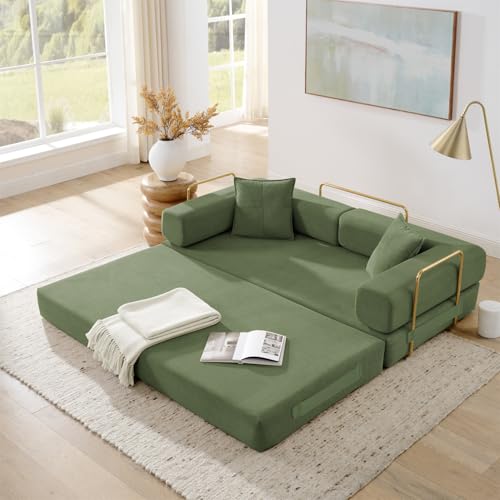
The Complete Guide to Floor Sofas
Discover what makes floor sofas unique, explore every type available, understand their real benefits, and learn exactly how to choose the right one for your space and lifestyle
PhanMarket Philosophy: A floor sofa is not just a budget alternative — it is a deliberate seating philosophy rooted in minimalism, flexibility, and comfort. This guide covers everything you need to know before investing in one, so you can buy with confidence.
What Is a Floor Sofa?
A floor sofa is a low-profile seating solution designed to rest directly on the ground or on a very low base, eliminating the need for legs or a raised frame. Unlike a traditional modern sofa that sits 15 to 20 inches off the floor, a floor sofa typically has a seat height of just 5 to 12 inches, placing the sitter much closer to the ground.
The concept draws heavily from Japanese floor seating traditions, where sitting close to the ground has been a cultural norm for centuries. In Western homes, floor sofas have gained popularity as a practical and aesthetic choice for apartments, studios, reading nooks, and casual living spaces. They come in a wide range of designs — from simple cushion clusters to sophisticated convertible configurations with adjustable backrests and armrests.
What sets a floor sofa apart from simply placing cushions on the floor is the intentional engineering behind it. Quality floor sofas feature structured cushion support, ergonomic backrests, and durable bases that provide consistent comfort, rather than the unpredictable feel of stacked pillows. Many models also incorporate removable covers, foldable frames, and modular components that add genuine functionality beyond aesthetics.
Types of Floor Sofas
Floor sofas are not a one-size-fits-all product. Understanding the different types available helps you narrow down which design best matches your space, habits, and comfort expectations. Below are the four main categories you will encounter when shopping.
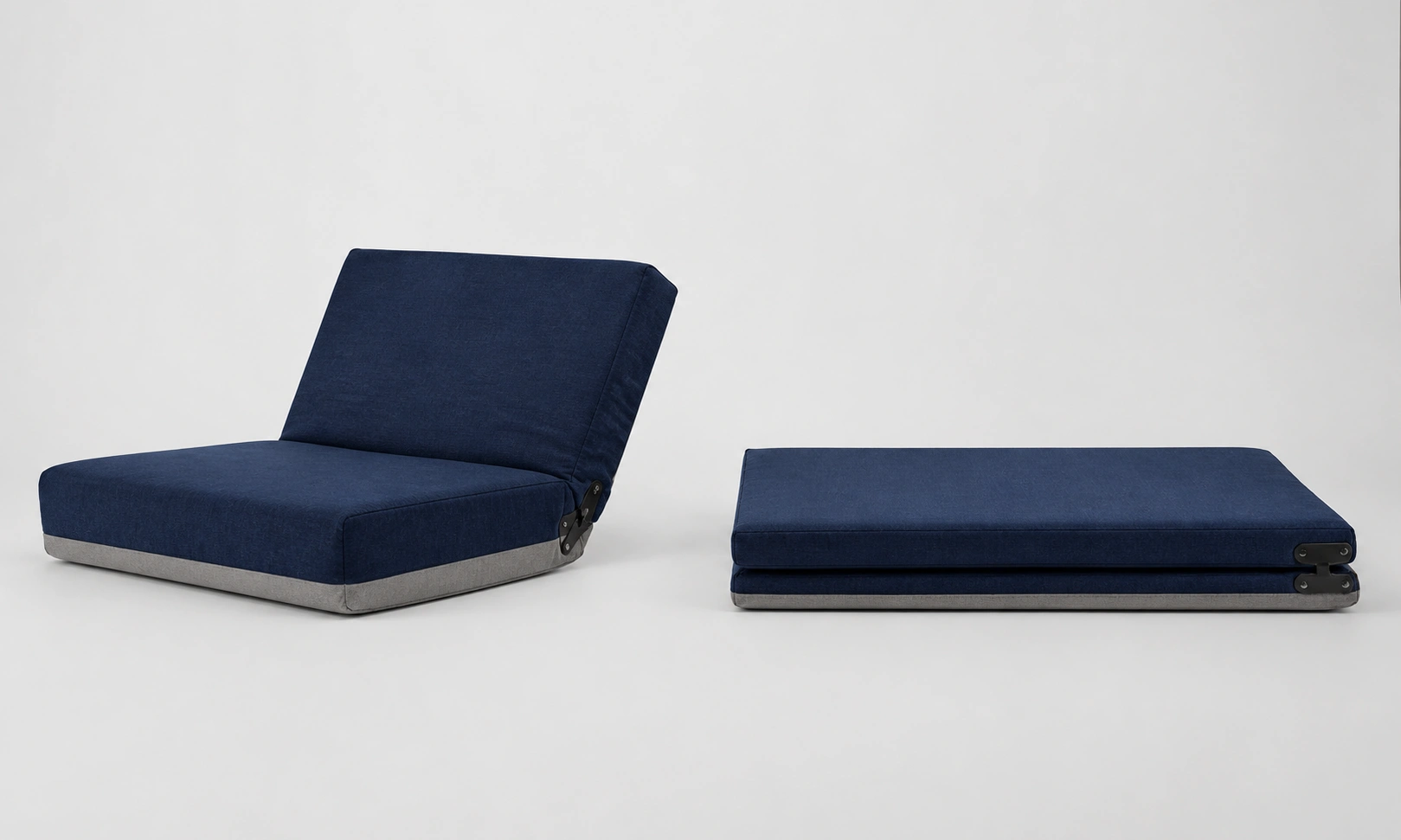
Folding Floor Sofa
Features a hinged frame that allows the sofa to fold flat for storage or adjust to multiple reclining angles. Ideal for multipurpose rooms where space needs to double as a guest sleeping area. Typically the most versatile option available.
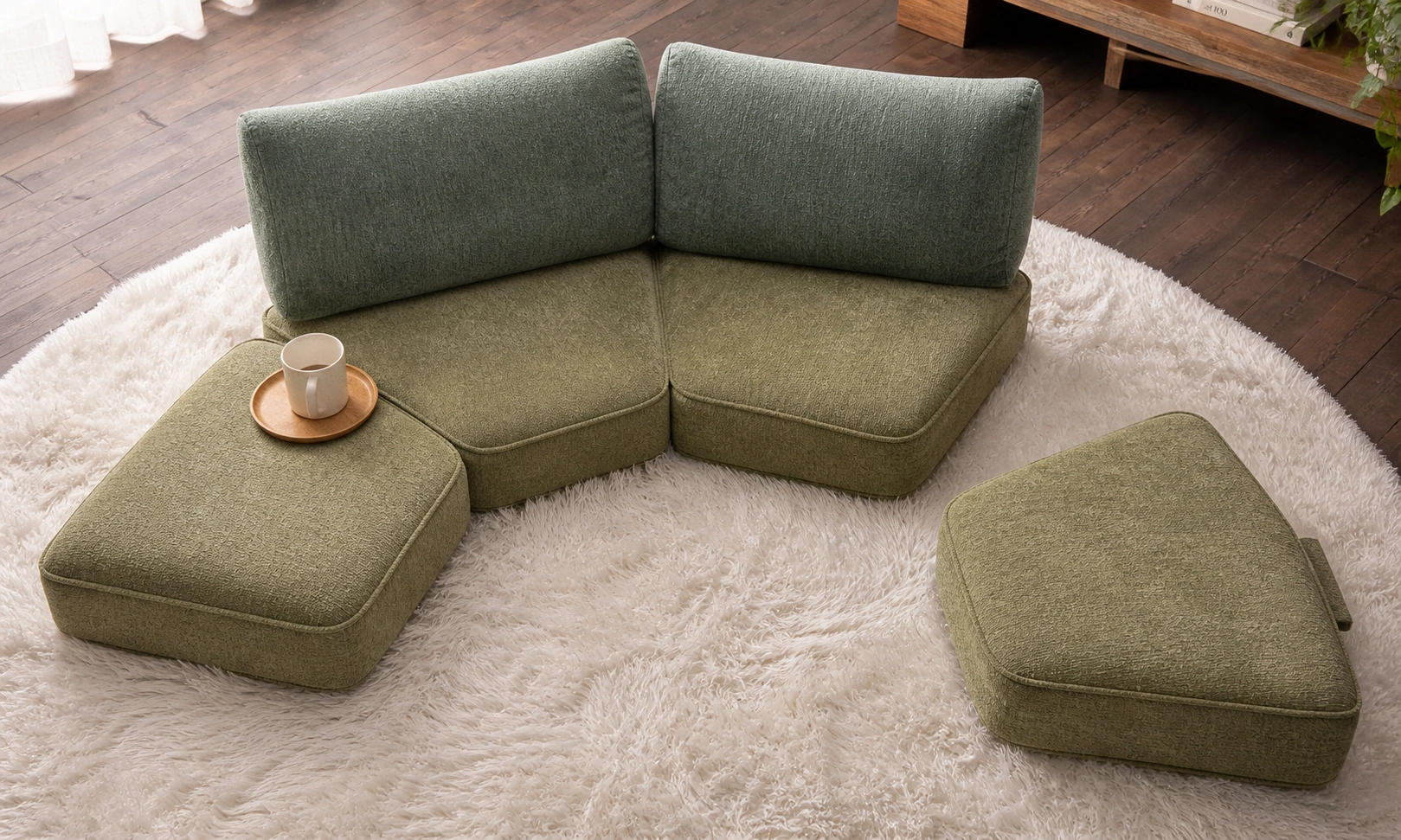
Cushion-Style Floor Sofa
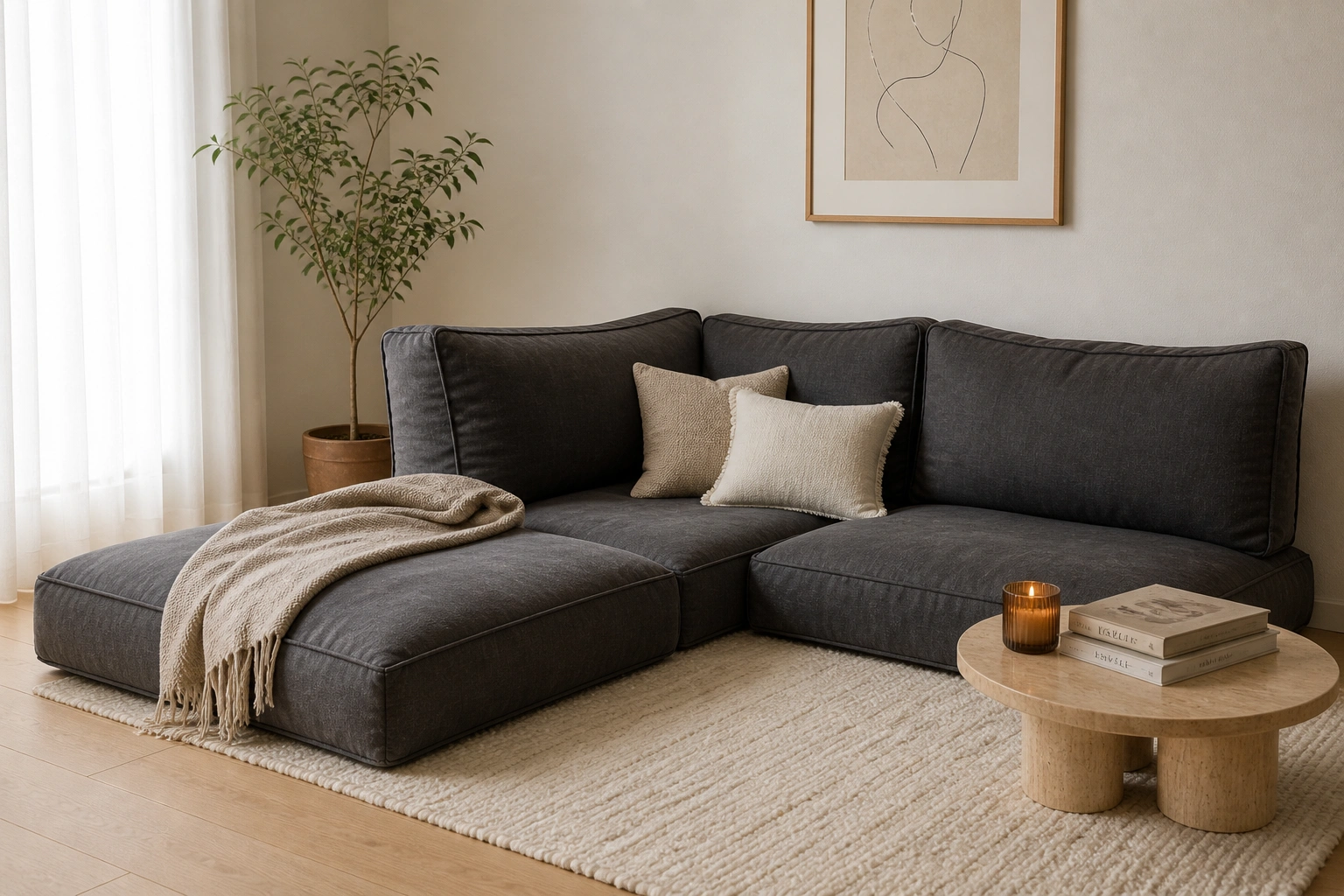
Consists of individual or connected cushion modules that can be rearranged into different configurations. No rigid frame — the structure comes from dense foam and the way pieces interlock. Perfect for those who enjoy customizable layouts.

Tatami-Style Floor Sofa
Inspired by Japanese seating culture, these feature a low wooden or rattan base paired with fabric-covered cushions. They offer a slightly more structured feel than cushion-only models and pair beautifully with tatami mats or low wooden tables.
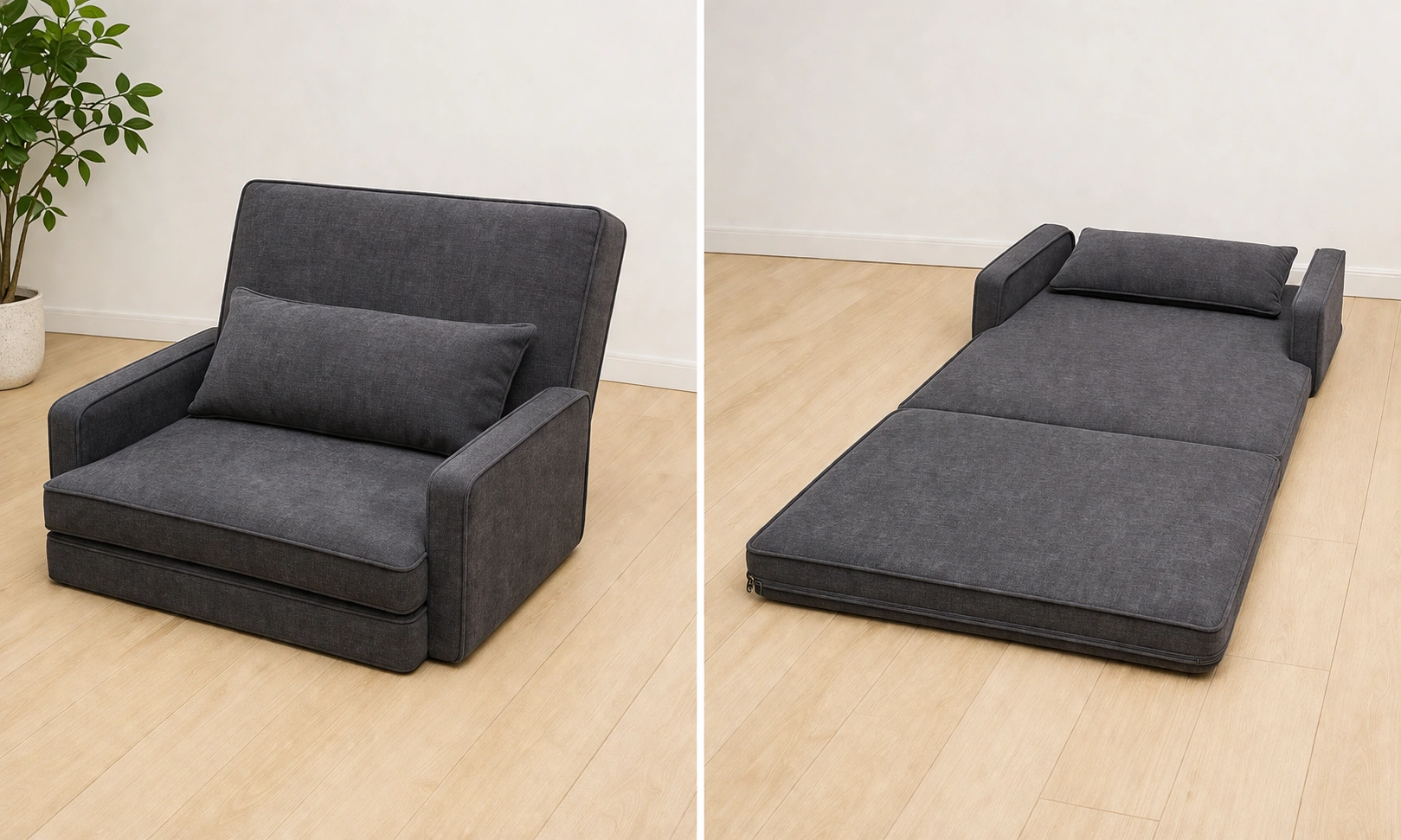
Convertible Floor Sofa
Designed to transform from a seated lounger into a flat sleeping surface. Unlike a futon sofa, convertible floor sofas tend to have thicker cushioning and a lower profile, making them more comfortable for lounging but less suited for nightly sleep use.
Key Benefits of Owning a Floor Sofa
Floor sofas offer a unique combination of practical and aesthetic advantages that traditional sofas simply cannot match. Here are the most significant benefits that make them worth considering for your home.
Space-Saving Design
The low profile creates an illusion of higher ceilings and more open space. Many models fold flat for storage, making them perfect for small rooms and studios.
Maximum Flexibility
Unlike a heavy sectional sofa, floor sofas can be rearranged, moved, or reconfigured in minutes. Some models convert from seating to sleeping with a simple adjustment.
Affordable Entry Point
Floor sofas typically cost significantly less than traditional sofas. For buyers on a tight budget, they deliver real comfort without the premium price tag. Check our sofa budget guide for realistic pricing benchmarks.
Relaxed, Grounded Seating
Sitting low to the ground promotes a naturally relaxed posture. Many people find floor seating more comfortable for reading, meditating, or casual conversation than elevated seating.
Style Versatility
From bohemian to minimalist aesthetics, floor sofas complement a wide range of interior styles. Their low silhouette works especially well in contemporary and Japanese-inspired spaces.
Easy Maintenance
Most floor sofas feature removable, machine-washable covers. There are no hard-to-reach crevices between cushions and frames, making cleaning straightforward compared to traditional designs.
Who Should Consider a Floor Sofa?
A floor sofa is not the right choice for everyone. Understanding whether your lifestyle, space, and physical needs align with this type of seating is essential before making a purchase. Here is a breakdown of who benefits most.
Apartment and Studio Dwellers
When every square foot counts, a floor sofa delivers comfortable seating without dominating the room. Its low profile makes small spaces feel larger, and foldable models can be tucked away when not in use — a major advantage for apartment living.
Frequent Hosts with Limited Space
If you regularly have overnight guests but lack a spare bedroom, a convertible floor sofa provides a functional sleeping surface without the footprint of a full sleeper sofa. It is a smart compromise for occasional guest accommodation.
Minimalists and Downsizers
Floor sofas embody the less-is-more philosophy. They eliminate the visual weight of bulky furniture, align perfectly with decluttered spaces, and offer honest simplicity that minimalists appreciate.
Reading and Meditation Enthusiasts
The grounded, enclosed feel of a floor sofa creates a natural cocoon for focused activities like reading, journaling, or meditation. Paired with a low side table, it becomes a dedicated relaxation zone.
College Students and Young Professionals
With limited budgets and frequent moves, a floor sofa offers real comfort that is affordable and portable. It is a practical step up from bean bags and floor cushions without the commitment of a traditional sofa.
Home Theater and Game Room Owners
For home theater setups or game rooms, floor sofas provide immersive, low-level seating that enhances the cinematic experience. Multiple units can be arranged in rows for a theater-like configuration.
Floor Sofa vs Traditional Sofa: Honest Comparison
Understanding the real differences between a floor sofa and a traditional sofa helps you make an informed decision rather than an impulsive one. This comparison covers the factors that actually matter in daily use.
| Factor | Floor Sofa | Traditional Sofa |
|---|---|---|
| Seat Height | 5–12 inches from ground | 15–20 inches from ground |
| Space Footprint | Compact; some fold flat for storage | Fixed; always occupies full space |
| Weight | 10–40 lbs (easy to move) | 80–200+ lbs (difficult to relocate) |
| Price Range | $50–$300 | $300–$3,000+ |
| Ease of Getting Up | Requires more effort (low position) | Easier (standard seat height) |
| Comfort for Extended Sitting | Good for 1–2 hours; varies by model | Better for extended daily sitting |
| Sleeping Capability | Convertible models work for occasional use | Limited to sleeper sofa models |
| Durability | 3–7 years depending on foam quality | 7–15+ years with proper frame |
| Cleaning | Removable washable covers; very easy | Varies; some fabrics are hard to clean |
| Formal Appearance | Casual and relaxed | Can range from casual to formal |
Floor Sofa vs Futon: Understanding the Difference
People often confuse floor sofas with futons because both sit low and can serve as sleeping surfaces. However, they are fundamentally different products designed for different purposes. Here is a clear distinction.
| Factor | Floor Sofa | Futon |
|---|---|---|
| Primary Purpose | Comfortable lounging and seated relaxation | Dual-purpose: sitting by day, sleeping by night |
| Cushion Feel | Soft, plush, cushion-like | Firm, mattress-like |
| Frame | Often frameless or minimal low base | Metal or wooden folding frame |
| Conversion Mechanism | Simple fold or rearrange cushions | Frame folds from sofa to flat bed position |
| Sleep Suitability | Occasional guest use only | Can work for regular nightly sleep |
| Weight | Lighter (10–40 lbs) | Heavier (40–100+ lbs due to frame) |
Key Features to Evaluate Before Buying
Not all floor sofas are created equal. A $50 cushion pile and a $250 engineered floor sofa may look similar in photos but feel drastically different in person. Knowing which features matter helps you avoid disappointing purchases.
Cushion Fill Material
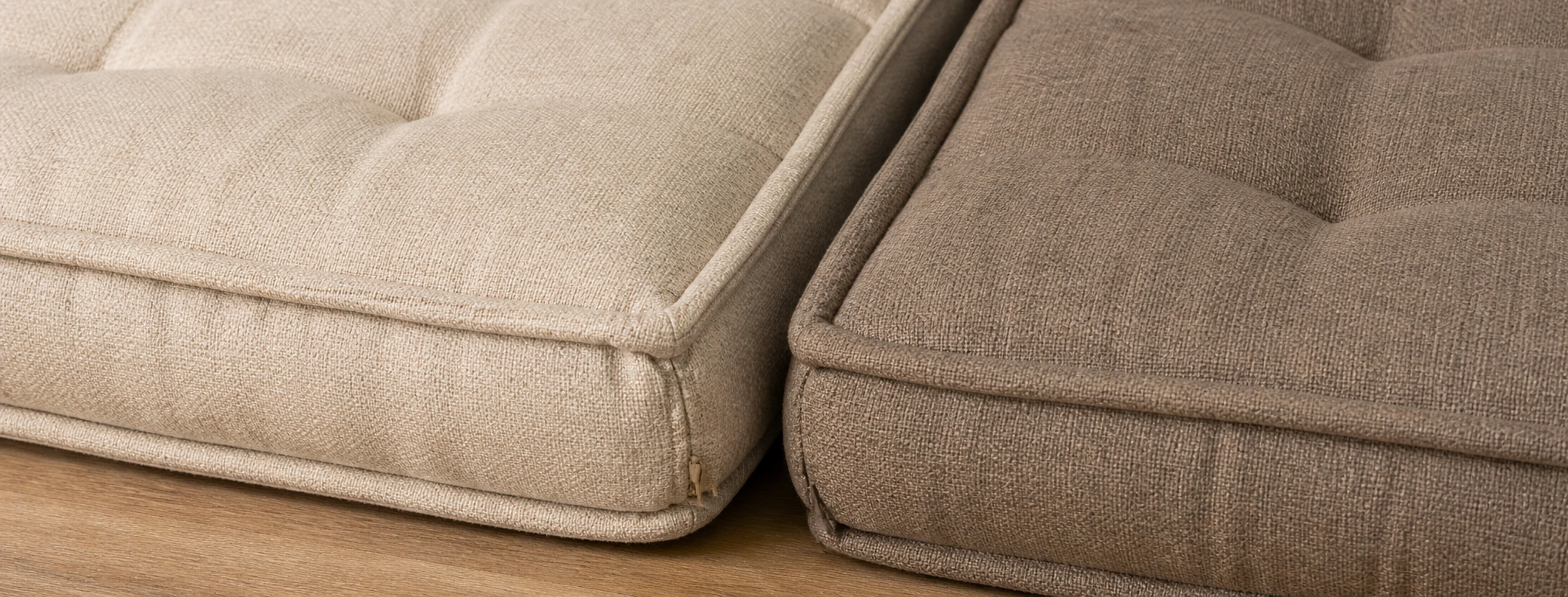
The filling determines comfort and longevity. High-density foam (1.8–2.5 lb/ft³) retains shape over time, while polyester fiberfill feels softer initially but flattens faster. Some premium models combine both for a balanced feel. Learn more about cushion fill types.
Cover Fabric
Look for removable, machine-washable covers in durable fabrics. Cotton and linen blends offer breathability, while polyester and microfiber resist stains. Consider the Martindale abrasion test rating for durability benchmarks.
Backrest Support
A proper backrest should support your lumbar region without forcing you to slouch. Adjustable backrests offer the most flexibility, letting you find your ideal angle for reading, watching, or lounging.
Base Structure
Frameless models are lighter and more portable but offer less structural support. Models with a wooden or metal base provide stability and better weight distribution. Consider your comfort vs durability priorities.
Weight Capacity
Check the manufacturer's stated weight limit. Budget floor sofas may support only 200–250 lbs, while reinforced models handle 400+ lbs. Exceeding the limit accelerates foam compression and structural wear.
Portability and Storage
If you plan to move or store the sofa regularly, look for folding mechanisms, lightweight materials, and carrying handles. Some models collapse to just a few inches thick for closet or under-bed storage.
Size When Open vs Folded
A convertible floor sofa might be compact when seated but extend to 75+ inches when flat. Always check both dimensions against your available space using our measuring guide.
Non-Slip Base
A common frustration with floor sofas is sliding across hard floors. Look for models with rubberized bottoms, anti-slip pads, or grippy fabric on the base to keep the sofa anchored in place.
How to Choose the Right Floor Sofa: Step-by-Step
Buying a floor sofa without a clear process often leads to regret. Follow these steps to ensure the model you select actually fits your life, not just your Pinterest board.
-
Measure Your Space Accurately
Use tape to outline the sofa's footprint on the floor, including both seated and flat positions if convertible. Account for walking paths around it. Our size and room guide covers the detailed process for any seating type.
-
Identify Your Primary Use Case
Will this be your main living room seat, a reading nook addition, or occasional guest seating? Daily use demands higher foam density and better backrest support, while occasional use allows for softer, more affordable options.
-
Decide on Configuration Type
If you value flexibility, choose a cushion-style or modular design. If you need a guest bed, go convertible. If you want structure and stability, a tatami-base model is best. Match the type to your daily habits.
-
Set a Realistic Budget
Quality floor sofas start around $80 and go up to $300 for premium models with high-density foam and durable covers. Anything under $50 is likely just a cushion — not a real seating solution. See our budget guide for planning.
-
Check Foam Density Specifications
Look for foam density ratings in product descriptions. Aim for at least 1.8 lb/ft³ for regular use and 2.0+ lb/ft³ for heavy or daily use. Our foam density explainer breaks down what these numbers mean in practice.
-
Verify Cover Removability and Washability
This is non-negotiable for floor sofas. Since they sit directly on the ground, covers accumulate dust faster. Confirm the cover zips off and is machine-washable before purchasing. For fabric care tips, read our fabric cleaning guide.
-
Read Reviews Focusing on Long-Term Use
Most reviews are written within the first week. Filter for reviews from people who have owned the sofa for 3+ months — they reveal whether the foam flattens, the cover pills, or the base warps over time.
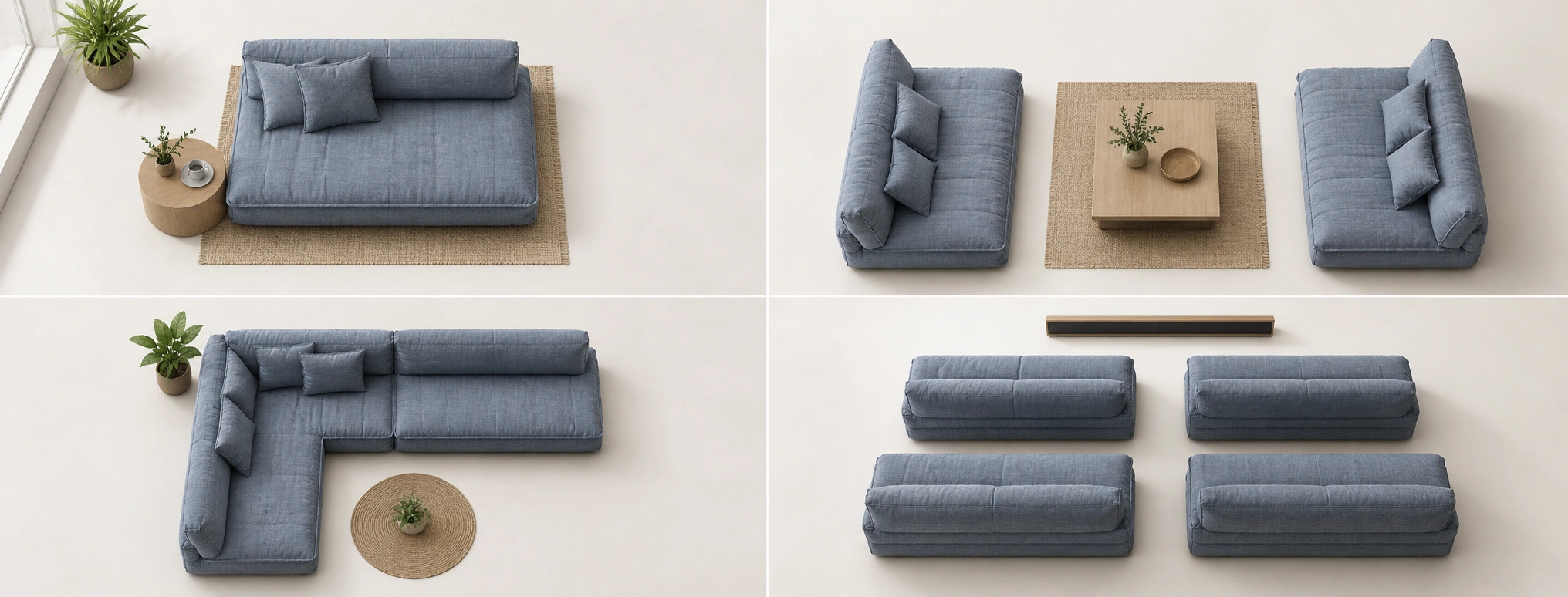
Placement Ideas and Room Layout Tips
Where you place a floor sofa significantly impacts how well it works in your home. Unlike traditional sofas that naturally anchor a room, floor sofas require more intentional placement to look intentional rather than improvised.
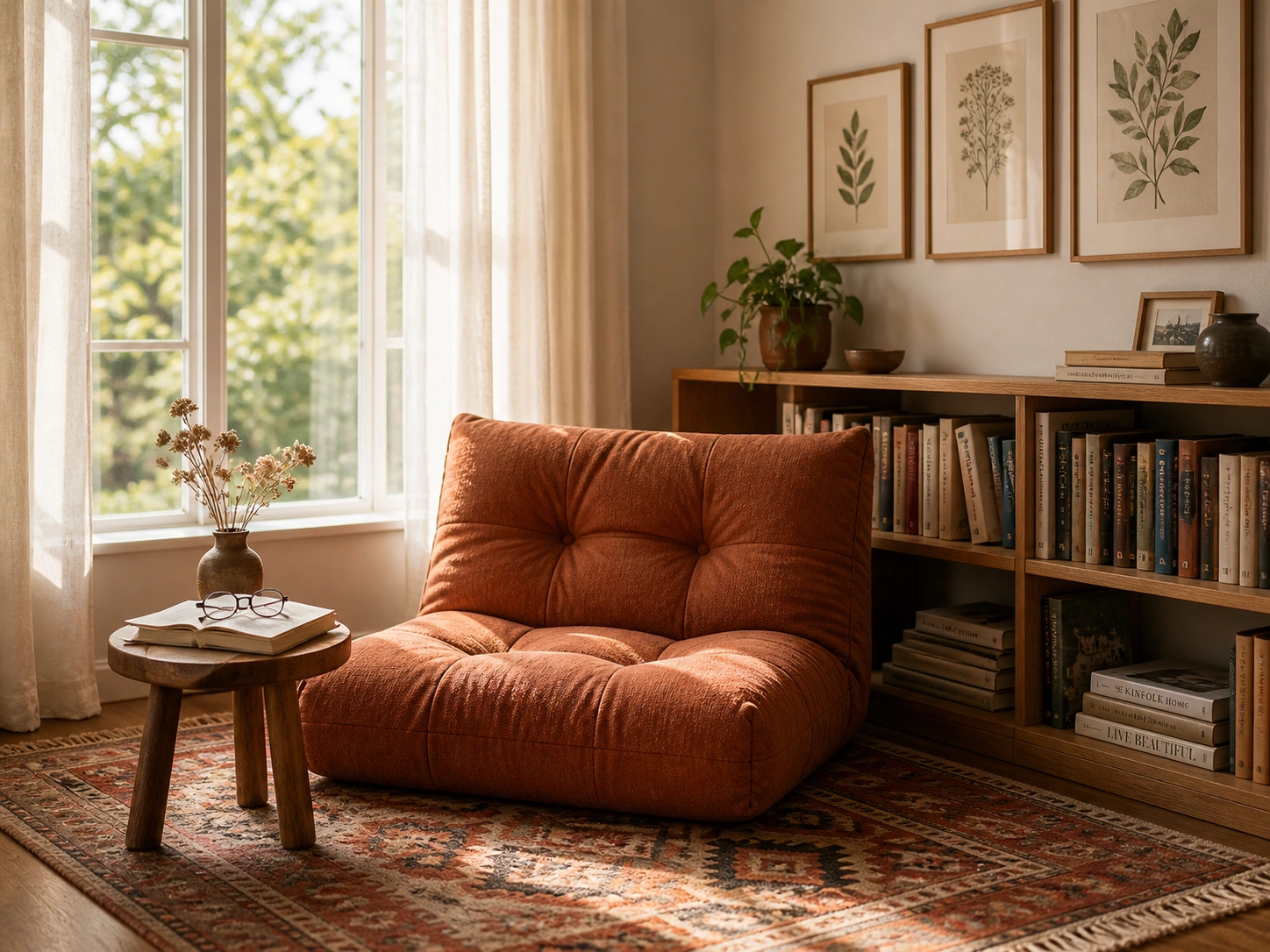
Window Reading Nook
Place a single-seat floor sofa against a window with a low side table for books and drinks. Natural light and a low seating position create an ideal reading environment.
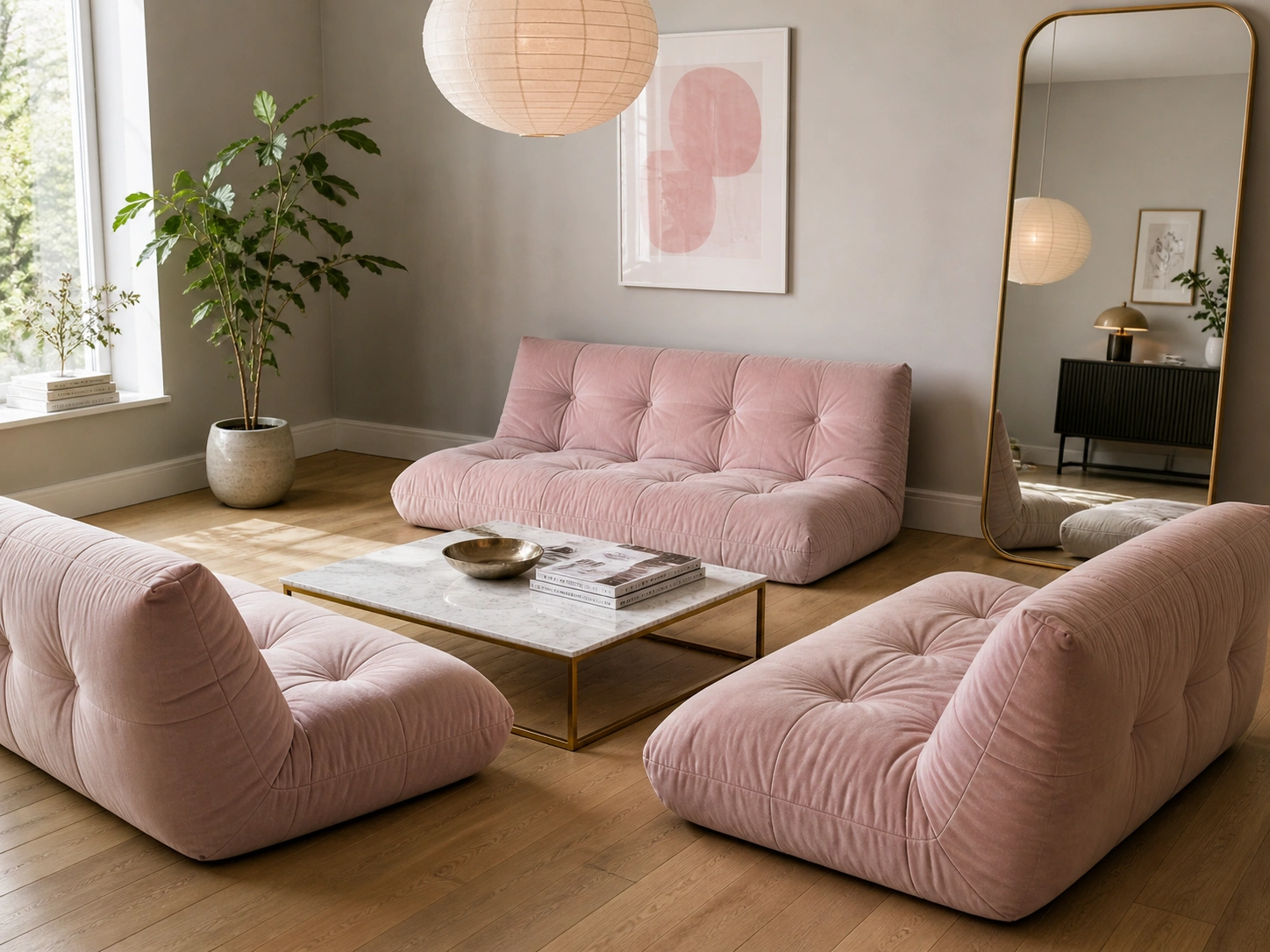
Living Room Center
Pair two or three floor sofa modules around a low coffee table for a conversational seating area. This works especially well in open-plan spaces where you want to define zones without walls.

Home Theater Room
Arrange multiple floor sofas in graduated rows for an immersive viewing experience. Their low profile ensures unobstructed sightlines to the screen from every position.
For a basement or rec room, floor sofas work well because they are easy to move when the space needs to serve multiple purposes — from movie nights to game tournaments to yoga sessions. In a guest room, a convertible floor sofa can serve as both daytime seating and an extra bed without requiring the space of a full sleeper sofa.
Maintenance and Care Tips
Proper maintenance extends the life of your floor sofa significantly. Because floor sofas sit directly on the ground, they are more exposed to dust, pet hair, and moisture than elevated furniture. Following a consistent care routine is essential.
🧺 Regular Cover Washing
Remove and machine-wash covers every 2–4 weeks, or more frequently if you have pets. Use cold water and a gentle cycle to prevent shrinkage. Always air-dry or tumble-dry on low heat to maintain fabric integrity. For detailed fabric-specific instructions, see our fabric sofa cleaning guide.
🧹 Weekly Vacuuming
Use a handheld vacuum or upholstery attachment to remove dust, crumbs, and pet hair from the cushion surfaces weekly. Pay special attention to seams and crevices where debris accumulates. This prevents dirt from working into the foam over time.
💧 Immediate Stain Treatment
Blot spills immediately with a clean cloth — never rub, which pushes the stain deeper. For stubborn stains, use a mild fabric cleaner appropriate for your cover material. Our stain removal guide covers specific techniques for common stains.
🌀 Foam Rotation and Fluffing
Every few weeks, rotate and flip the cushions to ensure even wear. Manually fluff compressed areas to redistribute the filling. This prevents permanent indentations and extends the usable life of the foam — the same principle applies to fixing sagging cushions on any sofa type.
🛡️ Apply Fabric Protector
Spray the covers with a fabric protector after each wash to create a barrier against spills and stains. This is especially important for floor sofas since they are closer to the ground and more vulnerable to accidents. Read our fabric protection guide for product recommendations.
☀️ Air Out Periodically
On dry days, remove the covers and let both the foam inserts and covers air out for a few hours. This prevents moisture buildup, reduces odors, and helps the foam regain its original shape. Avoid direct sunlight for extended periods to prevent fabric fading.
Common Mistakes to Avoid When Buying a Floor Sofa
Learning from others' mistakes saves you money and frustration. These are the most frequent errors people make when purchasing floor sofas — and how to avoid each one.
-
Choosing Based on Appearance Alone
A floor sofa that looks great in a product photo may feel completely different in person. Prioritize foam density, backrest angle, and seat depth over aesthetics. A beautiful sofa that is uncomfortable to sit on for more than 20 minutes is a waste of money regardless of how it looks.
-
Ignoring Weight Capacity
Exceeding the stated weight limit is the fastest way to destroy a floor sofa. The foam compresses permanently, the base warps, and the cover stretches out of shape. Always check the weight rating and add a 20% safety margin for realistic use.
-
Not Checking Folded Dimensions
A convertible floor sofa that looks compact when seated may extend to 80 inches when flat — longer than many beds. If storage space is the reason you are choosing a floor sofa, verify the folded dimensions will actually fit where you plan to store it.
-
Skipping the Non-Slip Check
A floor sofa that slides every time you lean back is endlessly frustrating. Many budget models lack anti-slip features. If the product description does not mention a grippy base, plan to add your own non-slip pads underneath.
-
Assuming All Floor Sofas Are the Same
The market ranges from $15 cushion sets to $300 engineered seating systems. Treating them as interchangeable leads to either overspending on features you do not need or underspending and getting something that falls apart in weeks. Understand the price vs quality relationship before shopping.
-
Forgetting About Floor Surface Compatibility
Floor sofas work well on carpet, hardwood, and tile — but each surface presents different challenges. On hardwood, sliding is the main issue. On carpet, the sofa may sink unevenly. On tile, the hard surface underneath can make the seating feel firmer. Consider your floor type when evaluating cushion thickness.
Frequently Asked Questions
Floor sofas with proper lumbar support and high-density foam filling can be comfortable for short to moderate sitting sessions. However, getting up from a very low position can strain the lower back and knees over time. If you have chronic back pain, consider a floor sofa with an adjustable backrest or a slightly elevated base. For detailed guidance, check our sofa for back pain resource.
Some convertible floor sofas can serve as occasional guest beds, but they are generally not designed for nightly use. The cushion support is typically less robust than a proper mattress. For frequent overnight use, a sleeper sofa or a dedicated futon would be more suitable alternatives.
Most floor sofas come with removable, machine-washable covers. Vacuum the cushions weekly to remove dust and debris, spot-clean stains immediately, and wash the covers every 2–4 weeks depending on use. Using a fabric protector spray can also help repel spills and stains. For comprehensive care instructions, visit our sofa cleaning guide.
Floor sofas are excellent for small apartments because they sit low (creating a sense of higher ceilings), many are foldable or stackable for easy storage, and they typically have a smaller footprint than traditional sofas. They are among the best space-saving seating solutions available.
A floor sofa is designed primarily for seated lounging close to the ground, with a focus on comfort and aesthetics. A futon is a multi-purpose piece that functions as both a sofa and a bed, usually with a metal or wooden folding frame. Floor sofas tend to be softer and more cushioned, while futons have a firmer, more mattress-like feel.
With proper care, a quality floor sofa with high-density foam lasts 3 to 7 years. Budget models with low-density filling may show significant compression within 6 to 12 months. The key factors are foam density, usage frequency, and whether you rotate and fluff the cushions regularly. For insights on maximizing furniture lifespan, see our quality checking guide.
Yes, but you need to address the sliding issue. Hardwood floors provide a smooth surface that most floor sofas will slide on when you lean back or shift position. Look for models with rubberized or grippy bases, or add non-slip pads underneath. This simple fix makes hardwood floors a perfectly viable surface for floor sofas.