Contemporary Sofa: The Complete Buying Guide
Everything you need to know about contemporary sofas — from defining characteristics and popular materials to room placement strategies and expert buying tips that help you invest wisely.
📑 Table of Contents
What Is a Contemporary Sofa?
A contemporary sofa is a seating piece that reflects the design sensibilities of the present moment. Unlike period-specific styles such as mid-century modern or Victorian, contemporary design is fluid — it borrows from multiple eras and blends them into something that feels current and relevant. The result is a sofa that looks effortlessly stylish without being tied to any single historical movement.
At its core, a contemporary sofa prioritizes clean lines, understated elegance, and functional comfort. You will rarely find ornate carvings, excessive tufting, or heavy embellishments. Instead, these sofas feature smooth profiles, tapered or hidden legs, and a focus on the quality of materials over decorative excess. This simplicity is precisely what makes them so adaptable — they complement a wide range of interior themes from industrial lofts to coastal retreats.

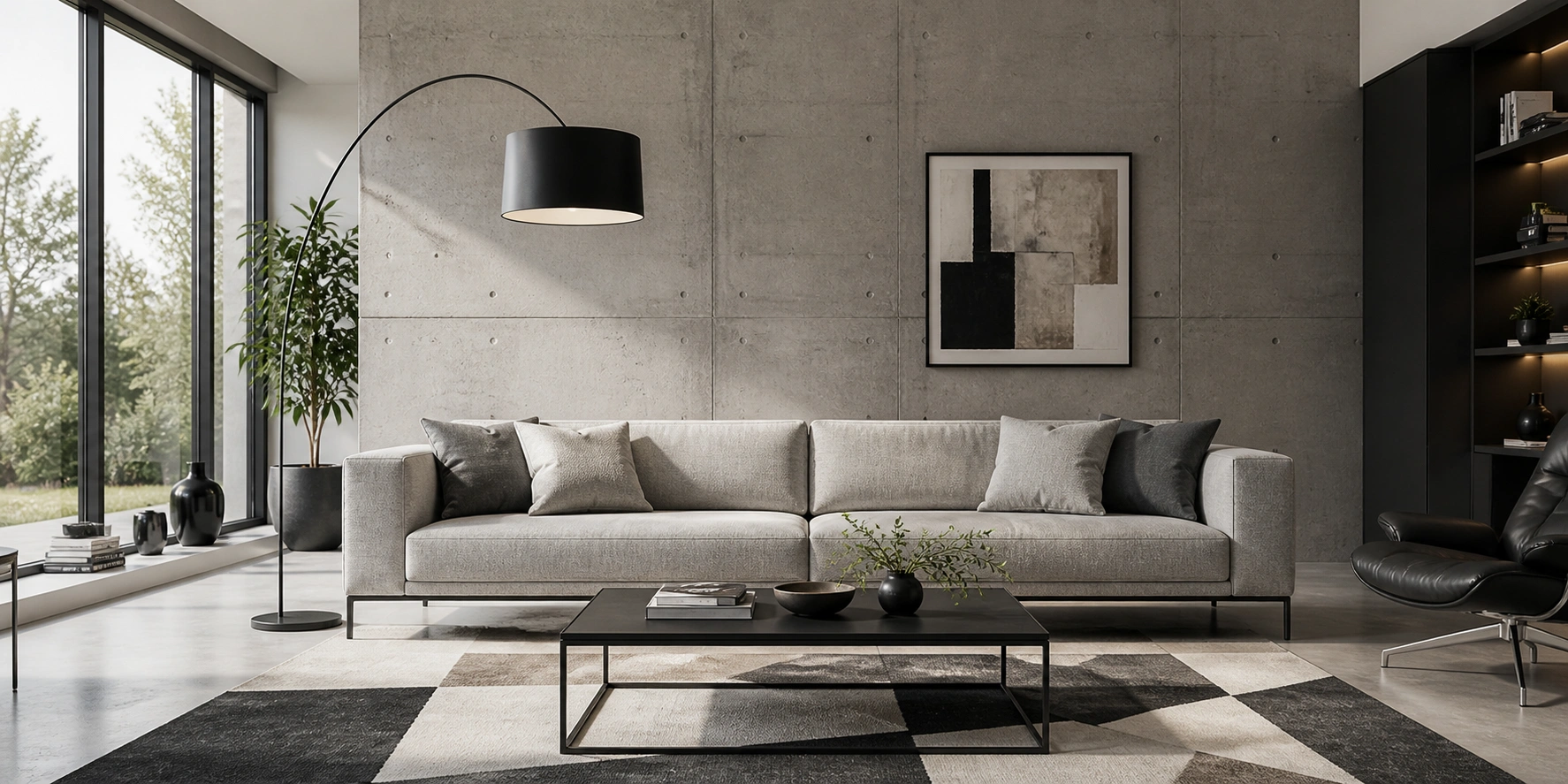
A contemporary sofa anchors this living room with its clean silhouette and neutral upholstery
Another hallmark of contemporary sofas is their emphasis on comfort without sacrificing aesthetics. Many feature plush seat cushions, generous proportions, and ergonomic support that make them ideal for daily napping or movie marathons. The design philosophy is straightforward: your sofa should look good and feel even better. To understand whether this style suits your needs, it helps to explore its defining features in detail.
Key Design Characteristics
Contemporary sofas share several recognizable traits that set them apart from other sofa styles. Understanding these features helps you identify authentic contemporary designs and avoid pieces that merely imitate the look.
Clean Lines
Straight, uncluttered silhouettes with minimal curves. No decorative flourishes or ornate woodwork — every line serves a purpose.
Neutral Palette
Grays, beiges, whites, and muted earth tones dominate. These versatile colors blend seamlessly with any room scheme and allow accent pieces to shine.
Subtle Legs
Tapered wooden legs, low-profile metal bases, or hidden bases that give the illusion of the sofa floating above the floor.
Plush Cushions
Deep, comfortable seat cushions often with wrapped foam or down-blend fills. Back cushions may be loose or attached depending on the model.
Balanced Proportions
Neither too bulky nor too slim. Contemporary sofas strike a visual balance that feels substantial without overwhelming a room.
Minimal Hardware
Visible nails, studs, or decorative buttons are kept to a minimum. When present, they are subtle and integrated into the overall design.
These characteristics work together to create a sofa that feels both refined and approachable. If you are drawn to the neutral tones and streamlined look but still want something inviting, a contemporary sofa hits that sweet spot. For a deeper understanding of how these elements affect comfort, check our guide on how to test sofa comfort.
Contemporary vs. Modern Sofa: What Is the Difference?
These two terms are frequently used interchangeably, but they refer to distinctly different design concepts. Confusing them can lead to buying a sofa that does not match your vision. Here is a clear breakdown of how they differ.
| Aspect | Modern Sofa | Contemporary Sofa |
|---|---|---|
| Time Period | Mid-20th century (1940s–1970s) | Current era, constantly evolving |
| Design Rules | Fixed aesthetic rooted in modernism movement | Flexible, borrows from multiple styles |
| Typical Materials | Molded plywood, leather, polished metal | Mixed — fabric, leather, velvet, performance materials |
| Color Palette | Bold primaries, black, white, warm wood tones | Neutrals with occasional muted accents |
| Leg Style | Often exposed, tapered wooden or hairpin legs | Tapered wood, metal, or hidden bases |
| Vibe | Retro, nostalgic, statement-making | Current, adaptable, understated elegance |
| Longevity | Timeless within its defined era | Evolves — what is contemporary today may shift |
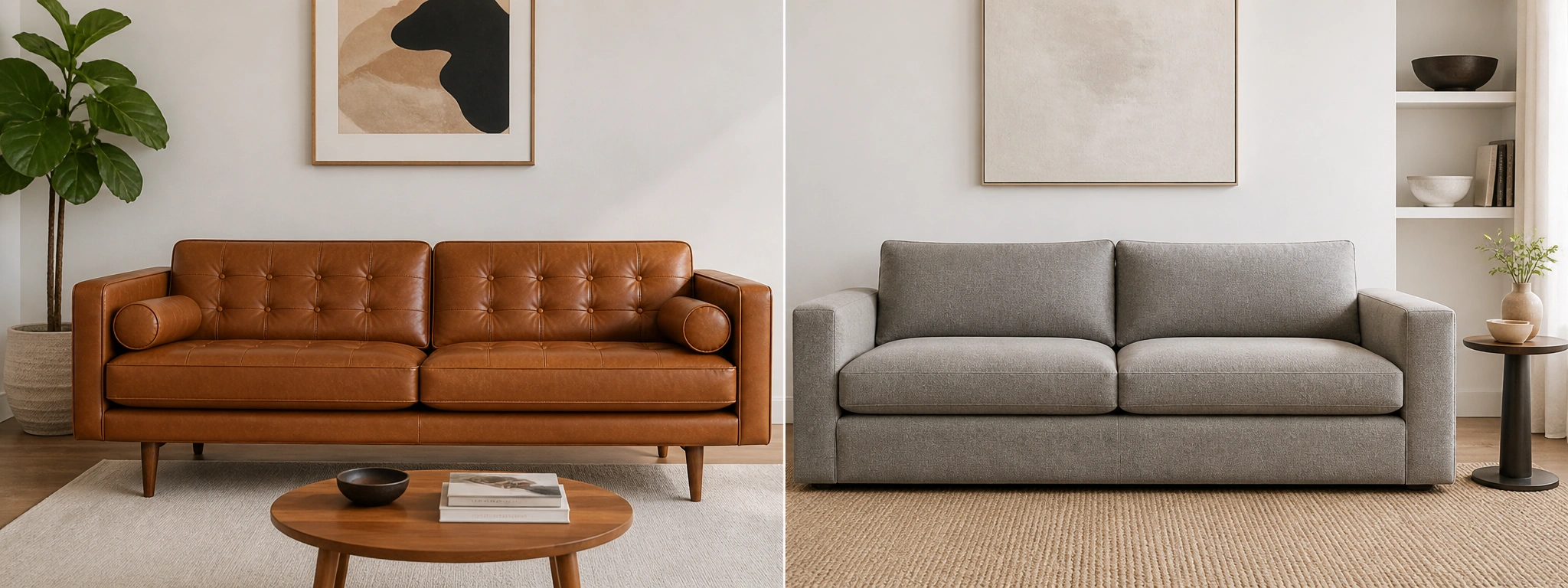
Understanding the distinction between modern and contemporary helps you choose the right style for your space
Think of it this way: a modern sofa is like a classic rock song — it belongs to a specific era and its appeal is tied to that period. A contemporary sofa is more like current pop music — it reflects what is happening right now and absorbs influences from everywhere. If your home leans toward vintage or retro aesthetics, a modern sofa may fit better. If you prefer a look that feels fresh and current, go with contemporary.
Popular Materials & Upholstery
The upholstery material you choose dramatically affects the look, feel, and durability of your contemporary sofa. Since contemporary design embraces variety, you have more options than with stricter style categories. Here are the most popular choices and what makes each one worth considering.
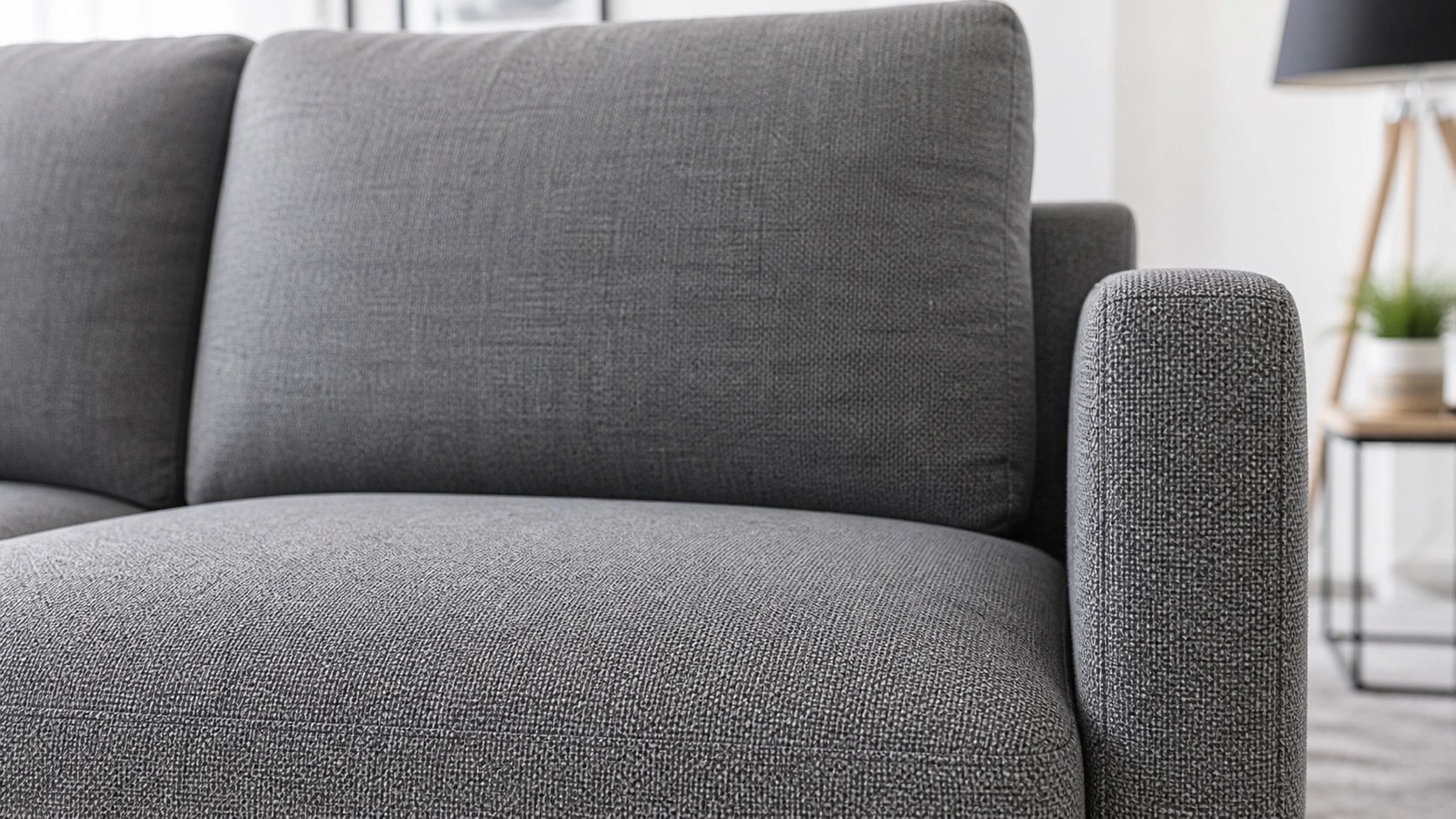
Performance Fabric
The top choice for contemporary sofas. Stain-resistant, durable, and available in hundreds of colors and textures. Ideal for families with kids and pet owners. Look for fabrics with a Martindale rub count above 30,000.
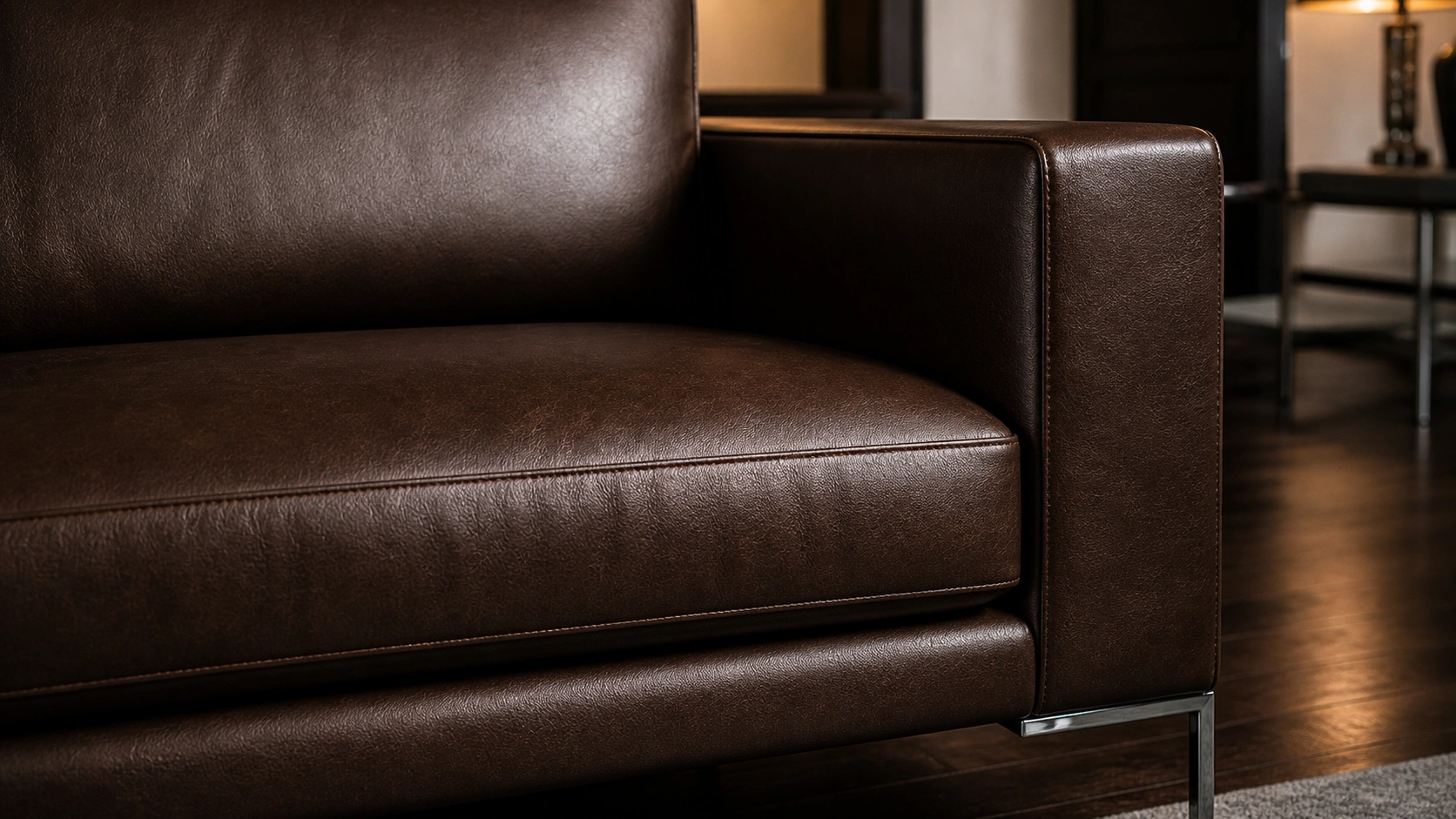
Genuine & Faux Leather
Leather adds sophistication and ages beautifully. Full-grain leather develops a rich patina over time, while bonded or faux leather offers an affordable alternative with easier maintenance.
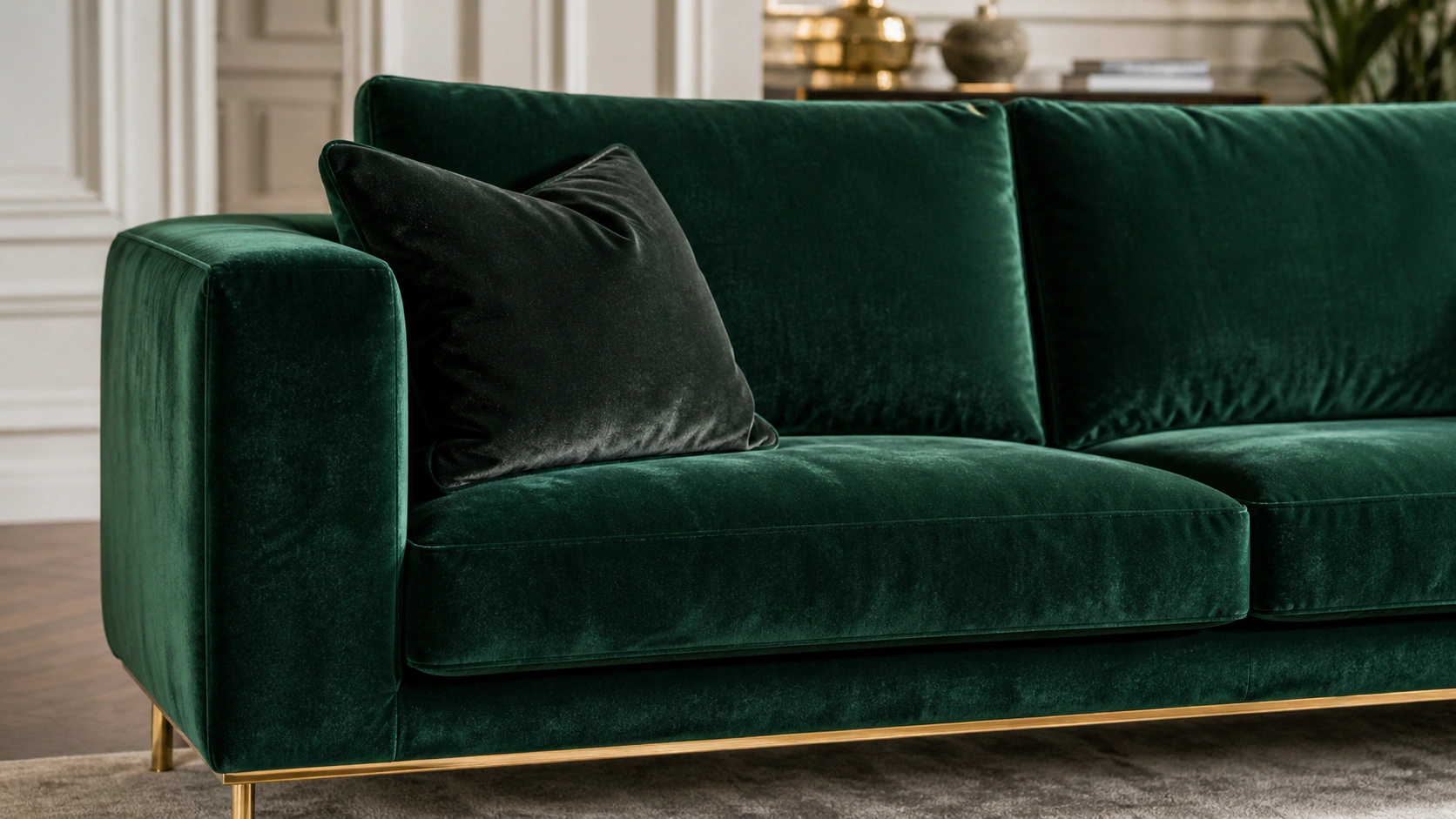
Velvet
Velvet brings a luxurious texture that contrasts beautifully with the clean lines of contemporary design. It is increasingly popular in bold colors like emerald, navy, and rust. Requires more careful cleaning and maintenance.
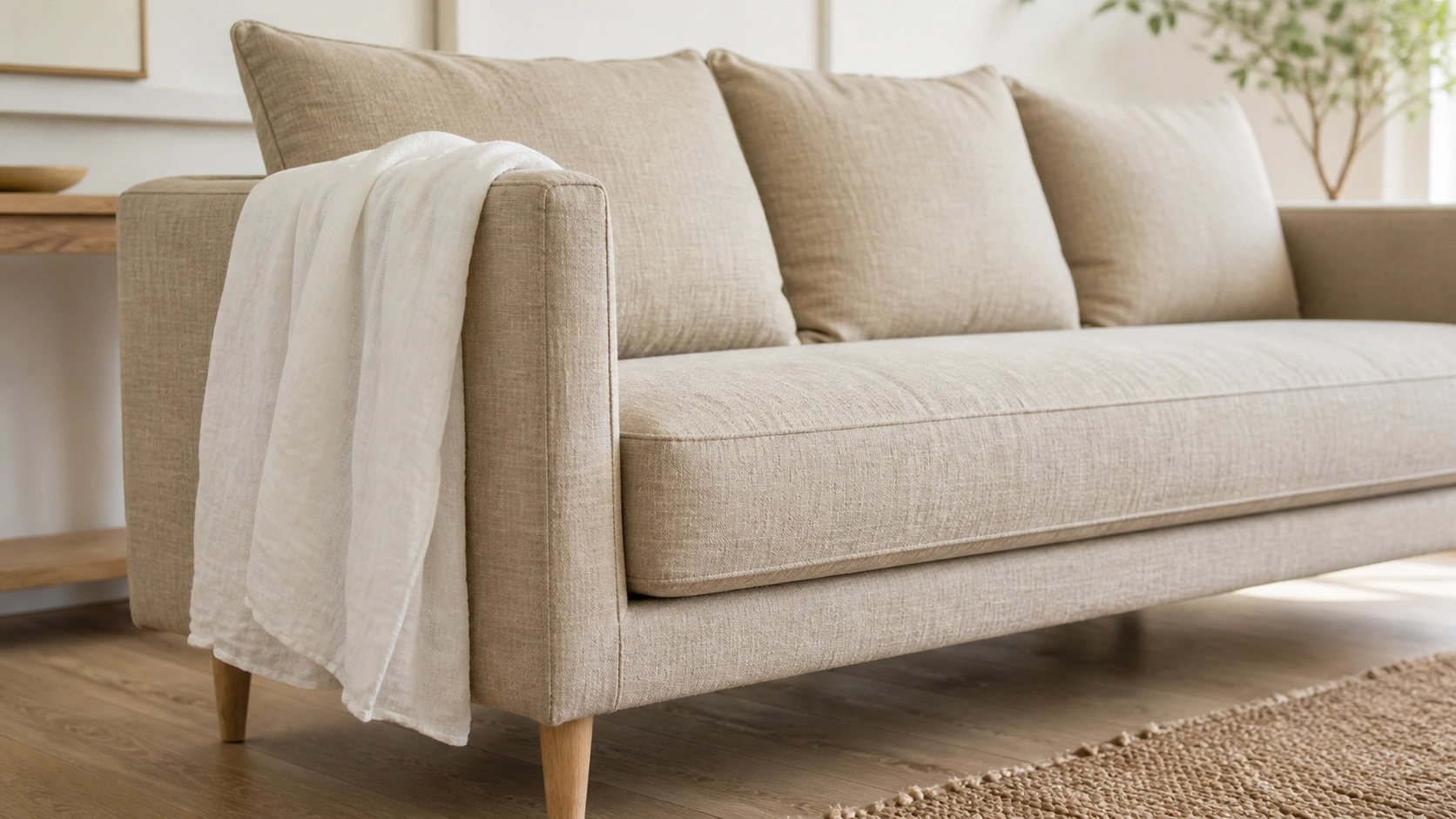
Linen & Linen Blends
Linen upholstery offers a natural, breathable texture that softens the sleek look of contemporary frames. Pure linen wrinkles easily, so linen-cotton or linen-polyester blends are more practical for daily use.
When evaluating materials, consider your household's activity level. A family room sofa demands something durable like performance fabric or leather, while a guest room piece can prioritize aesthetics with velvet or linen. For a thorough comparison of the two most popular options, read our leather vs. fabric sofa guide.
Size Options & Dimensions
Contemporary sofas come in a wide range of sizes, making them suitable for virtually any room. The key is matching the sofa dimensions to your space and seating needs. Before shopping, always measure your room and plan walkways — our size and room guide covers this process step by step.
| Size | Typical Width | Best For | Seat Capacity |
|---|---|---|---|
| 1-Seater | 30–45 inches | Small apartments, reading nooks, office spaces | 1 person |
| 2-Seater / Loveseat | 55–70 inches | Small living rooms, paired with a larger sofa | 2 people |
| 3-Seater | 75–90 inches | Standard living rooms, most popular size | 3 people |
| 4-Seater | 95–110 inches | Large rooms, open floor plans | 4 people |
| Sectional | 100–150+ inches | Frequent hosting, family rooms, corner placement | 5+ people |
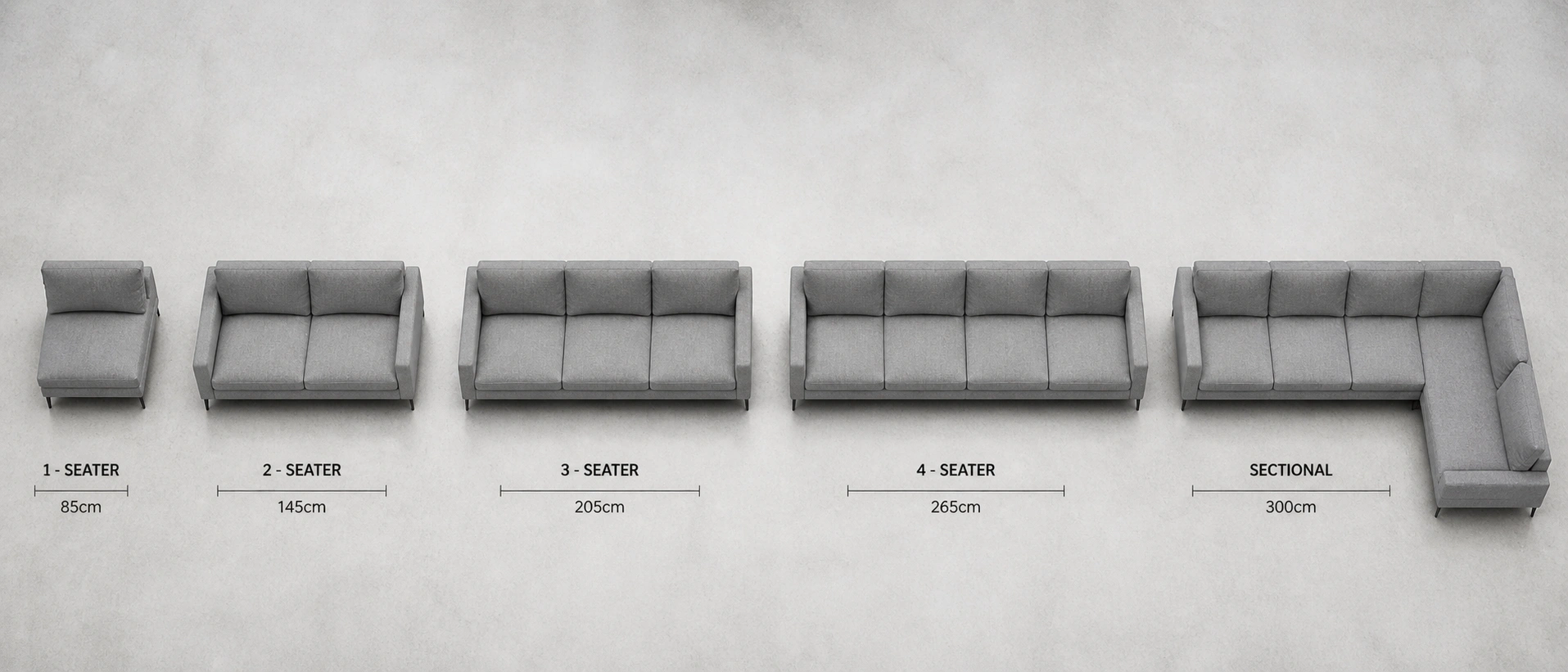
From compact loveseats to expansive sectionals, contemporary sofas are available in every size category
A common mistake is buying the largest sofa that physically fits in a room. Instead, aim for a sofa that occupies roughly two-thirds of your wall length while leaving at least 18 inches of clearance for walkways. If you are furnishing an apartment, a 2-seater or 3-seater with slim arms will maximize both seating and floor space. For larger rooms, a modular sofa offers the flexibility to reconfigure your layout as needs change.
Room Placement Strategies
Where you place your contemporary sofa determines how well it integrates with your room. Because of their versatile aesthetic, these sofas work in nearly every room type — but a few strategic decisions can elevate the result from good to exceptional.
Living Room Focal Point
In a primary living room, position your contemporary sofa facing the room's natural focal point — a fireplace, large window, or media console. Avoid pushing it flush against the wall unless space absolutely demands it. Pulling the sofa even 6 inches away from the wall creates a sense of breathing room and makes the room feel larger. Pair it with a sofa table behind for both function and visual depth.
Open Floor Plan Zoning
In open-concept homes, a contemporary sofa acts as a natural room divider. Place it perpendicular to a kitchen island or dining area to define the living zone without blocking sightlines. A sectional sofa is particularly effective here because its L-shape creates an implicit boundary. Our living room layout guide covers multiple floor plan scenarios in detail.

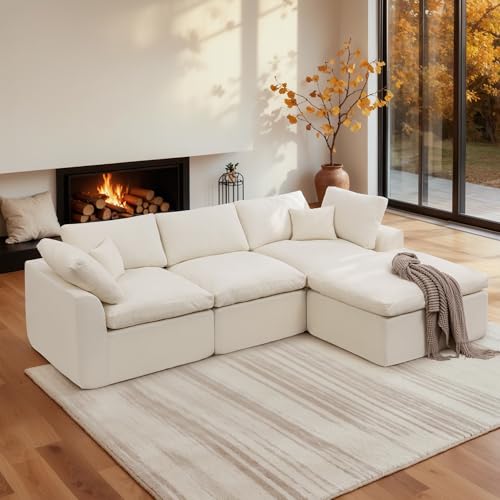
A contemporary sectional elegantly separates the living area from the dining zone in an open floor plan
Small Space Solutions
For compact rooms, choose a contemporary sofa with low arms or an armless design to maximize seating width. Light-colored upholstery makes the sofa feel less visually heavy, and exposed legs create the illusion of more floor space. Avoid oversized sectionals in small rooms — a well-proportioned 2-seater or 3-seater will serve you better than cramming in a larger piece.
Home Office & Guest Spaces
A contemporary sofa in a home office provides a sophisticated spot for informal meetings or breaks. Choose a compact 2-seater in a muted tone that complements your desk and shelving. For a guest room, consider a sleeper sofa with a contemporary profile — it serves as seating during the day and converts to a bed at night without looking like a bulky futon.
Pros & Cons of Contemporary Sofas
Every sofa style has strengths and trade-offs. Being honest about these helps you set realistic expectations and make a purchase you will not regret. Here is an objective look at what contemporary sofas do well — and where they may fall short.
✅ Advantages
- Versatile style that adapts to changing decor trends over time
- Wide availability in every price range, size, and material
- Clean lines make rooms feel more spacious and organized
- Neutral palettes pair easily with accent chairs, rugs, and artwork
- Comfort-focused designs suitable for everyday use
- Works in virtually every room type — living room, office, guest room
- Easy to find replacement cushions and covers due to popular sizing
❌ Disadvantages
- Minimalist design may feel too understated for those who love ornate furniture
- Neutral colors show dirt and wear more visibly than darker alternatives
- Because the style is broad, quality varies dramatically between brands
- Trend-influenced designs may feel dated faster than classic styles like Chesterfield
- Low-profile frames can be difficult for seniors or those with mobility issues to get up from
- Some models sacrifice firmness for plushness, leading to sagging cushions over time
The key takeaway: the pros significantly outweigh the cons for most buyers, but you should be aware of the potential downsides. If low seat height is a concern, look for contemporary models with higher backs and firmer cushions. If you worry about visible wear, darker neutrals like charcoal or slate gray are more forgiving than pure white or beige.
Expert Buying Tips for Contemporary Sofas
The market is flooded with sofas labeled "contemporary," but not all are created equal. These actionable tips will help you separate quality pieces from subpar ones and get the best value for your budget.
- Inspect the frame construction. A quality contemporary sofa should have a kiln-dried hardwood frame — typically oak, maple, or birch. Avoid sofas with frames made entirely of particleboard or softwoods like pine, as these warp and weaken over time. Give the sofa a gentle shake — excessive wobble signals poor joinery.
- Check the cushion fill. High-density foam (1.8 lb/ft³ or higher) wrapped in a fiber blend offers the best balance of support and softness. Down-filled cushions feel luxurious but require frequent fluffing and offer less structural support. Refer to our cushion fill types guide for detailed comparisons.
- Evaluate the suspension system. The spring system determines long-term comfort. Eight-way hand-tied springs are the gold standard but come at a premium price. Sinuous (serpentine) springs are a perfectly acceptable alternative for mid-range sofas — just ensure they are spaced no more than 2 inches apart.
- Test seat depth for your body. Standard seat depth ranges from 20 to 23 inches, but contemporary sofas sometimes push to 24 inches for a more relaxed feel. If you are shorter than 5'4", a deeper seat may cause your feet to dangle. Read our seat depth guide to find your ideal measurement.
- Verify fabric durability ratings. Ask for the Martindale test score — anything above 25,000 rubs is suitable for moderate household use, while 40,000+ is recommended for high-traffic areas. If shopping online, this information should be listed in the product specifications.
- Compare firm vs. plush before buying. Contemporary sofas lean toward plush, but if you prefer support, look for firm cushion options. Our firm vs. plush comparison helps you determine which aligns with your comfort preferences.
- Set a realistic budget. A well-made contemporary sofa typically costs between $800 and $3,500. Anything below $500 likely compromises on frame or cushion quality. Use our sofa budget guide to allocate your spending across frame, upholstery, and delivery.
- Consider total cost of ownership. Factor in delivery fees, fabric protection treatments, and potential hidden costs like professional cleaning. A sofa that seems cheaper upfront may cost more in the long run if it requires early replacement.

Always test a contemporary sofa in person when possible — sit, lean, and feel the cushion support before committing
If you want a systematic approach to evaluating any sofa, our comprehensive sofa quality checklist walks you through every inspection point. And if you are deciding between buying online or in-store, our guide on where to buy sofas covers the pros and cons of each channel.
Ready to Find Your Perfect Contemporary Sofa?
We have curated a selection of top-rated contemporary sofas that balance style, comfort, and durability. Browse our recommendations below to find the right match for your space and budget.
View Recommended Sofas ↓Maintenance & Care
A contemporary sofa is a significant investment, and proper maintenance ensures it looks and performs well for years. The care routine depends largely on your upholstery material, but some universal practices apply to all contemporary sofas regardless of fabric type.
General Maintenance Practices
- Vacuum weekly using a soft brush attachment to remove dust, pet hair, and debris before it becomes embedded in the fabric fibers. This single habit prevents most premature wear.
- Rotate and flip cushions every 2 to 3 months to ensure even wear distribution. This is especially important for sofas with attached cushions where rotation is the only option.
- Protect from direct sunlight by using curtains or blinds. UV exposure causes fabric fading and leather cracking over time. For unavoidable sun exposure, consider applying UV protection treatments.
- Address spills immediately — blot (never rub) with a clean cloth. Most contemporary performance fabrics are treated with stain repellents, but allowing spills to sit reduces their effectiveness.
- Use sofa covers in high-traffic households, especially if you have pets or young children. Modern covers are designed to look intentional rather than like afterthoughts.
Material-Specific Care
For fabric sofas, follow the manufacturer's cleaning code — W (water-based cleaner), S (solvent-based cleaner), WS (either), or X (professional cleaning only). Most performance fabrics fall under the W or WS category, making them relatively easy to maintain. Our fabric sofa cleaning guide provides step-by-step instructions for each code.
For leather sofas, regular conditioning every 3 to 6 months prevents cracking and maintains suppleness. Wipe spills promptly with a damp cloth and avoid harsh chemical cleaners. If your leather sofa develops tears, our leather repair guide covers both DIY and professional solutions.
For velvet sofas, use a velvet-specific brush to maintain the pile direction and remove surface dust. Avoid water-based cleaning methods — instead, follow our velvet cleaning guide which covers safe techniques for different types of stains.

Regular vacuuming is the single most effective maintenance habit for keeping your contemporary sofa in top condition
If your sofa develops common issues like flattened cushions, fabric pilling, or loose legs, most problems have straightforward fixes that do not require professional intervention. Our common sofa problems guide covers the most frequent issues and their solutions.
Frequently Asked Questions
Continue Reading
If you found this guide helpful, explore these related topics to deepen your sofa knowledge: