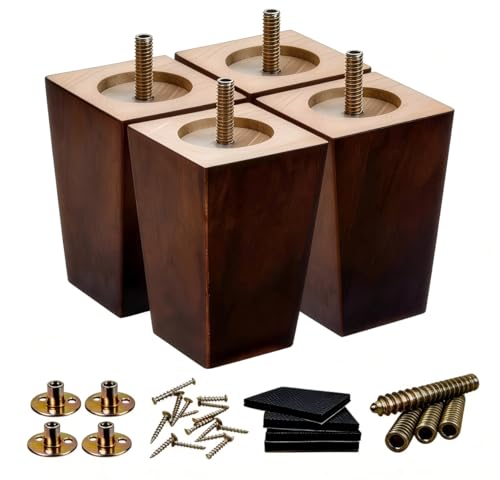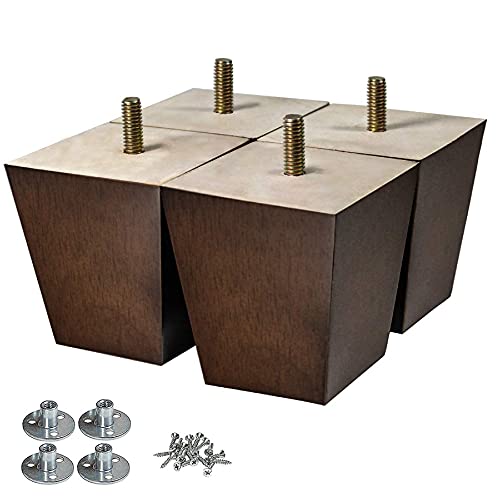
Sofa Leg Replacement: The Complete Guide
Learn how to measure, choose the right material and attachment type, and install new legs to refresh your sofa without buying a new one
VIEW RECOMMENDED LEGSWhy This Guide Matters: Replacing your sofa legs is one of the cheapest and fastest ways to transform the look, height, and stability of your couch. This guide covers everything from measuring your existing legs to selecting the perfect replacement — so you can buy with confidence.
Why Replace Your Sofa Legs?
Sofa legs endure constant weight, movement, and floor contact. Over time, they can crack, strip, wobble, or simply look outdated. Rather than replacing the entire sofa — which can cost hundreds or thousands of dollars — swapping out the legs is a smart, budget-friendly upgrade that takes under 20 minutes.
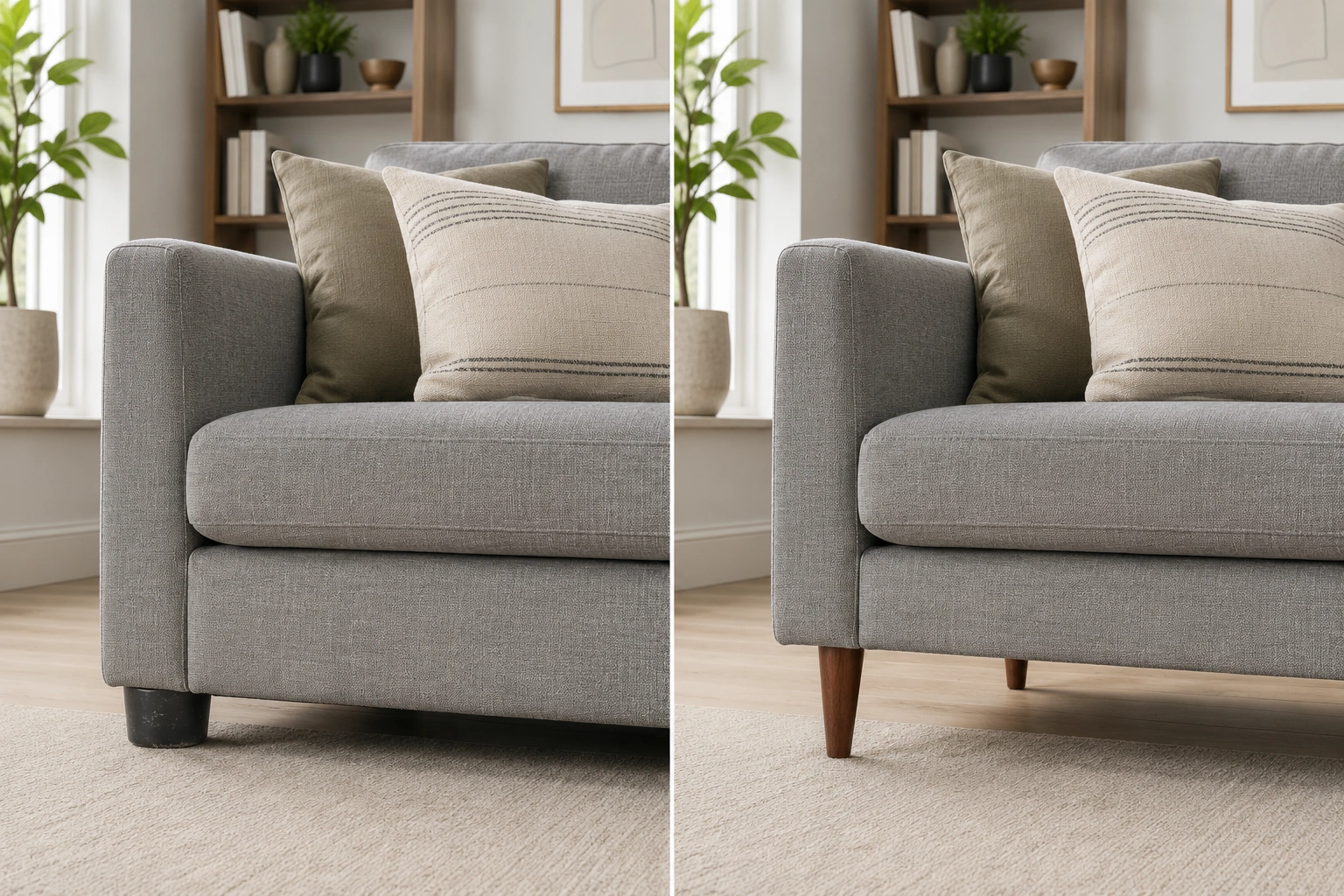
Beyond fixing damage, new legs can change the entire style of your couch. Swap short wooden legs for tall tapered ones to give a modern sofa a mid-century feel, or replace plastic feet with brass legs to elevate a basic frame into something that looks designer-grade.
Leg replacement also solves practical problems. If your [sofa wobbles or sits uneven](/sofa/help/sofa-wobbles-uneven), new legs with proper threading can restore stability. Taller legs make it easier to clean underneath — a major benefit for pet owners dealing with trapped hair and debris.
Key Benefits of Replacing Sofa Legs
Signs You Need New Sofa Legs
Not sure if your sofa legs actually need replacing? Look for these common warning signs:
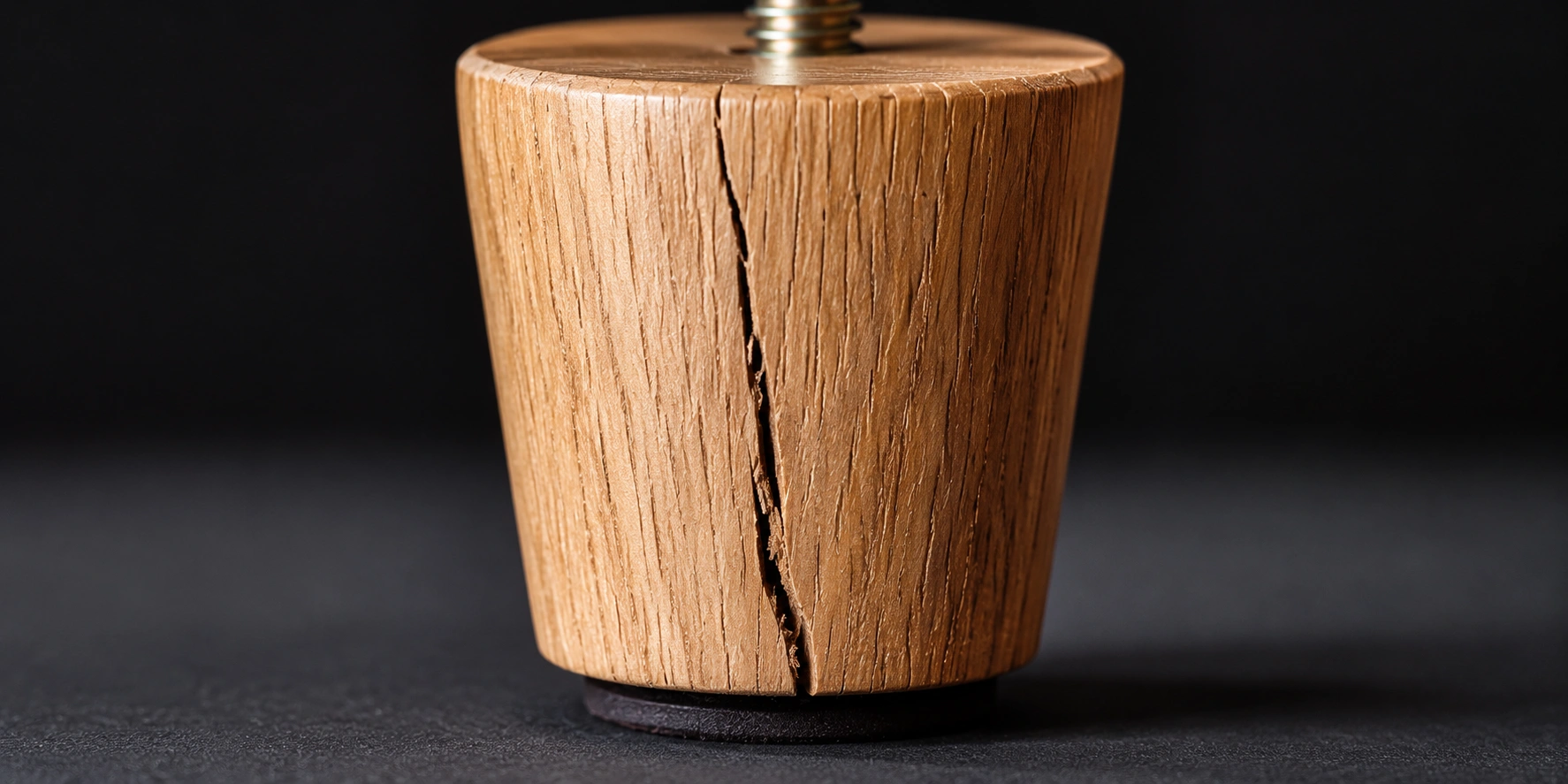
Visible Cracks or Splits
Wooden legs can develop cracks from regular stress. Once a crack appears, the leg weakens progressively and can snap suddenly under weight.
Stripped or Cross-Threaded Bolts
If the leg spins freely without tightening, the internal thread insert is stripped. The leg cannot be secured and will keep coming loose.
Persistent Wobbling
A sofa that rocks or wobbles on a flat floor often has uneven or damaged legs. This is one of the most common sofa problems and is almost always fixable with new legs.
Floor Scratches or Damage
Hard metal or plastic legs without protective pads can scratch hardwood, laminate, or vinyl flooring. Replacement legs with felt pads solve this.
Legs Keep Unscrewing
If you constantly re-tighten the same leg, the thread insert inside the frame is likely worn out. Replacement inserts or legs with a different thread size will fix this permanently.
Outdated Style
Sometimes the legs are structurally fine but look dated. Chunky 1990s legs on a contemporary sofa drag down the overall aesthetic. A simple swap modernizes the entire piece.
Types of Sofa Legs Explained
Sofa legs come in several distinct styles, each suited to different design aesthetics and functional needs. Understanding these types helps you choose legs that match both your sofa's frame and your room's decor.
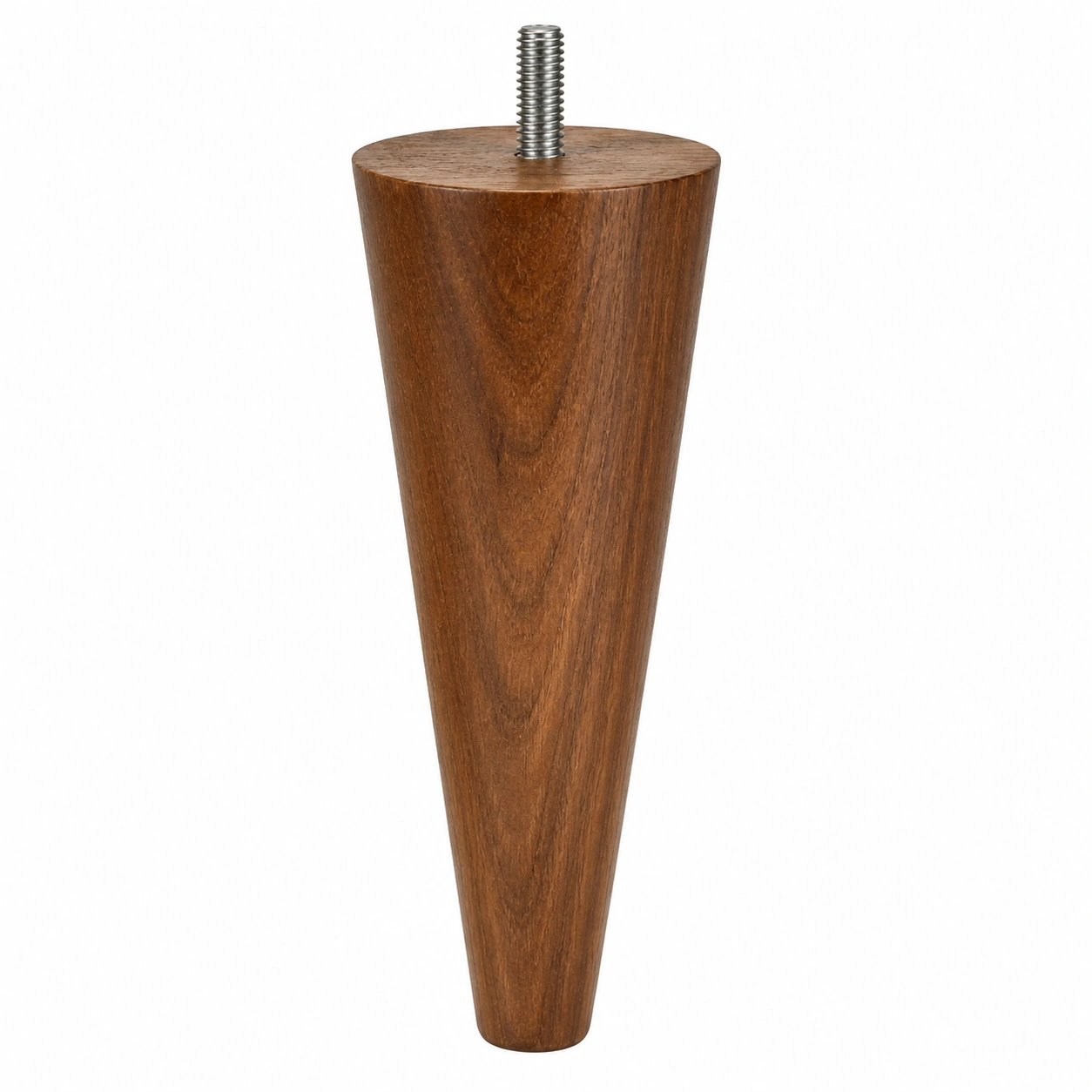
Tapered Legs
Wider at the top, narrowing toward the floor. Classic mid-century modern look. Works well with wooden sofas and clean-lined frames.
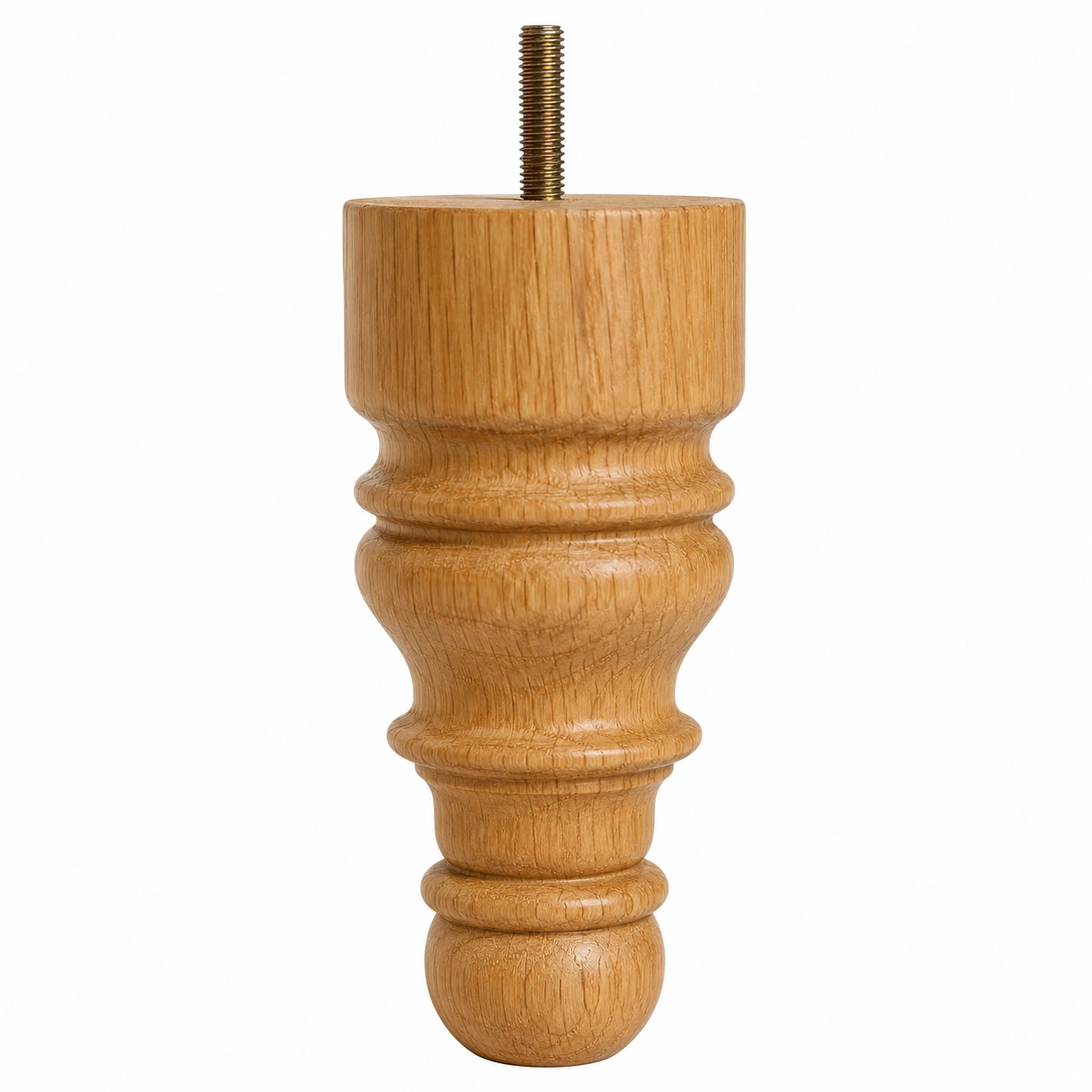
Turned Legs
Lathe-shaped with decorative profiles. Traditional and vintage-style sofas often use these. Elegant but more ornate.
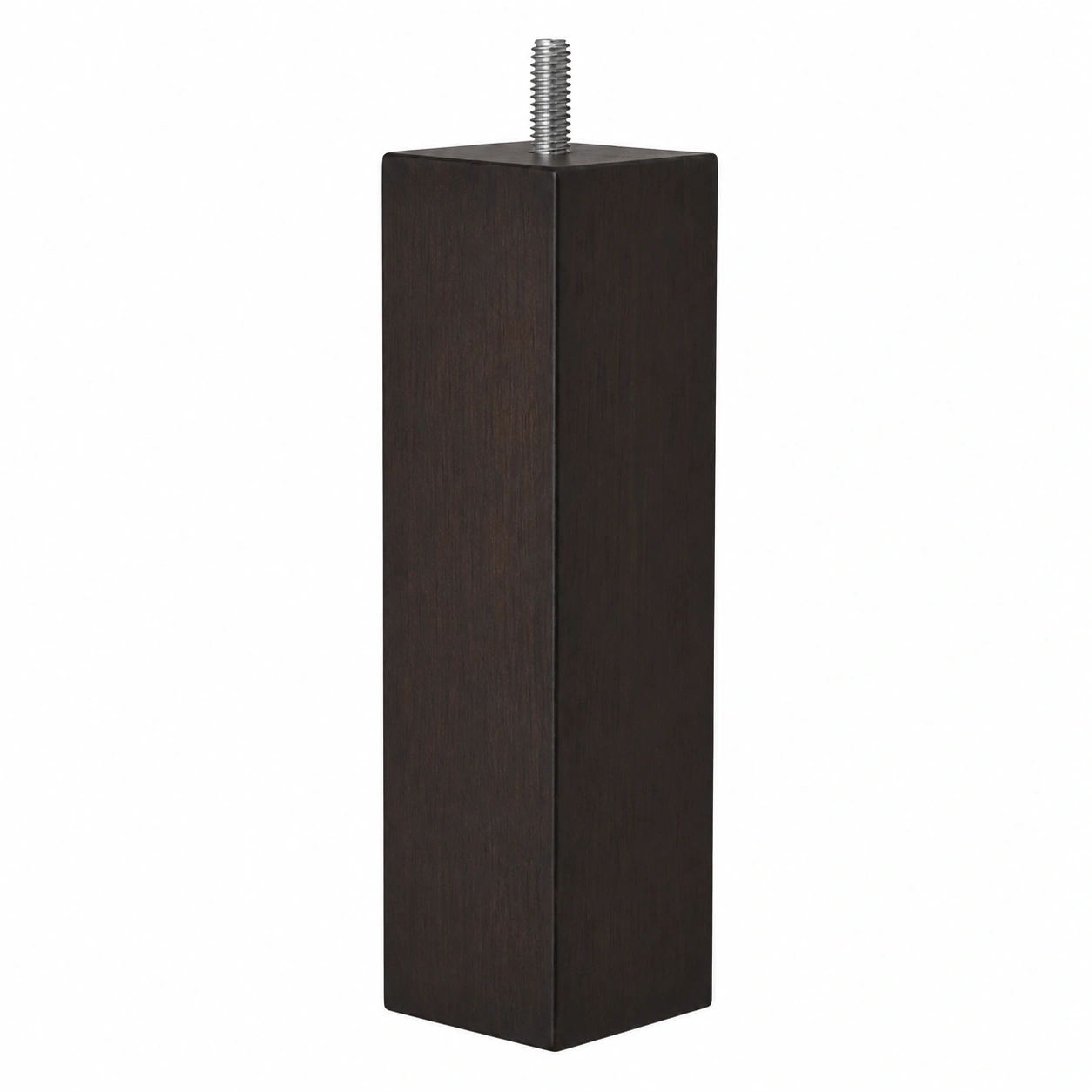
Straight / Block Legs
Uniform width from top to bottom. Simple, sturdy, and versatile. Common on contemporary sofas and sectionals.
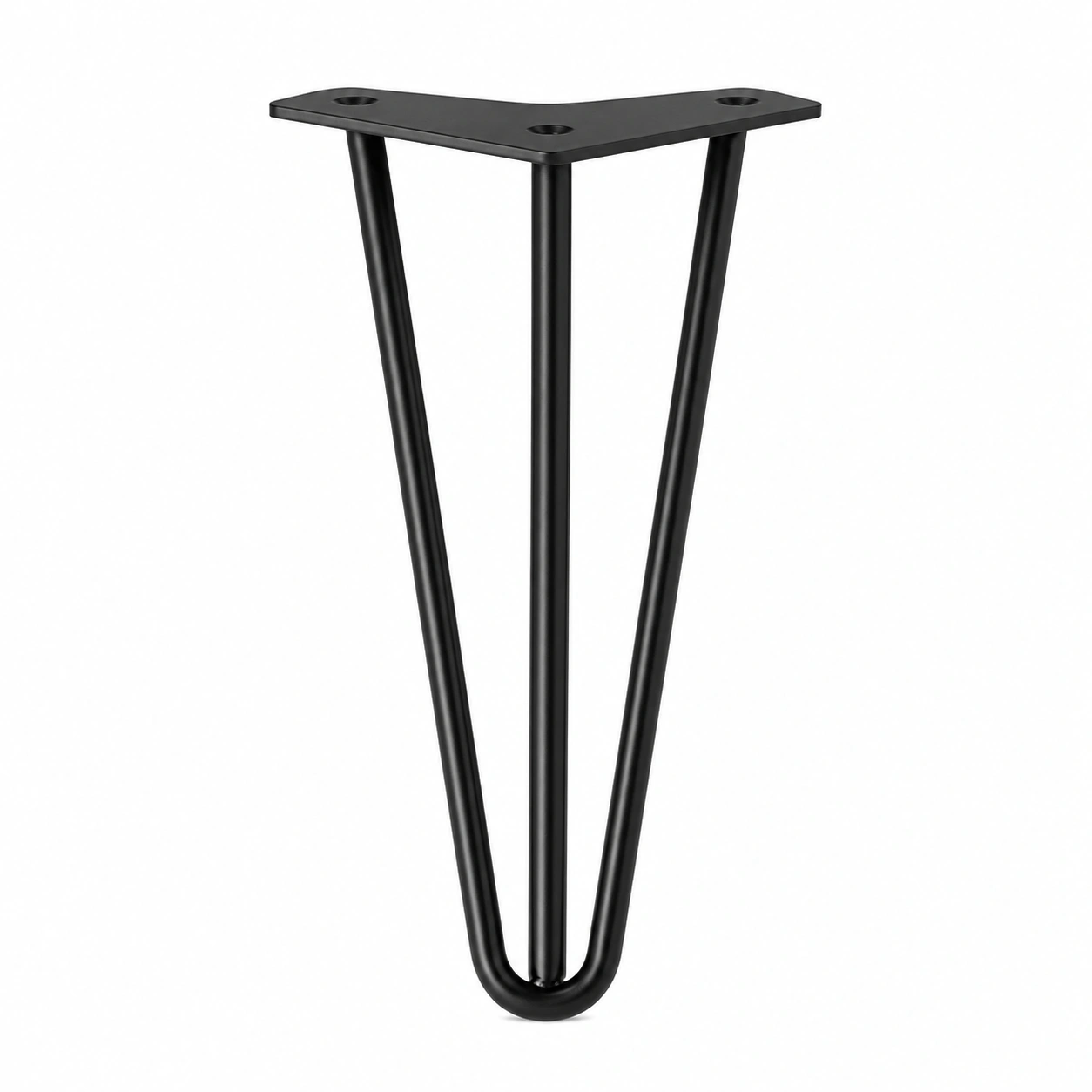
Hairpin Legs
Thin metal rods with a bent base. Iconic industrial and retro style. Lightweight but very strong when properly rated.
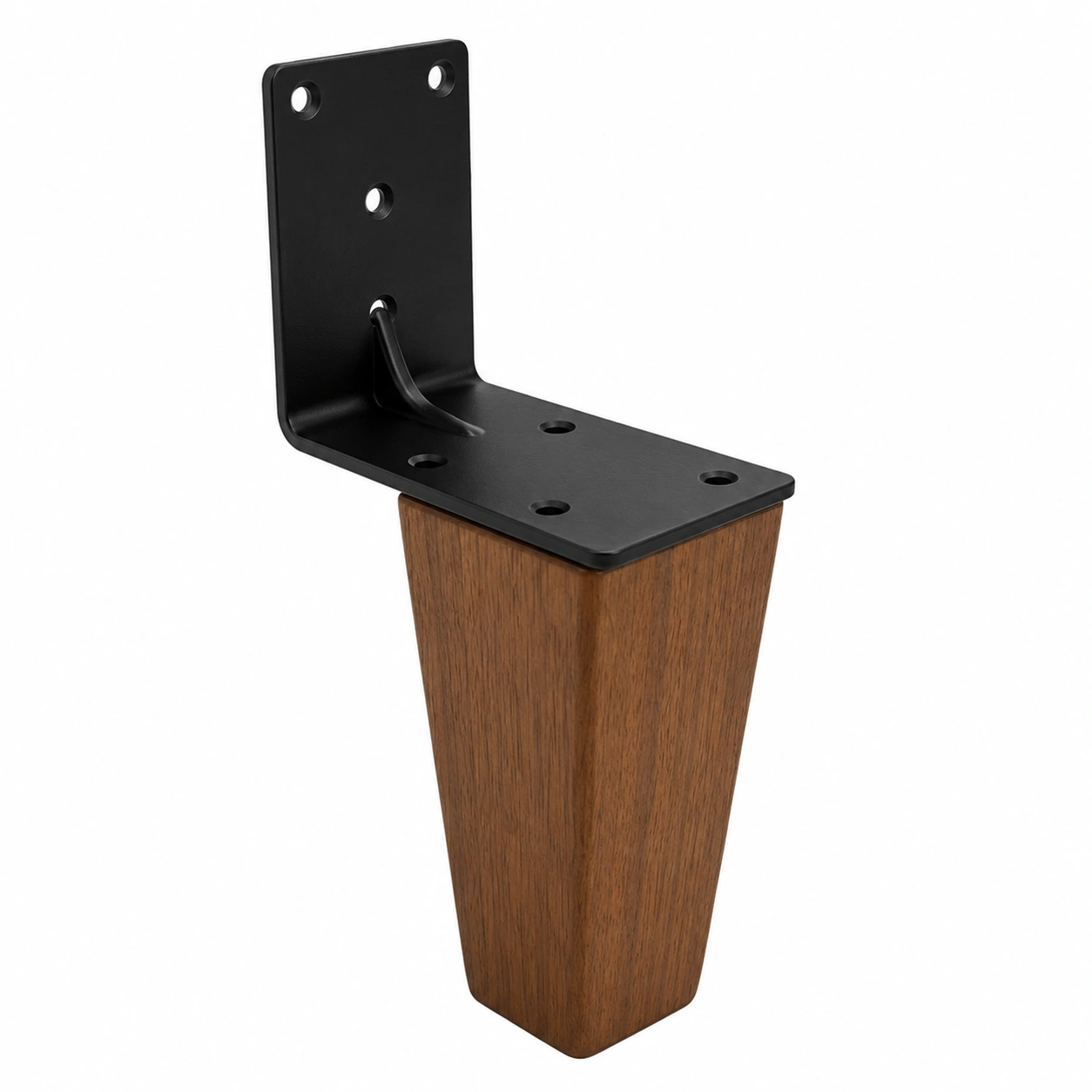
Bracket-Mount Legs
Attached via metal L-brackets screwed into the frame. Ideal if your sofa has no threaded inserts. Very secure and adjustable.
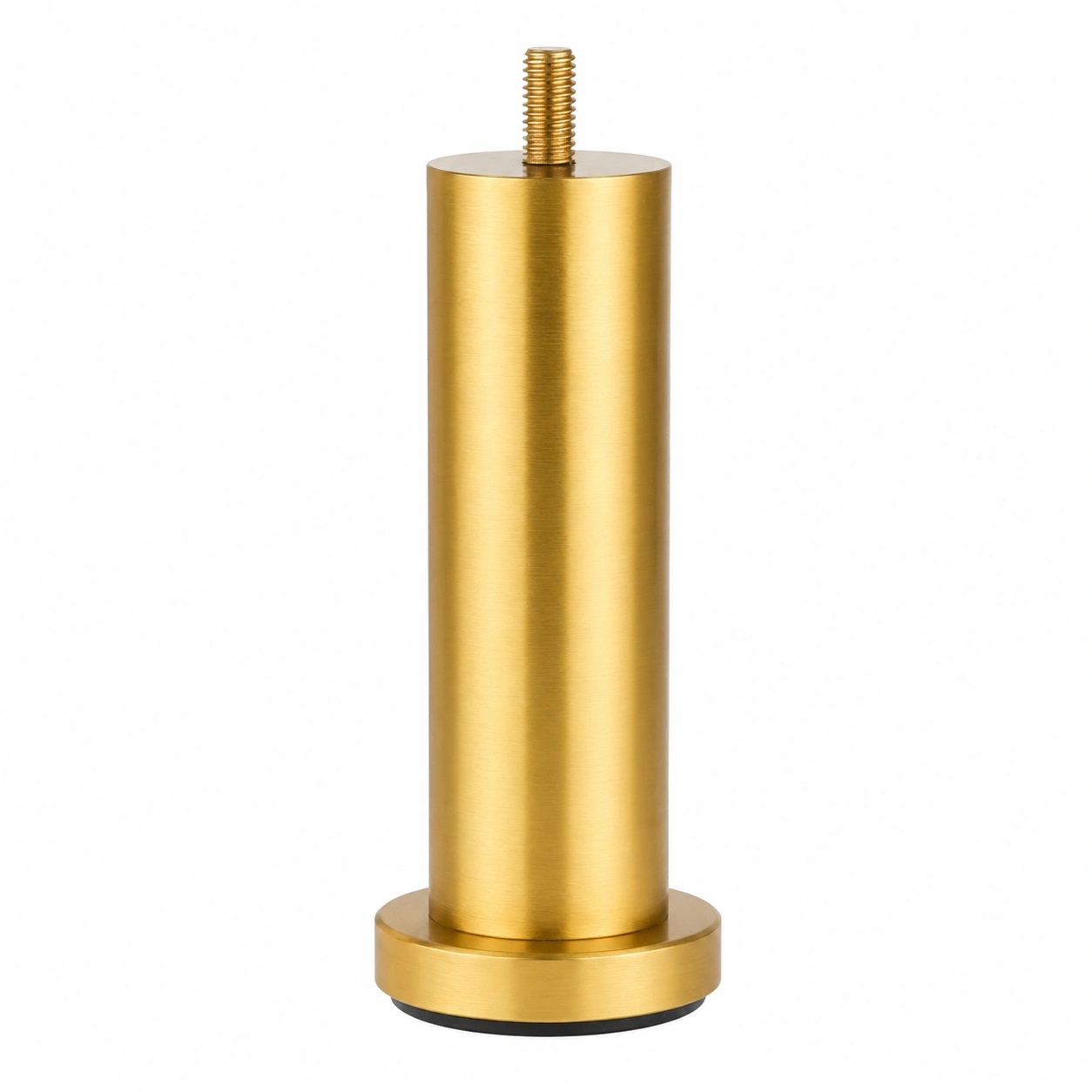
Round Metal Legs
Cylindrical metal tubes, often in chrome, black, or gold. Sleek and modern. Commonly found on luxury sofas and European designs.
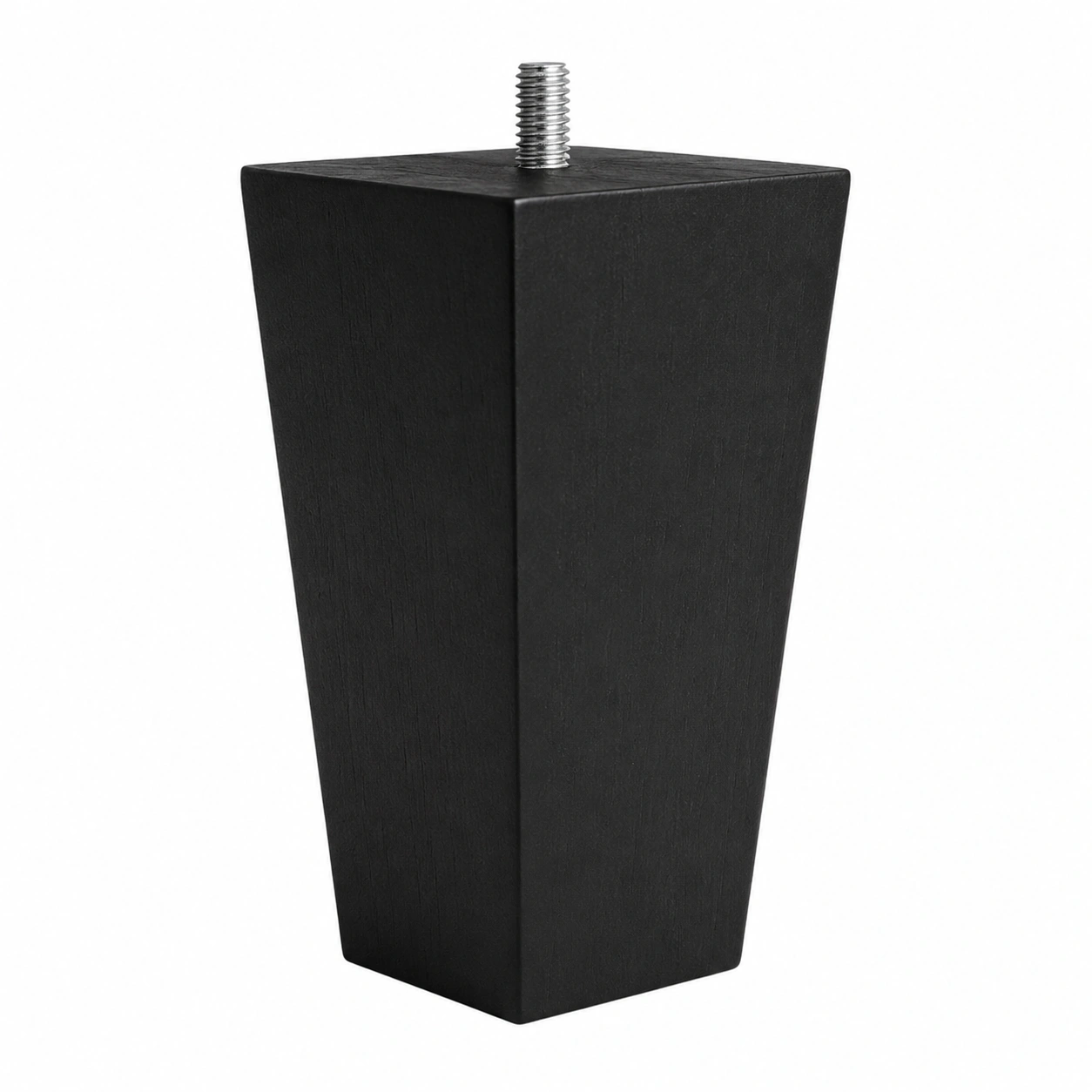
Square Tapered Legs
Square cross-section that tapers down. A modern twist on the classic tapered leg. Pairs well with boxy, structured sofa frames.
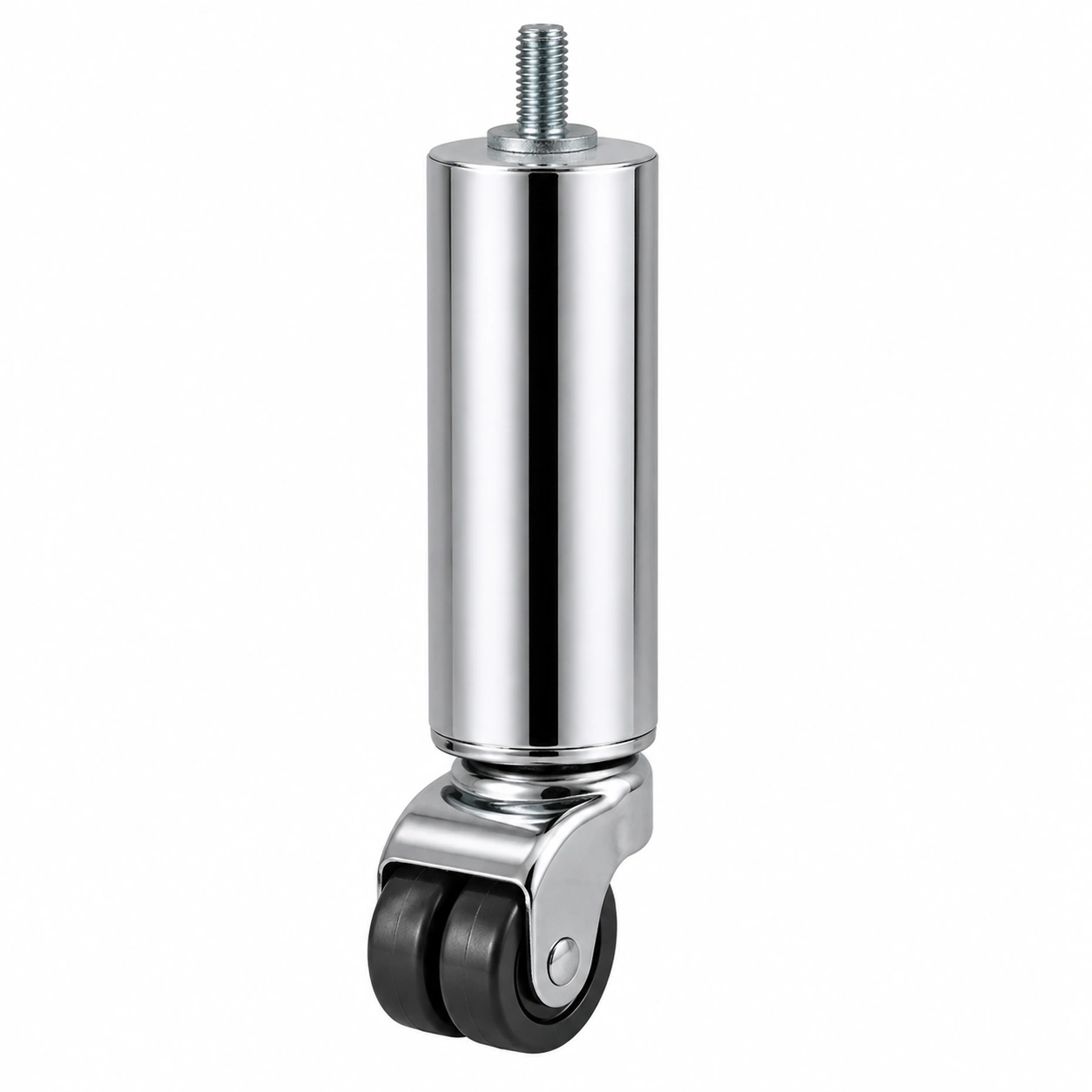
Caster / Wheeled Legs
Legs with built-in wheels for mobility. Practical for office sofas or multi-purpose rooms where the sofa needs to be repositioned frequently.
Sofa Leg Materials Compared
The material you choose affects durability, weight capacity, floor protection, and visual style. Here is a detailed comparison of the most common options:
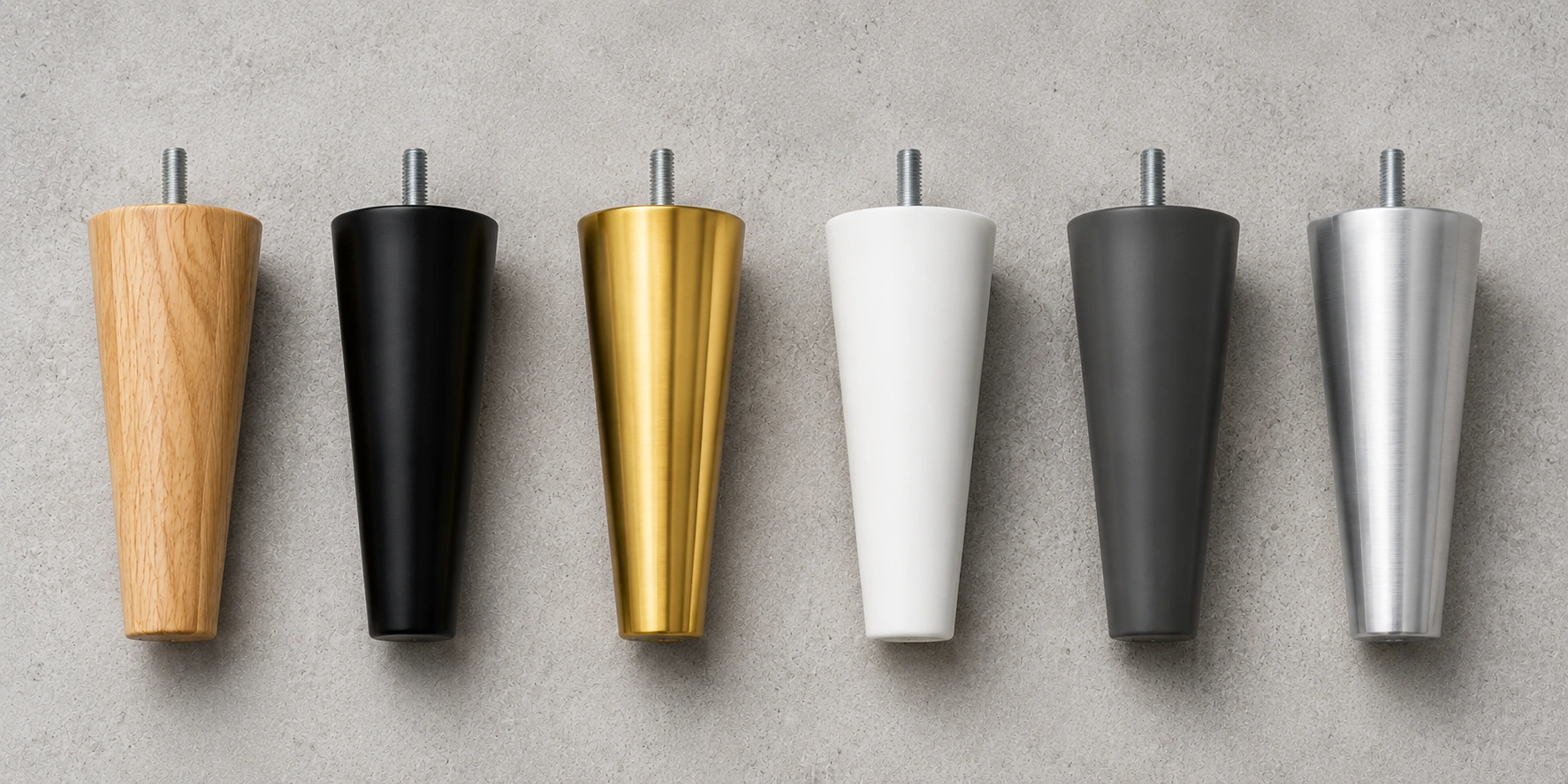
| Material | Durability | Weight Capacity | Floor Safety | Style Flexibility | Price Range |
|---|---|---|---|---|---|
| Solid Wood (oak, walnut, beech) | High (300+ lbs per leg) | Good with felt pads | Traditional to mid-century | $20–$60 per set | |
| Steel / Iron | Very High (400+ lbs per leg) | Requires pads — can scratch | Industrial, modern | $18–$50 per set | |
| Brass / Gold Metal | High (300+ lbs per leg) | Moderate — softer than steel | Glam, luxury, art deco | $25–$70 per set | |
| ABS Plastic / Nylon | Moderate (200 lbs per leg) | Excellent — won't scratch | Limited — looks cheap on upscale sofas | $8–$20 per set | |
| MDF / Engineered Wood | Low-Moderate (150 lbs per leg) | Good with pads | Budget traditional | $10–$25 per set | |
| Aluminum | High (300+ lbs per leg) | Good — lighter than steel | Modern, minimalist |
💡 Pro Tip: Match Material to Your Floor Type
On hardwood or laminate floors, choose legs with built-in felt pads or plan to add them separately. Metal legs without protection will cause visible scratches over time. Plastic and wood are naturally gentler on floors but still benefit from pads. If you have thick carpet, metal or hard wood legs provide the most stable support.
Understanding Attachment Types
This is the most critical factor when buying replacement legs. If the attachment type doesn't match your sofa frame, the legs won't fit — no matter how good they look. There are three main attachment systems used on sofas:
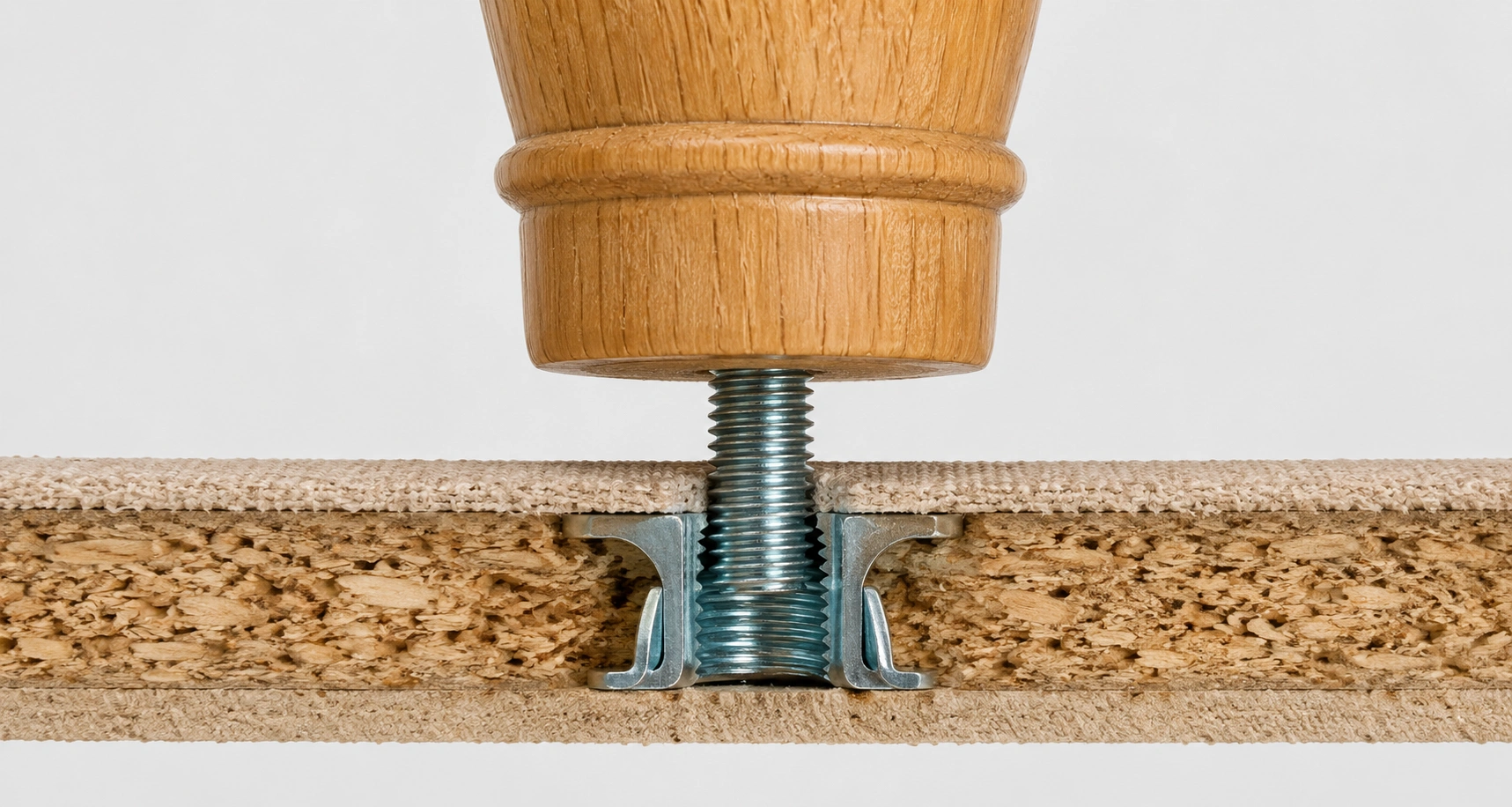
Threaded Insert (Most Common)
A metal T-nut or insert is embedded inside the sofa frame. The leg has a threaded bolt that screws directly into it. Available in M6 (6mm), M8 (8mm), and M10 (10mm) thread sizes. M8 is the most widely used. Check your existing bolt diameter before ordering.
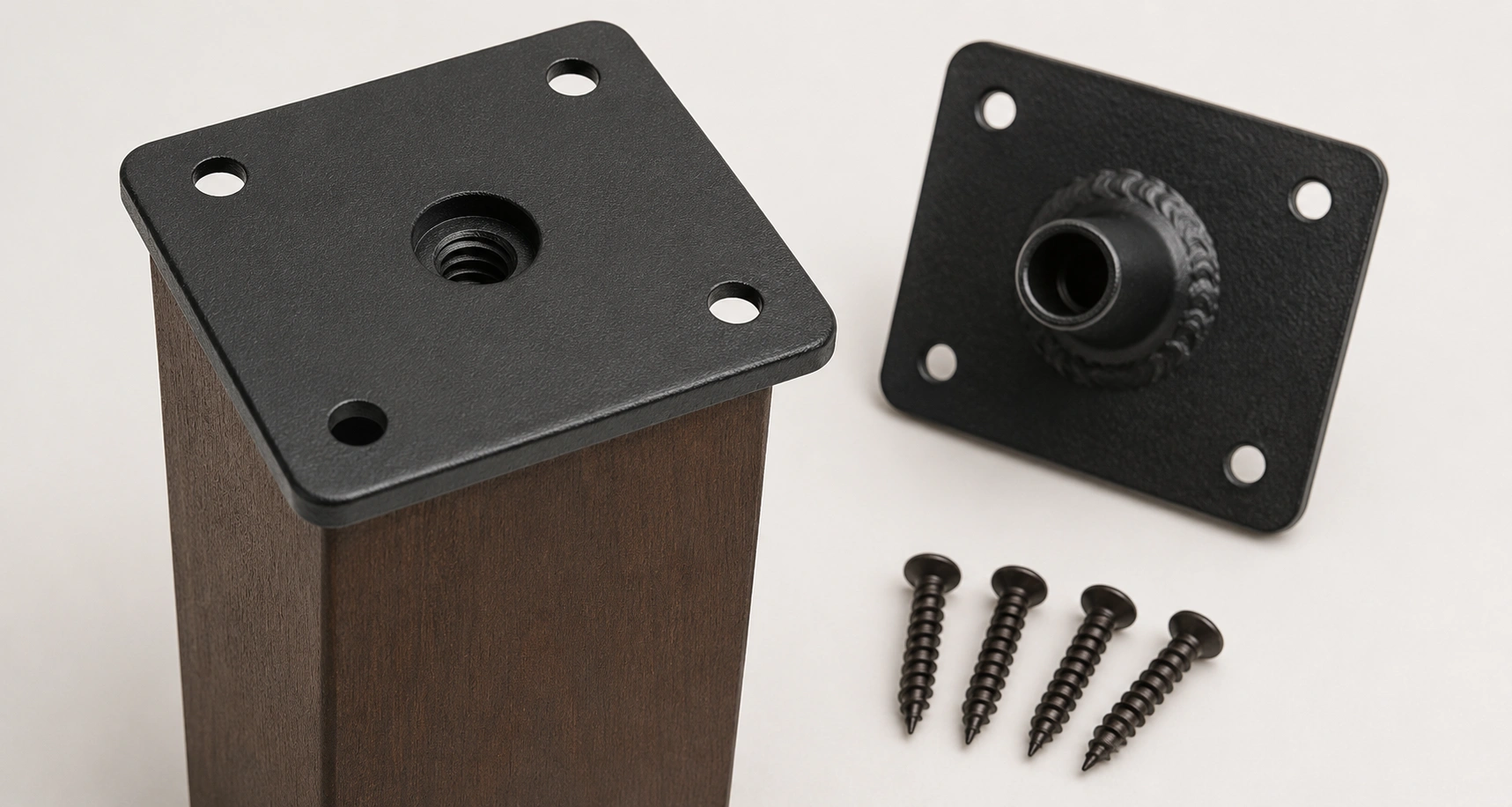
Mounting Plate (Top Plate)
A flat metal plate is attached to the top of the leg with 4 or 5 screw holes. The plate is then screwed directly into the bottom of the sofa frame. This type works on sofas without threaded inserts and is the most versatile option for DIY adaptation.
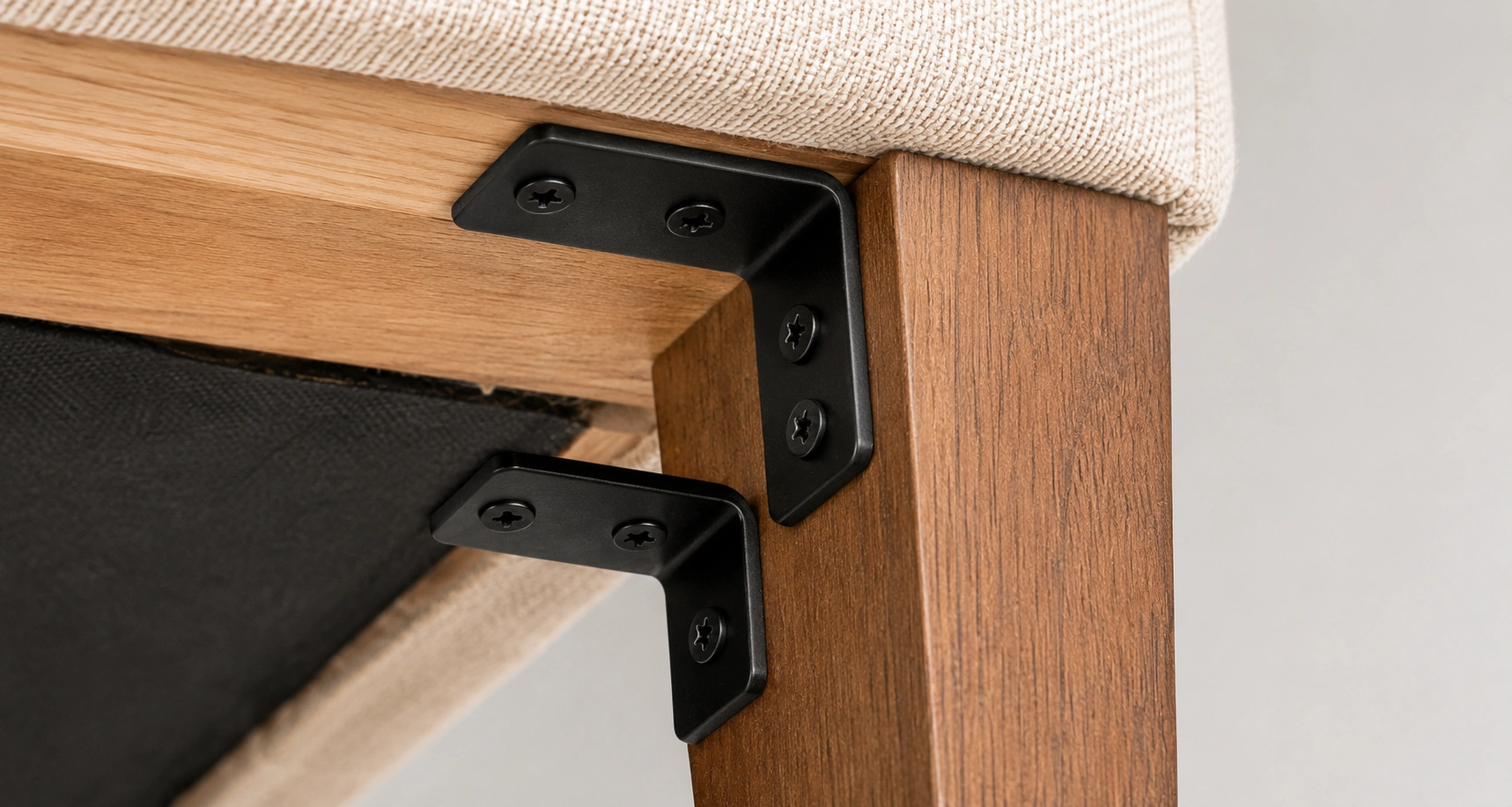
Angle Bracket (L-Bracket)
Metal L-shaped brackets are screwed into both the sofa frame and the leg. This provides the strongest connection and works on virtually any sofa, including those with no pre-drilled holes. Commonly used on sectional sofas and heavier frames.
⚠️ Critical: Check Your Thread Size Before Buying
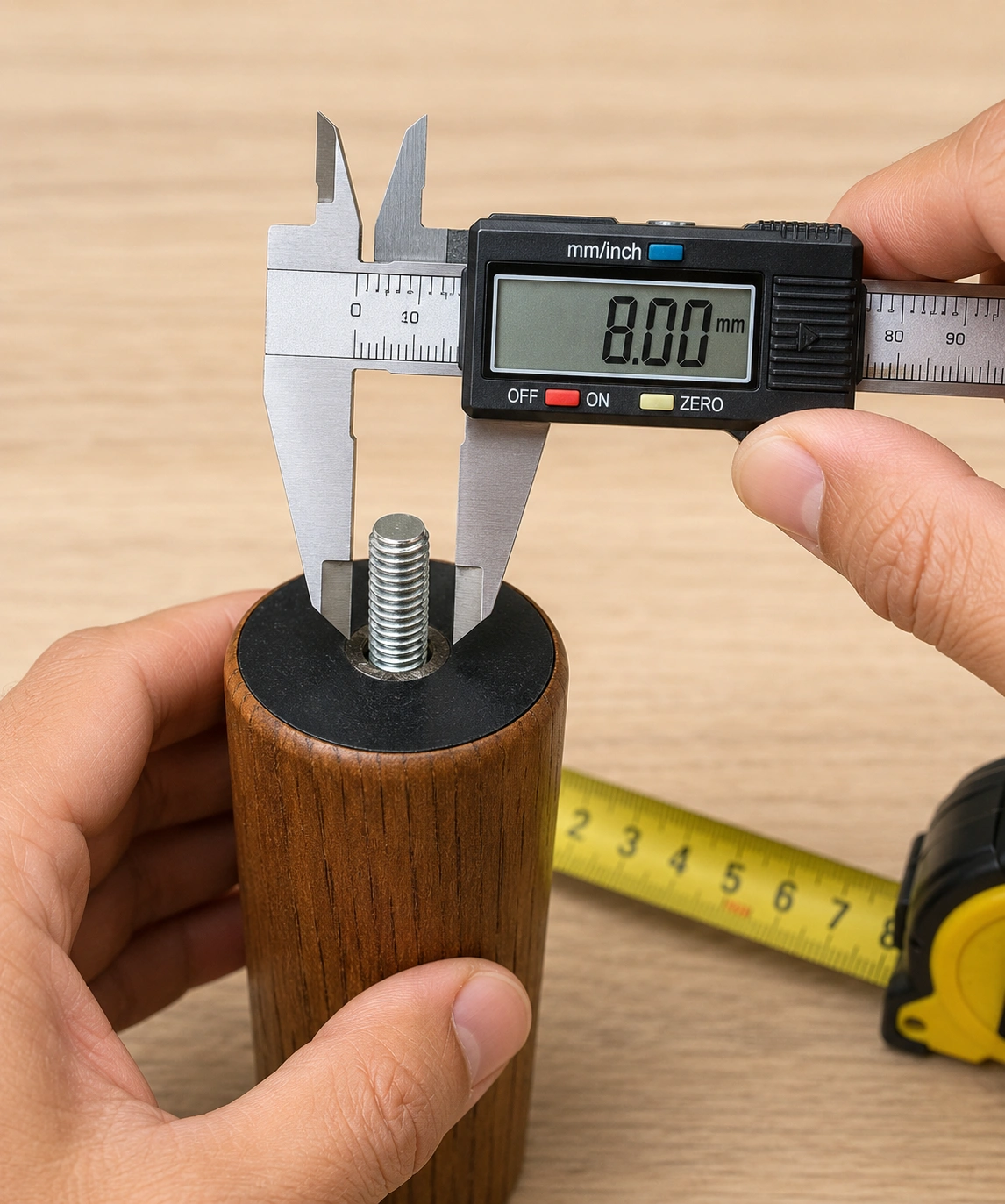
The number one reason sofa leg returns happen is wrong thread size. Remove one existing leg and measure the bolt diameter with calipers or a ruler. M8 bolts measure approximately 8mm (5/16 inch) in diameter. M6 measures about 6mm (1/4 inch). If you're unsure, bring the old leg to a hardware store to match it.
How to Measure Sofa Legs Correctly
Accurate measurements are the difference between legs that fit perfectly and legs that don't work at all. Follow these steps precisely:
- Remove one existing leg — Turn the sofa on its side and unscrew one leg completely. This gives you access to measure both the leg and the mounting point.
- Measure the bolt diameter — Use calipers or a ruler to measure the threaded bolt at its widest point. Match to M6 (≈6mm), M8 (≈8mm), or M10 (≈10mm). This is the single most important measurement.
- Measure the bolt length — Measure from the base of the bolt head to the tip. The replacement leg's insert hole must be at least this deep.
- Measure the total leg height — Measure from the bottom of the foot to where the leg meets the sofa frame. This determines how tall your sofa will sit.
- Measure the insert hole depth — If buying threaded legs, check how deep the threaded hole is in the new leg. It must accommodate your bolt length with room to spare.
- Check the insert inside the frame — Look inside the sofa frame where the leg attaches. Is the T-nut intact, stripped, or missing? If damaged, you'll need replacement T-nuts (sold separately or included with some leg sets).
💡 What If My Sofa Has No Threaded Inserts?
If your sofa uses screws going up into the frame (no visible bolt on the leg), you likely have a mounting plate or bracket system. In this case, choose legs with a top plate and use the included screws to attach them directly. You can also drill new holes and install T-nuts yourself — they press in with a hammer and cost about $0.50 each at any hardware store. Check our sofa frame repair guide for more details on working with the frame.
Step-by-Step Installation Guide
Replacing sofa legs is a straightforward DIY task. Here is the complete process from start to finish:
Tools You Will Need
- Wrench or adjustable pliers
- Measuring tape or calipers
- Phillips and flathead screwdriver
- Level (small bubble level)
- Felt furniture pads (if not included)
- Optional: T-nut insertion tool or hammer
Prepare the Sofa
Clear the area around the sofa. Lay the sofa gently on its back or on one side on a soft surface (a blanket or rug) to avoid scratching the upholstery. If the sofa is very heavy, ask someone to help you. For a sectional sofa, you may need to separate the sections first.
Remove All Old Legs
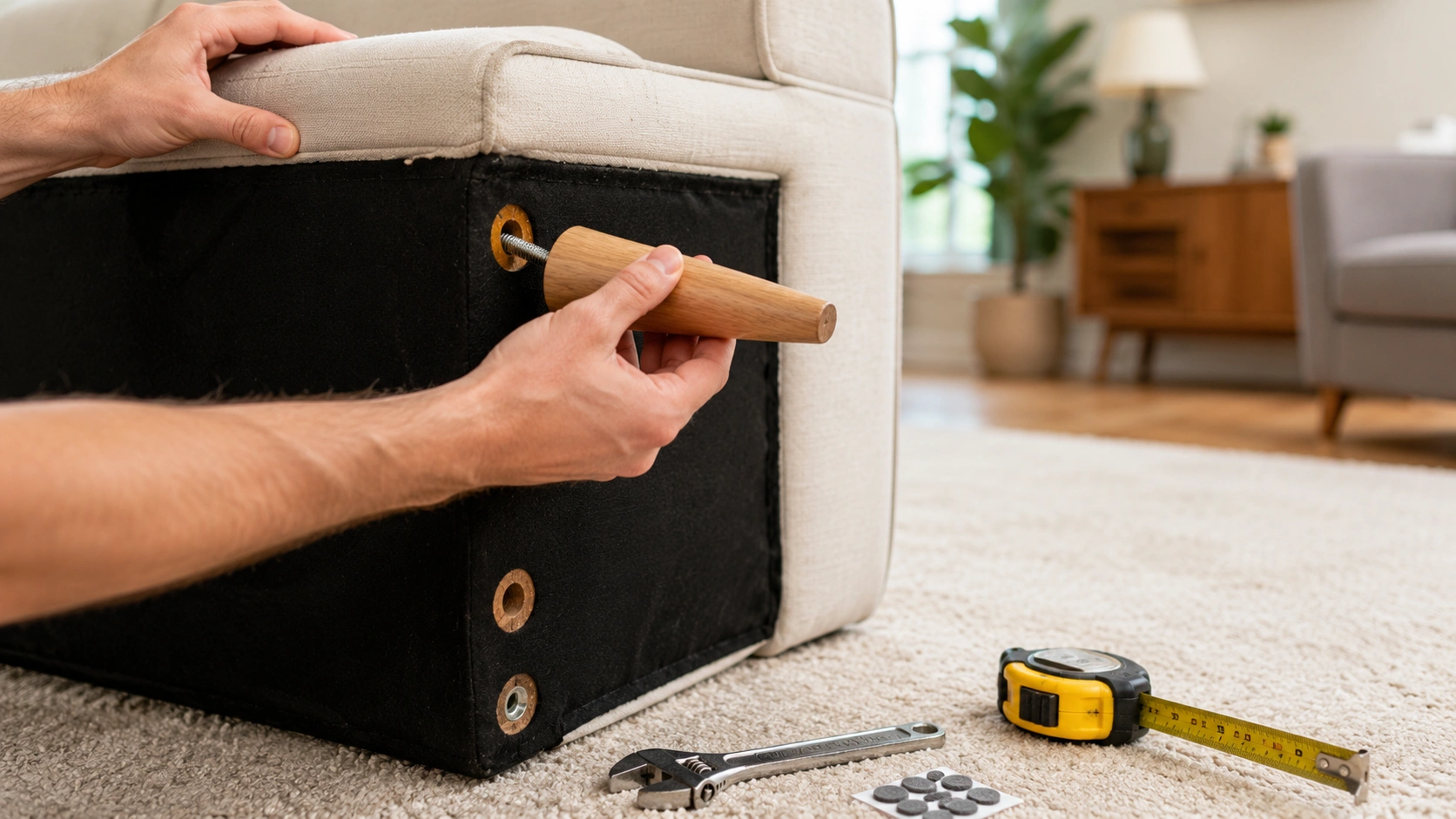
Unscrew each leg by turning counterclockwise. If a leg is stuck, use a wrench on the bolt for leverage. Do not force it — if it won't budge, spray a small amount of WD-40 on the threads and wait 5 minutes. Inspect each mounting point in the frame for damage.
Inspect and Replace Insert Hardware
Check each T-nut insert inside the frame. If any are stripped, loose, or corroded, pull them out with pliers and press in new ones. The new T-nut should sit flush with the inner surface of the frame. Tap gently with a hammer if needed — do not hit so hard that you crack the sofa frame material.
Thread In the New Legs
Start each leg by hand, turning clockwise. This prevents cross-threading. Once finger-tight, use a wrench to tighten an additional quarter to half turn. Do not over-tighten — excessive force can crack the frame or strip the new insert. The leg should feel firm with no wobble at the connection point.
Level the Sofa
Stand the sofa upright on a flat, hard surface. Place a level on the seat cushion. If the sofa tilts, adjust individual legs by loosening or tightening them slightly until the bubble centers. For fine adjustment, small felt pad shims under shorter legs can correct minor differences.
Apply Floor Protection
Stick felt pads to the bottom of each leg if they weren't pre-installed. This protects your flooring and also reduces noise when the sofa is moved. For small apartments where you may rearrange furniture often, this step is especially important.
Common Mistakes to Avoid
Even a simple project can go wrong if you overlook key details. Here are the most frequent mistakes people make when replacing sofa legs:
-
✕
Wrong Thread Size
Buying M6 legs for an M8 frame (or vice versa) is the top error. The legs either won't screw in at all or will feel loose and wobbly. Always measure the existing bolt before ordering.
-
✕
Going Too Tall
Adding 4+ inches of height changes the sofa's center of gravity and can make it feel unstable or tippy. It can also make the seat height awkwardly high. Stay within 1–2 inches of the original height unless you're deliberately modifying for a specific reason.
-
✕
Ignoring Weight Capacity
Cheap plastic legs may not support a heavy 5-seater sofa or a sleeper sofa with a metal mechanism. Always check the weight rating per leg and multiply by four to get the total capacity.
-
✕
Over-Tightening
Applying too much force when screwing in legs can crack the sofa frame (especially particle board or MDF frames) or strip the thread insert. Tighten firmly by hand plus a quarter turn with a wrench — that's enough.
-
✕
Not Replacing Damaged Inserts
Screwing new legs into stripped or loose T-nuts will result in the same wobble problem you were trying to fix. Always inspect and replace inserts when changing legs.
-
✕
Skipping Floor Protection
Metal and hard wood legs will damage hardwood floors over time. Felt pads cost a few dollars and take seconds to apply — skipping them leads to expensive floor repairs later.
Sofa Leg Height Guide
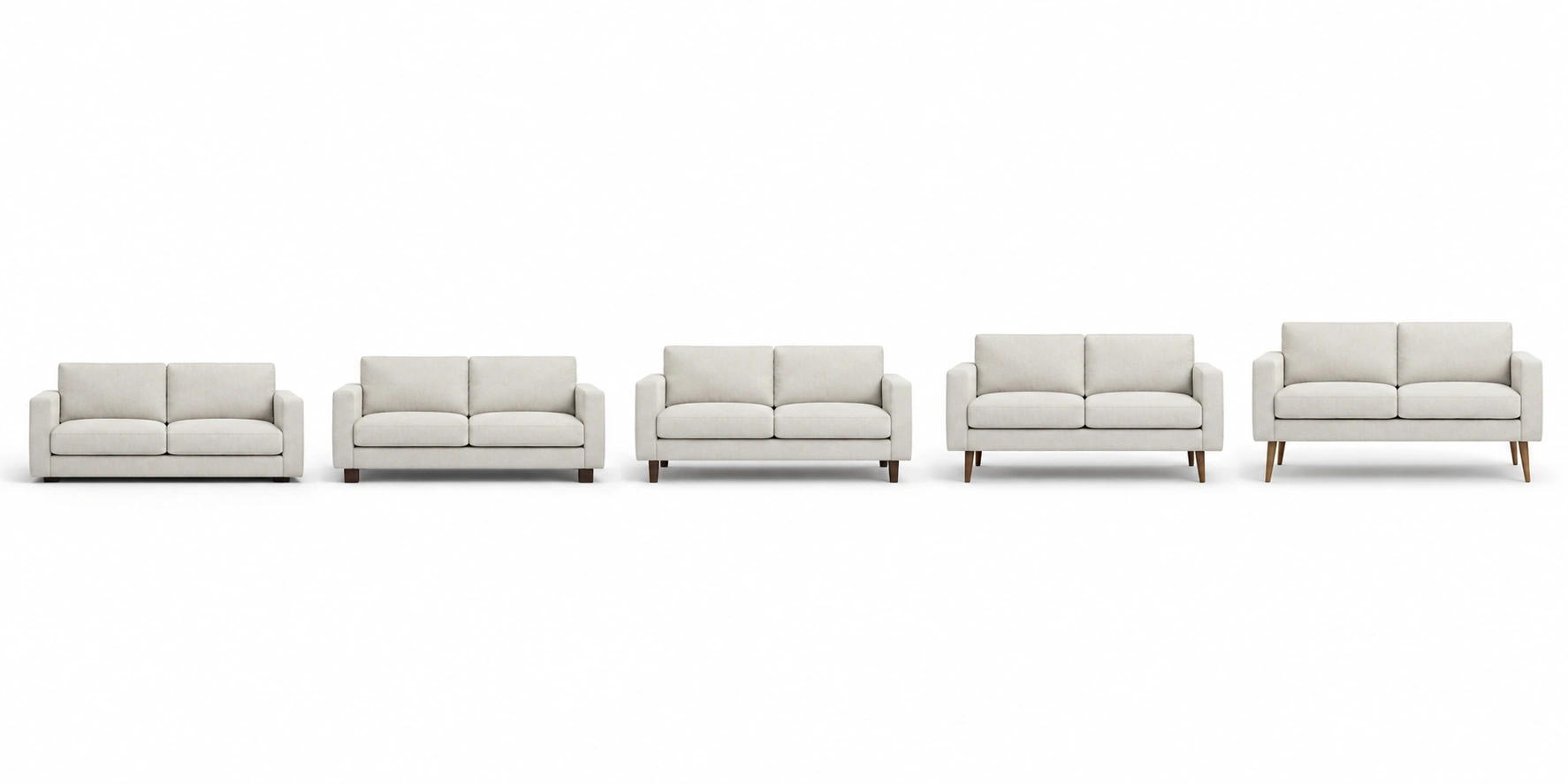
Choosing the right height affects both comfort and aesthetics. Here's what different leg heights do for your sofa:
| Leg Height | Seat Height Range | Best For | Style Feel |
|---|---|---|---|
| 2–3 inches | 14–16 inches (very low) | Floor-level lounging, floor sofas, bohemian spaces | Low-profile, casual, cozy |
| 3–4 inches | 16–18 inches (standard low) | Modern sofas, small spaces, minimalist rooms | Sleek, grounded, contemporary |
| 4–5 inches | 18–20 inches (standard) | Most living rooms, general use, universal comfort | Balanced, versatile, conventional |
| 5–6 inches | 20–22 inches (standard tall) | Easier entry for seniors, cleaning access, mid-century modern | Airy, elegant, mid-century |
| 6–8 inches | 22–25 inches (high) | Deep-seat sofas, deep seat comfort, statement pieces | Dramatic, architectural, bold |
💡 Comfort Tip: Consider Total Seat Height
Seat height = leg height + frame base thickness + cushion height. Most adults find a total seat height of 17–20 inches comfortable. If your current sofa feels too low to stand up from easily, increasing leg height by 1–2 inches can make a significant difference — especially for older adults or anyone with knee issues.
Frequently Asked Questions
Ready to Buy? Now that you know how to measure, what material to choose, and how to install — browse our recommended sofa leg replacements below. Each product listing includes thread size, height, material, and weight capacity details so you can order with confidence.