Where to Buy Sofas: The Complete Shopping Guide
Compare online retailers, furniture stores, outlets, and secondhand options to find the perfect sofa at the best price — without regret.
Finding the right sofa is only half the battle — knowing where to buy it matters just as much. The retailer you choose affects the price you pay, the quality you receive, the return options available, and the delivery experience. This guide breaks down every major purchasing channel so you can shop with confidence and avoid costly mistakes.
Table of Contents
1. Online Retailers
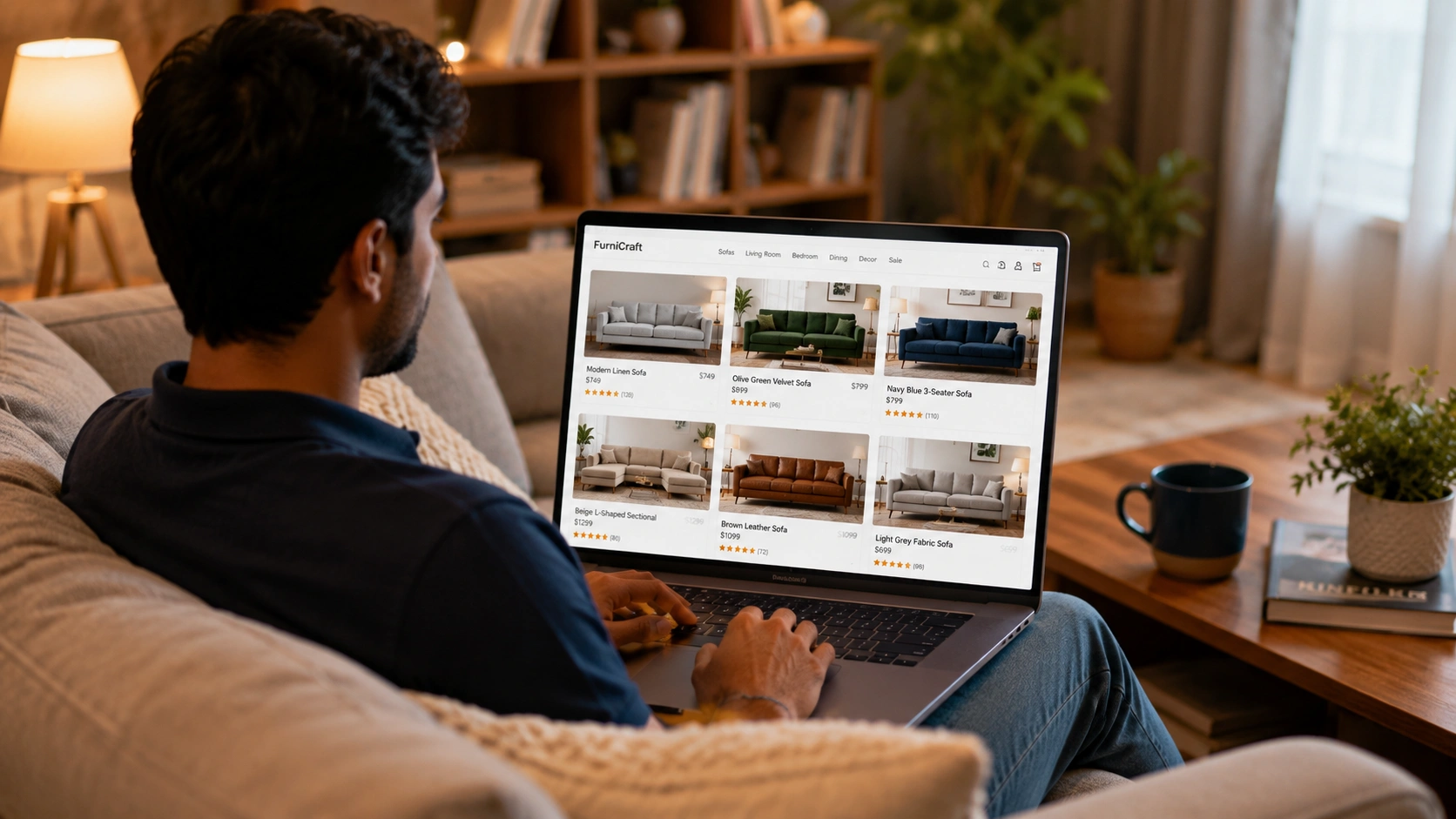
Online retailers have transformed the way people buy sofas. The convenience of browsing hundreds of options from your living room, combined with competitive pricing and doorstep delivery, has made e-commerce the fastest-growing channel for furniture purchases. Major platforms like Amazon, Wayfair, and Walmart offer vast selections spanning every sofa type imaginable — from budget-friendly affordable sofas to premium models.
Major Online Platforms
Amazon
- Massive selection across all price ranges
- Fast shipping with Prime eligible options
- Verified customer reviews with photos
- Easy return process for most items
- Quality varies significantly between sellers
- Limited ability to test comfort beforehand
Wayfair
- Curated furniture-focused catalog
- Frequent sales and clearance events
- Free shipping on orders over a threshold
- Detailed product specifications and Q&A
- Delivery times can be longer (2-6 weeks)
- Return shipping fees may apply
Walmart
- Competitive prices on budget models
- Free pickup at local stores available
- Wide network for easy returns
- Limited high-end or luxury options
- Customer reviews less detailed for furniture
Overstock
- Strong discount pricing on name brands
- Good variety of styles and materials
- Club rewards program for extra savings
- Inventory can sell out quickly
- Delivery windows less precise
When shopping on these platforms, pay close attention to the quality indicators: frame material, cushion density, fabric specifications, and warranty terms. Customer reviews are invaluable — specifically look for reviews that mention long-term use (6+ months) rather than initial impressions alone. Understanding frame materials and cushion fill types before you browse will help you filter out low-quality options quickly.
2. Direct-to-Consumer Brands
Direct-to-consumer (DTC) sofa brands have emerged as a compelling middle ground between mass-market online retailers and traditional furniture stores. Companies like Burrow, Joybird, Article, Floyd, and Castlery design their own sofas, sell exclusively through their websites, and ship directly to your door. By cutting out middlemen and showroom overhead, they offer higher-quality construction at more accessible prices than traditional retail.
Advantages of DTC Brands
- Better materials for the price (kiln-dried hardwood frames, high-density foam)
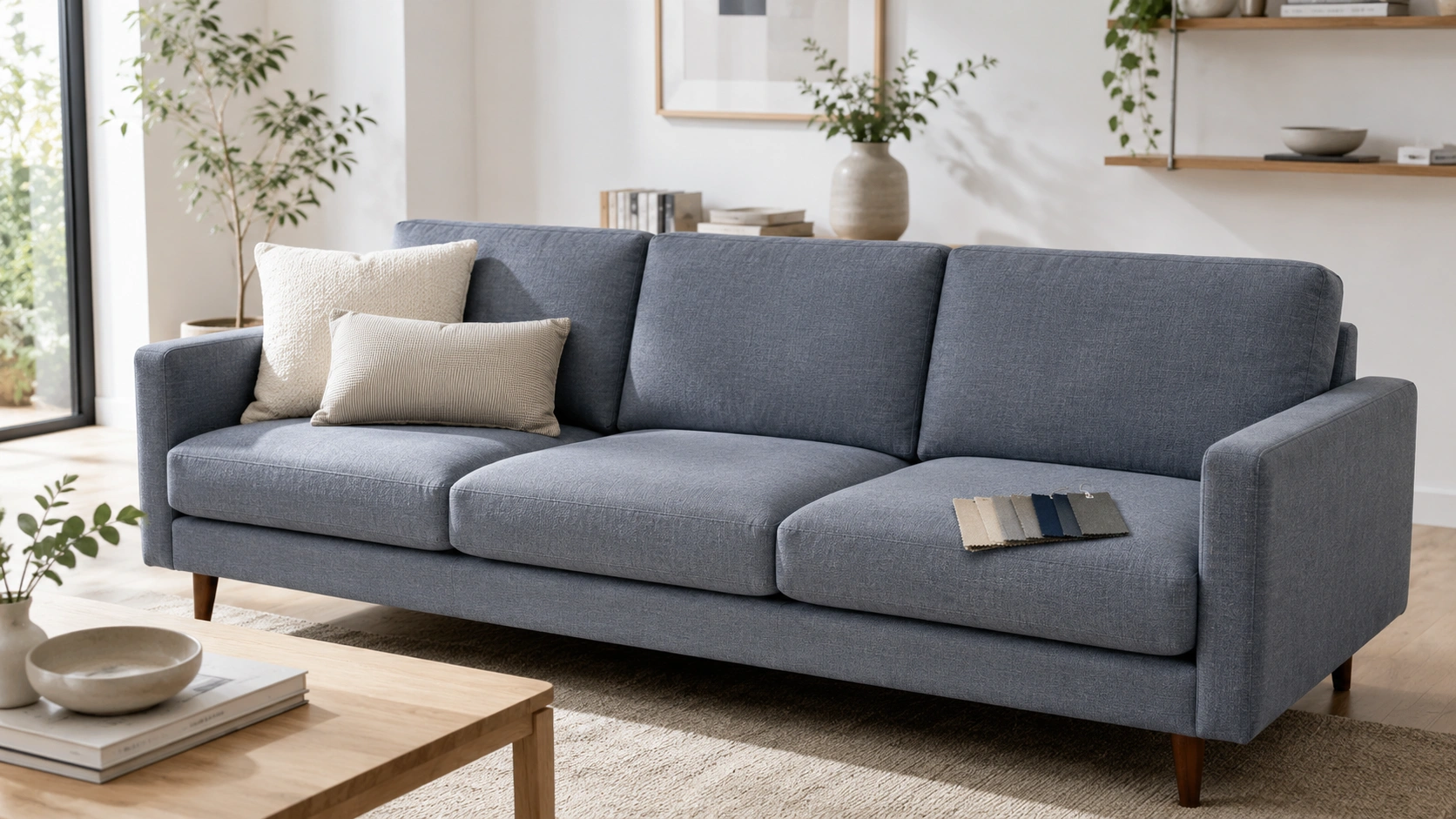
- Free fabric swatches shipped to your door before purchasing
- Modular and customizable options for many models
- Generous home trial periods (typically 30-100 days)
- Transparent pricing with no showroom markups
- Dedicated customer support teams
Drawbacks of DTC Brands
- No physical showroom to test before buying (though some have showrooms in select cities)
- Lead times of 4-10 weeks for made-to-order pieces
- Limited style range compared to mega-retailers
- Returns may involve restocking fees or pickup charges
- Smaller companies may have less established track records
DTC brands are an excellent choice if you want quality construction without paying showroom premiums. They are particularly strong for modern sofas, modular sofas, and sectional sofas. Always order fabric swatches first — colors appear very differently on screen versus in your actual room lighting. Most DTC brands offer this service for free or a small refundable deposit.
3. Physical Furniture Stores
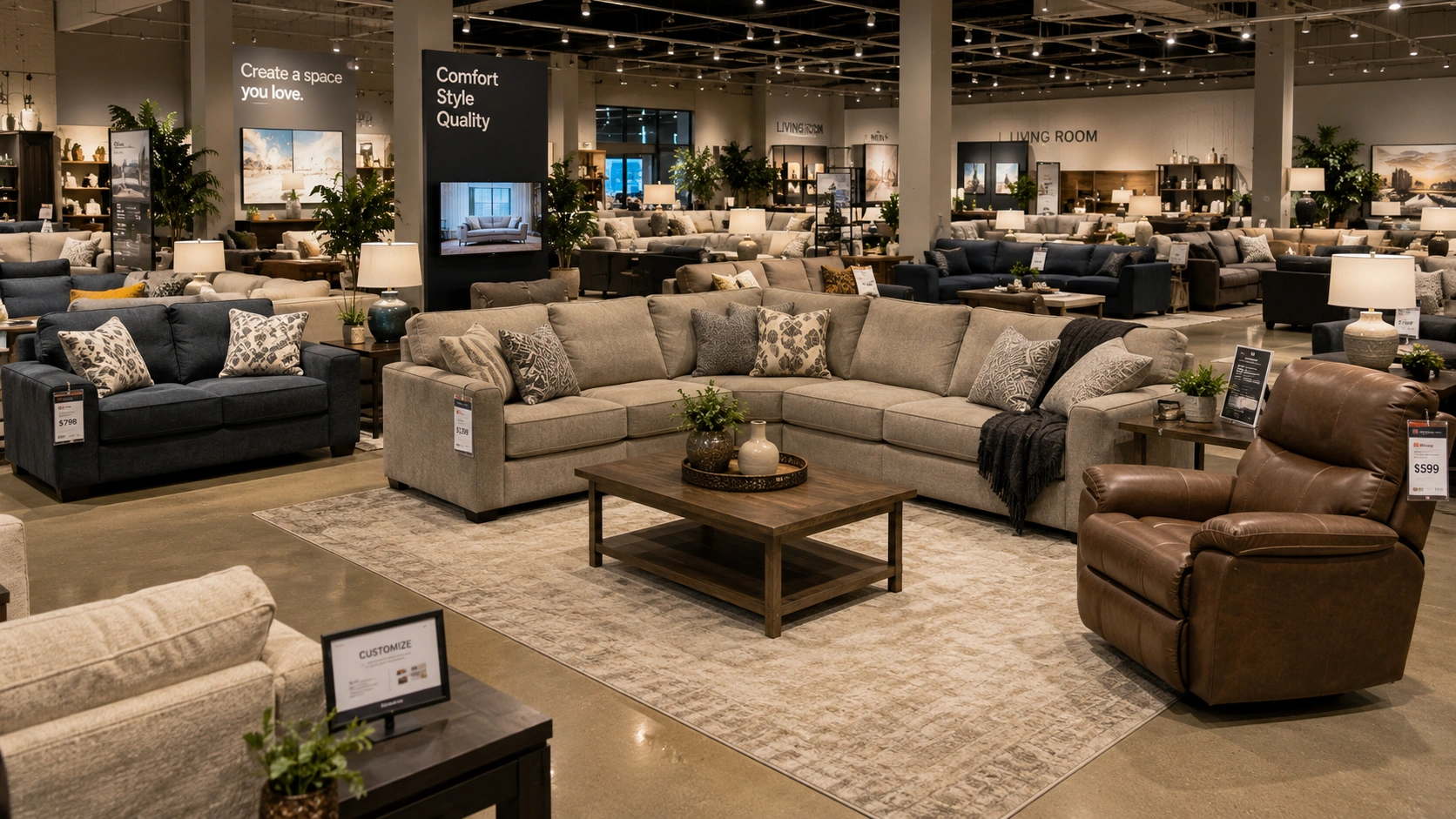
Traditional brick-and-mortar furniture stores remain the preferred choice for many buyers, and for good reason. Being able to sit on a sofa, feel the fabric texture, test the cushion firmness, and assess the build quality in person provides a level of confidence that no online photo can replicate. This channel is especially valuable when testing sofa comfort is a priority for your household.
Types of Physical Stores
National Chains (IKEA, Ashley HomeStore, Rooms To Go, La-Z-Boy) offer wide availability, consistent pricing, and established delivery networks. They are reliable for standard configurations and middle-tier quality. IKEA excels at affordable, flat-pack solutions ideal for apartments, while Ashley and La-Z-Boy provide more traditional and upholstered options.
Regional and Local Furniture Stores often carry unique brands not found in chain stores. Their sales staff typically have deeper product knowledge, and many offer in-house design consultation. Local stores may also have more flexibility on pricing, especially if you are purchasing a complete sofa set or living room package.
Luxury Showrooms (Restoration Hardware, Crate & Barrel, Williams Sonoma) cater to higher-end buyers seeking premium materials and designer aesthetics. Expect to pay significantly more, but the frame construction, leather grades, and fabric quality are noticeably superior. These showrooms are worth visiting even if you buy elsewhere — they help you understand what true quality feels like.
Why Buy In-Store
- Test comfort and support with your own body
- Inspect frame sturdiness, stitch quality, and fabric feel
- Get personalized advice from sales associates
- See exact colors and textures under store lighting
- Negotiate price, especially on floor models
- Potential same-day or next-day delivery for in-stock items
Limitations of In-Store Shopping
- Limited inventory — only what is on the showroom floor
- Sales pressure from commissioned associates
- Higher prices due to showroom overhead costs
- Time-consuming to visit multiple stores
- Difficult to compare prices across retailers on the spot
A smart strategy is to test in-store, then buy online. Visit physical stores to identify the sofa types, sizes, and comfort levels you prefer, note the specific model names, then search for better prices online. Many retailers price-match their own online listings if you ask. This approach gives you the confidence of physical testing with the savings of online pricing. Before visiting stores, learn how to measure your space and bring those dimensions with you.
4. Outlet & Clearance Centers
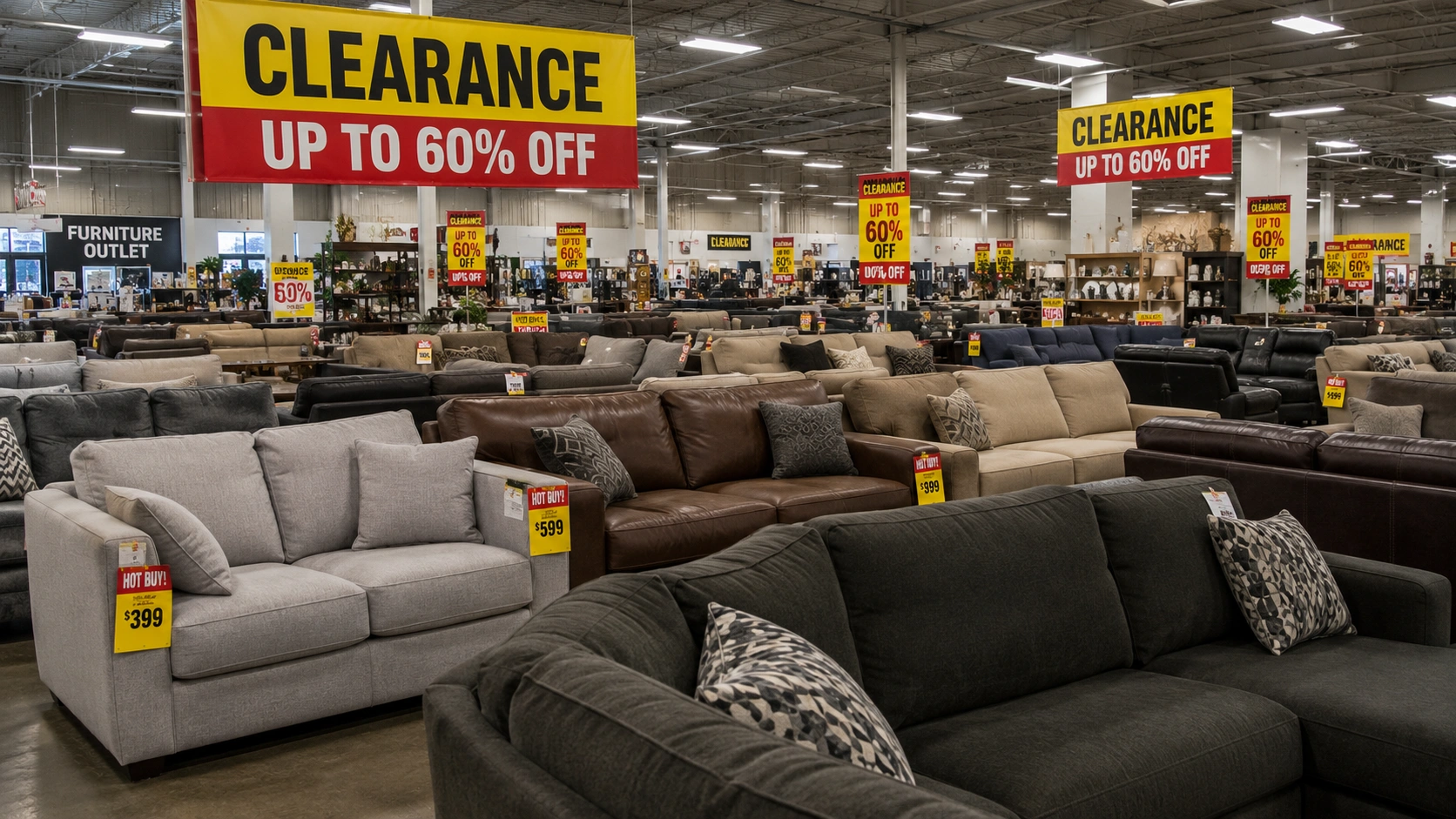
Furniture outlet stores and clearance centers offer some of the deepest discounts available — often 30% to 60% off regular retail prices. These include manufacturer outlet stores (e.g., La-Z-Boy Outlet, Flexsteel Outlet), third-party outlet malls, and retailer clearance sections both online and in-store. For buyers who want quality without paying full price, outlets are a goldmine — if you know what to look for.
What You Will Find at Outlets
Outlet inventory typically falls into several categories: discontinued models being cleared to make room for new lines, floor samples that have been on showroom display, slightly imperfect pieces with minor cosmetic blemishes, overstock from previous seasons, and returned items that have been inspected and reconditioned. All of these can represent excellent value, but each requires different scrutiny.
Outlet Shopping Checklist
- Inspect every seam, corner, and cushion for damage or wear
- Ask whether the piece is a floor sample, return, or discontinued model
- Verify the warranty status — outlet purchases may have limited or no warranty
- Confirm the return policy — many outlet sales are final
- Check that all original parts and hardware are included
- Compare the outlet price against the current online retail price to verify actual savings
- Measure the sofa carefully — you cannot exchange for a different size later
- Ask about delivery options and costs — outlet pickup may be your only option
5. Secondhand & Used Sofas
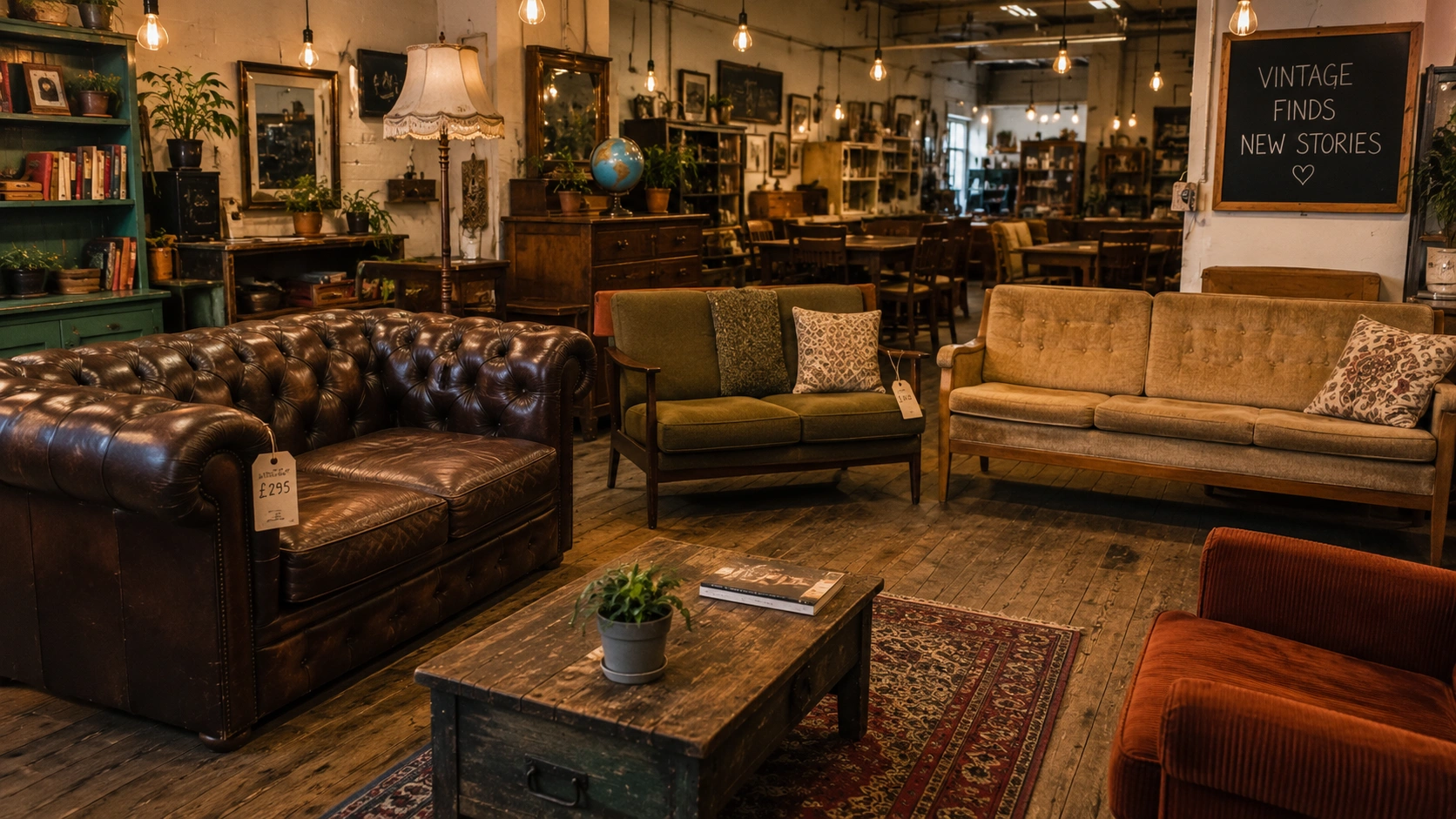
Buying a secondhand sofa can save you 50-80% compared to new prices, making it an attractive option for budget-conscious shoppers, temporary furnishing needs, or those who appreciate vintage pieces. However, the risks are significantly higher than buying new. Understanding the tradeoffs between secondhand and new sofas is essential before pursuing this route.
Best Sources for Used Sofas
Facebook Marketplace and Craigslist are the most popular platforms for peer-to-peer sofa sales. Prices are negotiable, and you can inspect before buying. OfferUp and Letgo function similarly with slightly more user-friendly interfaces. Consignment furniture stores (like Furniture Consignment Gallery or local equivalents) curate higher-quality used pieces and typically inspect them before selling, though their prices reflect this service. Estate sales and auctions can yield exceptional finds, especially for vintage sofas and antique pieces, but require patience and quick decision-making.
Why Consider Secondhand
- Dramatic cost savings — often 50-80% below retail
- Access to discontinued or vintage designs
- Environmentally responsible — reduces landfill waste
- Immediate availability — no wait times
- Negotiable pricing in most cases
Risks of Buying Used
- No warranty or return options once purchased
- Potential for bedbugs, dust mites, or pet allergens
- Hidden structural damage not visible on surface inspection
- Fabric wear, stains, and odors that may be permanent
- Delivery is usually your responsibility
- Limited to whatever is currently available locally
Secondhand Sofa Inspection Checklist
- Press firmly on all cushions and armrests — feel for broken springs or collapsed support
- Lift one corner of the sofa — if the opposite corner does not lift, the frame may be broken
- Check all corners and underneath for signs of pests (dark spots, shed skins, eggs)
- Remove cushion covers if possible and inspect the inner foam for discoloration or odor
- Examine all seams and upholstery for tears, loose threads, or excessive wear
- Smell the sofa closely — musty, sour, or chemical odors are difficult to remove
- Rock the sofa side to side — excessive wobble indicates loose joints or leg problems
- Ask about the sofa's age, original purchase price, and reason for selling
6. Custom & Made-to-Order Sofas
For buyers with specific requirements — unusual room dimensions, particular fabric preferences, or unique design visions — custom and made-to-order sofas provide the ultimate control. This option bridges the gap between ready-made furniture and bespoke craftsmanship. Understanding the differences between custom and ready-made sofas helps determine if this route fits your needs and budget.
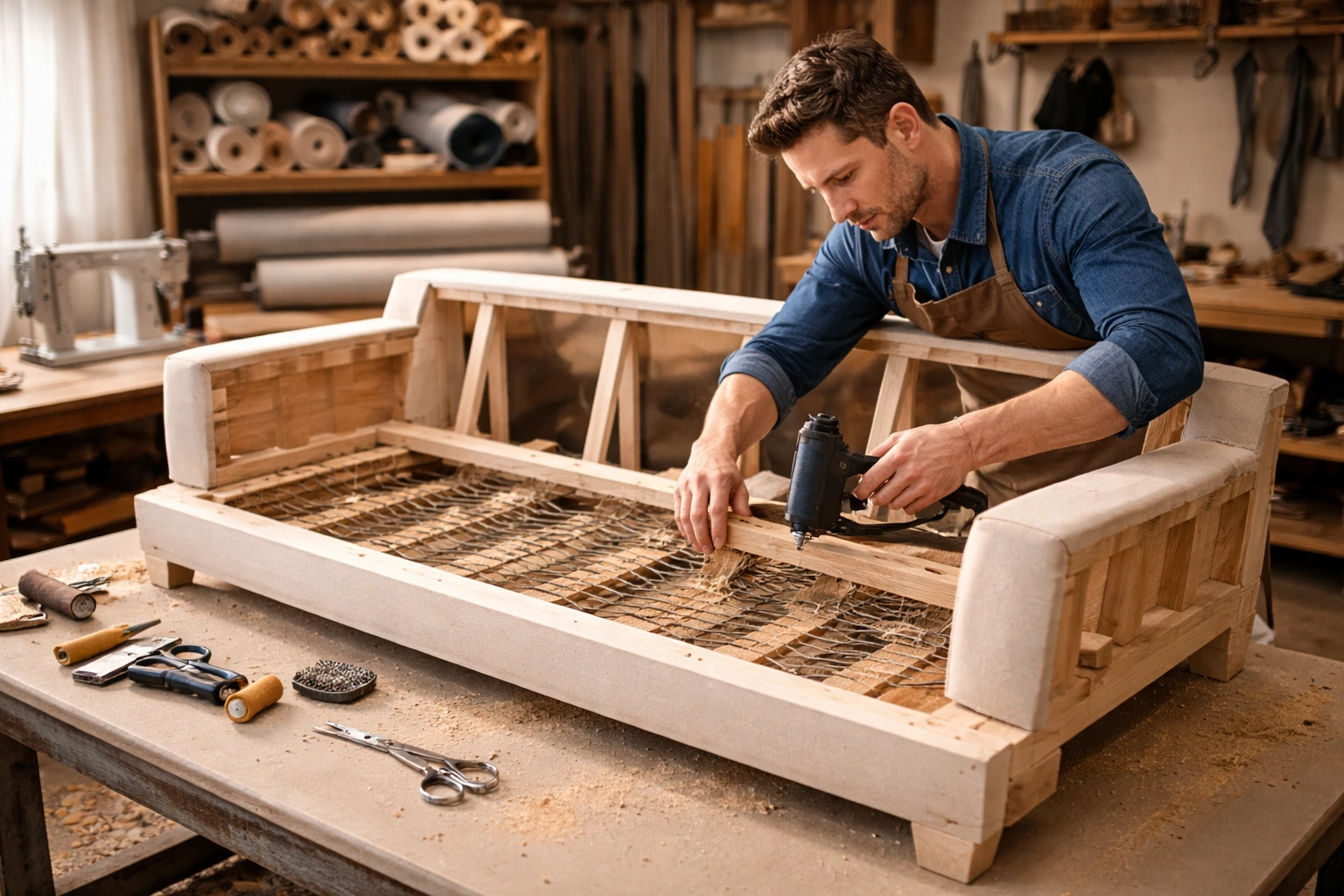
Custom options range from "modular customization" offered by DTC brands (choose your configuration from predefined modules) to "full custom" from local upholsterers or high-end manufacturers (specify every detail from dimensions to tufting pattern). Modular sofas from brands like Burrow and Joybird fall into the first category — you select pieces and fabrics but work within their system. Full custom work, typically costing $2,000 to $10,000+, involves working with an upholsterer or furniture maker who builds to your exact specifications.
Custom is ideal when you need a specific seat depth for comfort, non-standard dimensions for an awkward space, or a bold fabric choice not available in ready-made lines. However, expect lead times of 6-14 weeks, limited return options (custom pieces are typically non-returnable), and the need for precise measurements. Always work with a reputable maker who provides a detailed contract specifying materials, construction methods, delivery timeline, and warranty terms.
7. Channel Comparison at a Glance
The following comparison helps you quickly identify which purchasing channel best matches your priorities. There is no single "best" option — the right choice depends on what matters most to you: price, convenience, quality assurance, or the ability to test before buying.
Online Retailers
- Price Range: $200 - $3,000+
- Selection: Very large
- Test Before Buy: No
- Return Policy: Varies (30 days typical)
- Delivery Time: 2 days - 8 weeks
- Best For: Price comparison, convenience
DTC Brands
- Price Range: $800 - $3,500
- Selection: Moderate (curated)
- Test Before Buy: Fabric swatches only
- Return Policy: 30-100 day home trial
- Delivery Time: 3-10 weeks
- Best For: Quality-to-price ratio
Physical Stores
- Price Range: $300 - $5,000+
- Selection: Moderate (showroom only)
- Test Before Buy: Yes
- Return Policy: 7-30 days (often with fees)
- Delivery Time: Same day - 8 weeks
- Best For: Comfort testing, in-person inspection
Outlet Stores
- Price Range: $200 - $2,000
- Selection: Limited, unpredictable
- Test Before Buy: Yes
- Return Policy: Often final sale
- Delivery Time: Immediate - 2 weeks
- Best For: Deep discounts on quality brands
Secondhand
- Price Range: $50 - $800
- Selection: Unpredictable, local
- Test Before Buy: Yes (recommended)
- Return Policy: None
- Delivery Time: Immediate (self-pickup)
- Best For: Maximum savings, vintage finds
Custom / Made-to-Order
- Price Range: $1,500 - $10,000+
- Selection: Unlimited (your design)
- Test Before Buy: Limited (showroom samples)
- Return Policy: Rarely returnable
- Delivery Time: 6-14 weeks
- Best For: Specific needs, unique spaces
8. Tips for Buying Sofas Online Safely
Buying a sofa online can feel risky, but thousands of satisfied buyers do it every day. The key is approaching the process methodically rather than impulsively. Follow these steps to minimize risk and maximize your chances of receiving a sofa you will love for years.
- Know your dimensions first. Measure your room, doorways, hallways, and any staircases the sofa must navigate. Our sofa measurement guide covers exactly what to measure and how. A sofa that fits your living room but cannot get through your front door is an expensive mistake.
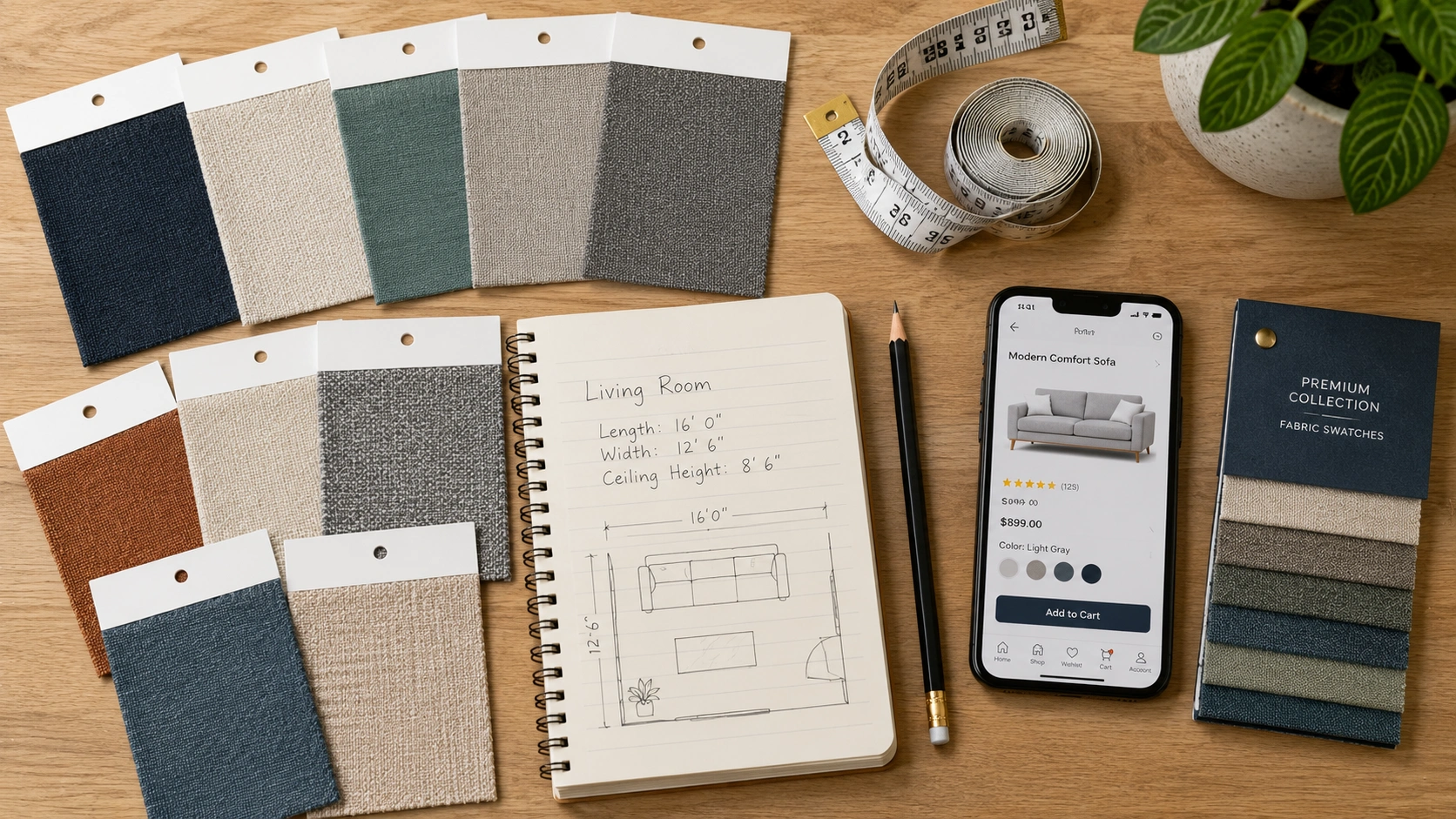
- Order fabric swatches. Colors on screens are notoriously inaccurate. Most DTC brands and many online retailers offer free or low-cost swatch programs. Test swatches in your room under your actual lighting conditions — daylight, evening lamplight, and everything in between.
- Read the specifications, not just the description. Marketing copy tells you what the brand wants you to hear. Specifications tell you the truth. Look for foam density ratings, frame material type, Martindale rub test scores for fabric durability, and spring system type. If these details are not provided, that itself is a red flag.
- Filter reviews by verified purchases and long-term use. A five-star review posted the day after delivery is less useful than a three-star review posted eight months later describing how the cushions have held up. Sort by "most recent" and look for patterns in complaints.
- Verify the return policy before clicking buy. Confirm the return window, whether return shipping is free, if there are restocking fees, and how the sofa is picked up for return. Some retailers require you to keep all original packaging — ask about this. Review the return policy specifics carefully.
- Check the warranty coverage. A good sofa warranty covers the frame for at least 5-10 years, springs for 5 years, and cushions for 1-3 years. Budget sofas may offer only 1-year limited warranties that essentially cover only manufacturing defects discovered immediately.
- Compare prices across multiple platforms. The same sofa model may be listed at different prices on Amazon, Wayfair, the brand's own website, and Google Shopping. A 10-minute price comparison can save you $100 or more.
9. Red Flags to Watch For at Any Retailer
Regardless of whether you shop online, in-store, or at an outlet, certain warning signs should make you pause before purchasing. Learning how to check sofa quality helps you spot these issues early. The following red flags apply across all purchasing channels.
Construction Red Flags
- Frame made of particleboard, plywood, or cardboard
- No specification for foam density or ILD rating
- Cushions that feel hollow or collapse under light pressure
- Visible staples, loose threads, or uneven stitching
- Legs that wobble when you gently rock the sofa
- No mention of spring system or suspension type
Retailer Red Flags
- No return policy or "all sales final" without clear reason
- Restocking fees exceeding 15-20%
- Vague or missing warranty information
- Inflated original prices used to make discounts appear larger
- Poor or nonexistent customer support contact options
- No physical address or company information on the website
Marketing Red Flags
- "Genuine leather" without specifying top-grain vs bonded
- "Hardwood frame" without naming the specific wood type
- Stock photos used instead of actual product photos
- Claims of "luxury" or "premium" at suspiciously low prices
- Reviews that all sound similarly written or are overly positive
Understanding the true cost breakdown of a sofa helps you recognize when a price is genuinely good versus when corners have been cut. If a sofa claims to be "premium quality" but costs a fraction of what comparable models from reputable brands charge, the math does not work — someone is cutting corners on materials or construction. Being aware of hidden costs like delivery fees, assembly charges, and fabric protection upsells also helps you compare true total prices across retailers.
10. Timing Your Purchase for Maximum Savings
When you buy can be almost as important as where you buy. Furniture retailers follow predictable sales cycles, and timing your purchase around these periods can save you 15-40% without compromising on quality. Our guide on the best time to buy a sofa covers this in detail, but here are the key periods to know.

President's Day (February) and Memorial Day (May) are consistently among the best furniture sale weekends of the year, with most major retailers offering 20-35% off. July 4th brings similar discounts, particularly on outdoor and indoor living room furniture. Labor Day (September) marks the transition from summer to fall inventory, triggering widespread clearance events. Black Friday and Cyber Monday (November) offer the deepest discounts of the year but come with the most competition for limited stock.
End-of-month and end-of-quarter periods (March, June, September, December) are when sales associates are trying to meet quotas and may have more flexibility to offer additional discounts or throw in free delivery. January and February are also strong months as retailers clear holiday inventory to make room for spring collections. If your schedule allows flexibility, aligning your purchase with these windows can meaningfully reduce your sofa budget without sacrificing quality.
11. Frequently Asked Questions
Ready to find your perfect sofa? Now that you know where to look and what to watch for, browse our curated recommendations below. Each sofa has been selected based on quality ratings, customer satisfaction, and value for money across trusted retailers.