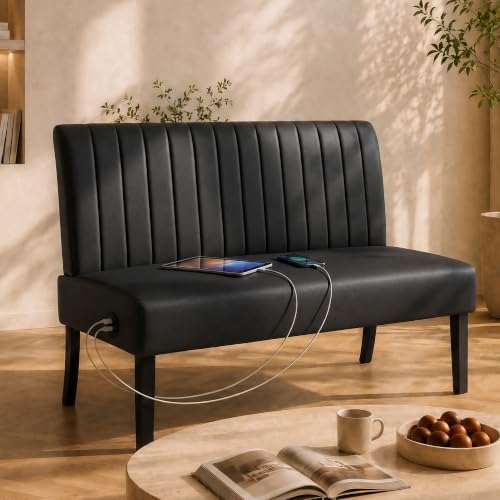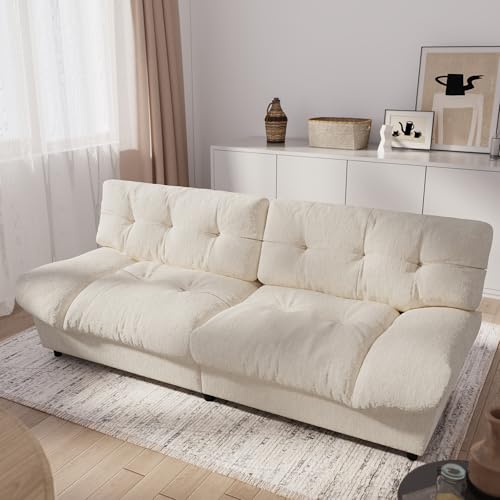
The Complete Guide to Armless Sofas
Space-saving, versatile, and effortlessly modern — learn why armless sofas are becoming the top choice for smart homeowners and how to pick the right one
VIEW TOP PICKSPhanMarket Philosophy: We believe that well-informed buyers make better choices. This guide covers everything you need to know about armless sofas — from space advantages and comfort factors to material selection and styling — so you can shop with complete confidence.
What Is an Armless Sofa?
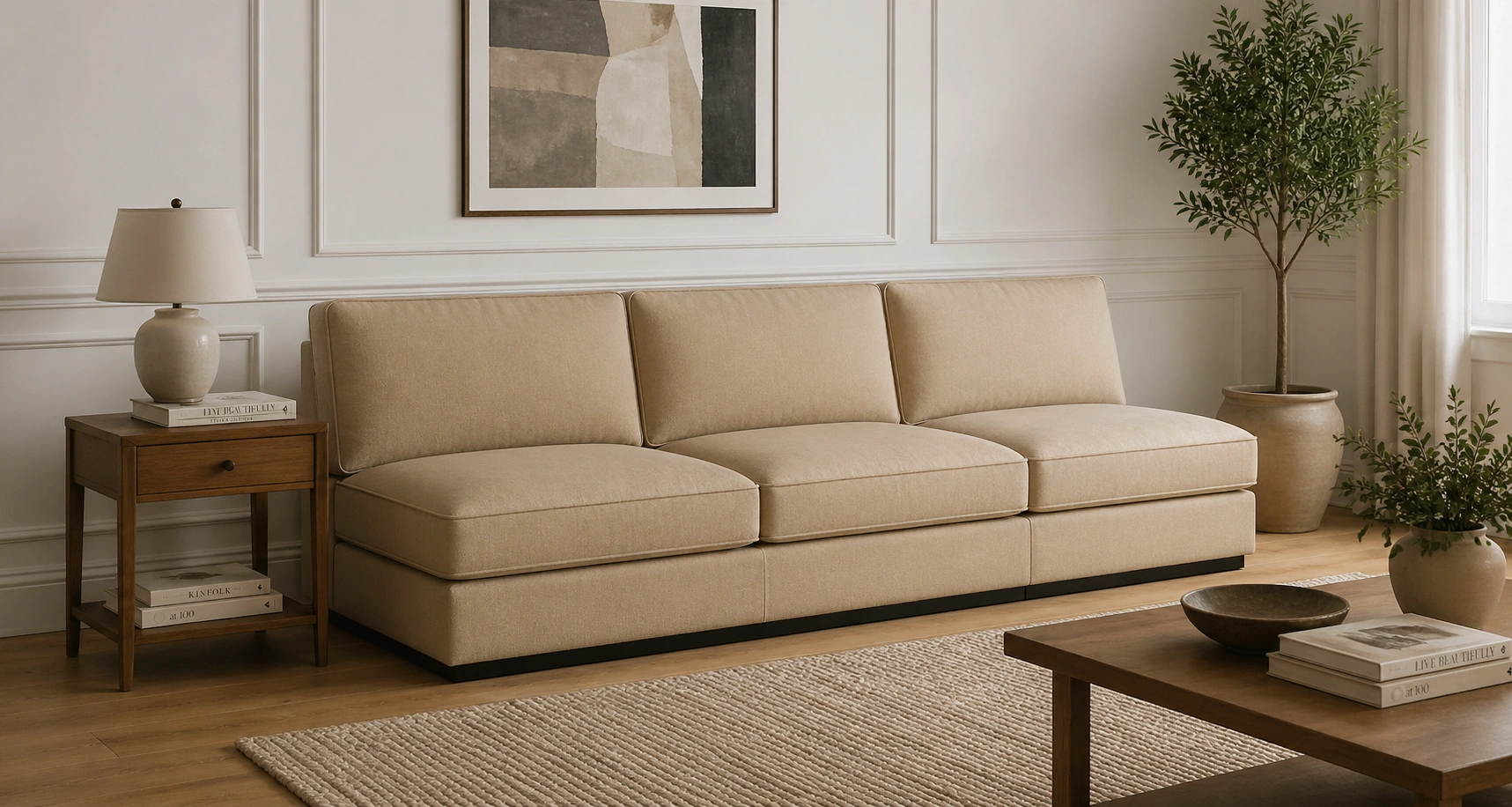
An armless sofa is a seating piece designed without the protruding side supports (arms) found on traditional sofas. By removing the arms, the entire length of the sofa becomes usable seating or lounging space, resulting in a cleaner silhouette and a significantly smaller footprint.
Unlike conventional sofas where arms can add 6 to 10 inches per side, armless designs maximize every inch of the frame. This makes them particularly valuable for small apartments, narrow rooms, and open-plan layouts where visual flow matters. Armless sofas come in various configurations including loveseats, 3-seater models, and even modular systems that can be rearranged to fit your space.
The concept has gained significant traction in modern sofa design, where minimalist aesthetics and functional flexibility are highly valued. Many leading furniture brands now offer armless options across their entire collection, reflecting the growing demand for adaptable living room furniture.
Key Characteristics That Set Armless Sofas Apart
Honest Pros and Cons of Armless Sofas
Before making any purchase decision, it's essential to understand both sides. For a deeper analysis, read our dedicated article on sofa without arms pros and cons. Here's a balanced overview:
✅ Advantages
- Space efficiency: Saves significant horizontal room, ideal for studios, apartments, and compact living areas where every inch counts.
- Flexible layout options: Float in the room, push against walls, or combine multiple pieces without worrying about arm direction or orientation conflicts.
- More usable seating width: A 72-inch armless sofa provides more actual sitting space than a 72-inch armed sofa because the arms don't eat into the seating area.
- Modern, clean look: The streamlined profile fits naturally with contemporary, minimalist, and mid-century modern design themes.
- Easier to move and maneuver: Lighter weight and narrower profile make it simpler to navigate through doorways, hallways, and around corners during delivery or rearrangement.
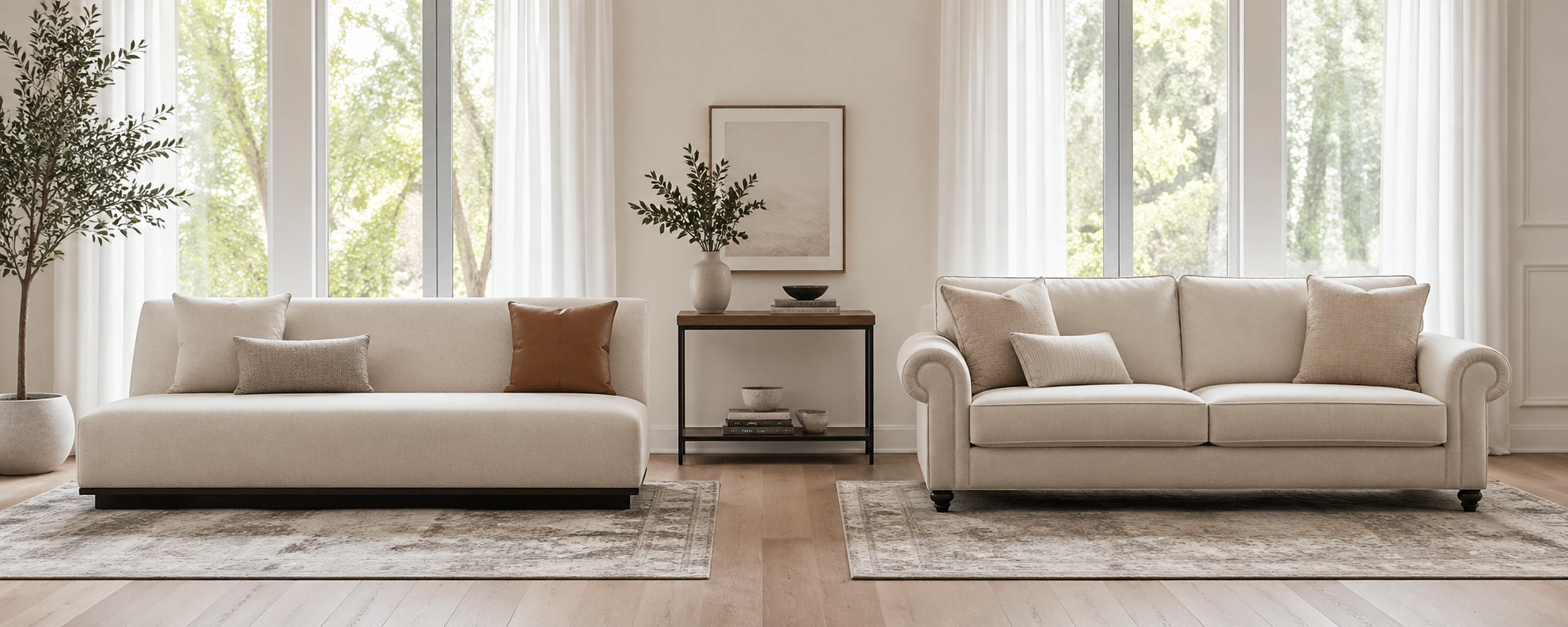
- Better for pairing: Two armless sofas facing each other creates a symmetrical, balanced conversation area — a setup that's difficult to achieve with armed sofas.
- Lounging friendly: No arms means you can stretch out fully, sleep on the sofa, or sit in any direction without obstruction.
⚠️ Considerations
- No armrest support: You lose the lateral support that arms provide for reading, typing on a laptop, or simply resting your elbow while watching TV.
- Less defined visual boundary: Without arms, the sofa's edge is less pronounced, which can make the seating area feel less enclosed or cozy in a large room.
- End cushions may shift: Since there are no arms to hold the outer cushions in place, they can gradually slide outward over time, especially on leather or smooth fabrics.
- Not ideal for all body types: Taller or broader individuals may miss the sense of containment and structure that armrests provide.
- May need side tables: Without built-in arm surfaces, you'll likely need separate side tables for drinks, remotes, and books — adding extra furniture to the room.
- Less traditional appeal: If your home features classic, formal, or traditional decor, armless sofas may appear too casual or out of place.
💡 Pro Tip: If you love the space-saving benefits but miss arm support, consider placing a small sofa table or a standalone armrest pad on one side. This gives you the best of both worlds without committing to permanent arms.
Who Should Choose an Armless Sofa?
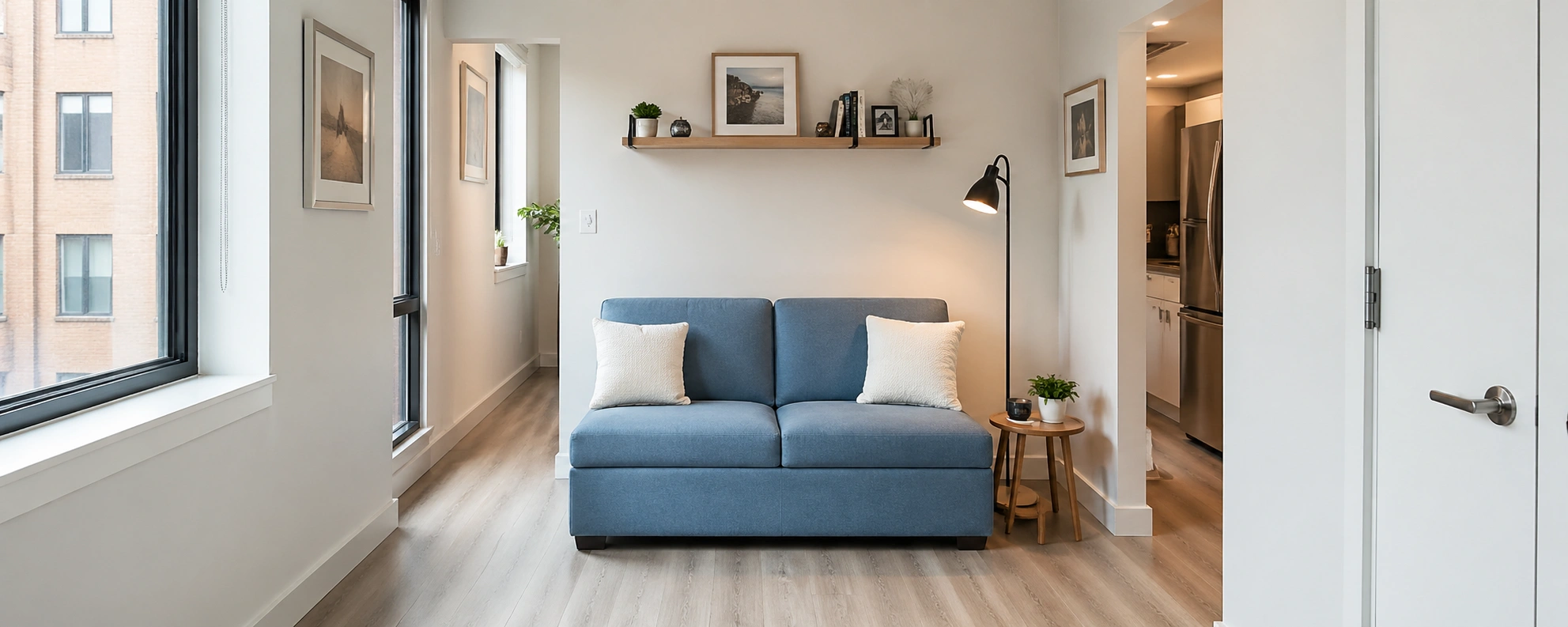
Armless sofas aren't for everyone, but they excel in specific situations. Here's who benefits most:
🏠 Apartment & Studio Dwellers
When every square foot matters, the 12–20 inches saved by going armless can mean the difference between fitting a sofa and not. Perfect for apartment living where the sofa must serve multiple roles — seating, lounging, and occasionally sleeping.
🔄 Frequent Layout Changers
If you enjoy rearranging your furniture seasonally or when redecorating, armless sofas offer unmatched flexibility. They can face any direction, pair with other pieces symmetrically, and adapt as your room evolves.
👩💻 Remote Workers
An armless sofa lets you sit cross-legged, tuck your legs to the side, or shift positions freely throughout the workday — something that's restricted by fixed armrests on traditional sofas.
🎬 Home Theater Enthusiasts
For movie marathon setups, being able to lie down fully or cuddle up without armrests in the way makes the viewing experience far more comfortable. Pair two armless pieces for a theater-style arrangement.
🐾 Pet Owners
Without arms, there are no narrow gaps where pet hair, dirt, and debris accumulate. Pet owners also find armless designs easier to clean and cover with sofa covers.
🎨 Modern Design Enthusiasts
If your aesthetic leans toward contemporary, minimalist, or Scandinavian style, armless sofas deliver the clean, uncluttered lines that these design languages demand.
Armless Sofa vs. Traditional Sofa: Side-by-Side Comparison
Understanding the practical differences helps you decide which style suits your lifestyle. For more sofa type comparisons, see our guide on sectional vs traditional sofas and rolled arms vs track arms.
| Factor | Armless Sofa | Traditional Sofa (with Arms) |
|---|---|---|
| Overall Width | Narrower by 12–20 inches for the same seating capacity | Wider due to arm extensions on both sides |
| Usable Seating Width | Nearly the full frame width is seating space | Reduced by arm width on each side |
| Layout Flexibility | Excellent — can float, pair back-to-back, or face any direction | Limited — arm direction affects placement options |
| Lateral Support | None — requires side tables or accessories for armrest function | Built-in — arms provide elbow and upper body support |
| Visual Weight | Light, airy, and minimal | Heavier, more grounded, and substantial |
| Best For | Small spaces, modern interiors, flexible layouts | Formal rooms, traditional decor, defined seating zones |
| Price Range | Generally lower (less material and frame complexity) | Generally higher (additional frame, cushion, and upholstery) |
| Delivery Ease | Easier — narrower profile fits through tight doorways | Harder — wider dimensions may require maneuvering |
Best Placement Ideas for Armless Sofas
One of the greatest strengths of an armless sofa is its adaptability. Here are proven placement strategies for different room types. For broader layout inspiration, check our living room layout guide.
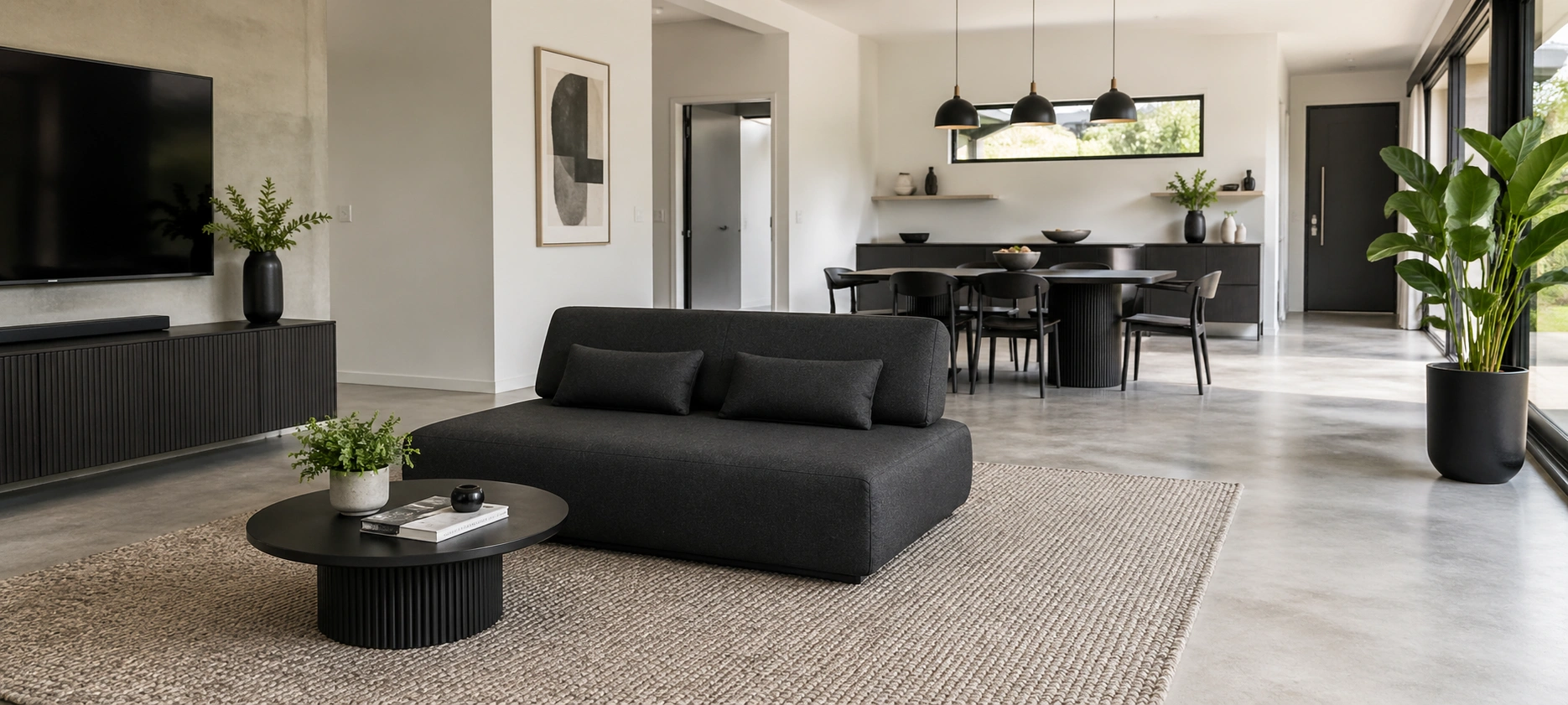
Floating in Open Plan
Place the sofa away from walls to divide an open-plan space into distinct zones. Without arms, both sides look equally finished, so the sofa works from any angle.
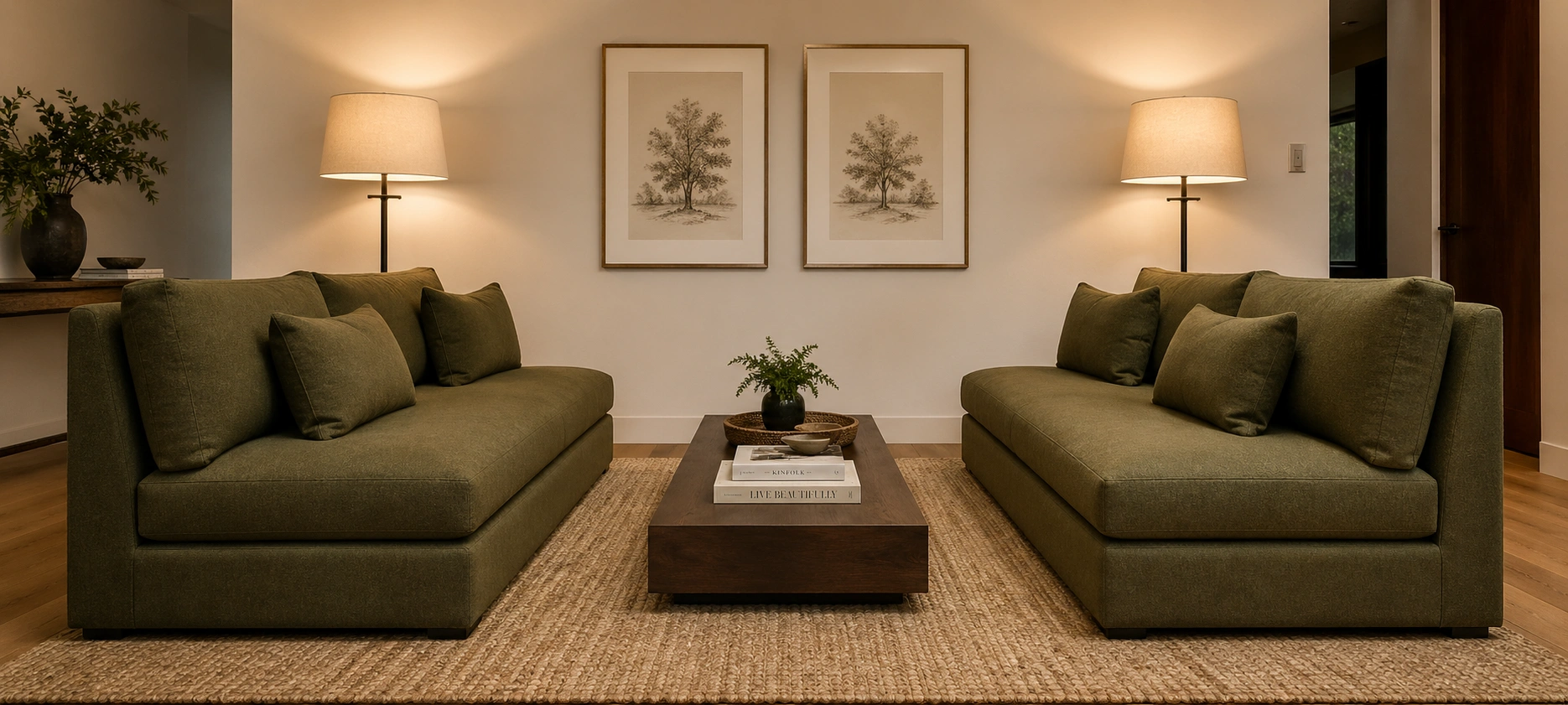
Paired Conversation Setup
Face two armless sofas toward each other with a coffee table in between. This creates a perfectly symmetrical conversation area that's impossible with mismatched arm orientations.
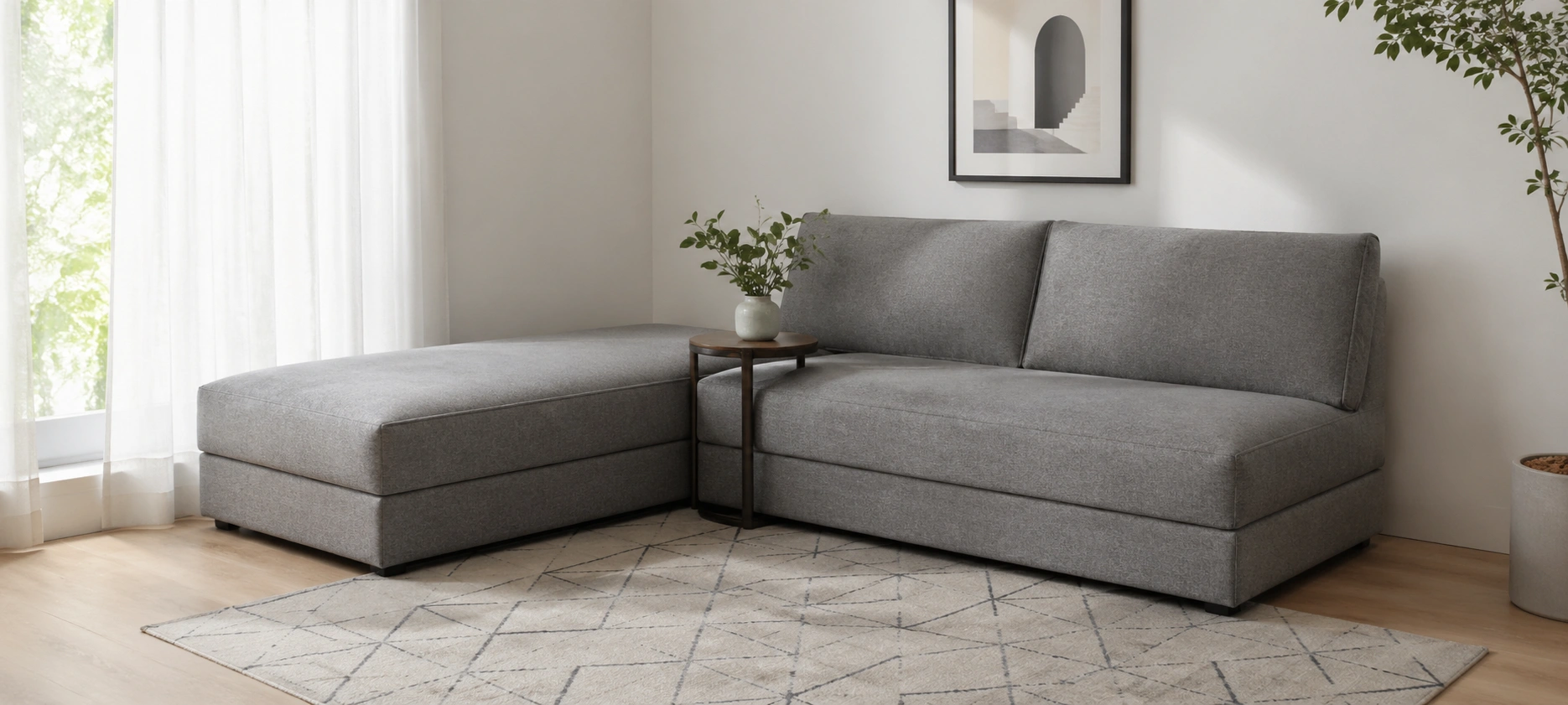
L-Shape with Chaise
Combine an armless sofa with a chaise lounge module for an L-shaped configuration that adapts to corner placements without the bulk of a full sectional sofa.
Best Upholstery Materials for Armless Sofas
Material choice matters even more for armless sofas because the exposed ends get more contact and friction than the protected arms of traditional sofas. Learn about the leather vs fabric debate and check Martindale test scores to evaluate durability. Here's how popular materials perform:
Performance Fabric
Tightly woven, stain-resistant, and highly durable. Ideal for families and homes with kids. Resists wear at the exposed edges where armless sofas take the most contact. Look for the most durable sofa fabrics with 50,000+ Martindale cycles.
Genuine Leather
Elegant and easy to wipe clean, but the exposed edges of an armless leather sofa can show creasing and wear faster. Requires regular leather conditioning. Understand leather grades before buying — top-grain is recommended.
Microfiber
Soft, stain-resistant, and affordable. Holds up well on armless designs because the synthetic fibers resist pilling and fraying at edges. See our microfiber couch guide for detailed comparisons.
Linen Blend
Beautiful natural texture that suits linen sofa aesthetics perfectly. However, linen wrinkles easily and is less durable at the exposed ends of armless designs. Best for low-traffic, adult-only spaces. Explore neutral tone fabrics for a refined look.
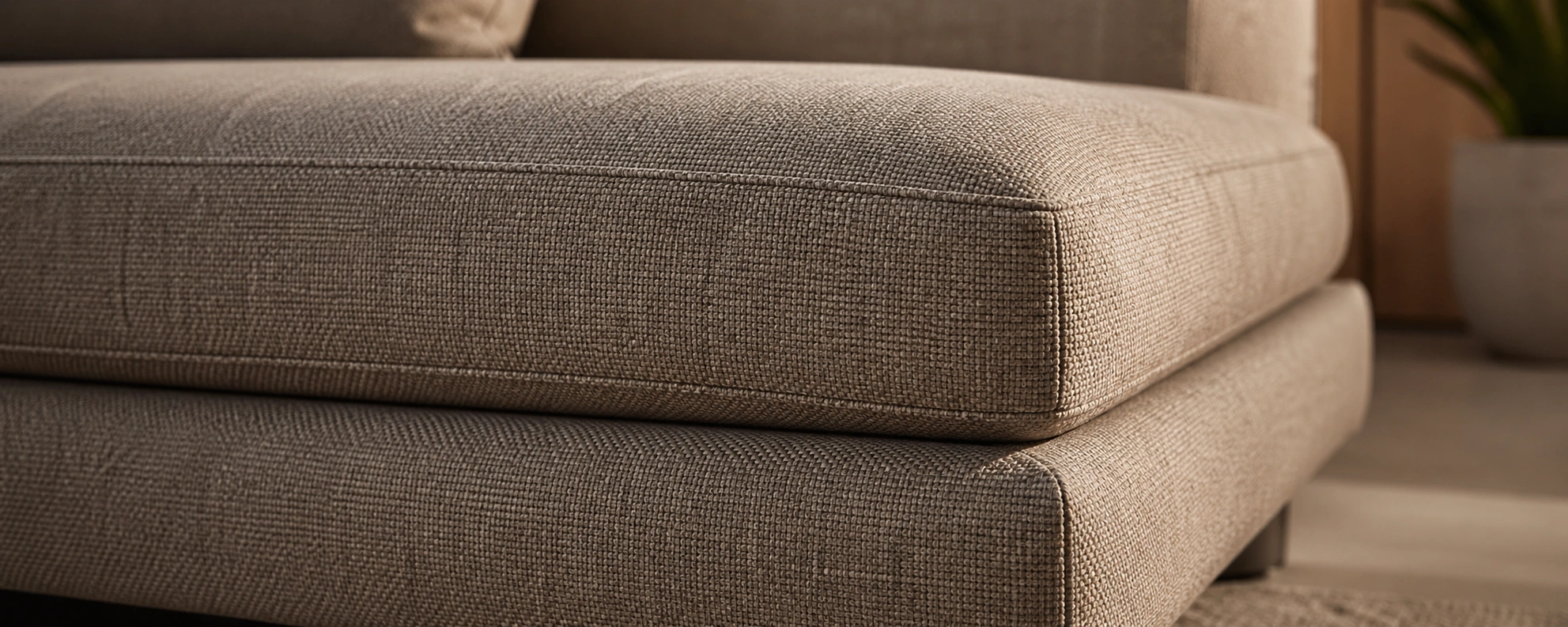
⚠️ Important Note: On armless sofas, the outer edges of the cushions are exposed and receive more direct contact (people sitting on the edge, leaning against the side). Choose fabrics with high abrasion resistance and consider adding protective covers if the sofa will see heavy daily use.
How to Choose the Right Armless Sofa
Follow this step-by-step process to ensure you select an armless sofa that fits your space, lifestyle, and comfort preferences. For a broader buying framework, see our complete guide on how to choose a sofa.
-
1
Measure Your Space Accurately
Use our sofa measuring guide to determine the maximum width your room can accommodate. Factor in walkways (minimum 18 inches), other furniture, and door clearance. The size and room guide helps match sofa dimensions to room size. For armless sofas, also measure the depth — some models are deeper to compensate for the lack of arms.
-
2
Determine Your Seating Capacity
Decide how many people you need to seat regularly. A 2-seater armless sofa seats 2–3 people comfortably (since there are no arm boundaries), while a 3-seater can accommodate 3–4. Remember that armless designs allow more flexible seating positions, so capacity is effectively higher than armed equivalents of the same width.
-
3
Evaluate Comfort Features
Since you won't have arm support, focus extra attention on cushion fill types (high-resilience foam wraps offer the best balance), seat depth (deeper seats compensate for the lack of arm containment), and back height. Learn how to test sofa comfort before purchasing — ideally sit on the sofa for at least 10 minutes in-store.
-
4
Check Frame and Construction Quality
A solid frame is critical for armless sofas because the structure must support weight without arm reinforcement. Read about frame materials — kiln-dried hardwood is the gold standard. Also check spring systems (eight-way hand-tied or sinuous wire) and suspension types. Our guide on how to check sofa quality covers what to look for.
-
5
Select the Right Upholstery
Consider your household: families with kids need family-friendly fabrics, pet owners should look at easy-clean options, and those seeking luxury might prefer leather or velvet. Factor in the sofa budget guide — material choice significantly impacts total cost.
-
6
Consider Future Flexibility
If you might move or redesign your space, choose an armless sofa that can work in multiple rooms and layouts. Modular armless sofas offer the most future-proof option since individual pieces can be reconfigured. Also consider whether you might want to add pieces later — some brands sell matching armless modules separately.
Styling Tips to Elevate Your Armless Sofa

Armless sofas serve as a versatile blank canvas for styling. Here's how to make yours look intentional and polished:
Layer with Throw Pillows
Since there are no arms to define the edges, use throw pillows to create visual boundaries and add personality. Place larger pillows at the outer edges to simulate arm-like definition and fill the middle with smaller accent pillows.
Add Side Tables on Both Ends
Flank the sofa with matching or complementary side tables to replace the functional role of armrests. This provides surfaces for drinks, lamps, and books while anchoring the sofa visually in the room.
Drape a Throw Blanket
A throw blanket casually draped over one end adds warmth, texture, and color. On armless sofas, this also helps visually weight one side, creating an asymmetrical but balanced look that feels curated rather than accidental.
Ground with a Large Rug
Because armless sofas have a lighter visual footprint, a substantial area rug underneath helps ground the seating area and define the zone — especially important in open-plan spaces where the sofa floats away from walls.
Use Overhead or Floor Lighting
Without arms to support table lamps, opt for floor lamps behind the sofa, pendant lights overhead, or wall-mounted sconces. This provides reading light without consuming side table surface space.
Choose a Bold Color or Pattern
Armless sofas in bold colors make a stronger statement because the clean silhouette lets the color shine without visual competition from arms. A vibrant armless sofa can serve as the room's focal point.
Frequently Asked Questions About Armless Sofas
Got more questions? Browse our complete sofa FAQ section for answers to common concerns.