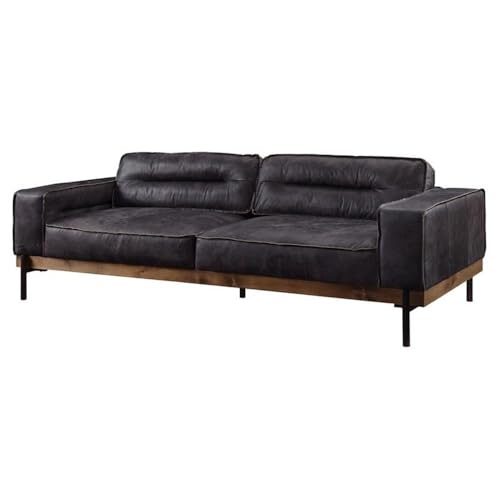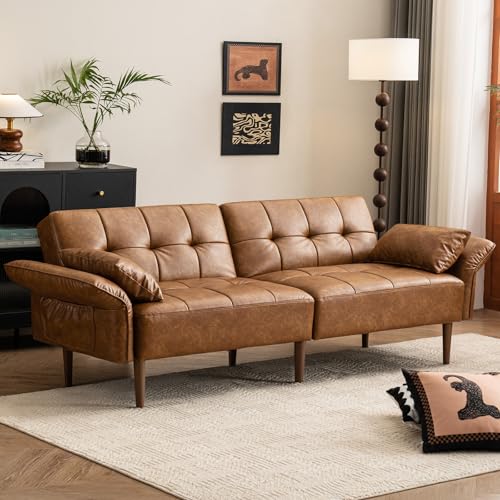
What Is an Industrial Sofa?
An industrial sofa draws its design language from early 20th-century factories, warehouses, and workshops. The style celebrates raw, unfinished aesthetics — think exposed steel frames, distressed leather upholstery, reclaimed wood accents, and hardware that's visible rather than concealed. Unlike modern sofas that prioritize sleek minimalism or vintage sofas that evoke nostalgia, industrial design intentionally showcases the structural bones of furniture as part of its visual identity.
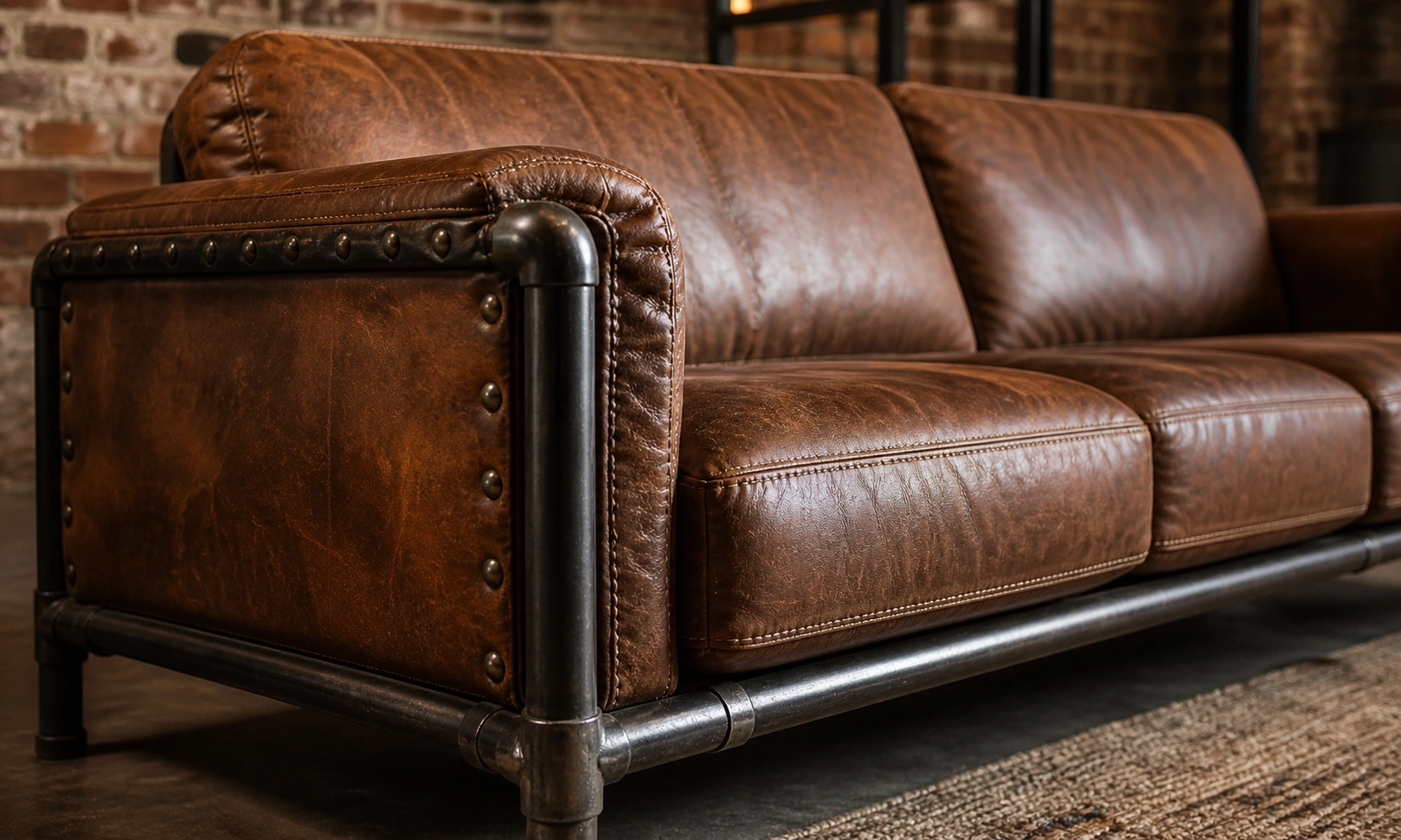
A classic industrial leather sofa with visible rivets and tubular steel frame — the hallmark elements of factory-inspired design.
What makes industrial sofas unique is their ability to feel both rugged and refined. The style originated when architects began converting old manufacturing buildings into living spaces in cities like New York, London, and Berlin. The furniture had to match the architecture — high ceilings, brick walls, concrete floors, and large steel-framed windows. Industrial sofas were born from that need, and they've since evolved into one of the most sought-after sofa design styles for contemporary homes.
Today, you don't need a converted warehouse to enjoy an industrial sofa. These pieces work beautifully in apartments, living rooms, offices, and even basement spaces. The key is understanding the core characteristics so you can choose a piece that fits your room while still delivering that unmistakable industrial edge.
Key Characteristics That Define Industrial Sofas
Not every dark-colored sofa qualifies as industrial. The style has specific design markers that separate it from generic dark furniture. Here are the seven defining traits to look for:
Exposed Metal Frames
Steel or iron frames left visible, often in matte black, gunmetal, or raw steel finishes with welded joints.
Distressed Leather
Full-grain or top-grain leather with intentional aging, worn edges, and natural patina that develops over time.
Visible Hardware
Rivets, bolts, and brackets displayed openly rather than hidden — functional elements become decorative details.
Reclaimed Wood Accents
Armrests, base panels, or decorative trim made from salvaged timber with visible grain, knots, and imperfections.
Utilitarian Silhouettes
Straight lines, geometric proportions, and no unnecessary ornamentation — form follows function.
Muted, Earthy Palette
Browns, blacks, charcoals, tans, and olive greens — colors drawn from natural materials and aged metal.
Chunky Proportions
Substantial, weighty presence with thick cushions and solid arms that feel anchored to the ground.
Canvas or Denim Options
For a softer take, heavy-duty cotton canvas or denim upholstery in muted tones offers a more casual industrial feel.
When shopping, look for sofas that combine at least three to four of these characteristics. A sofa with only exposed metal legs but otherwise conventional upholstery may lean more toward contemporary style. True industrial design should feel like it belongs in a converted factory — even when it's sitting in a suburban home.
Materials Used in Industrial Sofas
Understanding the materials behind industrial sofas is crucial because the style is fundamentally material-driven. The wrong material choice can make a sofa look cheap rather than authentically industrial. Here's a detailed breakdown:
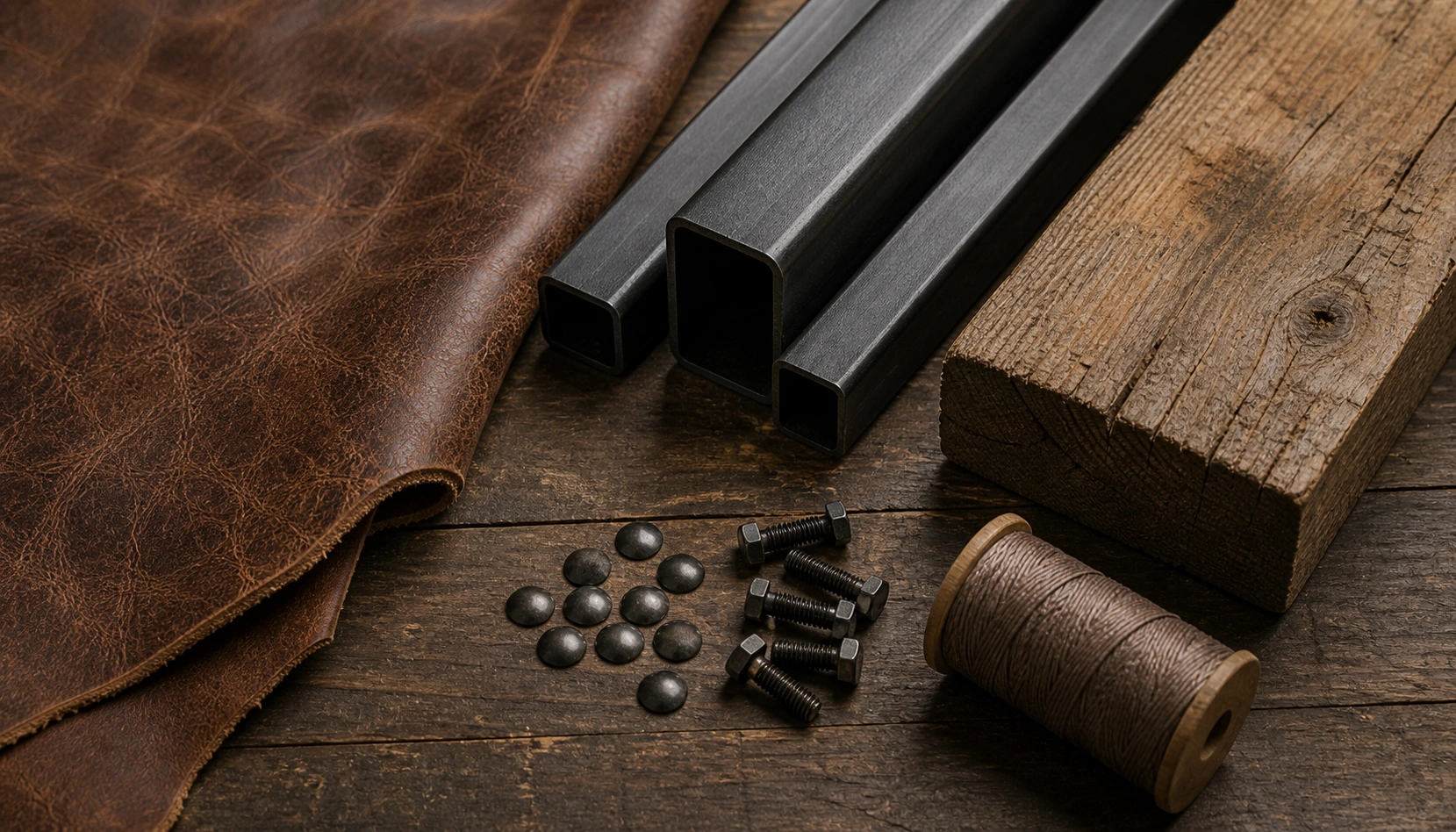
The material trio that defines industrial sofa construction: distressed leather, welded steel, and reclaimed wood.
| Material | Role in Industrial Design | Durability | Price Range |
|---|---|---|---|
| Full-Grain Leather | Primary upholstery; develops rich patina over time, the gold standard for industrial sofas | Excellent (15-20+ years) | $2,000–$5,000+ |
| Top-Grain Leather | More uniform than full-grain; slightly corrected surface, still authentic-looking | Very Good (10-15 years) | $800–$2,500 |
| Bonded Leather | Budget alternative; leather scraps pressed with polyurethane — avoid for genuine industrial look | Fair (3-5 years) | $300–$700 |
| Steel / Iron Frame | Structural backbone; tubular or flat-bar steel, often powder-coated in black or gunmetal | Excellent (lifetime) | $100–$400 |
| Reclaimed Wood | Accent panels, armrests, or decorative elements; adds warmth against metal and leather | Very Good | $100–$500 |
| Heavy Canvas | Upholstery alternative to leather; military-style cotton duck or waxed canvas | Good (7-10 years) | $300–$900 |
| Denim | Casual industrial option; indigo or washed denim creates a workwear-inspired aesthetic | Good (5-8 years) | $250–$800 |
For a deeper understanding of leather quality specifically, read our leather grades explained guide. When comparing leather versus fabric options for industrial style, our leather vs fabric sofa breakdown covers the trade-offs in detail.
The frame material is equally important. Industrial sofas typically use steel or a combination of steel and solid hardwood. Avoid sofas with particleboard or MGF frames — they can't support the heavier weight and bold proportions that industrial design demands.
Popular Industrial Sofa Types
Industrial style isn't limited to a single sofa shape. The design language adapts across multiple configurations to suit different room sizes and lifestyles. Here are the most common types:
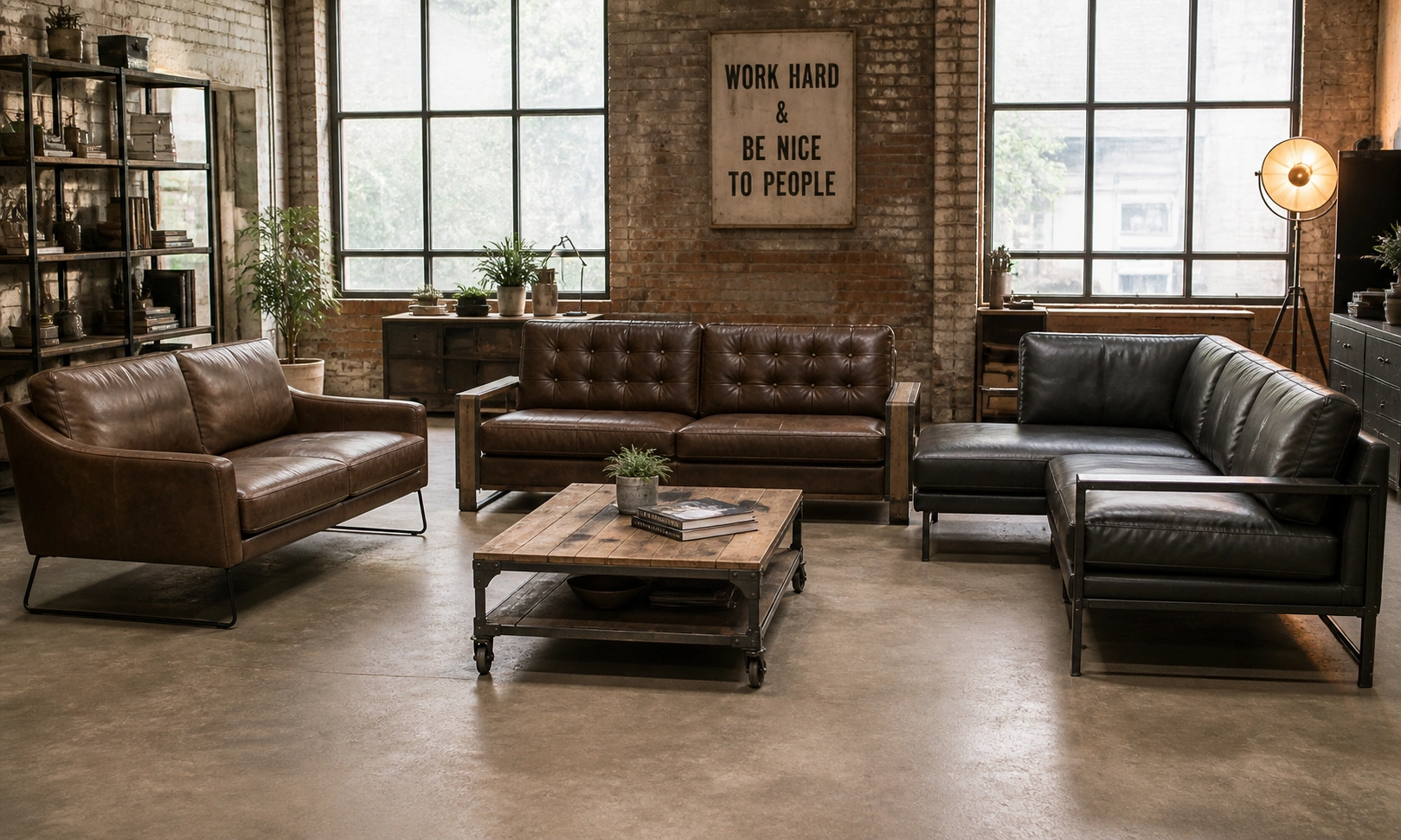
Industrial style adapts across configurations — from compact loveseats to expansive L-shaped sectionals.
3-Seater Industrial Sofa
The most popular choice for standard living rooms. A 3-seater industrial sofa typically features a wide bench seat with tufted leather cushions, exposed steel legs, and riveted armrests. It balances the bold industrial presence with practical seating capacity for most households. Ideal for rooms measuring 10×12 feet or larger.
Industrial Sectional Sofa
For larger spaces, an industrial sectional sofa delivers maximum impact. L-shaped or U-shaped configurations in leather create a commanding centerpiece for large rooms and open-plan layouts. Look for sectionals with modular capabilities — some industrial sectionals allow you to rearrange the chaise position, giving you flexibility without sacrificing the raw aesthetic.
Industrial Loveseat
Perfect for smaller spaces, apartments, or as a complementary piece alongside a larger sofa. An industrial loveseat retains all the signature elements — metal frame, leather or canvas upholstery, visible hardware — but in a compact 2-person footprint. They work exceptionally well in reading nooks, home offices, or as accent seating.
Industrial Sleeper Sofa
Industrial design meets functionality with sleeper options. An industrial sleeper sofa typically features a metal fold-out mechanism (visible rather than hidden, staying true to the style) with a firm mattress. These are excellent for guest rooms or studios where space must serve dual purposes.
Industrial Modular Sofa
A modular industrial sofa lets you build your own configuration from individual pieces. Each module — corner unit, armless chair, ottoman — shares the same industrial DNA. This is ideal for irregular room shapes or for people who frequently rearrange their space. The modular approach also means you can start small and add pieces over time.
Pros and Cons of Industrial Sofas
Before investing in an industrial sofa, it's important to weigh the advantages against the potential drawbacks. This honest assessment helps you make a decision aligned with your lifestyle and expectations.
Advantages
- Exceptional durability — steel frames and full-grain leather outlast most other styles
- Unique character — each distressed leather piece ages differently, becoming more personal over time
- Versatile compatibility — pairs well with modern, rustic, minimalist, and eclectic interiors
- Easy maintenance — dark leather hides stains well and wipes clean quickly
- Strong visual impact — becomes the focal point of any room without additional decor
- Hides wear gracefully — scratches and scuffs enhance the aesthetic rather than detract from it
Disadvantages
- Heavy weight — steel and solid wood construction makes moving difficult
- Higher initial cost — quality industrial sofas require premium materials
- Firm seating — authentic industrial cushions tend to be firmer than plush alternatives
- Limited color range — mostly restricted to browns, blacks, and charcoals
- Can feel cold — metal and leather don't feel warm to the touch in winter months
- Not child-soft — the rugged aesthetic may not suit families wanting a soft, cushiony feel
If you're torn between comfort and durability, our comfort vs durability guide provides a framework for making that trade-off. For households with specific needs, explore our recommendations for families with kids or pet owners to see how industrial options compare.
How to Style an Industrial Sofa in Your Room
Placing an industrial sofa in a room is only half the equation — the surrounding elements determine whether the look feels curated or out of place. Here are proven styling strategies for different room types:
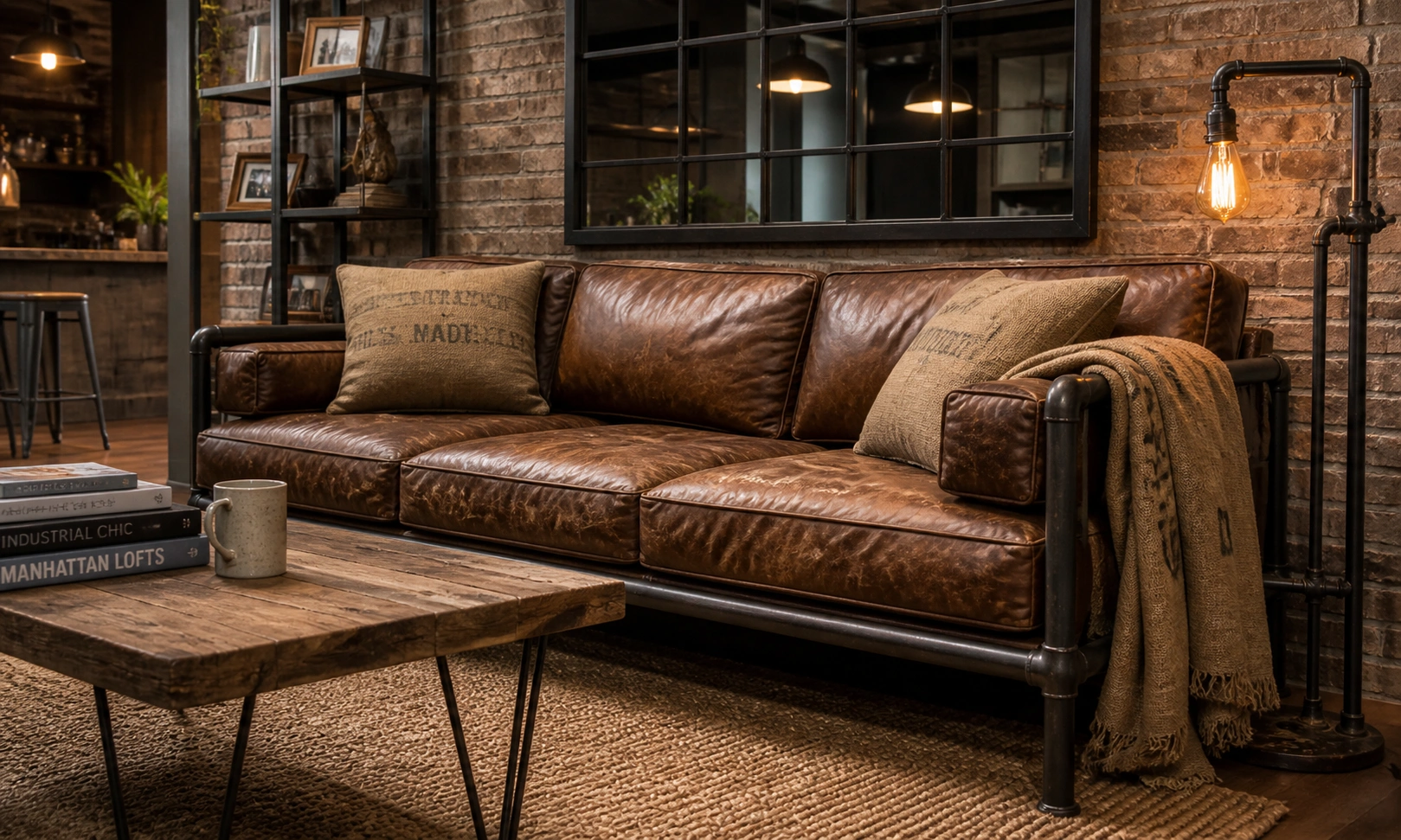
An industrial sofa styled with complementary elements — exposed brick, metal pendant lights, and a reclaimed wood coffee table.
For Living Rooms
- Pair your sofa with a sofa table made from reclaimed wood or pipe fittings to reinforce the industrial narrative.
- Use a black or dark brown sofa against a light-grey or white wall for maximum contrast — this creates a gallery-like effect that makes the sofa the hero piece.
- Add throws and pillows in burlap, herringbone, or vintage military canvas to layer texture without competing with the sofa's character.
- Consider a grey industrial sofa if you want the style without the heaviness of all-black or all-brown — grey bridges industrial and contemporary aesthetics.
For Lofts and Open-Plan Spaces
- Use the sofa to define zones — position an L-shaped industrial sectional to create a visual boundary between the living area and dining or workspace.
- Embrace the architecture — if you have exposed ductwork, brick walls, or concrete floors, let them show. The sofa should complement, not compete with, these features.
- Layer lighting — combine an oversized metal floor lamp with smaller task lamps on a pipe-frame side table for depth.
For Home Offices
- An industrial office sofa in a waiting area or brainstorming corner projects professionalism with personality. Choose a compact loveseat in dark leather with clean metal legs — it looks authoritative without being unwelcoming. Pair it with a metal-and-wood desk for a cohesive workspace aesthetic.
For Basements and Rec Rooms
- Industrial sofas are naturally suited for basement spaces — the rugged style thrives in below-ground rooms with concrete or stone walls.
- Choose a brown leather industrial sofa for warmth against cool basement surfaces, and add a textured area rug to soften the floor.
- If you're creating a home theater, an industrial movie-marathon sofa with deep seating and durable leather handles long viewing sessions beautifully.
For comprehensive room planning, our living room layout guide covers spacing, traffic flow, and furniture arrangement principles that apply directly to industrial spaces.
Industrial vs. Other Sofa Styles
Understanding how industrial compares to neighboring styles helps you avoid buying a sofa that's close but not quite right. Here's a clear comparison:
Industrial
Exposed metal frames, distressed leather, visible hardware, factory-inspired raw aesthetic.
Mid-Century Modern
Organic curves, tapered wooden legs, warm wood tones. Industrial uses steel; mid-century uses walnut or teak.
Contemporary
Clean lines but with softer profiles, neutral fabrics, no visible hardware. Industrial is rougher and more structural.
Rustic / Farmhouse
Reclaimed wood dominates. Industrial balances wood with equal parts metal; rustic leans heavily into wood warmth.
Minimalist
Ultra-simple, no texture. Industrial embraces texture through leather grain, metal finish, and wood knots.
Vintage
Nostalgic and ornate. Industrial borrows vintage's aged look but strips away decorative ornamentation for utilitarian simplicity.
If you find yourself drawn to elements across multiple styles, a contemporary sofa with industrial accents — like metal legs and leather upholstery — might be the perfect compromise. Similarly, a wooden sofa with metal hardware can bridge industrial and rustic aesthetics.
Buying Guide: How to Choose the Right Industrial Sofa
The industrial sofa market has exploded in recent years, which means more options but also more low-quality imitations. Use this checklist to ensure you're buying a sofa that delivers authentic industrial quality:
Quality Inspection Checklist
- Verify the frame is solid steel or kiln-dried hardwood — not particleboard or MDF. Shake the sofa gently; excessive wobble indicates weak joints.
- Check leather grade — look for "full-grain" or "top-grain" labels. Avoid "bonded leather" or "faux leather" if you want authenticity and longevity.
- Examine the stitching — industrial sofas should have reinforced, visible stitching (often in contrasting thread). Loose threads or uneven seams signal poor craftsmanship.
- Test the cushion firmness — sit for at least 5 minutes. Industrial sofas should feel supportive, not rock-hard or bottomed-out. Check our sofa comfort testing guide for a systematic approach.
- Inspect metal finish — powder-coated steel resists rust and chipping better than painted metal. Run your finger along edges; sharp burrs mean poor finishing.
- Confirm weight capacity — quality industrial sofas typically support 300-400 lbs per seat. Ask the seller if it's not specified.
- Review the return policy — industrial sofas are heavy, so return shipping costs can be significant. Check the return policy before purchasing.
Size and Room Fit
Industrial sofas tend to appear larger than their actual dimensions because of their chunky proportions and dark colors. Always measure your space carefully using our sofa size and room guide, and leave at least 3 inches of clearance on each side. A proper measurement guide helps you account for doorways, hallways, and stairwells — critical for heavy industrial pieces.
Budget Considerations
Quality industrial sofas typically range from $800 to $3,000+. Here's what to expect at each tier:
- $500–$800: Entry-level — usually faux leather or bonded leather with thin metal tubing. Fine for occasional use but won't develop the patina that defines true industrial character.
- $800–$1,500: Mid-range — top-grain leather, solid steel frame, decent cushion fill. This is the sweet spot for most buyers seeking authenticity without luxury pricing.
- $1,500–$3,000+: Premium — full-grain leather, hand-finished metalwork, high-resilience foam cushions, often with custom options. These are investment pieces that last decades.
For a broader perspective on sofa pricing, our sofa budget guide and price breakdown explain where your money goes in furniture construction. Also check how much a good sofa should cost to benchmark industrial prices against other styles.
Where to Buy
Industrial sofas are available from specialty furniture retailers, online marketplaces, and direct-to-consumer brands. Our guide on where to buy sofas covers the pros and cons of each channel. When shopping online, always check customer reviews specifically mentioning the leather quality and frame sturdiness — these are the two areas where industrial sofas are most commonly compromised.
Maintaining Your Industrial Sofa
One of the underrated benefits of industrial sofas is their relatively low maintenance requirements. However, proper care ensures the materials age beautifully rather than deteriorate prematurely.
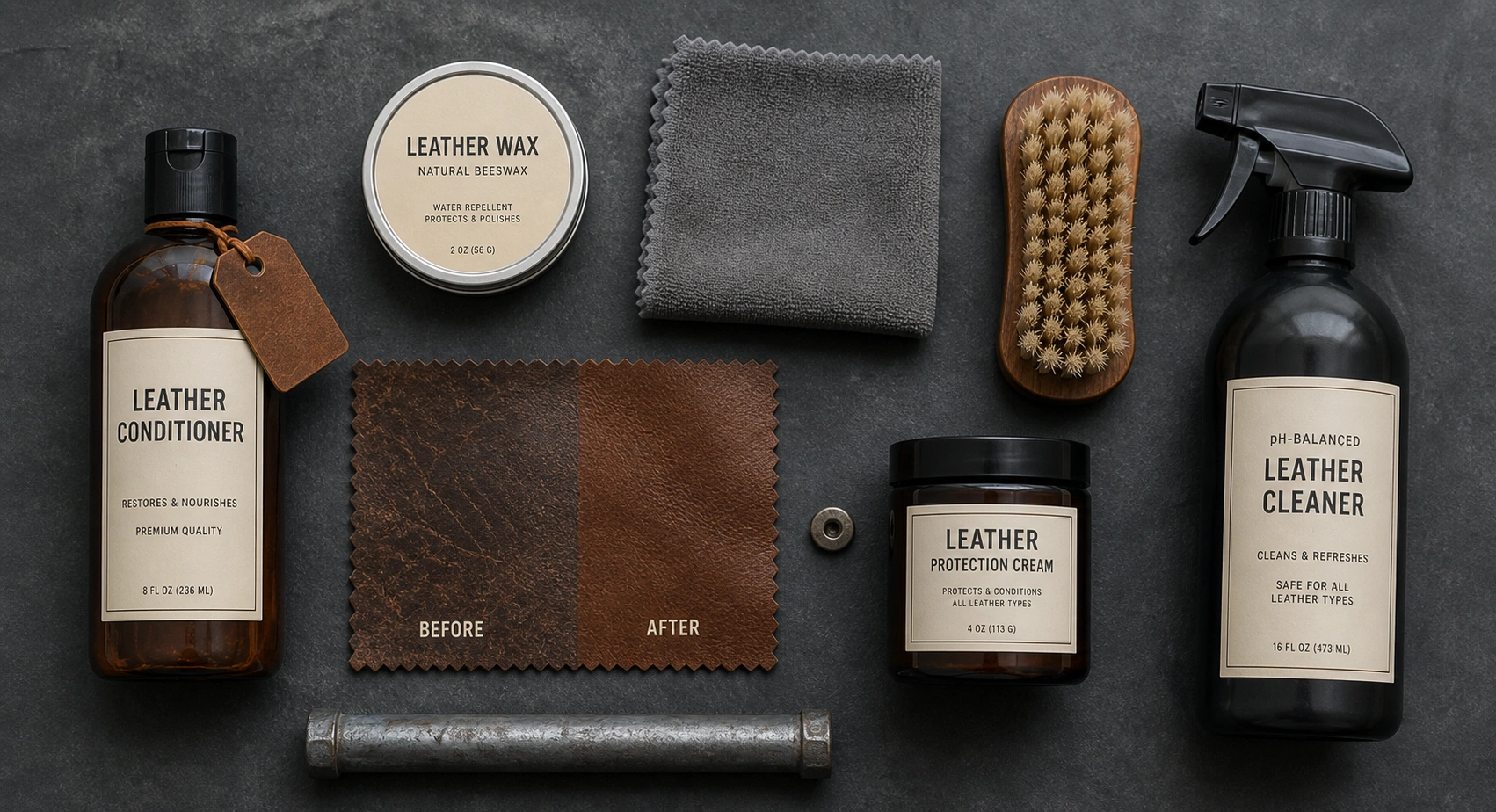
Regular leather conditioning is the single most important maintenance task for an industrial leather sofa.
Leather Care
- Dust weekly with a soft, dry cloth — microfiber works best. Avoid feather dusters which can scratch the leather surface.
- Clean spills immediately with a damp cloth. For stubborn stains, use a pH-balanced leather cleaner — never household products like bleach or ammonia.
- Apply leather conditioner every 3-6 months to prevent drying and cracking. This is especially important in dry climates or homes with heating systems.
- Keep the sofa out of direct sunlight — UV exposure causes leather to fade and crack. If placement near windows is unavoidable, consider UV protection solutions or window treatments.
- For detailed step-by-step instructions, our leather sofa cleaning guide covers every scenario from routine maintenance to deep cleaning.
Metal Frame Care
- Wipe metal surfaces monthly with a damp cloth to remove dust and prevent oxidation.
- For powder-coated steel, avoid abrasive cleaners that can damage the protective coating.
- If you notice rust spots (common in humid environments), treat immediately with a rust converter and touch-up paint matching the frame color.
- Check frame joints and bolts annually — tighten any that have loosened from regular use. Our guide on fixing loose sofa legs covers this in detail.
Fabric and Canvas Options
If your industrial sofa uses canvas or denim upholstery instead of leather, follow our fabric sofa cleaning guide. Canvas benefits from fabric protection spray applied at purchase, and most canvas industrial sofa covers are removable and machine-washable. For general maintenance across all sofa types, our comprehensive sofa cleaning guide is an excellent reference.
Frequently Asked Questions
An industrial sofa is defined by its use of raw, unfinished materials such as exposed metal frames, distressed leather, reclaimed wood accents, and a utilitarian aesthetic inspired by factories and warehouses from the early 20th century. Visible hardware like rivets and bolts further distinguishes it from other design styles.
Yes, modern industrial sofas combine rugged aesthetics with proper comfort features like high-density foam cushions, pocket spring systems, and ergonomic seat depths. The industrial look refers to style, not a lack of comfort. However, they do tend to feel firmer than plush styles — if you prefer sink-in softness, look for industrial sofas with down-blend cushion wraps.
Industrial sofas work exceptionally well in lofts, open-plan living spaces, home offices, basement rec rooms, and modern apartments. They also complement minimalist and contemporary interiors. The key is matching the sofa's scale to the room — industrial pieces have a strong visual presence, so they need adequate space to breathe.
Clean regularly with a damp cloth, apply leather conditioner every 3-6 months to prevent cracking, avoid direct sunlight, and use a leather protection spray. For distressed leather specifically, avoid harsh chemical cleaners that can strip the intentional aged finish. The patina that develops over time is a feature, not a flaw — embrace it.
Absolutely. Industrial pairs naturally with mid-century modern (the contrast of warm wood and cold metal is striking), rustic (shared appreciation for natural materials), minimalist (industrial adds texture to sparse rooms), and even Scandinavian (the Nordic-industrial fusion is a popular trend). The rule of thumb: let the industrial sofa be the dominant piece and keep surrounding elements in supporting roles.
A genuine industrial sofa with top-grain leather and a solid steel frame typically costs between $800 and $2,500. Budget options under $800 often use bonded or faux leather with thinner metal frames. Premium pieces above $2,500 feature full-grain leather, hand-welded frames, and superior cushion construction that can last 15-20+ years.
Final Thoughts
An industrial sofa is more than a seating option — it's a design statement that brings raw character and architectural interest to any room. The combination of exposed metal, distressed leather, and honest construction creates a piece that feels both timeless and thoroughly modern. Whether you're furnishing a converted loft, a minimalist apartment, or a basement family room, an industrial sofa delivers visual impact that few other styles can match.
The key to a successful purchase is prioritizing material quality over surface-level aesthetics. A genuine full-grain leather sofa on a welded steel frame will reward you with decades of use and a patina that tells your story. Conversely, a cheap imitation with bonded leather and thin tubing will look tired within a few years. Use the sofa quality checklist to evaluate any option critically before committing.
For more guidance on navigating the sofa buying process, explore our comprehensive how to choose a sofa resource. And if you encounter issues down the road — whether it's flattened cushions, frame problems, or fabric pilling — our troubleshooting guides have you covered.