
Sofas with Chaise Lounge: The Complete Buying Guide
Everything you need to know about chaise lounge sofas — from configurations and materials to sizing, room placement, and top recommendations.
VIEW TOP PICKSWhat Is a Chaise Lounge Sofa?
A sofa with chaise lounge combines a traditional seating sofa with an extended cushion section — the chaise — that allows you to stretch out your legs fully without needing a separate ottoman. This hybrid design offers the comfortable lounging experience of a recliner with the clean, integrated look of a standard sofa.
The chaise extension typically adds 20 to 40 inches of extra length to one end of the sofa. Unlike a regular 3-seater sofa where all seats are upright, a chaise lounge creates an asymmetric profile with one end designed specifically for reclining, reading, or napping.
Chaise lounge sofas have become one of the most sought-after seating options because they eliminate the need for an additional sofa with ottoman while providing the same leg-rest functionality. They work particularly well as living room sofas where relaxation is a priority.
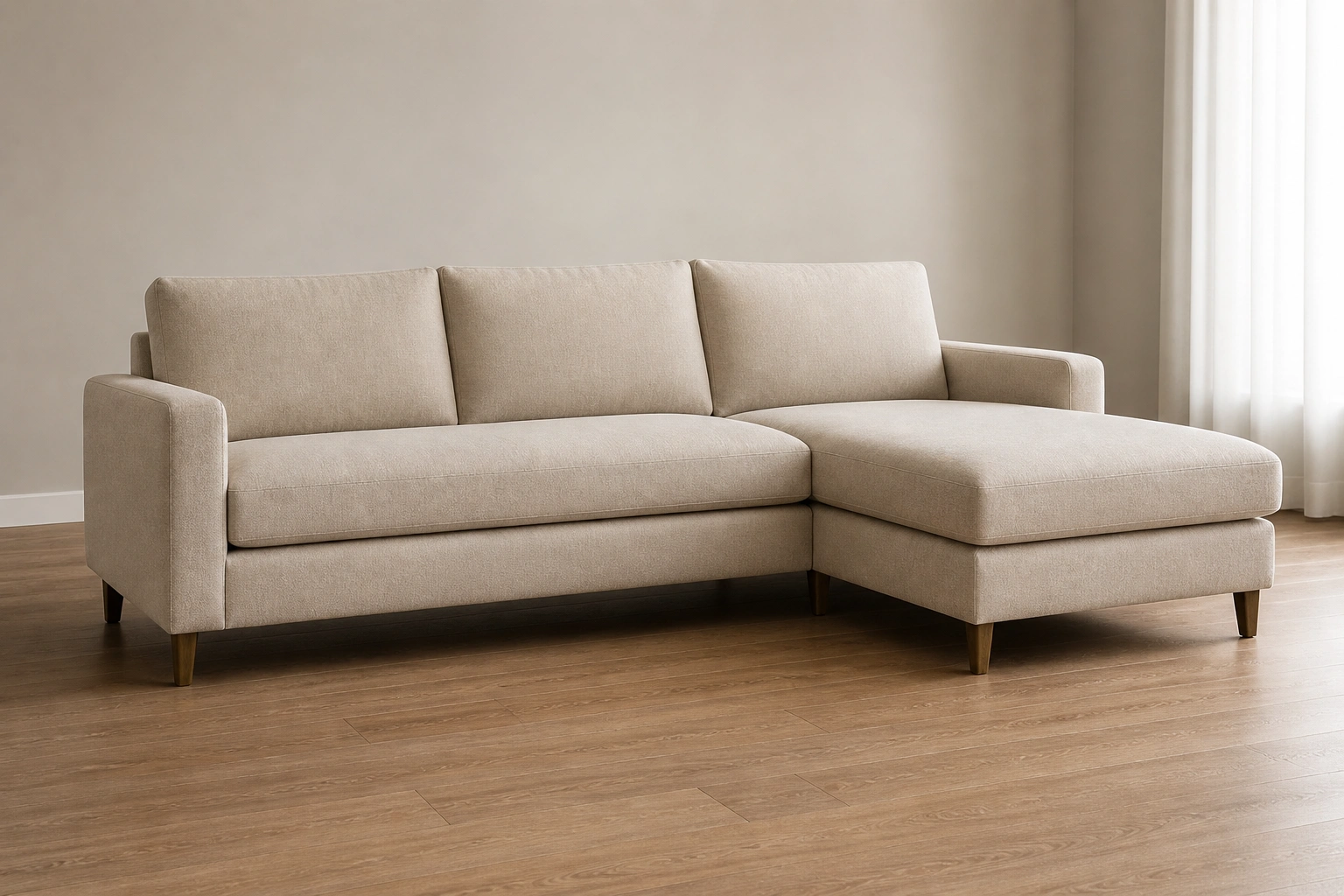
The concept originates from the French "chaise longue" (meaning "long chair"), historically a standalone upholstered chair for reclining. Modern furniture design has evolved this into an integrated sofa component, making it more practical for everyday use and fitting naturally into various room layouts. Whether you prefer a modern sofa aesthetic or a more traditional look, there is a chaise lounge configuration to match your style.
Types of Chaise Lounge Sofas
Not all chaise sofas are built the same. Understanding the different types helps you narrow down which design fits your space, lifestyle, and aesthetic preferences. Here are the six main categories to consider:
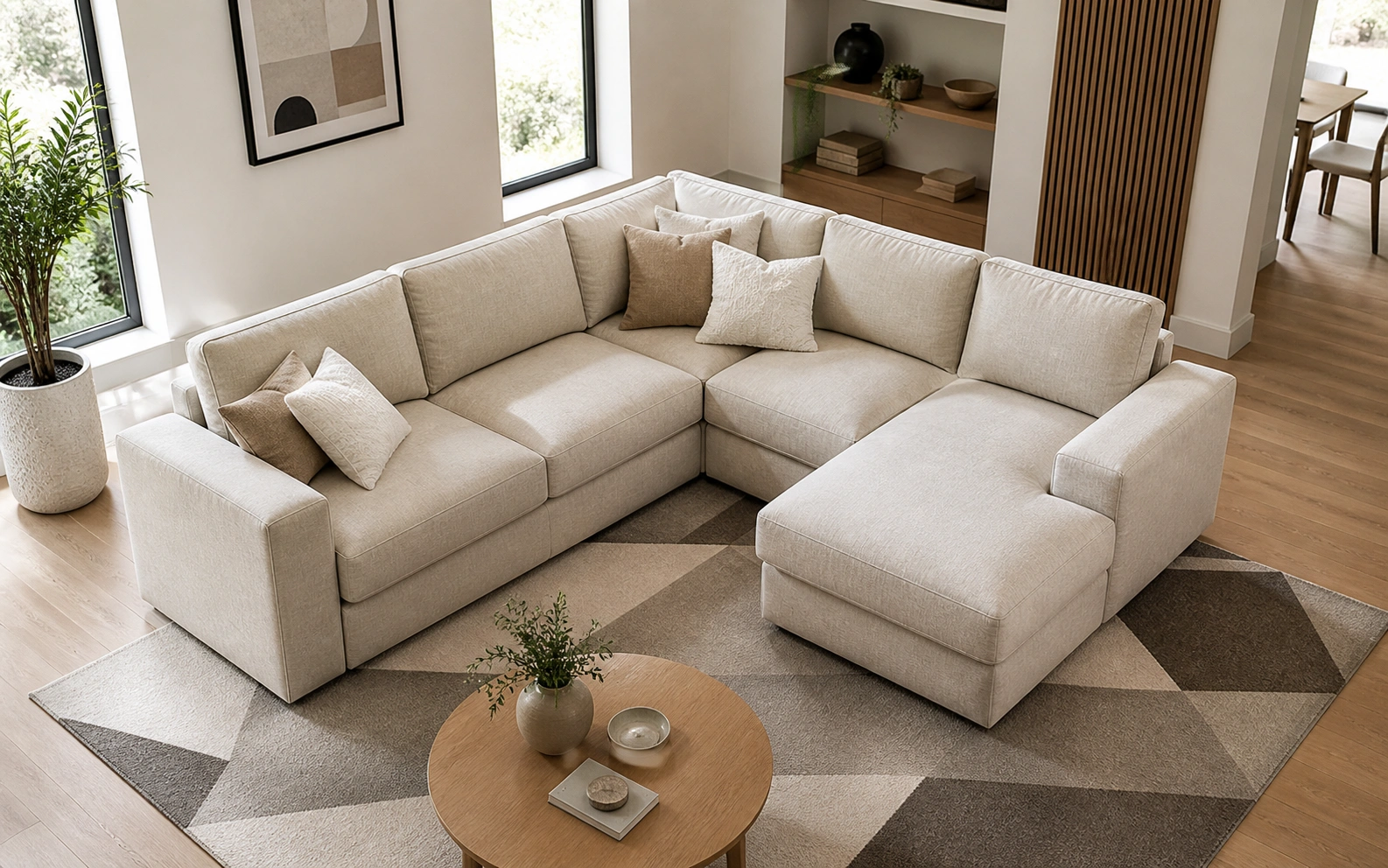
L-Shaped Chaise Sofa
The most popular style. The chaise extends perpendicular to the main sofa body, creating an L footprint. Ideal for corner placement and defining seating zones in open-plan spaces.
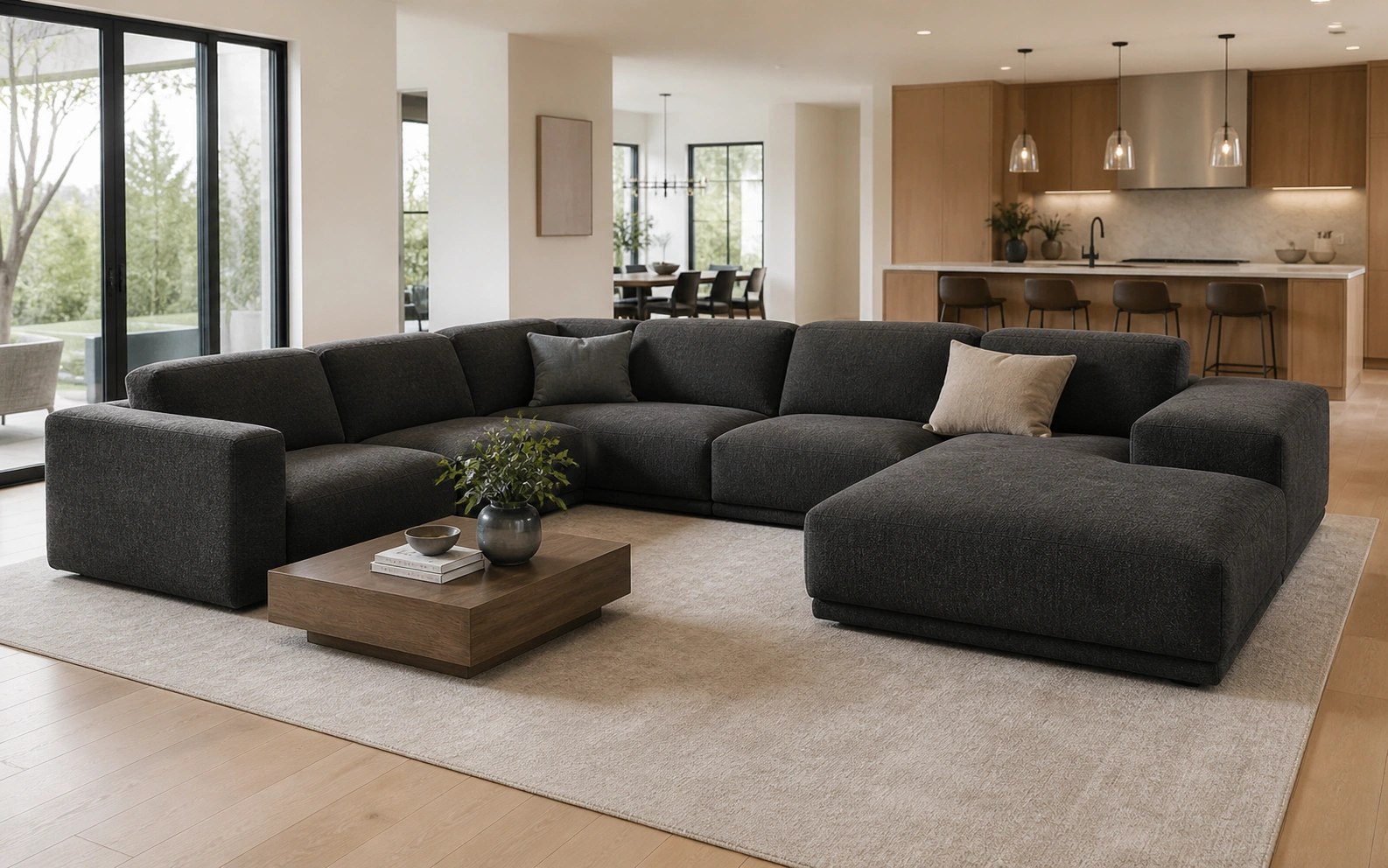
Sectional with Chaise
A larger sectional sofa that includes a chaise as one of its modules. Offers the most seating capacity, perfect for families and large living rooms.
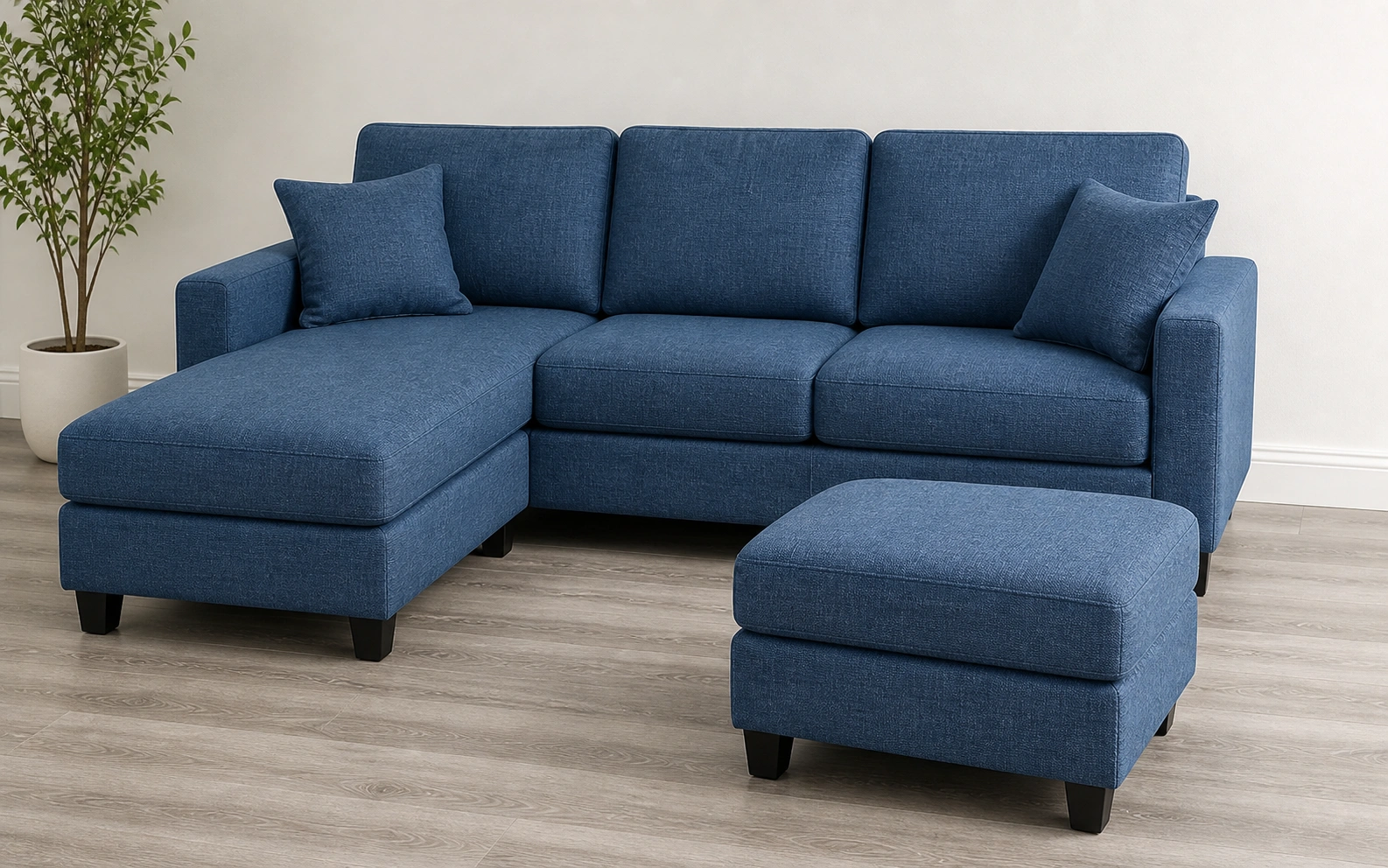
Reversible Chaise
Features a detached ottoman that can be positioned on either side. Best if you may rearrange your room or are unsure about the ideal orientation.
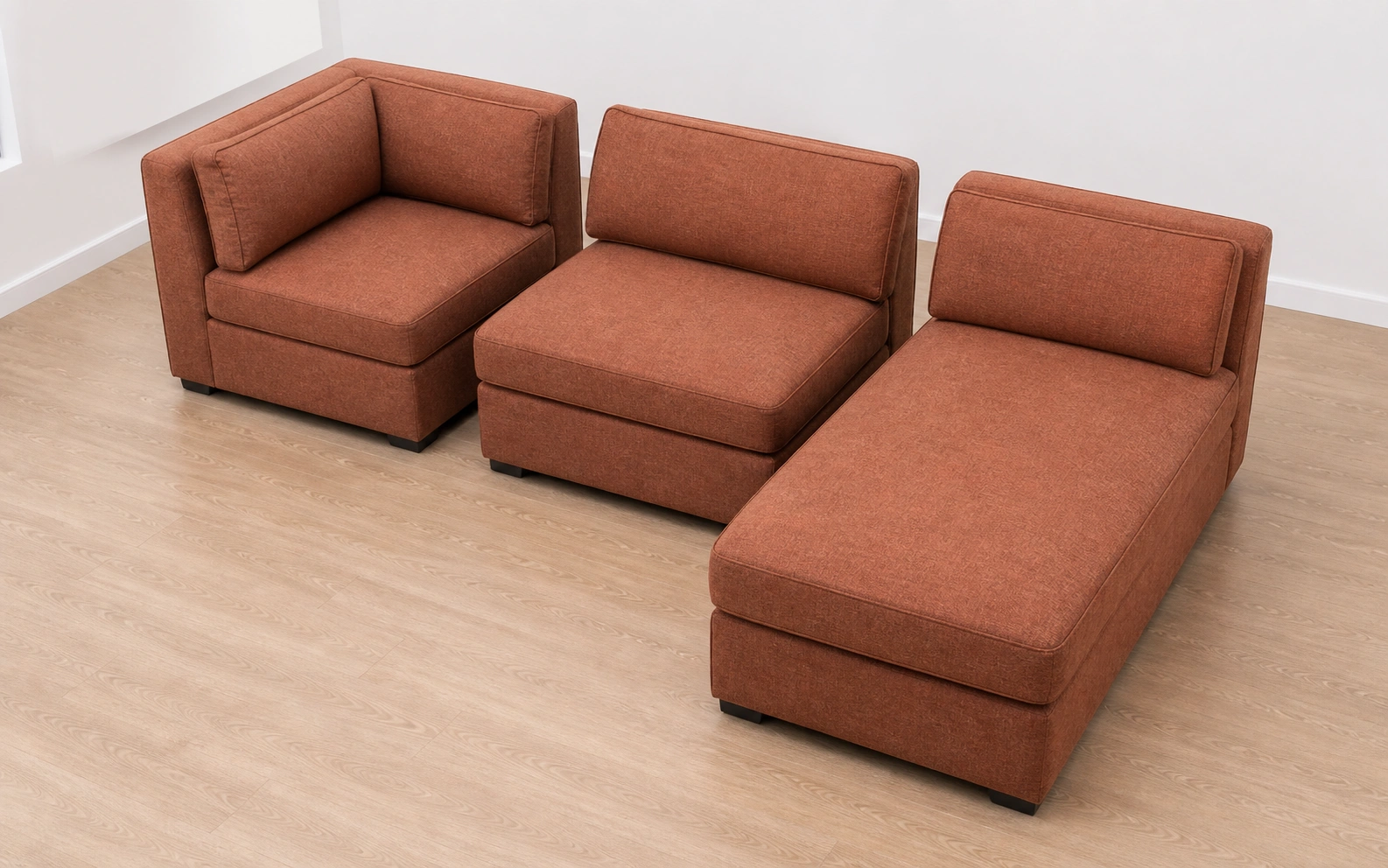
Modular Chaise
Individual pieces that can be rearranged into different configurations. Similar to a modular sofa but specifically designed with a chaise module included.
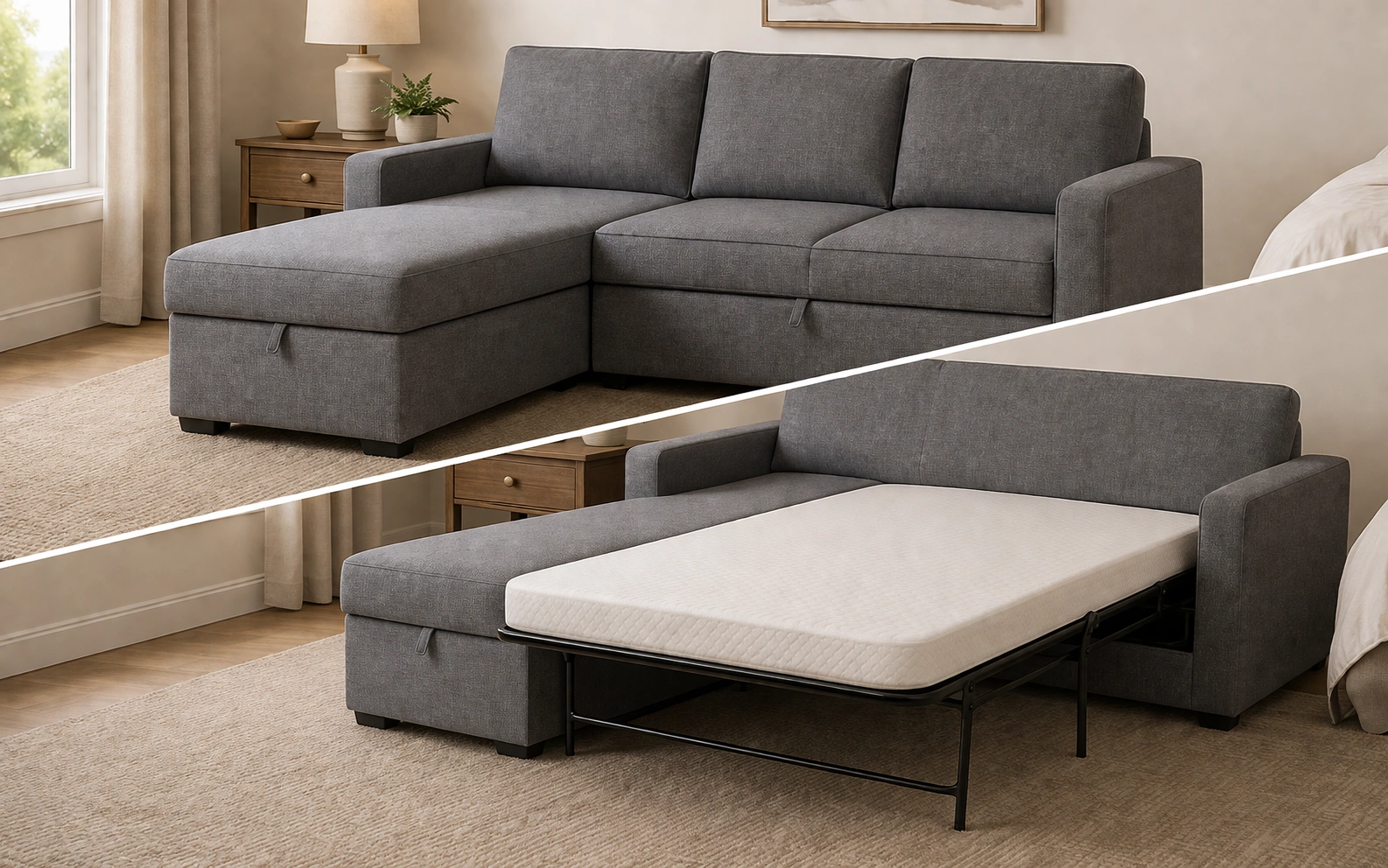
Chaise Sleeper Sofa
Combines the chaise extension with a fold-out bed mechanism. A dual-purpose option great for guest room sofas or small apartments.
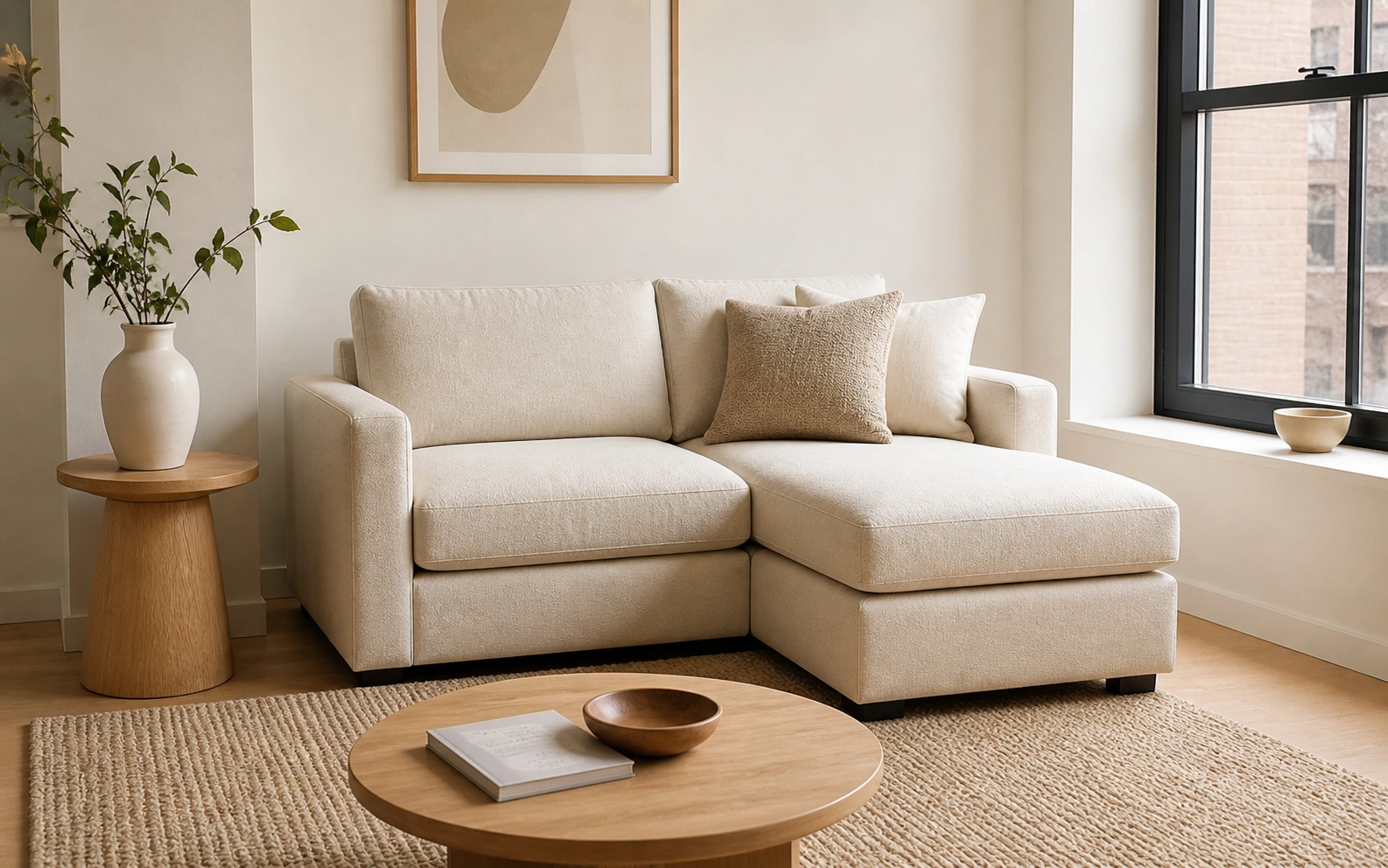
Compact Apartment Chaise
Scaled-down versions measuring under 80 inches wide. Designed specifically for sofas for small spaces without sacrificing the lounge feature.
Key Benefits of a Chaise Lounge Sofa
A chaise lounge sofa is more than just a stylish furniture piece. Here is why thousands of homeowners choose it over a standard sofa:
- Full leg support without an ottoman — The extended cushion lets you stretch out completely, eliminating the need to buy a separate ottoman and saving both money and floor space.
- Asymmetric visual interest — The L-shape profile breaks the monotony of rectangular furniture arrangements, adding architectural character to your room layout.
- Dual-zone seating — One side offers upright seating for socializing or working, while the chaise side is dedicated to relaxation, effectively serving two purposes in one piece.
- Better space utilization — Compared to pairing a sofa with a separate lounger, an integrated chaise uses less total floor area while providing equivalent functionality.
- Increased seating width — The chaise extension effectively adds an extra half-seat to full-seat of lounging space beyond what a standard sofa of the same width would offer.
- Room zoning capability — In open-concept homes, the L-shape naturally creates a boundary between living and dining areas without needing partitions or rugs.
- Higher resale and versatility — Chaise sofas tend to retain appeal in the secondhand market and work across multiple decor styles from contemporary to transitional.

The extended chaise section provides full leg support for reading, napping, or watching TV — no ottoman required.
Left-Facing vs Right-Facing vs Reversible: How to Choose
This is the single most common point of confusion when buying a chaise sofa. Getting the orientation wrong means the chaise extension blocks a walkway, jams against a wall, or faces away from your TV. Here is exactly how to determine the correct configuration:
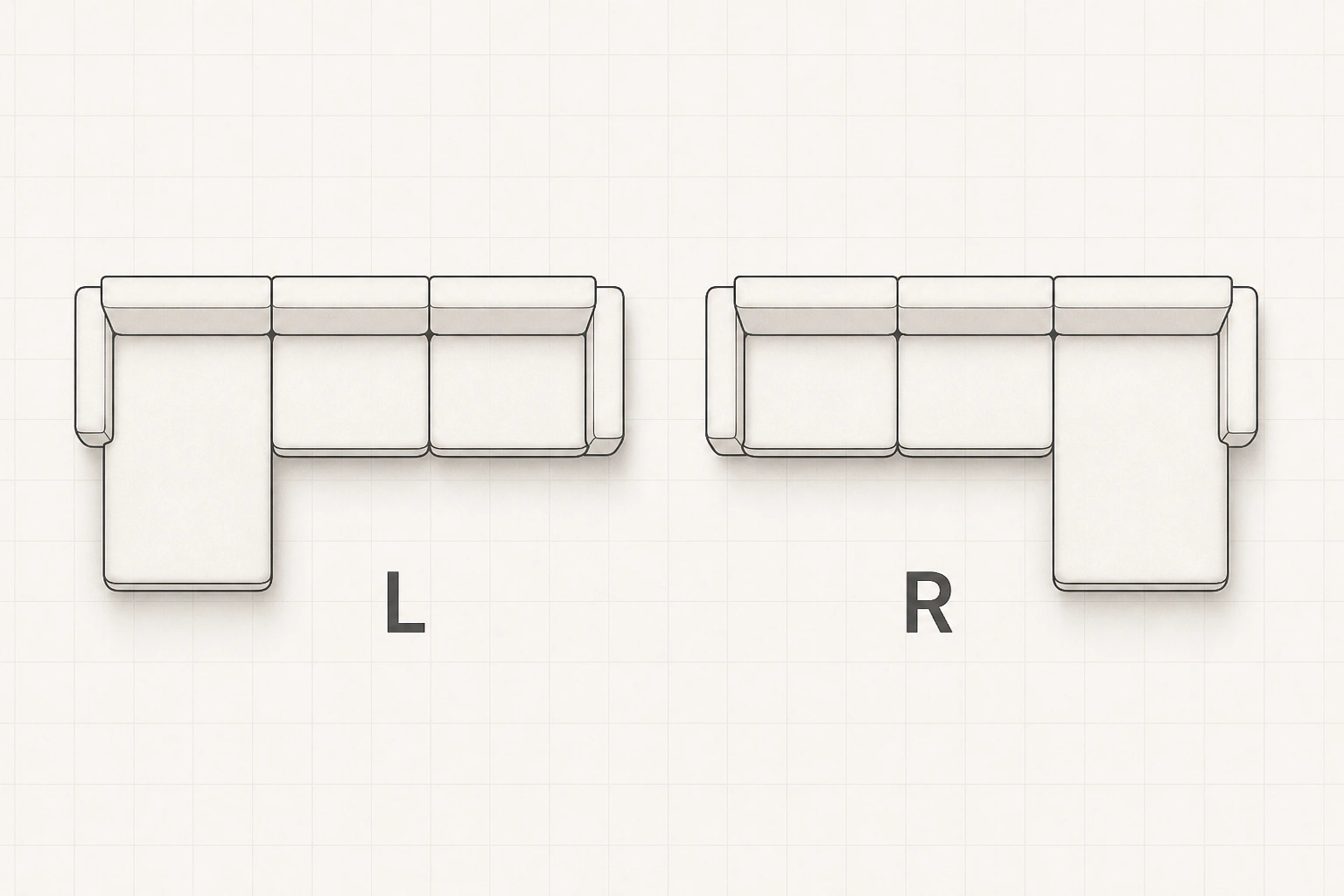
- Left-Facing Chaise Stand facing the sofa (as if you are about to sit down). If the chaise extension extends to your LEFT, it is a left-facing chaise.
- Right-Facing Chaise Stand facing the sofa. If the chaise extends to your RIGHT, it is a right-facing chaise. This is the viewer's perspective, not a bird's-eye view.
- Reversible Chaise The ottoman piece is not fixed. You can move it to either side. Best for renters, people who rearrange frequently, or those unsure about their room layout.
- How to Measure Place masking tape on the floor in the shape of your preferred chaise configuration. Walk around it for a full day to confirm traffic flow works before ordering. Check our sofa measurement guide for detailed steps.
Many online shoppers confuse orientation by looking at product images from above. The industry standard defines left/right based on facing the sofa front — the same perspective you have when sitting down. When in doubt, check the manufacturer's specification sheet which should explicitly state the arm position relative to the chaise extension.
Remember to account for the chaise extension when calculating total floor space. A sofa that is 85 inches wide with a 35-inch chaise extension occupies roughly 120 inches of wall-to-wall space along the longest dimension. Always leave at least 36 inches of clearance for walkways. Refer to our sofa size and room guide for precise calculations.
Essential Buying Factors to Consider
Beyond choosing the right type and orientation, several quality and practical factors determine whether your chaise sofa will be a long-term investment or a costly mistake. Evaluate each of these before making your purchase:
1 Room Size & Layout
Measure your room accurately including doorways and hallways for delivery. A chaise sofa needs more floor area than a standard sofa — typically 90 to 130 inches total depending on configuration. Use our living room layout guide to plan placement. For smaller rooms, consider compact options under 80 inches.
2 Frame Material
The frame bears extra stress from the extended chaise arm. Look for kiln-dried hardwood (oak, maple, birch) or furniture-grade plywood with a minimum 5-year warranty. Avoid softwoods like pine for the chaise joint area. Learn more about sofa frame materials.
3 Upholstery Material
Your fabric choice affects durability, feel, and maintenance. Leather vs fabric is the primary decision — leather is easier to clean but can feel cold, while performance fabrics resist stains and are ideal for families with kids. Check the Martindale rub test score for fabric durability.
4 Cushion Fill & Comfort
The chaise cushion should maintain its shape under extended leg weight. High-resilience foam (2.0+ density) wrapped in a down or fiber blend offers the best balance of support and softness. Read about cushion fill types to understand what suits your comfort preference between firm vs plush.
5 Seat Depth
Chaise sofas typically have deeper seats (22-26 inches) compared to standard sofas (18-22 inches). This affects how the sofa feels for both sitting and lounging. If you are shorter than 5'4", a very deep chaise may feel overwhelming. See our seat depth guide for personalized recommendations.
6 Suspension System
The chaise extension needs robust support to prevent sagging. Eight-way hand-tied springs are premium but costly. Sinuous no-sag springs with reinforced cross-wires are a reliable mid-range option. Understand sofa suspension types before buying.
7 Back Height
Consider whether a high-back vs low-back design suits your space. High backs provide better head support for TV watching but can make a room feel visually heavy. Low backs maintain an open, airy feel.
8 Budget & Value
Chaise sofas range from $400 for budget options to $5,000+ for premium designs. Set a realistic budget considering that chaise models typically cost 15-40% more than equivalent standard sofas. Our sofa budget guide and price breakdown help you understand where your money goes.
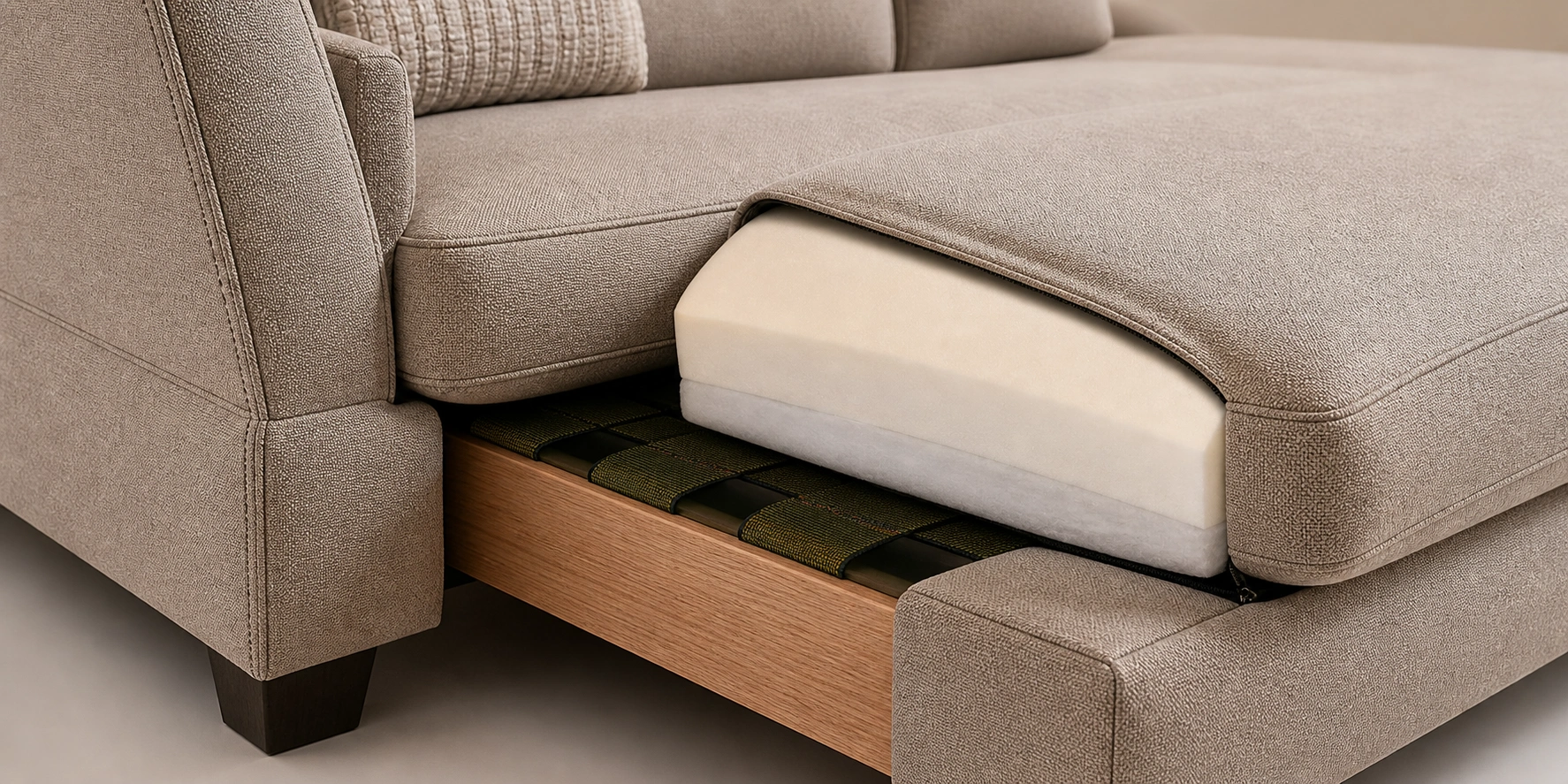
Quality indicators to inspect: solid frame joints, high-density cushion foam, reinforced suspension, and durable upholstery with a Martindale score above 30,000 rubs.
Chaise Sofa vs Regular Sofa vs Full Sectional
If you are weighing a chaise lounge sofa against other seating options, this side-by-side comparison highlights the key differences in functionality, space requirements, and value:
| Feature | Chaise Lounge Sofa | Regular Sofa | Full Sectional |
|---|---|---|---|
| Leg Support | Built-in full extension | None (requires ottoman) | Depends on configuration |
| Seating Capacity | 3-4 people | 2-3 people | 5-8+ people |
| Floor Space Needed | Medium (90-130") | Small (70-90") | Large (110-180+") |
| Room Zoning | Good — defines corners | Minimal | Excellent — creates zones |
| Flexibility | Moderate (fixed or reversible) | High — easy to rearrange | Low to moderate |
| Price Range | $400 - $5,000+ | $200 - $3,000+ | $600 - $8,000+ |
| Best For | Couples, small families, apartments | Dorms, offices, small spaces | Large families, open-plan homes |
| Delivery Complexity | Moderate | Easy | Complex — multiple pieces |
For a deeper analysis of trade-offs between these categories, read our detailed sectional vs traditional sofa comparison. If you need even more storage or functionality, also consider a sofa with storage or a sofa with USB ports for tech integration.
Best Rooms for a Chaise Lounge Sofa
Chaise sofas shine in specific room contexts. Here is where they work best — and where you might want to consider alternatives:
Living Room
The most natural fit. Place in a corner or float in the room to create a defined seating area. Works especially well in primary living rooms.
Family Room
Perfect for family rooms where relaxation is the priority. The chaise is ideal for movie nights, reading, or after-school downtime.
Home Office
An office sofa with chaise provides a spot for reading breaks or informal meetings. Choose a compact, professional-looking design.
Apartment
An apartment sofa with chaise maximizes comfort in limited square footage. Reversible configurations are ideal for flexible layouts.
Home Theater
For home theater setups, a chaise provides the reclining experience without mechanical recliner mechanisms.
Guest Room
A guest room chaise sleeper doubles as daytime seating and a bed for overnight visitors — a smart dual-purpose solution.
Basement / Rec Room
Basement sofas with chaise work well in casual, lower-ceiling spaces. Durable, stain-resistant fabrics are recommended here.
Napping Corner
For those who prioritize daily napping, a chaise sofa positioned near a window creates the perfect relaxation nook.
Common Mistakes to Avoid When Buying a Chaise Sofa
Learning from others' mistakes can save you hundreds of dollars and significant frustration. These are the most frequent errors shoppers make:
- Choosing the wrong orientation. This is the number one mistake. Always map out the chaise extension with tape on the floor before ordering. A right-facing chaise delivered when you need left-facing is an expensive error that often involves restocking fees.
- Underestimating total floor space. People measure the wall where the sofa back goes but forget the chaise extension protrudes into the room. Measure the full L-shaped footprint including the extension depth.
- Blocking walkways and doorways. The chaise extension can create a tripping hazard if it projects into a traffic path. Maintain at least 36 inches of clear walkway around the chaise end.
- Ignoring delivery logistics. Chaise sofas — especially fixed L-shaped models — may not fit through narrow hallways, stairwells, or elevators. Measure your delivery path and ask about modular delivery options.
- Sacrificing seat depth for style. Ultra-deep chaise cushions look luxurious but may be uncomfortable for shorter individuals who cannot reach the floor when sitting upright. Test before buying if possible.
- Choosing non-durable fabric for high-use areas. If you have kids or pets, opting for delicate linen or velvet without a protection treatment leads to premature wear. Consider fabric protection or choose performance materials.
- Not checking the chaise joint construction. The connection point where the chaise meets the main sofa body is the weakest structural area. Look for reinforced brackets, bolted connections, or integrated frame designs rather than simple clip-on attachments.
Visit a showroom to sit on different chaise configurations, even if you plan to buy online. Pay attention to how the cushion feels under your legs, whether the seat depth works for your height, and if the back support is adequate. Our guide on how to test sofa comfort provides a complete checklist for in-store evaluation.
Frequently Asked Questions
Left-facing means the chaise extension extends to your left when you face the sofa (as if about to sit down). Right-facing means it extends to your right. The orientation is always determined from the front-facing sitting perspective, never from a bird's-eye view. Some manufacturers use "LFAR" (Left-Facing Arm Right) or "RFAL" (Right-Facing Arm Left) terminology, which can be confusing — always verify with the seller using the sitting-perspective definition.
Yes, but you need to choose carefully. Look for compact chaise sofas specifically designed for small spaces, typically measuring under 80 inches in total width with a shorter chaise extension (under 30 inches). A reversible chaise is ideal because you can adjust the orientation as needed. Ensure at least 3 feet of clearance around the extended side and avoid blocking doorways. Compare options in our small space sofa guide.
A reversible chaise lounge has an ottoman or extension piece that is not permanently attached. You can detach it and move it to either side of the sofa, giving you the flexibility to change the configuration without purchasing a new sofa. This is especially useful for renters, people who frequently rearrange their rooms, or anyone who is unsure about which orientation works best in their space. The trade-off is that the connection may feel slightly less stable than a fixed-frame chaise.
A standard chaise lounge sofa needs roughly 90 to 130 inches of total floor space depending on the size and configuration. The main sofa body is typically 75-90 inches wide, and the chaise extension adds another 25-40 inches of depth on one side. You should leave at least 36 inches of walkway clearance around the extended side and 18-24 inches between the sofa and other furniture pieces. Use our measurement guide for step-by-step instructions.
Generally yes. Chaise lounge sofas cost 15-40% more than comparable standard sofas of similar quality. The premium comes from the additional seating area, more complex frame construction at the chaise junction, extra upholstery material, and the additional cushion. Budget models start around $400-600, mid-range options run $800-2,000, and premium designs can exceed $3,000-5,000. For budget-friendly alternatives, check our best budget sofas guide.
The best material depends on your household. Performance fabric (like Crypton or Revolution) is ideal for families with kids or pets because it resists stains, odors, and wear. Leather offers exceptional durability and easy wipe-down cleaning — full-grain and top-grain options age beautifully. Linen provides a breathable, natural aesthetic but is best for adults-only spaces. Velvet adds luxury but shows marks and requires more maintenance. For a detailed material comparison, read our leather vs fabric guide and most durable fabric article.


