
Washable Sofa: The Complete Guide
Removable, machine-washable covers that let you keep your sofa looking brand new — the ultimate low-maintenance solution for real life.
A washable sofa features upholstery that can be removed and cleaned in a standard washing machine — a feature that sounds simple but fundamentally changes the ownership experience. Instead of spot-treating stains, hiring professional cleaners, or living with gradual discoloration, you unzip the covers, wash them, and put them back. For households with children, pets, allergies, or anyone who values a consistently clean living space, this is not a luxury — it is the most practical sofa choice available. This guide covers every aspect of washable sofas so you can buy with confidence.
Table of Contents
1. What Is a Washable Sofa?
A washable sofa is any sofa whose upholstery covers can be fully or partially removed and laundered at home. This is different from a sofa that is simply "spot-cleanable" with a damp cloth — a true washable sofa has covers designed specifically to be unzipped, taken off, washed, dried, and refitted without damage or significant shrinkage.

The washable feature has existed for decades in the form of slipcovered sofas — think IKEA's Ektorp line or traditional European furniture with fitted linen covers. However, the modern washable sofa market has expanded dramatically. Today you can find washable versions of nearly every sofa type, including sectionals, Chesterfields, recliners, and sleeper sofas — in styles that look nothing like the loose, shabby-chic slipcovers of the past.
The core distinction lies in fit. Modern washable covers are precision-tailored to the sofa frame with hidden zippers and structured panels that maintain a snug, upholstered appearance — unlike traditional slipcovers that drape loosely. When properly fitted, most people cannot tell a washable sofa from a fixed-upholstery sofa by looking at it.
2. How Washable Covers Work
Understanding the mechanical design behind washable covers helps you evaluate quality when shopping and use them correctly once you own the sofa.
Zipper Access
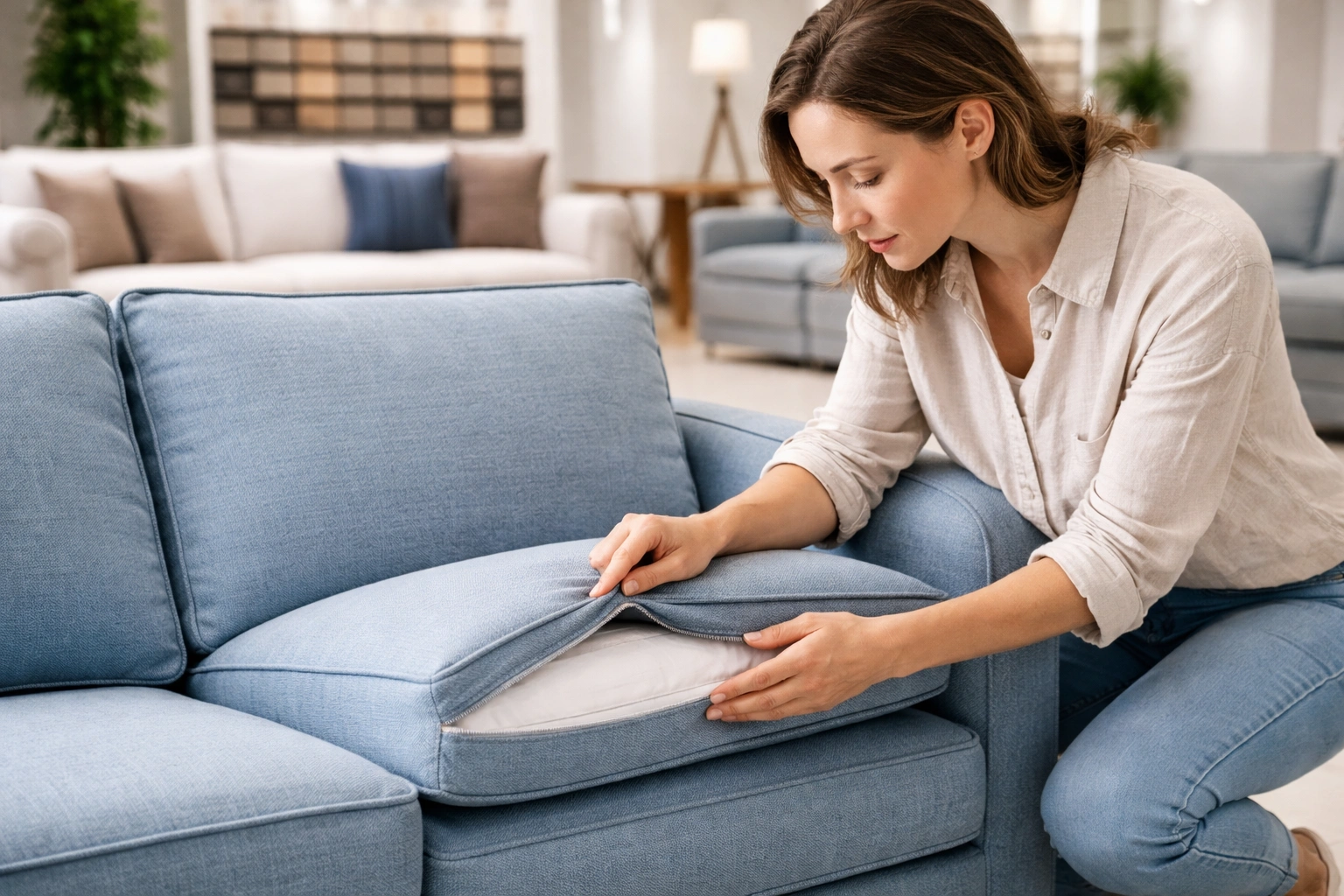
Hidden zippers (typically on the back or bottom of cushion covers and along the sofa base) allow you to remove the fabric without tools. Quality sofas use YKK or similar durable zippers with protective fabric flaps to prevent scratching the frame.
Structured Fit
Unlike loose slipcovers, modern washable covers include internal stitching, elastic panels, or Velcro tabs that keep the fabric taut against the cushions and frame. This eliminates the rumpled, shifting look of traditional covers.
Pre-Shrunk Fabric
The fabric is pre-washed and pre-shrunk during manufacturing so it maintains its exact fit after repeated laundering. This is critical — non-pre-shrunk fabric would shrink 3–5% after its first wash, making re-fitting impossible.
Reassembly
After washing and drying, you zip the covers back onto the cushions and frame. Well-designed systems make this a 10–15 minute process for an entire sofa. Some covers include alignment markers or numbered labels for correct placement.

3. Types of Washable Sofas
Not all washable sofas work the same way. The level of washability varies significantly, and understanding these differences is essential before buying.
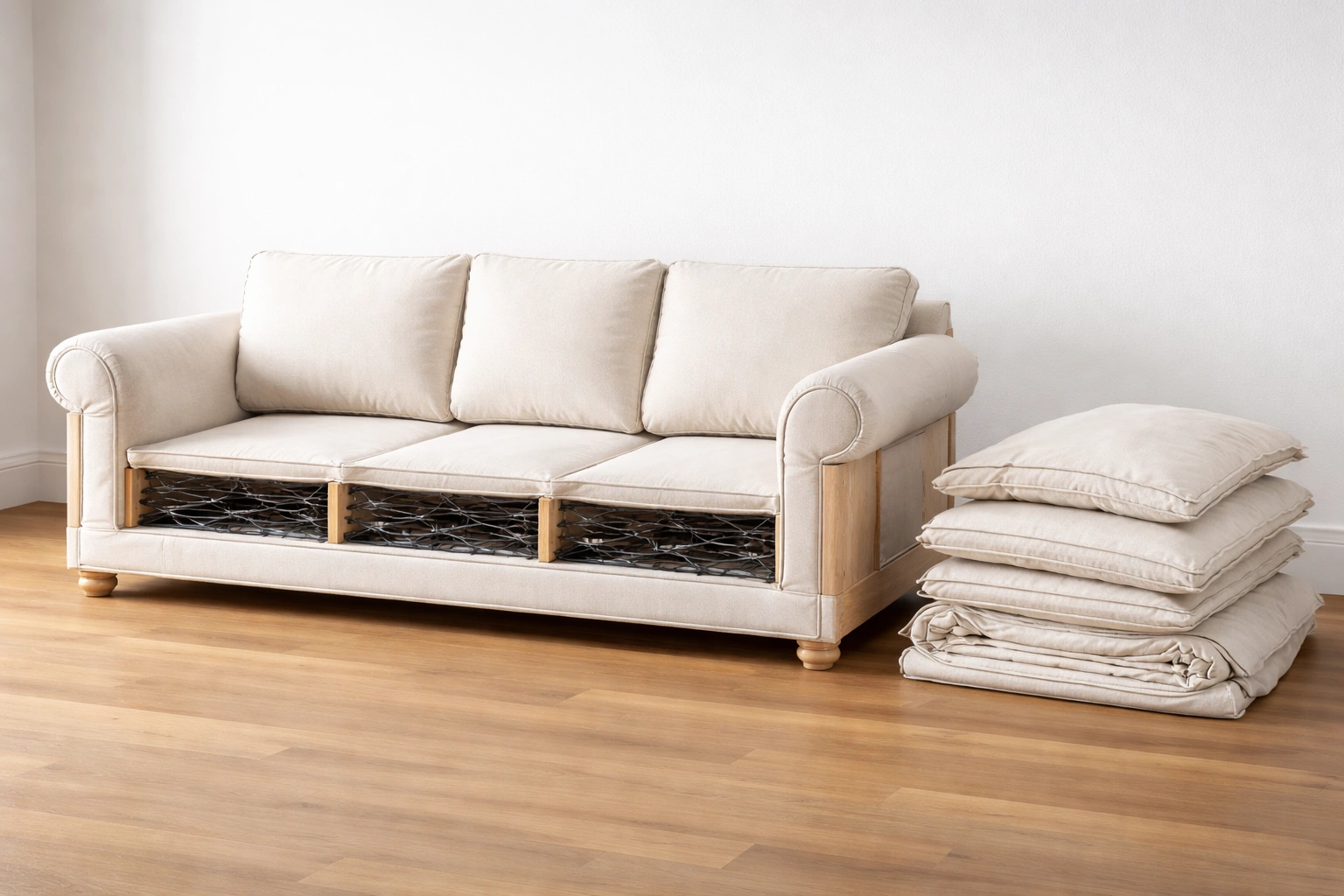
Full Removable Covers
Every upholstered surface — seat cushions, back cushions, arms, and base — can be removed and washed. Maximum flexibility but requires the most reassembly effort. Common on linen and cotton sofas.
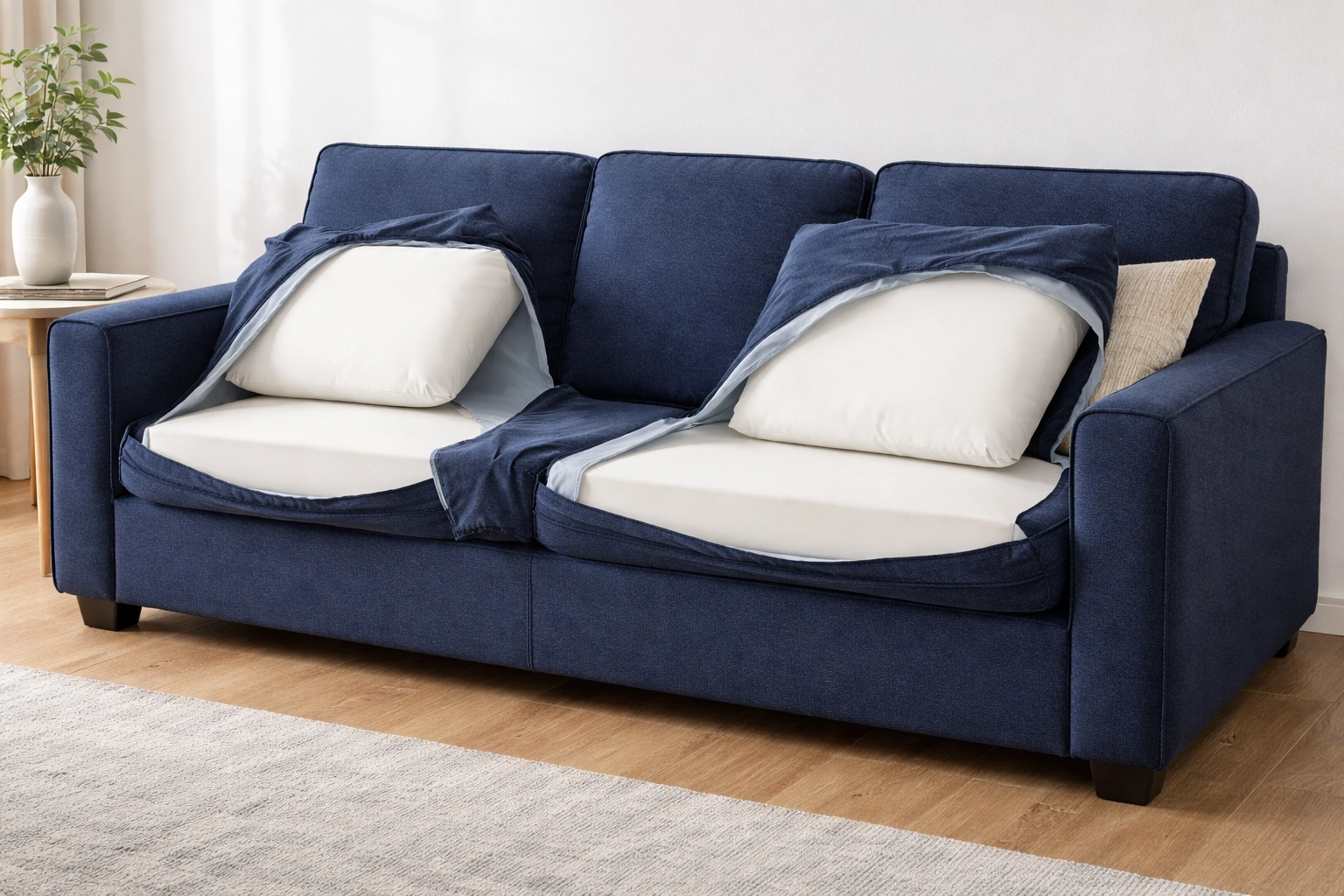
Cushion Covers Only
Only the seat and back cushion covers are removable. The frame upholstery stays fixed. This is the most common type and offers a practical middle ground — you wash the high-contact areas while keeping the frame structure intact.
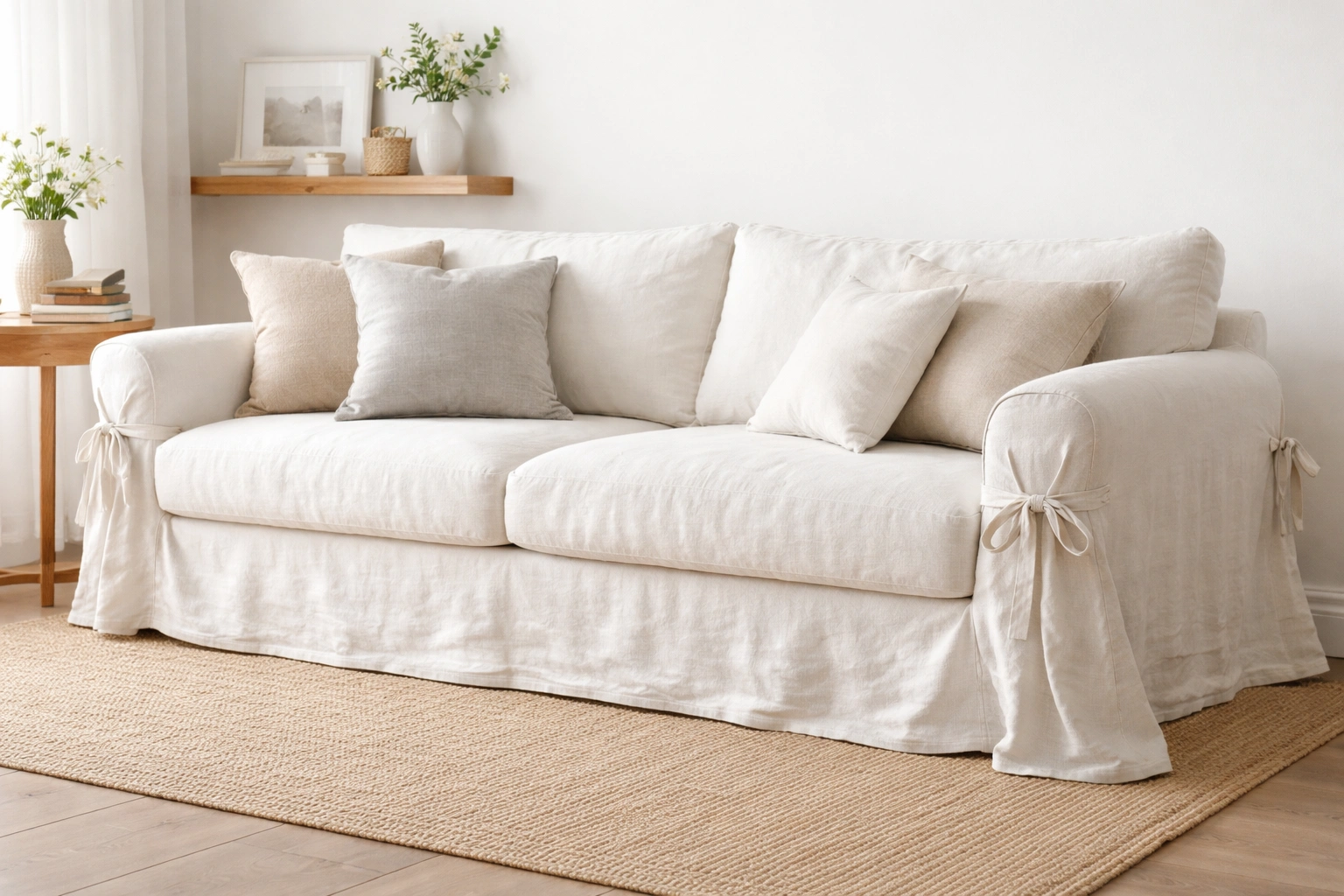
Slipcovered Sofa
The original washable design — a loose cover draped over the entire sofa and secured with ties or Velcro. More casual aesthetic with a relaxed European feel. Easier to put on but more prone to shifting. Learn about slipcovered sofas.
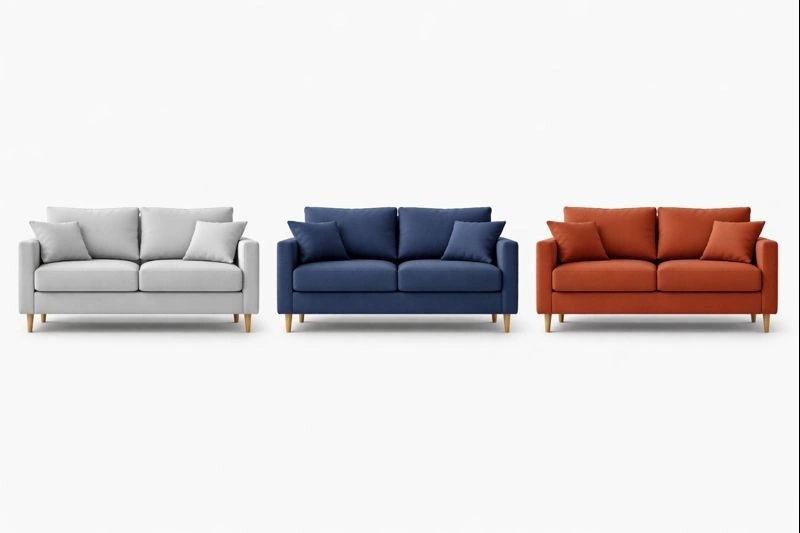
Replacement Cover Systems
Some brands sell the sofa frame separately from covers, allowing you to buy multiple cover sets and swap them seasonally or when you want a new look. Excellent for refreshing your decor without buying a new sofa. See replacement cushions options.
Important Distinction: A "washable sofa" is not the same as a sofa with "washable fabric." Many manufacturers treat fabric with stain-resistant coatings and call it "washable" — but you can only spot-clean it, not remove and machine-wash it. Always confirm the covers are fully removable before purchasing. The product description should explicitly state "removable and machine-washable covers."
4. Best Fabrics for Washable Sofas
The fabric determines everything: how well it cleans, how it feels after 50 washes, whether it wrinkles, and how durable it remains. Not every fabric can survive regular machine washing — the wrong choice leads to shrinking, fading, pilling, or fabric breakdown.
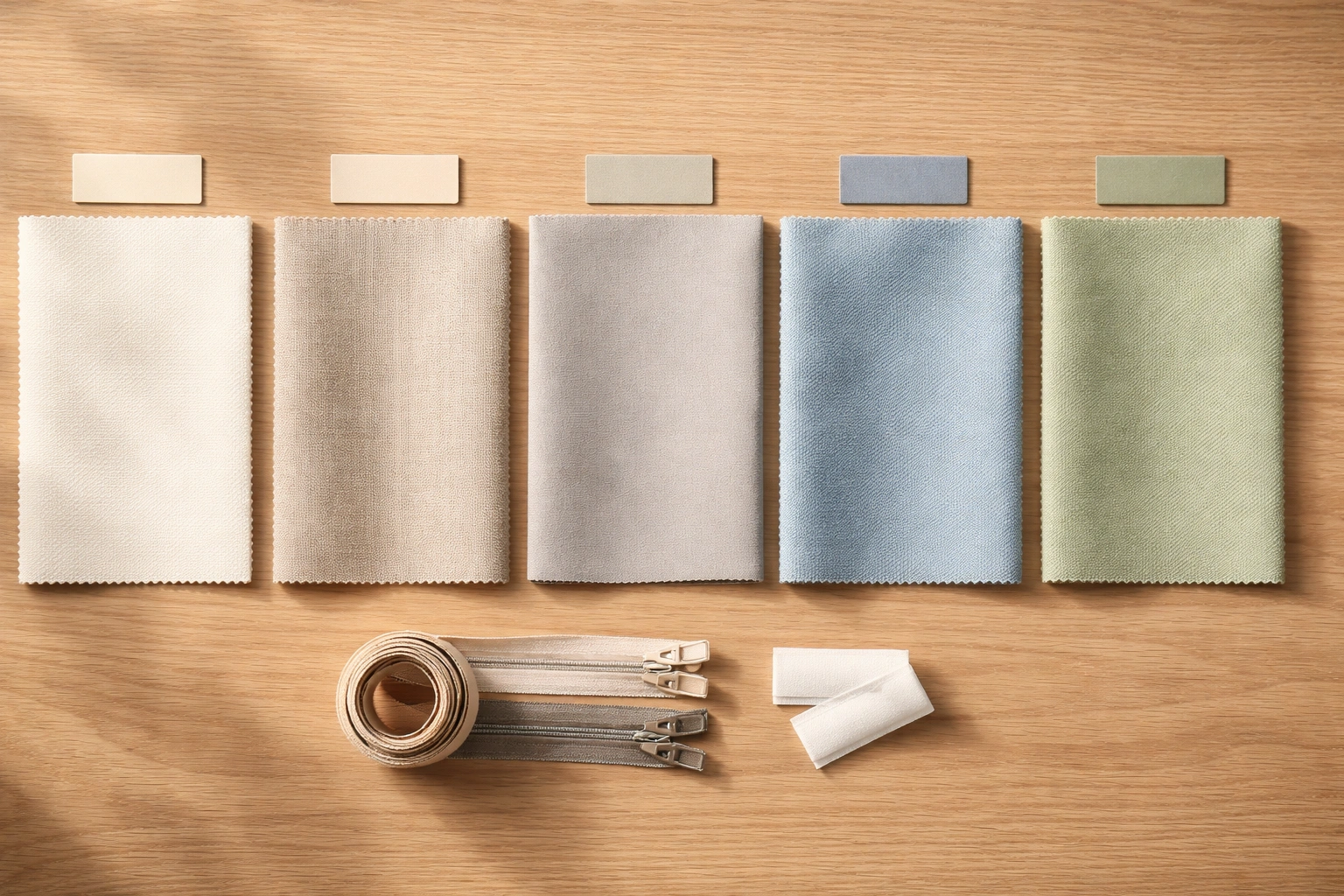
| Fabric | Washability | Durability | Feel After Wash | Best For |
|---|---|---|---|---|
| Cotton | Excellent — machine wash cold | Moderate (8,000–15,000 rubs) | May wrinkle; ironing needed | Budget buyers, casual spaces |
| Linen | Good — gentle cycle recommended | Moderate (12,000–20,000 rubs) | Natural wrinkle; softens with washes | Coastal, Scandinavian, relaxed interiors |
| Polyester Blend | Excellent — very forgiving | High (30,000–50,000 rubs) | Holds shape well; minimal wrinkling | Families, everyday use |
| Microfiber | Good — cold wash only | High (40,000+ rubs) | May feel stiff after drying; softens with use | Budget, pet owners |
| Performance Fabric | Good — cold gentle cycle | Very High (50,000+ rubs) | Excellent — maintains texture | High-traffic, families, premium choice |
| Velvet | Poor — most velvet cannot be machine-washed | Variable | N/A — spot clean only | Avoid if washability is your priority |
| Leather | Not machine-washable | Very High | N/A — wipe clean only | Incompatible with washable concept |
Fabric Recommendation: For most households, a polyester-cotton blend (65/35 or 60/40 ratio) offers the best balance of washability, durability, comfort, and wrinkle resistance. For families with kids and pets, opt for performance fabric washable covers — they cost 15–25% more upfront but last significantly longer and resist stains even before washing. Check the Martindale abrasion rating — aim for 30,000+ double rubs for any washable cover that will see frequent laundering.
5. Who Should Buy a Washable Sofa?
Washable sofas are not for everyone — but for certain lifestyles, they solve problems that no amount of stain protector spray can address. Here is a straightforward assessment of who benefits most.
Pet Owners
Mud, fur, drool, accidents — pets are the #1 reason people switch to washable sofas. Even with pet-proof covers, washability adds an irreplaceable deep-cleaning option. See best sofas for pet owners.
Families with Kids
Spills, food stains, crayons, markers — kids are fabric's worst enemy. A washable sofa means these are temporary problems, not permanent damage. Ideal for family rooms and basement rec rooms.
Allergy Sufferers
Washing at 140°F+ kills dust mites and removes allergens that accumulate in fixed upholstery. For households with allergies or asthma, washable covers provide a level of hygiene that fixed upholstery cannot match.
Renters & Apartment Dwellers
Light-colored sofas in rental apartments show every mark. Washable covers let you keep a white or cream sofa looking pristine for years — and you can swap to dark covers for a new look without buying new furniture.
Sunny Rooms
UV exposure causes fixed upholstery to fade unevenly. Washable covers fade more evenly and can be replaced affordably when they eventually degrade — much cheaper than reupholstering a fixed sofa. See UV protection tips.
Style Changers
Many washable sofa brands sell additional cover sets in different colors. Swap from grey to navy to green seasonally for a fraction of a new sofa's cost. See neutral tones and bold color strategies.
6. Pros & Cons
Advantages
- Complete stain removal — machine washing handles what spot cleaning cannot
- Hygiene control — eliminates dust mites, bacteria, and allergens
- Cost savings — no professional cleaning bills ($100–300 per visit)
- Color refresh — swap covers instead of replacing the sofa
- Peace of mind — stops anxiety about spills, pets, and kids
- Longer sofa life — fresh covers protect the internal foam and frame from body oils, sweat, and debris
- Even wear — rotating and washing covers prevents uneven fading
Disadvantages
- Fit maintenance — covers may loosen over time and need periodic re-tucking
- Shrinkage risk — even pre-shrunk fabrics may shrink 1-2% over time
- Limited fabric options — leather, velvet, and most specialty fabrics are excluded
- Wrinkling — cotton and linen covers wrinkle after washing and may need ironing
- Color change — frequent washing may cause gradual fading
- Additional cost — washable versions typically cost 10–30% more than the same model with fixed upholstery
- Reassembly effort — removing and refitting all covers takes 15–30 minutes
Shrinkage Reality Check: Quality pre-shrunk fabrics typically shrink less than 1–2% after washing. Budget covers may shrink 3–5%, making them difficult to refit. The difference is in manufacturing — reputable brands pre-wash fabric at high temperatures multiple times during production. This is one area where price vs. quality directly correlates. A $500 washable sofa with thin covers that shrink will cost you more in replacements than a $900 model with premium pre-shrunk fabric.
7. Washable vs. Non-Washable Sofas
If you are weighing whether the washable feature is worth it for your situation, this comparison addresses the practical differences that matter in daily ownership.
| Factor | Washable Sofa | Non-Washable (Fixed Upholstery) |
|---|---|---|
| Stain Removal | Machine wash — near-complete removal | Spot clean only — permanent risk |
| Annual Maintenance Cost | $0–30 (detergent, water, time) | $150–400 (professional cleaning) |
| Allergen Control | Full elimination possible | Limited — dust mites embed in fabric |
| Fabric Options | Cotton, linen, polyester, microfiber, performance | All fabrics including leather, velvet, specialty |
| Fit & Appearance | May loosen slightly over years | Permanently tight, tailored look |
| Upfront Cost | $700–$2,500 | $500–$2,000 |
| Long-Term Cost | Lower — no professional cleaning or reupholstering | Higher — cleaning and eventual reupholstering ($800–$2,500) |
| Best For | Families, pets, allergies, rentals | Formal rooms, design-first spaces, low-traffic |
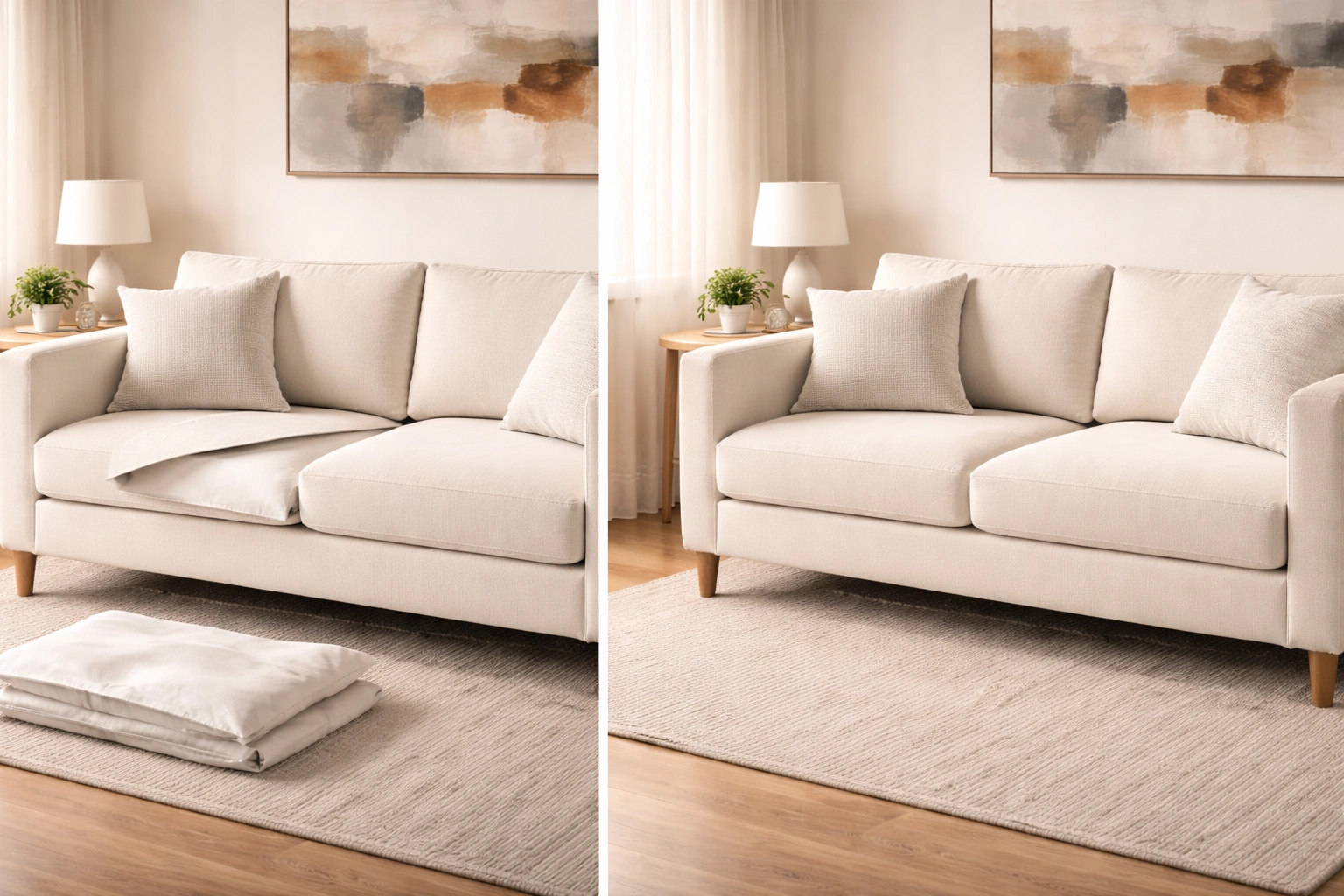
8. How to Wash Sofa Covers Correctly
Proper washing technique is essential. Even the best washable fabric will degrade quickly if you use the wrong temperature, cycle, or detergent. Follow these guidelines to maximize cover lifespan.
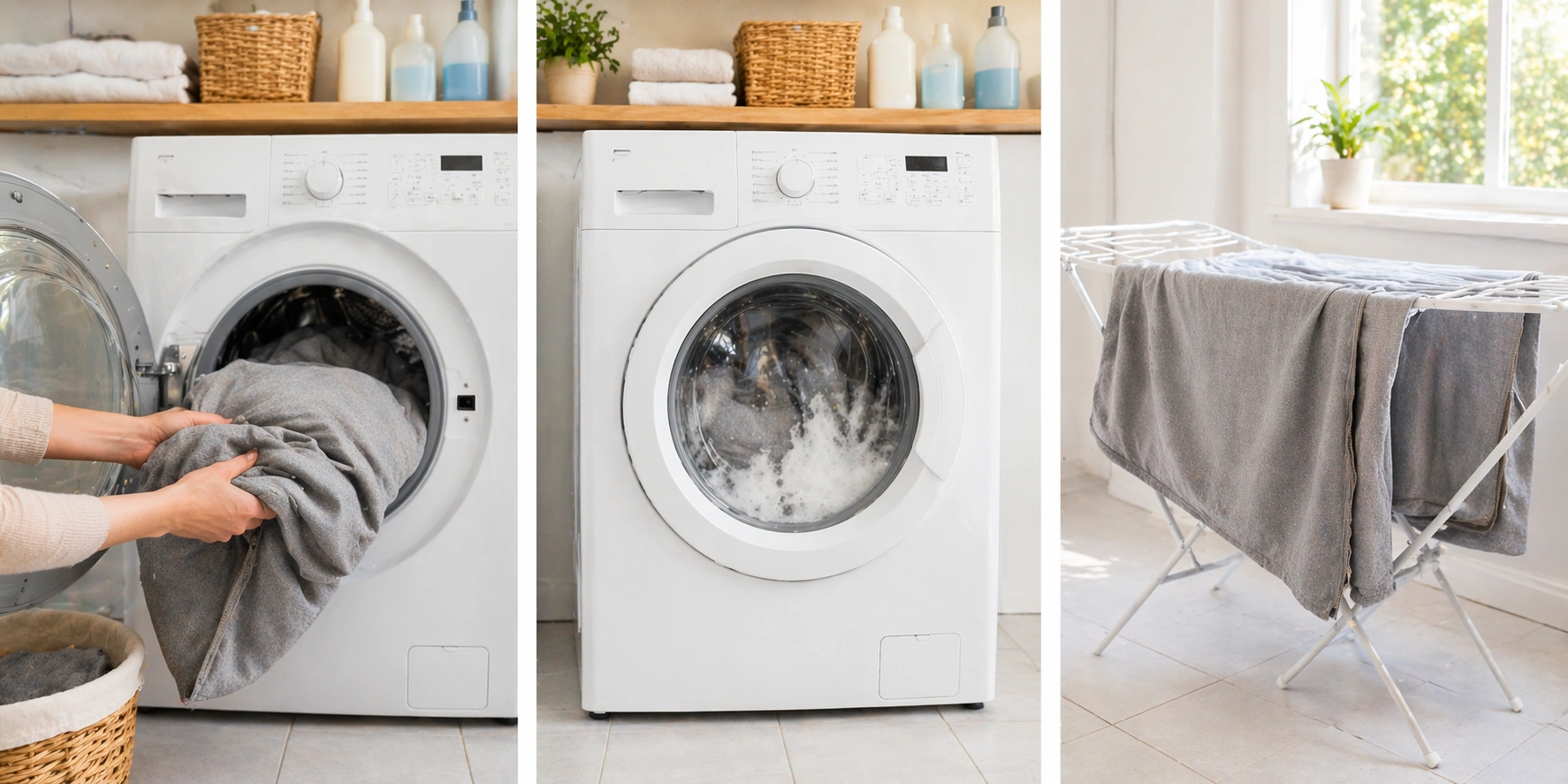
General Washing Rules
- Always check the care label first — manufacturer instructions override general advice. Every fabric blend may have specific requirements.
- Cold water only — hot water is the #1 cause of shrinkage. Use cold or lukewarm (max 85°F/30°C).
- Gentle or delicate cycle — never use heavy-duty or normal cycle. The agitation is too harsh for most upholstery fabrics.
- Mild liquid detergent — avoid bleach, fabric softener (it breaks down fibers), and enzyme-based detergents. Use a gentle, dye-free liquid detergent.
- Wash covers alone — do not mix with towels or clothing that produce lint. Lint transfer is difficult to remove from upholstery fabric.
- Zip all zippers closed — open zippers can snag on the drum or other covers during washing.
- Use a laundry bag — a large mesh laundry bag provides an extra layer of protection against snagging and abrasion.
Drying Instructions
- Air dry is safest — lay covers flat or hang them over a drying rack. Avoid direct sunlight which causes fading.
- Tumble dry low heat only — if the care label allows it. Remove while slightly damp to prevent over-drying and shrinkage.
- Do not overdry — overdried fabric becomes brittle and may crack at stress points. Aim for 90–95% dry, then air-dry the remainder.
- Refit while slightly damp — covers are easier to position when slightly damp. They will tighten as they finish drying on the frame.
Frequency
Wash cushion covers every 2–4 weeks for active households with kids or pets. For lower-traffic use, every 1–2 months is sufficient. Base covers (seat and back) need washing most often; arm and frame covers rarely need it unless visibly soiled. For routine maintenance between washes, vacuum weekly and treat stains immediately.
Common Mistakes That Destroy Covers: (1) Using hot water — causes irreversible shrinkage. (2) Using fabric softener — coats fibers, reduces absorbency, and builds up over time. (3) Overloading the machine — prevents thorough cleaning and causes excessive wrinkling. (4) Bleach — weakens fibers and can cause discoloration. (5) Ironing at high heat — can scorch polyester blends. If ironing is needed, use low heat and a pressing cloth between iron and fabric.
9. Durability & Longevity
A common concern is whether repeated washing degrades the fabric faster than normal wear would degrade fixed upholstery. The answer depends entirely on fabric quality and washing technique.
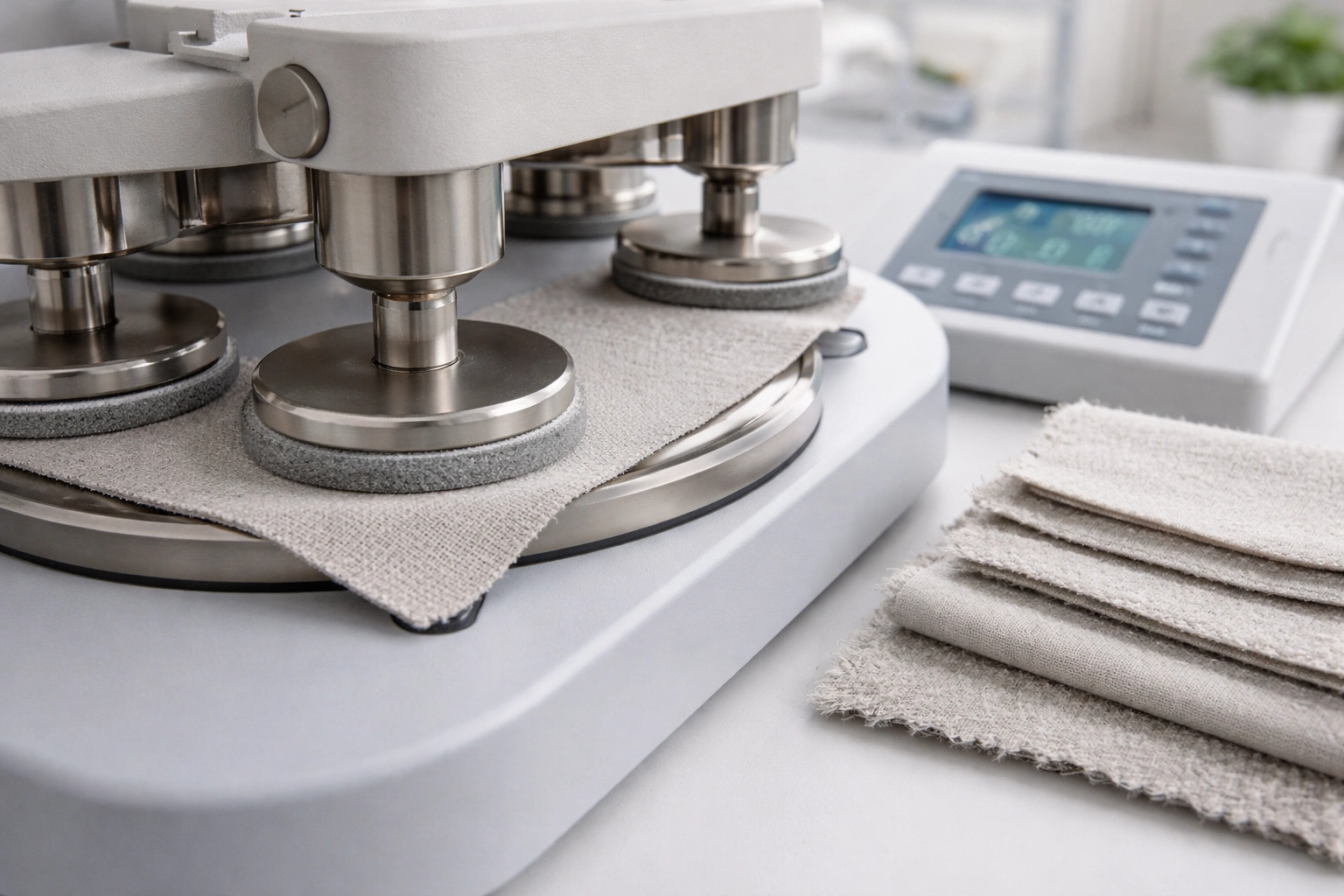
Quality washable fabrics with a Martindale rating of 30,000+ double rubs can typically withstand 100–200 wash cycles before showing significant wear — that is 2–4 years of biweekly washing. By comparison, fixed upholstery exposed to daily use, sunlight, and body oils typically shows equivalent wear in 5–8 years. So the washable fabric may actually show wear faster per unit time, but you have the offsetting advantage of always looking clean instead of gradually deteriorating with visible stains.
The structural components — frame, cushion foam, and springs — last the same regardless of whether the covers are washable or fixed. In fact, washable covers often extend internal component life by keeping body oils, sweat, and debris away from the foam and frame. If foam does eventually degrade from compression, you can replace covers and cushion inserts without replacing the entire sofa.
Lifespan Expectation: A quality washable sofa with a hardwood frame and high-density foam cushions will last 7–12 years structurally. You will likely go through 2–4 sets of replacement covers in that time at $150–$400 per set. Total cost of ownership over 10 years is often lower than a non-washable sofa that requires professional cleaning ($1,500–$3,000 over a decade) or reupholstering ($800–$2,500 once). For detailed budgeting, see the sofa budget guide and price breakdown.
10. Buying Tips & Checklist
The washable sofa market has grown rapidly, and quality varies enormously. Cheap washable sofas with poorly made covers are a frustrating ownership experience. Here is how to identify the good ones.
Washable Sofa Buying Checklist
- Confirm truly removable covers — read the product description carefully. "Stain-resistant" or "easy clean" does NOT mean machine-washable. Look for "removable and machine-washable."
- Check fabric weight (GSM) — quality washable covers are 250–350 GSM. Below 200 GSM, the fabric will feel thin and translucent after washing. Above 400 GSM may be too stiff and difficult to wash effectively.
- Examine zipper quality — test zippers in person if possible. They should operate smoothly, have protective fabric flaps, and feel substantial. Plastic zippers fail faster than metal.
- Assess fit structure — check for elastic panels, Velcro tabs, or internal ties that keep the cover taut. Loose covers with no retention system will shift constantly.
- Verify pre-shrinking — the manufacturer should confirm the fabric has been pre-washed and pre-shrunk. If they cannot provide this information, assume it has not been.
- Check Martindale rating — minimum 20,000 for light use, 30,000+ for families. Lower ratings will degrade quickly with frequent washing.
- Evaluate frame quality — the frame is the same whether covers are washable or not. Kiln-dried hardwood is non-negotiable for longevity. Softwood frames will not outlast multiple wash cycles.
- Ask about replacement covers — can you buy additional cover sets? What do they cost? Are they still available 3–5 years from now? Brand-specific covers are often difficult to source later.
- Review the care label — it should specify water temperature, cycle type, detergent type, and drying method. Vague labels like "machine washable" without specifics are a red flag.
- Test the feel — washable covers should feel nearly identical to fixed upholstery. If they feel thin, papery, or plasticky, the fabric quality is inadequate. See how to test sofa comfort.
- Compare total cost of ownership — factor in the price of 1–2 replacement cover sets ($150–$400) over the sofa's lifetime. A $1,200 washable sofa needing $300 in replacement covers is still cheaper than a $900 fixed sofa needing $2,000 in professional cleaning over its life.
Washable Sofa Budget Range: Quality washable sofas start at $600–$800 for a loveseat or small 3-seater. Mid-range options with performance fabric are $1,200–$2,000. Premium washable sectionals and recliners range from $2,000–$4,000+. If a washable version of a sofa costs more than 30% above the non-washable version, the premium may not be justified unless you have specific needs like pets or allergies. See budget planning and realistic cost expectations.
11. Frequently Asked Questions
Yes, when done correctly with quality fabric. The key is pre-shrunk material, cold water, gentle cycle, and proper drying. Poor results almost always come from using hot water, harsh detergents, or cheap fabric that was never pre-shrunk. A quality washable sofa from a reputable brand will maintain its fit and appearance through dozens of wash cycles. The fabric cleaning guide covers additional techniques.
Quality pre-shrunk fabric with a 30,000+ Martindale rating typically lasts 100–200 washes before showing significant wear. At biweekly washing, that is approximately 2–4 years of regular use. Most owners replace covers every 2–3 years when they notice fading or thinning — replacement covers cost $150–$400 depending on sofa size, which is far cheaper than reupholstering or replacing the entire sofa.
Quality pre-shrunk covers shrink less than 1–2% — barely noticeable and compensated for in the design. Budget or non-pre-shrunk covers can shrink 3–5%, which makes refitting difficult or impossible. This is why buying from reputable brands matters. If you accidentally shrink a cover, some people have success stretching it back by washing it again (no heat) and refitting it while still damp, but results vary.
Sometimes. Universal sofa covers are sold in standard sizes (2-seater, 3-seater, etc.) that may fit your existing sofa reasonably well. However, they will not fit as precisely as the original covers designed for that specific model. For the best fit, buy a sofa that comes with washable covers from the manufacturer. Replacement cushion covers are also available for many popular sofa models.
Not inherently. The comfort comes from the cushion fill (foam, feathers, down, or fiber), not the cover fabric. A washable sofa with high-density foam provides the same support as a non-washable version with the same fill. The cover is purely cosmetic and protective. The only comfort difference is that very thin or stiff cover fabric may feel slightly less soft to the touch than plush fixed upholstery — but this is rarely noticeable with quality materials.
Only if the care label explicitly allows it, and only on low heat or air-fluff setting. Air drying is always safer and extends fabric life. If using a dryer, remove covers while they are still slightly damp and lay them flat to finish drying naturally. Over-drying is the second most common cause of cover failure after hot water.
Yes. Several brands now offer washable sectional sofas where every cushion cover is removable. However, the larger the sofa, the more pieces you need to wash and reassemble — a full sectional can have 6–10 cushion covers plus base covers. Consider whether the reassembly effort is acceptable for your lifestyle. Modular sectionals with washable covers offer the best of both worlds — large seating with manageable piece-by-piece washing.


