Best Sofas for Back Pain: Your Complete Guide to Pain-Free Seating
Sitting on the wrong sofa can worsen chronic back pain, sciatica, and muscle tension. Learn exactly what makes a sofa back-friendly and how to choose one that actually supports your spine.
See Recommended SofasPhanMarket Philosophy: We believe that well-informed buyers make better choices. If you suffer from back pain, choosing the right sofa is not a luxury — it is a necessity. This guide helps you understand the science behind back-friendly seating before you invest your money.
Table of Contents
- Why Your Sofa Directly Affects Your Back Health
- Key Features of a Back-Friendly Sofa
- Seat Depth: The Most Overlooked Factor
- Cushion Firmness and Support Explained
- Lumbar Support: What You Need to Know
- Seat Height and Leg Position
- Best Sofa Types for Back Pain Sufferers
- Materials That Make a Difference
- Common Mistakes When Buying a Sofa for Back Pain
- How to Test a Sofa for Back Support In-Store
- Supportive Accessories That Help
- Frequently Asked Questions
Why Your Sofa Directly Affects Your Back Health
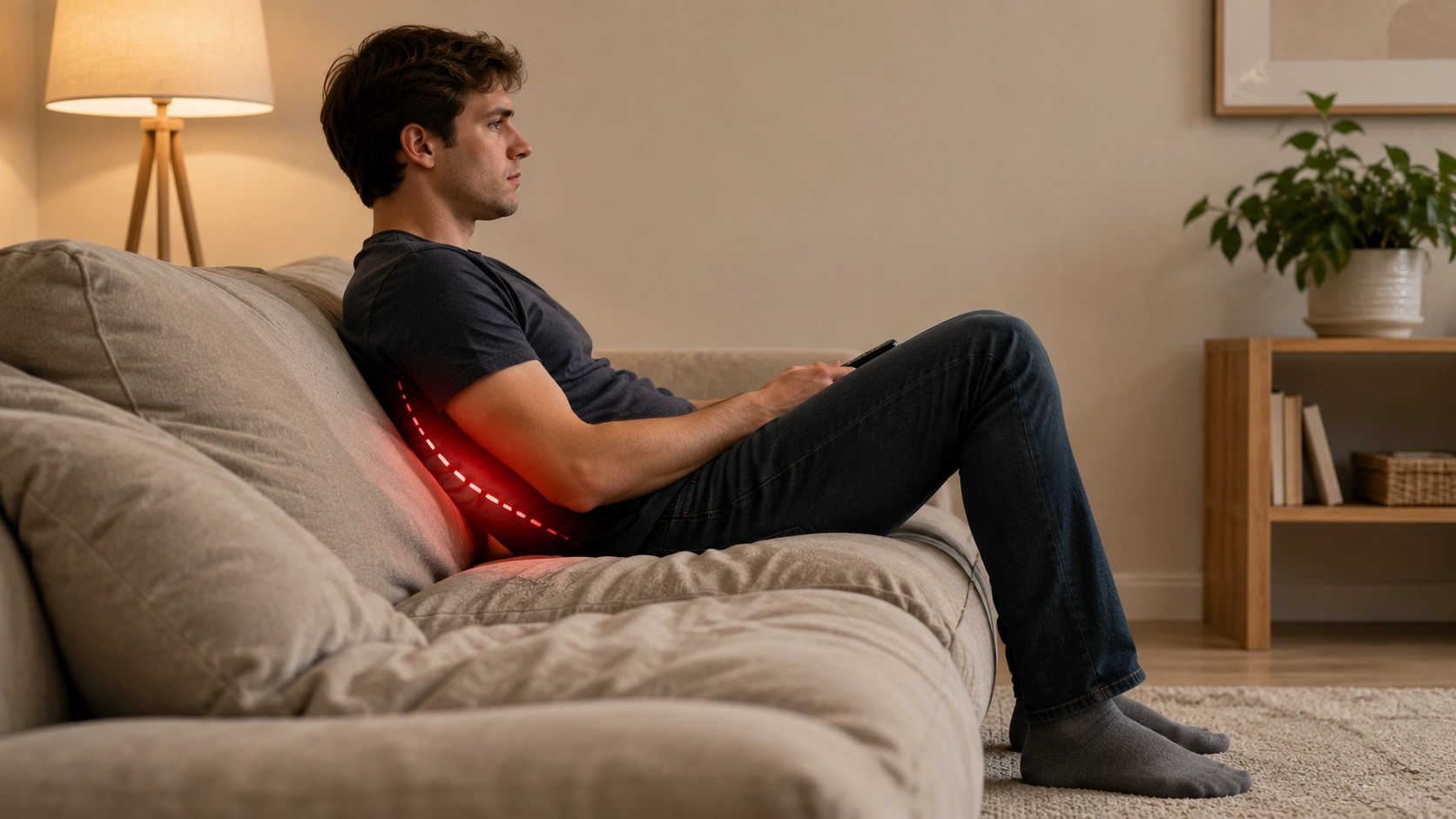
Most people spend an average of 3 to 4 hours per day sitting on their sofa. For those who work remotely, watch television, or simply relax in the evening, that number can easily double. If your sofa does not provide proper spinal support during all those hours, the cumulative effect on your back can be significant.
A poorly designed sofa forces your spine into unnatural positions. When you sink too deeply into soft cushions, your lower back loses contact with the backrest, creating a gap between your lumbar curve and the sofa. This forces your muscles to work overtime to maintain balance, leading to fatigue, stiffness, and pain. Over weeks and months, this pattern contributes to chronic conditions including muscle strain, disc compression, and sciatica flare-ups.
The relationship between seating and back health is well-documented in ergonomics research. A study published in the journal Ergonomics found that prolonged sitting on surfaces without adequate lumbar support increases intradiscal pressure in the lumbar spine by up to 40% compared to seated positions with proper support. This means that the sofa you choose is not just a comfort preference — it directly influences the mechanical stress on your spine.
Key takeaway: Your sofa is not just furniture — for anyone with back pain, it is a medical device that either helps or harms your spine every single day. Investing time in choosing the right one pays dividends in pain reduction.
Key Features of a Back-Friendly Sofa
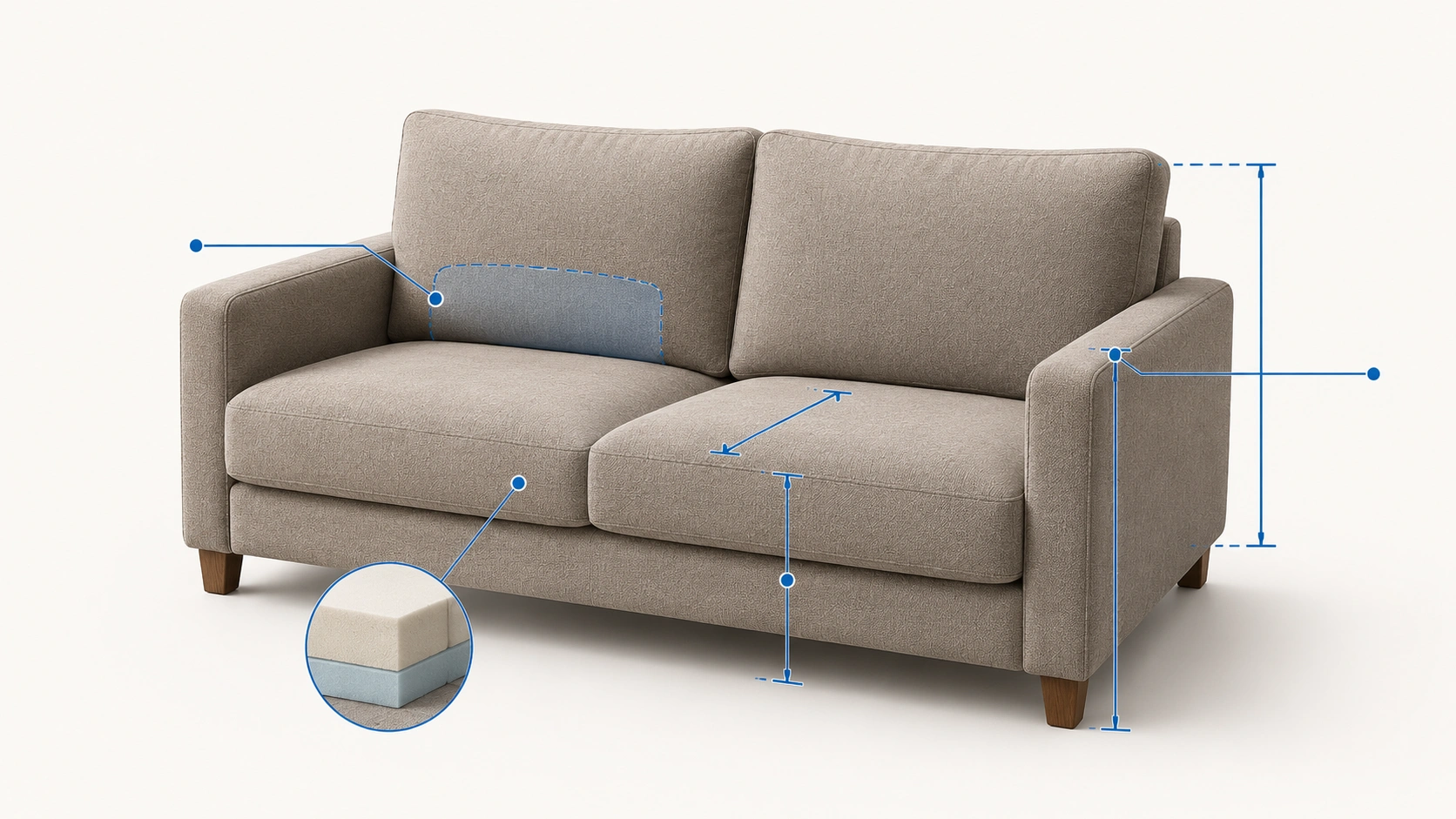
Not all sofas are created equal when it comes to back health. After analyzing ergonomic research and consulting physical therapy guidelines, we have identified the essential features that separate a genuinely back-friendly sofa from one that looks comfortable but causes problems over time.
Proper Seat Depth
- 20-22 inches ideal range
- Allows back contact with backrest
- Feet stay flat on the floor
- Knees maintain 90° angle
Adequate Lumbar Support
- Fills the gap at lower back
- Maintains natural spine curve
- Reduces muscle fatigue
- Prevents disc compression
Medium-Firm Cushions
- High-density foam core (1.8-2.5 lb/ft³)
- No excessive sinking
- Even weight distribution
- Retains shape over time
Correct Seat Height
- 17-19 inches from floor
- Easy sit-to-stand transition
- Reduces knee and hip strain
- Promotes upright posture
These four features work together as a system. A sofa can have excellent lumbar support but if the seat depth is too deep, your back will not reach the support. Similarly, perfect seat height is useless if the cushions are so soft that you sink through them. Understanding how to choose a sofa holistically ensures that all these features complement each other.
Beyond these primary factors, additional elements like quality spring systems and a sturdy frame also contribute to long-term back support. A sofa with sagging springs or a weak frame will gradually lose its supportive qualities, undoing the benefits of initially good design.
Seat Depth: The Most Overlooked Factor
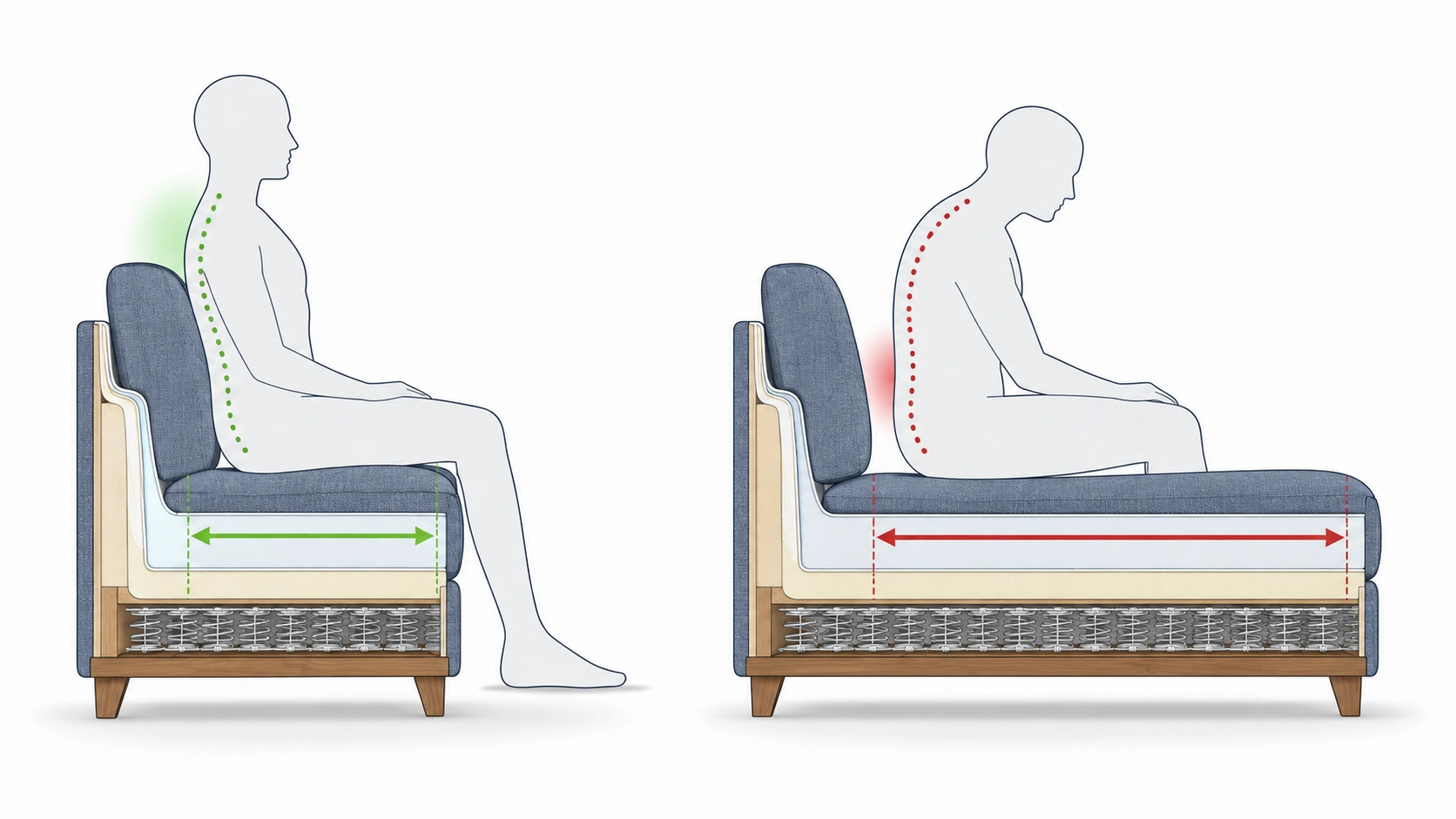
Seat depth is arguably the single most important measurement for back pain sufferers, yet it is the factor most people ignore when shopping. The depth of your sofa seat determines whether your back actually rests against the backrest or floats in space, unsupported.
The ideal seat depth for back pain is between 20 and 22 inches. This measurement is taken from the front edge of the seat cushion to where it meets the backrest. At this depth, an average-height adult (5'4" to 5'10") can sit with their back flat against the backrest while keeping their feet flat on the floor and knees at approximately a 90-degree angle.
When the seat depth exceeds 23 inches, a common problem occurs: your lower back cannot reach the backrest without slouching forward. You end up perched on the front edge of the cushion, which provides zero back support, or you slouch backward, which creates a C-shaped curve in your spine that compresses lumbar discs. Many popular deep-seat sofas are notorious for this problem.
For taller individuals (over 6 feet), a slightly deeper seat of 22-23 inches may work. For shorter individuals (under 5'4"), a shallower seat of 18-20 inches is often necessary. This is why understanding seat depth in detail is critical — the "perfect" depth depends on your body proportions. Our sofa measurement guide can help you determine the right depth for your frame.
Warning: Many modern sofas feature seat depths of 24-28 inches for a "relaxed" look. While these may feel luxurious for lounging, they are among the worst choices for anyone with back pain. If you are drawn to this style, look for models with removable back cushions that can be replaced with firmer, thinner options to reduce effective depth.
Cushion Firmness and Support Explained
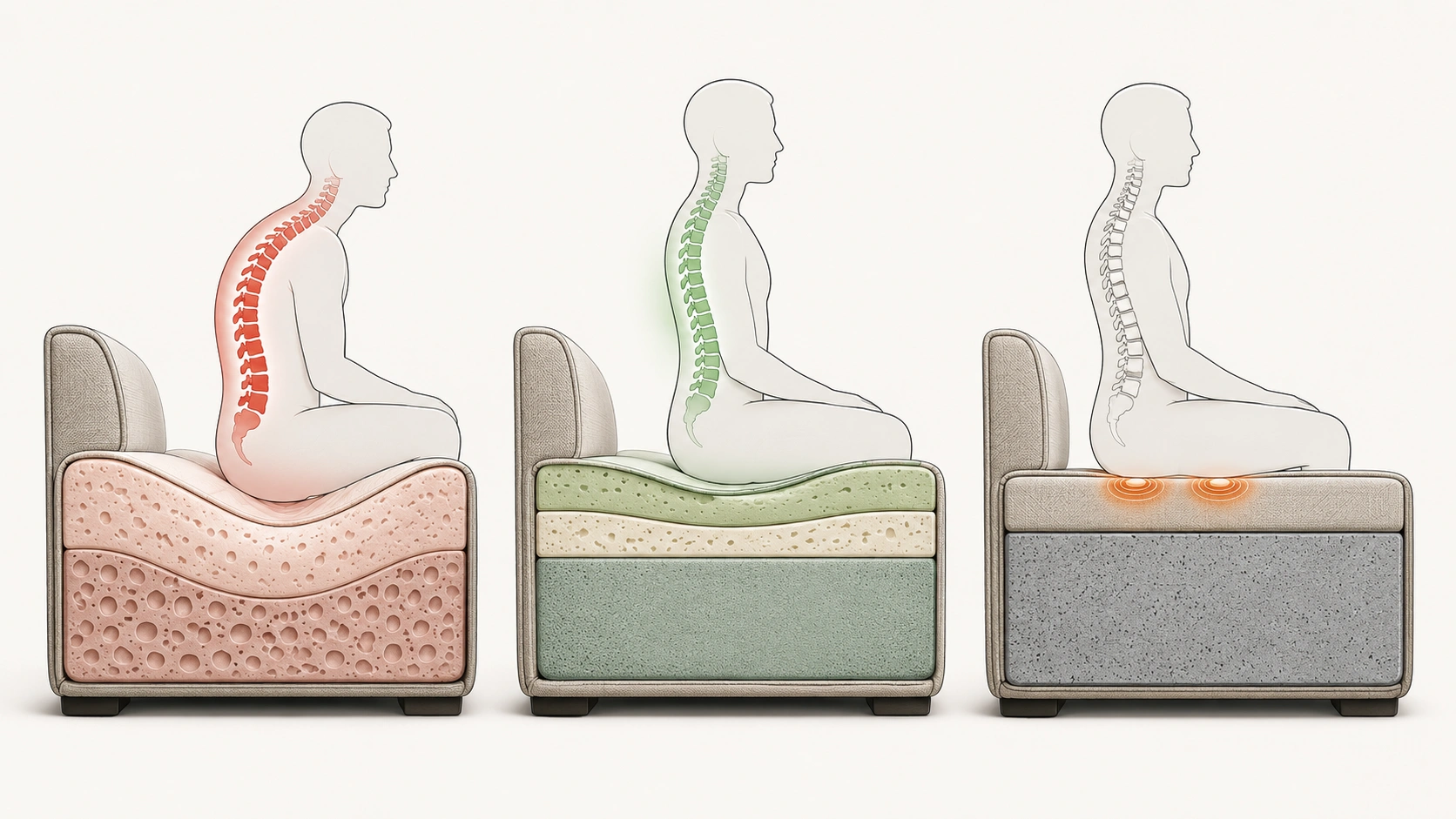
The firmness of your sofa cushions directly determines how well your spine is supported. The debate between firm and plush sofas is especially important for back pain sufferers, because the wrong choice can mean the difference between relief and increased pain.
Why Soft Cushions Are Problematic
Overly soft cushions may feel inviting when you first sit down, but they create a "hammock effect." Your heavier body parts (hips and pelvis) sink deep into the cushion while your lighter upper body stays elevated. This tilts your pelvis backward, flattening the natural lumbar curve and placing sustained stretch on the ligaments and muscles of the lower back. Within 20-30 minutes, this position triggers muscle fatigue and discomfort.
Why Extremely Firm Cushions Are Also Not Ideal
On the opposite end, rock-hard cushions create concentrated pressure points at the sit bones (ischial tuberosities) and along the spine. While they do not allow sinking, they fail to distribute body weight evenly, leading to localized pain that can be just as uncomfortable for people with conditions like fibromyalgia or arthritis.
The Sweet Spot: Medium-Firm with High-Density Foam
The ideal cushion for back pain uses a high-density foam core rated between 1.8 and 2.5 pounds per cubic foot (lb/ft³). This density provides enough resistance to prevent excessive sinking while still offering enough give to distribute pressure. The foam should have an ILD (Indentation Load Deflection) rating of 28-36, which indicates medium firmness.
The best back-supportive cushions often use a multi-layer construction: a firm high-density foam core wrapped in a softer layer for initial comfort, topped with a fiber wrap or down alternative for a plush feel that does not compromise support. When shopping, ask about cushion fill types specifically — this information is not always displayed on the product tag.
| Cushion Type | Back Pain Rating | Why |
|---|---|---|
| High-density foam (1.8-2.5 lb/ft³) | ★★★★★ Excellent | Consistent support, maintains shape, proper weight distribution |
| Memory foam wrapped cushion | ★★★★☆ Very Good | Conforms to body, reduces pressure points, may retain heat |
| Spring-down (coil + down wrap) | ★★★★☆ Very Good | Resilient support with plush feel, higher cost |
| Polyurethane foam (low density) | ★★☆☆☆ Poor | Sags quickly, loses support within months |
| All-down / feather fill | ★☆☆☆☆ Very Poor | Excessive sinking, zero structural support |
One critical factor to watch for: cushions that have already begun to sag. Even a sofa that was supportive when new can become a back pain culprit after a few years. If your current cushions have lost their resilience, replacing them through cushion replacement services is far less expensive than buying a new sofa. We also cover how to fix sagging sofa cushions in our maintenance section.
Lumbar Support: What You Need to Know
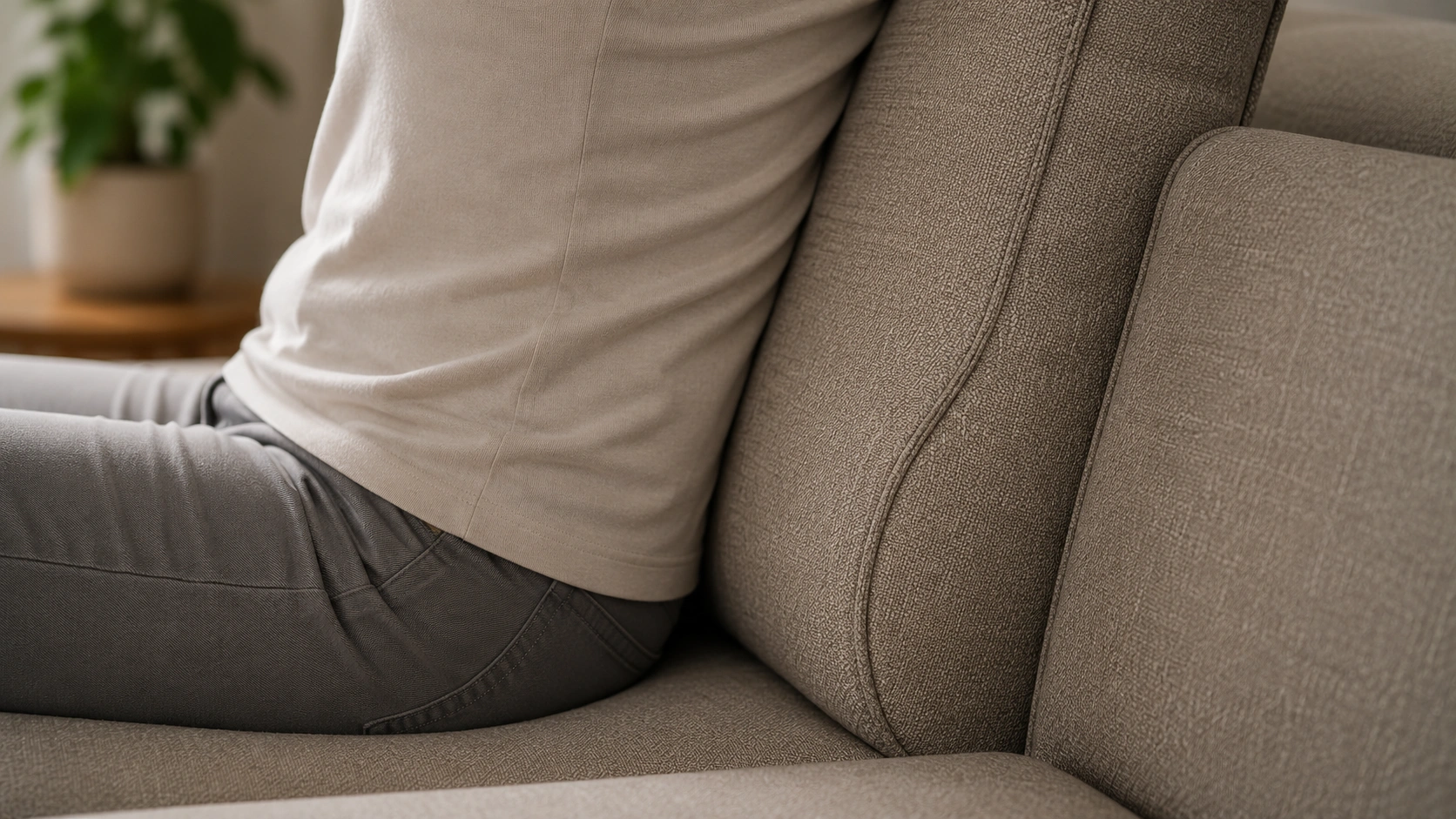
Lumbar support is the feature most directly linked to back pain relief, yet it is also the feature most commonly absent in standard sofas. The lumbar region (lower back) has a natural inward curve. When you sit, this curve tends to flatten or even reverse, which stretches the ligaments and discs in the area and compresses the nerves — a primary mechanism behind sciatica pain.
A sofa with proper lumbar support has a backrest that curves outward slightly in the lower portion, matching the natural inward curve of your spine. This keeps the lumbar vertebrae in their neutral, relaxed position rather than forcing them into a flattened or reversed alignment.
What to Look For
- Contoured backrest: The backrest should have a visible outward curve in the lower 8-12 inches, corresponding to the lumbar region of the spine.
- Firm lumbar zone: The lumbar area of the backrest should be firmer than the upper back area. Some premium sofas use dual-density foam — firmer at the bottom, softer at the top.
- Adjustable options: Recliner sofas with adjustable lumbar pillows allow you to fine-tune the support level to your specific anatomy, which is ideal since lumbar curvature varies significantly between individuals.
- No gap test: When you sit with your back against the backrest, you should not be able to slide your hand between your lower back and the sofa. If you can, the lumbar support is insufficient.
If your current sofa lacks built-in lumbar support, there are practical solutions. A high-back sofa naturally provides more lumbar contact than a low-back design, which is why we generally recommend high-back options for back pain sufferers. The high-back vs low-back comparison covers this in detail.
Quick test: Sit on your current sofa and place your hand behind your lower back. If there is a gap larger than two fingers wide, your sofa is not providing adequate lumbar support. This simple test can explain a lot of unexplained back discomfort.
Seat Height and Leg Position
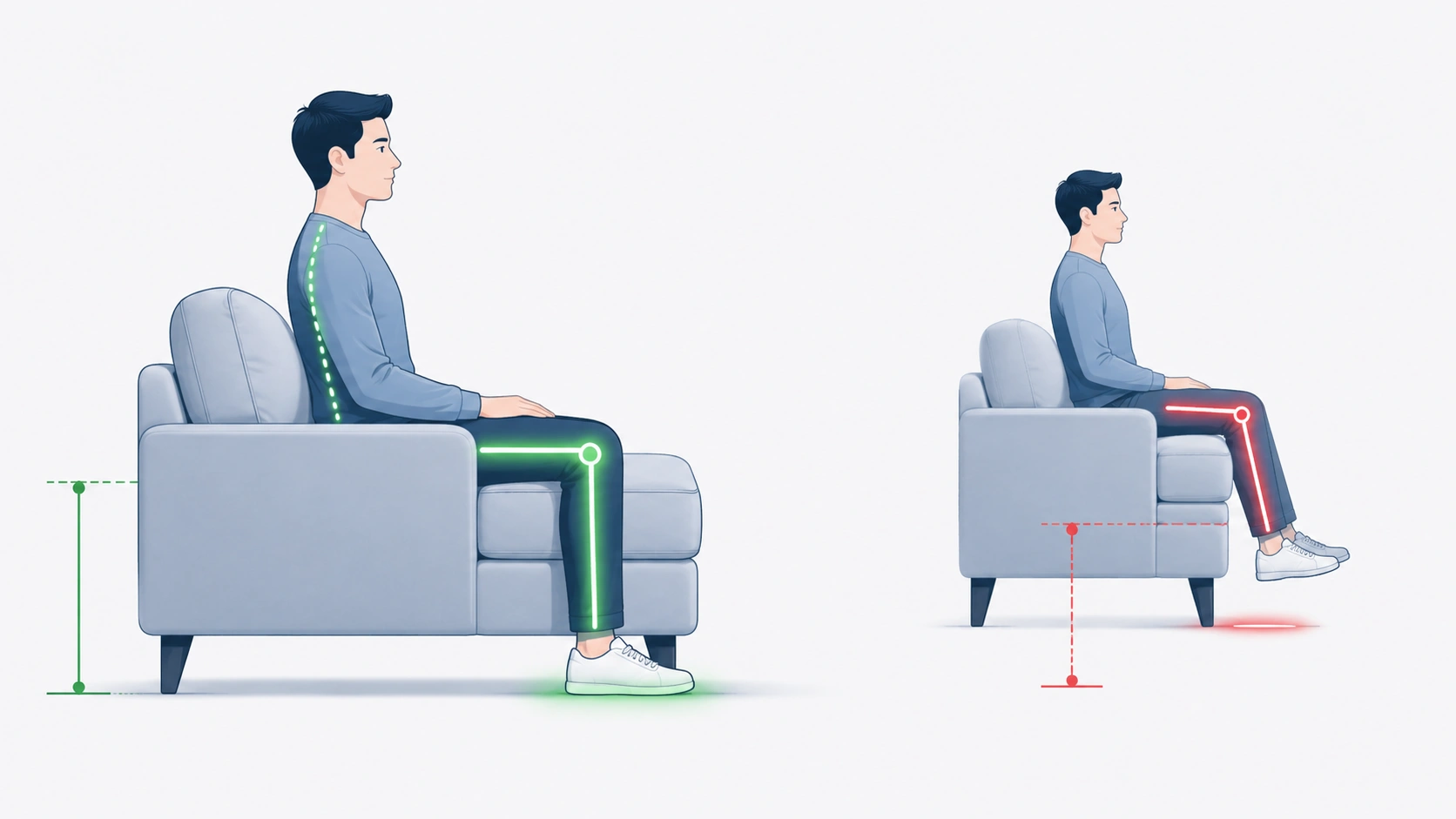
Seat height is the measurement from the floor to the top of the seat cushion, and it plays a crucial role in back health that is frequently underestimated. The standard seat height for most sofas ranges from 17 to 19 inches, and this range exists for good ergonomic reasons.
When the seat is too low (below 16 inches), your hips are positioned below your knees when your feet are flat on the floor. This tilts the pelvis backward, flattening the lumbar curve — the same harmful position caused by excessively soft cushions. It also makes standing up difficult, placing strain on the knees and lower back during the transition.
When the seat is too high (above 20 inches), your feet dangle or you are forced to perch on the front edge. This shifts your body weight forward, causing you to round your upper back and shoulders to compensate. It also creates pressure under the thighs where they contact the seat edge, potentially restricting blood circulation.
The ideal seat height allows your feet to rest flat on the floor with your knees at or slightly below hip level, forming approximately a 90-degree angle. For most adults, this means 17-19 inches. However, if you are taller than 6'2" or shorter than 5'2", you may need to adjust this range by 1-2 inches.
If you find the perfect sofa but the seat height is slightly off, you can make minor adjustments. Adding furniture risers can increase seat height by 1-3 inches, while removing the legs or using a thinner cushion can reduce it. These modifications are worth considering, especially for seniors who need easy entry and exit from their seating.
Best Sofa Types for Back Pain Sufferers
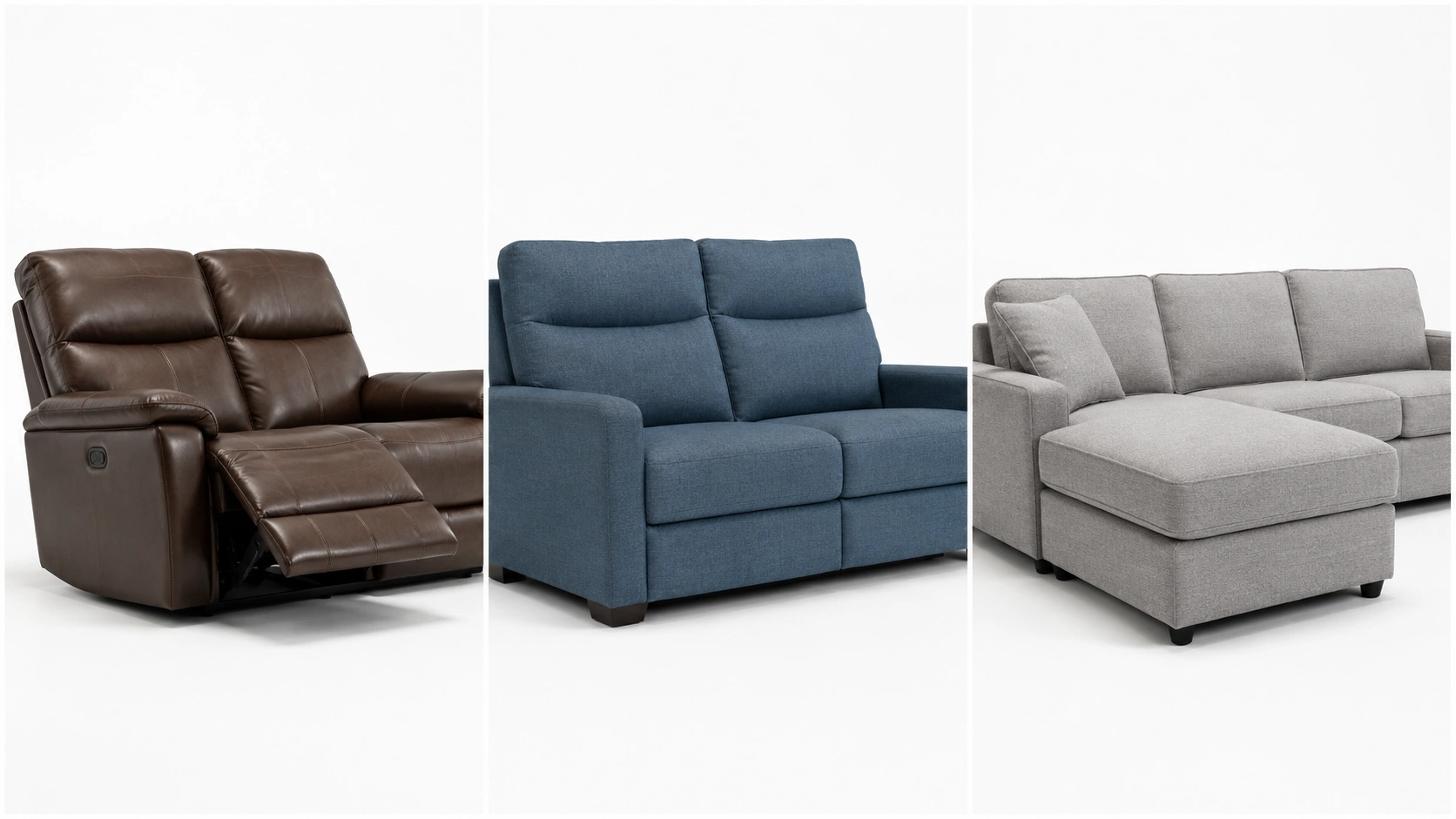
Not every sofa type is equally suitable for back pain. After evaluating the ergonomic properties of each major category, here is a ranking of sofa types from most to least back-friendly, along with specific recommendations for what to look for within each type.
1. Recliner Sofas — Top Recommendation
Recliner sofas are the single best option for most back pain sufferers, and for good reason. The adjustable back angle allows you to find the precise position that relieves pressure on your specific pain points. Elevating your legs reduces the gravitational load on your lumbar spine by up to 30%, which is why many people with sciatica or herniated discs find significant relief in a reclined position.
What to look for: Choose a recliner with independent footrest and backrest controls (not just a single lever), adjustable lumbar support, and a locking mechanism that holds your preferred position securely. Avoid wall-hugger recliners with limited recline angles if you need full extension for pain relief.
2. High-Back Sofas With Firm Cushions
A high-back sofa provides superior upper back and neck support compared to standard-height options. When combined with medium-firm cushions and proper seat depth (20-22 inches), this type can be an excellent choice for people who prefer a traditional sofa look over a recliner.
What to look for: The backrest should extend at least 6 inches above your shoulders when seated. Look for models with built-in lumbar contouring rather than flat backrests. Chesterfield sofas can work if they use firm cushioning, though their deep button-tufting may create uneven pressure points for some users.
3. Modular Sofas With Customizable Configuration
Modular sofas offer a unique advantage: you can configure them to include a chaise lounge section that allows you to recline with your legs elevated, mimicking the benefits of a recliner. You can also arrange modules to create a corner seat with support on two sides, which some back pain sufferers find stabilizing.
What to look for: Firm seat cushions (avoid the ultra-deep, sink-in modulars that are trendy right now), tight backrests rather than loose cushion backs, and the ability to add an ottoman module for leg elevation.
4. Standard 3-Seater With Ergonomic Design
A well-designed 3-seater sofa can work well if it incorporates the key features discussed earlier: correct seat depth, medium-firm cushions, and built-in lumbar support. This is the most common sofa type, so the selection is large, but you will need to be more selective to find one that is genuinely back-friendly.
Sofa Types to Approach With Caution
- Deep-seat sofas: As discussed, excessive depth prevents back contact with the backrest. Only suitable if you use firm lumbar pillows to compensate.
- Floor sofas: Extremely low seat height forces the spine into a rounded position. Not recommended for anyone with back issues.
- Sleeper sofas: The mattress mechanism typically creates an uneven, unsupportive sitting surface. If you need a sleeper, prioritize models with a separate, firm sitting cushion that is not affected by the bed mechanism.
- Inflatable couches: No structural support whatsoever. These should be avoided entirely by anyone with back pain.
Materials That Make a Difference
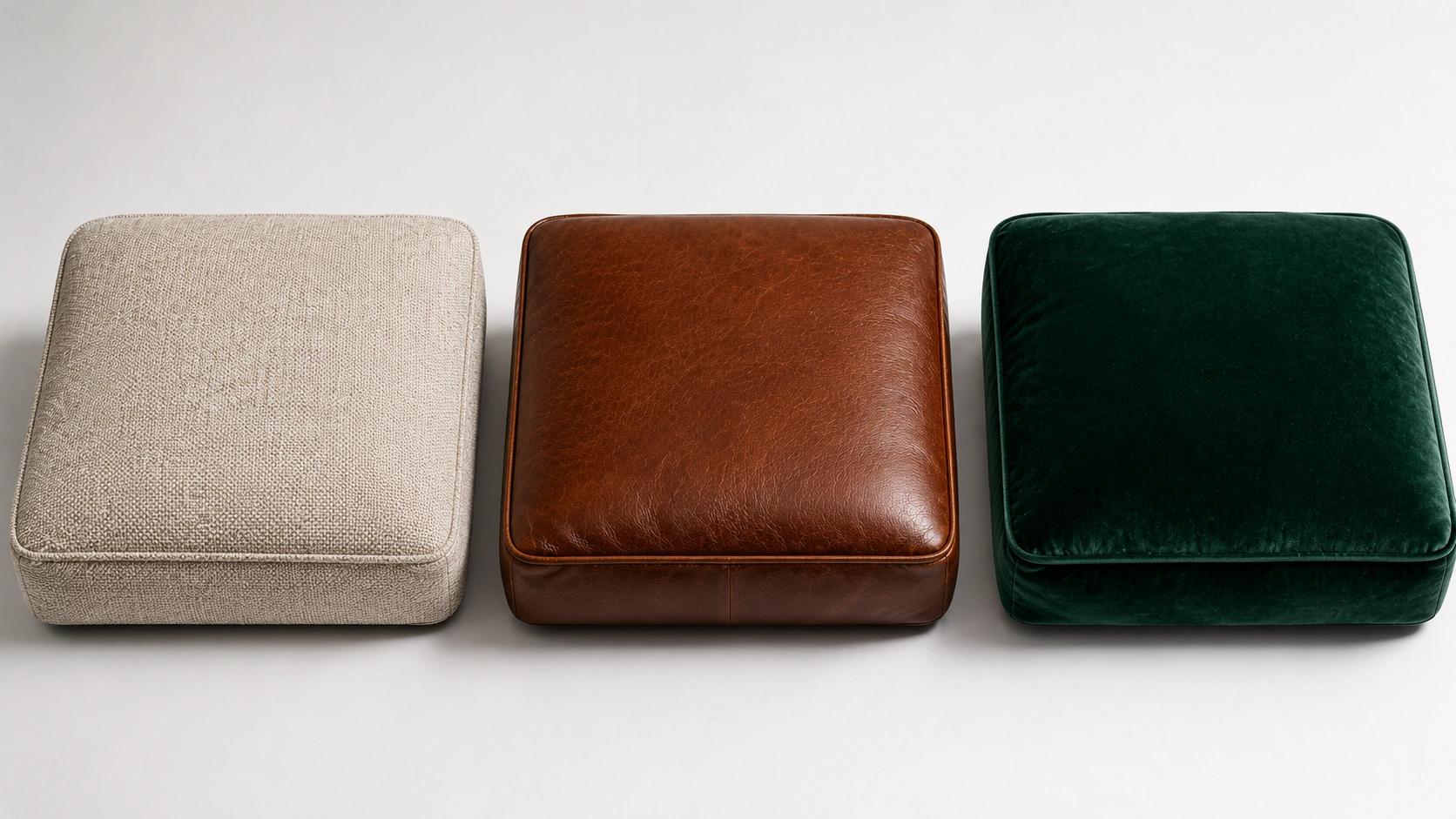
While the internal construction (foam, springs, frame) determines the core support of a sofa, the upholstery material also plays a role in back comfort — sometimes in ways that surprise people.
Fabric Upholstery: Generally Better for Grip
Textured fabrics like polyester blends, microfiber, and performance fabrics create friction against your clothing, which helps keep you in a stable seated position. This prevents the gradual sliding and slouching that occurs on slippery surfaces. Microfiber couches are particularly good in this regard and are also easy to maintain.
Leather: Supportive but Slippy
Leather sofas are firm and hold their shape well, which is a positive for back support. However, smooth leather creates very little friction, meaning you are more likely to slide forward into a slouched position over time. If you prefer leather, look for top-grain leather with a slightly textured finish rather than glossy corrected grain, and consider using a nonslip seat pad underneath your cushion cover. The leather vs fabric comparison covers this trade-off in detail.
Velvet: Luxurious but Requires Firm Cushions
Velvet sofas offer good grip but are often paired with softer, plush cushioning that can compromise support. If you choose velvet, ensure the cushions use a firm foam core beneath the soft exterior layer.
Frame Material Matters Too
The frame is the structural backbone of support. A solid hardwood frame (kiln-dried oak, maple, or ash) maintains its rigidity over decades, while frames made of particleboard or softwoods can warp and flex, causing the entire sofa to lose its supportive geometry. The suspension system (eight-way hand-tied springs being the gold standard) also ensures even weight distribution across the seat.
Common Mistakes When Buying a Sofa for Back Pain
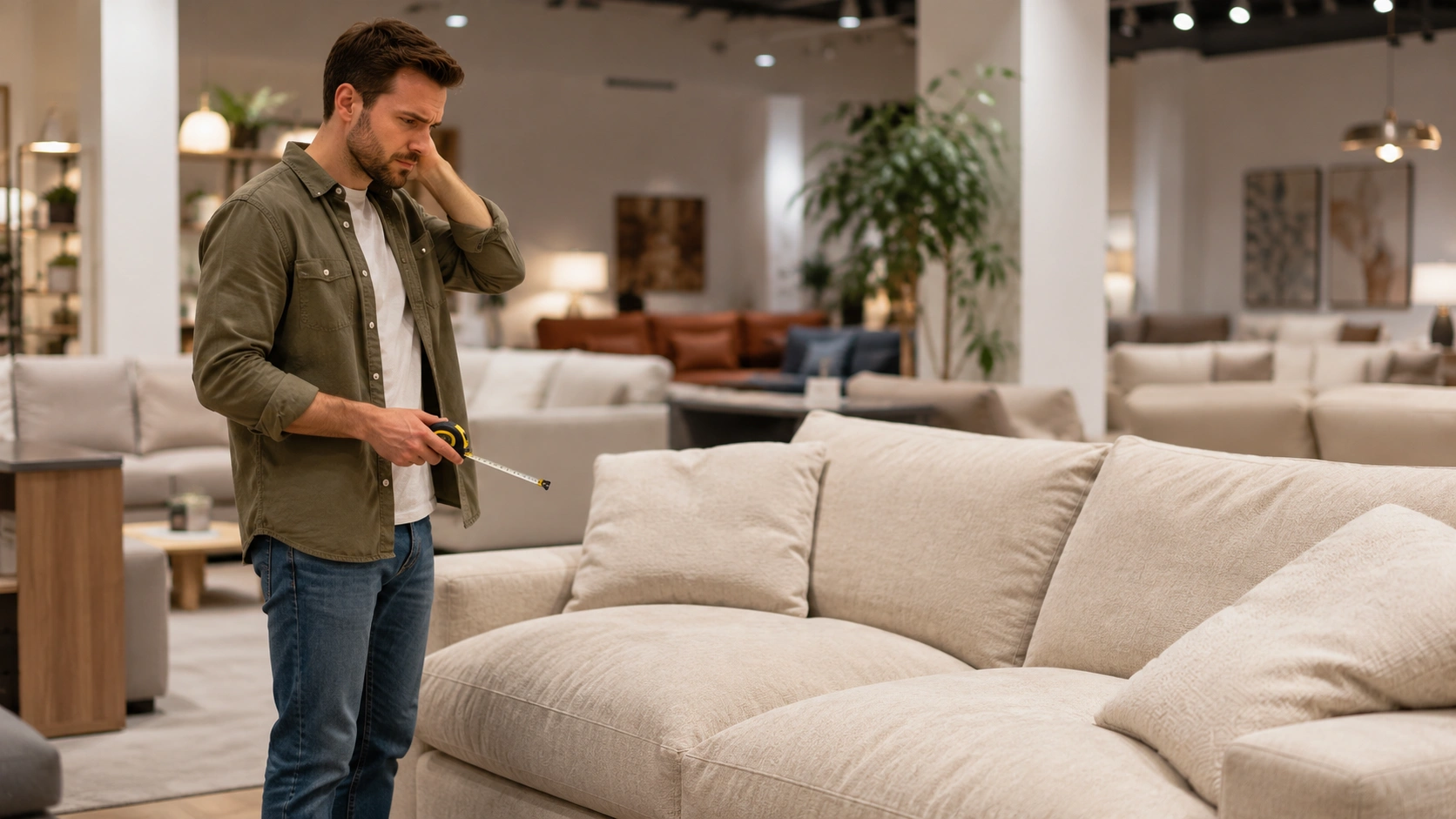
After helping thousands of readers navigate sofa purchases, we have identified the mistakes that most frequently lead to regret — especially for people buying with back pain in mind.
Mistake 1: Choosing Comfort Over Support
A sofa that feels amazing for 30 seconds in a showroom can cause hours of pain at home. Showroom "comfort" often means excessive softness that leads to sinking, slouching, and back strain during prolonged use. Always test a sofa by sitting on it for at least 10-15 minutes before deciding.
Mistake 2: Ignoring Seat Depth
People focus on width, color, and style but never measure seat depth. A sofa that looks perfect can be completely wrong for your back simply because it is 3-4 inches too deep. Always bring a tape measure and know your ideal depth range before shopping.
Mistake 3: Buying Online Without Testing
While online shopping is convenient, buying a sofa for back pain without sitting on it first is risky. If you must buy online, verify the return policy carefully. Look for retailers that offer in-home trial periods or at minimum, detailed specifications for seat depth, height, and cushion firmness.
Mistake 4: Prioritizing Style Over Ergonomics
Trendy low-profile sofas, ultra-deep sectionals, and cloud-like designs dominate social media, but most are ergonomically poor. Your back does not care about aesthetics. Choose function first, then find attractive options within those parameters. A comfortable sofa does not have to look boring.
Mistake 5: Assuming Expensive Means Supportive
Price does not guarantee back-friendly design. Many luxury sofas use soft down filling and deep seats that are terrible for back pain. Conversely, some mid-range sofas with high-density foam and proper dimensions offer excellent support. Evaluate the construction, not just the price tag.
Mistake 6: Not Considering Your Specific Condition
Lower back pain, upper back pain, sciatica, and spinal stenosis each benefit from different seating characteristics. What helps one condition may aggravate another. Understanding your specific diagnosis and discussing seating needs with your healthcare provider ensures you choose the right features.
For a comprehensive understanding of what to look for, our guide on testing sofa comfort provides a step-by-step in-store evaluation process designed specifically for people with back concerns. Also, knowing how to check sofa quality before buying helps you avoid poorly constructed options that will lose support quickly.
How to Test a Sofa for Back Support In-Store

Reading about sofa features is helpful, but nothing replaces physically testing a sofa before buying. Here is a systematic evaluation process designed specifically for back pain sufferers.
The 5-Minute Back Support Test
- The Hand-Slide Test: Sit all the way back with your legs hanging naturally. Slide your hand between your lower back and the sofa. If the gap is wider than two fingers, the lumbar support is inadequate.
- The 10-Minute Sit: Do not just plop down and stand up. Sit for 10-15 minutes in your normal at-home position. Pay attention to when you first feel the urge to shift position — that is the point where the sofa stops supporting you.
- The Feet-Flat Check: With your back against the backrest, check if your feet rest completely flat on the floor. If only your toes touch or your feet dangle, the seat height is wrong for your body.
- The Knee Angle Test: Look at your knees while seated. They should be at approximately 90 degrees or slightly less (knees at or below hip level). If your knees are significantly above your hips, the seat is too low.
- The Stand-Up Test: Stand up from the sofa without using your hands. If this requires significant effort or causes a sharp pain in your lower back or knees, the seat height is too low or the cushion is too soft, making the transition ergonomically stressful.
When performing these tests, wear the clothing you typically wear at home (not stiff jeans if you normally wear sweatpants) and bring a friend or family member to observe your posture from the side. It is very difficult to assess your own spinal alignment without an external viewpoint.
If you are shopping on a budget, our sofa budget guide explains how to allocate your money toward the features that matter most for back support, rather than spending on cosmetic upgrades that do not affect ergonomics. For those looking at budget sofa options, we recommend prioritizing firm cushions and correct seat depth over premium upholstery or decorative details.
Supportive Accessories That Help
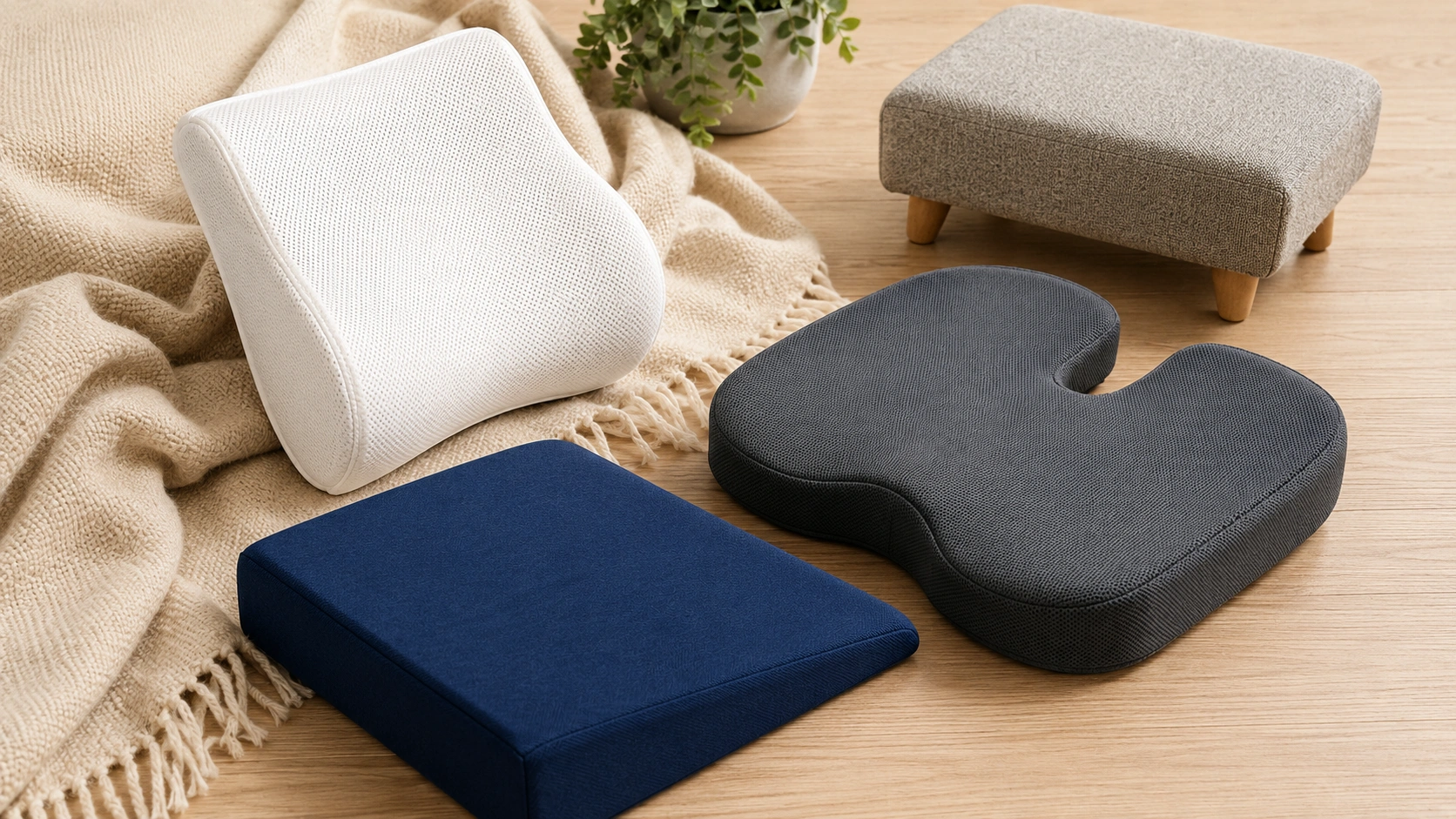
If you cannot replace your current sofa immediately, or if you want to enhance an already decent sofa, these accessories can make a meaningful difference in back support.
Lumbar Support Pillows
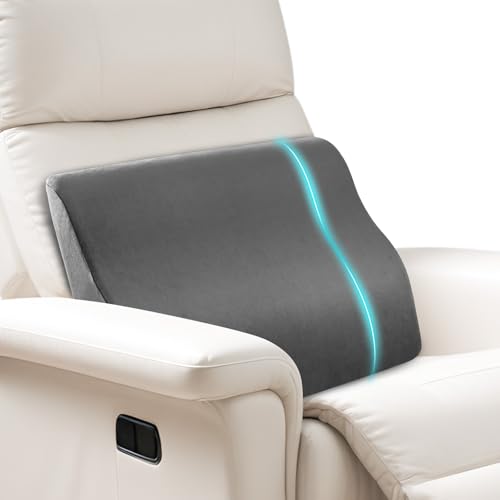
A firm, contoured lumbar pillow placed in the gap between your lower back and the sofa backrest is the single most effective accessory for back pain relief. Look for memory foam models with a curved shape that matches the lumbar spine's natural inward curve. Avoid flat, soft throw pillows — they compress under your weight and provide no real support. Throws and pillows can be both decorative and functional if you choose the right ones.
Seat Cushion Inserts
If your sofa cushions have softened over time, a firm seat cushion insert placed on top can restore support. Orthopedic seat cushions made from high-density memory foam with a cutout for the tailbone are especially helpful for people with coccyx pain in addition to lower back issues.
Seat Wedges
A seat wedge (thicker at the back, thinner at the front) tilts the pelvis slightly forward, which helps restore the natural lumbar curve. This is particularly useful for sofas with low seat heights that cause posterior pelvic tilt. Wedges are also helpful for older adults who find it difficult to maintain upright posture on soft seating.
Footrests and Ottomans
Elevating your feet on an ottoman reduces the load on your lumbar spine by shifting some of your body weight to the leg rest. This mimics the benefit of a recliner without the cost of replacing your sofa. Many sofas with chaise lounges offer this benefit built-in.
Sofa Covers and Protection
While not directly related to support, using sofa covers helps maintain the original cushion firmness by preventing the foam from breaking down due to body oils, spills, and direct wear. A well-maintained sofa retains its supportive properties far longer than an uncovered one.
Frequently Asked Questions
Ready to find your back-friendly sofa? Remember: the best sofa for back pain is one with proper seat depth (20-22"), medium-firm high-density cushions, built-in lumbar support, and a correct seat height (17-19"). Use the checklist above when evaluating any option. Browse our recommended selections below to find sofas that meet these criteria.