
Best Sofas for Daily Napping: Your Complete Guide to Daytime Comfort
Not all sofas are built for sleep. Discover the exact features, dimensions, materials, and sofa types that make daytime napping truly restful — so you wake up refreshed, not sore.
SEE TOP PICKSWhy This Guide Matters: Research shows that a short nap of 20–30 minutes can boost alertness, improve mood, and enhance cognitive performance. But if your sofa causes neck stiffness or lower back pain, you are not getting those benefits. This guide helps you choose a sofa that supports healthy, comfortable napping every single day.
If you are someone who takes a daily nap — whether it is a planned afternoon rest or an accidental doze while watching TV — you already know that not every sofa delivers the same experience. Some leave you with a stiff neck, others make your lower back ache, and a few feel so perfect that you actually wake up feeling better than before. The difference is not luck. It comes down to specific design features that most people never think about when shopping for a sofa.
This guide covers everything you need to know to find a sofa that genuinely supports daytime sleep. We will break down the best sofa types for napping, the ideal measurements, the cushion fills that cradle your body without sinking too deep, and the common mistakes that lead to buyer's remorse. Whether you are upgrading your living room sofa or setting up a dedicated nap corner in your family room, this article will give you the knowledge to make a confident decision.
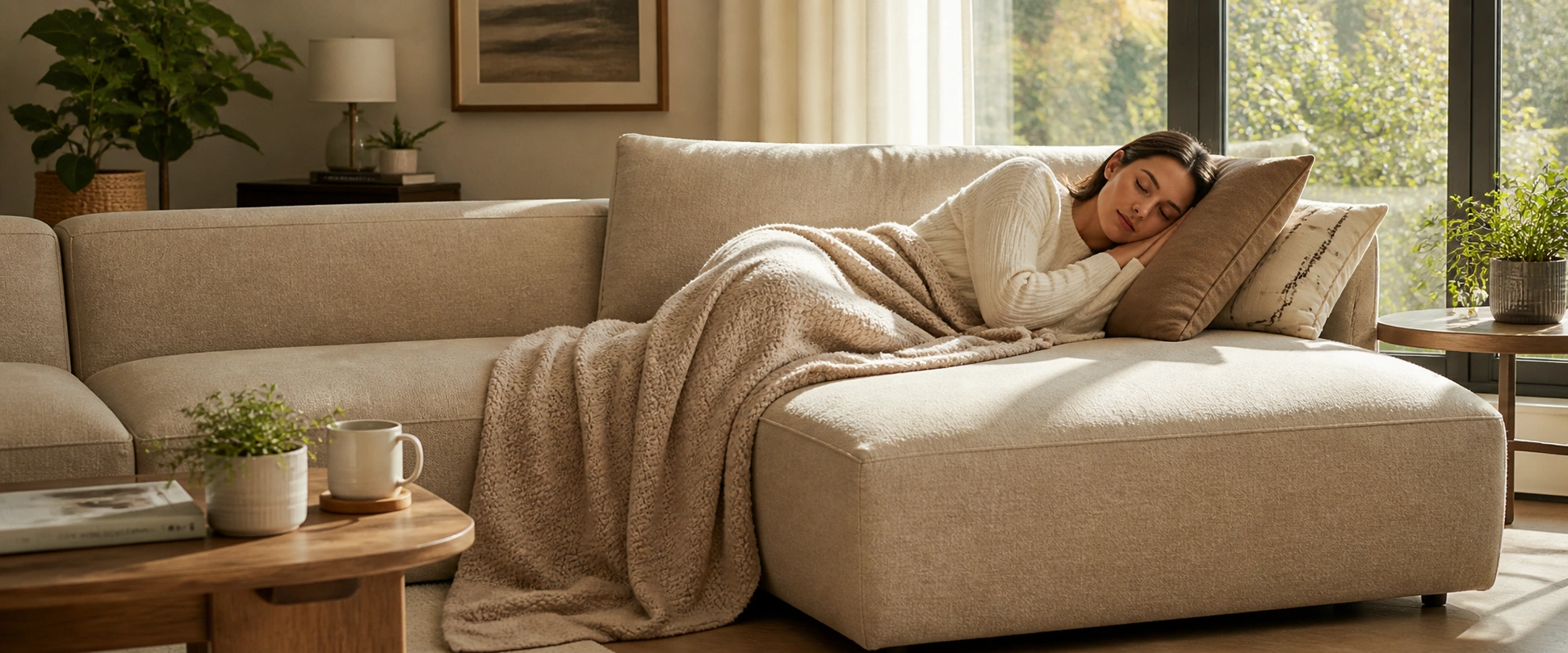
A well-chosen sofa with deep seating and proper cushion support makes daily napping a restorative experience
What Makes a Sofa Great for Napping
Napping on a sofa is fundamentally different from sitting on one. When you sit, your weight is distributed across your hips and thighs with your feet on the floor. When you nap, your entire body is on the sofa surface, which means the seat cushion, back cushion, and armrests all become part of your sleep surface. A sofa that feels fine for 30 minutes of sitting can become uncomfortable after 30 minutes of lying down.
The key factors that separate a napping-friendly sofa from an ordinary one are:
Generous Seat Depth
A deeper seat allows your legs to rest on the cushion instead of hanging off the edge, which reduces pressure on the back of your knees and improves circulation during sleep.
Appropriate Cushion Firmness
Cushions that are too soft cause your body to sink unevenly, misaligning your spine. Cushions that are too firm create pressure points. The sweet spot is medium-firm with good resilience.
Supportive Back Angle
The ideal backrest angle for napping is between 105–120 degrees, which is more reclined than a typical sitting position but not fully flat. This angle keeps your airway open and reduces neck strain.
Armrest Height Compatibility
Armrests at the right height can serve as a pillow substitute or prevent you from rolling off. Low-profile armrests are usually better for napping than tall, rigid ones.
Understanding these factors is the foundation of choosing the right sofa. Let us explore each one in detail so you know exactly what to look for when comparing options.
Best Sofa Types for Daily Napping
Different sofa designs naturally lend themselves to napping better than others. Here is a breakdown of the top contenders, ranked by how well they accommodate a prone or semi-reclined sleeping position.
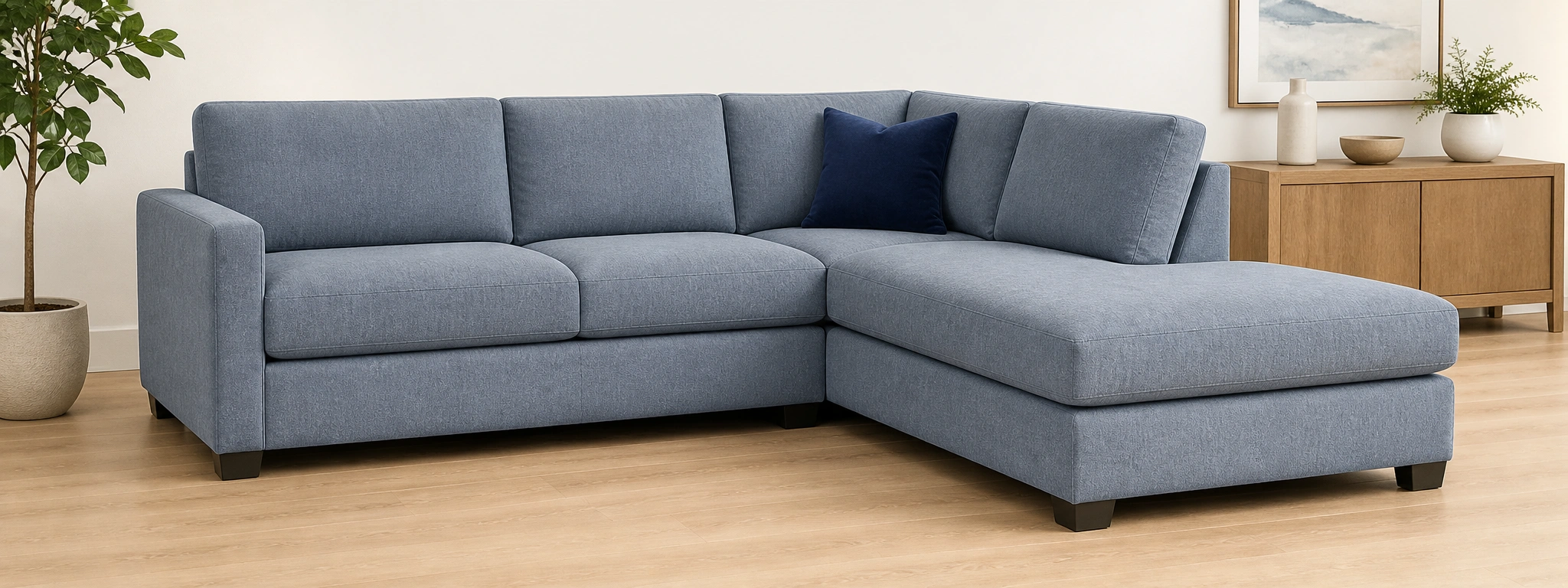
A chaise sectional provides extended legroom that makes it one of the most nap-friendly sofa designs available
1. Sectional Sofas with Chaise
A sectional sofa with an extended chaise lounge section is arguably the best overall choice for daily napping. The chaise provides a continuous surface from backrest to footrest, eliminating the gap where your knees would normally bend over the seat edge. This means your legs stay fully supported, which is critical for comfort during sleep.
The L-shape configuration also gives you the option to nap in different positions — stretched out along the chaise, curled in the corner, or even diagonally across the entire sectional. For households where multiple people might nap at different times, a modular sofa with a chaise component offers even more flexibility since you can rearrange the configuration.
2. Recliner Sofas
Recliner sofas are purpose-built for relaxation and are excellent for napping because they let you control the recline angle. Most recliners can adjust from a standard sitting position to near-flat, which means you can find the exact angle that feels comfortable for your body. The integrated footrest also eliminates the need to prop your legs up on an ottoman or coffee table.
The main advantage of recliners is adjustability — you can fine-tune your position in a way that fixed sofas simply cannot offer. If you have specific back or neck issues, a recliner lets you experiment with angles to find what works best. For a dedicated nap spot, a sofa chair recliner can also work well if you do not need a full-size sofa.
3. Deep-Seat Sofas
A deep-seat sofa is designed with a seat depth that goes well beyond the standard 18–20 inches. With depths of 22–28 inches, these sofas give you enough horizontal space to tuck your legs onto the cushion without your feet dangling. This design is popular in contemporary and modern sofa styles.
Deep-seat sofas are particularly good for taller individuals who cannot fit comfortably on standard sofas when lying down. However, the extra depth can make them less comfortable for sitting upright if you are shorter, since your feet may not reach the floor. If your household has people of different heights, look for a deep-seat sofa with back cushions that can be moved forward to adjust the effective depth.
4. Sleeper Sofas
A sleeper sofa converts into a bed, which technically makes it the most napping-friendly option available. When fully opened, you get a flat sleep surface that is far superior to any semi-reclined sofa position for actual sleep quality. If your daily naps tend to be longer than 45 minutes, a sleeper sofa may be worth considering.
The trade-off is convenience. Pulling out a bed mechanism for a 20-minute power nap is impractical. Sleeper sofas also tend to be heavier, more expensive, and the mattress quality varies significantly. They are best suited for a guest room or home office where the dual function justifies the investment. For quick daily naps in your main living area, a chaise or recliner is usually more practical.
5. Futon Sofas
Futon sofas offer a middle ground between a regular sofa and a sleeper sofa. They fold down relatively quickly into a flat or near-flat position, making them more convenient for frequent napping than a traditional pull-out sleeper. Futons are also generally more affordable and lighter.
The downside is that futon mattresses tend to be thinner and less supportive than quality sofa cushions or proper mattress materials. For occasional napping, a futon works fine. But if you nap daily and wake up with back pain, the thin futon mattress is likely the culprit. In that case, upgrading to a sleeper sofa with a proper memory foam mattress would be a better long-term investment.
Napping Sofa Type Comparison
| Sofa Type | Nap Comfort | Convenience | Best For |
|---|---|---|---|
| Sectional with Chaise | Excellent | Very High — no setup needed | Living rooms, families |
| Recliner Sofa | Excellent | High — one-touch adjust | Personal nap spot, back pain sufferers |
| Deep-Seat Sofa | Very Good | Very High — no setup needed | Taller individuals, modern spaces |
| Sleeper Sofa | Best (flat surface) | Low — requires setup | Long naps, guest rooms |
| Futon Sofa | Good | Moderate — quick fold | Budget options, small spaces |
| Standard 3-Seater | Fair to Poor | Very High | Sitting only — not ideal for napping |
Ideal Sofa Dimensions for Napping
When shopping for a napping sofa, dimensions matter more than most people realize. A sofa that is too short forces you to curl up uncomfortably, while one that is too deep can cause you to slouch when sitting. Here are the specific measurements to look for, based on average adult body proportions.
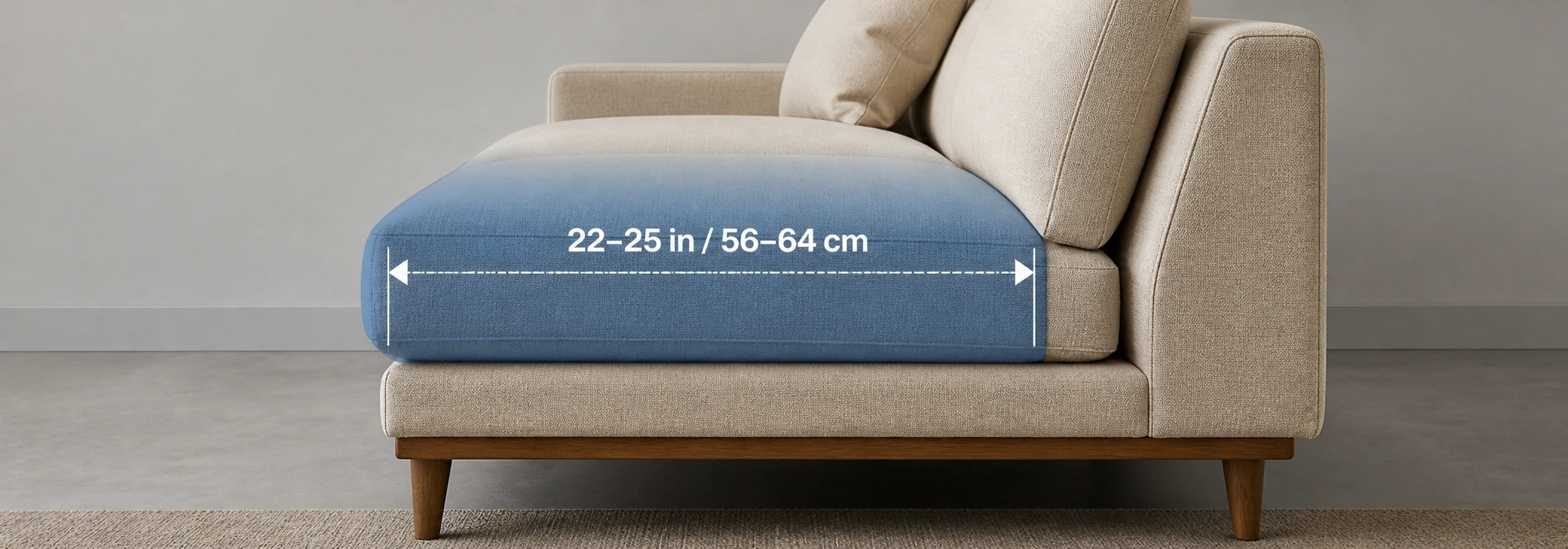
Seat depth is the most critical measurement for napping comfort — aim for 22 to 25 inches for most adults
Seat Depth: 22–25 Inches
This is the single most important measurement for napping. Standard sofas have a seat depth of 18–20 inches, which is fine for sitting but leaves your knees hanging when you try to lie down. A seat depth of 22–25 inches allows most adults (5'4" to 6'0") to rest their legs on the cushion with knees slightly bent. If you are taller than 6'0", look for 25–28 inches. If you are under 5'4", 20–22 inches may suffice, especially if you use a throw pillow.
Total Length: 72–90 Inches
The total length of the sofa (from outer arm to outer arm) determines whether you can fully stretch out. For reference, the average adult is about 65–70 inches tall when lying down. A standard 3-seater sofa at 78–84 inches gives most people enough room to lie flat. A 2-seater sofa at 60–68 inches will require you to bend your knees or curl up. If full extension is important to you, prioritize total length alongside seat depth.
Seat Height: 17–19 Inches
Seat height affects how easy it is to get on and off the sofa, which matters when you are drowsy. A height of 17–19 inches from the floor to the top of the seat cushion works for most adults. Lower seats (below 16 inches) can be difficult to rise from, especially for older adults — see our guide on sofas for seniors for more details. Higher seats (above 20 inches) can make your legs dangle when sitting, which cuts off circulation.
Back Height: 30–36 Inches
The backrest should be tall enough to support your head when you lean back. A back height of 30–36 inches works well for most people when combined with a standard cushion thickness. If you prefer resting your head against the backrest without a pillow, look for a high-back sofa at 36+ inches. If you always use a throw pillow, standard back height is fine.
Before visiting any store or clicking "add to cart," lie down on your current sofa and measure the distance from the wall behind you to your toes. That is your minimum required sofa length. Then measure from your lower back to the back of your knees — that tells you your ideal seat depth. Having these numbers ready prevents impulse purchases that do not fit your body. Read our full sofa measurement guide for step-by-step instructions.
Cushion Fill Types for Napping Comfort
The filling inside your sofa cushions directly determines how your body is supported during a nap. This is one area where understanding the technical details pays off, because two sofas that look identical can feel completely different once you lie on them. The key concept here is the balance between softness (which feels good initially) and support (which keeps you comfortable over time).
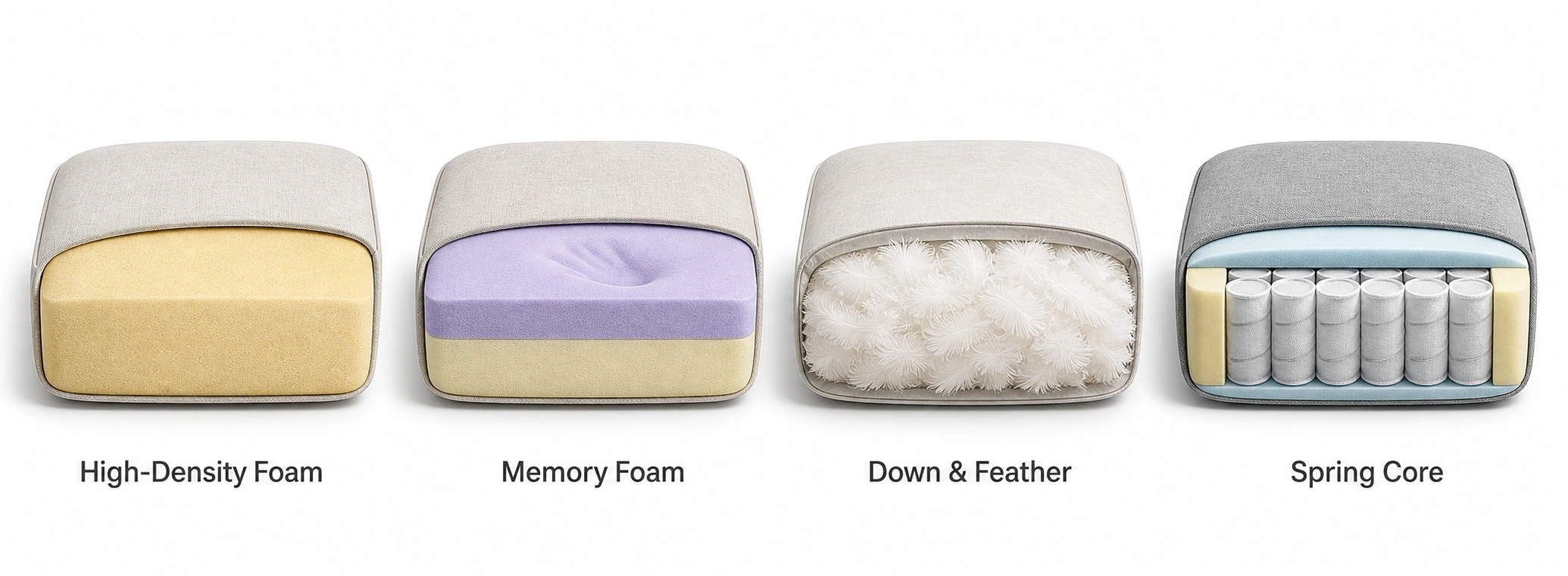
Different cushion fill materials provide vastly different levels of support for napping — understanding these differences is key to a good choice
High-Density Foam (Best Overall for Napping)
High-density polyurethane foam with a rating of 1.8–2.5 lbs/cubic foot provides the best combination of support and durability for napping. It is firm enough to keep your spine relatively aligned but has enough give to cushion your hips and shoulders. Foam also recovers its shape quickly, so the sofa looks neat even if you nap on it daily. For a deeper understanding of foam quality, our guide to foam density and ILD ratings explains exactly what those numbers mean.
Memory Foam (Best for Pressure Relief)
Memory foam conforms to your body shape and excels at relieving pressure points. If you wake up with sore hips or shoulders after napping on a regular sofa, a memory foam cushion could solve that problem. However, memory foam has drawbacks for napping: it retains heat (which can make you uncomfortably warm), it is slower to recover (leaving a temporary impression), and it can feel "stuck" when you try to change positions. A thin layer of memory foam (1–2 inches) over a high-density foam core offers the best of both worlds.
Down and Feather (Most Luxurious, Least Supportive)
Down-wrapped cushions feel incredibly soft and luxurious when you first sit down, but they offer minimal structural support for napping. Your body sinks in deeply, which can throw your spine out of alignment and cause back pain. Down cushions also require frequent fluffing to maintain their shape. They are best suited for formal living rooms where napping is not the primary purpose. If you love the soft feel but need support, look for a hybrid cushion with a foam core wrapped in a down layer.
Springs (Best for Resilience)
Some premium sofas use pocket coils or sinuous springs inside the seat cushions (not just in the base). Spring-filled cushions have excellent bounce and resilience, meaning they quickly return to shape after you get up. They provide good support for napping, though they can feel slightly firmer than all-foam cushions. Combined with a foam or fiber wrap, spring cushions offer long-lasting comfort. Learn more about how cushions and bases work together in our sofa spring systems guide.
Most people test sofa cushions by sitting for 30 seconds and making a judgment. For a napping sofa, you need to actually lie down on it for at least 5 minutes. A cushion that feels great when sitting can feel too soft, too firm, or have an awkward lump when you are lying on your side. Always test in the position you will actually use. Our guide on how to test sofa comfort covers the full testing process.
Best Upholstery Materials for Napping Sofas
The fabric or leather covering your sofa affects napping comfort in ways that are easy to overlook. The main factors are temperature regulation, skin feel, and maintenance — because a sofa used for daily napping will accumulate more body oils, sweat, and skin cells than one used only for sitting.
Fabric Sofas: Cooler and Softer Against Skin
For napping, fabric is generally the better choice over leather. Fabric breathes better, which means you are less likely to wake up sweaty. It also feels softer against bare skin (many people nap with their shoes off and may have exposed arms or legs). Among fabrics, linen and cotton blends are the most breathable, while microfiber is extremely soft and has a slight velvet-like texture that many people find pleasant for napping.
The downside of fabric is that it absorbs spills and stains more easily than leather. If you nap daily, consider a washable sofa with removable cushion covers, or use a protective treatment. Our guide to fabric protection covers the best treatments available.
Leather Sofas: Easy to Clean but Temperature-Sensitive
Leather sofas have a significant advantage in maintenance — they wipe clean easily, which matters when you are using the sofa as a daily sleep surface. However, leather tends to feel cold when you first lie down and can become sticky or clammy with body heat. Full-grain and top-grain leather breathe better than bonded leather or faux leather. For a detailed comparison, see our leather vs fabric guide.
If you prefer leather but are concerned about the temperature issue, a throw blanket draped over the nap area solves the problem effectively while adding a cozy element.
Performance Fabrics: The Best of Both Worlds
Performance fabrics are engineered to resist stains, repel liquids, and withstand heavy use while still feeling soft and breathable. Brands like Crypton, Revolution, and Sunbrella offer fabrics that are ideal for napping sofas because they handle the increased wear from daily body contact without showing dirt or absorbing spills. They cost more upfront but save money on cleaning and replacement over time.
Firm vs Soft: Which Is Better for Napping?
This is one of the most debated questions when choosing a napping sofa, and the answer depends on your body type, sleep position, and any existing health conditions. Here is a practical breakdown.
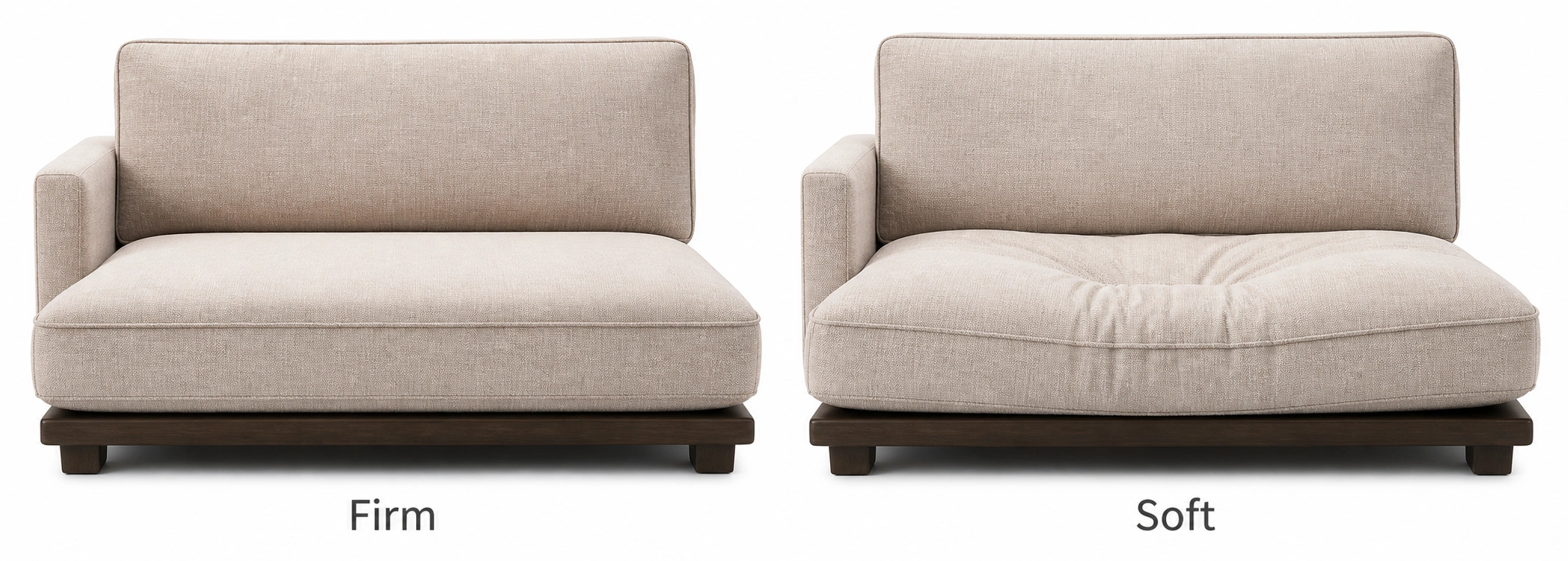
Medium-firm cushions provide the optimal balance between pressure relief and spinal support for healthy napping
- Back sleepers benefit most from medium-firm cushions that keep the spine neutral without creating gaps under the lower back
- Side sleepers need slightly softer cushions that allow hips and shoulders to sink in, relieving pressure on joints
- Stomach sleepers should avoid soft sofas entirely — they cause the midsection to sink too deep, hyperextending the lower back
- People with back pain generally need firmer support, though a thin plush layer on top of a firm core can add comfort without sacrificing alignment — our sofa for back pain guide goes deeper into this
The concept of firm vs plush in sofas is slightly different from mattresses. Sofa cushions are thinner (typically 4–8 inches) and sit on top of a frame with spring suspension, so the underlying support system also plays a role. A plush cushion on a firm spring system can feel very different from a plush cushion on a soft base. When testing, always lie down rather than sit to get an accurate sense of the support level.
Optimizing Your Space for Daily Napping
Even the perfect napping sofa will not deliver its full potential if your room setup works against you. A few simple adjustments to your living space can dramatically improve the quality of your daytime rest.
Lighting Control
Natural light is great for waking you up, but it is the enemy of falling asleep. Position your napping sofa away from direct sunlight, or install blackout curtains that you can close quickly. If the sofa must be near a window, consider sheer curtains that diffuse light without making the room completely dark. A small side table within arm's reach to hold a sleep mask is also helpful.
Temperature
The ideal sleeping temperature is between 65–68°F (18–20°C). Since most people nap in their living room where the thermostat may be set higher for daytime comfort, keep a light blanket nearby. The throws and pillows you choose are not just decorative — a medium-weight throw folded over the arm of your sofa is a functional napping tool.
Noise Management
If you live in a busy household or a noisy neighborhood, consider placing your napping sofa in a quieter part of the home. A basement sofa or a sofa in a home theater room can provide natural sound isolation. Alternatively, a white noise machine or fan can mask disruptive sounds without requiring a room change.
Pillow and Throw Strategy
Keep two types of pillows near your nap spot: a firm support pillow for under your head or knees, and a soft decorative pillow for light cushioning. A throw blanket should be easily accessible but not cluttering the sofa when not in use. Placing a small sofa table or basket beside the sofa gives you a designated spot for these items.
Common Mistakes When Choosing a Napping Sofa
After researching and testing hundreds of sofas, these are the most frequent mistakes people make when shopping specifically for napping comfort.
- Buying based on sitting comfort alone. A sofa that feels great for 10 minutes of sitting can become uncomfortable after 30 minutes of lying down. Always test in a reclined or lying position for at least 5 minutes before purchasing.
- Ignoring seat depth. This is the number one factor that determines whether you can actually lie down comfortably. A shallow seat forces your knees over the edge, cutting off circulation and causing leg numbness. Check our seat depth guide before buying.
- Choosing style over function. A sleek, low-profile modern sofa may look stunning but often has a low back and shallow seat that is terrible for napping. Decide whether napping is a primary or secondary use case before prioritizing aesthetics.
- Underestimating cushion durability. Daily napping puts significantly more wear on seat cushions than normal sitting. If you choose a low-density foam, the cushions will flatten within months. Invest in high-density foam or spring-core cushions — understanding comfort vs durability tradeoffs is essential here.
- Forgetting about maintenance. Daily napping means daily body contact with the upholstery. Light-colored fabrics will show body oil stains quickly. If you nap daily, choose darker colors, performance fabrics, or a slipcovered sofa with machine-washable covers.
- Not considering armrest design. Tall, rigid armrests can dig into your neck or side when lying down. Rolled arms are slightly better than track arms, but the most nap-friendly designs have low or no armrests — see the pros and cons of a sofa without arms.
- Placing the sofa in a poor location. A sofa directly under an air vent, in front of a bright window, or next to a high-traffic area will make napping difficult regardless of how comfortable the sofa itself is. Position matters as much as the product.
How to Protect Your Napping Sofa from Daily Wear
Daily napping accelerates wear in predictable ways: seat cushions compress faster, armrests show body oil marks, and fabric develops shine or thinning spots where your body repeatedly contacts the surface. Here is how to extend the life of a sofa that doubles as your daily nap spot.
- Rotate and flip cushions weekly — even if your cushions are not labeled as reversible, rotating them 180 degrees distributes wear evenly across the entire seat area
- Use a dedicated nap blanket — a soft throw placed over the area where you nap creates a washable barrier between your body and the upholstery
- Vacuum fabric weekly — removes dust, skin cells, and crumbs that abrade fibers and cause premature wear
- Apply fabric protector — a quality fabric protection treatment repels stains and makes cleaning easier; see our protection guide for product recommendations
- Address cushion sagging early — if you notice your cushions losing their bounce, do not wait until they are completely flat. Our guide on fixing sagging cushions covers simple fixes that can add years to your sofa
- Clean spills immediately — body oils from daily napping can build up over time; spot-clean with appropriate methods for your fabric type — learn the right technique in our fabric cleaning guide
If your sofa already shows significant wear from napping, consider replacement cushions before replacing the entire sofa. In many cases, new cushions can restore comfort at a fraction of the cost of a new sofa.
Napping Sofas for Small Spaces
Living in a small apartment does not mean you have to give up comfortable napping. The key is choosing a compact sofa that maximizes usable nap space within a smaller footprint.
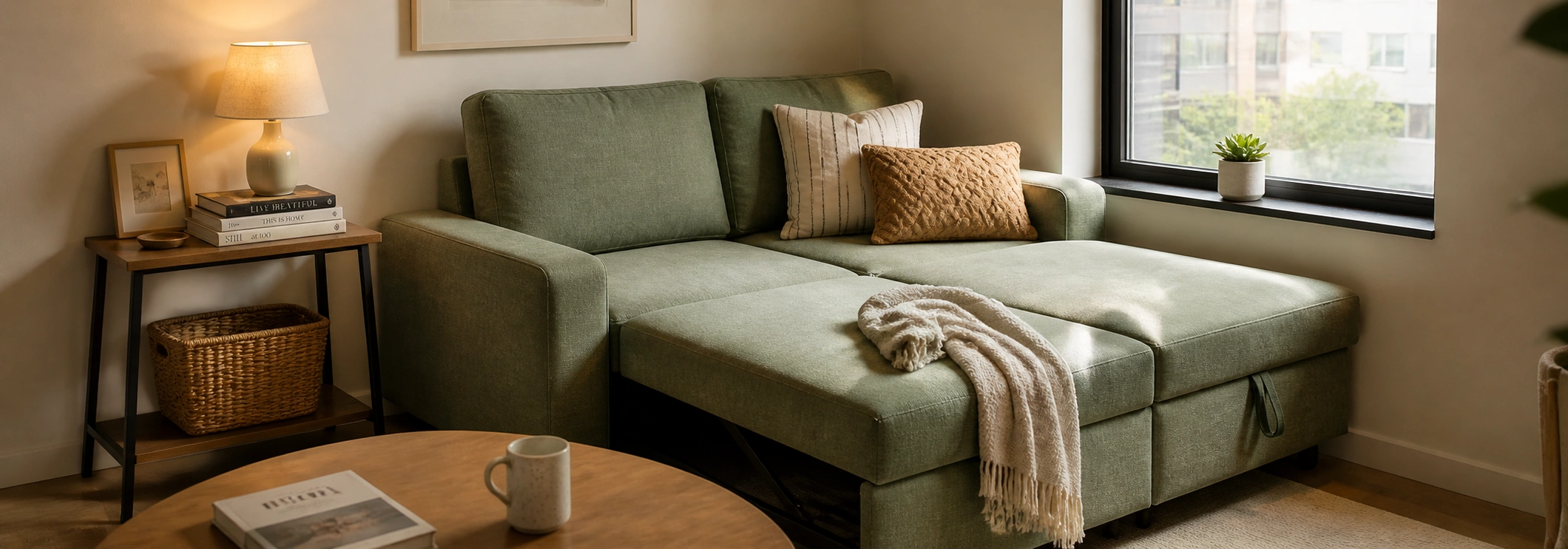
Compact sofas with clever design can deliver excellent napping comfort even in small apartments
A sofa for small spaces with a pull-out chaise or an extendable footrest section gives you the nap length you need without occupying a large floor area during the day. Loveseats with an ottoman combination work well too — the ottoman serves as a footrest during the day and extends the napping surface when needed. For extremely tight spaces, a daybed sofa provides a dual-purpose solution that functions as seating by day and a proper nap bed by night.
The apartment sofa category typically offers pieces under 75 inches in total length, which is enough for most adults to nap with slightly bent knees. Pair one with a slim-profile sofa table to hold your nap essentials without wasting floor space.
Budget Considerations for a Napping Sofa
You do not need to spend thousands to get a comfortable napping sofa, but being strategic about where you allocate your budget makes a significant difference. Here is how to prioritize your spending.
Where to Invest
- Cushion quality: This is the single most important factor for napping comfort. A sofa with high-density foam or spring-core cushions will outperform a more expensive sofa with cheap fill. Budget at least 30–40% of your total spend toward cushion quality. Read our cushion fill guide to understand what to look for.
- Frame construction: A kiln-dried hardwood frame ensures the sofa will last through years of daily napping without creaking or wobbling. Our frame materials guide explains what to look for.
- Suspension system: Eight-way hand-tied springs or high-quality sinuous springs provide the base support that cushions alone cannot deliver. See sofa suspension types for details.
Where to Save
- Upholstery brand: Generic performance fabrics perform similarly to name-brand options at a lower cost. Focus on the fabric specifications (rub count, stain resistance) rather than the brand label.
- Decorative details: Nailhead trim, tufting, and carved legs add cost but do not improve napping comfort. A comfortable sofa with clean lines will serve you better than an ornate one with mediocre cushions.
- Trendy designs: Fashion-forward sofas command premium prices. A classic design from a budget-friendly brand often uses the same internal construction as a designer piece at half the price. Understanding price vs quality helps you avoid overpaying for branding.
If your budget is tight, check our sofa budget guide for recommended spending ranges by sofa type, and our best time to buy article for seasonal sale strategies that can save you 20–40%.
The Napping Sofa Testing Checklist
Before making any purchase, use this checklist when testing a sofa in person or evaluating return policies for online purchases.
- Lie down fully for at least 5 minutes in your preferred nap position (back, side, or curled up)
- Check that your legs fit on the cushion without your knees hanging over the edge
- Verify your head is supported by the backrest or can be comfortably supported with one pillow
- Roll from your back to your side — the cushion should not shift or slide
- Press down firmly on the seat cushion with your hand — it should compress slightly but spring back within 2 seconds
- Run your hand over the fabric — it should feel smooth and not abrasive against your skin
- Check armrest height — they should not dig into your side or neck when lying down
- Sit up after lying down — you should not feel stiff or have to push hard with your arms to rise
- Ask about the cushion fill specifications (foam density, spring type, down wrap)
- Confirm the return policy — a sofa that feels fine in a showroom for 5 minutes may not work for daily napping at home
Testing at Home: If you are buying online, choose a retailer with at least a 30-day return window. Set a calendar reminder to evaluate the sofa after two weeks of daily napping. Pay attention to whether you wake up refreshed or stiff. If the sofa is not working, initiate the return before the window closes. Check the return policy details before purchasing.


