The Complete Guide to Fainting Sofas
Discover the elegance of Victorian-era design — learn the history, key features, and everything you need to know before bringing a fainting sofa into your home.
What makes a fainting sofa special? Unlike conventional seating, a fainting sofa combines the silhouette of a chair with the reclining comfort of a daybed. Its gracefully curved back and single scrolled armrest create a distinctive profile that instantly elevates any room. Whether you are drawn to its romantic Victorian heritage or its space-efficient footprint, this guide covers every detail to help you make a confident purchase.
Table of Contents
What Is a Fainting Sofa?
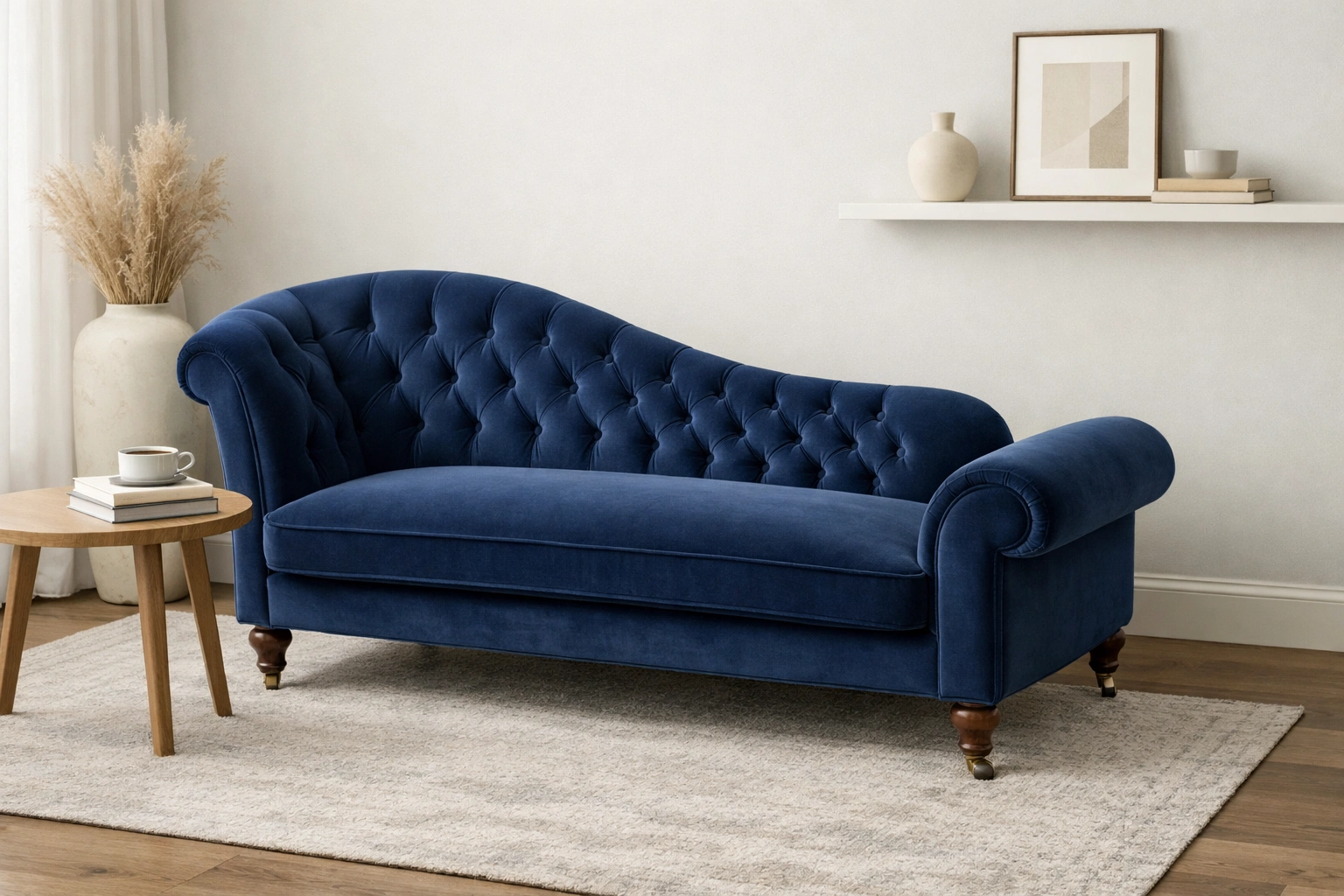
A classic fainting sofa featuring the signature curved back and single scrolled armrest
A fainting sofa — also known as a fainting couch — is a type of reclining seating that features a raised, curved backrest tapering into a single armrest on one side. The other end remains open, creating an asymmetrical profile that allows a person to recline semi-upright rather than lying completely flat. The design dates back to the 19th century and remains one of the most recognizable pieces of vintage-inspired furniture available today.
Despite the dramatic name, fainting sofas were never designed as medical devices. The term became popular during the Victorian era when tight corsets sometimes caused women to feel lightheaded, but in practice, these sofas served as elegant lounging spots for reading, conversing, and resting. They occupy a unique niche between a daybed and a traditional sofa — offering partial recline without requiring the space of a full-length bed.
Modern fainting sofas retain the iconic silhouette while incorporating updated materials, improved cushioning, and sturdier frames, making them practical for everyday use in contemporary homes.
History & Origin
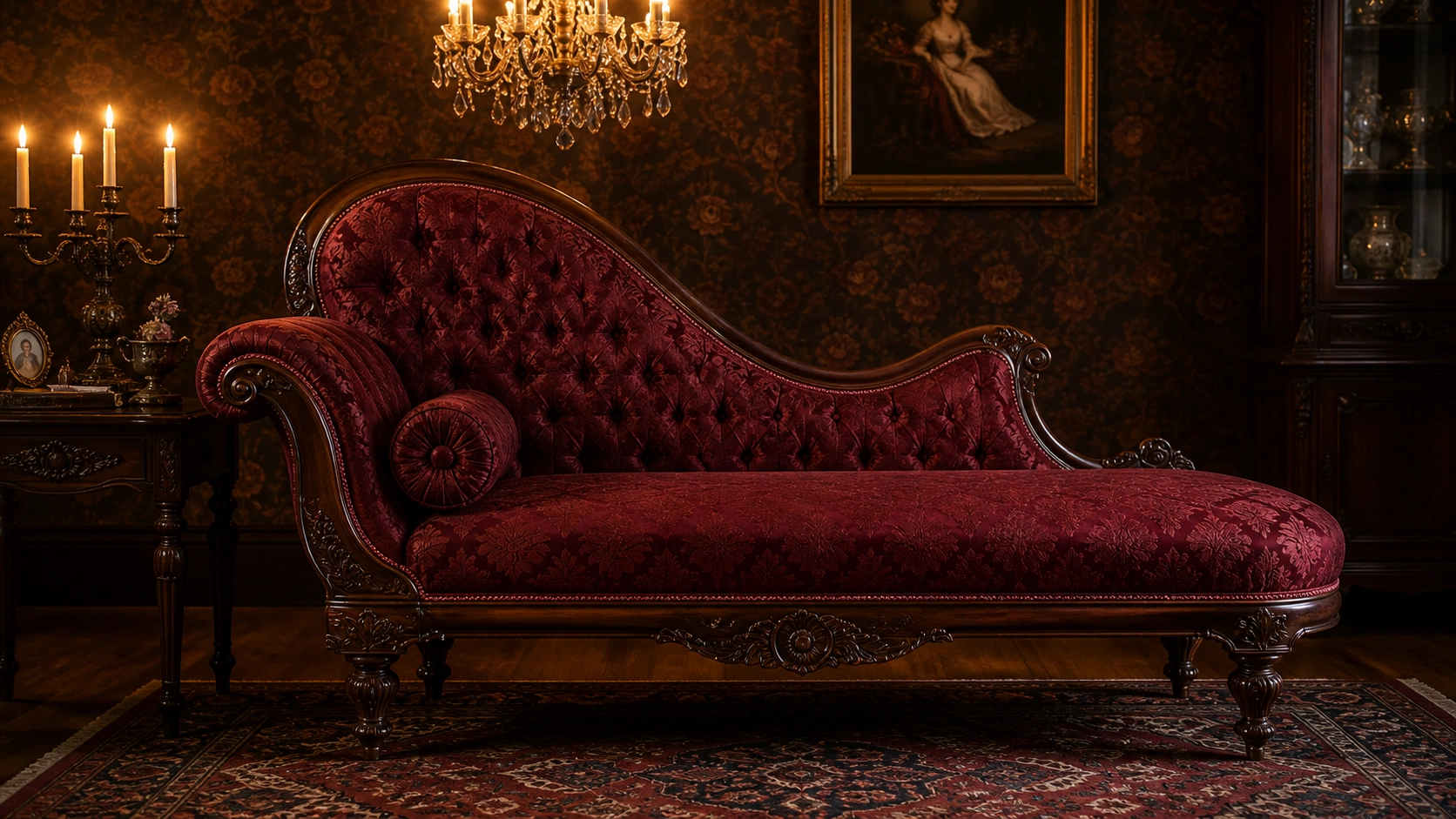
Victorian parlor rooms often featured fainting sofas as centerpiece seating for guests
The fainting sofa emerged during the Victorian era (1837–1901), a period defined by elaborate interior design, ornate furniture, and strict social codes. Upper-class homes featured formal parlors where guests were received, and the fainting sofa became a staple in these spaces. Its design allowed women in restrictive corseted clothing to sit comfortably and, if needed, recline without drawing undue attention.
The style has roots in earlier French furniture, particularly the récamier — a backless daybed named after Madame Récamier, a Parisian socialite famously painted reclining on one by Jacques-Louis David in 1800. British furniture makers adapted the récamier concept by adding a curved, raised back, creating the distinct shape we now recognize as the fainting sofa.
During the late 19th century, fainting sofas were often upholstered in rich fabrics like brocade, velvet, and damask, with tufted detailing, carved wooden legs, and scrolled armrests. They symbolized refinement and were found in the homes of wealthy families across Europe and North America.
The design experienced a revival in the mid-20th century and continues to be produced today. Modern versions range from faithful reproductions to minimalist interpretations that strip away ornamentation while preserving the essential curved-back silhouette.
Historical insight: The "fainting" association is partly a myth. While Victorian women did occasionally feel dizzy from tight corsets, the sofa was primarily a luxury lounging piece — not a medical necessity. Calling it a "fainting couch" was more a reflection of social drama than practical function.
Key Design Characteristics
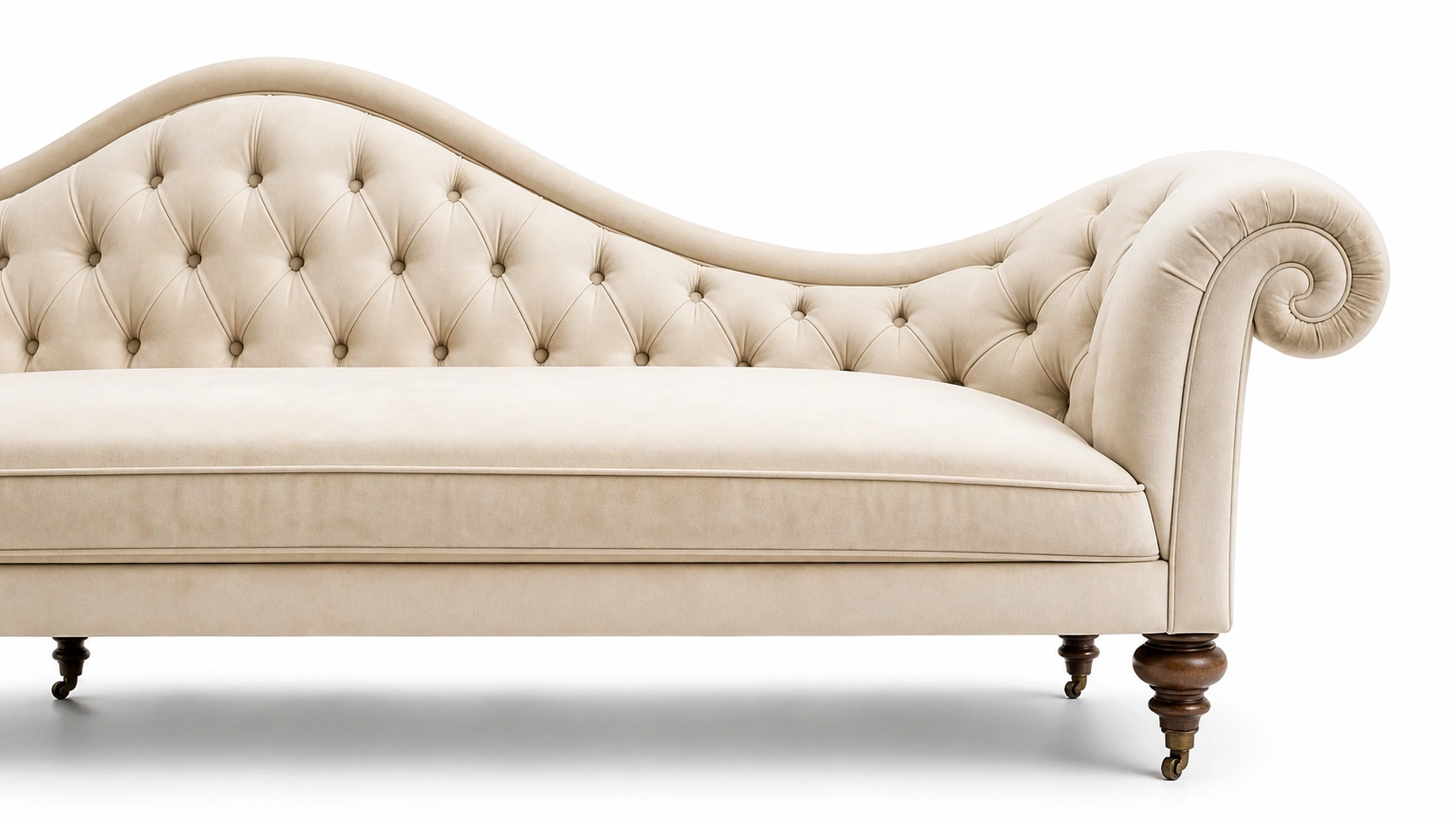
The defining elements: curved back, single scrolled armrest, and gently sloped seat
Identifying a genuine fainting sofa requires understanding several design elements that distinguish it from other reclining furniture. Here are the key characteristics to look for:
Curved, Sloping Backrest
The most distinctive feature is the backrest, which curves upward from the seat in a continuous arc, often described as a "bonnet" or "cabin" shape. Unlike a flat-backed sofa, the curve provides head and neck support at a reclined angle, creating a cradling effect. The back is typically higher on the side with the armrest and gradually tapers down toward the open end.
Single Scrolled Armrest
Fainting sofas have only one armrest, located on the higher side where the backrest is tallest. This armrest is usually scrolled or rolled, echoing the rolled-arm style common in traditional furniture. The opposite end remains completely open, which is what differentiates the fainting sofa from a standard two-armed sofa.
Asymmetric Silhouette
The combination of a curved back, single arm, and open end creates a clearly asymmetric profile. When viewed from the side, the sofa resembles a elongated S-curve. This asymmetry is the defining visual signature — no other common furniture type has exactly this shape.
Tufted Upholstery
Most fainting sofas feature button or deep tufting on the back and sometimes the seat. Tufting adds visual depth, helps keep the upholstery taut over the curved frame, and reinforces the Victorian aesthetic. Modern versions may use channel tufting or omit tufting entirely for a cleaner look.
Shorter Length Than a Daybed
Fainting sofas typically measure between 60 and 75 inches in length, which is shorter than most daybeds (75–80 inches) but longer than a standard 2-seater sofa (50–60 inches). This compact length makes them easier to place in rooms where a full daybed would feel oversized.
Decorative Legs
Traditional fainting sofas sit on exposed wooden legs, often turned, carved, or cabriole-style. Modern interpretations may use tapered legs, metal frames, or even hidden bases. The leg style significantly affects whether the piece reads as antique, transitional, or contemporary.
Fainting Sofa vs. Similar Furniture
One of the most common sources of confusion is distinguishing a fainting sofa from visually similar pieces. The table below clarifies the key differences:
| Feature | Fainting Sofa | Chaise Lounge | Daybed | Récamier |
|---|---|---|---|---|
| Backrest | Curved, bonnet-style, higher on one side | Flat or partially raised along one long side | Raised at both ends or one end | Typically backless |
| Armrests | One scrolled arm on the high side | Usually none, sometimes one on the raised end | Often two, sometimes none | None |
| Symmetry | Asymmetric | Asymmetric | Symmetric or asymmetric | Symmetric |
| Length | 60–75 inches | 65–80 inches | 75–80 inches | 70–80 inches |
| Recline Angle | Semi-upright (30–45°) | Near-flat to semi-upright | Flat (can function as a bed) | Near-flat |
| Origin Era | Victorian (19th century) | French 18th century | Ancient to modern | French late 18th century |
| Best For | Accent lounging, reading nook | Full-body recline, sunbathing | Sleeping guests, day lounging | Decorative statement piece |
If you want a piece that supports a comfortable semi-recline for reading without the footprint of a full daybed, the fainting sofa is the ideal choice. If you need a piece that doubles as a sleeping surface, a daybed or sleeper sofa would serve you better.
Best Rooms & Placement Ideas
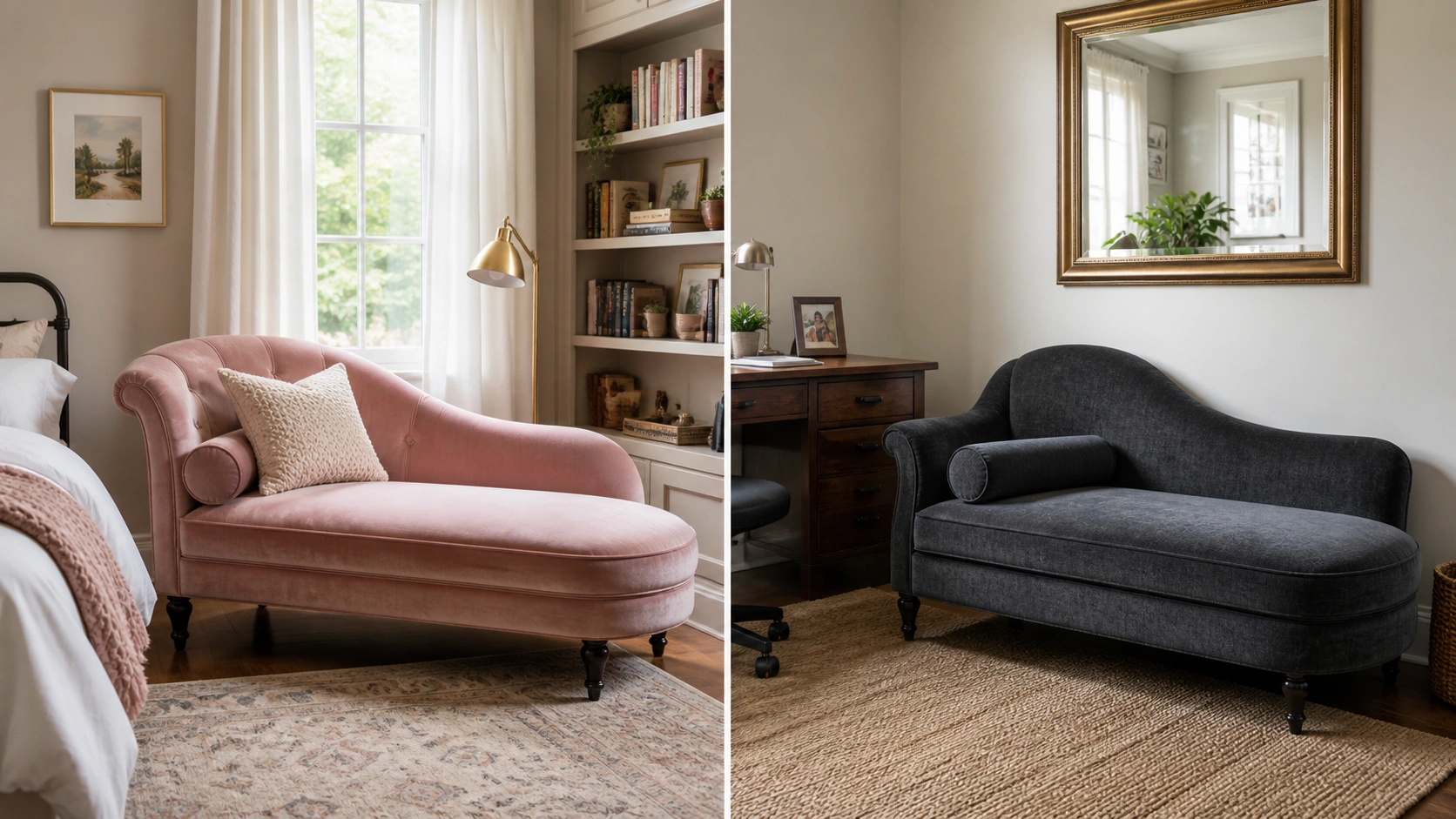
A fainting sofa works as a statement piece in multiple rooms throughout the home
The distinctive silhouette of a fainting sofa makes it a natural focal point. Because it is shorter than most conventional sofas, it fits easily into rooms where larger pieces would feel overwhelming. Here are the best placement options:
Living Room Accent
Position diagonally in a corner or perpendicular to your main living room sofa to create visual interest. Works especially well in eclectic or traditional design schemes.
Bedroom Reading Nook
Place near a window with a small side table for books and tea. The semi-recline angle is perfect for bedtime reading without fully lying down.
Home Office
Add sophistication to a home office by placing a fainting sofa opposite the desk. It serves as client seating or a personal break spot during long work sessions.
Entryway or Foyer
A small fainting sofa makes a bold first impression in an entryway. Pair with a console table behind it and a statement mirror above.
Guest Room
In a guest room, a fainting sofa provides stylish seating that doubles as lounging space — ideal for guests who prefer not to use the bed during the day.
Dressing Room or Walk-in Closet
For larger dressing areas, a fainting sofa adds a luxurious touch — perfect for putting on shoes or taking a moment to relax.
Placement tip: Because of its asymmetric design, a fainting sofa looks best when the curved back faces the room's main traffic flow. This ensures the signature silhouette is visible from the most frequently used viewing angles. Measure your space carefully using our sofa measurement guide before purchasing.
Materials & Construction
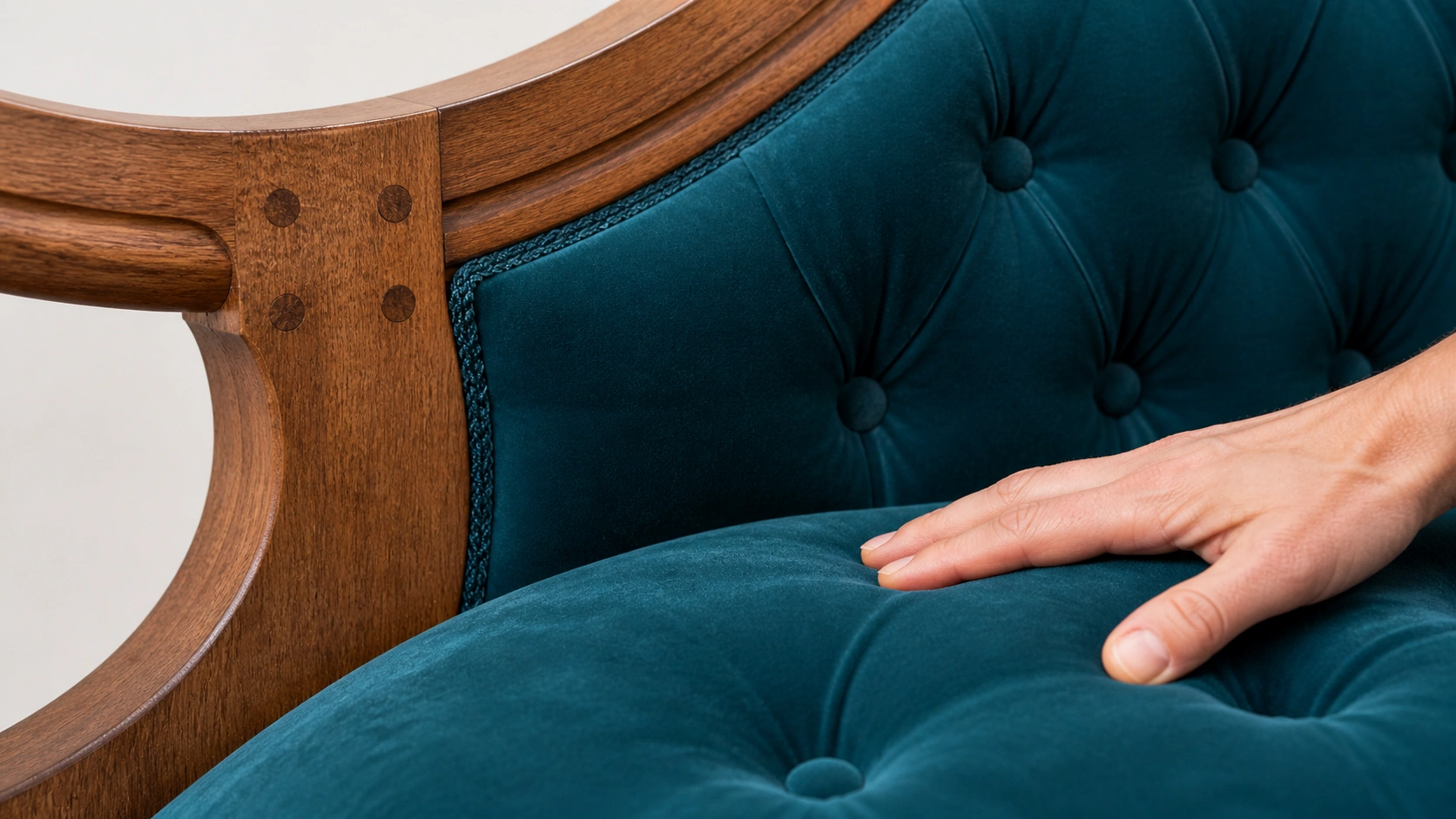
Quality construction starts with a solid hardwood frame and durable upholstery
Understanding the materials used in a fainting sofa directly impacts its durability, comfort, and long-term value. Here is what to evaluate:
Frame Materials
The curved back of a fainting sofa requires a strong frame material capable of holding its shape over time. Kiln-dried hardwoods like oak, maple, birch, or beech are ideal. Avoid sofas with frames made primarily of plywood or particleboard, as the curved structure puts more stress on joints than a straight-backed design. Look for frames joined with dowels, mortise-and-tenon, or corner blocks — staples alone are a red flag.
Upholstery Fabric
The choice between leather and fabric depends on your priorities:
- Velvet: The most traditional and popular choice. Velvet enhances the Victorian aesthetic and feels luxurious. A velvet fainting sofa is ideal for low-to-moderate traffic areas. Learn proper care with our velvet cleaning guide.
- Linen: Offers a lighter, more casual look. Linen upholstery breathes well and works in contemporary or coastal settings, though it wrinkles easily and may not hold up to heavy use.
- Brocade / Damask: Authentic period fabrics with woven patterns. Best for reproduction pieces in formal rooms. These are delicate and best suited for decorative use.
- Performance Fabric: Modern performance fabrics like polyester blends offer stain resistance and durability while mimicking the look of velvet or linen — a practical choice for households with children or pets.
- Leather: A leather fainting sofa creates a dramatic, masculine contrast to the traditionally feminine Victorian design. It is highly durable and easy to maintain — see our leather care guide.
Cushion Fill
The cushion fill type determines how the sofa feels over time. High-resilience foam wrapped in a down or polyester layer offers the best balance of support and softness. All-foam cushions are firm and hold their shape but may feel rigid. All-down cushions are plush but require frequent fluffing and may lose support quickly. For a fainting sofa that will be used regularly, a foam-core with a wrapped layer is the most practical choice.
Spring System
Quality fainting sofas use eight-way hand-tied springs or sinuous (S-type) springs. Eight-way tied springs offer superior support and longevity but come at a higher cost. Sinuous springs are a good mid-range option. Avoid webbing-only suspension, which sags quickly, especially problematic on a curved seat.
Pros & Cons
Before purchasing, weigh the advantages and drawbacks honestly. A fainting sofa is a statement piece with specific strengths and limitations.
Advantages
- Unique, eye-catching silhouette that serves as a room's focal point
- Compact footprint — shorter than daybeds and many conventional sofas
- Comfortable semi-recline ideal for reading, napping, and relaxing
- Rich historical character adds sophistication to any design style
- Versatile placement options — works in living rooms, bedrooms, offices, and entryways
- Wide range of upholstery options from traditional velvet to modern performance fabrics
- Holds value well, especially quality reproductions and genuine antiques
Disadvantages
- Seats only one person comfortably — not a group seating solution
- Asymmetric design limits placement to certain wall or corner configurations
- Curved frame can make cushions less replaceable than standard rectangular ones
- Traditional styles may clash with ultra-modern or minimalist interiors
- Quality reproductions with solid frames and genuine upholstery can be expensive
- Some designs prioritize form over ergonomics — always test before buying
- Delicate fabrics on ornate versions require careful maintenance
Buying Guide & Checklist
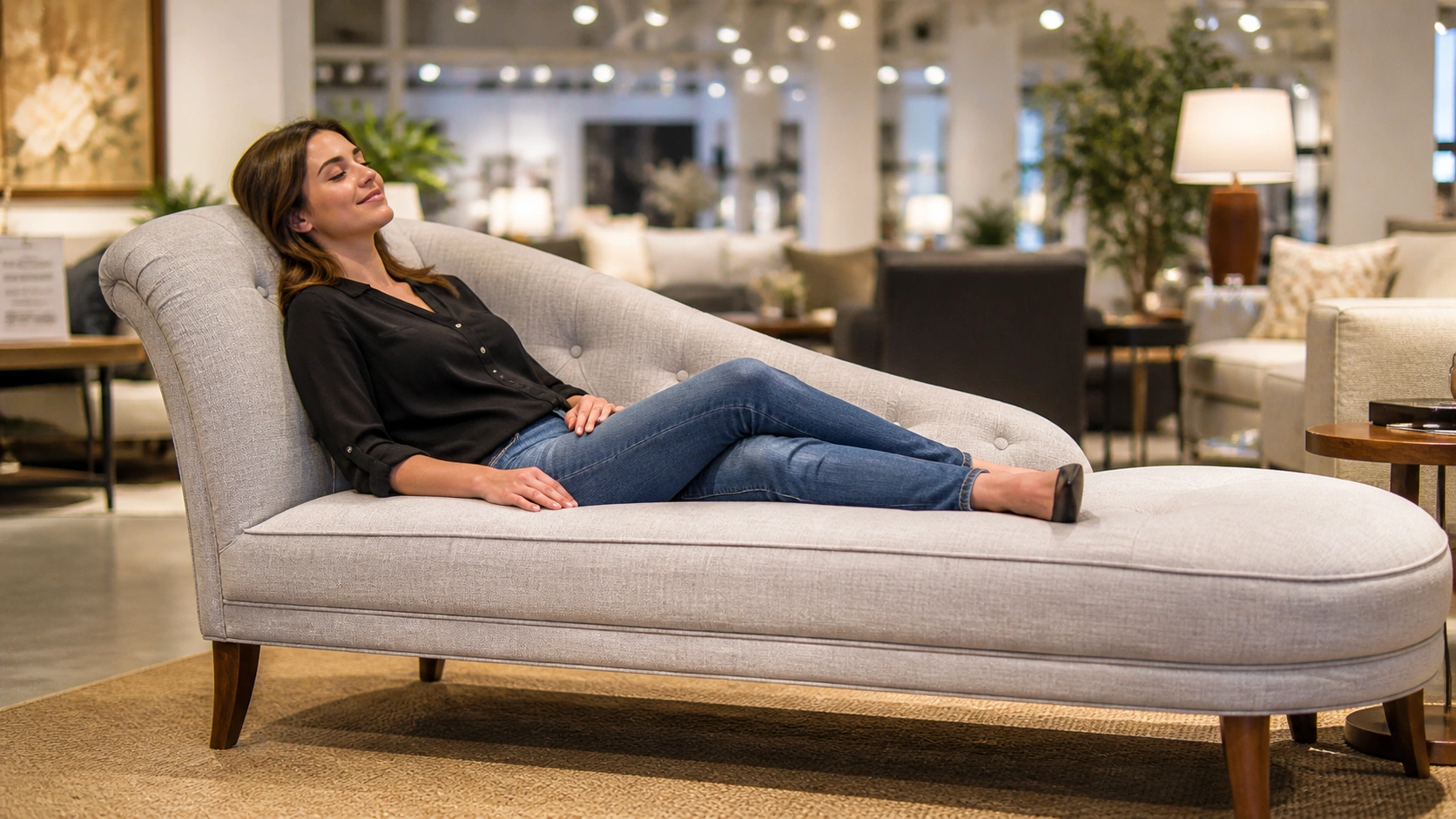
Always test a fainting sofa in person when possible to evaluate the recline angle and cushion support
Buying a fainting sofa requires more attention to detail than purchasing a standard sofa, because the curved design magnifies construction quality issues. Follow this checklist to ensure you select a piece that is both beautiful and built to last:
For a broader understanding of sofa shopping fundamentals, our complete sofa buying guide covers additional factors like delivery, warranties, and red flags to watch for. If you are unsure about budget, our cost guide and budget planning article can help you set realistic expectations.
Frequently Asked Questions
A fainting sofa is a Victorian-era seating piece with a curved, sloping back that extends into a single armrest, designed so a person could recline without fully lying down. Despite its name, it was never primarily used for fainting — it served as an elegant day lounge for reading, resting, and socializing.
A fainting sofa has a curved, bonnet-style back that wraps around one end, while a chaise lounge typically has a flat or partially raised back along one long side. Fainting sofas are shorter, more decorative, and rooted in Victorian design, whereas chaise lounges come in many modern styles and are generally longer.
Yes, many modern fainting sofas are built with durable frames and supportive cushioning suitable for daily use. However, traditional or antique versions may be better suited as accent pieces in low-traffic areas due to delicate upholstery and ornamental construction.
Fainting sofas work well in living rooms as accent pieces, bedrooms as reading nooks, home offices for a sophisticated touch, entryways as statement seating, and guest rooms. They need to be positioned where their distinctive silhouette can be appreciated from multiple angles.
Fainting sofas range from around $300 for budget-friendly reproductions to over $3,000 for high-end or custom pieces. Mid-range options with solid wood frames and quality upholstery typically fall between $600 and $1,500. Antique or designer models can exceed $5,000.
No. A récamier is a French backless daybed with raised ends, while a fainting sofa has a curved raised back and a single armrest. The fainting sofa was inspired by the récamier but is a distinct design with different proportions and functionality.
Velvet is the most traditional and visually appropriate choice, enhancing the Victorian character. For durability, performance fabrics that mimic velvet offer stain resistance and easier maintenance. Leather provides a modern contrast and exceptional longevity. Brocade and damask are best for decorative, low-traffic use.