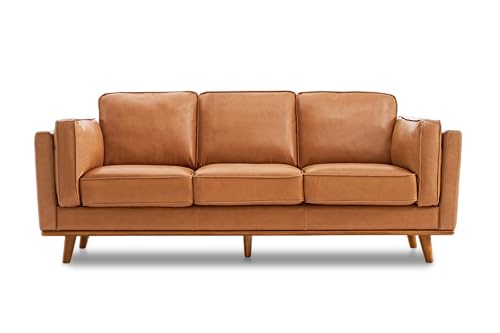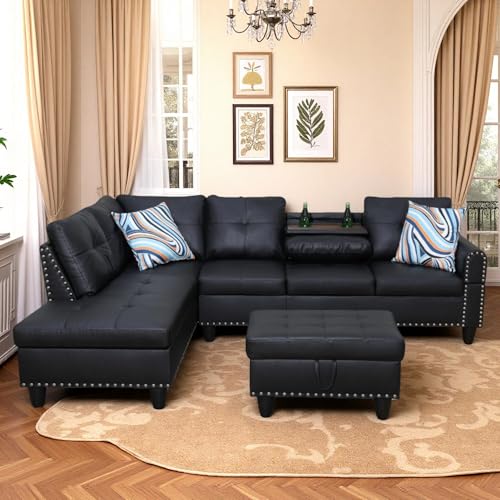
Leather Grades Explained: The Complete Buyer's Guide
Not all leather is created equal. Understand the differences between full-grain, top-grain, corrected grain, split, and bonded leather to invest in a sofa that truly lasts.
Why this matters: A leather sofa is one of the most significant furniture investments you'll make. Two sofas that look identical can differ by thousands of dollars — and decades of lifespan — based entirely on the leather grade used. This guide breaks down every leather grade so you can confidently choose the right one for your home, lifestyle, and budget.
Table of Contents
- What Are Leather Grades?
- How Hides Are Split into Grades
- Full-Grain Leather
- Top-Grain Leather
- Corrected Grain Leather
- Split Leather
- Bonded Leather
- Side-by-Side Comparison
- Which Leather Grade Is Right for You?
- How to Identify Leather Grades When Shopping
- Care Tips by Leather Grade
- Frequently Asked Questions

What Are Leather Grades?
Leather grades refer to the quality classification of leather based on which layer of the animal hide is used and how much processing it undergoes. When a raw cowhide arrives at a tannery, it is thick enough to be split into multiple layers — much like slicing a thick block of cheese. The outermost layer, which contains the strongest and most natural fibers, produces the highest grade. As you move deeper into the hide, the fibers become looser, weaker, and less durable.
Understanding these grades is essential because the grade directly affects your sofa's durability, comfort, appearance, and maintenance requirements. A full-grain leather sofa can outlast a bonded leather sofa by 10 to 25 years, yet many buyers cannot tell them apart at first glance. This knowledge gap is exactly what leads to costly regrets.
Leather grading is not a regulated industry standard — there is no official government body that defines these terms. However, the tanning industry and furniture manufacturers generally agree on a common hierarchy: full-grain > top-grain > corrected grain > split > bonded. To dive deeper into how leather fits into the broader picture of sofa materials, see our complete guide on sofa materials explained.
How Hides Are Split into Different Grades
Before any leather is tanned, dyed, or finished, the raw hide goes through a splitting process. A industrial splitting machine separates the thick hide into two or sometimes three distinct layers. This process determines the grade of leather each layer will become.
- Inspection & Sorting — Raw hides are inspected for quality. Hides with fewer scars, insect bites, and brands are designated for premium grades. Flawed hides are routed to lower-grade processing.
- Splitting — The hide is passed through a precision splitting machine that separates it horizontally. The top portion (grain layer) retains the tight, dense fiber structure. The bottom portion (corium layer) has looser, more fibrous tissue.
- Surface Treatment — The top layer may be left untouched (full-grain), lightly sanded (top-grain), or heavily sanded and embossed (corrected grain). The bottom layer is often finished with a polyurethane coating to simulate grain texture (split or bonded leather).
- Tanning & Dyeing — Each layer is tanned (chrome or vegetable tanned) and dyed. Higher grades receive aniline or semi-aniline dyes that preserve natural character. Lower grades receive pigment-based finishes that cover imperfections.
- Final Finishing — Protective coatings, embossing patterns, and sealants are applied. Higher grades get minimal finishing; lower grades rely heavily on finishes for their appearance.

💡 Key Insight
The quality of the original hide matters enormously. A full-grain piece from a low-quality hide with many scars will still have visible imperfections. This is why premium furniture makers source hides from specific regions (like Scandinavian or Argentine cattle) where the animals are raised in conditions that minimize hide damage. For a broader understanding of how material quality impacts overall sofa value, read our price vs quality guide.
Full-Grain Leather
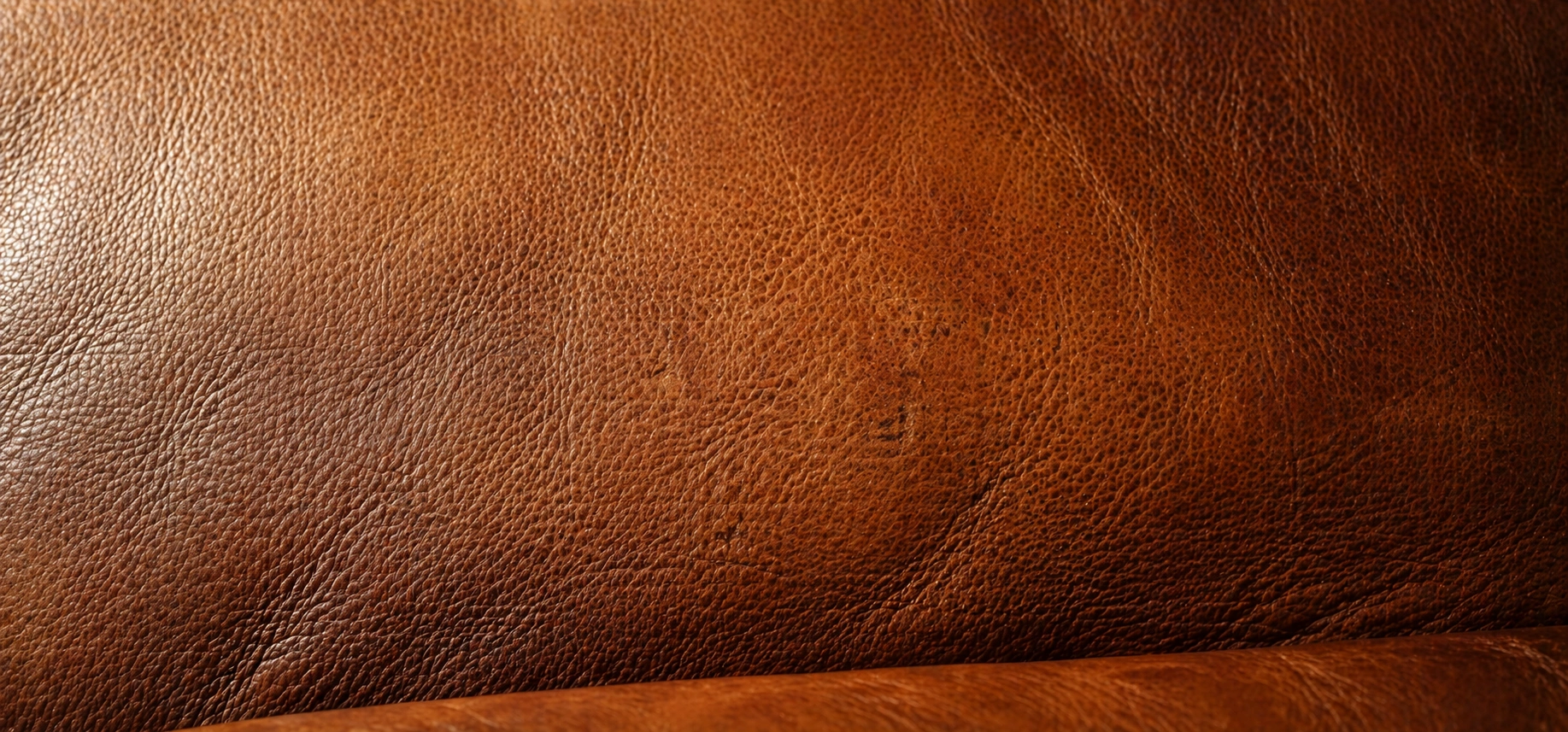
Full-grain leather is the undisputed king of leather grades. It uses the entire top layer of the hide with absolutely no sanding, buffing, or surface alteration. Every natural mark — wrinkles, pores, subtle color variations, and even minor scars — remains visible. This is leather in its purest, most honest form.
Characteristics
Full-grain leather is incredibly dense and tightly packed at the fiber level because it retains the hide's natural grain surface. This density gives it exceptional tensile strength — it resists tearing, puncturing, and stretching far better than any other grade. It is also the most breathable leather, allowing air and moisture to pass through naturally, which means it feels cool in summer and warm in winter.
Perhaps the most beloved quality of full-grain leather is its ability to develop a patina — a rich, glossy sheen that deepens in color over years of use. Each sofa develops a unique patina based on how and where it's used, making it truly one-of-a-kind. This aging process is not deterioration; it's enhancement. Full-grain leather is the only grade that genuinely improves with age.
Pros & Cons
- Unmatched durability — Can last 15 to 30+ years with proper care, far outperforming all other grades
- Develops beautiful patina — The leather becomes more attractive over time, unlike synthetic materials that degrade
- Most breathable — Natural pore structure allows temperature regulation and moisture wicking
- Strongest fiber structure — Highest resistance to tearing, abrasion, and punctures
- Retains natural character — Each piece is unique with distinctive grain patterns
⚠️ Considerations
Full-grain leather is the most expensive grade, typically adding $1,500–$4,000+ to a sofa's price. It is also more susceptible to initial staining because it lacks a protective topcoat. Light colors show scratches and marks more easily. It requires regular leather conditioning every 3–6 months to maintain suppleness and prevent drying. If you have young children or large pets, you may want to consider a darker color or a slightly more practical grade like top-grain.
Full-grain leather is the grade found on premium luxury sofas and classic pieces like the Chesterfield sofa. If you want a sofa that becomes a family heirloom, this is the grade to choose. To see curated options, explore our best leather sofa recommendations.
Top-Grain Leather
Top-grain leather is the second-highest grade and, by far, the most commonly used leather in quality furniture. It comes from the same top layer of the hide as full-grain, but undergoes light sanding to remove the very top surface — a thin layer called the "epidermis" that contains imperfections, scars, and insect bites.

Characteristics
The light sanding removes surface imperfections but preserves the underlying tight fiber structure, so top-grain retains approximately 85–90% of full-grain's strength. After sanding, a light finish or dye is applied — typically a semi-aniline or pigmented finish. This gives top-grain a more consistent color and appearance compared to full-grain's wild natural variations.
Top-grain leather is slightly thinner than full-grain (typically 0.9–1.2mm vs 1.2–1.5mm), which makes it slightly more flexible and softer to the touch right out of the box. Many people actually prefer the initial feel of top-grain over full-grain because it's more supple without the break-in period. However, top-grain does not develop the same rich patina as full-grain — its appearance remains relatively stable over time.
Pros & Cons
- Excellent durability — Lasts 10–20 years with care, making it a sound long-term investment
- More uniform appearance — Light sanding removes scars and blemishes for a cleaner look
- Softer initial feel — More flexible and comfortable from day one compared to full-grain
- Better stain resistance — The applied finish provides a protective barrier against spills
- Best value-to-quality ratio — Delivers 85–90% of full-grain performance at 60–75% of the cost
⚠️ Considerations
The sanding process removes the toughest surface fibers, so top-grain is marginally less durable than full-grain. It will not develop a patina — what you see is largely what you'll have in 10 years. Thinner hides may show creasing more quickly in high-use areas. Pigmented top-grain can feel slightly less breathable than aniline-dyed versions.
For most households, top-grain represents the sweet spot between quality and practicality. It's widely used in top-rated sofas across all price ranges. If you're comparing leather versus fabric options for your household, our leather vs fabric comparison provides additional context on how top-grain stacks up against popular upholstery fabrics.
Corrected Grain Leather
Corrected grain leather takes the top layer of the hide but applies heavy sanding to remove all surface imperfections — scars, brands, insect marks, wrinkles, and even the natural grain pattern itself. After this aggressive sanding, an artificial grain pattern is embossed back onto the surface using a press, and a thick pigment coating is applied to create a uniform appearance.

Characteristics
The heavy sanding significantly weakens the fiber structure, so corrected grain is notably less durable than top-grain or full-grain. The thick pigment coating (often called a "polyurethane finish" or "PU topcoat") provides excellent stain and spill resistance but also makes the leather feel stiffer and less breathable. It can feel almost plastic-like, especially on lower-quality corrected grain.
Corrected grain is often marketed under appealing names like "premium bonded leather," "genuine leather upholstery," or simply "genuine leather." The term "genuine leather" is particularly misleading — it technically means real leather, but it refers to the lowest tier of real leather, not a quality indicator. This is one of the most common sources of confusion for sofa buyers, which is why knowing how to check sofa quality before purchasing is so important.
Pros & Cons
- Very uniform appearance — No visible scars, marks, or color variations
- Excellent stain resistance — Thick pigment coating repels spills effectively
- More affordable — Significantly cheaper than top-grain or full-grain
- Available in many colors — Pigment coating allows for any color, including bold and unusual shades
⚠️ Considerations
Corrected grain is the grade most likely to crack and peel over time. The thick surface coating is rigid and doesn't flex with the leather underneath, leading to crease lines where the coating cracks. Once the coating cracks, moisture gets underneath and accelerates peeling. It feels noticeably stiffer and less luxurious than higher grades. Lifespan is typically 5–10 years, and it will not improve with age. If you're deciding between corrected grain and quality fabric, our guide on the most durable sofa fabric may surprise you.
Split Leather
Split leather comes from the bottom layer of the hide (the corium) after the top grain layer has been removed. This layer has a completely different fiber structure — looser, more fibrous, and significantly weaker. On its own, split leather has a suede-like, napped surface on one side and a rough, unfinished back.

How It's Used in Sofas
Split leather is rarely used as the primary seating surface on quality sofas. Instead, it's commonly found on the backs and sides of leather sofas where a manufacturer uses top-grain on the contact surfaces and split leather on the non-contact areas. This practice is legitimate and labeled as "top-grain leather seating with split leather sides and back." However, some less scrupulous sellers may not clearly disclose this, leading buyers to believe the entire sofa is top-grain.
When used on seating surfaces, split leather is always coated with a thick polyurethane layer and embossed to mimic grain leather. Without this coating, it would wear through extremely quickly. Even with coating, split leather on seating surfaces typically shows significant wear within 3–7 years.
💡 Shopping Tip
When evaluating a leather sofa, always ask: "Is this top-grain on all surfaces, or only on the seating areas?" A sofa labeled "leather match" or "leather wherever you touch" typically uses split leather (or sometimes vinyl) on the sides and back. This isn't necessarily a dealbreaker for budget-conscious buyers, but you should know what you're paying for. Understanding sofa frame materials alongside leather grades gives you the full picture of a sofa's construction quality.
Bonded Leather
Bonded leather is the most controversial "leather" product in the furniture industry, and many experts argue it shouldn't be called leather at all. It is made by grinding leather scraps and fibers leftover from the tanning process into a pulp, mixing this pulp with polyurethane and other bonding agents, and pressing it into sheets. A thin layer of polyurethane is then applied to the surface, often embossed with a grain pattern and colored to look like real leather.
The Reality of Bonded Leather
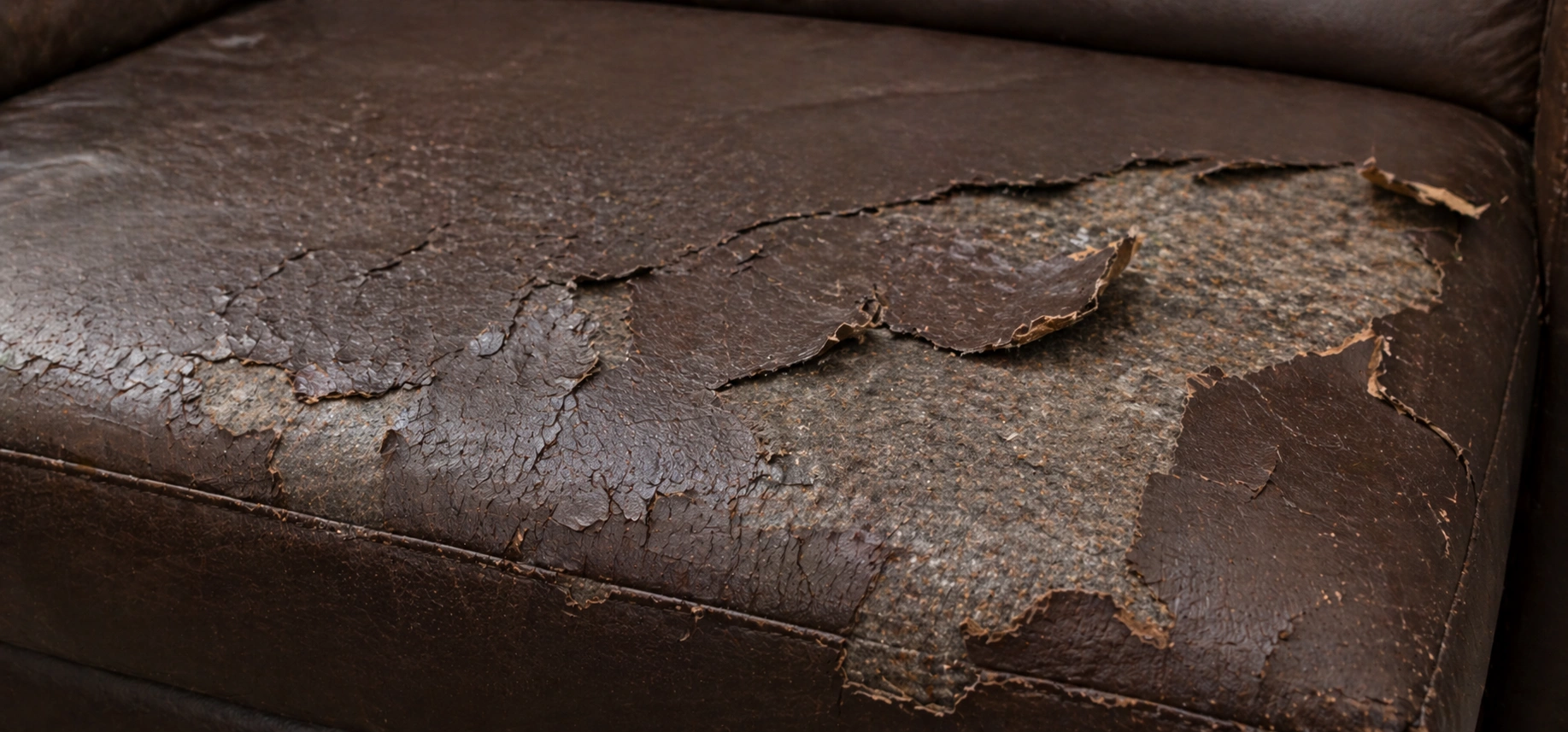
Bonded leather typically contains only 10–20% actual leather fibers. In some jurisdictions, products can legally be labeled "bonded leather" or "leather" even with as little as 10% leather content. The remaining 80–90% is essentially plastic (polyurethane) with leather dust mixed in for marketing purposes.
The fundamental problem with bonded leather is that the surface coating and the backing material have very different flexibilities. As the sofa is sat on and the material flexes, the rigid PU surface develops microscopic cracks. These cracks spread, moisture and body oils seep underneath, and the surface begins to peel away in sheets. This process typically begins within 2–4 years and, once it starts, it cannot be repaired — only the entire upholstery can be replaced, which often costs more than the sofa is worth.
⚠️ Strong Warning
We strongly recommend against buying bonded leather sofas for primary living spaces. The short lifespan (2–5 years before significant peeling) makes it a poor investment despite the low initial price. The peeling issue is so widespread that many furniture forums and consumer advocacy groups consider bonded leather one of the most common furniture purchase regrets. If you're working with a tight budget, you'll get significantly better long-term value from a quality fabric sofa or one of our recommended budget-friendly sofas. For a broader budget perspective, see our sofa budget guide.
Leather Grades at a Glance

Full-Grain
The entire top layer, untouched. Maximum durability with beautiful patina development.
- Lifespan15–30+ years
- Price Range$300 – $800+
- DurabilityExcellent
- BreathabilityExcellent

Top-Grain
Top layer, lightly sanded. The best balance of quality, appearance, and practicality.
- Lifespan10–20 years
- Price Range$150 – $400
- DurabilityVery Good
- BreathabilityVery Good
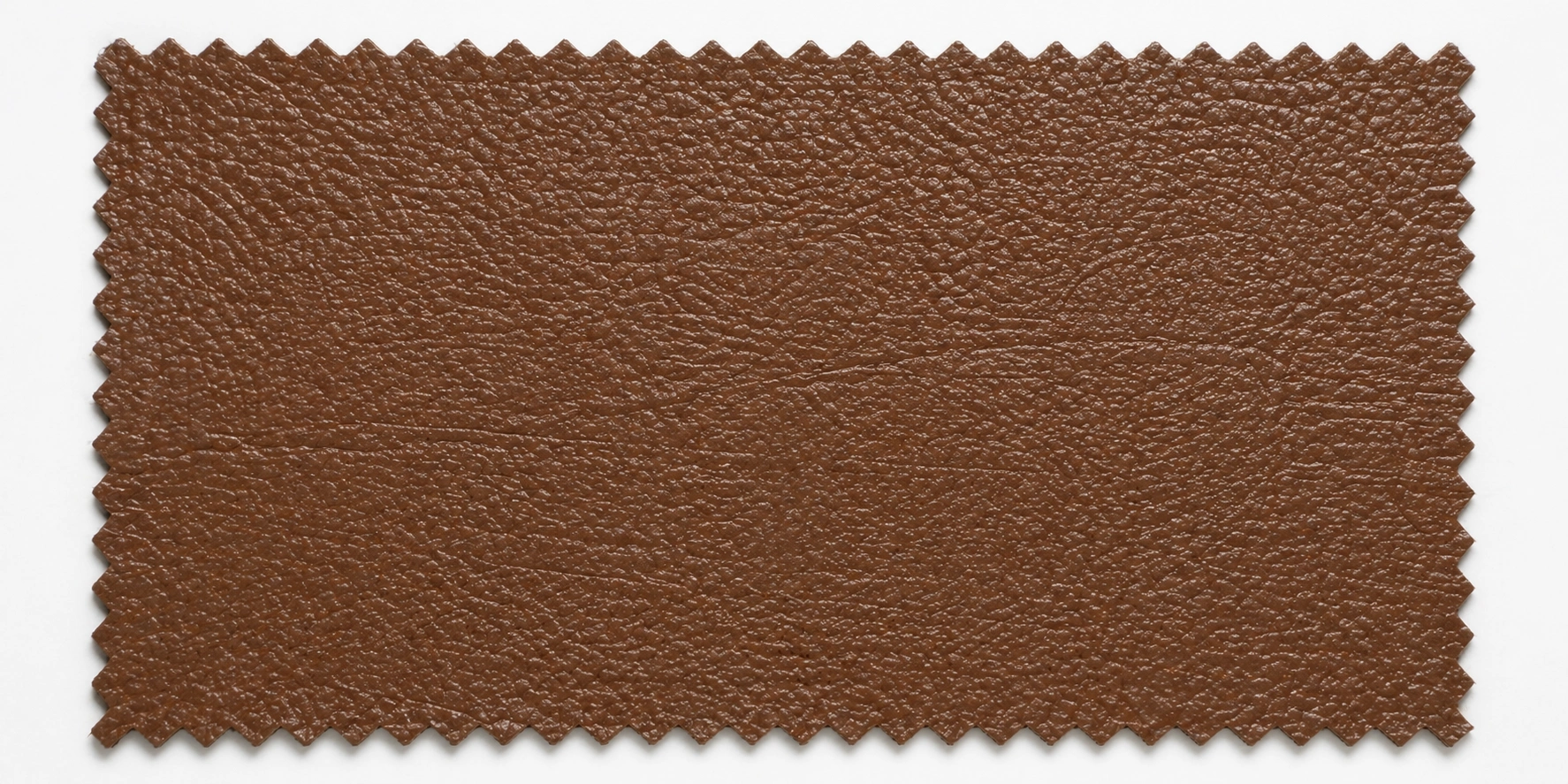
Corrected Grain
Heavily sanded and embossed. Uniform look but prone to cracking over time.
- Lifespan5–10 years
- Price Range$50 – $150
- DurabilityModerate
- BreathabilityPoor

Bonded Leather
10–20% leather fibers mixed with PU. Lowest cost but high risk of peeling.
- Lifespan2–5 years
- Price Range$20 – $80
- DurabilityPoor
- BreathabilityVery Poor
Side-by-Side Comparison
The following table breaks down every key attribute across all five leather grades so you can quickly identify which grade aligns with your priorities.
| Attribute | Full-Grain | Top-Grain | Corrected Grain | Split | Bonded |
|---|---|---|---|---|---|
| Source Layer | Top layer, untouched | Top layer, lightly sanded | Top layer, heavily sanded | Bottom layer (corium) | Leather scraps + PU |
| Natural Grain | 100% preserved | Mostly preserved | Removed, embossed | None, coated | None, artificial |
| Durability | Excellent | Very Good | Moderate | Low | Very Low |
| Breathability | Excellent | Very Good | Poor | Poor | None |
| Stain Resistance | Low | Good | Excellent | Good | Good* |
| Patina Development | Yes, beautiful | Minimal | No | No | No |
| Typical Lifespan | 15–30+ years | 10–20 years | 5–10 years | 3–7 years | 2–5 years |
| Peeling Risk | None | Very Low | Moderate | High | Very High |
| Price (per sofa) | $2,500–$8,000+ | $1,500–$4,500 | $800–$2,000 | $500–$1,500 | $300–$900 |
💡 About Bonded Leather Stain Resistance
While bonded leather's polyurethane surface initially resists stains well (marked "Good" above), this benefit is meaningless in practice because the surface will begin peeling within 2–4 years, at which point the exposed leather-pulp backing stains easily and cannot be cleaned effectively.
Which Leather Grade Is Right for You?
The "best" leather grade depends entirely on your specific situation. A household with toddlers and golden retrievers has different needs than a formal living room that sees occasional use. Here are our recommendations based on common scenarios:
Family with Kids & Pets
Active households need leather that can handle spills, scratches, and constant use. Stain resistance and durability are top priorities.
→ Top-Grain (pigmented)Formal Living Room
Low-traffic spaces where aesthetics and luxury matter more than stain resistance. You want leather that makes a statement.
→ Full-Grain (aniline)Daily Primary Sofa
The main sofa used every day for TV, relaxing, and entertaining. Needs to balance comfort, durability, and value.
→ Top-Grain (semi-aniline)Tight Budget
Want the leather look without the premium price tag, but still expect reasonable longevity.
→ Top-Grain (pigmented, sale)Home Office
Professional appearance with moderate use. Needs to look sharp for clients and hold up to daily sitting.
→ Top-Grain or Corrected GrainRental Property / Airbnb
Needs to look good for guests, withstand varied use, and be cost-effective to replace if damaged.
→ Top-Grain (pigmented)✅ Our Universal Recommendation
For the vast majority of buyers, pigmented top-grain leather offers the best overall value. It delivers 85–90% of full-grain's durability at a significantly lower price, has excellent stain resistance for real-world use, and maintains its appearance for 10–20 years. Reserve full-grain for statement pieces in low-traffic rooms, and avoid bonded leather entirely for primary seating. To understand how leather grade fits into your overall sofa budget, see how much a good sofa costs.
How to Identify Leather Grades When Shopping
Retailers don't always make leather grade identification easy. Some use ambiguous terminology, and online product descriptions can be deliberately vague. Here are proven methods to determine what you're actually getting.

1. Read the Label Carefully
The product label is your first line of defense. Look for these specific terms and understand what they actually mean:
- "Full-grain leather" — The highest grade. The label should explicitly say "full-grain."
- "Top-grain leather" — Second highest. A quality choice when clearly labeled.
- "Genuine leather" — This is a legal term that refers to any product containing real leather, including corrected grain and split. It is NOT a quality indicator. Many buyers confuse it with "authentic" or "premium."
- "Bonded leather" — Must be disclosed. Often phrased as "bonded leather upholstery" or "reconstituted leather."
- "Leather match" or "Leather wherever you touch" — Means top-grain on seats and arms, split leather or vinyl on sides and back.
- "Faux leather," "PU leather," "Vegan leather" — Not real leather at all (100% synthetic).
2. Perform the Touch Test
Run your fingers across the surface. Full-grain and top-grain leather has a subtle, irregular texture you can feel — natural pores, slight variations in smoothness, and a supple, warm feel. Corrected grain and bonded leather feel unnaturally smooth and uniform, almost like plastic. If you press your finger into the surface, real leather will show a subtle wrinkle pattern; synthetic and bonded surfaces will bounce back rigidly.
3. The Water Drop Test
Place a small drop of water on an inconspicuous area. Full-grain leather (especially aniline-dyed) will slowly absorb the water, darkening slightly. Top-grain with a semi-aniline finish will absorb slowly over 30–60 seconds. Pigmented top-grain, corrected grain, and bonded leather will cause the water to bead up and sit on the surface because of the protective coating. This test helps differentiate between lightly finished and heavily finished leathers.
4. Inspect the Backside
If you can see the back of the leather (under cushions, on the underside of the sofa, or at seams), real leather will have a fibrous, suede-like texture — like the back of a belt. Bonded leather will often have a woven fabric or mesh backing visible. Faux leather has a uniform, often knitted or woven synthetic backing.
5. Ask Direct Questions
Don't hesitate to ask the seller directly: "What specific leather grade is this? Is it full-grain, top-grain, corrected grain, or bonded? Is the leather the same grade on all surfaces?" A reputable seller will answer clearly. Evasive or vague answers are a red flag. For more guidance on evaluating furniture before purchase, our article on how to check sofa quality before buying covers additional inspection techniques beyond leather grades.
Care Tips by Leather Grade
Different leather grades require different maintenance approaches. Using the wrong product on the wrong grade can actually cause damage. Here's a grade-by-grade care breakdown.
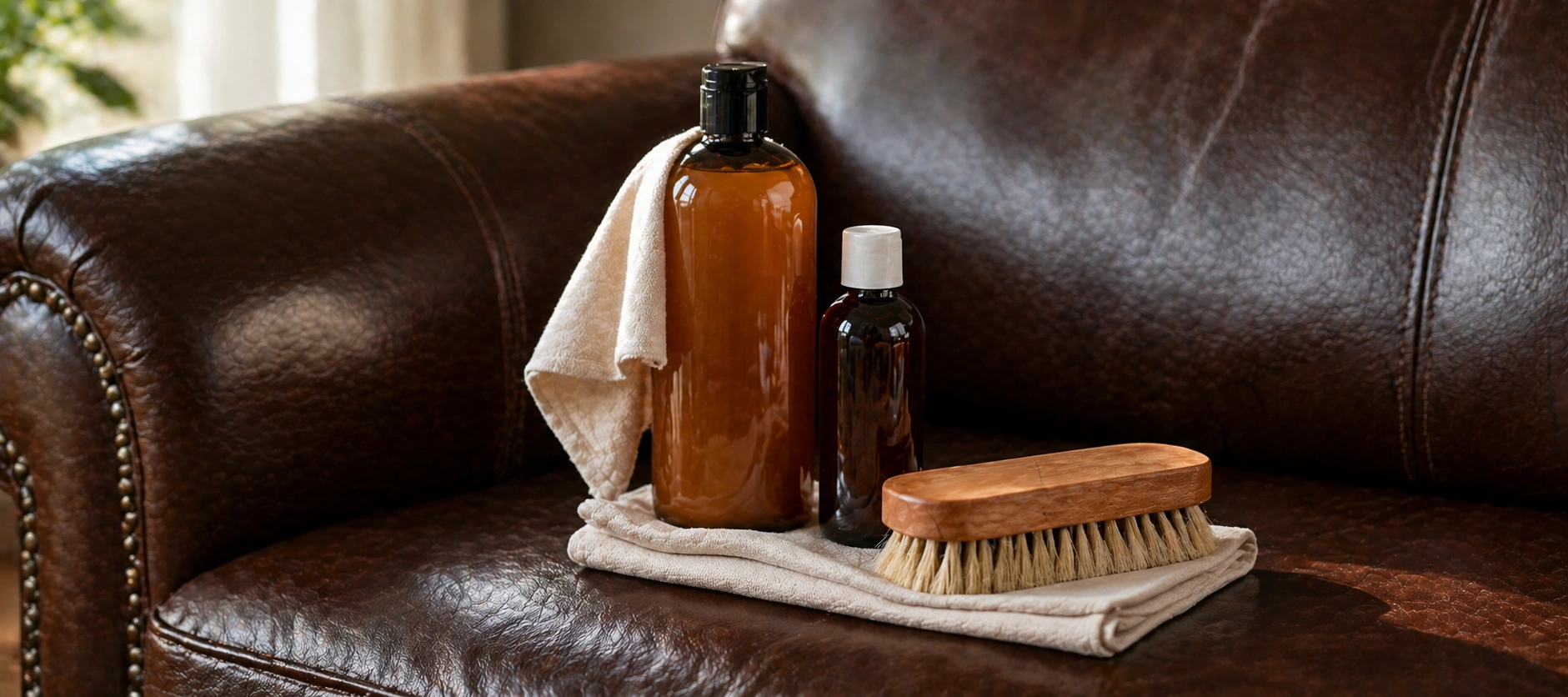
Full-Grain Leather Care
Full-grain leather demands the most attention but rewards you with decades of beauty. Condition every 3–6 months using a high-quality, pH-balanced leather conditioner. Clean spills immediately with a damp cloth — avoid harsh chemical cleaners. Keep the sofa out of direct sunlight to prevent fading (or use UV protection treatments). Dust weekly with a soft, dry cloth. Full-grain thrives on use — regular sitting actually helps keep the leather supple by distributing natural oils.
Top-Grain Leather Care
Top-grain is more forgiving but still benefits from regular care. Condition every 4–6 months with a conditioner appropriate for the finish type (aniline conditioners for semi-aniline, general conditioners for pigmented). Clean regularly with a damp cloth and mild soap. Pigmented top-grain can handle more aggressive cleaning than aniline versions. Address scratches promptly — light scratches on pigmented top-grain often respond to gentle rubbing with a clean finger (natural oils help). For comprehensive cleaning instructions, see our complete sofa cleaning guide.
Corrected Grain & Split Leather Care
These grades have thick surface coatings, so avoid waxy or oil-based conditioners that can build up and cause the coating to separate. Use a gentle, water-based cleaner and a soft cloth. Do not use abrasive cleaners or scrubbing pads that could damage the embossed grain pattern. The goal is to keep the surface coating intact — once it cracks, the underlying leather degrades rapidly. If small cracks appear, keep the area clean and conditioned to slow progression, but be aware that peeling is eventual with these grades.
Bonded Leather Care
There is limited value in investing significant effort into bonded leather maintenance because the material's failure mode (surface peeling) is structural, not maintenance-related. Wipe with a damp cloth as needed and avoid abrasive cleaning. Do not use leather conditioners — the oils can actually accelerate the separation between the PU surface and the backing material. If peeling begins, there is no effective repair; the affected area will continue to peel. If minor leather tears or peeling occurs on a small area, some repair kits can provide a temporary cosmetic fix, but replacement is ultimately necessary.
💡 Universal Leather Care Rules
Regardless of grade: never use baby wipes, alcohol-based cleaners, furniture polish, or harsh detergents on any leather. Keep leather away from direct heat sources (radiators, fireplaces). Use coasters to prevent dark circle stains from cups. Blot spills immediately — never rub. Rotate and flip cushions regularly to ensure even wear. These practices apply to all leather grades and will extend the life of any leather sofa.
Frequently Asked Questions
Final Takeaway: Understanding leather grades transforms you from a passive shopper into an informed buyer. A top-grain leather sofa at $2,000 is a far better investment than a bonded leather sofa at $800 — not just in years of enjoyment, but in cost-per-year of use. Choose your leather grade based on your real lifestyle, not just the initial price tag. When you're ready to buy, explore our curated leather sofa recommendations where every product is clearly labeled with its leather grade. For broader guidance on making the right choice overall, our how to choose a sofa guide walks you through every decision point.