
The Complete Sofa Buying Guide
A proven 7-step process to evaluate size, frame, material, cushion comfort, and value — so you buy with confidence and never regret your decision
See Recommended SofasPhanMarket Philosophy: A sofa is one of the most used and most expensive pieces of furniture you'll ever own. Rushing this decision costs you money and comfort for years. This guide walks you through every evaluation point — the same criteria interior designers and furniture buyers use — so you can shop like an expert, not a gambler.
Why Most People Regret Their Sofa Purchase
Studies consistently show that a sofa is among the top three most-regretted furniture purchases. The reasons are predictable: wrong size for the room, uncomfortable cushions that sag within months, materials that stain easily or deteriorate quickly, and frames that creak or wobble after a year. These problems share a single root cause — buyers skip the evaluation process and choose based on appearance alone.
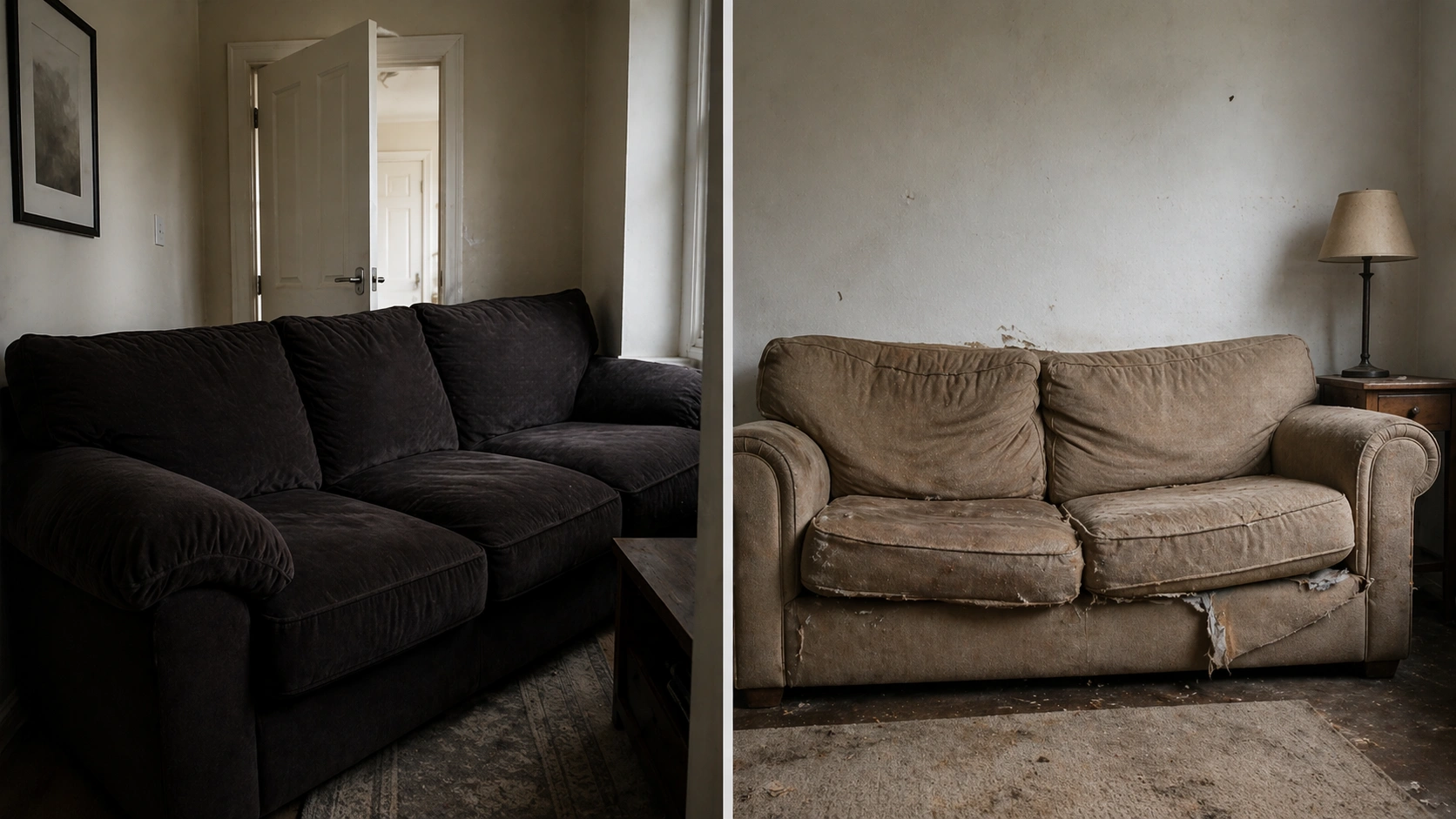
The most expensive sofa isn't always the best — and the cheapest always costs more in the long run. The difference is in how you evaluate, not how much you spend.
This guide is designed for buyers in the research phase — you know you need a sofa, but you want to make an informed decision rather than guess. Whether you're furnishing a primary living room, a compact apartment, or a guest room, the evaluation framework below applies universally. Each step links to a dedicated deep-dive guide for readers who want every detail.
The 7-Step Sofa Buying Process
Follow these steps in order. Each one builds on the previous, creating a narrowing funnel that eliminates unsuitable options and leads you to the right choice. Skipping steps is the number one cause of buyer's remorse.
Measure Your Space & Set Dimensions
Before browsing any sofa, know your room's exact dimensions, doorway widths, and clearances. A sofa that doesn't fit through your door or blocks walkways becomes an expensive mistake on day one.
Full size & room guide →Choose Your Sofa Type
Match the sofa type to your lifestyle: a sectional for large families, a loveseat for small spaces, a sleeper for guest hosting, or a recliner for daily relaxation.
Explore all sofa types →Select the Right Material
Material determines durability, maintenance, and feel. Leather vs. fabric is the biggest decision — but within fabric alone, options range from performance microfiber to delicate velvet.
Materials explained →Evaluate Frame Construction
The frame is the skeleton — if it fails, the entire sofa is done. Look for kiln-dried hardwood, dowel-and-glue joints, and corner blocking. Avoid particleboard and staple-only assembly.
Frame materials guide →Test Cushion Comfort & Fill
Cushion fill type dictates both initial comfort and long-term shape retention. High-density foam wrapped in down offers the best balance. Understanding cushion fill types prevents sagging surprises.
Firm vs. plush comparison →Understand Spring Systems
The suspension beneath the cushions affects how the sofa feels and ages. Eight-way hand-tied springs are the gold standard; sinuous (zigzag) springs are the practical middle ground.
Spring systems explained →Set a Realistic Budget
Price correlates with quality — but not linearly. Understanding the price breakdown of frames, materials, and labor helps you identify where to invest and where to save.
Sofa budget guide →Step 1: Measuring Your Space Correctly
More sofas are returned for size issues than for any other reason. The mistake isn't measuring — it's measuring the wrong things. Most people measure the wall where the sofa will go and stop there. That's only one-third of the information you need.
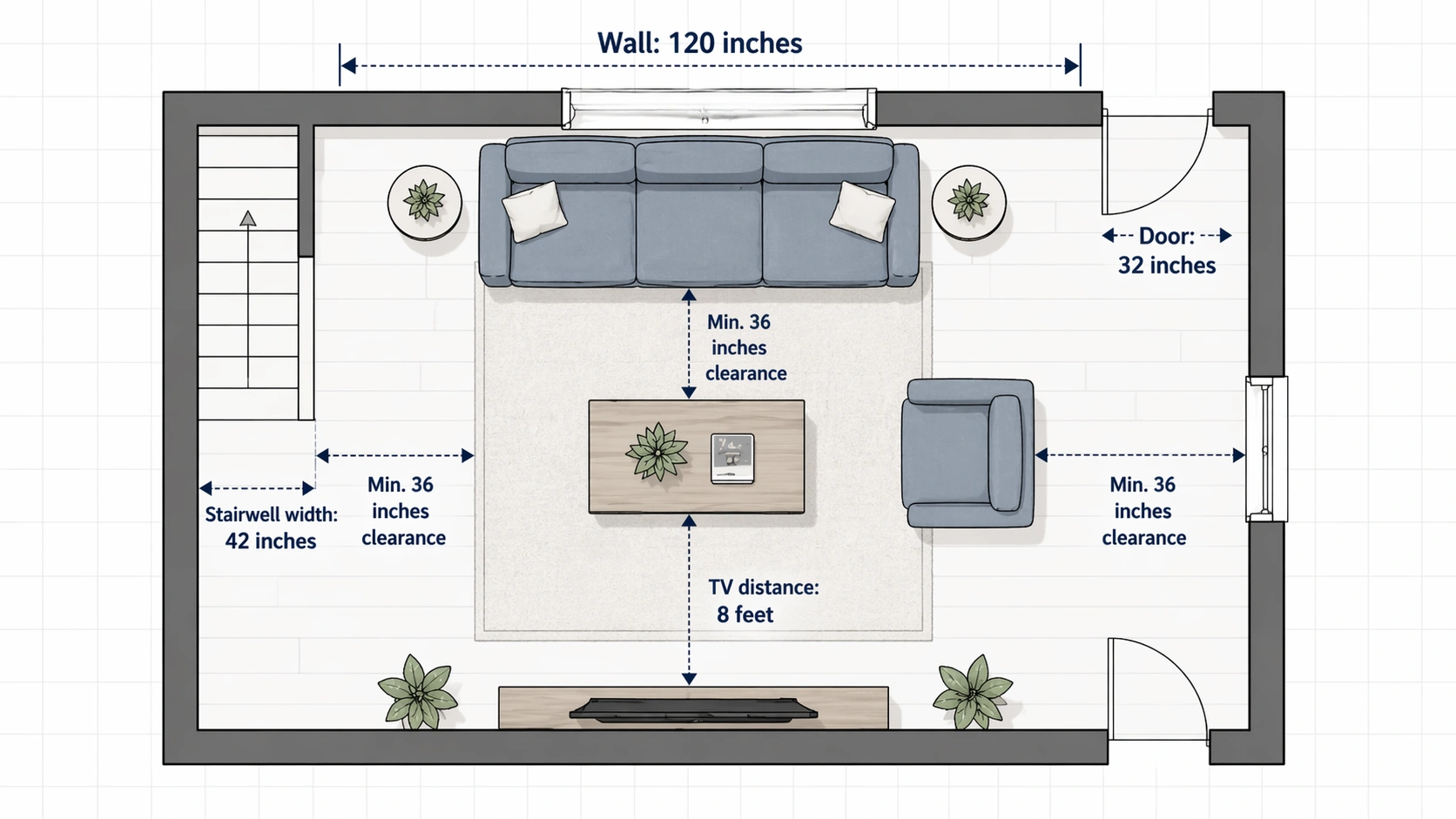
Proper measuring goes beyond wall length — include doorways, stairwells, walkway clearance, and existing furniture positions
📐 Complete Measuring Checklist
- Wall length where the sofa will sit (minus any obstacles like radiators or outlets)
- Width and height of every doorway, hallway, and stairwell the sofa must pass through
- Minimum 30–36 inches of clear walkway space in front of and around the sofa
- Distance from the sofa's intended position to the TV or focal point (for movie watching, 7–10 feet is ideal)
- Depth clearance — ensure the sofa won't block doors, windows, or floor vents
- Ceiling height if considering a high-back sofa (tall backs can make low ceilings feel cramped)
For detailed measurement techniques including how to handle awkward spaces like L-shaped rooms and open floor plans, our dedicated sofa size and room guide provides step-by-step instructions with diagrams. If you're unsure what size sofa your room can handle, our FAQ on what sofa size for your room gives quick recommendations by room size.
Step 2: Matching Type to Your Lifestyle
The "best" sofa type doesn't exist in isolation — it depends entirely on who uses it, how often, and in what room. A sectional sofa is perfect for a family of five in a spacious family room but would overwhelm a studio apartment. A loveseat works brilliantly in a small space but can't seat holiday guests.
| Sofa Type | Best For | Ideal Room | Width Range |
|---|---|---|---|
| 3-Seater Sofa | Small families, couples | Living room, apartment | 72–90 inches |
| Sectional Sofa | Large families, frequent hosting | Large living room, open plan | 100–150+ inches |
| Loveseat | Couples, small spaces | Apartment, bedroom, office | 52–72 inches |
| Sleeper Sofa | Guest hosting, studio living | Guest room, studio apartment | 65–85 inches |
| Recliner Sofa | Daily relaxation, movie watching | Family room, basement | 75–95 inches |
| Modular Sofa | Flexible layouts, movers | Any room, adaptable spaces | Varies by configuration |
If you're debating between a sectional and a traditional sofa, our sectional vs. traditional comparison breaks down the trade-offs in detail. For readers considering whether a custom or ready-made sofa makes more sense, that guide covers lead times, cost differences, and customization options.
Step 3: Choosing the Right Upholstery Material
Material choice affects four things simultaneously: durability, comfort, maintenance difficulty, and appearance. The right choice balances all four based on your household. A household with three dogs needs different material than a formal living room that sees occasional use.
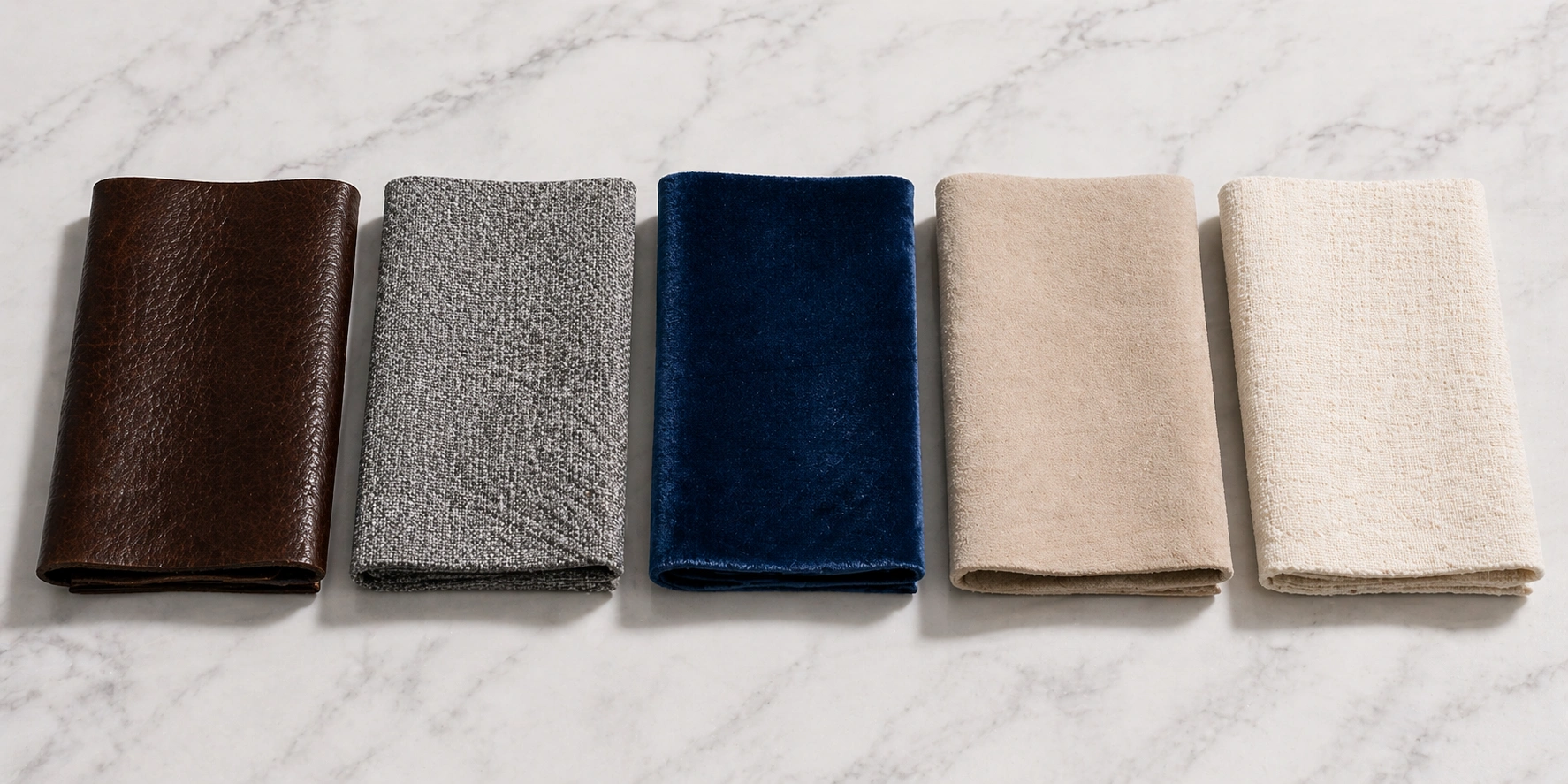
Each material has distinct strengths — the "best" choice depends on your household composition, lifestyle, and maintenance willingness
Material Durability: The Martindale Test
The Martindale abrasion test is the industry standard for measuring fabric durability. It simulates rubbing cycles and reports a score: below 10,000 cycles is light domestic use, 10,000–25,000 is general domestic use, and 25,000+ is heavy commercial use. Always ask for the Martindale score when shopping — it's the single most objective measure of fabric quality. If you want the most durable sofa fabric, look for scores above 25,000 cycles.
Leather: Not All Leather Is Equal
If you're considering leather, understanding leather grades is essential. Full-grain leather (the top tier) develops a beautiful patina and can last decades. Top-grain leather is slightly corrected but still high quality. Bonded leather — despite looking like leather — is essentially leather scraps pressed with polyurethane and will peel within 2–3 years. Our leather sofa recommendations only include genuine top-grain and full-grain options. For leather maintenance, our conditioning guide and cleaning guide cover proper care routines.
Step 4: Evaluating Frame Construction
The frame is the most important component of any sofa — yet it's the one most buyers never check. A beautiful sofa with a weak frame will squeak, wobble, and eventually break, regardless of how premium the cushions or upholstery appear. Our frame materials guide covers this in depth, but here are the critical evaluation points.
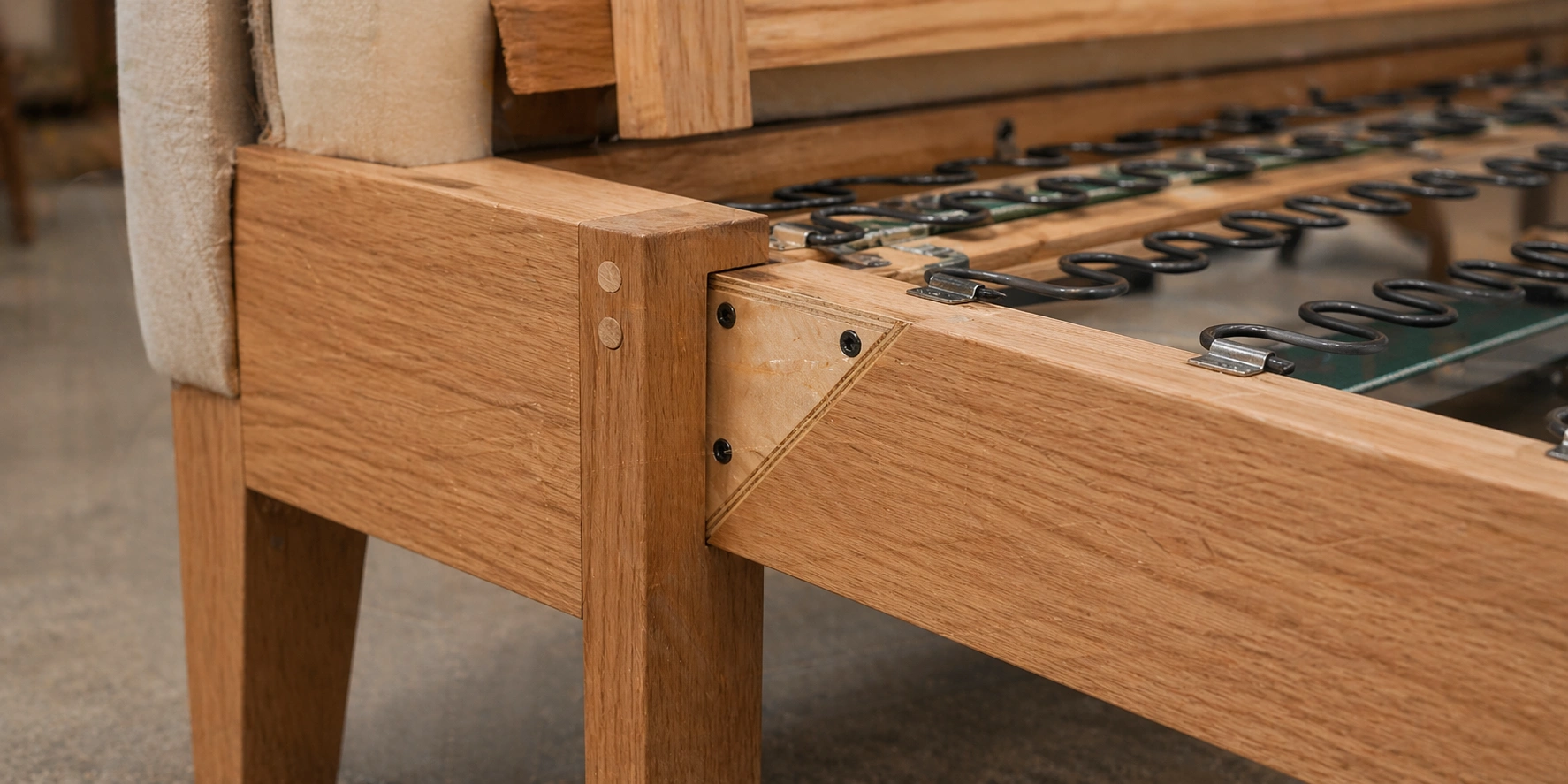
A quality frame uses kiln-dried hardwood with reinforced joints — this is what separates a 15-year sofa from a 3-year sofa
- Kiln-dried hardwood (oak, maple, birch, ash) is the gold standard. It resists warping and cracking. Avoid frames labeled "hardwood" without the "kiln-dried" specification — air-dried wood retains moisture that causes warping over time.
- Joint construction matters more than wood type. Dowel-and-glue joints with corner blocks are the strongest. Staple-only or nail-only joints are the weakest and found almost exclusively in budget sofas.
- Lift the sofa. A heavy sofa (relative to its size) typically indicates a solid wood frame. A lightweight feel often signals particleboard or thin plywood — both red flags for longevity.
- Check the legs. Legs should be part of the frame, not bolted on as separate pieces. Bolted legs can loosen over time. If they must be removable (for delivery), ensure they attach with heavy-duty bolts, not screws.
- Ask about the frame warranty. A manufacturer that offers 10+ years on the frame is confident in their construction. A 1-year frame warranty is a warning sign.
If you're shopping online and can't inspect the frame yourself, our guide on how to check sofa quality before buying provides questions to ask sellers and specifications to look for in product descriptions.
Step 5: Understanding Cushion Fill & Comfort
Cushion comfort is subjective — but cushion quality is objective. The fill material determines how the cushion feels today and how it will feel in three years. A cushion that feels cloud-like on day one but flattens to nothing within six months is not quality, regardless of the initial impression.
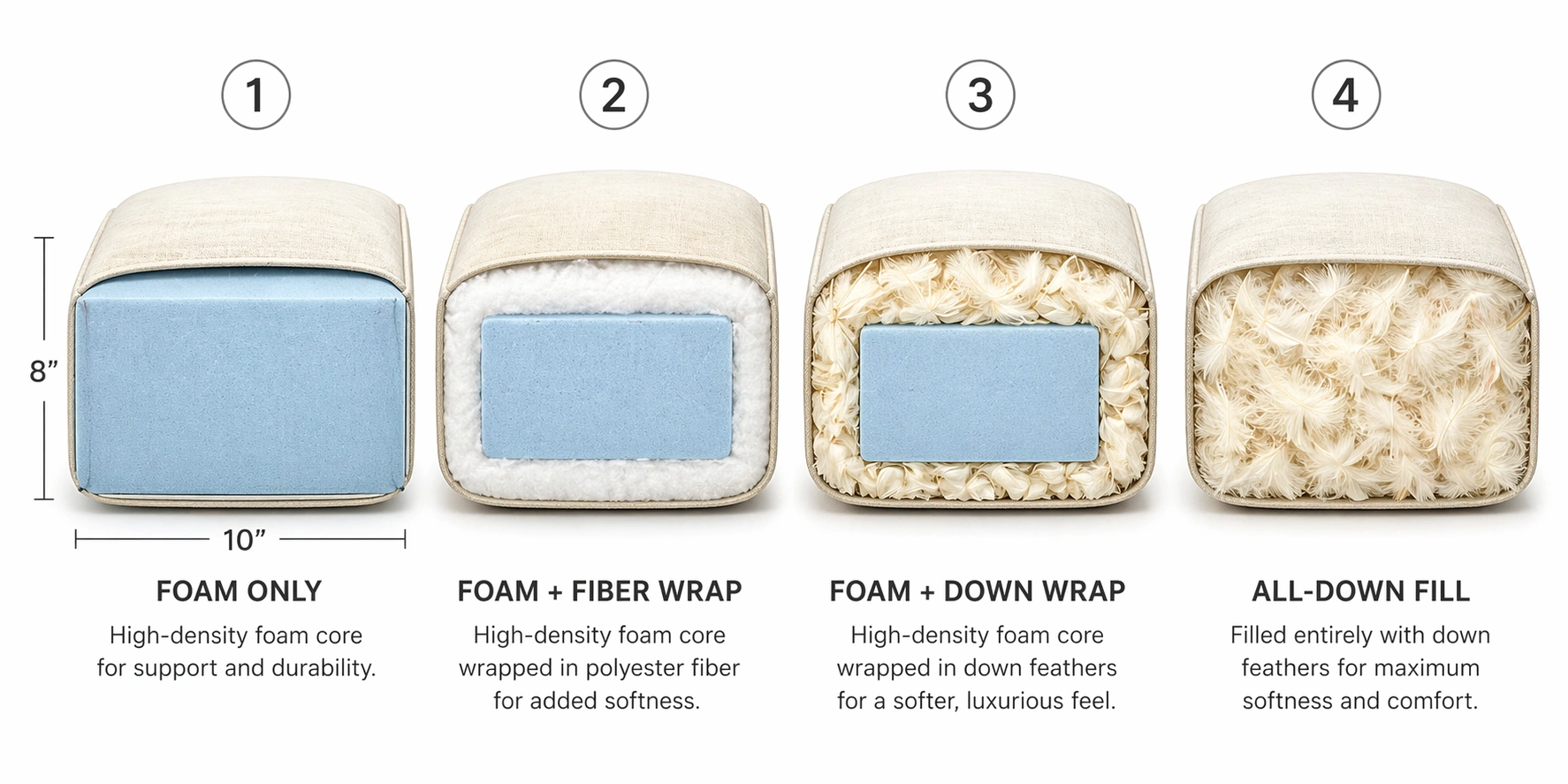
Each cushion fill type has a distinct comfort profile and longevity — understanding these differences prevents costly mistakes
Foam Density: The Number That Matters
Foam density, measured in pounds per cubic foot (lb/ft³), is the most objective indicator of cushion quality. Our guide on sofa foam density (ILD) explains the science, but here's the practical breakdown:
| Foam Density | Quality Level | Expected Lifespan | Comfort Feel |
|---|---|---|---|
| Below 1.5 lb/ft³ | Budget / Low | 1–3 years | Soft initially, flattens quickly |
| 1.5–2.0 lb/ft³ | Mid-range | 3–7 years | Medium firmness, decent support |
| 2.0–2.5 lb/ft³ | High quality | 7–12+ years | Firm with good shape retention |
| Above 2.5 lb/ft³ | Premium | 12+ years | Very firm, excellent durability |
The best overall value is high-density foam (1.8–2.2 lb/ft³) wrapped in a layer of down, polyester fiber, or feathers. This combination provides the soft initial feel most people want while maintaining structural integrity underneath. For the complete breakdown of every fill type including down, feathers, polyester, and hybrid options, see our cushion fill types guide. The seat depth guide also matters — deeper seats (22+ inches) favor lounging, while shallower seats (18–20 inches) suit formal, upright postures. This is closely related to the standard vs. deep seat comparison.
Step 6: Spring Systems & Suspension
The suspension system sits between the frame and the cushions, distributing weight evenly and providing the "give" that makes a sofa comfortable to sit on. A poor suspension causes uneven sagging, a bottomed-out feel, and accelerated cushion wear. Our spring systems guide and suspension types guide cover every option in detail.
- Eight-way hand-tied springs: The gold standard. Each spring is hand-tied in eight directions to adjacent springs with strong twine. Provides even, responsive support. Found in premium sofas ($1,500+).
- Sinuous (zigzag) springs: S-shaped wire springs running front-to-back in a zigzag pattern. The practical middle ground — good support at a lower cost. Found in most mid-range sofas ($500–$1,500).
- Drop-in coil units: Pre-assembled coil units that drop into the frame. Adequate for light use but the weakest option. Found in budget sofas.
- Mesh or webbing (no springs): Common in very cheap furniture and some modern low-profile designs. Provides minimal support and wears out fastest. Avoid for daily-use sofas.
If you notice your cushions sagging unevenly after just a few months, the culprit is usually the suspension system, not the cushions themselves. Our guide to fixing sagging cushions can help diagnose whether the issue is the cushions or the springs — and whether it's repairable or a sign of a fundamentally flawed sofa.
Step 7: Setting a Realistic Sofa Budget
Price is the most emotionally charged part of sofa shopping. Buyers either overspend on brand names or underspend and end up replacing the sofa within two years. The key is understanding what you're actually paying for at each price point. Our sofa budget guide and price breakdown provide detailed frameworks, but here's the essential overview.
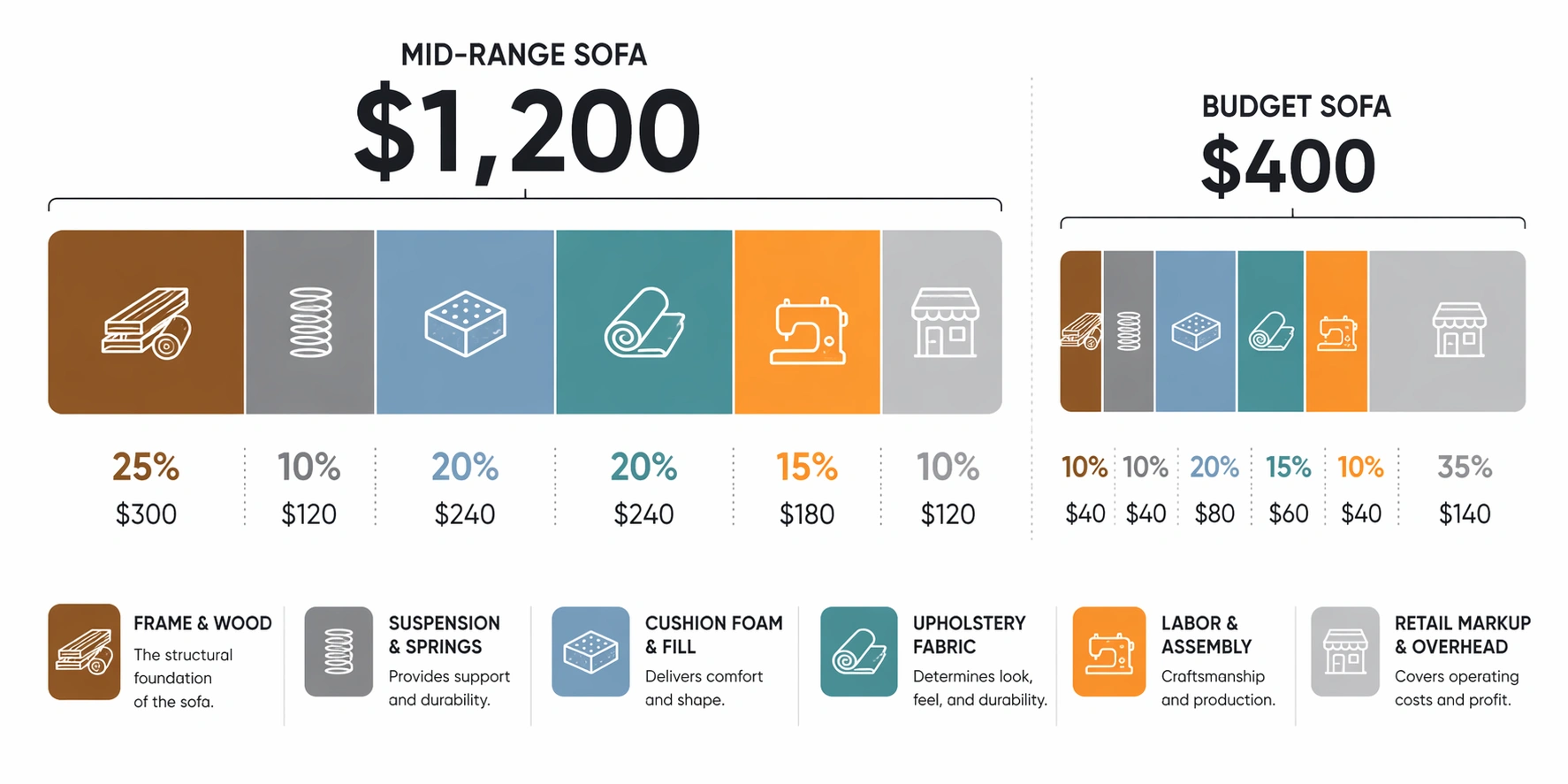
Understanding where your money goes helps you identify fair pricing and avoid both overpriced and deceptively cheap options
| Price Range | What You Get | Expected Lifespan | Best For |
|---|---|---|---|
| $200–$700 | Particleboard frame, low-density foam, basic fabric, no-name brand | 2–4 years | Temporary, light-use, or decorative seating |
| $700–$1,500 | Kiln-dried wood frame, mid-density foam, sinuous springs, branded fabric | 5–10 years | Daily use, most households — best value tier |
| $1,500–$3,000 | Hardwood frame, high-density foam + down wrap, 8-way springs, premium materials | 10–15+ years | Long-term investment, design-conscious buyers |
| $3,000+ | Designer brand, top-grain/full-grain leather, hand-crafted details, premium everything | 15–25+ years | Luxury buyers, heirloom-quality pieces |
Don't forget to account for hidden costs of buying a sofa: delivery fees, fabric protection treatments, extended warranties, and accessory purchases like sofa tables or throws and pillows. These can add 10–25% to the sticker price. Also, timing matters — our guide on the best time to buy a sofa identifies seasonal sales where you can save 20–40% on the same quality. For buyers asking how much a good sofa should cost, the honest answer for a daily-use 3-seater is $800–$1,500 for reliable quality.
8 Common Sofa Buying Mistakes to Avoid
These mistakes are so common that furniture stores design their sales processes around them. Being aware of each one gives you a significant advantage as a buyer.
1. Buying Without Measuring the Doorway
Measuring the wall isn't enough. If the sofa can't fit through your front door, stairwell, or elevator, it's useless. Always measure the delivery path first.
2. Choosing Style Over Structure
A beautiful sofa with a weak frame will break before an ugly sofa with a solid frame. Evaluate construction before aesthetics — you can't see the frame, but you'll feel it when it fails.
3. Ignoring Foam Density
Salespeople highlight softness but rarely mention foam density. Low-density foam feels great for 30 seconds in a showroom but flattens within months of daily use.
4. Not Testing Seat Depth
A deep seat feels luxurious in the store but may not support your back properly at home. The seat depth guide explains how to find your ideal measurement.
5. Forgetting About Maintenance
White velvet looks stunning — until you have a toddler and a golden retriever. Match material to your real life, not your aspirational life. Factor in cleaning requirements.
6. Skipping the Warranty Review
A 1-year warranty on a $1,500 sofa is inadequate. Look for at least 5 years on the frame and 2 years on cushions and fabric. Read the fine print for exclusions.
7. Buying the Wrong Size for the Room
A sofa that's too large dominates the room and blocks flow; one that's too small looks lost and underwhelming. The room size guide prevents this mismatch.
8. Not Reading Return Policies
Many online sofa retailers charge 15–25% "restocking fees" or don't accept returns on custom orders. Understand the return policy before clicking buy.
Buying Online vs. In-Store: Which Is Better?
This is one of the most debated questions in furniture buying. The honest answer is that neither is universally better — each has distinct advantages and specific scenarios where it excels. The smartest buyers use both: test in-store, then purchase online when they find a better price on the equivalent product.
✓ In-Store Advantages
- Test comfort and support firsthand
- Inspect frame, stitching, and material quality
- See accurate colors (no monitor variation)
- Negotiate prices with sales staff
- No shipping wait — immediate availability
- Easier returns if something is wrong
✕ In-Store Disadvantages
- Limited selection per showroom
- Higher prices (showroom overhead costs)
- Aggressive sales pressure tactics
- Showroom lighting distorts color perception
- Difficult to compare across brands
- Delivery fees often added on top
✓ Online Advantages
- Much wider selection across all brands
- Better prices (lower overhead, frequent sales)
- Easy price comparison across retailers
- Read verified customer reviews
- Shop at your own pace without pressure
- Free shipping is common (especially on Amazon)
✕ Online Disadvantages
- Can't test comfort before buying
- Color may differ from screen to reality
- Return shipping can be expensive or impossible
- Delivery wait times (2–8 weeks typical)
- Potential damage during shipping
- Quality claims are harder to verify
For readers deciding between a new and secondhand sofa, the secondhand market offers incredible value but carries inspection risks. Our guide covers what to check when buying used. Regardless of where you buy, knowing where to buy sofas helps you identify reputable retailers versus fly-by-night sellers.
Red Flags When Shopping for a Sofa
Certain warning signs indicate a sofa is likely to disappoint, regardless of how good it looks in photos or how persuasive the salesperson is. If you spot any of these, walk away — there are always better options.
- Particleboard or MDF frame — These materials warp, crack, and break under daily use. Any product listing that doesn't specify "kiln-dried hardwood" should be viewed with suspicion.
- Foam density below 1.5 lb/ft³ — If the seller can't or won't provide foam density, assume it's low. Quality manufacturers proudly specify this number.
- Staple-only joints — Staples pull out over time. Joints should use dowels, screws, glue, and corner blocks.
- No warranty on the frame — A manufacturer that won't stand behind their frame construction for at least 5 years is telling you something about their confidence level.
- Vague material descriptions — "Premium fabric" or "genuine leather" without specifics (fabric type, leather grade) are marketing terms, not quality indicators.
- Cushions that bottom out when pressed firmly — If you can feel the frame through the cushion with moderate pressure, it will be uncomfortable within months.
- Price that seems too good for the claimed quality — A "hardwood frame, genuine leather, hand-tied springs" sofa for $400 is almost certainly mislabeled. If it seems too good to be true, it is.
- No return policy or restocking fees above 15% — This suggests the manufacturer expects a high return rate and is protecting themselves at your expense.
How to Test a Sofa In-Store Like a Pro
Most people sit on a sofa for 30 seconds and make a decision. That's nowhere near enough time to evaluate comfort accurately. Furniture showrooms are designed to make everything feel good — soft lighting, pleasant music, carefully arranged displays. To cut through the showroom effect, follow this structured testing process from our comfort testing guide.

A structured 5-minute test reveals more about a sofa's true comfort than a 30-second sit ever will
- Sit for at least 5 minutes — Not 30 seconds. Five minutes reveals pressure points, support quality, and heat buildup that a quick sit never shows.
- Sit in your normal positions — If you curl up on sofas at home, curl up in the store. If you nap, recline. Test the positions you'll actually use.
- Press firmly on the cushions — Apply firm downward pressure with both hands. You should feel resistance from the foam and springs, not the frame beneath.
- Check arm height — Rest your arms on the armrests naturally. They should be at a comfortable height — too high causes shoulder tension, too low feels awkward.
- Lift one corner — If the opposite corner stays firmly on the ground, the frame is rigid and well-constructed. If the whole sofa lifts easily, the frame may be flimsy.
- Feel underneath the seat cushions — Run your hand along the bottom of the cushion. You should feel a fabric lining (muslin), not bare foam. Uncovered foam degrades faster.
- Listen for squeaks — Shift your weight around and lean on the arms. Any squeaking or creaking suggests loose joints or poor spring attachment.
Balancing Comfort and Durability
The most common trade-off in sofa selection is between immediate comfort and long-term durability. Ultra-soft cushions feel amazing on day one but lose their shape quickly. Very firm cushions maintain their structure for years but may never feel "cozy." The ideal lies in the middle, and understanding the comfort vs. durability balance helps you find it.
The firm vs. plush sofa guide explains that medium-firm cushions (high-density foam with a down or fiber wrap) provide the best long-term satisfaction for most people. They feel soft enough to sink into slightly but firm enough to maintain support. For buyers with back concerns, our sofa for back pain resource explains how firmness, seat depth, and back angle affect spinal support. The high-back vs. low-back comparison is also relevant here — higher backs provide more upper body and neck support.
Deep-Dive Buying Guides by Topic
Each step above has a dedicated guide with extensive detail, data, and recommendations. Use these to deep-dive into any area where you want more information before making your final decision.
Size & Room Guide
Measurement techniques, room proportions, and clearance rules for every room type.
Read guide →Frame Materials
Wood types, joint construction methods, and how to evaluate frame quality.
Read guide →Leather vs. Fabric
Side-by-side comparison of durability, comfort, maintenance, and cost.
Read guide →Cushion Fill Types
Every fill material explained — foam, down, polyester, hybrids, and their lifespans.
Read guide →Spring Systems
8-way hand-tied vs. sinuous vs. drop-in coils — which suits your needs and budget.
Read guide →Price vs. Quality
Where price correlates with quality and where it doesn't — avoid overpaying for marketing.
Read guide →Foam Density (ILD)
The science behind foam firmness, density ratings, and what numbers to look for.
Read guide →Leather Grades
Full-grain, top-grain, split, bonded — understand what each grade actually means.
Read guide →Martindale Test
How to read abrasion test scores and what they predict about fabric longevity.
Read guide →Seat Depth Guide
How to find your ideal seat depth based on your height and sitting preferences.
Read guide →Suspension Types
Webbing, drop-in coils, sinuous, and hand-tied — how each affects comfort and cost.
Read guide →Custom vs. Ready-Made
Lead times, cost differences, and when customization is worth the premium.
Read guide →Frequently Asked Questions
Ready to Find Your Ideal Sofa?
Now that you know what to look for, browse our curated selection of sofas that meet these quality standards — at every budget level.
Browse Recommended Sofas ↓


