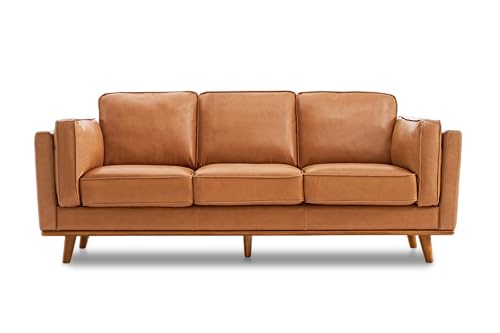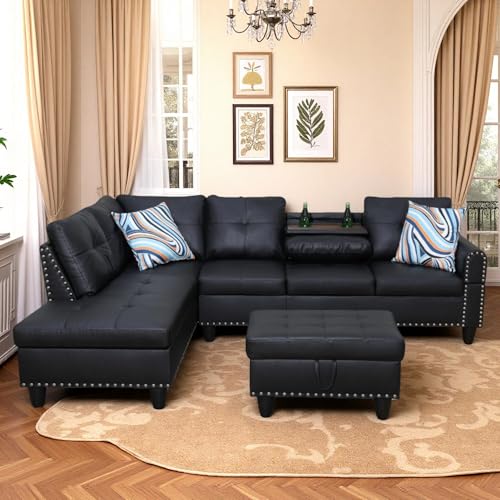
Best Leather Sofas: The Complete Buying Guide
Everything you need to know before investing in a leather sofa — from grades and types to colors, care, and our hand-picked recommendations for every budget.
Why a leather sofa? A leather sofa is more than a piece of furniture — it's a long-term investment in comfort, style, and durability. Unlike fabric that wears and fades over time, quality leather improves with age, developing a unique patina that tells the story of your home. But with prices ranging from a few hundred to several thousand dollars, choosing the wrong leather sofa can be a costly mistake. This guide covers everything you need to make a confident, informed decision.
Table of Contents
Why Choose a Leather Sofa?
Leather has been the upholstery material of choice for centuries, and for good reason. A well-made leather sofa combines practical benefits with an undeniable sense of luxury that transforms any living space. Here's why millions of homeowners choose leather over fabric:

- Exceptional longevity — A top-grain leather sofa lasts 10–20 years; full-grain can last 30+ years. Compare that to 5–8 years for most fabric sofas, and the long-term value becomes clear.
- Effortless cleaning — Spills wipe up in seconds. No machine washing, no professional cleaning appointments. A damp cloth handles most messes, making it ideal for busy households.
- Hypoallergenic properties — Leather doesn't trap dust mites, pet dander, pollen, or other allergens the way fabric does. This makes it a smart choice for allergy sufferers.
- Timeless style — Leather never goes out of fashion. Whether your home is modern, traditional, industrial, or mid-century, a leather sofa fits naturally and elevates the room's aesthetic.
- Develops character — Unlike fabric that fades and wears uniformly, quality leather develops a unique patina — subtle color shifts and creasing patterns that make your sofa distinctly yours over time.
- Temperature adaptive — Full-grain and top-grain leather breathe naturally, feeling cool in summer and gradually warming to body temperature in winter.
💡 Cost-Per-Year Perspective
A $2,000 top-grain leather sofa that lasts 15 years costs roughly $133/year. A $600 fabric sofa that needs replacing after 5 years costs $120/year — but factor in professional cleaning costs ($100–200/year for fabric), and leather often comes out ahead financially. For a detailed breakdown, see our sofa price breakdown guide.
Types of Leather Sofas
Leather sofas come in a wide variety of styles, each designed for different spaces, seating needs, and aesthetic preferences. Understanding the main types helps you narrow down your options quickly.
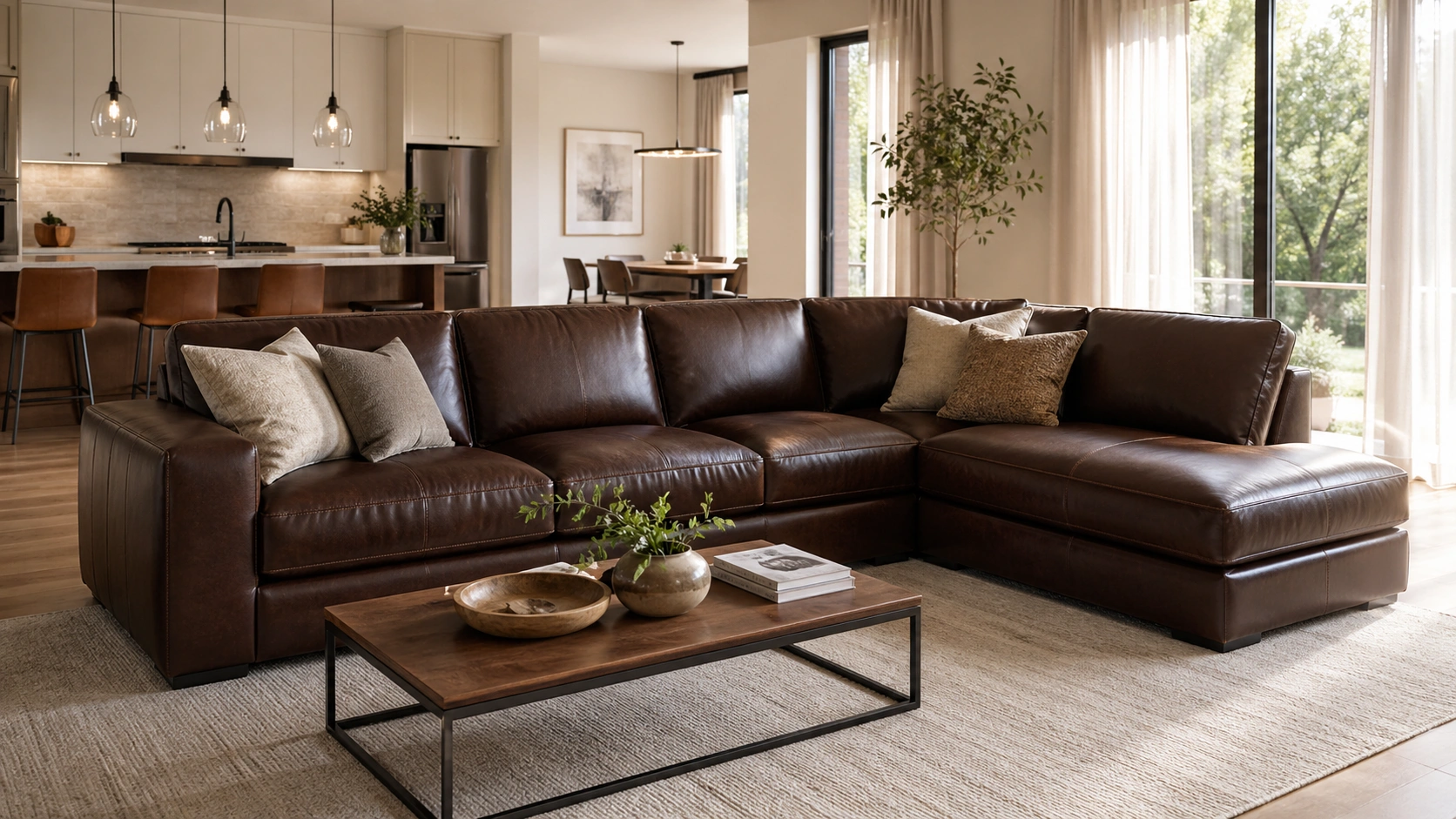
Leather Sectional Sofa
L-shaped or U-shaped configurations that maximize seating in larger rooms. Perfect for families and open-plan living spaces. Available in 2-piece to 5-piece modular designs.
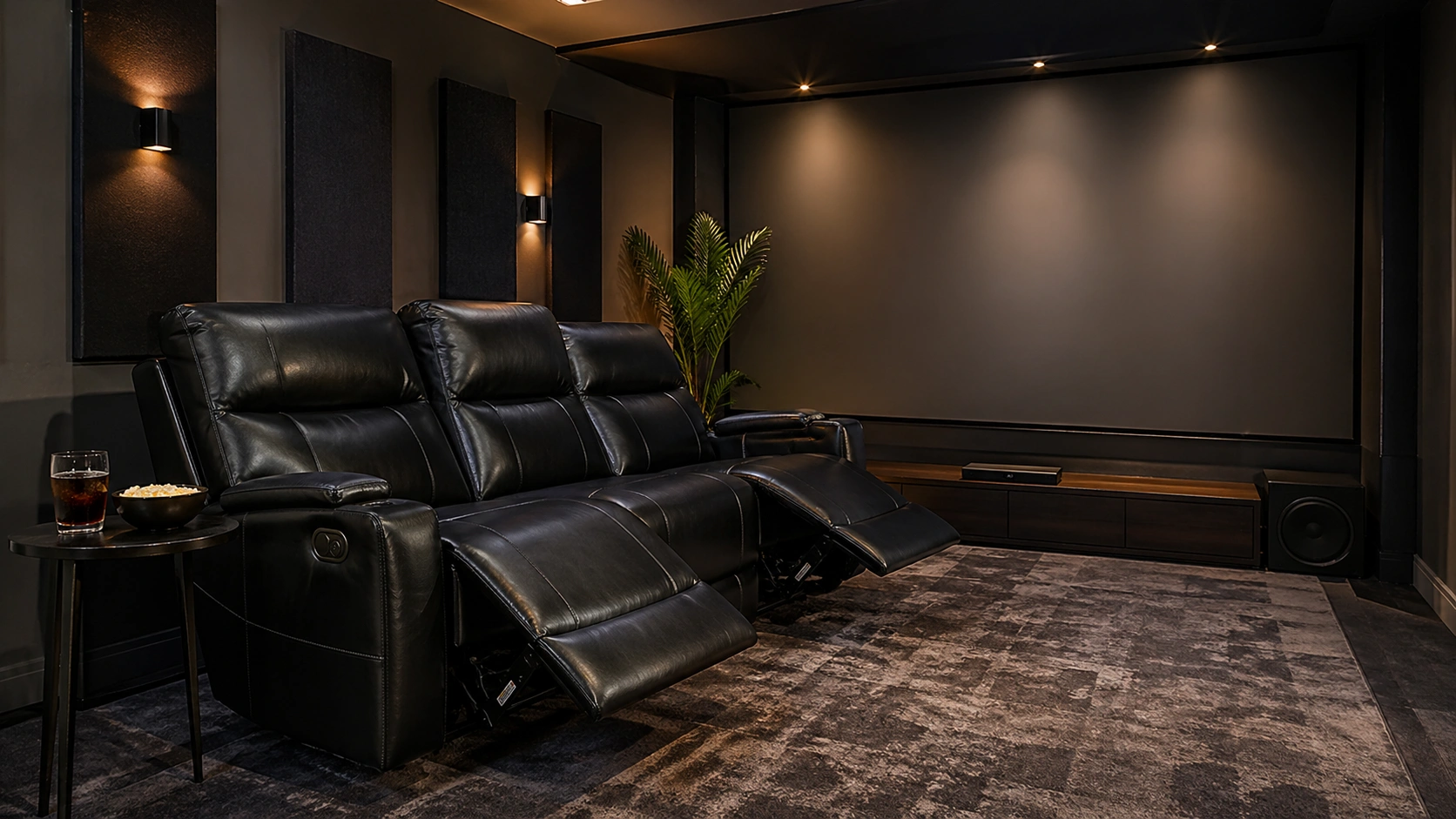
Leather Recliner Sofa
Built-in reclining mechanisms for ultimate relaxation. Available in 2-seater, 3-seater, and multi-recliner configurations. Ideal for home theaters and daily napping.
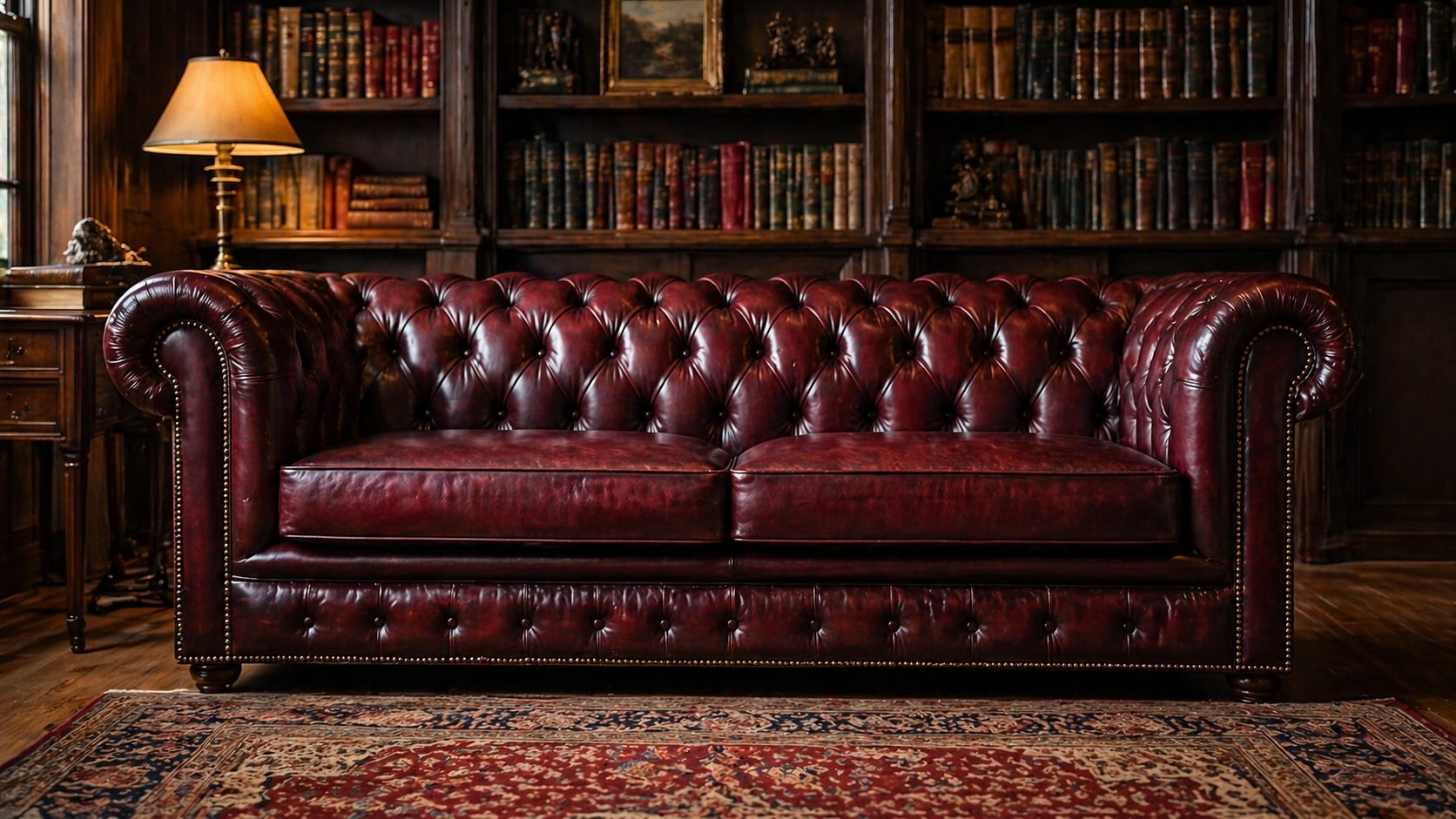
Leather Chesterfield
The iconic tufted design with rolled arms and equal-height back. A timeless statement piece that works in traditional, vintage, and even modern eclectic interiors.
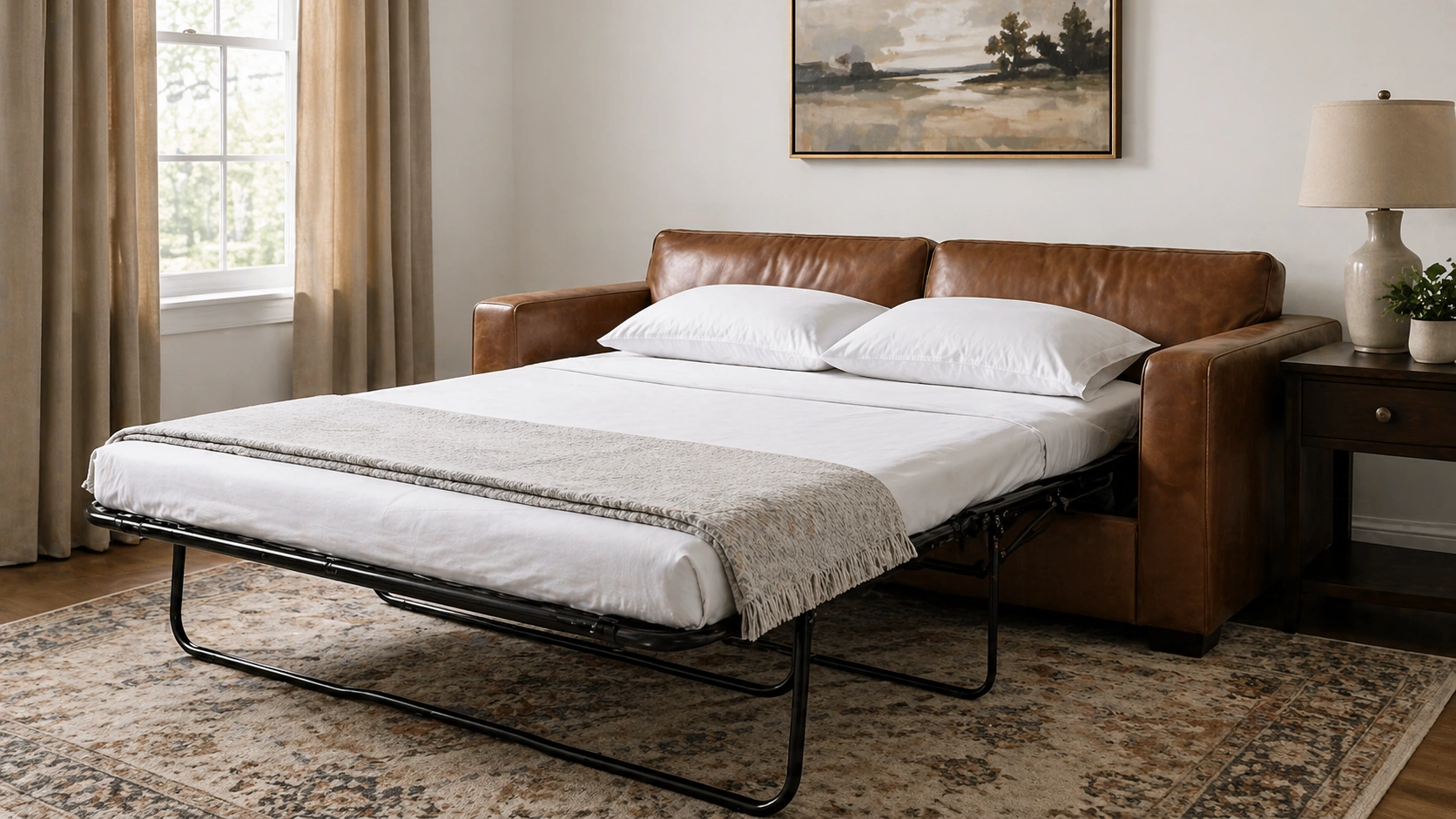
Leather Sleeper Sofa
Dual-purpose seating that converts into a bed. Great for guest rooms and small apartments where space serves multiple functions. Modern designs fold flat easily.
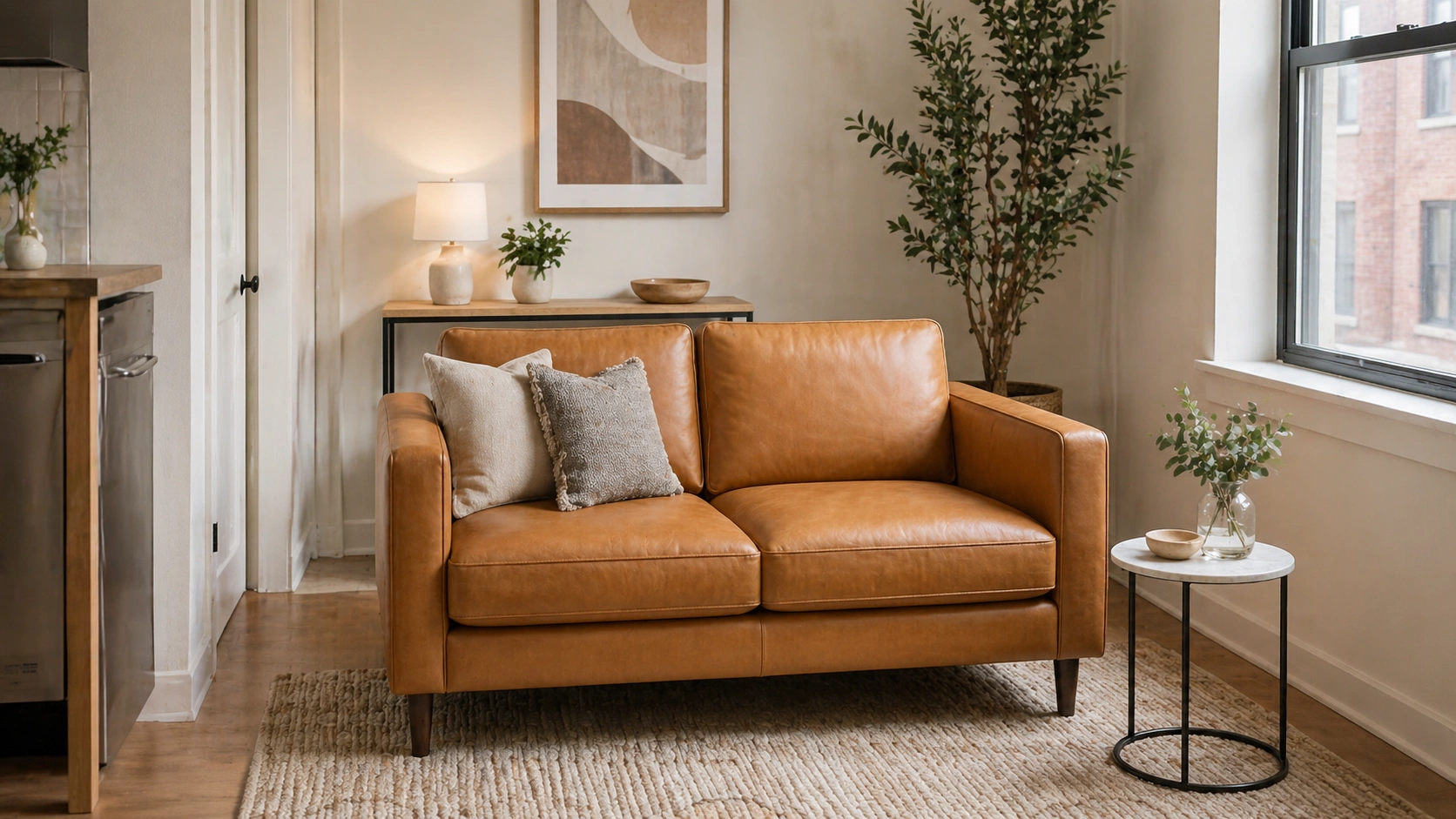
Leather Loveseat
Compact 2-seater design perfect for small apartments, bedrooms, or as complementary seating alongside a larger sofa. Typically 50–65 inches wide.
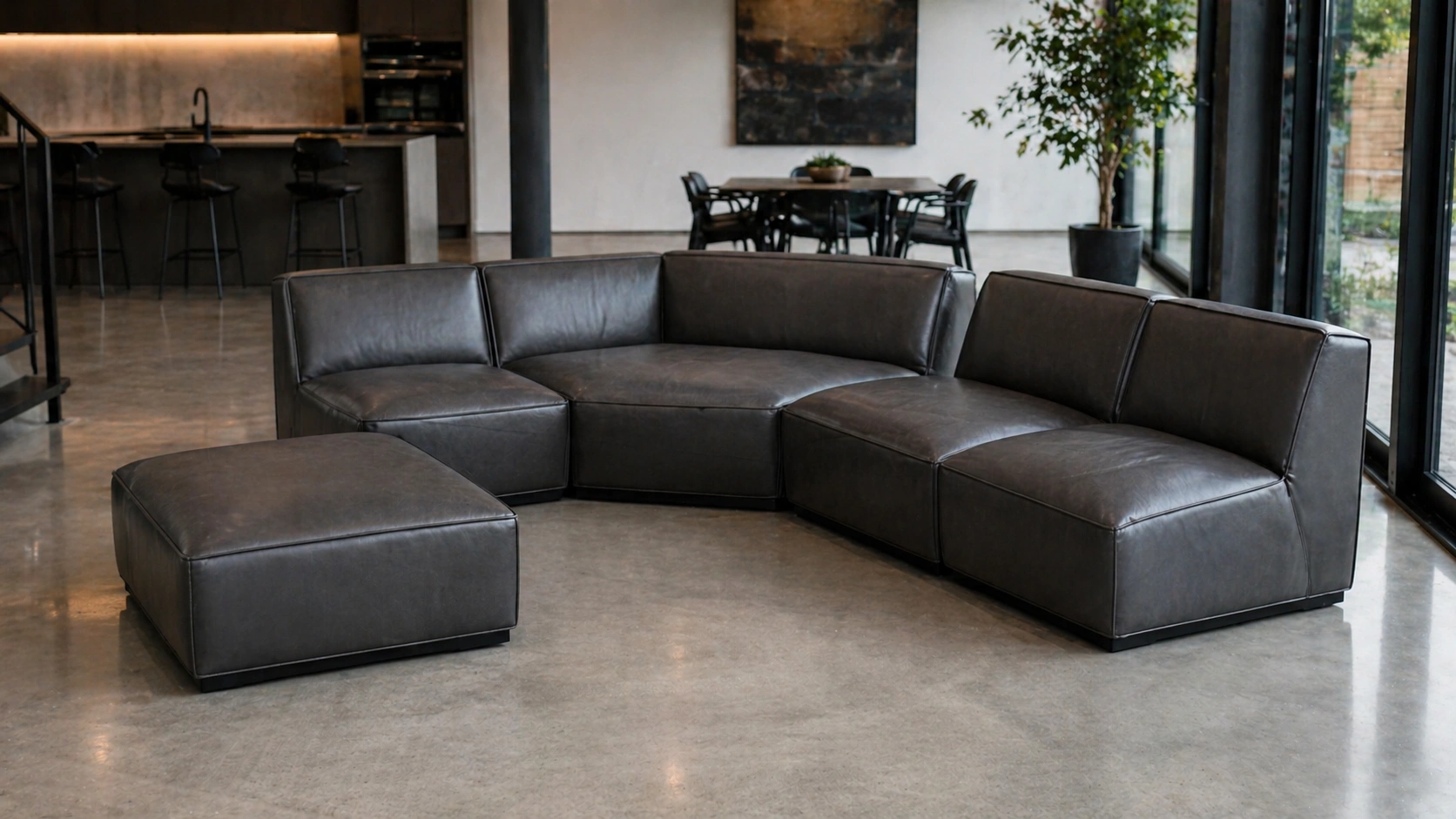
Leather Modular Sofa
Individual pieces that can be rearranged to fit your space. Adapts as your room or family changes. Perfect for awkward room layouts and open-concept homes.
Each type has specific considerations for size and room fit. A sectional needs adequate floor space and clear traffic flow, while a loveseat works beautifully in small rooms. If you're unsure which type suits your layout, our living room layout guide provides detailed spacing guidelines.
Understanding Leather Grades
The leather grade is the single most important factor determining your sofa's quality, feel, and lifespan. Two sofas that look identical can differ by thousands of dollars — and decades of life — based solely on the grade of leather used. This is not an area to overlook.
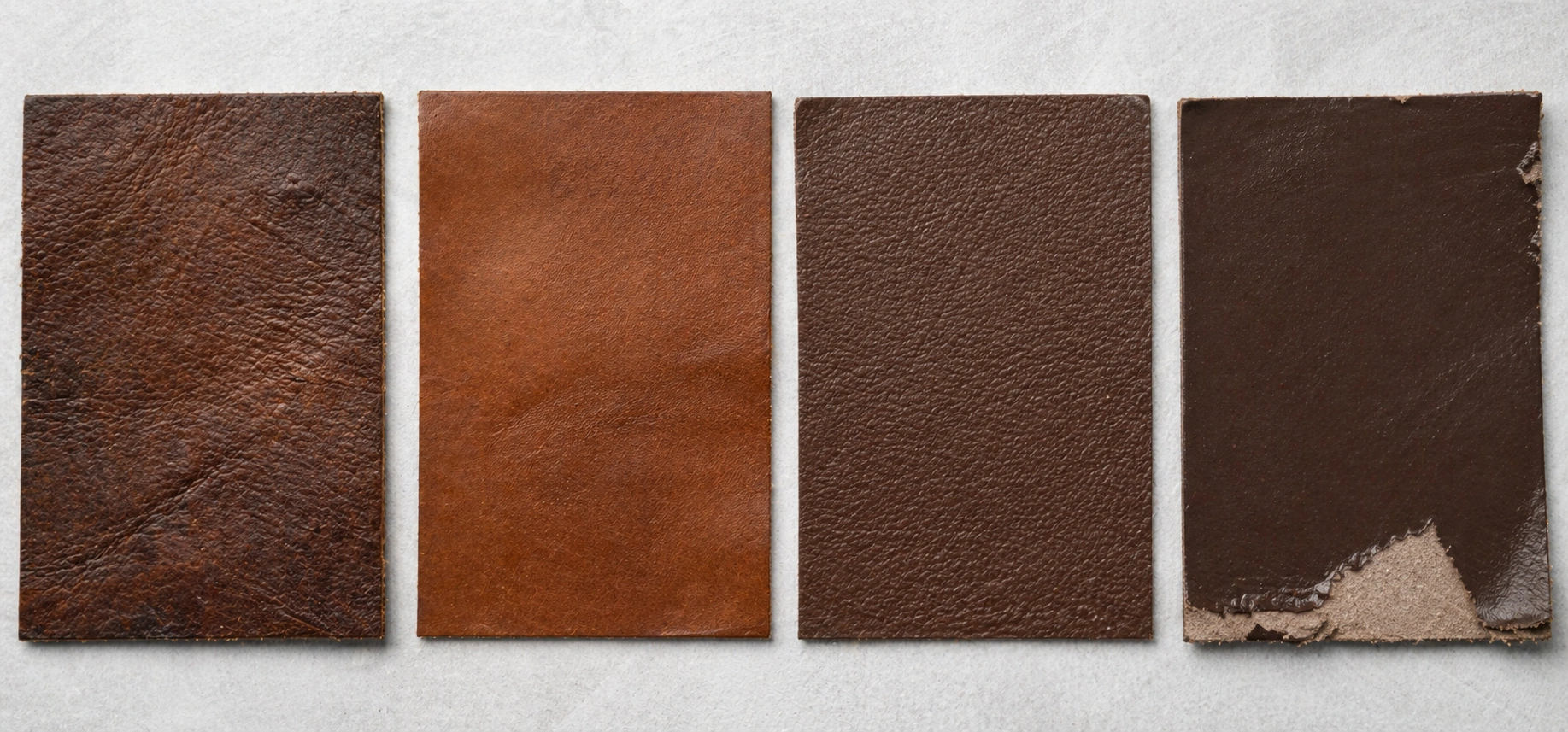
| Grade | Lifespan | Feel | Patina | Stain Resistance | Best For |
|---|---|---|---|---|---|
| Full-Grain | 15–30+ years | Supple, natural texture | Beautiful, unique | Low | Formal rooms, investment pieces |
| Top-Grain | 10–20 years | Soft, slightly smoother | Minimal | Good to Excellent | Daily use, families |
| Corrected Grain | 5–10 years | Stiff, uniform | None | Excellent | Budget buyers (with caveats) |
| Split Leather | 3–7 years | Fibrous, coated | None | Good | Non-seating surfaces only |
| Bonded Leather | 2–5 years | Plastic-like | None | Good (initially) | Not recommended for seating |
✅ Our Recommendation
For virtually all buyers, pigmented top-grain leather is the best choice. It delivers 85–90% of full-grain's durability with better stain resistance and a lower price point. If you're investing in a statement piece for a low-traffic formal room, consider full-grain luxury leather sofas. For a complete understanding of each grade's characteristics, see our detailed leather grades explained guide.
Best Leather Sofa Colors
Leather sofa color dramatically affects the mood of your room and has practical implications for maintenance and wear visibility. Unlike fabric, leather color is more permanent — you can't easily reupholster or add a slipcover. Choose carefully.

Brown
Most popular choice. Hides wear well, warm and versatile. Works with virtually any interior style.
Black
Sleek and modern. Shows dust and pet hair more easily. Best for contemporary and industrial spaces.
White / Cream
Bold, luxurious statement. Shows stains and wear prominently. Requires diligent maintenance.
Taupe / Tan
Neutral warmth without the heaviness of dark brown. Extremely versatile. Growing in popularity.
Burgundy / Oxblood
Rich, traditional elegance. Pairs beautifully with dark wood and antique decor. A confident choice.
Grey
Contemporary and sophisticated. Less common in leather, making it a distinctive choice. Hides moderate wear.
For more color inspiration specific to leather couches, explore our guides on the brown couch (the timeless classic), the black couch (for modern drama), and the white couch (for the bold at heart). If you love rich tones, the red sofa guide showcases how leather in bold colors can transform a space.
Best Leather Sofas by Room
The ideal leather sofa depends heavily on where it will live. A primary living room has different demands than a home theater or office reception area. Here are our recommendations for each setting.
Primary Living Room
The centerpiece of your home. Choose a style that reflects your personality — a classic chesterfield for tradition, a sleek modern design for contemporary spaces. Pigmented top-grain in brown or taupe is the safest long-term choice.
Top-grain, 3-seater or sectionalFamily Room
High-traffic, high-use. Prioritize durability and stain resistance. Pigmented top-grain in darker colors (brown, black, burgundy) hides wear, spills, and pet activity. Consider a sofa with chaise lounge for sprawling comfort.
Pigmented top-grain, dark colorHome Theater
Comfort is king. Leather recliner sofas with built-in cup holders and USB ports create the ultimate viewing experience. Dark leather reduces screen glare. Multiple recliners in a row maximize seating.
Recliner, cup holdersSmall Apartment
Space is at a premium. A leather loveseat or compact 2-seater provides the luxury feel without overwhelming the room. Lighter colors (tan, cream) can make the space feel larger. See our small space sofa guide.
Loveseat or 2-seater, light toneOffice / Reception
Professional first impressions matter. A sleek leather sofa in black or brown conveys authority and sophistication. Clean lines and minimal design work best. Easy to wipe down between client meetings.
Top-grain, black or brown, modernGuest Room
A leather sleeper sofa serves double duty — seating by day, bed by night. Top-grain leather is easier to clean between guests than fabric. A neutral color works in any guest room decor.
Sleeper sofa, neutral tonePros & Cons of Leather Sofas
Honest assessment is crucial before making any furniture investment. Leather sofas have significant advantages, but they're not perfect for every situation. Here's a balanced look at both sides.
Advantages
- Lasts 2–4 times longer than fabric upholstery
- Spills wipe clean in seconds — no staining
- Doesn't absorb odors from pets, cooking, or smoke
- Hypoallergenic — doesn't harbor dust mites
- Develops a beautiful patina that increases character
- Easy to maintain with basic conditioning
- Perceived as more luxurious by guests
- Wide range of colors and finishes available
- Retains resale value better than fabric sofas
Disadvantages
- Higher initial purchase price than most fabric options
- Can feel cold to the touch in winter (warms up quickly)
- Full-grain and aniline leather stains more easily
- Pet claws can scratch the surface (especially aniline)
- Sticky feeling in hot, humid climates (bonded/corrected grain)
- Heavy — difficult to move or rearrange
- Limited slipcover options compared to fabric
- Direct sunlight can cause fading over time
- Cannot be machine-washed like fabric slipcovers
💡 Mitigating the Cons
Many disadvantages can be addressed: use throws and pillows for winter warmth, apply UV protection to prevent fading, choose pigmented leather for homes with pets, and use pet-proof covers during the puppy phase. For households where leather's drawbacks are dealbreakers, consider our microfiber couch recommendations as an alternative.
Leather vs Fabric: Quick Comparison
If you're still weighing leather against fabric, this head-to-head comparison covers the key decision factors. For the full deep-dive with dozens of data points, visit our comprehensive leather vs fabric sofa guide.
| Factor | Leather (Top-Grain) | Fabric (Performance) |
|---|---|---|
| Lifespan | 10–20+ years | 5–8 years |
| Cleaning | Wipe with damp cloth | Spot clean, periodic professional cleaning |
| Allergens | Does not trap allergens | Traps dust mites, dander, pollen |
| Comfort (initial) | Can feel firm, needs break-in | Soft and cozy from day one |
| Pet-friendly | Easy to clean, but scratchable | Varies by fabric; some resist scratching |
| Color options | Moderate (10–20 standard colors) | Extensive (hundreds of patterns/colors) |
| Temperature | Cool initially, warms to body | Consistent, breathable |
| Cost (quality tier) | $1,500–$5,000+ | $800–$3,000 |
| Maintenance | Condition every 4–6 months | Vacuum weekly, clean stains promptly |
How to Choose the Right Leather Sofa
With thousands of leather sofas on the market, narrowing your choice requires a systematic approach. Follow these steps to find the perfect match for your home, lifestyle, and budget.
Step 1: Set Your Budget
Be realistic about what quality leather costs. A genuine top-grain leather sofa starts around $1,200–$1,500 at the lower end and goes up to $5,000+ for premium designs. Anything under $800 claiming to be "leather" is almost certainly bonded leather or a very thin split leather. Understanding how to set a sofa budget helps you avoid both overspending and the false economy of cheap leather.
Step 2: Measure Your Space
Leather sofas tend to look bulkier than fabric due to the material's rigidity. Measure your room carefully, accounting for walking paths and other furniture. Don't forget to measure doorways and hallways for delivery — leather sofas cannot be compressed like some fabric pieces. Our sofa measuring guide covers the complete process.
Step 3: Verify the Leather Grade
Read the label and ask the seller directly. Look for "top-grain" or "full-grain" — avoid anything labeled only as "genuine leather" (which usually means corrected grain or split) or "bonded leather." Check whether the same grade is used on all surfaces or only on the seating areas. Learn to check sofa quality before buying with our hands-on inspection checklist.
Step 4: Check the Frame and Construction
Even the best leather is wasted on a weak frame. Look for kiln-dried hardwood frames (oak, maple, ash) with dowel-and-glue or mortise-and-tenon joints. Avoid frames made of particleboard, softwoods, or metal-only construction. Check the spring system — eight-way hand-tied springs are the gold standard, but sinuous no-sag springs are acceptable for mid-range sofas.
Step 5: Test Comfort in Person
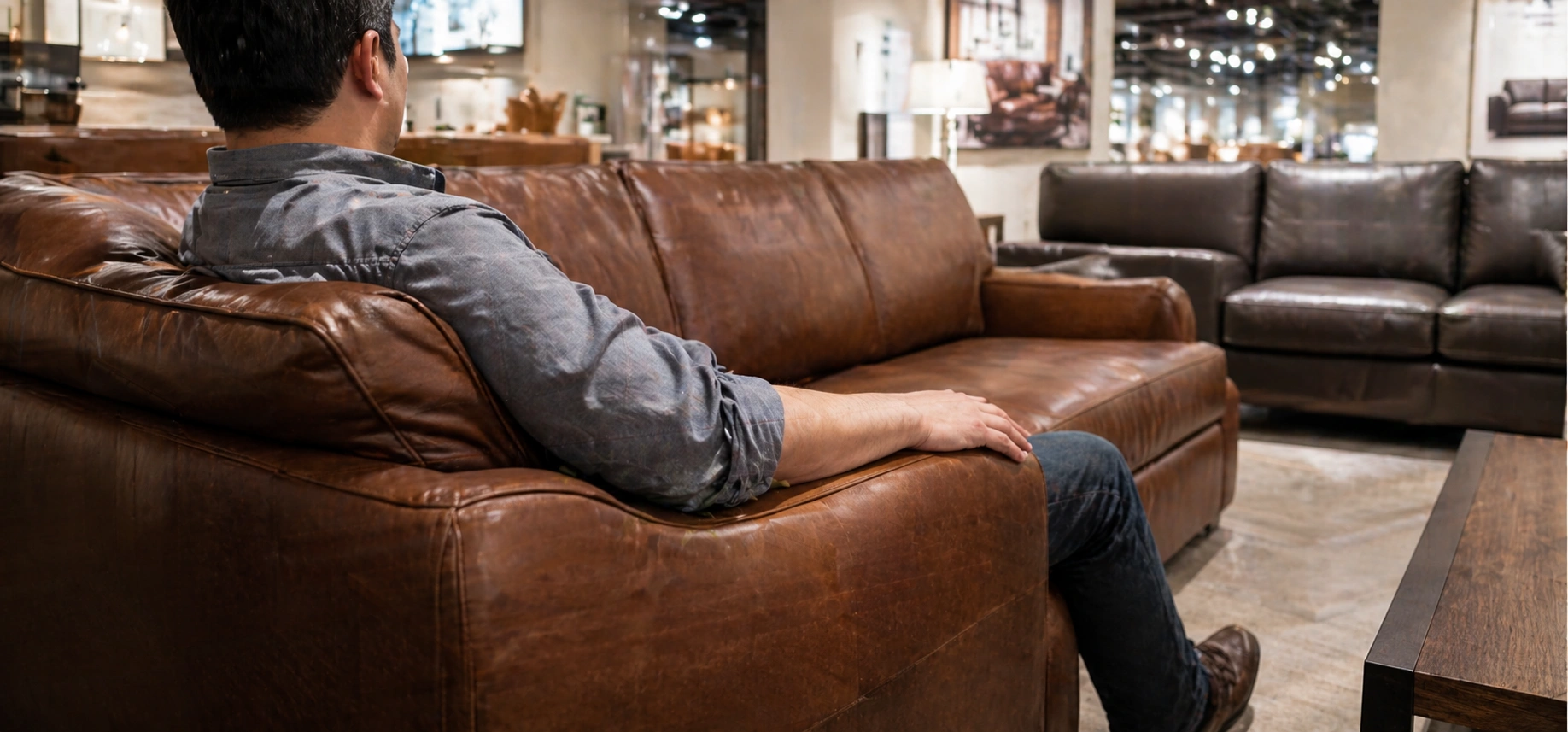
Sit on the sofa for at least 5–10 minutes in your normal posture. Check the seat depth — too deep and your legs dangle; too shallow and you feel cramped. Evaluate the cushion fill — high-resistance foam wrapped in down or fiber provides the best balance of support and softness. For detailed comfort testing methods, see how to test sofa comfort.
Step 6: Consider Your Lifestyle
Homes with young children or large pets should opt for pigmented top-grain in darker colors. If you're choosing a sofa primarily for daily napping or movie marathons, prioritize deeper seats and softer cushion fills. For frequent hosting, consider a larger sectional or a modular configuration that can be rearranged.
✅ Quick Buying Checklist
Before clicking "buy" or signing at the store, confirm: (1) leather grade is clearly stated as top-grain or full-grain, (2) frame is kiln-dried hardwood, (3) cushions have removable covers for access to the frame, (4) warranty covers at least 5 years on the frame and 2–3 years on the leather, (5) return policy allows at least 30 days. For more budget-specific guidance, see how much a good sofa should cost and learn the best time to buy a sofa for potential savings.
Leather Sofa Care & Maintenance
Proper care dramatically extends your leather sofa's life and keeps it looking its best. The maintenance routine is simpler than most people think — but consistency is key. Different leather finishes require different approaches.
Daily & Weekly Care
- Dust weekly — Use a soft, dry microfiber cloth to remove dust. Dust acts as fine sandpaper on leather over time if left unchecked.
- Wipe spills immediately — Blot (don't rub) with a clean, slightly damp cloth. Most water-based spills on pigmented leather won't leave a mark if addressed quickly.
- Avoid direct sunlight — Position your sofa away from windows or use UV protection spray. Prolonged sun exposure causes fading and drying.
- Keep heat sources away — Radiators, fireplaces, and heating vents dry out leather and can cause cracking.
Monthly & Quarterly Care
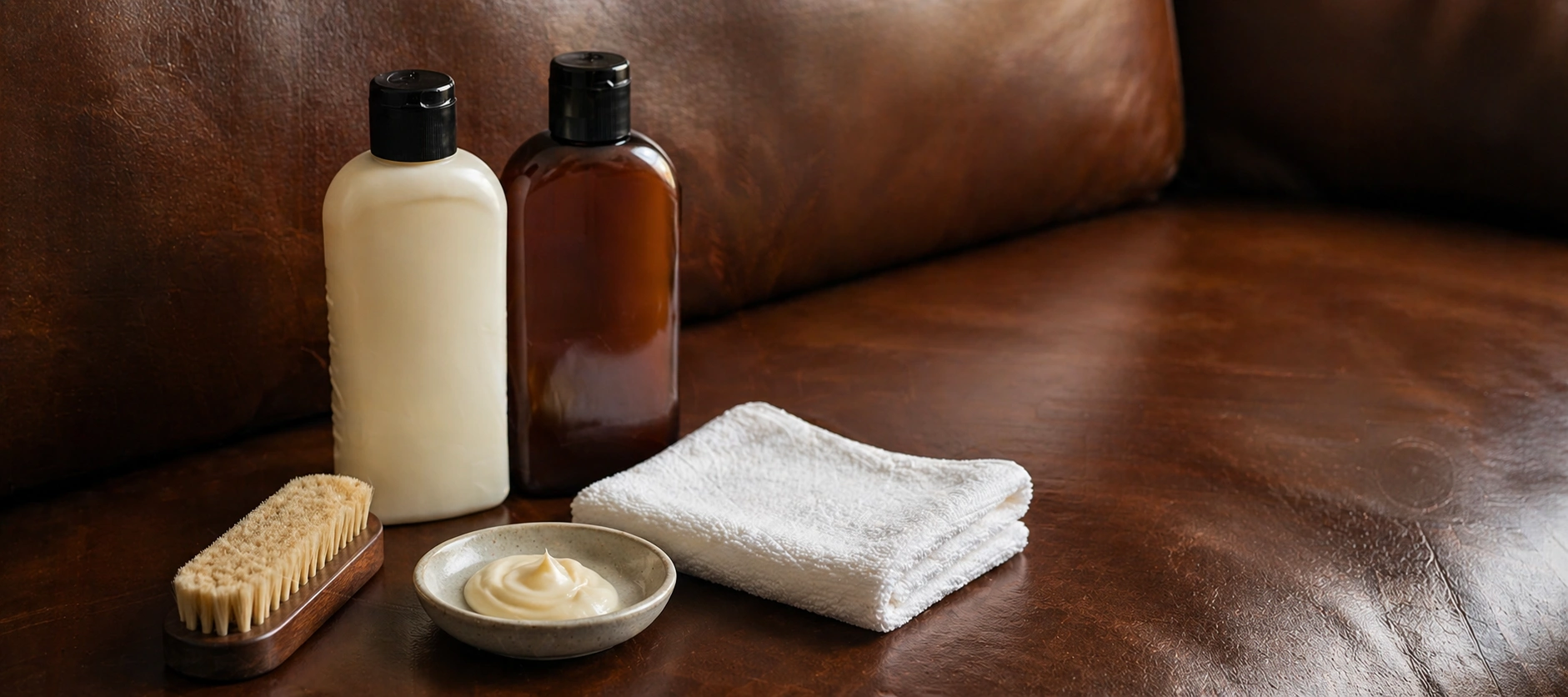
- Condition every 3–6 months — Apply a pH-balanced leather conditioner to keep the hide supple and prevent cracking. Leather conditioning is the single most important maintenance task.
- Clean with proper products — Use a dedicated leather cleaner, not household cleaners, soap, or baby wipes which can strip natural oils and damage the finish.
- Rotate and flip cushions — Ensures even wear patterns, especially on frequently used seats.
Dealing with Common Issues
Even with diligent care, leather sofas can encounter issues. Light scratches on pigmented leather often respond to gentle rubbing with a clean finger (natural oils help blend the scratch). For deeper scratches, minor leather tear repair kits can provide effective fixes. If your cushions begin to feel less supportive, you may need to address sagging sofa cushions before the leather itself shows wear. For complete cleaning instructions tailored to your leather type, see our how to clean leather sofa guide.
⚠️ What NOT to Do
Never use: baby wipes, alcohol-based cleaners, furniture polish, vinegar, baking soda, or abrasive scrubbing pads on leather. These strip natural oils, damage finishes, and can cause irreversible discoloration. Never use wax-based products on pigmented leather — they create a buildup that prevents conditioner from penetrating. If you're unsure about a product, test it on an inconspicuous area first, like the back of the sofa or under a cushion.
Frequently Asked Questions
Final Takeaway: A leather sofa is one of the smartest furniture investments you can make — but only if you choose the right grade, style, and construction. Top-grain leather in a style that fits your space, on a hardwood frame, with proper maintenance, will serve you beautifully for 15–20 years. Avoid bonded leather entirely, verify the grade on the label, and don't sacrifice frame quality for a cheaper price. When you're ready to buy, explore our curated leather sofa recommendations below where every option has been evaluated for grade, construction, and value.