Best Sofas for Basement & Rec Room
Transform your below-grade space into the ultimate hangout — from movie nights to game days, find the perfect sofa that handles moisture, tight stairs, and endless entertaining.
VIEW TOP PICKSA basement or rec room is one of the most versatile spaces in any home. It can serve as a home theater, a game room, a casual lounge for frequent hosting, or even a guest sleeping area. But choosing a sofa for this environment requires a very different approach than furnishing a standard living room.
Below-grade spaces come with unique challenges: higher humidity levels, less natural light, narrow staircases for delivery, and the potential for temperature fluctuations. A sofa that looks perfect in a showroom might warp, develop mold, or simply not fit through your basement door. This guide walks you through every critical factor so you can invest in a sofa that thrives in your basement for years to come.
Why Basement Sofas Require Special Consideration
Many homeowners make the mistake of treating their basement like any other room. The reality is that below-grade environments create conditions that can dramatically shorten a sofa's lifespan if you don't plan accordingly. Understanding these challenges upfront is the single most important step before you start shopping.
Higher Humidity Levels
Basements naturally hold more moisture than above-ground rooms. This can cause wooden frames to warp, fabric to develop mildew, and metal components to rust over time. Materials must be selected with moisture resistance in mind.
Tight Staircases & Doorways
Getting furniture into a basement often means navigating narrow stairs, low ceilings, and tight turns. A large sectional that seems ideal might be impossible to deliver without disassembly.
Temperature Fluctuations
Basements tend to be cooler in summer and may not heat as evenly in winter. These temperature swings can affect foam cushion integrity and cause materials to expand and contract differently than in climate-controlled spaces.
Heavy-Duty Use Expected
Rec rooms see more wear than formal living rooms — kids, pets, food during game days, and late-night movie sessions. Your sofa needs to handle spills, stains, and constant use without showing age quickly.
Best Sofa Types for Basement & Rec Room Spaces
Not every sofa style works well below ground. The ideal choice depends on your basement's layout, ceiling height, primary use, and how many people you typically host. Here are the top-performing sofa types for basement environments, ranked by practical suitability.
Modular Sofas — Best Overall
The biggest advantage of a modular sofa for basements is delivery flexibility. Each piece is smaller and lighter, making it much easier to carry down stairs and around corners. You can also reconfigure the layout as your needs change, which is perfect for multi-purpose rec rooms.
Sectional Sofas — Best for Large Spaces
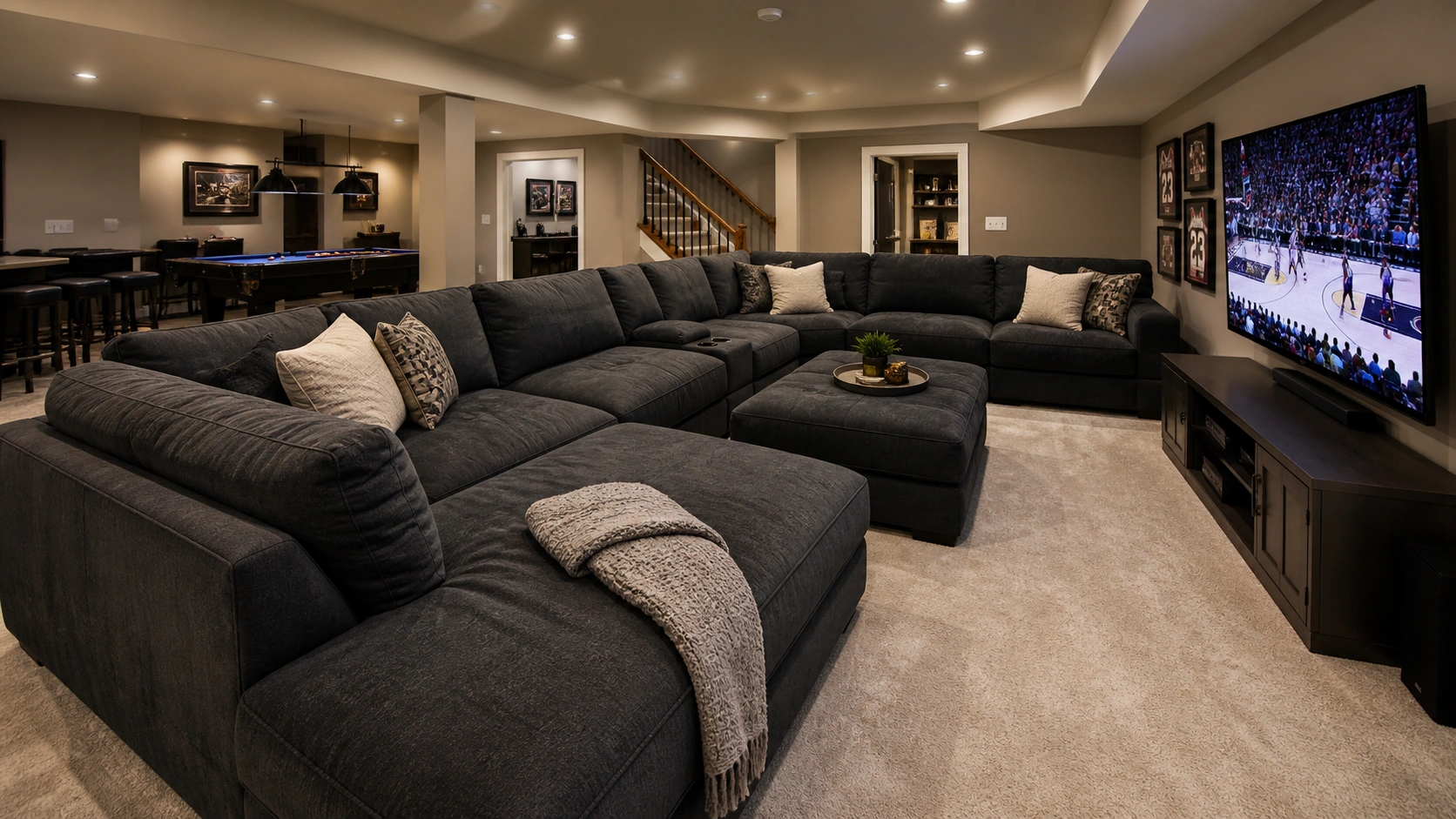
If your basement has an open floor plan, a sectional sofa maximizes seating capacity. Look for models that can be assembled on-site with connecting brackets rather than pre-attached pieces. L-shaped configurations work especially well when positioned around a TV or projector screen.
Sleeper Sofas — Best for Dual-Purpose Rooms
If your basement doubles as a guest room, a sleeper sofa is the smartest investment. Modern sleepers have improved dramatically — many now feature memory foam mattresses that rival standalone beds, and some pull-out mechanisms are designed to be narrow enough for basement stairways.
Recliner Sofas — Best for Home Theaters
For a dedicated home theater setup, a recliner sofa delivers the best experience. Look for models with built-in cup holders and USB ports for charging devices during movie marathons. Wall-hugger designs are essential for basements with limited depth.
Futon Sofas — Best for Budget Setups
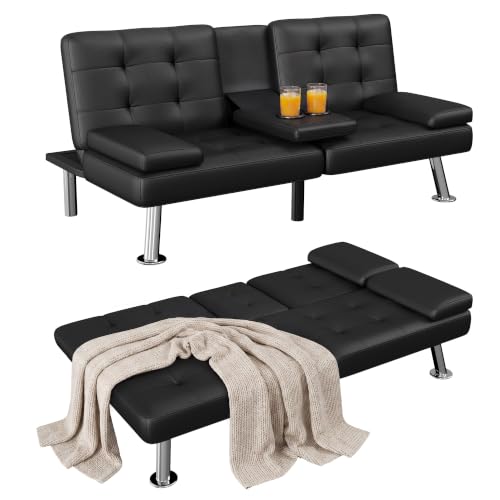
A futon sofa is lightweight, affordable, and extremely easy to move into tight basement spaces. While not as plush as premium options, high-quality futons with thick cotton or memory foam cushions can be surprisingly comfortable for casual hangout areas.
Deep-Seat Sofas — Best for Lounging
If your rec room is primarily for relaxation, a deep-seat sofa with a chaise lounge extension creates a sink-in comfort zone. These work exceptionally well in basements where the cozy, enclosed atmosphere naturally encourages lounging.
Material Guide: What Withstands Basement Conditions
Material selection is arguably more important for basement sofas than for any other room. The wrong fabric can absorb moisture, develop odors, and degrade rapidly. The wrong frame material can warp beyond repair. Here's how common options perform in below-grade environments.
| Material | Moisture Resistance | Durability | Cleanability | Basement Rating |
|---|---|---|---|---|
| Performance Fabric | Excellent | Very Good | Excellent | ⭐ Top Pick |
| Microfiber | Good | Good | Very Good | ⭐ Great Value |
| Genuine Leather | Moderate | Excellent | Very Good | Use with dehumidifier |
| Vinyl / Faux Leather | Very Good | Moderate | Excellent | Good budget option |
| Olefin / Polypropylene | Excellent | Good | Excellent | ⭐ Moisture King |
| Natural Cotton/Linen | Poor | Fair | Fair | Avoid in damp basements |
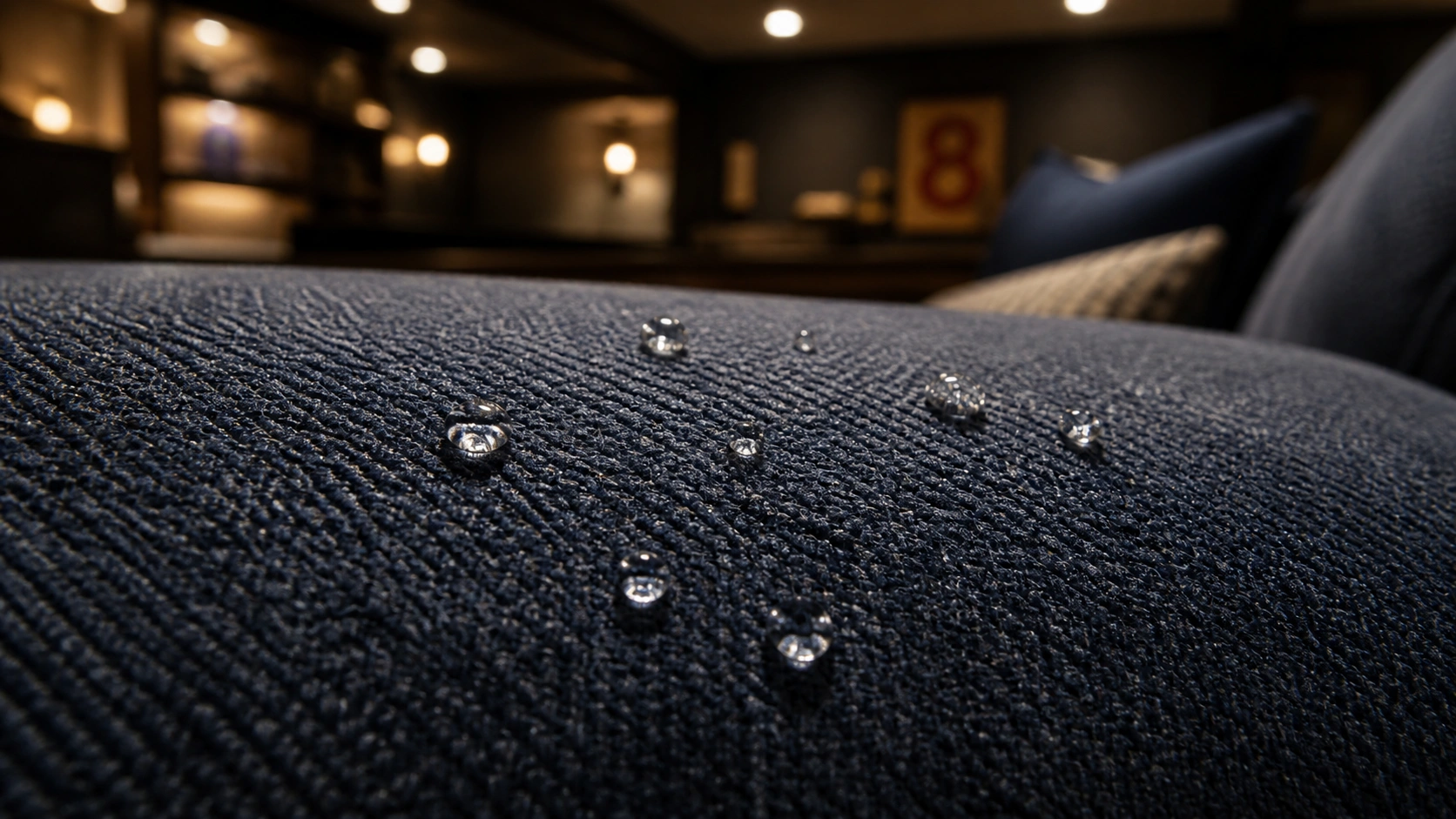
Key Insight: Performance fabrics like Crypton, Revolution, or Sunbrella are engineered to resist moisture, stains, and odors at the fiber level. They cost 20–40% more upfront but can last 2–3 times longer in basement conditions compared to standard upholstery. Learn more about sofa materials explained and durability testing standards.
For the sofa frame, kiln-dried hardwood with a moisture-resistant sealant is the gold standard. Avoid particleboard or MDF frames entirely — these absorb ambient moisture and will swell, weaken, and eventually crumble in a basement environment. Plywood frames with at least 7–9 layers can also perform well if properly sealed.
✅ Recommended Frame Materials
- Kiln-dried hardwood (oak, maple, ash) with moisture sealant
- Multi-layer plywood (7+ plies) with waterproof adhesive
- Aluminum or stainless steel frames for modern designs
- Powder-coated metal for industrial-style rec rooms
❌ Avoid These Frame Materials
- Particleboard — absorbs moisture and disintegrates
- Standard MDF — swells and warps in humid conditions
- Untreated softwoods — prone to rot in damp environments
- Non-coated carbon steel — rusts quickly below grade
Size Guide & Delivery Planning for Basements
The most frustrating mistake in basement furnishing is ordering a sofa that can't physically fit through your stairway or doorway. Unlike a main-floor living room where delivery is straightforward, basement access requires careful measurement and planning. Follow this step-by-step process before making any purchase.
Measure Every Path Point
Don't just measure your stairway width. Measure the doorway at the top of the stairs, the bottom doorway, any landings or turns, and the ceiling height at the lowest point. The narrowest measurement is your maximum constraint. Use our complete sofa measurement guide for detailed instructions.
Check Disassembly Options
Many modern sectionals and modular sofas ship as individual pieces that connect on-site. This is the single best solution for basement delivery. Always confirm with the seller whether the sofa can be fully disassembled before purchasing.
Calculate Usable Floor Space
Account for walking paths, the TV viewing distance, and any existing furniture. A room size guide recommends leaving at least 30 inches of clearance for main walkways. In basements with ductwork or support columns, plan your layout around these fixed obstacles.
Consider Ceiling Height
Low basement ceilings make tall, high-back sofas feel oppressive. Choose low-back sofa designs to maintain visual openness. For very low ceilings (under 7 feet), consider floor sofas or low-profile designs that sit closer to the ground.
💡 Pro Tip: The "Diagonal Test"
If your stairway is narrower than the sofa's depth, try the diagonal method. The sofa's diagonal measurement is always longer than its width or depth. If the diagonal of the sofa is smaller than the stairway width, it can be tilted and maneuvered through. Many delivery teams are experienced with this technique — just measure first and communicate clearly.
Must-Have Features for Basement Entertainment
A basement rec room typically serves as the entertainment hub of the house. The sofa you choose should enhance this experience rather than just serve as basic seating. These features directly improve usability and enjoyment in a below-grade entertainment space.
Built-In Cup Holders
Sofas with cup holders are essential for game-day basements where drinks are always present. Center console cup holders prevent spills on cushions and keep beverages within easy reach during movies or gaming sessions.
USB Charging Ports
USB-equipped sofas eliminate the need for extension cords running across the floor. Keep phones, tablets, and controllers charged without leaving your seat during long movie nights or gaming sessions.
Hidden Storage
Sofas with storage compartments are perfect for stashing extra blankets, game controllers, remotes, and board games — keeping your rec room clutter-free without adding extra furniture.
Beyond these features, consider the cushion fill type carefully. High-resilience foam wrapped in a down alternative provides the best balance of support for extended sitting and quick recovery for a neat appearance. For basements where people may nap or lounge for hours, a medium-firm cushion with a plush top layer offers the best long-term comfort without bottoming out. Read our guide on firm vs plush sofas to find your ideal comfort level.
Color & Style: Making Basements Feel Bigger & Brighter
Basements often suffer from limited natural light, which can make dark-colored furniture feel heavy and the space appear smaller than it actually is. Strategic color and style choices can dramatically transform how your basement feels without changing a single structural element.
Color Strategy for Basement Sofas
- Light neutrals like cream, beige, and light gray reflect available light and make the room feel spacious. Neutral-toned sofas are the safest choice for below-grade spaces.
- Medium tones such as grey couches or brown couches work well if your basement has decent artificial lighting. They hide minor stains better than very light colors.
- Bold colors like a red sofa or orange sofa can work as an accent piece but should be balanced with lighter surrounding elements. Use sparingly unless the basement is well-lit.
- Very dark colors like black couches absorb light and can make a basement feel cave-like. Reserve these only for large, well-lit basement spaces.
For style, modern sofas with clean lines and slim profiles work exceptionally well in basements because they don't visually overwhelm the space. Industrial-style sofas with metal accents complement the exposed ductwork and concrete that many basements feature. If your basement has a finished, polished look, a contemporary sofa with tapered legs creates an airy feel by allowing light to flow underneath.
Protecting Your Basement Sofa From Moisture & Damage
Even with the right materials, proactive maintenance is essential to extend your sofa's life in a basement. Moisture is the number one enemy — but it's manageable with the right combination of environmental controls and protective measures.
Essential Protection Checklist
- Run a dehumidifier continuously — Keep basement humidity between 30–50%. This single step prevents 90% of moisture-related sofa problems, including musty odors and mold growth.
- Apply fabric protection treatment — Use a quality protector like Scotchgard or the manufacturer's recommended treatment. Reapply every 6–12 months. See our full fabric protection guide.
- Use sofa covers — A washable cover adds a physical barrier against moisture, spills, and pet hair. Pet-proof covers are especially valuable if your basement is also your pet's space.
- Elevate the sofa slightly — Ensure the sofa sits on legs rather than directly on the floor. This prevents moisture wicking from concrete floors into the frame. If your sofa has no legs, place it on furniture risers or a moisture barrier mat.
- Ventilate regularly — Even in finished basements, open windows or run exhaust fans periodically to circulate fresh air and prevent stagnant moisture pockets behind and under the sofa.
- Avoid placing against exterior walls — If possible, position the sofa away from cold exterior basement walls where condensation forms. Leave at least 4–6 inches of clearance for air circulation.
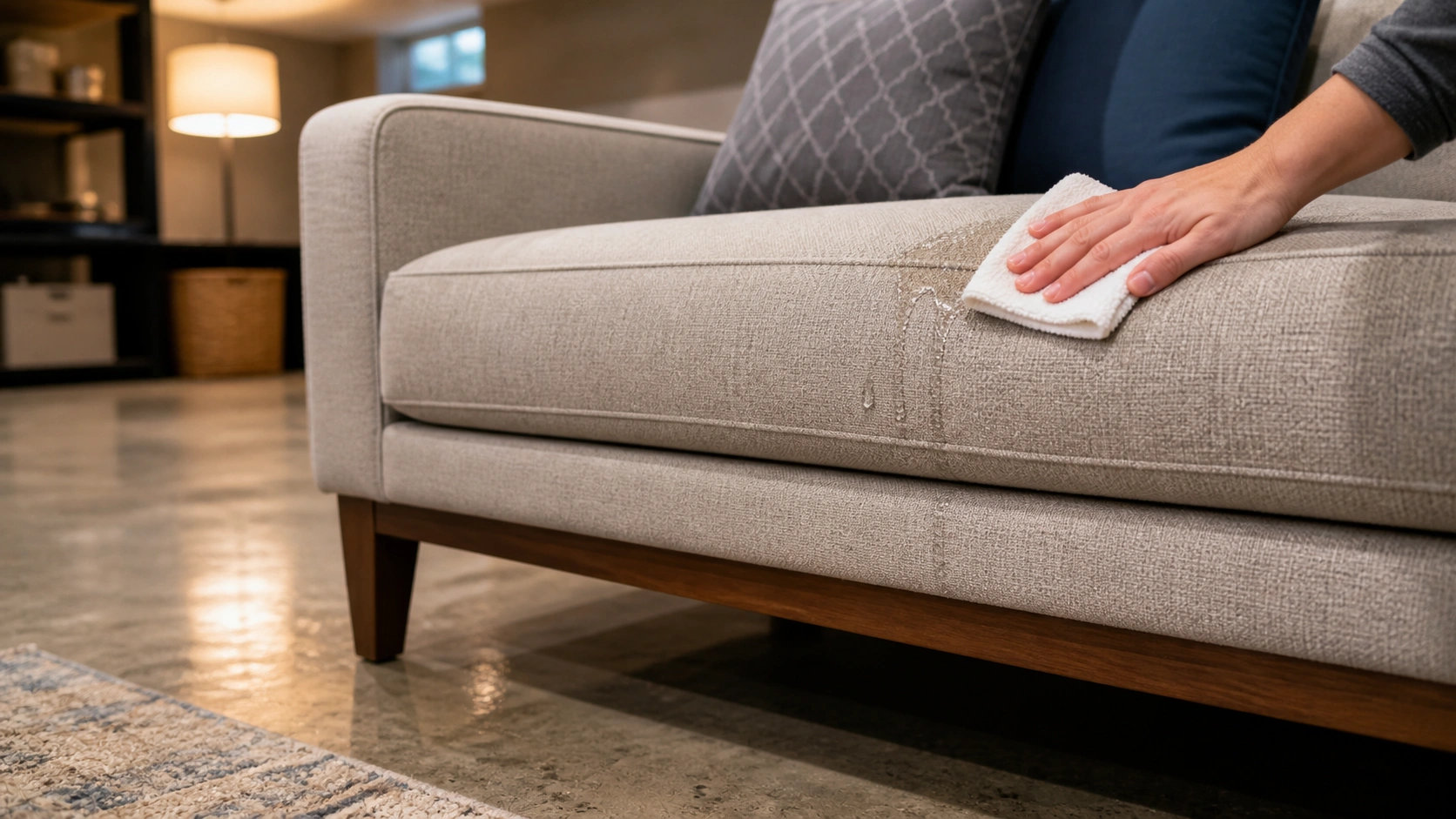
For regular cleaning, fabric sofas should be vacuumed weekly to remove dust that traps moisture. For microfiber couches, use a dedicated microfiber cleaning solution and brush. If your basement sofa develops stains from food or drinks during parties, address them immediately — basement conditions accelerate stain setting due to higher humidity.
If you notice cushions starting to lose their shape, our guide on fixing sagging cushions can help you restore comfort without replacing the entire sofa. For more serious issues like frame damage, refer to our common sofa problems and fixes resource.
Budget Strategy: How Much to Spend on a Basement Sofa
There's a common debate about whether to invest heavily in basement furniture or go budget-friendly. The right answer depends on your basement's condition, how you use the space, and your long-term plans. Understanding the sofa price breakdown helps you allocate your budget wisely.
Budget Range: $300–$700
Ideal for basements with known moisture issues or if you're planning to renovate soon. Focus on affordable sofas with moisture-resistant synthetic fabrics. A futon or basic 2-seater sofa in this range provides functional seating without major risk if conditions deteriorate.
Mid-Range: $700–$1,500
The sweet spot for most homeowners. This range gets you performance fabric upholstery, kiln-dried frames, and better cushion technology. A modular sofa or 3-seater sofa with delivery-friendly disassembly typically falls here.
Premium: $1,500–$3,500+
Justified only if your basement is fully waterproofed, climate-controlled, and used as a primary living space. Invest in luxury sofas with top-tier performance fabrics, 8-way hand-tied springs, and premium cushion fills for a truly high-end experience.
💡 Smart Buyer Tip
Consider buying a secondhand sofa for a damp basement and saving your new-sofa budget for the main living room. A quality used sofa with a new slipcover can look and feel fresh while keeping your financial risk low. The best time to buy is during holiday sales (Memorial Day, July 4th, Labor Day, Black Friday) when discounts reach 30–50%.
Common Mistakes to Avoid
Learning from others' mistakes can save you thousands of dollars and significant frustration. These are the most frequent errors homeowners make when furnishing their basement or rec room — and how to avoid each one.
Costly Mistakes That Ruin Basement Sofas
- Not running a dehumidifier — This is the #1 cause of premature basement sofa failure. Even finished basements need active humidity control. Without it, expect mold, warping, and musty smells within 1–2 years.
- Buying without measuring the delivery path — A sofa stuck at the top of basement stairs is an expensive problem. Always measure the narrowest point of your delivery route before ordering.
- Choosing style over material suitability — A beautiful velvet sofa or linen sofa may look gorgeous but will absorb moisture and stain easily in a basement. Prioritize performance fabrics over aesthetics.
- Placing the sofa directly on concrete — Concrete floors wick moisture upward. Always use furniture legs, risers, or a moisture barrier between the sofa and the floor surface.
- Ignoring ceiling height when selecting sofa height — A tall, high-back sofa in a 7-foot basement creates a claustrophobic feeling. Always measure from floor to ceiling at the sofa's planned position.
- Skipping fabric protection — Rec rooms see more spills, snacks, and pet activity than any other room. Unprotected fabric will show stains within weeks. The cost of protection treatment is minimal compared to replacement.
Basement vs. Other Rooms: Key Differences
Understanding how basement sofa selection differs from other rooms in your home helps clarify why standard advice doesn't always apply. The table below highlights the critical distinctions that should guide your purchasing decisions.
| Factor | Basement / Rec Room | Living Room | Family Room |
|---|---|---|---|
| Top Priority | Moisture resistance & delivery fit | Style & aesthetics | Durability & family comfort |
| Best Material | Performance fabric / Olefin | Any (style-dependent) | Microfiber / Performance fabric |
| Frame Priority | Moisture-sealed hardwood | Any quality frame | Sturdy hardwood |
| Size Constraint | Stairway width is limiting factor | Room dimensions only | Room dimensions only |
| Color Strategy | Light to brighten space | Any (matches decor) | Medium tones (hides stains) |
| Special Features | Cup holders, USB, storage | Minimal (clean look) | Washable, pet-friendly |
Frequently Asked Questions
Yes, but with caveats. A regular sofa can work in a basement that is properly waterproofed, climate-controlled with a dehumidifier, and has adequate ventilation. However, if your basement has any history of dampness, moisture issues, or flooding, you should choose a sofa with moisture-resistant materials (performance fabric, sealed hardwood frame) rather than standard upholstery. The sofa selection process for basements should always start with assessing your moisture levels first.
The best approach is to choose a modular sofa that ships in individual pieces assembled on-site. For non-modular sofas, measure the diagonal of the sofa — if it fits within your stairway width, professional movers can angle it through. For tight turns, a sofa with removable legs and back cushions gives you several extra inches of clearance. Always confirm delivery access with the retailer before purchasing. Read our measurement guide for complete instructions.
Performance fabrics like Crypton, Revolution, and Sunbrella are the most durable options for basement environments. They resist moisture, stains, fading, and odor absorption at the fiber level. Olefin (polypropylene) is another excellent choice — it's inherently water-resistant, mold-resistant, and extremely durable. For more details on durable fabrics, our dedicated guide covers abrasion ratings, cleanability scores, and real-world longevity comparisons.
No. Concrete floors wick moisture through capillary action, which can penetrate the sofa frame and cause warping, mold, and rust on metal components. Always ensure your sofa has legs that elevate it at least 2–3 inches off the floor. If the sofa sits low, use furniture risers or place a moisture barrier (like a rubber mat or plastic sheeting) underneath. This simple step can add years to your sofa's lifespan in a basement.
Genuine leather can work in a climate-controlled basement with consistent humidity levels (30–50%), but it requires more maintenance. Leather absorbs moisture from the air, which can cause it to become stiff, crack, or develop mildew in damp conditions. If you prefer the leather look, top-grain or full-grain leather with regular conditioning is better than bonded leather. Vinyl or faux leather is actually more moisture-resistant and may be the smarter choice. Read our full leather vs fabric comparison for detailed guidance.
Musty odors come from mold and mildew growth in humid environments. Prevention is far easier than treatment: run a dehumidifier continuously, ensure the sofa isn't against exterior walls, keep it elevated off the floor, and maintain airflow around it. If your sofa already smells, our sofa odor removal guide covers baking soda treatments, enzymatic cleaners, and UV exposure methods. In severe cases, professional upholstery cleaning may be necessary.
For a standard 12×20 foot finished basement, a 3-seater sofa (approximately 80–90 inches wide) or a small L-shaped sectional (around 95–110 inches total) works well. For larger basements (15×25+ feet), a full-size sectional with a chaise can seat 5–6 people comfortably. Always base your size on the room size guide and your delivery path constraints, not just the floor space.