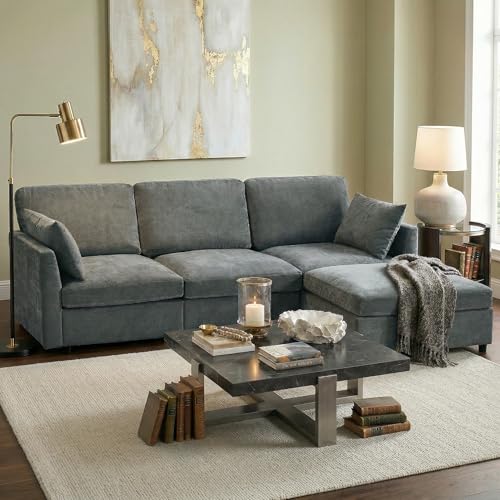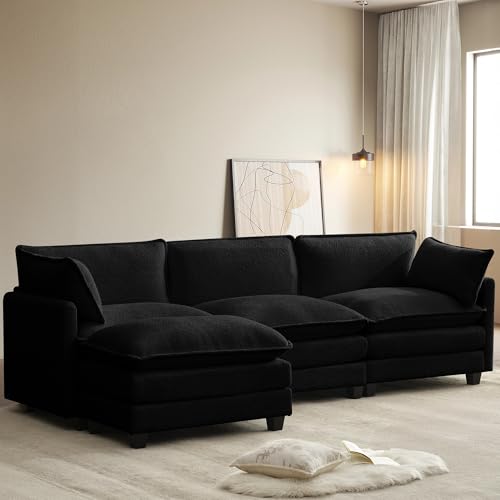
4 Seater Sofa: The Complete Buying Guide
Everything you need to know about dimensions, materials, layouts, and choosing the right 4 seater sofa for your family and living space
Why a 4 Seater Sofa? It strikes the perfect balance between seating capacity and room proportion. Large enough for a family of four yet compact enough for most living rooms, a 4 seater is one of the most versatile sofa sizes available. This guide covers every detail so you can buy with confidence.
What Is a 4 Seater Sofa?
A 4 seater sofa is a straight-lined couch designed to comfortably accommodate four adults sitting side by side. Unlike a sectional sofa that wraps around a corner, a 4 seater maintains a single, continuous seating plane. It is wider than a 3 seater sofa but more compact than a 5 seater sofa, making it one of the most sought-after sizes for medium to large living rooms.
The defining characteristic of a 4 seater is its generous width — typically spanning 90 to 110 inches — combined with three to four distinct seat cushions. This design allows each person to have their own defined seating space without feeling cramped, which is especially valuable for family rooms where multiple people gather regularly. Some 4 seater models feature a bench cushion (one continuous pad) instead of individual cushions, which offers a sleeker look but can feel less defined per person.

Standard Dimensions of a 4 Seater Sofa
Understanding exact dimensions is critical before purchasing. A sofa that looks right online can overwhelm or underwhelm your room in person. If you're unsure how to measure properly, our how to measure a sofa guide provides step-by-step instructions.
| Measurement | Standard Range | Compact Range | Oversized Range |
|---|---|---|---|
| Width | 90 – 110 in (228 – 280 cm) | 84 – 89 in (213 – 226 cm) | 111 – 120 in (282 – 305 cm) |
| Depth | 35 – 40 in (89 – 102 cm) | 32 – 34 in (81 – 86 cm) | 41 – 46 in (104 – 117 cm) |
| Height | 32 – 38 in (81 – 97 cm) | 30 – 31 in (76 – 79 cm) | 39 – 42 in (99 – 107 cm) |
| Seat Height | 17 – 19 in (43 – 48 cm) | 16 – 17 in (41 – 43 cm) | 19 – 21 in (48 – 53 cm) |
| Seat Depth | 20 – 24 in (51 – 61 cm) | 18 – 20 in (46 – 51 cm) | 24 – 28 in (61 – 71 cm) |
The seat depth is particularly important — a deeper seat (24+ inches) creates a more relaxed, lounge-like feel, while a shallower seat (under 20 inches) is better for formal sitting and smaller-framed individuals. For a detailed breakdown of how sofa size relates to room size, see our sofa size and room guide.
How a 4 Seater Compares to Other Sizes
To put the 4 seater in perspective, here is a visual comparison of common sofa widths relative to each other:
2 Seater
50 – 65 in3 Seater
70 – 87 in4 Seater
90 – 110 in5 Seater
115 – 140 inIf you're debating between sizes, consider that a loveseat or 2 seater pairs well with a 4 seater in larger rooms, while a standalone 4 seater with an accent chair often works better than squeezing in a 5 seater. Our sectional vs traditional sofa comparison can also help you decide between an L-shaped layout and a straight 4 seater.
Who Is a 4 Seater Sofa Best For?
A 4 seater isn't for everyone, but it excels in specific situations. Here's a breakdown of who benefits most:
Families with Children
- Seats parents plus two kids comfortably without crowding
- Wider surface area distributes wear more evenly across cushions
- Works well as the primary seating in a family room
- Pairs with washable or performance fabric options
Frequent Hosts
- Accommodates guests for game nights, movie sessions, and gatherings
- Eliminates the need for extra seating like folding chairs
- Ideal for homes that regularly host 4+ people
- Consider adding a sofa with ottoman for extra flexibility
Open-Plan Living Spaces
- Fills larger wall spans without leaving awkward gaps
- Creates a natural zoning boundary between living and dining areas
- Looks proportional in large rooms where smaller sofas feel lost
- Works as a room divider when placed strategically
Couple + Occasional Guests
- Gives a couple plenty of stretch-out space on a daily basis
- Ready for guests without rearranging furniture
- Better long-term investment than buying a 3 seater and adding a chair later
- Consider a deep seat sofa for maximum lounging comfort
Types of 4 Seater Sofas
Not all 4 seater sofas are built the same. The design you choose affects comfort, aesthetics, and how well it fits your lifestyle. Here are the most popular styles available:
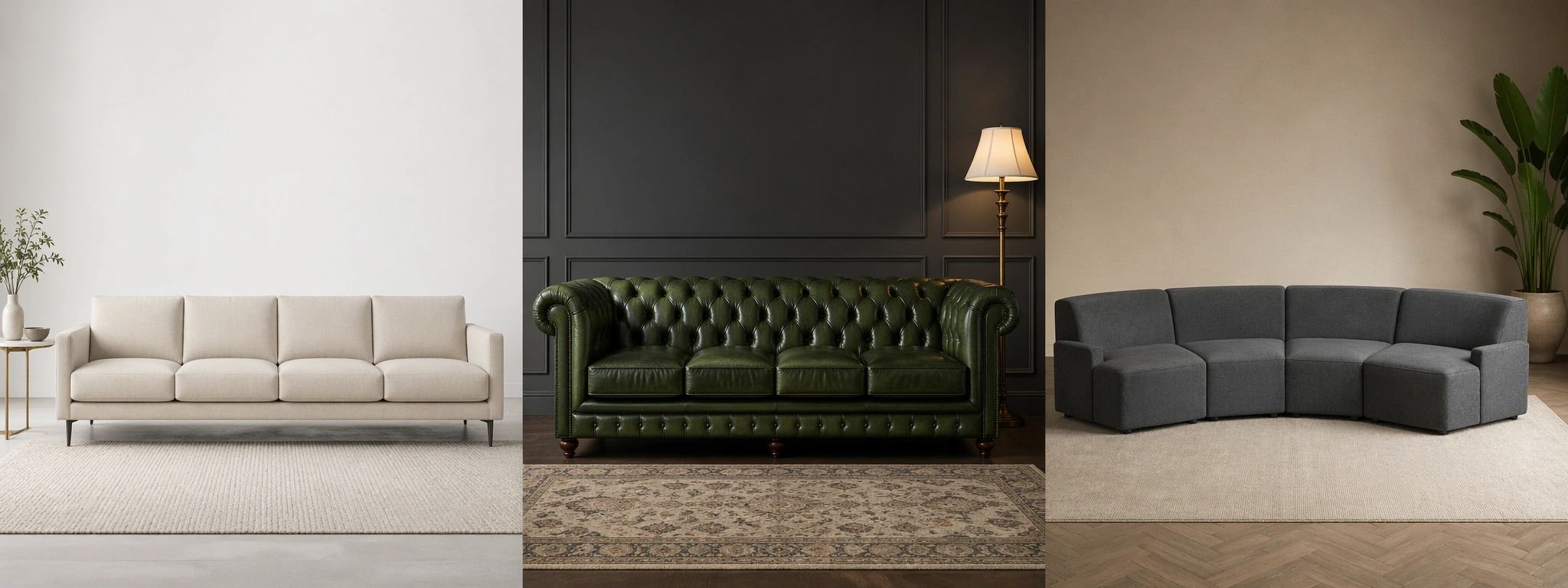
1. Standard Straight 4 Seater — The most common configuration with a fixed back, armrests on both ends, and three or four seat cushions. Simple, versatile, and fits against any wall. This is the baseline style most people picture when they think of a 4 seater.
2. Chesterfield 4 Seater — Features deep button tufting, rolled arms, and a high back. A chesterfield in 4 seater width makes a dramatic statement and works beautifully in formal living rooms or spaces with traditional or industrial decor.
3. Modular 4 Seater — Made up of individual pieces (typically 3-4 modules) that can be rearranged. This gives you the flexibility to change from a straight line to an L-shape or U-shape over time. Ideal for people who like to refresh their layout periodically.
4. Tufted 4 Seater — Features decorative tufting (either button or channel) on the back and sometimes the seat. Adds visual texture and a sense of luxury without the full formality of a chesterfield.
5. Modern Low-Profile 4 Seater — Characterized by clean lines, slim arms, low seat height, and tapered legs. These designs make a 4 seater feel visually lighter, which helps in rooms where you're concerned about the sofa looking too bulky.
Best Materials for a 4 Seater Sofa
With four seats worth of surface area, material choice has an outsized impact on durability, maintenance, and long-term satisfaction. A leather vs fabric comparison is essential reading, but here's a focused breakdown for 4 seater specifically:
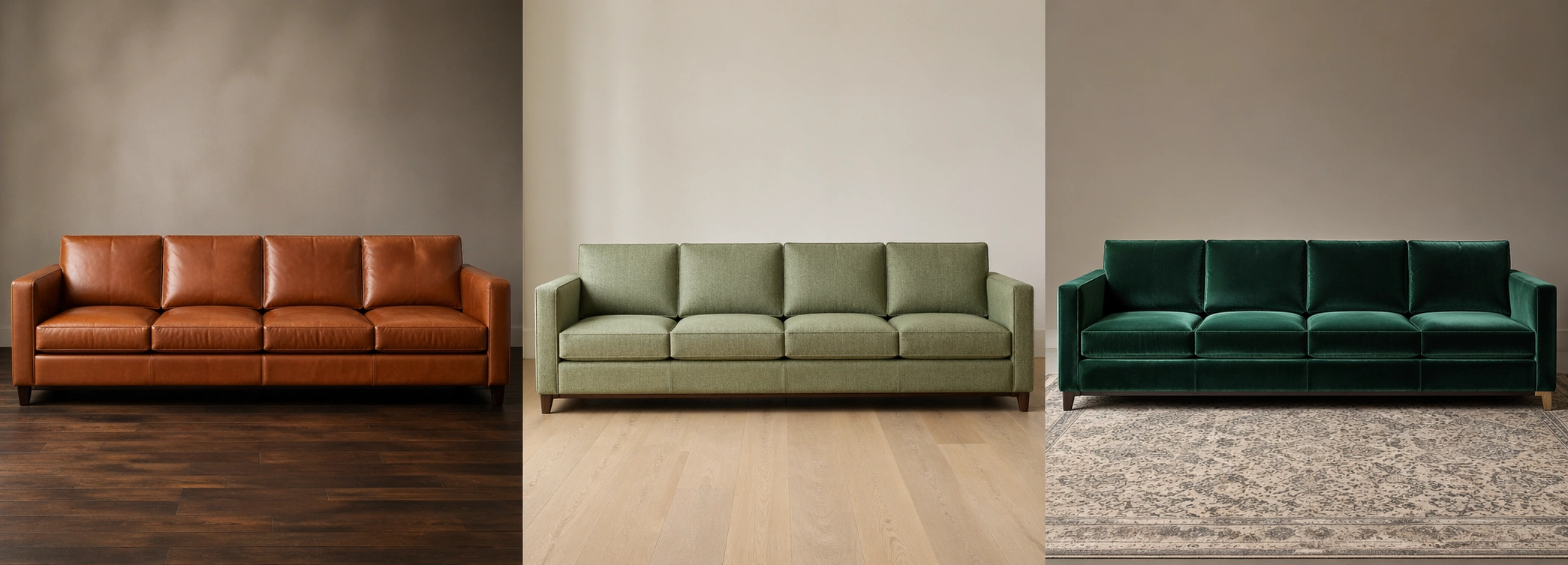
Performance Fabric (Recommended for Families) — Engineered to resist stains, fading, and wear. Brands like Crypton, Revolution, and Sunbrella offer fabrics that pass rigorous Martindale abrasion testing (50,000+ cycles). For households with kids or pets, performance fabric on a 4 seater is often the smartest choice. Learn how to maintain it with our fabric sofa cleaning guide.
Genuine Leather — A leather sofa in 4 seater width creates a premium, sophisticated look. Full-grain leather develops a beautiful patina over time but requires regular leather conditioning. Top-grain leather is more affordable while still durable. Leather is easy to wipe clean but can be scratched by pet claws — see our guide on sofas for pet owners if that's a concern.
Velvet — A velvet sofa in 4 seater proportions makes a bold style statement. Velvet is softer than most fabrics and comes in rich colors, but it shows marks and crushing more easily. Best for formal living rooms or adult-only households. Read our velvet cleaning guide before committing.
Linen and Cotton Blends — Natural, breathable, and comfortable. Linen sofas have a relaxed, casual elegance that suits many decor styles. However, pure linen wrinkles easily and can stain. A cotton-linen blend with a protective treatment offers the best balance. Consider a fabric protection treatment for added peace of mind.
Frame and Cushion Quality: What Matters Most
A 4 seater sofa carries more weight and spans a longer distance than smaller sofas, which means structural quality becomes even more important. A weak frame on a 4 seater will sag in the center over time — a problem that's expensive to fix. Our frame materials guide covers this in depth, but here are the key points:
Kiln-Dried Hardwood — Oak, maple, ash, or birch that has been kiln-dried to remove moisture. This is the gold standard for 4 seater frames. Avoid softwoods like pine for a sofa this size — they simply aren't rigid enough over a 90+ inch span.
Reinforced Joints — Look for dowelled, glued, and corner-blocked joints. Staples or nails alone are a red flag on a 4 seater. Some high-end manufacturers use metal brackets at stress points for additional support on longer frames.
For cushions, the fill type directly affects comfort longevity. High-resilience foam wrapped in dacron (a polyester batting) offers the best balance of support and softness for daily use. Down-wrapped foam feels luxurious but requires frequent fluffing and is better for occasional-use rooms. Understanding foam density and ILD ratings helps you compare options objectively. Also, consider the spring system — eight-way hand-tied springs are premium, while sinuous no-sag springs are perfectly adequate for most 4 seater applications.
How to Arrange a 4 Seater Sofa in Your Room
Proper placement can make or break how a 4 seater feels in your space. Our living room layout guide covers multiple scenarios, but here are the most effective arrangements for a 4 seater:
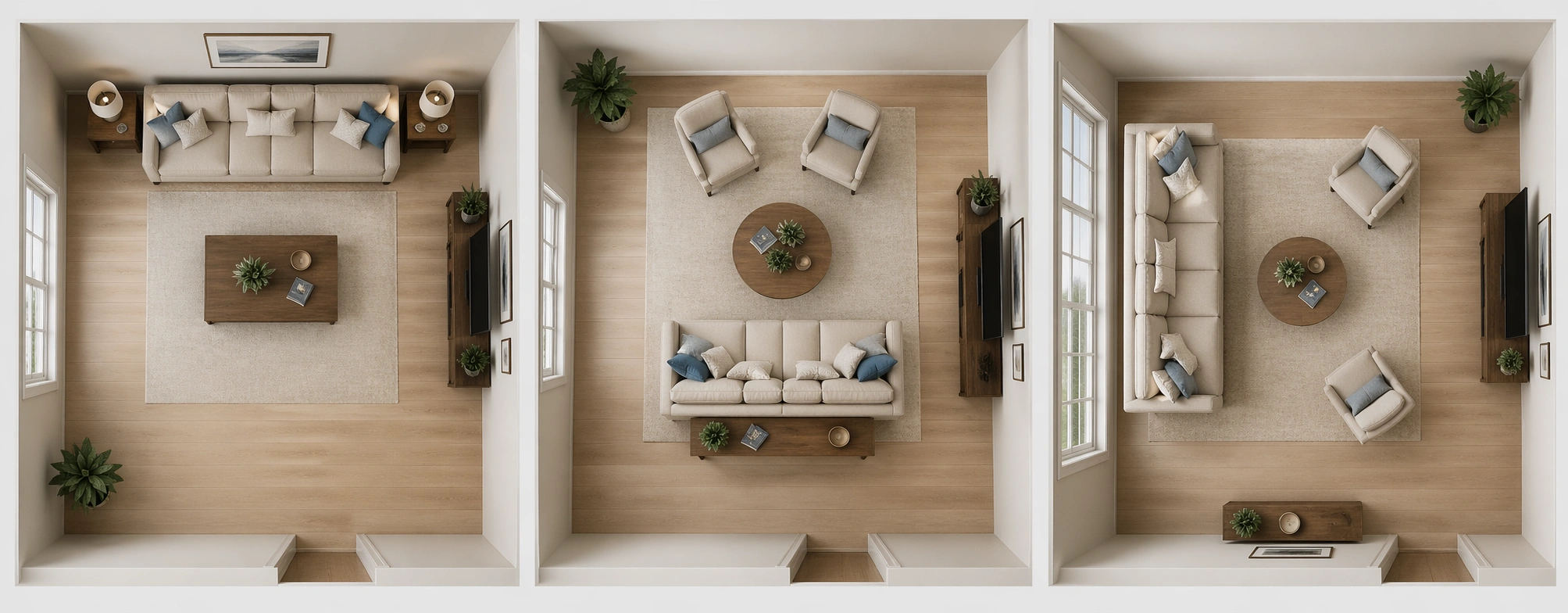
Against the Longest Wall — The safest and most common placement. Position the sofa centered on your longest wall with at least 4 inches of clearance behind it. Flank with a floor lamp on one side and a sofa table or side table on the other. This works in rectangular rooms 12 x 16 feet and larger.
Floating in the Room — Pull the sofa away from the wall (at least 12 inches) to create a walkway behind it. This opens up the room and works particularly well in open-plan spaces. Place a console table behind the sofa to define the zone. Best for rooms 14 x 18 feet or larger.
Perpendicular to a Focal Point — Angle the sofa perpendicular to a fireplace, TV wall, or large window. This creates a more dynamic layout and makes the room feel less predictable. Pair with two accent chairs facing the sofa to complete a conversational grouping.
Maintain at least 18 inches (45 cm) of clear walkway space around your 4 seater sofa. In high-traffic areas like hallways adjacent to the living room, increase this to 24 inches. If you can't achieve this clearance, a smaller sofa or a different layout may be necessary. For guidance on matching sofa size to room size, check our what sofa size for my room resource.
Pros and Cons of a 4 Seater Sofa
Being honest about both advantages and drawbacks helps you make a grounded decision rather than an emotional one:
Advantages
- Seats four adults comfortably without arm-to-arm crowding
- Fewer seams and joints than sectionals, meaning less structural vulnerability
- Easier to reposition than modular or L-shaped sofas
- Wide range of style options from casual to formal
- Better value per seat than buying a 3 seater plus separate chair
- Simpler to find slipcovers and protective covers for standard shapes
Disadvantages
- Requires a larger wall span — not suitable for rooms under 12 feet wide
- Difficult to maneuver through narrow doorways and hallways during delivery
- Heavier to move, requiring 2+ people for repositioning
- Can overwhelm small rooms if proportions aren't right
- Higher total cost than smaller sofas (more fabric, more frame material)
- Limited flexibility compared to modular configurations
How to Choose the Right 4 Seater Sofa
With dozens of options available, narrowing down your choice requires a systematic approach. Our comprehensive how to choose a sofa guide covers the full process, but for a 4 seater specifically, follow this checklist:
- Measure your wall space — Subtract 6 inches from the total wall length to determine your maximum sofa width. Account for radiators, outlets, and architectural features.
- Measure your doorways and hallways — A 4 seater's depth (often 35–40 inches) must clear your narrowest entry point. Remove doors from hinges if needed during delivery.
- Determine your seat depth preference — Sit on sofas with different depths. If you prefer sitting upright, aim for 20–22 inches. For lounging, 23–26 inches is ideal. See our standard vs deep seat comparison.
- Choose your firmness level — Read our firm vs plush sofa guide to understand what cushion feel matches your preference and body type.
- Select fabric based on household needs — Homes with kids or pets should prioritize performance fabric or leather. Adult-only homes can explore velvet, linen, or delicate weaves.
- Check the frame construction — Lift one corner of the sofa about 6 inches off the floor. If the opposite corner doesn't lift, the frame is weak. Look for kiln-dried hardwood with corner blocks.
- Test in person when possible — Our sofa comfort testing guide explains exactly what to evaluate during a showroom visit.
- Set a realistic budget — A quality 4 seater typically costs $800–$2,500. Our sofa budget guide and price breakdown help you understand where your money goes.
Common Mistakes When Buying a 4 Seater Sofa
After reviewing hundreds of buyer experiences, these are the most frequent regrets we see with 4 seater purchases:
1. Ignoring doorway clearances. Many buyers focus entirely on room dimensions and forget that the sofa must physically enter the home. A 100-inch wide sofa won't fit through a 30-inch doorway unless it can be tilted and maneuvered — and depth matters here, not just width. Always measure the path from your front door to the living room, including any turns.
2. Choosing style over comfort. A beautiful 4 seater that feels stiff or unsupportive will become a source of daily frustration. Prioritize comfort vs durability balance based on how many hours per day you'll use it.
3. Underestimating visual weight. A dark-colored, high-back 4 seater in a small room with dark flooring creates a heavy, closed-in feeling. Choose lighter colors, low profiles, or exposed legs to reduce visual mass in tighter spaces.
4. Skipping the quality check. A cheap 4 seater that sags within a year ends up costing more than a quality piece that lasts a decade. Learn how to check sofa quality before buying — it takes five minutes and can save you thousands.
5. Not accounting for delivery logistics. Some 4 seater sofas require white-glove delivery, especially if they weigh over 200 pounds or can't be disassembled. Factor delivery costs into your budget — our hidden costs guide reveals expenses most buyers overlook.
Maintaining Your 4 Seater Sofa
A 4 seater sofa represents a significant investment, and proper maintenance extends its life by years. The larger surface area means more exposure to spills, sunlight, and daily wear. Here are the essential maintenance practices:
Weekly Care — Vacuum all cushions and crevices with an upholstery attachment. Rotate and flip removable cushions weekly to ensure even wear distribution across all four seats. This is especially important in the first year when cushions are breaking in.
Monthly Care — Treat the fabric with a suitable protector spray. Check for fabric pilling (small fuzz balls) and gently remove with a fabric shaver. Inspect the frame for any looseness — early detection prevents costly frame repairs later.
Spot Cleaning — Address spills immediately. Blot (don't rub) with a clean cloth. For stubborn stains, refer to our stain removal guide specific to your fabric type. Using the wrong cleaning method can set stains permanently.
Annual Deep Clean — Professional upholstery cleaning once a year removes embedded dirt, allergens, and body oils that household vacuums can't reach. For leather, this is also the time for a thorough leather cleaning and conditioning. Consider applying UV protection if your sofa receives direct sunlight.
Using throws and pillows on the most-used seats reduces direct wear on the fabric. If you have pets, pet-proof sofa covers can add years to your 4 seater's appearance. For comprehensive protection, consider a slipcovered sofa option that allows machine washing of the entire cover.
Frequently Asked Questions
When to Consider Alternatives
A 4 seater isn't always the right answer. Here are scenarios where you might be better served by a different option:
If your room is irregularly shaped with limited straight wall space, a sectional sofa can use corner space that a straight 4 seater can't. If you anticipate moving frequently or rearranging often, a modular sofa offers reconfigurability that a fixed 4 seater doesn't. If overnight guests are common, a sleeper sofa in 3 seater width plus a separate chair may serve dual purposes better than a dedicated 4 seater. And if budget is tight, exploring budget sofa options in the 3 seater category with an added ottoman can give you similar seating capacity at a lower price point.
Final Recommendation: A 4 seater sofa is one of the most practical investments for a household that values both family time and hosting. The key is matching the sofa's dimensions, material, and style to your specific room and lifestyle — not just buying based on seating count. Measure carefully, research materials, test comfort in person when possible, and buy from retailers with solid return policies. The right 4 seater will serve your home comfortably for 10 to 15 years with proper care.