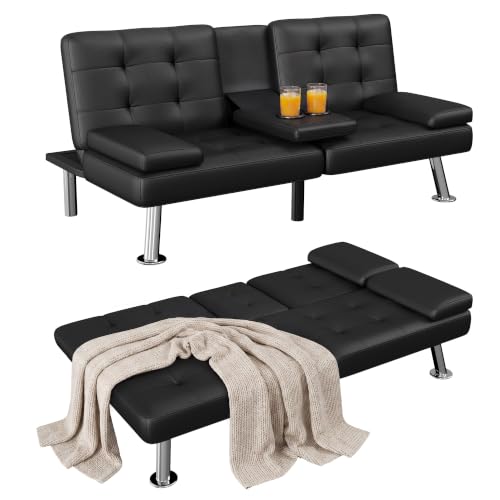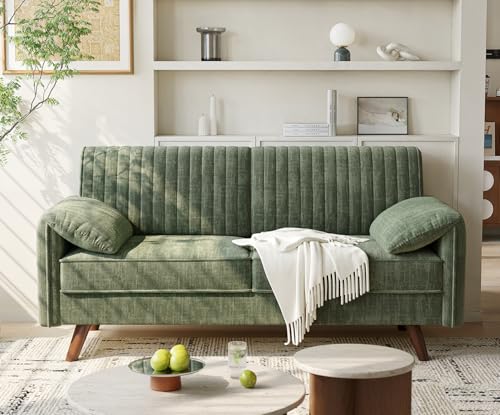
The Complete Guide to Choosing the Best Office Sofa
From reception areas to executive lounges, learn how to select office seating that balances professional appearance, all-day durability, and guest comfort.
Why Office Sofas Are Different: An office sofa endures far more daily use than a home sofa — often seeing dozens of different visitors per day in high-traffic settings. It must withstand constant sitting, spills, stains, and wear while maintaining a polished appearance that reflects your brand. Choosing the wrong sofa for a professional space leads to premature replacement, poor first impressions, and wasted budget. This guide helps you get it right the first time.
Table of Contents
- Why Your Office Sofa Choice Matters More Than You Think
- Types of Sofas for Office Spaces
- Matching the Sofa to Your Office Setting
- Key Buying Factors for Commercial Seating
- Best Upholstery Materials for Office Use
- Size and Space Planning Guide
- Comfort Features for Extended Sitting
- Maintenance Tips to Maximize Lifespan
- Office Sofa Budget Guide
- Frequently Asked Questions
Why Your Office Sofa Choice Matters More Than You Think
Your office sofa is often the first piece of furniture a client, patient, or visitor interacts with. Before a single word is spoken, the seating in your reception area or lobby communicates professionalism, attention to detail, and the standard of quality your organization upholds. Research consistently shows that first impressions form within seven seconds — and physical environment accounts for a significant portion of that judgment.

A well-chosen office sofa sets the tone for every visitor's first impression of your business
Beyond aesthetics, an office sofa faces challenges that living room sofas never encounter. A reception sofa in a busy medical office might see 50 to 100 different people per day. A lobby sofa in a corporate headquarters handles constant use during business hours. This level of traffic demands a fundamentally different approach to material selection, frame construction, and cushion design. Understanding the principles of comfort versus durability is especially critical here — you cannot sacrifice one for the other in a professional setting.
The financial impact is also significant. Replacing an office sofa every two or three years because of poor quality selection costs far more than investing in the right piece from the start. Our sofa price breakdown analysis shows that the cost-per-year of ownership drops dramatically when you move from budget to mid-range commercial-quality seating — often saving money within just three to four years.
Types of Sofas for Office Spaces
Not every office space needs the same type of sofa. The right choice depends on your room dimensions, visitor volume, brand image, and how the space is used. Unlike a family room where a single large sofa often works, offices frequently benefit from a combination of seating types arranged strategically.
Standard 3-Seater Sofa
Typically 72–84 inches wide. Ideal for main reception areas where families or small groups wait. Provides the most seating per square foot and works well as the primary seating anchor in any office layout.
2-Seater Sofa
50–64 inches wide. Perfect for smaller offices, private practice waiting rooms, or as supplementary seating alongside a larger piece. A 2-seater sofa fits comfortably in areas where a 3-seater would overwhelm the space.
Loveseat
45–52 inches wide. Best for very tight reception areas, executive offices where one or two guests sit, or paired with accent chairs. A loveseat creates an intimate seating arrangement without wasting floor space.
Executive Lounge Sofa
Deeper seats (22+ inches), premium materials like leather, and refined design details. Designed for C-suite offices, high-end law firms, and luxury hospitality. Projects authority and sophistication.
Sofa with Chaise
An asymmetric design with an extended seat on one end. Creates visual interest in larger lobbies and offers a more relaxed seating posture. Works well in creative agencies and modern office environments.
Modular Office Seating
Individual seating modules that can be rearranged to adapt to changing needs. Ideal for co-working spaces, large open-plan offices, and multipurpose areas. A modular sofa provides long-term flexibility.
Matching the Sofa to Your Office Setting
The ideal sofa for a medical waiting room is very different from the best choice for a tech startup's reception area. Understanding the specific demands of your setting ensures you select seating that performs well and reinforces your brand identity. This principle applies whether you are furnishing a lobby, a guest room, or a dedicated office space.

Medical & Dental Offices
Prioritize easy-to-clean surfaces (vinyl or leather), antimicrobial properties, and non-porous materials. Choose firm cushioning that does not absorb spills. Light or neutral colors that appear clean help reduce patient anxiety. Budget-friendly but highly durable options make the most sense here.

Corporate Headquarters
Leather or premium performance fabric in neutral tones projects professionalism and stability. Clean-lined modern or contemporary designs work best. Invest in quality — this sofa represents your brand to every visitor, client, and job candidate who walks through your door.

Law Firms & Financial Services
Traditional or transitional styles with top-grain leather convey authority and trustworthiness. Tufted details, rolled arms, and darker tones like burgundy, navy, or deep brown align with conservative professional expectations. Pair with a sofa table for magazines and reading materials.

Tech Companies & Creative Agencies
Bold colors, unconventional shapes, and relaxed seating postures are welcome here. A industrial or bohemian aesthetic can reinforce a creative brand. Modular or curved sofas encourage collaboration and feel less formal while still providing comfort.
Key Buying Factors for Commercial Seating
Shopping for an office sofa requires a different evaluation framework than buying one for home use. Durability ratings, commercial-grade certifications, cleanability, and fire safety standards all become critical factors that most people never consider when purchasing residential furniture. Our comprehensive guide on how to choose a sofa covers general principles, but here are the factors specific to office environments.
Frame Construction
Kiln-dried hardwood frames are non-negotiable for commercial use. Verify the frame material — particle board and softwood frames will fail within months under heavy office traffic. Our frame materials guide explains what to look for.
Fabric Durability Rating
Look for the Martindale rub test score — office seating should minimum score 30,000 cycles, with 50,000+ recommended for high-traffic areas. The Martindale test measures abrasion resistance and is the industry standard for commercial fabric evaluation.
Stain and Spill Resistance
Performance fabrics with built-in stain resistance or removable sofa covers are essential. In offices, coffee spills are a daily reality. Test fabric samples with common stains before purchasing.
Fire Safety Compliance
Commercial spaces often require furniture meeting CAL 117, BS 5852, or other fire safety standards. Verify compliance before purchasing — residential-grade sofas may not meet commercial fire codes.
Cushion Resilience
High-density foam (2.0 lb/ft³ or higher) maintains shape under constant use. Soft cushioning flattens quickly in office settings. Understanding cushion fill types helps you evaluate long-term comfort retention.
Ease of Cleaning
Consider whether the upholstery can be spot-cleaned, wiped down, or requires professional cleaning. Removable cushion covers add practicality. Factor cleaning frequency and cost into your total ownership calculation.
Best Upholstery Materials for Office Use
Material selection is arguably the most important decision you will make. The right material balances professional appearance, durability under heavy use, ease of maintenance, and cost-effectiveness. Our materials explained guide provides general knowledge, but here is how the top options perform specifically in office environments. The choice between leather and fabric is particularly consequential for commercial spaces.

Top-grain leather remains the gold standard for executive offices seeking a premium, authoritative appearance
| Material | Durability | Cleanability | Best For | Price Range |
|---|---|---|---|---|
| Top-Grain Leather | Excellent (15+ years) | Wipe clean, easy | Executive offices, law firms, corporate lobbies | High |
| Bonded Leather | Fair (3–5 years) | Wipe clean | Budget executive look (not recommended for high traffic) | Low-Mid |
| Vinyl / Faux Leather | Very Good (7–10 years) | Wipe clean, waterproof | Medical offices, salons, high-spill areas | Low-Mid |
| Performance Fabric | Excellent (10+ years) | Stain-resistant, spot clean | General offices, reception areas, co-working | Mid |
| Microfiber | Good (5–8 years) | Stain-resistant, spot clean | Budget-friendly offices, low-traffic areas | Low |
| Standard Fabric | Fair (3–5 years) | Stains easily, harder to clean | Not recommended for commercial use | Low |
Common Mistake: Many offices choose bonded leather because it looks like real leather at a fraction of the cost. However, bonded leather is made from leather scraps bonded with polyurethane — it peels, cracks, and delaminates within a few years, especially under heavy use. For a professional setting where appearance matters, either invest in genuine top-grain leather or choose a quality performance fabric. The leather grades explained guide will help you understand the differences and avoid this expensive mistake.
Size and Space Planning Guide
Proper sizing is critical in an office setting where space efficiency directly impacts workflow and accessibility. A sofa that is too large makes the reception feel cramped and creates navigation problems; one that is too small looks lost and fails to provide adequate seating. Our size and room guide offers general principles, but office spaces have specific requirements around traffic flow, ADA compliance, and clear pathways.

Accurate measurements and clear walkway planning ensure your office sofa fits proportionally and functionally
| Reception Area Size | Recommended Sofa Size | Additional Seating | Min. Clear Walkway |
|---|---|---|---|
| Under 80 sq ft | Loveseat (45–52") | 1 accent chair | 36 inches |
| 80–150 sq ft | 2-Seater (50–64") | 1–2 accent chairs | 36–42 inches |
| 150–300 sq ft | 3-Seater (72–84") | 2 accent chairs + coffee table | 42–48 inches |
| 300–500 sq ft | 3-Seater + Loveseat | Accent chairs, side tables | 48+ inches |
| 500+ sq ft | Multiple groupings | Modular or sectional arrangement | 48+ inches |
Always maintain a minimum 36-inch clear walkway in front of the sofa — this is both an ADA accessibility requirement and a practical necessity for comfortable movement. Leave 18 inches between the sofa back and any wall, and ensure 12–18 inches between the sofa seat edge and a coffee table or side table. If your office has a small space constraint, consider a loveseat paired with one or two individual chairs instead of forcing a too-large sofa into the room.
Comfort Features for Extended Sitting
Office visitors may sit for 15 minutes or over an hour depending on your business type. The sofa needs to remain comfortable throughout that entire duration without causing fatigue, fidgeting, or a negative impression. Unlike a daily napping sofa where deep softness is desired, an office sofa needs supportive, structured comfort that keeps people alert and at ease.
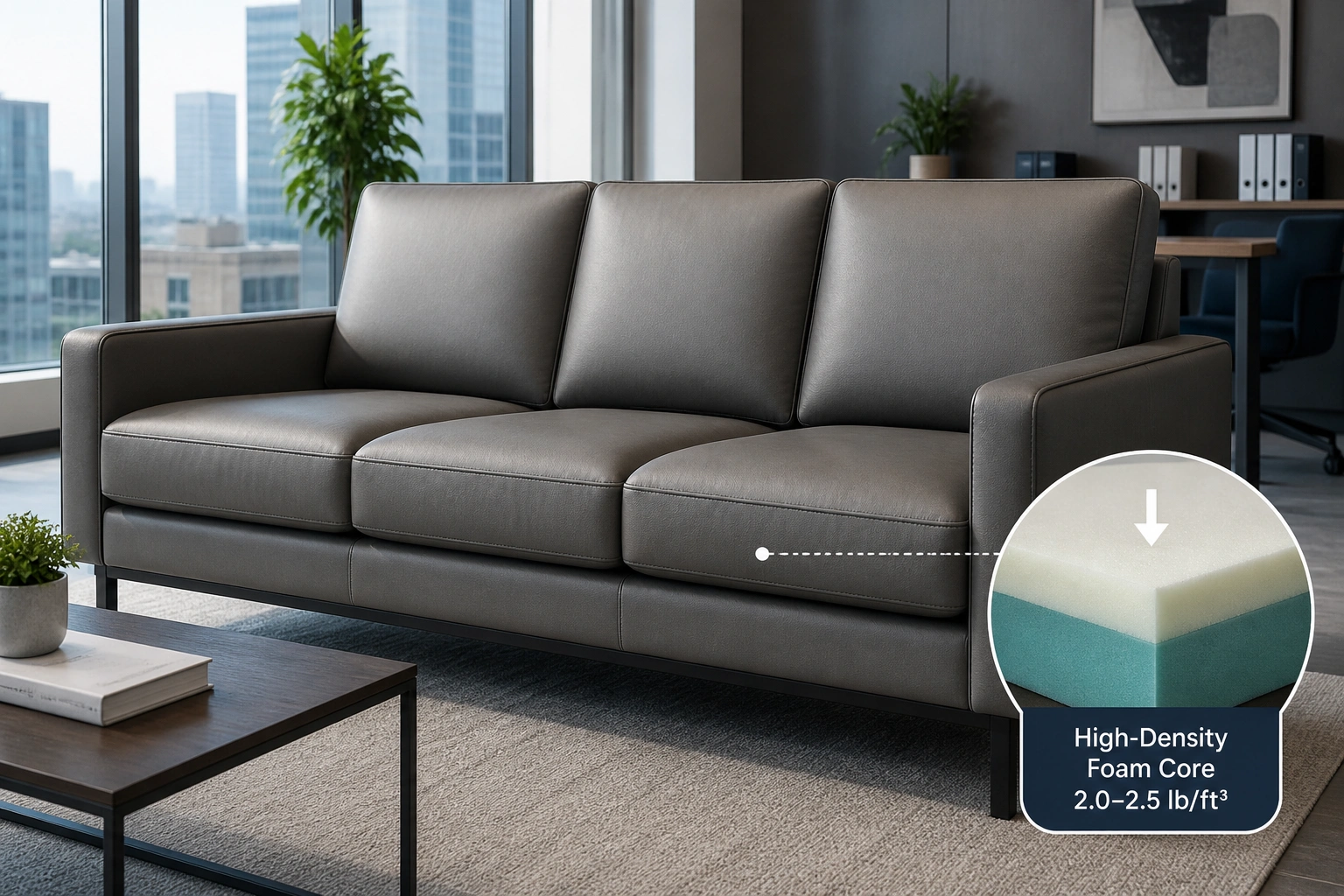
Supportive Cushion Design
High-density foam core (2.0–2.5 lb/ft³) with a thin soft wrap provides the ideal balance — firm enough to support posture for extended periods, with just enough surface softness for immediate comfort. Avoid ultra-plush cushioning that causes visitors to sink in and struggle to stand up. If your cushions eventually lose their shape, our guide on fixing sagging cushions offers repair solutions.

Appropriate Seat Depth
Office sofas should have a seat depth of 19–22 inches — shallower than residential sofas (which often exceed 23 inches). This depth allows most adults to sit with their back against the cushion and feet flat on the floor, promoting good posture. Our seat depth guide explains why this measurement matters so much for comfort. For users who experience discomfort, a sofa designed for back pain relief principles can be a worthwhile investment.
- Seat height of 17–19 inches — allows most adults to sit and stand easily without armrests pushing up into the armpit
- Backrest height of 30+ inches — provides adequate upper back and head support, especially important in a high-back sofa
- Firm armrests — padded but not overly soft armrests help visitors stand up easily, which is particularly important for senior visitors
- Slight lumbar curve — subtle lower back support reduces fatigue during longer waits without being too contoured for varied body types
- Non-slip base — the sofa should not slide on hard floors when visitors sit down or shift position
Maintenance Tips to Maximize Lifespan
A consistent maintenance routine dramatically extends the life of an office sofa and keeps it looking professional. Unlike a home sofa where cleaning is a weekly chore, office sofa maintenance requires a systematic approach — often handled by cleaning staff who need clear instructions. A comprehensive sofa protection guide provides foundational knowledge, but here are the practices specifically relevant to commercial environments.
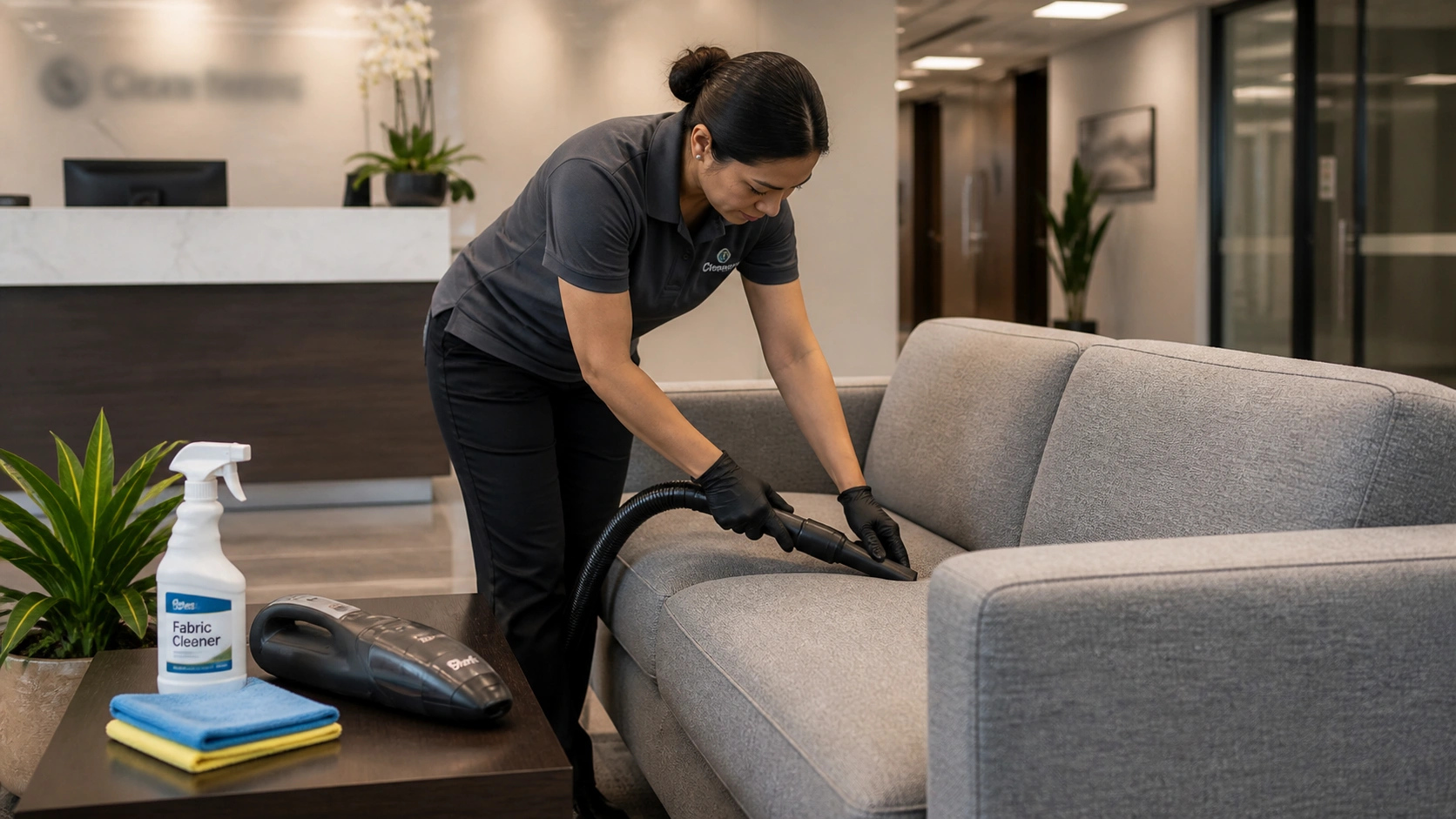
Regular professional cleaning keeps office sofas looking fresh and extends their usable lifespan significantly
Daily maintenance should include a quick visual inspection for stains, debris removal, and cushion straightening. Spills should be addressed immediately — the longer a stain sits, the harder it is to remove. For leather sofas, a quick wipe with a slightly damp cloth removes dust and prevents buildup. For fabric sofas, a dry microfiber cloth or vacuum with an upholstery attachment handles surface dust between deeper cleanings.
Weekly care should include thorough vacuuming of all surfaces, including crevices and under cushions where crumbs and debris accumulate. Flip and rotate cushions weekly to ensure even wear — this single practice can prevent the lopsided, sagging look that plagues many office sofas. If your sofa has removable covers, launder them according to the manufacturer's schedule. For leather sofas, weekly conditioning with a quality leather conditioner prevents drying and cracking.
Professional cleaning every 3 to 6 months is recommended for fabric office sofas, and every 6 to 12 months for leather. Professional cleaners have commercial-grade equipment and solutions that remove deep-set stains and bacteria that regular maintenance cannot reach. Budget for this as an ongoing operating expense — it is far cheaper than premature replacement. If your office sofa starts to show irreversible damage, such as leather tears or severe fabric discoloration, consult a professional about repair versus replacement.
Office Sofa Budget Guide
Understanding how much to spend on an office sofa requires balancing upfront cost against total cost of ownership. A $300 sofa that needs replacement every two years costs more over a decade than a $1,200 sofa that lasts ten years — not to mention the labor cost of repeated purchasing, delivery, and disposal. Our sofa budget guide provides a framework for thinking about furniture investment, and the price versus quality analysis is particularly relevant for commercial purchasing decisions.
Cost-Per-Year Calculation: To find the true value of an office sofa, divide the purchase price by the expected years of useful life. A $500 sofa lasting 3 years costs $167/year. A $1,500 sofa lasting 10 years costs $150/year — the "expensive" option is actually cheaper while providing a dramatically better experience for your visitors every single day. Always calculate cost-per-year before making a purchasing decision.
For offices watching their budget closely, there are ways to find quality without overspending. Shopping during sales events (our guide on the best time to buy a sofa can help timing), considering budget sofas that still meet commercial durability minimums, and exploring secondhand options for executive pieces in good condition are all viable strategies. The key is never sacrificing frame quality and fabric durability — those are the two factors that determine whether any sofa survives office use.